 WAR ATLAS MILITARY HISTORY MAGAZINE · WWI — WWII
Italian Campaign (World War II)
Lead
The Italian Campaign (World War II) was fought on the Italian peninsula from 10 July 1943, when the Allies invaded Sicily, to 2 May 1945, when German forces in Italy surrendered. It was the longest campaign the Western Allies fought in Europe, and one of the hardest: a slow, grinding advance up a mountainous peninsula, through river after river and ridge after ridge, against a German army that used every advantage of the ground.
The campaign knocked Italy out of the war, tied down more than twenty German divisions that might otherwise have fought in France or on the Eastern Front (World War II), and gave the Allies air bases from which they could bomb Germany and the Balkans.
It also cost the Allies and the Germans hundreds of thousands of casualties, devastated Italian towns and villages, and ended with a country divided, occupied and fought over for nearly two years.
The campaign began with triumph. The invasion of Sicily succeeded in five weeks, Mussolini was deposed, and Italy signed an armistice with the Allies in September 1943. The triumph did not last. Germany reacted at once, disarming the Italian army, occupying northern and central Italy, and turning the country into a battlefield.
The Allied landings at Salerno in September 1943 nearly failed, the advance stalled at the Winter Line, and the battles for Monte Cassino and the landing at Anzio consumed the winter of 1943–1944. Rome fell on 4 June 1944, two days before D-Day, but the campaign did not end there: the Allies fought through the Gothic Line in the autumn of 1944, spent a winter in the Apennines, and only broke through in the final offensive of April 1945.
Only one paragraph of wider context belongs here: the Italian campaign was the final phase of the Mediterranean Theater, the Allied struggle for the Mediterranean that began in 1940 and ended with the surrender in Italy in 1945. The rest of this article is the campaign in Italy itself — its landings, its mountains, its commanders and its cost.
The Italian campaign is sometimes called the forgotten campaign, overshadowed by Normandy and the Eastern Front. That is unfair to the men who fought it. The soldiers who climbed the mountains of the Winter Line and the Gothic Line, who fought through the ruins of Cassino and the mud of Anzio, faced some of the hardest fighting of the war, in terrain that favoured the defender at every step. This article tells their campaign as it was: a victory, but a slow and costly one, whose value historians still debate.
Key Facts
| Dates | 10 July 1943 – 2 May 1945 (Sicily 10 July – 17 August 1943; mainland Italy 3 September 1943 – 2 May 1945) |
| Theater / Location | Sicily and the Italian peninsula, from the Strait of Messina to the Po Valley |
| Result | Allied victory; Italy left the Axis in 1943, and German forces in Italy surrendered on 2 May 1945 |
| Allied commanders | Dwight D. Eisenhower, Harold Alexander, Bernard Montgomery, Mark Clark, Lucian Truscott, Wladyslaw Anders |
| Axis commanders | Albert Kesselring, Heinrich von Vietinghoff, Fridolin von Senger und Etterlin, Kurt von Tippelskirch |
| Allied strength | At its peak, more than 1,000,000 men in Italy, from Britain, the United States, France, Poland, Canada, India, New Zealand, South Africa, Brazil and Italy |
| Axis strength | At its peak, more than 20 German divisions in Italy, roughly 400,000–500,000 men, plus Italian Fascist forces |
| Losses | Allied casualties are estimated to range from about 300,000 to about 330,000 killed, wounded and missing; German losses are estimated to range from about 330,000 to about 440,000; Italian civilian deaths are estimated to range from about 60,000 to about 150,000 |
Background
Why Italy
The decision to invade Italy was made at the Casablanca Conference in January 1943, when Churchill and Roosevelt agreed that after the conquest of North Africa the Allies should strike at the “soft underbelly” of Europe. Sicily was the obvious first step: the island commanded the central Mediterranean, its airfields could cover an invasion of the mainland, and its capture would open the Mediterranean to Allied shipping.
Italy was the weaker Axis partner, and Churchill believed that an invasion would knock Italy out of the war, force Germany to defend a long southern front, and open the way to the Balkans. The Americans were less enthusiastic: they wanted to concentrate on the invasion of France, and they feared that Italy would become a diversion that consumed divisions needed for Normandy.
The argument was never fully resolved, and it ran through the whole campaign: at every stage, the Allies in Italy were short of troops because divisions were being withdrawn for the invasion of France.
The strategic situation in the summer of 1943 favoured the Allies. North Africa had been won in May, the Allies had command of the sea and the air, and the Italian government was wavering. Mussolini’s regime had lost its empire in East Africa and its army in North Africa, Italian cities were being bombed, and the Italian people were tired of the war.
The German army, by contrast, was committed in Russia, where the Battle of Kursk was raging, and it could spare only limited forces for Italy. The Allies believed the campaign would be short. It was not, and the reason was the man who commanded the German defense: Albert Kesselring, who understood Italy’s terrain better than the Allies did, and who turned it into a fortress.
Italy’s Terrain
Italy is a long, narrow peninsula, about 700 miles from the toe to the Alps, and it is dominated by mountains. The Apennines run down the spine of the country, and the rivers that flow from them to the sea — the Volturno, the Garigliano, the Rapido, the Sangro, the Po — run across the Allied line of advance, each one a defensive position.
The roads are few, and they run through valleys and passes that a small force can hold against a large one. The winter brings rain, mud and snow, and the summer brings heat and dust. An army advancing up Italy had to fight for every river and every ridge, and it could rarely outflank a defense, because the mountains closed the flanks.
The terrain was the German army’s greatest ally, and it is the key to understanding why the campaign lasted twenty months when its planners had expected it to last a few.
Opposing Forces
The Allied Armies
The Allied forces in Italy were the most diverse of any campaign in the Second World War. The invasion of Sicily was carried out by the British Eighth Army under Montgomery, landing in the south-east of the island, and the American Seventh Army under Patton, landing in the south.
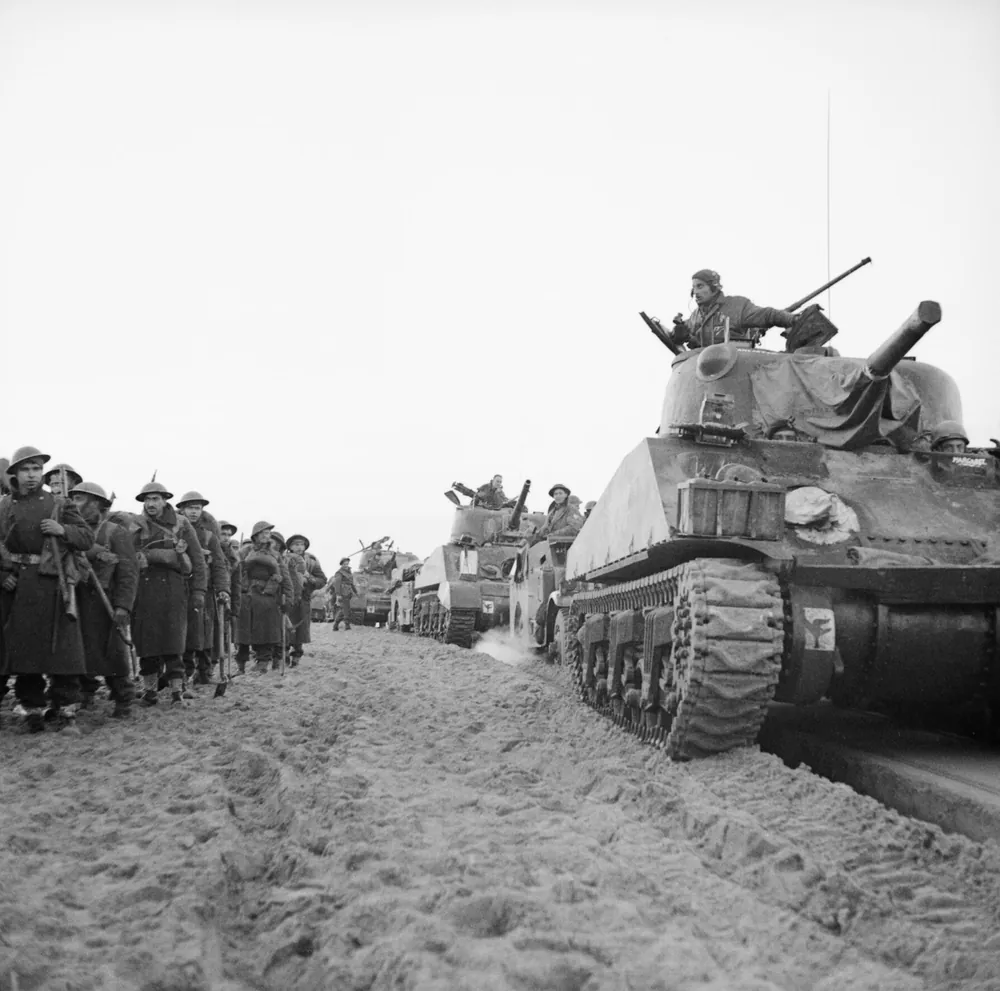
On the mainland, the Allied force was divided into two armies: the British Eighth Army on the Adriatic coast in the east, and the American Fifth Army under Mark Clark on the Tyrrhenian coast in the west. The Fifth Army itself was a coalition, with American, British and French divisions, and later Polish, Canadian, Indian, New Zealand, South African and Brazilian troops fought in Italy as well.
The Polish II Corps under General Wladyslaw Anders, which captured Monte Cassino in May 1944, was made up of men who had been deported to the Soviet Union and had fought their way out through the Middle East. The French Expeditionary Corps under General Juin, which broke the Gustav Line in May 1944, included Moroccan and Algerian troops who were among the finest mountain fighters in the Allied armies.
The Italian Co-belligerent Army, formed after the armistice, fought alongside the Allies from 1943.
The Allied armies in Italy were powerful but never as strong as their commanders wanted. Divisions were repeatedly withdrawn for the invasion of France: the American Seventh Army left Italy for the invasion of southern France in August 1944, and several divisions were taken for Normandy. The result was that the Allies in Italy were often only slightly stronger than the Germans they faced, and their offensives had to be planned with limited resources. Air power was the Allies’ great advantage: by 1944 they had overwhelming air superiority, and their bombers and fighter-bombers attacked German supply lines, bridges and troop concentrations daily. But air power could not take a mountain ridge, and the infantry had to do that on foot.
The German Armies
The German forces in Italy were commanded from the start by Field Marshal Albert Kesselring, one of the most able defensive commanders of the war. Kesselring had been the German commander in the Mediterranean since 1941, and he knew Italy well.
His strategy was to fight a series of delaying actions, holding each river line and mountain ridge as long as it was useful and then withdrawing to the next one, trading ground for time and inflicting the maximum casualties on the Allies.
He had at his disposal some of the best divisions in the German army, including paratroop divisions, panzer divisions and mountain divisions, and his troops were well trained, well led and fighting on ground that favoured them. His subordinate commanders included Heinrich von Vietinghoff, who commanded the Tenth Army on the Winter Line, and Fridolin von Senger und Etterlin, who commanded the XIV Panzer Corps at Cassino.
The German army in Italy was also hampered by the same problems that afflicted Germany everywhere in 1944 and 1945: it was short of fuel, short of replacements, and under constant air attack. But it fought on interior lines over short distances, its supply lines were short, and it held the high ground. The result was a campaign in which the Germans, though outnumbered and outgunned, held the Allies for twenty months and inflicted heavy casualties. Kesselring’s defense of Italy is still studied in military academies as a model of how to conduct a fighting withdrawal, and it is the reason the campaign lasted as long as it did.
The Italian Campaign, 1943–1945
Sicily: Operation Husky
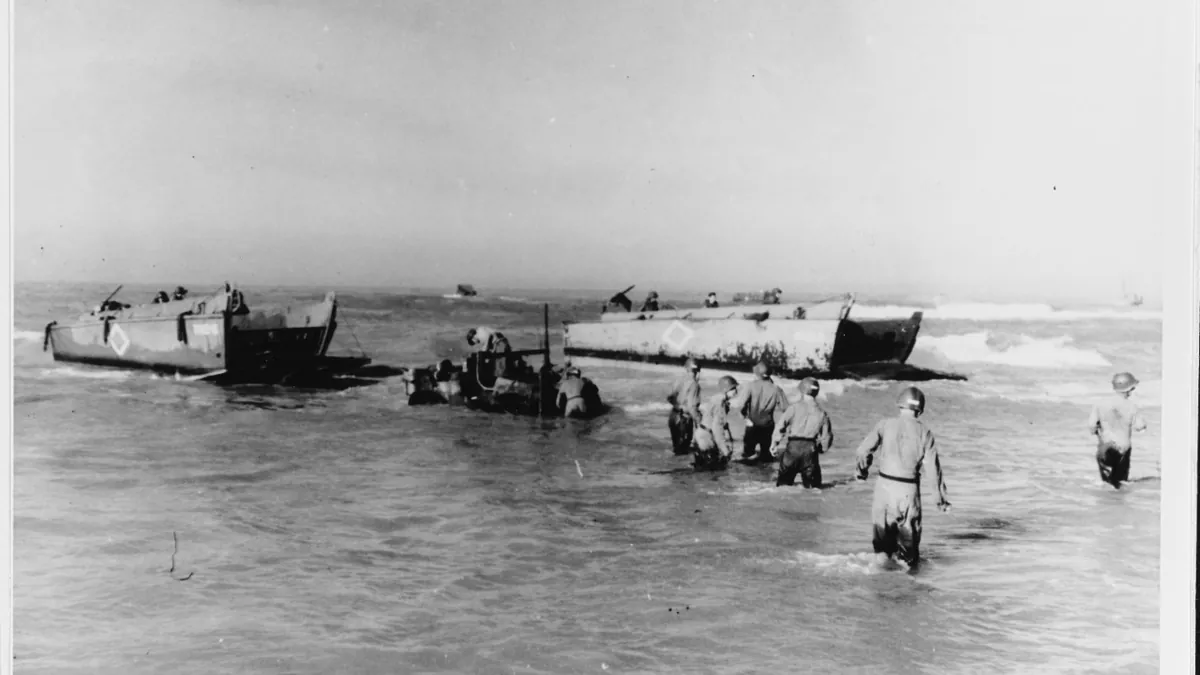
The campaign began on the night of 9–10 July 1943, when British and American airborne troops dropped over Sicily and seaborne forces landed on the southern and south-eastern coasts. Operation Husky was the largest amphibious operation of the war to that date, with more than 150,000 men landed on the first day.
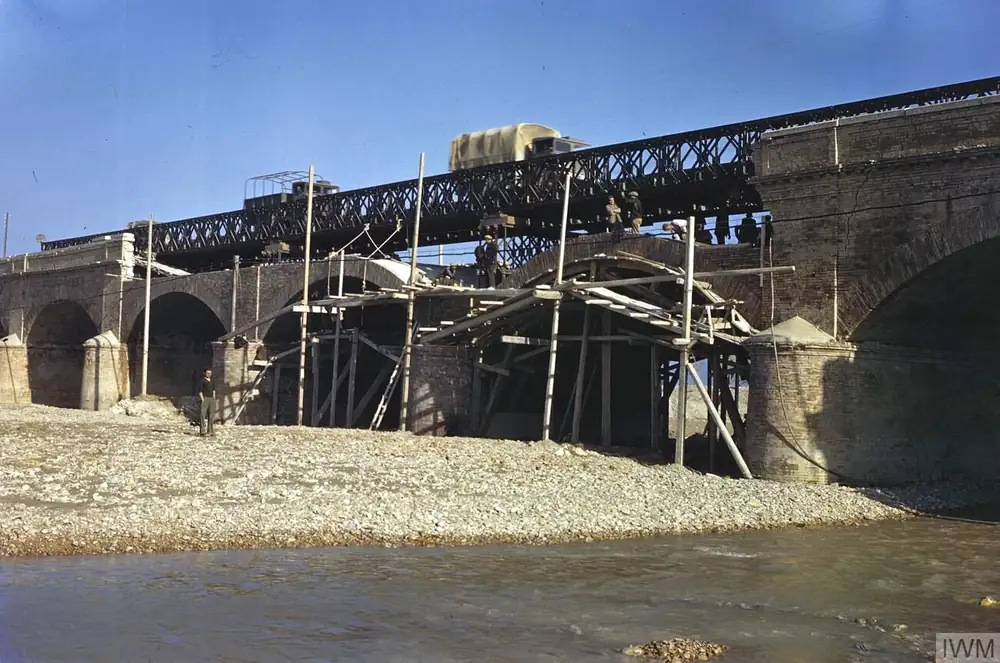
The landings met less resistance than expected: the Italian coastal divisions collapsed, and the German garrison, though it fought hard, was too small to hold the island. Montgomery’s Eighth Army advanced up the east coast toward Catania and Mount Etna, while Patton’s Seventh Army, after a slow start, swept across the west of the island and then raced along the north coast to Messina, entering the city on 17 August, hours after the last German troops had escaped across the Strait of Messina to the mainland.
The campaign lasted thirty-eight days and cost the Allies about 25,000 casualties; Axis losses were far heavier, with tens of thousands taken prisoner, though the German evacuation of some 100,000 men across the strait was a skilful operation that saved the German army in Sicily to fight again on the mainland.
Sicily’s political consequences were greater than its military ones. On 25 July, in the middle of the campaign, the Fascist Grand Council deposed Mussolini, and King Victor Emmanuel III had him arrested. Marshal Pietro Badoglio formed a new government, and in secret it began negotiating an armistice with the Allies. The fall of Mussolini showed that the invasion had achieved its political aim: Italy was leaving the war. But it also set a trap, because Germany, which had expected the Italian collapse, was already preparing to take over the country.
The Armistice and Salerno
The armistice was signed on 3 September 1943, the same day British troops crossed the Strait of Messina and landed in Calabria, and it was announced on 8 September. Germany reacted within hours. German troops disarmed the Italian army, occupied Rome and northern Italy, and took control of the country.
The Italian armed forces, caught between their government and their former ally, disintegrated: some units joined the Germans, some joined the Allies, and most simply went home. The Germans also rescued Mussolini from imprisonment and installed him as the head of a puppet Fascist state, the Italian Social Republic, in the north.
Italy was now a divided country, with a king and a government in the south that had joined the Allies, and a Fascist regime in the north that was a German puppet.
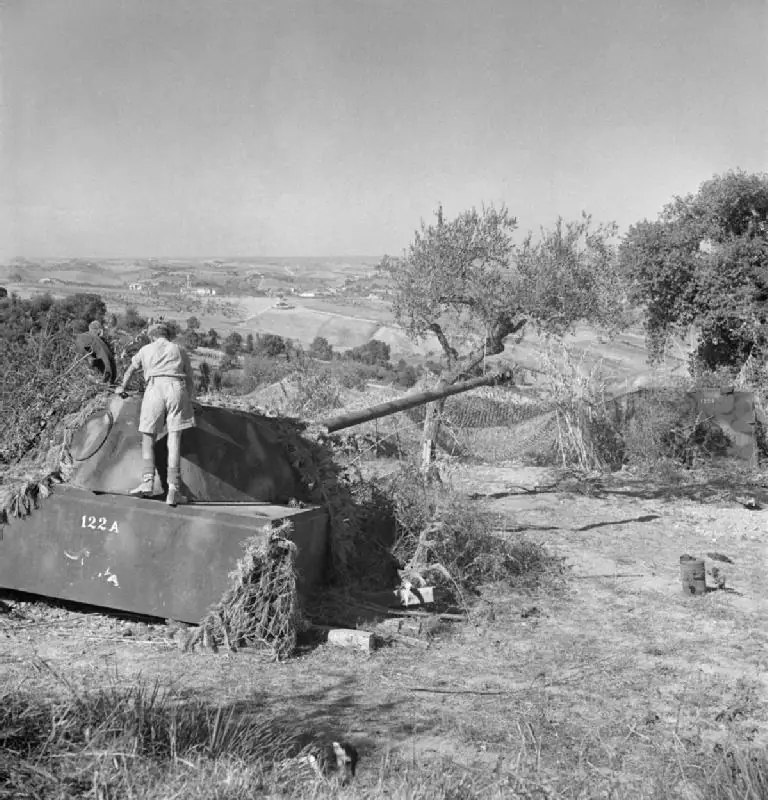
The main Allied landing on the mainland was Operation Avalanche, at Salerno, on 9 September 1943. The American Fifth Army under Mark Clark landed south of Naples, expecting light resistance. Instead it met a German counterattack of a strength the Allies had not anticipated, and for several days the beachhead was in danger: German tanks reached the beaches, and Clark considered withdrawing.
The landing was saved by naval gunfire, by air support, and by the arrival of British reinforcements, and on 16 September the Germans broke off the attack and withdrew. Naples fell on 1 October, but the Allies had been badly shaken. Salerno showed that the Germans intended to fight for Italy, and that the campaign would not be the easy advance the Allies had hoped for.
The Winter Line and Monte Cassino
After Salerno, the Allies advanced up the peninsula to the Winter Line, a series of German defensive positions across Italy at its narrowest point, anchored on the Garigliano and Rapido rivers in the west and the Sangro in the east.
The strongest part of the line was the Gustav Line, which ran through the town of Cassino and the monastery of Monte Cassino, perched on a hill above the Liri valley — the road to Rome. The Allies attacked the Winter Line in the winter of 1943–1944, and the fighting was among the worst of the war. The first battles for Cassino, in January and February 1944, failed.
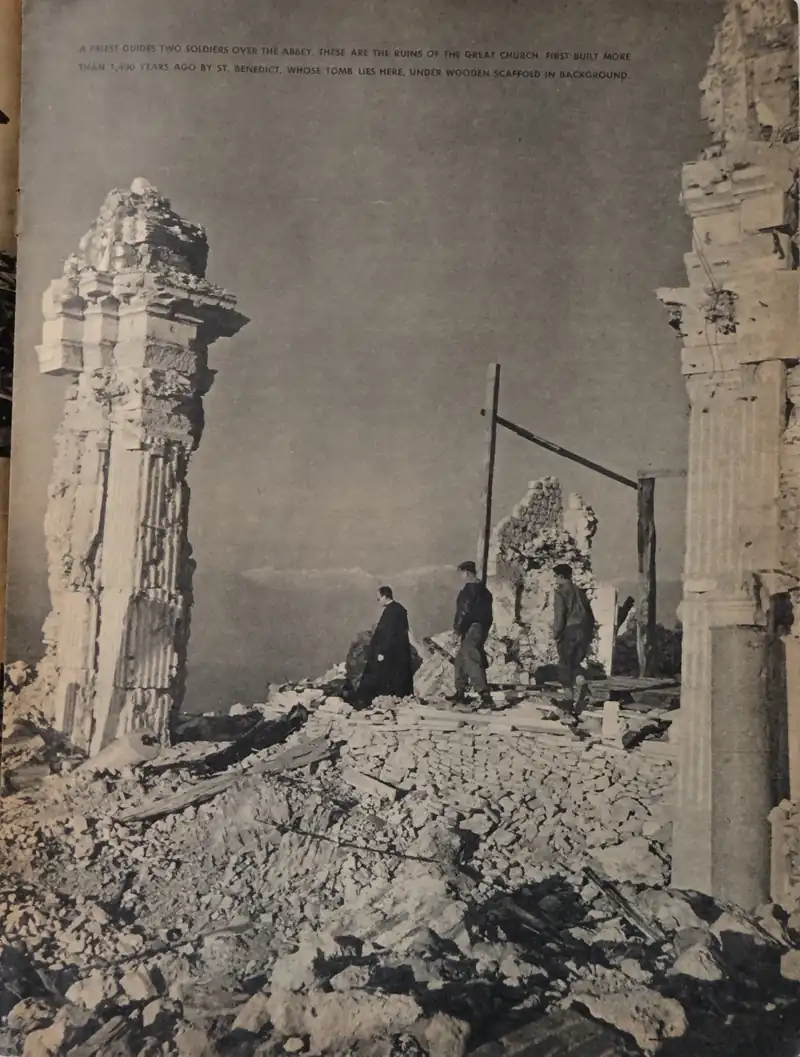
The monastery, which the Germans said they had not fortified but which overlooked the battlefield, was bombed by Allied aircraft on 15 February 1944, in one of the most controversial decisions of the war; the bombing destroyed the monastery but did not dislodge the defenders, and German paratroops occupied the ruins and held them for three more months.
The second and third battles, in February and March, also failed, at heavy cost to American, British, New Zealand, Indian and French troops.
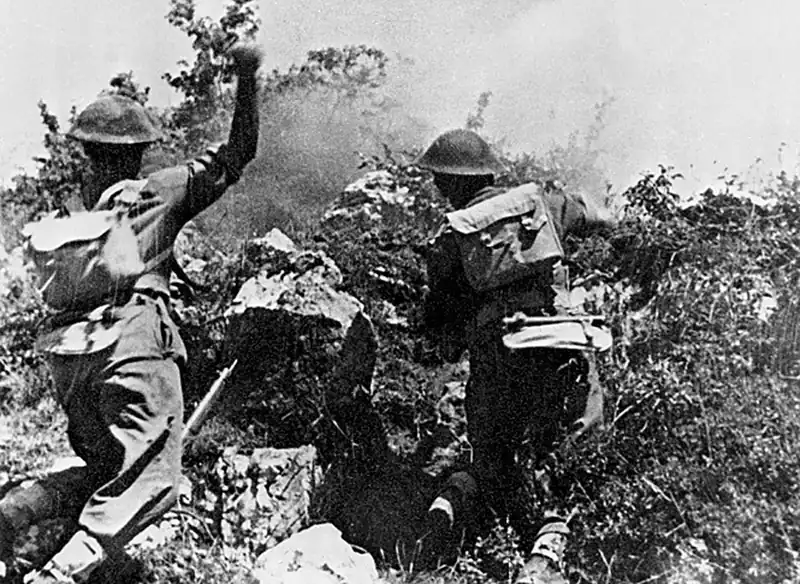
The breakthrough came in May 1944, in Operation Diadem. The French Expeditionary Corps broke through the mountains on the Allied right, outflanking Cassino, and the Polish II Corps captured the monastery ruins on 18 May, after a heroic assault that cost the Poles heavily. The Gustav Line was broken, and the road to Rome was open. The battle for Monte Cassino had lasted four months and cost the Allies some 55,000 casualties, a figure that shows the price of attacking a prepared mountain position. The monastery, rebuilt after the war, remains a symbol of the campaign, and the Polish cemetery at its foot is one of the war’s most moving memorials.
Anzio: The Landing Behind the Line
While the battles for Cassino raged, the Allies tried to outflank the Winter Line by sea. On 22 January 1944, American and British troops landed at Anzio, a port town 30 miles south of Rome and 60 miles behind the German lines. The landing was unopposed, and the beachhead was established without difficulty.
But the Allied commander, Major General John Lucas, was cautious: instead of advancing inland to cut the German supply lines, he consolidated the beachhead, and the Germans, under Kesselring’s direction, rushed troops to contain it. Within days the Anzio beachhead was besieged, and for four months the troops there fought a static, bloody battle in a flat, waterlogged plain, under constant German artillery fire and air attack.
The beachhead was nearly overrun in February, and it was saved only by naval gunfire and by the arrival of reinforcements.
Anzio was one of the most controversial operations of the war. Its supporters argued that it forced Kesselring to divert divisions from Cassino and that it made the eventual breakout possible. Its critics argued that it was a wasted effort, that the troops landed at Anzio could have been better used at Cassino, and that Lucas’s caution squandered the opportunity.
The beachhead finally broke out on 23 May 1944, in coordination with the Allied offensive at Cassino, and the troops from Anzio advanced toward Rome. The Anzio landing had lasted four months and cost the Allies some 40,000 casualties. It is remembered today for its futility and its suffering, and for the men who held a beachhead that became a trap.
Rome and the Gothic Line
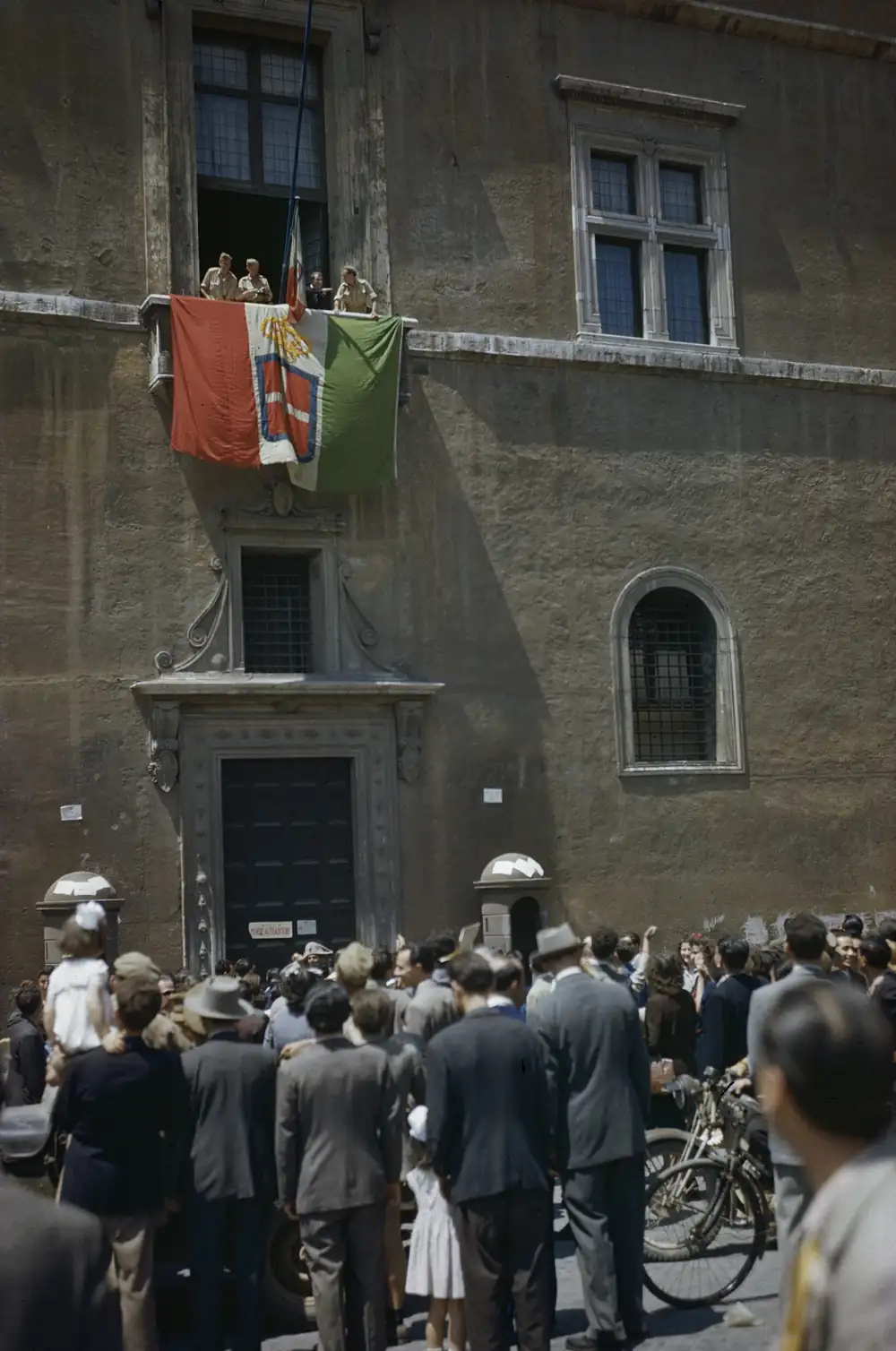
Rome fell on 4 June 1944, two days before D-Day, when American troops under Mark Clark entered the city. It was the first Axis capital to be liberated, and it was a great propaganda victory, but the manner of its capture was controversial: Clark, eager to take Rome before the British, diverted his forces from cutting off the retreating German Tenth Army, which escaped to fight again in the north.
The Allies then pursued the Germans up the peninsula, but the advance slowed as divisions were withdrawn for the invasion of southern France in August 1944, and in the autumn the Germans made their stand on the Gothic Line, a formidable defensive position across the Apennines from the Ligurian coast to the Adriatic.
The Allied offensive against the Gothic Line in August and September 1944 broke through in places but did not achieve a breakthrough, and the campaign settled into a winter stalemate in the mountains. The winter of 1944–1945 was the campaign’s hardest: the Allies were short of troops, the weather was appalling, and the Germans held the high ground.
The Final Offensive
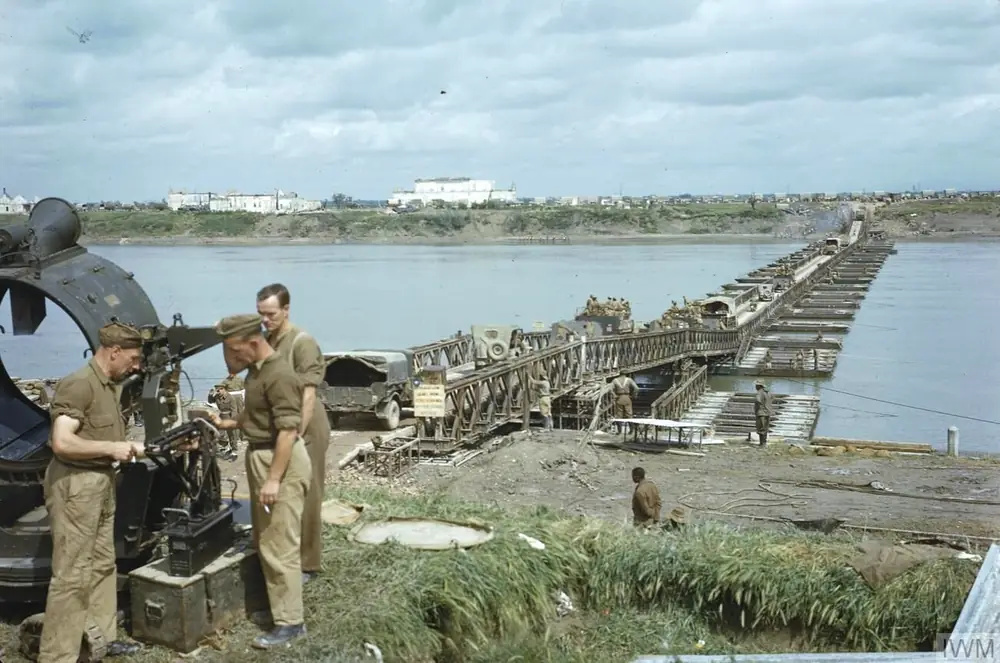
The campaign ended in the spring of 1945. On 9 April the Allies launched their final offensive, Operation Grapeshot, with the Eighth Army attacking across the Senio and the Fifth Army breaking through the Apennines toward Bologna. The German lines, weakened by months of attrition and by the transfer of divisions to other fronts, collapsed. Bologna fell on 21 April, and the Allies crossed the Po river.
On 25 April a general uprising broke out in northern Italy, and partisans seized Milan, Turin and Genoa. Mussolini was captured by partisans and executed on 28 April. On 29 April the German commander in Italy, Heinrich von Vietinghoff, signed the surrender of German forces in Italy, and the surrender took effect on 2 May 1945, days before the end of the war in Europe.
The Italian campaign was over, twenty months after it had begun.
Turning Point
Cassino and the Breakout from Anzio
The turning point of the Italian campaign was the breakthrough of the Gustav Line in May 1944 — the fall of Monte Cassino and the breakout from Anzio, which together opened the road to Rome and broke the stalemate that had lasted since the winter.
Before May 1944, the campaign had been a story of frustration: the landings at Salerno had nearly failed, the advance had stalled at the Winter Line, three battles for Cassino had failed, and the Anzio beachhead had become a siege. The Allies had spent eight months fighting for a few miles of Italian ground, and the campaign seemed to be going nowhere.
The offensive of May 1944, Operation Diadem, changed that. The French Expeditionary Corps broke through the Aurunci mountains, outflanking the Gustav Line from the south, and the Polish II Corps captured the ruins of Monte Cassino on 18 May. On 23 May the Anzio beachhead broke out, and the two Allied forces linked up.
The German Tenth Army, which had held the Winter Line for six months, was forced to retreat, and the road to Rome was open.
The breakthrough mattered for two reasons. First, it was the first time in the campaign that the Allies had broken a major German defensive line by manoeuvre rather than by frontal assault, and it showed that the German defense, though strong, could be outflanked.
Second, it gave the Allies Rome, the first Axis capital to fall, and with it a political victory that justified the campaign to the public in Britain and the United States. The breakthrough did not end the campaign — the Germans withdrew to the Gothic Line and fought on for another year — but it ended the stalemate, and it proved that the campaign could be won.
After Cassino and Anzio, the Allies were never again stopped as completely as they had been in the winter of 1943–1944, and the initiative never returned to the Germans.
Why the Campaign Did Not End at Rome
The fall of Rome on 4 June 1944 seemed to promise a rapid end to the campaign, but it did not deliver one, and the reason is important to the campaign’s history. Mark Clark’s decision to advance on Rome rather than cut off the retreating German Tenth Army allowed the Germans to escape to the north, where they established the Gothic Line.
At the same time, the Allies withdrew divisions from Italy for the invasion of southern France in August 1944, weakening the armies that were pursuing the Germans. The result was that the campaign, which might have ended in the summer of 1944, continued for another eleven months, through the Gothic Line and the winter of 1944–1945.
The turning point of May 1944 was therefore real but incomplete: it broke the stalemate, but it did not break the German army, and the campaign’s final victory had to wait for the spring offensive of 1945.
Casualties and Losses
Casualty figures for the Italian campaign are disputed, and the ranges below reflect that dispute. The campaign lasted twenty months, it was fought by armies of a dozen nations, and the records, particularly for German and Italian losses, are incomplete. What is certain is the scale: the campaign cost hundreds of thousands of men, and it was one of the costliest campaigns the Western Allies fought in Europe.
Allied casualties in the Italian campaign — killed, wounded and missing — are estimated to range from about 300,000 to about 330,000 men. American losses were the largest single share, followed by British and Commonwealth losses, which included large numbers of Indian, Canadian, New Zealand, South African and Polish troops. French losses, including Moroccan and Algerian troops, were heavy in the battles of 1944.
The single costliest battle was Monte Cassino, where Allied casualties are estimated at about 55,000, and the Anzio beachhead cost the Allies some 40,000 casualties over four months. The campaign’s losses were spread across many battles rather than concentrated in one, which is one reason the campaign is less remembered than Normandy: there was no single day of disaster, but a long accumulation of loss.
German losses in Italy are estimated to range from about 330,000 to about 440,000 men killed, wounded, missing and captured. The wide range reflects the difficulty of counting German losses, which were recorded less completely as the war went on, and the large number of prisoners taken in the final weeks of the campaign.
Italian military losses are harder to count, because the Italian army disintegrated after the armistice: some Italians fought with the Germans, some with the Allies, and many were disarmed and sent to labour camps in Germany. Italian civilian deaths during the campaign are estimated to range from about 60,000 to about 150,000, a wide range that reflects the bombing of Italian cities, the fighting through towns and villages, and German reprisals against civilians and partisans.
The Ardeatine massacre of March 1944, in which 335 Italians were killed by the Germans in reprisal for a partisan attack in Rome, is the best-known of many such atrocities, and the Italian resistance, which fought the Germans and Fascists from 1943 to 1945, lost tens of thousands of its own.
Map and Geography
A Peninsula of Rivers and Ridges
Italy is a long, narrow peninsula, and its geography dictated the campaign. The Apennine mountains run down the spine of the country, and the rivers that flow from them — the Volturno, the Garigliano, the Rapido, the Sangro, the Arno, the Po — run across the Allied line of advance, from the mountains to the sea. Each river was a defensive line, and each ridge was a fortress.
The Allies advanced up two coastal corridors, one on the Tyrrhenian side in the west and one on the Adriatic side in the east, separated by the Apennines, and the two armies could rarely support each other. The roads were few and narrow, and they ran through valleys that German artillery could dominate.
An army advancing up Italy could not outflank a defense, because the mountains closed the flanks and the sea closed the sides. The campaign was therefore a frontal war, fought ridge by ridge and river by river, and that is why it lasted so long.
Cassino, Anzio and the Gothic Line
Three places illustrate the campaign’s geography. Monte Cassino was a hill 1,700 feet high, crowned by a monastery, overlooking the Liri valley and the road to Rome. Whoever held the hill controlled the valley, and the Germans held it for four months.
Anzio was a flat, waterlogged plain, where the Allied beachhead was overlooked by German guns on the Alban Hills and where the troops lived in mud and under constant fire. The Gothic Line was a belt of fortifications across the Apennines, from the Ligurian coast to the Adriatic, built into the mountains with concrete bunkers, gun positions and minefields, and it held the Allies through the winter of 1944–1945.
Each of these places was a geographical problem before it was a military one, and each of them shows why Italy was the hardest country in western Europe to attack from the south.
Sicily and the Strait of Messina
Sicily, where the campaign began, was a different geographical problem. The island is mountainous, dominated by Mount Etna, and its roads run through passes that a small force can hold. The Allied landings in the south succeeded because the Italian coastal divisions collapsed, but the advance across the island was slow, and the Germans escaped across the Strait of Messina — a stretch of water only two miles wide at its narrowest — because the Allies had no plan to prevent the evacuation and no forces in place to cut it off.
The strait, which the Allies crossed in September 1943 to land on the mainland, was the campaign’s first crossing, and it was a reminder that in Italy, water was as much a barrier as mountains: the Allies had to cross the strait, the rivers and the flooded plains of the Po, and each crossing cost time and lives.
Outcome and Legacy of the Italian Campaign (World War II)
The Italian campaign ended in Allied victory. Italy left the Axis in 1943, German forces in Italy surrendered on 2 May 1945, and the Allies gained control of the Italian peninsula and the Mediterranean. The victory had immediate consequences: the Allies gained air bases in Italy from which they could bomb Germany, Austria and the Romanian oilfields; the Mediterranean was secured; and more than twenty German divisions were tied down in Italy in 1944 and 1945, divisions that might otherwise have fought in France or in Russia.
The campaign also brought the liberation of Italy, a country that had been occupied and fought over for two years, and it gave the Italian resistance a central role in the country’s liberation, above all in the uprising of April 1945.
The campaign’s value is still debated. Its critics, including some American commanders, argued that it was a costly diversion, that the resources spent in Italy would have been better used in France, and that the campaign’s gains did not justify its cost of more than 300,000 Allied casualties.
Its defenders argue that the campaign knocked Italy out of the war, forced Germany to defend a long southern front, tied down divisions that would otherwise have fought at Normandy or on the Eastern Front, and gave the Allies the air bases that made the bombing of Germany possible. Both arguments have force, and historians still disagree.
What is not in doubt is that the campaign destroyed the Italian Fascist regime, liberated Italy, and kept the Western Allies fighting Germany on land for two years before the invasion of France — and that it was fought, for the most part, by soldiers who knew that the decisive battles of the war were being fought elsewhere, and who fought anyway.
The campaign’s legacy in Italy is profound. The war left the country divided and devastated: its cities bombed, its industries destroyed, its people killed in the tens of thousands. The monarchy, which had presided over the war, was abolished by referendum in 1946, and Italy became a republic.
The resistance, which had fought the Germans and the Fascists, became a founding myth of the republic, and the parties that had led it — the Christian Democrats, the Socialists and the Communists — dominated Italian politics for a generation.
The campaign also left a landscape of memorials: the Polish cemetery at Monte Cassino, the Commonwealth and American war cemeteries at Anzio and Cassino, and the rebuilt monastery on its hill. The Italian campaign is remembered in Italy not as a foreign invasion but as a war of liberation, fought by Italians as well as by Allies, and that memory shapes Italian politics to this day.
Commanders
Allied Commanders
The Italian campaign was commanded, at the highest level, by Dwight D. Eisenhower, who commanded the invasions of Sicily and Italy before leaving for Normandy, and by Harold Alexander, who commanded the Allied armies in Italy from 1943 to 1945 and saw the campaign through to its end.
Alexander, a British general of charm and political skill, held together a coalition of a dozen nations and managed the difficult relationship between his two army commanders, Montgomery and Clark. Bernard Montgomery commanded the Eighth Army in Sicily and on the Adriatic coast until December 1943, when he left for Normandy; his successor, Oliver Leese, and later Richard McCreery, commanded the Eighth Army through the Gothic Line and the final offensive.
Mark Clark commanded the American Fifth Army throughout the campaign, landing at Salerno, taking Rome, and leading the final offensive; he was a controversial figure, criticised for his decision to take Rome rather than cut off the German Tenth Army, but he held his army together through the hardest fighting of the war.
Among the corps and divisional commanders, Lucian Truscott, who took command of the Anzio beachhead and later of the Fifth Army, was one of the most respected American generals of the war, and Wladyslaw Anders, who commanded the Polish II Corps at Cassino, led one of the campaign’s most remarkable formations.
Axis Commanders
The German defense of Italy was the work of one man above all: Albert Kesselring, who commanded German forces in the Mediterranean from 1941 and in Italy from 1943 to 1945. Kesselring was a former air force officer who became one of Germany’s ablest army commanders, and his conduct of the Italian campaign — a series of fighting withdrawals from one defensive line to the next, inflicting maximum casualties while preserving his army — is still studied as a model of defensive warfare.
His subordinate commanders included Heinrich von Vietinghoff, who commanded the Tenth Army on the Winter Line and later the whole of the German forces in Italy, and Fridolin von Senger und Etterlin, who commanded the XIV Panzer Corps at Cassino and was one of the most cultured and thoughtful German generals of the war.
Kesselring was tried after the war for the killing of Italian civilians, including the Ardeatine massacre, and was sentenced to death, a sentence later commuted to life imprisonment; he was released in 1952. The controversy over his responsibility for German war crimes in Italy continues, and it is part of the campaign’s legacy.
Related articles
Frequently Asked Questions
When did the Italian Campaign start and end?
It started with the invasion of Sicily on 10 July 1943 and ended with the surrender of German forces in Italy on 2 May 1945. The fighting on the mainland began on 3 September 1943, when British troops crossed the Strait of Messina.
Why did the Allies invade Italy?
They wanted to knock Italy out of the war, open the Mediterranean to shipping, force Germany to defend a southern front, and gain air bases from which to bomb Germany. Italy was the weakest Axis partner, and Churchill believed it was the “soft underbelly” of Europe.
What was the Battle of Monte Cassino?
It was a series of four battles, from January to May 1944, for the town of Cassino and the monastery on the hill above it, which guarded the road to Rome. The monastery was bombed on 15 February 1944, and Polish troops finally captured its ruins on 18 May 1944.
Why did the Anzio landing fail to end the campaign quickly?
The landing on 22 January 1944 was unopposed, but the Allied commander consolidated the beachhead instead of advancing inland, and the Germans contained it. The troops at Anzio were besieged for four months and only broke out in May 1944, together with the Cassino offensive.
How many people died in the Italian campaign?
About 300,000 to about 330,000 Allied men were killed, wounded or listed missing. German losses came to about 330,000 to about 440,000. About 60,000 to about 150,000 Italian civilians died.
Was the Italian campaign worth the cost?
Historians still debate this. The campaign knocked Italy out of the war and tied down more than twenty German divisions, but it cost over 300,000 Allied casualties and lasted twenty months. Critics call it a diversion from Normandy; defenders say it kept Germany fighting on a second front and gave the Allies air bases in Italy.