 WAR ATLAS MILITARY HISTORY MAGAZINE · WWI — WWII
Joseph Stalin
1. Lead
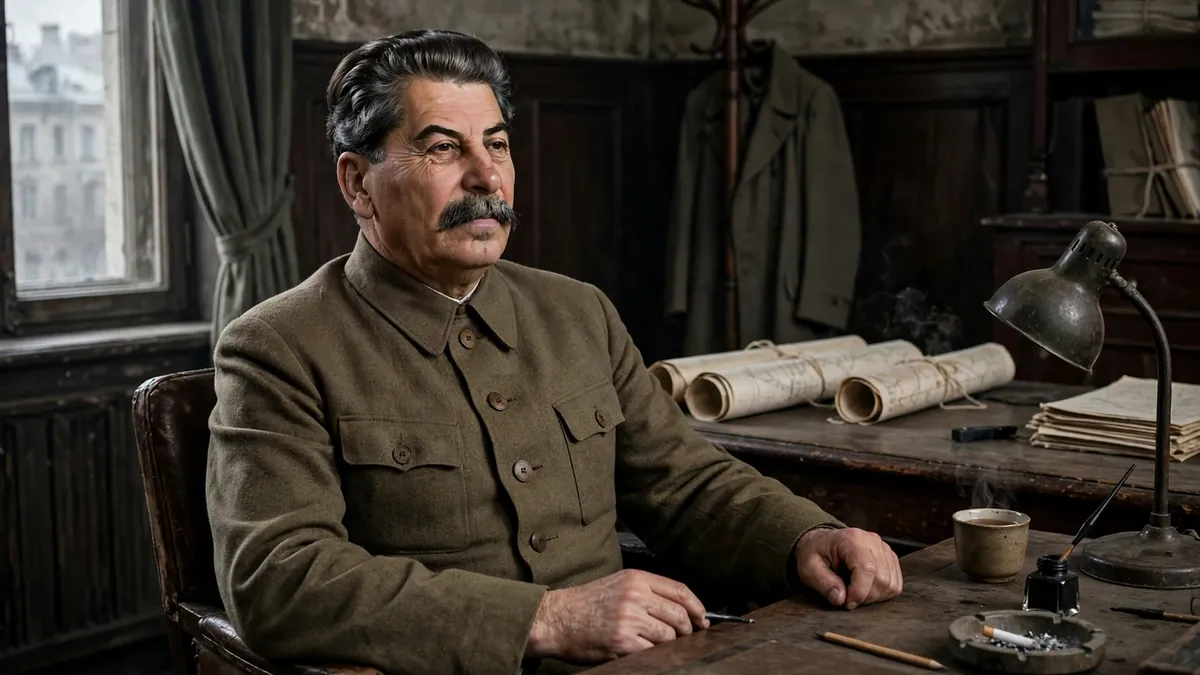
Joseph Stalin (18 December 1878 – 5 March 1953), born Ioseb Besarionis dze Jughashvili, was a Soviet politician and revolutionary who led the Soviet Union from the mid-1920s until his death in 1953, holding the post of General Secretary of the Communist Party from 1922 to 1952 and serving as the country’s premier from 1941 to 1953.
Under his leadership the Soviet Union was transformed from a largely agrarian country into a major industrial power through the Five-Year Plans and collectivisation, at a human cost measured in millions of deaths from famine, purges and forced labour. During the Second World War he led the Soviet Union through the German invasion of 1941, the defence of Moscow and Stalingrad, and the advance to Berlin in 1945, and he took part in the Allied conferences at Tehran, Yalta and Potsdam that shaped the post-war order.
Historians continue to debate the scale and causes of the deaths under his rule, but the documentary record — including Soviet archives opened after 1991 — establishes that his policies caused mass suffering on a scale few leaders in history have matched.
2. Key Facts
| Born | 18 December [O.S. 6 December] 1878, Gori, Tiflis Governorate, Russian Empire (now Georgia) |
| Died | 5 March 1953 (aged 74), Kuntsevo Dacha, near Moscow, Soviet Union |
| Nationality | Georgian, Soviet |
| Role / Office | General Secretary of the Communist Party of the Soviet Union, 1922–1952; Chairman of the Council of Ministers (Premier), 1941–1953; leader of the USSR from the mid-1920s |
| Known for | Five-Year Plans and collectivisation; the Great Purge; leadership of the USSR in the Second World War; the Molotov–Ribbentrop Pact |
| Spouse / Family | Ekaterina Svanidze (married 1906, died 1907); Nadezhda Alliluyeva (married 1919, died 1932); children Yakov, Vasily and Svetlana |
3. Early Life and Education
Joseph Stalin was born Ioseb Besarionis dze Jughashvili on 18 December 1878 in Gori, a small town in Georgia, then part of the Russian Empire. He was the only surviving child of Besarion Jughashvili, a cobbler, and Ekaterina Geladze, a washerwoman. The family lived in poverty in a one-room house, and his father, according to later accounts, drank heavily and was violent toward his wife and son. Stalin’s mother was determined that her son should become a priest, and in 1888 he entered the church school in Gori, where he did well. In 1894 he won a scholarship to the Tbilisi Spiritual Seminary, the leading educational institution in Georgia, where he studied for the priesthood for five years.
At the seminary Stalin encountered forbidden books — the works of Karl Marx and other revolutionary writers — and he began to move in underground Marxist circles. He was expelled from the seminary in 1899, officially for failing to attend an examination, though the expulsion followed his involvement in revolutionary activity. He joined the Russian Social Democratic Labour Party in 1898 and became a full-time revolutionary organiser in the Caucasus, working under the underground name “Koba”, taken from a Georgian folk hero, and later adopting the name “Stalin”, from the Russian word for steel (stal).
Between 1902 and 1913 Stalin was arrested at least six times and exiled to Siberia on several occasions, escaping from exile more than once. He took part in the 1905 revolution, helped organise strikes and bank robberies to fund the party — including the 1907 Tiflis bank robbery, in which some 40 people were killed — and in 1912 he was co-opted onto the Central Committee of the Bolshevik faction.
In 1913 he wrote Marxism and the National Question, a pamphlet on nationality policy that impressed Lenin and brought him to Lenin’s attention as a specialist on the subject. He spent the First World War largely in Siberian exile, returning to Petrograd in March 1917 after the February Revolution that overthrew the Tsar.
He played a secondary role in the October Revolution of 1917, editing the party newspaper Pravda and serving on the Military Revolutionary Committee, but he was not one of its leading figures. In the new Soviet government he became People’s Commissar for Nationalities, a post that gave him responsibility for the non-Russian peoples of the former empire.
4. Rise to Prominence
Stalin’s rise to power was gradual, administrative and, to his rivals, almost invisible until it was too late. In April 1922, on Lenin’s proposal, he was appointed General Secretary of the Communist Party — a post that was then regarded as routine party administration. Stalin turned it into the centre of power.
As General Secretary he controlled appointments throughout the party, placing his supporters in key posts and building a network of loyal officials across the Soviet Union. Lenin, who had become ill after a series of strokes, grew alarmed: in his “Testament” of December 1922, dictated shortly before his final stroke, Lenin described Stalin as “too rude” and suggested that the party consider removing him from the post.
After Lenin’s death in January 1924, the Central Committee chose not to act on the Testament, and Stalin remained in place.
Over the next four years Stalin outmanoeuvred each of his rivals in turn. He allied first with Grigory Zinoviev and Lev Kamenev against Leon Trotsky, the most prominent of Lenin’s lieutenants, and had Trotsky removed from the leadership in 1925 and expelled from the party in 1927.
He then turned against Zinoviev and Kamenev themselves, and finally against Nikolai Bukharin, the leader of the party’s right wing, who opposed Stalin’s plan for the rapid collectivisation of agriculture. By 1929 Stalin was the unchallenged leader of the Soviet Union.
Trotsky was exiled, first to Central Asia and then, in 1929, expelled from the Soviet Union altogether; he was assassinated in Mexico in 1940 by an agent of Stalin’s security service, the NKVD.
Stalin’s consolidation of power coincided with a radical change of economic policy. In 1928 he launched the first Five-Year Plan, which set ambitious targets for heavy industry — steel, coal, electricity, machinery — and in 1929 he ordered the collectivisation of agriculture, forcing peasant households into collective farms.
The aim, as Stalin stated it, was to build “socialism in one country” and to make the Soviet Union capable of defending itself against capitalist states. The results were mixed and the costs severe: industrial output grew rapidly, and new industrial cities such as Magnitogorsk were built from nothing, but agriculture was disrupted, livestock numbers collapsed, and the countryside was thrown into crisis.
Resistance was met with deportation: hundreds of thousands of wealthier peasants, labelled kulaks, were arrested, deported to Siberia and Central Asia, or executed. Official Soviet records later showed about 390,000 deaths during the forced resettlement of dekulakisation, though historians note that the records are incomplete and the true figure is disputed.
5. Joseph Stalin’s Role in World War II
Stalin’s role in the Second World War falls into three phases: the pact with Germany and the expansion of Soviet territory in 1939–1941; the German invasion and the Soviet defence in 1941–1943; and the Soviet advance to victory and the shaping of post-war Europe in 1943–1945.
The pact with Germany, 1939–1941
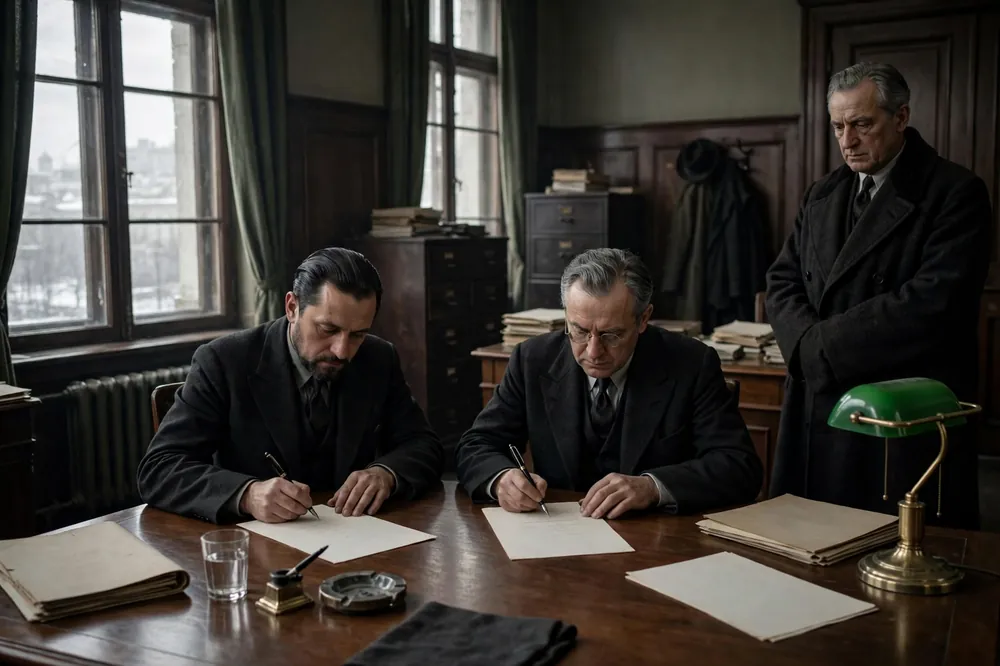
In August 1939, after negotiations with Britain and France over an alliance against Germany had failed, Stalin concluded the Molotov–Ribbentrop Pact — a non-aggression treaty with Nazi Germany, signed on 23 August 1939 by the Soviet foreign minister Vyacheslav Molotov and his German counterpart Joachim von Ribbentrop. A secret protocol, denied by the Soviet government until 1989, divided Eastern Europe into German and Soviet spheres of influence.
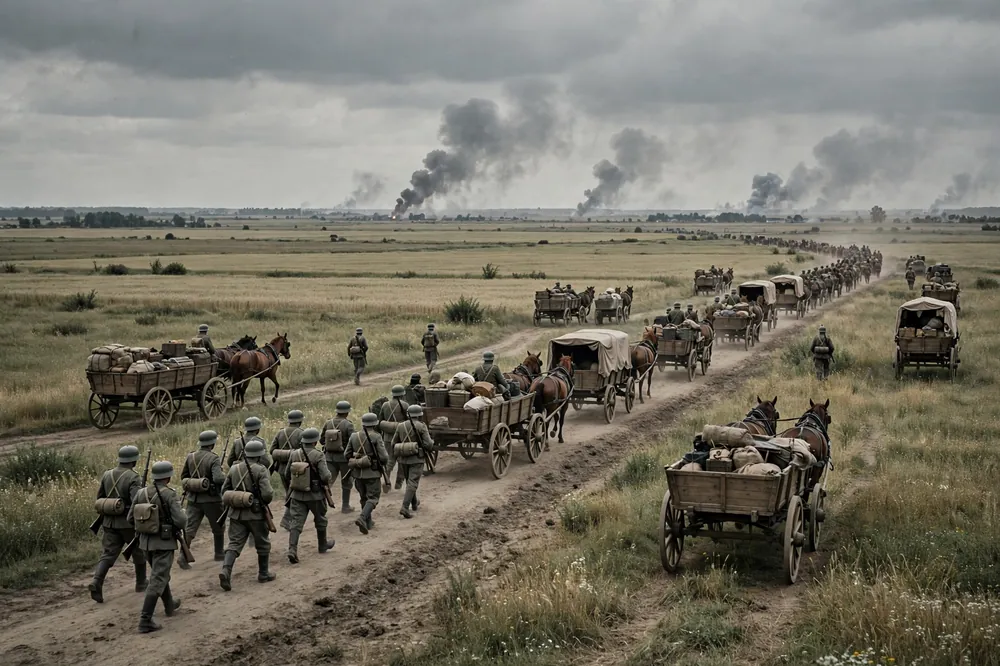
Under the pact, the Soviet Union annexed eastern Poland in September 1939 after Germany invaded from the west, and in 1939–1940 it occupied the Baltic states of Estonia, Latvia and Lithuania, seized Bessarabia from Romania, and fought the Winter War against Finland (November 1939 – March 1940), in which Soviet forces suffered heavy losses before forcing Finland to cede territory.
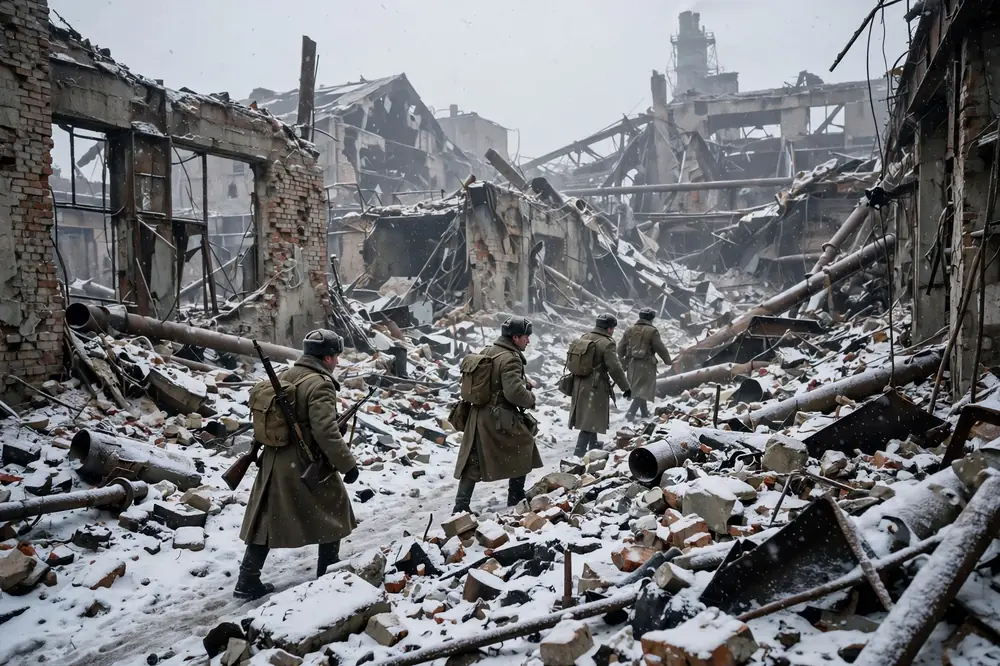
Stalin’s motives for the pact are a subject of continuing historical debate. Soviet accounts presented it as a necessary measure to buy time to prepare for a war that Stalin regarded as inevitable. Western historians have generally argued that Stalin also sought territorial gains and believed the pact would direct German expansion westward, away from the Soviet Union.
What is documented is that the pact gave Germany a secure eastern flank for its attack on Poland on 1 September 1939, which began the Second World War in Europe, and that it supplied Germany with Soviet raw materials — oil, grain and metals — under a trade agreement, until the German invasion of June 1941.
It also left the Soviet Union diplomatically isolated from Britain and France and, in the judgement of many historians, left the Red Army unprepared for the attack that followed.
The German invasion and the defence, 1941–1943
On 22 June 1941 Germany launched Operation Barbarossa, the invasion of the Soviet Union, with some three million men along a front stretching from the Baltic to the Black Sea. The attack achieved complete surprise: Soviet forces near the border were overrun, whole armies were encircled and destroyed, and by the autumn German forces had reached the outskirts of Moscow and Leningrad.
Stalin’s own conduct in the first days is documented in conflicting accounts: some sources describe him as withdrawn and unable to act for several days, while others record him working continuously in the Kremlin. What is established is that he did not address the Soviet people until 3 July 1941, when he called for a “war of the entire people” and for a scorched-earth policy in territory the enemy might take.
Stalin took direct control of the war effort. On 30 June 1941 he became chairman of the State Defence Committee, which concentrated all civil and military authority in his hands; in July he became People’s Commissar for Defence, and in August he assumed the title of Supreme Commander-in-Chief.
His early strategic decisions were costly: in the summer and autumn of 1941 he repeatedly ordered counter-attacks and forbade retreats, contributing to the encirclement of Soviet armies at Kyiv in September 1941, where German reports recorded some 665,000 Soviet prisoners — a figure historians treat as approximate, since German prisoner counts are regarded as inflated.
The Soviet Union nevertheless survived: in December 1941, Soviet forces under General Georgy Zhukov counter-attacked before Moscow and drove the Germans back, the first major German defeat of the war. Leningrad endured a siege of nearly 900 days (September 1941 – January 1944), in which more than a million civilians are estimated to have died, most from starvation.
The turning point in the east came at Stalingrad. From August 1942 to February 1943, Soviet forces defended the city on the Volga in street-by-street fighting, then encircled the German Sixth Army in Operation Uranus (November 1942). The German army surrendered on 2 February 1943, with some 91,000 men taken prisoner, according to Soviet records.
German and Soviet casualty figures for Stalingrad differ and remain disputed; commonly cited estimates put total losses on both sides at around two million killed, wounded or captured, though historians caution that the figures are approximate. After Stalingrad, the initiative passed to the Red Army, which won the Battle of Kursk in July–August 1943, the largest tank battle in history, and began the long advance westward.
Stalin’s wartime leadership combined centralised control with a willingness, after the disasters of 1941, to delegate operational decisions to professional generals such as Zhukov and Aleksandr Vasilevsky. He also presided over the evacuation of industry east of the Urals in 1941–1942 — more than 1,500 factories were moved, according to Soviet records — and over a war economy that, with Lend-Lease aid from the United States and Britain, out-produced Germany in tanks, aircraft and artillery by 1943–1944.
The Soviet Union bore the largest share of the fighting against Germany: of the approximately 5.3 million German military deaths in the war, the great majority occurred on the Eastern Front, and Soviet military and civilian deaths are estimated at around 27 million, according to the figures published by the Soviet and later Russian governments — a figure that is widely cited but whose precise breakdown remains a subject of research.
The advance to victory and the post-war settlement, 1943–1945
From 1943 onward, Stalin’s role was increasingly diplomatic as well as military. At the Tehran Conference (28 November – 1 December 1943) he met Winston Churchill and Franklin D. Roosevelt for the first time, and the three leaders agreed on the opening of a second front in France in 1944 and on the post-war division of Germany.
At Yalta (4–11 February 1945) they agreed on the structure of the United Nations, on the occupation zones of Germany, and on Soviet entry into the war against Japan — in return for which Stalin secured recognition of Soviet territorial gains in Eastern Europe. At Potsdam (July–August 1945), after Roosevelt’s death, Stalin negotiated with Churchill and the new American president, Harry Truman, over the administration of defeated Germany.
On 8 May 1945 Germany surrendered, and Soviet forces occupied Berlin. In August 1945, in accordance with the Yalta agreement, the Soviet Union declared war on Japan and occupied Manchuria. The war ended with the Soviet Union in control of Eastern Europe, a position Stalin consolidated in the following years through the installation of Communist governments in Poland, Romania, Bulgaria, Hungary, Czechoslovakia and East Germany.
The agreements at Yalta and Potsdam, and the extent to which Stalin honoured or broke them, remain subjects of historical debate: Western historians generally argue that Stalin used the Red Army’s presence to impose Communist rule regardless of the Yalta commitment to free elections, while Russian historians have argued that the agreements were ambiguous and that the Western Allies accepted Soviet security interests in Eastern Europe.
6. Key Decisions
Collectivisation and the Five-Year Plans (1928–1932). Stalin’s decision to force the collectivisation of agriculture and to drive rapid industrialisation through the Five-Year Plans was the foundation of his rule. It built the industrial base that later supplied the Soviet war effort, but it also produced the famine of 1932–1933 and the destruction of the peasantry as an independent class.
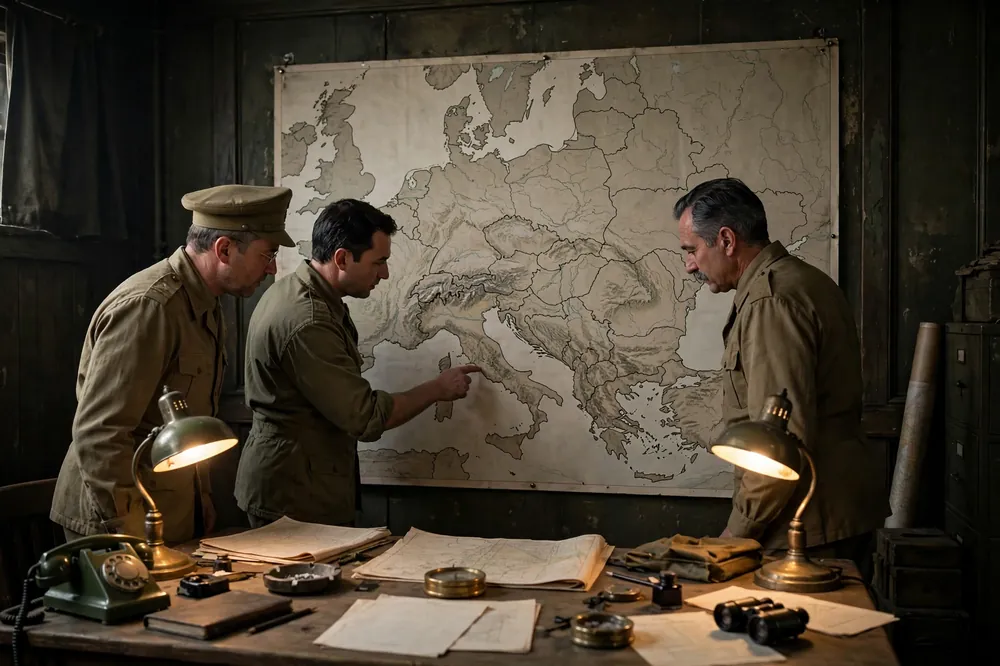
Historians debate whether the famine was a deliberate policy or the unintended result of requisitioning and mismanagement; the documentary record shows that grain was exported while peasants starved, that the state refused to reduce requisitions, and that the movement of starving peasants was restricted.
The scale of deaths — 5.5 to 6.5 million in the Soviet famine of 1932–1933, according to commonly cited estimates, with the Ukrainian famine (the Holodomor) accounting for a large share — is not in serious dispute; the question of intent remains contested.
The Great Purge (1936–1938). After the assassination of the Leningrad party leader Sergei Kirov in December 1934 — an event whose circumstances remain disputed, with some historians attributing it to Stalin’s security services and others treating it as the act of a lone gunman — Stalin launched a campaign of arrests, show trials and executions that reached its peak in 1937–1938.
According to official Soviet records opened after 1991, 681,692 people were executed for political charges in 1937–1938, and 777,975 judicial executions for political charges are recorded for 1929–1953 as a whole. The victims included party officials, military officers, intellectuals and ordinary citizens; among them were three of the five marshals of the Soviet Union and a large proportion of the senior officer corps, a loss that many historians argue weakened the Red Army in 1941.
The show trials of 1936–1938 convicted the surviving leaders of the October Revolution — Zinoviev, Kamenev, Bukharin and others — on charges of treason that were, according to the evidence presented at the trials and the subsequent historical record, fabricated.
The Molotov–Ribbentrop Pact (23 August 1939). The decision to sign a non-aggression pact with Germany, including its secret protocol dividing Eastern Europe, was Stalin’s most consequential diplomatic act before the war. It delayed the German attack on the Soviet Union by nearly two years, but it also enabled Germany’s attack on Poland, supplied Germany with Soviet materials, and, in the view of many historians, left the Soviet Union unprepared for Barbarossa.
The “Not One Step Back” order (Order No. 227, 28 July 1942). At the height of the German advance in 1942, Stalin issued an order forbidding retreat without authorisation and establishing penal battalions for soldiers who retreated. The order is documented and widely cited; its effects are debated. Soviet historians have presented it as a necessary measure in a desperate situation; Western historians have noted its harshness and the fact that it was applied unevenly, with many commanders ignoring it in practice.
The deportation of peoples (1941–1944). During the war Stalin ordered the deportation of entire nationalities accused of collaboration with Germany — including the Volga Germans, the Crimean Tatars, the Chechens and the Ingush — to Central Asia and Siberia. Official records show up to 400,000 deaths among deportees in the 1940s. The deportations were recognised as unlawful by the Soviet government itself in the 1950s, and the affected peoples were rehabilitated, though the Crimean Tatars were not permitted to return until the late 1980s.
7. Controversies
The controversies surrounding Stalin concern the scale of the deaths under his rule, the responsibility for them, and the balance between the Soviet Union’s wartime achievement and its human cost. They are among the most debated questions in twentieth-century history, and the figures are presented here with their sources and their margins of uncertainty.
The first controversy is the total number of deaths attributable to Stalin’s policies. Before 1991, when Soviet archives were closed, estimates ranged as high as 20 million or more. After the archives were opened, researchers found official records of 799,455 executions in 1921–1953, around 1.5 to 1.7 million deaths in the Gulag labour camps, some 390,000 deaths during dekulakisation, and up to 400,000 deaths among deportees — a total of about 3.3 million officially recorded victims in these categories.
Adding the 5.5 to 6.5 million deaths in the famine of 1932–1933, which some historians include and others do not, produces totals in the range of 9 to 10 million. Other historians, using demographic methods rather than official records, arrive at higher figures, and the range of 6 to 20 million is still cited in general accounts.
The scholarly consensus, as summarised in the Wikipedia article “Excess mortality in the Soviet Union under Joseph Stalin”, is that the archival figures are the most reliable for the categories they cover, but that they are incomplete — they exclude, for example, deaths from famine that were not recorded as executions, and they depend on records that were themselves compiled by the institutions responsible for the repression.
The second controversy is the Holodomor, the famine in Ukraine in 1932–1933. Historians agree that millions died and that Soviet policy — forced requisitioning of grain, the refusal to reduce quotas, and restrictions on movement — made the famine far worse than it would otherwise have been.
They disagree on whether the famine was deliberately intended to destroy the Ukrainian peasantry and Ukrainian national identity, which would make it a genocide under the definition used by the United Nations, or whether it was the result of a policy of collectivisation applied across the Soviet Union that produced famine in Ukraine, Kazakhstan and the Volga region alike.
The Ukrainian parliament and the parliaments of a number of other countries have recognised the Holodomor as a genocide; the Russian government has not. This article records the disagreement rather than resolving it.
The third controversy is the Katyn massacre. In the spring of 1940, on the basis of a note from the NKVD chief Lavrentiy Beria that Stalin approved, some 22,000 Polish officers and other prisoners were executed by the NKVD and buried in the Katyn forest and elsewhere. The Soviet government blamed Germany for the massacre until 1990, when the Soviet president Mikhail Gorbachev acknowledged Soviet responsibility. The documentary evidence — including Beria’s note of 5 March 1940, bearing Stalin’s signature — is now accepted by historians as establishing Soviet responsibility.
The fourth controversy concerns Stalin’s military leadership in 1941–1942. Soviet-era accounts presented Stalin as a far-sighted commander; Western accounts of the Cold War period presented him as an incompetent who ignored intelligence warnings of the German attack and whose orders caused the encirclements of 1941.
More recent scholarship, based on Soviet archives, presents a mixed picture: Stalin did receive warnings of the attack and discounted them, believing Germany would not attack before defeating Britain; his orders in 1941 were often unrealistic; but he also learned, delegated more to his generals after 1942, and presided over the industrial and organisational effort that sustained the Soviet war machine.
The judgement of historians is that Stalin was neither the military genius of Soviet propaganda nor the blundering amateur of Cold War caricature, but a political leader whose strengths lay in organisation and will, and whose weaknesses lay in military judgement.
8. Later Life and Death
After the war, Stalin’s rule entered a final phase of consolidation and renewed repression. He oversaw the reconstruction of the Soviet economy, the development of the Soviet atomic bomb — tested in August 1949 — and the establishment of Communist governments across Eastern Europe. Domestically, the late 1940s saw a new campaign against “cosmopolitanism”, directed in practice against Jewish intellectuals, and the persecution of returning Soviet prisoners of war, many of whom were sent to the Gulag on suspicion of collaboration. In 1952 Stalin abolished the post of General Secretary, replacing it with a Secretariat, though he retained his position as the party’s leader in practice.
In his final months Stalin was preparing another purge — the “Doctors’ Plot”, announced in January 1953, in which a group of mostly Jewish doctors was accused of plotting to murder Soviet leaders. The accused doctors were arrested and interrogated; the case was dropped after Stalin’s death, and the doctors were released in April 1953.
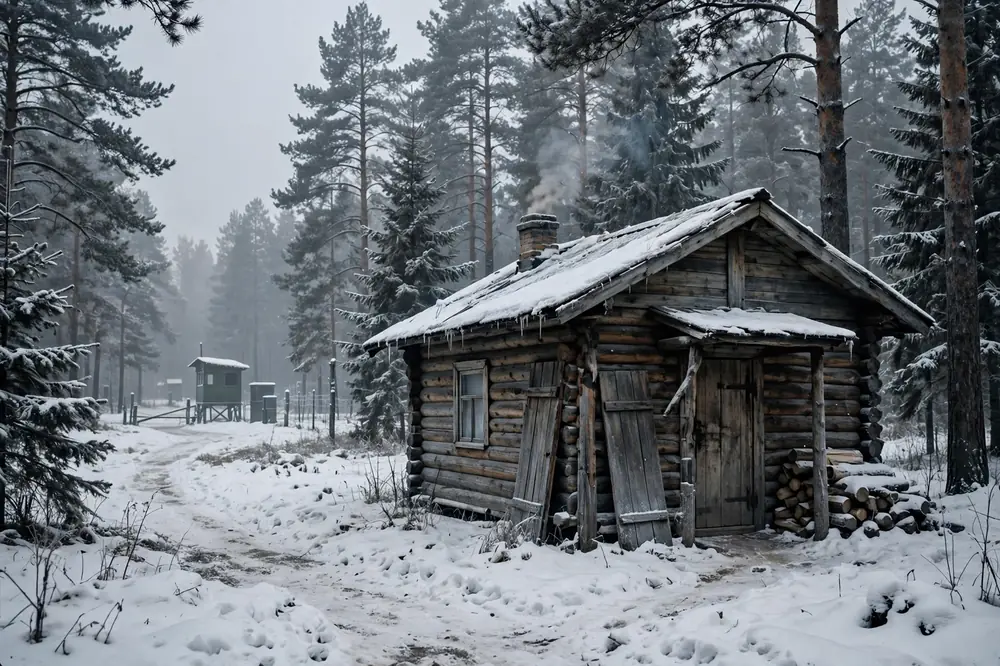
On the night of 28 February – 1 March 1953, Stalin suffered a stroke at his dacha at Kuntsevo, outside Moscow. His guards, according to several accounts, were afraid to enter his room uninvited and did not find him for hours; doctors were slow to be called. He died on 5 March 1953, aged 74. The official cause of death was a cerebral haemorrhage.
His body was embalmed and placed alongside Lenin’s in the mausoleum on Red Square, where it remained until 1961, when, as part of the de-Stalinisation programme under Nikita Khrushchev, it was removed and buried in the Kremlin wall.
9. Legacy of Joseph Stalin
Stalin’s legacy is contested in a way that few historical figures’ legacies are. In Russia, public opinion remains divided: polls in the 2010s and 2020s have consistently shown a substantial proportion of Russians regarding Stalin’s role in history as positive, citing the industrialisation of the country and the victory over Germany, while others regard him as responsible for mass repression.
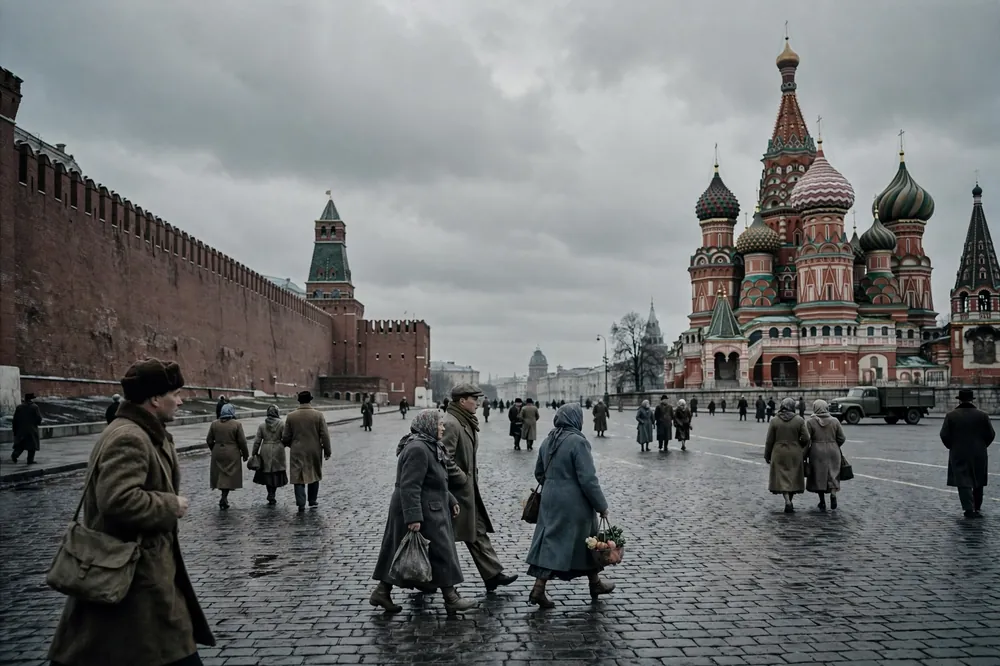
In Ukraine, Georgia and the Baltic states, his legacy is assessed very differently, with the famine of 1932–1933 and the deportations remembered as crimes against their peoples. In Western historiography, the dominant assessment since the opening of the archives has been that Stalin’s policies caused the deaths of millions of Soviet citizens and that the Soviet victory in the war, though real, was achieved at a cost that the Soviet people bore disproportionately.
The material legacy is concrete: the industrial base built under the Five-Year Plans, the Soviet Union’s status as a superpower after 1945, the division of Europe that lasted until 1989–1991, and the system of Communist states in Eastern Europe that Stalin established.
The institutional legacy includes the Gulag system, the security apparatus of the NKVD and its successors, and the model of one-party rule that was exported to other Communist states. The historiographical legacy includes the archives themselves: the opening of Soviet records after 1991 made it possible, for the first time, to establish the scale of the repression from the regime’s own documents, and the figures cited in this article — 681,692 executions in 1937–1938, 799,455 executions in 1921–1953, and the famine estimates — come from those records and from the demographic research based on them.
10. Assessment by Historians
Historians assess Joseph Stalin as one of the most consequential leaders of the twentieth century, and one whose record combines large-scale state-building with large-scale repression. The assessment of his economic policy is that the Five-Year Plans did industrialise the Soviet Union at a speed no market economy had achieved, and that the industrial base they created was a precondition for the Soviet Union’s survival in 1941–1945; the same assessment holds that the human cost — the famine, the deportations and the destruction of the peasantry — was not a necessary price, and that the same industrialisation could have been achieved with far fewer deaths, as the experience of other countries suggests.
The historian Stephen Kotkin, in his three-volume biography, argues that Stalin’s actions are best understood through the ideology he held — Marxism-Leninism as he interpreted it — rather than through personal pathology alone, and that the terror was, in Stalin’s own terms, a tool for building socialism rather than an end in itself.
Other historians, notably Robert Conquest, have emphasised the personal responsibility of Stalin for the terror and have argued that the scale of the killing reflects decisions he made directly, including his signature on execution lists.
On the war, historians generally credit Stalin with two things: holding the Soviet state together in 1941, when its collapse seemed possible, and presiding over the industrial and military effort that defeated Germany on the Eastern Front. They also record his failures: the dismissal of intelligence warnings before Barbarossa, the costly orders of 1941, and the pact with Germany that preceded the war.
The judgement of the historian Richard Overy is that Stalin’s war leadership was “brutal, wasteful and, in the end, effective” — a formulation that captures the division in the historiography between those who emphasise the outcome and those who emphasise the cost.
The de-Stalinisation of 1956, when Khrushchev denounced Stalin’s “cult of personality” in his secret speech to the Twentieth Party Congress, remains the starting point for the official Soviet reassessment, and the debate it opened — between Stalin as state-builder and Stalin as the author of mass repression — has not been closed.
Frequently Asked Questions
Who was Joseph Stalin? Joseph Stalin (1878–1953) was a Soviet politician who led the Soviet Union from the mid-1920s until his death in 1953, as General Secretary of the Communist Party (1922–1952) and as premier (1941–1953).
How many people died under Stalin? Estimates vary. Soviet archives opened after 1991 record about 3.3 million victims in the categories of executions, Gulag deaths, dekulakisation and deportations; adding the 5.5–6.5 million deaths in the famine of 1932–1933 gives totals of roughly 9–10 million. Other estimates, using demographic methods, range higher, up to 20 million.
What was the Great Purge? The Great Purge (1936–1938) was a campaign of arrests, show trials and executions directed by Stalin against party officials, military officers, intellectuals and ordinary citizens. Official Soviet records show 681,692 executions for political charges in 1937–1938.
What was the Molotov–Ribbentrop Pact? A non-aggression treaty between the Soviet Union and Nazi Germany, signed on 23 August 1939, with a secret protocol dividing Eastern Europe into German and Soviet spheres of influence. It was followed by the Soviet annexation of eastern Poland and the occupation of the Baltic states.
What was Stalin’s role in World War II? He led the Soviet Union through the German invasion of 1941, the defence of Moscow and Stalingrad, and the advance to Berlin in 1945, and he took part in the Allied conferences at Tehran, Yalta and Potsdam. The Soviet Union bore the largest share of the fighting against Germany on the Eastern Front.
How did Joseph Stalin die? He died on 5 March 1953, aged 74, of a cerebral haemorrhage (stroke) at his dacha at Kuntsevo, near Moscow.
Related articles
Sources
- Wikipedia, “Joseph Stalin” — consolidated biography: birth 18 December 1878, General Secretary 1922–1952, premier 1941–1953, death 5 March 1953.
- Wikipedia, “Excess mortality in the Soviet Union under Joseph Stalin” — archival figures: 799,455 executions 1921–1953; 681,692 in 1937–1938; 1.5–1.7 million Gulag deaths; 5.5–6.5 million famine deaths 1932–1933; total about 3.3 million officially recorded victims.
- Encyclopaedia Britannica, “Joseph Stalin” (britannica.com) — biography, rise to power, Five-Year Plans, wartime leadership.
- Stephen Kotkin, Stalin: Paradoxes of Power, 1878–1928; Waiting for Hitler, 1929–1941; Total War and Aftermath (Penguin, 2014–2017) — three-volume scholarly biography.
- Robert Conquest, The Great Terror: A Reassessment (Oxford University Press, 1990) — the purges and their scale.
- Richard Overy, Russia’s War: A History of the Soviet War Effort, 1941–1945 (Penguin, 1997) — the Soviet war effort and Stalin’s leadership.
- Timothy Snyder, Bloodlands: Europe Between Hitler and Stalin (Basic Books, 2010) — famine, terror and the Soviet–German war.
- Russian State Archive of Socio-Political History (RGASPI) and the State Archive of the Russian Federation (GARF) — Soviet records opened after 1991, including NKVD execution statistics and Beria’s note of 5 March 1940 on Katyn.
Further reading
- Simon Sebag Montefiore, Stalin: The Court of the Red Tsar (Weidenfeld & Nicolson, 2003).
- Sheila Fitzpatrick, On Stalin’s Team: The Years of Living Dangerously in Soviet Politics (Princeton University Press, 2015).