 WAR ATLAS MILITARY HISTORY MAGAZINE · WWI — WWII
The National WWII Museum, New Orleans
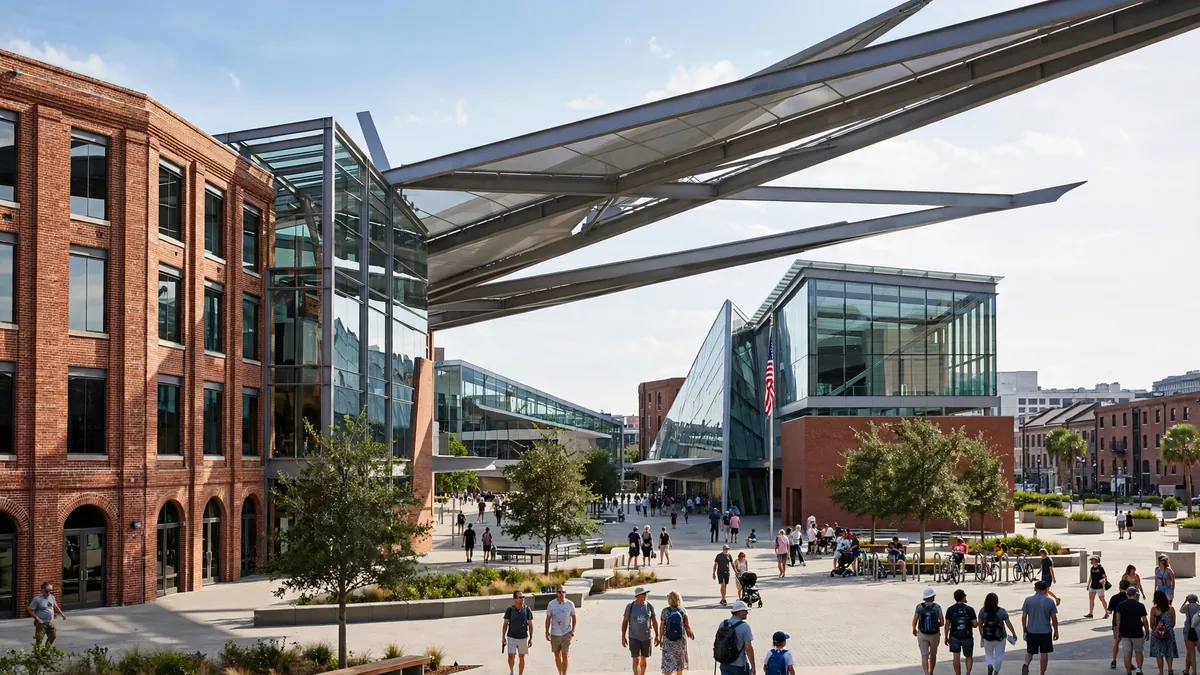
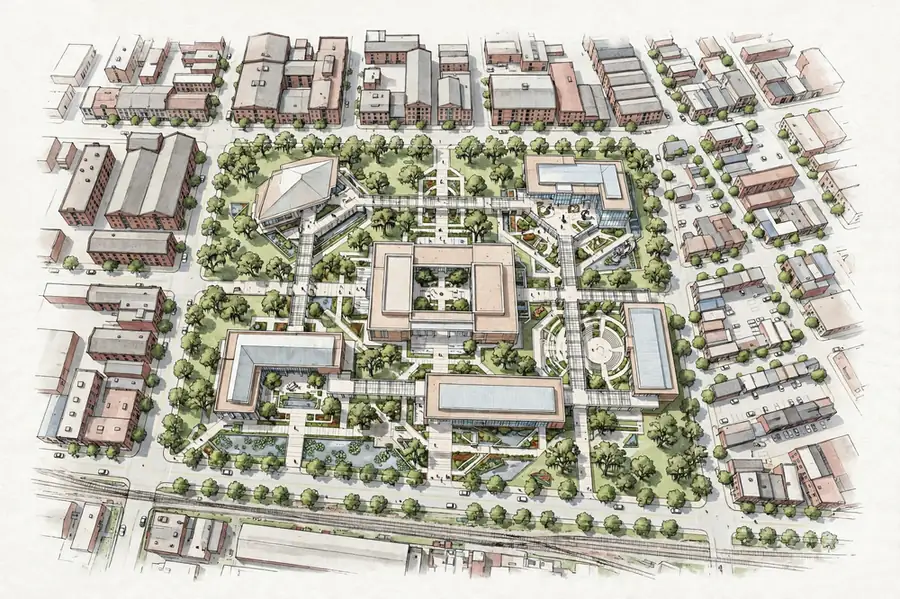
The National WWII Museum in New Orleans, Louisiana, is the United States’ official museum of the Second World War. Opened on 6 June 2000 as The National D-Day Museum and designated by Congress as the nation’s official WWII museum, it tells the story of the American experience in the war that changed the world — why it was fought, how it was won, and what it means today. Spread across a six-acre campus in the city’s Historic Warehouse District, the museum holds more than 250,000 artifacts, from a Higgins boat and a B-17 bomber to the personal letters of ordinary servicemen and women, and it draws visitors from around the world who come to understand the price of freedom.
1. Key Facts
| What | The National WWII Museum — the official WWII museum of the United States |
| Where | 945 Magazine Street, Historic Warehouse District, New Orleans, Louisiana, USA |
| When | Opened 6 June 2000 as The National D-Day Museum; designated America’s National WWII Museum by Congress in 2003–2004; renamed The National WWII Museum in 2006 |
| Commemorated | The American experience in World War II — the 16 million Americans who served and the men and women of the Home Front |
| Site status | Open daily to the public; a multi-building campus of pavilions, theatres and a research centre |
2. Background
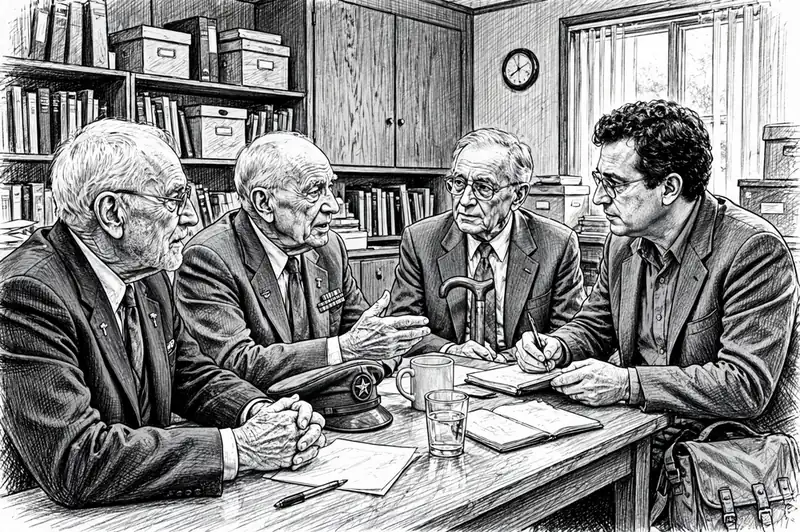
The museum was the idea of the historian Stephen E. Ambrose, author of D-Day and Band of Brothers, and Dr. Gordon H. “Nick” Mueller. Ambrose had interviewed hundreds of D-Day veterans and believed their stories needed a permanent home — and needed it soon, while the veterans were still alive to tell them. New Orleans was a deliberate choice: it was the city where Andrew Higgins built the landing craft, the Higgins boat (LCVP), that carried American troops ashore in Normandy, North Africa, Sicily and the Pacific. General Dwight D. Eisenhower later said Higgins was “the man who won the war for us”, because without his boats the great amphibious landings of the war would have been impossible.
The museum opened on 6 June 2000, the 56th anniversary of D-Day, with a single pavilion devoted to the Normandy landings. Its ambition from the start was larger than one battle. Within a few years Congress designated it the nation’s official World War II museum, and it grew — pavilion by pavilion, gallery by gallery — into a museum of the whole American war: the European and Pacific campaigns, the Home Front, the Holocaust, the liberation of the camps, and the war’s aftermath. Today it is consistently ranked among the top museums in the United States and the top attraction in New Orleans.
3. What Happened
The founding and the first pavilion
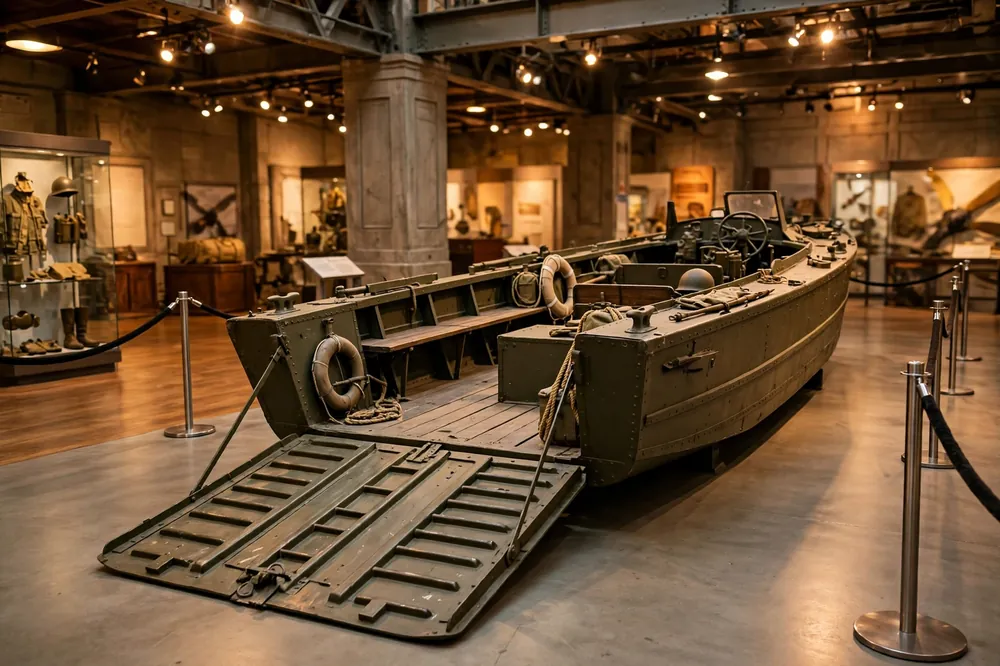
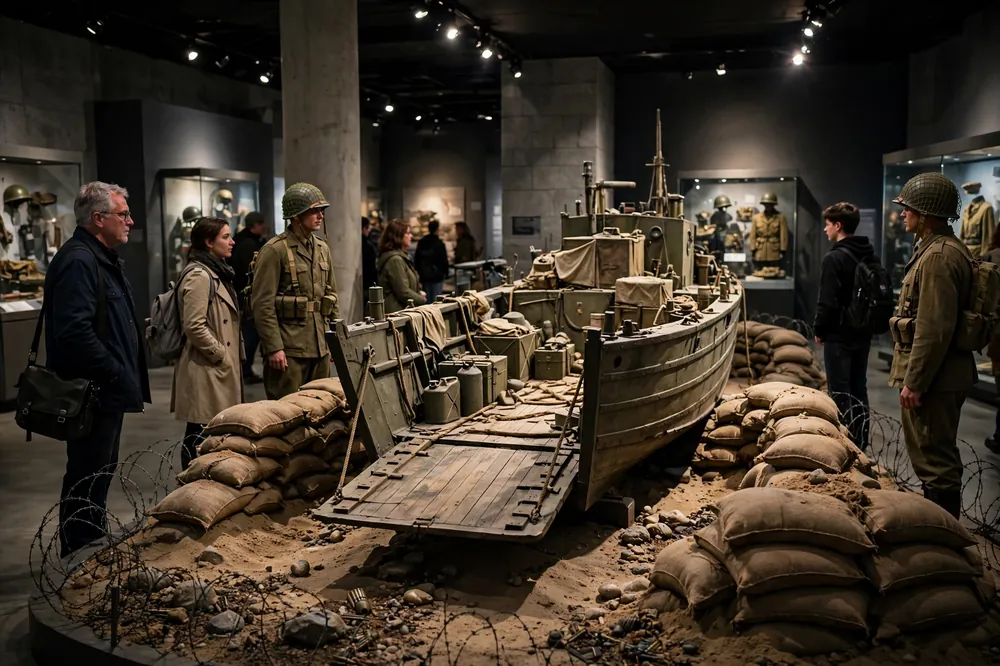
The museum’s founding story is inseparable from the Higgins boat. In the 1930s Andrew Higgins designed a shallow-draft boat for use in the Louisiana bayous; adapted for the military, it became the LCVP — Landing Craft, Vehicle, Personnel — the craft that put infantry ashore on D-Day and on a hundred Pacific beaches. The museum’s first home, the Louisiana Memorial Pavilion, was built around that story, and a Higgins boat remains one of its most visited artifacts. The opening on 6 June 2000 drew D-Day veterans from across America, many of them returning to public remembrance for the first time in half a century.
Congressional designation and expansion
Congress designated the museum as America’s National World War II Museum in 2003, and it was renamed The National WWII Museum in 2006. The designation was a recognition that the museum’s mission had outgrown a single battle. Over the following two decades the campus expanded to six acres and several pavilions. The Solomon Victory Theater opened with Beyond All Boundaries, a 4D cinematic experience narrated by Tom Hanks.
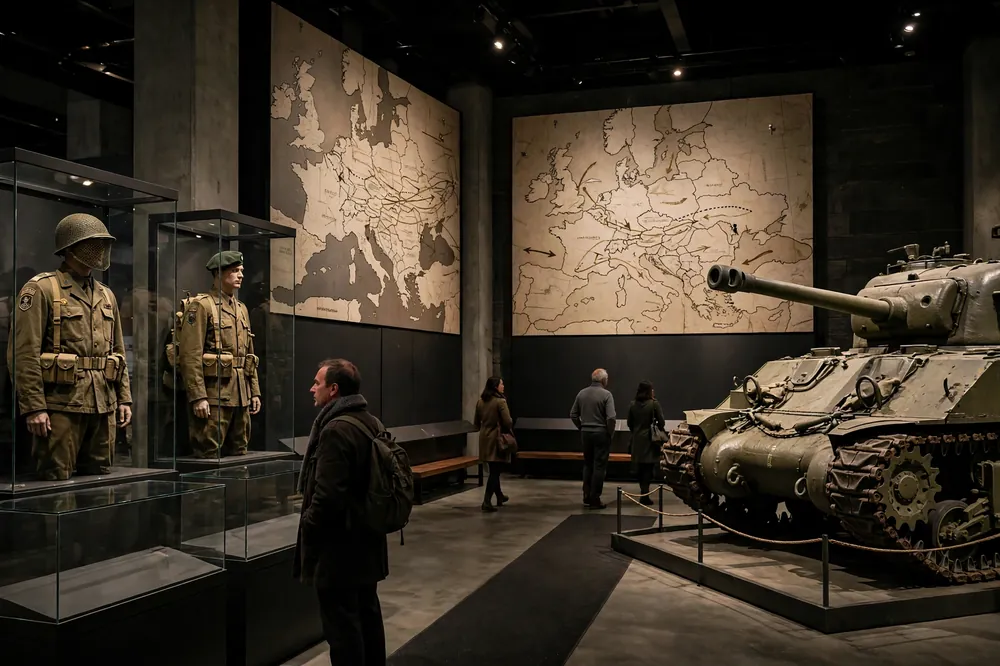
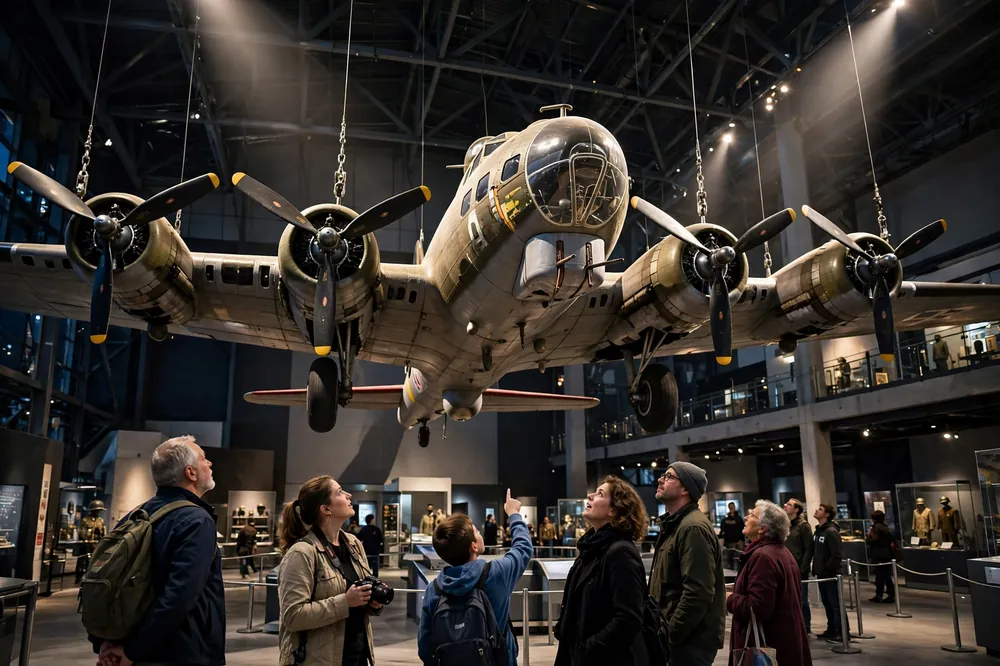
The US Freedom Pavilion: The Boeing Center opened to house the museum’s large aircraft, including a B-17E Flying Fortress suspended overhead. The Campaigns of Courage pavilion opened with two great galleries — Road to Berlin and Road to Tokyo — tracing the American campaigns in Europe and the Pacific through personal stories, artifacts and immersive environments.
The pavilions today
The campus is organised into pavilions, each covering a different dimension of the war. The Louisiana Memorial Pavilion holds the original D-Day exhibits, the Higgins boat, and galleries on the war’s origins and the Home Front. The Solomon Victory Theater shows Beyond All Boundaries and other films.
The Campaigns of Courage: European and Pacific Theaters pavilion contains Road to Berlin and Road to Tokyo, the museum’s largest galleries, covering more than 32,000 square feet. The US Freedom Pavilion displays restored aircraft — the B-17E, a Douglas C-47 Skytrain, a P-51 Mustang among them — and the Final Mission: USS Tang Submarine Experience, a 15-minute immersive simulation included in general admission.
The Arsenal of Democracy gallery shows how American industry and ordinary families mobilised for war, including a recreated 1940s home. The John E. Kushner Restoration Pavilion lets visitors watch conservators at work restoring vehicles and artifacts, and the Hall of Democracy houses research, education and special exhibitions.
The Arsenal of Democracy and the Home Front
The museum gives as much space to the Home Front as to the battlefield, and the Arsenal of Democracy gallery is where that story is told. The gallery recreates an American home of the 1940s and shows how ordinary life changed: rationing of food, petrol and clothing; the collection of scrap metal; war-bond drives; and the movement of millions of women into factories, including the aircraft and shipbuilding plants of the Gulf Coast.
New Orleans itself was part of that mobilisation: Higgins Industries and other local firms employed thousands of workers, many of them women and African Americans, building the boats and equipment the war required. The gallery’s point is a simple one, and it is made without rhetoric: the war was won not only by soldiers but by the industrial output and the daily sacrifices of the people who stayed at home.
The Dog Tag Experience and oral history
The museum’s most widely discussed device is the Dog Tag Experience. Each visitor is given a dog tag bearing the name of a real person who took part in the war, and at stations through the galleries the visitor can follow that person’s story — where they served, what happened to them, and whether they came home.
The device works because it reverses the usual scale of a war museum: instead of millions, the visitor follows one. Behind it stands a larger effort. The museum has recorded thousands of oral histories with veterans and Home Front workers, and its collection of letters, diaries and photographs — most of it donated by families — is the raw material of the galleries.
The museum’s researchers also help families trace the service records of relatives, a service that has become more important as the generation that fought the war passes away.
4. The Site Today
Today the National WWII Museum is a six-acre, multi-building campus in the Warehouse District, a short walk from the French Quarter. It holds more than 250,000 artifacts — uniforms, weapons, vehicles, aircraft, photographs, diaries and letters — most of them donated by veterans and their families. Its oral-history collection preserves thousands of first-person accounts, and its research services help families trace the service of relatives who fought in the war.
The museum is also a living institution, not only a display. It runs educational programmes for schools across the United States, teacher training, student essay and video contests, and public lectures and commemorations — on D-Day, on Victory in Europe Day and Victory over Japan Day, and on Holocaust Remembrance Day. Its Dog Tag Experience gives each visitor the story of a real serviceman or woman to follow through the galleries. Special exhibitions rotate through the year, and the museum’s online collections and digital exhibits reach visitors who cannot travel to New Orleans.
The Higgins boat: the craft that made the landings possible
The museum’s founding artifact is the Higgins boat, and the museum tells its story in detail because the boat connects New Orleans to the war more directly than any other object. Andrew Higgins, a Louisiana boat builder, designed a shallow-draft craft for the bayous and swamps of the Gulf Coast.
Adapted for the military, it became the LCVP — Landing Craft, Vehicle, Personnel — a 36-foot boat with a bow ramp that could carry 36 men, or a jeep, or 8,000 pounds of cargo, and put them ashore on a beach.
Higgins Industries in New Orleans built thousands of them, and they were used in every major American amphibious landing of the war: in North Africa, in Sicily and Italy, at Normandy, and on the islands of the Pacific. General Eisenhower’s remark that Higgins was “the man who won the war for us” is quoted in the museum, and it is presented as Eisenhower’s judgement rather than as the museum’s own claim.
The boat on display in the Louisiana Memorial Pavilion is a restored example, and visitors can walk around it and see the ramp, the shallow hull and the simplicity of the design — a design that was, in the museum’s telling, the product of a civilian boat builder solving a military problem with the materials and the knowledge of his own place.
A walk through the pavilions
A visit to the museum is best understood as a walk through the war in the order the museum presents it. The Louisiana Memorial Pavilion begins with the origins of the war and the attack on Pearl Harbor, and with the story of the Higgins boat.
The Solomon Victory Theater shows Beyond All Boundaries, the film that gives the visitor the arc of the whole American war in under an hour. The Campaigns of Courage pavilion is the heart of the museum: Road to Berlin follows the American campaign from North Africa through Sicily, Italy and Normandy to the defeat of Germany, and Road to Tokyo follows the Pacific campaign from Pearl Harbor through Midway, Guadalcanal, Iwo Jima and Okinawa to the surrender of Japan.
Each gallery is built around the testimony of the men and women who were there, with artifacts — uniforms, weapons, vehicles, letters — placed alongside their words. The US Freedom Pavilion holds the large objects: the B-17E Flying Fortress suspended overhead, the C-47 that flew on D-Day, and the tanks and trucks of the ground war.
The Arsenal of Democracy gallery closes the circle, returning the visitor to the home front and to the question the museum asks at the end: what did the war cost, and what did it mean. The walk takes three to five hours at a minimum, and the museum’s own advice — to take a full day, or to return on a second day — is worth following.
5. Victims and Remembrance
The museum commemorates the more than 16 million Americans who served in the armed forces during World War II and the more than 400,000 who died — a figure the museum and the US Department of Veterans Affairs both cite. Its galleries insist on the individual behind the number: the dog tags, the letters home, the photographs of young men and women who never came back. The Road to Berlin and Road to Tokyo galleries end not with victory alone but with the cost — the dead, the wounded, the prisoners, and the families who waited.
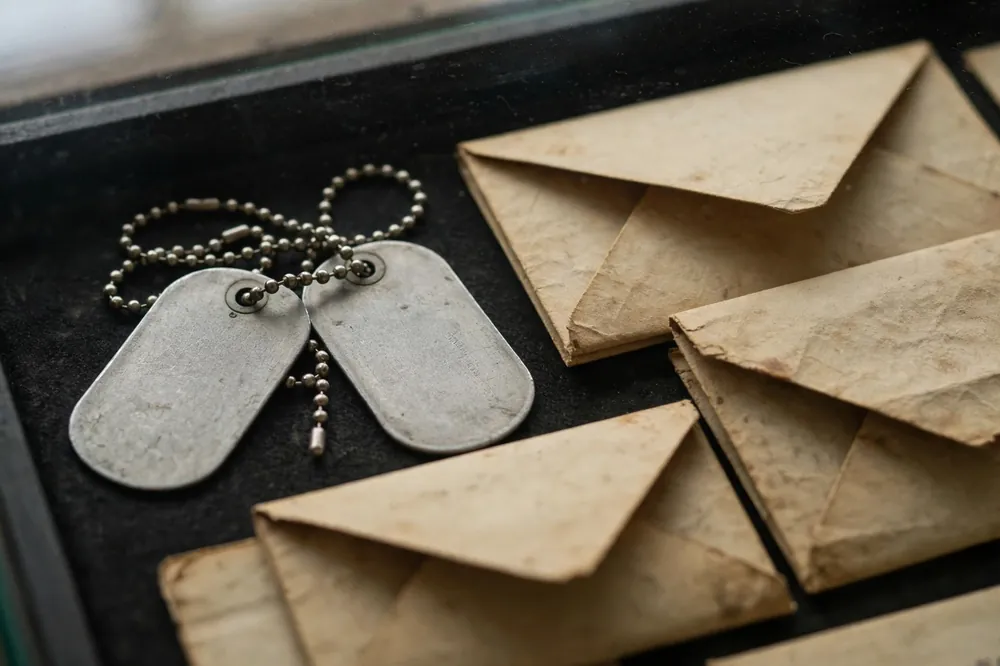
Remembrance here is deliberately American in focus but not narrow. The museum’s exhibits on the Holocaust, on the liberation of concentration camps by American troops, and on the service of African American, Japanese American, Native American and women service members widen the story beyond the battlefield. Annual commemorations bring veterans, families and schoolchildren together, and the museum records the testimony of the remaining veterans of the war while it still can — a race against time, as the youngest veterans of the war are now approaching 100 years old.
6. Education and Research
Education is the museum’s stated second mission after remembrance. Its education department produces classroom resources, distance-learning programmes and teacher institutes used across the United States, and its research centre — including the Jenny Craig Institute for the Study of War and Democracy — supports historians working on the war. The museum’s oral-history programme has recorded thousands of interviews with veterans and Home Front workers, and its collections are increasingly available online for researchers and families.
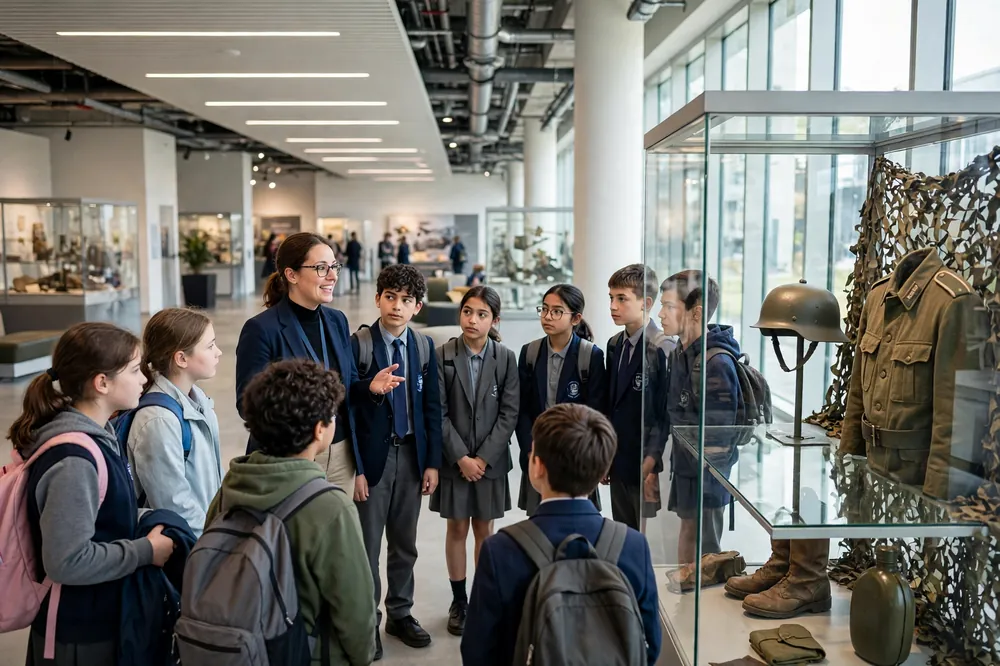
For visitors, the most direct form of education is the Dog Tag Experience: each visitor receives the identity of a real participant in the war and can follow that person’s story at interactive stations through the galleries, learning what happened to them. It is a small device with a large effect — it turns a museum of millions into the story of one person.
The collections: what the objects say
The museum’s collection of more than 250,000 artifacts is the largest of its kind, and it is the objects, as much as the galleries, that carry the story. Among them are the aircraft of the US Freedom Pavilion: the B-17E Flying Fortress on display, known as My Gal Sal, was forced down in Greenland in 1942 and recovered from the ice decades later, then restored for display.
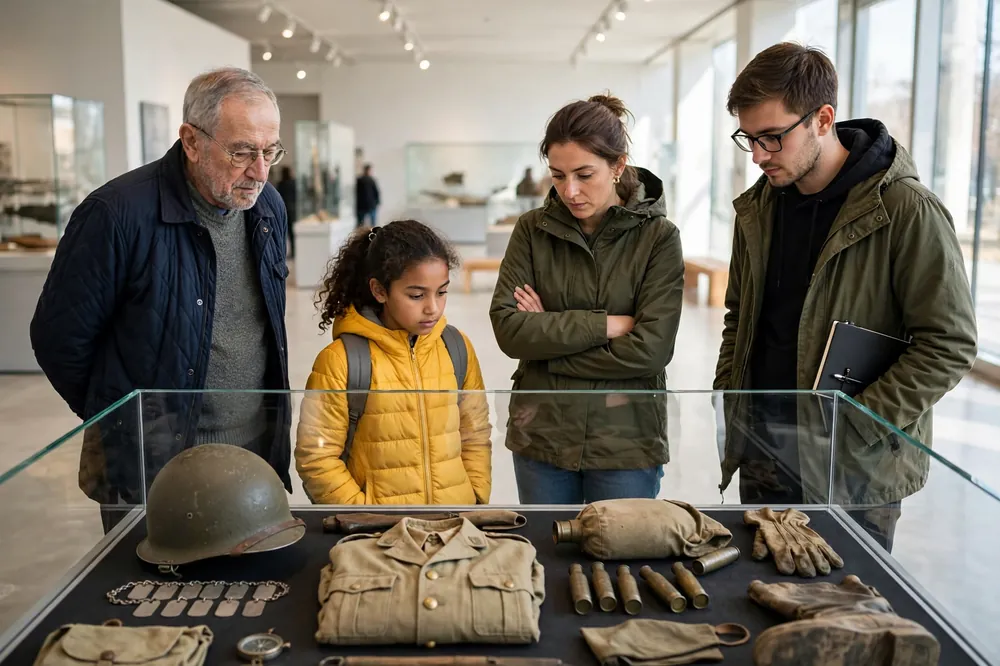
The C-47 Skytrain in the same pavilion flew on D-Day. The collection also holds the small things that the large galleries cannot: a soldier’s Bible carried through the war, a nurse’s uniform, a child’s gas mask from the Home Front, a letter written the night before D-Day and never sent.
Most of the collection was donated by veterans and their families, and the museum’s staff record the story of each donation — who owned the object, where it was used, and how it came to the museum. That practice is the museum’s answer to the question of how a collection of a quarter of a million objects can remain personal: each object arrives with a name attached, and the galleries are built from those names.
7. Visiting Information
The museum is open daily from 9:00 a.m. to 5:00 p.m., and is closed on Mardi Gras Day, Thanksgiving Day, Christmas Eve and Christmas Day (information from the museum’s official visitor page, nationalww2museum.org). Admission at the time of writing is listed on the official site at $37 for adults, $34 for seniors (65+), and $27 for students and military personnel, with children under 5 free; a $15 second-day pass is available. Beyond All Boundaries and the Freedom Theater are separate ticketed experiences, each $9, or $12 combined. Prices change, so check the official site before visiting.
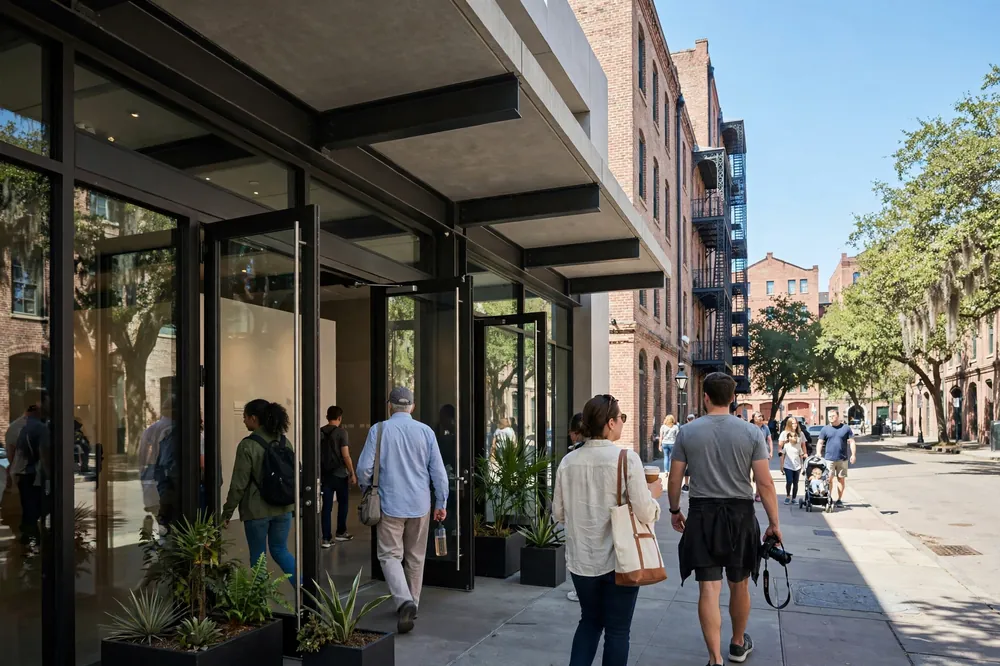
The museum recommends at least three to five hours for a visit, and many visitors take a full day — or return on a second day. Tickets can be bought in advance online, which the museum recommends, especially for Beyond All Boundaries, which often sells out. The campus is in the Warehouse District at 945 Magazine Street, between Magazine and Camp Streets, near the French Quarter; parking is available nearby. The museum is fully accessible, and guided tours, audio guides and family activities are available. Check the official site for current hours, prices and special-exhibition schedules before travelling.
8. Commemoration and Education
The museum online
For visitors who cannot travel to New Orleans, the museum maintains a substantial online presence. Its website carries digitised photographs, documents and oral histories from the collection, virtual tours of the galleries, and educational resources for teachers and students, including lesson plans and distance-learning programmes that bring the museum’s educators into classrooms across the United States.
The museum’s digital exhibits cover subjects the physical galleries cannot always accommodate, and its social media and video channels carry lectures, interviews with veterans, and recordings of commemorative ceremonies. The online collection is also a research tool: families searching for the service records of relatives can use it to begin their search, and researchers can request access to material that has not yet been digitised.
The museum’s position is that the collection belongs to the public, and that making it available online is part of the same mission as displaying it in New Orleans.
The museum marks the great anniversaries of the war — D-Day on 6 June, Victory in Europe Day on 8 May, Victory over Japan Day, and the anniversary of Pearl Harbor on 7 December — with ceremonies, lectures and the reading of names. It also hosts Holocaust Remembrance Day programmes and events honouring specific units and campaigns. Beyond New Orleans, its travelling exhibitions, online resources and the War, Memory, and the American Experience programmes carry the commemoration to schools and communities that cannot visit in person.
Anniversaries and public programmes
The museum’s public programme is built around the anniversaries of the war. On 6 June each year it marks D-Day; on 7 December it marks Pearl Harbor; and on 8 May and in August it marks the end of the war in Europe and in the Pacific.
The ceremonies bring together veterans, their families, and school groups, and they are deliberately personal: names are read, letters are read aloud, and the museum’s oral histories are played. The museum also hosts lectures by historians, book talks, and film screenings through the year, and its Victory Belles — a vocal trio in the style of the Andrews Sisters — perform songs of the 1940s at museum events, a reminder that the culture of the war years was part of the experience of the people who lived through them.
The museum’s special exhibitions rotate through the year, covering subjects from the art of the war to the experiences of particular units and communities, and its travelling exhibitions carry parts of the collection to museums across the United States.
Research and the study of war and democracy
The museum’s research arm, including the Jenny Craig Institute for the Study of War and Democracy, supports historians working on the Second World War and on the relationship between war and democratic societies. Its conferences and publications cover subjects the galleries can only touch on: the diplomacy of the war, the experience of occupied peoples, the role of intelligence, and the decisions — such as the use of the atomic bomb — that remain contested.
The museum’s online collections, including digitised photographs, documents and oral histories, are used by researchers and by families around the world. For a museum founded to preserve the stories of D-Day veterans, the research programme is a recognition that the stories do not end with the veterans: the questions the war raised continue to be argued, and the museum’s role is to provide the evidence on which the argument can be conducted.
9. Legacy
The National WWII Museum’s legacy is twofold. First, it preserved the memory of the American war at the moment it was about to slip from living memory into history books: it opened while D-Day veterans could still walk its galleries and tell their own stories, and it recorded them.
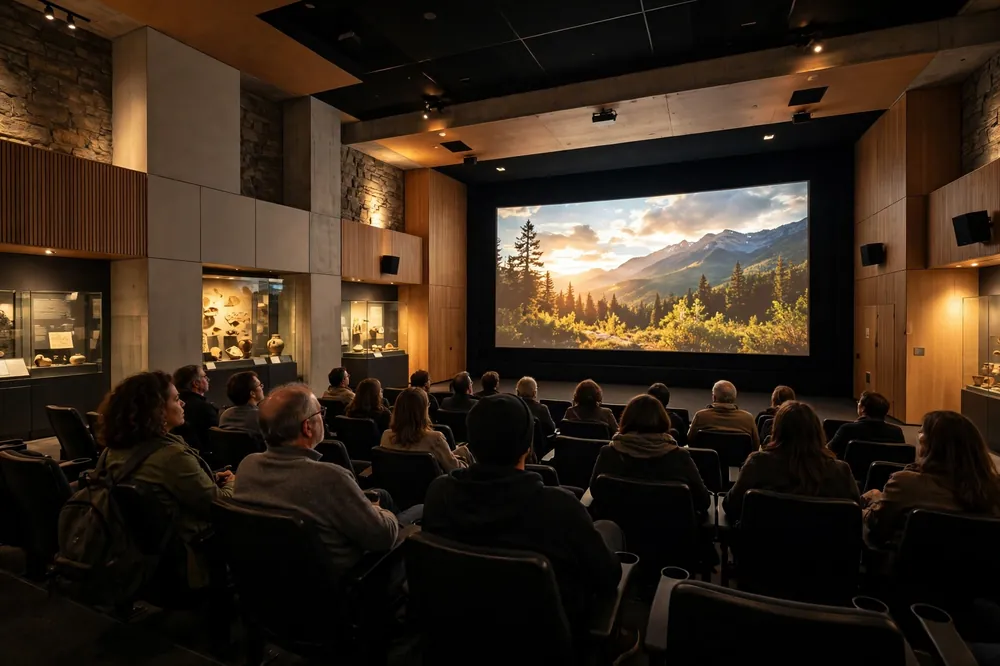
Second, it set a standard for how a war museum can teach — through personal stories rather than only weapons, through the Home Front as well as the front line, and through the moral questions the war raised, including the Holocaust and the atomic bomb.
Its campus continues to grow, and its founding question — why the war was fought, how it was won, and what it means today — remains the question it asks every visitor to carry home.
Frequently Asked Questions
Where is the National WWII Museum? The National WWII Museum is at 945 Magazine Street in the Historic Warehouse District of New Orleans, Louisiana, a short walk from the French Quarter.
When did the National WWII Museum open? It opened on 6 June 2000 as The National D-Day Museum. Congress designated it America’s National WWII Museum in 2003, and it was renamed The National WWII Museum in 2006.
How long should I spend at the National WWII Museum? Plan at least three to five hours; many visitors spend a full day, and a $15 second-day pass is available.
What is Beyond All Boundaries? It is the museum’s 4D cinematic experience in the Solomon Victory Theater, narrated by Tom Hanks, telling the story of the American war in about 48 minutes. It is a separate ticketed experience.
What can I see at the National WWII Museum? More than 250,000 artifacts across several pavilions, including a Higgins boat, a B-17E Flying Fortress, the Road to Berlin and Road to Tokyo galleries, the USS Tang submarine experience, and the Arsenal of Democracy Home Front exhibits.
Is the National WWII Museum the official WWII museum of the United States? Yes. Congress designated it America’s National World War II Museum, and it is the country’s official museum of the Second World War.
Related articles
Sources
- The National WWII Museum, official website, “Plan Your Visit” (nationalww2museum.org) — hours, admission prices, pavilions and visitor information.
- The National WWII Museum, official website, museum history and mission — founding by Stephen E. Ambrose and Gordon H. “Nick” Mueller, opening 6 June 2000, Congressional designation.
- Wikipedia, “The National WWII Museum” — opening date, renaming in 2006, campus and collection figures, cross-checked against the museum’s official site.
- US Department of Veterans Affairs — figures for Americans who served in WWII (more than 16 million) and American war dead (more than 400,000).
- Stephen E. Ambrose, D-Day, June 6, 1944: The Climactic Battle of World War II (Simon & Schuster, 1994) — the D-Day story and the Higgins boat.
- Dwight D. Eisenhower, quoted on Andrew Higgins and the LCVP landing craft, as cited by the National WWII Museum.
Further reading
- The National WWII Museum, The National WWII Museum: A Visitor’s Guide (official guide, nationalww2museum.org).
- Gordon H. Mueller, The National WWII Museum — museum publications on the campus and collections.