 WAR ATLAS MILITARY HISTORY MAGAZINE · WWI — WWII
The Holocaust
1. Lead
The Holocaust was the systematic, state-sponsored murder of about six million Jews by Nazi Germany and its collaborators between 1941 and 1945, during the Second World War. It was carried out through mass shootings, ghettos, forced-labour and concentration camps, and killing centres equipped with gas chambers.
Millions of other people were also killed under Nazi rule, including Soviet prisoners of war, non-Jewish Poles, Roma and Sinti, people with disabilities, and political prisoners. The Holocaust is documented in German administrative records, deportation lists, photographs, survivor testimony and the records of post-war trials.
It is remembered today through museums, memorials and education programmes in many countries, and 27 January — the anniversary of the liberation of Auschwitz — is observed as International Holocaust Remembrance Day.
2. Key Facts
| What | Systematic murder of European Jews by Nazi Germany and its collaborators; also the murder of millions of other victims of Nazi persecution |
| Where | German-occupied Europe; killing centres mainly in occupied Poland: Auschwitz-Birkenau, Treblinka, Bełżec, Sobibór, Chełmno, Majdanek |
| When | Persecution from 1933; mass murder 1941–1945 |
| Jewish victims | About six million (USHMM and Yad Vashem); scholarly estimates range from about 5.1 million to about 6 million |
| Other victims | Millions, including an estimated 3.3 million Soviet prisoners of war who died in German custody, and large numbers of non-Jewish Poles, Roma and Sinti, people with disabilities and political prisoners; exact totals vary by definition and source |
| Perpetrators | The German state under the National Socialist (Nazi) government, the SS, and collaborating governments, police and local auxiliaries in occupied countries |
| Remembrance | Yad Vashem (Jerusalem, founded 1953), United States Holocaust Memorial Museum (Washington, D.C., opened 1993), Auschwitz-Birkenau State Museum, International Holocaust Remembrance Day, 27 January |
3. Background
The Holocaust did not begin with the killing centres. It began with the Nazi Party’s rise to power in Germany in 1933 and a series of laws and administrative measures that removed Jews from public life. The Nuremberg Laws of 1935 defined who counted as Jewish under German law and prohibited marriage and sexual relations between Jews and non-Jews. Jews were dismissed from the civil service and the professions, Jewish businesses were boycotted and later seized, and Jewish children were excluded from public schools.
Anti-Jewish policy was also directed at other groups. People with disabilities were targeted by a forced sterilisation law in 1933 and later by a killing programme known as Aktion T4, which began in 1939. Roma and Sinti, political opponents, Jehovah’s Witnesses and homosexual men were persecuted, imprisoned and in many cases killed. On the night of 9–10 November 1938, in the pogrom known as Kristallnacht (“Night of Broken Glass”), synagogues were burned, Jewish shops were destroyed and about 30,000 Jewish men were arrested and sent to concentration camps. The event is documented in German police reports and in contemporary press coverage.

When Germany invaded Poland in September 1939, beginning the Second World War in Europe, about two million Polish Jews came under German control, and the invasion of the Soviet Union in June 1941 brought millions more Jews in Eastern Europe under German occupation. The war removed the practical limits that had constrained earlier persecution, and German policy shifted from forced emigration and ghettoisation to systematic murder.
Emigration and the Evian Conference, 1938
Before the war, the German government’s policy toward Jews was forced emigration, not yet systematic murder. Between 1933 and 1939 about 300,000 German and Austrian Jews emigrated, but emigration required money, visas and a destination willing to receive them, and those conditions became harder each year. In July 1938, representatives of 32 countries met at Évian-les-Bains in France to discuss the refugee question.
The conference produced no agreement to increase immigration quotas, and most participating states declined to accept more refugees. The United States kept its existing quota; Britain declined to admit refugees to Palestine in large numbers. The outcome is recorded in the conference’s proceedings and is cited by historians as evidence that the international response to the refugee crisis was inadequate.
After the war began, emigration from German-controlled territory became almost impossible, and the Jews who remained were trapped under German rule.
Jewish life in Europe before the war
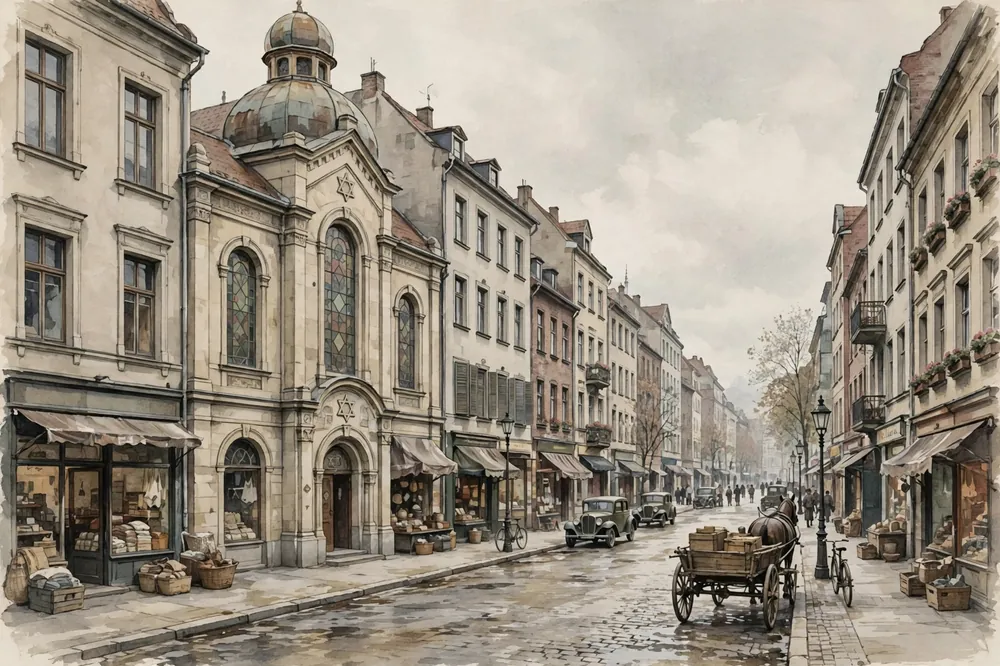
Before the Holocaust, Jewish life in Europe was large and varied. About 9.5 million Jews lived in Europe in 1933, most of them in Eastern Europe — about 3 million in Poland and about 2.6 million in the Soviet Union — with substantial communities in Germany, Hungary, Romania, France and the Netherlands.
Jewish life included religious communities of many kinds, political movements from Zionism to socialism, a press in Yiddish and Hebrew, theatres, schools and sports clubs. In Poland, Jews formed about 10 per cent of the population and were prominent in trade, crafts and the professions; in Germany, Jews formed less than 1 per cent of the population but were visible in the professions, the arts and the sciences.
This diversity matters to the history of the Holocaust, because the murder destroyed not a single community but a whole civilisation of towns, institutions and languages — above all Yiddish, the language of most Eastern European Jews, whose number of speakers fell sharply as a result of the murder and of post-war emigration.
4. What Happened
The T4 programme
Before the killing centres, the German state carried out a killing programme against people with disabilities, known as Aktion T4 after the address of its administrative office, Tiergartenstrasse 4 in Berlin. Beginning in 1939, physicians and officials selected children and adults with physical and intellectual disabilities, mental illness and chronic conditions, and they were killed in gas chambers at six centres in Germany and Austria.
The programme was formally halted in August 1941 after protests, including a public sermon by the Catholic Bishop of Münster, Clemens August von Galen, but killings of people with disabilities continued in hospitals and institutions until the end of the war. Historians estimate that about 200,000–250,000 people with disabilities were murdered under the programme and its continuation.
The T4 programme is cited by historians as the first systematic use of gas chambers by the German state, and several of its staff later worked at the killing centres in occupied Poland.
Mass shootings, 1941–1942
After the invasion of the Soviet Union in June 1941, mobile killing units of the SS and police, the Einsatzgruppen, followed the German army and shot Jewish men, women and children in pits, ravines and forests. Local auxiliaries and police units took part in many of these killings. At Babi Yar, a ravine outside Kyiv, German units shot more than 33,000 Jews on 29–30 September 1941, according to German reports and post-war investigations. The United States Holocaust Memorial Museum estimates that about two million Jews were killed in mass shootings and related massacres.
Ghettos
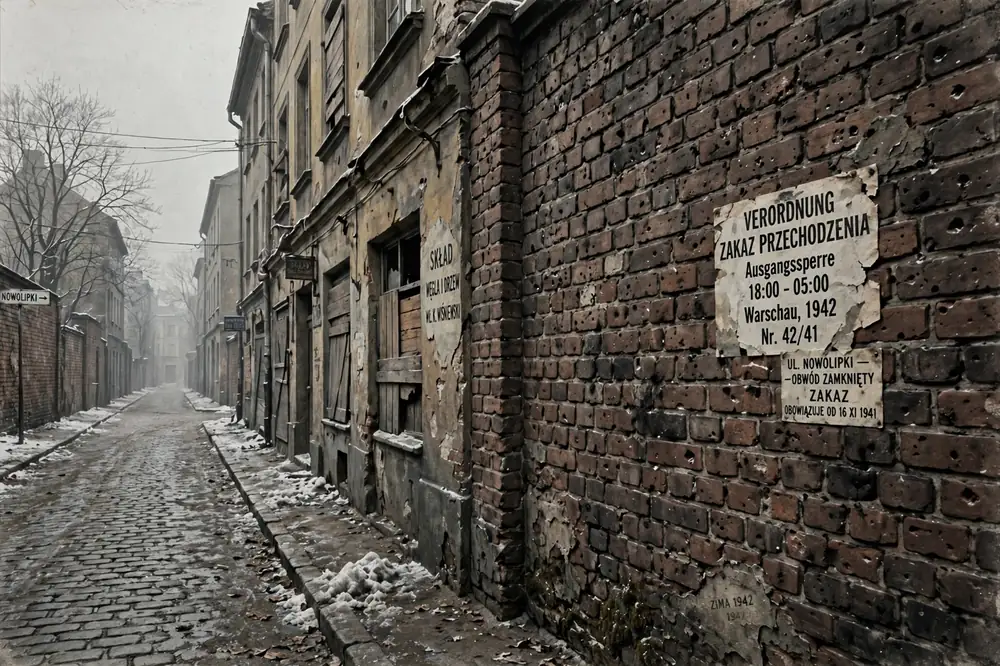
From 1939 onwards, Jews in occupied Poland and later in other occupied territories were forced into ghettos — sealed districts of cities where overcrowding, hunger and disease caused high death rates. The Warsaw Ghetto, established in October 1940, held about 400,000 people at its peak in an area of about 3.4 square kilometres. Deportations from the ghettos to killing centres began in 1942. In April–May 1943, the remaining inhabitants of the Warsaw Ghetto rose in armed resistance; German forces suppressed the uprising over about four weeks and destroyed the ghetto.
The killing centres: Chełmno and Majdanek
Auschwitz, Treblinka, Bełżec and Sobibór are the best-known killing centres, but two others complete the picture. Chełmno (Kulmhof), in western Poland, began operating in December 1941 and was the first killing centre to use gas: victims were killed in gas vans, and the bodies were buried and later burned.
About 150,000–200,000 people were murdered at Chełmno, most of them Jews from the Łódź Ghetto and the surrounding region, according to USHMM and Polish estimates. Majdanek, near Lublin, was both a concentration camp and a killing centre; about 78,000 people were murdered there, including about 59,000 Jews, according to the Majdanek State Museum’s research.
Majdanek was liberated by Soviet forces in July 1944 and was the first major camp to be seen by the outside world; Soviet and Polish investigators documented the gas chambers and crematoria, and the news was reported in the Allied press.
The differences between the centres — Chełmno’s gas vans, Majdanek’s dual function, Treblinka’s scale — show that the killing system was built up in stages and in different places, rather than to a single design.
The Wannsee Conference and the killing centres
On 20 January 1942, senior German officials met at a villa in the Berlin suburb of Wannsee to coordinate the deportation of Jews from across Europe. The minutes of the meeting, preserved in the German archives, record the discussion of the “Final Solution to the Jewish Question” — the plan to murder the Jews of Europe. In 1942, three killing centres were built in occupied Poland for Operation Reinhard, the murder of the Jews of the General Government (occupied Poland): Bełżec, Sobibór and Treblinka. Together with Chełmno, Majdanek and Auschwitz-Birkenau, these sites were the main locations of the murder by gas. The United States Holocaust Memorial Museum estimates that about 2.7 million Jews were murdered at the killing centres.
Deportations and Auschwitz
Deportations by rail from across occupied Europe brought Jews to the killing centres, most of them to Auschwitz. At Auschwitz-Birkenau, arrivals were selected on the ramp: those judged able to work were registered as prisoners; most others were sent directly to the gas chambers. The Auschwitz-Birkenau State Museum estimates that at least 1.3 million people were deported to Auschwitz and at least 1.1 million were murdered there, of whom about 960,000 were Jews. The Hungarian deportations of 1944 were the largest single operation: about 430,000 Hungarian Jews were deported to Auschwitz between May and July 1944, according to Yad Vashem and USHMM records.
Resistance and rescue
Jews resisted the murder in several ways. Armed uprisings took place in the Warsaw Ghetto (April–May 1943), in the Treblinka extermination camp (August 1943), in Sobibór (October 1943) and at Auschwitz-Birkenau (October 1944). Partisan groups operated in the forests of Eastern Europe, and underground organisations smuggled food and forged documents in the ghettos. Rescue also took many forms.
In Denmark, in October 1943, Danish citizens and fishermen helped about 7,000 Danish Jews reach neutral Sweden by boat, after a German official, Georg Ferdinand Duckwitz, warned Danish leaders of the planned deportation. In Bulgaria, public and political pressure prevented the deportation of Bulgarian Jews.
Individuals who hid Jews or helped them escape — later recognised by Yad Vashem as the “Righteous Among the Nations” — acted in many countries, and more than 28,000 such individuals have been recognised. Historians note that rescue was the exception rather than the rule, and that it depended on local conditions, on the attitude of the occupying authorities, and on the risks individuals were willing to take.
Liberation and the end of the war
As Soviet forces advanced from the east in 1944–1945, the SS evacuated the camps and forced prisoners on marches westward; many died of exhaustion, hunger and cold on these “death marches”. Auschwitz was liberated by Soviet troops on 27 January 1945. British and American forces liberated camps in the west, including Bergen-Belsen (15 April 1945) and Dachau (29 April 1945). Germany surrendered on 8 May 1945. Survivors faced the search for family members, the return to destroyed communities, and the question of where to live. Many emigrated to Palestine/Israel, the United States and other countries.
Bergen-Belsen and the western camps
Not all camps were killing centres. Bergen-Belsen, in northern Germany, was established as a prisoner-of-war camp and later became a concentration camp; it had no gas chambers, but about 50,000 people died there from starvation, disease and overcrowding, including the diarist Anne Frank, who died of typhus in early 1945.
British forces liberated Bergen-Belsen on 15 April 1945 and found about 60,000 prisoners alive, many of them gravely ill; about 14,000 more died in the weeks after liberation despite medical care. Dachau, near Munich, was the first concentration camp, established in March 1933, and it served as the model for the camp system; about 41,000 people died there.
Buchenwald, near Weimar, held about 250,000 prisoners over its existence, of whom about 56,000 died. These camps are preserved today as memorials, and their histories are presented as part of the camp system as a whole, in which death came from labour, hunger and disease as well as from gas.
5. The Site Today
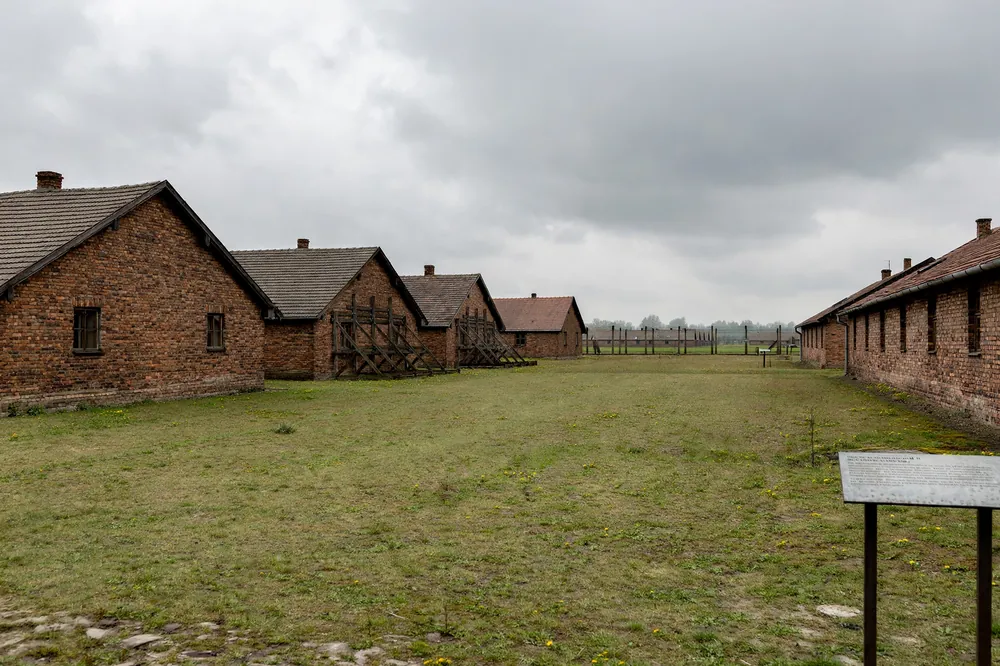
There is no single site of the Holocaust. Its places of remembrance are spread across Europe and beyond. The most visited is the Auschwitz-Birkenau State Museum in Poland, on the site of the former Auschwitz camp complex, which received over two million visitors a year before the pandemic.
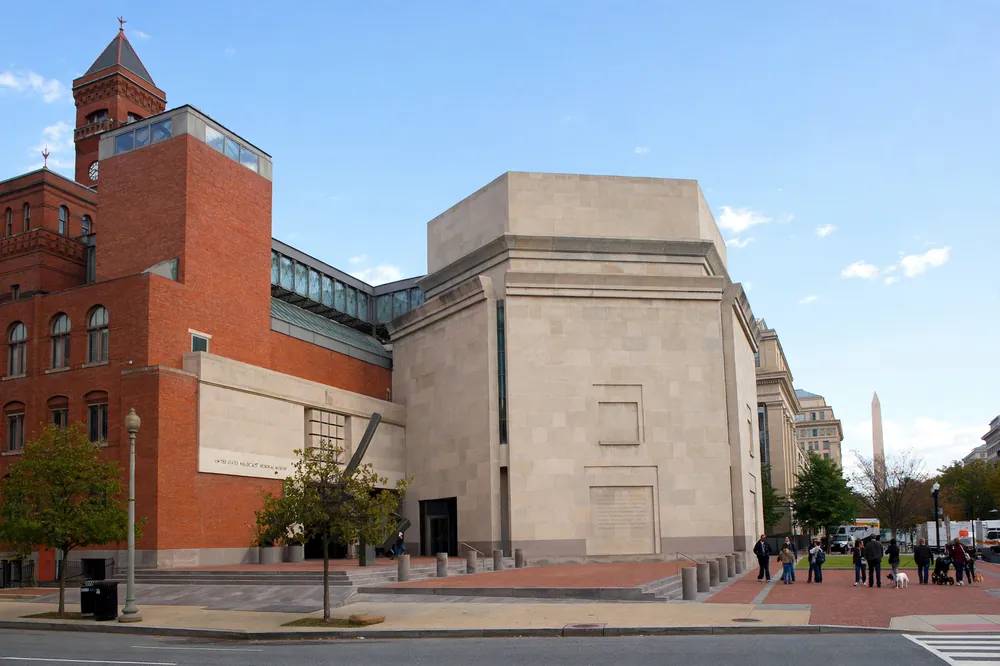
Yad Vashem in Jerusalem, founded in 1953, combines a museum, archives, a research institute and the Hall of Names, where Pages of Testimony record the names of victims — about five million names have been collected so far. The United States Holocaust Memorial Museum in Washington, D.C., opened in 1993, holds extensive archives and exhibitions.
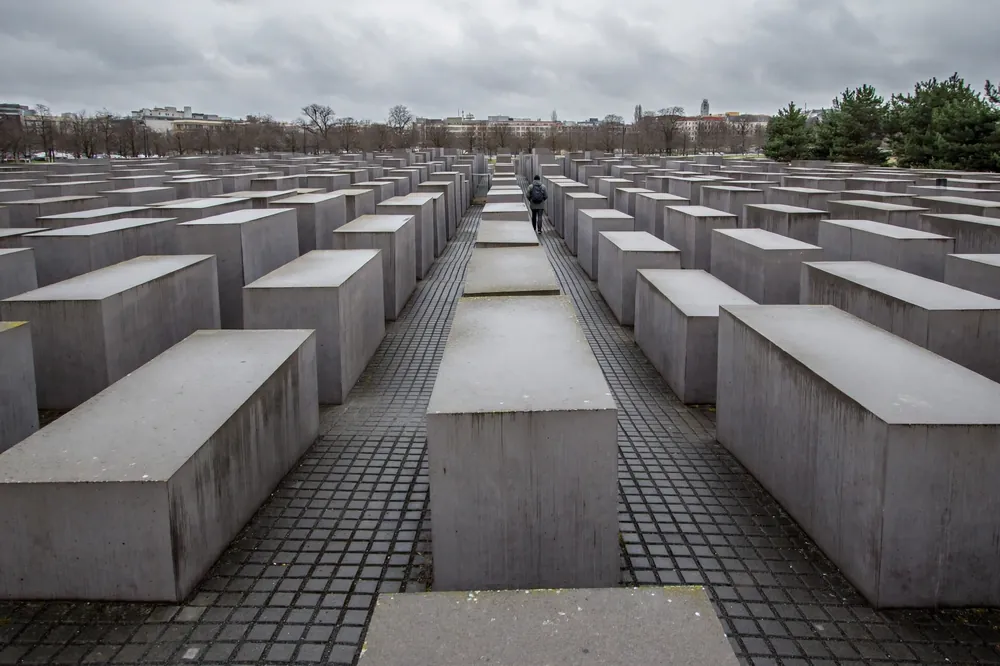
Other sites include the former killing centres at Treblinka, Bełżec and Sobibór, the Warsaw Ghetto area and its memorials, and the Memorial to the Murdered Jews of Europe in Berlin, opened in 2005. Many former camps are preserved as museums; some, such as Treblinka, are marked by memorial landscapes rather than surviving buildings, because the Germans dismantled them before the end of the war.
The Warsaw Ghetto memorials
The site of the Warsaw Ghetto is marked today by memorials rather than by surviving ghetto buildings, because the ghetto was destroyed in 1943 and the city was further destroyed in the Warsaw Uprising of 1944. The best-known is the Monument to the Ghetto Heroes, unveiled in 1948 on the site where the uprising began; its central figure is Mordechai Anielewicz, the commander of the Jewish Combat Organization.
Nearby stands the POLIN Museum of the History of Polish Jews, opened in 2013, which presents a thousand years of Jewish life in Poland and gives the Holocaust a central place in its narrative. A section of the ghetto wall survives on ulica Złota, and a memorial marks the Umschlagplatz, the railway siding from which deportations to Treblinka departed.
The memorials are visited by school groups and by visitors from Israel and around the world, and the anniversary of the uprising, 19 April, is marked each year in Warsaw.
6. Victims and Remembrance
The figure of about six million Jewish victims is the estimate used by the United States Holocaust Memorial Museum and Yad Vashem. It is a reconstruction from German records, deportation lists, demographic comparison of pre-war and post-war Jewish populations, and survivor testimony — not a count from a single list. Scholarly estimates range from about 5.1 million (Raul Hilberg) to about 6 million, with many tallies concentrated around 5.6–5.9 million.
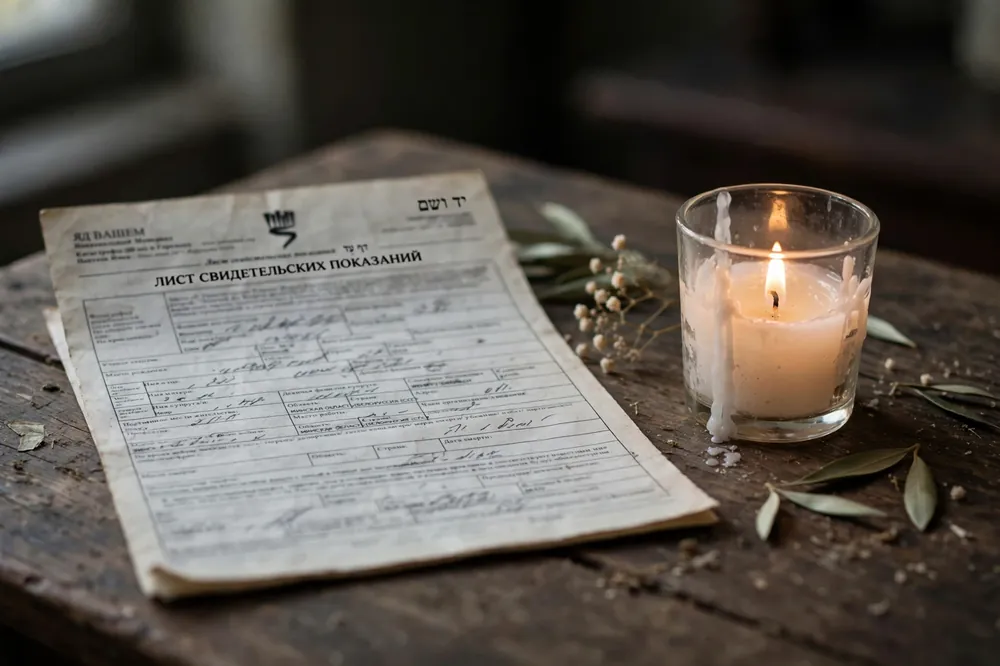
The USHMM breaks the total down as approximately 2.7 million murdered at the killing centres, about 2 million in mass shootings and related massacres, and 800,000–1 million in ghettos, labour camps and concentration camps. About 1.5 million of the Jewish victims were children, according to USHMM. Yad Vashem’s Central Database of Shoah Victims’ Names has collected about five million names; about one million victims remain unnamed in the database.
Millions of non-Jewish victims were also killed under Nazi rule. The largest group was Soviet prisoners of war: about 3.3 million died in German custody, according to USHMM and standard historical accounts. Non-Jewish Poles, Roma and Sinti, people with disabilities, political prisoners, Jehovah’s Witnesses and homosexual men were also killed in large numbers; totals for these groups vary by definition, because the categories overlap and records are incomplete. Remembrance therefore takes different forms in different countries: in Israel, Yom HaShoah (Holocaust Remembrance Day) is observed in spring; internationally, 27 January is International Holocaust Remembrance Day, designated by the United Nations in 2005.
The Righteous Among the Nations
Yad Vashem’s programme for the Righteous Among the Nations, established in 1963, recognises non-Jews who risked their lives to save Jews during the Holocaust. Each case is examined by a commission on the basis of testimony and documents. The largest numbers of recognised individuals come from Poland, the Netherlands and France, reflecting both the size of the Jewish populations in those countries and the extent of documentation.
Among the best-known are Oskar Schindler, a German industrialist who employed more than 1,000 Jews in his factories in Poland and Czechoslovakia, and Raoul Wallenberg, a Swedish diplomat in Budapest who issued protective documents to thousands of Hungarian Jews in 1944.
The programme is not a count of all rescuers — many acted without leaving records, and many were killed for doing so — but it is the most systematic recognition of rescue, and its archive is used in education programmes in many countries.
Children and the Kindertransport
About 1.5 million Jewish children were murdered in the Holocaust, according to USHMM, and the fate of children is a central subject of Holocaust education. One of the best-documented rescue efforts was the Kindertransport, the organised movement of about 10,000 Jewish children from Germany, Austria, Czechoslovakia and Poland to Britain between December 1938 and September 1939.
The children travelled without their parents, were placed with foster families, in hostels and on farms, and most never saw their parents again. The effort was organised by British Jewish and Quaker organisations after Kristallnacht, with the British government agreeing to admit the children on condition that private funds paid for their care.
The Kindertransport is remembered in Britain through memorials at London’s Liverpool Street station and through the accounts of the survivors, many of whom remained in Britain after the war. It is also cited by historians as an example of what was possible — and of its limits: the same British government declined to admit the children’s parents.
7. Trials and Justice
The principal post-war trial was the International Military Tribunal at Nuremberg, which ran from 20 November 1945 to 1 October 1946. Twenty-four senior Nazi leaders were indicted; 22 stood trial, 19 were convicted and 3 acquitted, and 12 were sentenced to death. The tribunal’s evidence included German documents, film and testimony, and its judgment established the legal concepts of crimes against peace, war crimes and crimes against humanity.
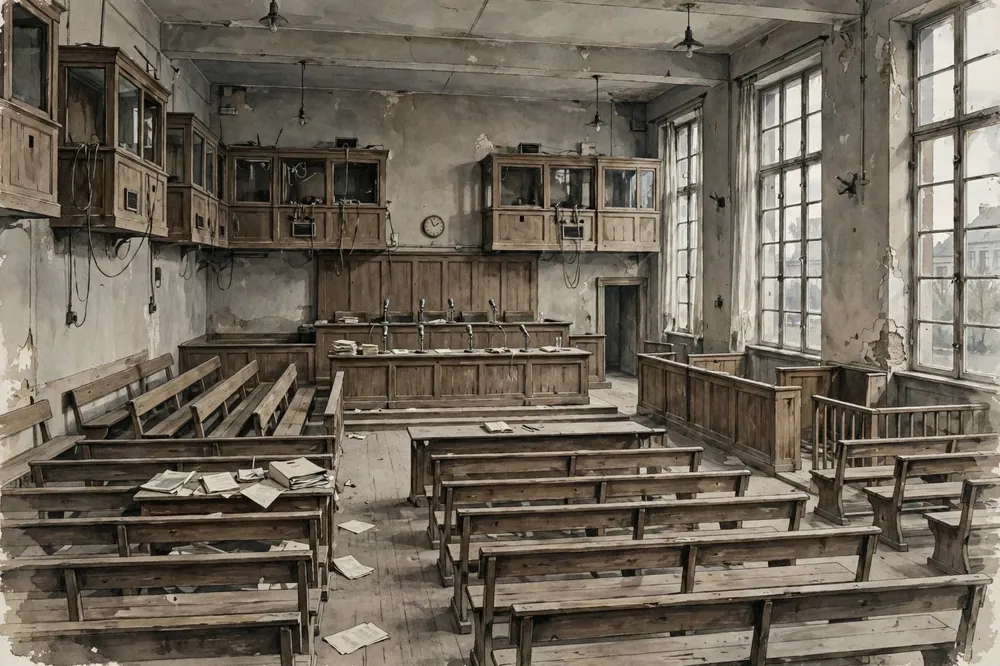
Twelve further trials were held at Nuremberg under American authority between 1946 and 1949, trying doctors, judges, industrialists and SS officers. Other trials followed in the countries where the crimes had been committed: in Poland, the former Auschwitz commandant Rudolf Höss was tried in Warsaw in 1947 and executed; in Israel, Adolf Eichmann, who had organised deportations, was tried in Jerusalem in 1961 and executed in 1962; in West Germany, the Frankfurt Auschwitz trials (1963–1965) tried 22 former camp staff.
Trials of individual perpetrators continued into the 21st century, though by then most were elderly. The question of how far justice was achieved remains a subject of historical discussion: the most senior leaders — Hitler, Himmler and Goebbels — died before they could be tried, and many lower-level participants were never prosecuted.
8. Visiting Information
The main Holocaust museums are open to the public. The United States Holocaust Memorial Museum in Washington, D.C., is free to enter; check its official site (ushmm.org) for current hours and any timed-entry requirements. Yad Vashem in Jerusalem is free to enter; check its official site (yadvashem.org) for hours and for the arrangements for visiting the Hall of Names and the Children’s Memorial.
The Auschwitz-Birkenau State Museum requires an entry pass booked in advance through its official site (auschwitz.org); visits are free for individual visitors, and guided tours are available for a fee — check the official site for current arrangements before travelling. The Memorial to the Murdered Jews of Europe in Berlin is an open-air site, free to visit at any time, with an information centre below ground.
Visitors to all these sites are asked to behave as at any memorial: speak quietly, follow photography rules, and respect ceremonies and school groups.
9. Commemoration and Education
Holocaust education is a formal part of school curricula in many countries, including Germany, Israel, the United States and the United Kingdom. Yad Vashem’s International School for Holocaust Studies trains teachers from around the world; the USHMM runs teacher programmes and provides classroom materials based on its archives.
The United Nations designated 27 January as International Holocaust Remembrance Day in 2005, and ceremonies are held each year at Auschwitz-Birkenau and at the United Nations. Survivor testimony projects — including the USC Shoah Foundation’s video archive, founded by Steven Spielberg in 1994 — have recorded tens of thousands of interviews, preserving first-person accounts for use after the survivor generation has passed.
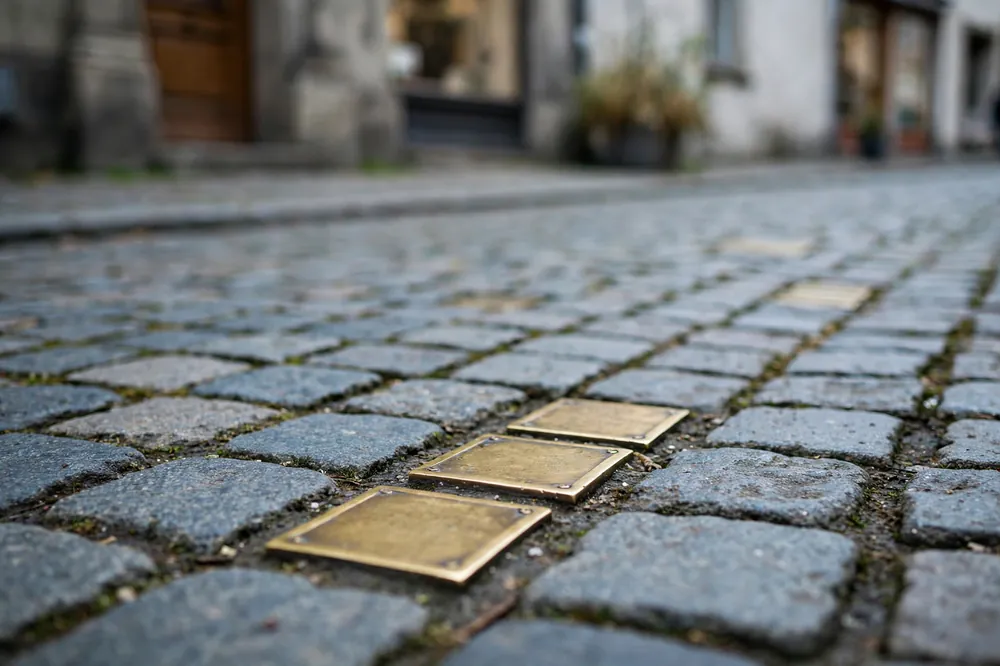
In Germany, the culture of remembrance (Erinnerungskultur) includes memorials, school visits to former camps, and the Stolpersteine (“stumbling stones”) project, which places small brass plaques in pavements outside the last homes of victims across Europe.
Holocaust Memorial Day ceremonies
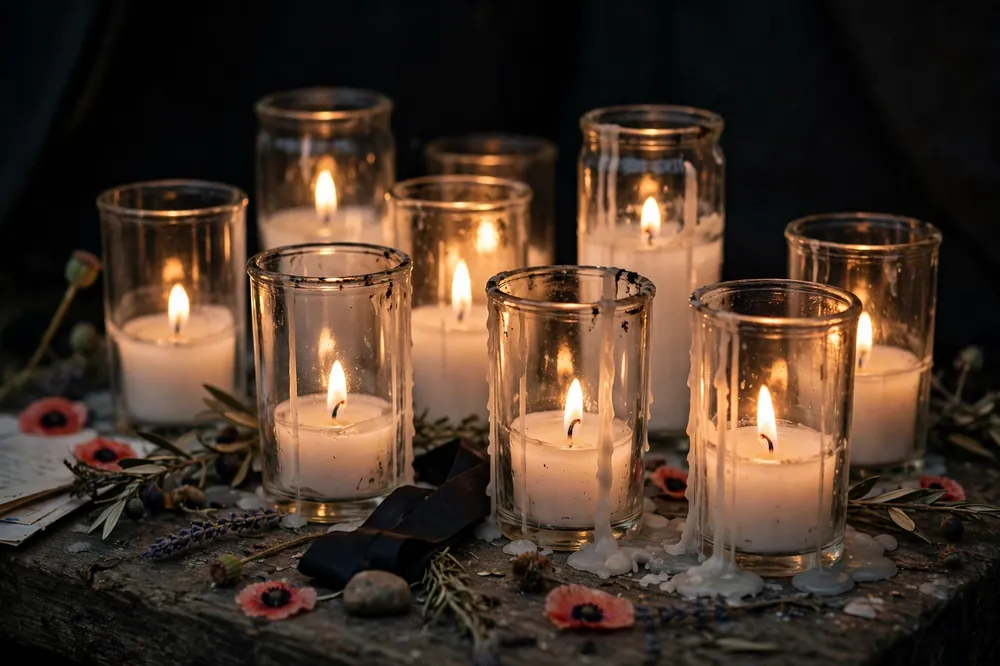
The ceremonies held on 27 January each year follow a similar pattern in many countries. At Auschwitz-Birkenau, survivors speak, candles are lit, and wreaths are laid at the International Monument. At the United Nations in New York, a memorial ceremony is held in the General Assembly Hall.
In the United Kingdom, the Holocaust Memorial Day Trust organises a national ceremony, and local ceremonies are held in towns and cities; the theme of each year is announced in advance and is used in schools and community events. In Germany, the Bundestag holds a remembrance hour on 27 January, at which a survivor or a historian speaks.
The ceremonies are deliberately restrained: they consist of testimony, music and the reading of names, rather than of speeches by politicians alone. The aim, as stated by the International Holocaust Remembrance Alliance, is to remember the victims, to honour the survivors, and to educate new generations.
10. Legacy
The Holocaust’s legal legacy is the Nuremberg precedent: the principle that individuals, including heads of state and senior officials, can be held criminally responsible under international law for waging aggressive war and for crimes against humanity. That principle informed the Genocide Convention of 1948, the Universal Declaration of Human Rights of 1948, and the later establishment of the International Criminal Court in 2002.
The historical legacy is the archive itself: the combination of German documents, survivor testimony and post-war trial records makes the Holocaust one of the most documented events in history, and the subject of a large field of academic research. A further legacy is the State of Israel, founded in 1948, in whose founding the experience of the Holocaust played a central part in the arguments of its supporters — a connection that historians describe in different ways and that remains a subject of discussion.
For the study of war, the Holocaust stands as the case in which a modern state used its administrative, transport and industrial capacity to carry out murder on an industrial scale, and in which ordinary institutions — railways, ministries, police forces — were used for that purpose.
Denial and the historical record
The Holocaust is denied or minimised by a small number of writers and activists, whose claims have been examined and rejected in courts and in historical research. The most widely reported case was the libel trial in London in 2000, in which the historian Deborah Lipstadt and her publisher were sued by David Irving, who had challenged the existence of gas chambers at Auschwitz.
The court found in favour of Lipstadt, and the judgment set out in detail the evidence for the gas chambers and for the systematic murder of Jews. Historians note that denial arguments typically rest on the selective use of documents, on the misreading of technical evidence, or on the demand for a single document that states the total number of victims — a document that does not exist, because the figure of about six million is a reconstruction from many sources, not a count from one list.
The response of memorial institutions has been to publish the evidence openly: the archives of Yad Vashem, the USHMM and the Auschwitz-Birkenau State Museum are available to researchers, and the trial records of Nuremberg and of the Frankfurt Auschwitz trials are published.
The Genocide Convention
The legal term “genocide” was coined during the war by the Polish-Jewish lawyer Raphael Lemkin, who published Axis Rule in Occupied Europe in 1944 and argued that the destruction of a national, ethnic, racial or religious group as such should be a crime under international law.
After the war, Lemkin campaigned for a treaty, and the United Nations General Assembly adopted the Convention on the Prevention and Punishment of the Crime of Genocide on 9 December 1948. The Convention defines genocide as acts committed with intent to destroy, in whole or in part, a national, ethnical, racial or religious group, including killing members of the group and causing serious bodily or mental harm.
The Convention has been ratified by more than 150 states. Its application has been debated: the question of whether a particular event constitutes genocide under the Convention’s definition is a legal and historical question, and different cases have been decided differently by courts and by historians. The Convention’s existence is nevertheless cited as one of the direct legal consequences of the Holocaust, alongside the Nuremberg precedent.
The Holocaust in the United Nations
The United Nations has addressed the Holocaust in several resolutions. In 2005, the General Assembly adopted Resolution 60/7, designating 27 January as International Holocaust Remembrance Day and urging member states to develop educational programmes. In 2007, the General Assembly adopted a resolution condemning the denial of the Holocaust.
The United Nations also runs the Holocaust and the United Nations Outreach Programme, which produces educational materials and holds events at UN offices around the world. The programme’s materials are based on the archives of the USHMM and Yad Vashem and are available in the official languages of the United Nations.
The involvement of the United Nations is cited by historians as evidence that the remembrance of the Holocaust has become an international responsibility, rather than the concern of a single country or community.
Frequently Asked Questions
What was the Holocaust? The systematic, state-sponsored murder of about six million Jews by Nazi Germany and its collaborators between 1941 and 1945, carried out through mass shootings, ghettos and killing centres.
How many people died in the Holocaust? About six million Jews, according to the USHMM and Yad Vashem, with scholarly estimates ranging from about 5.1 million to about 6 million. Millions of non-Jewish people were also killed under Nazi rule.
What was the Wannsee Conference? A meeting of senior German officials on 20 January 1942 in Berlin that coordinated the deportation of Jews from across Europe. Its minutes record the plan known as the “Final Solution to the Jewish Question”.
What is the difference between a concentration camp and a killing centre? Concentration camps were places of imprisonment and forced labour where many prisoners died; killing centres such as Treblinka, Bełżec, Sobibór and Chełmno were built primarily for murder on arrival, and few prisoners survived them.
When is International Holocaust Remembrance Day? 27 January, the anniversary of the liberation of Auschwitz in 1945, designated by the United Nations in 2005.
Where can I learn more about the Holocaust? The United States Holocaust Memorial Museum (ushmm.org), Yad Vashem (yadvashem.org) and the Auschwitz-Birkenau State Museum (auschwitz.org) all publish extensive archives, testimonies and educational material.
Related articles
Sources
- United States Holocaust Memorial Museum, Holocaust Encyclopedia, “How Many People Did the Nazis Murder?” and “Introduction to the Holocaust” (encyclopedia.ushmm.org) — about six million Jewish victims; breakdown of about 2.7 million at killing centres, about 2 million in mass shootings.
- Yad Vashem, “The Holocaust: Facts and Figures” and the Central Database of Shoah Victims’ Names (yadvashem.org) — about six million Jewish victims; about five million names collected.
- Wikipedia, “The Holocaust” — Nuremberg Laws 1935; Kristallnacht, 9–10 November 1938, about 30,000 arrested; Wannsee Conference, 20 January 1942; Warsaw Ghetto uprising, April–May 1943.
- Raul Hilberg, The Destruction of the European Jews, 3rd edition (Yale University Press, 2003) — scholarly estimate of about 5.1 million Jewish victims.
- United States Holocaust Memorial Museum, “Auschwitz” — at least 1.1 million murdered at Auschwitz; Hungarian deportations of 1944, about 430,000 people.
- International Military Tribunal, Trial of the Major War Criminals Before the International Military Tribunal, Nuremberg, 14 November 1945 – 1 October 1946 — the Nuremberg judgment and its legal findings.
- Laurence Rees, The Holocaust: A New History (Viking, 2017) — overview of the development of Nazi policy from persecution to murder.