 WAR ATLAS MILITARY HISTORY MAGAZINE · WWI — WWII
North Carolina-Class Battleship: America’s First Fast Battleships
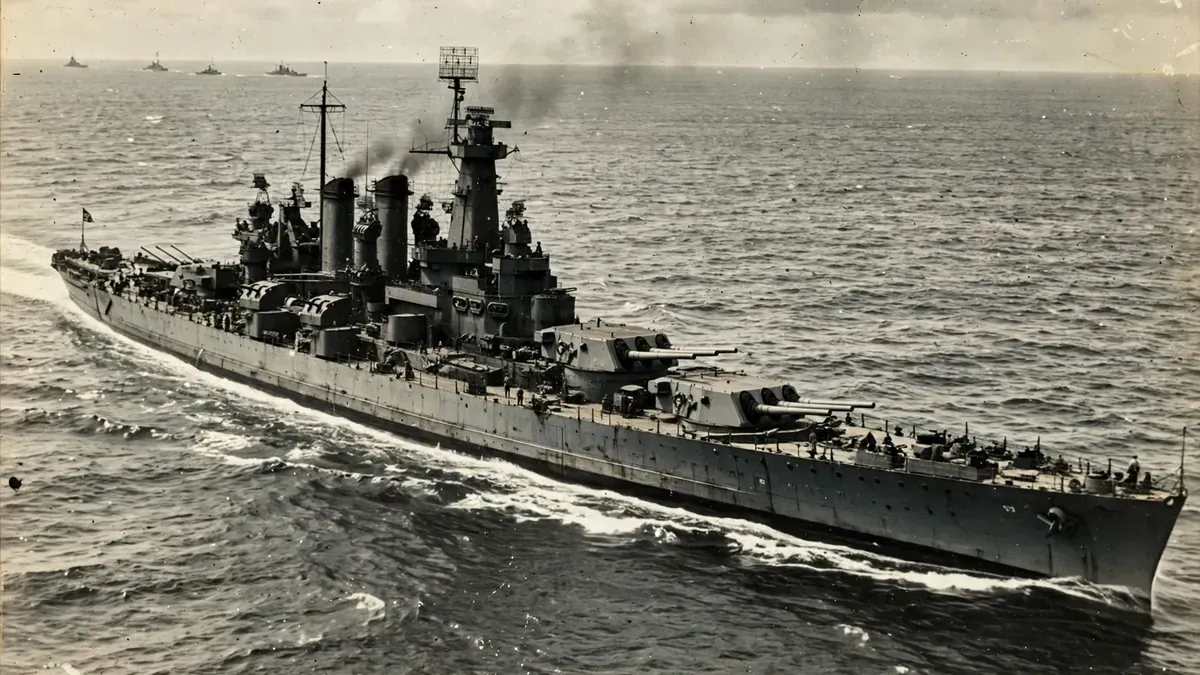
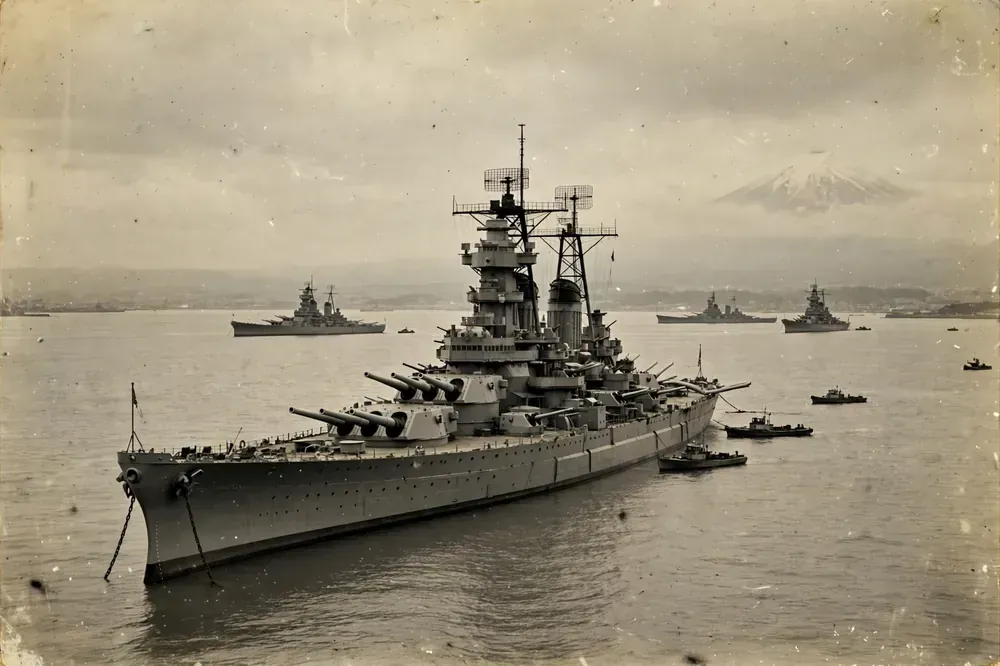
The North Carolina class consisted of two battleships, USS North Carolina (BB-55) and USS Washington (BB-56), the first American battleships built after the long construction holiday imposed by the Washington Naval Treaty, and the first American “fast battleships” — ships that combined battleship firepower and armour with the speed to operate alongside aircraft carriers. Commissioned in 1941, they carried nine 16-inch guns, the heaviest weapons ever mounted on an American battleship to that date, and could steam at 28 knots, fast enough to keep up with the carrier task forces that would decide the Pacific War. They were the template for every American battleship that followed, and both ships served with distinction in the Pacific.
North Carolina herself became the most decorated American battleship of the war, earning fifteen battle stars in campaigns from Guadalcanal to Okinawa. Washington achieved the war’s only battleship-versus-battleship victory by a United States ship in a one-sided night action, sinking the Japanese battleship Kirishima off Guadalcanal in November 1942 in a gunnery duel that lasted only minutes. Both ships survived the war, and North Carolina survives today as a museum ship at Wilmington, North Carolina, one of the most visited battleship memorials in the United States.
The North Carolina class is remembered as a turning point in American naval design: the moment the United States Navy abandoned the slow, heavily armoured battleships of the First World War era and embraced the fast battleship as the capital ship of the carrier age. Their design was a compromise, forced by treaty limits and by an urgent need to build quickly, but it proved sound in combat, and the ships’ wartime record vindicated the choices their designers made.
1. Key Facts
| Field | Value |
|---|---|
| Type | Fast battleship |
| Ships | USS North Carolina (BB-55), USS Washington (BB-56) |
| Origin | United States |
| Designed | 1935–1937; laid down 1937–1938 |
| Commissioned | 1941 |
| Built | 2 |
| Displacement | 35,000 tons standard (treaty limit); approximately 44,800 tons full load |
| Length | Approximately 222 m (728 ft) |
| Beam | Approximately 33 m (108 ft) |
| Draught | Approximately 10.5 m (34 ft) |
| Main armament | 9 × 16 in (406 mm) guns in three triple turrets |
| Secondary armament | 20 × 5 in (127 mm) dual-purpose guns |
| Anti-aircraft armament | Extensive; by 1945, 60 × 40 mm Bofors and 44 × 20 mm Oerlikon guns (North Carolina) |
| Torpedo tubes | None |
| Aircraft | 3 floatplanes (Kingfisher or Seagull) |
| Armour | Belt 305 mm (12 in), deck up to 140 mm, turrets up to 406 mm face |
| Propulsion | 4 General Electric steam turbines, 121,000 shp |
| Speed | Approximately 28 knots |
| Range | Approximately 17,450 nautical miles at 15 knots |
| Crew | Approximately 1,880 officers and men (wartime complement about 2,300) |
| Battle honours | North Carolina: 15 battle stars; Washington: 13 battle stars |
| Fate | North Carolina preserved as a museum at Wilmington; Washington scrapped 1961 |
2. Background and Development
The Treaty Holiday Ends
The North Carolina class was born of the end of the naval treaty system. The Washington Naval Treaty of 1922 and the London Naval Treaty of 1930 had halted battleship construction for fifteen years, and by the mid-1930s the United States Navy’s battle line consisted of ageing ships designed before the First World War. When Japan withdrew from the treaty system in 1934 and the Second London Naval Treaty of 1936 set a new limit of 35,000 tons and 14-inch guns — a limit Japan refused to accept — the United States was free to design a new battleship. The Navy’s General Board wanted a ship that could do something no American battleship had done before: steam at 27 knots or more, fast enough to operate with aircraft carriers, while carrying the heaviest possible armament and armour within the treaty displacement.
The Escalator Clause and 16-Inch Guns
The design was shaped by the “escalator clause” of the Second London Treaty, which allowed the signatories to increase the gun calibre to 16 inches if Japan refused to accept the 14-inch limit. The Navy designed the ships to carry either twelve 14-inch guns in four triple turrets or nine 16-inch guns in three triple turrets, and when Japan’s refusal became clear, the decision was taken to fit the 16-inch battery. The choice was a gamble: the 16-inch guns and their heavy turrets consumed weight that could have gone to armour, and the ships were designed with a relatively thin armoured deck and a narrow belt. But the gamble paid off in combat, where the 16-inch guns proved devastating, and the ships’ speed proved more valuable than the armour that had been sacrificed.
Building in a Hurry
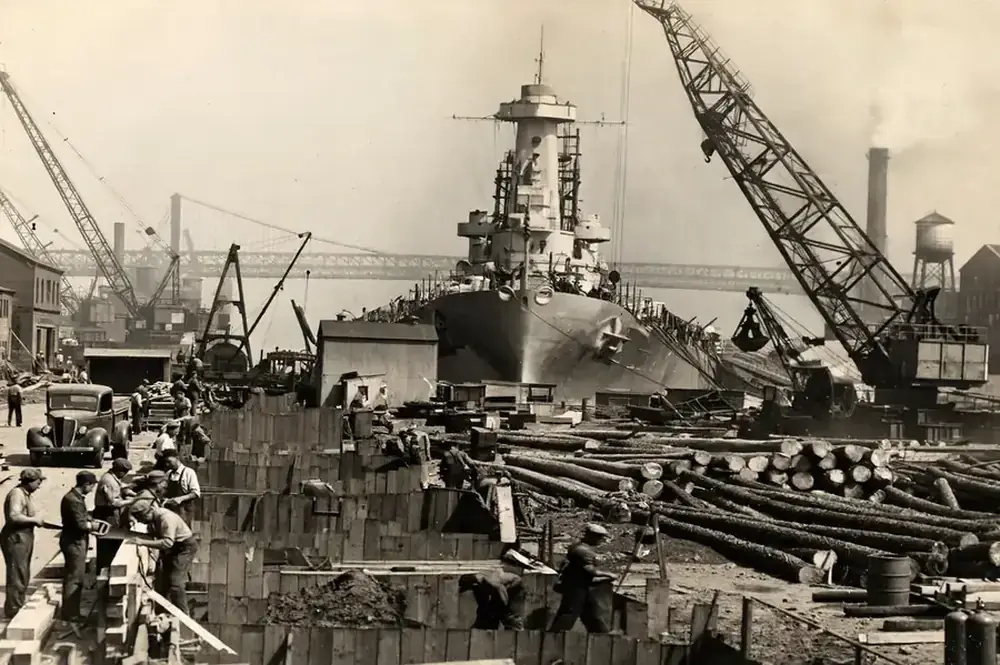
North Carolina was laid down at the New York Naval Shipyard in October 1937 and Washington at the Philadelphia Naval Yard in June 1938. Construction was rushed: the Navy wanted the ships in service as quickly as possible, and both were commissioned in 1941, North Carolina in April and Washington in May. The rush showed in their early trials, which revealed severe vibration at high speed, caused by the interaction of the propellers and the hull. The problem was serious enough that both ships had to return to the yard for propeller and hull modifications, and it was not fully solved until after the ships had entered service. The vibration problem was the most visible symptom of a design that had been pushed to the limits of the treaty displacement, but it did not prevent the ships from serving effectively in combat.
3. Design
Hull, Armour and Layout
The North Carolina class had a long, flush-decked hull with a transom stern and a raked clipper bow, designed for high speed. The armoured belt was 12 inches thick, inclined at 15 degrees to improve its resistance, and protected the machinery and magazines. The armoured deck was relatively thin — up to 5.5 inches over the magazines — a weakness the designers accepted in order to save weight for speed and guns. The turrets were heavily protected, with faces up to 16 inches thick. The layout placed two triple 16-inch turrets forward and one aft, with the secondary battery of twenty 5-inch dual-purpose guns in ten twin mounts along the superstructure. The ships had two funnels and a tall tower foremast that carried the fire-control directors, and their appearance — long, low and clean — made them among the most handsome battleships ever built.
Propulsion and Speed
The propulsion system was four General Electric steam turbines driving four shafts, producing 121,000 shaft horsepower and a designed speed of 28 knots. The machinery was divided into four separate engine rooms and four boiler rooms, an arrangement that improved survivability by ensuring that a single hit could not disable the whole plant. The ships’ range was about 17,450 nautical miles at 15 knots, enough to operate across the Pacific without frequent refuelling. The vibration problem of the early trials was traced to the propellers and to the shape of the stern, and it was mitigated by fitting new propellers and by strengthening the hull. In service the ships could sustain about 27 knots, fast enough to keep up with the fast carrier task forces, and their speed was one of their most valuable assets in the Pacific War.
Armament and Fire Control
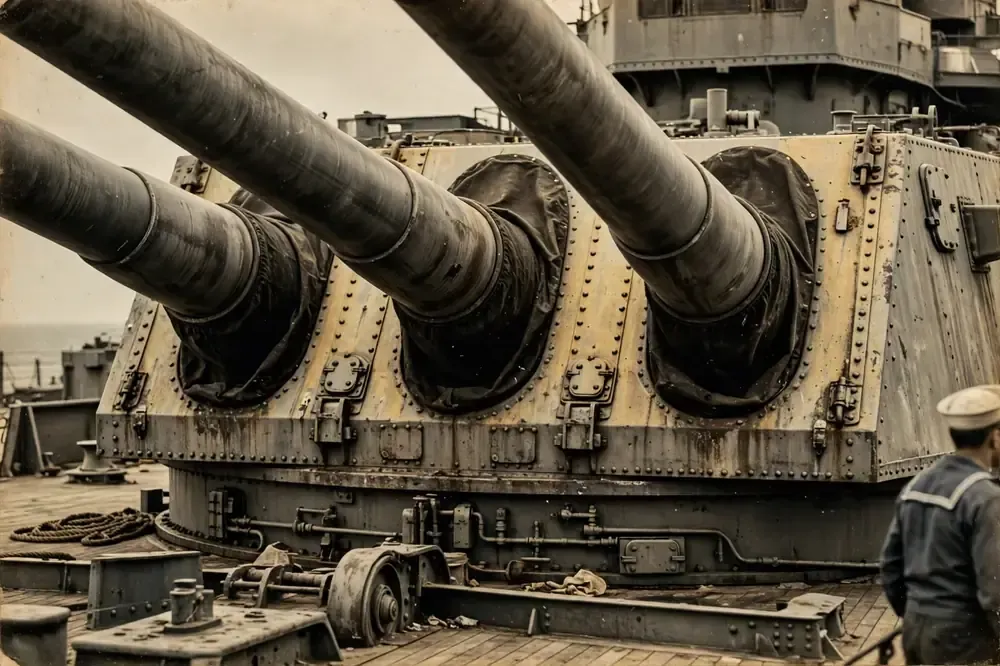
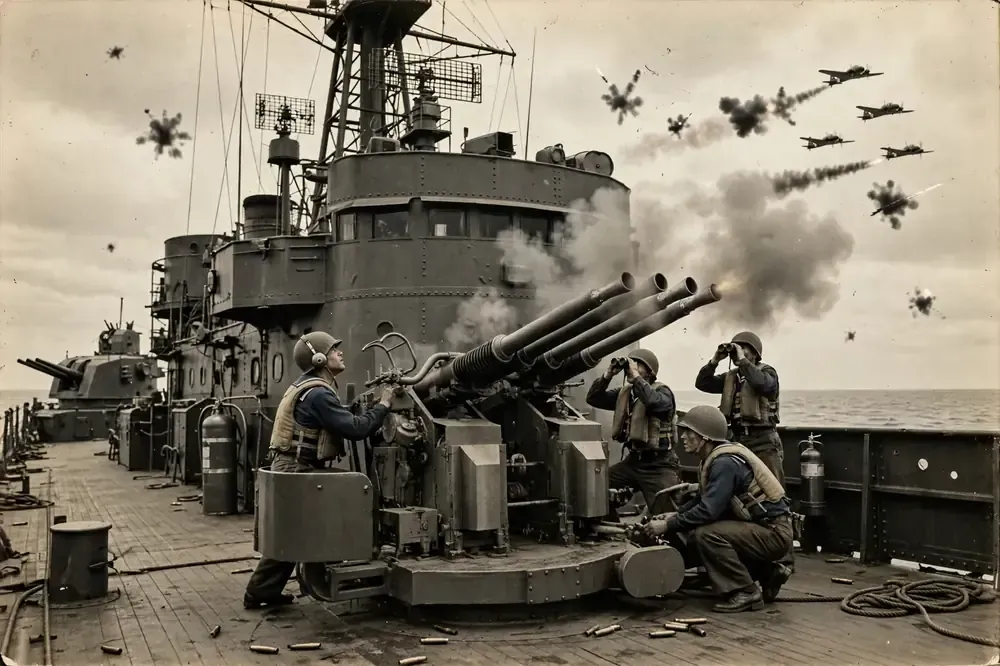
The main battery of nine 16-inch/45-calibre guns fired a 2,700-pound armour-piercing shell to a range of about 36,000 yards, and the guns were controlled by the Mark 38 fire-control system, one of the most advanced in the world, with radar rangefinding added during the war. The secondary battery of twenty 5-inch/38-calibre dual-purpose guns was the standard American weapon of the war, effective against both surface targets and aircraft, and it was controlled by four Mark 37 directors. The anti-aircraft battery grew enormously during the war: by 1945 North Carolina carried sixty 40 mm Bofors guns and forty-four 20 mm Oerlikons, a weight of fire that made her a formidable escort for aircraft carriers. The ships also carried three floatplanes for spotting and reconnaissance, launched from two catapults on the fantail.
4. Variants
USS North Carolina (BB-55)
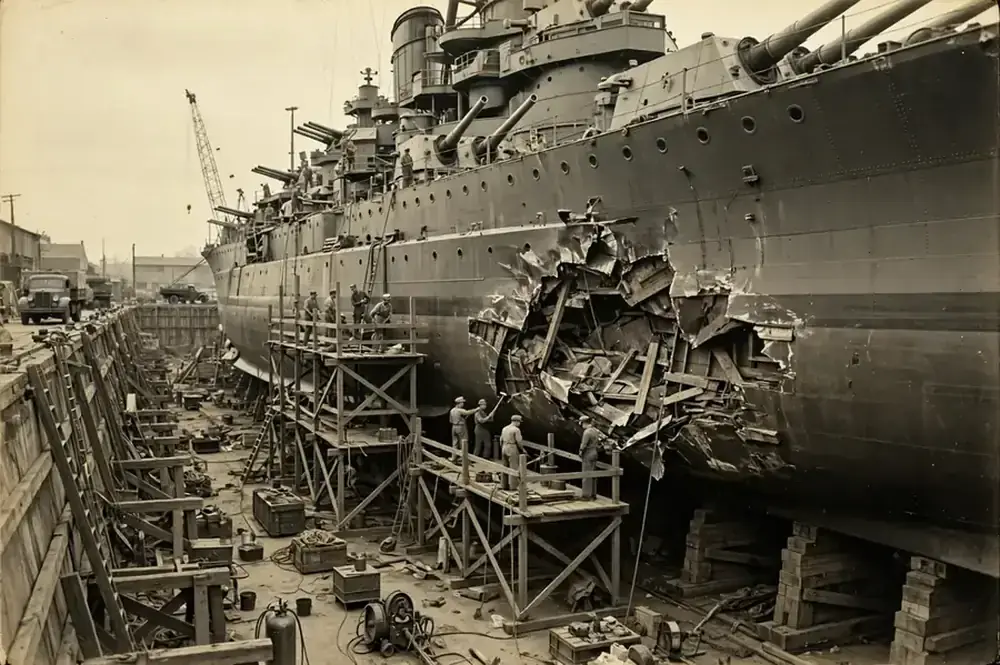
North Carolina, commissioned in April 1941, was the lead ship of the class. She served briefly in the Atlantic, escorting convoys and covering the occupation of Iceland, before being transferred to the Pacific in June 1942. She became the most decorated American battleship of the war, earning fifteen battle stars for service at Guadalcanal, the Gilberts, the Marshalls, the Marianas, Leyte, Iwo Jima and Okinawa. Her most famous action was the defence of the carrier Enterprise at the Battle of the Eastern Solomons in August 1942, where her anti-aircraft fire shot down numerous Japanese aircraft. She was torpedoed by a Japanese submarine in September 1942 and out of action for repairs until early 1943. After the war she was decommissioned in 1947 and preserved as a museum ship at Wilmington, North Carolina, where she remains today.
USS Washington (BB-56)
Washington, commissioned in May 1941, served first in the Atlantic, where she operated with the British Home Fleet and covered Arctic convoys to the Soviet Union. She was transferred to the Pacific in 1942 and fought in the Naval Battle of Guadalcanal on the night of 14–15 November 1942, where her radar-directed 16-inch guns sank the Japanese battleship Kirishima and the destroyer Ayanami in a short, decisive action. Washington went on to serve at the Gilberts, the Marshalls, the Marianas and Leyte, and she was present in Tokyo Bay for the Japanese surrender. She was decommissioned in 1947 and scrapped in 1961, a fate that later generations of naval historians have regretted.
Differences Between the Sisters
The two ships were built to the same design but differed in detail. Washington was built with a slightly different bridge arrangement and, in her early service, with a different anti-aircraft fit. During the war both ships received extensive modifications, including radar, additional anti-aircraft guns and improved fire control, and by 1945 they were very different ships from the ones commissioned in 1941. The differences were minor, however, and the class is best understood as a pair of near-identical ships whose careers diverged mainly because of the accidents of wartime deployment.
5. Operational History
The Atlantic and the Move to the Pacific
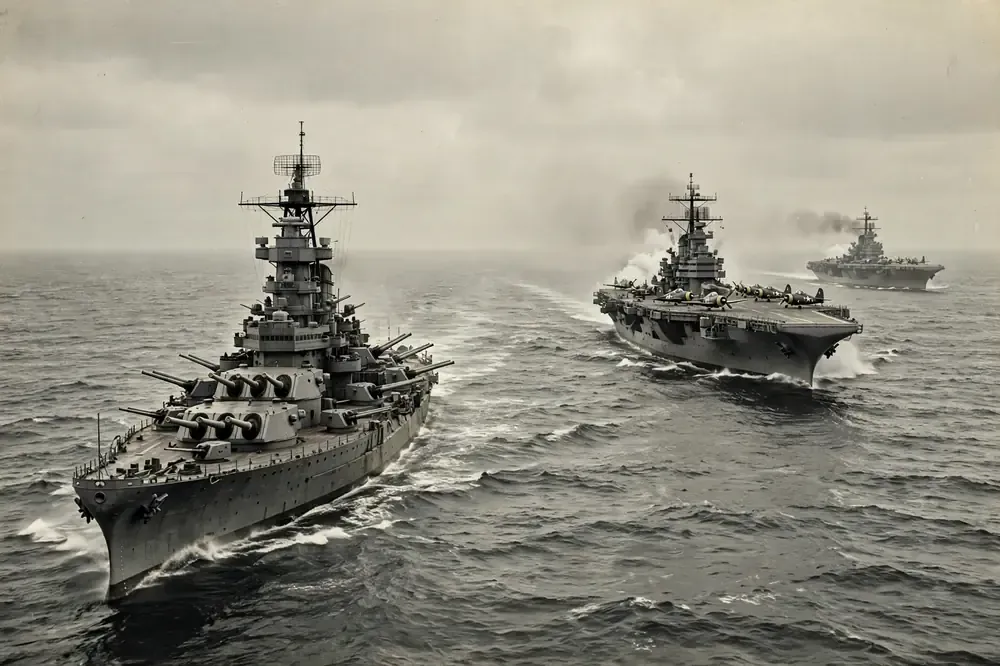
Both ships began their service in the Atlantic. North Carolina escorted convoys and supported the occupation of Iceland, while Washington operated with the British Home Fleet, covering Arctic convoys and deterring the German battleship Tirpitz. The Atlantic service was a useful shakedown, but the real war was in the Pacific, and both ships were transferred there in 1942. North Carolina arrived in time for the Guadalcanal campaign, where she escorted the carriers Enterprise and Saratoga, and Washington followed a few months later. The transfer marked the beginning of the fast battleship’s true role: not as a member of a battle line, but as a carrier escort and as a fast strike force.
Guadalcanal and the Sinking of Kirishima
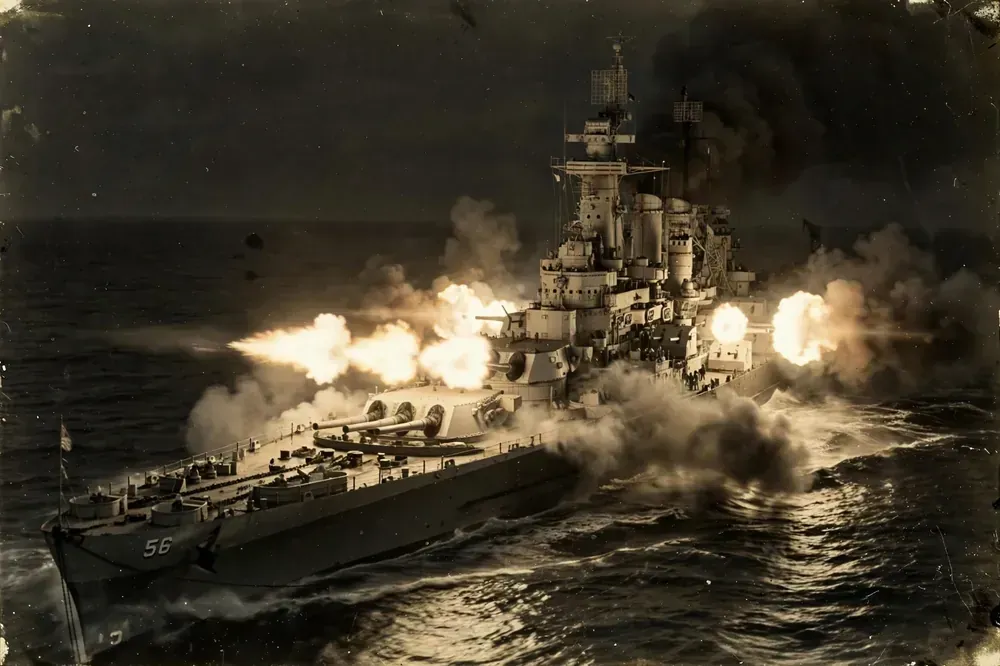
The defining action of the class came on the night of 14–15 November 1942, in the Naval Battle of Guadalcanal. Washington, under Rear Admiral Willis Lee, and the battleship South Dakota were sent to intercept a Japanese bombardment force that included the battleship Kirishima. In the confused night action, South Dakota was disabled by electrical failures and came under heavy fire, and Washington, using her radar, engaged Kirishima at close range. In about seven minutes Washington fired 75 rounds of 16-inch ammunition and scored at least nine hits, wrecking Kirishima’s superstructure and disabling her steering. Kirishima capsized and sank in the early hours of 15 November. It was the only battleship-versus-battleship victory won by the United States Navy in the Second World War, and it demonstrated the decisive advantage of radar-directed gunnery at night.
The Carrier War, 1943–1945
After Guadalcanal, both ships served as carrier escorts in the great carrier campaigns of 1943–1945. North Carolina escorted the fast carriers at the Gilberts, the Marshalls, the Marianas, Leyte, Iwo Jima and Okinawa, and her anti-aircraft battery was credited with shooting down numerous Japanese aircraft, including kamikazes off Okinawa. Washington served in the same role, and she was also part of the bombardment force at the Marianas. Both ships were present in Tokyo Bay for the surrender ceremony on 2 September 1945, a fitting end to their wartime service. The fast battleship had proved its value not in the great fleet action its designers had imagined, but in the unglamorous work of protecting carriers, and the North Carolina class had performed that work as well as any ships in the fleet.
6. Performance and Specifications
Strengths on the Battlefield
The North Carolina class was a successful design. Its 16-inch guns were powerful and accurate, and the radar fire-control system gave the ships an advantage in night actions that no Japanese battleship could match. The ships were fast enough to operate with carriers, and their anti-aircraft batteries made them among the best carrier escorts in the fleet. Their protection, while not as heavy as that of the later Iowa class, was adequate for the threats they faced, and their machinery was reliable. The class’s wartime record — fifteen and thirteen battle stars, a battleship sunk, dozens of aircraft shot down — speaks for itself.
Weaknesses and Trade-offs
The weaknesses were those of the treaty compromise. The armoured deck was thin by battleship standards, and the ships were vulnerable to plunging fire at long range — a weakness that was never fully tested in combat, since the ships rarely fought other battleships. The vibration problem of the early trials was never entirely cured, and it limited the ships’ speed in some conditions. The torpedo protection system, while adequate, was less deep than that of later American battleships, and North Carolina’s torpedoing in September 1942 showed that a single torpedo could put a ship out of action for months. The ships were also expensive to operate, with large crews and heavy fuel consumption, and by the end of the war they were obsolescent in the face of the Iowa class and the carrier.
How the Class Compared with Rivals
Compared with the Japanese battleships they faced, the North Carolina class was superior in fire control and anti-aircraft armament, and equal in main battery power. Kirishima, the ship Washington sank, was an older battlecruiser rebuilt as a fast battleship, with thinner armour and no radar. Compared with the German Bismarck, the North Carolina class was faster and better protected against air attack, but had a slightly weaker main battery. Compared with the British King George V class, the American ships were faster and more heavily armed, but had thinner deck armour. Compared with their American successors, the South Dakota and Iowa classes, they were slower and less well protected, but they were the ships that proved the fast battleship concept in combat.
7. Operators
The United States Navy
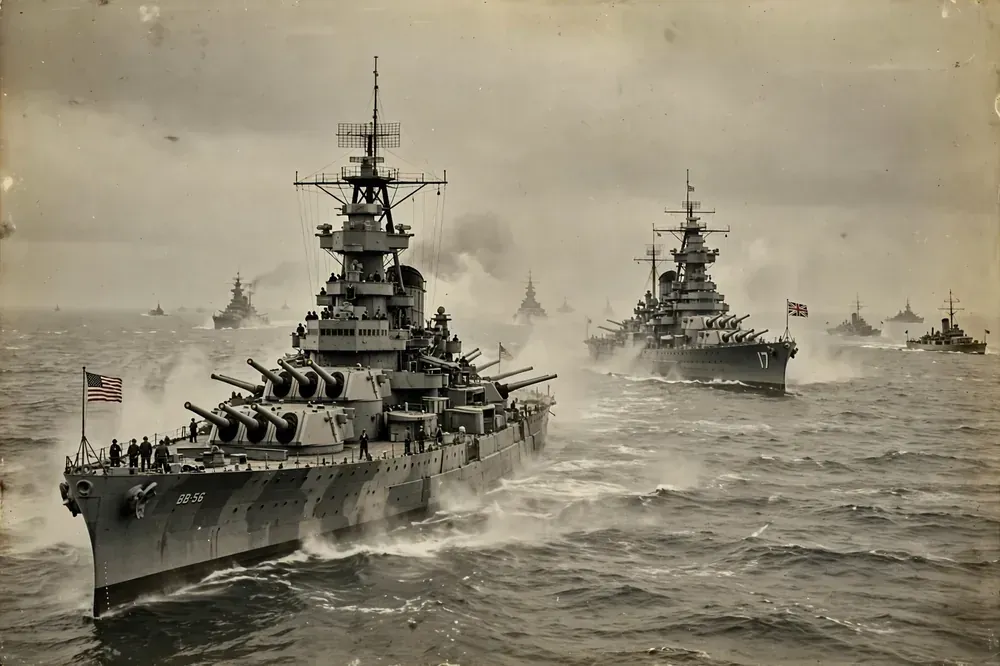
The only operator of the North Carolina class was the United States Navy. The two ships served in the Atlantic and Pacific Fleets, and their crews were drawn from across the United States. North Carolina’s crew included men from every state, and the ship became a symbol of the state whose name she bore. Washington’s crew was similarly representative. The ships were commanded by officers who would later become senior figures in the Navy, including Rear Admiral Willis Lee, the victor of the Kirishima action. The class’s service was entirely American, and its history is a part of the history of the United States Navy in the Second World War.
No Other Users
No other navy operated a North Carolina-class ship. After the war, Washington was decommissioned and scrapped in 1961, a decision that was controversial at the time and remains so among naval historians. North Carolina was saved by a campaign led by the schoolchildren of North Carolina, who raised funds to bring the ship home, and she was preserved as a memorial at Wilmington in 1962. The contrast between the two sisters’ fates — one preserved, one scrapped — has become a part of the class’s story, and it is often cited as an argument for the preservation of historic warships.
8. Legacy and Influence
The Fast Battleship Template
The legacy of the North Carolina class is the fast battleship itself. The class proved that a battleship could be fast enough to operate with carriers, well enough armed to fight other battleships, and well enough protected to survive in a carrier task force. The South Dakota class, which followed, was essentially a North Carolina with better protection on the same hull, and the Iowa class, the largest American battleships ever built, carried the concept to its logical conclusion. The fast battleship became the standard American capital ship of the Second World War, and the North Carolina class was its prototype.
Memory and the Museum Ship
North Carolina’s preservation as a museum ship has ensured that the class is remembered. The ship at Wilmington is one of the most visited battleship memorials in the United States, and it serves as a memorial to the North Carolinians who died in the Second World War. Washington’s scrapping, by contrast, is remembered as a loss, and it helped to inspire the later preservation movement that saved the Iowa-class ships and other historic vessels. The class is also remembered in the Navy’s history: the sinking of Kirishima remains the only battleship-versus-battleship victory in American naval history, and it is studied at the Naval War College as an example of radar-directed night gunnery.
The End of the Battleship Era
The North Carolina class also marks the beginning of the end of the battleship era. The ships were designed for a fleet action that never happened, and their most valuable service was as carrier escorts — a role that acknowledged, in practice, that the aircraft carrier had replaced the battleship as the capital ship. The class’s career therefore covers the change from the battleship age to the carrier age, and its ships were among the last battleships built to fight other battleships. The Iowa class that followed was built for the same role, but by the time it entered service the carrier had already won the argument.
9. Surviving Examples
USS North Carolina at Wilmington
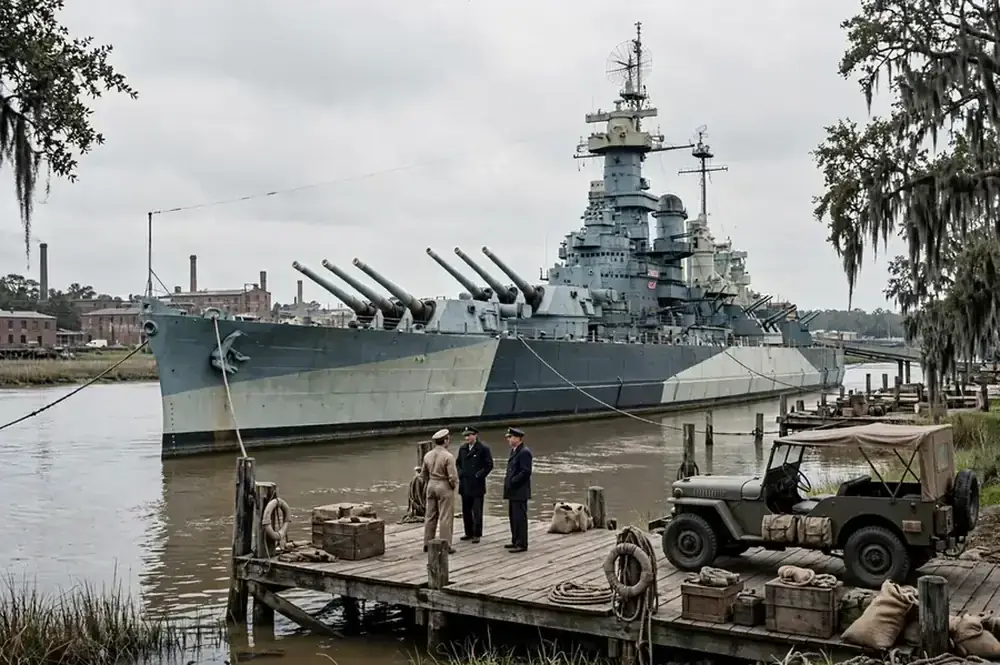
The surviving example of the class is USS North Carolina herself, preserved as a museum ship at Wilmington, North Carolina, since 1962. The ship is maintained by the state of North Carolina and is open to the public, with tours of the main deck, the turrets, the engine rooms and the living quarters. The ship’s preservation has been a continuous effort: in recent years the hull has been repaired and the ship has been moved to a cofferdam for maintenance, work that has been funded by the state and by private donations. The museum also maintains an archive of the ship’s history and a memorial to the North Carolinians who served in the Second World War.
Washington and the Absence of a Second Survivor
No other example of the class survives. USS Washington was scrapped in 1961, and her bell and some of her fittings are preserved in museums and in the state of Washington. The ship’s name was later given to a nuclear submarine, USS Washington (SSN-787), and the battleship’s legacy is carried by that vessel and by the memorials to her crew. The contrast between North Carolina’s preservation and Washington’s scrapping is often cited in discussions of naval heritage, and it has become a cautionary tale for those who seek to preserve historic warships.
Frequently Asked Questions
What was the North Carolina class?
The North Carolina class consisted of two American fast battleships, USS North Carolina (BB-55) and USS Washington (BB-56), commissioned in 1941. They were the first American battleships built after the Washington Naval Treaty and the first designed to operate with aircraft carriers at 28 knots. The class combined nine 16-inch guns, the heaviest weapons ever mounted on an American battleship to that date, with the speed to keep up with carrier task forces. Both ships served with distinction in the Pacific, and the class was the template for every American battleship that followed, including the South Dakota and Iowa classes.
How many 16-inch guns did the North Carolina class carry?
Nine 16-inch guns in three triple turrets, two forward and one aft. The guns fired a 2,700-pound shell to a range of about 36,000 yards and were controlled by radar-directed fire control, which gave the ships a decisive advantage in night actions. The choice of the 16-inch gun was made under the “escalator clause” of the Second London Naval Treaty, which allowed the calibre to rise from 14 to 16 inches once Japan refused the 14-inch limit. The ships had been designed to carry either twelve 14-inch guns or nine 16-inch guns, and the Navy chose the heavier battery.
Did an American battleship sink a Japanese battleship in WWII?
Yes. USS Washington sank the Japanese battleship Kirishima off Guadalcanal on the night of 14–15 November 1942, in the only battleship-versus-battleship victory won by the United States Navy in the war. Washington’s radar-directed 16-inch guns hit Kirishima at least nine times in about seven minutes, wrecking her superstructure and disabling her steering, and Kirishima capsized and sank in the early hours of 15 November. The action demonstrated the decisive advantage of radar-directed gunnery at night, and it remains the only battleship duel won by an American ship.
What happened to USS North Carolina after the war?
North Carolina was decommissioned in 1947 and preserved as a museum ship at Wilmington, North Carolina, in 1962, after a campaign led by the state’s schoolchildren, who raised funds to bring the ship home. She remains open to the public today as one of the most visited battleship memorials in the United States, with tours of the main deck, the turrets, the engine rooms and the living quarters. The ship’s preservation has been a continuous effort, funded by the state and by private donations, and she serves as a memorial to the North Carolinians who died in the Second World War.
Why was USS Washington scrapped?
Washington was decommissioned in 1947 and scrapped in 1961, at a time when the Navy had no programme for preserving historic ships. The decision is now widely regretted, and it helped to inspire the later movement to preserve the Iowa-class battleships and other historic vessels. Washington’s bell and some of her fittings are preserved in museums and in the state of Washington, and her name was later given to a nuclear submarine. The contrast between North Carolina’s preservation and Washington’s scrapping has become a cautionary tale for those who seek to preserve historic warships.
How fast were the North Carolina-class battleships?
The ships were designed for 28 knots and could sustain about 27 knots in service, fast enough to operate with the fast carrier task forces. Their speed was one of their most valuable assets and the defining feature of the fast battleship concept, which the class pioneered for the United States Navy. The propulsion system was four General Electric steam turbines producing 121,000 shaft horsepower, divided into four separate engine rooms so that a single hit could not disable the whole plant. The ships’ early trials revealed severe vibration at high speed, a problem that was mitigated by new propellers and hull strengthening.
Sources
- Friedman, Norman, U.S. Battleships: An Illustrated Design History (Naval Institute Press).
- Garzke, William, and Dulin, Robert, Battleships: United States Battleships in World War II (Naval Institute Press).
- Hornfischer, James, Neptune’s Inferno: The U.S. Navy at Guadalcanal (Bantam Books).
- Lundgren, Robert, The Battleship USS Washington and the Night Battle of Guadalcanal (various naval histories).
- The USS North Carolina Battleship Memorial, Wilmington, ship records and visitor guides.
- The Naval History and Heritage Command, Washington, ship histories for BB-55 and BB-56.