 WAR ATLAS MILITARY HISTORY MAGAZINE · WWI — WWII
Type 100 SMG: Japan’s Submachine Gun of the Second World War
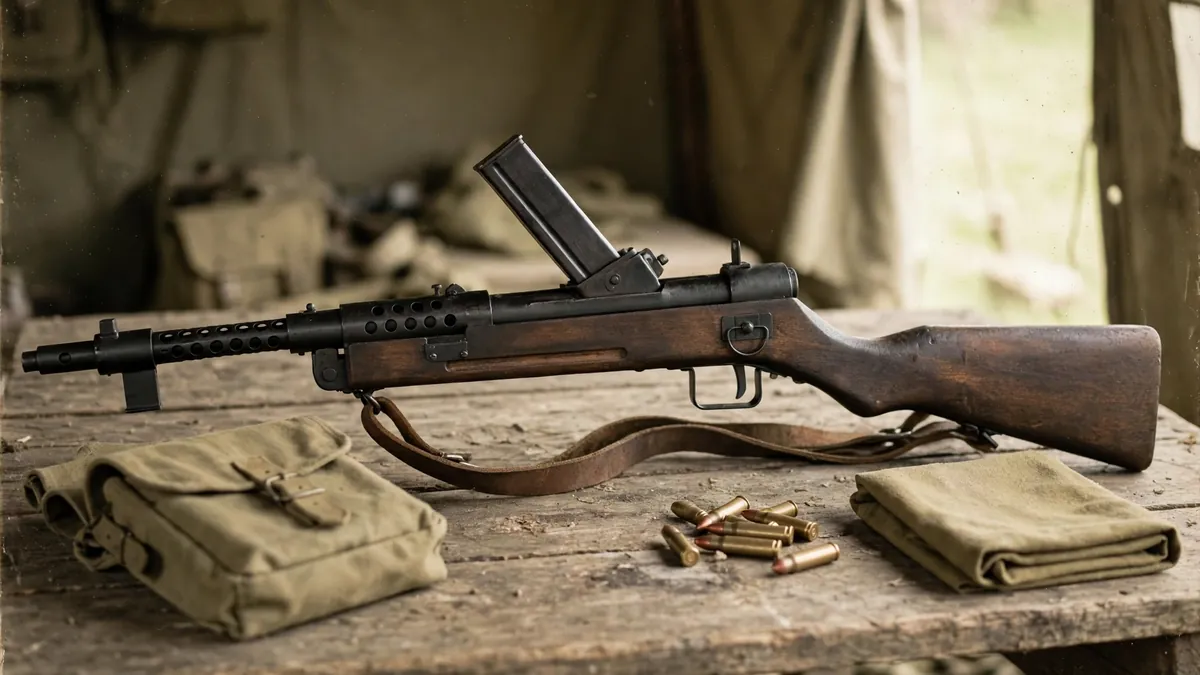
The Type 100 submachine gun was the Imperial Japanese Army’s only mass-produced submachine gun of the Second World War, a distinctive 8 mm weapon that was used by Japanese paratroopers, infantry and special forces in the fighting in China and the Pacific. Adopted in 1940, in the hundredth year of the traditional Japanese calendar, the Type 100 was designed by Kijiro Nambu and built in two main versions: an early model with a complex, expensive design, and a late-war model that was simplified for mass production. Approximately 27,000 to 30,000 Type 100 submachine guns were built between 1940 and 1945, a small number compared with the hundreds of thousands of submachine guns built by the Allies and Germany, but the Type 100 was an important weapon for the Japanese Army, which had previously relied on rifles and light machine guns for close-range fighting. The Type 100 is remembered as a symbol of the Japanese Army’s late adoption of the submachine gun, and as a rare and distinctive weapon that is prized by collectors.
The Type 100 was developed in response to the Japanese Army’s experience in China, where Japanese troops found that they needed a compact, rapid-fire weapon for close-range fighting in cities and in the jungle. The Japanese Army had previously used captured submachine guns, notably the German MP 18 and the Swiss SIG, but it had no domestic design. Kijiro Nambu, Japan’s most famous firearms designer, designed the Type 100 in the late 1930s, and it was adopted in 1940. The early Type 100 was a complex weapon, with a bipod, a bayonet lug, and a sight graduated to 1,500 metres, which reflected the Japanese Army’s doctrine that a submachine gun should be used as a long-range weapon. The late-war Type 100, introduced in 1944, was simplified, with a shorter barrel, a simpler sight, and a higher rate of fire, and it was better suited to the close-range fighting of the Pacific.
The Type 100 is remembered as a rare and distinctive submachine gun, and as a weapon that was used by some of the most elite units of the Japanese Army, including the paratroopers who fought at Palembang and the special forces who fought in Burma. It appears in museums in Japan, the United States and Britain, and it is a popular subject for collectors and military historians. The Type 100’s distinctive shape, with its long barrel and its side-mounted magazine, remains one of the most recognisable images of Japanese infantry weapons in the Second World War.
1. Key Facts
| Field | Value |
|---|---|
| Type | Submachine gun |
| Origin | Japan |
| Designed | Late 1930s (Kijiro Nambu; Nambu Rifle Manufacturing Company) |
| In service | 1940-1945 (Imperial Japanese Army) |
| Produced | Approximately 27,000-30,000 |
| Manufacturers | Nambu Rifle Manufacturing Company, Tokyo Arsenal, Nagoya Arsenal |
| Calibre | 8 mm Nambu (8×22 mm) |
| Action | Blowback, selective fire, open bolt |
| Weight | Approximately 3.8 kg (early model); 3.4 kg (late model) unloaded |
| Length | Approximately 900 mm (early); 890 mm (late) |
| Barrel length | Approximately 230 mm (early); 230 mm (late) |
| Magazine capacity | 30 rounds (detachable box magazine, side-mounted) |
| Rate of fire | Approximately 450 rpm (early); 800 rpm (late) |
| Muzzle velocity | Approximately 335 m/s (1,099 ft/s) |
| Effective range | Approximately 100-150 m |
| Notable variants | Type 100 (1940, early model); Type 100 (1944, late model) |
2. Background and Development
The Japanese Army and the Submachine Gun
The origins of the Type 100 lay in the Japanese Army’s late adoption of the submachine gun. In the 1920s and 1930s, the Japanese Army relied on the Arisaka rifle and the Type 96 and Type 99 light machine guns for infantry firepower, and it had little interest in submachine guns, which it regarded as weapons for police and for special forces. But the fighting in China in the late 1930s showed that Japanese troops needed a compact, rapid-fire weapon for close-range fighting in cities and in the jungle, and the Army began to experiment with captured submachine guns. The Japanese Army used the German MP 18, the Swiss SIG 1920, and other foreign submachine guns, but it had no domestic design, and it ordered Kijiro Nambu to design one.
Kijiro Nambu and the Type 100
The Type 100 was designed by Kijiro Nambu, Japan’s most famous firearms designer, who had designed the Nambu Type 14 pistol and the Type 96 light machine gun. Nambu’s design was influenced by the German MP 18 and the Swiss SIG, but it was a distinctive Japanese weapon, with a side-mounted magazine, a long barrel, and a wooden stock. The Type 100 was adopted in 1940, in the hundredth year of the traditional Japanese calendar, and it entered production at the Nambu Rifle Manufacturing Company. The first production model carried a bipod, a bayonet lug and a sight graduated to 1,500 metres, reflecting the Japanese Army’s doctrine that a submachine gun should serve as a long-range weapon. The early Type 100 was expensive to manufacture, and only about 8,000 to 10,000 were built before the design was simplified.
A Weapon for Paratroopers and Special Forces
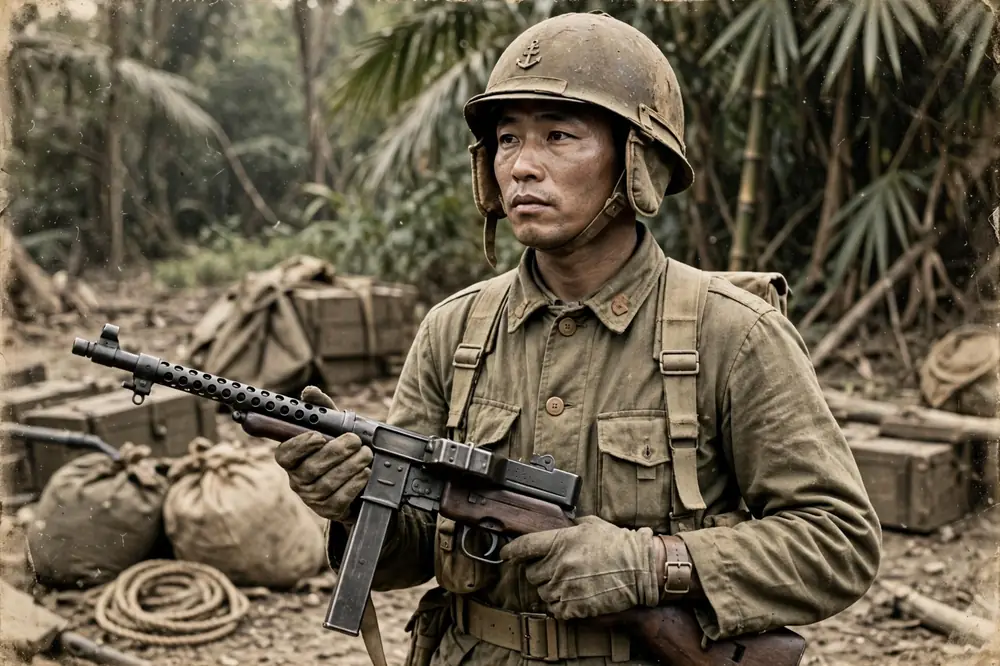
The Type 100 was initially issued to Japanese paratroopers, who used it in the airborne assault on Palembang in February 1942, and to special forces, who used it in the fighting in Burma and in the Pacific. The Type 100’s compact size and its rapid fire made it ideal for airborne and special operations, where troops needed a weapon that could be carried easily and that could deliver a high volume of fire at close range. The Type 100 was later issued to infantry units, although it was never a standard weapon for the ordinary infantryman, who continued to carry the Arisaka rifle. The Type 100’s use by elite units has contributed to its fame, and it is often associated with the image of the Japanese paratrooper in the Second World War.
3. Design
Action, Blowback System and Operation
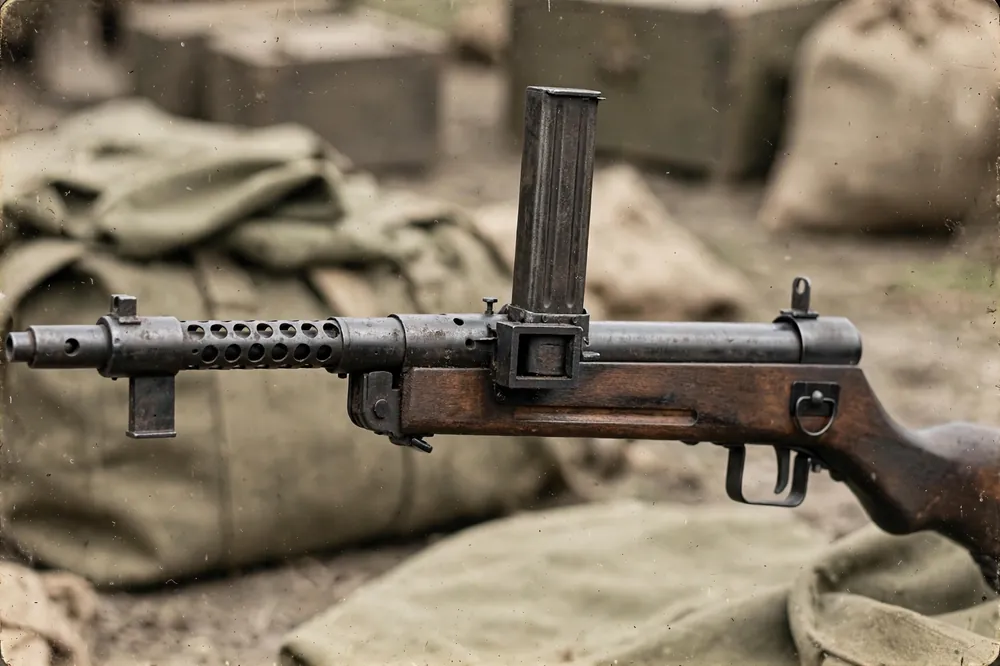
The Type 100 was a blowback-operated, selective-fire submachine gun, firing from an open bolt, with a design that was simple and reliable. The pistol’s action was a straightforward blowback system, with a heavy bolt that was driven back by the pressure of the fired cartridge, and a return spring that drove the bolt forward to chamber a new round. The Type 100’s selector allowed the shooter to choose between semi-automatic and fully automatic fire, and the early model had a rate of fire of about 450 rounds per minute, while the late model had a rate of about 800 rounds per minute. The Type 100’s magazine was a 30-round detachable box, mounted on the left side of the receiver, which fed cartridges into the chamber from the side. The side-mounted magazine was a distinctive feature, and it allowed the shooter to fire from a prone position without the magazine interfering with the ground.
The 8 mm Nambu Cartridge
The Type 100 was chambered for the 8 mm Nambu cartridge, the same cartridge as the Type 14 pistol, which fired a bullet weighing about 6.5 grams at a muzzle velocity of about 335 metres per second. The 8 mm Nambu was less powerful than the 9 mm Parabellum cartridge used by German and British submachine guns, and its stopping power was limited, but it was adequate for a submachine gun, and it allowed Japanese troops to share ammunition between their pistols and their submachine guns. The Type 100’s magazine held 30 rounds, and its effective range was about 100 to 150 metres, which was sufficient for the close-range fighting for which it was designed. The 8 mm Nambu cartridge was a significant limitation, but it was a deliberate choice by the Japanese Army, which valued a light, low-recoil cartridge for a submachine gun.
Stock, Sights and Ergonomics
The Type 100 had a wooden stock, with a pistol grip and a foregrip, and a long barrel with a distinctive muzzle. The early model had a bipod, a bayonet lug, and a rear sight graduated to 1,500 metres, which reflected the Japanese Army’s doctrine that a submachine gun should be used as a long-range weapon. The late model, introduced in 1944, was simplified, with a shorter barrel, a simpler sight graduated to 100 metres, and no bipod or bayonet lug, which made it lighter and easier to manufacture. The Type 100’s ergonomics were adequate, but the side-mounted magazine made it awkward to handle, and the pistol’s weight of about 3.8 kilograms was heavy for a submachine gun. The Type 100’s design was a product of its time, and it reflected the Japanese Army’s priorities: a reliable, simple weapon that was easy to manufacture and to maintain.
4. Variants
The Early Model (1940)
The early Type 100, adopted in 1940, was a complex weapon, with a bipod, a bayonet lug, and a rear sight graduated to 1,500 metres. The early model had a rate of fire of about 450 rounds per minute, and it was built in relatively small numbers, about 8,000 to 10,000, because it was expensive to manufacture. The early Type 100 was issued to paratroopers and special forces, and it was used in the airborne assault on Palembang and in the fighting in Burma. The early model’s long sight and bipod reflected the Japanese Army’s doctrine, but they were impractical for a submachine gun, and the early model was soon replaced by the simplified late model.
The Late Model (1944)
The late Type 100, introduced in 1944, was a simplified version, with a shorter barrel, a simpler sight, no bipod or bayonet lug, and a higher rate of fire of about 800 rounds per minute. The late model was cheaper and easier to manufacture, and about 18,000 to 20,000 were built, making it the more common version. The late Type 100 was issued to infantry units in the final year of the war, and it was used in the fighting on Okinawa, Iwo Jima and in the Philippines. The late model’s higher rate of fire and simpler design made it better suited to the close-range fighting of the Pacific, and it is the version most often seen in museums and collections.
Production Numbers and Factories
The Type 100 was built by the Nambu Rifle Manufacturing Company, the Tokyo Arsenal and the Nagoya Arsenal, and the total production of about 27,000 to 30,000 weapons was small compared with the hundreds of thousands of submachine guns built by the Allies and Germany. The Type 100’s low production reflected the Japanese Army’s limited interest in submachine guns, and the Japanese arms industry’s limited capacity. The Type 100’s production numbers are a reminder that the Japanese Army, unlike the Allied armies, never fully embraced the submachine gun, and that the Type 100 remained a specialist weapon throughout the war.
5. Operational History
Palembang and the Paratroopers
The Type 100’s combat debut came at Palembang in February 1942, when Japanese paratroopers, armed with Type 100 submachine guns, seized the oil refineries and airfields of the Dutch East Indies in one of the most successful airborne operations of the war. The paratroopers’ Type 100s proved effective in the close-range fighting for the refineries, and the operation was a significant victory for the Japanese Army. The Type 100’s service at Palembang established its reputation as a weapon for elite troops, and it was soon issued to other paratroop and special forces units.
China, Burma and the Pacific
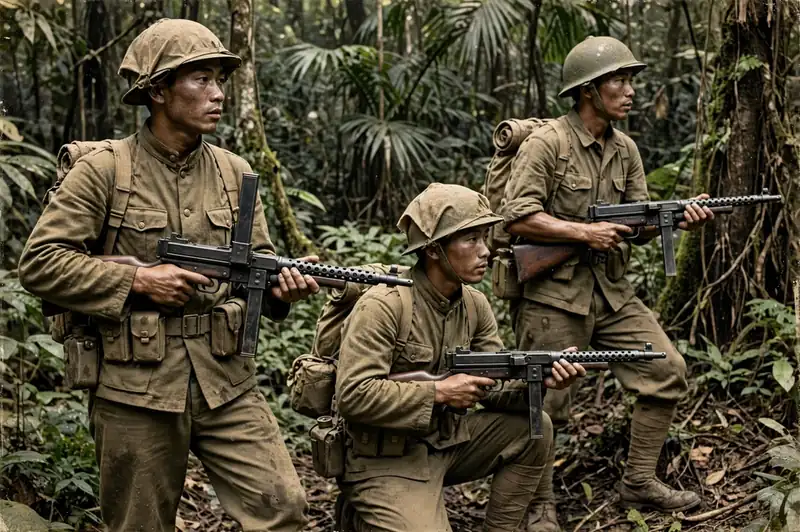
After Palembang, the Type 100 served in China, where it was used by Japanese troops in the fighting against the Chinese Army, and in Burma, where it was used by the Japanese 15th Army in the fighting against the British and Indian Armies. In the Pacific, the Type 100 was used in the fighting on Guadalcanal, Tarawa, Iwo Jima and Okinawa, where Japanese troops used it in the close-range fighting for bunkers and caves. The Type 100’s 8 mm cartridge was less powerful than the American .45 ACP, but its high rate of fire in the late model made it effective at close range, and its compact size made it ideal for jungle fighting. The Type 100’s service in the Pacific was its most famous, and it is often associated with the image of the Japanese infantryman in the jungle.
The Final Battles
The Type 100’s final battles came in 1944 and 1945, when Japanese troops, armed with the late-model Type 100, fought in the Philippines, on Iwo Jima and on Okinawa. The Type 100’s high rate of fire made it effective in the close-range fighting for caves and bunkers, and its compact size made it ideal for the confined spaces of the Pacific islands. The Type 100 remained in service until the end of the war, when the Imperial Japanese Army was disbanded, and it was never used by the post-war Japanese Self-Defense Forces. The Type 100’s service ended with the war, but its legacy lived on in the weapons that were captured and preserved.
The Type 100 in Special Forces
The Type 100 was used by Japanese special forces, including the paratroopers and the Teishin Shudan, the Japanese Army’s airborne division, and by the special naval landing forces. The Type 100’s compact size and its rapid fire made it ideal for special operations, where troops needed a weapon that could be carried easily and that could deliver a high volume of fire. The Type 100’s use by special forces has contributed to its fame, and it is often associated with the image of the Japanese paratrooper and the special forces soldier in the Second World War.
6. Performance and Specifications
Strengths on the Battlefield
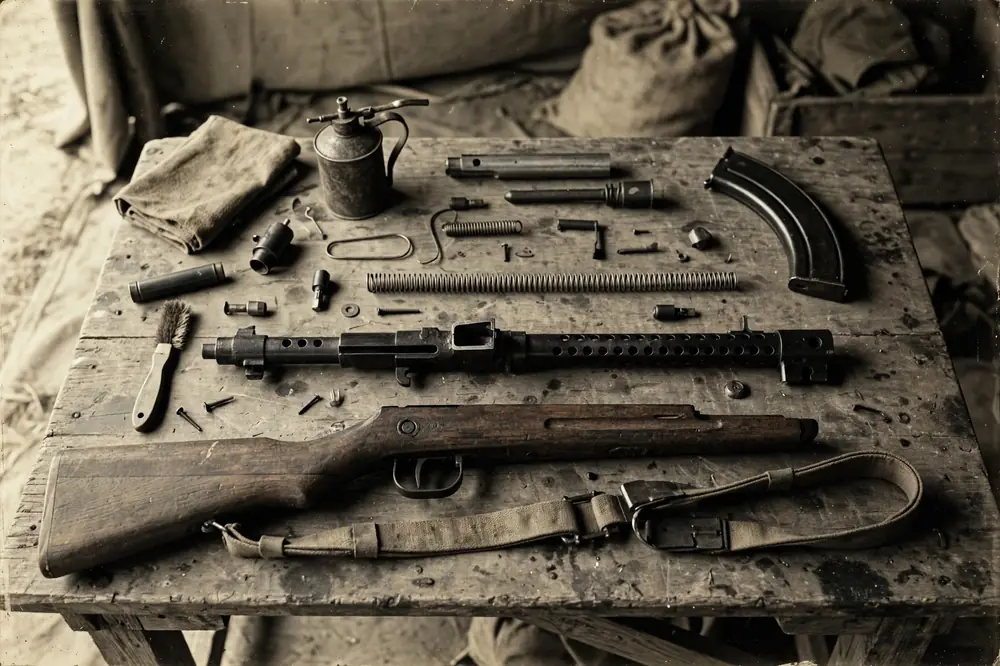
The Type 100’s greatest strength was its reliability and its compact size. It was a simple, robust weapon that could be maintained in the field, and it functioned well in the harsh conditions of China and the Pacific. Its 8 mm cartridge had low recoil, which made it easy to control in fully automatic fire, and its side-mounted magazine allowed it to be fired from a prone position. The late model’s rate of fire of about 800 rounds per minute gave it a high volume of fire at close range, and its wooden stock made it comfortable to hold. The Type 100’s design was also simple to manufacture, which meant that it could be built in the late war, when Japanese industry was under pressure from Allied bombing.
Weaknesses and Trade-offs
The weaknesses were clear. The Type 100’s 8 mm cartridge was less powerful than the 9 mm Parabellum and the .45 ACP, and its stopping power was limited. The early model’s rate of fire was slow, and its bipod and long sight were impractical. The side-mounted magazine made the weapon awkward to handle, and its weight was heavy for a submachine gun. The Type 100’s production was also limited, and it was never available in large numbers, which meant that most Japanese infantrymen continued to carry the Arisaka rifle. The Type 100’s performance must be judged against its intended role: a specialist weapon for paratroopers and special forces, where it was adequate, although not outstanding.
How the Type 100 Compared with Rivals
Compared with the German MP 40, the Type 100 had a similar design but a less powerful cartridge and a lower production run. Compared with the American Thompson, the Type 100 was lighter and had lower recoil, but it was less powerful and less reliable. Compared with the British Sten, the Type 100 was more expensive to manufacture but more reliable and better finished. The Type 100’s combination of reliability, simplicity and a low-recoil cartridge made it a adequate submachine gun, but it was not the best of the war, and it was outclassed by the German and American submachine guns in power and in production numbers.
7. Operators
Japan: The Sole Operator
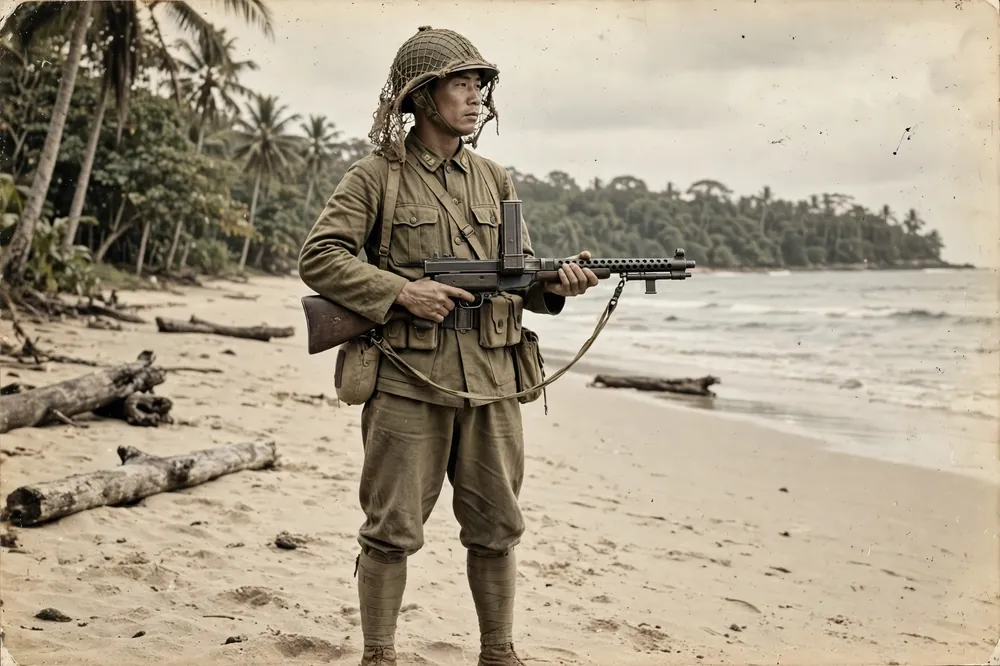
The sole operator of the Type 100 was the Imperial Japanese Army, which used it as its standard submachine gun from 1940 to 1945. The Type 100 was issued to paratroopers, special forces, infantry and other units, and it served in every theatre where Japanese troops fought. The Type 100’s service in the Japanese Army was its most important, and it is closely associated with the image of the Japanese paratrooper and the special forces soldier in the Second World War. The Type 100 was never used by the Imperial Japanese Navy, which had its own submachine guns, although some naval landing forces used the Type 100.
Captured Weapons
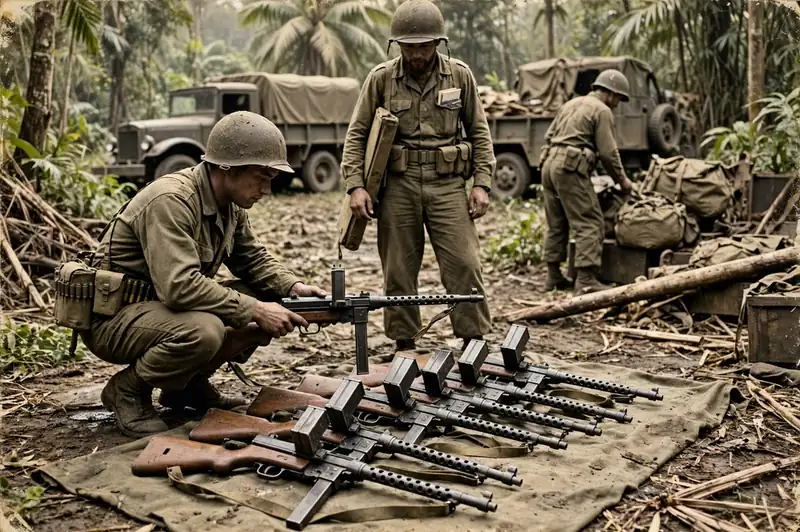
After the war, Type 100 submachine guns were captured by Allied troops and brought home as souvenirs. The Type 100 became a popular souvenir for American, British and Australian troops, and it is now one of the most commonly encountered Japanese submachine guns in collections. The Type 100’s status as a souvenir has contributed to its fame, and it is often associated with the image of the Japanese soldier in the Pacific War. The Type 100’s captured weapons are also a valuable source of information for historians, because they show the range of production dates and manufacturers.
8. Legacy and Influence
Japan’s Late Adoption of the Submachine Gun
The Type 100’s legacy is that of Japan’s late adoption of the submachine gun. It showed that the Japanese Army, which had previously relied on rifles and light machine guns, could design and build a submachine gun, but it also showed that the Army’s interest in the weapon was limited, and that the Type 100 remained a specialist weapon throughout the war. The Type 100’s low production and its late introduction meant that it had little impact on the course of the war, but it is a significant weapon in the history of Japanese small arms, and it is remembered as the only mass-produced Japanese submachine gun of the war.
Cultural Memory and Historical Assessment
The Type 100 is one of the most famous Japanese weapons of the war, and its reputation has been enhanced by its appearance in films, books and video games about the Pacific War. Historians have assessed the Type 100 as a adequate but not outstanding submachine gun, well suited to its role as a specialist weapon for paratroopers and special forces, but outclassed by the German and American submachine guns in power and production. The Type 100’s reputation as a rare and distinctive weapon has made it popular with collectors, and it is often used as a symbol of the Japanese Army’s infantry weapons.
The Type 100 in Popular Culture
The Type 100 appears in many films, books and video games about the Pacific War, and it is a popular subject for military historians and collectors. Its distinctive shape, with its side-mounted magazine and its long barrel, makes it instantly recognisable, and it is often used as a symbol of the Japanese paratrooper. The Type 100’s appearance in popular culture has ensured that it will be remembered long after the last surviving example has gone. For many viewers, the sight of a Type 100 in a film or a game is their first encounter with a Japanese submachine gun, and it has helped to keep the weapon’s unusual design in the public memory.
9. Surviving Examples
Museums in Japan and the United States
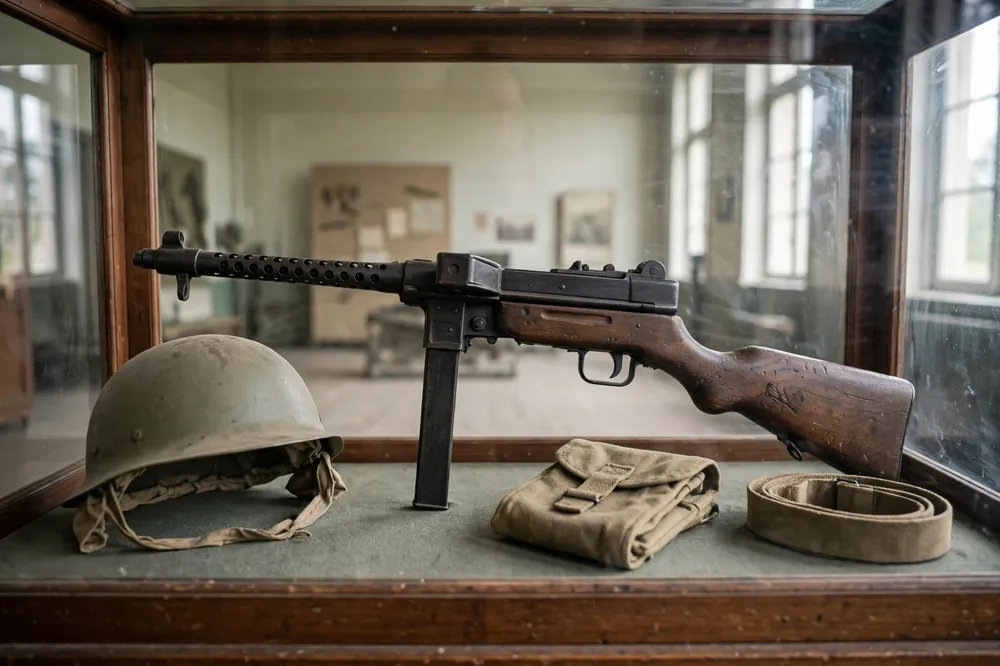
Many Type 100 submachine guns survive in museums and private collections, reflecting the type’s status as a souvenir and as a rare weapon. The Yushukan Museum in Tokyo holds examples, and the National Museum of the Pacific War in Fredericksburg, Texas, displays Type 100s captured in the Pacific. The Imperial War Museum in London also holds Type 100s, and the Australian War Memorial in Canberra has examples. The number of surviving Type 100s is relatively large, given the small production run, because many were captured and preserved as souvenirs.
Collectors and Private Ownership
Type 100 submachine guns are popular with collectors, and they are among the most sought-after Japanese weapons in private collections. Many Type 100s in collections today were brought home by Allied veterans as souvenirs, and they are valued for their historical association and for their distinctive design. The Type 100’s survival in private collections ensures that the weapon will be preserved for future generations, and it is a reminder of the personal nature of the fighting in the Pacific.
Frequently Asked Questions
Was the Type 100 a good submachine gun?
The Type 100 was an adequate submachine gun for its role as a specialist weapon for paratroopers and special forces. It was reliable and simple to maintain, and its 8 mm cartridge had low recoil. But it was less powerful than the German MP 40 and the American Thompson, and its production was limited. It was a serviceable weapon, but not the best of the war.
How many Type 100 submachine guns were built?
Approximately 27,000 to 30,000 Type 100 submachine guns were built between 1940 and 1945, by the Nambu Rifle Manufacturing Company, the Tokyo Arsenal and the Nagoya Arsenal. This was a small production run compared with the hundreds of thousands of submachine guns built by the Allies and Germany.
What calibre was the Type 100?
The Type 100 was chambered for the 8 mm Nambu cartridge, the same cartridge as the Type 14 pistol, which fired a bullet weighing about 6.5 grams at a muzzle velocity of about 335 metres per second. The 8 mm Nambu was less powerful than the 9 mm Parabellum, but it allowed troops to share ammunition between pistols and submachine guns.
Did the Type 100 have a side-mounted magazine?
Yes. The Type 100’s 30-round magazine was mounted on the left side of the receiver, which was a distinctive feature. The side-mounted magazine allowed the shooter to fire from a prone position without the magazine interfering with the ground, although it made the weapon awkward to handle.
What was the difference between the early and late Type 100?
The early Type 100, adopted in 1940, had a bipod, a bayonet lug, a sight graduated to 1,500 metres, and a rate of fire of about 450 rounds per minute. The late Type 100, introduced in 1944, was simplified, with no bipod or bayonet lug, a simpler sight, and a rate of fire of about 800 rounds per minute.
How long did the Type 100 remain in service?
The Type 100 remained in Japanese service from 1940 to 1945, when the Imperial Japanese Army was disbanded. It was never used by the post-war Japanese Self-Defense Forces, and it was replaced by more modern submachine guns in the armies that captured it.
Sources
- Harry L. Derby and James D. Brown, Japanese Military Cartridge Handguns 1893-1945 (Schiffer Publishing).
- Ian Hogg, Military Small Arms of the 20th Century (Krause Publications).
- The Yushukan Museum, Tokyo, Type 100 collection records.
- The National Museum of the Pacific War, Fredericksburg, Type 100 exhibit records.
- Imperial War Museum, London, Type 100 collection records.
- Chris McNab, The World’s Greatest Small Arms (Amber Books).