 WAR ATLAS MILITARY HISTORY MAGAZINE · WWI — WWII
Battle of Tannenberg
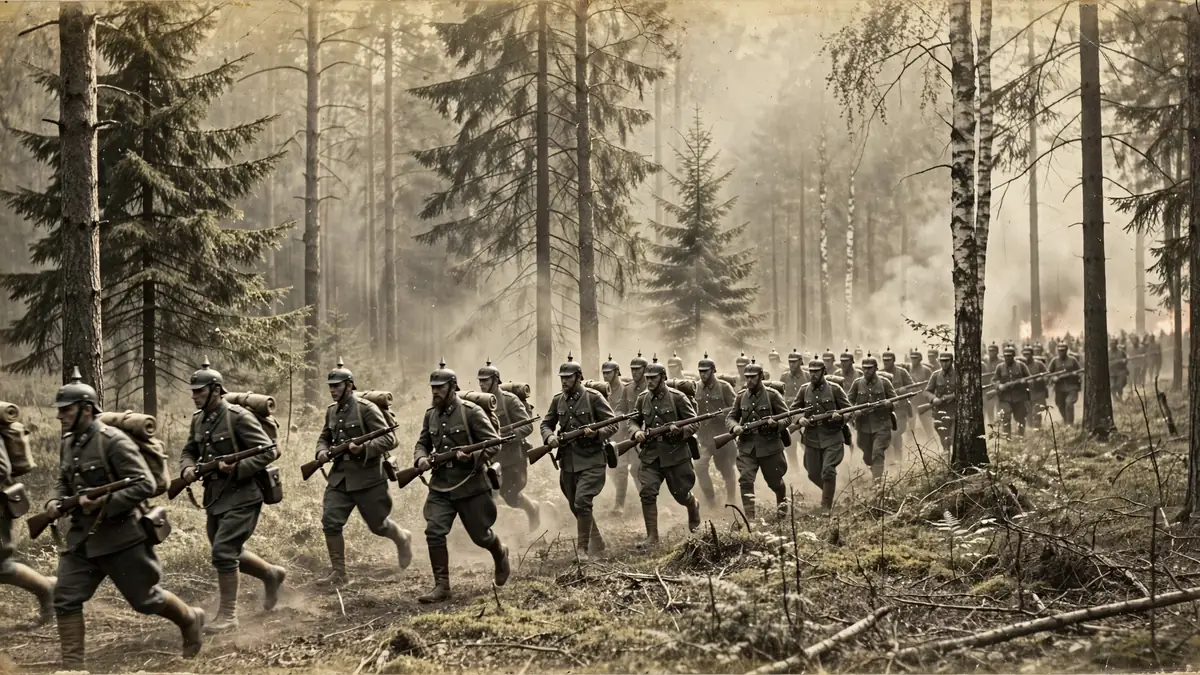
The Battle of Tannenberg, fought from 26 to 30 August 1914 in the forests and lakes of East Prussia, was one of the most complete victories of the First World War, and one of the most famous battles in German history.
A German army of about 150,000 men, under the command of General Paul von Hindenburg and his chief of staff, General Erich Ludendorff, encircled and destroyed the Russian Second Army, under General Alexander Samsonov, capturing about 92,000 prisoners and killing or wounding an estimated 30,000 more. Samsonov himself, realising that his army was lost, took his own life in the forest on 30 August.
The battle was a disaster for Russia and a triumph for Germany: it ended the Russian invasion of East Prussia, it made Hindenburg and Ludendorff national heroes, and it gave Germany a victory that it would remember — and mythologise — for the next thirty years.
Tannenberg is remembered for two reasons. The first is the scale of the victory: an entire army was destroyed in five days, and the Russians lost more men at Tannenberg than the British lost on the first day of the Somme.
The second is the name: the battle was not fought at Tannenberg at all, but near the villages of Allenstein and Hohenstein, about 30 kilometres from the medieval battlefield of Tannenberg, where in 1410 a Polish-Lithuanian army had defeated the Teutonic Knights. Hindenburg chose the name deliberately, to present the victory as a revenge for the defeat of 1410, and the name stuck.
This article sets out what happened at Tannenberg, how the Germans won so completely, and why the battle mattered, both in 1914 and in the decades that followed.
1. Key Facts
| Date | 26–30 August 1914 |
| Location | East Prussia, near Allenstein and Hohenstein (present-day Olsztyn, Poland) |
| Result | Decisive German victory; Russian Second Army destroyed |
| German commanders | Gen. Paul von Hindenburg (Eighth Army); Maj. Gen. Erich Ludendorff (chief of staff); Lt. Col. Max Hoffmann (operations) |
| Russian commanders | Gen. Alexander Samsonov (Second Army, killed himself 30 August); Gen. Paul von Rennenkampf (First Army) |
| German strength | About 150,000 men of the Eighth Army |
| Russian strength | Second Army about 150,000–200,000 men; First Army about 200,000 men (not engaged) |
| German losses | Estimated 12,000–15,000 casualties |
| Russian losses | About 30,000 killed and wounded (estimate); about 92,000 prisoners; about 500 guns captured |
2. Background
The Schlieffen Plan and the Eastern Front
The Battle of Tannenberg was the product of the German war plan, the Schlieffen Plan, which assumed that Germany would fight a war on two fronts — against France in the west and Russia in the east — and that it would defeat France first, in a rapid campaign, and then turn east to deal with Russia.
The plan left only a small force, the Eighth Army, to defend East Prussia against the Russians, while the bulk of the German Army invaded France. The plan assumed that Russia would be slow to mobilise, and that the Eighth Army could hold East Prussia until the campaign in the west was over.
In the event, Russia mobilised much faster than the Germans had expected: by mid-August 1914, two Russian armies — the First Army, under General Paul von Rennenkampf, and the Second Army, under General Alexander Samsonov — had invaded East Prussia, and the Eighth Army, under General Maximilian von Prittwitz, was in danger of being overwhelmed.
Prittwitz, who had lost the Battle of Gumbinnen on 20 August, panicked and ordered a retreat behind the Vistula, abandoning East Prussia to the Russians. The German high command, the OHL, dismissed Prittwitz and replaced him with Hindenburg, a retired general who was brought back from retirement, and Ludendorff, a staff officer who had distinguished himself at Liège.
Hindenburg and Ludendorff arrived at Eighth Army headquarters on 23 August, and they immediately changed the plan: instead of retreating, they would attack.
The Russian invasion
The Russian invasion of East Prussia was, in retrospect, a strategic necessity and a tactical disaster. Russia had promised its ally, France, that it would attack Germany as soon as possible after mobilisation, in order to draw German troops away from the Western Front.
The promise was kept: the Russians invaded East Prussia in mid-August 1914, before they were fully ready, with two armies that were poorly supplied, poorly led, and unable to communicate with each other. The First Army, under Rennenkampf, invaded from the east, and the Second Army, under Samsonov, invaded from the south, and the plan was for the two armies to converge on the German Eighth Army and crush it between them.
But the two Russian commanders hated each other — Rennenkampf and Samsonov had quarrelled during the Russo-Japanese War, and they had not spoken since — and they did not cooperate. Rennenkampf, after winning the Battle of Gumbinnen on 20 August, stopped to rest and resupply, and he did not advance to support Samsonov.
Samsonov, who was advancing north into East Prussia, was left alone, and his army was strung out over a long front, with its flanks exposed. The Germans, who were intercepting and decoding the Russian wireless messages — the Russians were transmitting in clear, without codes — knew exactly where Samsonov was, and where Rennenkampf was not.
3. Opposing Forces
The German Eighth Army
The German Eighth Army, under Hindenburg and Ludendorff, consisted of about 150,000 men, organised into three corps: I Corps, under General Hermann von François, XX Corps, under General Friedrich von Scholtz, and XVII Corps, under General August von Mackensen, with the 1st Cavalry Division and the 1st Reserve Corps in support.
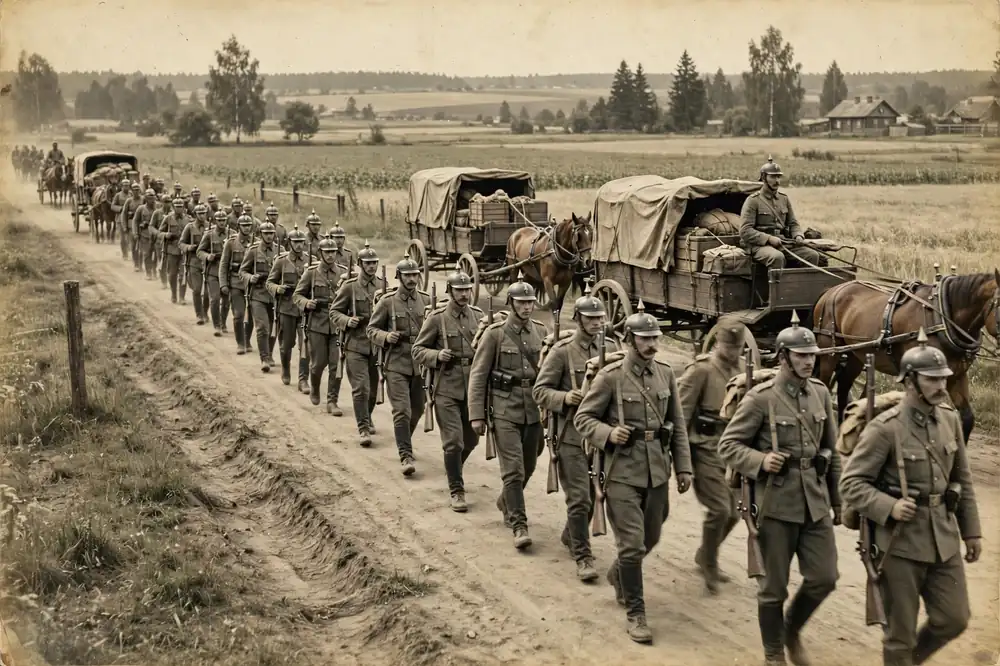
The army was well trained, well equipped, and well led, and it had a great advantage that the Russians did not: it was fighting on its own ground, in a region that its officers knew well, and it was served by a dense network of railways, which allowed it to move troops quickly from one part of the front to another.
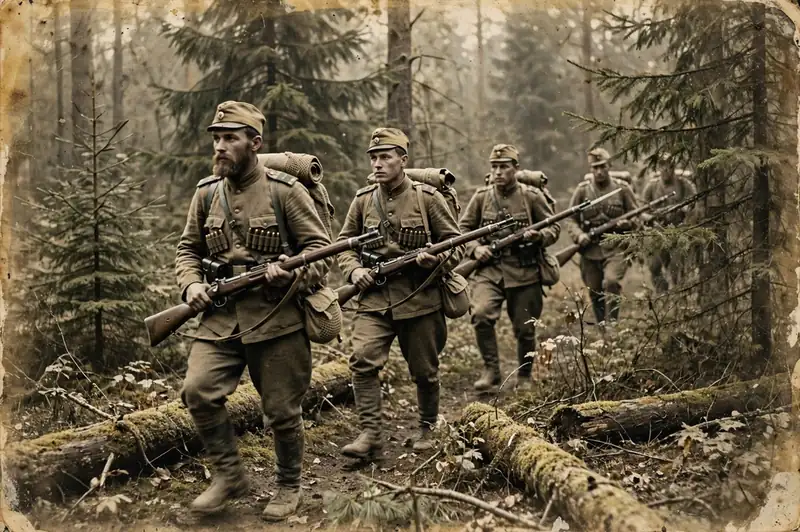
The German Army also had a superior staff system: the German General Staff had trained its officers to think in terms of encirclement and annihilation, and the operations officer of the Eighth Army, Lieutenant Colonel Max Hoffmann, was one of the ablest staff officers in the German Army.
Hoffmann, who had studied in Russia and spoke Russian, had drawn up the plan for the encirclement of Samsonov’s army, and it was his plan that Hindenburg and Ludendorff adopted when they arrived.
| Germany | Russia | |
|---|---|---|
| Infantry | I, XVII, XX Corps; 1st Reserve Corps | Second Army: XIII, XV, XXIII Corps and others; First Army: I, II, III, IV Corps (not engaged) |
| Cavalry | 1st Cavalry Division | Several cavalry divisions, poorly used |
| Artillery | Modern field guns and heavy howitzers, well supplied | Many guns, but short of shells and poorly coordinated |
| Communications | Encoded wireless; railway network for rapid movement | Wireless in clear (unencoded); poor staff work |
| Supply | Supplied from East Prussian depots | Supply columns lagging far behind the advance |
The Russian armies
The Russian Second Army, under Samsonov, consisted of about 150,000–200,000 men, organised into the XIII, XV, XXIII and I Corps and several cavalry divisions. The army was large, but it was poorly supplied, poorly led, and poorly coordinated: its supply columns lagged far behind the advance, its troops were exhausted by long marches in the August heat, and its corps commanders did not communicate with each other or with Samsonov.
The Russian First Army, under Rennenkampf, consisted of about 200,000 men, but it was not engaged in the battle: Rennenkampf, after winning at Gumbinnen, had stopped to rest, and he did not advance to support Samsonov. The Russian armies were also, fatally, unable to keep their plans secret: they transmitted their orders by wireless in clear, without codes, and the Germans intercepted and read them.
The Germans knew where Samsonov was going, and when, and they were able to plan their encirclement accordingly. The Russian defeat at Tannenberg was, in large part, a failure of staff work and of communications, and it was a failure that the Russian Army would repeat, again and again, throughout the war.
4. The Battle
The German plan
The German plan, which was drawn up by Lieutenant Colonel Max Hoffmann and adopted by Hindenburg and Ludendorff, was a classic encirclement. The Eighth Army would leave a small force, the XX Corps, to hold the line against Samsonov’s advance, while the bulk of the army — I Corps and XVII Corps — would move by rail to the east, around Samsonov’s flanks, and attack him from the sides and from behind.
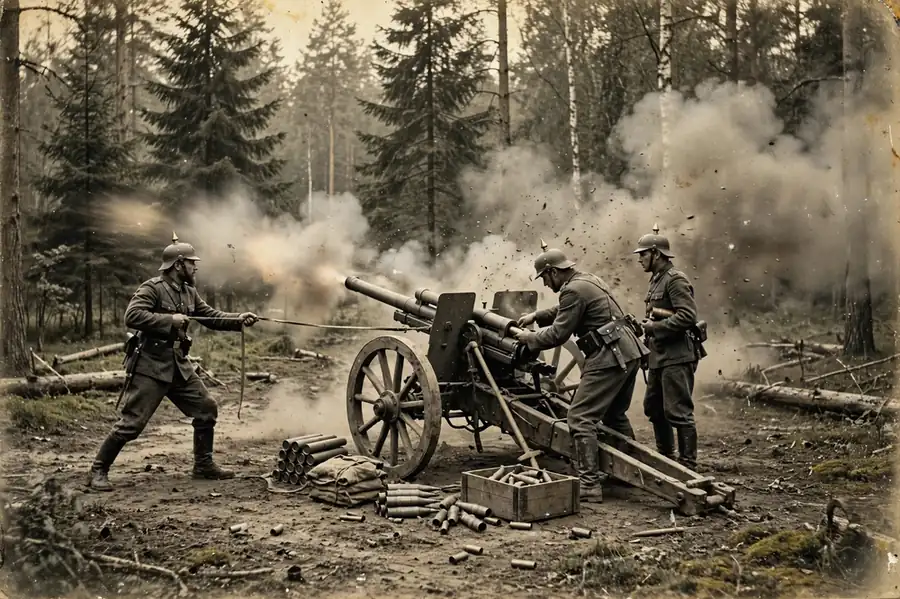
The plan depended on two things: first, that Rennenkampf’s First Army would not advance to support Samsonov, and second, that Samsonov would continue to advance north, into the trap. Both assumptions held. Rennenkampf, who was resting after Gumbinnen, did not move, and Samsonov, who believed that the Germans were retreating, advanced north, deeper into East Prussia, with his army strung out over a long front.
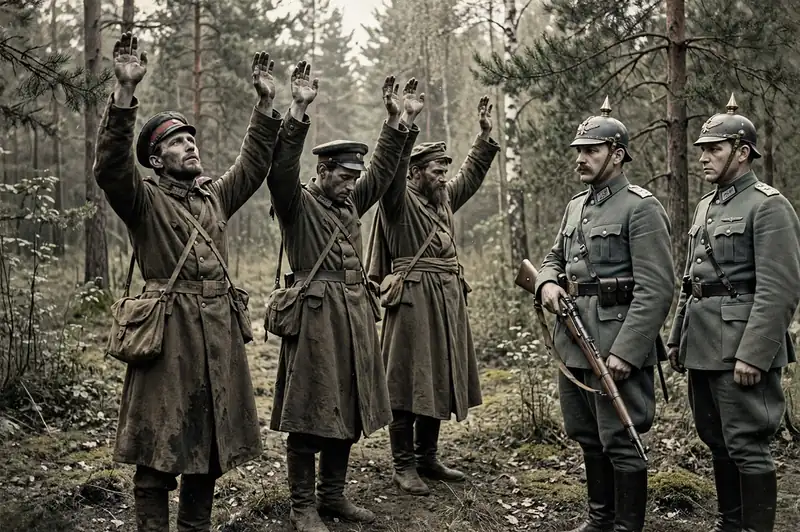
The Germans, who were reading the Russian wireless messages, knew exactly what Samsonov was doing, and they moved their troops accordingly. The trap was set, and Samsonov walked into it.
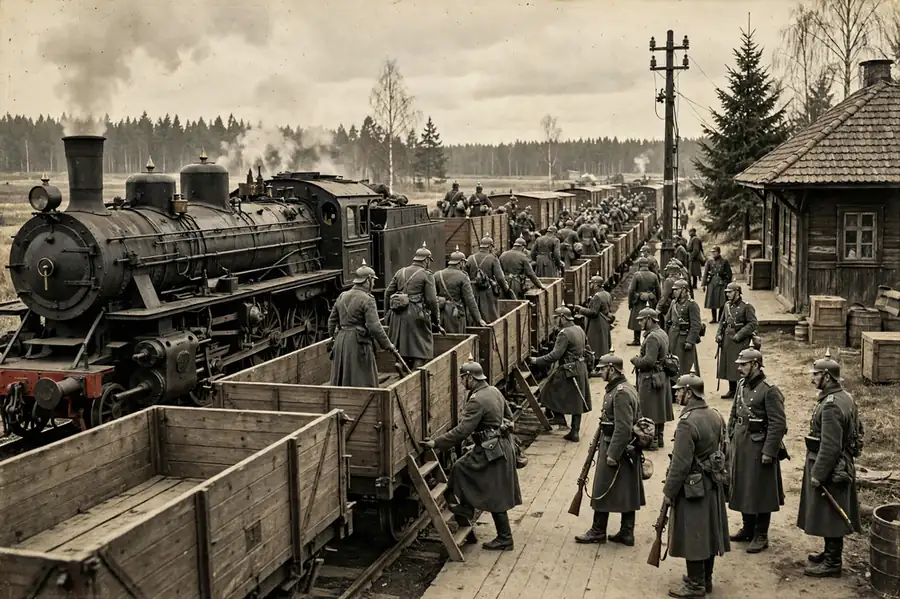
The encirclement, 26–28 August
The battle began on 26 August 1914, when the German I Corps, under General von François, attacked the Russian right flank at Usdau, and the XVII Corps, under General von Mackensen, attacked the Russian left flank at Bischofsburg. The attacks were successful: the Russian flanks crumbled, and the German corps advanced behind Samsonov’s army, cutting its lines of retreat.
Samsonov, who had been advancing north, now found himself surrounded: his army was in a pocket, with the Germans on three sides and the Masurian Lakes on the fourth. He tried to break out, but his corps were no longer under his control: the XIII Corps, under General Nikolai Kluev, and the XV Corps, under General Nikolai Martos, were cut off from each other, and they fought separately, without coordination.
The German artillery shelled the pocket, and the German infantry attacked from all sides. By 28 August, the encirclement was complete, and the Russian Second Army was doomed.
The fighting in the forests
The fighting in the pocket was confused and desperate. The Russian troops, who were trapped in the forests and lakes of East Prussia, fought in small groups, without orders and without supplies, and they were cut down by German artillery and machine guns.
The forests, which were dense and difficult to move through, made it hard for the Russians to organise a breakout, and they made it easy for the Germans to pick off isolated units. The Russian soldiers, who were hungry, thirsty and exhausted, surrendered in large numbers: by 29 August, whole regiments were laying down their arms, and the Germans were taking thousands of prisoners a day.
The battle in the forests was not a battle in the conventional sense, but a massacre, and it went on for two days, until the pocket was finally cleared on 30 August.
The fighting in the forests was the most confused part of the battle: units lost contact with each other, officers lost control of their men, and the battle dissolved into a series of small, desperate fights in the trees. The Russians, who were trapped and without orders, fought in small groups, and they were cut down by German artillery and machine guns, or they surrendered in large numbers, laying down their arms in the clearings and on the forest roads.
The destruction of the Second Army, 29–30 August
By 29 August, the Russian Second Army had ceased to exist as an organised force. Its corps were destroyed, its guns were captured, and its men were dead, wounded, or prisoners. Samsonov, who had lost contact with his corps and who believed that his army was lost, rode into the forest with his staff on the night of 29–30 August, and he shot himself, rather than be captured.
His body was found by the Germans the next day, and it was buried with military honours. On 30 August, the last organised Russian resistance ended, and the battle was over. The Germans had captured about 92,000 prisoners, about 500 guns, and enormous quantities of supplies, and they had killed or wounded an estimated 30,000 more Russians. Their own losses were about 12,000–15,000 men.
The victory was complete, and it was one of the most complete victories of the war.
Among the prisoners were two Russian corps commanders, Generals Nikolai Kluev and Nikolai Martos, who were captured with their staffs, and whose capture was a measure of how complete the encirclement had been. The Germans also captured the Second Army’s colours and its war chest, and they paraded the prisoners through the streets of Allenstein, to the cheers of the German public, who celebrated the victory as a historic revenge.
5. Turning Point
The intercepted wireless messages
The turning point of the Battle of Tannenberg was not a battle but an intelligence coup: the German interception of the Russian wireless messages. The Russians, who were transmitting their orders in clear, without codes, told the Germans everything they needed to know: where Samsonov was going, when he would arrive, and, crucially, where Rennenkampf was not going.
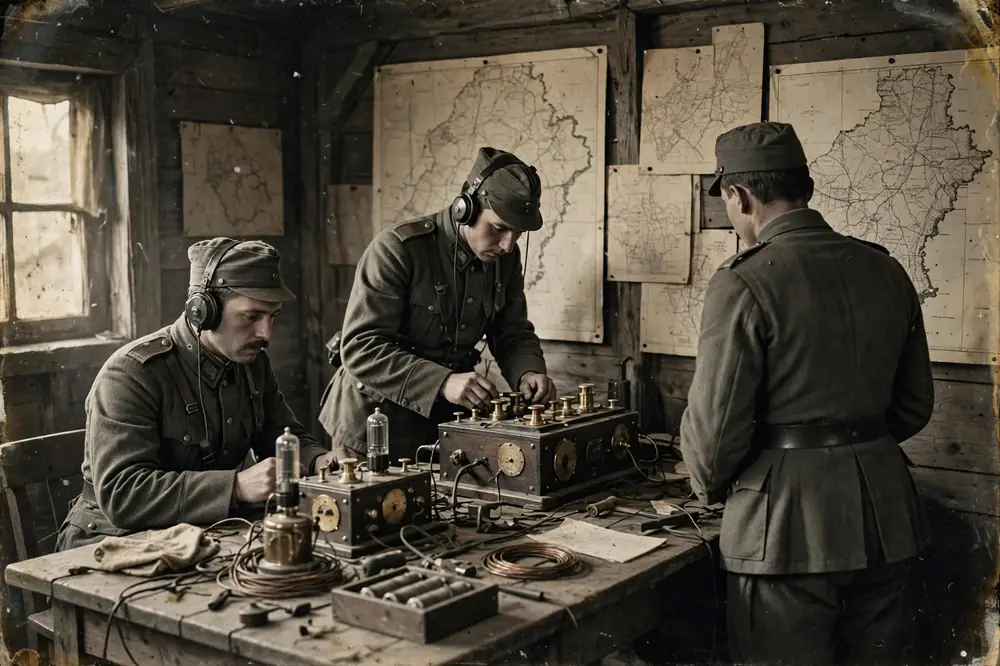
The Germans knew that Rennenkampf was resting after Gumbinnen, and that he would not advance to support Samsonov, and they knew that Samsonov was advancing north, into the trap. Without the intercepted messages, the Germans could not have planned the encirclement with such confidence, and they could not have moved their troops with such precision.
The battle was won, in large part, in the signals room, before a shot was fired. The Russian failure to encode their messages was a catastrophic error, and it was an error that the Russian Army never fully corrected: throughout the war, the Russians continued to transmit in clear, and the Germans continued to read their messages.
Rennenkampf’s halt
The second turning point was Rennenkampf’s decision, after winning the Battle of Gumbinnen on 20 August, to halt his First Army and rest, rather than advance to support Samsonov. Rennenkampf’s halt was understandable: his army was exhausted, its supplies were lagging behind, and it needed time to rest and resupply.
But the halt was fatal for Samsonov: it left the Second Army alone, facing the whole German Eighth Army, and it allowed the Germans to concentrate their forces against Samsonov without fear of interference from the north. Rennenkampf’s failure to support Samsonov has been debated ever since: was it a deliberate act of sabotage, born of his personal hatred for Samsonov, or was it simply a failure of command, a decision made for sound military reasons that turned out to be wrong?
Most historians now agree that it was the latter: Rennenkampf was not trying to destroy Samsonov, but he was, in the words of one historian, “a bad general who made a bad decision at the worst possible moment”. Whatever the reason, the halt sealed Samsonov’s fate, and it made Tannenberg possible.
6. Casualties and Losses
The Russian catastrophe
The casualty figures for Tannenberg are generally accepted by historians, because the German records are detailed and the Russian losses were so large that they could not be hidden. The Russians lost about 30,000 men killed and wounded, and about 92,000 men taken prisoner, for a total of about 122,000 casualties, out of an army of about 150,000–200,000 men.
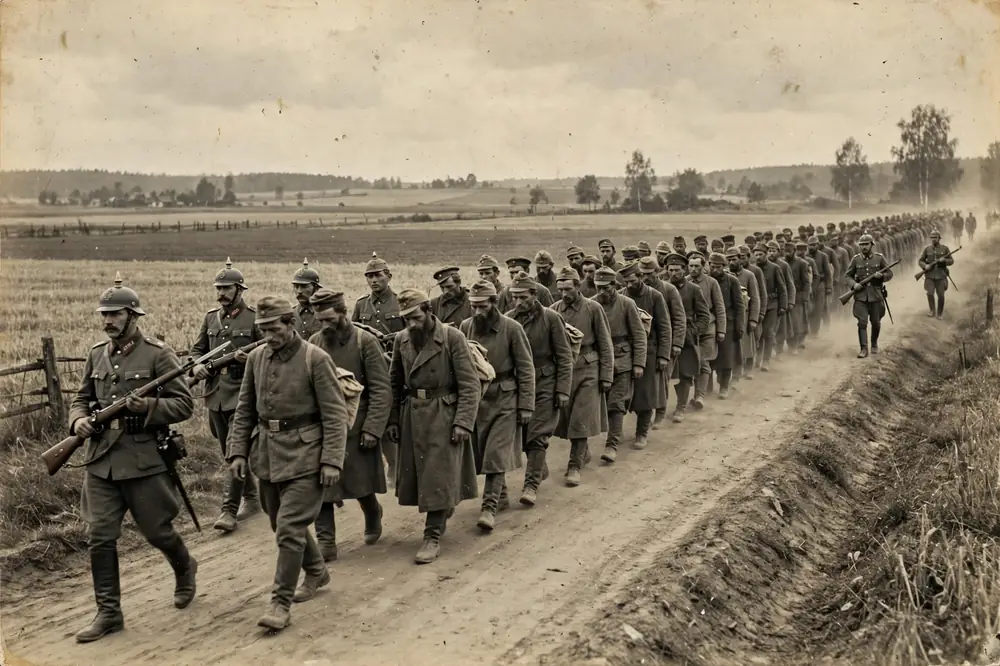
The Germans also captured about 500 guns, which was more than half of the Second Army’s artillery, and enormous quantities of rifles, machine guns, and supplies. The Russian Second Army ceased to exist: its corps were destroyed, its officers were killed or captured, and its men were dead, wounded, or prisoners.
The battle was, in the words of one historian, “the most complete victory of the war”, and it was a catastrophe for Russia from which the Russian Army never fully recovered.
| Germany | Russia | |
|---|---|---|
| Killed and wounded | Estimated 12,000–15,000 | About 30,000 (estimate) |
| Prisoners | — | About 92,000 |
| Total | Estimated 12,000–15,000 | About 122,000 |
| Guns lost | — | About 500 |
The scale of the Russian defeat can be seen in the figures: the Second Army lost about 122,000 men, out of an army of about 150,000–200,000, and it lost more than half of its artillery. The army ceased to exist, and it was never reformed: its survivors were absorbed into other armies, and its name was struck from the Russian order of battle. The battle was, in every sense, a catastrophe for Russia, and one from which the Russian Army never fully recovered.
The German losses
The German losses at Tannenberg were light, by the standards of the First World War: about 12,000–15,000 men killed and wounded, out of an army of about 150,000. The lightness of the German losses was a measure of how complete the victory was: the Germans had encircled the Russians, and they had destroyed them with artillery and machine guns, without having to fight a prolonged battle of attrition.
The German losses were also, in a sense, a measure of the Russian failure: the Russians, who were trapped in a pocket and who were fighting without orders and without supplies, could not inflict heavy losses on the Germans, even though they outnumbered them in some sectors.
The disparity in losses — about 12,000 German casualties against about 122,000 Russian — is one of the most lopsided in the history of modern warfare, and it is a measure of what a well-planned encirclement can achieve.
7. Map and Geography
East Prussia and the Masurian Lakes
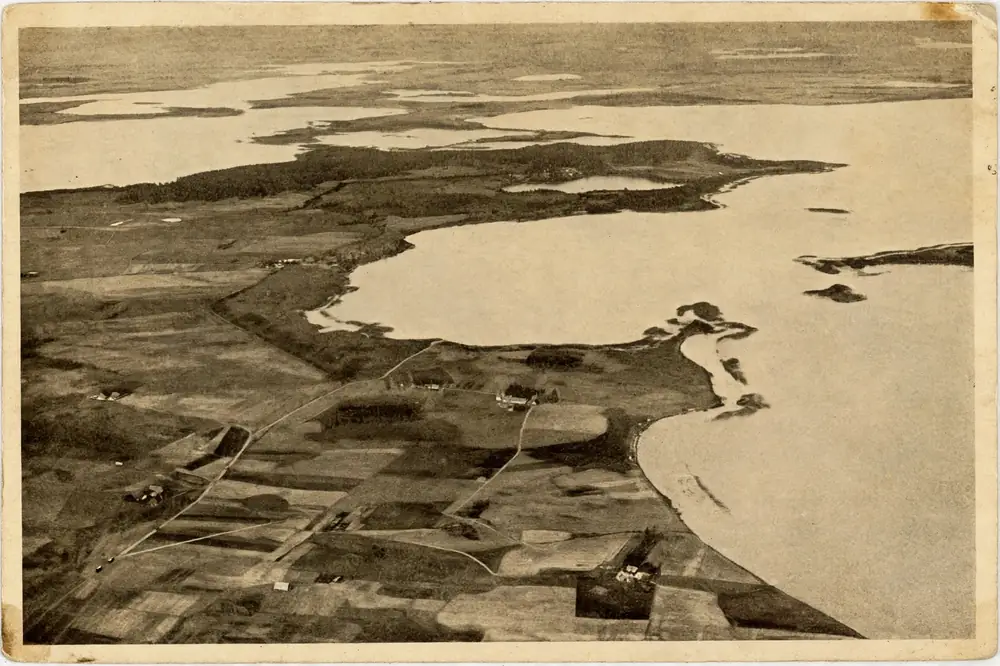
The Battle of Tannenberg was fought in East Prussia, the easternmost province of the German Empire, a region of forests, lakes and marshes that lay between the Vistula River in the west and the Russian border in the east. The battle was fought in the Masurian Lake District, a region of more than 2,000 lakes, connected by rivers and canals, and covered in dense forest.
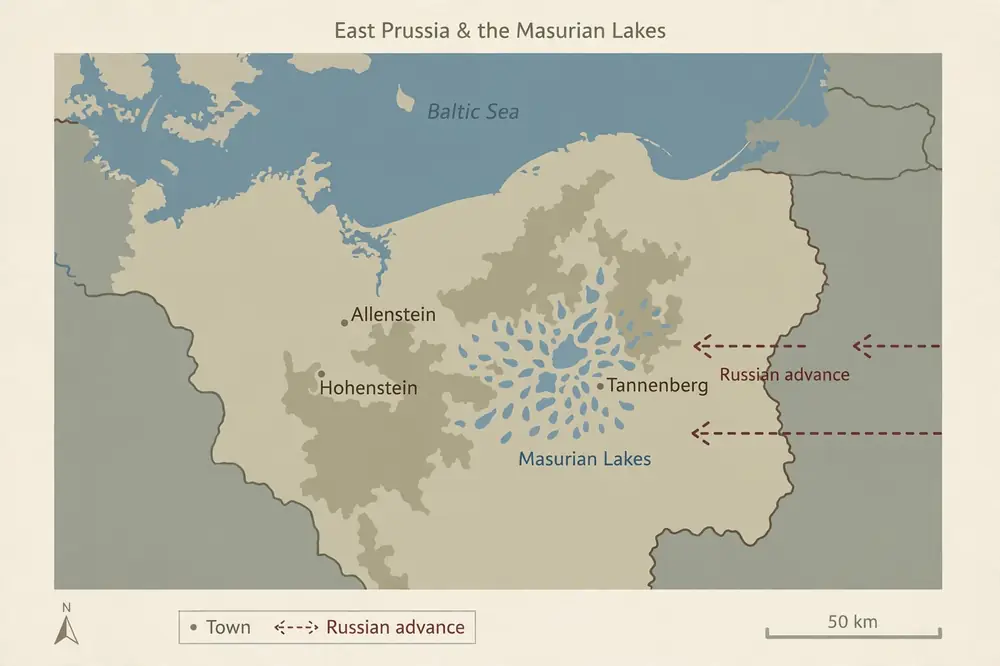
The lakes and forests made the region difficult to move through, and they channelled the armies into narrow corridors, where they could be trapped and destroyed. The Russian Second Army, advancing north from the Polish border, had to pass through the lake district, and its corps were separated from each other by the lakes, which made it hard for them to support each other.
The Germans, who knew the ground well, used the lakes to their advantage: they used the lakes to protect their flanks, and they used the narrow corridors between the lakes to trap the Russians. The geography of East Prussia was, in the end, as much a German ally as the German Army itself.
Allenstein, Hohenstein and Tannenberg
The battle was fought around the towns of Allenstein (now Olsztyn, Poland) and Hohenstein (now Olsztynek, Poland), about 30 kilometres from the village of Tannenberg (now Stębark, Poland), where the medieval battle had been fought in 1410. The German Eighth Army was based at Allenstein, and the Russian Second Army was advancing north towards the town, when the Germans encircled it.
The town of Tannenberg itself played no part in the battle, and the name was chosen by Hindenburg for propaganda purposes, to present the victory as a revenge for the defeat of the Teutonic Knights in 1410. The choice of name was a piece of political theatre, and it worked: the German public celebrated the victory as a historic revenge, and the name “Tannenberg” became synonymous with German military genius.
The real battle, however, was fought at Allenstein and Hohenstein, in the forests and lakes of the Masurian district, and it was there that the Russian Second Army was destroyed.
8. Outcome and Legacy of the Battle of Tannenberg
The end of the Russian invasion
The Battle of Tannenberg ended the Russian invasion of East Prussia, and it saved Germany from a disaster on the Eastern Front. The Russian Second Army was destroyed, and the Russian First Army, under Rennenkampf, was defeated a week later at the First Battle of the Masurian Lakes (7–14 September 1914), and driven out of East Prussia.
The Russians would not invade East Prussia again, and the Eastern Front settled into a long, grinding war of attrition, in which the Germans, with their superior staff work and their railway network, generally had the better of the Russians. Tannenberg also had a strategic effect: it freed up German troops for the Western Front, and it allowed the Germans to transfer forces east and west as needed.
The victory was, in the words of one historian, “the most important German victory of the war”, because it saved East Prussia and it gave Germany a breathing space on the Eastern Front.
The myth of Tannenberg
The legacy of Tannenberg is dominated by the myth that grew up around it. Hindenburg and Ludendorff became national heroes, and they were hailed as the saviours of Germany. Hindenburg, in particular, became a figure of almost mythical stature: he was the “Victor of Tannenberg”, the man who had saved East Prussia, and he was later elected President of Germany, in 1925, largely on the strength of his reputation from Tannenberg.
The myth of Tannenberg was used by the Nazis, in the 1930s, to celebrate German military genius and to justify their own ambitions: a huge memorial, the Tannenberg Memorial, was built at Hohenstein in 1927, and it became a shrine of German nationalism. The memorial was destroyed by the Germans themselves in 1945, as the Red Army advanced, and the myth of Tannenberg died with it.
But the battle itself remains one of the most studied encirclements in military history, and it is still taught in military academies as an example of what a well-planned encirclement can achieve.
Hindenburg, Ludendorff and the “stab in the back”
The myth of Tannenberg had a darker side. Hindenburg and Ludendorff, who had become heroes at Tannenberg, went on to become the virtual dictators of Germany in 1916–18, and they were, in large part, responsible for the prolongation of the war and for the disaster that followed.
After the war, Ludendorff was one of the originators of the “stab in the back” myth — the claim that the German Army had not been defeated on the battlefield, but had been betrayed by politicians and by Jews at home — a myth that the Nazis would later exploit.
The victory at Tannenberg, which had been a genuine military achievement, became, in the hands of Hindenburg and Ludendorff, a political weapon, and it helped to poison German politics for a generation. The battle is a reminder that military victories can have political consequences that their authors never intended, and that the myth of a victory can be more dangerous than the victory itself.
9. Commanders
German commanders
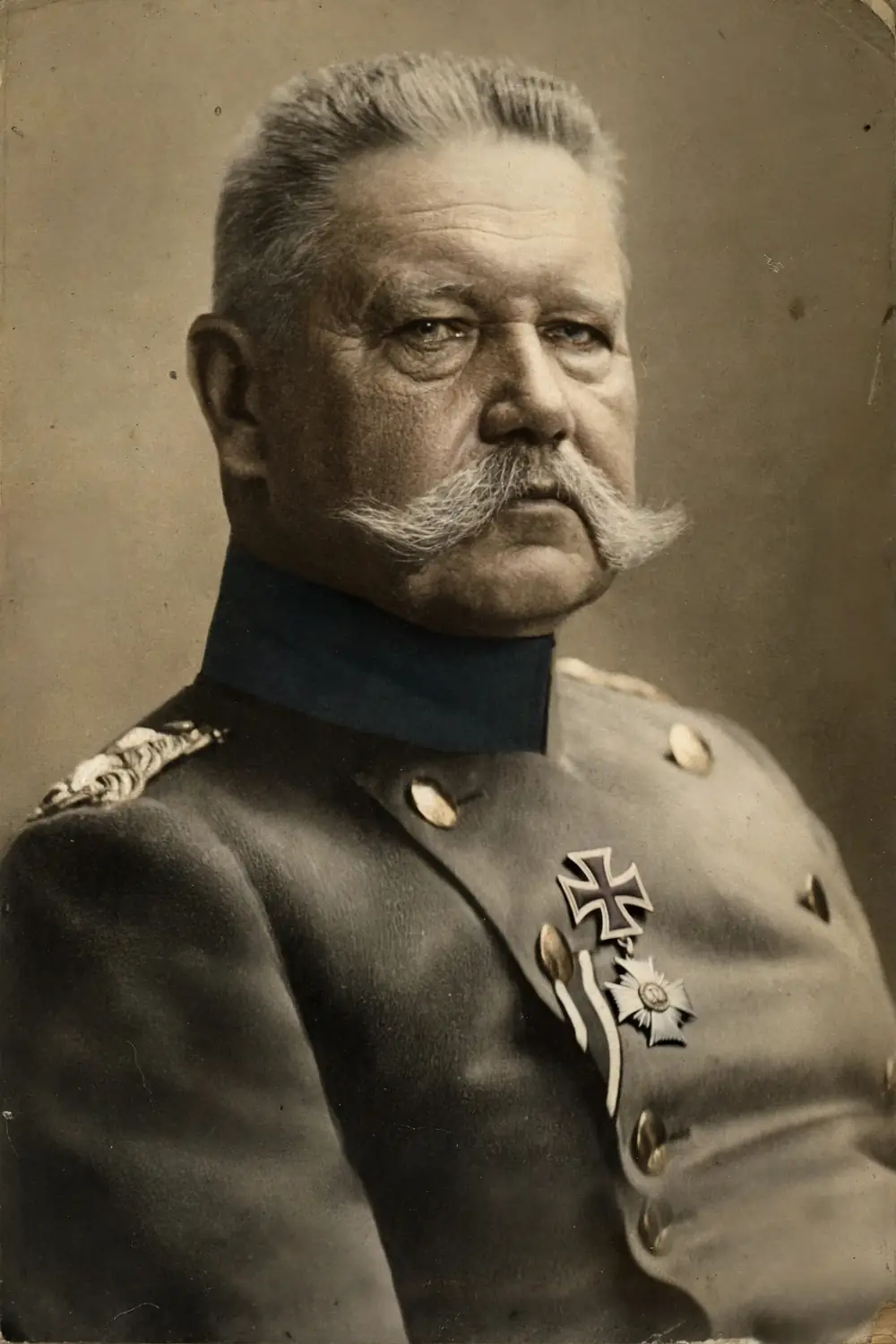
General Paul von Hindenburg (Germany). Commander of the Eighth Army, and the overall German commander at Tannenberg. Hindenburg was a retired general, brought back from retirement to command the Eighth Army after Prittwitz was dismissed. He was 67 years old at Tannenberg, and he was a figure of great dignity and calm, who inspired confidence in his troops. He became a national hero after Tannenberg, and he was later elected President of Germany in 1925, a post he held until his death in 1934.
Major General Erich Ludendorff (Germany). Chief of staff of the Eighth Army, and the operational brain of the victory at Tannenberg. Ludendorff was a brilliant and ruthless staff officer, who had distinguished himself at Liège and who planned the encirclement of Samsonov’s army with Hoffmann. He later became, with Hindenburg, the virtual dictator of Germany in 1916–18, and he was one of the originators of the “stab in the back” myth after the war.
Lieutenant Colonel Max Hoffmann (Germany). Operations officer of the Eighth Army, and the author of the plan for the encirclement of Samsonov’s army. Hoffmann was one of the ablest staff officers in the German Army, and he had studied in Russia and spoke Russian. He later became chief of staff of the German forces on the Eastern Front, and he negotiated the Treaty of Brest-Litovsk with Russia in 1918.
Russian commanders
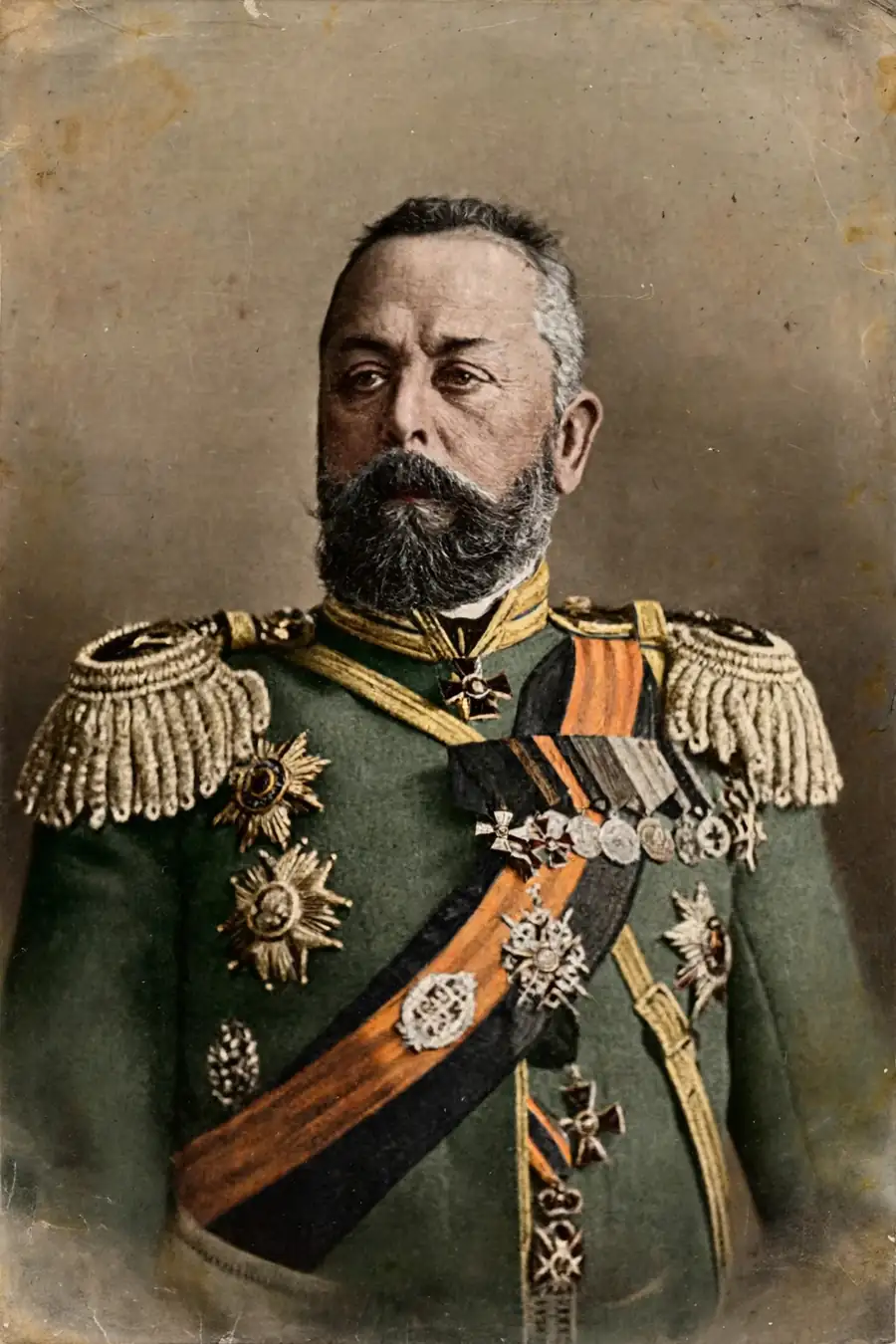
General Alexander Samsonov (Russia). Commander of the Second Army, which was destroyed at Tannenberg. Samsonov was a brave and conscientious officer, but he was out of his depth at Tannenberg: his army was poorly supplied, poorly coordinated, and unable to communicate, and he was unable to control it. He took his own life in the forest on 30 August 1914, rather than be captured. He is remembered in Russia as a tragic figure, a victim of a system that sent him to war unprepared.
General Paul von Rennenkampf (Russia). Commander of the First Army, which did not advance to support Samsonov at Tannenberg. Rennenkampf was a capable officer, but he was, in the words of one historian, “a bad general who made a bad decision at the worst possible moment”. He was later defeated at the Masurian Lakes, and he was dismissed from command in 1915. He was executed by the Bolsheviks in 1918.
Frequently Asked Questions
When was the Battle of Tannenberg?
From 26 to 30 August 1914, in East Prussia, near Allenstein and Hohenstein.
How many Russians were captured at Tannenberg?
About 92,000 prisoners, along with about 500 guns. About 30,000 more Russians were killed or wounded.
Was the battle actually fought at Tannenberg?
No. It was fought near Allenstein and Hohenstein, about 30 kilometres from the village of Tannenberg. Hindenburg chose the name deliberately, to present the victory as a revenge for the defeat of the Teutonic Knights at Tannenberg in 1410.
What happened to General Samsonov?
He took his own life in the forest on the night of 29–30 August 1914, after realising that his army was lost and that he would be captured. His body was found by the Germans and buried with military honours.
Why did the Russians lose so badly?
They transmitted their orders by wireless in clear, without codes, so the Germans knew their plans. Their two armies did not cooperate — Rennenkampf halted after Gumbinnen and did not support Samsonov — and Samsonov’s army was poorly supplied, poorly coordinated, and strung out over a long front.
Who really planned the victory — Hindenburg, Ludendorff or Hoffmann?
The plan was drawn up by Lieutenant Colonel Max Hoffmann, the operations officer, and it was adopted by Hindenburg and Ludendorff when they arrived. Hindenburg provided the authority and the calm, Ludendorff provided the drive and the staff work, and Hoffmann provided the plan. All three deserve credit, but Hoffmann’s contribution was long overlooked.
Related articles
Sources
- Wikipedia, “Battle of Tannenberg” — dates, strength, casualty figures and commanders.
- Encyclopædia Britannica, “Tannenberg, Battle of” — background and outcome.
- John Keegan, The First World War (Hutchinson, 1998) — Tannenberg and the Eastern Front.
- Dennis Showalter, Tannenberg: Clash of Empires, 1914 (Brassey’s, 2004) — the battle, Hoffmann, and the encirclement.
- Max Hoffmann, War of Lost Opportunities (Kegan Paul, 1924) — Hoffmann’s own account of the battle.
- Norman Stone, The Eastern Front 1914–1917 (Hodder & Stoughton, 1975) — the Russian Army and the Eastern Front.
- German Federal Archives (Bundesarchiv), records of the Eighth Army — the German plan and the intercepted Russian messages.
Further reading
- Robert B. Asprey, The German High Command at War: Hindenburg and Ludendorff Conduct World War I (Morrow, 1991).
- Prit Buttar, Collision of Empires: The War on the Eastern Front in 1914 (Osprey, 2014).