 WAR ATLAS MILITARY HISTORY MAGAZINE · WWI — WWII
Josip Broz Tito
1. Lead
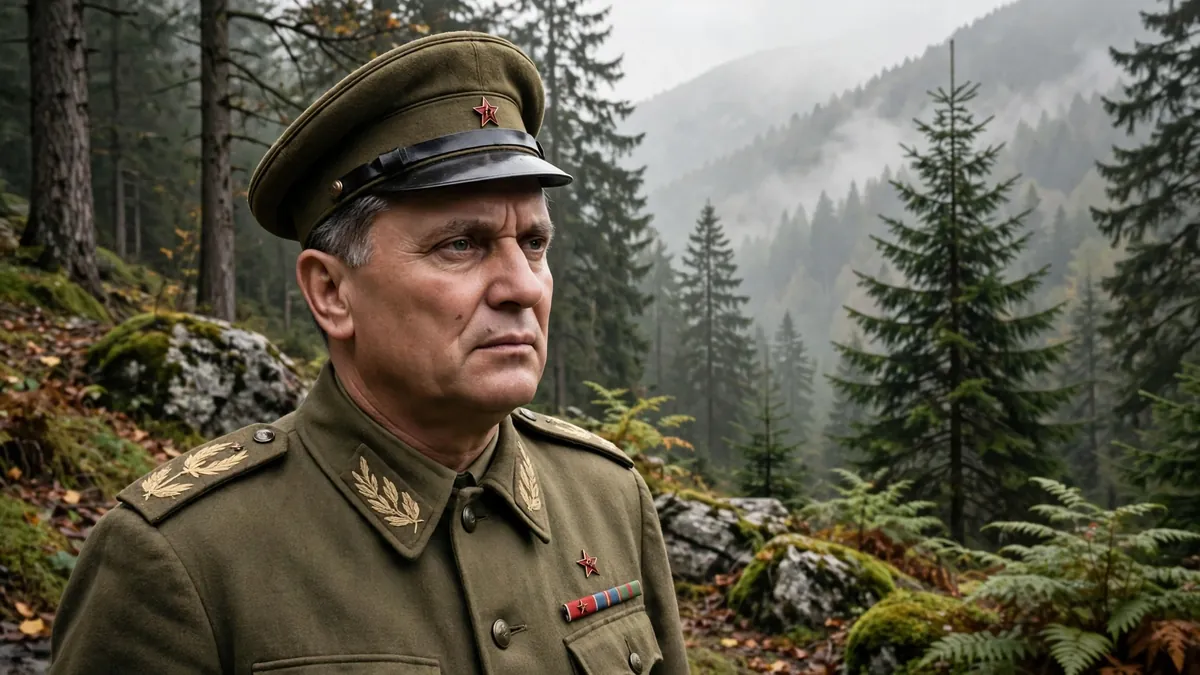
Josip Broz Tito (7 May 1892 – 4 May 1980) was the Yugoslav revolutionary, partisan commander and statesman who led the resistance to the Axis occupation of Yugoslavia during the Second World War and then ruled the country for thirty-five years.
Born the son of a Croatian peasant family in the village of Kumrovec, then part of Austria-Hungary, he became a metalworker, a soldier of the Austro-Hungarian army in the First World War, a prisoner of war in Russia, and then a professional Communist organiser.
In 1941, after the German invasion of Yugoslavia, he built the Partisan movement from a small band of Communists into the largest resistance army in occupied Europe, liberated most of Yugoslavia largely with his own forces, and founded a new federal state.
After the war he broke decisively with Joseph Stalin in 1948 — the first Communist leader to defy Moscow and survive — and steered Yugoslavia on an independent course between East and West, founding the Non-Aligned Movement in 1961 with the leaders of India and Egypt.
Tito’s importance to the history of the Second World War is exceptional. Yugoslavia was the only occupied country in Europe, apart from Albania, that liberated itself largely without a large-scale Allied ground invasion, and the Partisan war tied down dozens of German and Italian divisions that the Axis needed elsewhere.
Tito’s army grew from a few thousand fighters in 1941 to some 800,000 men and women by 1945, and it inflicted real defeats on German forces, notably in the battles of the Neretva and the Sutjeska in 1943. At the same time, the Yugoslav war was a civil war as well as a war of resistance — Communists against the royalist Chetniks, Croats against Serbs, and the fascist Ustaša regime in Croatia against Serbs, Jews and Roma — and the violence, including mass killings by all sides, left deep wounds that outlived Tito himself.
After the war, Tito the partisan became Tito the statesman: the architect of a federal Yugoslavia that held together for forty-five years and fell apart in bloodshed a decade after his death. Historians debate whether he was a national liberator who gave Yugoslavia dignity and independence, or an authoritarian who built his state on repression and on a system that could not survive him. Both judgements contain truth.
2. Key Facts
| Born | 7 May 1892, Kumrovec, Kingdom of Croatia-Slavonia, Austria-Hungary (now Croatia) |
| Died | 4 May 1980 (aged 87), Ljubljana, Slovenia, Yugoslavia |
| Nationality | Yugoslav; ethnic Croat |
| Role / Office | Leader of the Yugoslav Partisans (1941–1945); Prime Minister (1945–1953); President of Yugoslavia (1953–1980); General Secretary of the Communist Party of Yugoslavia |
| Known for | The Partisan resistance in the Second World War; the break with Stalin (1948); the Non-Aligned Movement (1961); building federal Yugoslavia |
| Spouse / Family | Pelagija Belousova (married 1920, divorced 1936); Herta Haas (partner, 1937–1941); Jovanka Budisavljević (married 1952, died 2013); children Žarko and Aleksandar (Mišo) |
| Military rank | Marshal of Yugoslavia |
3. Early Life and Education
Josip Broz was born on 7 May 1892 in Kumrovec, a small village in the Zagorje region of northern Croatia, then part of the Kingdom of Croatia-Slavonia within the Austro-Hungarian Empire. He was the seventh child of Franjo Broz, a Croat peasant, and Marija Javeršek, a Slovene woman from a nearby village.
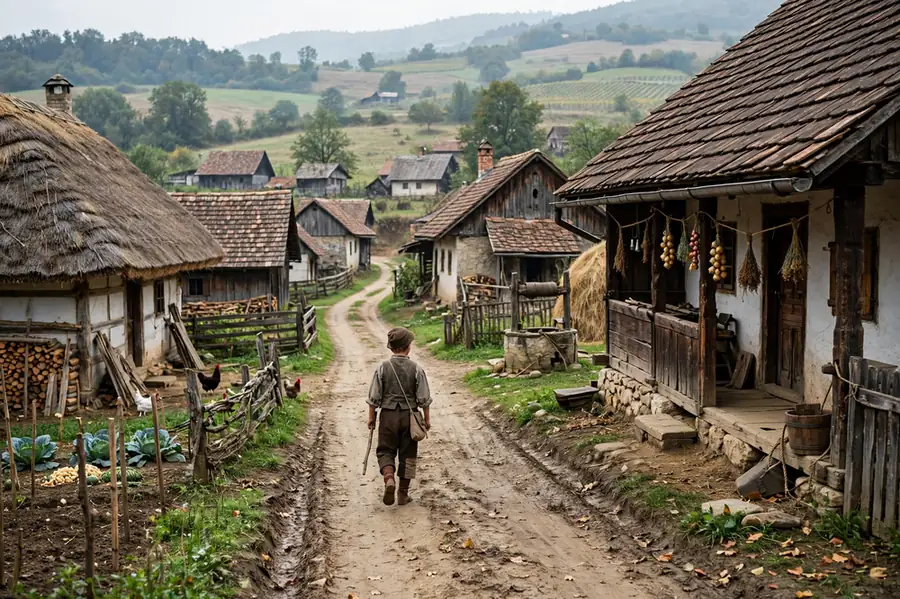
The family was poor: the Broz household farmed a small plot of land, and Josip, like many children of the region, was sent to live with relatives and to work from an early age. He attended the local elementary school, where he was a good pupil, but his formal education ended early.
At the age of fifteen he left home to become an apprentice locksmith and metalworker, working first in Sisak and then in Zagreb, and later travelling through Austria, Germany and Bohemia as a journeyman — the traditional wandering apprenticeship of the skilled trades.
His years as a young worker politicised him. In Zagreb he joined the metalworkers’ union and the Social Democratic Party of Croatia and Slavonia, and he took part in strikes and May Day demonstrations. In 1911 he was arrested and briefly imprisoned for his part in a demonstration.
He was a good craftsman — he worked for a time at the Daimler works in Wiener Neustadt in Austria — and he was also a keen sportsman, a cyclist and a fencer. When the First World War broke out in 1914 he was conscripted into the Austro-Hungarian army and served as a sergeant-major in the 25th Home Guard Infantry Regiment.
He fought on the Serbian front and then, from 1915, on the Eastern Front against Russia. In March 1915, during the fighting in the Carpathian Mountains, he was badly wounded by a Circassian lance — the wound left a scar on his back for life — and taken prisoner by the Russians.
Captivity changed his life. He was sent to a prisoner-of-war camp in the Urals, then to a camp hospital, and after recovering he worked as a mechanic in the Urals and in Omsk in Siberia. He learned Russian, read revolutionary literature, and in 1917, after the February Revolution, he joined the Red Guards in Omsk.
He married a Russian woman, Pelagija Belousova, in 1920, and in that year he returned to the new Kingdom of Serbs, Croats and Slovenes — the state that would become Yugoslavia — as a convinced Communist. He joined the Communist Party of Yugoslavia, which had been founded in 1919, and threw himself into underground work: the party was banned in 1921, and its members worked illegally for the next two decades.
Tito — the name he adopted as a party pseudonym in the 1930s, possibly from the Croatian words ti to (“you that”) used to give orders — was arrested several times, spent six years in prison between 1928 and 1934 for Communist activity, and rose steadily through the party ranks.
In 1937, after the Soviet purges had destroyed much of the Yugoslav party leadership in Moscow, Stalin’s Comintern appointed him general secretary of the Communist Party of Yugoslavia. It was a remarkable promotion for a man who had spent the previous decade in prison and in the underground, and it placed him at the head of the party on the eve of the war that would make him famous.
4. Rise to Prominence
Tito became general secretary of the Communist Party of Yugoslavia in 1937 at a moment of crisis. The party was small — perhaps twelve thousand members — illegal, and divided between factions, and many of its leaders had been killed in Stalin’s purges in Moscow.
Tito rebuilt it from below: he travelled the country, reorganised the party into cells, recruited among workers and students, and insisted on a policy that was Yugoslav rather than purely Soviet. He also survived — an achievement in itself, since the Comintern’s suspicion fell on many of his contemporaries, and Tito’s own survival has led historians to speculate about his relationship with the Soviet secret police, though no conclusive evidence has emerged that he was an agent.
When Germany invaded Yugoslavia on 6 April 1941, Tito’s moment came. The Yugoslav army collapsed in eleven days, the king and the government fled to London, and the country was partitioned: Germany annexed the north, Italy took the coast, Hungary and Bulgaria took territory, and a fascist puppet state, the Independent State of Croatia, was set up under Ante Pavelić and his Ustaša movement, which immediately began a campaign of mass murder against Serbs, Jews and Roma.
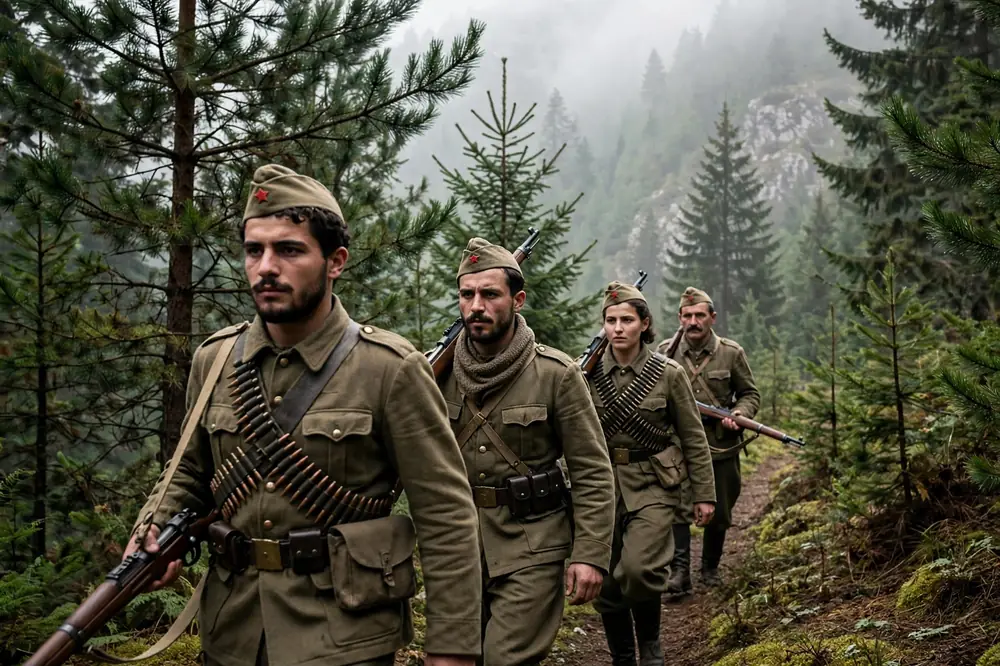
The Germans expected Yugoslavia to be quiet. Instead, on 4 July 1941, Tito and the party leadership decided to begin an armed uprising, and on 7 July the first Partisan shots were fired in Serbia. Tito’s call was deliberately broad: the Partisans were not presented as a Communist army but as a national liberation movement, open to all Yugoslavs regardless of nationality or politics, and this openness — together with the brutality of the occupation and the Ustaša — drew in recruits from every community.
The Partisan war was fought in the mountains of Bosnia, Montenegro and Croatia, and it was a war of extraordinary hardship. Tito’s headquarters moved constantly, and in 1942 and 1943 the Germans launched a series of great offensives — Operations Weiss and Schwarz — designed to encircle and destroy the Partisan main force.
At the Battle of the Neretva in the spring of 1943, Tito’s forces, including thousands of wounded, broke out of a German encirclement by destroying the bridge over the Neretva River and then crossing it — a feat that became a central myth of Yugoslav history.
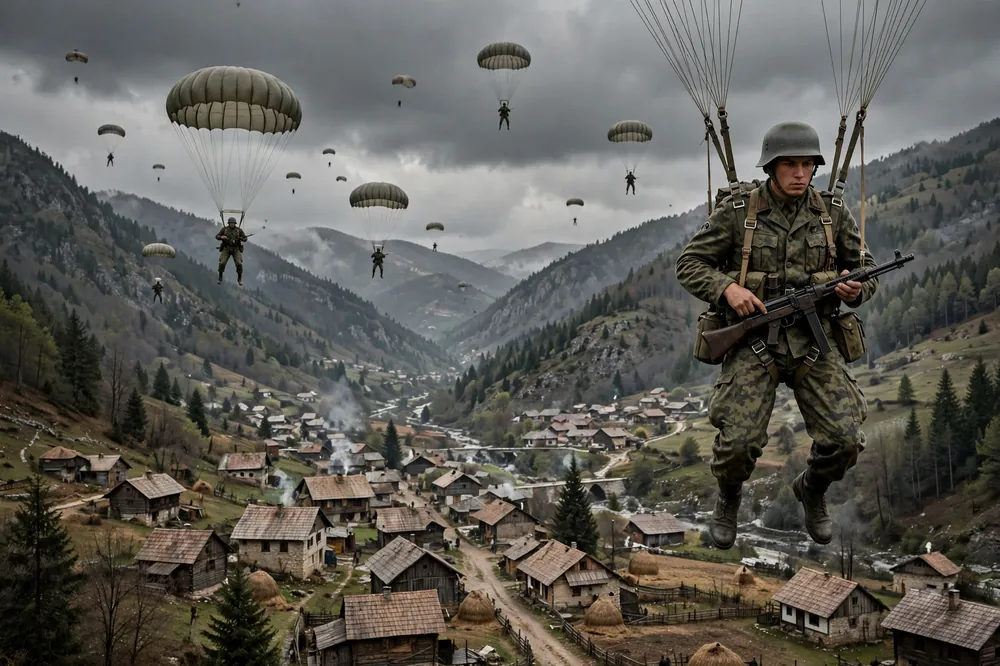
At the Battle of the Sutjeska in June 1943, the Partisans again broke through, but at a terrible cost: perhaps a third of the force, including many of the best fighters, was killed. Tito himself narrowly escaped death several times, and in May 1944 German paratroopers nearly captured him in a raid on his headquarters at Drvar in Bosnia — Operation Rösselsprung — from which he escaped by a hair’s breadth.
By the end of 1943, the Allies had recognised the Partisans as the main resistance force in Yugoslavia, and Britain, which had initially backed the royalist Chetniks under Draža Mihailović, switched its support to Tito. In November 1943 Tito established the Anti-Fascist Council of National Liberation of Yugoslavia (AVNOJ) at Jajce, which proclaimed itself the provisional government and laid down the principles of a federal Yugoslavia, with six republics — Serbia, Croatia, Slovenia, Bosnia and Herzegovina, Montenegro and Macedonia — and two autonomous provinces within Serbia.
5. Josip Broz Tito’s Role in World War II
Building the Partisan army
Tito’s achievement in the war was, above all, organisational. Starting from almost nothing in the summer of 1941, he built an army that by 1944 numbered several hundred thousand and by 1945 some 800,000 men and women, organised into corps and divisions with artillery, a small air force and a navy.
He did it by combining Communist discipline with a broad national appeal: Partisan units were deliberately mixed in nationality, with Serbs, Croats, Bosnian Muslims, Slovenes and Macedonians serving together, and the movement’s slogans — “brotherhood and unity” (bratstvo i jedinstvo) — were designed to overcome the ethnic hatreds that the occupation had inflamed.
Women served in large numbers as fighters, nurses and couriers, and the Partisans ran schools, hospitals and workshops in the “liberated territories” they held in the mountains. Tito’s headquarters included a British military mission from 1943, led by Fitzroy Maclean, whose reports convinced Winston Churchill to switch British support from Mihailović’s Chetniks to the Partisans.
American aid also reached the Partisans, though in smaller quantities, and Soviet missions arrived in 1944.
The Partisan war tied down a large Axis force. At various points in 1943 and 1944, the Germans had some twenty to twenty-five divisions in Yugoslavia — a substantial commitment — plus Italian, Bulgarian, Hungarian and Croatian collaborationist forces, and the fighting never stopped.
The Partisans attacked railways, garrisons and supply columns, and their operations forced the Germans to keep troops in the Balkans that were needed on the Eastern Front and, after D-Day in June 1944, in France. The claim sometimes made in Yugoslav propaganda — that the Partisans tied down forty German divisions — is exaggerated, but the core of the claim is sound: Yugoslavia absorbed a significant Axis effort, and the German effort to destroy Tito consumed resources and attention out of proportion to the size of the country.
Liberation and the civil war
The liberation of Yugoslavia in 1944–1945 was largely the work of the Partisans themselves, with Soviet help in the north. In September 1944 Tito flew to Moscow to agree with Stalin on the entry of the Red Army into Yugoslavia, and in October 1944 Soviet and Partisan forces together liberated Belgrade.
The rest of the country was liberated by the Partisans in a campaign that ran through the winter and spring of 1945, culminating in the liberation of Zagreb on 8 May 1945 — the day of the German surrender. But the end of the war in Yugoslavia was also the climax of a civil war.
The Chetniks, the Ustaša and other collaborationist forces were defeated, and in the weeks after the surrender, tens of thousands of prisoners — Croatian Ustaša and Home Guard troops, Slovene Home Guards, Serbian Chetniks and others — were killed by the Partisans in a series of massacres, the best known at Bleiburg in Austria and along the “Way of the Cross” marches back into Yugoslavia.
The number of victims is disputed, with estimates ranging from tens of thousands to over a hundred thousand, and the events remain among the most bitterly contested in Yugoslav history. Tito’s responsibility for the killings is debated: the orders came from the Partisan high command, and Tito was its head, but the extent to which he ordered, approved or merely tolerated the massacres is not established by the surviving documents, and historians continue to argue over it.
The human cost of the war in Yugoslavia was appalling. Estimates of the total dead vary widely, but most historians now put the figure at around one million people — roughly one in sixteen of the pre-war population — killed by the occupiers, by the Ustaša, by the Chetniks and by the Partisans, in combat, in massacres and in concentration camps such as Jasenovac, the Ustaša camp in Croatia where, according to most modern estimates, between 80,000 and 100,000 people, mostly Serbs, Jews and Roma, were murdered.
Tito emerged from this war as the undisputed leader of a new Yugoslavia, but also as the leader of a country traumatised by a war in which neighbours had killed neighbours, and in which the wounds would not heal.
6. Key Decisions
Launching the uprising in July 1941. Tito’s decision to begin armed resistance immediately, while the Soviet Union — the Communists’ patron — was still bound by its pact with Germany, was a gamble. It was also the decision that made him: by fighting when others waited, he claimed the leadership of the resistance and ensured that the Communists, not the royalist government in exile, would shape post-war Yugoslavia.
Building a broad, multi-ethnic movement. Tito’s insistence that the Partisans be open to all nationalities and all political views — and his slogan of “brotherhood and unity” — was both a military necessity and a political vision. It gave the Partisans a recruiting base no other Yugoslav movement possessed, and it laid the foundation for the federal state he built after the war.
Breaking with Stalin (1948). The Tito–Stalin split was the most consequential decision of Tito’s post-war career. Stalin demanded that Yugoslavia submit to Soviet direction; Tito refused, and in June 1948 the Cominform expelled Yugoslavia from the Communist bloc. Tito survived the break — the only Communist leader to do so — by turning to the West for aid, purging pro-Soviet elements in his own party, and building a distinctive Yugoslav socialism based on workers’ self-management. The split also made Yugoslavia a target: Stalin sponsored assassination attempts against Tito, and Tito replied, in a famous letter, that if Stalin did not stop sending assassins, Tito would send one to Moscow and would not need to send a second.
Founding the Non-Aligned Movement (1961). Tito’s decision to join with Jawaharlal Nehru of India and Gamal Abdel Nasser of Egypt in founding the Non-Aligned Movement at Belgrade in 1961 gave Yugoslavia a role in world affairs far beyond its size, and it gave Tito a global standing that no other Communist leader enjoyed. It was also a practical policy: non-alignment brought Yugoslavia aid and trade from both blocs and protected its independence.
The 1974 constitution. Tito’s last great political act was the constitution of 1974, which devolved power to the republics and autonomous provinces and created a collective presidency to succeed him. It was designed to prevent any single leader or republic from dominating Yugoslavia after his death. In practice, it weakened the federal government and gave the republics the institutional basis on which they would later secede — a paradox that historians still debate.
7. Controversies
Tito’s controversies are those of a revolutionary who became a ruler, and they divide historians along the lines of the Yugoslav wars that followed his death. The first concerns the violence of the revolution itself: the killings of prisoners after the war, notably at Bleiburg and in the Foibe massacres in Istria, and the summary executions of alleged collaborators in the autumn of 1945. Tito’s defenders argue that the killings were the revenge of a people who had suffered four years of occupation and genocide, and that the numbers have been inflated by nationalist historians; his critics argue that the massacres were organised by the new regime and that Tito, as supreme commander, bears responsibility for them.
The second controversy concerns the repression of the post-war state. Tito’s Yugoslavia was a one-party state: the Communist Party — renamed the League of Communists in 1952 — controlled politics, the press and the economy, and the secret police, the UDBA, imprisoned and sometimes assassinated opponents, including émigrés abroad.
The most notorious episode was the imprisonment of political opponents on the island of Goli Otok, a barren Adriatic island where thousands of alleged Stalinists were held after 1948 in harsh conditions. Tito’s defenders note that Yugoslavia after 1948 was more open than the Soviet bloc — its citizens could travel abroad, its press was freer, and its economy was more decentralised — and that the repression, though real, was lighter than in the Soviet Union.
His critics reply that this is a low standard, and that Tito’s Yugoslavia was still a dictatorship.
The third controversy concerns the economy and the national question. Tito’s system of workers’ self-management, introduced in 1950, was presented as a more democratic form of socialism, but in practice it produced inefficiency, regional inequality and, by the 1970s, heavy foreign borrowing that left Yugoslavia deeply indebted.
The national question — the balance between Serbs, Croats, Slovenes, Bosnian Muslims, Albanians and Macedonians — was managed by Tito’s personal authority and by the federal system, but it was never resolved, and after his death the republics drifted apart. Critics argue that Tito’s system suppressed national feeling rather than reconciling it, and that the wars of the 1990s were the price of that suppression.
His defenders argue that no other leader could have held Yugoslavia together at all, and that the wars were the work of his successors, not of Tito.
8. Later Life and Death
After the war Tito ruled Yugoslavia as its undisputed leader, combining the roles of head of state, head of government and head of the party. He lived in considerable luxury — he had residences across Yugoslavia, a private island at Brioni off the Croatian coast where he received foreign leaders, a yacht, and a taste for fine clothes and cigars — and his lifestyle, in a country that preached socialist equality, was a subject of quiet criticism even in his lifetime.
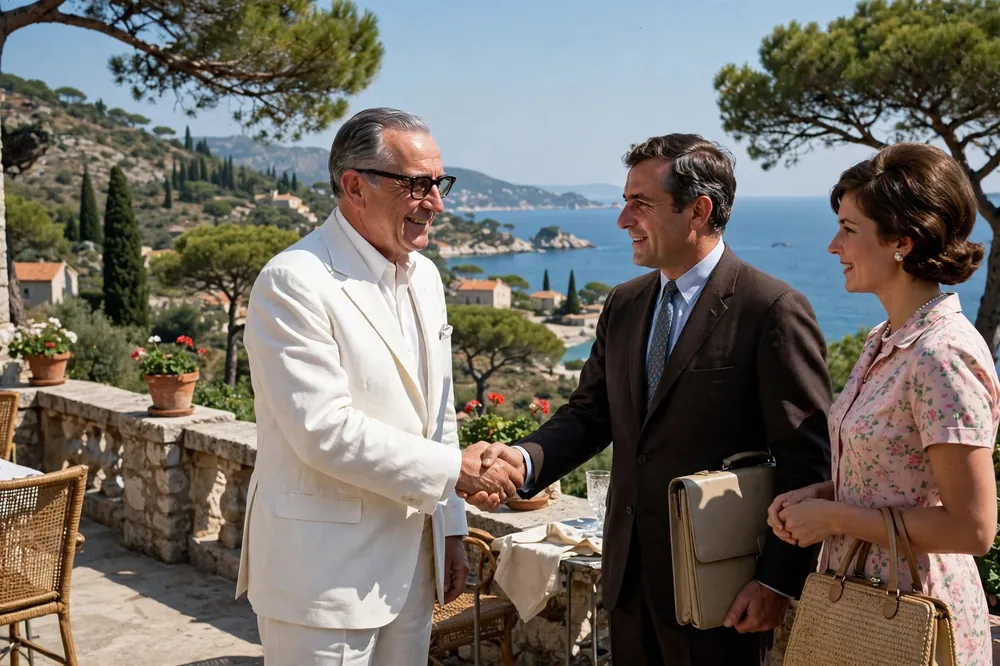
He was also a genuine international figure: his travels took him to Asia, Africa and Latin America, and he was received as an equal by leaders of both blocs. In 1952 he married Jovanka Budisavljević, a former Partisan officer thirty-two years his junior, who became a prominent public figure in her own right and, in Tito’s last years, a controversial one, accused by party rivals of seeking power for herself.
Tito’s health declined in the late 1970s. In January 1980 he was admitted to hospital in Ljubljana with circulation problems in his leg, which was amputated later that month. He remained in hospital for months, and his condition became a matter of national anxiety — Yugoslavia’s stability seemed to depend on his survival. He died on 4 May 1980, three days before his eighty-eighth birthday, of gangrene and heart failure.
His funeral in Belgrade on 8 May 1980 was one of the largest gatherings of world leaders ever held: more than two hundred delegations attended, including four kings, thirty-one presidents and twenty-two prime ministers, a measure of the standing he had achieved. He was buried in the House of Flowers in Belgrade, in a mausoleum that remains a place of pilgrimage.
Within a decade of his death, the Yugoslav federation he had built began to fall apart, and by 1992 it had ceased to exist.
9. Legacy of Josip Broz Tito
Tito’s legacy is inseparable from the fate of Yugoslavia. For those who lived under him, he is remembered as the man who liberated the country, gave it dignity and independence, and made Yugoslavs — for the first time — citizens of a country that mattered in the world.
Yugoslav passports were among the most useful in the world, Yugoslav workers could work abroad and send money home, and Yugoslavia’s standard of living, though far below Western Europe’s, was the highest in the Communist world. His slogan of “brotherhood and unity” was taught in every school, and for a generation it seemed to work: Serbs, Croats and Bosnian Muslims lived side by side in Sarajevo and in mixed villages across Bosnia, and intermarriage was common.
For those who lived through the wars of the 1990s, Tito is remembered differently: as the authoritarian who held the country together by force and by personality, and whose death removed the only thing that kept it together. The statues of Tito were pulled down in Croatia and in Bosnia, his name was removed from streets and squares, and the history he had written — of a united Yugoslav people fighting a common enemy — was replaced by separate national histories in which each people was the victim of the others.
In Serbia, the memory is more mixed: Tito is blamed by nationalists for weakening Serbia within the federation, and credited by others with making Serbia’s capital, Belgrade, the capital of a country that mattered. In the former Yugoslavia today, opinion polls still show a large minority — and in some republics a majority — who believe that life was better under Tito, a nostalgia that reflects both the hardships of the post-Yugoslav years and the genuine achievements of his rule.
Beyond Yugoslavia, Tito’s legacy is the Non-Aligned Movement, which still exists, and the example of a Communist leader who defied Moscow and survived — an example that mattered to other Communist parties and to the leaders of the developing world. He also left a lesson in the limits of personal rule: a state built around one man, however talented, is fragile, and the institutions Tito created to succeed him — the collective presidency and the 1974 constitution — proved weaker than the forces they were meant to contain.
10. Assessment by Historians
Historians assess Tito as a figure of genuine greatness and genuine ruthlessness, and the balance between the two is the central question of his biography. On the military side, the assessment is broadly positive: Tito built the most effective resistance movement in occupied Europe, liberated his country largely by his own efforts, and did so in a country where the resistance was also a civil war — an achievement that few other resistance leaders matched.
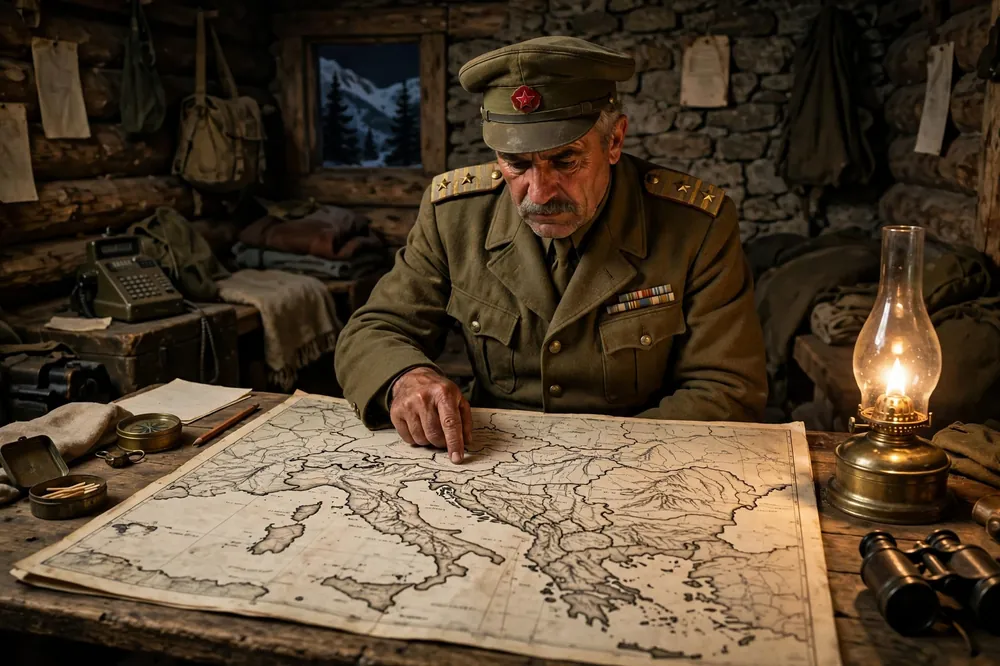
Fitzroy Maclean, the British officer who served with him, called him “a man of great ability and great charm”, and even his enemies conceded his courage and his organisational talent. The American historian Jozo Tomasevich, in his magisterial study of the Yugoslav war, credits Tito with a strategic sense that his rivals lacked, and with the political vision to see that the war would be won by whoever could unite Yugoslavia’s peoples.
On the political side, the assessment is more divided. Tito’s break with Stalin in 1948 is universally regarded as an act of great courage and political skill: he was the first Communist leader to defy Moscow, and his survival changed the map of the Cold War.
His economic and political system, by contrast, is judged more harshly: workers’ self-management never delivered the prosperity it promised, the federal system never resolved the national question, and the repression of the post-war years — Goli Otok, the UDBA, the suppression of the Croatian Spring in 1971 — showed the authoritarian core of his rule.
The most recent biographies, including Jože Pirjevec’s Tito and His Comrades (2018), present a Tito who was a brilliant wartime leader and a skilful diplomat, but who built a state that depended on him personally and that could not outlive him.
The verdict, if one can be given, is that Tito was the right man for the war and the wrong man for the peace — or rather, that the qualities that made him a great partisan commander, above all his reliance on his own judgement and his willingness to use force, were the same qualities that made him unable to build institutions that could survive without him.
Frequently Asked Questions
Who was Josip Broz Tito?
Josip Broz Tito (1892–1980) was the Yugoslav Communist leader who commanded the Partisan resistance in the Second World War, founded the post-war federal Yugoslav state, and ruled it as president from 1953 until his death in 1980.
How large was Tito’s Partisan army?
It grew from a few thousand fighters in the summer of 1941 to around 800,000 men and women by 1945, making it the largest resistance army in occupied Europe.
Why did Tito break with Stalin in 1948?
Stalin demanded that Yugoslavia submit to Soviet control over its foreign policy and economy. Tito refused, insisting on Yugoslav independence, and in June 1948 the Cominform expelled Yugoslavia. Tito survived by turning to the West for aid and building a distinctive Yugoslav socialism.
What was the Non-Aligned Movement?
Founded at Belgrade in 1961 by Tito, Jawaharlal Nehru of India and Gamal Abdel Nasser of Egypt, it was an association of states that refused to join either the Western or the Soviet bloc during the Cold War.
What happened at Bleiburg?
In May 1945, after the German surrender, tens of thousands of Croatian, Slovene and Serbian collaborationist troops and civilians who had surrendered to the British in Austria were handed over to the Partisans and killed in massacres at Bleiburg and along forced marches into Yugoslavia. The exact number of victims is disputed.
Why did Yugoslavia fall apart after Tito’s death?
The federation depended heavily on Tito’s personal authority. After his death in 1980, economic crisis, the rise of nationalism in the republics, and the weakness of the federal institutions created by the 1974 constitution led to secession and, in the 1990s, to war.
Related articles
Sources
- Wikipedia, “Josip Broz Tito” — consolidated biography: birth 7 May 1892, death 4 May 1980, Partisan war, break with Stalin 1948, Non-Aligned Movement 1961.
- Encyclopaedia Britannica, “Josip Broz Tito” (britannica.com) — biography, Partisan leadership, presidency, non-alignment.
- Jozo Tomasevich, War and Revolution in Yugoslavia, 1941–1945: The Chetniks (Stanford University Press, 1975) and Occupation and Collaboration (2001) — the standard scholarly history of the Yugoslav war.
- Fitzroy Maclean, Eastern Approaches (Jonathan Cape, 1949) — first-hand account of the British mission to Tito and the switch of Allied support to the Partisans.
- Jože Pirjevec, Tito and His Comrades (University of Wisconsin Press, 2018) — modern biography; Tito’s survival, the 1948 split, later rule.
- Richard West, Tito and the Rise and Fall of Yugoslavia (Carroll & Graf, 1994) — biography and the collapse of the federation.
- Ivo Banac, With Stalin against Tito: Cominformist Splits in Yugoslav Communism (Cornell University Press, 1988) — the 1948 split and its consequences.
Further reading
- Stevan K. Pavlowitch, Tito: Yugoslavia’s Great Dictator — A Reassessment (Hurst, 1992).
- Milovan Djilas, Tito: The Story from Inside (Harcourt Brace Jovanovich, 1980).