 WAR ATLAS MILITARY HISTORY MAGAZINE · WWI — WWII
Manstein Plan
1. Lead
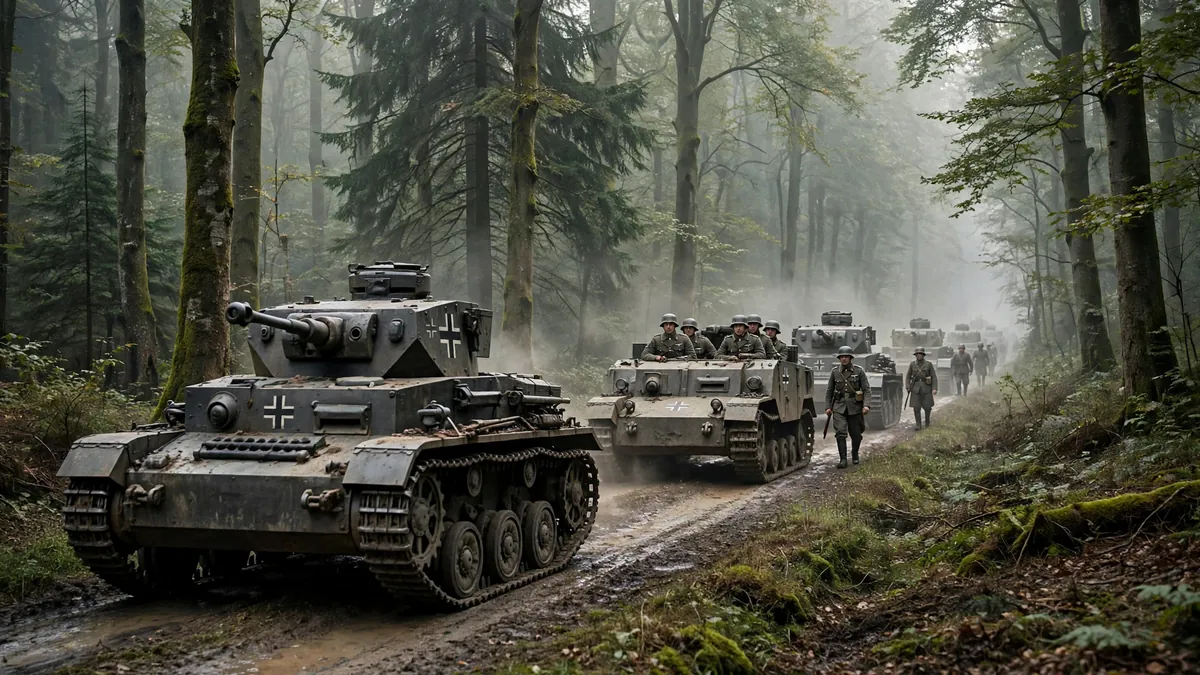
The Manstein Plan was the German operational plan that won the Battle of France in the spring of 1940. Its author, Lieutenant General Erich von Manstein, proposed something the German High Command first rejected as reckless: instead of repeating the Schlieffen Plan of 1914 with a great sweep through Belgium, the main German attack would go through the Ardennes forest — terrain the French considered impassable to tanks — and then drive to the English Channel, cutting the Allied armies in two.
When the plan was adopted, in its modified form, in February 1940, it produced one of the most complete operational victories of the Second World War. In six weeks France fell, the British Expeditionary Force was driven into the sea at Dunkirk, and the German Army had achieved what four years of trench warfare in 1914–18 had never delivered.
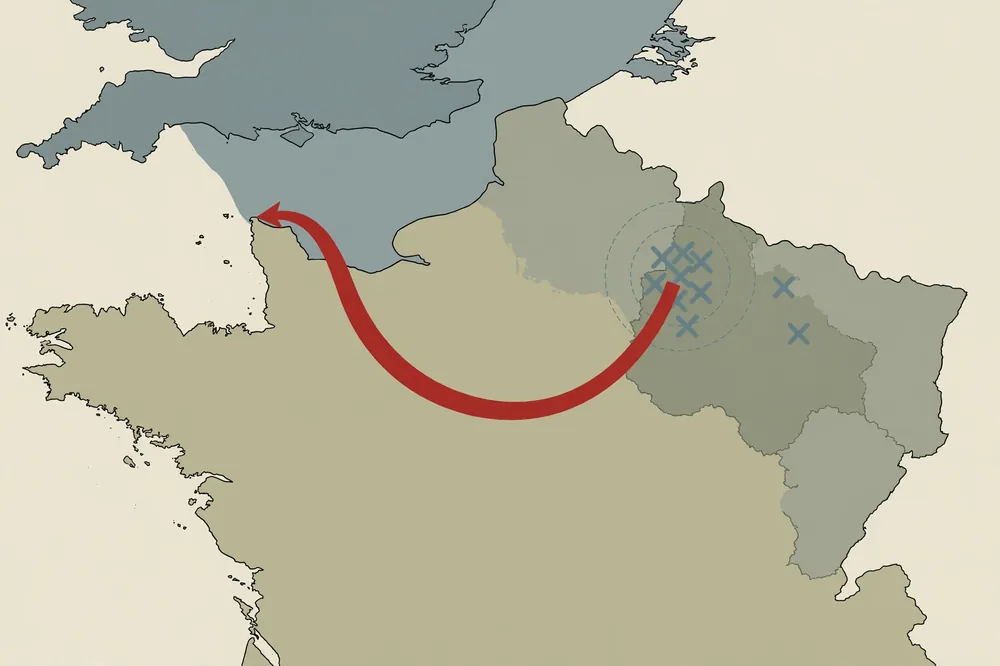
The plan is remembered by its popular name, the “sickle cut” — Sichelschnitt — after the curving sweep of the German armour from the Ardennes to the Channel coast. Its history is also a story of argument inside the German Army: Manstein’s idea was opposed by the Army’s commander-in-chief, championed by the young panzer generals, and finally imposed by Hitler, who saw in it the bold stroke he wanted. This article explains what the plan was, how it differed from the plan it replaced, how it was executed in May 1940, and why it worked — and what its limits were, because the victory it won did not end the war.
2. Key Facts
| Plan | Manstein Plan; German Sichelschnitt (“sickle cut”) |
| Author | Lt. Gen. Erich von Manstein, Chief of Staff of Army Group A |
| Adopted | February 1940, as the revised Fall Gelb (Case Yellow) |
| Executed | 10 May – 25 June 1940, Battle of France |
| Main thrust | Army Group A through the Ardennes to the Channel coast |
| Key commanders | Gerd von Rundstedt (Army Group A); Heinz Guderian (XIX Panzer Corps); Paul von Kleist (Panzer Group Kleist) |
| Allied commanders | Maurice Gamelin (France); Lord Gort (British Expeditionary Force) |
| Result | Allied armies cut off in Belgium; France defeated in six weeks |
| German losses | About 27,000 killed and 111,000 wounded in the whole French campaign |
| Allied losses | About 360,000 killed or wounded; about 1.9 million French prisoners |
3. Origins
The Manstein Plan was born from dissatisfaction with the German Army’s first plan for the west. In October 1939, after the defeat of Poland, the Army High Command (OKH) produced Fall Gelb, a plan that was essentially the Schlieffen Plan of 1914 in a smaller form: the main German force would attack through Belgium, meet the Allied armies head-on, and push them back in a frontal battle.
Manstein, then Chief of Staff of Army Group A under Gerd von Rundstedt, thought this plan was unimaginative and dangerous. It would drive the Germans into the strongest part of the Allied line, it would repeat the failure of 1914, and it would produce, at best, a long war of attrition that Germany, with its smaller resources, would lose.
Manstein’s alternative was built on a single insight about the Allied plan. The Allies expected the Germans to come through Belgium, and their own plan — the Dyle Plan — was to rush their best armies, the French First Army and the British Expeditionary Force, forward into Belgium to meet the attack on the River Dyle.
Manstein saw that this Allied advance was itself a vulnerability: if the Allies rushed north into Belgium, their flank would be open to an attack from the south, through the Ardennes. The Ardennes was a hilly, wooded region that the French General Staff considered impassable to large armoured formations; the French had left it defended only by second-rate divisions, and they expected any German force there to take days to cross.
Manstein proposed to make the Ardennes, not Belgium, the axis of the main attack.
Opposition in the High Command
Manstein’s proposal was rejected repeatedly in the winter of 1939–40. The Army’s commander-in-chief, Walther von Brauchitsch, and the Chief of the General Staff, Franz Halder, disliked it. They thought the Ardennes crossing was too risky, that the panzer columns would jam on the narrow forest roads, and that the plan put the whole German effort on a single narrow thrust.
Halder also distrusted Manstein personally, and the two men were rivals. Manstein sent memoranda, Rundstedt supported him, and the panzer generals — above all Heinz Guderian, who had practised the Ardennes crossing in staff exercises and believed the tanks could do it in two days — argued for the plan.
It was only after a series of accidents and interventions that the plan was adopted, and even then it was adopted in a modified form.
4. Principles
The Manstein Plan rested on three principles, and each of them broke with the doctrine of 1914. The first was the concentration of armour at a single point. In the original Fall Gelb, the ten German panzer divisions were spread across the front. In the revised plan, seven of them were concentrated in Army Group A, in Panzer Group Kleist, for the thrust through the Ardennes.
The concentration was the point: a single massed blow, not a broad advance, would break the French line. This was the operational expression of the idea that the enemy army, not territory, was the target, and it drew directly on the tradition of the war of annihilation — the aim was to destroy the Allied armies, not to take ground.
Deception and the weak flank
The second principle was deception. Army Group B, under Fedor von Bock, would attack through Belgium and the Netherlands with the bulk of the infantry, exactly as the Allies expected. Its task was to draw the Allied armies forward into Belgium, into the trap. The attack in the north was a feint — a very large and costly feint, but a feint all the same — and its success was measured not by the ground it took but by the Allied armies it pulled out of position. The real attack, meanwhile, would come where the Allies were weakest, through the Ardennes, against second-rate French divisions whose task was to hold a sector their own high command thought was safe.
Speed and independent command
The third principle was speed, sustained by independent command. The panzer corps were to cross the Meuse at Sedan, drive west to the Channel, and not wait for the infantry. Guderian’s XIX Panzer Corps was given unusual freedom of action, and he used it: after crossing the Meuse on 13 May, he pushed west so fast that his own high command repeatedly ordered him to halt, and he repeatedly disobeyed or reinterpreted the orders.
The plan’s success depended on this tempo. If the panzers had stopped to consolidate, the French would have had time to form a new line on the Somme, and the sickle cut would have failed. The plan was therefore a gamble on speed — and on the willingness of subordinate commanders to act on their own initiative, in the German tradition of mission command.
5. Application in Battle
The plan was executed on 10 May 1940, when German forces invaded the Netherlands, Belgium and Luxembourg. In the north, Army Group B attacked exactly as the Allies expected, and the Allies did exactly what Manstein had predicted: the French First Army and the British Expeditionary Force advanced into Belgium to the Dyle line.
The German airborne landings in the Netherlands and the assault on the Belgian fortress of Eben-Emael reinforced the impression that the main attack was in the north. Meanwhile, in the centre, seven panzer divisions moved through the Ardennes on three narrow roads, in a column that stretched for more than 100 kilometres, and the French air force — which might have destroyed the jammed columns — did not find them in time.
Crossing the Meuse at Sedan
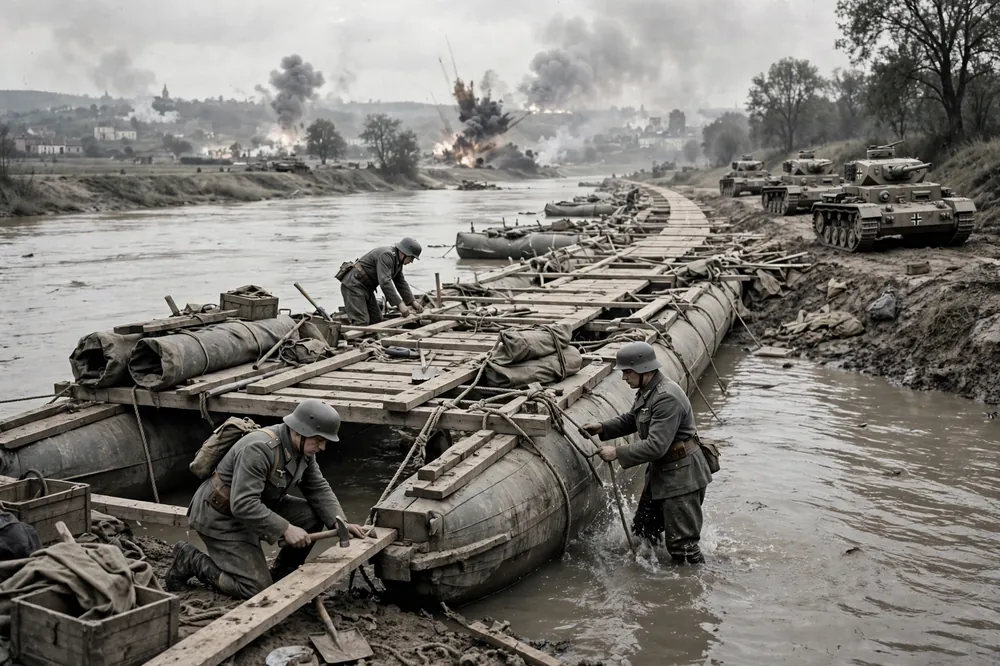
The decisive moment came at Sedan, on the Meuse, on 13 May. Guderian’s corps, supported by the massed dive-bombers of the Luftwaffe’s VIII Air Corps under Wolfram von Richthofen, crossed the river against the French 55th Infantry Division, a reserve division of older men with little anti-tank training. The French defence collapsed under the bombing and the speed of the crossing; by the evening of 13 May the Germans had a bridgehead, and by 15 May the panzers were through and racing west. The French commander-in-chief, Maurice Gamelin, still believed the main attack was in Belgium, and the French reserves that might have closed the breach were committed in the wrong place. The gap at Sedan was never closed.
The drive to the Channel
From Sedan the panzers drove west, covering about 300 kilometres in a week, and reached the Channel coast at Abbeville on 20 May. The Allied armies in Belgium were now cut off: the French First Army, the British Expeditionary Force and the Belgian Army were trapped in a pocket with their backs to the sea.
Guderian wanted to drive on to Dunkirk at once, but on 24 May Hitler issued the halt order, stopping the panzers short of the port. The reasons are still debated — Göring’s claim that the Luftwaffe could finish the job, concern for the tanks, and Hitler’s political calculation about a negotiated peace with Britain have all been suggested — but the result is clear: the halt gave the British time to organise the evacuation at Dunkirk, and about 338,000 Allied troops escaped, including almost the entire British Expeditionary Force.
The fall of France
With the northern armies destroyed or evacuated, the Germans turned south. The second phase, Fall Rot (Case Red), began on 5 June, and the French Army, its best divisions lost in Belgium and its reserves spent, could not hold the line on the Somme and the Aisne.
Paris fell on 14 June, undefended, and on 22 June France signed an armistice in the same railway carriage at Compiègne in which Germany had signed the armistice of 1918 — a deliberate humiliation chosen by Hitler. France was divided into an occupied north and a nominally independent south under Marshal Pétain at Vichy.
The campaign had lasted six weeks, and it had cost Germany about 27,000 dead — fewer than a single day of the Somme in 1916.
6. Strengths
The plan’s first strength was that it attacked the enemy’s expectation rather than the enemy’s strength. The French had built the Maginot Line along their frontier with Germany and had planned to meet the Germans in Belgium; they had not prepared for an attack through the Ardennes, because they believed it impossible. The Manstein Plan turned the enemy’s own plan against it: the more completely the Allies committed to the Dyle Plan, the deeper they walked into the trap. This is the quality that military writers admire most in the plan — it was not a matter of greater force, but of a better idea, and it won a campaign that force alone could not have won.
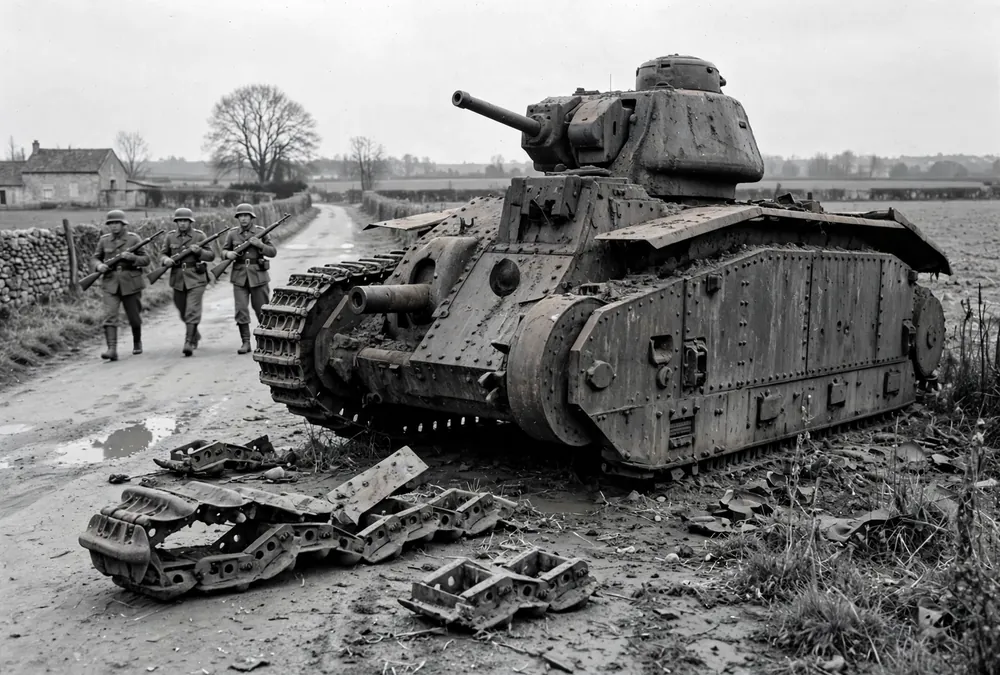
Its second strength was the concentration of force it achieved with limited resources. Germany in 1940 had fewer tanks than the Allies — about 2,500 against about 3,400 — and its tanks were individually inferior to the best French tanks. The plan compensated for material inferiority by massing the armour at one point and by combining it with air power, radios and speed. The victory of 1940 was therefore a victory of organisation and doctrine, not of industrial production, and it remains the classic case study for how a weaker power can defeat a stronger one by fighting on its own terms.
7. Weaknesses
The plan’s weaknesses were real, and they were visible even in victory. First, it was a gamble on a single narrow thrust, and it nearly failed in the Ardennes itself. The panzer columns were strung out over more than 100 kilometres of forest road, and a determined French air attack, or a counter-attack by the French armoured reserves, could have cut the column in two. The French had the forces to do it — the 1st Armoured Division was available — but they were committed elsewhere, and their command system was too slow to react. The plan worked because the French did not react; it was not a plan that would have survived a competent reaction.
Second, the plan’s success depended on commanders disobeying orders. Guderian was repeatedly ordered to halt, and he repeatedly pushed on, sometimes by interpreting his orders loosely and sometimes by ignoring them. The German High Command was alarmed by the speed of the advance and feared a French counter-attack on the exposed southern flank — a fear that was not irrational, since Charles de Gaulle’s counter-attack at Montcornet on 17 May showed that the flank was genuinely vulnerable. A plan that depends on its executors ignoring its authors is a plan with a structural flaw, and the halt order at Dunkirk showed what happened when the political leadership reasserted control.
8. Evolution
The Manstein Plan’s influence outlived the campaign it won. Its author went on to command on the Eastern Front, where he planned the relief of the encircled Sixth Army at Stalingrad (Operation Winter Storm, December 1942) and the counter-offensive at Kharkov in early 1943 — the last great German victory in the east, and a battle that showed Manstein’s talent for mobile defence. But the plan itself could not be repeated. After 1940, no enemy would again leave a flank as open as the Ardennes, and no army would again advance its best forces into a trap so completely. The element of surprise was spent: the sickle cut worked once, and its very fame made a second use impossible.
The deeper legacy was doctrinal. The Manstein Plan became the textbook example of operational art: the concentration of force, the attack on the enemy’s expectation, the use of deception, and the exploitation of speed. It shaped the teaching of armoured warfare in every army, and its principles — mass at the decisive point, strike where the enemy is weak, keep moving — survive in modern manoeuvre doctrine. The German defeat in the war as a whole, however, also showed the plan’s limits: a brilliant operational plan could win a campaign, but it could not compensate for a grand strategy that took Germany into a war against the Soviet Union, the British Empire and the United States at the same time.
9. Legacy
The Manstein Plan’s legacy is still argued over, and the arguments are about credit as much as about tactics. Manstein himself, in his memoirs Lost Victories (1955), presented the plan as his own creation, unjustly neglected by the High Command.
Historians have qualified that account: the final plan was a compromise, shaped by Halder’s staff work, by Guderian’s advocacy, and by Hitler’s decision to adopt it after a lunch with Manstein in February 1940. The truth is probably that the plan was a collective product in which Manstein supplied the central idea — the Ardennes thrust — and others supplied the detail.
The argument matters less than the result: the plan changed the way armies thought about the offensive, and it remains the most studied operational plan of the Second World War.
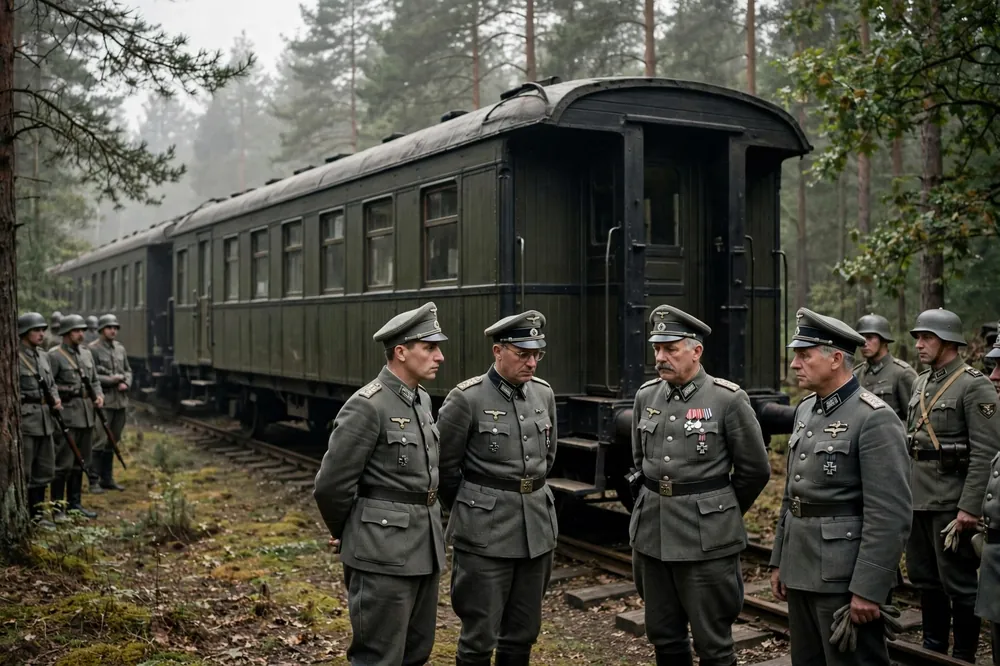
For France, the legacy was catastrophe. The defeat of 1940 destroyed the Third Republic, divided the country, and left a wound in French national memory that is still felt. The image of the German tanks emerging from the Ardennes — the forest that was supposed to be impassable — became a symbol of a military establishment that had prepared for the last war and been destroyed by the next.
For Britain, the legacy was different: the evacuation at Dunkirk saved the army, and the myth of Dunkirk became the foundation of Britain’s will to fight on alone. The plan that was meant to end the war in the west in six weeks therefore produced the opposite of what its authors intended: it left Britain undefeated, and it committed Germany to a war that would end five years later in Berlin.
10. Key Figures
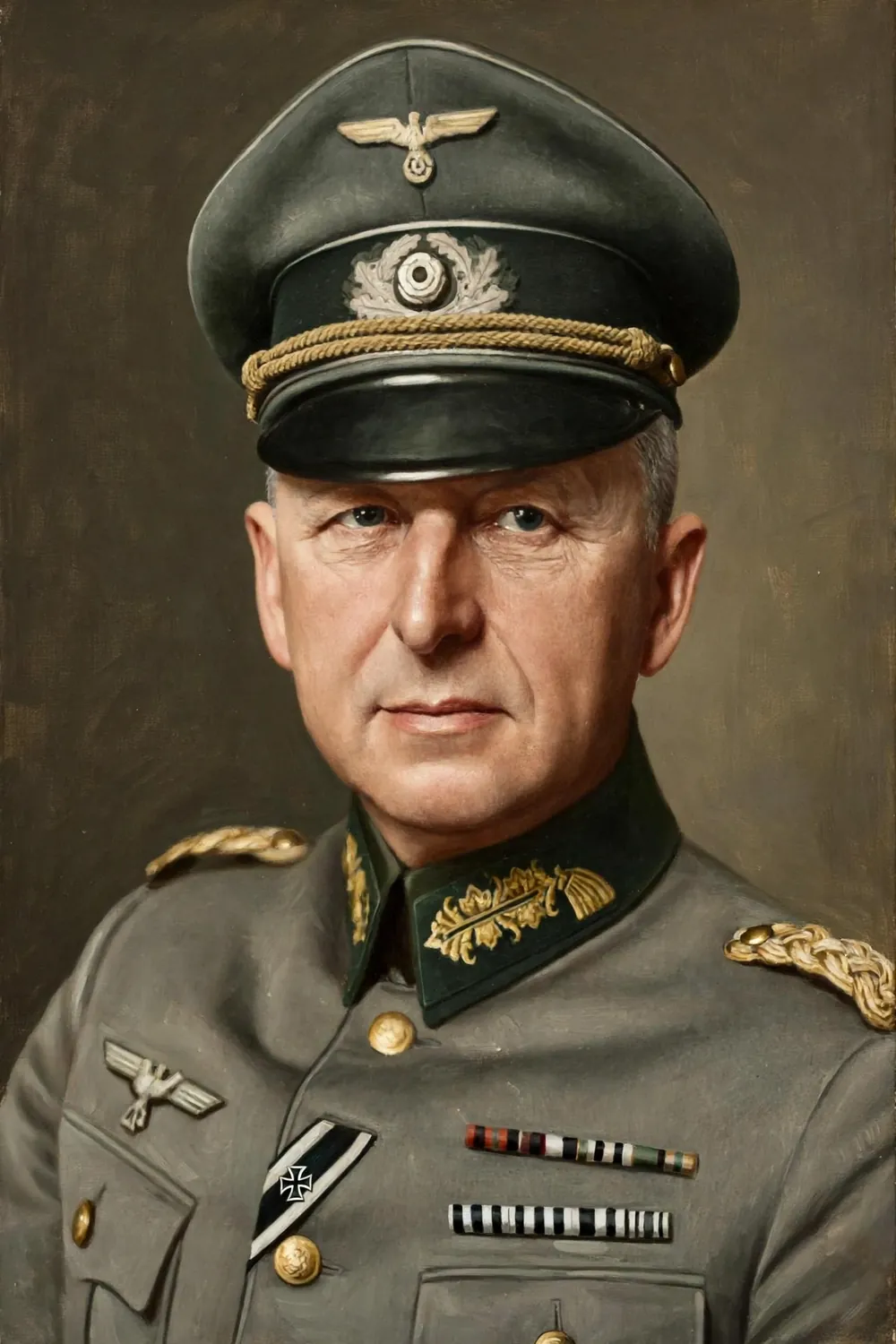
Erich von Manstein (Germany). Born Erich von Lewinski in 1887, the adopted son of a Prussian general, Manstein was one of the most talented operational commanders of the Second World War. As Chief of Staff of Army Group A he devised the plan that bears his name; he later commanded the Eleventh Army in the Crimea, taking Sevastopol in 1942, and Army Group South on the Eastern Front, where his Kharkov counter-offensive of 1943 was the last great German victory in the east.
Dismissed by Hitler in March 1944, he was convicted of war crimes by a British military court in 1949 — for the treatment of prisoners and civilians in his area of command — and sentenced to 18 years, later reduced to 12; he was released in 1953. His memoirs remain influential and controversial.
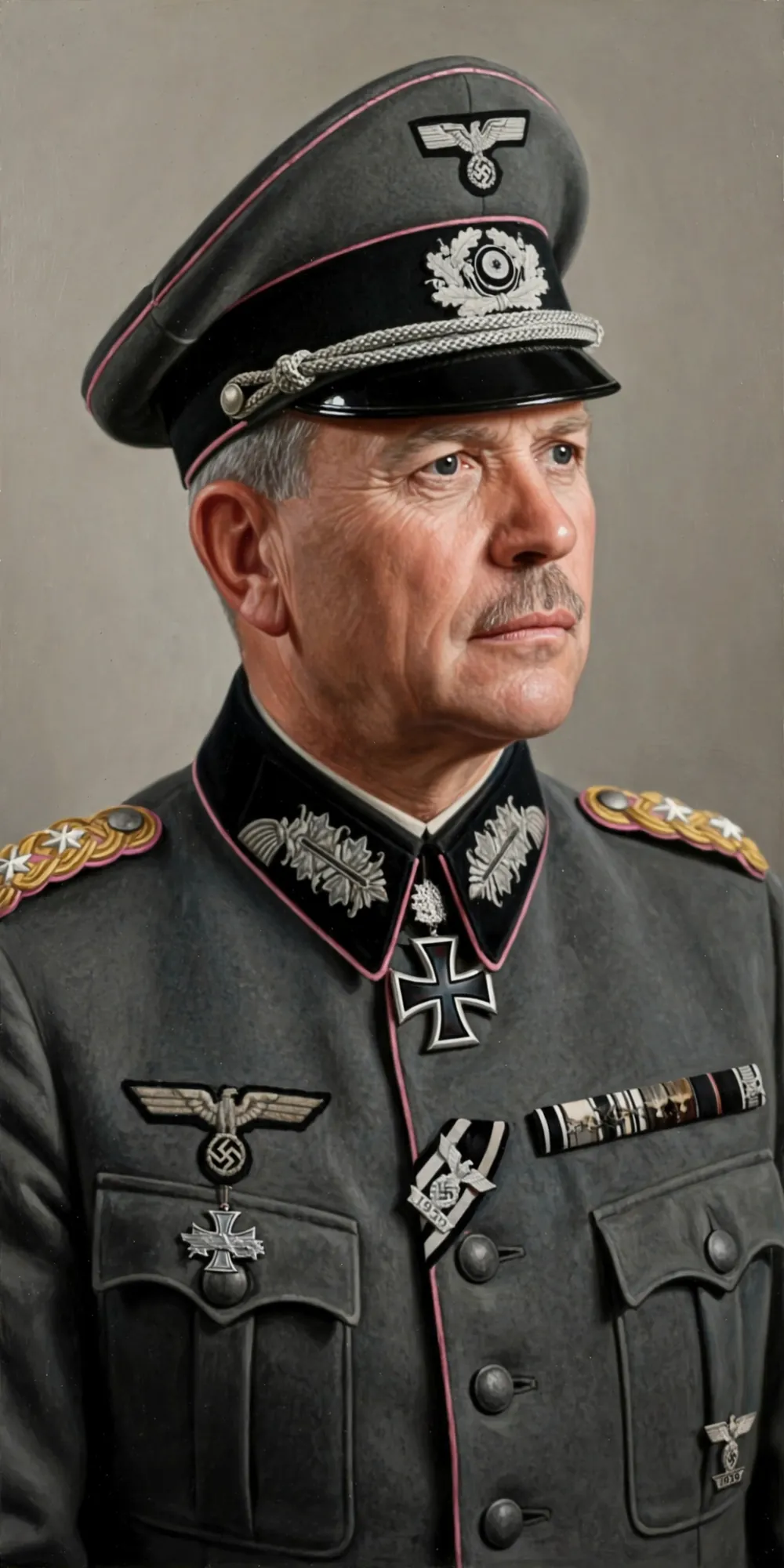
Heinz Guderian (Germany). The creator of the German panzer force and the executor of the Manstein Plan’s armoured thrust. Guderian’s XIX Panzer Corps crossed the Meuse at Sedan and drove to the Channel, and his advocacy of massed armour and radio command made the plan work in practice. He later commanded Panzer Group 2 in Russia and served as Chief of the General Staff in 1944–45. His book Achtung — Panzer! (1937) is a classic of armoured warfare theory.
Gerd von Rundstedt (Germany). Commander of Army Group A, the formation that carried out the main attack. Rundstedt supported Manstein’s plan against the High Command and protected it in the months of argument. He went on to command in France in 1942–44 and again in the Ardennes offensive of December 1944.
Maurice Gamelin (France). Commander-in-chief of the French Army. Gamelin committed the Allied armies to the Dyle Plan and was slow to recognise the threat through the Ardennes; he was dismissed on 19 May 1940, too late to change the outcome. His failure is often cited as a failure of imagination as much as of command.
Lord Gort (Britain). Commander of the British Expeditionary Force. Gort’s decision to withdraw to Dunkirk, against French orders, saved the British Army and made the evacuation possible. He was later Governor of Gibraltar and High Commissioner in Palestine.
11. Frequently Asked Questions
What was the Manstein Plan?
The German operational plan for the invasion of France in May 1940: the main attack would go through the Ardennes forest to the Channel coast, cutting off the Allied armies that had advanced into Belgium. The plan was adopted in February 1940, after months of argument inside the German Army, and it was executed on 10 May 1940. Its main thrust went through the Ardennes forest to the Channel coast, cutting off the French First Army, the British Expeditionary Force and the Belgian Army in the north, and it decided the Battle of France in six weeks.
What does “Sichelschnitt” mean?
“Sickle cut” in German — the name given to the plan after the war, describing the curving sweep of the German armour from the Ardennes to the Channel. The name was given to the plan after the war, and it describes the shape of the German advance on the map: a great curving sweep from the Ardennes, through Sedan and across northern France, to the Channel coast at Abbeville. The sweep cut the Allied armies in two, trapping the best Allied divisions in Belgium while the German armour drove on to the sea.
Why did the French think the Ardennes was safe?
They believed the hilly, wooded terrain was impassable to large armoured formations, and they left it defended by second-rate reserve divisions. German staff exercises showed that tanks could cross it in about two days — and they did. The French General Staff had studied the Ardennes in war games and concluded that a large armoured force could not cross it, and the French left the sector to second-rate reserve divisions with little anti-tank training. German staff exercises, by contrast, showed that the tanks could cross in about two days — and in May 1940 they did, in a column more than 100 kilometres long.
Why did the Germans stop before Dunkirk?
On 24 May 1940 Hitler issued a halt order stopping the panzers short of the port. The reasons are still debated — Göring’s claim that the Luftwaffe could finish the job, concern for the tanks, and political calculations about Britain are all suggested. The halt allowed the evacuation of about 338,000 Allied troops. The halt gave the British time to organise the evacuation, Operation Dynamo, and about 338,000 Allied troops escaped from the beaches and the harbour, including almost the entire British Expeditionary Force. The escape saved the British Army, and it meant that Britain could fight on after the fall of France, which was the opposite of what the German plan had intended.
Who really wrote the plan?
Manstein supplied the central idea — the Ardennes thrust — but the final plan was a collective product, shaped by Halder’s staff, Guderian’s advocacy and Hitler’s decision. Manstein’s memoirs claim more credit than historians generally allow. The final plan was shaped by the staff work of Franz Halder, by the advocacy of the panzer general Heinz Guderian, and by Hitler’s decision to adopt it after a lunch with Manstein in February 1940. Manstein supplied the central idea — the thrust through the Ardennes — but the plan as executed was the work of many hands, and the argument over credit has continued ever since.
How long did the Battle of France last?
Six weeks: from the German invasion on 10 May 1940 to the French armistice on 22 June 1940. Paris fell on 14 June. The campaign began with the German invasion on 10 May 1940, Paris fell undefended on 14 June, and France signed an armistice on 22 June in the railway carriage at Compiègne. The campaign cost Germany about 27,000 dead — fewer than a single day of the Somme in 1916 — and it left Britain alone against Germany, a position Britain held until the Soviet Union and the United States entered the war.
12. Sources
- Wikipedia, “Manstein Plan” — the plan, its origins, adoption and execution.
- Wikipedia, “Battle of France” — dates, forces, losses (about 27,000 German dead; about 1.9 million French prisoners).
- Erich von Manstein, Lost Victories (1955) — Manstein’s own account of the plan and its adoption.
- Wikipedia, “Battle of Sedan (1940)” — the Meuse crossing of 13 May 1940.
- Wikipedia, “Battle of Dunkirk” — the halt order and the evacuation of about 338,000 troops.
- Heinz Guderian, Panzer Leader (1952) — Guderian’s account of the drive to the Channel.
- Encyclopædia Britannica, “Battle of France” — the campaign and its consequences.
- Karl-Heinz Frieser, The Blitzkrieg Legend (2005) — the standard modern study of the 1940 campaign and the plan’s adoption.