 WAR ATLAS MILITARY HISTORY MAGAZINE · WWI — WWII
BT-5 Tank
1. Lead
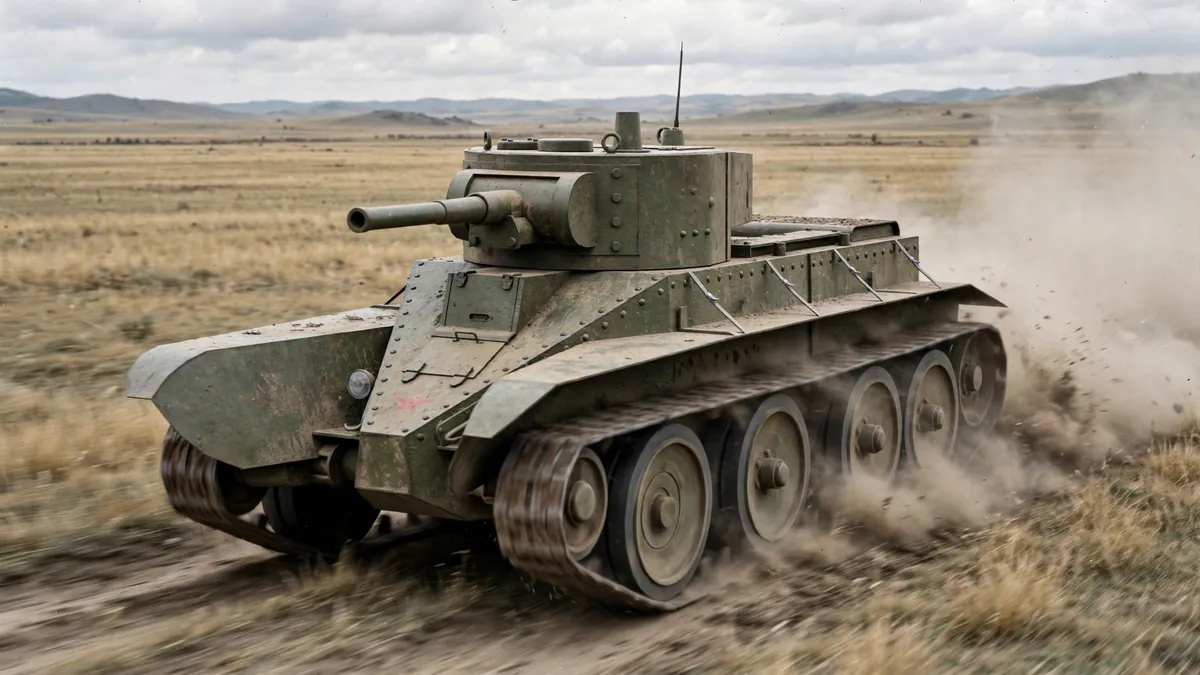
The BT-5 tank was the Soviet Union’s fast cavalry tank of the 1930s, a machine built around a single idea: speed. Developed from the American Christie tank design, the BT-5 could reach about 72 kilometres per hour on roads on its wheels alone, with its tracks removed, and about 52 kilometres per hour on tracks — speeds no other tank of its day could match.
More than 1,800 BT-5s were built between 1933 and 1935, and they equipped the Soviet mechanised corps that were meant to exploit breakthroughs in the deep operations doctrine of the Red Army. The BT-5 fought in the Spanish Civil War, in the border war with Japan at Khalkhin Gol in 1939, and in the Winter War against Finland, and it was still in service when Germany invaded the Soviet Union in June 1941.
By then it was already obsolescent — thinly armoured, armed with a 45 mm gun that was adequate against infantry and light tanks but not against the German tanks of 1941, and mechanically fragile — but it was the tank the Red Army had, and it fought in the first, desperate months of the war on the Eastern Front.
The BT-5’s story is the story of Soviet tank design in the 1930s: bold, ambitious, and shaped by a doctrine that valued speed and numbers over protection. The tank’s Christie suspension — large road wheels, coil springs, and the ability to run on wheels or tracks — was a brilliant piece of engineering that the Soviet Union bought from the American designer J. Walter Christie and then developed into the BT series and, eventually, into the T-34, the most important tank of the Second World War. The BT-5 was the link between the Christie prototype and the T-34, and its successes and its failures taught the Soviet tank industry the lessons that made the T-34 possible.
2. Key Facts
| Tank | BT-5 (Bystrokhodny Tank — “fast tank”), Soviet cavalry tank |
| Built | 1933–1935; more than 1,800 built (sources give 1,800–1,900) |
| Manufacturer | Kharkov Locomotive Factory (KhPZ), Soviet Union |
| Weight | About 11.5 tons |
| Crew / Kíp lái | 3 (commander/gunner, loader, driver) |
| Main armament | 45 mm 20K gun; 1–2 × 7.62 mm DT machine guns |
| Armour / Giáp | 6–13 mm / 6–13 mm |
| Engine | M-5 aircraft engine (Liberty licence), about 400 hp |
| Speed | About 52 km/h on tracks; about 72 km/h on wheels |
| Range | About 150–200 km on tracks |
| Service | Spanish Civil War, Khalkhin Gol, Winter War, Operation Barbarossa |
3. Design and Development
The Christie connection
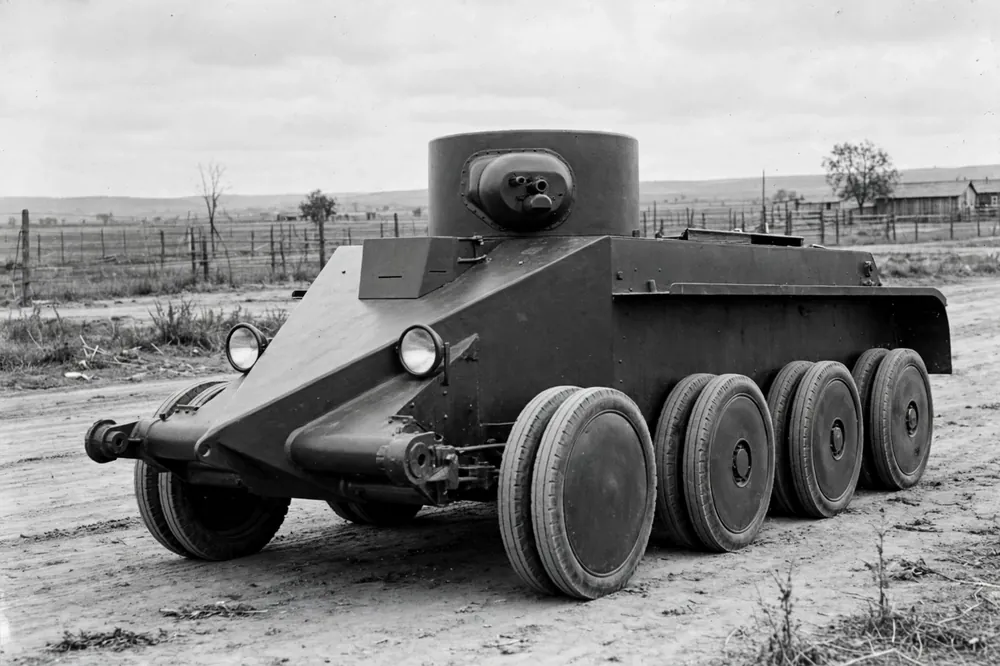
The BT-5’s story begins in the United States, with the inventor and racing driver J. Walter Christie, who in the late 1920s built a fast tank with a radical suspension: large, rubber-tyred road wheels mounted on coil springs, with no return rollers, and a design that allowed the tank to run on its road wheels alone, with the tracks removed, at very high speed on roads.
The US Army rejected Christie’s tank, but the Soviet Union, which was buying military technology abroad in the early 1930s, bought two Christie M1931 tanks in 1931 and the licence to build them. The tanks were smuggled out of the United States disguised as agricultural tractors, and they arrived at the Kharkov Locomotive Factory, where Soviet engineers studied them, copied them, and developed them into the BT series — Bystrokhodny Tank, the “fast tank”.
From BT-2 to BT-5
The first Soviet Christie tank was the BT-2, built from 1932, which carried a 37 mm gun or a machine gun in a small turret and was essentially a copy of the Christie prototype. The BT-5, which followed in 1933, was a major improvement: it carried a new, larger cylindrical turret mounting the 45 mm 20K gun — the standard Soviet tank gun of the 1930s — together with a coaxial DT machine gun, and it had a more powerful engine and improved transmission.
The BT-5’s turret was also used on the T-26 light tank, which simplified production and logistics. More than 1,800 BT-5s were built between 1933 and 1935, and the type became the standard fast tank of the Soviet mechanised corps. The BT-5 was followed by the BT-7, which had a new turret, a more powerful engine and sloped armour, but the BT-5 remained in service alongside it for the rest of the decade.
The Christie suspension
The heart of the BT-5 was its suspension. Four large road wheels on each side, mounted on long coil springs, gave the tank a smooth ride at high speed and allowed it to cross rough ground without the violent pitching that plagued other tanks.
The tank could run on its wheels alone, with the tracks removed and stowed on the fenders, steered by the front road wheels like a car — a feature intended for rapid movement on the good roads of western Europe, where Soviet doctrine expected the fast tanks to exploit a breakthrough.
In practice, the wheel mode was rarely used in combat: removing and refitting the tracks took time, the wheels wore quickly, and the roads of the Soviet Union and of Spain were not the roads of the designer’s imagination. But the suspension itself was a triumph, and it was the direct ancestor of the T-34’s suspension, which used the same large road wheels and coil springs in a more robust and better-protected form.
4. Armament and Protection
The 45 mm gun
The BT-5’s main weapon was the 45 mm 20K gun, a weapon derived from a German design and adopted as the standard Soviet tank and anti-tank gun of the 1930s. The gun fired a 1.4-kilogram armour-piercing shell at a muzzle velocity of about 760 metres per second, which could penetrate about 40 mm of armour at 500 metres — enough to defeat any light tank of the mid-1930s and to threaten the thin armour of the German Panzer I and Panzer II.
The gun was also effective against infantry, soft vehicles and fortifications with its high-explosive shell, and it was the weapon that made the BT-5 a credible tank in the Spanish Civil War and at Khalkhin Gol. By 1941, however, the 45 mm gun was outclassed: it could not penetrate the frontal armour of the German Panzer III and Panzer IV at normal combat ranges, and the BT-5’s crews found themselves outgunned in the first battles of Operation Barbarossa.
Thin armour and the three-man crew
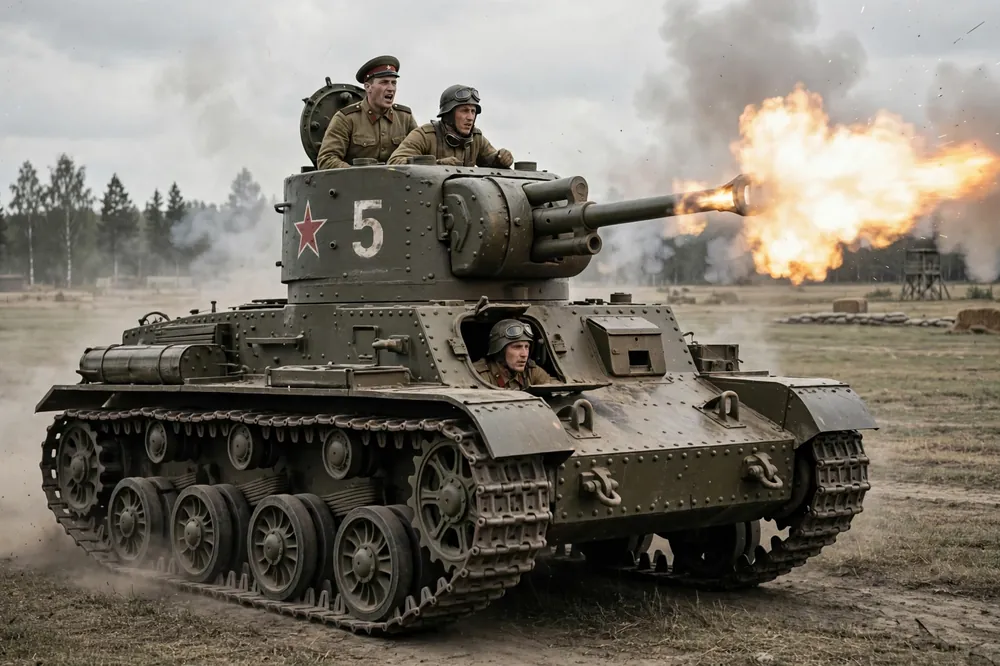
The BT-5’s armour was 6–13 mm thick — enough to stop rifle bullets and shell splinters, but not enough to stop an anti-tank gun or even a heavy machine gun at close range. The thin armour was the price of speed: the designers had accepted that the tank’s protection was its mobility, and that a fast tank that was hard to hit was better than a slow tank that was easy to hit.
The doctrine was sound in theory, but in practice the BT-5 was vulnerable to every anti-tank weapon on the battlefield, from the German 37 mm Pak 36 to the Finnish anti-tank rifles of the Winter War. The crew of three — commander/gunner, loader and driver — was also a weakness: the commander had to command the tank, aim and fire the gun, and observe the battlefield all at once, which meant that the BT-5 was slow to acquire targets and slow to react.
The T-34 would fix this with a larger turret and a dedicated gunner, but the BT-5 never got that fix.
Reliability and the M-5 engine
The BT-5 was powered by the M-5 engine, a Soviet-built version of the American Liberty aircraft engine, producing about 400 horsepower. The engine gave the tank its remarkable speed, but it was a temperamental machine: it was designed for aircraft, not for tanks, and it was prone to overheating, to fires, and to breakdowns when it was run hard.
The transmission was also fragile, and the tank’s high speed put enormous strain on the suspension and the tracks. Soviet tank crews learned to treat the BT-5 gently, but in combat there was no time for gentleness, and the BT-5’s mechanical reliability was one of the reasons the type suffered heavy non-combat losses in 1941.
The M-5 was replaced in the BT-7 by the more reliable M-17 engine, but the BT-5 kept the older engine for its whole service life.
5. The Spanish Civil War
The first combat test
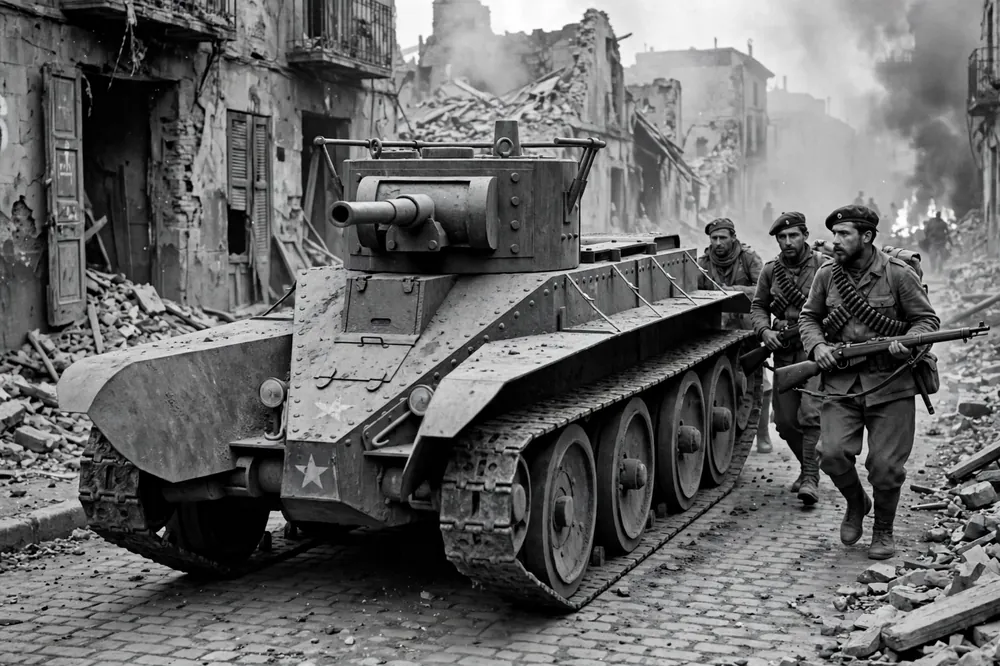
The BT-5’s first combat was in the Spanish Civil War, where the Soviet Union supplied tanks to the Republican government from 1936 onwards. About 50 BT-5s were sent to Spain, together with T-26 light tanks, and they fought in the battles around Madrid, at Jarama, at Guadalajara and at Teruel.
In Spain, the BT-5’s speed and its 45 mm gun made it the best tank on the Republican side, and it was superior to the German Panzer I and the Italian CV-33 tankettes that equipped the Nationalists. Soviet tank crews, many of them volunteers, used the BT-5 aggressively, and the tank’s performance in Spain convinced the Soviet leadership that the fast-tank concept was sound.
The war also exposed the BT-5’s weaknesses: its thin armour made it vulnerable to the Nationalists’ anti-tank guns, and its petrol engine made it prone to catching fire when hit — a lesson the Soviet Union would remember when it designed the diesel-engined T-34.
Lessons learned in Spain
The Spanish Civil War taught the Soviet tank force several lessons that shaped the BT-5’s successors. The first was that the tank needed better armour: the 13 mm maximum of the BT-5 was not enough, and the BT-7 and the T-34 would both carry thicker armour.
The second was that the tank needed a diesel engine: the petrol M-5’s tendency to catch fire was a serious liability, and the T-34’s diesel engine was a direct response. The third was that the three-man crew was too small: the commander could not command, aim and fire at the same time, and the T-34’s four-man crew was the answer.
The BT-5 itself was not modified in response to these lessons — it was already in production, and the Soviet Union needed tanks in quantity — but the lessons were applied to the tanks that followed it, and the BT-5’s Spanish service was the laboratory in which they were learned.
6. Khalkhin Gol and the Winter War
The victory over Japan
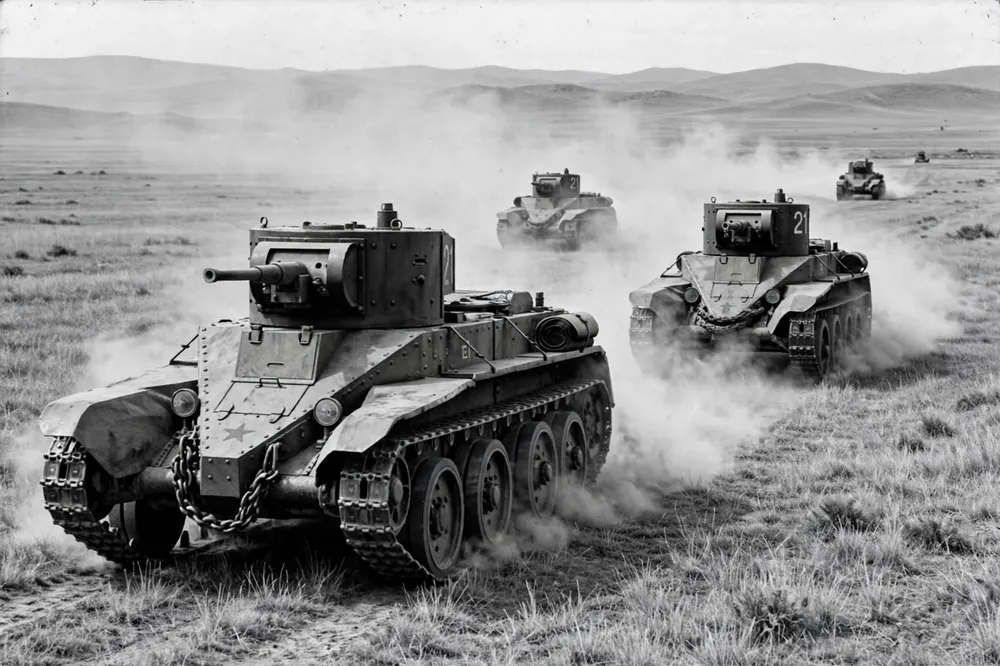
In 1939, the BT-5 fought its most successful campaign, in the border war with Japan at Khalkhin Gol in Mongolia. The Soviet force, commanded by Georgy Zhukov, included BT-5 and BT-7 tanks in the mechanised brigades that carried out the double envelopment that destroyed the Japanese 6th Army.
In the open steppe of Mongolia, the BT-5’s speed was a decisive advantage: the fast tanks could outmanoeuvre the Japanese infantry and the Japanese tanks, which were slower and more lightly armed, and the 45 mm gun was more than adequate against the Japanese Type 95 Ha-Go light tank. The victory at Khalkhin Gol was the BT-5’s finest hour, and it was the campaign that made Zhukov’s reputation.
The Japanese learned from the defeat, and they never again challenged the Soviet Union on land — a strategic consequence of a battle in which the BT-5 played a leading part.
The Winter War disaster
The Winter War against Finland, which began in November 1939, was a very different experience. In the forests and snow of Finland, the BT-5’s speed was useless, its thin armour was a fatal liability, and its petrol engine was a fire hazard in the cold.
Finnish infantry, armed with Molotov cocktails and anti-tank rifles, destroyed BT-5s in large numbers, and the Soviet tank force suffered heavy losses in the first weeks of the war. The BT-5’s crews, trained for open-country manoeuvre warfare, were unprepared for the close-quarters fighting in the forests, and the tanks were often sent into battle without infantry support, where they were easy targets.
The Winter War was a disaster for the Soviet tank force, and it exposed the BT-5’s weaknesses more brutally than any other campaign. The lessons were learned — slowly — and they contributed to the reforms that produced the T-34, but the price was paid in the snow of Finland.
7. Operation Barbarossa
The summer of 1941
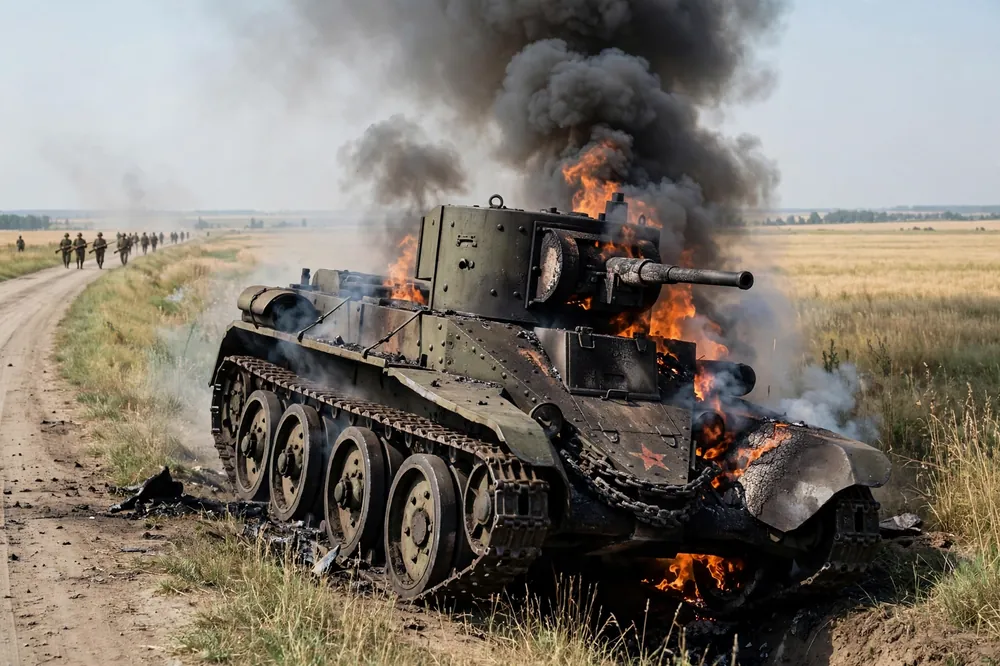
When Germany invaded the Soviet Union on 22 June 1941, the Red Army still had large numbers of BT-5s in service — several hundred, by most estimates, out of a total BT-series strength of several thousand. The BT-5s were thrown into the counterattacks of the first weeks, and they were destroyed in large numbers: by German anti-tank guns, by German tanks, by air attack, and by mechanical breakdown as the tanks were driven hard in retreat.
The BT-5’s 45 mm gun could not penetrate the frontal armour of the Panzer III and Panzer IV, and its own armour could not stop the German 37 mm and 50 mm anti-tank guns. The tanks were also hampered by the chaos of the first weeks — by the lack of fuel, of spare parts, of trained crews, and of any coherent plan.
By the end of 1941, most of the BT-5s that had been in service in June were gone, destroyed or abandoned, and the type was effectively finished as a front-line tank.
The last service
The surviving BT-5s were withdrawn from the front line and used for training, for rear-area security, and in the Far East, where they remained in service against Japan until 1945. A small number were used in the Soviet invasion of Manchuria in August 1945, where they fought against the Japanese Kwantung Army in the open country of Manchuria — the kind of terrain for which they had been designed, and where their speed was once again an advantage.
By then, however, the BT-5 was a museum piece: the T-34 had replaced it, and the BT-5’s role in the war was over. The last BT-5s were scrapped in the late 1940s, and only a handful survive today in museums in Russia and in Finland, where captured examples are preserved.
8. Variants and Related Designs
The BT-5 family
The BT-5 was built in several variants. The standard BT-5 carried the 45 mm gun and a DT machine gun in the turret. The BT-5A was a close-support version, armed with a short 76.2 mm howitzer in a larger turret for use against infantry and fortifications, though only a small number were built.
The BT-5RT was a command version, fitted with a radio — most BT-5s had no radio, and commanders communicated by flag or by hand signal, a serious limitation that the Soviet tank force only slowly overcame. There were also flamethrower versions, bridge-laying versions, and a small number of BT-5s fitted with the 45 mm gun in a new turret that anticipated the BT-7.
The variants show the versatility of the BT chassis, and the Soviet habit of building a family of vehicles on a single proven design.
The road to the T-34
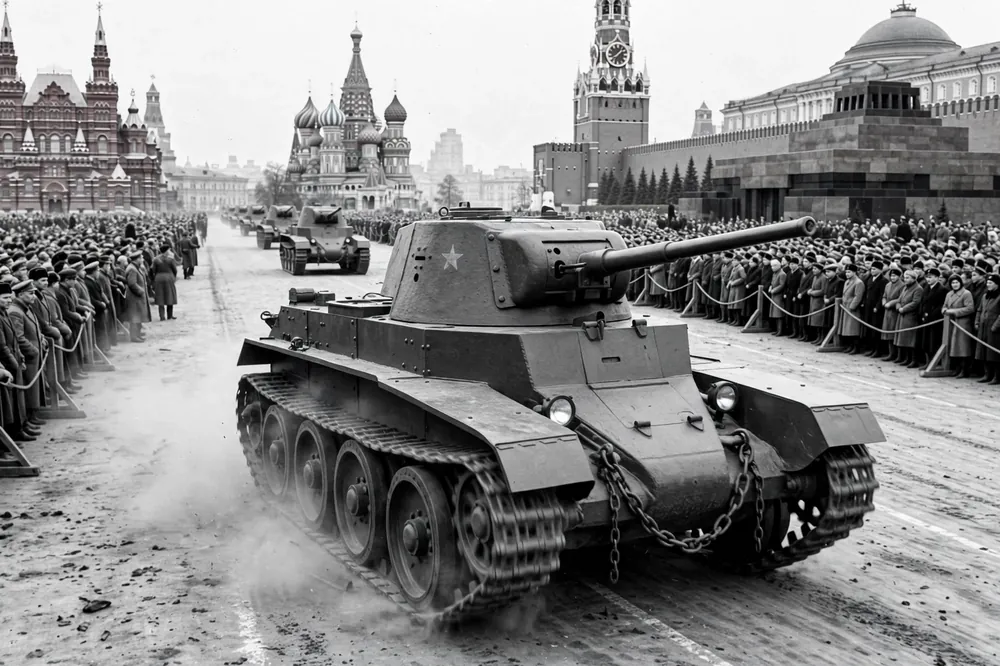
The BT-5’s most important legacy is the T-34. The Christie suspension, the large road wheels, the coil springs, the emphasis on speed and mobility — all of these were carried over from the BT series into the T-34, where they were combined with sloped armour, a diesel engine, a more powerful gun and a four-man crew.
The BT-5 was the test bed for the ideas that made the T-34, and the Soviet tank designers who built the T-34 — Mikhail Koshkin and his team at Kharkov — had built BT tanks before they built the T-34.
The BT-5’s failures were as instructive as its successes: the thin armour, the petrol engine, the three-man crew and the lack of radios were all fixed in the T-34, and the T-34’s greatness owes something to the BT-5’s shortcomings.
9. The BT-5 in Service with Other Armies
Captured and foreign use
BT-5s were captured in large numbers by the Finns in the Winter War and by the Germans in 1941, and both armies used them. The Finns captured several BT-5s and used them in their own tank force, and the Germans pressed captured BT-5s into service as Beutepanzer, mainly for rear-area security and training, where their speed was useful and their thin armour was less of a liability.
The Spanish Republic’s BT-5s were captured by the Nationalists at the end of the Civil War, and a few were used by the Spanish Army after the war. The BT-5’s foreign service was a measure of its availability — it was the tank that was there, in large numbers, and armies that captured it found it worth using, even if only for second-line duties.
Survivors today
Only a handful of BT-5s survive today. Examples are preserved in the Kubinka Tank Museum in Russia, in the Parola Tank Museum in Finland — where captured BT-5s are displayed — and in a small number of other museums in Russia and Eastern Europe.
The survivors are a reminder of a tank that was, for a brief moment, the fastest tank in the world, and that fought in three wars on two continents before it was overtaken by the tanks it had helped to inspire.
For the visitor to Kubinka, the BT-5 is a small, fast-looking machine, with its large road wheels and its cylindrical turret, and it is easy to see why the Soviet tank men of the 1930s were proud of it.
10. Assessment and Legacy
The BT-5 was a brilliant idea with a short life. Its speed was unmatched, its suspension was a masterpiece, and its gun was adequate for its day. But its armour was too thin, its engine was too fragile, its crew was too small, and its doctrine — the deep operation, the exploitation of a breakthrough by fast tanks — was never given the chance to work as its designers intended, because the war that came was not the war the BT-5 was designed for.
The BT-5 was designed for a war of manoeuvre on the plains of Europe, and the war it fought was a war of attrition in the forests of Finland and the steppes of Russia, against an enemy with better anti-tank guns and better tanks.
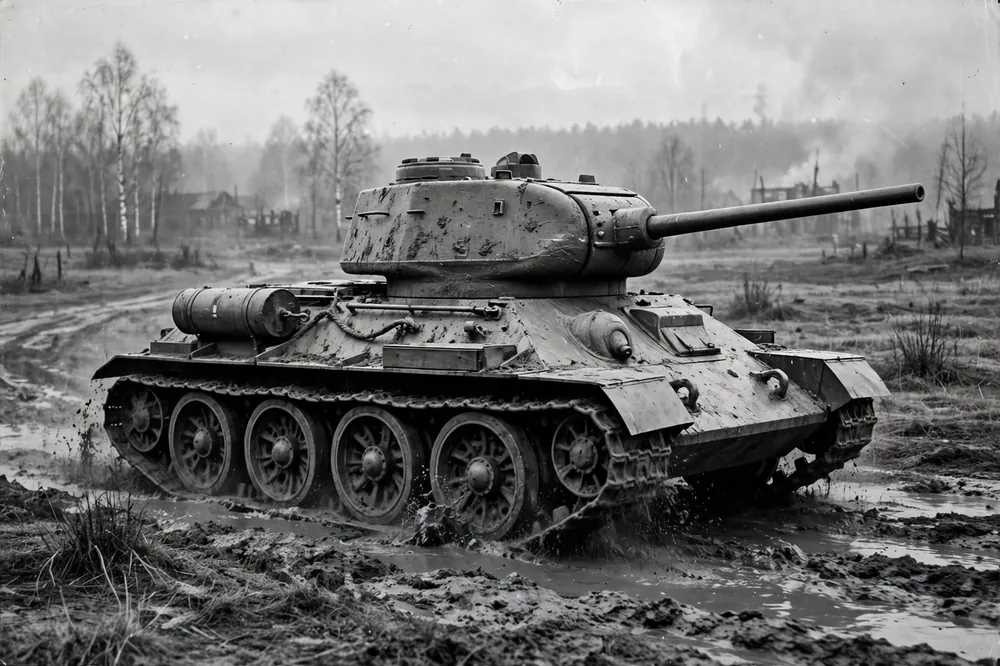
The BT-5’s legacy is the T-34. Without the BT series, there would have been no Christie suspension in Soviet service, no Kharkov tank design school, and no T-34. The BT-5’s failures taught the Soviet Union what a tank needed — armour, a diesel engine, a four-man crew, a radio — and its successes taught the Soviet Union what a tank could do — move fast, exploit a breakthrough, and win a battle of manoeuvre. The BT-5 is remembered today as the fastest tank of the 1930s, as the tank of Khalkhin Gol, and as the ancestor of the T-34, and that is a legacy any tank could be proud of.
11. Frequently Asked Questions
How fast was the BT-5 tank?
The BT-5 could reach about 52 km/h on its tracks and about 72 km/h on its road wheels alone, with the tracks removed — the fastest tank of its day. The wheel speed was a design feature for rapid movement on good roads, though in practice the wheel mode was rarely used in combat because removing and refitting the tracks took time and the wheels wore quickly. The speed was the whole point of the design: the BT-5 was built around the Christie suspension, and it was meant to exploit a breakthrough on good roads.
How many BT-5 tanks were built?
More than 1,800 BT-5s were built between 1933 and 1935 at the Kharkov Locomotive Factory, with sources giving a range of about 1,800–1,900. The BT-5 was the most numerous Soviet fast tank of the mid-1930s, and it equipped the mechanised corps that were the core of the Red Army’s deep-operations doctrine. The numbers matter because the BT-5 was the tank the Red Army had in quantity when the war began: it equipped the mechanised corps that were the core of the deep-operations doctrine. The production run was short — 1933 to 1935 — but it was large enough.
What was the BT-5’s main gun?
The BT-5 carried the 45 mm 20K gun in a cylindrical turret, together with a coaxial 7.62 mm DT machine gun. The 45 mm gun was the standard Soviet tank gun of the 1930s, and it could penetrate about 40 mm of armour at 500 metres — enough against light tanks of the period, but not enough against the German Panzer III and Panzer IV of 1941. The gun was adequate for the 1930s, when it faced light tanks and infantry, but it was not enough for 1941, when it faced the Panzer III and Panzer IV.
Where did the BT-5 fight?
The BT-5 fought in the Spanish Civil War (1936–1939), in the border war with Japan at Khalkhin Gol in Mongolia (1939), in the Winter War against Finland (1939–1940), and in the first months of Operation Barbarossa against Germany (1941). Its most successful campaign was Khalkhin Gol, where its speed was decisive in the open steppe; its worst was the Winter War, where its thin armour and petrol engine were fatal liabilities. The four campaigns show the tank’s whole career: Spain, where it fought in a civil war; Khalkhin Gol, where its speed was decisive; Finland, where its thin armour was fatal; and Barbarossa.
How is the BT-5 related to the T-34?
The BT-5 was the direct ancestor of the T-34. The T-34 used the BT series’ Christie suspension — large road wheels and coil springs — and it was designed by the same Kharkov team that had built the BT tanks. The T-34 fixed the BT-5’s weaknesses: thicker sloped armour, a diesel engine, a four-man crew with a dedicated gunner, and a radio in every tank. The link matters because the T-34 was not a new design, it was the BT series grown up: the same Kharkov team, the same Christie suspension, and the same idea of a fast tank.
Why was the BT-5 withdrawn from service?
The BT-5 was withdrawn from front-line service after the heavy losses of 1941, when its thin armour and 45 mm gun proved inadequate against German tanks and anti-tank guns. It was replaced by the T-34 and the BT-7, and the survivors were used for training, rear-area duties and service in the Far East, where a small number fought in Manchuria in August 1945. The withdrawal was inevitable once the losses of 1941 had shown what the BT-5 could and could not do: its speed could not make up for its thin armour and its 45 mm gun.
12. Sources
- Wikipedia, “BT tank” and “BT-5” — production figures (more than 1,800), specifications, service history and the Christie connection.
- Steven J. Zaloga and James Grandsen, Soviet Tanks and Combat Vehicles of World War Two (Arms and Armour Press, 1984) — BT series design and service.
- Steven J. Zaloga, The Red Army’s Armour in Combat and T-34-85 Medium Tank 1944–94 (Osprey) — the BT series and the road to the T-34.
- David M. Glantz, Stumbling Colossus: The Red Army on the Eve of World War (University Press of Kansas, 1998) — Soviet mechanised forces and the BT tanks in 1941.
- Alvin D. Coox, Nomonhan: Japan Against Russia, 1939 (Stanford University Press, 1985) — Khalkhin Gol and the BT tanks in Mongolia.
- William R. Trotter, A Frozen Hell: The Russo-Finnish Winter War of 1939–1940 (Algonquin, 1991) — BT-5 losses in Finland.
- Mikhail Baryatinskiy, Soviet Tank Aces and The T-34 in Combat (Pen & Sword).
- Robert Forczyk, Tank Warfare on the Eastern Front 1941–1942 (Pen & Sword, 2014).