 WAR ATLAS MILITARY HISTORY MAGAZINE · WWI — WWII
Bloch MB.152
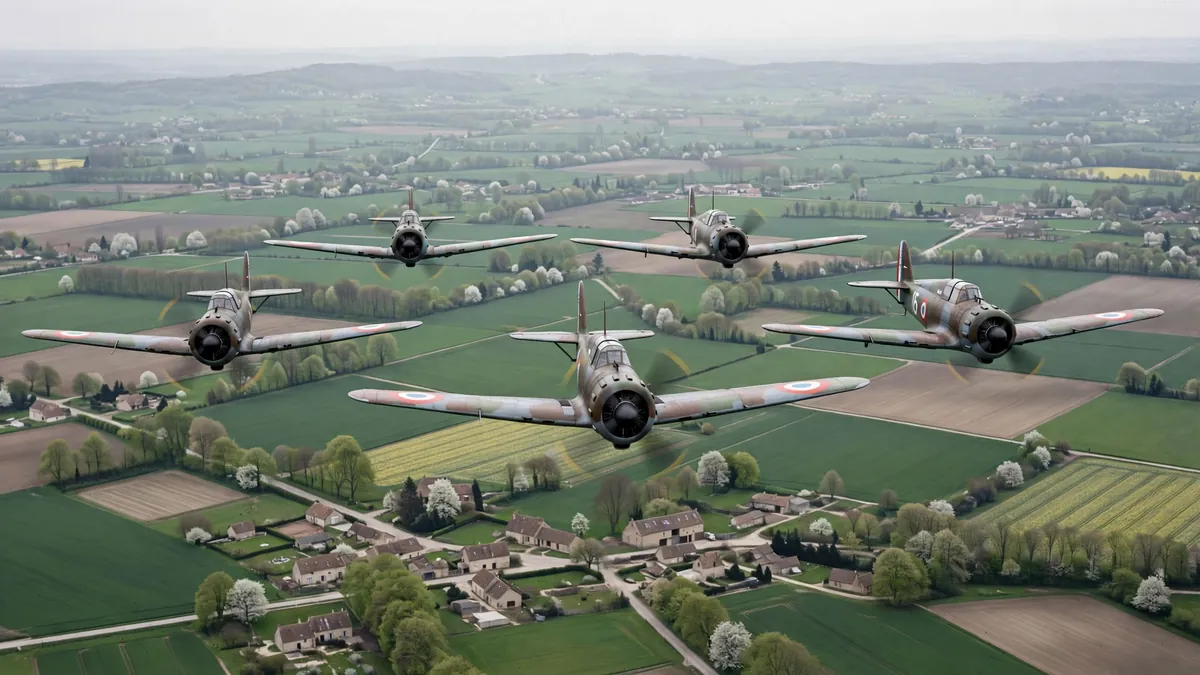
1. Lead
The Bloch MB.152 was the most numerous modern fighter in the French Air Force when Germany attacked in May 1940, and the aircraft that bore the brunt of the air fighting in the Battle of France. A single-seat, low-wing monoplane powered by a Gnome-Rhône radial engine, the MB.152 was a rugged, well-armed fighter that could match the German Bf 109 in a turning fight and outgun it with its two 20 mm cannon, but it was slower, it climbed worse, and it was flown by pilots who were outnumbered and, in many cases, incompletely trained.
In the six weeks of the Battle of France, the MB.152 squadrons fought hard and lost heavily, and the aircraft’s story is the story of the French Air Force in 1940: brave, capable and overwhelmed.
About 482 MB.152s were built, together with the earlier MB.151 and the later MB.155, and the type served in the Battle of France, in the air force of Vichy France, and in the Free French forces. Its combat record was creditable — French pilots flying the MB.152 claimed a substantial number of German aircraft, and the type’s most successful pilots became aces — but the aircraft’s career was cut short by the fall of France, and it never had the chance to prove itself in the longer war that followed. The MB.152 is remembered today as a symbol of the French fighter force of 1940: a good aircraft, built in too few numbers, fighting a war it could not win.
2. Key Facts
| Role | Single-seat fighter |
| Manufacturer | Société des Avions Marcel Bloch (later Dassault), France |
| Designer | Marcel Bloch / Marcel Bloch |
| First flight | 15 December 1938 (MB.152) |
| Introduced | 1939 |
| Produced | About 482 MB.152 (about 700 of the MB.150 family in total) |
| Crew | 1 |
| Engine | 1 × Gnome-Rhône 14N-25 radial, about 1,100 hp |
| Maximum speed | About 509 km/h (316 mph) |
| Range | About 1,150 km (715 miles) |
| Armament | 2 × 20 mm Hispano-Suiza HS.404 cannon; 2 × 7.5 mm MAC 1934 machine guns |
| Main users | France (Armée de l’Air, Vichy, Free French); Greece, Romania |
| Fate | Withdrawn by the mid-1940s; none survives intact |
3. Origins and Requirements
A fighter for the new French Air Force
In the mid-1930s the French Air Force, which had been rebuilt as an independent service in 1933, needed a modern single-seat fighter to replace the biplanes and the early monoplanes then in service. In 1934 the Air Ministry issued a specification for a new fighter, and several manufacturers responded, among them Marcel Bloch, whose company had built bombers and transports but had not yet built a fighter.
Bloch’s design, the MB.150, was a low-wing monoplane of all-metal construction, powered by a Gnome-Rhône radial engine, and it first flew in October 1937. The prototype’s performance was disappointing, and the design was reworked — the wing was redesigned, the fuselage was lengthened and the engine was changed — until, in December 1938, the revised aircraft, the MB.152, flew and proved to be a capable fighter.
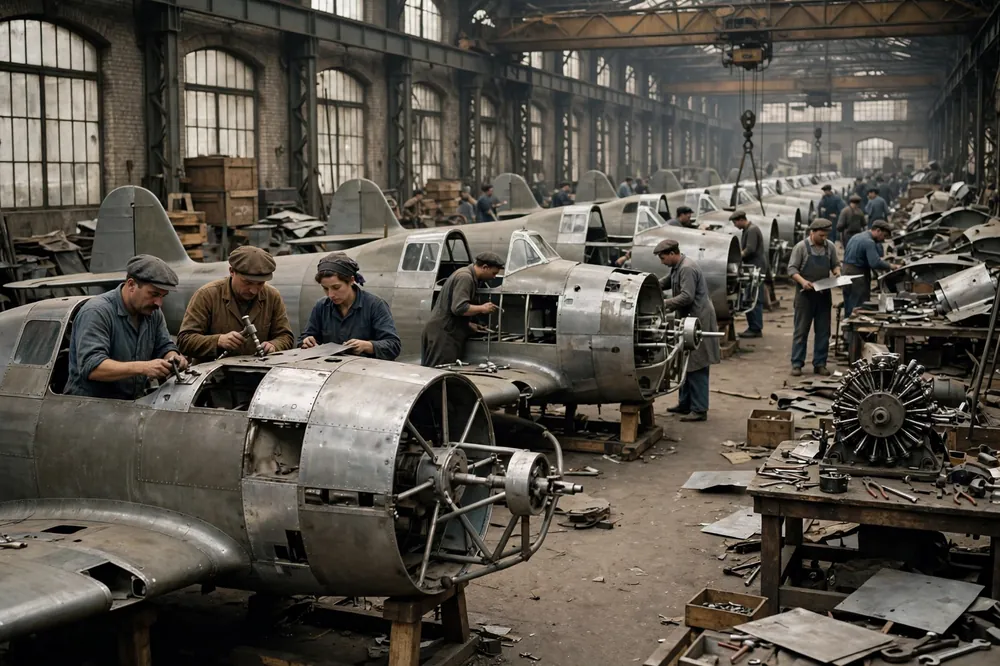
The Air Ministry ordered the MB.152 into production, and the Bloch factory, together with the nationalised factories of the SNCASO group, began to build it in large numbers. Production was slow at first — the French aircraft industry, nationalised and reorganised in the late 1930s, was struggling to meet its orders — but by the spring of 1940, the MB.152 was the most numerous modern fighter in the French inventory, with more than 300 in service and more on the production lines. When Germany attacked on 10 May 1940, the MB.152 equipped nine fighter groups, more than any other French fighter, and it was the aircraft on which the French Air Force placed its greatest hopes.
Marcel Bloch and the nationalised industry
The MB.152 was the work of Marcel Bloch, one of the great names of French aviation, who had designed the first French all-metal aircraft in the 1920s and who would, after the war, found the Dassault company and design the Mirage fighters.
Bloch’s company was nationalised in 1936, as part of the Popular Front government’s reorganisation of the aircraft industry, and Bloch himself was arrested by the Vichy regime in 1940 and deported to Buchenwald, where he survived the war. The MB.152 was, in a sense, the last aircraft of the pre-war Bloch company, and its story is bound up with the turmoil of the French aircraft industry in the late 1930s, an industry that was capable of designing good aircraft but that struggled to build them in the numbers the war demanded.
4. Design and Development
Airframe and layout
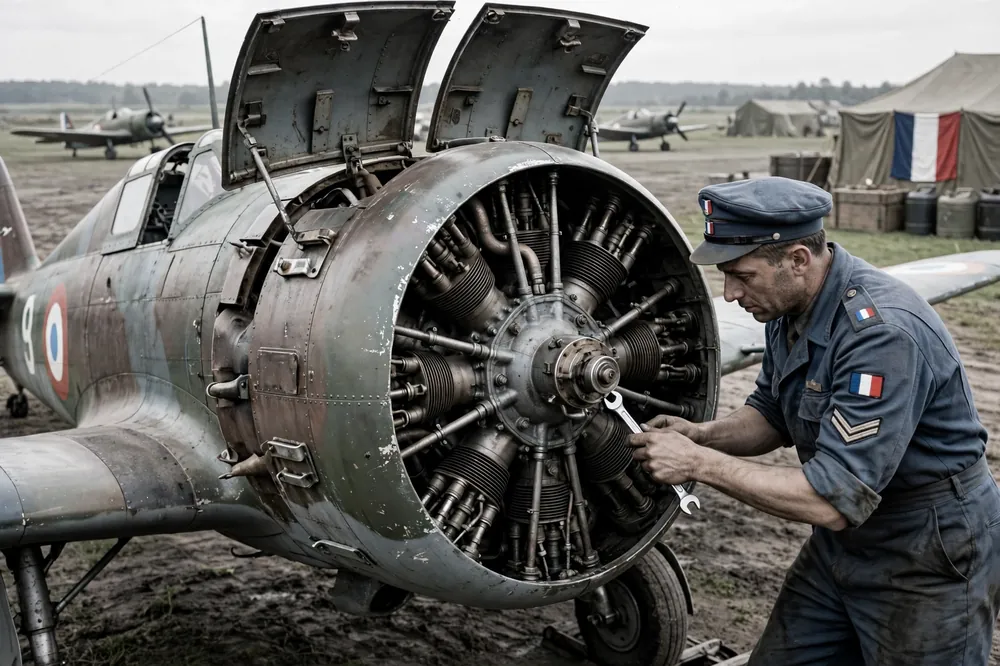
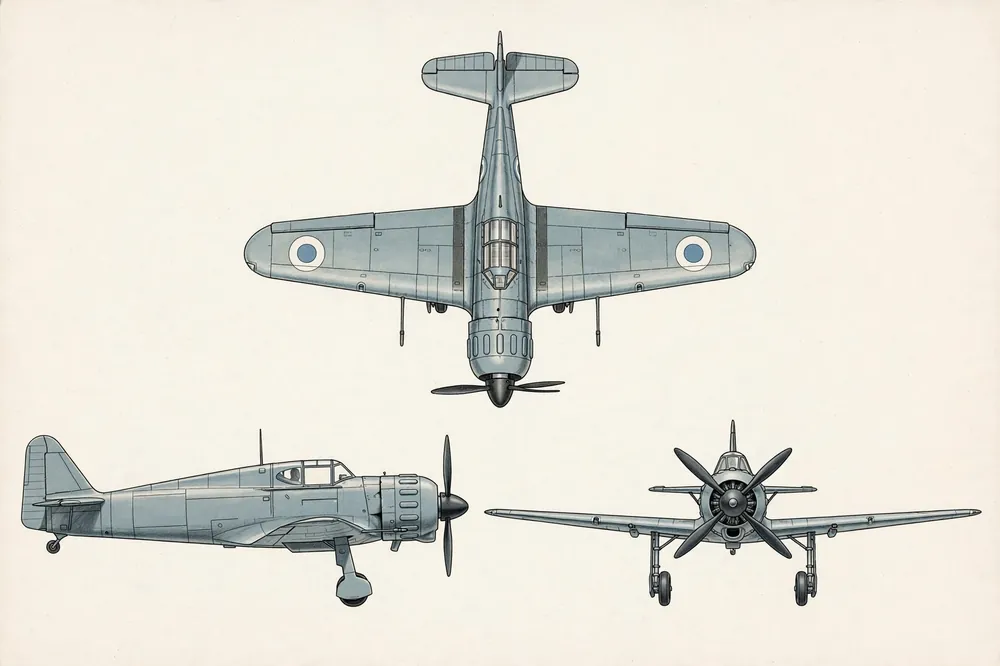
The MB.152 was a low-wing monoplane of all-metal construction, with a semi-monocoque fuselage and a wing of about 10.7 metres span. Its most distinctive feature was its engine: a Gnome-Rhône 14N radial, a fourteen-cylinder, twin-row engine of about 1,100 horsepower, housed in a long, tapered cowling that gave the aircraft a blunt, powerful appearance. The cockpit was set well back, with a good view, and the aircraft’s tail was conventional, with a large rudder that gave the pilot good control. The landing gear retracted inward into the wings, and the aircraft’s overall appearance was clean and modern, though its radial engine and its short, stubby fuselage gave it a less elegant look than the liquid-cooled fighters of the period.
Good handling, poor climb
The aircraft’s handling was good, and its pilots liked it: it was stable, responsive and pleasant to fly, with a good view and a comfortable cockpit. Its turning ability was excellent — the MB.152 could out-turn the Bf 109, and French pilots who flew it in 1940 reported that they could hold their own in a turning fight with any German fighter.
Its weakness was its speed and its climb: with only about 1,100 horsepower, the MB.152 was slower than the Bf 109E, which could reach 570 km/h, and it climbed worse, reaching 6,000 metres in about eight minutes, against the Bf 109’s six. In a war in which speed and climb were decisive, the MB.152 was at a disadvantage, and its pilots knew it.
Engine and the power problem
The MB.152’s engine, the Gnome-Rhône 14N, was a reliable engine, but it was not a powerful one by the standards of 1940, and it could not be developed to the power the aircraft needed without a complete redesign. French engineers proposed a more powerful engine — the Gnome-Rhône 14R, of about 1,600 horsepower — and a version of the MB.152 with this engine, the MB.157, was built and tested, but the war intervened before it could be produced in numbers.
The MB.152 therefore fought the Battle of France with the engine it was born with, and it paid the price in speed and climb, though its pilots, who loved the aircraft, insisted that its turning ability and its firepower compensated for its lack of speed.
5. Technical Description
Armament
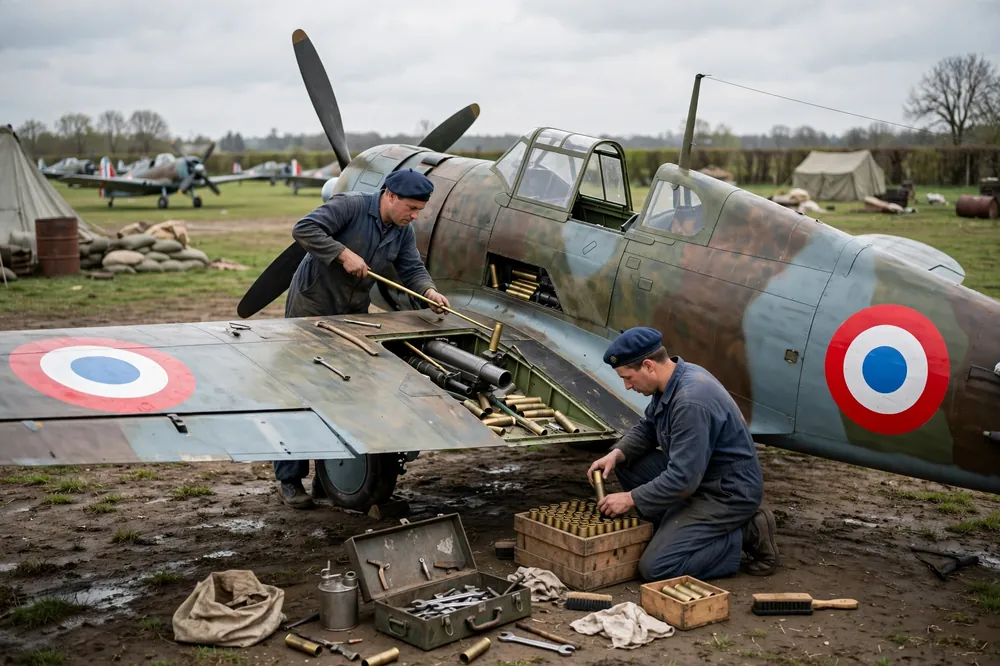
The MB.152’s armament was its strongest point. It carried two 20 mm Hispano-Suiza HS.404 cannon in the wings, with 60 rounds per gun, and two 7.5 mm MAC 1934 machine guns in the nose, with 500 rounds per gun. The HS.404 was a good weapon — it was the cannon that armed the French fighters and, in its British-built form, the Spitfire and the Hurricane — and its firepower was a match for anything the Germans fielded in 1940.
The Bf 109E, the MB.152’s principal opponent, carried two 20 mm cannon and two machine guns, a comparable armament, but the MB.152’s cannon, with their high rate of fire and their explosive shells, were a formidable weapon, and French pilots who used them reported that a short burst could destroy a German bomber or cripple a fighter.
Handling and pilot opinion
French pilots who flew the MB.152 liked it, and their opinion has been echoed by historians who have studied the type. The aircraft was, by all accounts, a pleasant machine to fly: its controls were light and well harmonised, its stall was gentle, and its turning ability was outstanding, even by the standards of French fighters, which were renowned for their manoeuvrability.
Its one vice was a tendency to flick into a spin if the pilot mishandled it at low speed, a trait that demanded respect but that experienced pilots learned to manage. The cockpit was comfortable, with a good view, and the aircraft’s engine, though not powerful by the standards of 1940, was reliable.
The MB.152’s pilots included some of France’s leading aces of 1940, and their testimony, and the respect of their German opponents, is the best evidence of the aircraft’s quality.
6. Variants
The MB.150 family included several versions, and the differences between them were matters of engine and detail rather than of role. The MB.150 was the original prototype version, of which only a handful were built, powered by the Gnome-Rhône 14N engine and differing from the production aircraft in wing and fuselage detail. The MB.151 was the first production version, powered by the Gnome-Rhône 14N-35 engine of about 920 horsepower, and about 140 were built. The MB.152 was the main production version, powered by the Gnome-Rhône 14N-25 engine of about 1,100 horsepower, with a revised cowling and a heavier armament, and about 482 were built.
Later versions included the MB.155, a development of the MB.152 with a more powerful Gnome-Rhône 14N-49 engine of about 1,100 horsepower and a revised tail, of which about 30 were built, and the MB.157, a high-performance version with the Gnome-Rhône 14R engine of about 1,600 horsepower, of which only one was built and tested. The MB.157’s performance was impressive — it was faster than the MB.152 by a wide margin — but the war intervened before it could be produced, and the type remained a prototype. In total, about 700 aircraft of the MB.150 family were built, making it one of the most numerous French fighter families of the war.
7. Combat Service
The Battle of France
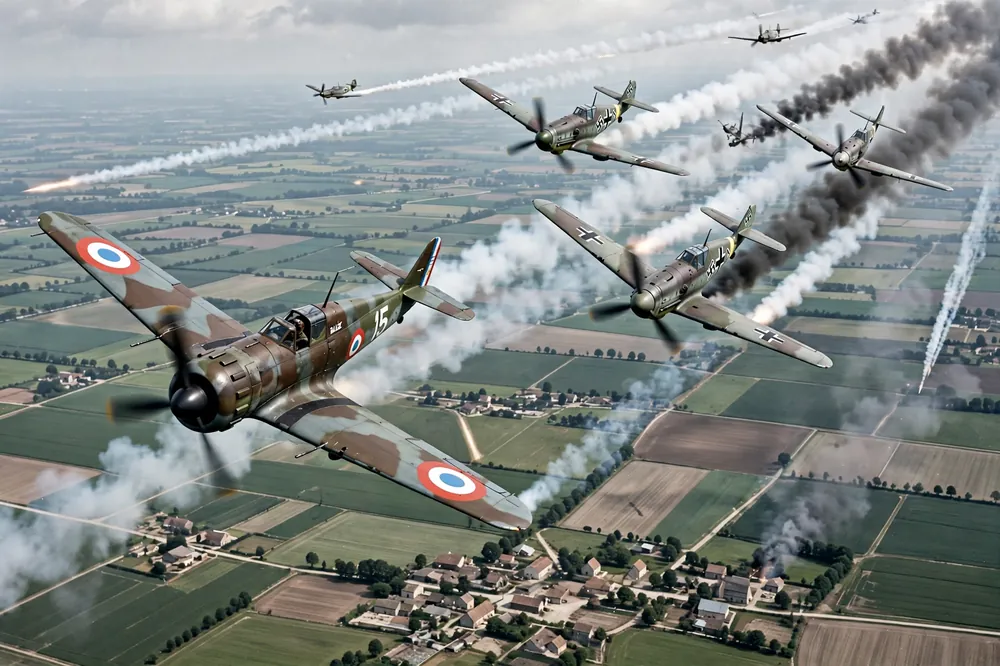
The MB.152 went to war on 10 May 1940, when Germany attacked France and the Low Countries. The French Air Force fielded the type in nine fighter groups, and its pilots flew against the Luftwaffe in the six weeks of the Battle of France.
The fighting was hard, and the MB.152 squadrons suffered heavy losses: they were outnumbered by the German fighters, they were flying an aircraft that was slower and climbed worse than the Bf 109, and they were, in many cases, incompletely trained.
But they fought well, and their claims of victories were substantial: French sources credit the MB.152 with more than 180 German aircraft destroyed, a figure that is disputed — air combat claims always are — but that reflects the type’s real contribution to the battle.
The MB.152’s most successful pilots, including Edmond Marin la Meslée, who claimed 16 victories, and Pierre Le Gloan, who claimed 18, became aces, and their names are remembered in French aviation history.
Sedan and the fall of France
The MB.152’s most famous combat was the fighting over the Sedan breakthrough, where French fighters, including the MB.152s, attacked the German bombers that were supporting the panzer advance, and were met by the Bf 109s that escorted them. The French pilots, flying in small formations against larger German formations, fought with courage and skill, but they were overwhelmed, and the German advance could not be stopped. When France fell in June 1940, the surviving MB.152s were divided between the air force of Vichy France and the Free French forces, and the type’s combat career in metropolitan France was over.
Vichy, Free France and export
After the fall of France, the Vichy air force kept the MB.152 in service in metropolitan France and in North Africa, where it flew in the defence of French territory against the British and, in November 1942, against the Americans in Operation Torch. The Vichy MB.152s were destroyed on the ground or shot down by the far superior American fighters, and the type’s service with Vichy ended with the Allied landings. The Free French operated a small number of MB.152s in training and in second-line roles, and the type’s combat career effectively ended with the fall of France, though a few aircraft continued to fly in North Africa until they were worn out.
The MB.152 was also exported to Greece and Romania before the war. Greece received a small number and used them in the Greco-Italian War of 1940–1941, where they attacked Italian troops in Albania. Romania received MB.152s and used them against the Soviet Union on the Eastern Front, where they served until they were worn out. In neither country did the MB.152 achieve a distinguished combat record, but its export history is a measure of the type’s reputation in the late 1930s, when it was regarded, on paper, as a modern and capable fighter.
8. Specifications
The figures below are for the MB.152. Sources differ slightly on weights and performance, and the aircraft’s figures varied with load and the condition of the individual machine.
| MB.152 | |
|---|---|
| Length | 9.10 m / 9,10 m |
| Wingspan | 10.71 m / 10,71 m |
| Height | 3.03 m / 3,03 m |
| Wing area | 17.3 m² / 17,3 m² |
| Empty weight | About 2,158 kg |
| Loaded weight | About 2,693 kg |
| Engine | 1 × Gnome-Rhône 14N-25, about 1,100 hp |
| Maximum speed | About 509 km/h |
| Cruising speed | About 400 km/h |
| Range | About 1,150 km |
| Service ceiling | About 10,000 m |
| Climb / Leo cao | About 8 minutes to 6,000 m |
| Armament | 2 × 20 mm HS.404; 2 × 7.5 mm MAC 1934 / 2 × HS.404 20 mm; 2 × MAC 1934 7,5 mm |
| Crew | 1 |
Against its contemporaries the MB.152 was a capable but outclassed fighter. The German Bf 109E, its principal opponent, was faster, climbed better and was flown by more experienced pilots, though the MB.152 could out-turn it and outgun it in a turning fight. The British Hurricane, which the French Air Force also operated in small numbers, was comparable in speed and climb, and the American Curtiss Hawk 75, which France bought in large numbers, was faster and better armed. The MB.152’s advantage lay in its turning ability and its cannon armament, and in the skill and courage of the pilots who flew it — qualities that made it, in the judgement of historians, a good fighter in a bad war.
9. Operators
France was the MB.152’s principal operator, and the type served in the Armée de l’Air, in the air force of Vichy France and in the Free French Air Forces. At the outbreak of war in 1939, the French Air Force operated the MB.152 in nine fighter groups, more than any other French fighter, and the type was the backbone of the French fighter force in May 1940. After the fall of France, the Vichy air force kept the type in service in metropolitan France and in North Africa, where it flew until the Allied landings of November 1942, and the Free French operated a small number in training and in second-line roles.
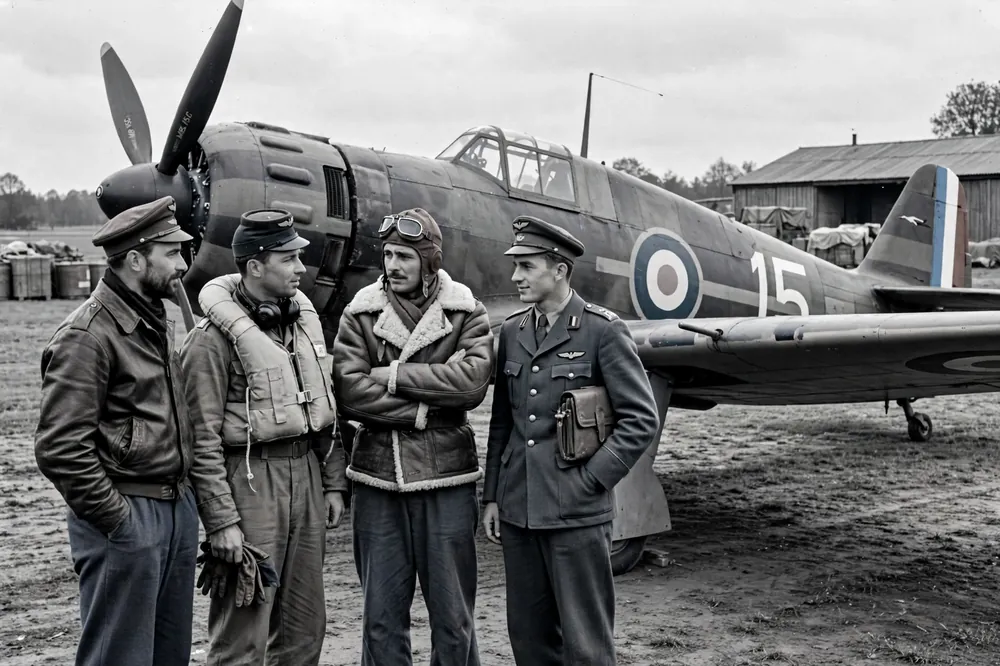
Other operators included Greece, which used the MB.152 in the Greco-Italian War of 1940–1941, and Romania, which used the type on the Eastern Front against the Soviet Union. No other major air force operated the MB.152, and the type’s service outside France was limited and, in most cases, brief.
10. Legacy and Assessment
The fighter of May 1940
The MB.152’s legacy is that of the fighter of May 1940. It was the aircraft that the French Air Force relied on when Germany attacked, and its pilots fought with a courage and a skill that have earned them a lasting place in French aviation history. The type’s most successful pilots — Marin la Meslée, Le Gloan and their comrades — are remembered as among the finest fighter pilots France produced, and their victories, claimed against the odds, are a testament to the aircraft they flew and to the men who flew it.
Historians judge the MB.152 as a good fighter in a bad war. It was not the best fighter of 1940 — the Bf 109 and the Spitfire were better — but it was a capable aircraft, well armed and well handled, and it was, in the judgement of the pilots who flew it, a fighter they could trust.
Its weakness was not its design but its numbers and its context: France had too few modern fighters, too few trained pilots and too little time, and the MB.152, however good, could not change that. The aircraft’s story is a reminder that a fighter is only as good as the air force that flies it, and that the French Air Force of 1940, for all the courage of its pilots, was not ready for the war it faced.
Survivors
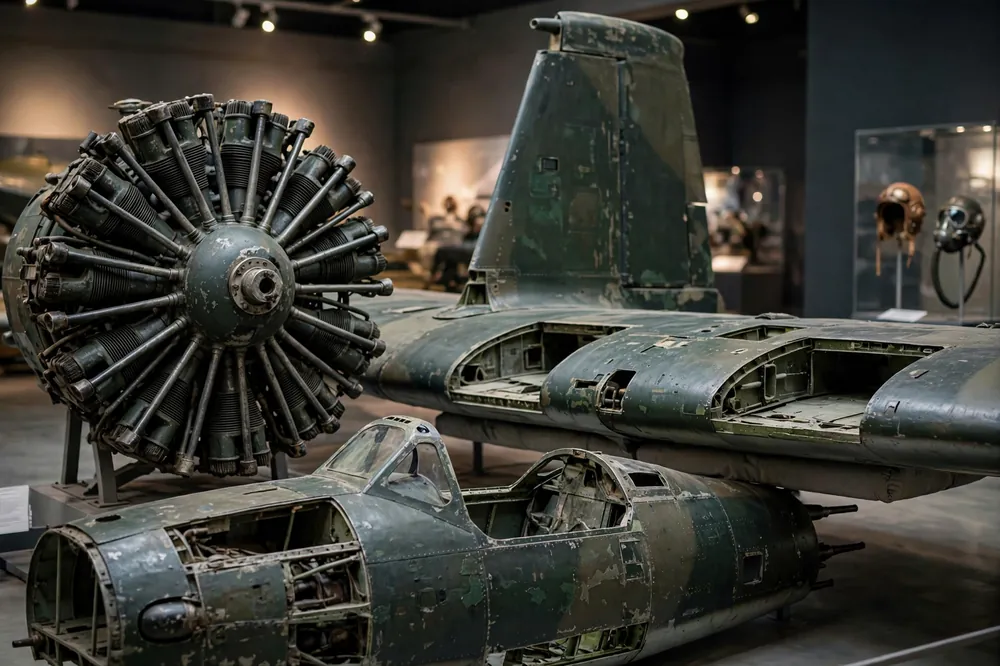
No complete MB.152 survives. Wreckage has been recovered, and parts are preserved in French museums, but no intact aircraft exists. The type was gradually withdrawn from service as spares ran out, with the last aircraft retired in 1942, and no airworthy example flies today. The type lives on in models, in photographs, and in the memories of the pilots who flew it in May and June 1940, and in the historical record, where it remains the symbol of the French fighter force of the Battle of France, a force that had good aircraft and brave pilots but too little time to learn to use them.
11. FAQ
What was the Bloch MB.152? / Bloch MB.152 là gì?
The Bloch MB.152 was a French single-seat fighter of the late 1930s, designed by Marcel Bloch and first flown on 15 December 1938. It was the most numerous French fighter of the Battle of France, with about 430 built, and it was, with the Dewoitine D.520, one of the two fighters on which the French Air Force depended in May and June 1940. It was a modern, all-metal, low-wing monoplane with retractable landing gear, powered by the Gnome-Rhône 14N radial of about 1,100 horsepower, and it was armed with two 20 mm cannon and two 7.5 mm machine guns, a heavy armament for a fighter of its generation.
How many MB.152s were built?
About 430 MB.152s were built in total, making the type the most numerous French fighter of the Battle of France, ahead of the Morane-Saulnier M.S.406, with about 1,000 built in total, and the Dewoitine D.520, with about 900 built, though both of those types had been in production for longer. The production run was spread over less than two years, from 1939 to the armistice of June 1940, and the aircraft’s late arrival — the first production aircraft were delivered only in late 1939 — meant that many squadrons were still converting to the type when the German attack came in May 1940, and their pilots had not yet mastered it.
How did the MB.152 perform in the Battle of France?
The MB.152 performed respectably but without distinction, claiming a modest number of victories at a heavy cost, and its squadrons suffered heavy losses to German fighters and anti-aircraft fire in May and June 1940. Its pilots found it fast in a dive and well armed, but its climb was mediocre, its controls were heavy, and its reliability was poor, with many aircraft grounded by engine trouble and by the shortage of spares.
Its most useful contribution was in the defence of Paris and of the French airfields, where its squadrons flew until the armistice, and its record, like that of the French Air Force as a whole, was one of courage in the face of a stronger and better-prepared enemy, rather than of success.
What was the MB.152’s armament?
The MB.152 carried two 20 mm Hispano-Suiza HS.404 cannon in the wings, with 60 rounds per gun, and two 7.5 mm MAC 1934 machine guns in the wings, with 500 rounds per gun, a heavy armament for a fighter of its generation.
The HS.404 was a good weapon — it was the cannon that armed the French fighters and, in its British-built form, the Spitfire and the Hurricane — and its firepower was a match for anything the Germans fielded in 1940.
The problem was not the guns but the aircraft that carried them: the MB.152’s climb and handling made it difficult to get into a firing position against a Bf 109, and it was often the Germans who fired first.
What happened to the MB.152 after the armistice?
After the armistice of June 1940, the surviving MB.152s were taken over by the Vichy French Air Force, which flew them in the defence of French North Africa and in the campaign in Syria in 1941, where they fought against British and Free French forces. A small number were used by the Germans for training, and the type was gradually withdrawn from service as spares ran out, with the last aircraft retired in 1942. The MB.152’s story after the armistice was, like that of the French Air Force itself, a divided one, with French pilots flying the same aircraft on opposite sides of a war that had torn their country in two.
Does any MB.152 survive today?
No complete MB.152 survives. Parts and wreckage are preserved in French museums, but no intact aircraft exists, and the type is known today from photographs, from models and from the records of the squadrons that flew it in the Battle of France. The MB.152’s story survives in the historical record as a reminder of the French Air Force of 1940 — a force that had good aircraft and brave pilots, but too few of either, and too little time to learn to use them before the German attack came, and as a reminder that an aircraft is judged by the war it fights, not by the war it was designed for.
12. Sources
- Wikipedia, “Bloch MB.150” — production figures (about 482 MB.152), first flight, performance data and service history.
- William Green, Warplanes of the Second World War, Volume One: Fighters (Macdonald, 1960) — the MB.152’s design, performance and armament.
- Dominique Breffort and André Jouineau, French Aircraft from 1939 to 1942, Volume 2 (Histoire & Collections, 2005) — the MB.150 family’s versions and production.
- Robert Jackson, The Air War in France 1939–1940 (various editions) — the MB.152 in the Battle of France.
- Patrick Facon, L’Armée de l’Air dans la tourmente (in French) — the French Air Force in 1940 and its fighter pilots.
- United States Strategic Bombing Survey, The French Aircraft Industry (1947) — production figures and factory data.
- Alistair Horne, To Lose a Battle: France 1940 (Macmillan, 1969) — the air war over France.
- Pierre Cortet, Bloch MB.150 (in French), Paris, 2003.