 WAR ATLAS MILITARY HISTORY MAGAZINE · WWI — WWII
B-29 Superfortress
1. B-29 Superfortress — At a Glance
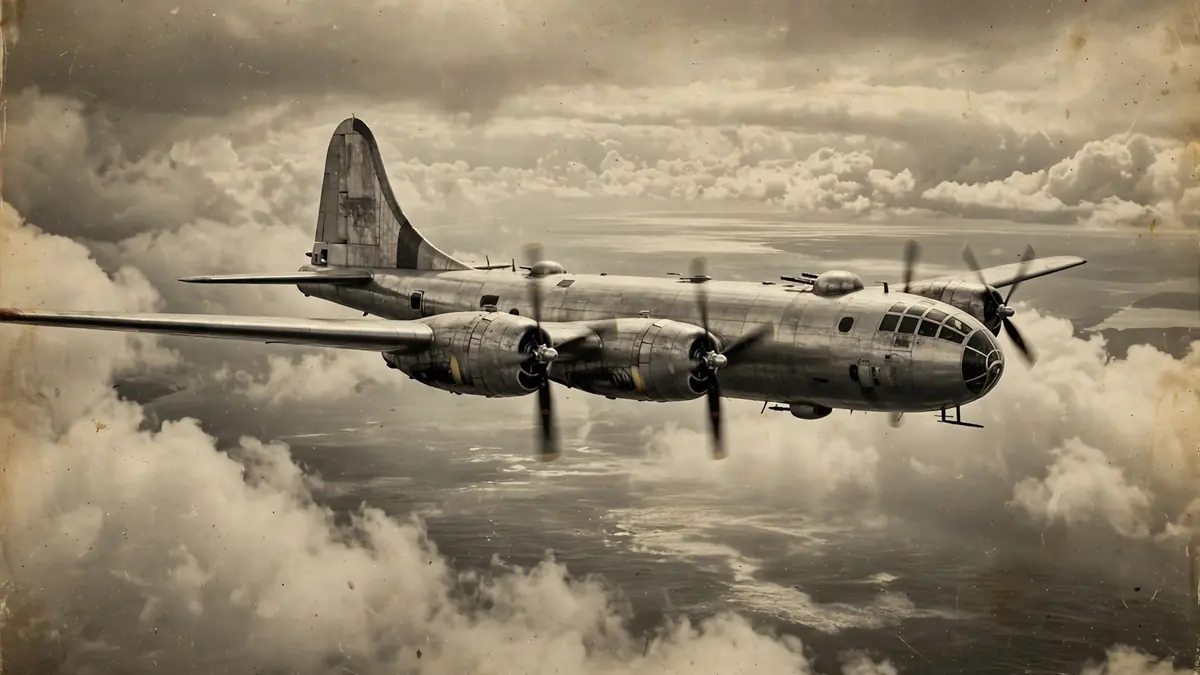
The Boeing B-29 Superfortress was the most advanced bomber of the Second World War, and the most expensive weapons programme of the war — more costly, at about three billion dollars, than the Manhattan Project that built the atomic bomb it would carry.
It was a pressurised, four-engined heavy bomber with a range of more than 3,000 miles, a bomb load of 20,000 pounds, and a defensive armament of remotely controlled gun turrets that was operated by a central fire-control system, a combination of technologies that no other bomber of the period possessed.
A total of 3,970 B-29s were built, and they fought only in the Pacific, where they firebombed the cities of Japan, destroyed the Japanese war economy, and, in August 1945, dropped the atomic bombs on Hiroshima and Nagasaki, bringing the Second World War to an end.
The B-29’s story is the story of American industrial power at its height: a bomber that was designed, built and deployed in the middle of a war, that overcame enormous technical problems, and that changed the course of history in a way that no other aircraft has done.
The B-29 was not just a bomber; it was the aircraft that ended a war, and that began the age of strategic air power and of the nuclear deterrent.
2. Key Facts
The table below summarises the B-29 Superfortress in its main wartime form, the B-29A, with the principal production figures.
| Type | Four-engined heavy bomber |
| Country of origin | United States (Boeing, Wichita; also Bell, Martin, North American) |
| Designer | Boeing (led by Edward Wells) |
| First flight | 21 September 1942 |
| Entered service | 1944 |
| Number built | 3,970 |
| Crew / Kíp lái | 11 (pilot, co-pilot, bombardier, navigator, flight engineer, radio operator, radar operator, 4 gunners) |
| Length | 99 ft (30.18 m) / 30,18 m |
| Wingspan | 141 ft (43 m) / 43 m |
| Height | 29 ft (8.8 m) / 8,8 m |
| Empty weight | About 74,500 lb (33,800 kg) |
| Max take-off weight | About 133,500 lb (60,600 kg) |
| Engines | 4 × Wright R-3350-23 Duplex-Cyclone radial, 2,200 hp each |
| Maximum speed | About 357 mph (575 km/h) |
| Range | About 3,250 miles (5,230 km) |
| Service ceiling | About 31,850 ft (9,700 m) |
| Bomb load | Up to 20,000 lb (9,100 kg) |
| Defensive armament | 12 × .50 in (12.7 mm) machine guns in remote turrets; 1 × 20 mm cannon in tail |
3. Background
3.1. The need for a very-long-range bomber
The B-29 was born from a strategic problem: the United States needed a bomber that could reach Japan from bases in the Pacific, and no existing American bomber could do it. The B-17 Flying Fortress and the B-24 Liberator, which were the mainstays of the American bombing campaign in Europe, had a range of about 2,000 miles, which was enough to reach Germany from Britain but which was not enough to reach Japan from any base that the United States held in 1940.
The Army Air Corps issued a specification in 1940 for a “very heavy” bomber with a range of more than 3,000 miles, a bomb load of 20,000 pounds and a cruising speed of more than 300 miles per hour, a specification that was far beyond anything that had been built before.
Boeing’s design, the Model 345, won the competition, and the aircraft was ordered into production in 1941, before the prototype had flown, in a gamble that the design would work and that the factories could build it. The gamble was enormous: the B-29 was the most complex aircraft ever built, and it required new factories, new engines and new technologies, all of which had to be developed in the middle of a war.
3.2. The most expensive programme of the war
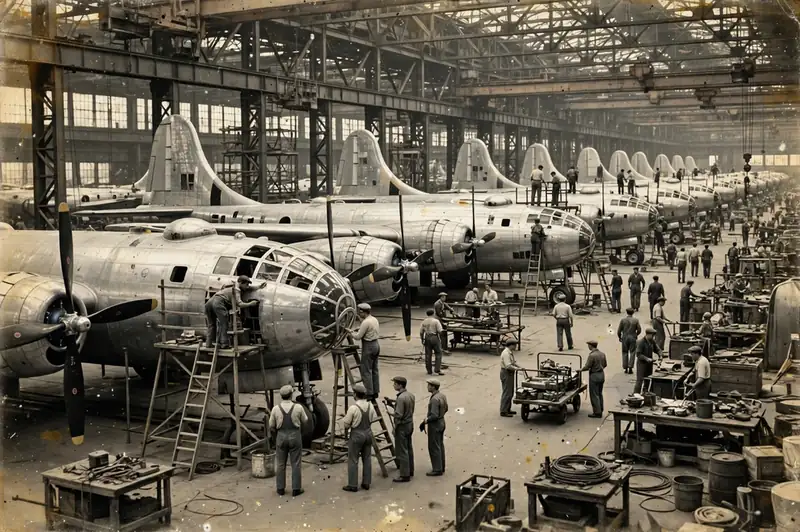
The B-29 programme cost about three billion dollars, more than the Manhattan Project, which cost about two billion dollars, and it was the most expensive weapons programme of the Second World War. The cost reflected the scale of the effort: Boeing built a new factory at Wichita, Kansas, and at Renton, Washington, and the Bell Aircraft Corporation, the Glenn L.
Martin Company and the North American Aviation Company all built B-29s under licence, in a production programme that employed hundreds of thousands of workers. The Wright R-3350 engine, which powered the B-29, was itself a major development programme, and it suffered from serious problems — overheating, fires and failures — that delayed the aircraft’s deployment and that killed test pilots and crews.
The B-29’s pressurised cabin, its remote-controlled gun turrets and its central fire-control system were all new technologies, and each of them required development, testing and production, all in the middle of a war. The B-29 programme was a measure of American industrial power: no other nation could have afforded to build such an aircraft, in such numbers, in such a short time, and the programme’s success was a testament to the scale of the American war effort.
3.3. The race to deploy
The B-29’s deployment was a race against time, because the United States needed the bomber in combat as soon as possible, and because the aircraft’s technical problems threatened to delay it indefinitely. The first B-29 flew on 21 September 1942, and the aircraft entered service in 1944, after a programme of modifications that addressed the engine’s overheating and the gun turrets’ unreliability.
The first B-29 combat mission was flown on 5 June 1944, when 98 B-29s based in India bombed Bangkok, and the first raid on Japan was flown on 15 June 1944, when 68 B-29s based in China bombed the steel works at Yawata.
The early raids were disappointing: the B-29s suffered from engine failures, the bombing was inaccurate, and the logistics of supplying the bases in China — over the Himalayas, by air — were a nightmare. The B-29’s deployment was nevertheless a strategic necessity, and the aircraft’s problems were solved in the field, by the crews and the mechanics who flew and maintained it, and by the commanders who learned how to use it.
The B-29’s race to deploy was won, but it was won at a cost, in lives and in aircraft, that reflected the urgency of the war.
4. Design and Development
4.1. The pressurised cabin
The B-29’s most revolutionary feature was its pressurised cabin, which was the first pressurised cabin ever fitted to a bomber and which allowed the crew to fly at high altitude in comfort, without oxygen masks and without the cold and the fatigue that had afflicted the crews of the B-17 and the B-24.
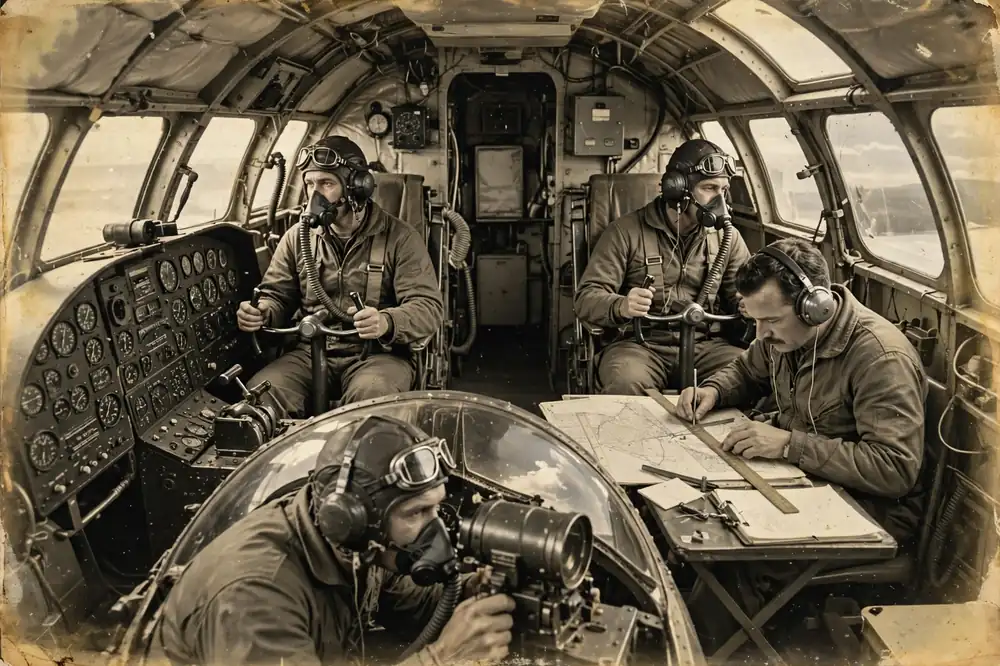
The cabin was divided into two pressurised compartments — the forward compartment, which housed the pilots, the bombardier, the navigator and the flight engineer, and the aft compartment, which housed the gunners and the radar operator — connected by a pressurised tunnel that ran over the bomb bays, through which the crew could crawl from one compartment to the other.
The pressurisation system maintained the cabin at an equivalent altitude of about 8,000 feet when the aircraft was flying at 30,000 feet, which reduced crew fatigue and improved the crew’s effectiveness, and which allowed the B-29 to fly higher than any Japanese fighter could reach.
The pressurised cabin was a major engineering achievement, and it required the development of new seals, new valves and new procedures, all of which had to be tested and perfected in the middle of a war. The pressurised cabin became the standard for all large aircraft that followed, from the airliners of the 1950s to the bombers of the Cold War, and it was the B-29’s most lasting contribution to aviation.
4.1.1. Flying at 30,000 feet
The B-29’s ability to fly at 30,000 feet was a consequence of its pressurised cabin and its powerful engines, and it was a quality that set it apart from every other bomber of the war. At 30,000 feet the B-29 was above the reach of most Japanese fighters, which could not climb to that altitude with a useful load, and above the reach of most Japanese anti-aircraft guns, which could not track a target at that height.
The high altitude also gave the B-29’s bombs a longer time to fall, which improved their accuracy in theory, though in practice the high-altitude bombing of Japan was inaccurate, because the jet stream — a high-altitude wind that was not understood in 1944 — blew the bombs off course.
The B-29’s high-altitude capability was nevertheless a major advantage, and it was one of the reasons the aircraft was so difficult to shoot down: in the whole campaign against Japan, only a small proportion of B-29s were lost to enemy action, and most of those were lost to accidents and to mechanical failures rather than to fighters or flak.
The B-29’s high-altitude flight was a preview of the jet age, when bombers would fly higher and faster than any fighter could reach, and it was a reminder that the B-29 was not just a bomber of the Second World War, but a bomber of the future.
4.2. The Wright R-3350 engine
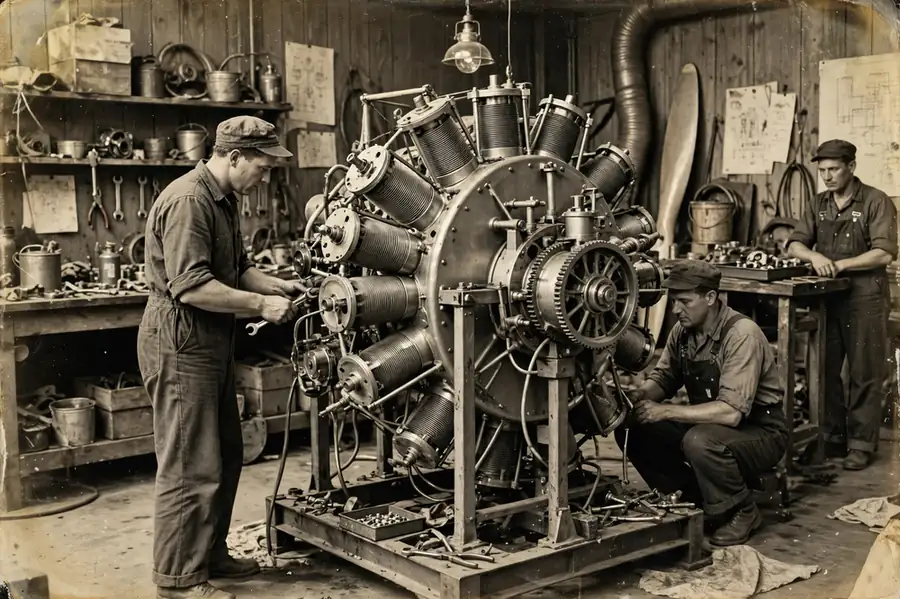
The B-29 was powered by four Wright R-3350 Duplex-Cyclone radial engines, each producing 2,200 horsepower, which were the most powerful aircraft engines in service in 1944 and which gave the B-29 a top speed of about 357 miles per hour and a range of more than 3,000 miles.
The R-3350 was an 18-cylinder, twin-row radial engine, and it was a masterpiece of engineering, but it was also the B-29’s greatest weakness: the engine was prone to overheating, particularly the rear cylinders, which were starved of cooling air, and it was prone to fires, which could destroy the aircraft in minutes.
The engine’s problems killed test pilots and crews, and they delayed the B-29’s deployment, and they were never fully solved during the war, though modifications — improved cooling, better baffles and a revised fuel system — reduced the risk. The R-3350’s problems were a consequence of the engine’s complexity and of the haste with which it had been developed, and they were a reminder that the B-29 was a gamble, a bomber that was ordered into production before its engines were ready.
The R-3350 nevertheless powered the B-29 through the war, and it was the engine that took the atomic bombs to Hiroshima and Nagasaki, a fact that is a testament to the men who flew and maintained it, as much as to the engine itself.
4.3. Remote-controlled gun turrets and central fire control
The B-29’s defensive armament was the most advanced of any bomber of the Second World War, and it was a system that was ahead of its time. The aircraft carried twelve .50-calibre machine guns in five turrets — two above the fuselage, two below it and one in the tail — and a 20 mm cannon in the tail, and the turrets were remotely controlled by the gunners, who sat in the pressurised cabin and aimed the guns through periscopic sights, using a central fire-control system that computed the firing solution and that allowed any gunner to control any turret.
The system was a major advance over the manned turrets of the B-17 and the B-24, in which the gunners sat in the turrets themselves, exposed to the cold and to enemy fire, and it allowed the B-29’s guns to be aimed more accurately and to be concentrated on a single target.
The system was complex, however, and it suffered from teething problems, particularly in the early B-29s, where the fire-control system’s analogue computers were unreliable and where the turrets’ motors were prone to failure. The system was improved in service, and by 1945 it was effective, though the B-29’s high altitude and its speed meant that it was rarely attacked by Japanese fighters, and its guns were seldom used in anger.
The remote-controlled turrets were a preview of the future, when bombers would be defended by missiles and by electronic systems rather than by guns, and they were the B-29’s most futuristic feature.
5. Technical Specifications
5.1. Dimensions and weight
The B-29 measured 99 feet in length, 141 feet in wingspan and 29 feet in height, and it weighed about 74,500 pounds empty and about 133,500 pounds at maximum take-off weight, which made it larger and heavier than the B-17, at about 65,000 pounds maximum take-off weight, and larger than any other American bomber of the war.
The B-29’s size was a consequence of its range and its bomb load: the aircraft had to carry enough fuel to fly more than 3,000 miles and enough bombs to destroy a target, and its structure had to be strong enough to carry that weight at high altitude.
The B-29’s wing was a high-aspect-ratio design, with a span of 141 feet and a relatively narrow chord, which gave the aircraft a good cruising efficiency and a long range, and which was one of the reasons the B-29 could fly further than any other bomber.
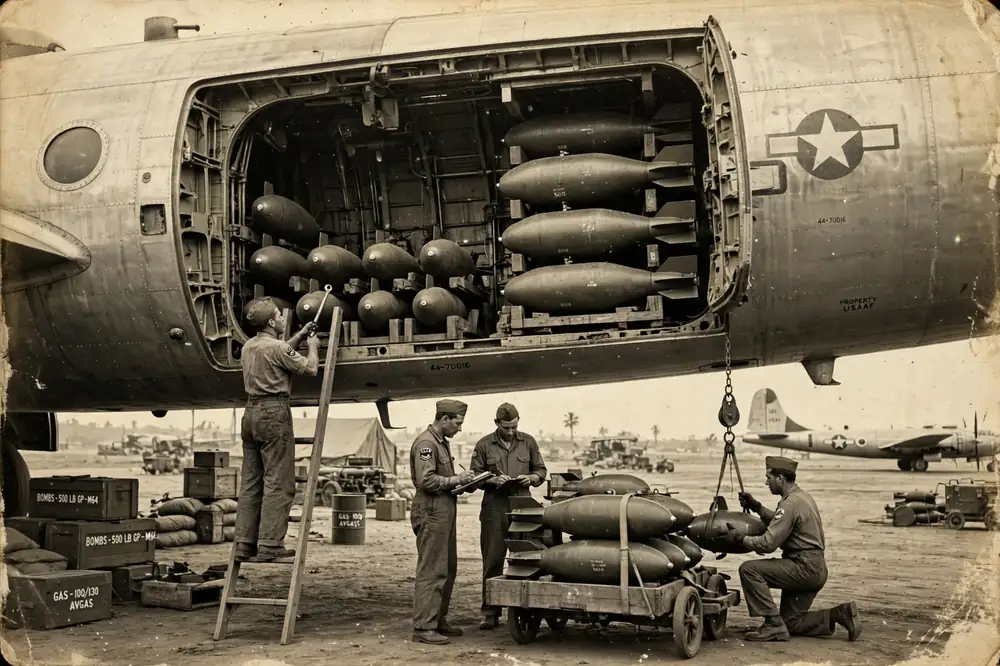
The aircraft’s bomb bays could carry up to 20,000 pounds of bombs, though the normal load for the long missions to Japan was about 10,000 to 12,000 pounds, because the aircraft had to carry a full fuel load to reach its target and return.
5.2. Performance: speed, range and ceiling
The B-29’s performance was the best of any bomber of the Second World War, and it remains impressive even by modern standards. The aircraft’s maximum speed was about 357 miles per hour, its cruising speed was about 220 miles per hour, and its range was about 3,250 miles with a normal bomb load, which allowed it to reach Japan from bases in the Mariana Islands and to return.
The B-29’s service ceiling was about 31,850 feet, which was higher than any Japanese fighter could reach with a useful load, and which made the aircraft difficult to intercept. The B-29’s performance was a consequence of its powerful engines, its efficient wing and its pressurised cabin, and it was the reason the aircraft could do what no other bomber could: fly from the Marianas to Japan, drop its bombs, and return, a round trip of more than 3,000 miles, in a single mission.
The B-29’s performance was nevertheless limited by its engines, which were prone to overheating and to failure, and by its weight, which meant that the aircraft’s take-off run was long and that it needed a long runway, a requirement that shaped the construction of the airfields in the Marianas.
| B-29 Superfortress / B-29 Superfortress | |
|---|---|
| Length | 99 ft (30.18 m) / 30,18 m |
| Wingspan | 141 ft (43.05 m) / 43,05 m |
| Height | 29 ft (8.79 m) / 8,79 m |
| Empty weight | About 74,500 lb (33,800 kg) |
| Max take-off weight | About 133,500 lb (60,600 kg) |
| Engines | 4 × Wright R-3350, 2,200 hp each |
| Max speed | About 357 mph (575 km/h) |
| Range | About 3,250 miles (5,230 km) |
| Ceiling | About 31,850 ft (9,700 m) |
| Bomb load | Up to 20,000 lb (9,100 kg) |
| Guns | 12 × .50 in; 1 × 20 mm cannon |
| Crew / Kíp lái | 11 |
5.3. Bomb load and defensive armament
The B-29’s bomb load was up to 20,000 pounds, though the normal load for the long missions to Japan was about 10,000 to 12,000 pounds, because the aircraft had to carry a full fuel load. The bombs were carried in two bomb bays, one forward and one aft of the wing, and they were released by the bombardier, who used the Norden bombsight, the standard American bombsight of the war, which was accurate in theory but which was less accurate in practice, particularly at high altitude and in the jet stream.
The B-29’s defensive armament consisted of twelve .50-calibre machine guns in five remotely controlled turrets, and a 20 mm cannon in the tail, which was intended to defend against fighters approaching from the rear. The guns were aimed by the gunners through periscopic sights, using the central fire-control system, which computed the firing solution and which allowed any gunner to control any turret.
The B-29’s guns were seldom used in anger, because the aircraft’s high altitude and its speed meant that it was rarely attacked, and the guns’ main value was as a deterrent, a reminder to Japanese pilots that the B-29 was not defenceless.
The B-29’s bomb load and its guns were the weapons that destroyed Japan’s cities, and they were the reason the aircraft is remembered as both a bomber and a weapon of mass destruction.
5.3.1. The Norden bombsight and the jet stream
The B-29’s bombing accuracy was limited by two factors: the Norden bombsight, which was accurate in theory but which required a stable, level bombing run and which was difficult to use at high altitude, and the jet stream, a high-altitude wind that blew at speeds of up to 200 miles per hour and that was not understood in 1944.
The jet stream blew the B-29’s bombs off course, and it made high-altitude precision bombing of Japan almost impossible, which was one of the reasons General Curtis LeMay ordered the B-29s to abandon high-altitude precision bombing and to switch to low-altitude incendiary bombing, which did not require the same accuracy.
The Norden bombsight was a marvel of engineering, and it was the most accurate bombsight in the world, but it was designed for the clear skies and the stable conditions of the European bombing campaign, not for the jet stream and the cloud cover of Japan.
The jet stream was discovered by the B-29 crews themselves, who noticed that their ground speed varied wildly at high altitude, and it was a discovery that changed the course of the bombing campaign and that led to the firebombing of Japan’s cities.
6. Variants
6.1. B-29, B-29A and B-29B
The B-29 was produced in three main variants, and the differences between them were minor, reflecting the aircraft’s rapid development and the different factories that built it. The B-29 was the original production model, built by Boeing at Wichita, and it was the version that first entered service in 1944.
The B-29A, built by Boeing at Renton, had a larger wing and a revised structure, and it was the most numerous variant, with about 1,100 built. The B-29B, built by Bell, was a simplified version with the gun turrets removed, except for the tail guns, which reduced the aircraft’s weight and increased its speed and its bomb load, and it was used for low-altitude incendiary bombing, where the gun turrets were less necessary.
The B-29B was the version that flew the firebombing raids on Japan’s cities, and it was the version that was most effective in the role for which the B-29 was ultimately used. The three variants together accounted for the 3,970 B-29s that were built, and they were the aircraft that destroyed Japan’s cities and that dropped the atomic bombs.
6.2. Post-war: the B-50, the KB-29 and the Soviet Tu-4
The B-29’s post-war career was long and varied, and it included service as a bomber, as a tanker and as the basis for the Soviet Union’s first strategic bomber. The B-50, which was a development of the B-29 with more powerful engines and a larger tail, served with the United States Air Force as a bomber and as a reconnaissance aircraft until the 1950s, and it was the aircraft that made the first non-stop flight around the world in 1949.
The KB-29 was a tanker version of the B-29, fitted with a refuelling boom, which was used to refuel the B-50 and the B-47, and which pioneered the air-to-air refuelling techniques that are still used today. The Soviet Tu-4 was a direct copy of the B-29, built by reverse-engineering three B-29s that had made emergency landings in the Soviet Union in 1944, and it was the Soviet Union’s first strategic bomber, serving until the 1960s.
The Tu-4’s existence was a measure of the B-29’s importance: the Soviet Union, which had no strategic bomber of its own, copied the B-29 bolt for bolt, and the Tu-4 became the basis of the Soviet strategic bomber force. The B-29’s post-war career was a testament to the soundness of its basic design, and to the influence that it had on the aviation of the Cold War.
7. Combat Service
7.1. China, India and the first raids
The B-29’s first combat service was from bases in India and China, where the aircraft flew the first raids on Japan in June 1944. The logistics of the China-based operations were a nightmare: the B-29s were based at Chengtu, in western China, and they were supplied by air, over the Himalayas, by transport aircraft that flew the “Hump” from India, carrying fuel, bombs and spare parts in quantities that were never sufficient.
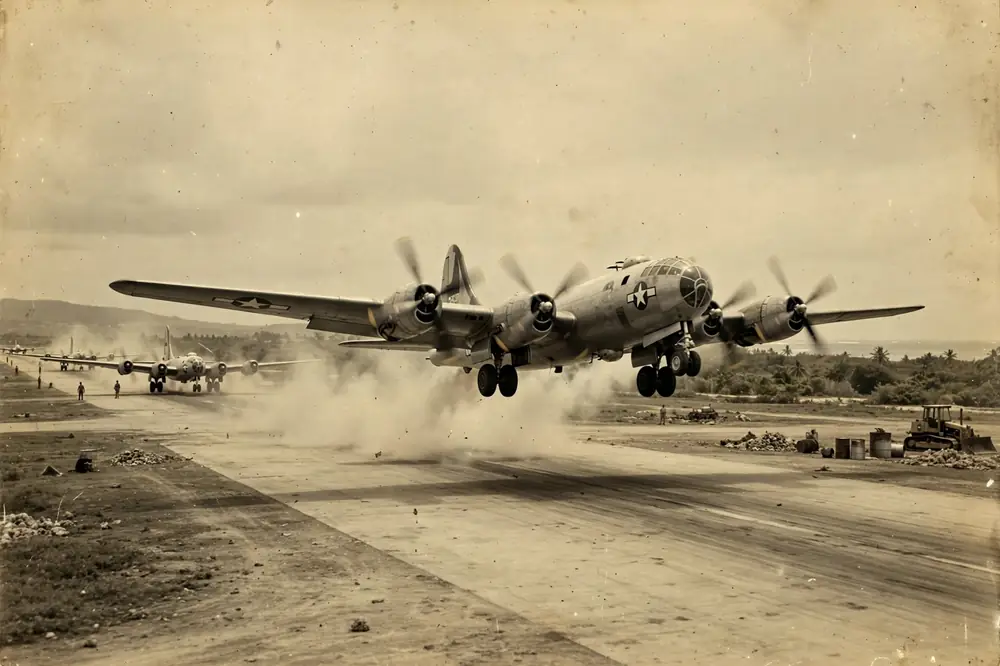
The first raid on Japan, on 15 June 1944, was flown by 68 B-29s against the steel works at Yawata, and it caused little damage, because the bombing was inaccurate and because the aircraft suffered from engine failures. The China-based operations continued through 1944, with raids on Japan, on Manchuria and on the Japanese-held ports of China, but they were limited by logistics, and they were abandoned in early 1945, when the B-29s were transferred to the Mariana Islands, where they could be supplied by sea.
The China-based operations were nevertheless important: they proved that the B-29 could reach Japan, they gave the crews combat experience, and they demonstrated the aircraft’s potential, even if they did not achieve the results that had been hoped for.
7.2. The Marianas and the firebombing of Japan
The B-29’s main campaign was flown from the Mariana Islands — Saipan, Tinian and Guam — which were captured in the summer of 1944 and which were close enough to Japan for the B-29 to reach its targets and return.
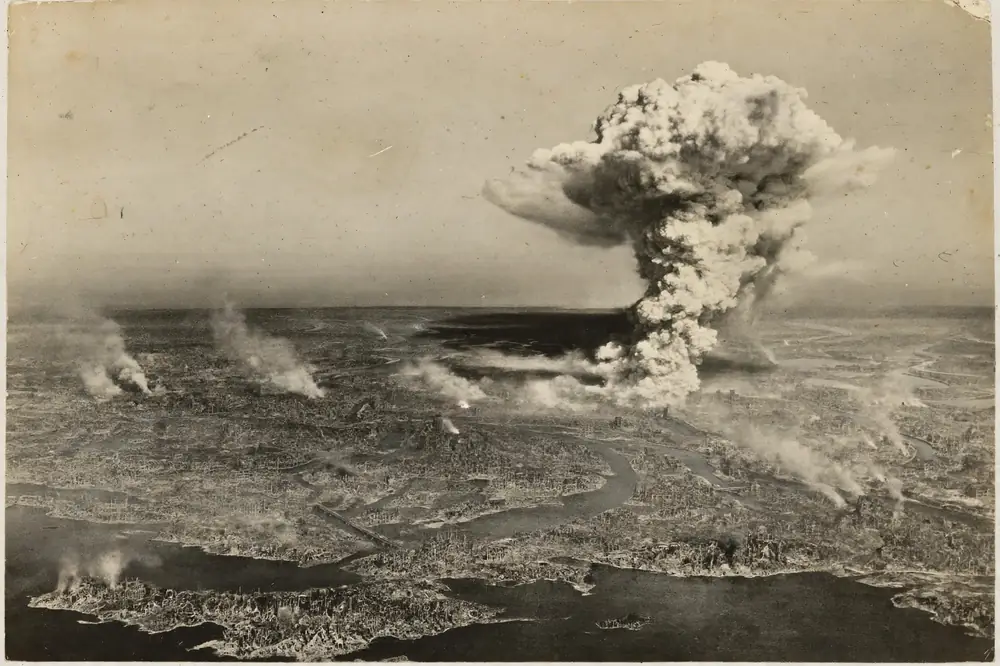
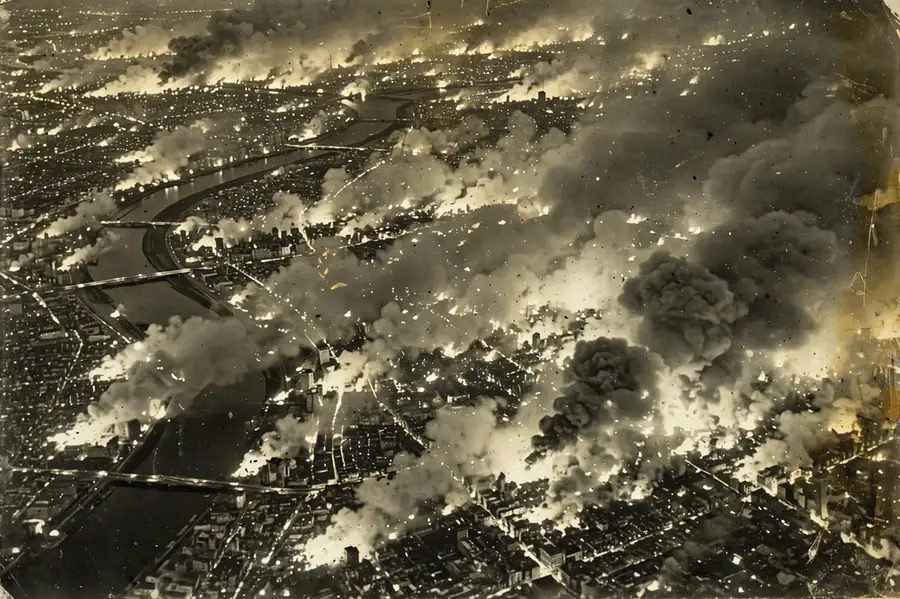
The first Mariana-based raid was flown on 28 October 1944, against the submarine pens at Truk, and the first raid on Tokyo was flown on 24 November 1944, by 111 B-29s. The early Mariana raids were flown at high altitude, using precision bombing, but they were inaccurate, because of the jet stream and the cloud cover, and in March 1945 General Curtis LeMay, the commander of the XXI Bomber Command, ordered a change of tactics: the B-29s would abandon high-altitude precision bombing and switch to low-altitude incendiary bombing, attacking Japan’s cities at night, at altitudes of 5,000 to 9,000 feet, with incendiary bombs that would start fires in the wooden cities.
The first firebombing raid, on Tokyo on the night of 9–10 March 1945, was the most destructive air raid in history: 279 B-29s dropped 1,665 tons of incendiaries, killing about 100,000 people and destroying 16 square miles of the city.
The firebombing campaign continued through the spring and summer of 1945, destroying 67 Japanese cities and killing hundreds of thousands of people, and it was the campaign that broke Japan’s war economy and that brought the country to the verge of surrender.
7.3. Hiroshima, Nagasaki and the end of the war
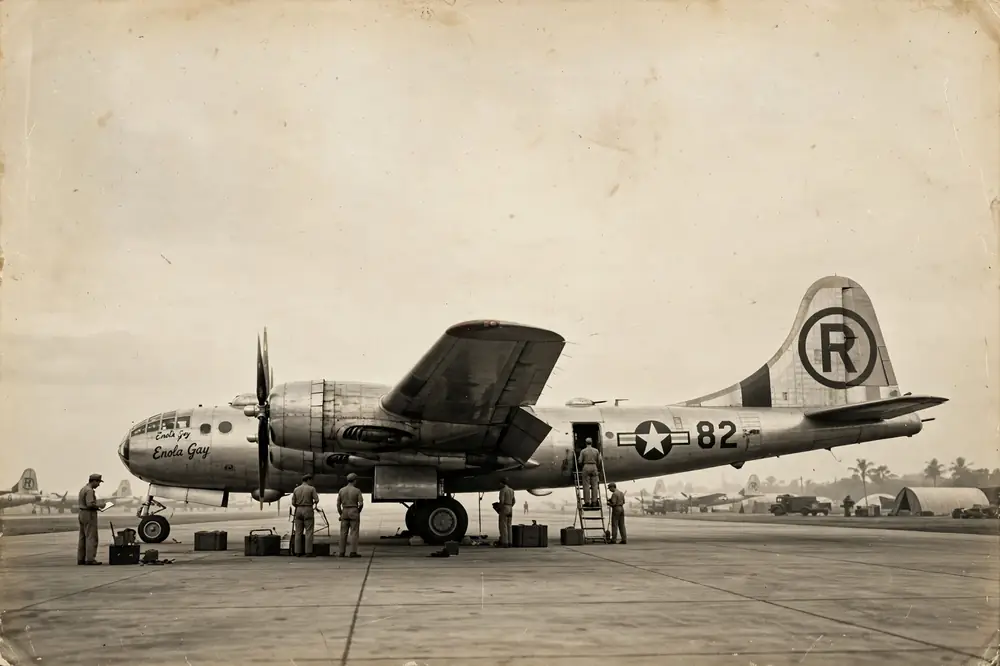
The B-29’s most famous missions were the atomic bombings of Hiroshima and Nagasaki in August 1945, which brought the Second World War to an end. On 6 August 1945, the B-29 Enola Gay, piloted by Colonel Paul Tibbets, dropped the uranium bomb “Little Boy” on Hiroshima, killing about 70,000 people immediately and about 70,000 more in the following months from radiation and injuries, and destroying about 70 per cent of the city.
On 9 August 1945, the B-29 Bockscar, piloted by Major Charles Sweeney, dropped the plutonium bomb “Fat Man” on Nagasaki, killing about 40,000 people immediately and about 30,000 more in the following months, and destroying about 40 per cent of the city.
The two bombings, together with the Soviet invasion of Manchuria on 8 August, convinced the Japanese government to surrender, and the surrender was announced on 15 August and formally signed on 2 September 1945, on the deck of the USS Missouri in Tokyo Bay. The B-29’s atomic missions were the most consequential flights in history, and they remain the only use of nuclear weapons in war.
The Enola Gay and the Bockscar became the most famous aircraft in the world, and their crews became the most famous airmen of the war, a fame that has been debated ever since, as historians and the public have argued about the necessity and the morality of the atomic bombings.
7.3.1. The Enola Gay and the Bockscar
The Enola Gay and the Bockscar were two of the 15 specially modified B-29s of the 509th Composite Group, which was formed to deliver the atomic bombs, and they were the only B-29s to drop nuclear weapons in war. The Enola Gay was named by Colonel Paul Tibbets after his mother, Enola Gay Tibbets, and the Bockscar was named after its usual pilot, Captain Frederick Bock, though it was flown on the Nagasaki mission by Major Charles Sweeney.
The two aircraft were modified to carry the atomic bombs, with their bomb bays enlarged, their gun turrets removed except for the tail guns, and their engines and their fuel systems improved, and they were flown by crews who had trained for months in secrecy, practising the bombing runs and the escape manoeuvres that would be needed after the bomb was dropped.
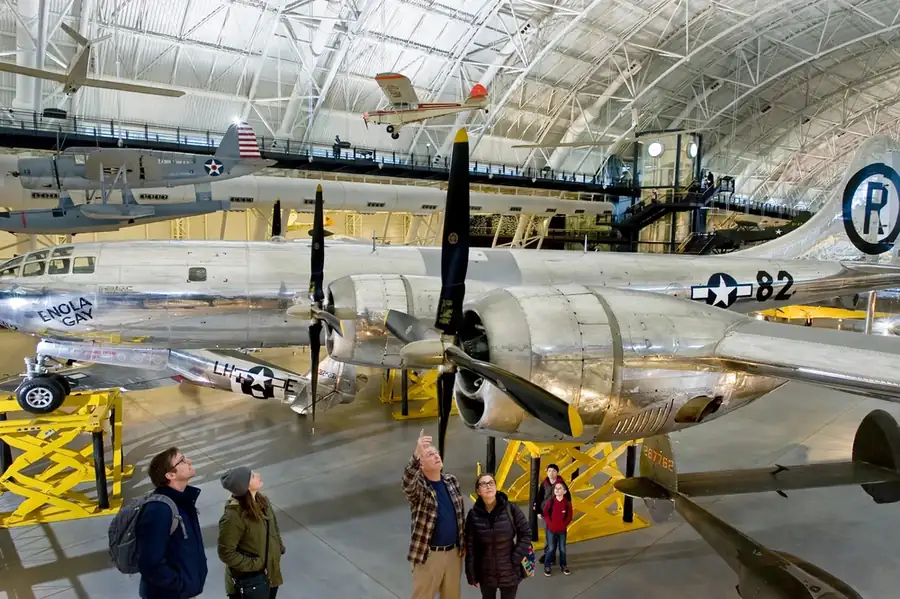
The Enola Gay is now displayed at the Smithsonian National Air and Space Museum’s Udvar-Hazy Center in Virginia, where it is one of the museum’s most visited exhibits, and the Bockscar is displayed at the National Museum of the United States Air Force in Dayton, Ohio.
The two aircraft are the most famous B-29s in the world, and they are the symbols of the atomic age, a reminder that the B-29 was not just a bomber, but the aircraft that changed the world.
8. Strengths and Weaknesses
8.1. Strengths
The B-29’s strengths were formidable, and they made it the most advanced bomber of the Second World War. Its range of more than 3,000 miles allowed it to reach Japan from the Marianas and to return, a capability that no other bomber possessed.
Its pressurised cabin allowed its crew to fly at high altitude in comfort, which reduced fatigue and improved effectiveness, and which allowed the aircraft to fly above the reach of Japanese fighters and guns. Its speed of 357 miles per hour made it faster than any Japanese fighter of the period, and its bomb load of 20,000 pounds was the largest of any American bomber.
Its remote-controlled gun turrets and its central fire-control system were the most advanced defensive armament of any bomber, and its radar and its navigation systems were the best in the world. The B-29’s strengths were the strengths of American industrial and scientific power at its height, and they were demonstrated in the campaign against Japan, where the aircraft destroyed 67 cities, broke the Japanese war economy and dropped the atomic bombs that ended the war.
8.2. Weaknesses
The B-29’s weaknesses were the price of its ambition, and they were serious. Its Wright R-3350 engines were prone to overheating and to fires, and they were the aircraft’s greatest weakness, killing test pilots and crews and delaying the aircraft’s deployment. Its complexity made it difficult to maintain, and it required a large ground crew and a long runway, which limited the bases from which it could operate.
Its high-altitude precision bombing was inaccurate, because of the jet stream and the cloud cover, and it was only when LeMay ordered the switch to low-altitude incendiary bombing that the B-29 became effective. Its cost was enormous — about three billion dollars, more than the Manhattan Project — and its production required the construction of new factories and the employment of hundreds of thousands of workers.
The B-29’s weaknesses were the weaknesses of a weapon that was ordered into production before it was ready, and they were a reminder that even the most advanced aircraft can be defeated by its own complexity. The B-29’s weaknesses did not prevent it from winning the war, but they were the reason its deployment was delayed and its early operations were disappointing.
9. Comparison with Rivals
9.1. Against the B-17 Flying Fortress
The B-29’s most important comparison is with the B-17 Flying Fortress, the bomber it was designed to replace, and the comparison shows how far bomber design had advanced in a few years. The B-17 had a range of about 2,000 miles, a bomb load of about 8,000 pounds, a top speed of about 287 miles per hour and a service ceiling of about 35,000 feet, and it carried a crew of 10 in an unpressurised cabin, with manned gun turrets.
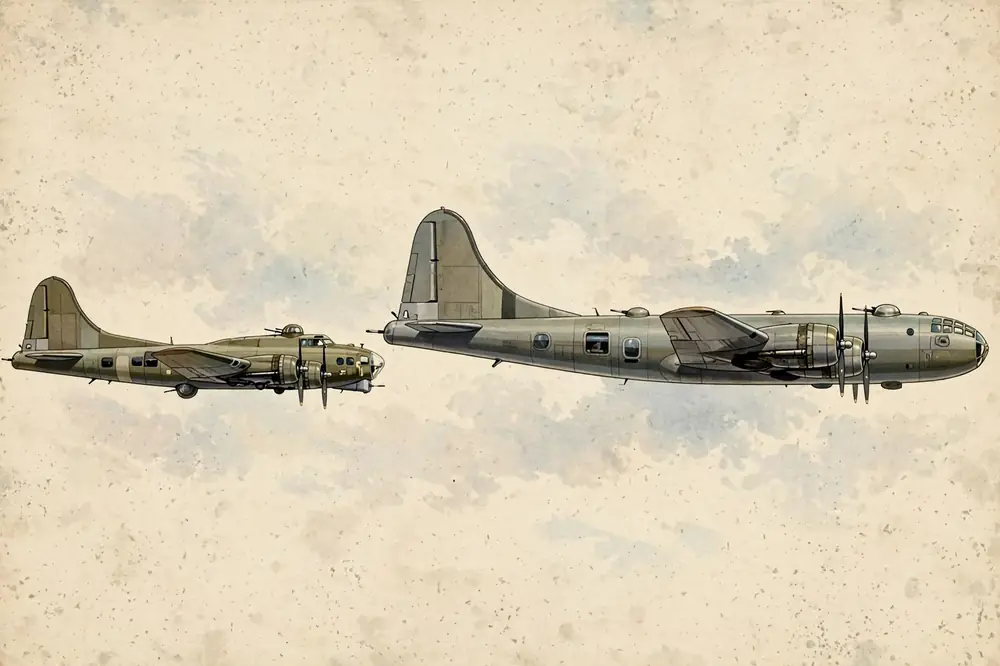
The B-29 had a range of about 3,250 miles, a bomb load of up to 20,000 pounds, a top speed of about 357 miles per hour and a service ceiling of about 31,850 feet, and it carried a crew of 11 in a pressurised cabin, with remotely controlled gun turrets.
The B-29 was faster, longer-ranged and heavier-loaded than the B-17, and it was more comfortable for its crew, but it was also more complex, more expensive and more difficult to maintain. The B-17 was the bomber of the European war, and the B-29 was the bomber of the Pacific war, and the comparison is a measure of how the strategic bombing campaign had changed: the B-17 was designed to bomb Germany from Britain, while the B-29 was designed to bomb Japan from the Marianas, a distance that the B-17 could never have covered.
9.2. Against the British Lancaster
Against the British Avro Lancaster, the B-29’s advantages were in range, in speed and in technology, while the Lancaster’s advantages were in bomb load and in simplicity. The Lancaster could carry a bomb load of up to 22,000 pounds, including the 12,000-pound Tallboy and the 22,000-pound Grand Slam bombs, which were larger than any bomb the B-29 carried, and it was simpler and cheaper to build than the B-29, with a production of more than 7,000 aircraft, against the B-29’s 3,970.
The Lancaster’s range, however, was about 2,500 miles, against the B-29’s 3,250 miles, and its top speed was about 282 miles per hour, against the B-29’s 357 miles per hour, and it had no pressurised cabin and no remote-controlled gun turrets.
The Lancaster was the bomber of the European night-bombing campaign, and the B-29 was the bomber of the Pacific campaign, and the two aircraft were designed for different wars: the Lancaster was designed to bomb Germany from Britain at night, while the B-29 was designed to bomb Japan from the Marianas by day and by night, at altitudes and ranges that the Lancaster could not match.
The comparison is a reminder that the B-29 was not just a bigger Lancaster, but a different kind of bomber, designed for a different kind of war.
10. Legacy
10.1. The atomic age and strategic air power
The B-29’s legacy is the atomic age and the age of strategic air power, and it is one of the most consequential legacies of any aircraft in history. The B-29 dropped the atomic bombs that ended the Second World War, and it demonstrated that a single aircraft could destroy a city, a capability that changed warfare forever and that led to the doctrine of nuclear deterrence, in which the threat of atomic attack was used to prevent war.
The B-29’s post-war service as a bomber, as a tanker and as the basis for the B-50 and the Soviet Tu-4 showed that the aircraft’s design was sound and that its technologies — the pressurised cabin, the remote-controlled turrets and the long range — became the standard for the bombers of the Cold War.
The B-29’s legacy is also the legacy of the men who flew it: the crews who flew the firebombing raids and the atomic missions, and who bore the moral burden of the destruction they caused, a burden that has been debated ever since.
The B-29’s legacy is paradoxical: an aircraft that was built to win a war became the symbol of a weapon that could end civilisation, and its story is a reminder that technology and morality are inseparable.
10.2. Survivors: Fifi, Doc and the museums
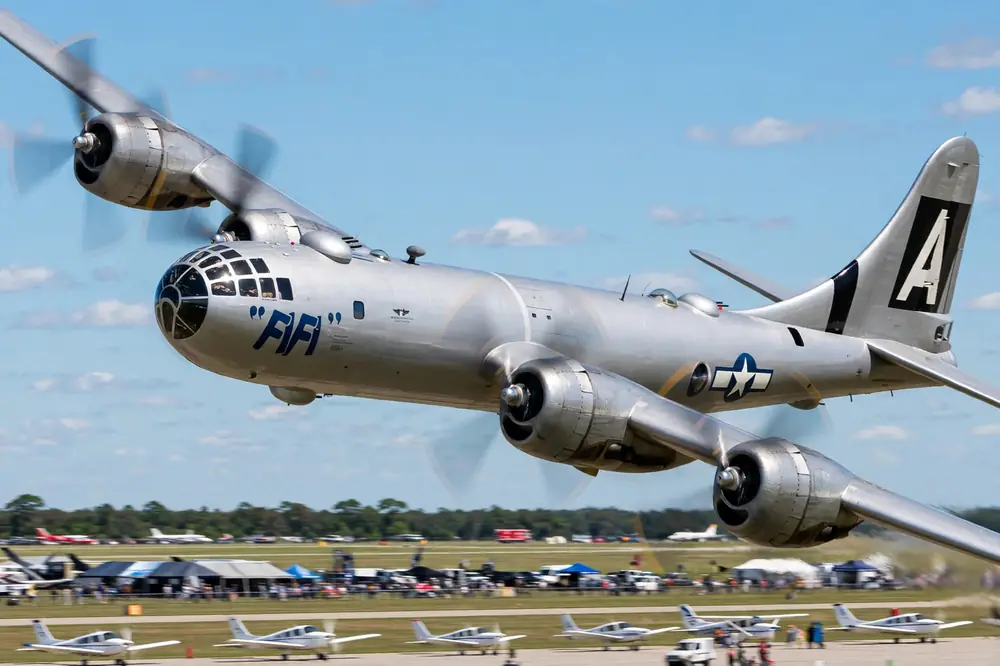
Only a small number of B-29s survive today, and two of them — Fifi and Doc — are maintained in flying condition, a remarkable achievement for aircraft that were built eighty years ago. Fifi, operated by the Commemorative Air Force, is the most famous flying B-29, and it tours the United States each year, giving the public the opportunity to see and to hear the aircraft that dropped the atomic bombs.
Doc, which was recovered from the Mojave Desert and restored over sixteen years by volunteers, joined Fifi in flying condition in 2016, and the two aircraft are the only B-29s in the world that still fly. Other B-29s are preserved in museums, including the Enola Gay at the Smithsonian’s Udvar-Hazy Center and the Bockscar at the National Museum of the United States Air Force, where they are among the most visited aircraft in their museums.
The B-29’s survival in flying condition is a testament to the dedication of the volunteers who maintain them, and to the public’s enduring interest in the aircraft that ended the Second World War. The B-29’s place in popular memory is secure: it appears in films, in books and in the collections of every major aviation museum, and for many people it remains the visual shorthand for the air war against Japan.
11. Frequently Asked Questions
How many B-29s were built?
A total of 3,970 B-29s were built between 1942 and 1946, by Boeing, Bell, Martin and North American. The programme cost about three billion dollars, more than the Manhattan Project.
Which B-29s dropped the atomic bombs?
The Enola Gay, piloted by Colonel Paul Tibbets, dropped the uranium bomb “Little Boy” on Hiroshima on 6 August 1945, and the Bockscar, piloted by Major Charles Sweeney, dropped the plutonium bomb “Fat Man” on Nagasaki on 9 August 1945.
How many people died in the Tokyo firebombing?
About 100,000 people were killed in the firebombing of Tokyo on the night of 9–10 March 1945, when 279 B-29s dropped 1,665 tons of incendiaries and destroyed 16 square miles of the city. It was the most destructive air raid in history.
Why was the B-29 so expensive?
Because it was the most complex aircraft ever built, with a pressurised cabin, remote-controlled gun turrets, a central fire-control system and four powerful new engines, all of which had to be developed in the middle of a war. The programme required new factories and employed hundreds of thousands of workers.
Are any B-29s still flying?
Yes. Two B-29s — Fifi, operated by the Commemorative Air Force, and Doc, restored by volunteers — are maintained in flying condition and tour the United States. They are the only B-29s in the world that still fly.
What was the B-29’s top speed and range?
The B-29’s maximum speed was about 357 miles per hour (575 km/h), and its range was about 3,250 miles (5,230 km) with a normal bomb load, which allowed it to reach Japan from the Mariana Islands and to return.
12. Sources
- Wikipedia, “Boeing B-29 Superfortress” — production total of 3,970, programme cost of about $3 billion, and service history.
- Smithsonian National Air and Space Museum, “Boeing B-29 Superfortress Enola Gay” — specifications, the atomic missions and the aircraft’s preservation.
- National Museum of the United States Air Force, “Boeing B-29 Superfortress Bockscar” — the Nagasaki mission and the aircraft’s history.
- Richard Rhodes, The Making of the Atomic Bomb (Simon & Schuster, 1986) — the Manhattan Project, the 509th Composite Group and the atomic bombings.
- Kenneth P. Werrell, Blankets of Fire: U.S. Bombers over Japan during World War II (Smithsonian Institution Press, 1996) — the firebombing campaign, LeMay and the Tokyo raid.
- Boeing, “B-29 Superfortress” historical records — design, the pressurised cabin, the R-3350 engine and production.
Further reading
- Robert F. Dorr, B-29 Superfortress Units of World War 2 (Osprey Combat Aircraft, 2002).
- Barrett Tillman, Whirlwind: The Air War Against Japan, 1942–1945 (Simon & Schuster, 2010).