 WAR ATLAS MILITARY HISTORY MAGAZINE · WWI — WWII
Blohm & Voss BV 138
1. Lead
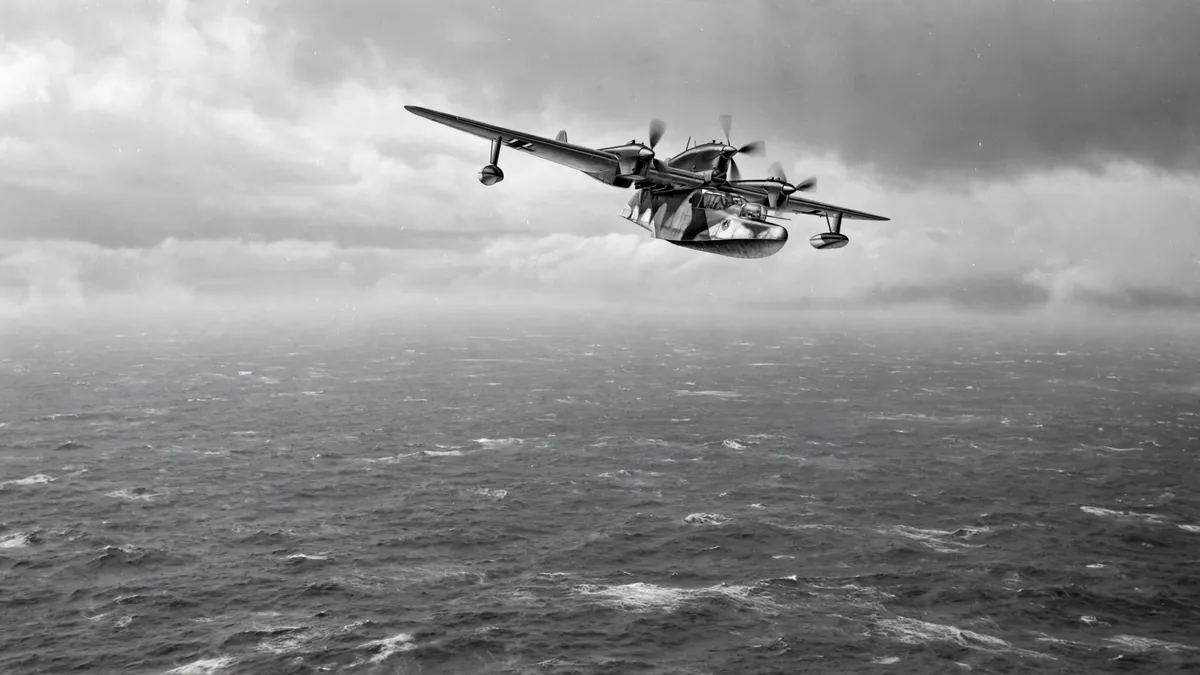
The Blohm & Voss BV 138 was the Luftwaffe’s principal long-range maritime reconnaissance flying boat of the Second World War, an aircraft whose ungainly appearance earned it the nickname “Fliegender Holzschuh” — the “Flying Clog”. With its short, stubby hull, its high-mounted wing carried on a strut, and its three engines — one of them mounted above the fuselage on the centreline — the BV 138 looked like no other aircraft in the sky, and its crews loved it and cursed it in equal measure.
It was slow, it was unglamorous, and it was, for the German Navy’s war at sea, indispensable: for four years it patrolled the Atlantic, the Norwegian Sea and the Arctic Ocean, searching for Allied convoys, reporting their positions to the U-boats waiting below, and rescuing downed airmen from the freezing water.
The BV 138 was the product of a German naval requirement of the mid-1930s for a long-range reconnaissance seaplane to replace the Dornier Do 18, and its design was the work of Richard Vogt, Blohm & Voss’s brilliant and unconventional chief designer.
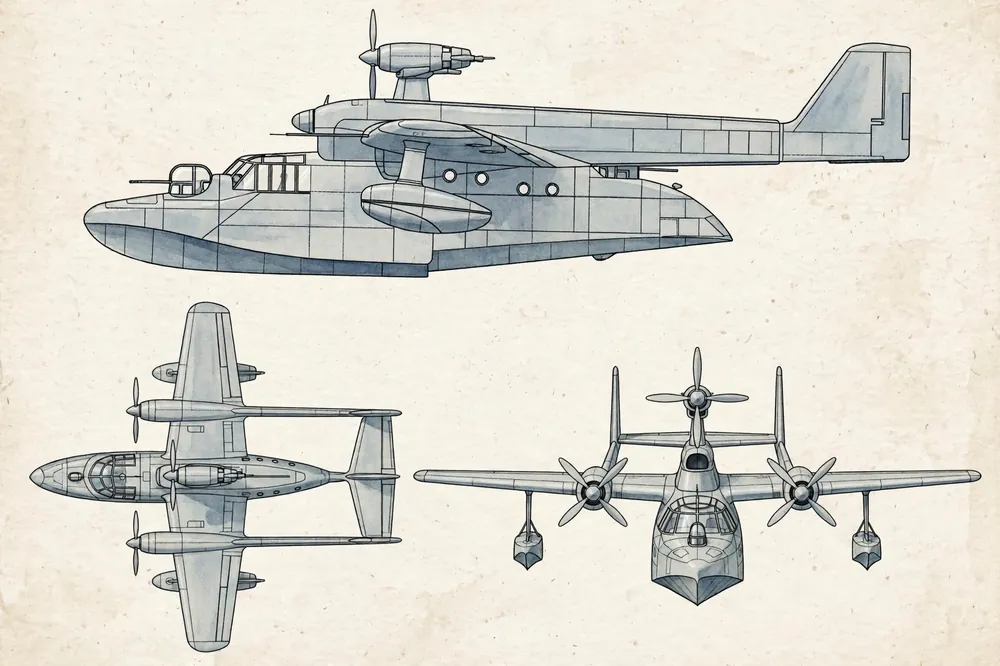
Vogt gave the aircraft a hull of unusual form, with a stepped planing bottom and a high wing that kept the engines clear of spray, and he arranged the three Junkers diesel engines in a line that put one on the centreline above the fuselage — an arrangement that looked strange but that gave the aircraft a good field of view and a measure of safety if one engine failed.
About 297 BV 138s were built, a small total, but the type served from the first weeks of the war to the last, and it was still flying reconnaissance and rescue missions in the final days of 1945.
2. Key Facts
| Role | Long-range maritime reconnaissance flying boat (also air-sea rescue and transport) |
| Manufacturer | Blohm & Voss, Hamburg, Germany |
| Designer | Richard Vogt / Richard Vogt |
| First flight | 15 July 1937 |
| Introduced | 1940 |
| Produced | About 297 |
| Crew | 5–6 (pilot, co-pilot, navigator, radio operator, gunners) |
| Engines | 3 × Junkers Jumo 205D diesel, about 880 hp each |
| Maximum speed | About 283 km/h (176 mph) |
| Range | About 4,000–5,000 km depending on load |
| Armament | 2 × 20 mm MG 151 cannon; 1 × 13 mm MG 131 machine gun; up to 300 kg of bombs or depth charges |
| Nickname | “Fliegender Holzschuh” (Flying Clog) |
| Main users | Luftwaffe (Germany) |
| Fate | Withdrawn 1945; none survives intact |
3. Origins and Requirements
A successor to the Do 18
In the mid-1930s the German Navy, which controlled naval aviation through the Luftwaffe’s maritime units, needed a new long-range reconnaissance flying boat. The aircraft then in service, the Dornier Do 18, was a sound machine but it was slow, short-ranged and lightly armed, and the Navy wanted something better: an aircraft that could stay in the air for a full day, that could operate from the rough waters of the North Sea and the Atlantic, and that could defend itself against the fighters it might meet.
In 1934 the Reich Air Ministry issued a specification for a three-engine flying boat, and two manufacturers responded: Dornier, with the Do 24, and Blohm & Voss, with the Ha 138 — the designation the BV 138 carried before the company changed its prefix from Ha to BV in 1938.
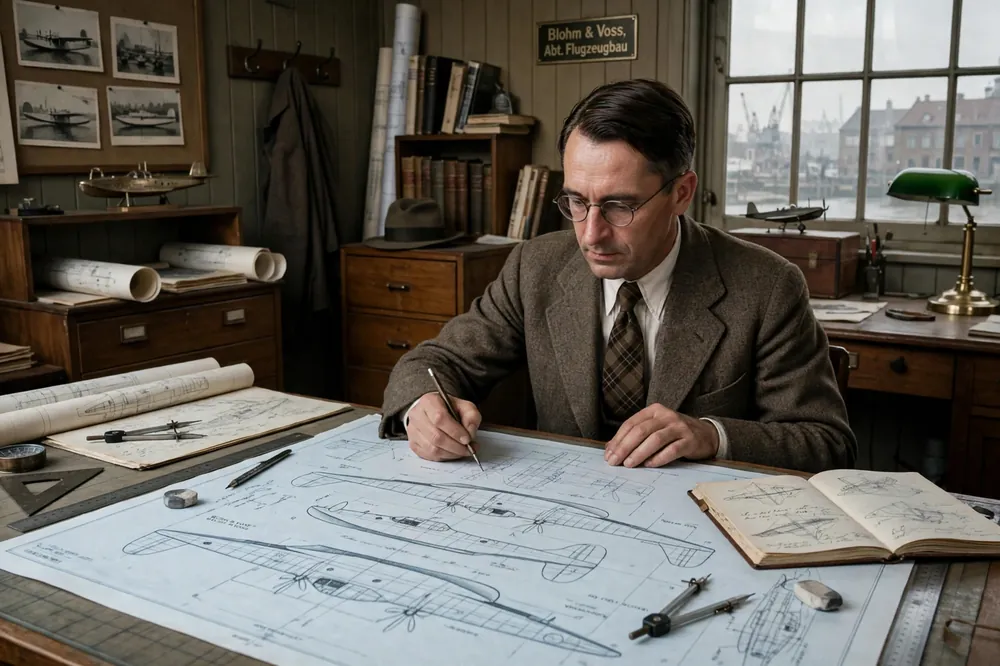
Richard Vogt’s design was the more radical of the two. Where Dornier offered a conventional three-engine flying boat, Vogt offered an aircraft with a short, deep hull and a wing mounted high on a pylon above the fuselage, with the third engine carried on the centreline above the wing.
The arrangement gave the crew an excellent view forward and downward — essential for a reconnaissance aircraft that had to spot ships on the sea — and it kept the propellers clear of spray on take-off and landing. The first prototype flew on 15 July 1937, and though it suffered from teething troubles, notably with its hull, which porpoised badly on the water, Vogt’s team worked through the problems, lengthening the hull and refining the step, until the aircraft was accepted for production.
Diesel engines and long endurance
The BV 138’s engines were Junkers Jumo 205 diesels, an unusual choice that reflected the aircraft’s mission. Diesel engines were heavier than petrol engines of the same power, but they burned less fuel, and for a reconnaissance aircraft that had to stay airborne for twelve hours or more, fuel economy mattered more than power.
The Jumo 205, a six-cylinder opposed-piston diesel of about 880 horsepower, gave the BV 138 a maximum speed of only about 283 km/h — slow by the standards of 1940 — but it gave it an endurance of up to eighteen hours and a range of 4,000 to 5,000 kilometres, figures that let the aircraft patrol far out into the Atlantic and return.
The diesels were also less prone to fire than petrol engines, a useful quality in an aircraft that might be shot at over the sea.
4. Design and Development
Hull, wing and the centre engine
The BV 138’s most striking feature was its layout. The hull was short and deep, with a two-step planing bottom that let the aircraft take off from rough water, and a high, glazed nose that gave the observer a clear view of the sea below.
Above the hull, on a tall pylon, sat the wing, a gull-wing structure of about 27 metres span that carried two of the three engines in nacelles at its leading edge. The third engine sat on the centreline above the wing, on a short pylon of its own, driving a pusher or tractor propeller depending on the version — in the production BV 138C it was a tractor propeller, mounted ahead of the wing’s trailing edge.
The tail was carried on a boom that rose from the rear of the hull, with twin fins and rudders that gave the pilot control at low speeds.
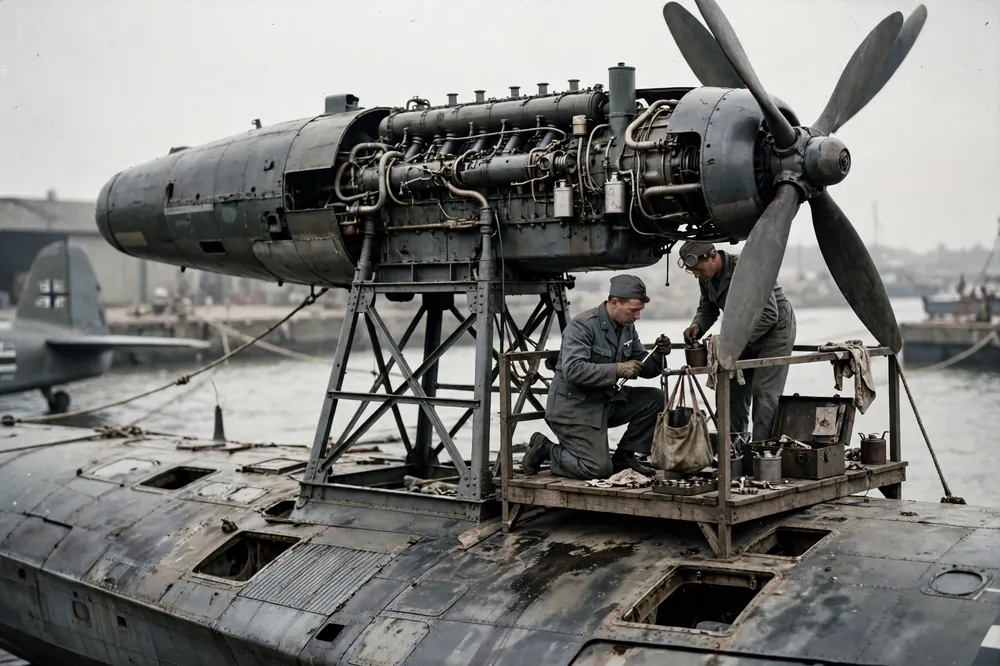
The arrangement looked awkward, and it was, but it worked. The high wing kept the engines and the propellers clear of spray, the centre engine gave the aircraft a measure of safety — it could fly on two engines, and in an emergency on one — and the glazed nose and the observation positions in the hull gave the crew the view they needed.
The aircraft’s handling on the water was good once the hull problems were solved, and in the air it was stable and forgiving, though slow and heavy on the controls. Its crews, who flew it for hours at a time over empty ocean, came to trust it, and the nickname “Flying Clog” was used with affection as much as with mockery.
Armament and equipment
The production BV 138C was armed with two 20 mm MG 151 cannon — one in a powered turret in the nose and one in a turret aft — and a 13 mm MG 131 machine gun in a dorsal position, a respectable armament for a reconnaissance aircraft and one that made it a dangerous opponent for the fighters that tried to intercept it.
It could also carry up to 300 kilograms of bombs or depth charges on racks under the wing, for attacks on submarines and small ships, though bombing was a secondary role. The aircraft carried a radio, a direction finder and, in later versions, a radar — the FuG 200 Hohentwiel search radar — that let it find convoys at night and in bad weather.
It also carried a dinghy and survival equipment for its crew, and in the air-sea rescue role it could land on the water to pick up survivors, a mission that saved many lives.
5. Technical Description
Flying the Flying Clog
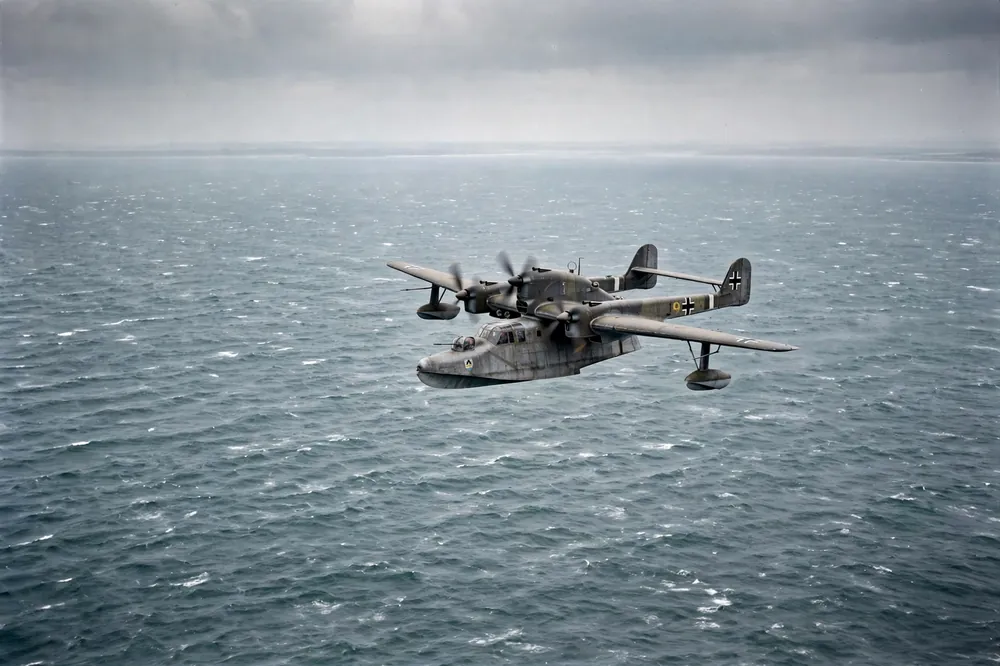
The BV 138 was not a fast aircraft, and it was not a nimble one, but it was a steady and reliable one, and for the work it had to do — hours of patient searching over empty ocean — steadiness mattered more than speed.
Its maximum speed of about 283 km/h was slower than almost every other aircraft in the Luftwaffe, and a fighter could catch it with ease, but its endurance was extraordinary: with a full fuel load it could stay in the air for up to eighteen hours, and its crew could search thousands of square kilometres of ocean in a single sortie.
The aircraft’s large wing and low wing loading gave it a gentle stall and a good low-speed handling, which mattered when it had to land on a rough sea to pick up survivors, and its three engines gave it a margin of safety that a twin-engine aircraft lacked.
Life on a long patrol
The crew of five or six worked in a cramped but well-organised space. The pilot and co-pilot sat side by side in the cockpit, with the navigator and the radio operator behind them, and the gunners manned the nose and rear turrets.
The observer’s position in the glazed nose was the heart of the aircraft’s mission: from there the observer scanned the sea with binoculars, looking for the smoke, the wake or the hull of a ship, and when a convoy was found, the radio operator transmitted its position, course and speed to the U-boat command ashore.
The crew carried food, water and warm clothing for the long patrols, and in the Arctic they flew in temperatures that froze the oil in the engines and iced the wings, conditions that tested both the men and the machine.
Radar and night operations
Later in the war the BV 138 was fitted with the FuG 200 Hohentwiel search radar, a large, nose-mounted set that let the aircraft find ships at night and in bad weather, when visual searching was impossible. The radar was a significant addition: it extended the aircraft’s usefulness into the hours of darkness, when the convoys were most vulnerable, and it let the BV 138 work in the poor weather of the North Atlantic and the Arctic, where cloud and fog were the rule rather than the exception.
The radar’s range was limited by the standards of later sets, and it could be detected by the Allies’ radar warning receivers, but it was a valuable tool, and the BV 138s that carried it were among the most effective reconnaissance aircraft the Germans fielded.
6. Variants
The BV 138 was built in three main production versions, with a number of prototypes and trials aircraft besides. The BV 138A, of which only a handful were built, was the first production version, powered by the Jumo 205C diesel engine of about 880 horsepower and armed with a single 20 mm cannon and machine guns.
The BV 138B, built in small numbers, introduced a stronger hull and minor changes to the armament and equipment. The BV 138C, the main production version with more than 200 built, was powered by the Jumo 205D diesel and armed with two 20 mm MG 151 cannon and a 13 mm MG 131 machine gun, with provision for the FuG 200 radar and for bombs or depth charges.
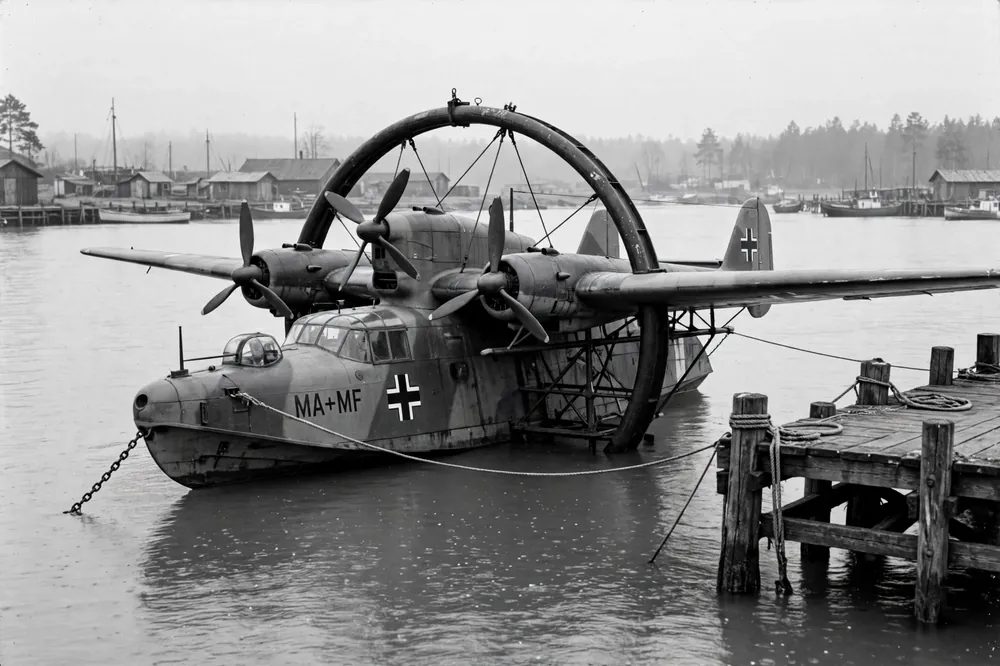
In addition to the production versions there were several specialised variants. The BV 138MS, nicknamed the “Mausi” or “Mousetrap”, was a minesweeping version fitted with a large magnetic ring — the Mausi ring — that was carried around the aircraft and used to detonate magnetic mines in the water below. About a dozen of these aircraft were built, and they served in the Baltic and the North Sea, sweeping mines ahead of German shipping. A few BV 138s were converted for transport and for air-sea rescue, and at least one was tested with different engines, though the Jumo diesel remained standard throughout the type’s career.
7. Combat Service
The Atlantic and the Arctic convoys
The BV 138 entered service in 1940 and was assigned to the Luftwaffe’s maritime reconnaissance units, the Fernaufklärungsgruppen, which operated from bases in Norway, France and Germany. Its principal task was to find Allied convoys and to report their positions to the U-boat command, and in this role it was a key part of the German war against Allied shipping.
A BV 138 on patrol could cover a vast area of ocean, and when it found a convoy it would shadow it, radioing its position at intervals, while the U-boats converged on the reported position. The aircraft’s long endurance let it stay with a convoy for hours, and its radar, when fitted, let it work at night.
Many of the U-boat successes of 1941 and 1942 — the “Happy Time”, when U-boats sank Allied shipping faster than the Allies could replace it — owed something to the BV 138s that found the convoys in the first place.
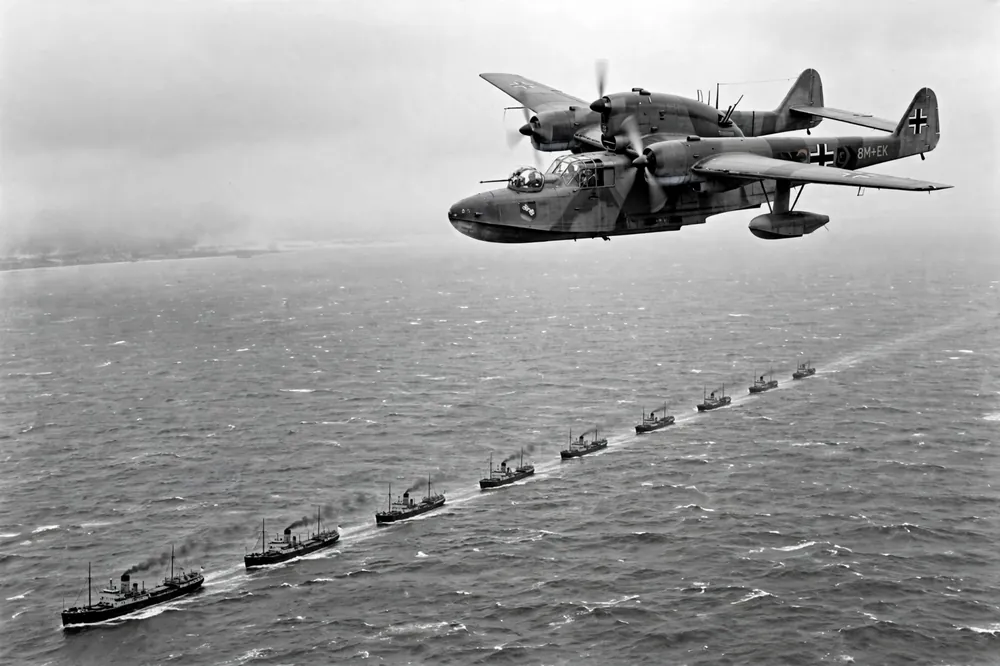
The Arctic convoys
The BV 138 was at its most important in the Arctic, where it patrolled the routes of the convoys that carried supplies from Britain and America to the Soviet Union through the ports of Murmansk and Archangel. The Arctic convoys — PQ-17, PQ-18 and their successors — were among the most dangerous naval operations of the war, sailed through waters where German aircraft, U-boats and surface ships waited, and the BV 138s of the units based in northern Norway were the eyes of the German forces that hunted them.
The aircraft’s ability to operate in the Arctic winter, in temperatures far below freezing and in near-permanent darkness, was a testament to its ruggedness and to the skill of its crews, who flew missions of twelve hours or more in conditions that would have defeated a lesser aircraft.
Air-sea rescue and the end of the war
The BV 138 also served in the air-sea rescue role, landing on the water to pick up the crews of aircraft that had been shot down over the sea. This was dangerous work — the aircraft was a large, slow target, and it was vulnerable to Allied fighters while it sat on the water — but it saved many lives, German and Allied alike, and the BV 138’s ability to land and take off from rough water made it well suited to the task.
In the last months of the war, as Germany collapsed, the BV 138s flew their final missions from bases in Norway and Denmark, patrolling a sea that was now wholly controlled by the Allies and searching for convoys that no longer needed to be found. The last BV 138s were destroyed on the ground or scuttled in May 1945, and none survives today.
8. Specifications
The figures below are for the BV 138C, the main production version. Sources differ slightly on weights, range and performance, and the aircraft’s figures varied with load and the condition of the individual machine.
| BV 138C | |
|---|---|
| Length | 19.85 m / 19,85 m |
| Wingspan | 27.00 m / 27,00 m |
| Height | 5.90 m / 5,90 m |
| Wing area | 111.0 m² / 111,0 m² |
| Empty weight | About 11,780 kg |
| Loaded weight | About 17,100 kg |
| Engines | 3 × Junkers Jumo 205D diesel, about 880 hp each |
| Maximum speed | About 283 km/h |
| Cruising speed | About 240 km/h |
| Range | About 4,000–5,000 km |
| Endurance | Up to about 18 hours |
| Service ceiling | About 5,000 m |
| Armament | 2 × 20 mm MG 151; 1 × 13 mm MG 131; up to 300 kg bombs or depth charges |
| Crew | 5–6 |
Against its contemporaries the BV 138 was slow but long-ranged. The British Short Sunderland, the Allies’ principal long-range flying boat, was faster and more heavily armed, and it carried a larger bomb load, but it was also a larger and more expensive aircraft. The American PBY Catalina, the most numerous flying boat of the war, was comparable in speed and range, and it was built in far greater numbers.
The BV 138’s advantage lay in its endurance and its ability to operate in the harsh conditions of the Arctic and the North Atlantic, and in the skill of the crews who flew it — qualities that made it, in the judgement of the German naval command, the best reconnaissance aircraft the Luftwaffe possessed for the war at sea.
9. Operators
The BV 138 was operated exclusively by the Luftwaffe, and within the Luftwaffe it served in the maritime reconnaissance units that worked for the German Navy. The principal units were the Fernaufklärungsgruppen 125 and 131, based in Norway, and the units based in France and in Germany itself, which patrolled the Atlantic and the North Sea.
The aircraft also served with the air-sea rescue units, the Seenotdienst, which operated from bases around the coasts of occupied Europe and rescued downed airmen from the sea. A few BV 138s were used by the German Navy’s own test units, and at least one was captured and tested by the Allies after the war, but the type was never operated by any other air force in combat.
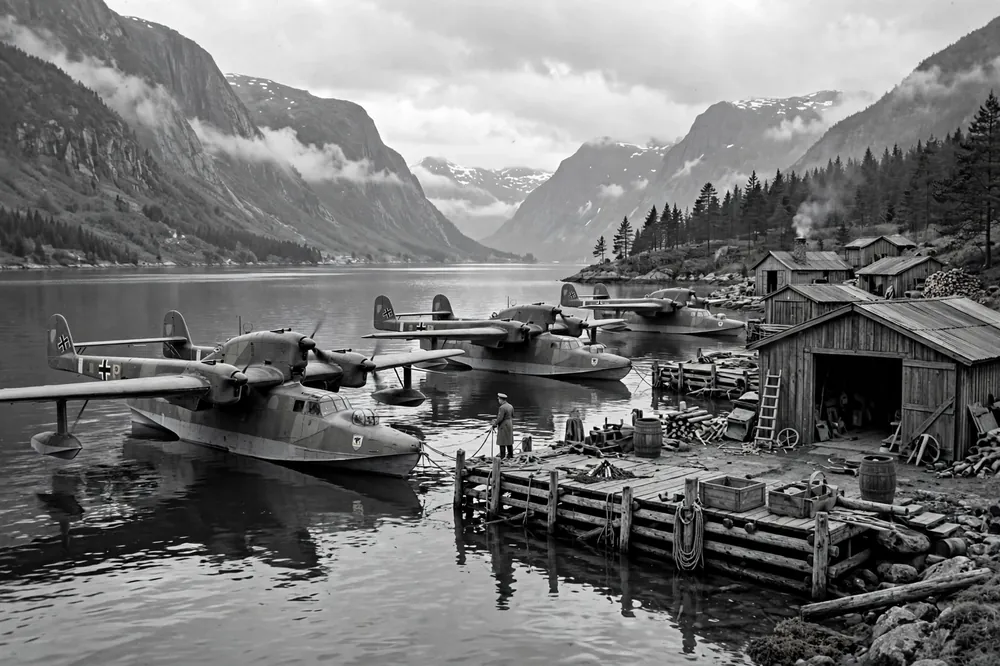
10. Legacy and Assessment
The Flying Clog in history
The BV 138 is remembered, when it is remembered at all, for its appearance. The “Flying Clog” is one of the strangest-looking aircraft of the Second World War, and its shape — the short hull, the high wing, the centre engine on its pylon — has made it a favourite of modellers and of historians of aircraft design, who see in it the hand of Richard Vogt, one of the most inventive designers of the period. Vogt went on to design the BV 141, an even stranger aircraft with an asymmetric layout, and the BV 238, the largest flying boat built during the war, and the BV 138 was the first of his designs to see service in numbers.
As a weapon, the BV 138’s importance lay in its role as the eyes of the U-boat fleet. It did not sink ships itself — its bomb load was small, and it was not designed for attack — but it found the ships that the U-boats sank, and in the Battle of the Atlantic, finding the convoy was half the battle.
The aircraft’s long endurance, its ability to operate in bad weather and its radar, when fitted, made it a valuable reconnaissance platform, and the German naval command rated it highly. Its weakness was its slowness and its vulnerability to fighters: a BV 138 caught by an Allied fighter had little chance, and many were shot down over the Atlantic and the Arctic.
But the crews who flew it, in conditions of cold, darkness and loneliness that few other airmen experienced, regarded it with affection, and the “Flying Clog” remains, in the judgement of historians, one of the most distinctive and most underrated aircraft of the war at sea.
Survivors
No complete BV 138 survives. Wreckage has been recovered from Norwegian waters, and parts — including a hull section — are displayed in museums in Norway and Germany, but no intact aircraft exists. The last BV 138s were destroyed on the ground or scuttled in May 1945, in the final days of the war, and no airworthy example flies today. The type lives on in models, in photographs, and in the memories of the men who flew it, and in the historical record of the Battle of the Atlantic, where its long, lonely patrols were a small but real part of the German war at sea.
11. FAQ
What was the Blohm & Voss BV 138? / Blohm & Voss BV 138 là gì?
The Blohm & Voss BV 138 was a German long-range maritime reconnaissance flying boat of the Second World War, designed by Richard Vogt and first flown on 15 July 1937. It was a three-engine aircraft with a crew of five or six, a range of 4,000 to 5,000 kilometres and an endurance of up to eighteen hours, used to find Allied convoys for the U-boats and to patrol the Atlantic, the Norwegian Sea and the Arctic Ocean.
Its ungainly appearance — a short, stubby hull, a high wing on a pylon and a third engine mounted above the fuselage — earned it the nickname “Fliegender Holzschuh”, the Flying Clog, and it served from 1940 to the last days of the war in 1945.
Why was it called the “Flying Clog”?
Its German nickname was “Fliegender Holzschuh”, the Flying Clog, because of its short, stubby hull and its ungainly appearance, which reminded its crews of a wooden clog, the traditional footwear of northern Germany and the Netherlands. The name was used by its own crews, with affection as much as with mockery, and it has stuck ever since, becoming the aircraft’s best-known name in English as well as in German.
The nickname captures something real about the BV 138: it was not a beautiful aircraft, and it was not a fast one, but it was a hard-working and reliable machine, and the men who flew it for hours at a time over empty ocean came to trust it and to use the name with pride.
How many BV 138s were built?
About 297 BV 138s were built in total, most of them the BV 138C version with the Jumo 205D diesel engine and the armament of two 20 mm cannon and a 13 mm machine gun. This was a small production run, reflecting the aircraft’s specialised role and the limited capacity of the Blohm & Voss factory at Hamburg, which was also building other aircraft, including the BV 141 and the BV 238. The production run was spread over the whole war, from the first aircraft in 1940 to the last in 1944, and the type was never built in the numbers that its importance to the U-boat war might have justified.
What was the BV 138’s role in the Battle of the Atlantic?
The BV 138 patrolled the Atlantic and the Arctic, searching for Allied convoys and reporting their positions to the U-boat command ashore, and in this role it was a key part of the German war against Allied shipping. When it found a convoy it shadowed it, radioing its position, course and speed at intervals, while the U-boats converged on the reported position, and its long endurance let it stay with a convoy for hours, with its radar, when fitted, letting it work at night.
Finding the convoy was half the battle, and many of the U-boat successes of 1941 and 1942 owed something to the BV 138s that found the convoys in the first place, in the vast ocean where a convoy was otherwise almost impossible to locate.
Was the BV 138 armed?
Yes. The BV 138C carried two 20 mm MG 151 cannon — one in a powered turret in the nose and one in a turret aft — and a 13 mm MG 131 machine gun in a dorsal position, a respectable armament for a reconnaissance aircraft that made it a dangerous opponent for the fighters that tried to intercept it.
It could also carry up to 300 kilograms of bombs or depth charges on racks under the wing, for attacks on submarines and small ships, though bombing was a secondary role. Its armament was no match for a fighter, however, and many BV 138s were shot down by Allied fighters over the Atlantic and the Arctic, where the slow flying boat had little chance against a fast, well-armed interceptor.
Does any BV 138 survive today?
No complete BV 138 survives. Wreckage has been recovered from Norwegian waters, and parts — including a hull section — are displayed in museums in Norway and Germany, but no intact aircraft exists, and the type is known today from photographs, from models and from the records of the squadrons that flew it. The last BV 138s were destroyed on the ground or scuttled in May 1945, in the final days of the war, and the aircraft’s story survives in the historical record of the Battle of the Atlantic, where its long, lonely patrols were a small but real part of the German war at sea, and in the memories of the men who flew it.
12. Sources
- Wikipedia, “Blohm & Voss BV 138” — production figures (about 297 built), first flight, performance data and service history.
- William Green, Warplanes of the Second World War, Volume Five: Flying Boats (Macdonald, 1962) — the standard English-language reference on the BV 138’s design and versions.
- J. Richard Smith and Anthony L. Kay, German Aircraft of the Second World War (Putnam, 1972) — the BV 138’s development and the work of Richard Vogt.
- Cajus Bekker, The Luftwaffe War Diaries (Macdonald, 1966) — the BV 138 in the Battle of the Atlantic and the Arctic convoys.
- Chris Goss, Blohm & Voss BV 138 (in the Classic series) — operational history and the minesweeping BV 138MS.
- United States Strategic Bombing Survey, The German Aircraft Industry (1947) — production figures and factory data.
- Heinz J. Nowarra, Die Deutsche Luftrüstung 1933–1945, Vol. 1 (Bernard & Graefe, 1993).
- Robert Jackson, The Encyclopedia of Military Aircraft (Parragon, 2002).