 WAR ATLAS MILITARY HISTORY MAGAZINE · WWI — WWII
Reggiane Re.2005 Sagittario
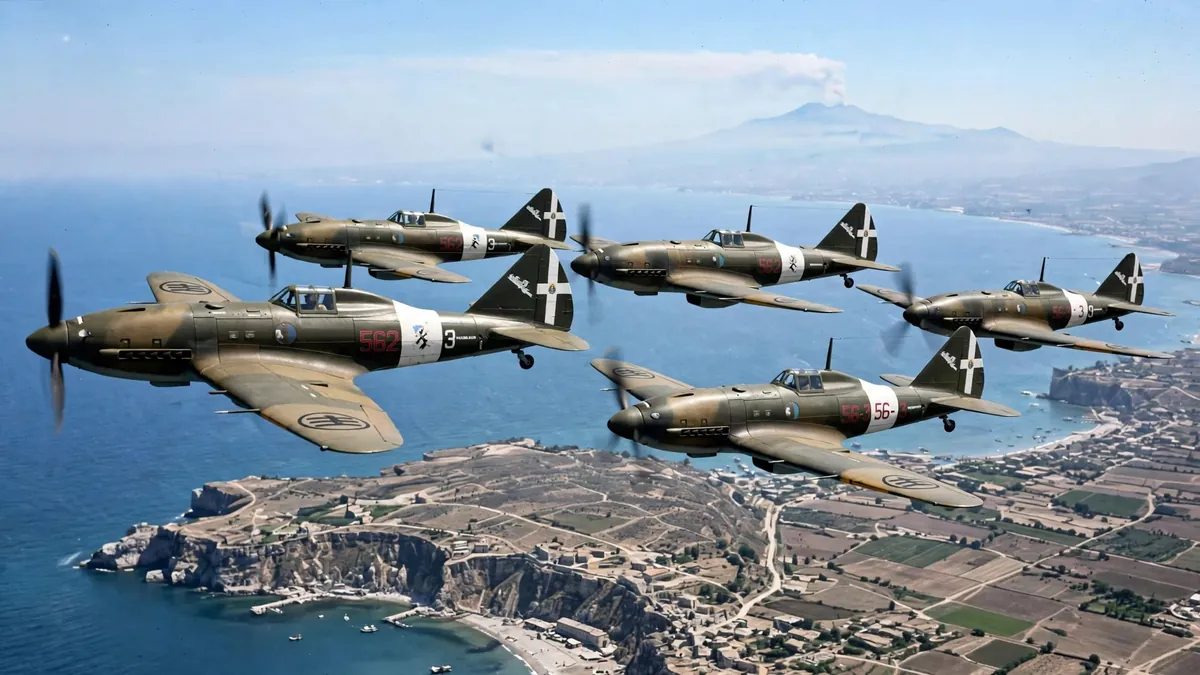
The Reggiane Re.2005 Sagittario — the Archer — was the finest fighter aircraft built by Italy during the Second World War, and one of the best fighters of the war as a whole. Designed by Roberto Longhi and his team at the Reggiane works in Reggio Emilia, the Re.2005 combined the elegant, agile airframe of its predecessor, the Re.2001, with the powerful German Daimler-Benz DB 605 engine, and the result was an aircraft that could match the best Allied fighters of 1943: fast, superbly manoeuvrable, heavily armed and pleasant to fly.
Allied pilots who met it over Sicily and Italy respected it, and Italian pilots who flew it loved it. Yet the Sagittario remains one of the great “what ifs” of the war, because only 48 were built — 29 production aircraft and a handful of prototypes — and the type never had the numbers to change the course of the air war over Italy.
The Re.2005’s story is the story of Italian aviation in the Second World War in miniature: brilliant design, hampered by an industrial base that could not produce in quantity, by a shortage of the German engines on which the design depended, and by the collapse of Italy itself in September 1943, which cut short the production run just as it was beginning.
The aircraft fought for only a few months, in the summer of 1943, in the defence of Sicily and of Naples and Rome, and then, after the armistice, a handful served with the fascist air force of the Italian Social Republic in the north.
Its combat record is short but distinguished, and its reputation has grown since the war, as historians have come to recognise it as one of the outstanding piston-engine fighters of the conflict.
1. Key Facts
| Role | Single-seat fighter (also fighter-bomber) |
| Manufacturer | Officine Meccaniche Reggiane, Reggio Emilia, Italy |
| Designer | Roberto Longhi / Roberto Longhi |
| First flight | 9 May 1942 |
| Introduced | April 1943 |
| Produced | 48 in total (29 production aircraft plus prototypes and pre-production) |
| Crew | 1 |
| Engine | 1 × Daimler-Benz DB 605A-1 V-12, about 1,475 hp |
| Maximum speed | About 628 km/h (390 mph) at 6,950 m |
| Range | About 980 km (609 miles) |
| Armament | 3 × 20 mm MG 151 cannon; 2 × 12.7 mm Breda-SAFAT machine guns |
| Main users | Regia Aeronautica (Italy); Aeronautica Nazionale Repubblicana (Italian Social Republic) |
| Fate | Withdrawn 1945; none survives intact |
2. Origins and Requirements
From the Re.2000 to the Re.2005
The Re.2005 was the third in a line of fighters designed by Roberto Longhi at Reggiane, and it was the culmination of a design philosophy that prized manoeuvrability and structural strength above all else. The first of the line, the Re.2000 Falco, flew in 1939 and was a clean, agile fighter hampered by an unreliable engine and by the Italian Air Ministry’s preference for other designs.
The second, the Re.2001 Falco II, introduced in 1941, used the Alfa Romeo RA.1000 engine — an Italian-built copy of the German DB 601 — and it was a good fighter, but it was underpowered for the air war of 1942, when the Allies were fielding faster and better-armed aircraft.
The Re.2005 was Longhi’s answer: the same elegant airframe, refined and strengthened, with the far more powerful DB 605 engine that also powered the German Bf 109G and the Italian Macchi C.205 Veltro.
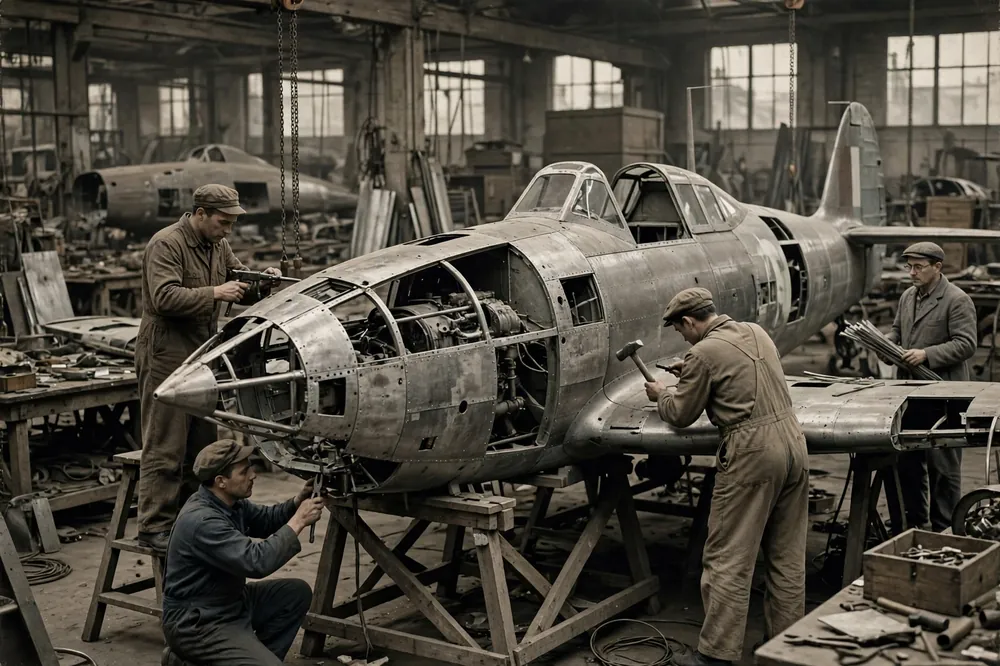
The Italian Air Ministry, which had long favoured the Macchi and Fiat designs, was slow to take the Reggiane fighter seriously, and the Re.2005’s development was delayed by indecision and by the difficulty of obtaining DB 605 engines from Germany.
The first prototype flew on 9 May 1942, and its performance was immediately impressive: it was faster than the Re.2001 by a wide margin, it climbed well, and its handling was superb. The Air Ministry ordered it into production, but the order came late, and the production run was small from the start.
By the time the first production aircraft reached the squadrons in April 1943, the Allies were preparing to invade Sicily, and the Re.2005 had only a few months of war left in which to prove itself.
The “Serie 5” fighters
The Re.2005 was one of three Italian fighters built around the DB 605 engine and known collectively as the “Serie 5” — the others were the Macchi C.205 Veltro and the Fiat G.55 Centauro. All three were excellent aircraft, and all three suffered the same fate: they arrived too late, and in too few numbers, to change the air war over Italy.
The three designs were competitors, and the Italian Air Ministry’s indecision about which to build in quantity wasted time and resources that Italy could not afford. In the end, the C.205 was built in about 262 examples, the G.55 in about 274 including post-war production, and the Re.2005 in only 48 — a reflection, in part, of Reggiane’s smaller factory and of the damage its plant suffered in Allied bombing.
3. Design and Development
Airframe and structure
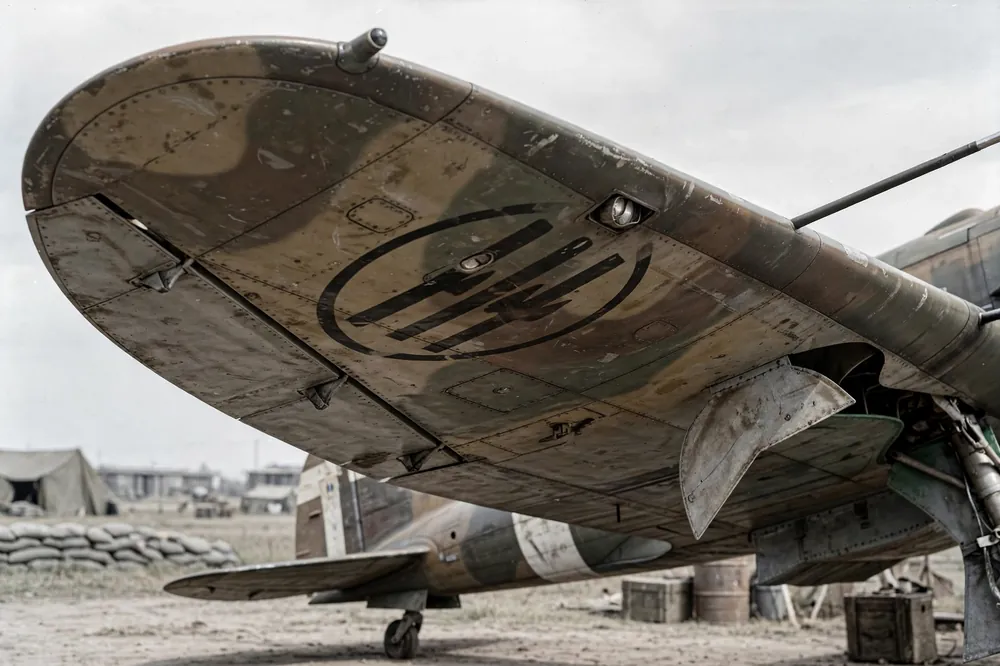
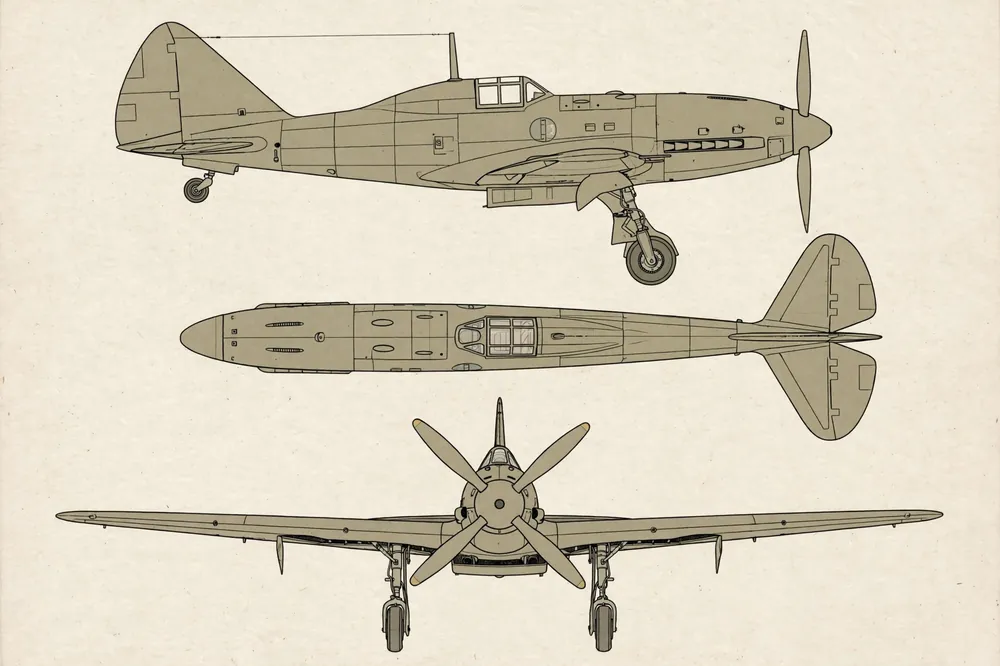
The Re.2005’s airframe was a development of the Re.2001’s, and it retained that aircraft’s most distinctive feature: a wing of elliptical planform, built in three sections, with a structure of unusual strength. The wing was built around a single spar with a stressed-skin covering, and it was strong enough to take the stresses of high-speed manoeuvring and dive bombing — the Re.2005 could be used as a fighter-bomber, carrying a 500-kilogram bomb under the fuselage or smaller bombs under the wings.
The fuselage was a semi-monocoque structure with a clean, tapering shape, and the cockpit was set well back, with a good view forward and a framed canopy that gave the pilot a clear field of vision. The landing gear retracted inward into the wings, and the aircraft’s tail was conventional, with a large rudder that gave the pilot good control at low speeds.
Slow production
The aircraft’s construction was, by the standards of 1943, labour-intensive: the wing and the fuselage required skilled hand work, and the production rate at Reggiane was slow — a handful of aircraft a month at best. This was the Re.2005’s fatal weakness as a weapon of war: it was a superb aircraft that Italy could not build in the numbers the war demanded, and the factory’s output was further reduced by Allied bombing of the Reggio Emilia plant in 1944, after the armistice had already cut short the production run.
Engine and performance
The DB 605A-1 was a twelve-cylinder, liquid-cooled, inverted-V engine of about 1,475 horsepower, the same engine that powered the Bf 109G and the C.205. In the Re.2005 it gave the aircraft a maximum speed of about 628 km/h at 6,950 metres, a figure that compared favourably with the Spitfire Mk IX and the P-51 Mustang, and a climb rate that let it reach 6,000 metres in about five and a half minutes.
Its range, about 980 kilometres on internal fuel, was modest — the Re.2005 was a defensive interceptor, not a long-range escort — but it was adequate for the defence of Sicily and the Italian mainland. The aircraft’s handling was widely praised: it was stable, responsive and forgiving, with a gentle stall and a turning ability that Italian pilots rated as the best of any fighter they flew.
4. Technical Description
Armament
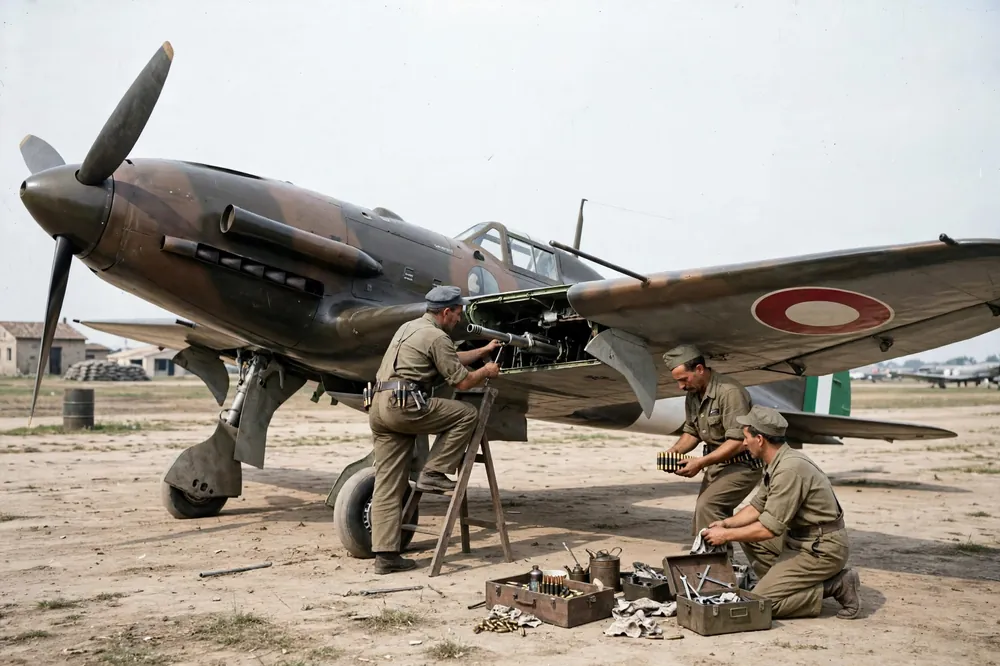
The Re.2005’s armament was the heaviest of any Italian fighter of the war. It carried three 20 mm MG 151 cannon — one firing through the propeller hub and one in each wing, with 200 rounds for the hub cannon and 120 rounds per wing gun — and two 12.7 mm Breda-SAFAT machine guns in the nose, with 350 rounds per gun.
This was a formidable armament, comparable to that of the best Allied fighters, and it gave the Re.2005 the firepower to destroy a bomber with a short burst and to outgun the fighters it met. For ground attack it could carry a 500-kilogram bomb under the fuselage, or two 160-kilogram bombs under the wings, and it was used in this role in the fighting over Sicily and in the defence of Rome.
Handling and pilot opinion
Italian pilots who flew the Re.2005 rated it as the best fighter they had flown, and their opinion has been echoed by historians who have studied the type. The aircraft was, by all accounts, a delight to fly: its controls were light and well harmonised, its stall was gentle and predictable, and its turning ability was outstanding, even by the standards of Italian fighters, which were renowned for their manoeuvrability.
Its one vice was a tendency to flick into a spin if the pilot mishandled it at low speed, a trait that demanded respect but that experienced pilots learned to manage. The aircraft’s cockpit was comfortable and well laid out, with a good view, and its engine, though German-built and dependent on German spares, was reliable when properly maintained.
5. Variants
The Re.2005 family was small, and the differences between its versions were matters of detail rather than of role. The prototypes, of which three were built, were used for flight testing and for the evaluation of the DB 605 engine installation, and they differed from the production aircraft in armament and equipment. The pre-production aircraft, sometimes called the Serie 0, were built in small numbers and used for service trials and for the training of the first operational pilots. The production aircraft, 29 in total, were the version that fought in 1943, with the standard armament of three cannon and two machine guns and with the equipment fit of a front-line fighter.
A torpedo-bomber version, the Re.2005R, was proposed, with a strengthened airframe and provision for a torpedo, but it was never built. A two-seat version was also proposed, and a handful of Re.2005s were modified in the field with different armament fits, including the replacement of the wing cannon with machine guns when cannon ammunition was scarce. After the armistice, the Germans took over the Reggiane factory and considered resuming production of the Re.2005 for the Luftwaffe, but the factory was damaged by Allied bombing and the plan came to nothing. The Re.2005’s production ended with the 48th aircraft, and no further examples were built.
6. Combat Service
Sicily, summer 1943 / Sicily, mùa hè 1943
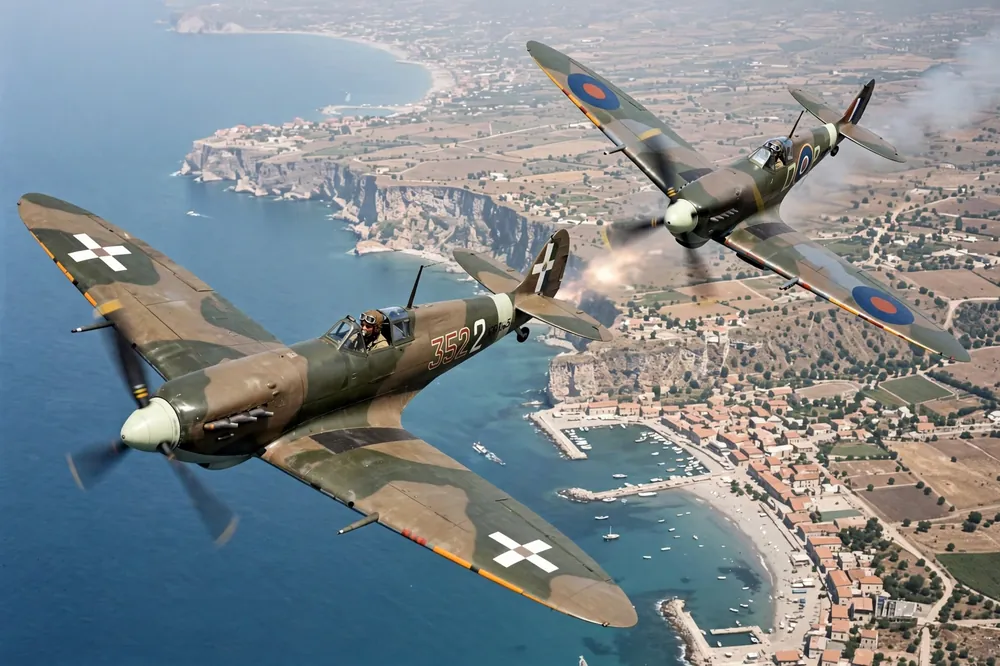
The Re.2005’s combat career began in April 1943, when the first production aircraft were delivered to the 362nd Squadron of the 22nd Fighter Group, based at Naples-Capodichino. The squadron flew the Re.2005 in the defence of Naples and of the shipping in the Bay of Naples, and in July 1943, when the Allies invaded Sicily, it was sent to the island to contest the Allied air superiority over the invasion beaches.
The Re.2005s fought the Allied fighters — Spitfires, P-38 Lightnings and P-40 Warhawks — over Sicily, and they acquitted themselves well: Italian accounts credit the type with a number of victories, including Spitfires and bombers, for the loss of a small number of its own aircraft.
The exact figures are disputed, as air combat claims always are, but the Allied pilots who met the Re.2005 reported that it was a formidable opponent, fast, agile and heavily armed.
The end of the Sicily campaign
The fighting over Sicily was the Re.2005’s finest hour, and it was also its last as a front-line fighter of the Regia Aeronautica. The squadron lost aircraft to combat and to accidents, and it lost its base when the Allies advanced, and by the time of the armistice on 8 September 1943, only a handful of Re.2005s remained airworthy. The aircraft’s short combat career — barely five months — was a measure of Italy’s collapse, not of the aircraft’s quality, and the pilots who flew it remembered it as the best fighter they had ever known.
After the armistice
After the armistice of 8 September 1943, Italy split in two: the south, under the King and the Allies, and the north, under Mussolini’s Italian Social Republic and the Germans. The Re.2005s that remained in the north were taken over by the Aeronautica Nazionale Repubblicana, the air force of the Social Republic, and they served with its fighter groups in the defence of northern Italy against the Allied bombers that flew from the south.
A small number of Re.2005s fought in this role in 1944, alongside the Macchi C.205 Veltro and the Fiat G.55, and they were still flying when the war in Italy ended in April 1945. The last Re.2005s were destroyed on the ground or scrapped after the surrender, and none survives today.
7. Specifications
The figures below are for the production Re.2005. Sources differ slightly on weights and performance, and the aircraft’s figures varied with load and the condition of the individual machine.
| Re.2005 | |
|---|---|
| Length | 8.73 m / 8,73 m |
| Wingspan | 11.00 m / 11,00 m |
| Height | 3.15 m / 3,15 m |
| Wing area | 20.4 m² / 20,4 m² |
| Empty weight | About 2,600 kg |
| Loaded weight | About 3,610 kg |
| Engine | 1 × Daimler-Benz DB 605A-1, about 1,475 hp |
| Maximum speed | About 628 km/h at 6,950 m |
| Cruising speed | About 500 km/h |
| Range | About 980 km |
| Service ceiling | About 11,500 m |
| Climb / Leo cao | About 5.5 minutes to 6,000 m |
| Armament | 3 × 20 mm MG 151; 2 × 12.7 mm Breda-SAFAT / 3 × MG 151 20 mm; 2 × Breda-SAFAT 12,7 mm |
| Bomb load | 1 × 500 kg bomb or 2 × 160 kg bombs |
| Crew | 1 |
Against its contemporaries the Re.2005 compared very favourably. Its speed and climb were comparable to the Spitfire Mk IX and the P-51B Mustang, its armament was heavier than that of either, and its manoeuvrability was, in the judgement of the pilots who flew all three, the best of the three. The German Bf 109G, which shared its engine, was faster in a dive but less manoeuvrable in a turn, and the American P-47 Thunderbolt, though faster and more heavily armed, was a much larger and heavier aircraft. The Re.2005’s weakness was not its performance but its numbers: with only 48 built, it could never be more than a footnote in the air war, however good it was.
8. Operators
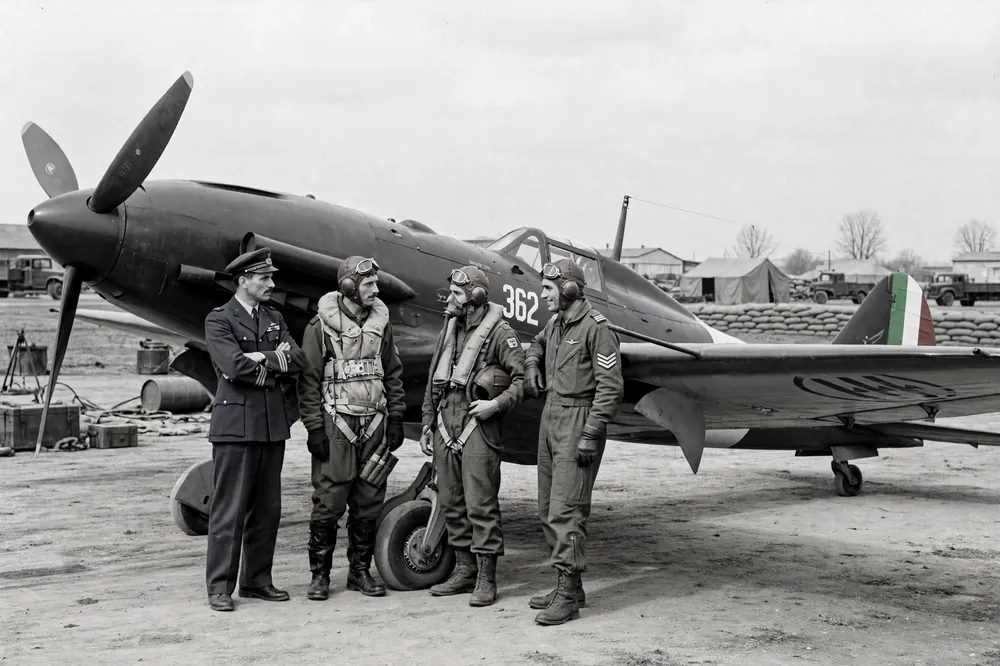
The Re.2005 was operated only by Italy, and only in small numbers. The Regia Aeronautica, the air force of the Kingdom of Italy, operated the type from April to September 1943, with the 362nd Squadron of the 22nd Fighter Group as its principal — and, for most of its career, its only — operational unit.
A second unit, the 363rd Squadron, was in the process of converting to the type when the armistice intervened, and it never flew the Re.2005 in combat. After the armistice, the Aeronautica Nazionale Repubblicana, the air force of Mussolini’s Italian Social Republic, operated the handful of Re.2005s that remained in the north, in the 1st Fighter Group, alongside the C.205 and the G.55, in the defence of northern Italy in 1944 and 1945.
No other country operated the Re.2005 in combat, though the Germans examined the type after the armistice and considered building it for the Luftwaffe, and at least one aircraft was tested by the Germans at Rechlin. After the war, no Re.2005s remained in service, and the type passed into history with the collapse of the Italian Social Republic in April 1945.
9. Legacy and Assessment
A great fighter that came too late
The Re.2005’s legacy is that of a great fighter that came too late and in too few numbers. Historians who have studied the “Serie 5” fighters — the Re.2005, the C.205 and the G.55 — agree that they were among the best piston-engine fighters of the war, and that the Re.2005 was, on the evidence of the pilots who flew all three, the best of the three in manoeuvrability and handling.
The aircraft’s reputation has grown since the war, as the records of its short combat career have been studied and as the testimony of its pilots has been published, and it is now regarded as one of the outstanding fighters of the conflict, a judgement that would have surprised the Italian Air Ministry of 1942, which had been slow to order it.
The Re.2005’s story is also a cautionary tale about the limits of design without production. A fighter, however good, is only as useful as the number that can be built, and Italy, with its small industrial base, its shortage of engines and its vulnerability to bombing, could not build the Re.2005 in the numbers the war demanded. The aircraft’s 48 examples are a measure of that failure, and they stand in stark contrast to the thousands of Spitfires, Mustangs and Bf 109s that filled the skies over Italy in 1943 and 1944. The Sagittario remains, in the judgement of historians, a brilliant aircraft that was let down by the country that built it.
Survivors
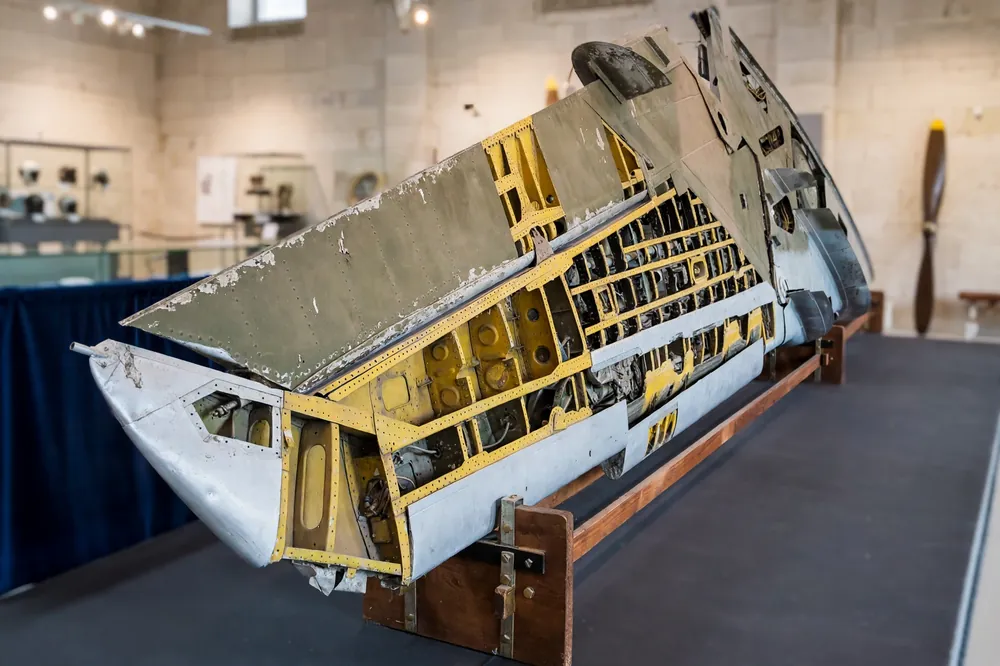
No complete Re.2005 survives. Wreckage has been recovered, and parts — including a wing section — are preserved in Italian museums, but no intact aircraft exists. The last Re.2005s were destroyed on the ground or scrapped after the surrender in April 1945, and restorers have searched for decades for a complete airframe without success. The type lives on in models, in photographs, and in the memories of the pilots who flew it, and in the historical record, where it remains one of the most admired Italian aircraft of the war, a brilliant fighter that was let down by the country that built it.
10. FAQ
What was the Reggiane Re.2005 Sagittario? / Reggiane Re.2005 Sagittario là gì?
The Reggiane Re.2005 Sagittario was an Italian single-seat fighter of the Second World War, designed by Roberto Longhi and powered by the German Daimler-Benz DB 605 engine of about 1,475 horsepower. It was the finest fighter Italy built during the war, combining the elegant, agile airframe of its predecessor, the Re.2001, with a speed of about 628 km/h and a heavy armament of three 20 mm cannon and two 12.7 mm machine guns. It first flew on 9 May 1942 and entered service in April 1943, but only 48 were made, and it fought for only a few months in the summer of 1943, in the defence of Sicily and of Naples and Rome.
How many Re.2005s were built?
Forty-eight Re.2005s were built in total, including three prototypes and a handful of pre-production aircraft, with only 29 production aircraft, and only one squadron, the 362nd of the 22nd Fighter Group, flew the type in combat for the Regia Aeronautica. The small production run reflected the limited capacity of the Reggiane factory at Reggio Emilia, the shortage of DB 605 engines from Germany, and the collapse of Italy itself in September 1943, which cut short the production run just as it was beginning. A second squadron, the 363rd, was converting to the type when the armistice intervened, and it never flew the Re.2005 in combat.
How fast was the Re.2005?
The Re.2005 had a maximum speed of about 628 km/h at 6,950 metres, with a climb to 6,000 metres in about five and a half minutes and a service ceiling of about 11,500 metres. This made it comparable to the Spitfire Mk IX and the P-51 Mustang, and faster than the Bf 109G in some regimes, while its manoeuvrability was, in the judgement of the Italian pilots who flew it, the best of any fighter they flew.
Its range, about 980 kilometres on internal fuel, was modest, because the Re.2005 was designed as a defensive interceptor for the skies over Sicily and the Italian mainland, not as a long-range escort, but it was adequate for the role it was built to fill.
What was the Re.2005’s armament?
The Re.2005 carried three 20 mm MG 151 cannon — one firing through the propeller hub and one in each wing, with 200 rounds for the hub cannon and 120 rounds per wing gun — and two 12.7 mm Breda-SAFAT machine guns in the nose, with 350 rounds per gun.
This was the heaviest armament of any Italian fighter of the war, comparable to that of the best Allied fighters, and it gave the Re.2005 the firepower to destroy a bomber with a short burst and to outgun the fighters it met.
For ground attack it could carry a 500-kilogram bomb under the fuselage, or two 160-kilogram bombs under the wings, and it was used in this role in the fighting over Sicily and in the defence of Rome.
Where did the Re.2005 fight?
The Re.2005 fought over Sicily in the summer of 1943, in the defence of Naples and Rome, and, after the armistice of 8 September 1943, with the air force of the Italian Social Republic in the defence of northern Italy in 1944 and 1945. Its combat career lasted barely five months for the Regia Aeronautica, from April to September 1943, and a few more months for the Social Republic, whose 1st Fighter Group flew the type alongside the Macchi C.205 and the Fiat G.55. The aircraft’s short career was a measure of Italy’s collapse, not of the aircraft’s quality, and the pilots who flew it remembered it as the best fighter they had ever known.
Does any Re.2005 survive today?
No complete Re.2005 survives. Wreckage has been recovered, and parts — including a wing section — are preserved in Italian museums, but no intact aircraft exists, and the type is known today from photographs, from models and from the accounts of its pilots. The last Re.2005s were destroyed on the ground or scrapped after the surrender in April 1945, and the aircraft’s story survives in the historical record, where it remains one of the most admired Italian aircraft of the war, a brilliant fighter that was let down by the country that built it and by the war it was built to fight.
11. Sources
- Wikipedia, “Reggiane Re.2005 Sagittario” — production figures (48 built), first flight, performance data and service history.
- Giorgio Apostolo, Reggiane Re.2005 (in the Ali d’Italia series) — the standard Italian-language reference on the type’s design and production.
- William Green, Warplanes of the Second World War, Volume One: Fighters (Macdonald, 1960) — the Re.2005’s design, performance and armament.
- Giovanni Massimello and Giorgio Apostolo, Italian Aces of World War 2 (Osprey, 2000) — the Re.2005 in combat over Sicily and Italy.
- Ferdinando D’Amico and Gabriele Valentini, Regia Aeronautica Vol. 2: Camouflage and Markings of the Aeronautica Nazionale Repubblicana 1943–1945 (Classic, 2005) — the Re.2005 after the armistice.
- Gianni Cattaneo, The Macchi C.205 Veltro and the Reggiane Re.2005 (in the Profile series) — a comparative study of the Serie 5 fighters.
- Nicola Malizia, Reggiane Re.2005 Sagittario (in Italian), Rome, 2005.
- Brian Cull, Spitfires Over Sicily (Grub Street, 2000) — the Allied view of the fighting over Sicily.