 WAR ATLAS MILITARY HISTORY MAGAZINE · WWI — WWII
Winston Churchill
1. Lead
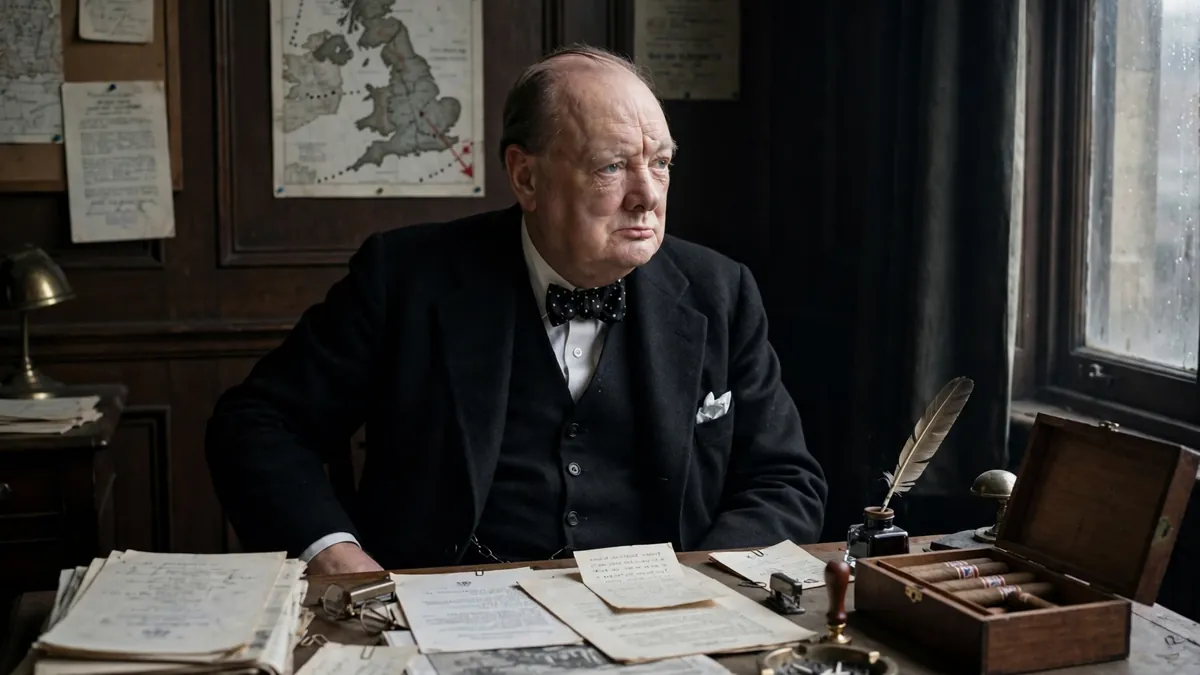
Winston Churchill (30 November 1874 – 24 January 1965) was a British statesman, military officer and writer who served as Prime Minister of the United Kingdom from 1940 to 1945, during the Second World War, and again from 1951 to 1955.
He became prime minister on 10 May 1940, the day Germany invaded France and the Low Countries, at a point when Britain stood alone against Germany after the fall of France. Through his speeches in Parliament and on the BBC, his direction of the war effort and his diplomacy with Franklin D. Roosevelt and Joseph Stalin, Churchill was the central political figure of Britain’s war.
Before 1940 his career had included service as a soldier and war correspondent, as First Lord of the Admiralty in the First World War — a post from which he resigned after the failure of the Gallipoli campaign — and a decade in the political wilderness in the 1930s, when he warned against German rearmament while out of office.
After the war he gave the “Iron Curtain” speech at Fulton, Missouri, in 1946, and in 1953 he received the Nobel Prize in Literature for his historical writing and oratory.
2. Key Facts
| Born | 30 November 1874, Blenheim Palace, Oxfordshire, England |
| Died | 24 January 1965 (aged 90), Hyde Park Gate, London, England |
| Nationality | British |
| Role / Office | Prime Minister of the United Kingdom, 10 May 1940 – 26 July 1945 and 26 October 1951 – 5 April 1955; First Lord of the Admiralty, 1911–1915 and 1939–1940 |
| Known for | Wartime leadership 1940–1945; the speeches of 1940; the “Iron Curtain” speech (1946); Nobel Prize in Literature (1953) |
| Spouse / Family | Clementine Hozier (married 1908, died 1977); children Diana, Randolph, Sarah, Marigold and Mary |
3. Early Life and Education
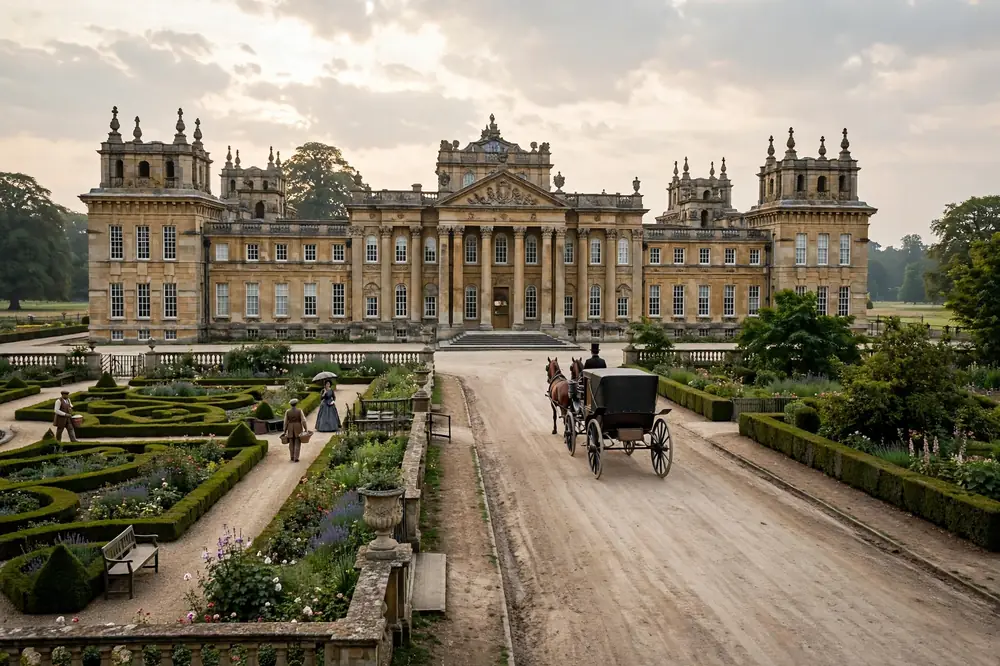
Winston Leonard Spencer Churchill was born on 30 November 1874 at Blenheim Palace in Oxfordshire, the ancestral home of the Dukes of Marlborough. His father, Lord Randolph Churchill, was a Conservative politician who served as Chancellor of the Exchequer; his mother, Jennie Jerome, was an American socialite from New York.
Churchill’s relationship with his father was distant — Lord Randolph died in 1895, when Churchill was twenty — and his mother was often absent; he was raised largely by his nanny, Elizabeth Everest, to whom he remained attached for the rest of his life. At school he was not a strong academic pupil, except in English and history, and he struggled with Latin and mathematics.
He was sent to Harrow School, where he did poorly in examinations but developed a lasting interest in the English language, and in 1893 he entered the Royal Military College at Sandhurst, graduating in December 1894.
Churchill’s early adult life was that of a soldier and a journalist. In 1895 he was commissioned into the 4th Hussars and served on the North-West Frontier of India, where he took part in the Malakand campaign of 1897; he wrote about it in his first book, The Story of the Malakand Field Force (1898).
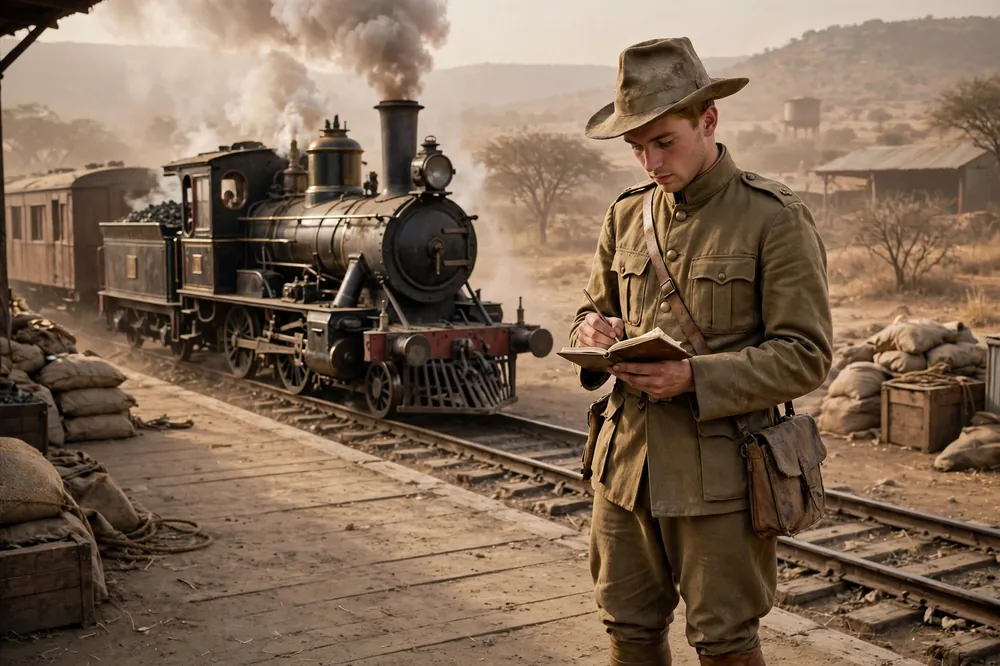
In 1898 he took part in the Battle of Omdurman in the Sudan, serving with the 21st Lancers in the last great cavalry charge of the British Army, and wrote The River War (1899) about the campaign. In 1899 he resigned his commission and went to South Africa as a war correspondent during the Second Boer War, where he was captured by the Boers in November 1899 and escaped from a prisoner-of-war camp in Pretoria the following month — an exploit that made him famous in Britain and launched his political career.
He was elected to Parliament as a Conservative Member for Oldham in October 1900.
In Parliament, Churchill’s early career was marked by frequent changes of party and of office. In 1904 he left the Conservative Party for the Liberal Party, in disagreement over free trade and tariff reform, and in 1905 he entered government as Under-Secretary of State for the Colonies. He served as President of the Board of Trade (1908–1910), Home Secretary (1910–1911), and First Lord of the Admiralty from 1911.
At the Admiralty he prepared the Royal Navy for war: he established a naval staff, promoted the building of new battleships and the conversion of the fleet from coal to oil, and founded the Royal Naval Air Service. In 1908 he married Clementine Hozier, who remained his wife and closest adviser for the rest of his life.
4. Rise to Prominence
Churchill’s first period of high office ended in failure. As First Lord of the Admiralty in the First World War, he was one of the chief advocates of the Dardanelles campaign of 1915 — an attempt to force the straits, knock the Ottoman Empire out of the war, and open a supply route to Russia.
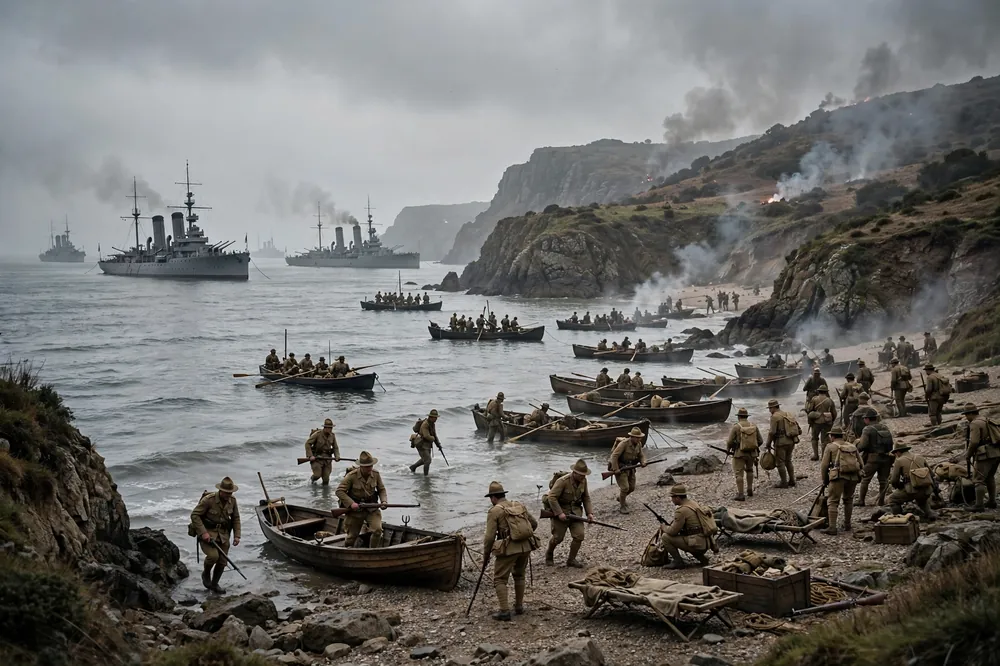
The naval attack in March 1915 failed, and the land campaign at Gallipoli that followed became a prolonged stalemate. Allied casualties were heavy: the campaign cost the lives of more than 130,000 Allied soldiers, according to commonly cited figures, and achieved none of its objectives. Churchill was blamed for the failure, demoted in May 1915, and resigned from the government in November 1915.
He served for six months as a battalion commander on the Western Front in 1916 before returning to politics.
He returned to office in 1917 as Minister of Munitions, and in 1919–1921 he served as Secretary of State for War and Air, in which capacity he oversaw the British intervention in the Russian Civil War and the use of air power in Iraq. In 1921–1922 he was Colonial Secretary, negotiating the settlement that established the Irish Free State.
He lost his seat in the general election of 1922 and was out of Parliament for two years; in 1924 he rejoined the Conservative Party and was elected for Epping, serving as Chancellor of the Exchequer from 1924 to 1929.
His decision in 1925 to return Britain to the gold standard at the pre-war exchange rate is widely regarded by economic historians as a mistake that deepened the deflation of the late 1920s, though Churchill himself later acknowledged that the decision had been wrong.
After the Conservative defeat in 1929, Churchill spent a decade out of office — the period he later called his “wilderness years”. During the 1930s he warned repeatedly, in Parliament and in print, that Germany was rearming in breach of the Treaty of Versailles and that Britain’s air defences were inadequate.
His warnings were unpopular at the time: the governments of Stanley Baldwin and Neville Chamberlain pursued a policy of appeasement, and Churchill was regarded by many in his own party as a warmonger and a spent force. His position changed with events.
After the Munich Agreement of September 1938, in which Britain and France agreed to Germany’s annexation of the Sudetenland, Churchill denounced the agreement in Parliament as “a total and unmitigated defeat”. When Germany invaded Poland on 1 September 1939 and Britain declared war, Churchill was brought back into the government as First Lord of the Admiralty — the post he had held in 1914.
In April 1940 the failure of the British campaign in Norway discredited Chamberlain’s government, and on 10 May 1940, the day Germany invaded France and the Low Countries, Chamberlain resigned and Churchill became Prime Minister at the head of a coalition government.
5. Winston Churchill’s Role in World War II
Churchill’s wartime leadership can be divided into four phases: the defence of Britain in 1940–1941, the expansion of the war in 1941–1942, the turn toward the offensive in 1942–1944, and the diplomacy of the war’s final year.
The defence of Britain, 1940–1941
Churchill took office at the worst moment of the war for Britain. Within weeks, France fell: the British Expeditionary Force was evacuated from Dunkirk between 26 May and 4 June 1940, with some 338,000 British and Allied troops brought across the Channel, and France signed an armistice with Germany on 22 June. Britain stood alone. Churchill’s response was rhetorical and practical.
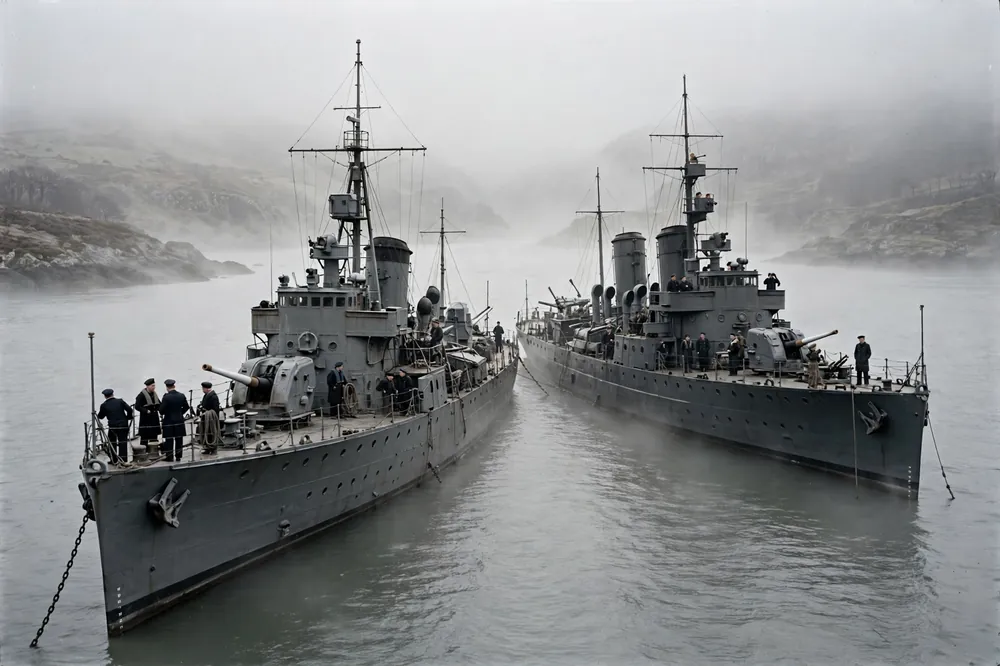
In Parliament on 13 May 1940 he told the House of Commons that he had “nothing to offer but blood, toil, tears and sweat”. On 4 June, after Dunkirk, he declared that “we shall fight on the beaches, we shall fight on the landing grounds, we shall fight in the fields and in the streets, we shall fight in the hills; we shall never surrender”.
On 18 June he told Parliament that “if the British Empire and its Commonwealth last for a thousand years, men will still say, ‘This was their finest hour'”. These speeches were broadcast and reprinted, and historians generally credit them with sustaining public morale at a point when invasion seemed imminent.
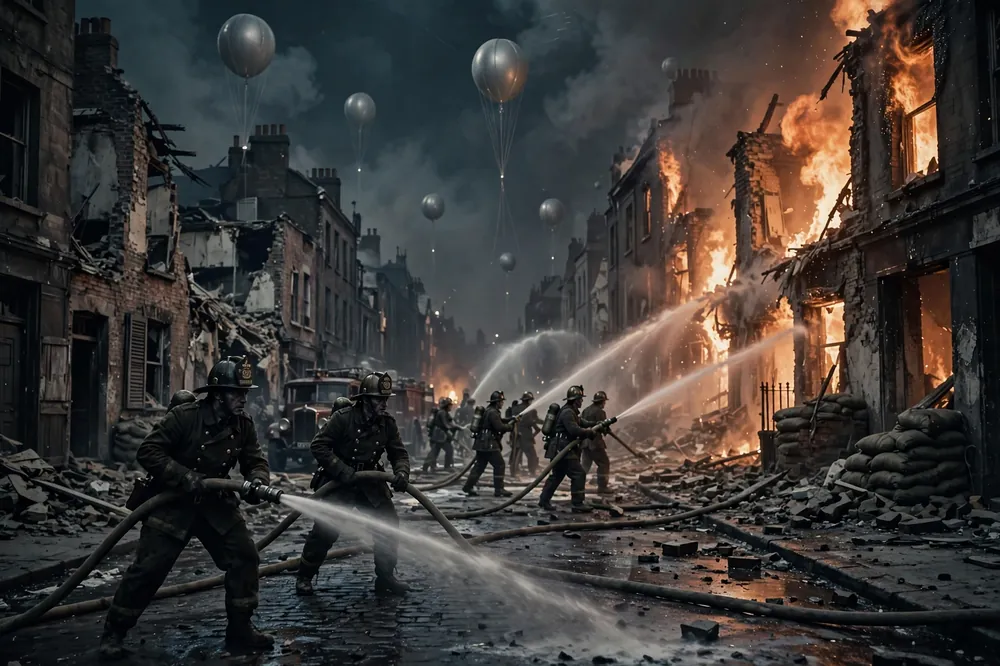
The practical work was the Battle of Britain. In the summer and autumn of 1940, the German Luftwaffe attempted to destroy the Royal Air Force as a preliminary to invasion. The RAF, under Air Chief Marshal Hugh Dowding, defeated the attack, and on 20 August 1940 Churchill paid tribute to the fighter pilots with the words: “Never in the field of human conflict was so much owed by so many to so few.” The Blitz — the German bombing of London and other cities from September 1940 to May 1941 — killed some 43,000 civilians, according to official British figures, but did not break civilian morale or force Britain to seek terms.
Churchill visited bombed areas frequently, a practice that, according to contemporary accounts, was welcomed by the public.
In 1940–1941 Churchill also conducted the diplomacy that kept Britain supplied. In December 1940 he wrote to President Roosevelt appealing for American aid, and in March 1941 Roosevelt signed the Lend-Lease Act, under which the United States supplied Britain with weapons, food and equipment. In August 1941 Churchill and Roosevelt met off Newfoundland and issued the Atlantic Charter, a joint statement of war aims that included the right of peoples to choose their own government and the renunciation of territorial aggrandisement.
The expansion of the war, 1941–1942
Two events transformed the war in 1941: Germany’s invasion of the Soviet Union on 22 June and Japan’s attack on Pearl Harbor on 7 December. Churchill responded to the German invasion by offering immediate support to the Soviet Union, despite his long-standing opposition to communism, declaring on the evening of 22 June that “any man or state who fights against Nazism will have our aid”. After Pearl Harbor he travelled to Washington in December 1941 — the Arcadia Conference — where he and Roosevelt agreed on the strategy of “Germany first”, defeating Germany before concentrating on Japan, and on the creation of a combined Anglo-American command.
The year 1942 was the most difficult of the war for Britain. Singapore fell to Japan in February 1942, with some 80,000 British and Commonwealth troops taken prisoner; the British Eighth Army was driven back in North Africa; and German U-boats sank Allied shipping in the Atlantic at a rate that threatened Britain’s supply lines.
Churchill’s leadership was challenged in Parliament: in January 1942 he survived a vote of confidence, and in July 1942 a motion of no confidence was defeated by 475 votes to 25. In October–November 1942 the Eighth Army under General Bernard Montgomery won the Battle of El Alamein, and in November 1942 Anglo-American forces landed in North Africa in Operation Torch.
Churchill described El Alamein as “not the end, not even the beginning of the end, but it is, perhaps, the end of the beginning”.
The offensive, 1942–1944
From 1943 onward, Churchill’s role shifted from defence to the planning of the offensive. At the Casablanca Conference in January 1943, he and Roosevelt announced the policy of unconditional surrender — the demand that Germany and Japan surrender without conditions — a policy that has been debated by historians ever since, with some arguing that it prolonged the war by removing any incentive for Germany’s leaders to negotiate, and others arguing that it was necessary to prevent a negotiated peace that would have left the Nazi regime in place.
Churchill’s preference for an attack on Germany through the Mediterranean — the “soft underbelly” strategy — was overruled by the Americans in favour of a cross-Channel invasion of France, and the invasion of Normandy on 6 June 1944 (D-Day) was planned under the combined command of General Dwight D. Eisenhower.
Churchill also directed the bombing campaign against Germany. The strategic bombing of German cities by the RAF and the USAAF killed an estimated 400,000–600,000 German civilians, according to commonly cited figures, and the bombing of Dresden on 13–15 February 1945 — in which some 25,000 people were killed, according to the estimate of a historical commission appointed by the city of Dresden in 2004–2010 — remains the most controversial of these operations.
Churchill himself, after Dresden, questioned the policy in a memorandum of March 1945, writing that “the destruction of Dresden remains a serious query against the conduct of Allied bombing” — a memorandum that was later withdrawn at the request of his advisers. The bombing campaign is discussed further in the controversies section below.
Diplomacy and the end of the war, 1944–1945
Churchill’s final year as wartime prime minister was dominated by diplomacy with Roosevelt and Stalin. At the Tehran Conference (November–December 1943) the three leaders agreed on the invasion of France in 1944. In October 1944 Churchill travelled to Moscow and, according to his own account in his memoirs, reached a “percentages agreement” with Stalin on the division of influence in Eastern Europe — an account whose accuracy has been disputed by historians, since no formal agreement was signed and the Soviet records of the meeting do not confirm Churchill’s version.
At Yalta (February 1945) the three leaders agreed on the structure of the United Nations and on the occupation of Germany, and Churchill accepted, with reluctance, the Soviet demand for the western frontier of Poland to be moved to the Oder–Neisse line. Germany surrendered on 8 May 1945.
Two months later, in the British general election of July 1945, Churchill’s Conservative Party was defeated by the Labour Party under Clement Attlee, and Churchill left office on 26 July 1945 — before the war against Japan had ended. He attended the Potsdam Conference in July 1945 as prime minister and was replaced by Attlee during the conference.
6. Key Decisions
Continuing the war in 1940. Churchill’s first and most consequential decision as prime minister was to reject any negotiated peace with Germany after the fall of France. In May 1940, members of his War Cabinet, notably the Foreign Secretary Lord Halifax, argued for exploring terms through the mediation of Italy. Churchill opposed this, arguing in the War Cabinet on 28 May 1940 that Britain should fight on. The Cabinet supported him, and Britain continued the war alone. Historians generally regard this as the decision on which the rest of Churchill’s wartime record depends: had Britain sought terms in 1940, the course of the war would have been different in ways that cannot be reconstructed with confidence.
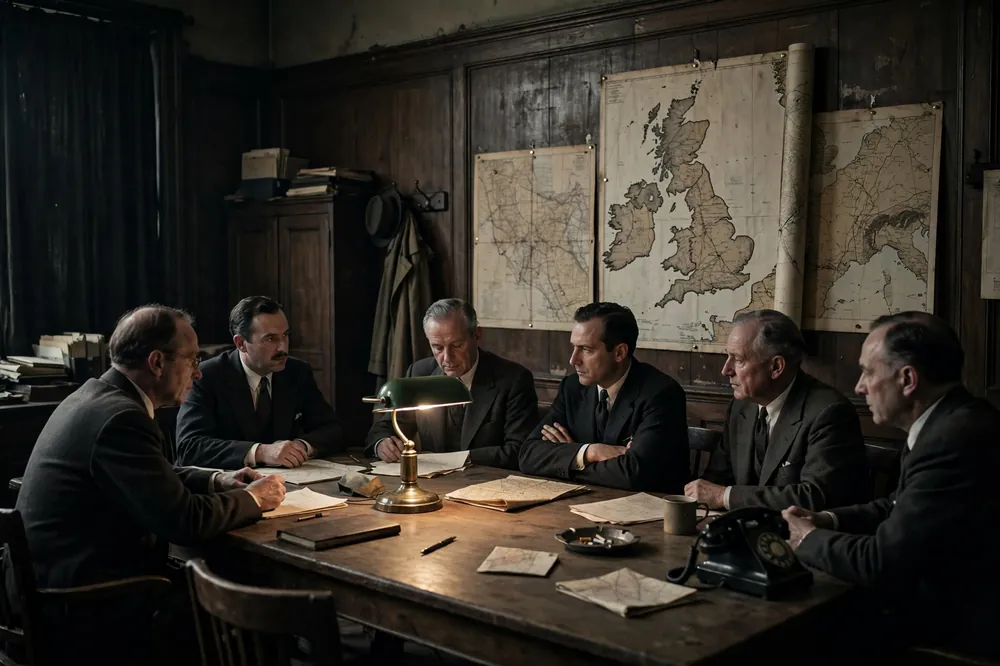
The attack on the French fleet at Mers-el-Kébir (3 July 1940). After the fall of France, Churchill ordered the Royal Navy to attack French warships at Mers-el-Kébir in Algeria, to prevent them from falling into German hands. Some 1,297 French sailors were killed, according to French records. The decision was condemned in France and remains controversial: Churchill and his supporters argued that it demonstrated Britain’s determination to continue the war and reassured the United States; critics argue that the French ships posed no immediate threat and that the attack damaged Anglo-French relations for years.
Support for the Soviet Union (June 1941). Within hours of the German invasion of the Soviet Union, Churchill offered aid to a state whose ideology he had opposed for two decades. The decision was pragmatic — the Soviet Union was now fighting Germany — and it was followed by the supply of British tanks, aircraft and other materials under Lend-Lease arrangements, and by the Arctic convoys that carried supplies to Murmansk and Archangel at heavy cost in ships and lives.
Unconditional surrender (Casablanca, January 1943). The announcement, made jointly with Roosevelt, that the Allies would accept only the unconditional surrender of Germany and Japan, is discussed in section 5 above. Churchill later expressed reservations about the policy, but he did not withdraw from it.
The percentages agreement (Moscow, October 1944). Churchill’s attempt to agree with Stalin on spheres of influence in Eastern Europe — recorded in his memoirs as a division of percentages for Romania, Greece, Yugoslavia, Hungary and Bulgaria — was never formalised, and its status remains disputed. What is documented is that Churchill sought to preserve British influence in Greece, where British forces intervened in the civil war in December 1944, and that he accepted a predominant Soviet role in Romania and Bulgaria.
7. Controversies
Churchill’s controversies are the subject of a large and active historical literature, and they are presented here as historians present them: as questions on which evidence is weighed and disagreement continues.
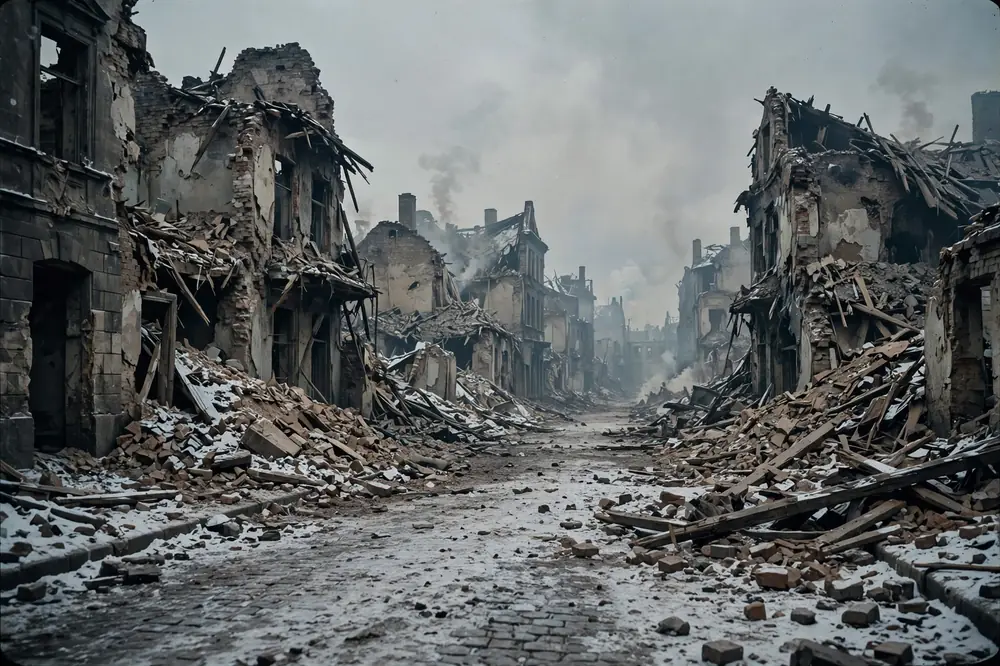
Gallipoli (1915). The Dardanelles campaign is discussed in section 4 above. The controversy concerns the division of responsibility: Churchill, as First Lord of the Admiralty, advocated the campaign and bears a share of the responsibility for its conception, but the execution — including the decision to proceed with the landings after the naval attack had failed — was the responsibility of the government and the military commanders as a whole. The Dardanelles Commission of 1916–1917, which investigated the campaign, criticised the planning and the divided command, and Churchill’s evidence to the commission remains a primary source for the debate.
The Bengal famine (1943). The famine in Bengal in 1943 killed an estimated 2 to 3 million people, according to commonly cited figures, though the exact number is disputed. The causes are a subject of intense debate. Some historians, notably Madhusree Mukerjee, have argued that Churchill’s government bears direct responsibility, citing the diversion of food supplies to the war effort, the refusal to allow food imports into Bengal, and Churchill’s own recorded remarks disparaging Indians.
Other historians, notably Tirthankar Roy and the authors of the most recent demographic studies, argue that the famine was caused primarily by the failure of the rice crop, the disruption of supply by the Japanese occupation of Burma, wartime inflation, and the breakdown of the food distribution system, and that the British government’s failures were those of administration and priority rather than deliberate policy.
The documentary record shows that Churchill’s War Cabinet discussed the famine, that food was shipped to Bengal in 1943–1944, and that the quantities were, in the judgement of the historians who have studied the records, insufficient. The question of Churchill’s personal responsibility remains contested, and this article records the disagreement.
The strategic bombing of Germany. The bombing campaign is discussed in section 5 above. The controversy concerns whether the bombing of German cities — and Dresden in particular — was militarily necessary and proportionate. The official British history of the bombing campaign, published in 1961, concluded that the campaign made a substantial contribution to the defeat of Germany by diverting German resources to air defence and disrupting production; critics, including the historian A.
C. Grayling, have argued that area bombing was a policy of targeting civilians and that it was morally indefensible and of limited military value. The debate continues, and the casualty figures — 400,000 to 600,000 German civilians killed by bombing, according to commonly cited estimates — are themselves approximate, since German records of civilian deaths are incomplete.
Churchill’s views on race and empire. Churchill held views on race and empire that were common among British politicians of his generation but are now widely regarded as indefensible. He supported the British Empire, opposed Indian self-government in the 1930s, and made statements about Indian, African and other peoples that are recorded in his speeches and letters and that modern historians quote as evidence of his attitudes.
His defenders argue that his views were those of his time and that they did not prevent him from leading Britain’s war against Nazi Germany; his critics argue that his record on empire, and in particular his handling of the Bengal famine, must be weighed alongside his wartime record. This article records both positions without adopting either as the final judgement.
8. Later Life and Death
After losing the 1945 election, Churchill became Leader of the Opposition, and in March 1946, at Westminster College in Fulton, Missouri, at the invitation of President Truman, he delivered the speech “The Sinews of Peace”, in which he declared that “from Stettin in the Baltic to Trieste in the Adriatic an iron curtain has descended across the Continent”.
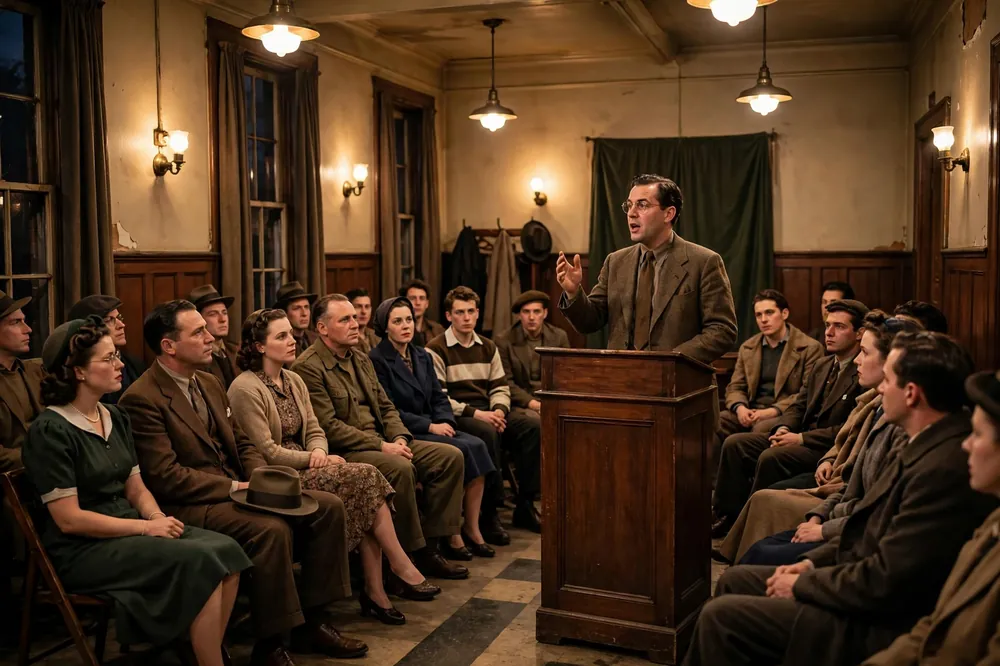
The speech, which called for a “special relationship” between Britain and the United States and warned of Soviet expansion in Eastern Europe, is generally regarded by historians as one of the first public statements of the Cold War, though the term “iron curtain” had been used before.
In September 1946 he called for a “United States of Europe” in a speech at Zurich, and he attended the first assembly of the Council of Europe at Strasbourg in 1949.
In 1951 Churchill became Prime Minister again, at the age of 76, leading a Conservative government that remained in office until 1955. His second premiership was concerned with the management of Britain’s post-war decline, the Korean War, and the early stages of the Cold War; it is generally assessed by historians as less consequential than his wartime premiership, and it was marked by his declining health — he suffered a serious stroke in June 1953, which was concealed from the public at the time.
In 1953 he was knighted by Queen Elizabeth II, receiving the Order of the Garter, and in the same year he was awarded the Nobel Prize in Literature “for his mastery of historical and biographical description as well as for brilliant oratory in defending exalted human values”, in the words of the Swedish Academy.
He resigned as Prime Minister on 5 April 1955 and was succeeded by Anthony Eden, but he remained a Member of Parliament until 1964.
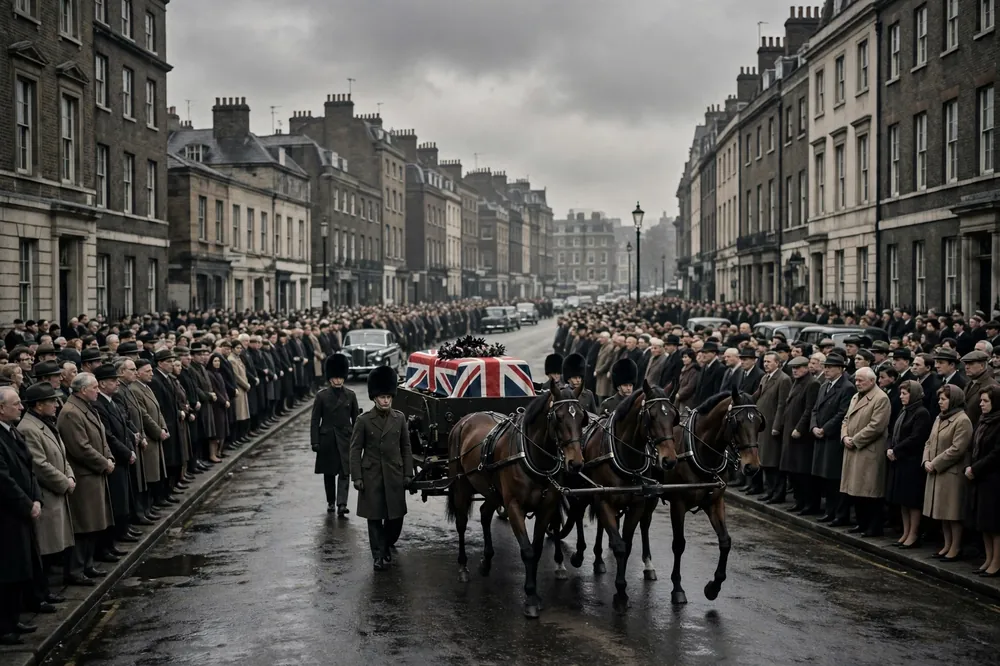
Churchill suffered his final stroke on 12 January 1965 and died on 24 January 1965 at his London home, 28 Hyde Park Gate, aged 90 — the seventieth anniversary of his father’s death. He was given a state funeral on 30 January 1965, attended by representatives of more than a hundred countries, and was buried at St Martin’s Church, Bladon, in Oxfordshire, near Blenheim Palace.
9. Legacy of Winston Churchill
Churchill’s legacy has two parts that are often assessed separately: his wartime leadership and his writing. As a wartime leader, he is credited by historians with the decision to continue the war in 1940, with sustaining British morale through his speeches, and with the diplomacy that held the Grand Alliance together — the alliance of Britain, the United States and the Soviet Union that defeated Germany.
The institutions he helped to create, including the United Nations, which he supported at Yalta, and the Council of Europe, remain in existence. As a writer, he produced more than forty books, including the six-volume The Second World War (1948–1953) and the four-volume A History of the English-Speaking Peoples, and the Nobel Prize in Literature that he received in 1953 remains the only Nobel Prize awarded to a British prime minister.
His speeches of 1940 — “blood, toil, tears and sweat”, “we shall fight on the beaches”, “their finest hour” and “never was so much owed by so many to so few” — are among the most quoted passages in the English language.
The other part of his legacy is the debate about his record on empire and on the Bengal famine, discussed in section 7 above, and about the strategic bombing campaign. The debate has intensified in recent years, with some historians arguing that Churchill’s reputation should be reassessed in the light of the famine and of his views on race, and others arguing that his wartime record should be assessed on its own terms.
The Churchill Archives Centre at Cambridge, which holds his papers, is one of the most consulted archives in Britain, and the International Churchill Society, founded in 1968, continues to publish research on his life. In 2002, in a BBC poll, Churchill was voted the greatest Briton of all time — a result that itself illustrates the continuing public interest in his reputation, and the division between popular memory and academic assessment.
10. Assessment by Historians
Historians assess Winston Churchill as a figure of unusual range — soldier, journalist, politician, painter and writer — whose reputation rests above all on the five years from 1940 to 1945. The assessment of his wartime leadership is that he was, in the words of the historian David Reynolds, “the indispensable man” of 1940: the prime minister who refused to negotiate, who gave Britain a language in which to understand its situation, and who held the alliance with the United States and the Soviet Union together through three years of difficult diplomacy.
The same assessment notes his limitations: he was, by his own admission and by the record, a poor judge of military detail — his enthusiasm for operations in the Mediterranean and in Norway was repeatedly overruled by his generals — and his judgement on strategy was, in the view of the historian Max Hastings, “often wrong, sometimes disastrously so, but never indecisive”.
The judgement of the historian Andrew Roberts, in his biography of 2018, is that Churchill’s strength lay not in strategy but in will: in the refusal to accept defeat, in the capacity to inspire, and in the ability to make decisions and to accept their consequences.
The assessment of his earlier and later career is more qualified. The Gallipoli campaign of 1915, the return to the gold standard in 1925, and his opposition to Indian self-government in the 1930s are recorded as failures of judgement, and the Bengal famine of 1943 remains, in the words of the historian Richard Toye, “the most serious charge against Churchill’s reputation”.
The assessment of his post-war career is that the “Iron Curtain” speech of 1946 was an accurate description of the division of Europe and an early statement of the Western position in the Cold War, and that his second premiership of 1951–1955 was a period of consolidation rather than of new achievement.
The overall judgement of the historiography is that Churchill was a leader whose qualities were suited to a particular crisis — the defence of Britain in 1940 — and whose record outside that crisis was mixed. That judgement is itself contested, and the debate continues.
Frequently Asked Questions
Who was Winston Churchill? Winston Churchill (1874–1965) was a British statesman who served as Prime Minister of the United Kingdom from 1940 to 1945, during the Second World War, and again from 1951 to 1955. He was also a soldier, journalist and writer, and received the Nobel Prize in Literature in 1953.
What did Winston Churchill do in World War II? As prime minister from May 1940, he led Britain through the Battle of Britain and the Blitz, directed the war effort, and conducted diplomacy with Roosevelt and Stalin at the conferences of Tehran, Yalta and Potsdam.
What are Winston Churchill’s most famous speeches? The best-known are from 1940: “blood, toil, tears and sweat” (13 May), “we shall fight on the beaches” (4 June), “this was their finest hour” (18 June), and “never was so much owed by so many to so few” (20 August), a tribute to RAF fighter pilots.
Why did Winston Churchill resign after Gallipoli? Churchill, as First Lord of the Admiralty, was blamed for the failure of the Dardanelles campaign of 1915. He was demoted in May 1915 and resigned from the government in November 1915.
What was the “Iron Curtain” speech? A speech delivered by Churchill at Westminster College in Fulton, Missouri, on 5 March 1946, in which he said that “an iron curtain has descended across the Continent”, describing the division of Europe between the Soviet-dominated east and the west.
How did Winston Churchill die? He died on 24 January 1965 in London, aged 90, after suffering a stroke on 12 January 1965. He was given a state funeral on 30 January 1965.
Related articles
Sources
- Wikipedia, “Winston Churchill” — consolidated biography: birth 30 November 1874, prime minister 1940–1945 and 1951–1955, death 24 January 1965.
- Encyclopaedia Britannica, “Winston Churchill” (britannica.com) — biography, wartime leadership, Nobel Prize in Literature 1953.
- The Churchill Archives Centre, Churchill College, Cambridge — Churchill’s papers, including War Cabinet minutes of May 1940 and the Dresden memorandum of March 1945.
- Martin Gilbert, Winston S. Churchill, 8 volumes (Heinemann, 1971–1988) — the official biography.
- Andrew Roberts, Churchill: Walking with Destiny (Allen Lane, 2018) — modern single-volume biography.
- David Reynolds, In Command of History: Churchill Fighting and Writing the Second World War (Allen Lane, 2004) — Churchill as historian of his own war.
- Richard Toye, Churchill’s Empire: The World That Made Him and the World He Made (Macmillan, 2010) — Churchill, empire and the Bengal famine debate.
- International Churchill Society (winstonchurchill.org), “Who was Churchill?” — timeline: Gallipoli resignation 1915, Iron Curtain speech 5 March 1946, Nobel Prize 1953.
Further reading
- Max Hastings, Finest Years: Churchill as Warlord, 1940–45 (HarperPress, 2009).
- Roy Jenkins, Churchill (Macmillan, 2001).