 WAR ATLAS MILITARY HISTORY MAGAZINE · WWI — WWII
Beretta M1934
1. Lead
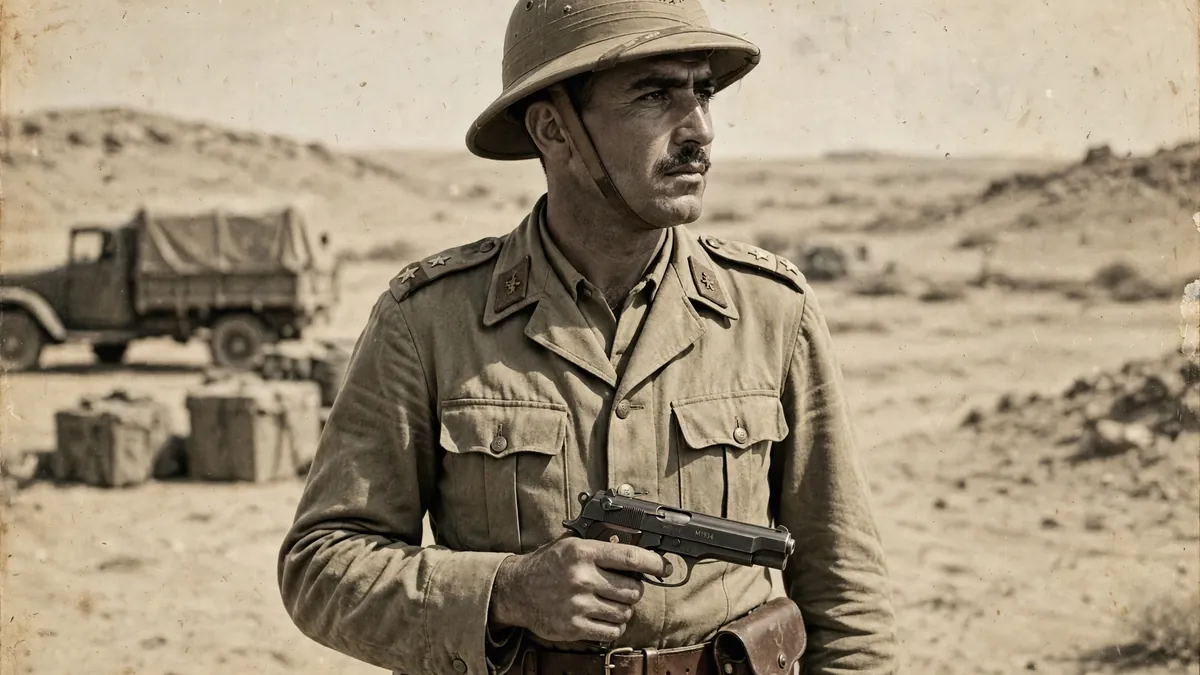
The Beretta M1934 was the standard service pistol of the Italian armed forces during the Second World War, and one of the most widely used pistols of the conflict. Designed by Tullio Marengoni at the Beretta factory in Gardone Val Trompia, the M1934 was a compact, blowback-operated semi-automatic pistol chambered for the .380 ACP cartridge (9 mm Corto in Italian service), and it was issued to officers, to airmen, to tank crews and to police, who valued it for its small size, its reliability and its ease of use. About 1,080,000 M1934 pistols were built between 1934 and 1991, and the pistol remained in Italian service for more than half a century, long after the war in which it had first been used. It was carried in North Africa, in the Balkans, in Russia and in Italy itself, and it was captured in large numbers by Allied soldiers, who kept it as a souvenir and who often preferred it to their own pistols for its compactness and its smooth action.
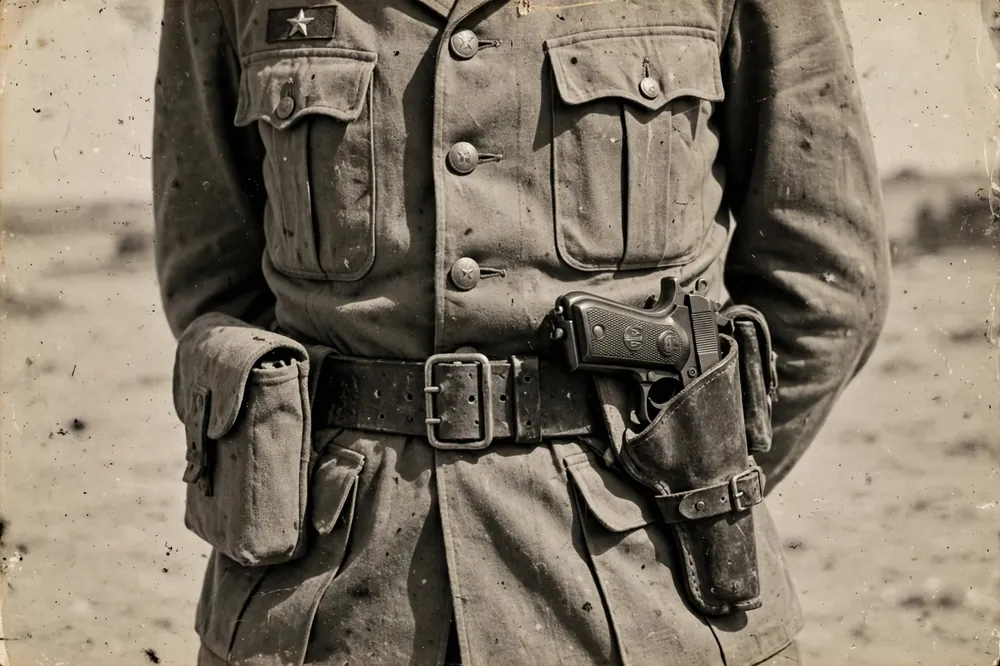
The M1934 was not a powerful pistol, and it was not designed to be one. Its .380 ACP cartridge was weaker than the 9 mm Parabellum cartridge used by the German Luger and Walther P38, and weaker than the .45 ACP cartridge used by the American Colt M1911, and the pistol’s small size meant that it held only seven rounds in its magazine, plus one in the chamber. But the M1934 was designed for the role of a service pistol in the Italian Army, where it was a weapon of last resort for an officer, a badge of rank as much as a weapon, and a pistol that had to be carried all day, in a holster, without getting in the way. For that role it was well suited: it was light, it was slim, it was reliable in the dust of North Africa and in the cold of Russia, and it was easy to maintain. The story of the M1934 is therefore the story of a pistol that was modest in its ambitions and successful in its role, and that outlived the regime that had adopted it by almost fifty years.
2. Key Facts
| Type | Semi-automatic pistol |
| Origin | Italy |
| Designer | Tullio Marengoni, Beretta |
| Manufacturer | Fabbrica d’Armi Pietro Beretta, Gardone Val Trompia |
| In service | 1934–1991 (Italian service); wartime use 1940–1945 |
| Produced | 1934–1991; about 1,080,000 built |
| Weight | About 660 g (unloaded) |
| Length | 152 mm |
| Barrel length | 93.5 mm |
| Width | About 30 mm |
| Height | About 120 mm |
| Cartridge | .380 ACP (9 mm Corto / 9×17 mm) |
| Action | Blowback, single action |
| Muzzle velocity | About 280–290 m/s |
| Effective range | About 25–50 m |
| Feed system | 7-round detachable box magazine |
| Sights | Fixed iron sights |
3. Background and Development
Beretta and the Italian Pistol Tradition
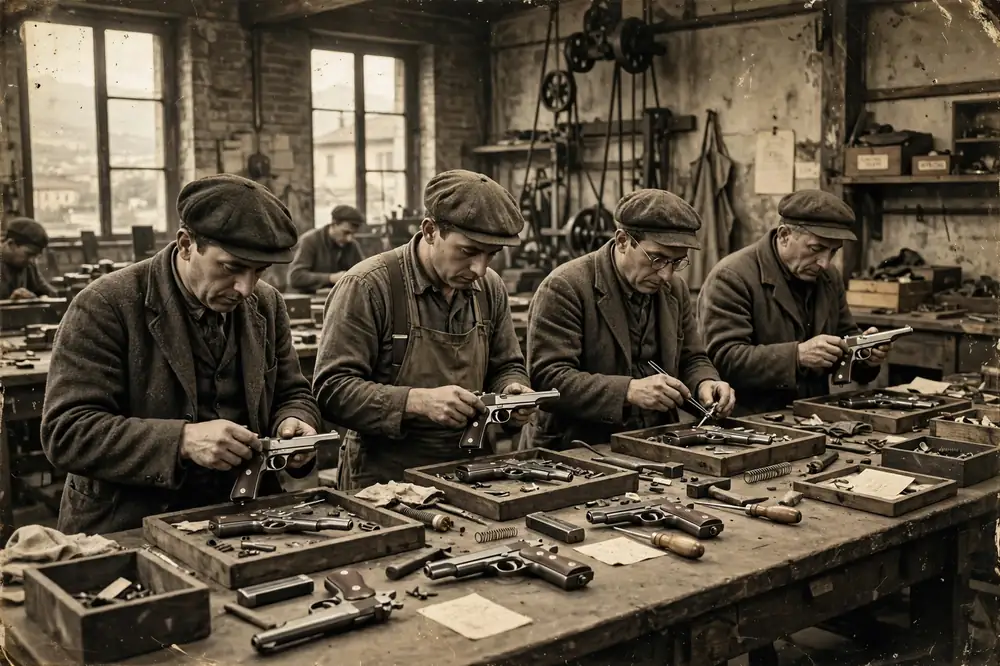
The Beretta company, founded in 1526 in Gardone Val Trompia in northern Italy, is one of the oldest firearms manufacturers in the world, and by the 1930s it was the main supplier of pistols to the Italian armed forces. The Italian Army had adopted the Beretta M1923 and the Beretta M1931, and in 1934 it asked Beretta for a new pistol that would be smaller, lighter and simpler than the pistols it already used. The designer, Tullio Marengoni, who had designed the Beretta M1923 and the Beretta M1931, took the M1931 as his starting point and simplified it: he made the slide open at the top, and he chambered the pistol for the .380 ACP cartridge, which the Italian Army had adopted as its standard pistol cartridge under the name 9 mm Corto. The result was the M1934, which was adopted by the Italian Army, Navy and Air Force in 1934, and which was also adopted by the Italian police.
The Design Brief of 1934
The M1934 was designed for officers, and this section explains the brief that Tullio Marengoni was given in 1934 and the two decisions that shaped the pistol: who it was for, and which cartridge it would fire. The first part looks at a pistol for officers: it had to be small enough to be carried in a holster all day without discomfort, light enough not to be a burden on the march, and simple enough to be used by a man who was not a weapons specialist. The pistol’s blowback action, in which the slide is held closed only by the spring and by its own weight, was simple and reliable, and it needed no locking mechanism, which made the pistol cheaper and easier to build. The pistol had an external safety lever on the left side of the frame, and a magazine release at the heel of the grip, which was the standard arrangement of the time. The M1934’s open-top slide, in which the top of the slide is cut away to expose the barrel, was a Beretta trademark, and it made the pistol easy to clear if a cartridge jammed, and it gave the pistol its distinctive appearance. The second part explains the choice of the .380 ACP cartridge, which was a compromise. The cartridge was weaker than the 9 mm Parabellum, but it was smaller and lighter, and it allowed the pistol to be small and light, and its recoil was gentle, which made the pistol easy to shoot accurately. The Italian Army had adopted the 9 mm Corto as its standard pistol cartridge in the 1920s, and it had large stocks of the ammunition, and the M1934 was designed to use it. The cartridge’s weakness was a disadvantage in combat, where a pistol is used at close range and where stopping power matters, but the Italian Army accepted the compromise, because it believed that a pistol was a secondary weapon, and that its main value was as a weapon of last resort and as a symbol of authority. The M1934’s cartridge, like the pistol itself, was a product of the Italian Army’s doctrine, and it served that doctrine well enough for the pistol to remain in service for more than fifty years.
A Pistol for Officers
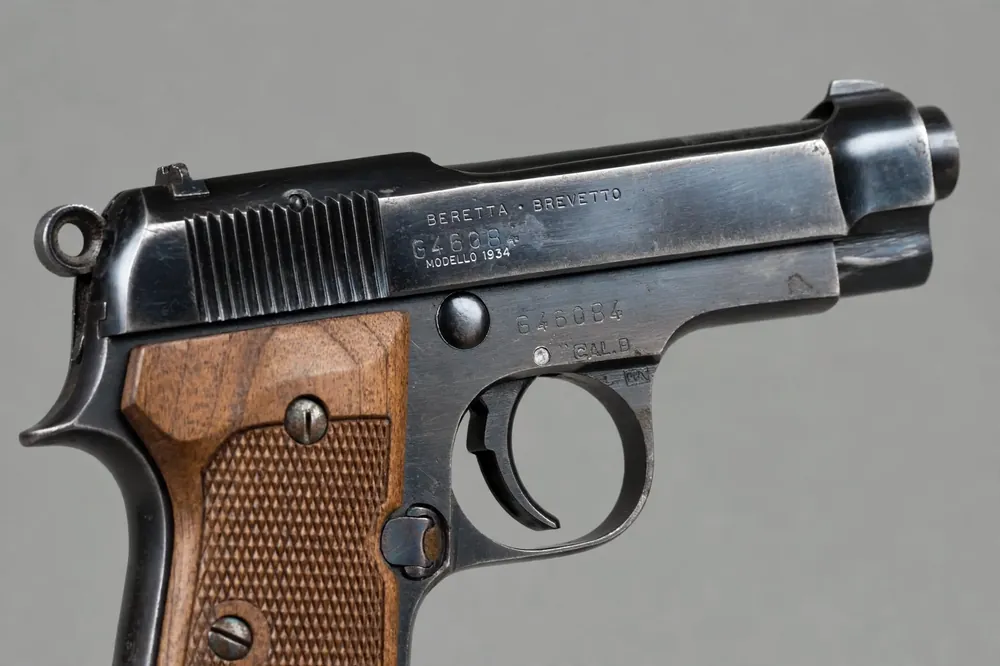
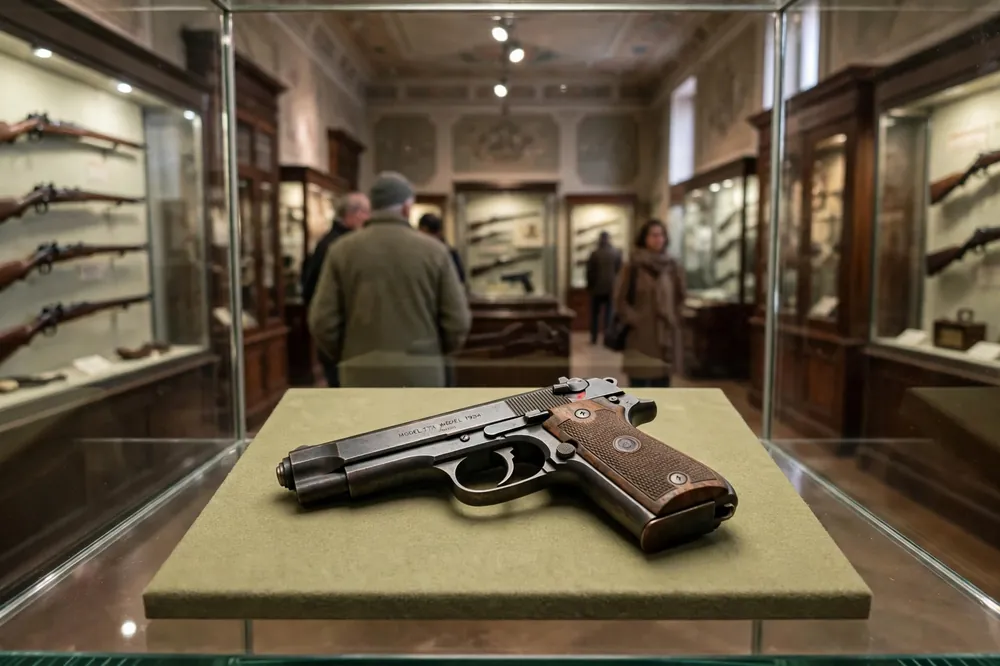
The M1934 was designed for officers, and its design reflects that role. It had to be small enough to be carried in a holster all day without discomfort, light enough not to be a burden on the march, and simple enough to be used by a man who was not a weapons specialist. The pistol’s blowback action, in which the slide is held closed only by the spring and by its own weight, was simple and reliable, and it needed no locking mechanism, which made the pistol cheaper and easier to build. The pistol had an external safety lever on the left side of the frame, and a magazine release at the heel of the grip, which was the standard arrangement of the time. The M1934’s open-top slide, in which the top of the slide is cut away to expose the barrel, was a Beretta trademark, and it made the pistol easy to clear if a cartridge jammed, and it gave the pistol its distinctive appearance.
The .380 ACP Cartridge
The choice of the .380 ACP cartridge was a compromise. The cartridge was weaker than the 9 mm Parabellum, but it was smaller and lighter, and it allowed the pistol to be small and light, and its recoil was gentle, which made the pistol easy to shoot accurately. The Italian Army had adopted the 9 mm Corto as its standard pistol cartridge in the 1920s, and it had large stocks of the ammunition, and the M1934 was designed to use it. The cartridge’s weakness was a disadvantage in combat, where a pistol is used at close range and where stopping power matters, but the Italian Army accepted the compromise, because it believed that a pistol was a secondary weapon, and that its main value was as a weapon of last resort and as a symbol of authority. The M1934’s cartridge, like the pistol itself, was a product of the Italian Army’s doctrine, and it served that doctrine well enough for the pistol to remain in service for more than fifty years.
Adoption and Early Production
The M1934 was adopted in 1934, and production began at the Beretta factory in Gardone Val Trompia, where the pistol was built in large numbers for the Italian Army, Navy and Air Force, and for the police. The pistol was also sold commercially, and it was exported to a number of countries, including Romania, which adopted it as its standard pistol, and it was used by the Italian colonial forces in Libya and in East Africa. By 1940, when Italy entered the Second World War, the M1934 was the standard pistol of the Italian armed forces, and it was carried by officers on every front on which Italy fought. The pistol’s early production was marked by high quality, with a blued finish and wooden grips, and the wartime pistols, which were built in larger numbers and with less care, were often finished more roughly, with a duller blue and with plastic grips.
4. Design
Blowback Action and Open Slide
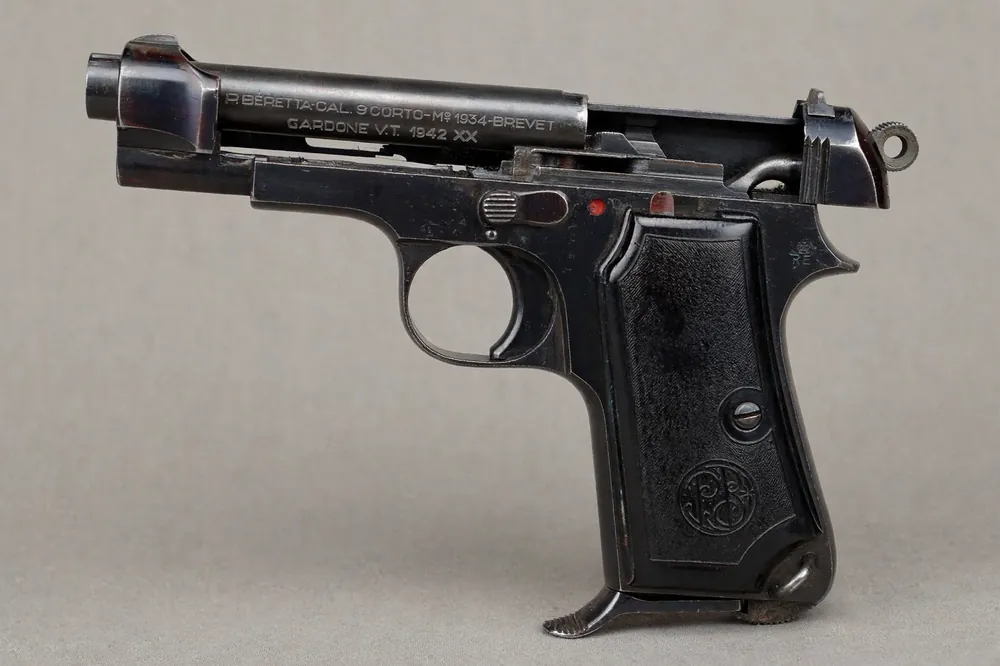
The M1934 was a blowback-operated, single-action semi-automatic pistol, which meant that the slide was held closed by the recoil spring and by its own weight, and that the gas from each shot pushed the slide back, ejected the empty case and loaded the next round. The trigger was single action, which meant that the hammer had to be cocked by the slide before the first shot, and that each shot cocked the hammer for the next. The pistol’s most distinctive feature was its open-top slide, in which the top of the slide is cut away, exposing the barrel along its length. The open slide made the pistol lighter, it made it easy to see whether a cartridge was in the chamber, and it made it easy to clear a jam, and it became a Beretta trademark that is still used on Beretta pistols today. The pistol had fixed iron sights, a front blade and a rear notch, which were adequate for the short ranges at which a pistol is used.
Size, Weight and Handling
The M1934 was one of the smallest service pistols of the war, and this section explains what its compact size meant in the hand, and how its safety and magazine release worked in practice. The first part describes a compact service pistol: the M1934 was 152 mm long, 120 mm high and about 30 mm wide, and it weighed about 660 grams unloaded, which made it one of the smallest service pistols of the war. Its small size made it easy to carry in a holster, and its slim profile made it easy to draw, and its light weight meant that it did not tire the man who carried it. The pistol’s grip was small, and it was fitted with wooden grips on early models and with plastic grips on wartime models, and the grip angle was comfortable for most hands, although men with large hands found the pistol small and difficult to hold firmly. The pistol’s magazine held seven rounds, plus one in the chamber, which was fewer than the eight rounds of the German Walther P38 and the seven rounds of the American Colt M1911, but which was adequate for a weapon that was intended to be used at close range and in an emergency. The second part covers safety and the magazine release: the M1934 had a safety lever on the left side of the frame, which locked the slide and the trigger when it was engaged, and a magazine release at the heel of the grip, which required the shooter to use two hands to change the magazine. The heel release was the standard arrangement of the time, and it was slower than the button release on the side of the grip that later pistols used, but it was secure, and it prevented the magazine from being released accidentally. The pistol had no decocker, and the hammer had to be lowered manually if the pistol was to be carried with a round in the chamber and the hammer down, which was a procedure that required care. The M1934’s controls were simple and robust, and they worked reliably in the dust of North Africa and in the cold of Russia, where more complex pistols sometimes failed.
A Compact Service Pistol
The M1934 was 152 mm long, 120 mm high and about 30 mm wide, and it weighed about 660 grams unloaded, which made it one of the smallest service pistols of the war. Its small size made it easy to carry in a holster, and its slim profile made it easy to draw, and its light weight meant that it did not tire the man who carried it. The pistol’s grip was small, and it was fitted with wooden grips on early models and with plastic grips on wartime models, and the grip angle was comfortable for most hands, although men with large hands found the pistol small and difficult to hold firmly. The pistol’s magazine held seven rounds, plus one in the chamber, which was fewer than the eight rounds of the German Walther P38 and the seven rounds of the American Colt M1911, but which was adequate for a weapon that was intended to be used at close range and in an emergency.
Safety and Magazine Release
The M1934 had a safety lever on the left side of the frame, which locked the slide and the trigger when it was engaged, and a magazine release at the heel of the grip, which required the shooter to use two hands to change the magazine. The heel release was the standard arrangement of the time, and it was slower than the button release on the side of the grip that later pistols used, but it was secure, and it prevented the magazine from being released accidentally. The pistol had no decocker, and the hammer had to be lowered manually if the pistol was to be carried with a round in the chamber and the hammer down, which was a procedure that required care. The M1934’s controls were simple and robust, and they worked reliably in the dust of North Africa and in the cold of Russia, where more complex pistols sometimes failed.
Reliability and Accuracy
The M1934 was known for its reliability: it fed, fired and ejected reliably with standard .380 ACP ammunition, and it continued to work when it was dirty, when it was dry and when it was cold, which were the conditions in which Italian soldiers fought. The pistol’s accuracy was adequate for its role: at 25 metres, a trained shooter could hit a man-sized target consistently, and at 50 metres the pistol was still useful, although its small sights and its short barrel made accurate shooting at longer ranges difficult. The pistol’s recoil was gentle, which made it easy to shoot quickly and accurately, and its smooth action made it pleasant to fire, which was one reason why Allied soldiers who captured one often kept it and used it themselves. The M1934 was not a target pistol, and it was not designed to be one, but it was a reliable and accurate service pistol, and it did its job well.
5. Variants
The M1934 and the M1935
| Variant | Years | Key features | Production |
|---|---|---|---|
| M1934 | 1934–1991 | .380 ACP (9 mm Corto); 7-round magazine; standard Italian service pistol | About 1,080,000 |
| M1935 | 1935–1967 | .32 ACP (7.65 mm Browning); same design, smaller cartridge; for Air Force and police | Included in total for the series |
| M1934 (wartime) | 1940–1945 | Rougher finish; plastic grips; simplified production | Included above |
| M1934 (post-war) | 1945–1991 | Improved finish; continued Italian service | Included above |
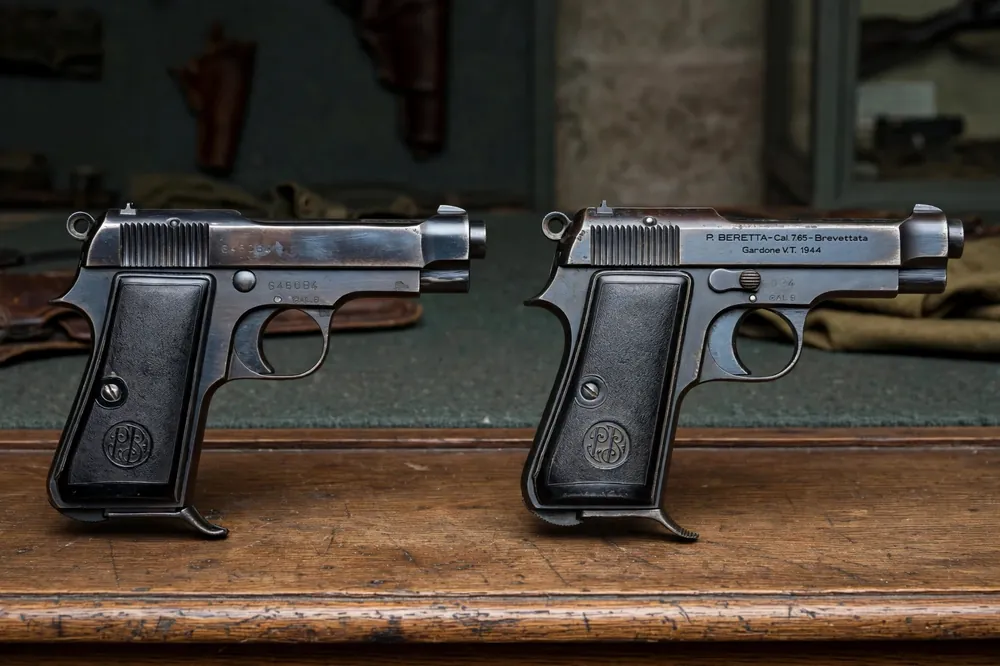
The M1934’s main variant was the M1935, which was the same pistol chambered for the .32 ACP cartridge (7.65 mm Browning), and which was issued to the Italian Air Force and to the police, who preferred the smaller cartridge for its even gentler recoil. The M1935 was built in smaller numbers than the M1934, and it was produced until 1967, while the M1934 continued in production until 1991. The two pistols were identical in appearance, except for the markings on the slide, and they used the same holsters and the same spare parts, except for the barrel and the magazine. The M1934 was also produced in a number of commercial versions, with different finishes and with different grips, and it was sold in the United States and in other countries after the war, where it became a popular pocket pistol.
Wartime and Post-War Production
Production of the M1934 ran from 1934 to 1991, and this section explains how the pistol changed as wartime demand grew, and why it then stayed in service for almost six decades. The first part covers wartime shortcuts: during the war, the M1934 was built in large numbers, and the quality of the finish declined as production increased and as materials became scarce. Wartime pistols often had a duller blue finish, plastic grips instead of wooden grips, and rougher machining, and the markings on the slide were sometimes simplified. The pistols still worked reliably, and the Italian Army accepted them, because it needed pistols and because the M1934’s design was simple enough to be built quickly even with less skilled labour. After the war, production returned to higher standards, and the post-war M1934 pistols, which were built for the Italian Army and for the police, had a better finish and wooden grips again, and they were marked with the Beretta name and with the year of production. The second part explains the long service life: the M1934 remained in Italian service until 1991, when it was finally replaced by the Beretta 92, which was chambered for the 9 mm Parabellum cartridge and which was a larger and more powerful pistol. The M1934’s long service life, fifty-seven years from its adoption to its retirement, is one of the longest of any military pistol, and it is a measure of the pistol’s success. The pistol was used by the Italian Army in the Second World War, in the post-war Italian Army, in the Italian police and in the armies of other countries, and it was still being carried by Italian officers in the 1980s, when it was already an old design. The M1934’s longevity is a tribute to Marengoni’s design, and to the Beretta company’s ability to build a pistol that was simple, reliable and well suited to its role.
Wartime Shortcuts
During the war, the M1934 was built in large numbers, and the quality of the finish declined as production increased and as materials became scarce. Wartime pistols often had a duller blue finish, plastic grips instead of wooden grips, and rougher machining, and the markings on the slide were sometimes simplified. The pistols still worked reliably, and the Italian Army accepted them, because it needed pistols and because the M1934’s design was simple enough to be built quickly even with less skilled labour. After the war, production returned to higher standards, and the post-war M1934 pistols, which were built for the Italian Army and for the police, had a better finish and wooden grips again, and they were marked with the Beretta name and with the year of production.
The Long Service Life
The M1934 remained in Italian service until 1991, when it was finally replaced by the Beretta 92, which was chambered for the 9 mm Parabellum cartridge and which was a larger and more powerful pistol. The M1934’s long service life — fifty-seven years from its adoption to its retirement — is one of the longest of any military pistol, and it is a measure of the pistol’s success. The pistol was used by the Italian Army in the Second World War, in the post-war Italian Army, in the Italian police and in the armies of other countries, and it was still being carried by Italian officers in the 1980s, when it was already an old design. The M1934’s longevity is a tribute to Marengoni’s design, and to the Beretta company’s ability to build a pistol that was simple, reliable and well suited to its role.
6. Operational History
North Africa, 1940–1943
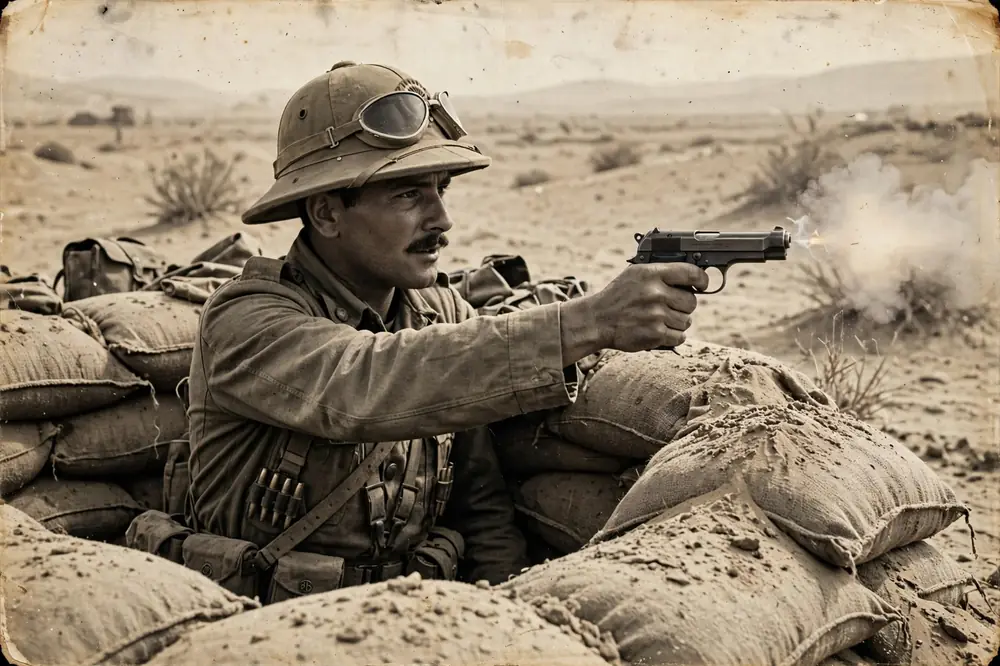
The M1934 first saw combat in North Africa, where Italian officers carried it in the fighting in Libya and in Egypt, and where it was used in the desert war against British and Commonwealth forces. The pistol was carried in a holster on the officer’s belt, and it was used at close range, in the fighting for oases and for towns, and in the defence of positions that had been overrun by British tanks. The pistol’s reliability in the dust and heat of the desert was valued by Italian officers, who found that it continued to work when other pistols jammed, and its small size made it easy to carry in a tank or in a vehicle, where a larger pistol would have been in the way. The M1934 was captured in large numbers by British and Commonwealth soldiers, who kept it as a souvenir and who often used it themselves, and the pistol became one of the most common souvenirs of the North African campaign.
The Balkans and Russia
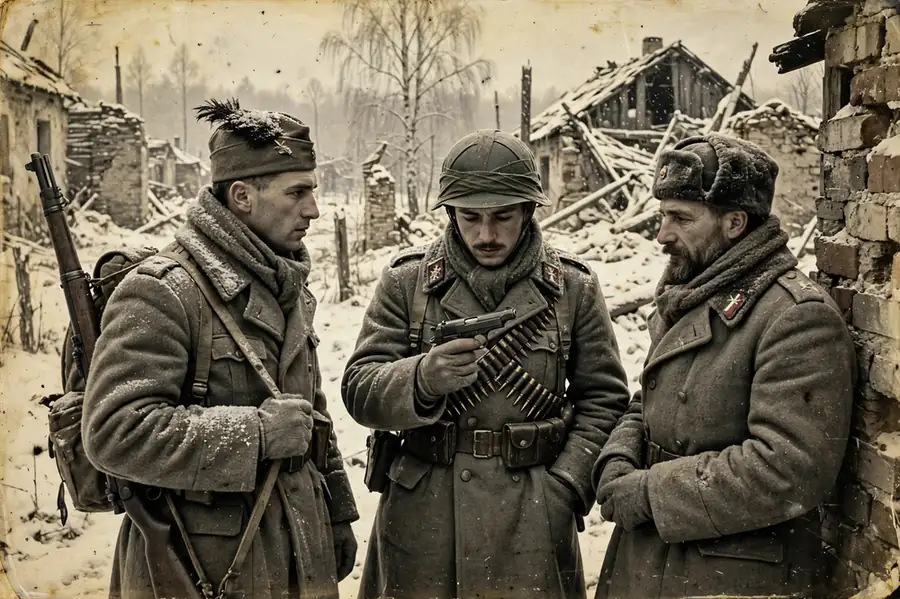
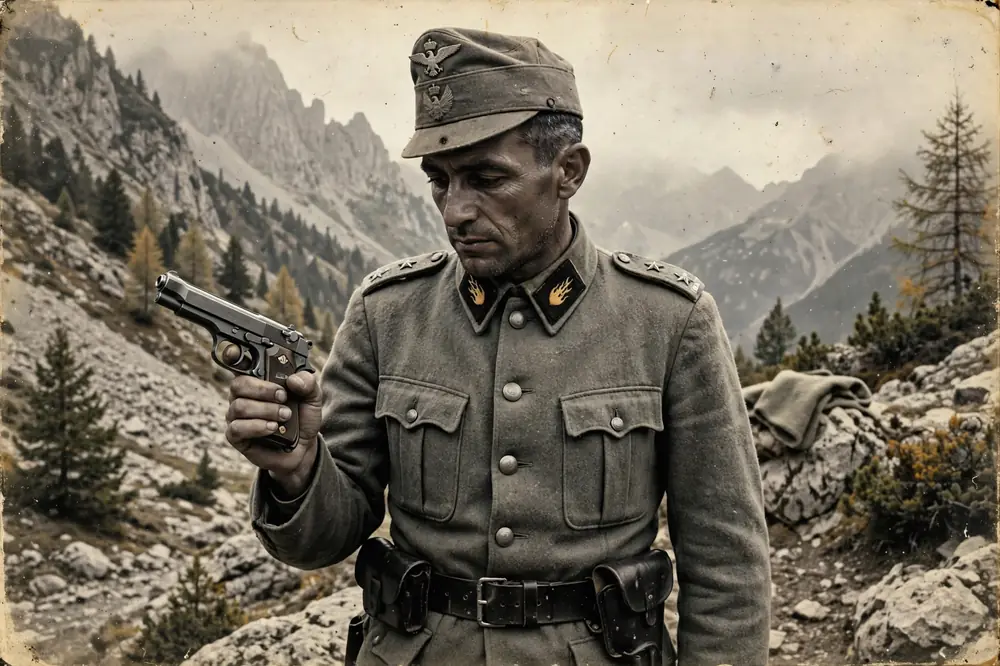
After North Africa, the M1934 was carried into two harder theatres, and this section follows the pistol through the Balkans and onto the Eastern Front. The first part covers the fighting in Yugoslavia and Greece: in the Balkans, the M1934 was carried by Italian officers in the fighting in Yugoslavia and in Greece, where it was used against partisans and against Greek and Yugoslav soldiers in the mountains and in the towns. The pistol was used at close range, in ambushes and in house-to-house fighting, and its small size made it easy to carry in the mountains, where Italian soldiers had to march long distances with heavy loads. The M1934 was also used by Italian officers in the occupation of Yugoslavia and Greece, where it was a symbol of authority and where it was carried on patrols and at checkpoints. The pistol’s service in the Balkans was hard, and it was used in conditions that were very different from the desert of North Africa, but it continued to work reliably, and Italian officers trusted it. The second part turns to the Eastern Front, where the M1934 was carried by Italian officers in the Italian Expeditionary Corps in Russia, which fought on the Don and in the Caucasus, and which was destroyed in the Soviet offensive of January 1943. The pistol was used in the cold of the Russian winter, where its simple blowback action continued to work when more complex weapons froze, and it was used in the fighting for villages and for towns on the Don, where Italian officers used it at close range against Soviet soldiers. The M1934’s service in Russia was the hardest of its wartime service, and many of the pistols carried there were lost with the men who carried them, in the retreat from the Don and in the encirclement at Stalingrad. The pistol’s survival in the cold of Russia is a testament to its design, and to the Beretta company’s ability to build a pistol that worked in any climate.
Fighting in Yugoslavia and Greece
In the Balkans, the M1934 was carried by Italian officers in the fighting in Yugoslavia and in Greece, where it was used against partisans and against Greek and Yugoslav soldiers in the mountains and in the towns. The pistol was used at close range, in ambushes and in house-to-house fighting, and its small size made it easy to carry in the mountains, where Italian soldiers had to march long distances with heavy loads. The M1934 was also used by Italian officers in the occupation of Yugoslavia and Greece, where it was a symbol of authority and where it was carried on patrols and at checkpoints. The pistol’s service in the Balkans was hard, and it was used in conditions that were very different from the desert of North Africa, but it continued to work reliably, and Italian officers trusted it.
The Eastern Front
On the Eastern Front, the M1934 was carried by Italian officers in the Italian Expeditionary Corps in Russia, which fought on the Don and in the Caucasus, and which was destroyed in the Soviet offensive of January 1943. The pistol was used in the cold of the Russian winter, where its simple blowback action continued to work when more complex weapons froze, and it was used in the fighting for villages and for towns on the Don, where Italian officers used it at close range against Soviet soldiers. The M1934’s service in Russia was the hardest of its wartime service, and many of the pistols carried there were lost with the men who carried them, in the retreat from the Don and in the encirclement at Stalingrad. The pistol’s survival in the cold of Russia is a testament to its design, and to the Beretta company’s ability to build a pistol that worked in any climate.
Italy, 1943–1945
After Italy’s armistice in September 1943, the M1934 was used by both sides in the fighting in Italy: by the Italian forces that fought with the Allies, by the Italian Social Republic that fought with Germany, and by the partisans who fought against both. The pistol was carried by officers, by partisans and by police, and it was used in the fighting for Rome, for Florence and for the towns of northern Italy, where it was used at close range in street fighting and in ambushes. The M1934’s service in Italy was the last of its wartime service, and it was used in the country in which it had been designed and built, by men who had carried it since 1934 and by young men who had only just been issued it. The pistol’s story in Italy is a reminder that a weapon can be used by both sides in a civil war, and that the M1934, which had been the pistol of the Italian Army, became the pistol of the Italian people in the last years of the war.
7. Performance and Specifications
Ballistics and Handling
| Specification | Beretta M1934 |
|---|---|
| Cartridge | .380 ACP (9×17 mm) |
| Bullet weight | About 6.0 g |
| Muzzle velocity | About 280–290 m/s |
| Muzzle energy | About 240–250 joules |
| Effective range | About 25–50 m |
| Magazine capacity | 7 rounds |
| Weight (unloaded) | About 660 g |
| Length | 152 mm |
| Barrel length | 93.5 mm |
| Action | Blowback, single action |
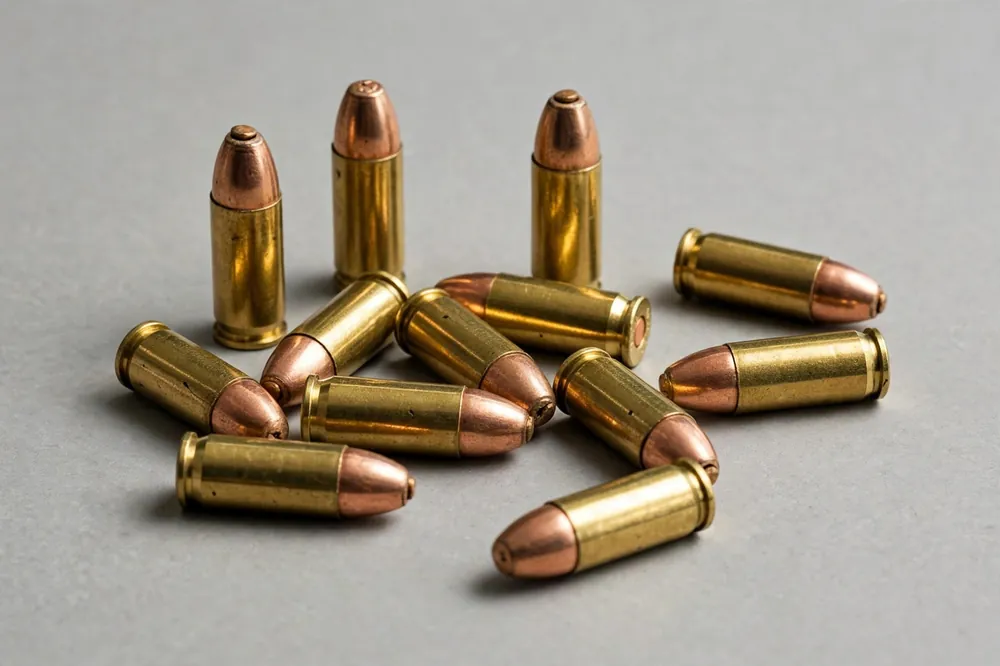
The table shows the M1934’s modest ballistics: a muzzle velocity of about 280–290 metres per second, and a muzzle energy of about 240–250 joules, which was less than the 9 mm Parabellum’s energy of about 450–500 joules, and less than the .45 ACP’s energy of about 450–550 joules. The figures are approximate, and they vary between sources, because different ammunition gave different velocities, and because the pistol’s short barrel gave a lower velocity than a longer barrel would have. The reader should treat the numbers as a guide to the pistol’s power, rather than as exact measurements, and should remember that a pistol’s effectiveness depends not only on its muzzle energy, but on where the bullet hits, and on the training of the man who fires it.
Comparison with Rival Pistols
Compared with its rivals, the M1934 was smaller, lighter and less powerful than the German Walther P38 and the American Colt M1911, but it was more compact and easier to carry, and it was more reliable in dirty conditions than the Luger, which was sensitive to dust and to poor maintenance. The Walther P38, which was chambered for the 9 mm Parabellum and which held eight rounds, was a more powerful pistol, and it was the standard pistol of the German Army; the Colt M1911, which was chambered for the .45 ACP and which held seven rounds, was the most powerful pistol of the war, and it was the standard pistol of the American Army. The M1934 was not designed to compete with those pistols in power, and it did not, but it was designed to be a pistol that an officer could carry all day, and in that role it was successful, and Italian officers who carried it trusted it, even though they knew that it was less powerful than the pistols of their enemies and their allies.
Why the .380 ACP Was Enough
The .380 ACP cartridge was enough for the M1934’s role, because the pistol was intended to be used at close range, where a bullet that hits its target matters more than the bullet’s energy, and because the Italian Army believed that a pistol was a secondary weapon, and that its main value was as a weapon of last resort. The cartridge’s gentle recoil made the pistol easy to shoot accurately, and its small size allowed the pistol to be small and light, which were the qualities that mattered most to the officers who carried it. The .380 ACP cartridge is still in use today, in pocket pistols and in police pistols, and it remains a popular cartridge for self-defence, because it is powerful enough for close-range use and gentle enough to be fired accurately by a shooter who is not a specialist. The M1934’s cartridge, like the pistol itself, was a compromise, and it was a compromise that worked.
The .380 ACP in Combat
The .380 ACP cartridge, which the M1934 fired, was a subject of debate among Italian officers, who knew that it was less powerful than the 9 mm Parabellum used by German pistols, and who wondered whether it was powerful enough for combat. The cartridge’s muzzle energy, at about 240 to 250 joules, was about half that of the 9 mm Parabellum, and its stopping power, at close range, was adequate, but not outstanding, and Italian officers were taught to aim carefully, and to fire more than once, if they had to use their pistol in combat. The cartridge’s gentle recoil, however, made the pistol easy to shoot accurately, and its small size allowed the pistol to be small and light, which were the qualities that mattered most to the officers who carried it, and who carried it all day, in a holster, without it getting in the way.
8. Operators
Italy
The M1934 was used by the Italian Army, Navy and Air Force, and by the Italian police, from 1934 to 1991, and it was the standard service pistol of Italy for more than half a century. The pistol was carried by officers on every front on which Italy fought in the Second World War, and it was carried by Italian officers in the post-war Italian Army, in the Italian police and in the Carabinieri, who used it as their standard pistol until it was replaced by the Beretta 92. The pistol’s long service in Italy is a measure of its success, and it is a reminder that a pistol that is simple, reliable and well suited to its role can remain in service for decades, even when newer and more powerful pistols are available. The M1934 was an Italian pistol, built in Italy, used by Italians, and it became a symbol of the Italian armed forces in the Second World War and in the decades that followed.
Other Users
Italy was not the only country to carry the M1934, and this section covers the export customers who adopted it and the Allied soldiers who picked it up on the battlefield. The first part looks at Romania and other export customers: the M1934 was exported to Romania, which adopted it as its standard pistol, and to a number of other countries, where it was used by armies and by police forces. The Romanian M1934 pistols were marked with Romanian acceptance marks, and they were used by Romanian officers in the Second World War, on the Eastern Front and in the fighting in Romania in 1944. The pistol was also sold commercially in the United States and in other countries, where it became a popular pocket pistol, and it was used by police forces in a number of countries, who valued it for its small size and its reliability. The M1934’s export success was a measure of Beretta’s reputation, and it helped to make Beretta one of the best-known firearms manufacturers in the world. The second part covers captured pistols in Allied hands: the M1934 was captured in large numbers by Allied soldiers in North Africa, in Italy and in the Balkans, and many of those soldiers kept the pistol as a souvenir and used it themselves. British, American and Commonwealth soldiers who captured a M1934 often preferred it to their own pistols for its compactness and its smooth action, and the pistol became one of the most common souvenirs of the Italian campaign. Captured M1934 pistols were also used by partisans in Yugoslavia and in Italy, who used them against German and Italian soldiers, and the pistol’s small size made it easy to hide and to carry on operations behind enemy lines. The M1934’s use by so many different armies is a measure of its success, and it ensures that the pistol is remembered not only as an Italian weapon, but as a weapon of the Second World War as a whole.
Romania and Other Export Customers
The M1934 was exported to Romania, which adopted it as its standard pistol, and to a number of other countries, where it was used by armies and by police forces. The Romanian M1934 pistols were marked with Romanian acceptance marks, and they were used by Romanian officers in the Second World War, on the Eastern Front and in the fighting in Romania in 1944. The pistol was also sold commercially in the United States and in other countries, where it became a popular pocket pistol, and it was used by police forces in a number of countries, who valued it for its small size and its reliability. The M1934’s export success was a measure of Beretta’s reputation, and it helped to make Beretta one of the best-known firearms manufacturers in the world.
Captured Pistols in Allied Hands
The M1934 was captured in large numbers by Allied soldiers in North Africa, in Italy and in the Balkans, and many of those soldiers kept the pistol as a souvenir and used it themselves. British, American and Commonwealth soldiers who captured a M1934 often preferred it to their own pistols for its compactness and its smooth action, and the pistol became one of the most common souvenirs of the Italian campaign. Captured M1934 pistols were also used by partisans in Yugoslavia and in Italy, who used them against German and Italian soldiers, and the pistol’s small size made it easy to hide and to carry on operations behind enemy lines. The M1934’s use by so many different armies is a measure of its success, and it ensures that the pistol is remembered not only as an Italian weapon, but as a weapon of the Second World War as a whole.
9. Legacy and Influence
The Beretta Open Slide
The M1934’s most lasting influence was its open-top slide, which became a Beretta trademark and which is still used on Beretta pistols today, including the Beretta 92, which is the standard pistol of the United States armed forces. The open slide made the pistol lighter, it made it easy to see whether a cartridge was in the chamber, and it made it easy to clear a jam, and it gave the pistol its distinctive appearance, which is still recognisable on Beretta pistols more than ninety years after the M1934 was introduced. The M1934’s design influenced the design of later Beretta pistols, and it established Beretta as a manufacturer of pistols that were simple, reliable and well made, a reputation that the company still enjoys today. The M1934 is therefore not only a pistol of the Second World War, but the ancestor of the pistols that Beretta makes today.
A Pistol That Outlived Its Regime
The M1934 remained in Italian service until 1991, long after the Fascist regime that had adopted it had fallen, and long after the war in which it had first been used had ended. The pistol’s long service life is a reminder that a weapon can outlive the regime that adopted it, and that a good design can serve many different governments and many different armies. The M1934 was used by the Fascist Italian Army, by the post-war Italian Army, by the Italian police and by the armies of other countries, and it was carried by men who fought on opposite sides in the Second World War, and by men who had never known war at all. The pistol’s longevity is a tribute to Marengoni’s design, and to the Beretta company’s ability to build a pistol that was simple, reliable and well suited to its role, and that could be used by anyone, in any climate, for more than half a century.
The M1934 in Popular Culture
In popular culture the M1934 is remembered as the pistol of the Italian officer in the Second World War, and it appears in films about North Africa and about Italy, where it is shown in the hands of Italian officers and of partisans. The pistol’s small size and its distinctive open slide make it instantly recognisable, and its story — a pistol designed for officers, used on every front on which Italy fought, and kept as a souvenir by the Allied soldiers who captured it — is one of the most human stories of the Italian war. The M1934 is also a popular collectors’ item, and surviving examples are held in museums and in private collections in Italy, in Europe and in the United States, where they are displayed as examples of Italian firearms design and as reminders of the Second World War in the Mediterranean.
The M1934 as a Collector’s Pistol
Today the Beretta M1934 is a popular collectors’ pistol, and surviving examples, especially wartime examples with military markings, are sought after by collectors in Italy, in Europe and in the United States, who value the pistol for its history, for its association with the North African campaign, and for its distinctive open-top slide. The pistol’s small size and its smooth action make it pleasant to shoot, and modern shooters who fire an M1934 are impressed by how well it works, even after more than eighty years, and by how simple and reliable its design is. The M1934’s popularity among collectors is a measure of its success, and it ensures that the pistol will be preserved, in museums and in private collections, long after it has ceased to be a service pistol, and that its story will be told to future generations.
10. Surviving Examples
Museums in Italy
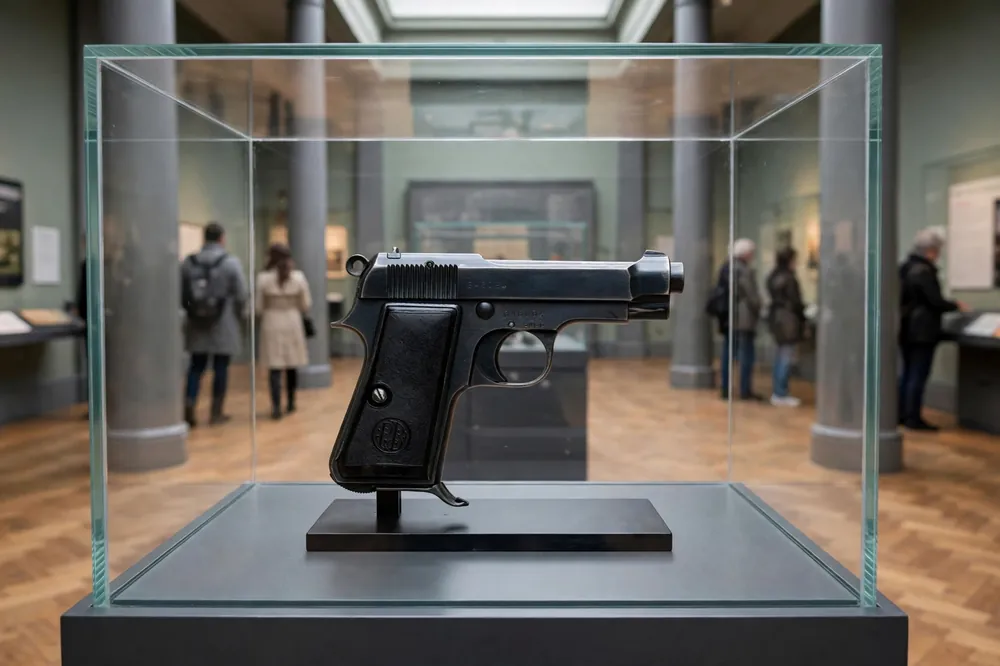
Surviving M1934 pistols are held in museums in Italy, including the Beretta Museum in Gardone Val Trompia, where the pistol is displayed alongside other Beretta pistols from the company’s long history, and the Military Museum in Rome, where it is displayed as the standard pistol of the Italian armed forces in the Second World War. The Beretta Museum displays the M1934 with its wooden grips and its blued finish, and it tells the story of Marengoni’s design and of the pistol’s long service life, from its adoption in 1934 to its retirement in 1991. The museum is the best place to see a M1934 in the town in which it was designed and built, and to learn about the Beretta company, which has been making firearms in Gardone Val Trompia for almost five hundred years.
Museums Abroad and Private Collections
Surviving M1934 pistols are held in museums and private collections far beyond Italy, and this section tells the reader where to find them in Europe and in the United States, and how best to see one today. The first part covers Europe and the United States: surviving M1934 pistols are also held in museums in Europe and in the United States, including the Imperial War Museum in London, the Bundeswehr Military History Museum in Dresden and the National WWII Museum in New Orleans, where the pistol is displayed as an example of Italian infantry weapons. Many of these pistols were captured by Allied soldiers during the war and were later sent to museums, where they are displayed with the holsters and the ammunition that Italian officers carried with them. Private collectors in Europe and in the United States also hold M1934 pistols, and the pistol is one of the most sought-after Italian weapons by collectors, because of its history, its association with the North African campaign and its distinctive open slide. The pistol’s survival in so many museums is a measure of its historical importance. The second part is a practical guide to seeing a Beretta M1934 today: for most visitors, the easiest way to see a Beretta M1934 is at the Beretta Museum in Gardone Val Trompia, where the pistol is displayed in the context of the company’s history, or at the Imperial War Museum in London, where it is displayed in the context of the Second World War in the Mediterranean. Visitors who cannot travel to Italy or to London can see a M1934 at the National WWII Museum in New Orleans, where the pistol is displayed with other Italian weapons. The pistol’s small size makes it easy to miss in a museum gallery, but its story, which is told on the label beside it, is one of the most interesting stories of the Italian war: a pistol designed for officers, used on every front, and kept as a souvenir by the soldiers who captured it.
Europe and the United States
Surviving M1934 pistols are also held in museums in Europe and in the United States, including the Imperial War Museum in London, the Bundeswehr Military History Museum in Dresden and the National WWII Museum in New Orleans, where the pistol is displayed as an example of Italian infantry weapons. Many of these pistols were captured by Allied soldiers during the war and were later sent to museums, where they are displayed with the holsters and the ammunition that Italian officers carried with them. Private collectors in Europe and in the United States also hold M1934 pistols, and the pistol is one of the most sought-after Italian weapons by collectors, because of its history, its association with the North African campaign and its distinctive open slide. The pistol’s survival in so many museums is a measure of its historical importance.
Seeing a Beretta M1934 Today
For most visitors, the easiest way to see a Beretta M1934 is at the Beretta Museum in Gardone Val Trompia, where the pistol is displayed in the context of the company’s history, or at the Imperial War Museum in London, where it is displayed in the context of the Second World War in the Mediterranean. Visitors who cannot travel to Italy or to London can see a M1934 at the National WWII Museum in New Orleans, where the pistol is displayed with other Italian weapons. The pistol’s small size makes it easy to miss in a museum gallery, but its story, which is told on the label beside it, is one of the most interesting stories of the Italian war: a pistol designed for officers, used on every front, and kept as a souvenir by the soldiers who captured it.
Frequently Asked Questions
What is the Beretta M1934?
The Beretta M1934 was the standard service pistol of the Italian armed forces in the Second World War, designed by Tullio Marengoni. It was a compact blowback pistol chambered for the .380 ACP cartridge, and about 1,080,000 were built.
What cartridge did the Beretta M1934 use?
The M1934 used the .380 ACP cartridge, known in Italian service as the 9 mm Corto (9×17 mm). Its magazine held seven rounds.
What is the difference between the M1934 and the M1935?
The M1935 was the same pistol chambered for the smaller .32 ACP cartridge, and it was issued to the Italian Air Force and to the police. The M1934 used the .380 ACP cartridge and was the standard Army pistol.
How long was the Beretta M1934 in service?
The M1934 was in Italian service from 1934 to 1991, a service life of fifty-seven years, when it was replaced by the Beretta 92.
Was the Beretta M1934 a good pistol?
The M1934 was reliable, compact and easy to shoot, but its .380 ACP cartridge was less powerful than the 9 mm Parabellum used by German pistols and the .45 ACP used by American pistols. It was well suited to its role as an officer’s pistol.
Where can I see a Beretta M1934 today?
Surviving M1934 pistols are displayed at the Beretta Museum in Gardone Val Trompia, the Imperial War Museum in London and the National WWII Museum in New Orleans.
Sources
- Wikipedia, “Beretta M1934” — production of about 1,080,000, specifications, service from 1934 to 1991 and the M1935 variant.
- Beretta Museum, Gardone Val Trompia — the history of the M1934, Marengoni’s design and Beretta’s history.
- Ian V. Hogg and John Weeks, Pistols of the World (Krause Publications, 2004) — specifications and comparison with rival pistols.
- Chris Bishop, The Encyclopedia of Weapons of World War II (Sterling, 2002) — the M1934 in Italian service and its .380 ACP cartridge.
- David Miller, Fighting Men of World War II: Axis Forces (Stackpole Books, 2008) — Italian officers’ equipment in North Africa and Russia.
- John Walter, Guns of the Third Reich (Greenhill Books, 2004) — captured M1934 pistols and the Italian campaign.