 WAR ATLAS MILITARY HISTORY MAGAZINE · WWI — WWII
Deutschland-Class Cruiser: Germany’s Pocket Battleships
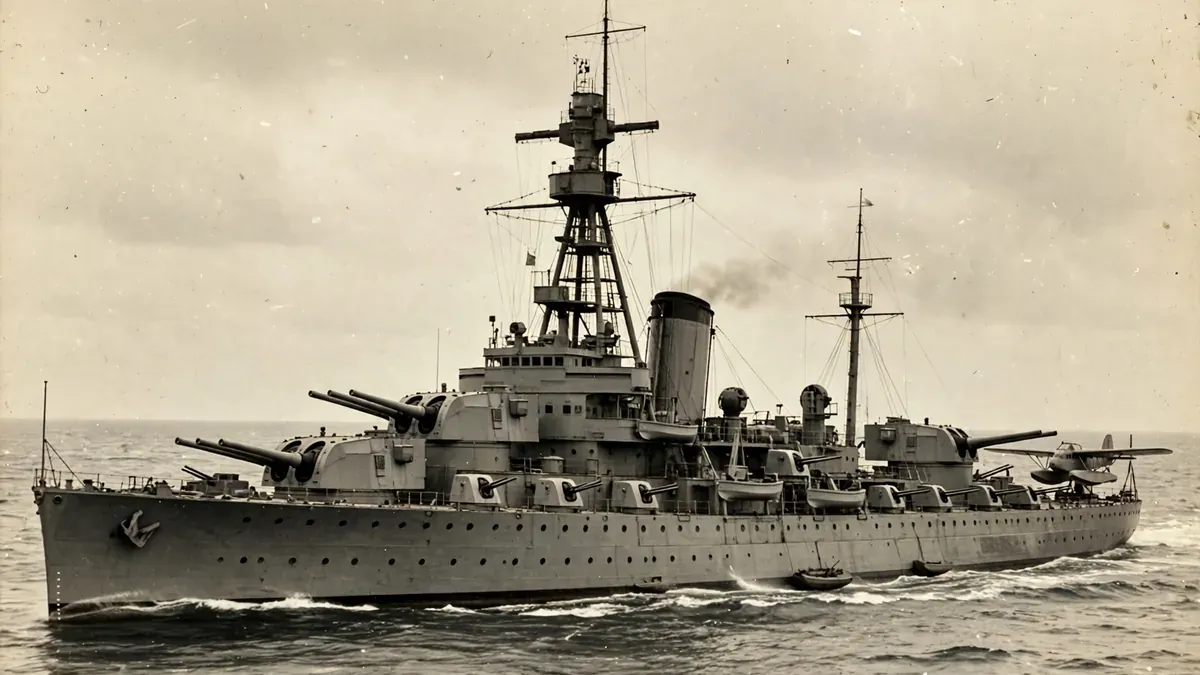
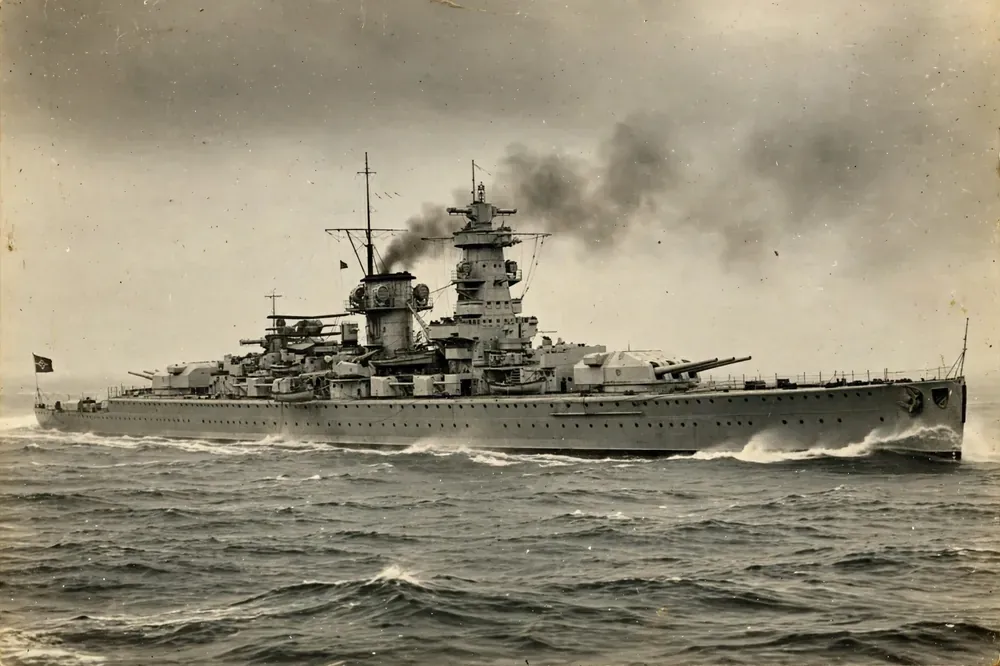
The Deutschland-class cruisers were three German warships — Deutschland, Admiral Scheer and Admiral Graf Spee — built in the late 1920s and early 1930s under the restrictions of the Treaty of Versailles, and known in Britain as “pocket battleships”. The nickname captured their paradox: ships the size of heavy cruisers that carried battleship-calibre guns. Each mounted six 28 cm (11-inch) guns in two triple turrets, weapons powerful enough to outgun any cruiser fast enough to catch them, while their diesel engines gave them a long range and a speed of about 28 knots that let them outrun any battleship strong enough to sink them. They were designed for a single purpose: commerce raiding against the sea lanes of a future enemy, and in that role they shaped the opening months of the Second World War.
The class is best remembered for the fate of the Admiral Graf Spee, whose cruise in the South Atlantic in 1939 ended in the Battle of the River Plate and her scuttling off Montevideo in December 1939 — the first major naval battle of the war and a propaganda victory for Britain. Her sisters had longer careers. Deutschland, renamed Lützow in 1940, served in Norway and the Arctic and was sunk by the Royal Air Force in 1945. Admiral Scheer became the most successful German surface raider of the war, sinking sixteen merchant ships in a single cruise in 1940–1941, and survived until she was bombed at Kiel in April 1945. Together the three ships represented Germany’s attempt to build a navy within treaty limits, and their design — welded construction, diesel propulsion, heavy guns on a small hull — was one of the most original warship designs of the interwar period.
The Deutschland class is remembered today as a clever evasion of a treaty and as a flawed concept. The ships were too slow to escape modern cruisers, too lightly armoured to survive a fight with a real battleship, and too few to change the balance of the naval war. But they were also a remarkable engineering achievement, and the Graf Spee’s last battle remains one of the most famous naval actions of the Second World War.
1. Key Facts
| Field | Value |
|---|---|
| Type | Heavy cruiser (Panzerschiff, “armoured ship”); called “pocket battleship” in Britain |
| Ships | Deutschland (later Lützow), Admiral Scheer, Admiral Graf Spee |
| Origin | Germany |
| Designed | 1925–1928; laid down 1929–1932 |
| In service | 1933–1945 |
| Built | 3 |
| Displacement | 10,000 tons nominal (treaty limit); approximately 12,000–14,000 tons actual full load |
| Length | Approximately 186 m (610 ft) |
| Beam | Approximately 20.7 m (68 ft) |
| Draught | Approximately 7.3 m (24 ft) |
| Main armament | 6 × 28 cm (11 in) guns in two triple turrets |
| Secondary armament | 8 × 15 cm (5.9 in) guns; 6 × 10.5 cm anti-aircraft guns (later increased) |
| Torpedo tubes | 8 × 53.3 cm (21 in) |
| Aircraft | 2 Arado Ar 196 floatplanes |
| Armour | Belt 80 mm, deck 40–45 mm, turrets 85–140 mm |
| Propulsion | 8 MAN diesel engines, approximately 54,000 hp (Deutschland and Scheer); 56,800 hp (Graf Spee) |
| Speed | Approximately 28 knots |
| Range | Approximately 8,900–10,000 nautical miles at 20 knots |
| Crew | Approximately 920–1,040 officers and men |
| Fate | Graf Spee scuttled 1939; Scheer bombed and sunk 1945; Lützow sunk 1945 |
2. Background and Development
The Treaty of Versailles
The Deutschland class was born of the Treaty of Versailles, which limited Germany to warships of no more than 10,000 tons displacement and guns of no more than 28 cm calibre, and forbade her to build submarines or aircraft carriers. The German Navy, the Reichsmarine, faced a problem: how to build a useful warship within those limits that could still fight the cruisers of France and Britain. The answer, developed by the naval architect Dr Hermann Burkhardt and his team, was a ship that used every available ton efficiently. Welding rather than riveting saved about 15 per cent of the hull’s weight; diesel engines, instead of steam turbines, saved weight and fuel and gave the ship an exceptional range; and the main battery of six 28 cm guns gave her a punch no cruiser could match.
Design Choices and Trade-offs
The design was a series of calculated compromises. The 10,000-ton limit forced the designers to accept thin armour: an 80 mm belt and a 40 mm deck were enough to stop cruiser shells at long range but not battleship fire. The single funnel, the tall tripod foremast and the two triple turrets gave the ships a distinctive silhouette. The diesel engines — eight nine-cylinder MAN diesels driving two shafts — were the largest marine diesels then built, and they gave the ships a range of nearly 9,000 nautical miles at cruising speed, enough to reach the South Atlantic and back without refuelling. The ships were laid down between 1929 and 1932 at Kiel and Wilhelmshaven, and they entered service between 1933 and 1936, at a time when Germany was still formally bound by the treaty but already preparing to break it.
The Pocket Battleship Nickname
The British press coined the term “pocket battleship” for the new ships, and the name stuck. It was accurate in one sense — the ships carried battleship guns — and misleading in another, since they were not battleships and could not fight one. The German Navy called them Panzerschiffe, “armoured ships”, a deliberately vague term that avoided calling them cruisers or battleships. In 1940, after the outbreak of war, the two surviving ships were reclassified as heavy cruisers, and Deutschland was renamed Lützow, partly to avoid the propaganda disaster of a ship named “Germany” being sunk, and partly because the name Lützow had become available. The renaming was a measure of how seriously the German leadership took the symbolic value of the ships.
3. Design
Hull, Armour and Layout
The hull of a Deutschland-class ship was long and relatively narrow, with a flush deck and a distinctive raked bow. Welding was used extensively, a novelty in large warships at the time, and it saved enough weight to allow the heavy main battery. The armour scheme was a compromise: an 80 mm belt protected the machinery and magazines, a 40 mm armoured deck covered the vitals, and the turrets had faces up to 140 mm thick. The conning tower was protected by 150 mm of armour. The layout placed the two triple turrets fore and aft, with the secondary battery of 15 cm guns in single mounts amidships, the torpedo tubes on the upper deck, and the aircraft catapult and hangar aft of the funnel. The tall tripod foremast carried the fire-control directors for the main battery.
Diesel Propulsion
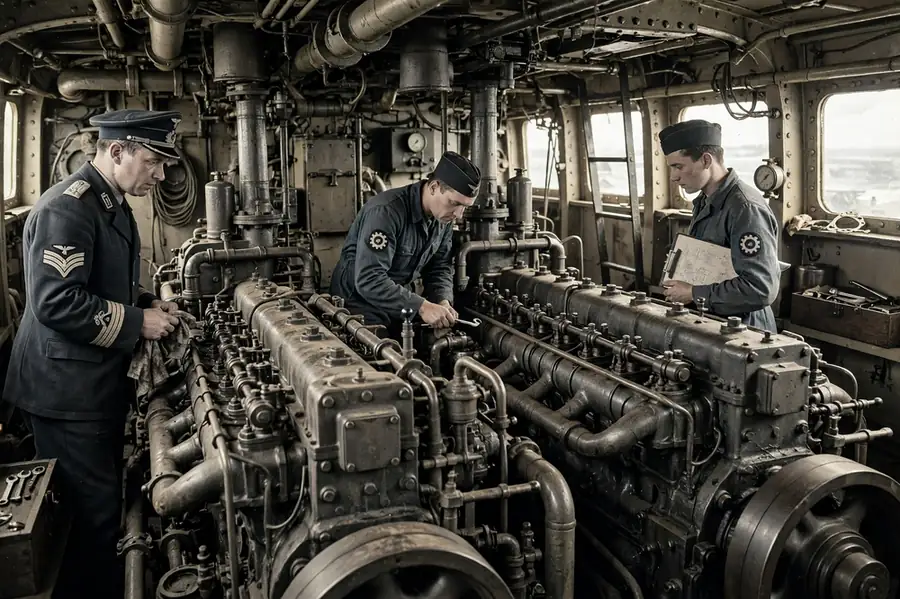
The diesel propulsion system was the most original feature of the class. Eight MAN nine-cylinder diesel engines, each producing about 6,700 horsepower, drove two shafts through Vulcan gearboxes. The system was economical: at 20 knots the ships could steam for nearly 9,000 nautical miles, more than twice the range of a comparable steam-powered cruiser, and this endurance was essential for commerce raiding far from home. The diesels also gave the ships a quick start from cold, an advantage for a raider that might need to put to sea at short notice. But the system had weaknesses: the engines were noisy and vibrated heavily, which made gunnery difficult at high speed, and they were complex to maintain. The ships’ top speed of about 28 knots was fast for a ship of their size in 1933, but by 1939 it was barely enough to escape modern cruisers.
Armament and Fire Control
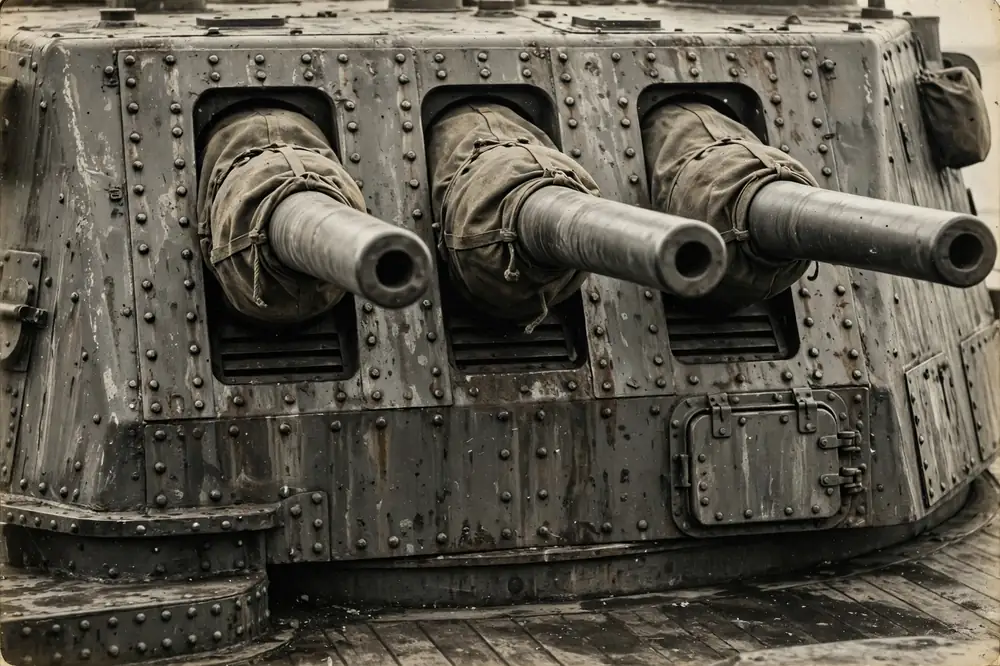
The main battery of six 28 cm SK C/28 guns fired a 300 kg shell to a range of about 36,000 metres, and the guns could be elevated to 40 degrees. The fire-control system, with stereoscopic rangefinders in the foretop and in the turrets, was modern for its time, and the ships were good shooting platforms in calm weather. The secondary battery of eight 15 cm guns provided defence against destroyers, and the anti-aircraft battery — originally three 8.8 cm guns, later six 10.5 cm guns plus light weapons — grew steadily during the war as the air threat increased. The ships also carried eight 53.3 cm torpedo tubes and two Arado Ar 196 floatplanes for reconnaissance. The combination made the Deutschland class a well-rounded fighting ship for its size, but one whose thin armour meant it could not afford a long gunnery duel with a heavier opponent.
4. Variants
Deutschland / Lützow
Deutschland was the lead ship, launched in 1931 and commissioned in 1933. She was the first of the class and the test bed for its diesel propulsion and welded construction. During the Spanish Civil War she served with the international patrol, and in May 1937 she was bombed by Republican aircraft at Ibiza, suffering 31 killed — an incident that led to the German bombardment of Almeria in retaliation. In 1940 she was renamed Lützow, to free the name Deutschland and to avoid the embarrassment of losing a ship bearing the nation’s name. She served in Norway and the Arctic, took part in the Battle of the Barents Sea in December 1942, and ended the war as a floating battery in the Baltic, where she was sunk by the Royal Air Force in April 1945.
Admiral Scheer
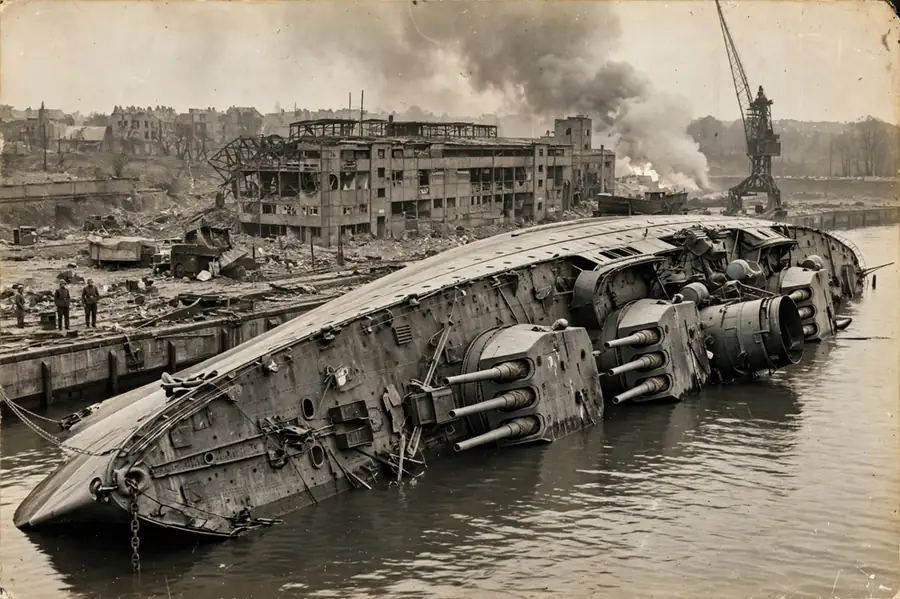
Admiral Scheer, commissioned in 1934, was the most successful raider of the class. Her 1940–1941 cruise in the Atlantic and Indian Oceans lasted 161 days, covered some 46,000 nautical miles, and sank sixteen merchant ships totalling about 113,000 tons, plus the armed merchant cruiser HMS Jervis Bay, which sacrificed herself to save her convoy. Scheer later served in Norway and the Baltic, providing gunfire support for German troops on the Eastern Front. She was bombed and sunk at Kiel in April 1945, capsized in shallow water, and her wreck was partly buried under rubble after the war.
Admiral Graf Spee
Admiral Graf Spee, commissioned in 1936, was the last and slightly larger of the three, with more powerful engines and a heavier displacement. She is the most famous of the class because of her South Atlantic cruise in 1939 and her scuttling after the Battle of the River Plate. Graf Spee sank nine merchant ships before she was intercepted by a British cruiser squadron off the River Plate on 13 December 1939. The battle that followed, and her captain’s decision to scuttle the ship rather than face destruction, became one of the most famous naval episodes of the war. Her wreck lies in shallow water off Montevideo, and parts of her have been raised and displayed.
5. Operational History
The Spanish Civil War
All three ships served in the Spanish Civil War as part of the international non-intervention patrol, and their presence was a demonstration of German naval power. Deutschland’s bombing at Ibiza in May 1937, which killed 31 of her crew, was the most serious incident: Republican aircraft attacked her at anchor, and the German response — the shelling of Almeria by Admiral Scheer — was condemned internationally. The deployment gave the German Navy valuable experience of operating the new ships at sea, and it exposed weaknesses in their anti-aircraft armament that were later addressed. The Spanish deployment also showed that the ships were reliable and seaworthy, and it built the crews’ confidence in their diesel propulsion.
Graf Spee and the River Plate
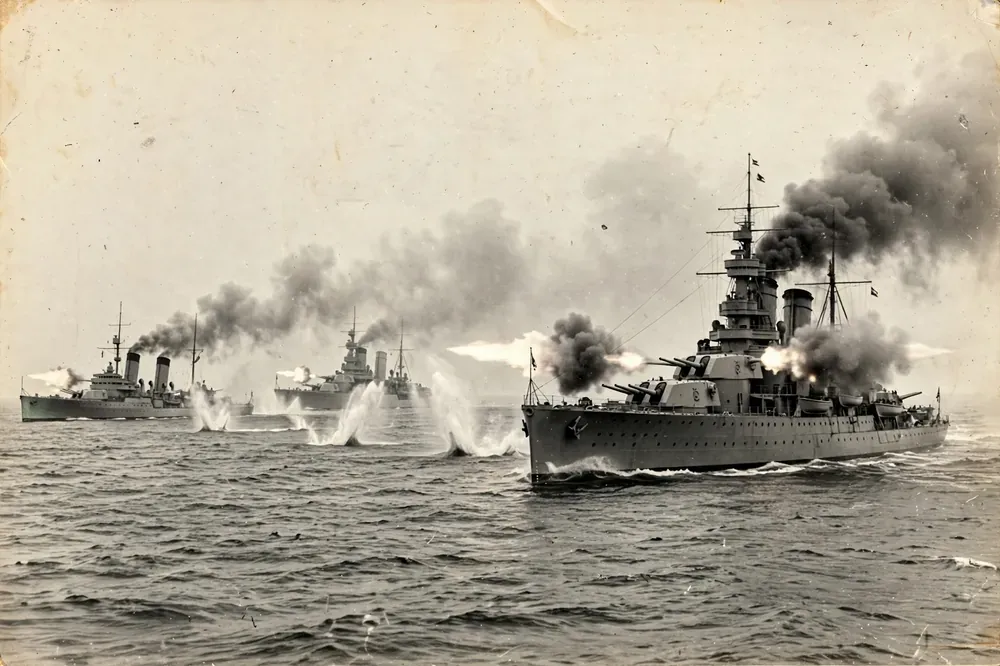
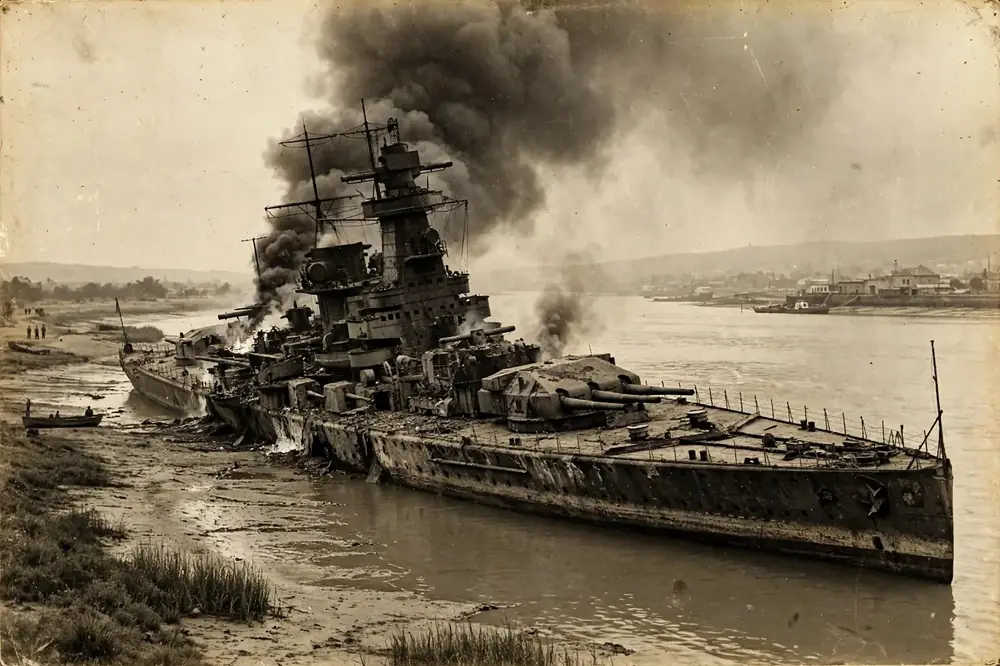
The Graf Spee’s cruise was the class’s most famous operation. She sailed before the outbreak of war in August 1939 and took up a waiting position in the South Atlantic. After war was declared she sank nine merchant ships, carefully observing the prize rules and taking prisoners aboard, which earned her captain, Hans Langsdorff, a reputation for chivalry. On 13 December 1939 she was intercepted off the mouth of the River Plate by three British cruisers — Exeter, Ajax and Achilles — under Commodore Henry Harwood. In the battle that followed, Graf Spee disabled Exeter but was herself damaged, her fuel-processing plant hit and her galley destroyed. She put into Montevideo for repairs, where Langsdorff believed — wrongly — that a large British force was waiting outside. On 17 December he scuttled the ship in the estuary and shot himself two days later. The battle was a propaganda triumph for Britain and the first major naval victory of the war.
Scheer, Lützow and the Arctic
After 1939 the two surviving ships had less spectacular careers. Admiral Scheer’s 1940–1941 cruise was the most successful German surface raid of the war, but it was also the last successful one: after that, the Royal Navy’s patrols and the increasing number of escort carriers made surface raiding too dangerous. Lützow and Scheer were then sent to Norway, where they threatened the Arctic convoys to the Soviet Union. Lützow took part in the Battle of the Barents Sea on 31 December 1942, an action that ended in German failure and led Hitler to order the scrapping of the surface fleet — an order that Admiral Dönitz persuaded him to rescind. Both ships spent the last years of the war in the Baltic, bombarding Soviet troops ashore, and both were sunk by air attack in 1945.
6. Performance and Specifications
Strengths on the Battlefield
The Deutschland class was a remarkable engineering achievement. Within the 10,000-ton treaty limit, the designers produced a ship with battleship guns, cruiser speed and an endurance no other warship of its size could match. The diesel engines gave the ships a range that made them genuine ocean raiders, and the main battery gave them a decisive advantage over any cruiser they might meet. The ships were well built, seaworthy and reliable, and their crews liked them. In the commerce-raiding role for which they were designed, they performed well: Graf Spee and Scheer together sank twenty-five merchant ships, and their presence forced the Royal Navy to disperse cruisers and battleships across the Atlantic in search of them.
Weaknesses and Trade-offs
The weaknesses were those of the concept itself. The ships were too lightly armoured to survive a fight with a battleship — the Royal Navy’s battlecruisers Renown and Repulse could have destroyed any of them — and too slow to escape the modern cruisers that entered service in the late 1930s. Their anti-aircraft armament was inadequate at the start of the war and had to be increased repeatedly. The diesel engines vibrated heavily and made accurate gunnery difficult at full speed, and the ships’ tall silhouette made them conspicuous. Above all, there were only three of them, and a raider that was damaged far from home had nowhere to repair: Graf Spee’s fate at Montevideo showed that a commerce raider’s greatest vulnerability was not enemy guns but the lack of a friendly port.
How the Class Compared with Rivals
Compared with the British heavy cruisers of the time, the Deutschland class was far more heavily armed and had a much greater range, but was slower than the fastest British cruisers and more thinly armoured than a true capital ship. Compared with the French Dunkerque-class battlecruisers, built in response to the German ships, they were outclassed in speed, armour and firepower. Compared with the later American Alaska-class large cruisers, they were smaller and weaker. The Deutschland class was a product of a specific treaty environment, and once that environment vanished, the design had no future: no navy built another ship like them.
7. Operators
The German Navy
The only operator of the Deutschland class was the German Navy, first the Reichsmarine of the Weimar Republic and then the Kriegsmarine of the Third Reich. The three ships served together as a squadron in the 1930s and were among the most prestigious postings in the German Navy. Their crews were carefully selected, and service aboard a Panzerschiff was regarded as a mark of distinction. The ships’ officers included men who would later become senior figures in the Kriegsmarine, and the class served as a training ground for the surface fleet. After 1940 the ships were reclassified as heavy cruisers, and they served with the fleet in Norway and the Baltic until their destruction in 1945.
No Other Users
No other navy operated a Deutschland-class ship. After the war, the wreck of Admiral Scheer was partly salvaged and buried under the rubble of Kiel, and the wreck of Lützow was raised by the Soviet Union and used as a target before being scrapped. The Graf Spee’s wreck remained in the River Plate, where it became a subject of salvage attempts and of controversy. The design influenced no direct successors: the German Navy’s later heavy cruiser designs, the Admiral Hipper class, were conventional steam-powered ships built after Germany had repudiated the Versailles limits. The Deutschland class thus stands alone in naval history, a unique answer to a unique set of constraints.
8. Legacy and Influence
Treaty Evasion and Naval Architecture
The legacy of the Deutschland class lies in naval architecture. The ships demonstrated that welding, diesel propulsion and careful weight-saving could produce a warship of remarkable capability within a tight displacement limit, and their design influenced warship construction in several navies. The use of diesel engines in large warships, in particular, was a German innovation that later became standard in many navies for smaller vessels, although steam turbines remained dominant for capital ships. The class also demonstrated the limits of treaty evasion: a ship designed to a treaty limit is a compromise, and the Deutschland class was compromised in armour and speed in ways that mattered in combat.
Memory and the River Plate
The class is remembered above all for the Battle of the River Plate, which has been the subject of books, films and documentaries, including the 1956 film The Battle of the River Plate. The story of Captain Langsdorff — the chivalrous raider who spared his prisoners and scuttled his ship rather than sacrifice his crew — has become a part of naval legend, and the battle is still studied as an example of a successful cruiser action against a superior opponent. The Graf Spee’s wreck, and the artefacts raised from it, continue to attract attention in Uruguay, where the ship is part of the national story of the war.
The End of the Commerce Raider
The Deutschland class also marks the end of an era. They were the last surface commerce raiders built by a major navy, and their careers showed that the age of the lone raider was over. Aircraft, radar and the convoy system made it impossible for a single surface ship to operate for long against a determined enemy, and after 1941 Germany abandoned surface raiding in favour of the U-boat campaign. The pocket battleships were therefore a transitional design, the last expression of a nineteenth-century idea — the commerce raider — in a twentieth-century war.
9. Surviving Examples
No Ship Survives Intact
No Deutschland-class ship survives intact. Admiral Graf Spee lies in shallow water in the River Plate estuary off Montevideo, her wreck broken and partly buried in the mud. In 2004 a salvage team raised her rangefinder and her eagle-topped stern ornament, which became the subject of a legal dispute in Uruguay. Admiral Scheer lies capsized in the harbour at Kiel, her wreck partly covered by rubble from the bombing of the city. Lützow was raised by the Soviet Union after the war and used as a target ship before being scrapped. That no ship of the class survives is a loss for naval heritage, but museums and models keep the design well documented.
Artefacts and Memorials
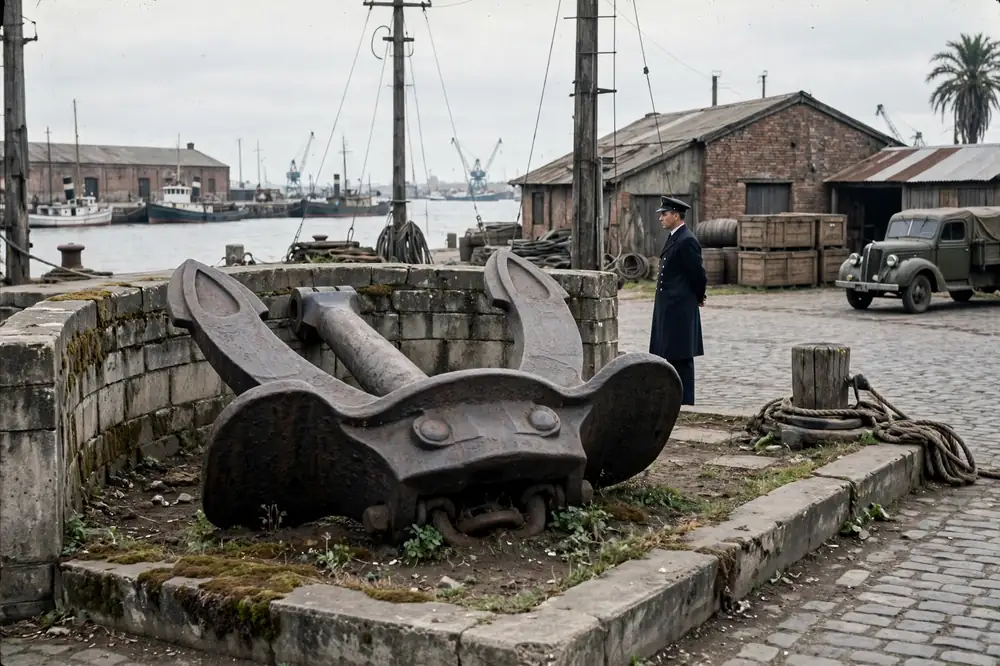
Artefacts from the ships survive in museums in Germany, Britain and Uruguay. The German Naval Memorial at Laboe displays material from the Kriegsmarine, including items from the Deutschland class. The Imperial War Museum in London holds artefacts from the Battle of the River Plate, including items recovered from HMS Exeter. In Montevideo, the Museo Naval displays objects raised from the Graf Spee, and the ship’s anchor is preserved as a memorial. The rangefinder raised in 2004 was displayed in Montevideo, and the stern eagle was the subject of a court case over its ownership and its display. These artefacts keep the memory of the class alive in the absence of a surviving hull.
Frequently Asked Questions
What was a pocket battleship?
A pocket battleship was the British nickname for the German Deutschland-class cruisers, which carried six 11-inch (28 cm) battleship-calibre guns on a hull of only about 10,000 tons. The ships were designed to outgun any cruiser fast enough to catch them and to outrun any battleship powerful enough to sink them, a concept built for commerce raiding. The German Navy called them Panzerschiffe, or “armoured ships”, a deliberately vague term, and in 1940 the two surviving ships were reclassified as heavy cruisers. The nickname captured the paradox of a ship that was neither a cruiser nor a battleship, but something in between.
How many Deutschland-class ships were built?
Three: Deutschland (renamed Lützow in 1940), Admiral Scheer and Admiral Graf Spee. All three were built in Germany between 1929 and 1936 under the limits of the Treaty of Versailles, which restricted Germany to warships of no more than 10,000 tons and guns of no more than 28 cm calibre. No other navy built a ship of this type, because the design was a specific answer to the treaty’s constraints. Once Germany repudiated the treaty, its later heavy cruisers were conventional steam-powered ships, and the pocket battleship had no successor.
What happened to the Admiral Graf Spee?
Graf Spee was scuttled by her own crew in the River Plate estuary off Montevideo on 17 December 1939, after being damaged in the Battle of the River Plate against three British cruisers. Her captain, Hans Langsdorff, believed a superior British force was waiting outside the harbour and chose to destroy his ship rather than sacrifice his crew in a hopeless fight. Langsdorff shot himself two days later. The battle was a propaganda triumph for Britain, the first major naval victory of the war, and the story of the chivalrous raider who spared his prisoners has become a part of naval legend.
Was the Deutschland class a successful design?
As an engineering achievement within treaty limits, yes — the ships combined heavy guns, long range and diesel propulsion in a small hull, and their welded construction and diesel engines were genuinely original. As a warship, the design was compromised: the ships were too lightly armoured to fight battleships and too slow to escape modern cruisers, and there were only three of them. Their anti-aircraft armament was inadequate at the start of the war, and their diesel engines vibrated heavily, making accurate gunnery difficult at full speed. The class was a brilliant answer to a treaty problem, but a flawed answer to the problem of war.
Which Deutschland-class ship sank the most merchant shipping?
Admiral Scheer, on her 1940–1941 cruise in the Atlantic and Indian Oceans, sank sixteen merchant ships totalling about 113,000 tons, plus the armed merchant cruiser HMS Jervis Bay, which sacrificed herself to save her convoy. The cruise lasted 161 days and covered some 46,000 nautical miles, and it was the most successful German surface raider cruise of the war. Scheer’s success was also the last of its kind: after 1941, the Royal Navy’s patrols and the increasing number of escort carriers made surface raiding too dangerous, and Germany abandoned the surface raider in favour of the U-boat.
Why was Deutschland renamed Lützow?
Deutschland was renamed Lützow in 1940, partly to avoid the propaganda damage of losing a ship bearing Germany’s name, and partly because the name Lützow had become available after the sale of an unfinished cruiser to the Soviet Union. The renaming reflected the symbolic importance of the ship’s name: a ship called “Germany” could not be allowed to be sunk without a blow to national prestige. The new name honoured Adolf von Lützow, a Prussian general of the Napoleonic Wars, and it was a traditional name for German warships.
Sources
- Koop, Gerhard, and Schmolke, Klaus-Peter, Pocket Battleships of the Deutschland Class (Naval Institute Press).
- Whitley, M. J., German Capital Ships of World War Two (Cassell).
- Grove, Eric, The Battle of the River Plate (various naval histories).
- Konstam, Angus, The Battle of the River Plate 1939 (Osprey Publishing).
- Bekker, Cajus, Hitler’s Naval War (Macdonald).
-
The Imperial War Museum, London, River Plate collection records.
-
Pope, Dudley, The Battle of the River Plate (William Kimber).
- Humble, Richard, Hitler’s High Seas Fleet (Macdonald).