 WAR ATLAS MILITARY HISTORY MAGAZINE · WWI — WWII
Erwin Rommel
1. Lead
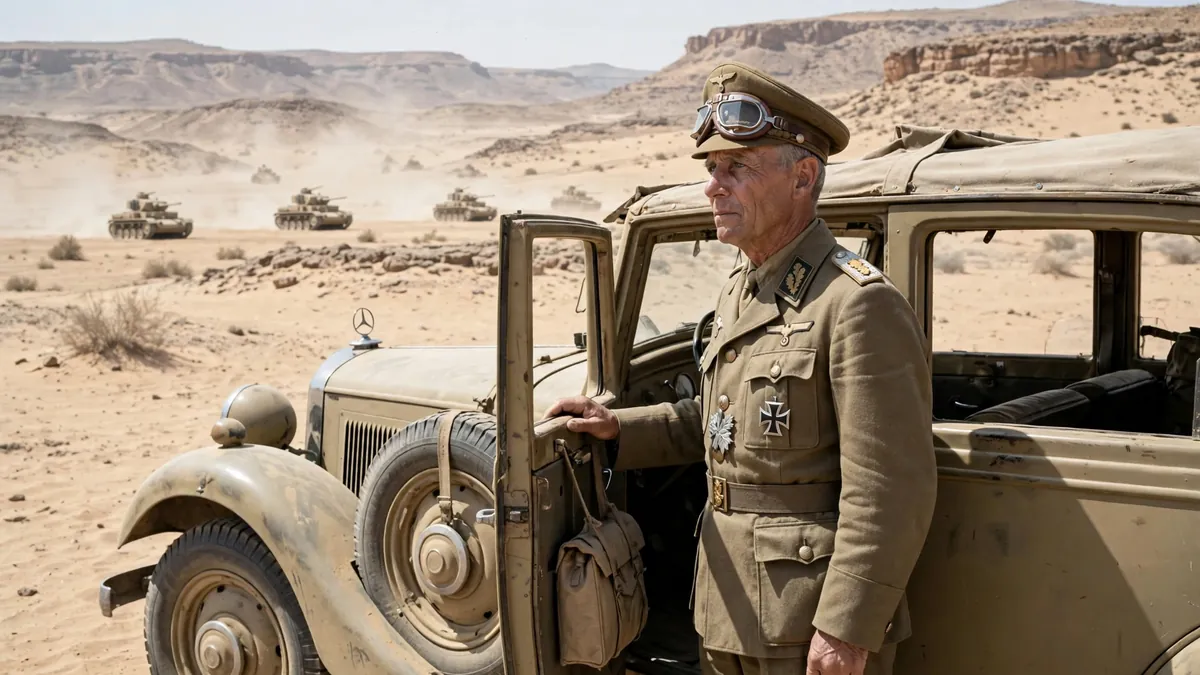
Erwin Rommel (15 November 1891 – 14 October 1944) was the German field marshal known as the “Desert Fox”, the commander of the Afrika Korps in North Africa in 1941–1943 and one of the most famous generals of the Second World War.
Born in Heidenheim in Württemberg, he was a decorated infantry officer in the First World War, winning the Pour le Mérite, Germany’s highest military decoration, for his leadership in the Battle of Caporetto in 1917. In the Second World War he first came to prominence in France in 1940, where his 7th Panzer Division — the “Ghost Division” — advanced so fast that the German high command lost track of it, and then in North Africa, where, from February 1941, he led the Afrika Korps in a campaign of dramatic advances and retreats across the Libyan and Egyptian desert, winning the Battle of Gazala in May–June 1942 and reaching El Alamein, sixty miles from Alexandria, before being defeated by the British Eighth Army under Bernard Montgomery at the Second Battle of El Alamein in October–November 1942.
In 1944 he commanded Army Group B in France, responsible for the defence of the Normandy coast against the Allied invasion, and he was wounded by an Allied air attack on 17 July 1944, three days before the attempt on Hitler’s life.
Implicated — how deeply remains disputed — in the conspiracy of 20 July 1944, he was given a choice by Hitler’s emissaries on 14 October 1944: take poison and be given a state funeral as a hero, or face trial and disgrace. He took the poison and died the same day.
Rommel’s place in the history of the Second World War is complicated by the myth that grew around him. In the West, he was admired even by his enemies: Churchill praised him in the House of Commons, Montgomery treated him as a worthy opponent, and the British and American press called him the “Desert Fox” in admiration of his daring and his chivalry.
In Germany, after the war, he became the symbol of the “clean Wehrmacht” — the idea that the German army had fought honourably and had nothing to do with Nazi crimes. Modern historians have challenged both images: Rommel was a loyal servant of Hitler for most of the war, he commanded troops that committed war crimes in North Africa and in France, and his reputation as a chivalrous opponent rests partly on the fact that the desert war, fought far from civilian populations, offered fewer opportunities for atrocity than the war in the east.
At the same time, his military talent was real: he was a master of mobile warfare, of surprise and of leading from the front, and his defeat at El Alamein owed as much to supply as to strategy. Historians debate how much of Rommel was the general and how much was the propaganda, but none dispute that he was one of the most recognisable figures of the war.
2. Key Facts
| Born | 15 November 1891, Heidenheim, Kingdom of Württemberg, German Empire |
| Died | 14 October 1944 (aged 52), Herrlingen, near Ulm, Germany (forced suicide) |
| Nationality | German |
| Role / Office | Commander, 7th Panzer Division (France, 1940); Commander, Afrika Korps (1941–1943); Commander, Army Group B, France (1944); Field Marshal (from June 1942) |
| Known for | The “Desert Fox” of North Africa; the Battle of Gazala (1942); the Second Battle of El Alamein (1942); the defence of Normandy (1944); forced suicide after the 20 July Plot |
| Spouse / Family | Lucie Mollin (married 1916, died 1971); son Manfred Rommel (later Lord Mayor of Stuttgart, 1974–1996) |
| Military rank | Generalfeldmarschall (Field Marshal) |
3. Early Life and Education
Erwin Johannes Eugen Rommel was born on 15 November 1891 in Heidenheim, a small town in the Kingdom of Württemberg in southern Germany, the son of Erwin Rommel senior, a schoolteacher and later a headmaster, and Helene von Luz, the daughter of a senior civil servant.
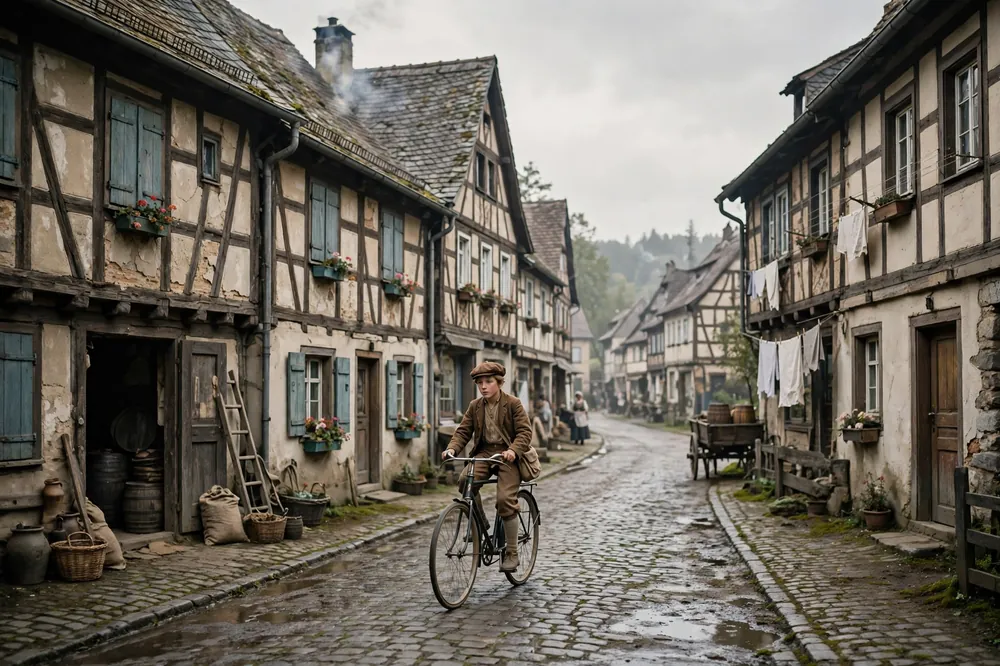
The family was middle-class and Protestant, and the young Erwin was a quiet, serious boy who did well at school — particularly in mathematics — but who showed little interest in the military as a child. He wanted, at first, to become an engineer, and he was an enthusiastic cyclist and a keen glider pilot.
In 1910, at the age of eighteen, he decided to join the army, and he was accepted as an officer cadet in the 124th Infantry Regiment at Weingarten, in Württemberg. He attended the officer training school at Danzig, where he met Lucie Mollin, a student of languages, whom he married in November 1916.
When the First World War broke out in 1914, Rommel was a lieutenant in the 124th Infantry Regiment, and he fought on the Western Front in France, where he was wounded in September 1914, and then in the mountains of Romania and Italy.
His war was a war of the infantry officer: he led patrols, he fought in close combat, and he learned the lessons that would shape his later career — the value of surprise, of speed, and of leading from the front.
In October 1917, at the Battle of Caporetto on the Italian Front, he led a mountain battalion in an attack that captured the Monte Matajur and took thousands of Italian prisoners, and for this he was awarded the Pour le Mérite, Germany’s highest decoration for bravery. He ended the war as a captain, with the Iron Cross First and Second Class and a reputation as a daring and resourceful officer.
In the interwar years Rommel remained in the army, which was reduced by the Treaty of Versailles to 100,000 men. He served as an instructor at the infantry school at Dresden, where he taught tactics and where he wrote a textbook, Infanterie greift an (Infantry Attacks, 1937), based on his First World War experiences.
The book was a success, and it brought him to the attention of Hitler, who had read it and admired it. In 1938 Rommel was appointed commander of the Führerbegleitbataillon, the battalion that guarded Hitler, and in 1939 he served as the commandant of Hitler’s field headquarters during the invasion of Poland.
He was, by then, a convinced admirer of Hitler: he believed that Hitler had restored Germany’s greatness, and he was grateful for the promotion and the patronage. He was not a member of the Nazi Party, and he was not an ideologue — his interest was in soldiering, not in politics — but his loyalty to Hitler was, for most of the war, absolute, and it was Hitler’s patronage that made his rapid rise possible.
4. Rise to Prominence
Rommel’s rise to fame came in France in 1940. In February 1940 he was given command of the 7th Panzer Division, and in May, during the German invasion of France, his division advanced so rapidly through Belgium and northern France that it became known as the “Ghost Division” — the German high command, and the French, often did not know where it was.
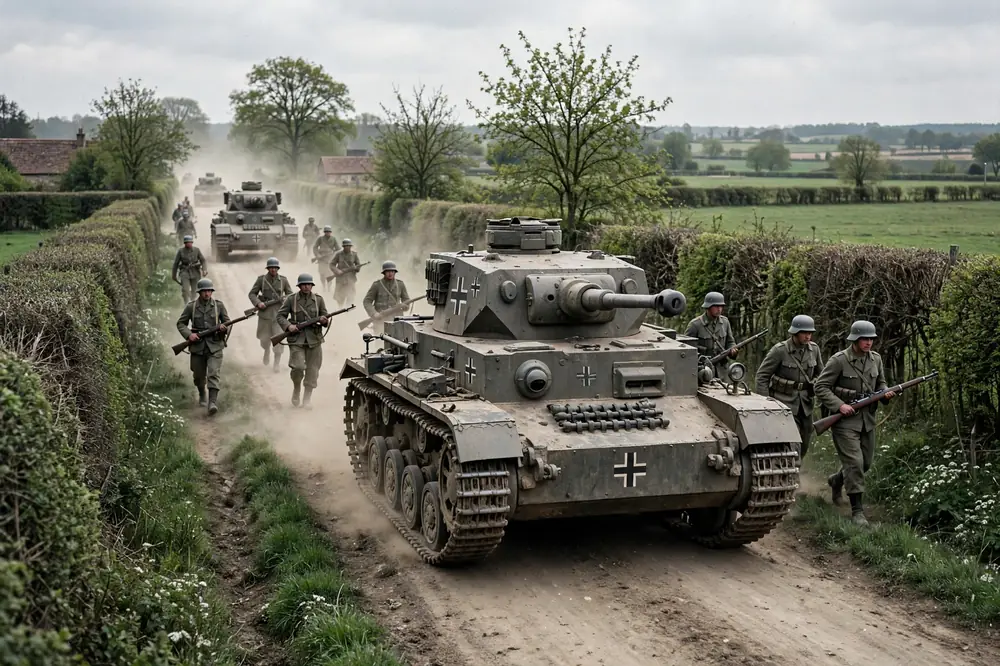
Rommel led from the front, in his command vehicle, and he drove his men hard: his division reached the Channel coast at Abbeville on 20 May, and it played a part in the encirclement of the Allied armies at Dunkirk. His success in France was due to his style: speed, surprise, and a willingness to take risks that other generals would not.
It was also due to Hitler’s favour: Rommel’s division was given priority for equipment, and his reports went directly to Hitler.
In February 1941 Rommel was sent to North Africa, where the Italian army had been defeated by the British in Libya and where Hitler, reluctantly, had agreed to send a German force — the Afrika Korps — to prevent the loss of Libya. Rommel’s orders were to hold the line and to act defensively. He ignored them.
Within weeks of his arrival at Tripoli, he attacked, driving the British back across Libya and besieging the port of Tobruk, which held out for eight months. His advance was stopped at the Egyptian border, and in November 1941 the British, in Operation Crusader, drove him back to El Agheila.
But in January 1942 he attacked again, and in May–June 1942 he won his greatest victory, the Battle of Gazala, in which he outmanoeuvred the British Eighth Army, captured Tobruk, and advanced into Egypt, reaching El Alamein, sixty miles from Alexandria, in July 1942.
For this he was promoted to field marshal — the youngest in the German army — and he became a hero in Germany and a legend in Britain.
Rommel’s success in North Africa was built on his talent for mobile warfare and on his personal leadership: he was always at the front, he knew the desert, and his men trusted him. It was also built on intelligence: the Germans had broken the American diplomatic code, the “Black Code”, and Rommel was able to read the reports of the American military attaché in Cairo, Colonel Bonner Fellers, which gave him detailed information on British plans.
When the British changed their codes in mid-1942, Rommel’s advantage disappeared. And it was built on a logistical gamble: Rommel’s supply lines stretched across hundreds of miles of desert, and they depended on the port of Tripoli and on convoys across the Mediterranean that were increasingly sunk by British submarines and aircraft from Malta.
By the autumn of 1942, his army was short of fuel, of tanks and of ammunition, and it faced an Eighth Army that was, under Montgomery, larger, better supplied and better equipped.
5. Erwin Rommel’s Role in World War II
El Alamein and the retreat
The Second Battle of El Alamein, fought from 23 October to 11 November 1942, was the turning point of Rommel’s career. Montgomery, with some 195,000 men and more than 1,000 tanks against Rommel’s 116,000 men and some 500 tanks, attacked through the minefields at El Alamein, and after twelve days of fighting Rommel’s army broke.
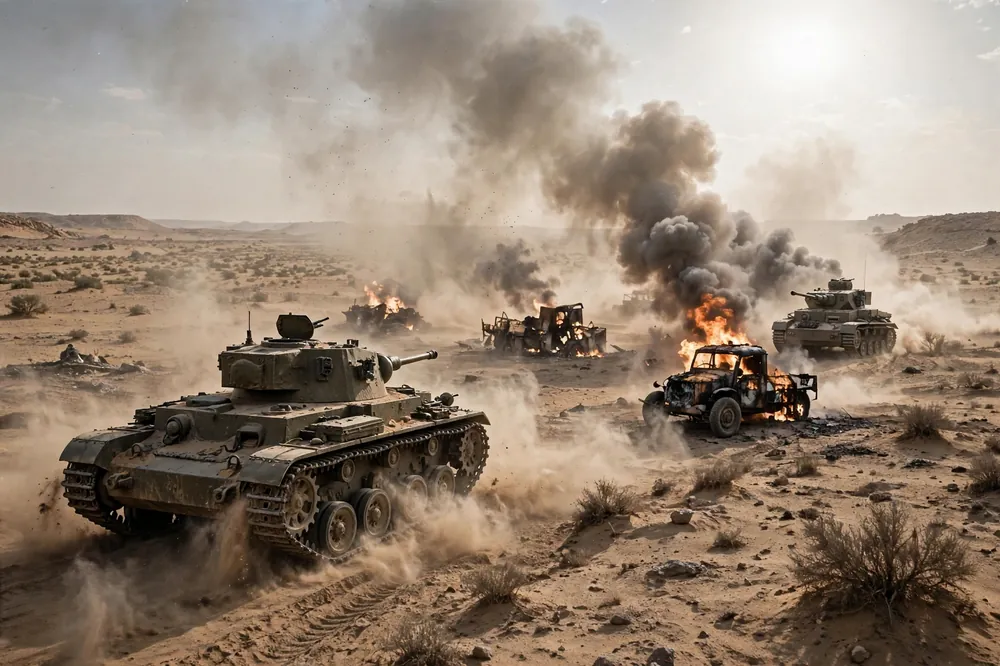
He retreated across Libya, pursued by the Eighth Army, and in March 1943 he was driven from Libya altogether. He was flown back to Germany in March 1943, ill and exhausted, and he did not return to Africa. In May 1943 the Axis forces in Tunisia surrendered, and the North African campaign was over.
Rommel’s defeat at El Alamein was, in Churchill’s phrase, “the end of the beginning”: it was the first major land victory of the British against the Germans, and it marked the turn of the tide in the Mediterranean. Rommel himself blamed his defeat on supply — and he was right, in part: his army had been starved of fuel and ammunition — but he also made mistakes, above all his insistence on advancing into Egypt when his supply lines could not support it, and his refusal to withdraw in time.
Normandy
In December 1943 Rommel was appointed commander of Army Group B in France, responsible for the defence of the coast from the Netherlands to Brittany against the expected Allied invasion. He was convinced that the invasion would come in Normandy and that it had to be defeated on the beaches, in the first hours, before the Allies could establish a lodgement.
He worked tirelessly to strengthen the Atlantic Wall: he ordered the construction of millions of obstacles — the “hedgehogs” and “Belgian gates” that still litter the Normandy beaches — he mined the fields behind the beaches, and he flooded the lowlands.
He also argued, with the commander of the panzer reserves, General Leo Geyr von Schweppenburg, and with Hitler himself, over where the tanks should be held: Rommel wanted them near the coast, to counter-attack immediately; his opponents wanted them held back, to be used in a massed counter-attack once the invasion’s main effort was known. Hitler compromised, holding the reserves under his own control, and the argument was never resolved.
On 6 June 1944 — D-Day — the Allies landed in Normandy, and Rommel, who was in Germany for his wife’s birthday, hurried back to France. He arrived too late: the Allies had established a lodgement, and the German counter-attacks, hampered by Allied air superiority and by the confusion over the panzer reserves, failed.
Rommel fought a skilful defensive campaign, holding the Allies in Normandy for seven weeks, but he knew the battle was lost: the Allies had overwhelming air power, and the German army was being bled white. On 17 July 1944 his staff car was attacked by Allied aircraft near Sainte-Foy-de-Montgommery, and he was badly wounded — he suffered a fractured skull — and taken to hospital.
He was still in hospital on 20 July, when Colonel Claus von Stauffenberg attempted to assassinate Hitler at the Wolf’s Lair in East Prussia.
6. Key Decisions
Disobeying orders in North Africa (1941). Rommel’s decision to attack in the spring of 1941, against his orders to hold the line, was the act that made his reputation — and it was also the act that set the pattern of his campaign: brilliant tactical advances that outran his supplies. His defenders argue that the attack was necessary to prevent the British from consolidating; his critics argue that it was the first of a series of over-extensions that ended at El Alamein.
Advancing into Egypt (1942). After the victory at Gazala and the capture of Tobruk, Rommel decided to advance into Egypt rather than to pause and to consolidate. It was a gamble on a quick victory — the capture of Alexandria and the Suez Canal — and it failed. His supply lines, stretched across hundreds of miles of desert, could not sustain his army, and the Eighth Army, reinforced and resupplied, stopped him at El Alamein.
The defence of Normandy (1944). Rommel’s decision to fortify the beaches and to insist that the invasion be defeated on the coast was, in retrospect, the correct one: the Allies’ success on D-Day depended on getting ashore, and a stronger defence on the beaches might have delayed or even defeated the landing. But he was overruled on the deployment of the panzer reserves, and the Atlantic Wall, for all his efforts, was incomplete.
His response to the 20 July Plot. Rommel’s exact role in the conspiracy against Hitler remains the most disputed fact of his life. He certainly knew of the conspiracy — he had discussed it with its leaders, including Carl Goerdeler and General Hans Speidel, his chief of staff — and he appears to have agreed that Hitler should be removed, though he opposed assassination and favoured arrest and trial. He did not take part in the attempt itself, and he was in hospital when it happened. His knowledge, and his failure to report it, was enough for the regime to condemn him.
7. Controversies
The controversy over Rommel is the controversy over the “clean Wehrmacht” — the idea, promoted in post-war Germany and in the West, that the German army fought an honourable war and that its generals were soldiers, not criminals. Rommel was the central figure in that myth: he was presented as the chivalrous opponent, the general who treated his prisoners well, who refused to execute captured commandos, and who had nothing to do with the SS or with the crimes of the regime.
Modern historians have shown that the myth is, at best, incomplete. Rommel’s Afrika Korps, though it fought in a theatre with few civilians, was involved in the use of Jewish forced labour in Libya and Tunisia, and in the deportation of Jews from North Africa; in France in 1944, troops under Rommel’s command were involved in massacres of civilians, including the massacre at Oradour-sur-Glane — though that massacre was carried out by the SS, and Rommel’s responsibility for it is indirect.
Rommel also, in 1940, commanded the 7th Panzer Division in France, where his troops were involved in the killing of French colonial prisoners — an episode that is documented but that was long ignored in the Rommel legend.
The second controversy concerns Rommel’s relationship with Hitler. For most of the war Rommel was a loyal and admiring servant of Hitler: he accepted Hitler’s patronage, he praised him in his letters, and he enforced Hitler’s orders, including the Commando Order of 1942 — which ordered the execution of captured Allied commandos — though he is credited with refusing to carry it out in North Africa, an act that is cited as evidence of his chivalry.
His disillusionment with Hitler came late, in 1943 and 1944, when he saw that the war was lost and that Hitler’s leadership was destroying Germany. His critics argue that his disillusionment was opportunistic — that he turned against Hitler only when defeat was certain — and that his earlier loyalty makes him complicit in the regime’s crimes.
His defenders argue that he was a soldier, not a politician, and that he served Germany, not Nazism, and that his eventual willingness to support the removal of Hitler — at the cost of his own life — was an act of courage.
The third controversy is military: was Rommel a great general or a lucky one? His admirers point to his victories in France and in North Africa, to his mastery of mobile warfare, and to the respect he commanded from his enemies.
His critics point to his failures of logistics, his tendency to ignore his superiors, and his defeat at El Alamein, and they argue that he was a brilliant tactician but a poor strategist, a divisional commander promoted beyond his abilities.
The most balanced assessments conclude that he was a gifted operational commander whose strengths — speed, surprise, personal leadership — were also his weaknesses, and that his reputation owes as much to Allied propaganda, which needed a worthy opponent, as to his own achievements.
8. Later Life and Death
Rommel’s later life was brief. After the failure of the 20 July Plot, the Gestapo investigated his connections with the conspirators, and on 14 October 1944 two generals — Wilhelm Burgdorf and Ernst Maisel — arrived at his home in Herrlingen, near Ulm, where he was recovering from his wounds.
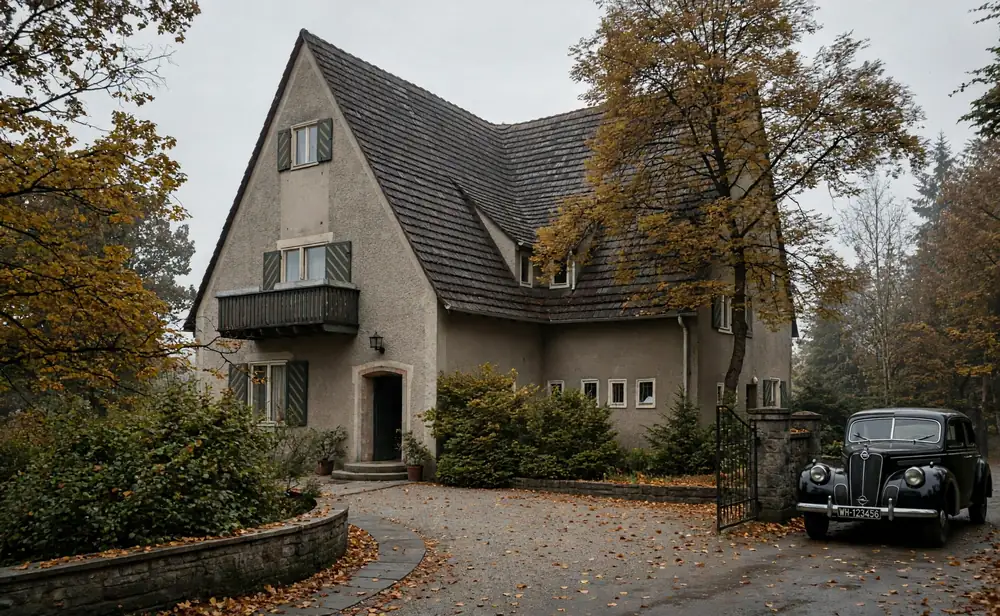
They told him that Hitler knew of his involvement, and they offered him a choice: he could take poison, and his death would be announced as the result of his wounds, his family would be protected, and he would be given a state funeral; or he could face trial before the People’s Court, which would mean disgrace, execution, and the persecution of his family. Rommel chose the poison.
He said goodbye to his wife, Lucie, and to his son, Manfred, put on his uniform, and left the house with the two generals. He took a cyanide capsule in the car, and he died within minutes. The regime announced that he had died of his wounds, and he was given a state funeral at Ulm on 18 October 1944, with full military honours.
His son Manfred, who was fifteen at the time, learned the truth only later. Rommel was buried in the cemetery at Herrlingen, where his grave remains a place of remembrance.
9. Legacy of Erwin Rommel
Rommel’s legacy is the legend of the Desert Fox. In Germany, after the war, he became the most admired German general of the Second World War, and his name was given to streets, barracks and schools; the largest barracks of the German army, in Augustdorf, bears his name, and the German army’s highest award for leadership is named for him. His son Manfred became Lord Mayor of Stuttgart, serving from 1974 to 1996, and he worked for reconciliation between Germany and its former enemies. In Britain and the United States, Rommel remains the German general most often studied in military academies, and his book Infantry Attacks is still read as a classic of tactical leadership.

But his legacy is also contested. The myth of the “clean Wehrmacht”, of which Rommel was the central symbol, has been challenged by historians, and the German army’s commemoration of Rommel has become a subject of debate: critics argue that a man who served Hitler loyally for most of the war should not be honoured as a hero, while defenders argue that his eventual opposition to Hitler and his death at the regime’s hands make him a figure of resistance. The Rommel Museum at Herrlingen, and the annual commemorations at his grave, continue to draw visitors, and the debate over his legacy — soldier or criminal, hero or opportunist — continues.
10. Assessment by Historians
Historians assess Erwin Rommel as a general of genuine talent and of genuine moral complexity, and the assessment has become more critical over time. In the immediate post-war years, the dominant image was that of the chivalrous Desert Fox, a soldier who fought cleanly and who died as a victim of the regime he had served.
The work of historians such as Ralf Georg Reuth, in Rommel: The End of a Legend (2004), and of the German Military History Research Office, has challenged that image, documenting Rommel’s loyalty to Hitler, his use of forced labour, and his troops’ involvement in war crimes.
Reuth’s verdict is that Rommel was not a resistance hero but a loyal general who turned against Hitler only when the war was lost, and that his legend was created, in part, by Allied propaganda and by the post-war need for a “good German” general.
Other historians have been more sympathetic, arguing that Rommel’s military talent was real, that his conduct in North Africa was, by the standards of the war, honourable, and that his willingness to support the removal of Hitler — whatever his motives — cost him his life, and that this should count for something.
The most balanced assessments, including that of the British historian David Fraser in Knight’s Cross: A Life of Field Marshal Erwin Rommel (1993), present a man who was a brilliant tactician, a loyal soldier, and a flawed human being — a general who served a criminal regime, who was slow to see its nature, and who, in the end, paid for his belated opposition with his life.
The verdict, if one can be given, is that Rommel was a great soldier and a compromised man, and that the two cannot be separated.
Frequently Asked Questions
Who was Erwin Rommel?
Erwin Rommel (1891–1944) was a German field marshal known as the “Desert Fox”. He commanded the Afrika Korps in North Africa in 1941–1943, and Army Group B in France in 1944, and he was forced to commit suicide after the 20 July Plot against Hitler.
Why was Rommel called the Desert Fox?
The name was given to him by the British press, in admiration of his daring and cunning in the desert war in North Africa. The German press adopted it, and it became his enduring nickname.
What happened at El Alamein?
At the Second Battle of El Alamein (23 October – 11 November 1942), the British Eighth Army under Montgomery defeated Rommel’s Afrika Korps. Rommel retreated across Libya, and the Axis forces were driven from North Africa by May 1943.
Was Rommel part of the plot to kill Hitler?
Rommel knew of the conspiracy of 20 July 1944 and appears to have agreed that Hitler should be removed, though he opposed assassination and favoured arrest and trial. He did not take part in the attempt itself, and he was in hospital when it happened. His knowledge was enough for the regime to force him to commit suicide.
How did Rommel die?
On 14 October 1944, two generals sent by Hitler offered him a choice: take poison and be given a state funeral, or face trial and disgrace. He took a cyanide capsule in a car outside his home at Herrlingen and died within minutes, aged 52.
Was Rommel a Nazi?
Rommel was not a member of the Nazi Party, and he was not an ideologue. But he was a loyal servant of Hitler for most of the war, he accepted Hitler’s patronage, and he served a criminal regime. Modern historians regard the idea of a “clean Wehrmacht” as a myth.
Related articles
Sources
- Wikipedia, “Erwin Rommel” — consolidated biography: birth 15 November 1891, death 14 October 1944, Afrika Korps, El Alamein, Normandy, 20 July Plot, forced suicide.
- Encyclopaedia Britannica, “Erwin Rommel” (britannica.com) — biography, Desert Fox, North Africa, Normandy.
- David Fraser, Knight’s Cross: A Life of Field Marshal Erwin Rommel (HarperCollins, 1993) — standard English biography.
- Ralf Georg Reuth, Rommel: The End of a Legend (Haus, 2004) — critical reassessment; Rommel’s loyalty to Hitler and the myth of the clean Wehrmacht.
- Erwin Rommel, Infantry Attacks (1937; English translation, Greenhill Books, 1990) — Rommel’s own account of his First World War service.
- Desmond Young, Rommel: The Desert Fox (Collins, 1950) — the biography that created the post-war legend.
- Martin Kitchen, Rommel’s Desert War: Waging World War II in North Africa, 1941–1943 (Cambridge University Press, 2009) — the North African campaign and its logistics.
Further reading
- Samuel W. Mitcham Jr., Rommel’s Lieutenants: The Men Who Served the Desert Fox, France, 1940 (Praeger, 2007).
- Daniel Allen Butler, Field Marshal: The Life and Death of Erwin Rommel (Casemate, 2015).