 WAR ATLAS MILITARY HISTORY MAGAZINE · WWI — WWII
Hiryu: Japan’s Fast Fleet Carrier
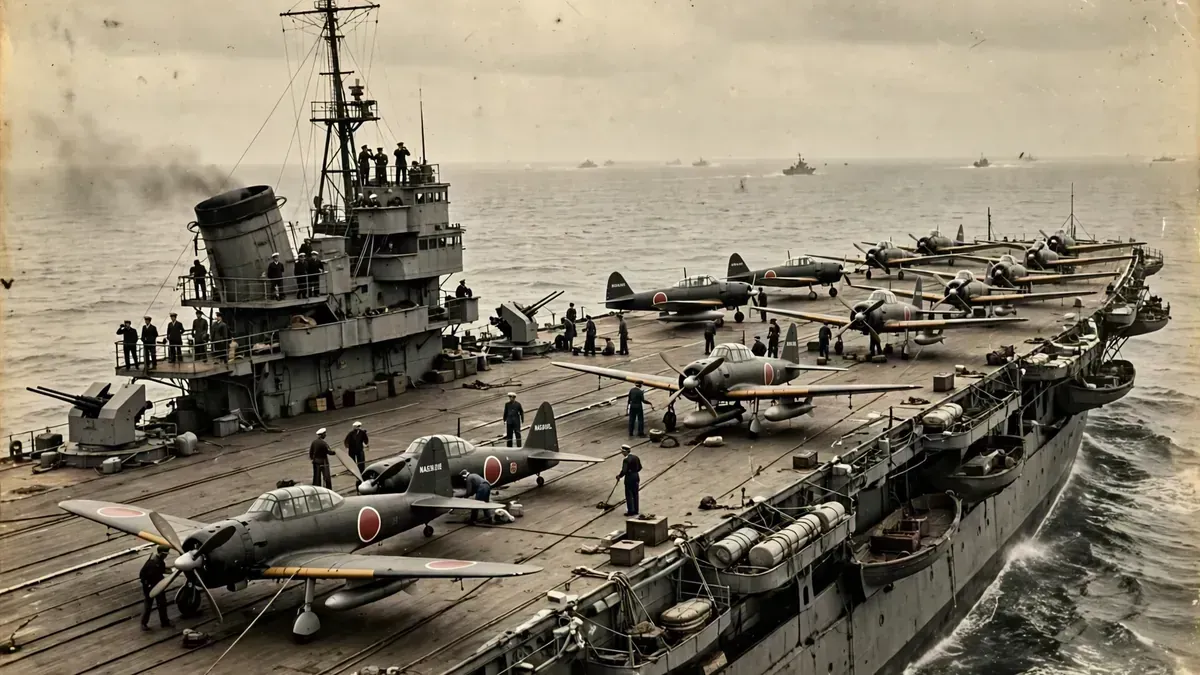
Hiryu, meaning “Flying Dragon”, was a Japanese aircraft carrier of the Second World War, one of the six carriers that attacked Pearl Harbor on 7 December 1941, and one of the four Japanese carriers sunk at the Battle of Midway on 4 June 1942. She was a fast, modern fleet carrier, capable of 34 knots, carrying about 70 aircraft, and she was the only Japanese carrier at Midway to survive the first American dive-bomber attack. Her aircraft, launched in the desperate hours after her sisters were destroyed, crippled the American carrier USS Yorktown, the only American carrier lost at Midway. Hours later, Hiryu herself was hit by American dive bombers, set ablaze, and scuttled, with the loss of more than 400 of her crew.
Hiryu was the second ship of a class of two, built with her sister Soryu in the 1930s as Japan rebuilt its carrier fleet within the limits of the Washington Naval Treaty. The two ships were similar but not identical: Hiryu was slightly larger, with a different island arrangement and a more powerful propulsion system, and she was regarded as the better ship. She served in the early campaigns of the Pacific War, supporting the invasion of the Dutch East Indies and the raid on Darwin, and she was a veteran of the carrier operations that carried Japan to the height of its power in the first six months of the war.
Hiryu is remembered today as the carrier that fought on alone at Midway, and as a symbol of the Japanese carrier force’s courage and of its destruction. Her wreck, discovered in 2019 on the seabed of the Pacific, lies in deep water near Midway, and her story is told in the museums and memorials of Japan and the United States. The ship’s name was later given to a Japanese destroyer, and her memory is preserved in the history of the Imperial Japanese Navy.
1. Key Facts
| Field | Value |
|---|---|
| Type | Fleet aircraft carrier (Soryu class) |
| Name meaning | Hiryu — “Flying Dragon” |
| Origin | Japan |
| Laid down | 12 July 1936 (Yokosuka Naval Arsenal) |
| Launched | 15 November 1937 |
| Commissioned | 5 July 1939 |
| Displacement | 17,300 tons standard; approximately 21,000 tons full load |
| Length | Approximately 227.4 m (746 ft) |
| Beam | Approximately 22.3 m (73 ft) |
| Draught | Approximately 7.6 m (25 ft) |
| Aircraft | Approximately 57–73 (depending on period; typically 21 fighters, 18 dive bombers, 18 torpedo bombers, plus spares) |
| Flight deck | Approximately 216 m long; two elevators |
| Main armament | 12 × 127 mm (5 in) dual-purpose guns in six twin mounts |
| Anti-aircraft armament | 28 × 25 mm guns (later increased) |
| Torpedo tubes | None |
| Armour | Belt 46 mm, deck 25–56 mm |
| Propulsion | 4 Kampon steam turbines, 152,000 shp |
| Speed | Approximately 34 knots |
| Range | Approximately 7,680 nautical miles at 18 knots |
| Crew | Approximately 1,100 officers and men, plus air group of about 600 |
| Notable actions | Pearl Harbor (December 1941), Darwin (February 1942), Indian Ocean Raid (April 1942), Midway (June 1942) |
| Fate | Sunk at Midway 4 June 1942 by American dive bombers; scuttled by Japanese destroyers; wreck found 2019 |
2. Background and Development
Japan and the Carrier Treaties
Hiryu was built under the Washington Naval Treaty system, which limited Japan to a carrier tonnage of 81,000 tons, less than that of the United States or Britain. Japan’s response was to build carriers that were fast, lightly armoured and packed with aircraft, and Hiryu and her sister Soryu were the result. The two ships were laid down in the mid-1930s, as Japan prepared to withdraw from the treaty system, and they were designed to be the core of a new carrier fleet. Soryu was laid down first, in 1934, and Hiryu followed in 1936, with a slightly larger hull and a more powerful propulsion system.
Design Choices and Trade-offs
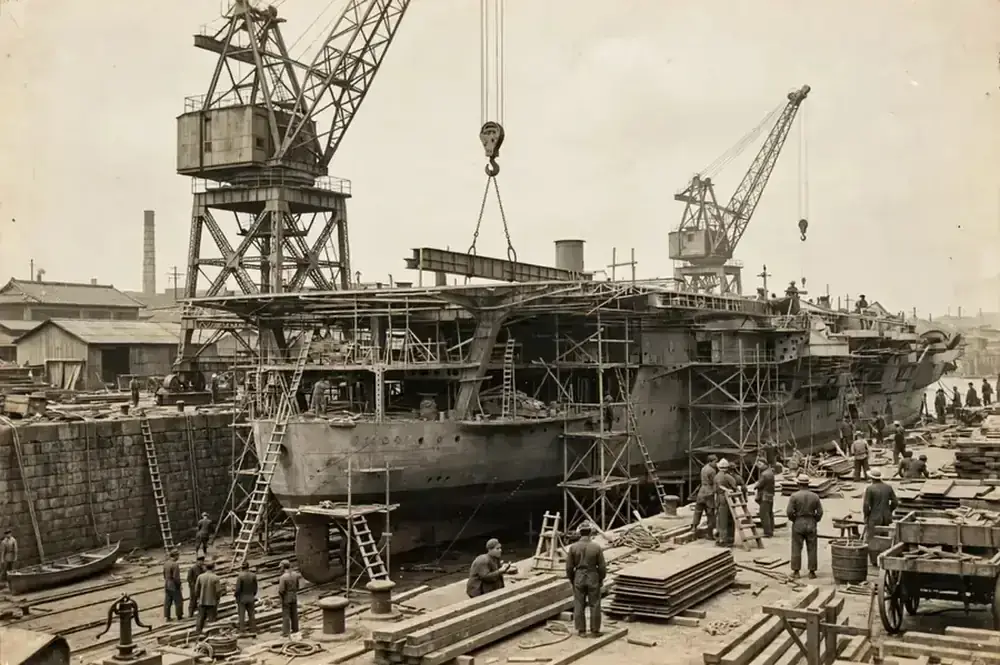
Hiryu’s design was a compromise between speed, aircraft capacity and protection. The ship was built for speed: her four Kampon turbines produced 152,000 shaft horsepower, giving her a top speed of 34 knots, faster than any American carrier of the time. Her flight deck was long and unobstructed, and her hangars could accommodate about 70 aircraft. But her protection was thin: a 46 mm belt and a deck of 25 to 56 mm were inadequate against bombs and torpedoes, and her aviation fuel system was vulnerable to fire. The design reflected Japanese doctrine, which prioritised offensive power over protection, and which assumed that a carrier’s best defence was its aircraft. At Midway, that assumption would prove fatal.
Building a Carrier Fleet
Hiryu was laid down at Yokosuka in July 1936, launched in November 1937, and commissioned in July 1939. She was the second Japanese carrier to be built from the keel up as a carrier, after Soryu, and she was regarded as a successful design. Her island was on the port side, unlike Soryu’s starboard island, an arrangement that was intended to allow the two ships to operate together without their islands interfering with each other’s flight operations. The experiment was not repeated: later Japanese carriers all had starboard islands. Hiryu’s commissioning came just as Japan was preparing for war, and she entered service at a time when the carrier was becoming the decisive weapon of naval warfare.
3. Design
Hull, Flight Deck and Hangars
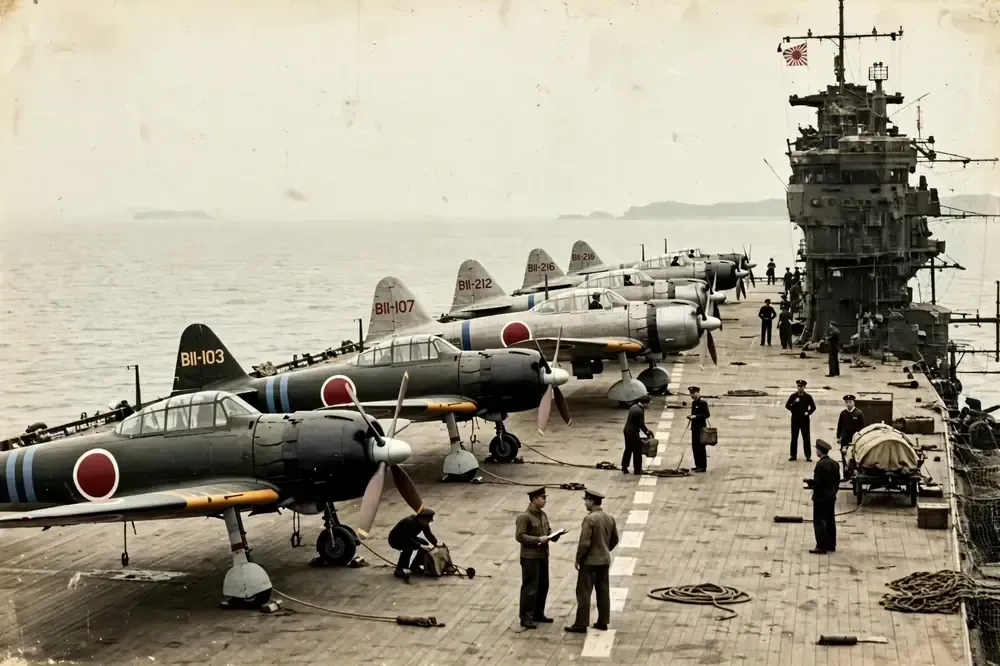
Hiryu’s hull was long and fine, with a clipper bow and a cruiser stern, designed for high speed. Her flight deck was about 216 metres long and 27 metres wide, and it was unarmoured, a choice that saved weight but made the ship vulnerable to bombs. The ship had two hangars, one above the other, served by two elevators, and the hangars could accommodate about 70 aircraft. The island, on the port side, was small and contained the bridge, the funnel and the fire-control directors. The ship’s appearance — long, low and fast — made her one of the most elegant carriers of the war, but her light construction was a liability in combat.
Propulsion and Speed
The propulsion system was four Kampon geared steam turbines driving four shafts, producing 152,000 shaft horsepower and a designed speed of 34 knots. The system was divided into four boiler rooms and four engine rooms, an arrangement that improved survivability, but the ship’s light armour meant that a single bomb or torpedo could disable her. Hiryu’s range was about 7,680 nautical miles at 18 knots, enough to operate across the Pacific, and her speed made her one of the fastest carriers in the world. The ship’s speed was her most valuable asset, and it allowed her to operate with the fast battleships and cruisers of the Japanese fleet.
Armament and Aircraft
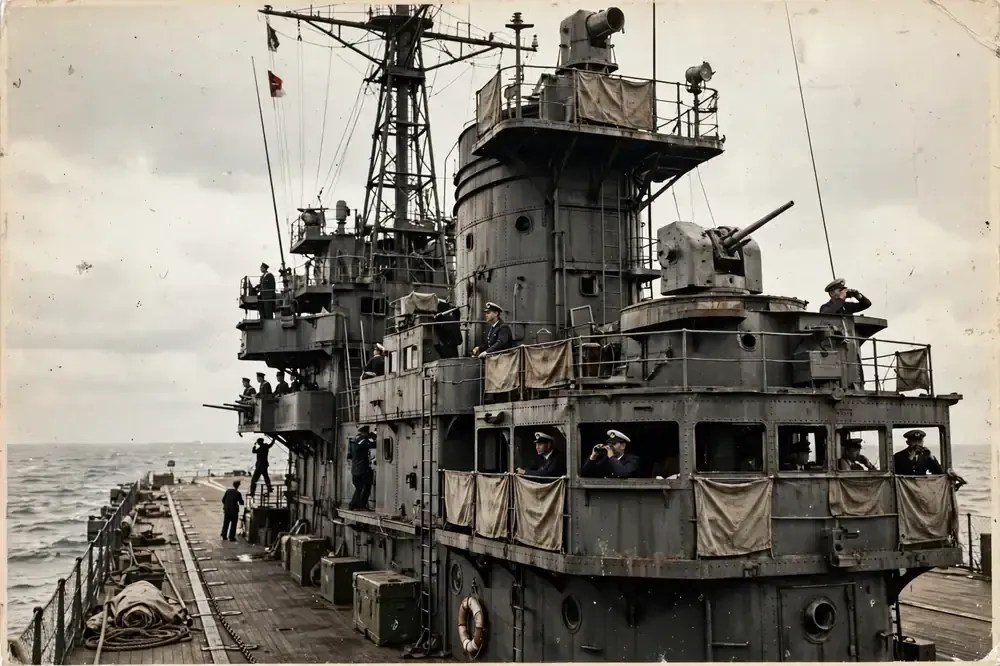
Hiryu’s armament was defensive: twelve 127 mm dual-purpose guns in six twin mounts, and twenty-eight 25 mm anti-aircraft guns, a number that was increased during the war. The ship’s real weapon was her air group, which typically consisted of about 21 Mitsubishi A6M Zero fighters, 18 Aichi D3A Val dive bombers, and 18 Nakajima B5N Kate torpedo bombers, plus spares. The air group was one of the most experienced in the Japanese Navy, and its pilots were among the best-trained in the world. Hiryu’s aircraft were the ship’s striking power, and their performance at Pearl Harbor, Darwin and Midway was a measure of the Japanese carrier force’s quality.
4. Variants
The Soryu Class
Hiryu was the second ship of the Soryu class, after Soryu herself. The two ships were similar but not identical: Hiryu was slightly larger, with a displacement of 17,300 tons against Soryu’s 15,900 tons, a longer hull, and a more powerful propulsion system. Hiryu’s island was on the port side, while Soryu’s was on the starboard side, and Hiryu’s funnel was longer and more raked. The differences were minor, but they made Hiryu the slightly better ship, and she was regarded as the more capable of the two. Both ships were lost at Midway, on the same day, within hours of each other.
Soryu, the Sister Ship
Soryu, commissioned in 1937, was the lead ship of the class and Hiryu’s sister. She served alongside Hiryu at Pearl Harbor, in the Indian Ocean Raid, and at Midway, where she was sunk by American dive bombers in the first attack on the morning of 4 June 1942. Soryu’s loss, together with those of Akagi and Kaga, left Hiryu alone to face the American carriers, and her solitary fight is the most famous part of her story. The two sisters’ careers were intertwined from their construction to their destruction, and they are remembered together as the Soryu class, the fast carriers that carried Japan to the height of its power and to its defeat at Midway.
The Name Hiryu
The name Hiryu means “Flying Dragon”, and it was a traditional name for Japanese warships, chosen to evoke speed and power. The name was later given to a Japanese destroyer commissioned in the post-war period, and it remains a part of the Japanese Navy’s heritage. Japanese carrier names were drawn from mythical creatures and natural phenomena: Soryu meant “Blue Dragon”, Akagi meant “Red Castle”, and Kaga was named for a province. Hiryu’s name, with its evocation of a dragon in flight, was fitting for a fast carrier, and it is remembered in Japan and in the United States, where her story is told in the history of the Battle of Midway.
5. Operational History
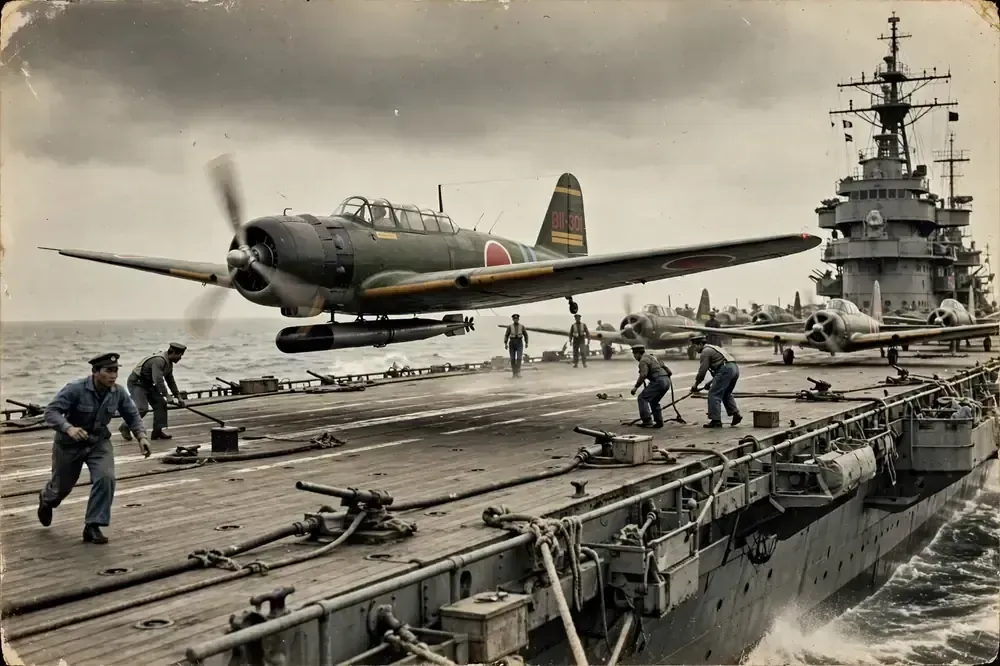
Pearl Harbor and the Early Campaigns
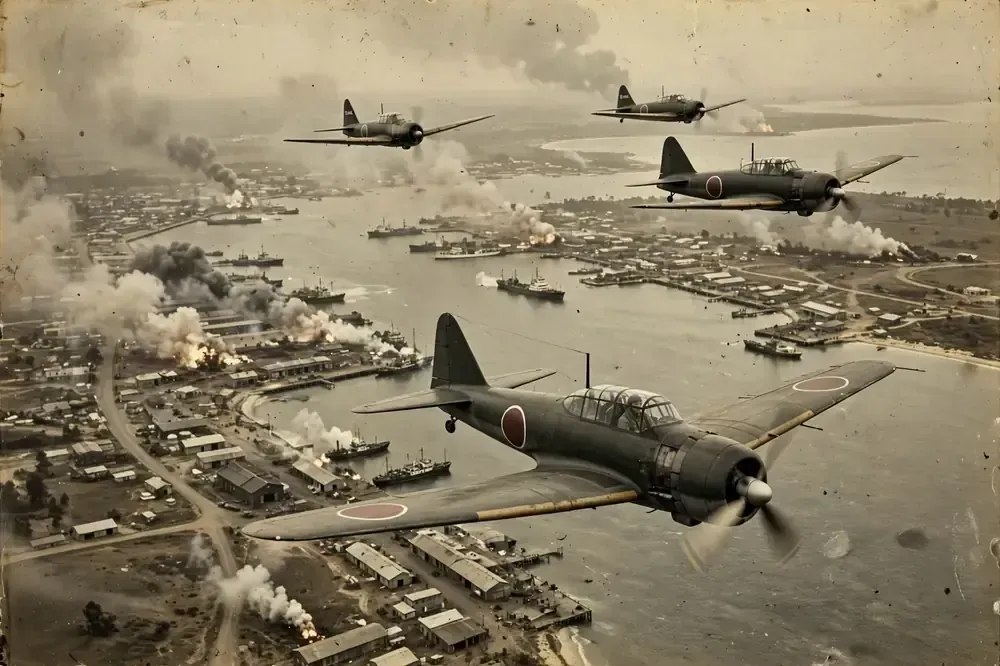
Hiryu’s first operation was the attack on Pearl Harbor on 7 December 1941, in which she launched torpedo bombers and dive bombers against the American battleships at anchor. Her aircraft attacked the battleships Oklahoma and West Virginia, and her pilots claimed hits on both. After Pearl Harbor, Hiryu supported the invasion of the Dutch East Indies, and in February 1942 her aircraft took part in the raid on Darwin, Australia, where they sank ships and destroyed aircraft on the ground. In April 1942 she took part in the Indian Ocean Raid, in which Japanese carriers sank the British carrier HMS Hermes and the cruisers Cornwall and Dorsetshire, and raided Ceylon. Hiryu’s early campaigns were a series of victories, and she was a veteran of the operations that carried Japan to the height of its power.
Midway: The Solitary Fight
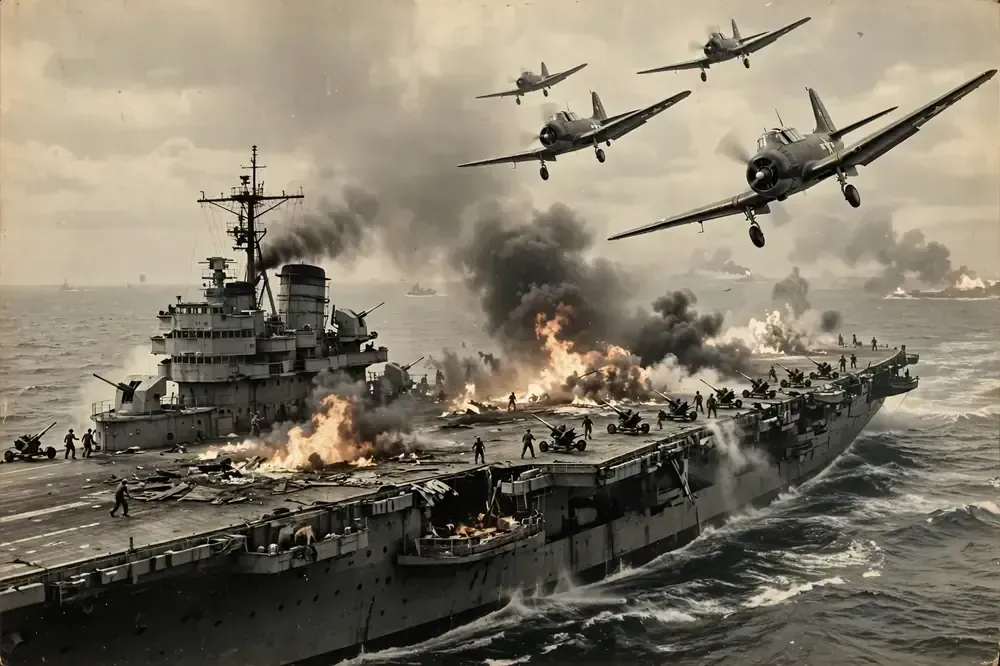
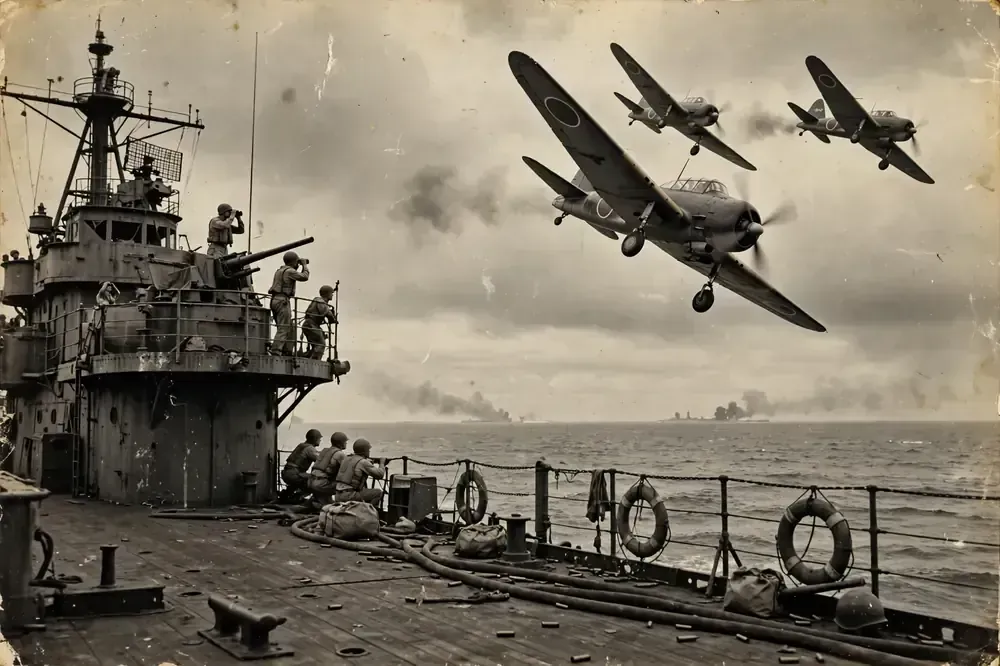
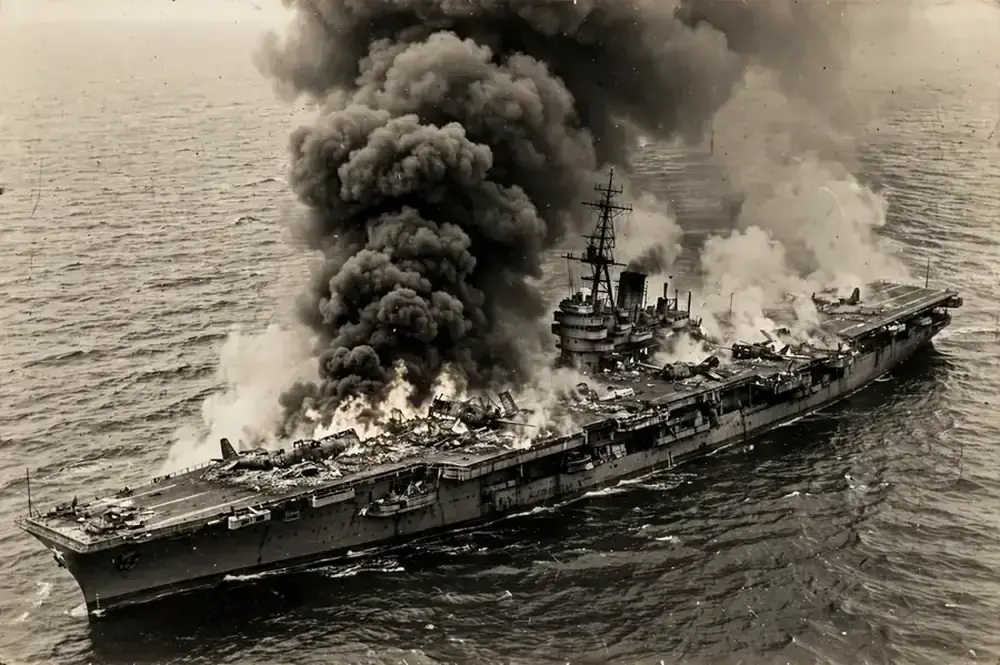
The Battle of Midway, on 4 June 1942, was Hiryu’s last battle, and it is the one for which she is remembered. In the morning, American dive bombers from USS Enterprise and USS Yorktown attacked the Japanese carriers and sank Akagi, Kaga and Soryu in a matter of minutes. Hiryu, which had been further from the American attack, survived, and her commander, Rear Admiral Tamon Yamaguchi, ordered her aircraft to strike back. Hiryu’s dive bombers and torpedo bombers attacked USS Yorktown, scoring three bomb hits and two torpedo hits that crippled the American carrier and forced her abandonment. It was the only American carrier lost at Midway, and it was Hiryu’s aircraft that did it. But the victory was short-lived: in the afternoon, American dive bombers from Enterprise found Hiryu and hit her with four bombs, setting her ablaze. The fires spread out of control, and that evening the ship was scuttled by Japanese destroyers. Admiral Yamaguchi went down with the ship, a gesture that has become a part of the legend of Midway.
The Loss and Its Meaning
Hiryu’s loss, together with those of her three sisters, was a catastrophe for Japan. The four carriers sunk at Midway represented the core of the Japanese carrier force, and their air groups — the most experienced pilots in the Japanese Navy — were lost with them. Japan could build new carriers, but it could not replace the pilots, and the loss of the Midway air groups marked the beginning of the decline of Japanese naval aviation. Hiryu’s solitary fight, and her success in crippling Yorktown, showed the quality of the Japanese carrier force, but it also showed that quality alone could not overcome the American advantages in intelligence, in numbers, and in the courage of the American dive-bomber pilots.
6. Performance and Specifications
Strengths on the Battlefield
Hiryu’s strengths were her speed, her aircraft capacity, and the quality of her air group. At 34 knots she was faster than any American carrier, and her air group of about 70 aircraft was a powerful striking force. Her pilots were among the best-trained in the world, and their performance at Pearl Harbor, Darwin and Midway was a measure of their skill. The ship’s design — a long flight deck, two hangars, and a high speed — made her an effective carrier, and her service in the first six months of the war was a series of victories.
Weaknesses and Trade-offs
The weaknesses were those of Japanese carrier design as a whole. Hiryu’s armour was thin, her aviation fuel system was vulnerable, and her damage control was poor by American standards. A single bomb could start a fire that the crew could not control, and the ship’s hangars, filled with armed and fuelled aircraft, were a hazard in themselves. At Midway, Hiryu survived the first attack only because she was further from the American bombers than her sisters, and when she was hit, her fires spread out of control and forced her abandonment. The ship’s design prioritised offensive power over survivability, and at Midway that choice proved fatal.
How Hiryu Compared with Rivals
Compared with the American carriers she faced at Midway, Hiryu was faster and carried a similar number of aircraft, but was more lightly armoured and had poorer damage control. Yorktown, the carrier Hiryu crippled, was a larger ship with better protection, and she survived Hiryu’s attack for two days before being sunk by a Japanese submarine. Enterprise, the carrier whose dive bombers sank Hiryu, was a similar ship to Yorktown, and she survived the battle. Compared with the British carriers of the time, Hiryu was faster and carried more aircraft, but had a thinner armoured deck. Hiryu was a capable carrier, but she fought in a navy whose doctrine and whose damage control were inferior to those of the Americans, and at Midway that inferiority mattered more than any feature of the ship’s design.
7. Operators
The Imperial Japanese Navy
The only operator of Hiryu was the Imperial Japanese Navy. The ship served with the First Air Fleet, the Kido Butai, the carrier striking force that attacked Pearl Harbor and fought at Midway. Her air group was drawn from the Navy’s most experienced pilots, and her crew was among the best-trained in the Japanese Navy. Hiryu’s service was entirely Japanese, and her history is a part of the history of the Imperial Japanese Navy in the Pacific War.
No Other Users
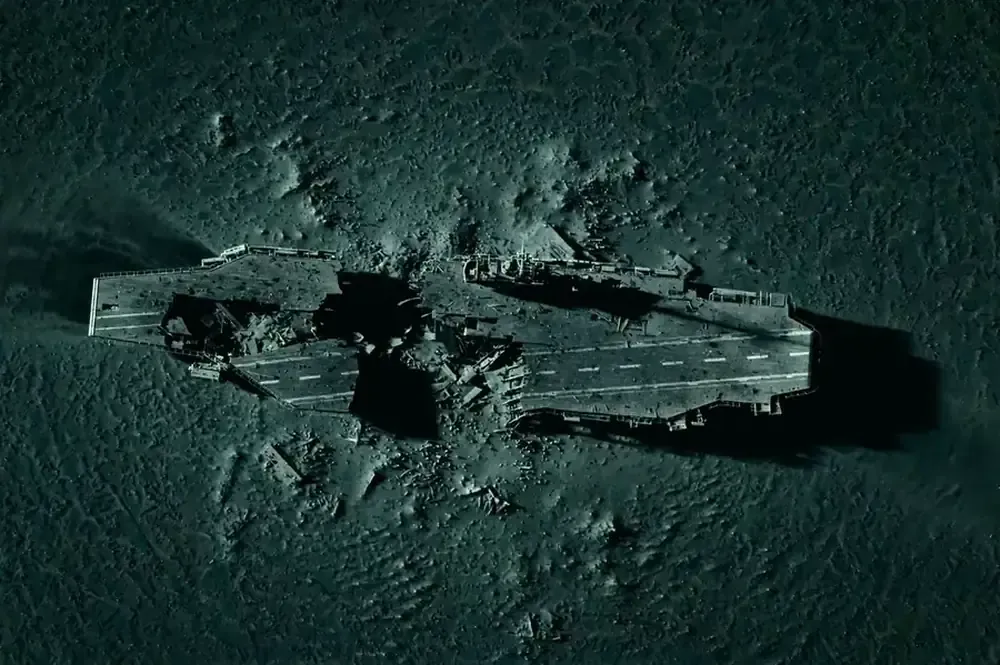
No other navy operated Hiryu. After her sinking at Midway, her wreck lay undiscovered on the seabed for 77 years, until it was found in 2019 by a research vessel using deep-sea sonar. The discovery of the wreck, and of the wrecks of Akagi and Kaga, was a major event for naval archaeology, and it provided new information about the Battle of Midway. The ship’s name was later given to a Japanese destroyer, and her memory is preserved in the Japanese Navy’s history and in the memorials to her crew.
8. Legacy and Influence
Midway and the Turning Point
The legacy of Hiryu is the Battle of Midway itself. The battle was the turning point of the Pacific War, the moment when Japan lost the initiative and the United States began its advance across the Pacific. Hiryu’s solitary fight, and her success in crippling Yorktown, showed the quality of the Japanese carrier force, but it also showed that quality alone could not overcome the American advantages. The battle is studied at naval war colleges around the world, and Hiryu’s role in it is a central part of the story.
Memory and the Wreck
Hiryu is remembered in Japan as a symbol of the carrier force’s courage, and in the United States as the ship whose aircraft crippled Yorktown. The discovery of her wreck in 2019, in deep water near Midway, was a major event, and the images of the wreck — her flight deck, her island, her guns — were widely published. The wreck is a war grave, and it is protected as such. The ship’s story is told in the museums and memorials of Japan and the United States, and her name is remembered in the history of the Pacific War.
The End of the Carrier Offensive
Hiryu’s loss, together with those of her sisters, marked the end of Japan’s carrier offensive. After Midway, Japan could no longer mount the large carrier operations that had carried it to victory in the first six months of the war, and the initiative passed to the United States. The Japanese Navy built new carriers, but it could not replace the pilots lost at Midway, and its carrier force never recovered. Hiryu’s career thus spans the rise and fall of Japanese naval aviation, from Pearl Harbor to Midway, and her story is a measure of how quickly a navy can lose its advantage.
9. Surviving Examples
No Ship Survives
No Japanese fleet carrier of the Second World War survives. Hiryu lies on the seabed in deep water near Midway, where she was found in 2019, and her wreck is a war grave. The discovery of the wreck provided new information about the battle, including the condition of the ship’s flight deck and the location of the bomb hits that sank her. The wreck is protected, and it is not open to salvage. The absence of a preserved Japanese carrier is a loss for naval heritage, but the wrecks of the Midway carriers, lying in deep water, are among the most significant underwater archaeological sites of the Second World War, and they continue to yield information about the battle.
Artefacts and Memorials
Artefacts from Hiryu survive in museums in Japan and in the United States. The Yamato Museum in Kure displays models and photographs of the Japanese carrier force, including Hiryu, and the Naval History and Heritage Command in Washington holds material relating to the Battle of Midway. In Japan, the Yasukuni Shrine honours the ship’s crew, and memorials to the Midway dead are maintained in several locations. The ship’s story is also preserved in the films and books about Midway, in which Hiryu’s solitary fight is a central episode.
Frequently Asked Questions
What was Hiryu?
Hiryu, meaning “Flying Dragon”, was a Japanese fleet aircraft carrier of the Second World War, one of the six carriers that attacked Pearl Harbor and one of the four sunk at the Battle of Midway. She was a fast carrier, capable of 34 knots, carrying about 70 aircraft, and she was the second ship of the Soryu class, built with her sister Soryu in the 1930s as Japan rebuilt its carrier fleet within the limits of the Washington Naval Treaty. Hiryu was laid down at Yokosuka in July 1936, launched in November 1937, and commissioned in July 1939, just as Japan was preparing for war.
What did Hiryu do at Midway?
At Midway on 4 June 1942, Hiryu was the only Japanese carrier to survive the first American dive-bomber attack, which sank Akagi, Kaga and Soryu in a matter of minutes. Her aircraft then attacked USS Yorktown, crippling the American carrier with bombs and torpedoes, and forcing her abandonment. Yorktown was the only American carrier lost at Midway, and Hiryu’s aircraft were responsible. Hours later, Hiryu herself was hit by American dive bombers from Enterprise and set ablaze, and that evening she was scuttled by Japanese destroyers. Admiral Tamon Yamaguchi, her commander, went down with the ship.
How many aircraft did Hiryu carry?
Hiryu typically carried about 57 to 73 aircraft, including Mitsubishi A6M Zero fighters, Aichi D3A Val dive bombers, and Nakajima B5N Kate torpedo bombers. Her air group was one of the most experienced in the Japanese Navy, and its pilots were among the best-trained in the world. The standard air group consisted of about 21 fighters, 18 dive bombers and 18 torpedo bombers, plus spares, and the aircraft were housed in two hangars served by two elevators. The air group was the ship’s striking power, and its performance at Pearl Harbor, Darwin and Midway showed the quality of the Japanese carrier force.
When was Hiryu’s wreck found?
Hiryu’s wreck was discovered in 2019 by a research vessel using deep-sea sonar, in deep water near Midway. The discovery, together with those of Akagi and Kaga, provided new information about the Battle of Midway and confirmed the location of the ship’s sinking. The wreck lies on the seabed in deep water, and images of it — her flight deck, her island, her guns — were widely published. The wreck is protected as a war grave. The discovery was a major event for naval archaeology, coming 77 years after the battle.
Why was Hiryu so vulnerable at Midway?
Hiryu’s armour was thin, her aviation fuel system was vulnerable to fire, and her damage control was poor by American standards. When American dive bombers hit her with four bombs, the fires spread out of control and forced her abandonment. Japanese carrier design prioritised offensive power over survivability, and the ship’s hangars, filled with armed and fuelled aircraft, were a hazard in themselves. A single bomb could start a fire that the crew could not control, and Hiryu’s fate was the same as that of her sisters: a ship designed for attack, destroyed by the fires that its own aircraft and fuel created.
What does Hiryu mean?
Hiryu means “Flying Dragon” in Japanese. The name was a traditional choice for Japanese warships, evoking speed and power, and it was later given to a post-war Japanese destroyer. The name reflects the Japanese Navy’s tradition of giving its carriers names drawn from mythical creatures and natural phenomena: Soryu meant “Blue Dragon”, Akagi meant “Red Castle”, and Kaga was named for a province. Hiryu’s name is remembered in Japan and in the United States, where her story is told in the history of the Battle of Midway, and where her solitary fight has become a part of the legend of the battle.
Sources
- Parshall, Jonathan, and Tully, Anthony, Shattered Sword: The Untold Story of the Battle of Midway (Potomac Books).
- Peattie, Mark, Sunburst: The Rise of Japanese Naval Air Power, 1909–1941 (Naval Institute Press).
- Fuchida, Mitsuo, and Okumiya, Masatake, Midway: The Battle That Doomed Japan (Naval Institute Press).
- Lundstrom, John, The First Team: Pacific Naval Air Combat from Pearl Harbor to Midway (Naval Institute Press).
- The Yamato Museum, Kure, carrier collection records.
- The Naval History and Heritage Command, Washington, Midway collection records.