 WAR ATLAS MILITARY HISTORY MAGAZINE · WWI — WWII
Junkers Ju 88: Germany’s Versatile Workhorse
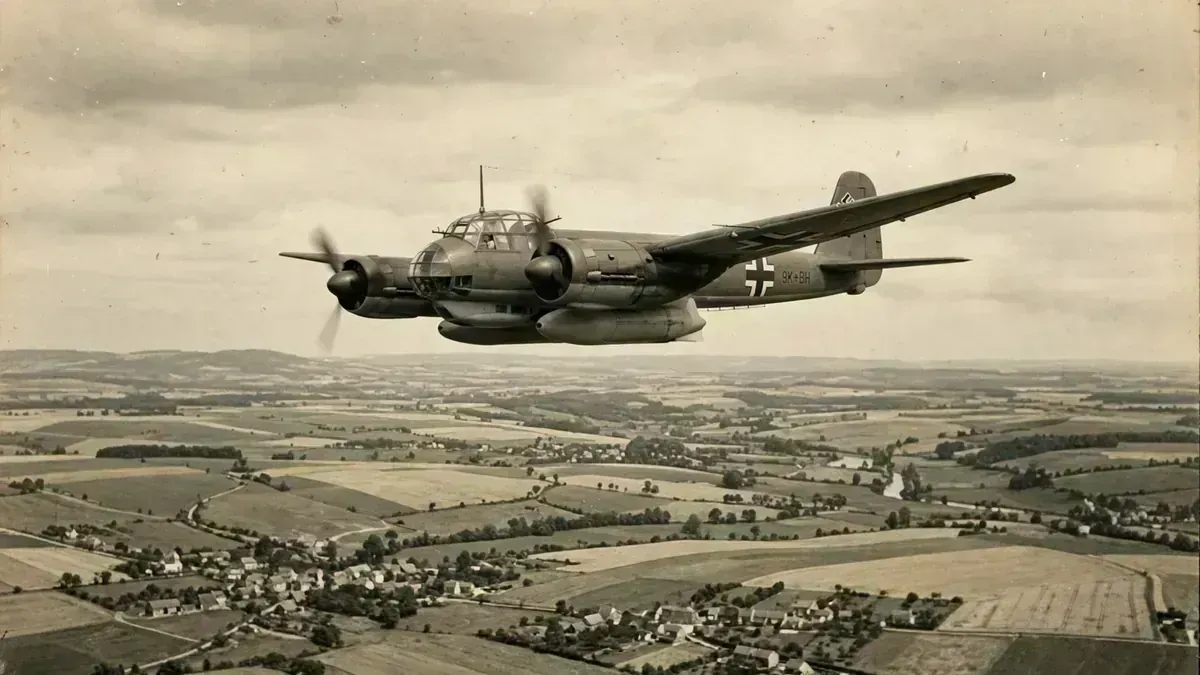
The Junkers Ju 88 was the most versatile German aircraft of the Second World War, and one of the most-produced combat aircraft of the conflict. Designed as a fast medium bomber, it served as a level bomber, a dive bomber, a torpedo bomber, a reconnaissance aircraft, a night fighter, a heavy fighter, a ground-attack aircraft, and, in the Mistel combination, as a flying bomb. About 15,000 Ju 88s were built in dozens of variants between 1939 and 1945, more than any other German bomber, and the aircraft served on every front, from the invasion of Poland to the defence of the Reich. It was the backbone of the Luftwaffe’s bomber force, and its night-fighter versions were among the most successful German night fighters of the war.
The Ju 88 was designed in the mid-1930s to the Luftwaffe’s requirement for a fast bomber, the so-called Schnellbomber, that could outrun enemy fighters. The first prototype flew in December 1936, and the aircraft entered service in 1939, just in time for the invasion of Poland. Its early service was marred by the decision to make it a dive bomber, a role for which it was not designed, and by the complexity of its systems, which made it difficult to maintain. But the Ju 88 proved adaptable: its large airframe, its two powerful engines, and its good handling made it suitable for almost any role, and the Luftwaffe used it in every role it could imagine.
The Ju 88 is remembered today as the Luftwaffe’s workhorse, the aircraft that did everything, and as a symbol of German aviation’s strengths and weaknesses: brilliant engineering, remarkable adaptability, and a tendency to overcomplicate a design until it became difficult to build and maintain. Surviving Ju 88s are rare, but the aircraft’s reputation — as a bomber, as a night fighter, and as the Mistel’s lower half — has endured in the history of the air war.
1. Key Facts
| Field | Value |
|---|---|
| Type | Twin-engine medium bomber; also night fighter, reconnaissance, heavy fighter, ground attack |
| Origin | Germany |
| Designer | Junkers Flugzeug- und Motorenwerke; designed by Ernst Zindel and Heinrich Hertel |
| First flight | 21 December 1936 |
| In service | 1939–1945 (Luftwaffe) |
| Produced | Approximately 15,000 (all variants) |
| Manufacturers | Junkers, Heinkel, Dornier, and other German firms |
| Crew | 4 (pilot, bombardier/navigator, radio operator, gunner); 3 in night-fighter versions |
| Engines | 2 × Junkers Jumo 211 or BMW 801 radial engines, approximately 1,350–1,700 hp each |
| Length | Approximately 14.4 m (47 ft 3 in) (A-4) |
| Wingspan | Approximately 20 m (65 ft 7 in) (A-4) |
| Height | Approximately 4.85 m (15 ft 11 in) |
| Weight | Approximately 9,860 kg empty; approximately 14,000 kg loaded (A-4) |
| Maximum speed | Approximately 470 km/h (292 mph) (A-4); approximately 550 km/h for night-fighter versions |
| Range | Approximately 2,430 km (1,510 miles) (A-4) |
| Service ceiling | Approximately 8,200 m (26,900 ft) (A-4) |
| Armament (bomber) | Up to 3,000 kg of bombs internally and externally; 3–5 × 7.92 mm MG 15/MG 81 machine guns |
| Armament (night fighter) | Up to 6 × 20 mm MG FF/MG 151 cannon; Lichtenstein radar |
| Notable variants | Ju 88A bomber, Ju 88C heavy fighter, Ju 88D reconnaissance, Ju 88G night fighter, Ju 88S high-speed bomber, Ju 188 successor |
| Fate | Retired 1945; a few survivors in museums |
2. Background and Development
The Schnellbomber Concept
The Ju 88 was designed to the Luftwaffe’s requirement for a Schnellbomber, a fast bomber that could outrun enemy fighters and did not need defensive armament. The concept was popular in the 1930s, when bomber speeds were increasing faster than fighter speeds, and the Luftwaffe believed that a bomber fast enough could operate without escort. Junkers’ design, led by Ernst Zindel and Heinrich Hertel, was a clean twin-engine aircraft with a glazed nose, a crew of four, and a bomb bay that could carry up to 3,000 kilograms of bombs. The first prototype flew in December 1936 and reached a speed of 580 km/h, faster than any fighter then in service, and the Luftwaffe ordered the aircraft into production.
The Dive-Bomber Decision
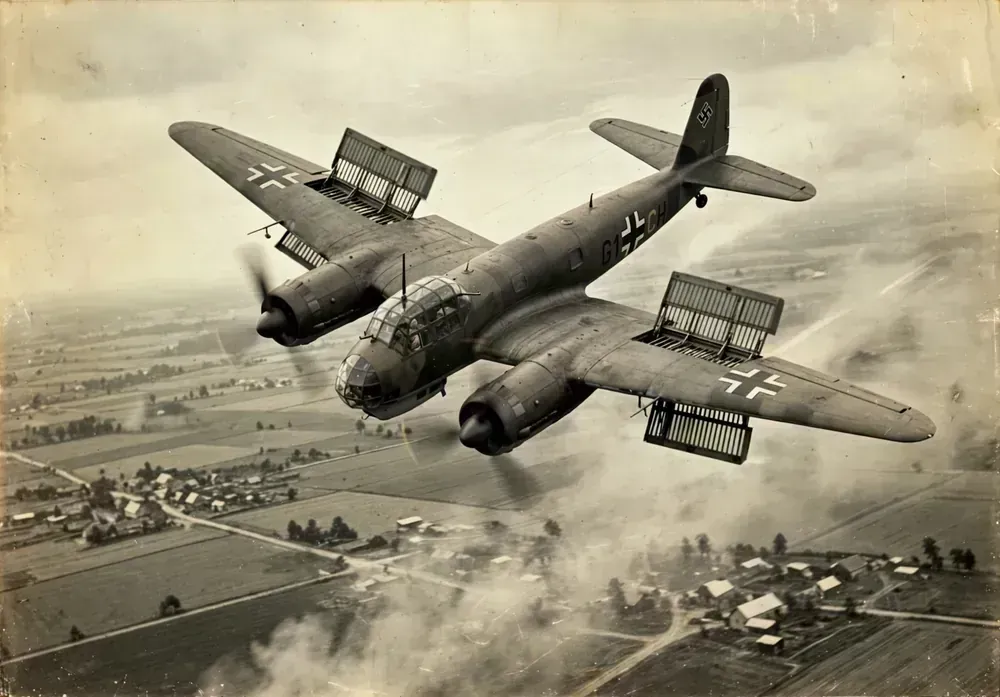
The Ju 88’s early development was distorted by the Luftwaffe’s decision, driven by Ernst Udet, the head of the technical office, to make the aircraft a dive bomber. The requirement for dive bombing added air brakes, a strengthened airframe, and a bomb cradle that swung the bomb clear of the propeller, and it added weight and complexity to a design that had been intended as a clean fast bomber. The dive-bomber requirement delayed the Ju 88’s entry into service and compromised its performance, and the aircraft never became a good dive bomber: it was too large and too heavy for the role, and its dive-bombing attacks were less accurate than those of the Ju 87 Stuka. The decision is often cited as one of the Luftwaffe’s great mistakes, and it haunted the Ju 88 throughout its career.
Entering Service
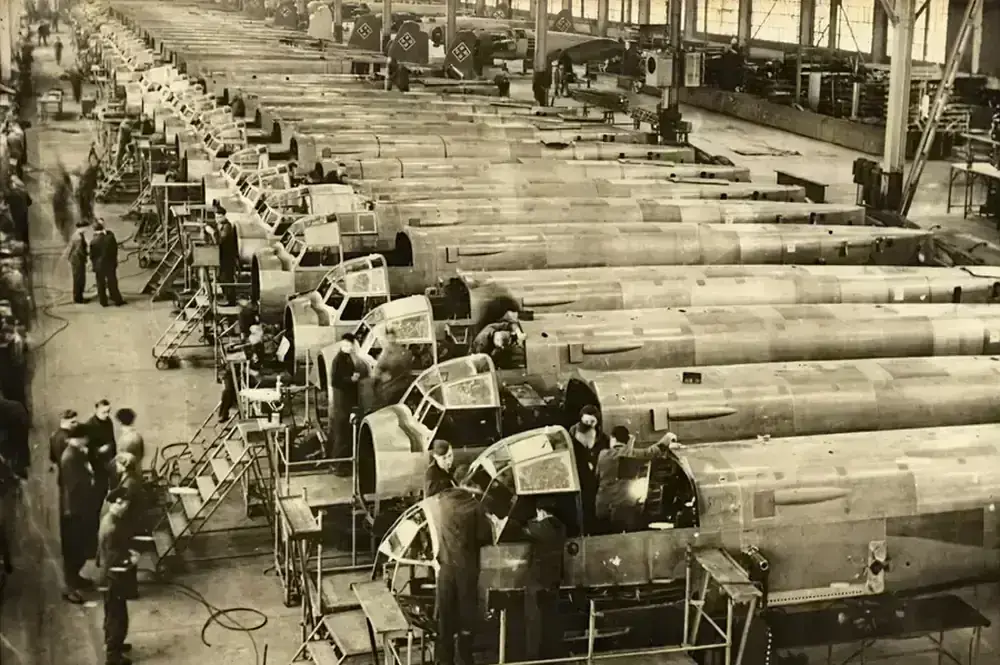
The Ju 88 entered service in 1939, just before the invasion of Poland, and its first operations were in the Polish campaign and in the invasion of France. The aircraft’s early service was marred by mechanical problems and by the complexity of its systems, and its crews found it difficult to maintain. But the Ju 88 proved adaptable, and the Luftwaffe quickly learned to use it in roles for which it had not been designed. By 1940 the Ju 88 was the Luftwaffe’s principal medium bomber, and it served in the Battle of Britain, in the Mediterranean, and on the Eastern Front. The aircraft’s versatility was its salvation: when the bomber role became too dangerous, the Ju 88 found new roles as a night fighter and a reconnaissance aircraft.
3. Design
Airframe, Crew and Layout
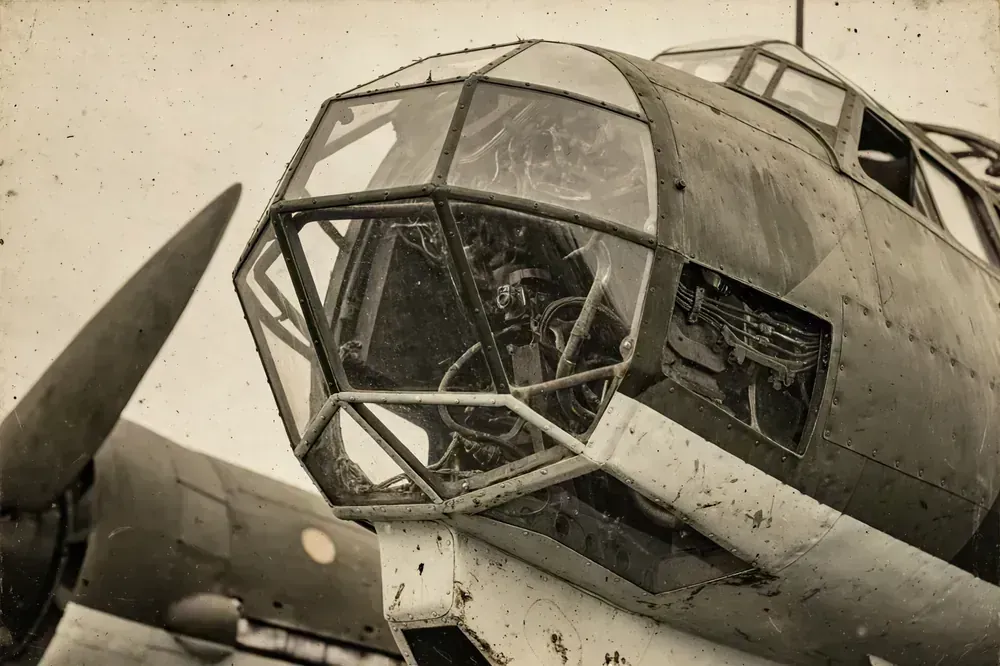
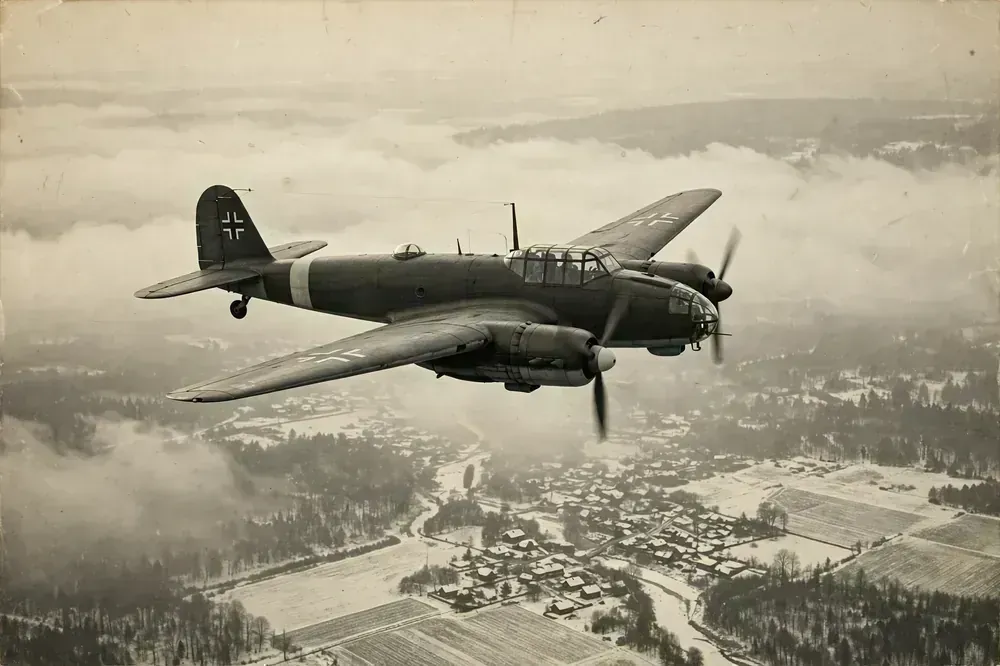
The Ju 88 was a twin-engine, low-wing monoplane with a distinctive glazed nose that housed the bombardier and the pilot, and a crew of four seated close together in the forward fuselage. The glazed nose gave the crew an excellent view, but it also made them vulnerable to flak and to fighter attack. The airframe was of all-metal construction, with a retractable undercarriage and a bomb bay in the centre fuselage that could carry up to 3,000 kilograms of bombs. The aircraft’s handling was good, and its pilots praised its responsiveness and its ability to fly on one engine. The Ju 88 was a large aircraft for a medium bomber, and its size made it a stable bombing platform and a spacious night fighter.
Engines and Performance
The Ju 88 was powered by two Junkers Jumo 211 liquid-cooled V-12 engines, each producing about 1,350 horsepower, and later versions used the BMW 801 radial engine, which produced up to 1,700 horsepower. The Jumo 211 was reliable but underpowered for the aircraft’s weight, and the Ju 88’s top speed of about 470 km/h was slower than the designers had hoped. The BMW 801 versions were faster, but the engine was in short supply, because it was also used in the Fw 190 fighter. The Ju 88’s range was about 2,430 kilometres, and its service ceiling was about 8,200 metres. The aircraft’s performance was adequate for a bomber, but it was not fast enough to outrun modern fighters, and the Schnellbomber concept had failed by 1940.
Armament and Defensive Weapons
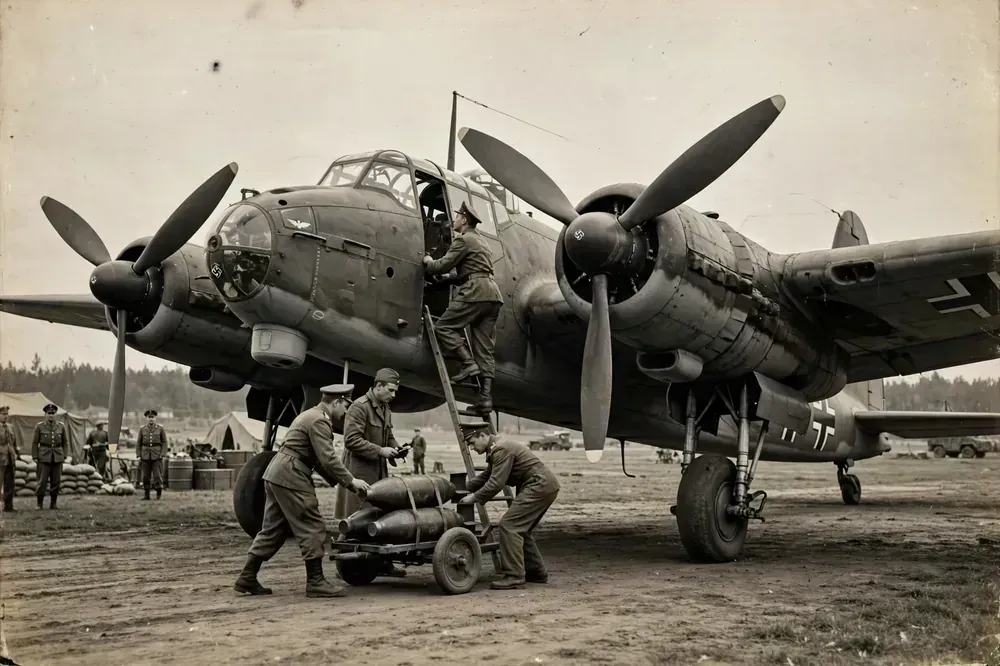
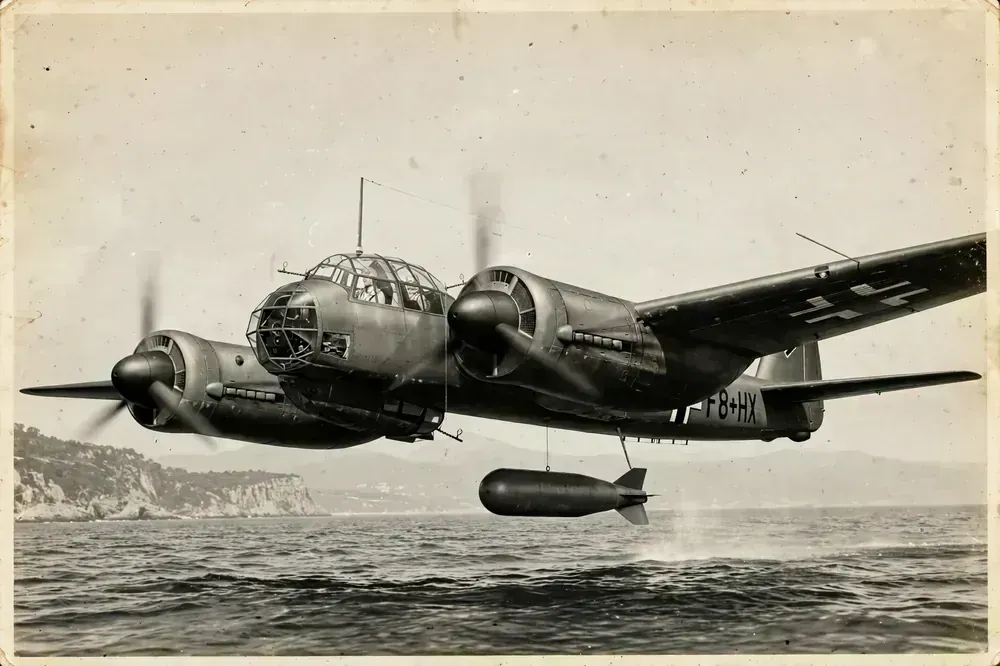
The Ju 88’s defensive armament was light: three to five 7.92 mm machine guns, in the nose, in the dorsal position, and in the ventral gondola. The armament was inadequate against modern fighters, and the Ju 88 suffered heavy losses in daylight operations over Britain and the Soviet Union. The night-fighter versions were better armed, with up to six 20 mm cannon and Lichtenstein radar, and they were among the most heavily armed German night fighters. The bomber versions could carry up to 3,000 kilograms of bombs, including a 1,000-kilogram bomb in the bomb bay, and the aircraft could also carry torpedoes for anti-shipping operations. The Ju 88’s armament reflected its versatility: it was never the best in any single role, but it was adequate in all of them.
4. Variants
Ju 88A: The Bomber
The Ju 88A was the principal bomber version, produced in large numbers from 1939 onwards. The A-1 was the first production version, and the A-4, introduced in 1941, became the standard bomber, with more powerful engines, a longer wingspan, and improved defensive armament. The A-4 was the version that served in the Battle of Britain, in the Mediterranean, and on the Eastern Front, and it was the most numerous Ju 88 variant. The A-series also included torpedo-bomber versions for anti-shipping operations, and the A-4 was the basis for most of the later variants.
Ju 88C and Ju 88G: The Night Fighters
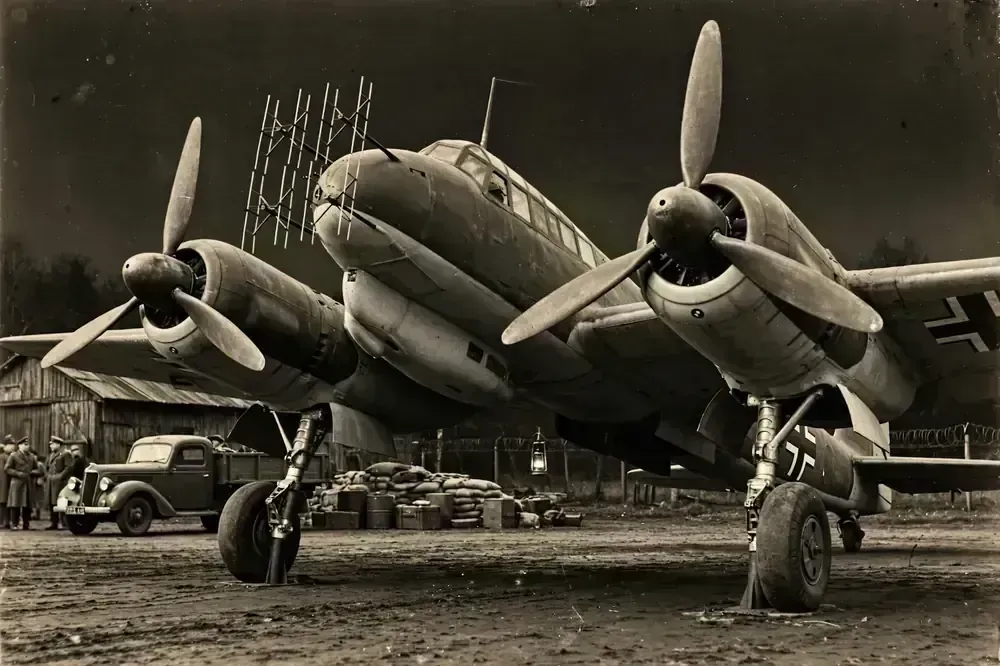
The Ju 88C was a heavy fighter version, fitted with a solid nose containing cannon and machine guns, and it served as a long-range fighter and as a night fighter. The Ju 88G, introduced in 1944, was the definitive night fighter, with a redesigned tail, BMW 801 engines, Lichtenstein SN-2 radar, and up to six 20 mm cannon. The G-series was one of the most successful German night fighters, and its crews claimed hundreds of British bombers. The Ju 88G’s success was a measure of the aircraft’s adaptability: a bomber designed in 1935 became, a decade later, one of the best night fighters in the world.
Ju 88D, Ju 88S and the Mistel
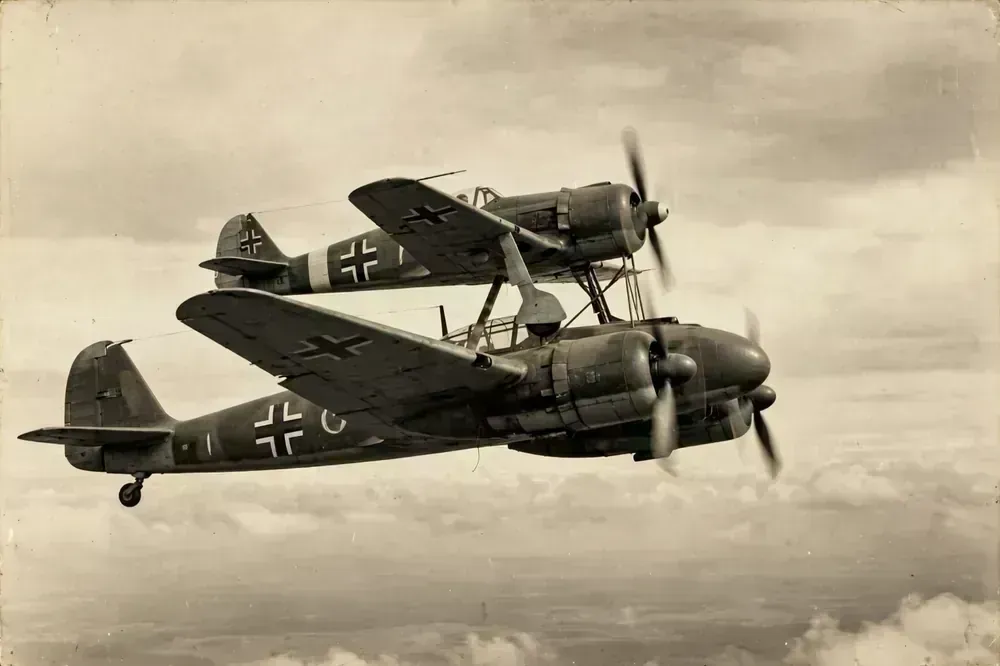
The Ju 88D was a long-range reconnaissance version, fitted with cameras and extra fuel tanks, and it served on all fronts. The Ju 88S was a high-speed bomber version, with a streamlined nose, reduced defensive armament, and BMW 801 engines, designed to outrun enemy fighters. The Ju 88 was also used as the lower half of the Mistel combination, in which a fighter was mounted on top of an unmanned Ju 88 filled with explosives, and the combination was flown to its target and the Ju 88 released as a flying bomb. The Mistel was used against bridges and fortifications in 1944–1945, but it was not a success. The Ju 188 was a development of the Ju 88 with a new wing and more powerful engines, and it served as a bomber and reconnaissance aircraft in the later war.
5. Operational History
The Early Campaigns and the Battle of Britain
The Ju 88 first saw combat in the invasion of Poland in September 1939, and it served in the invasion of France and the Low Countries in 1940. In the Battle of Britain, the Ju 88 was one of the Luftwaffe’s principal bombers, and it suffered heavy losses to RAF fighters. The aircraft’s daylight operations over Britain showed that the Schnellbomber concept had failed: the Ju 88 was not fast enough to outrun Spitfires and Hurricanes, and its defensive armament was inadequate. After the Battle of Britain, the Ju 88 was used increasingly at night, and it served as a night bomber in the Blitz and in later operations over Britain.
The Mediterranean and the Eastern Front
In the Mediterranean, the Ju 88 served as a bomber and torpedo bomber, attacking Allied shipping and supporting the Afrika Korps. The aircraft’s torpedo-bomber versions sank numerous Allied ships, and the Ju 88 was a constant threat to Malta convoys. On the Eastern Front, the Ju 88 served as a bomber, a dive bomber, and a ground-attack aircraft, supporting the German Army’s advance into the Soviet Union. The aircraft’s versatility was an asset on the Eastern Front, where it was used in roles ranging from level bombing to close support. The Ju 88’s Eastern Front service was extensive, and the aircraft suffered heavy losses to Soviet fighters and flak.
The Night Fighter War
The Ju 88’s most successful later role was as a night fighter. From 1943 onwards, Ju 88C and Ju 88G night fighters defended Germany against the RAF’s night bomber offensive, and they claimed hundreds of British bombers. The Ju 88G, with its Lichtenstein radar and heavy cannon armament, was one of the most effective German night fighters, and its crews included some of the Luftwaffe’s most successful night-fighter aces. The night-fighter Ju 88s also served in the defence of the Reich against American daylight bombers, and they remained in service until the end of the war. The Ju 88’s night-fighter career was a vindication of the aircraft’s adaptability, and it was the role in which the Ju 88 achieved its greatest success in the later war.
6. Performance and Specifications
Strengths on the Battlefield
The Ju 88’s strengths were its versatility, its good handling, and its spacious airframe. It could be adapted to almost any role, and it was a stable bombing platform and a capable night fighter. Its pilots praised its responsiveness and its ability to fly on one engine, and its crews valued its roomy cockpit and its good visibility. The Ju 88’s production run of about 15,000 aircraft was a testament to its usefulness: no other German bomber was built in such numbers, and no other German aircraft served in so many roles. The Ju 88 was the Luftwaffe’s workhorse, and it performed its many jobs competently, if not brilliantly.
Weaknesses and Trade-offs
The weaknesses were those of a design that had been compromised by the dive-bomber requirement and by the Luftwaffe’s changing needs. The Ju 88 was never fast enough to outrun modern fighters, and its defensive armament was inadequate for daylight operations. The aircraft was complex to maintain, and its systems — particularly the dive brakes and the bomb cradle — were a source of trouble. The Ju 88’s performance declined as the war went on, because the aircraft grew heavier with each new variant while its engines remained the same. The Ju 88 was a good aircraft that was asked to do too many things, and its versatility was both its strength and its weakness.
How the Ju 88 Compared with Rivals
Compared with the British de Havilland Mosquito, the Ju 88 was slower, less manoeuvrable, and less well armed, but it was more versatile and was built in larger numbers. Compared with the American Douglas A-20 Havoc, the Ju 88 was larger, more heavily armed, and more capable as a night fighter, but slower and less agile. Compared with the German Heinkel He 111, the Ju 88 was faster, more modern, and more versatile, but less rugged and more complex. Compared with its successor, the Ju 188, the Ju 88 was slower and less capable, but the Ju 188 was built in smaller numbers and never replaced the Ju 88. The Ju 88’s record stands comparison with any medium bomber of the war.
7. Operators
The Luftwaffe
The principal operator of the Ju 88 was the Luftwaffe, which operated the type with dozens of bomber, night-fighter, reconnaissance and ground-attack units on every front. The Ju 88’s units included Kampfgeschwader 1, 2, 3, 6, 30, 51, 54, 76 and 77, among others, and Nachtjagdgeschwader 1, 2, 3, 4, 5 and 6 for the night-fighter versions. The Luftwaffe’s Ju 88 crews were among the most experienced in the German air force, and the aircraft’s service was a central part of the Luftwaffe’s history.
Other Users
The Ju 88 was also operated by Germany’s allies and by other air forces. The Finnish Air Force operated Ju 88s in the Continuation War against the Soviet Union, and the Hungarian and Romanian air forces operated the type in smaller numbers. After the war, the French Air Force operated captured Ju 88s, and the Soviet Union tested captured examples. The Ju 88’s service with other air forces was limited, but it showed that the aircraft was valued beyond the Luftwaffe.
8. Legacy and Influence
The Multi-Role Aircraft
The Ju 88’s legacy is the multi-role combat aircraft. The aircraft demonstrated that a single airframe could be adapted to many roles, and the concept of the multi-role aircraft became central to air force planning in the post-war period. The Ju 88’s versatility was a product of its large, spacious airframe and its good handling, and later aircraft — from the Mosquito to the modern multi-role fighter — followed the same logic. The Ju 88 was the first truly multi-role aircraft, and its career proved the concept.
Memory and the Night Fighter
The Ju 88 is remembered in the popular memory of the air war as the Luftwaffe’s workhorse, the aircraft that was everywhere, and as a night fighter that claimed hundreds of British bombers. The aircraft’s story has been told in books, films and documentaries, and its night-fighter versions are remembered in the history of the defence of the Reich. The Ju 88’s Mistel combination is remembered as one of the war’s strangest weapons, and the aircraft’s versatility has made it a popular subject for historians and modellers.
Lessons for Later Aircraft
The Ju 88’s lessons were carried into the design of later aircraft. The value of a spacious, adaptable airframe, of good handling, and of the ability to operate in many roles, were all demonstrated by the Ju 88, and they influenced the design of post-war multi-role aircraft. The Ju 88 also demonstrated the dangers of overcomplicating a design: the dive-bomber requirement added weight and complexity that the aircraft never overcame, and the lesson — that a clear, simple requirement produces a better aircraft — was learned by later designers. The Ju 88’s career is thus a story of both success and caution.
9. Surviving Examples
Rare Survivors
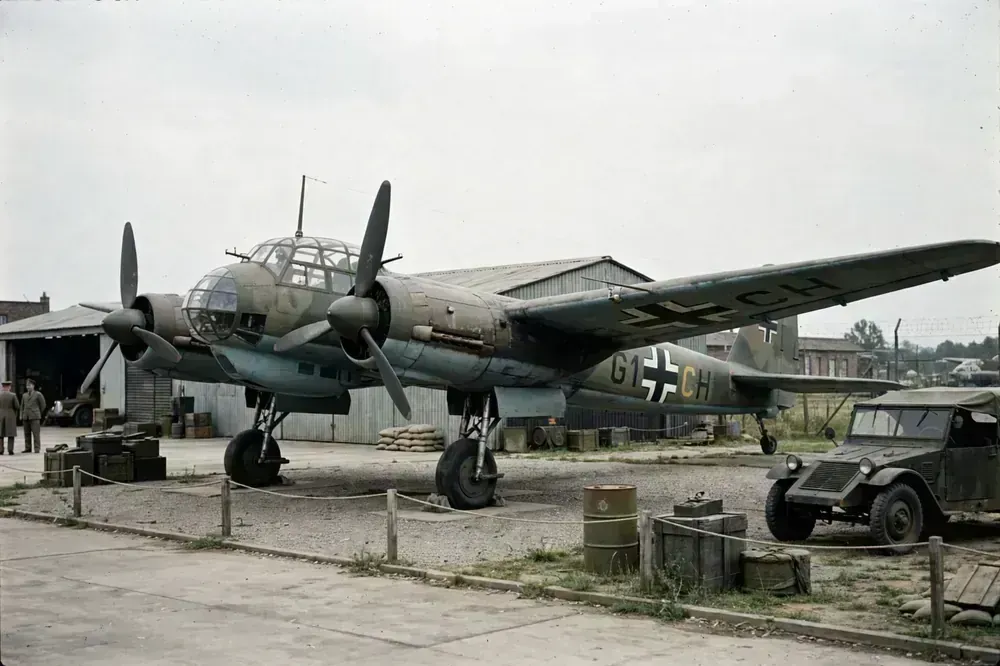
Surviving Ju 88s are rare, because most were destroyed in combat or scrapped after the war. The Royal Air Force Museum at Hendon displays a Ju 88, and the Norwegian Armed Forces Museum in Oslo holds a Ju 88 that was recovered from a Norwegian lake. The Deutsches Museum in Munich displays Ju 88 components, and the Smithsonian National Air and Space Museum in Washington holds a Ju 88. The survival rate is low, but the examples that remain are valuable: they show the aircraft’s glazed nose, its bomb bay, and its defensive armament, and they allow visitors to see the Luftwaffe’s workhorse up close.
Wrecks and Recovery
Other Ju 88s survive as wrecks, in lakes, in the sea, and in the ground, and they are recovered from time to time by aviation archaeologists. The recovery of Ju 88s from Norwegian lakes has been a source of parts for the preserved examples, and the wrecks have provided valuable information about the aircraft’s construction and its wartime service. The Ju 88’s rarity makes each surviving example significant, and the aircraft’s preservation has been a priority for aviation museums in Europe and North America.
Frequently Asked Questions
What was the Junkers Ju 88?
The Junkers Ju 88 was a German twin-engine aircraft of the Second World War, designed as a fast medium bomber and used as a bomber, dive bomber, torpedo bomber, reconnaissance aircraft, night fighter, heavy fighter and ground-attack aircraft. About 15,000 were built, more than any other German bomber, and the aircraft served on every front, from the invasion of Poland to the defence of the Reich. The Ju 88 formed the backbone of the Luftwaffe’s bomber force, and its night-fighter versions ranked among Germany’s most successful night fighters of the war. The aircraft was designed by Ernst Zindel and Heinrich Hertel at Junkers, and its first prototype flew in December 1936.
How many Ju 88s were built?
Approximately 15,000 Ju 88s were built in dozens of variants between 1939 and 1945. The aircraft was the most-produced German bomber of the war and served on every front, from Poland to the defence of the Reich. Production was shared between Junkers, Heinkel, Dornier and other German firms, and the aircraft’s large production run was a testament to its usefulness: no other German bomber was built in such numbers, and no other German aircraft served in so many roles. The Ju 88’s successor, the Ju 188, was built in much smaller numbers and never replaced it.
Was the Ju 88 a good night fighter?
Yes. The Ju 88G night fighter, with Lichtenstein radar and up to six 20 mm cannon, was one of the most successful German night fighters of the war, claiming hundreds of British bombers in the defence of the Reich. The night-fighter Ju 88s served with Nachtjagdgeschwader 1, 2, 3, 4, 5 and 6, and their crews included some of the Luftwaffe’s most successful night-fighter aces. The Ju 88G’s success was a measure of the aircraft’s adaptability: a bomber designed in 1935 became, a decade later, one of the best night fighters in the world, and the night-fighter role was the one in which the Ju 88 achieved its greatest success in the later war.
What was the Mistel?
The Mistel was a combination in which a fighter was mounted on top of an unmanned Ju 88 filled with explosives. The combination was flown to its target, the Ju 88 was released as a flying bomb, and the fighter returned to base. The Mistel was used against bridges and fortifications in 1944–1945, but it was not a success: the combination was slow, vulnerable and difficult to control, and its attacks achieved little. The Mistel is remembered as one of the war’s strangest weapons, and as a measure of Germany’s desperation in the final year of the war, when it turned to improvised weapons in the hope of stopping the Allied advance.
Why was the Ju 88 made a dive bomber?
The Luftwaffe’s technical chief, Ernst Udet, insisted that the Ju 88 be capable of dive bombing, a requirement that added air brakes, a strengthened airframe and a bomb cradle to the design. The requirement delayed the aircraft and compromised its performance, and the Ju 88 never became a good dive bomber: it was too large and too heavy for the role, and its dive-bombing attacks were less accurate than those of the Ju 87 Stuka. The decision is often cited as one of the Luftwaffe’s great mistakes, and it haunted the Ju 88 throughout its career, adding weight and complexity that the aircraft never overcame.
How many Ju 88s survive today?
Very few. Surviving Ju 88s are preserved at the RAF Museum at Hendon, the Norwegian Armed Forces Museum in Oslo, and the Smithsonian in Washington, among others. Most Ju 88s were destroyed in combat or scrapped after the war, and the survival rate is low. Other Ju 88s survive as wrecks, in lakes, in the sea and in the ground, and they are recovered from time to time by aviation archaeologists. Ju 88s recovered from Norwegian lakes have supplied parts for the preserved examples, and the wrecks have yielded valuable information about the aircraft’s construction and wartime service.
Sources
- Dressel, Joachim, and Griehl, Manfred, Junkers Ju 88 (various aviation histories).
- Smith, J. Richard, and Kay, Anthony, German Aircraft of the Second World War (Putnam).
- Griehl, Manfred, Junkers Ju 88 in Action (Squadron/Signal Publications).
- Bergström, Christer, The Ardennes 1944–1945 (for Ju 88 night-fighter operations).
- The Royal Air Force Museum, Hendon, Ju 88 collection records.
-
The Smithsonian National Air and Space Museum, Ju 88 collection records.
-
Price, Alfred, The Luftwaffe (various histories).
- The National Archives, Kew, Air Ministry intelligence reports on the Ju 88, AIR 40 series.