 WAR ATLAS MILITARY HISTORY MAGAZINE · WWI — WWII
Liberty Ship
1. Lead
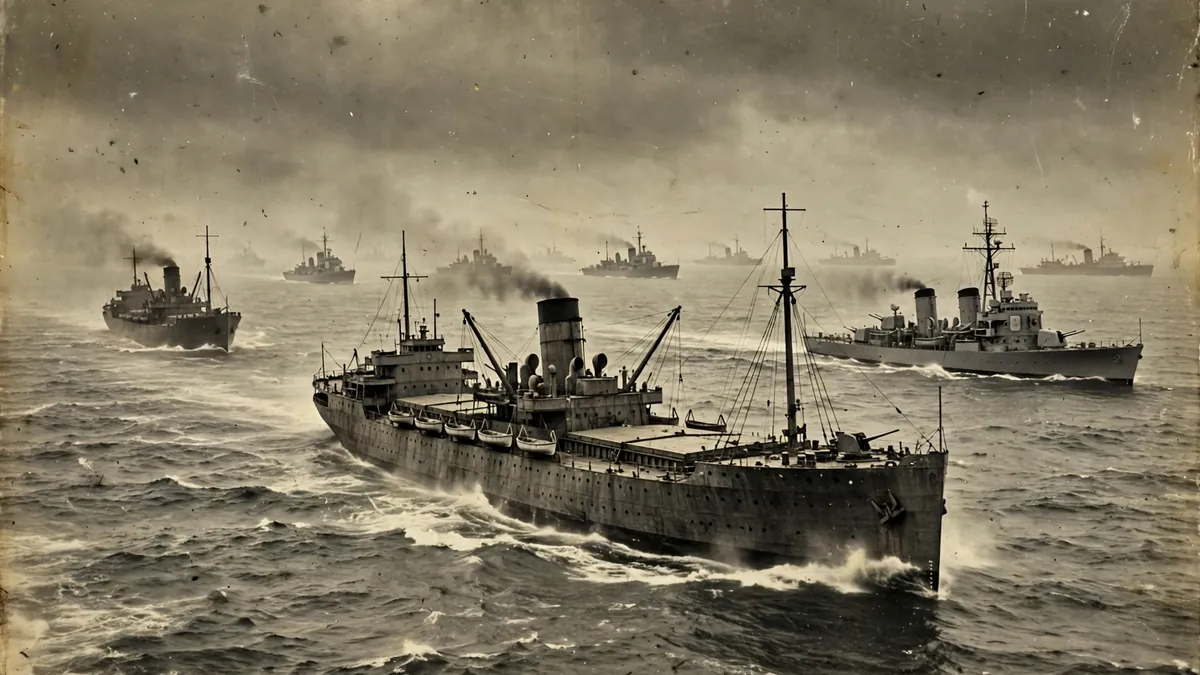
The Liberty ship was the cargo ship that won the Battle of the Atlantic, and the most-produced ship in the history of the world. Built in the United States between 1941 and 1945, 2,710 Liberty ships were launched, more than any other class of ship ever built, and they carried the tanks, the guns, the food and the fuel that kept Britain alive, that supplied the Soviet Union and that built the armies that landed in Normandy and that defeated Germany and Japan. The Liberty ship was not a fast ship, and it was not a beautiful ship, and it was not a well-armed ship, but it was a ship that could be built quickly, cheaply and in enormous numbers, and it was the ship that the Allies needed, because the German U-boats were sinking Allied shipping faster than it could be replaced, and the only answer was to build ships faster than the U-boats could sink them. The Liberty ship was the answer, and it was built in an average of about forty days, and one Liberty ship, the Robert E. Peary, was built in four days, fifteen hours and twenty-nine minutes, a record that has never been equalled. The Liberty ship’s story is the story of American wartime industry at its most inventive, and of the men and women who built the ships, and of the merchant seamen who sailed them through the U-boat wolf packs to keep the lifeline open.
The Liberty ship was named for the liberty that it carried, and its name was chosen by the United States Maritime Commission, which ordered the ships, and the first Liberty ship, the Patrick Henry, was launched on 27 September 1941, and its name was a tribute to the American patriot who had said “Give me liberty, or give me death”. The Liberty ships were named for Americans who had contributed to the nation’s history — for presidents, for generals, for scientists, for writers, for sailors and for ordinary citizens — and their names were a roll call of American history, and the men who sailed them were proud of the names that their ships bore. The Liberty ship was a symbol of American industry and of American determination, and it is remembered as the ship that won the war, not by fighting, but by carrying, and by carrying more, and faster, than the enemy could sink.
2. Key Facts
| Type | Cargo ship (EC2-S-C1) |
| Origin | United States (design based on a British ship) |
| Designer | United States Maritime Commission; Gibbs & Cox |
| Builder | 18 American shipyards |
| First launched | 27 September 1941 (Patrick Henry) |
| In service | 1941–1970s (many sold after the war) |
| Produced | 1941–1945; 2,710 built |
| Length | 134.6 m (441 ft 6 in) |
| Beam | 17.4 m (57 ft) |
| Draught | 8.5 m (27 ft 9 in) |
| Displacement | About 14,245 tons full load |
| Deadweight | 10,856 tons |
| Cargo capacity | About 9,140 tons; 562,608 cubic feet (bale) |
| Speed | 11 knots (about 20 km/h) |
| Range | About 17,000 nautical miles |
| Engine | Triple-expansion steam engine, 2,500 hp; one shaft |
| Crew | About 44 merchant seamen, plus 12–25 Navy Armed Guard gunners |
| Armament | One 4-inch or 5-inch stern gun; anti-aircraft guns (20 mm and 37 mm) |
3. Background and Development
The Shipping Crisis and the British Design
The Liberty ship was born of a shipping crisis, and it was the answer to the German U-boats, which were sinking Allied shipping faster than it could be replaced. In 1940, Britain was losing ships at a rate that threatened its survival, and the British government asked the United States to build ships for it, and the United States Maritime Commission ordered a design that was based on a British cargo ship, the Ocean class, which had been designed by the Sunderland shipbuilder Joseph L. Thompson and which was a simple, sturdy and economical ship. The American design, which was designated EC2-S-C1, was a development of the British design, with a longer hull, a more powerful engine and a greater cargo capacity, and it was designed to be built quickly, cheaply and in enormous numbers, by shipyards that had never built ships before, and by workers who had never worked in a shipyard. The Liberty ship was not a new design, but a development of an old one, and its strength was its simplicity, and its simplicity was the reason it could be built so quickly.
The Maritime Commission and Mass Production
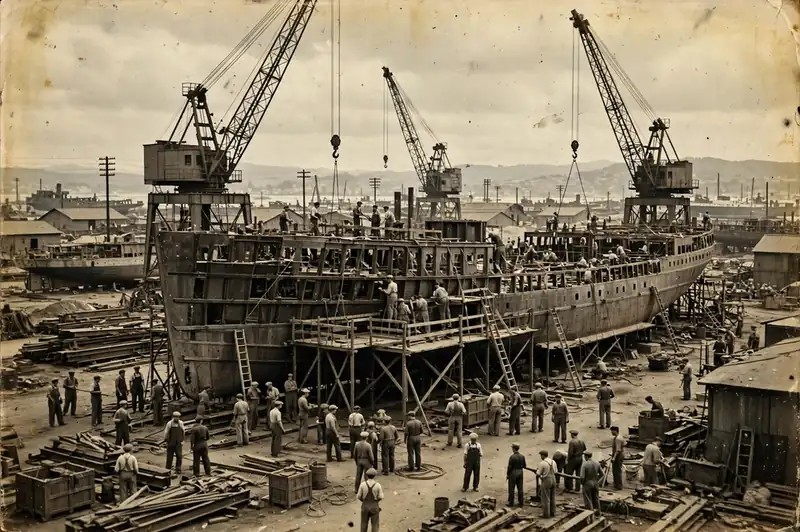
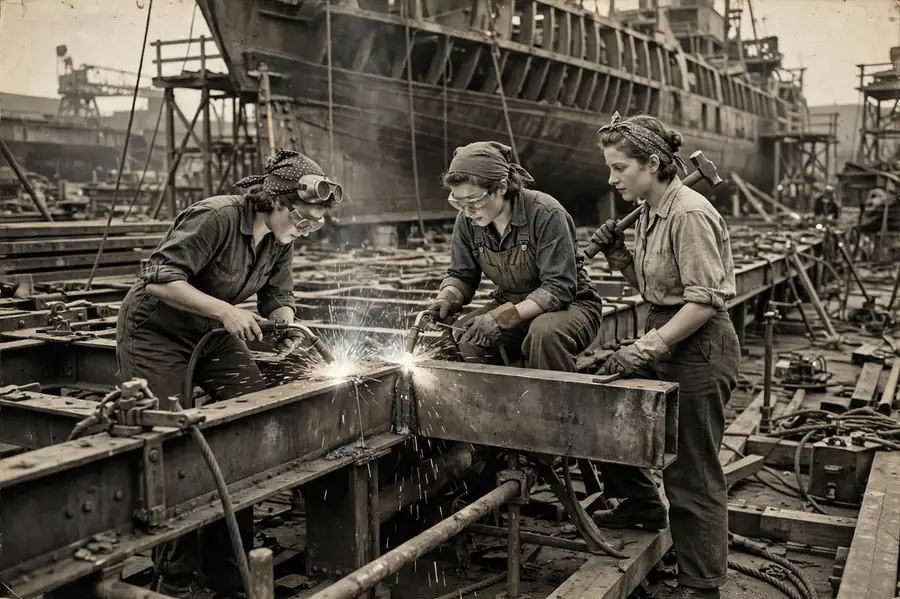
The Liberty ship was ordered by the United States Maritime Commission, which was the government agency responsible for building merchant shipping, and it was built at eighteen shipyards across the United States, from Maine to California, and from Texas to Washington. The shipyards were new, and they were built for the purpose, and they were staffed by workers who had been recruited from all over the country, including many women, who became known as “Rosie the Riveter” and who built the ships alongside the men. The Liberty ship was built by mass production: its parts were prefabricated in factories, and they were welded together in the shipyard, and the ship was launched and fitted out in a matter of weeks, and the average time to build a Liberty ship fell from about 230 days in 1941 to about 42 days in 1943, and the fastest Liberty ship, the Robert E. Peary, was built in four days, fifteen hours and twenty-nine minutes in November 1942, a record that has never been equalled. The Liberty ship’s production was the greatest shipbuilding achievement in history, and it showed what American industry could do when it was mobilised for war.
Welding, Women and the Shipyards
The Liberty ship was built by welding, not by riveting, and it was the first large class of ships to be built by welding, and its construction was a revolution in shipbuilding. Welding was faster and cheaper than riveting, and it let the shipyards build ships with unskilled labour, and it let them prefabricate the ship’s parts in factories and assemble them in the shipyard, and it was the reason the Liberty ship could be built so quickly. But welding had its problems: the early Liberty ships suffered from brittle fractures, in which the hull cracked in cold water, and several ships broke in half, and the problem was solved by improving the steel and by changing the design, and the later Liberty ships were stronger and more reliable. The shipyards that built the Liberty ships were staffed by men and women who had never built a ship before, and they learned on the job, and they built the ships that won the war, and their story is one of the great stories of the American home front, and of the women who built the ships and the men who sailed them.
4. Design
A Simple, Sturdy Cargo Ship
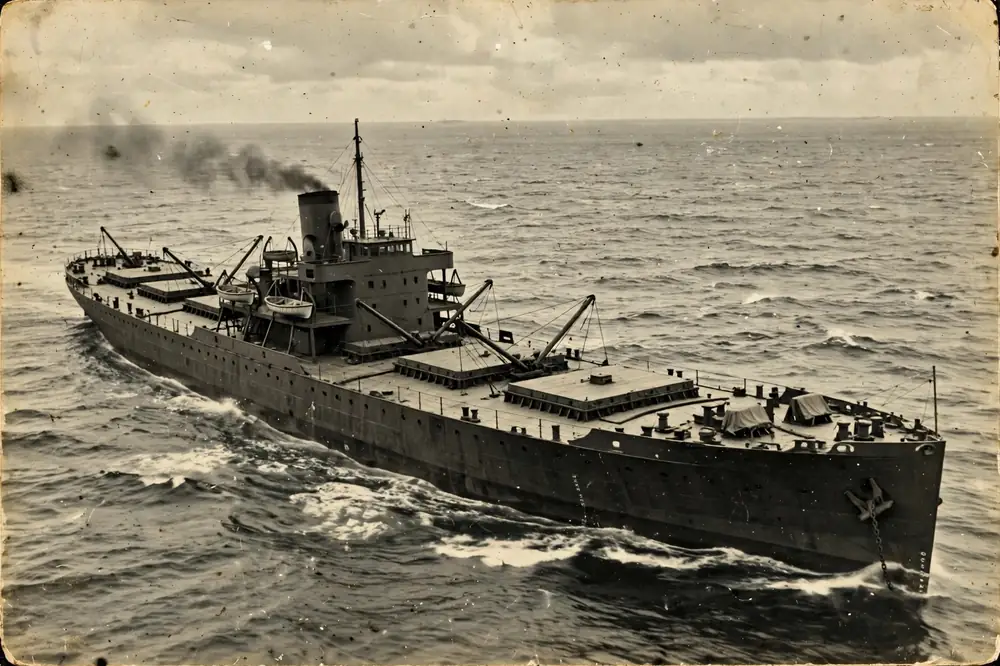
The Liberty ship was a simple, sturdy cargo ship, 134.6 metres long, with a beam of 17.4 metres and a deadweight of 10,856 tons, and it was designed to carry a cargo of about 9,140 tons in its five holds, which were served by its own derricks and winches, and which could be loaded and unloaded in any port in the world. The ship’s hull was built of welded steel, and it was divided into watertight compartments, and it was fitted with a single screw and a single rudder, and it was powered by a triple-expansion steam engine of 2,500 horsepower, which gave it a speed of 11 knots, slow by the standards of the time, but fast enough for a cargo ship, and economical enough to let the ship sail for 17,000 nautical miles without refuelling. The Liberty ship was not a beautiful ship, and it was not a fast ship, but it was a ship that could be built quickly and cheaply, and that could carry a useful cargo, and that was the ship that the Allies needed.
The Triple-Expansion Engine and the Single Screw
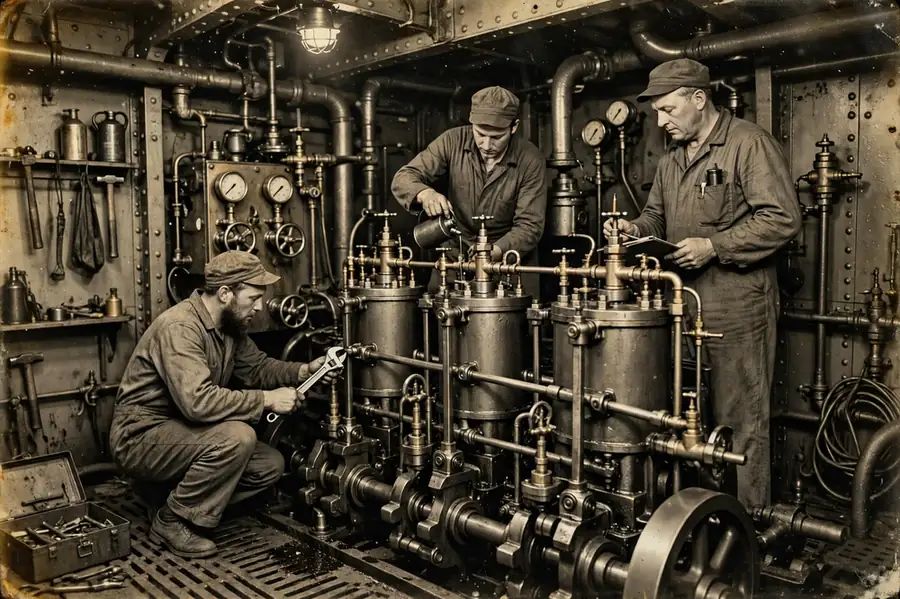
The Liberty ship was powered by a triple-expansion steam engine, a type of engine that had been used in ships since the nineteenth century, and that was chosen because it was simple, reliable and economical, and because it could be built by factories that had never built a marine engine before. The engine, which produced 2,500 horsepower, drove a single screw, and it gave the ship a speed of 11 knots, which was slow, but which was fast enough for a cargo ship in convoy, and which let the ship keep up with the other ships in the convoy. The engine burned oil, and it was fitted with boilers that were fired by oil, and it was a simple and reliable engine, and it was the reason the Liberty ship could be built so quickly, because the engine could be made in factories that had never made a marine engine, and it could be installed in the ship in a matter of days. The Liberty ship’s engine was not modern, but it was good enough, and it was the engine that won the Battle of the Atlantic, because it was the engine that could be built in the numbers that were needed.
Armament and the Navy Armed Guard
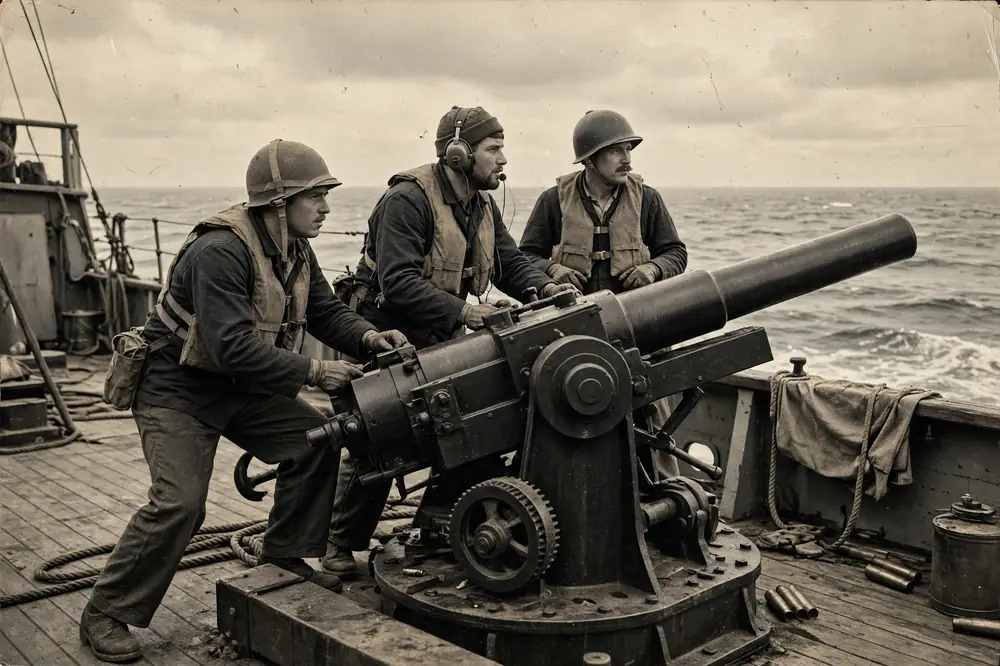
The Liberty ship was armed, because it had to defend itself against the U-boats and the aircraft that attacked it, and its armament consisted of a single 4-inch or 5-inch gun mounted on the stern, and of anti-aircraft guns, usually 20 mm Oerlikon guns and 37 mm guns, mounted on the bridge and on the deck. The guns were manned by the Navy Armed Guard, a detachment of 12 to 25 United States Navy gunners who served aboard the merchant ship and who were responsible for its defence, and who fought alongside the merchant seamen, who were civilians, and who were not members of the armed forces, but who sailed the ships through the U-boat wolf packs and who suffered heavy casualties. The Liberty ship’s armament was light, and it could not defend the ship against a determined U-boat attack, but it could drive off an aircraft and it could force a U-boat to submerge, and it was a measure of the danger that the merchant seamen faced, and of the courage that they showed in facing it.
5. Variants
| Variant | Years | Key features | Production |
|---|---|---|---|
| EC2-S-C1 (Liberty) | 1941–1945 | Standard cargo Liberty ship; 10,856 tons deadweight | 2,710 |
| Victory ship (VC2-S-AP2) | 1944–1946 | Faster successor; 15–17 knots; turbine engine | 531 |
| Z-EC2-S-C2 (tanker) | 1942–1945 | Liberty hull fitted as a tanker | 62 |
| EC2-S-C5 (aircraft transport) | 1943–1945 | Liberty hull fitted to carry aircraft | 9 |
| Hospital ship (AH) | 1943–1945 | Liberty hulls converted to hospital ships | 6 |
EC2-S-C1: The Standard Liberty
The EC2-S-C1 was the standard Liberty ship, and it was the version that was built in the largest numbers, with 2,710 built between 1941 and 1945, and it was the ship that carried the cargo that won the war. The EC2-S-C1 was 134.6 metres long, with a beam of 17.4 metres and a deadweight of 10,856 tons, and it could carry about 9,140 tons of cargo in its five holds, and it was powered by a triple-expansion steam engine of 2,500 horsepower, which gave it a speed of 11 knots. The EC2-S-C1 was the ship that the Allies needed, because it could be built quickly and cheaply, and because it could carry a useful cargo, and because it could be built in the numbers that were needed to replace the ships that the U-boats sank. The EC2-S-C1 is the Liberty ship that is remembered, and it is the ship that survives today in the Jeremiah O’Brien and the John W. Brown.
Victory Ships: The Successor
The Victory ship was the successor to the Liberty ship, and it was a faster, larger and more modern ship, designed to replace the Liberty ship after the war and to serve in the post-war merchant fleet. The Victory ship, designated VC2-S-AP2, was 138.8 metres long, with a beam of 18.9 metres and a deadweight of 10,850 tons, and it was powered by a steam turbine engine that gave it a speed of 15 to 17 knots, far faster than the Liberty ship’s 11 knots, and it was built in a run of 531 ships between 1944 and 1946. The Victory ship was a better ship than the Liberty ship, but it arrived too late to have a decisive effect on the war, and it was the Liberty ship, not the Victory ship, that won the Battle of the Atlantic, because the Liberty ship was the ship that was available in the numbers that were needed, when they were needed. The Victory ship’s story is therefore a footnote to the Liberty ship’s story, and it is the ship that replaced the Liberty ship after the war.
Special Versions: Tankers, Colliers and Hospital Ships
The Liberty hull was adapted for several special roles, of which the most important were the tankers, the colliers and the hospital ships. Sixty-two Liberty hulls were fitted as tankers, designated Z-EC2-S-C2, and they carried oil and petrol to the armies that needed it, and nine Liberty hulls were fitted to carry aircraft, and six Liberty hulls were converted to hospital ships, which carried the wounded from the battlefields to the hospitals, and which were painted white with a red cross, and which were protected by the Geneva Convention. The Liberty hull’s adaptability was a tribute to its design: a simple cargo ship could be adapted to carry oil, to carry aircraft and to carry the wounded, and it could do all of these jobs well, and it is a reminder that the Liberty ship was more than a cargo ship, and that it was a versatile ship that served the Allies in many roles.
6. Operational History
The Battle of the Atlantic
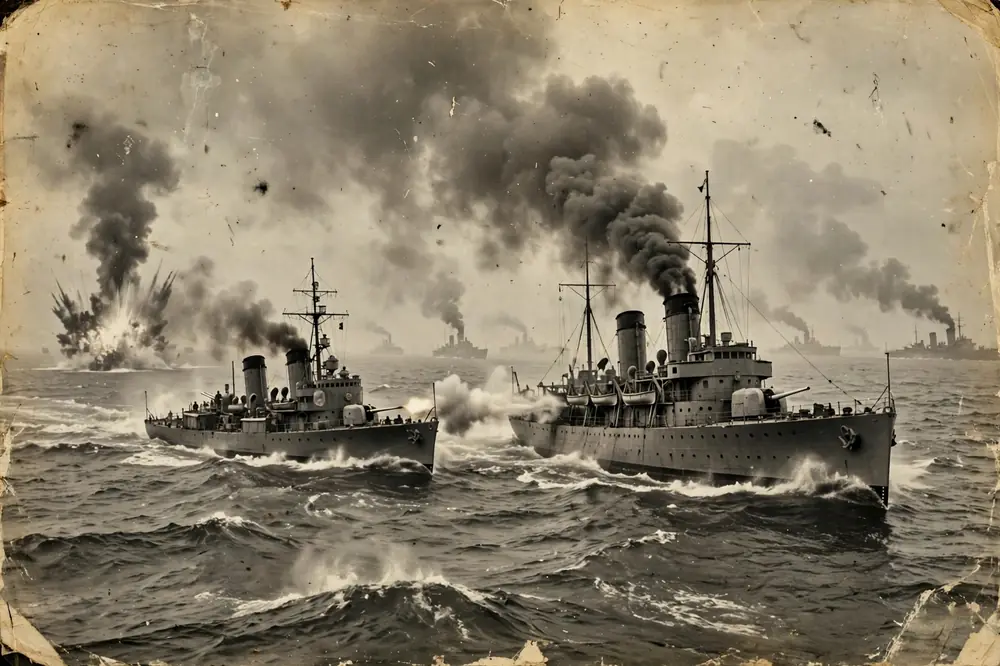
The Liberty ship’s war was the Battle of the Atlantic, and it fought that battle in convoy, sailing in groups of dozens of ships, escorted by destroyers, corvettes and escort carriers, and attacked by the German U-boats, which hunted in wolf packs and sank the ships that straggled or were separated from the convoy. The Liberty ship sailed in the slow convoys, which sailed at 7 knots, and in the fast convoys, which sailed at 10 knots, and it carried the cargo that Britain needed to survive, that the Soviet Union needed to fight, and that the armies in North Africa, in Italy and in Normandy needed to win. The Liberty ship’s crews were merchant seamen, who were civilians, and Navy Armed Guard gunners, who were servicemen, and they sailed through the U-boat wolf packs, facing the torpedoes, the bombs and the gunfire of the U-boats, and they kept the lifeline open. The Liberty ships suffered heavy losses, and about 200 were sunk by U-boats, by aircraft, by mines and by surface ships, and many more were damaged, and the merchant seamen who sailed them suffered heavy casualties, with more than 9,000 American merchant seamen killed in the war, a higher proportion than in any other American service except the Marine Corps. But the Liberty ships were built faster than they were sunk: the Allies built 2,710 Liberty ships, and the U-boats sank about 200 of them, and the ships kept coming, and the U-boats could not sink them fast enough. The Battle of the Atlantic was won, not by sinking the U-boats, but by building ships faster than the U-boats could sink them, and the Liberty ship’s survival was therefore a matter of numbers, and of the American industry that built the ships, and of the merchant seamen who sailed them.
Convoys and Wolf Packs
The Liberty ship’s war was the Battle of the Atlantic, and it fought that battle in convoy, sailing in groups of dozens of ships, escorted by destroyers, corvettes and escort carriers, and attacked by the German U-boats, which hunted in wolf packs and which sank the ships that straggled or that were separated from the convoy. The Liberty ship sailed in the slow convoys, which sailed at 7 knots, and in the fast convoys, which sailed at 10 knots, and it carried the cargo that Britain needed to survive, and that the Soviet Union needed to fight, and that the armies in North Africa, in Italy and in Normandy needed to win. The Liberty ship’s crews were merchant seamen, who were civilians, and Navy Armed Guard gunners, who were servicemen, and they sailed through the U-boat wolf packs, and they faced the torpedoes, the bombs and the gunfire of the U-boats, and they kept the lifeline open, and their courage is one of the great stories of the war.
Losses and Survival
The Liberty ships suffered heavy losses in the Battle of the Atlantic, and about 200 Liberty ships were sunk by U-boats, by aircraft, by mines and by surface ships, and many more were damaged, and the merchant seamen who sailed them suffered heavy casualties, with more than 9,000 American merchant seamen killed in the war, a higher proportion than in any other American service except the Marine Corps. But the Liberty ships were built faster than they were sunk, and the Allies built 2,710 Liberty ships, and the U-boats sank about 200 of them, and the Liberty ships kept coming, and the U-boats could not sink them fast enough, and the Battle of the Atlantic was won, not by sinking the U-boats, but by building ships faster than the U-boats could sink them. The Liberty ship’s survival was therefore a matter of numbers, and of the American industry that built the ships, and of the merchant seamen who sailed them, and it is the reason the Liberty ship is remembered as the ship that won the Battle of the Atlantic.
Supplying Britain and the Soviet Union
The Liberty ships supplied Britain and the Soviet Union, and they were the lifeline that kept both countries in the war. The Liberty ships sailed in the Atlantic convoys to Britain, carrying food, fuel, tanks, guns and aircraft, and they sailed in the Arctic convoys to the Soviet Union, carrying the tanks, the trucks, the food and the raw materials that the Soviet Union needed to fight the German Army, and they sailed in the Persian Gulf route to the Soviet Union, carrying the supplies that were landed in Iran and carried by rail to the Soviet Union. The Liberty ships’ cargo was the cargo that won the war: the tanks that fought at El Alamein and at Kursk, the trucks that carried the Red Army to Berlin, the food that fed Britain, and the fuel that flew the bombers that attacked Germany. The Liberty ship’s service in supplying Britain and the Soviet Union was its most important role, and it is the role for which the ship is remembered, and it is a reminder that wars are won by logistics as much as by battles.
Normandy and the Pacific
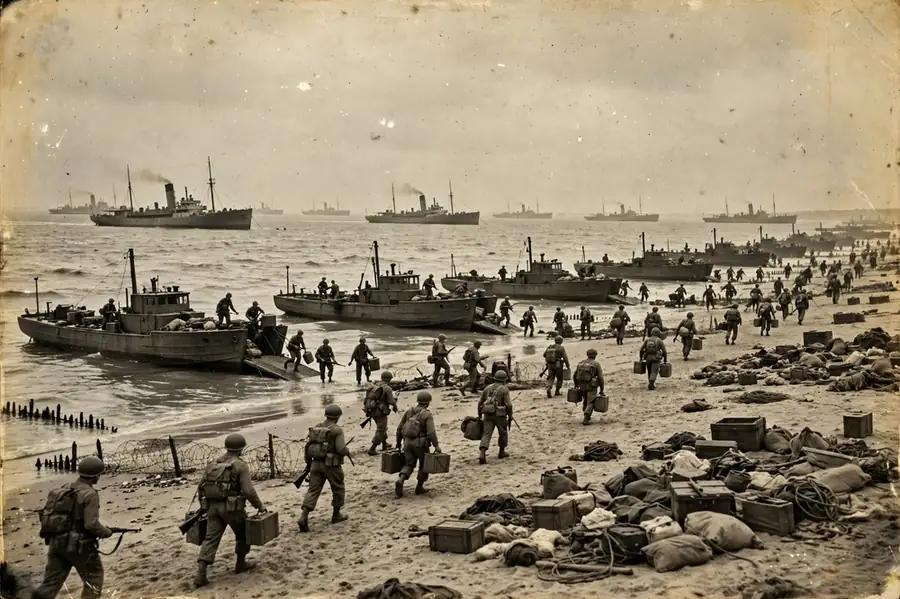
The Liberty ships took part in the invasion of Normandy, where they carried the troops, the tanks and the supplies that landed on the beaches, and where they were used as blockships, sunk to form the breakwaters of the Mulberry harbours, and where they served as floating warehouses and as repair ships. The Liberty ships also served in the Pacific, where they carried the supplies that built the bases on the islands, and that supplied the armies that fought from Guadalcanal to Okinawa, and where they were attacked by Japanese submarines and by kamikazes, and where they suffered losses, but where they kept coming, and where they supplied the war that defeated Japan. The Liberty ship’s service in Normandy and in the Pacific was the end of its wartime career, and it was a fitting end: the ship that had kept Britain alive, and that had supplied the Soviet Union, had also supplied the invasions that won the war, and it had served in every theatre of the war, from the Atlantic to the Pacific, and from the Arctic to the Mediterranean.
7. Performance and Specifications
| Specification | Liberty ship (EC2-S-C1) |
|---|---|
| Length | 134.6 m |
| Beam | 17.4 m |
| Draught | 8.5 m |
| Displacement | About 14,245 tons full load |
| Deadweight | 10,856 tons |
| Cargo capacity | About 9,140 tons |
| Speed | 11 knots |
| Range | About 17,000 nautical miles |
| Engine | Triple-expansion steam engine, 2,500 hp |
| Crew | About 44 merchant seamen, plus 12–25 Navy Armed Guard |
| Armament | One 4-inch or 5-inch stern gun; 20 mm and 37 mm AA guns |
Cargo Performance
The Liberty ship’s cargo performance was good for a cargo ship of its generation, and it was the result of its design, which was simple, sturdy and economical. The ship could carry about 9,140 tons of cargo in its five holds, which were served by its own derricks and winches, and which could be loaded and unloaded in any port in the world, and it could carry tanks, guns, trucks, food, fuel and raw materials, and it could carry them in any combination, and it was the ship that the Allies needed, because it could carry the cargo that won the war. The Liberty ship’s speed of 11 knots was slow, but it was fast enough for a cargo ship in convoy, and its range of about 17,000 nautical miles let it sail from the United States to Britain, to the Soviet Union and to the Pacific without refuelling, and its triple-expansion engine was economical and reliable, and it was the engine that won the Battle of the Atlantic, because it could be built in the numbers that were needed.
Comparison with Other Cargo Ships
Compared with the British cargo ships of the time, the Liberty ship was larger, faster and more economical, and it could carry more cargo, and it was built more quickly, and it was the ship that replaced the British ships that the U-boats sank. Compared with the Victory ship, which succeeded it, the Liberty ship was slower and less modern, but it was cheaper and quicker to build, and it was the ship that was available in the numbers that were needed, when they were needed, and the Victory ship, which was a better ship, arrived too late to have a decisive effect on the war. Compared with the German cargo ships, the Liberty ship was larger and more numerous, and it was the ship that kept the Allies supplied, while the German merchant fleet was destroyed by the Allied blockade and by the Allied submarines and aircraft. The Liberty ship’s place in history is that of the cargo ship that won the war, and it is remembered as the most-produced ship in history, and as the ship that proved that mass production could win a war.
8. Operators
The United States
The Liberty ship was built in the United States, and it was operated by the United States, under the United States Maritime Commission, which owned the ships and which chartered them to American shipping companies, which operated them with American crews. The Liberty ships were sailed by American merchant seamen, who were civilians, and they were defended by the Navy Armed Guard, who were servicemen, and they carried the cargo that the United States supplied to its allies, and that the United States Army and Navy needed to fight the war, and they sailed on every ocean in the world, from the Atlantic to the Pacific, and from the Arctic to the Mediterranean. The Liberty ship’s service with the United States was the longest and the most important of any operator, and it is the service for which the ship is remembered, and its crews were the men who kept the lifeline open, and who suffered the highest casualty rate of any American service except the Marine Corps.
Other Operators and the Post-War World
The Liberty ship was used by several other countries, most notably the United Kingdom, which received Liberty ships under Lend-Lease and which operated them with British crews, and the Soviet Union, which received Liberty ships and which used them to carry the supplies that it needed to fight the German Army. After the war, the Liberty ships were sold to the merchant fleets of many countries, including Greece, Norway, Italy, France and Japan, and they served in the post-war merchant fleets for decades, carrying cargo around the world, and some Liberty ships were still in service in the 1970s, thirty years after they had been built. The Liberty ship’s post-war service was a tribute to its design: a ship built for war was still a useful cargo ship in peace, and it served the world that it had helped to save, and it is remembered as the ship that won the war and that rebuilt the peace.
9. Legacy and Influence
The Ship That Won the War
The Liberty ship’s legacy is that of the ship that won the war, and it is remembered as the most-produced ship in history, and as the ship that proved that mass production could win a war, and that the country that could build ships faster than the enemy could sink them would win. The Liberty ship’s production, at 2,710 ships in four years, was the greatest shipbuilding achievement in history, and it showed what American industry could do when it was mobilised for war, and it is a measure of the scale of the American war effort, and of the determination of the American people to win the war. The Liberty ship’s legacy is also the legacy of the merchant seaman, who sailed the ships through the U-boat wolf packs and who suffered heavy casualties, and who is remembered as the forgotten hero of the war, and whose story is told in the memorials to the merchant seamen in the United States, in Britain and in the Soviet Union.
Rosie the Riveter and the Home Front
The Liberty ship is remembered for the women who built it, and for the home front that made its production possible. The shipyards that built the Liberty ships were staffed by men and women who had never built a ship before, and the women, who became known as “Rosie the Riveter”, built the ships alongside the men, and they welded, they riveted, they painted and they fitted out the ships, and they showed that women could do the work of men, and that the home front was as important as the front line. The Liberty ship’s story is therefore the story of the American home front, and of the women who built the ships, and of the men who sailed them, and of the industry that made them, and it is a story that is told in the museums and the memorials that remember the home front, and in the films and the books that tell the story of the war. The Liberty ship’s legacy is the legacy of the people who built it and who sailed it, and it is a legacy that will not be forgotten.
10. Surviving Examples
Jeremiah O’Brien and John W. Brown
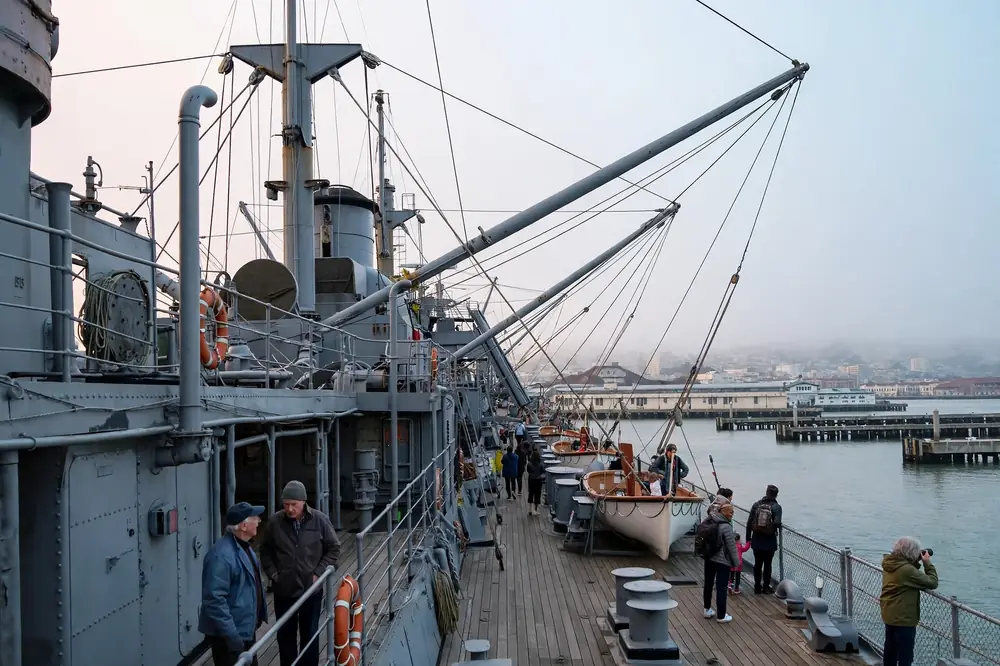
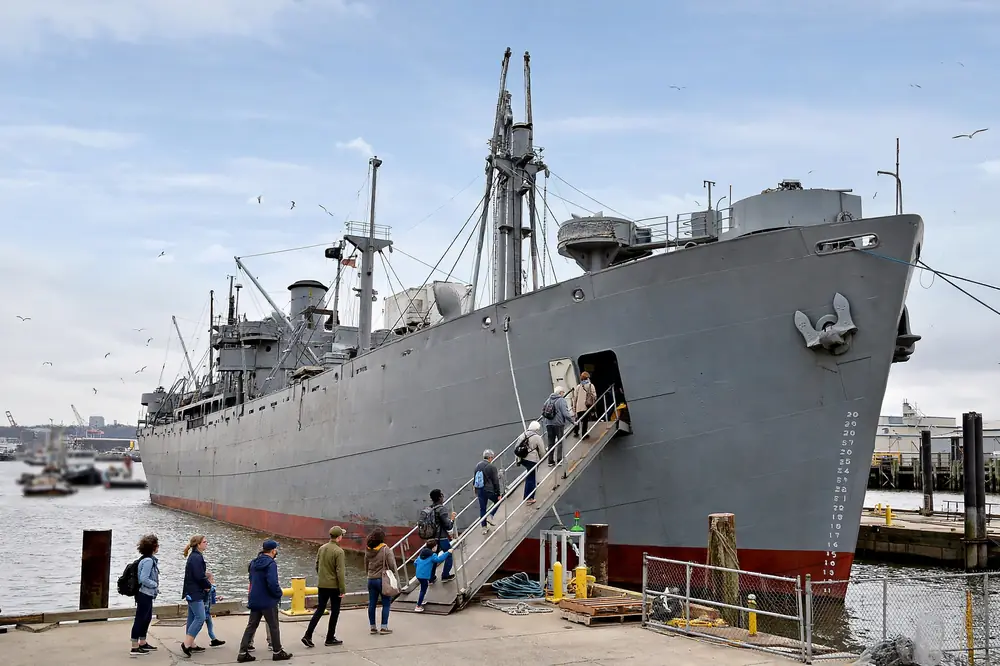
Two Liberty ships survive in operating condition, and they are among the most precious ships in the world. The SS Jeremiah O’Brien, which is berthed in San Francisco, California, is a fully operational Liberty ship, and it sailed to Normandy in 1994 for the fiftieth anniversary of D-Day, and it is the only Liberty ship to have returned to Normandy since the war, and it is maintained by volunteers and it sails on special occasions. The SS John W. Brown, which is berthed in Baltimore, Maryland, is also a fully operational Liberty ship, and it sails on cruises in Chesapeake Bay and it is maintained by volunteers, and it is a museum ship that tells the story of the Liberty ship and of the merchant seamen who sailed it. The two surviving Liberty ships are a living museum, and they are the best way to understand what the Liberty ship was and what it did, and they are visited by thousands of people every year.
Other Survivors and Memorials
Other Liberty ships survive in other forms, including the SS Arthur M. Huddell, which was converted to a cable-laying ship and which is berthed in Greece, and the SS Albert M. Boe, which was converted to a research ship, and the many Liberty ships that were sunk as breakwaters and as artificial reefs, and that lie on the seabed off Normandy and off the coast of the United States. The Liberty ship is remembered in the memorials to the merchant seamen, including the American Merchant Mariners’ Memorial in New York, the Merchant Navy Memorial in London, and the memorials in the Soviet Union, and in the museums that display the Liberty ship’s artefacts, including the San Francisco Maritime National Historical Park, which holds the Jeremiah O’Brien, and the Baltimore Maritime Museum, which holds the John W. Brown. For the visitor, the Liberty ship is one of the most accessible ships of the Second World War, and it is a reminder of the ship that won the war, and of the men and women who built it and who sailed it.
Frequently Asked Questions
What is a Liberty ship?
A Liberty ship was an American cargo ship built during the Second World War, designated EC2-S-C1. 2,710 were built between 1941 and 1945, more than any other class of ship ever built, and they carried the supplies that kept Britain and the Soviet Union in the war.
How many Liberty ships were built?
2,710 Liberty ships were built in the United States between 1941 and 1945, at eighteen shipyards, and they were built in an average of about forty days, with the fastest, the Robert E. Peary, built in four days, fifteen hours and twenty-nine minutes.
How fast was a Liberty ship?
A Liberty ship’s top speed was 11 knots, about 20 kilometres per hour, which was slow, but fast enough for a cargo ship in convoy, and its range was about 17,000 nautical miles.
How many Liberty ships were sunk?
About 200 Liberty ships were sunk during the war, by U-boats, aircraft, mines and surface ships, and more than 9,000 American merchant seamen were killed, a higher proportion than in any other American service except the Marine Corps.
Where can I see a Liberty ship today?
Two Liberty ships survive in operating condition: the SS Jeremiah O’Brien in San Francisco, California, and the SS John W. Brown in Baltimore, Maryland. Both sail on special occasions and are open to visitors.
What was the Robert E. Peary?
The Robert E. Peary was the Liberty ship built in the fastest time on record: four days, fifteen hours and twenty-nine minutes, at the Permanente Metals shipyard in Richmond, California, in November 1942, as a demonstration of American shipbuilding speed.
Sources
- Wikipedia, “Liberty ship” — the EC2-S-C1 design, production of 2,710, the Robert E. Peary record, surviving ships.
- L. A. Sawyer and W. H. Mitchell, The Liberty Ships (Lloyd’s of London Press, 1985) — the ships’ design, production and service.
- Peter Elphick, Liberty: The Ships That Won the War (Naval Institute Press, 2001) — the Battle of the Atlantic and the Liberty ship.
- James M. Morris, The History of the U.S. Navy’s Armed Guard (Naval Institute Press, 1999) — the Navy Armed Guard aboard Liberty ships.
- The United States Maritime Commission, The Liberty Ship (1945) — the official history of the programme.
- The SS Jeremiah O’Brien and SS John W. Brown museum ships — the surviving Liberty ships and their histories.