 WAR ATLAS MILITARY HISTORY MAGAZINE · WWI — WWII
Berlin Blockade
1. Lead
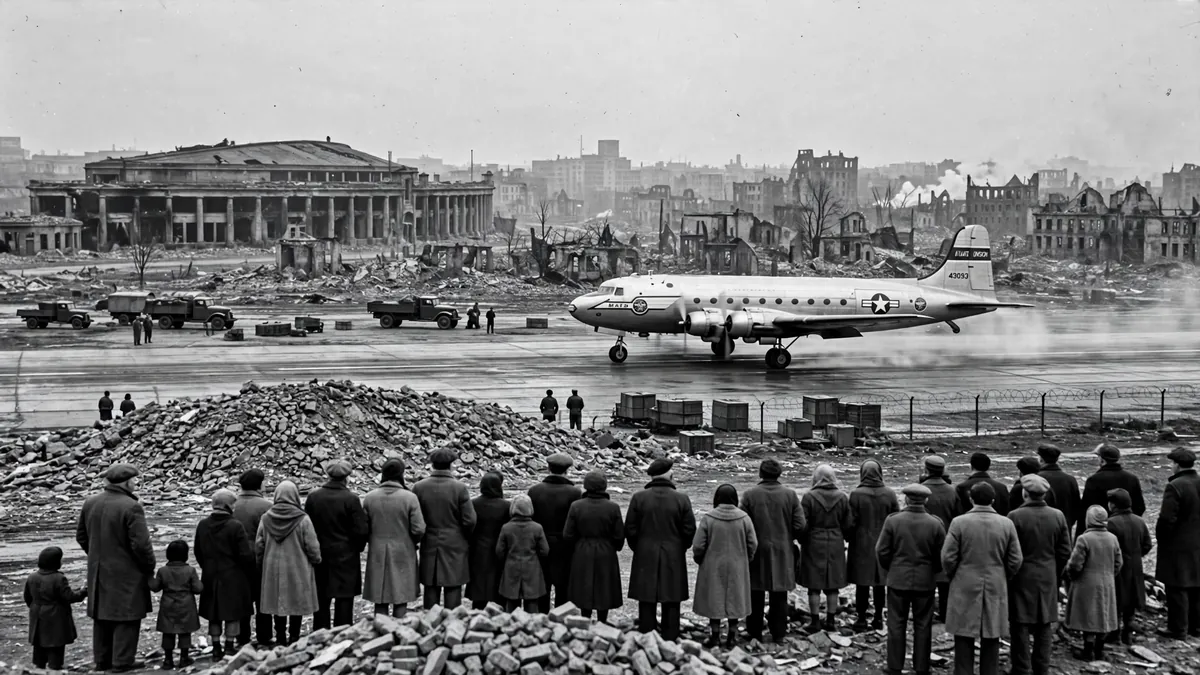
The Berlin Blockade was the Soviet Union’s attempt, from 24 June 1948 to 12 May 1949, to force the Western Allies out of Berlin by cutting off all road, rail and canal access to the western sectors of the city. Berlin lay 160 kilometres inside the Soviet occupation zone of Germany, and its 2.5 million people depended on supplies brought in from the west.
When the Soviets closed the roads and railways and cut off the city’s electricity, the Western powers — the United States, Britain and France — faced a choice: abandon Berlin, or supply a city of two and a half million people entirely by air. They chose the air.
For nearly eleven months, in an operation the Americans called Operation Vittles and the British called Operation Plainfare, Allied aircraft flew around the clock into Berlin’s airports, delivering some 2.3 million tons of food, coal and other supplies in more than 278,000 flights. The airlift held, the blockade failed, and on 12 May 1949 the Soviet Union lifted it.
The Berlin Blockade was the first great crisis of the Cold War, and the airlift was the first great victory of the West in that war — a victory won without firing a shot.
The blockade was not a bolt from the blue. It was the climax of three years of growing tension over the future of Germany, and above all over the question of whether Germany would be governed jointly by the four occupying powers — as the Potsdam Conference of 1945 had agreed — or divided into two separate states.
By the spring of 1948, the joint government of Germany had broken down, the Western powers were moving toward the creation of a separate West German state, and the Soviet Union was determined to stop them. The blockade was Stalin’s weapon: if the West could be starved out of Berlin, the symbol of the four-power presence in Germany, then the Western project of a West German state would be discredited, and the whole of Berlin — and with it, perhaps, the whole of Germany — would fall into Soviet hands.
Stalin miscalculated. The airlift not only saved Berlin; it transformed the Western presence in Germany from a military occupation into a political commitment, and it turned the Berliners — who had been the defeated enemy three years before — into the symbols of Western freedom.
The blockade that was meant to divide the West united it, and the crisis that was meant to destroy West Germany created it: the Federal Republic of Germany was founded on 23 May 1949, eleven days after the blockade ended.
2. Key Facts
| Dates | 24 June 1948 – 12 May 1949 (blockade); airlift 26 June 1948 – 30 September 1949 |
| Location | Berlin, Germany — 160 km inside the Soviet occupation zone |
| Population | About 2.5 million in the western sectors (about 2.1 million in the Soviet sector) |
| Soviet action | All road, rail and canal access to West Berlin cut off; electricity from the Soviet sector cut off |
| Western response | Berlin Airlift: Operation Vittles (US) and Operation Plainfare (UK) |
| Supplies delivered | About 2.3 million tons (about 2,326,000 tons) in more than 278,000 flights |
| Daily requirement | About 4,500 tons a day (about 3,500 tons of coal, 1,000 tons of food) |
| Record day | 16 April 1949 (“Easter Parade”): 1,398 flights, about 12,940 tons in 24 hours |
| Cost | About $224 million (about $2.5 billion in today’s money); 101 fatalities in airlift-related accidents, including 31 American and 39 British airmen |
| Outcome | Blockade lifted 12 May 1949; Federal Republic of Germany founded 23 May 1949; German Democratic Republic founded 7 October 1949 |
3. Background: The Breakdown of Four-Power Germany
To understand the Berlin Blockade, it is necessary to understand how Germany had been governed since 1945. At the Potsdam Conference, the four occupying powers — the United States, Britain, the Soviet Union and France — had agreed to govern Germany jointly, through the Allied Control Council, and to treat Germany as a single economic unit. The agreement did not last.
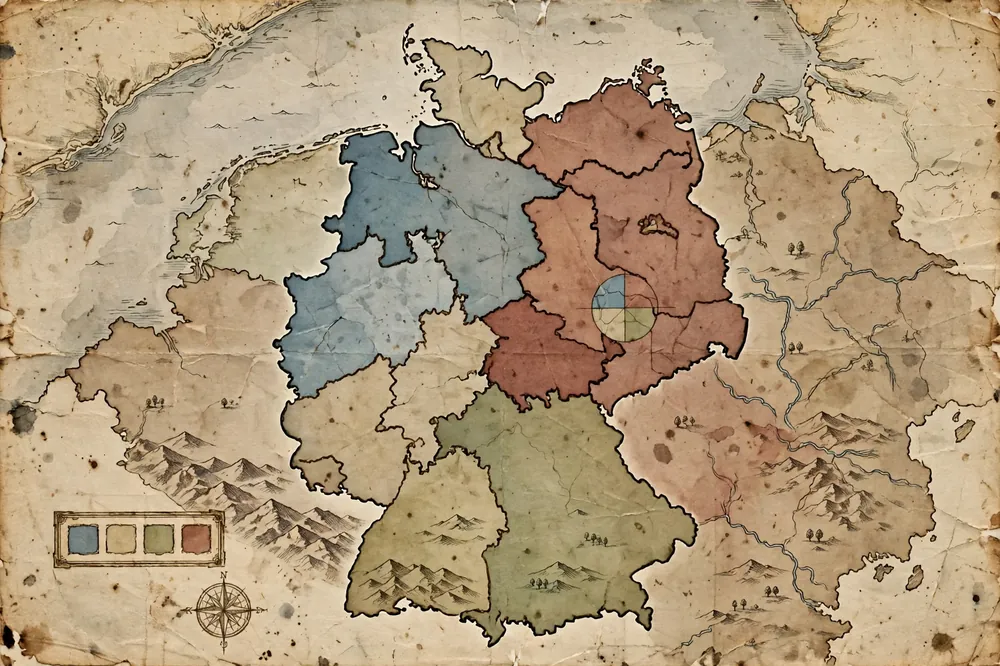
The four powers disagreed on almost everything: on the level of German industry, on reparations, on the political future of Germany, and on the future of Berlin. The Soviet Union stripped its zone of industrial plant as reparations and built a communist administration; the Western powers, after an initial period of harshness, moved toward rebuilding the German economy, because a starving Germany was a burden on the occupiers and a breeding ground for communism.
In 1946 and 1947, the Western zones were merged economically — first the British and American zones into the “Bizone” (January 1947), then the French zone into the “Trizone” (1948) — while the Soviet zone went its own way. The Allied Control Council, which was supposed to govern Germany jointly, deadlocked repeatedly and held its last meeting in March 1948, when the Soviet representative walked out.
Berlin was the exception to the division — and the problem. The city lay deep inside the Soviet zone, but it had been divided into four sectors at Potsdam, and the Western powers held the three western sectors, with about two-thirds of the city’s population and most of its industry.
The Western garrisons in Berlin — about 10,000 troops in total — were supplied by road, rail and canal from the west, under agreements made in 1945 that guaranteed the Western powers access to the city. The Soviets had never liked the arrangement: Berlin was the capital of the Soviet zone, and the Western presence in it was, from Moscow’s point of view, an anomaly and a provocation — a Western enclave in the heart of the Soviet sphere, from which Western radio stations broadcast into the east and to which East Germans fled in growing numbers.
In 1948, the Soviets began to squeeze the Western position: they imposed restrictions on traffic, searched Western military trains, and demanded the right to inspect all goods entering Berlin.
The trigger was currency. On 20 June 1948, the Western powers introduced a new currency, the Deutsche Mark, in their zones, replacing the old Reichsmark, which had been rendered worthless by the war and by the Soviet practice of printing it without limit in their zone.
The currency reform was the essential precondition for the economic recovery of western Germany: without a stable currency, there could be no trade, no investment and no revival of production. It was also, in effect, the declaration of a separate West German economy — and, by implication, of a separate West German state.
The Soviet Union answered on 23 June with its own currency reform, introducing the East German mark in its zone — and, crucially, declaring that the new East German currency was the only legal currency in the whole of Berlin, including the western sectors. The Western powers replied by introducing the Deutsche Mark in West Berlin. On 24 June, the Soviet Union cut off all surface access to the city.
The blockade had begun.
4. The Soviet Decision: Stalin’s Gamble
Why did Stalin impose the blockade? Historians have debated the question ever since, and the Soviet archives, opened after 1991, have not settled it. The most likely explanation is that Stalin had two aims, and the blockade was meant to achieve both.
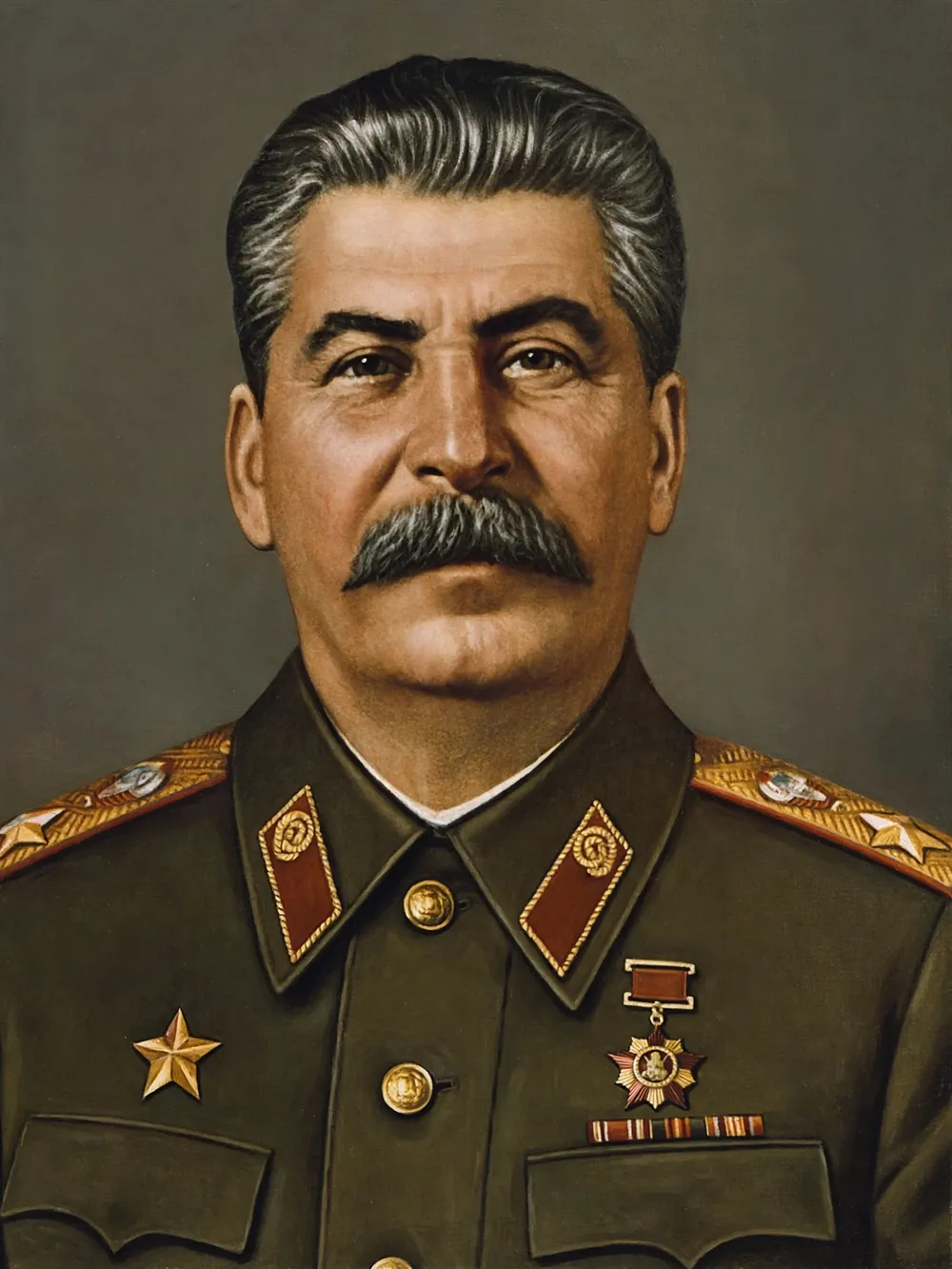
The first was to stop the creation of a West German state: if the Western powers could be driven out of Berlin, the symbol of the four-power presence, then the Western project would be discredited and the formation of a separate West Germany would be delayed or abandoned.
The second was to gain control of the whole of Berlin: the Soviets had long wanted the Western powers out of the city, and the blockade was a way of achieving that without war — by making the Western position untenable, and by offering the Berliners a choice between starvation and Soviet rule.
Stalin’s calculation rested on an assumption: that the West could not supply Berlin by air. The city needed about 4,500 tons of supplies a day — about 3,500 tons of coal for heating, cooking and industry, and about 1,000 tons of food — and the airlift capacity of the Western powers in June 1948 was, on paper, far short of that.
The United States Air Force in Europe had about 100 transport aircraft, mostly C-47 Dakotas, each carrying about three tons; the Royal Air Force had a similar number. Even flying around the clock, they could deliver, at best, about 700 tons a day.
The Soviet leadership did the arithmetic and concluded that the airlift would fail within weeks, that the Berliners would starve, and that the Western powers would be forced to withdraw on Soviet terms. Stalin also assumed that the West would not risk war over Berlin: the Western powers, he believed, would not send an armed convoy down the autobahn to break the blockade, because that would mean war with the Soviet Union, and no one in Washington or London wanted war in 1948.
He was right about the second assumption, and wrong about the first.
The Western decision to attempt the airlift was not obvious, and it was not unanimous. The American military governor of Germany, General Lucius D. Clay, was the airlift’s most forceful advocate: he argued that abandoning Berlin would be a disaster for American prestige, that it would be read in Moscow as proof that the West would retreat under pressure, and that it would destroy the confidence of the Germans in the west.
The British foreign secretary, Ernest Bevin, agreed, and the British government — which had been the first to propose an airlift — committed the Royal Air Force. President Truman, who had to decide, was cautious: he was told by his air force chiefs that the airlift could not possibly supply a city of two and a half million people, and he was warned that the attempt would fail and humiliate the United States.
But Truman was also told by Clay that the alternative — withdrawal — would be worse, and he accepted Clay’s argument. On 25 June, the day after the blockade began, Truman approved the airlift and ordered that it be given every resource it needed. The first American aircraft landed at Tempelhof on 26 June. The British had already begun flying on 25 June.
5. The Airlift: Operation Vittles and Operation Plainfare
The Berlin Airlift was, in the words of one historian, “the greatest feat of aviation logistics in history” — and it began as an improvisation. The aircraft available in June 1948 were not enough, the airfields in Berlin were not enough, and the organisation was not enough.
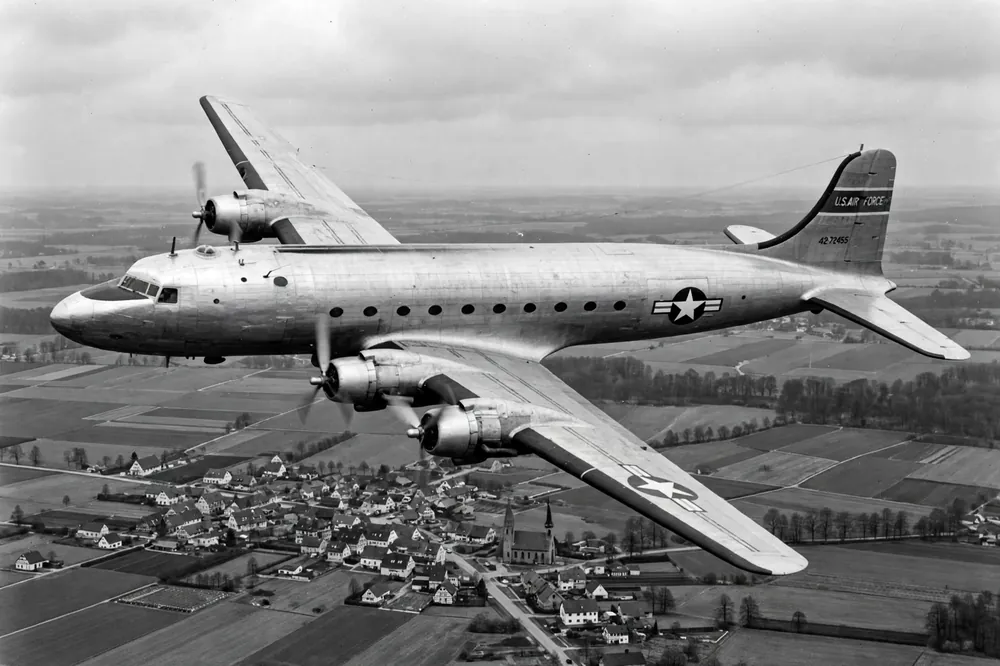
The Americans flew from air bases in the American zone — principally Rhein-Main near Frankfurt and Wiesbaden — to Tempelhof Airport in the American sector of Berlin, a distance of about 280 kilometres. The British flew from bases in their zone — principally Wunstorf, Lübeck and Fassberg — to Gatow Airport in the British sector, and later to Tempelhof as well.
The French, whose sector had no suitable airfield, contributed by building a new one: Tegel Airport, in the French sector, constructed in ninety days by 17,000 Berliners, mostly women, working with rubble from the ruined city, and opened in November 1948.
The three air corridors to Berlin — each about 32 kilometres wide, agreed with the Soviets in 1945 — were the only routes the aircraft could use, and they were used, in the end, with the precision of a railway timetable.
The turning point was the arrival, in July 1948, of Major General William H. Tunner, an American air transport specialist who had run the “Hump” airlift over the Himalayas during the war. Tunner imposed order on chaos. He established a single, rigid system: aircraft flew in a continuous stream, one every three minutes, day and night, in all weathers; each aircraft had a fixed time slot for landing, unloading and take-off; pilots who missed their approach were forbidden to circle and try again — they had to return to base with their cargo, so that the stream was never interrupted.
Ground crews were trained to unload a C-54 in minutes — the record was ten minutes — and to turn the aircraft around for the return flight. Maintenance was done at night, in shifts, and pilots flew to the limits of safety.
Tunner also replaced the small C-47 Dakota, which carried about three tons, with the larger C-54 Skymaster, which carried about ten tons, and he built up the fleet until, at its height, the airlift employed more than 300 American aircraft and more than 100 British aircraft, including flying boats that landed on the Havel river and on Lake Wannsee, delivering salt, coal and other bulk cargoes that could not be damaged by water.
The figures tell the story of the airlift’s growth. In July 1948, the airlift delivered about 2,000 tons a day — less than half of what Berlin needed. By August, it was delivering 4,500 tons a day, enough to meet the city’s minimum needs.
By the winter of 1948–49, it was delivering more than 5,000 tons a day, and building up stockpiles of coal and food against the worst of the winter. The record day was 16 April 1949, the “Easter Parade”, when 1,398 flights delivered about 12,940 tons in twenty-four hours — more than the city needed in three days.
In total, the airlift delivered about 2.3 million tons of supplies: about 1.5 million tons of coal, about 500,000 tons of food, and the rest in other goods — medicine, machinery, building materials, and even, in the last months, the components of a new power station.
The cost was about $224 million, shared between the United States and Britain, and the human cost was 101 lives lost in airlift-related accidents — 31 American airmen, 39 British airmen, and German civilians and ground crew among the rest.
6. Life in Blockaded Berlin
For the Berliners, the blockade was a test of endurance, and it was a test they passed. The city’s electricity, which came largely from power stations in the Soviet sector, was cut off, so that West Berlin had power for only a few hours a day; factories worked in shifts, households cooked and heated with the coal that the airlift brought in, and the city’s trams ran on a reduced timetable.
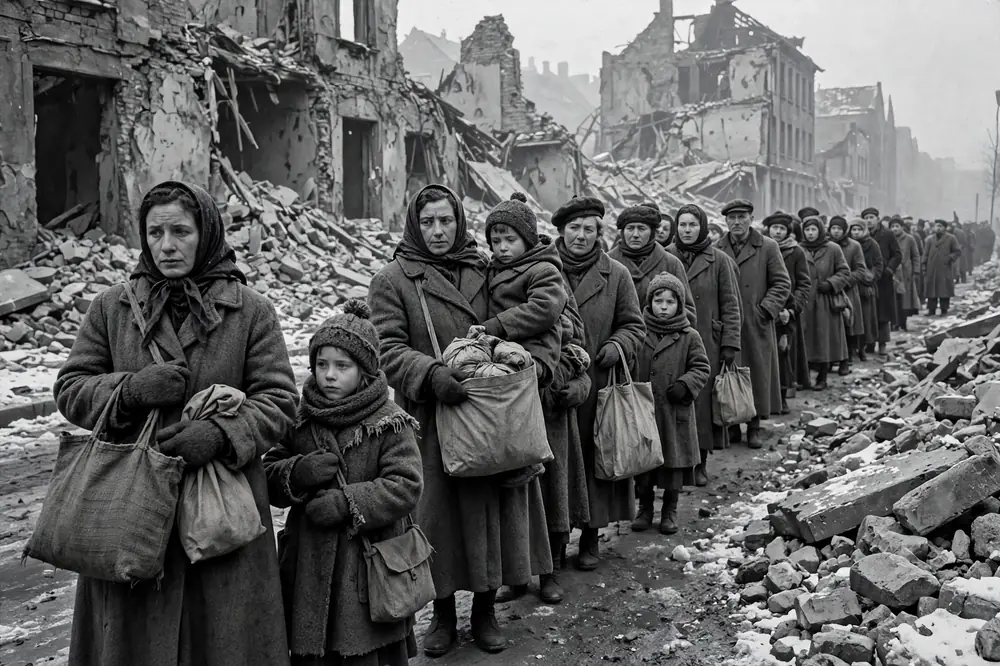
Food was rationed: the daily ration in West Berlin during the blockade was about 1,900 calories — less than the 2,000 calories the Western authorities had calculated as the minimum for health, but more than the ration in the Soviet zone, and enough, with the food that Berliners grew in their gardens and the food that came in by air, to prevent starvation.
There was no famine in Berlin during the blockade, and the city’s health — measured by the death rate and by the incidence of disease — did not collapse. The Berliners lost weight, they were cold, and they were tired; but they did not break.
The most famous symbol of the airlift was not a statistic but a man: First Lieutenant Gail Halvorsen, an American pilot who, on his own initiative, began dropping small parachutes made from handkerchiefs, carrying chocolate and chewing gum, to the children who gathered at the end of the runway at Tempelhof to watch the aircraft land.
The “raisin bombers” — the name the Berliners gave to the airlift aircraft, from the raisins in the American pilots’ ration packs — became a legend, and Halvorsen became a hero: the “Candy Bomber”, the “Chocolate Pilot”, the “Uncle Wiggly Wings” of the Berlin children.
The candy drops were a small thing — a few hundred pounds of sweets in total — but they mattered, because they showed the Berliners that the airlift was not a military operation but a human one, and that the men flying the aircraft cared about the people they were supplying.
Halvorsen’s commander, General Tunner, at first ordered him to stop; when the story reached the American press, Tunner reversed himself and made the candy drops an official part of the operation, under the name “Operation Little Vittles”.
The Berliners’ morale was sustained by their political leadership, and above all by the governing mayor of West Berlin, Ernst Reuter. Reuter, a Social Democrat who had spent the war in exile in Turkey, was the city’s most powerful voice during the blockade.
On 9 September 1948, before a crowd of some 300,000 Berliners at the Platz der Republik, in front of the ruined Reichstag, Reuter delivered the most famous speech of the blockade: “You peoples of the world, you peoples of America, of England, of France, look at this city!… You cannot hesitate for one minute more!…
Do not abandon this city and these people!” The speech, broadcast around the world, made Reuter a symbol of Berlin’s resistance, and it made the blockade a test of the West’s credibility. The Berliners, Reuter said, would rather go hungry than live under Soviet rule — and the Western powers, he implied, would be judged by whether they stood by that choice.
The Soviet Union tried to break Berlin’s morale. It offered food and coal to West Berliners who would register for ration cards in the Soviet sector — few took the offer, and those who did were stigmatised. It broadcast propaganda accusing the Western powers of using the Berliners as pawns.
It harassed the airlift with fighter aircraft, searchlights and radio interference, and it shot at — but, crucially, never shot down — an airlift aircraft. The Soviet decision not to shoot down the aircraft was the single most important fact of the blockade: it meant that Stalin was not willing to risk war over Berlin, and that the airlift could continue as long as the Western powers were willing to fly it.
The blockade was a siege, but it was a siege in which the besiegers had decided, in advance, that they would not use their ultimate weapon.
7. The End of the Blockade
By the spring of 1949, the blockade was failing, and both sides knew it. The airlift was delivering more than Berlin needed, and the Western powers were building up stockpiles that would allow the city to survive even if the airlift were interrupted.
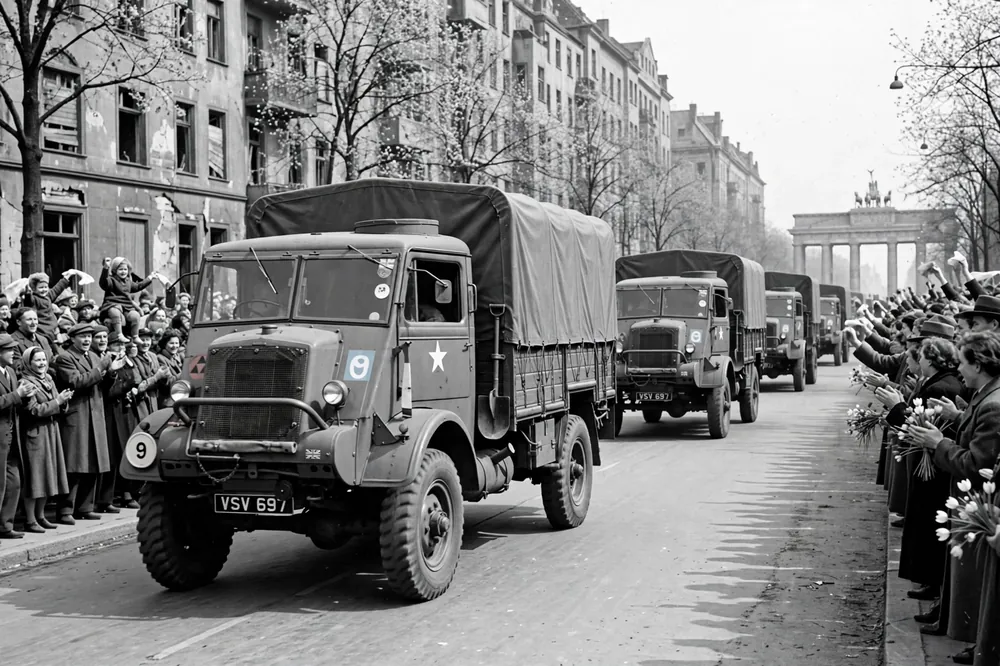
The Soviet Union, meanwhile, was paying a price: the blockade had united the Western powers, it had discredited the Soviet Union in world opinion, and it had accelerated the creation of the West German state that the blockade was meant to prevent. In April 1949, the Western powers founded the North Atlantic Treaty Organisation (NATO), the military alliance that would anchor the West’s defence for the next forty years.
The blockade had achieved the opposite of its purpose.
The end came through negotiation, conducted in secret through the United Nations. In February 1949, the Soviet representative at the United Nations, Yakov Malik, indicated that the Soviet Union would lift the blockade if the Western powers would postpone the creation of a West German state and convene a meeting of the Council of Foreign Ministers to discuss Germany.
The Western powers refused the first condition — the West German state would go ahead — but accepted the second. On 4 May 1949, the four powers announced that the blockade would be lifted on 12 May, and that a meeting of the Council of Foreign Ministers would be held in Paris on 23 May.
On 12 May, at one minute past midnight, the first British convoy crossed into Berlin by road, and the blockade was over. The airlift continued for a further four months, until 30 September 1949, to build up stockpiles in case the blockade was reimposed. It never was.
Eleven days after the blockade ended, on 23 May 1949, the Federal Republic of Germany was founded in the west, with its capital at Bonn. On 7 October 1949, the German Democratic Republic was founded in the east, with its capital at East Berlin. Germany was divided, and would remain divided for forty years. The Council of Foreign Ministers met in Paris in May and June 1949, as agreed, and failed to agree on anything. The blockade had ended, but the division it had been fought over was now permanent.
8. Assessment: Who Won the Berlin Blockade?
The Berlin Blockade is usually described as a Western victory, and in the most important sense it was: the Soviet Union failed to achieve either of its aims. It did not stop the creation of West Germany, and it did not gain control of Berlin. The Western powers kept their position in the city, and they kept it for the next forty years, until the Wall fell in 1989.
The airlift demonstrated that the West could sustain a commitment by technical and logistical means, without war, and it gave the Western alliance a moral authority that it had not had before: the Berliners, who had been the enemy, became the allies, and the airlift became the founding myth of the Federal Republic.
But the blockade was not a complete Western victory. The Soviet Union kept its zone, and it kept East Berlin; the division of Germany, which the blockade was fought over, became permanent, and the price of keeping West Berlin was forty years of confrontation in the heart of Europe.
The airlift also revealed the limits of Western power: it had succeeded because Stalin had chosen not to shoot down the aircraft, and no one could be sure that a future Soviet leader would make the same choice. The lesson the West drew from the blockade was that Berlin could be held, but only at a price — and that the price would have to be paid again, in 1958–61, when Khrushchev threatened Berlin again, and in 1961, when the Wall was built.
The blockade was the first crisis of the Cold War, and it set the pattern for all the crises that followed: confrontation without war, in a city that both sides regarded as a symbol of the whole conflict.
9. Legacy: Berlin, NATO and the Cold War
The legacy of the Berlin Blockade is written into the institutions of the Cold War. The North Atlantic Treaty Organisation, founded in April 1949, while the blockade was still in force, was in part a response to it: the Western powers concluded that they needed a permanent military alliance to deter the Soviet Union, and Berlin was the proof.
The Federal Republic of Germany, founded eleven days after the blockade ended, was in part a product of it: the blockade had made the creation of a West German state inevitable, and it had given that state a founding myth — the airlift — that bound it to the West. The German Democratic Republic, founded in October 1949, was the Soviet answer.
And the division of Berlin, which the blockade had failed to end, became the division of the city by the Wall in 1961, and the most potent symbol of the Cold War.
The airlift itself left a legacy in military logistics. The techniques Tunner developed — the continuous stream, the fixed time slots, the rapid turnaround — became the standard practice of military air transport, and they were used again in the Korean War, in the Vietnam War, and in every major airlift since.
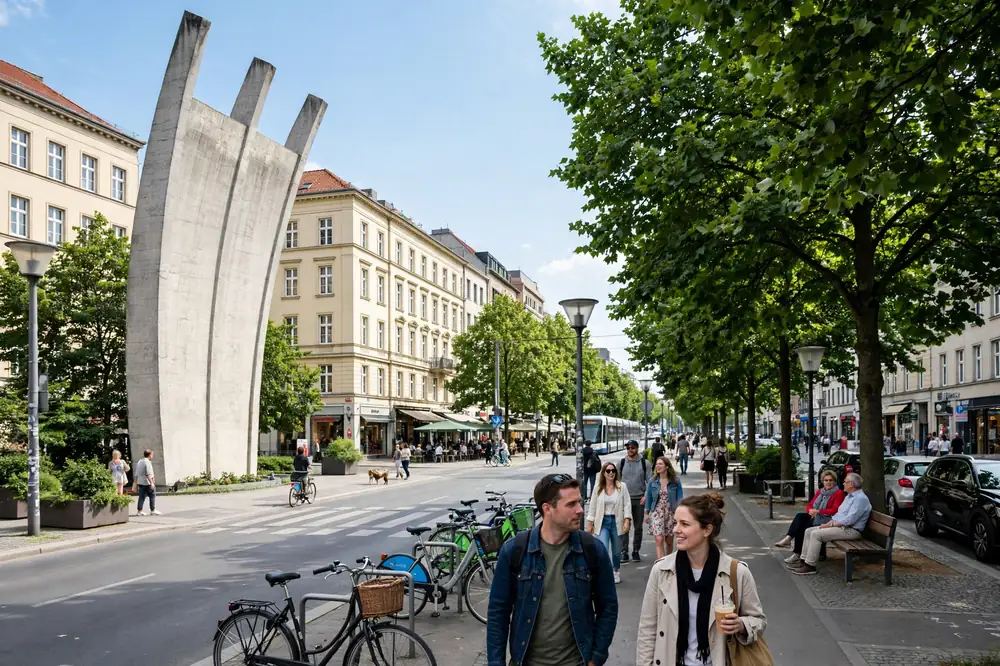
The aircraft themselves — the C-54 Skymaster and its successors — became the workhorses of the Cold War air forces. And the airlift left a legacy in the memory of Berlin: the Tempelhof Airport, closed in 2008, is now a public park, and the Airlift Memorial — a concrete column topped by three prongs, representing the three air corridors — stands at the Platz der Luftbrücke, where Berliners still gather on the anniversaries of the blockade.
The “raisin bombers” are remembered in Berlin as the men who saved the city, and Gail Halvorsen, the “Candy Bomber”, returned to Berlin many times in his later life, to be honoured by the city he had helped to save.
The blockade also left a lesson about the Cold War itself: that it would be fought not with armies but with symbols, with logistics, with the patience of peoples and the determination of governments. The Berlin Blockade was the first time the Soviet Union and the West confronted each other directly after the Second World War, and it was the first time they did so without war.
The pattern it established — crisis, confrontation, negotiation, and a settlement that left the underlying division intact — would be repeated in Korea, in Cuba, in Vietnam, and in Berlin itself, again and again, until the Cold War ended in 1989–91. The Berliners who lived through the blockade understood that pattern better than anyone: they had lived it, and they had survived it.
10. Key Figures
Harry S. Truman (United States). President of the United States from 1945 to 1953. Truman approved the airlift on 25 June 1948, against the advice of his air force chiefs, and ordered that it be given every resource it needed. The decision was one of the defining acts of his presidency, and it established the American commitment to Berlin that lasted until 1989.
Joseph Stalin (Soviet Union). Leader of the Soviet Union. Stalin ordered the blockade in the belief that the West could not supply Berlin by air and would be forced to withdraw. His miscalculation — the airlift’s success — was one of the great failures of his foreign policy, and it accelerated the division of Germany that he had sought to prevent.
Lucius D. Clay (United States). American military governor of Germany and the airlift’s most forceful advocate. Clay argued that abandoning Berlin would destroy American prestige and the confidence of the Germans in the west, and he pressed Truman to approve the airlift. He later served as the American High Commissioner in Germany.
William H. Tunner (United States). Commander of the airlift from July 1948. Tunner, who had run the “Hump” airlift over the Himalayas during the war, imposed the rigid system — the continuous stream, the fixed time slots, the rapid turnaround — that made the airlift work. He is regarded as the father of modern military air transport.
Ernest Bevin (United Kingdom). British foreign secretary from 1945 to 1951. Bevin supported the airlift from the first day, committed the Royal Air Force, and was one of the architects of NATO. His firmness during the blockade earned him the respect of the Berliners and of the Americans.
Ernst Reuter (Germany). Governing mayor of West Berlin during the blockade. Reuter’s speech of 9 September 1948 — “You peoples of the world… look at this city!” — became the symbol of Berlin’s resistance, and he remained the city’s leading political figure until his death in 1953.
Gail Halvorsen (United States). First Lieutenant, United States Air Force, the “Candy Bomber”. Halvorsen’s improvised drops of chocolate and chewing gum to the children of Berlin became the human symbol of the airlift, and he remained a beloved figure in Berlin for the rest of his life.
Frequently Asked Questions
Related articles
Sources
- Encyclopædia Britannica, “Berlin blockade” — overview of the blockade, the airlift and its consequences.
- Wikipedia, “Berlin Blockade” — dates, tonnage figures (2,326,406 tons; 278,228 flights), the Easter Parade, and the casualty figures.
- Andrei Cherny, The Candy Bombers: The Untold Story of the Berlin Airlift and America’s Finest Hour (G. P. Putnam’s Sons, 2008) — a narrative history of the airlift and of Gail Halvorsen.
- Daniel F. Harrington, Berlin on the Brink: The Blockade, the Airlift, and the Early Cold War (University Press of Kentucky, 2012) — the diplomacy of the blockade and the decision-making in Washington, London and Moscow.
- W. Phillips Davison, The Berlin Blockade: A Study in Cold War Politics (Princeton University Press, 1958) — the classic scholarly study of the crisis.
- United States Air Force, “The Berlin Airlift” (af.mil) — official account of Operation Vittles, the tonnage and the aircraft used.
- Ann and John Tusa, The Berlin Airlift (Atheneum, 1988) — a popular history of the airlift and of life in blockaded Berlin.
- Gail S. Halvorsen, The Berlin Candy Bomber (Horizon Publishers, 2002).
- Roger G. Miller, To Save a City: The Berlin Airlift, 1948–1949 (Texas A&M University Press, 2000).