 WAR ATLAS MILITARY HISTORY MAGAZINE · WWI — WWII
Potsdam Conference
1. Lead
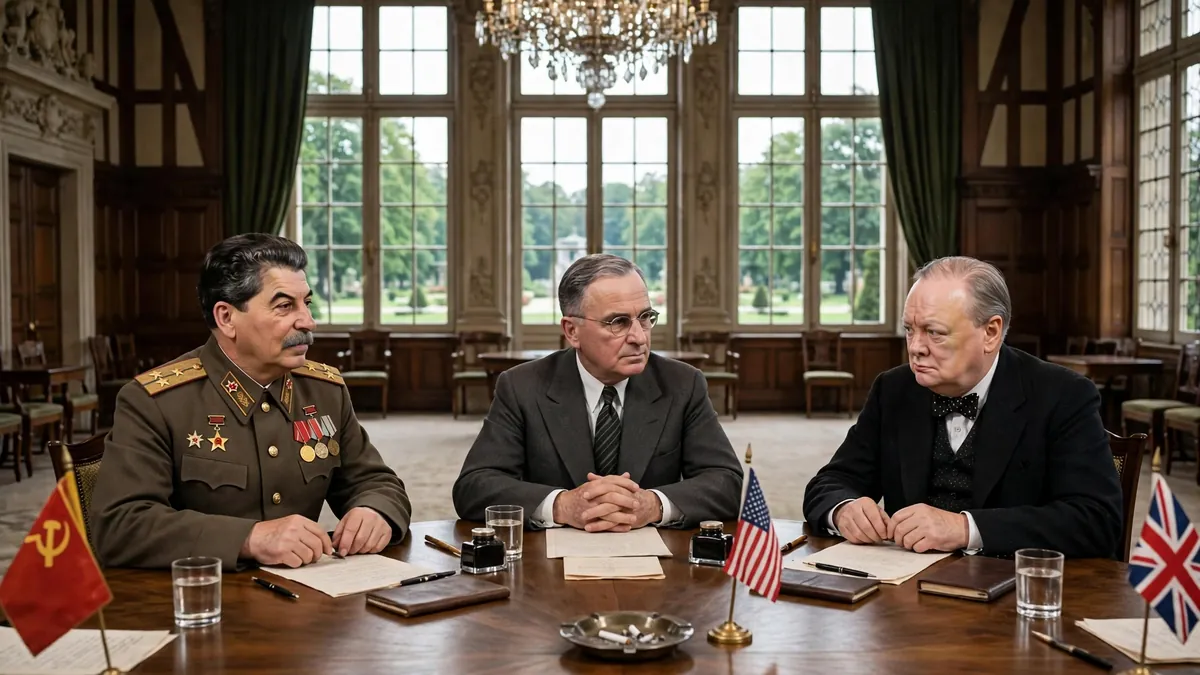
The Potsdam Conference was the last of the great wartime summit meetings of the Allied leaders, held from 17 July to 2 August 1945 at the Cecilienhof Palace in Potsdam, outside Berlin, in the ruins of defeated Germany. The three victorious powers were represented by new men and old: President Harry S. Truman of the United States, who had succeeded Franklin D.
Roosevelt after his death in April; Prime Minister Winston Churchill, replaced midway through the conference by Clement Attlee after the British general election; and the Soviet leader Joseph Stalin, the only one of the “Big Three” still in place from the earlier conferences at Tehran and Yalta.
Over seventeen days of formal sessions and informal bargaining, they settled the occupation of Germany, drew the new western border of Poland along the Oder and Neisse rivers, agreed the principles of reparations, established the Council of Foreign Ministers to draft the peace treaties, and issued the Potsdam Declaration demanding the unconditional surrender of Japan.
Potsdam was the conference at which the wartime alliance began to break apart in plain sight. At Yalta, five months earlier, the Allies had still been able to speak the language of common purpose; at Potsdam, the war in Europe was already over, Soviet armies occupied half the continent, and the questions on the table — who would govern Poland, how much Germany would pay, where Germany’s borders would run — were questions on which the victors no longer agreed.
Truman, new to the presidency and determined not to be outmanoeuvred by Stalin, brought a harder line than Roosevelt had. Churchill, campaigning for re-election from the conference table, left midway to learn that he had lost. And on 16 July, the day before the conference opened, the United States had successfully tested the first atomic bomb at Alamogordo, New Mexico — a fact Truman carried into the negotiations and mentioned, obliquely, to Stalin on 24 July.
Within days of the conference’s close, the atomic bomb would be used against Japan, and within two years the disagreements left unresolved at Potsdam would harden into the Cold War. The conference that was meant to settle the peace became, instead, the first act of the division of Europe.
2. Key Facts
| Dates | 17 July – 2 August 1945 (with a two-day recess, 26–27 July, for the British election results) |
| Location | Cecilienhof Palace, Potsdam, Germany — in the Soviet occupation zone |
| Participants | United States, United Kingdom, Soviet Union — the “Big Three” |
| United States | President Harry S. Truman; Secretary of State James F. Byrnes |
| United Kingdom | Prime Minister Winston Churchill (17–25 July), then Clement Attlee (from 28 July); Foreign Secretary Anthony Eden, then Ernest Bevin |
| Soviet Union | Joseph Stalin; Foreign Minister Vyacheslav Molotov |
| Main outcomes | Potsdam Agreement (Protocol of the Proceedings); Potsdam Declaration on Japan (26 July) |
| Germany | Four occupation zones; demilitarisation, denazification, democratisation, decentralisation; Oder–Neisse line as Poland’s western border |
| Reparations | Each power to take reparations from its own zone; the USSR additionally to receive 25% of dismantled industrial equipment from the western zones |
| Atomic bomb | First test (Trinity) on 16 July 1945; Truman told Stalin of a “new weapon of unusual destructive force” on 24 July |
| Aftermath | Council of Foreign Ministers created; Germany’s division hardened into two states (1949); disagreements fed the Cold War |
3. Background: From Yalta to Potsdam
The Potsdam Conference was the third and last of the great Allied summits, and it was held in circumstances utterly different from the first two. At Tehran in November 1943, the Big Three had met as partners planning the invasion of France; at Yalta in February 1945, they had met in the Crimea while the war still raged, and had agreed — in the Declaration on Liberated Europe — that the peoples freed from Nazi rule would be allowed to choose their own governments by free elections, and that Poland would have a government of national unity including both the communists in Lublin and the exiles in London.
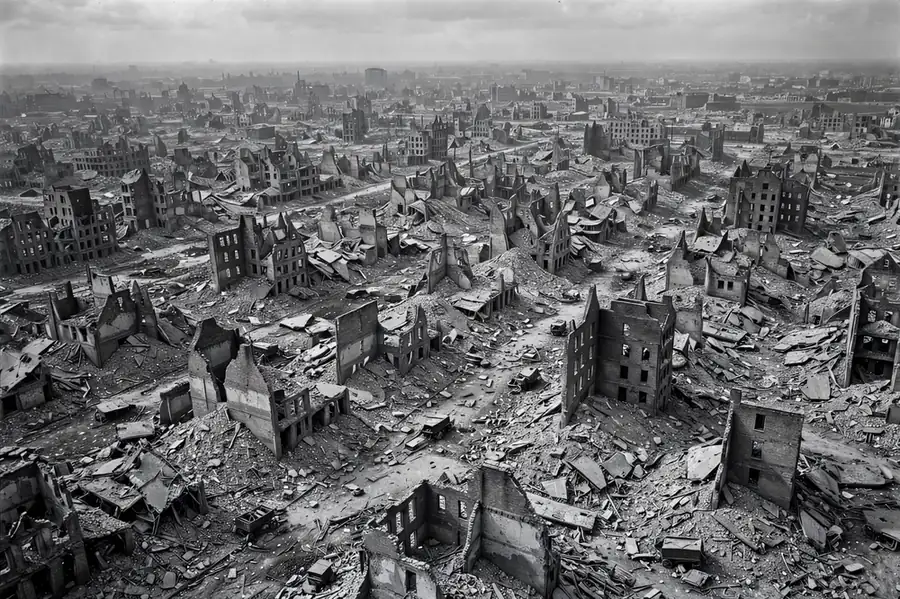
Between Yalta and Potsdam, everything changed. Germany surrendered unconditionally on 8 May 1945. The Soviet Union, which at Yalta had still been fighting in Hungary and Austria, now occupied Poland, Romania, Bulgaria, Hungary, Czechoslovakia, eastern Germany and the eastern half of Berlin. In the west, American and British armies held western Germany, France, the Low Countries, Italy and Norway.
The war in Europe was over, and the victors were no longer bound together by a common enemy.
The men had changed as well. Franklin Roosevelt, the architect of the wartime alliance and the only American president the British and Soviet leaders had dealt with, died of a cerebral haemorrhage at Warm Springs, Georgia, on 12 April 1945, less than three months into his fourth term.
His successor, Harry Truman, had been vice-president for only eighty-two days, had met Roosevelt alone only twice, and had not been told about the atomic bomb project until after he took the oath of office. Stalin, who had sized up Roosevelt over four years of correspondence and two summits, now faced a plain-spoken Missourian he did not know.
Truman, for his part, had been told by his advisers that Roosevelt’s policy of personal accommodation with Stalin had failed — that the Soviets had installed a communist government in Poland in defiance of Yalta, and that a firmer line was needed. He arrived at Potsdam determined to be, in his own phrase, “as firm as a rock” with the Russians.
The choice of Potsdam itself was Stalin’s. The Soviet leader refused to leave territory controlled by the Red Army, and Berlin — the capital of the defeated Reich, in ruins, its government quarter a landscape of broken concrete and twisted steel — was the symbolic place to settle the peace.
The Cecilienhof Palace, the last palace built by the Hohenzollerns, stood in the New Garden at Potsdam, about 25 kilometres southwest of Berlin, in the Soviet occupation zone. It was chosen because it had survived the bombing largely intact and because it was large enough to house the three delegations.
The conference room was arranged around a great round table, ten feet across, so that no delegation would sit at the head. The palace’s gardens had been planted with a red star of geraniums for the occasion, and the British and American delegations lived in the villas of the Babelsberg district nearby, in houses whose German owners had been evicted.
The setting was deliberately, almost theatrically, the victors meeting in the ruins of the vanquished.
Truman arrived on 15 July, after a nine-day Atlantic crossing on the cruiser USS Augusta, and spent the 16th touring the ruins of Berlin with his secretary of state, James F. Byrnes — a tour that left both men shaken by the scale of the destruction and by the crowds of displaced people. That same day, in the New Mexico desert, the first atomic bomb was tested at Alamogordo.
The news reached Truman at Potsdam on the evening of 16 July, in a coded message from Secretary of War Henry Stimson: “Operated on this morning. Diagnosis not yet complete but results seem satisfactory and already exceed expectations.” The bomb would hang over the conference from the first day to the last — strengthening Truman’s hand, giving him an alternative to Soviet help against Japan, and, as events would show, changing the nature of the war itself.
4. The Three Delegations
The American delegation was led by a president who had never attended an international conference and a secretary of state who believed that the conference’s real business should be settled by the foreign ministers, not by the heads of government. Truman brought with him Admiral William Leahy, his chief of staff; Secretary of War Stimson; and James F.
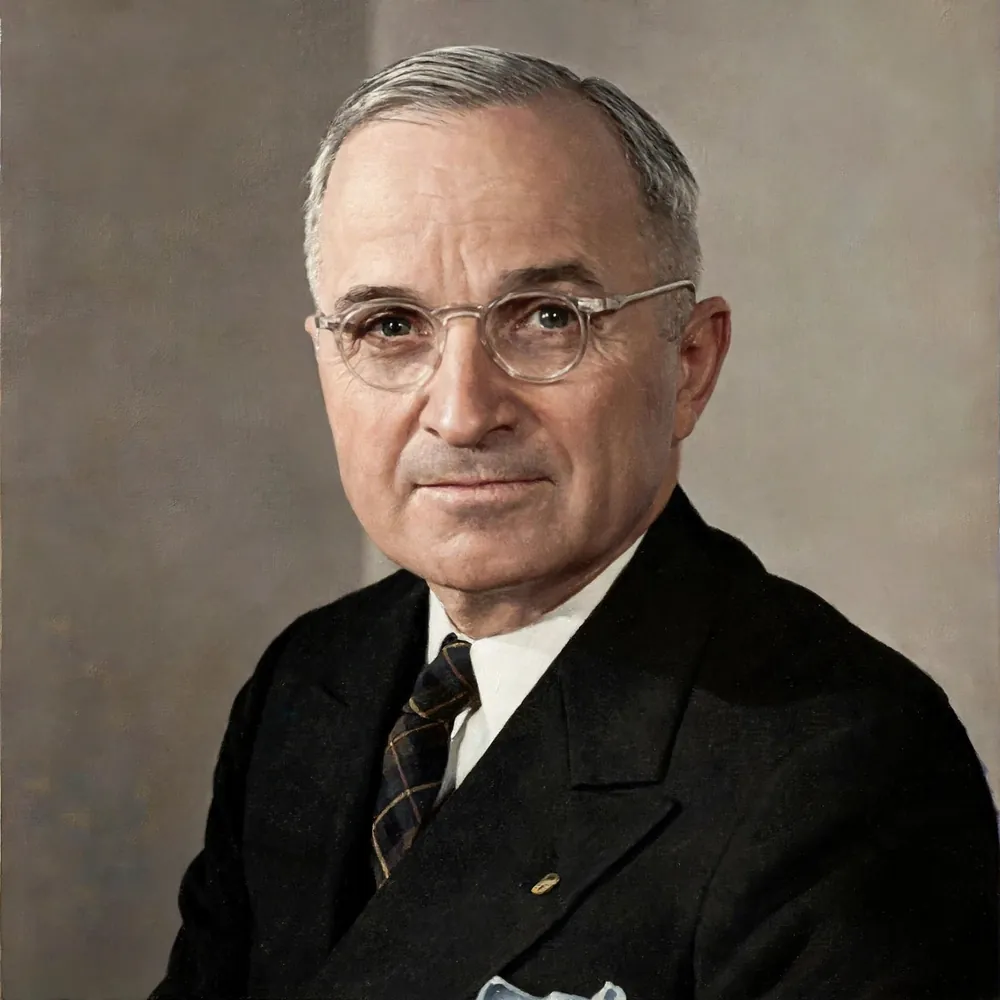
Byrnes, the former senator from South Carolina whom he had chosen as secretary of state precisely because Byrnes was an experienced negotiator. Byrnes, not Truman, did much of the detailed bargaining at Potsdam, and it was Byrnes who devised the compromise on reparations that became the centrepiece of the agreement.
Truman’s own role was that of chairman and final arbiter: he opened the sessions, kept the discussions moving, and made the decisions when the negotiators deadlocked.
The British delegation was, for the first eight days, led by Winston Churchill, with Anthony Eden as foreign secretary. Churchill came to Potsdam in the middle of a general election campaign — the first British general election in ten years — and spent much of the conference waiting for the results, which were delayed while the votes of servicemen overseas were counted.
On 25 July, the conference adjourned for two days so that Churchill and Eden could return to London. On 26 July, the results were announced: the Labour Party had won a landslide, and Churchill was out of office. He returned to Potsdam on 28 July only to say goodbye.
His place was taken by Clement Attlee, the new prime minister, a quiet, unshowy man whose manner could hardly have contrasted more with Churchill’s, and by Ernest Bevin, the trade-union leader who became foreign secretary. The change of government in mid-conference was unprecedented, and it weakened the British position: Attlee and Bevin had to pick up the negotiations without Churchill’s experience, and Stalin — who had dealt with Churchill since 1942 — had to start again with men he did not know.
It also had one curious consequence: the Potsdam Declaration on Japan, issued on 26 July during the recess, bears the names of Truman and Chiang Kai-shek, but not of the British prime minister, because Britain was between governments that day.
The Soviet delegation was led by Stalin himself, accompanied by Foreign Minister Vyacheslav Molotov and a large staff of advisers. Stalin was the only leader present who had attended both Tehran and Yalta, and the only one whose position at home was unchallenged.
He arrived at Potsdam with his objectives already largely achieved on the ground: the Red Army held Eastern Europe, the Polish government in Warsaw was communist-dominated, and the western border of Poland — the Oder–Neisse line — had already been established by the facts of occupation and by the expulsion of Germans from the territories east of it.
Stalin’s aims at the conference were to secure recognition of those facts, to extract the maximum reparations from Germany, and to prevent the Western powers from interfering in the Soviet sphere. He was, by all accounts, at the height of his confidence — and also, as Truman noted, capable of great charm when he chose to be, and of implacable stubbornness when he did not.
5. Germany: Four Zones and the Four Ds
The first and largest question at Potsdam was the future of Germany. The principles had been agreed in outline at Yalta: Germany would be divided into four occupation zones — American, British, Soviet and French — and Berlin, lying deep inside the Soviet zone, would itself be divided into four sectors. The zones were to be administered by an Allied Control Council, which would act jointly for Germany as a whole. At Potsdam, the three leaders confirmed this structure and added the political and economic principles that were to govern the occupation, summarised in four words beginning with D: demilitarisation, denazification, democratisation and decentralisation.
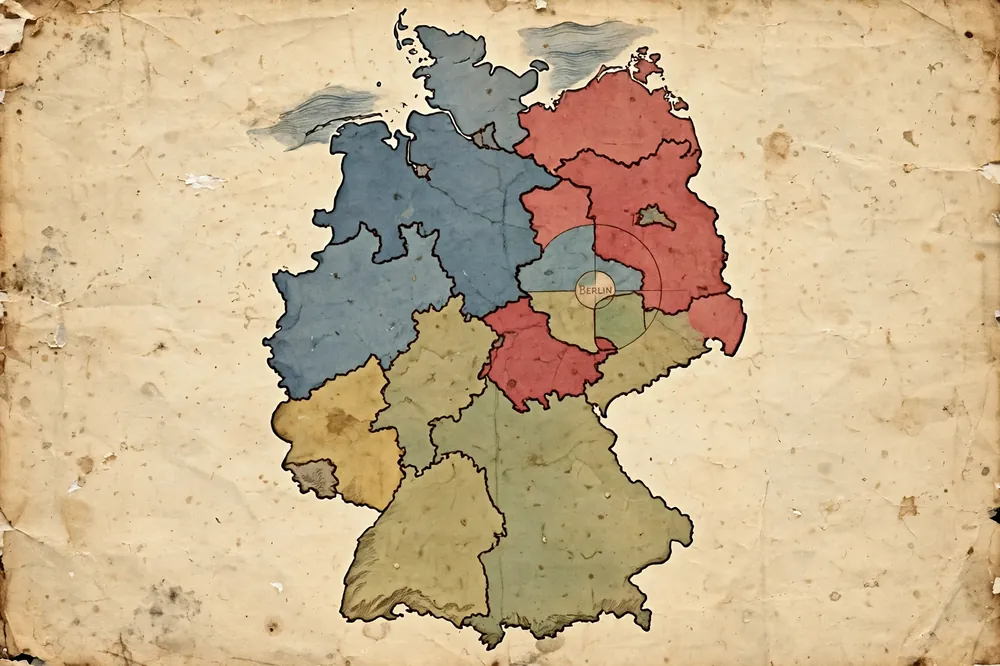
Demilitarisation meant the complete disarmament of Germany and the destruction of its war-making capacity: the German armed forces were dissolved, the General Staff abolished, arms factories dismantled, and the production of war material prohibited. Denazification meant the removal of the Nazi Party and its organisations from German life: the party was dissolved, its leaders were to be tried as war criminals — the trial at Nuremberg was already being prepared — and former Nazis were to be removed from public office and positions of influence.
Democratisation meant the rebuilding of German political life on democratic lines: political parties were to be permitted, trade unions restored, local elections held, and a free press re-established. Decentralisation meant the breaking up of the over-centralised German state: the old Reich was to be replaced by a federal structure, and the great industrial combines — the cartels that had supplied the Nazi war machine — were to be broken up.
The stated aim, in the words of the Potsdam Agreement, was to make it possible for the German people “to reconstruct their life on a democratic and peaceful basis” and to prepare for “the eventual reconstruction of German political life on a democratic basis and for eventual peaceful cooperation in international life”.
The agreement also laid down the economic principles of the occupation, and here the first serious disagreements appeared. The Potsdam Agreement declared that Germany was to be treated as a single economic unit — with common policies on production, prices, wages and the distribution of food — and that the primary aim of the occupation was to make Germany self-supporting, not a burden on the occupiers.
But the four zones were administered separately, and each occupying power ran its zone in its own way: the Soviets dismantled factories and shipped them east as reparations; the British, who bore the cost of feeding the most densely populated and industrialised zone, pressed for higher production; the Americans, after an initial period of harshness under the Morgenthau-inspired directive JCS 1067, moved steadily toward rebuilding the German economy as a bulwark against communism.
The principle of economic unity was never realised. The Allied Control Council, which was supposed to govern Germany jointly, deadlocked repeatedly and held its last meeting in March 1948. By then, the division of Germany into two economic systems — and then into two states — was already under way.
One clause of the Potsdam Agreement has cast a longer shadow than any other in this section: the provision on the “orderly and humane” transfer of German populations out of Poland, Czechoslovakia and Hungary. Between 1945 and 1950, some 12 to 14 million ethnic Germans were expelled or fled from Eastern Europe — the largest forced population movement in European history.
The Potsdam Agreement recognised the transfers and called for them to be carried out “in an orderly and humane manner”, but in practice, in the summer and autumn of 1945, the expulsions were often violent and chaotic, and hundreds of thousands of people — the exact number is still debated by historians, with estimates commonly ranging in the hundreds of thousands — died of hunger, cold, disease and violence on the journey west.
The provision remains one of the most controversial decisions of the conference: to its defenders, it was a necessary consequence of the war and of the redrawing of borders; to its critics, it was the victors’ endorsement of a mass expulsion that they knew would be carried out brutally.
6. Poland, the Oder–Neisse Line and Reparations
No question at Potsdam was more bitterly contested than Poland. At Yalta, the Allies had agreed that Poland’s eastern border would run roughly along the Curzon Line — the line proposed by the British foreign secretary Lord Curzon in 1920 — and that Poland would be compensated in the west with German territory. But Yalta had not said where, in the west, the new border would run.
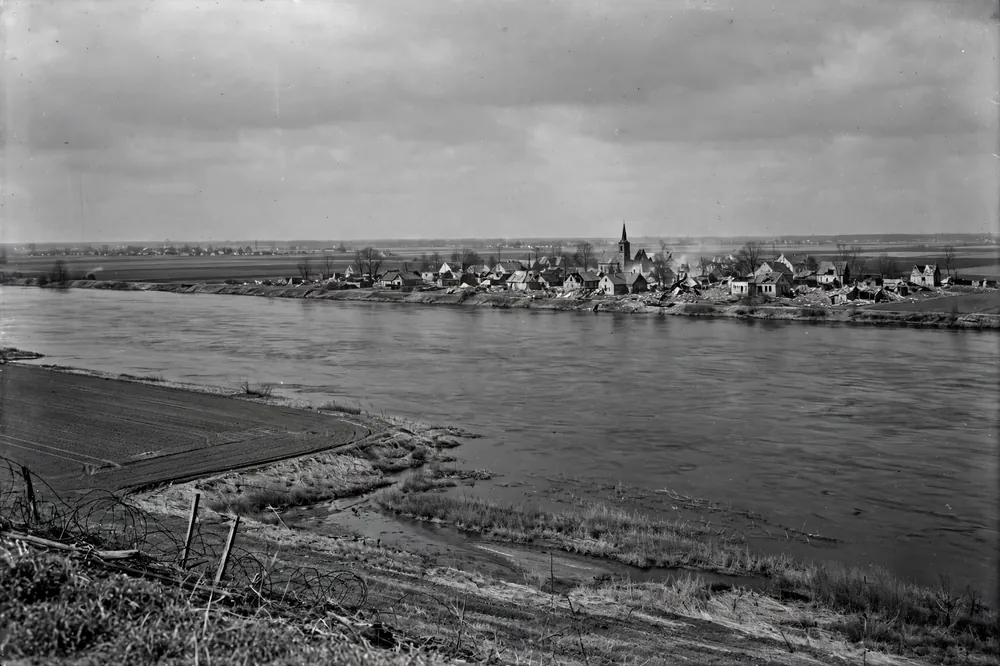
The Polish Provisional Government of National Unity, dominated by communists and installed in Warsaw with Soviet support, claimed the line of the Oder and the western Neisse — the rivers that form the present-day German–Polish border — which would give Poland the whole of Silesia, most of Pomerania, the southern half of East Prussia and the city of Danzig.
The British and Americans preferred the eastern Neisse, a line further east that would have left the great Silesian industrial city of Görlitz and a substantial part of Silesia in Germany. Stalin insisted on the western Neisse. The argument ran for days, and it was settled, in the end, by the facts on the ground: the Polish government had already taken over the administration of the disputed territories, the German population was already being expelled, and the Soviet Union was not going to give them back.
The Potsdam Agreement therefore placed the territories east of the Oder and the western Neisse “under the administration of the Polish State”, while formally reserving the final delimitation of Poland’s western frontier for the peace settlement — a settlement that, in the event, was not signed until 1990, when the Treaty on the Final Settlement with Respect to Germany and the German–Polish Border Treaty confirmed the Oder–Neisse line as the permanent frontier.
The decision moved Poland some 200 kilometres to the west, gave it the industrial resources of Silesia and a broad Baltic coastline, and made it — in territory, if not in politics — a western-looking state. It also made the Oder–Neisse line one of the enduring symbols of the Cold War division of Europe, since West Germany refused to recognise it as a final border until Chancellor Willy Brandt’s Ostpolitik of the early 1970s, and formal recognition came only with German reunification.
The question of Poland’s government was settled less satisfactorily. The Potsdam Agreement called for free and unfettered elections in Poland “as soon as possible”, on the basis of universal suffrage and a secret ballot, in which all democratic and anti-Nazi parties would have the right to take part. The elections, when they finally came in January 1947, were held under intimidation and fraud, and returned a communist-dominated government.
The Western powers protested, but they had no means — and, by then, no will — to enforce the Yalta and Potsdam promises in a country occupied by the Red Army. Poland became the test case of the failure of the Declaration on Liberated Europe, and the precedent for the imposition of communist governments across Eastern Europe.
Reparations were the conference’s hardest economic negotiation. The Soviet Union, which had suffered by far the greatest physical destruction of any Allied power — more than 20 million dead, thousands of towns and villages destroyed, and much of its industry wrecked — demanded $10 billion in reparations, half of it from the western zones.
The United States, which had learned from the experience of Versailles that reparations could poison a peace and that a ruined Germany would be a burden on the occupiers, opposed a fixed sum and opposed taking reparations from current production.
The compromise devised by Byrnes was the “zonal” principle: each occupying power would take reparations from its own zone, chiefly by dismantling industrial plant, and the Soviet Union would additionally receive 25 per cent of the industrial equipment removed from the western zones as reparations — 15 per cent in exchange for food and raw materials, and 10 per cent free.
The compromise avoided a fixed total and avoided taking reparations from current production, but it gave the Soviet Union an incentive to strip its own zone bare, which it did, and it left the level of German industry — how much of German industry would be allowed to survive — to be decided later.
When that decision came, in the Level of Industry Plan of March 1946, it set German industrial capacity at roughly half its pre-war level — a level so low that it had to be revised upward within a year, as the Western powers came to see German economic recovery as essential to the recovery of Europe as a whole.
7. Japan and the Atomic Bomb
While the conference debated Germany, the war against Japan was approaching its climax, and Potsdam’s decisions on Japan proved as consequential as its decisions on Germany. The Potsdam Declaration, issued on 26 July 1945 in the names of the United States, Britain and China — the Soviet Union was not yet at war with Japan and did not sign — called on Japan to surrender unconditionally or face “prompt and utter destruction”.
It promised that Japan would not be “enslaved as a race or destroyed as a nation”, that its armed forces would be disarmed, its war criminals punished, its empire stripped away, and its people given the opportunity to choose a democratic government — but it said nothing about the fate of the Emperor, the point on which the Japanese government was most sensitive.
The declaration was a statement of Allied war aims; it was also, in effect, an ultimatum with a deadline that was never stated.
The atomic bomb was the silent presence behind the declaration. Truman had learned of the successful Trinity test on the evening of 16 July, and on 24 July, at the end of a plenary session, he walked over to Stalin and, through an interpreter, told him casually that the United States had “a new weapon of unusual destructive force”.
Stalin replied, equally casually, that he hoped the United States would make “good use of it against the Japanese”. The exchange has become one of the most famous anecdotes of the conference — and one of the most debated. Truman believed he had told Stalin something new; Stalin, as the Soviet archives later showed, already knew about the bomb through espionage, and had ordered his own atomic programme to be accelerated.
The bomb was also the reason Truman was willing to issue the ultimatum to Japan without waiting for Soviet entry into the war: at Yalta, the Soviet Union had promised to enter the war against Japan within three months of the defeat of Germany — that is, by 8 August — and the Americans had counted on Soviet help for the invasion of the Japanese home islands.
By Potsdam, with the bomb in hand, Truman no longer needed that help as urgently, and he no longer wanted to pay the price Stalin had demanded for it at Yalta — the Kurile Islands, southern Sakhalin, a zone of occupation in Korea, and a privileged position in Manchuria.
The conference’s agreement on Japan therefore included a provision that the Soviet Union would enter the war, but Truman’s private hope was that the bomb would make Soviet entry unnecessary.
The Japanese government received the Potsdam Declaration on 27 July. After debate, the government decided to withhold public comment while it sought clarification through Moscow — the Japanese were still hoping that the Soviet Union, which was not yet at war with them, might mediate a negotiated peace.
On 28 July, Prime Minister Kantaro Suzuki told the press that the declaration was a rehash of the Cairo Declaration and that Japan would “kill it with silence” — the word he used, mokusatsu, has been debated ever since: it can mean to ignore, or to withhold comment pending a decision. The Allies read it as rejection.
On 6 August, the atomic bomb was dropped on Hiroshima; on 8 August, the Soviet Union declared war on Japan and invaded Manchuria; on 9 August, a second bomb was dropped on Nagasaki. On 14 August, Japan accepted the Potsdam Declaration’s terms, with the single condition that the Emperor’s prerogatives be preserved; the Allies replied that the Emperor would be subject to the Supreme Commander of the Allied Powers.
The formal surrender was signed on 2 September 1945, exactly a month after the Potsdam Conference closed.
8. The Council of Foreign Ministers and the Unfinished Peace
The Potsdam Agreement created a Council of Foreign Ministers — the foreign ministers of the United States, Britain, the Soviet Union, France and China — to do the work the conference itself had not finished: to draw up the peace treaties with Italy, Romania, Bulgaria, Hungary and Finland, and to prepare a settlement for Germany. The Council was to meet in London, and its first session opened in September 1945.
It was a sensible piece of machinery, and it failed. The foreign ministers met in London, Moscow, Paris and New York over the next two years, but they could agree on the treaties with the smaller Axis states — signed in Paris in February 1947 — and on almost nothing else.
The German settlement, which the Council was supposed to prepare, was never prepared: the London session of November–December 1947 broke up without agreement, and the Council never met again on Germany.
The failure was not for want of effort, but because the premises of Potsdam had collapsed. The agreement assumed that the four occupying powers could govern Germany jointly, as a single economic unit, until a peace treaty was signed. By 1947 it was clear that they could not: the Soviet Union was building a communist state in its zone, the Western powers were rebuilding a market economy in theirs, and the two projects were incompatible.
The breaking point came over the economy — over the level of German industry, over reparations, and above all over currency. In June 1948, the Western powers introduced a new currency, the Deutsche Mark, in their zones; the Soviet Union answered with the Berlin Blockade, cutting off road, rail and canal access to West Berlin, and the Western powers answered with the Berlin Airlift.
The blockade lasted eleven months and ended in Soviet defeat, but it destroyed the last pretence of four-power government in Germany. In 1949, the Federal Republic of Germany was founded in the west and the German Democratic Republic in the east. Germany was divided, and would remain divided for forty years.
The Potsdam Agreement itself had anticipated none of this. It was written as if the alliance would continue, as if Germany would be governed jointly, as if the peace would be settled by negotiation. Within three years, all three assumptions had failed.
That is why historians argue about Potsdam in two opposite ways: some say it was the conference that divided Europe, because it ratified the Soviet occupation of the east and the division of Germany into zones that became states; others say it was the conference that tried, and failed, to prevent the division, because its provisions for joint government and economic unity were the last attempt to keep Germany whole.
Both readings have force. What is certain is that Potsdam was the last time the victors of the Second World War sat down together to settle the peace as allies. The next time they met, they met as adversaries.
9. Legacy: Potsdam and the Cold War
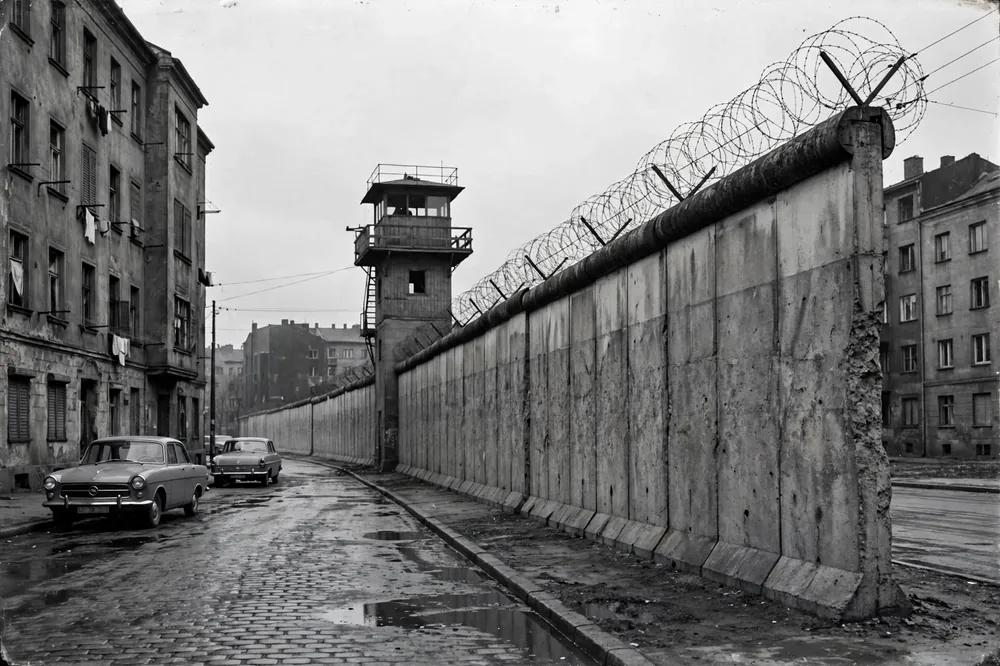
The legacy of Potsdam is written into the map of Europe that lasted from 1945 to 1989. The Oder–Neisse line, confirmed only in 1990, became the border between Germany and Poland for two generations. The division of Germany into zones became the division into two states, and the division of Berlin into sectors became the Berlin Wall, built in 1961 and the most potent symbol of the Cold War.
The expulsion of the Germans from Eastern Europe redrew the ethnic map of the continent, creating a Poland that was almost entirely Polish and a Czechoslovakia from which the Sudeten Germans had vanished. The reparations compromise, which seemed a technical matter in July 1945, helped to ensure that the Soviet zone would be stripped of its industry while the western zones were rebuilt — and thus helped to make the economic division of Germany permanent.
And the Potsdam Declaration’s terms for Japan — disarmament, the loss of empire, democratic government under Allied occupation — became the basis of the Japanese settlement, and of the Japan that emerged from it.
Potsdam is also remembered for what it failed to do. It did not produce a peace treaty with Germany — no such treaty was ever signed by all four powers, and the final settlement waited until German reunification in 1990. It did not protect Poland’s freedom, as Yalta and Potsdam had promised, and it did not prevent the imposition of communist governments across Eastern Europe.
It did not keep the wartime alliance alive. But it is worth remembering what Potsdam did achieve: it settled, peacefully and by negotiation, questions that might have been settled by force — the borders of Poland, the occupation of Germany, the treatment of war criminals, the future of Japan.
The disagreements at Potsdam were real and deep, but the three leaders left the conference without a rupture, and the institutions they created — the Allied Control Council, the Council of Foreign Ministers, the Nuremberg Tribunal — kept the victors talking to each other for two more years, until the Cold War made talking impossible. In the summer of 1945, that was no small achievement.
The Cecilienhof Palace still stands in Potsdam, preserved as it was in the summer of 1945, with the round conference table in place and the red star of geraniums replanted each year in the garden. Visitors can stand in the room where the Big Three decided the fate of Germany and of Europe, and where Truman carried the secret of the atomic bomb. The room is quiet now, but it is worth remembering what was decided there — and what was left undecided, to be settled by forty years of Cold War.
10. Key Figures
Harry S. Truman (United States). President of the United States from April 1945 to 1953. Truman had been vice-president for less than three months when Roosevelt’s death made him president. At Potsdam he chaired the conference, took a firmer line with Stalin than Roosevelt had, and carried the secret of the atomic bomb. Within weeks of the conference he would order the atomic bombings of Hiroshima and Nagasaki, and within two years he would announce the Truman Doctrine, the American policy of containing communism.
Winston Churchill (United Kingdom). Prime Minister from 1940 to 1945. Churchill attended the first eight days of the conference, then lost the general election and was replaced by Clement Attlee. His departure midway through the conference symbolised the end of the wartime leadership in Britain — and the end, for Britain, of the role of a great power equal to the United States and the Soviet Union.
Clement Attlee (United Kingdom). Prime Minister from 1945 to 1951. A quiet, unassuming man, Attlee led the Labour government that created the National Health Service and the welfare state, granted independence to India, and presided over Britain’s adjustment to its reduced place in the world. At Potsdam he inherited the negotiations in mid-stream and saw them through to the agreement.
Joseph Stalin (Soviet Union). Leader of the Soviet Union from the 1920s until his death in 1953. Stalin was the only leader at Potsdam who had attended both earlier summits, and the only one whose objectives were already largely achieved on the ground. He secured recognition of the Oder–Neisse line, a communist government in Poland, and reparations from Germany, and he left Potsdam as the dominant power in Eastern Europe.
James F. Byrnes (United States). Secretary of State from 1945 to 1947. Byrnes did much of the detailed negotiating at Potsdam and devised the “zonal” compromise on reparations. He was one of the most experienced politicians in the American delegation, and his memoirs, Speaking Frankly (1947), are a leading source for the conference.
Vyacheslav Molotov (Soviet Union). Soviet foreign minister from 1939 to 1949 and again from 1953 to 1956. Molotov was Stalin’s principal negotiator at Potsdam, famous for his stubbornness — the Western delegates nicknamed him “Iron Pants” and “Mr Nyet”. He negotiated the reparations and Polish questions in detail and conceded nothing without a fight.
Frequently Asked Questions
Related articles
Sources
- Protocol of the Proceedings of the Potsdam Conference, 1 August 1945 (the Potsdam Agreement) — the official text of the decisions, available from the Avalon Project, Yale Law School.
- Potsdam Declaration, 26 July 1945 — the Allied ultimatum to Japan.
- Encyclopædia Britannica, “Potsdam Conference” — overview of the participants, decisions and consequences.
- Wikipedia, “Potsdam Conference” — dates, delegations, the Oder–Neisse line, reparations and the atomic bomb.
- Harry S. Truman, Memoirs, Volume I: Year of Decisions (Doubleday, 1955) — Truman’s account of the conference and of the decision to use the atomic bomb.
- James F. Byrnes, Speaking Frankly (Harper, 1947) — the secretary of state’s account of the negotiations, including the reparations compromise.
- Charles L. Mee, Meeting at Potsdam (M. Evans, 1975) — a narrative history of the conference and its personalities.
- Antony Beevor, Berlin: The Downfall 1945 (Viking, 2002) — the fall of Berlin and the context of the occupation.
- David McCullough, Truman (Simon & Schuster, 1992).
- Vladislav M. Zubok, A Failed Empire: The Soviet Union in the Cold War from Stalin to Gorbachev (University of North Carolina Press, 2007).