 WAR ATLAS MILITARY HISTORY MAGAZINE · WWI — WWII
Kwajalein
1. Lead
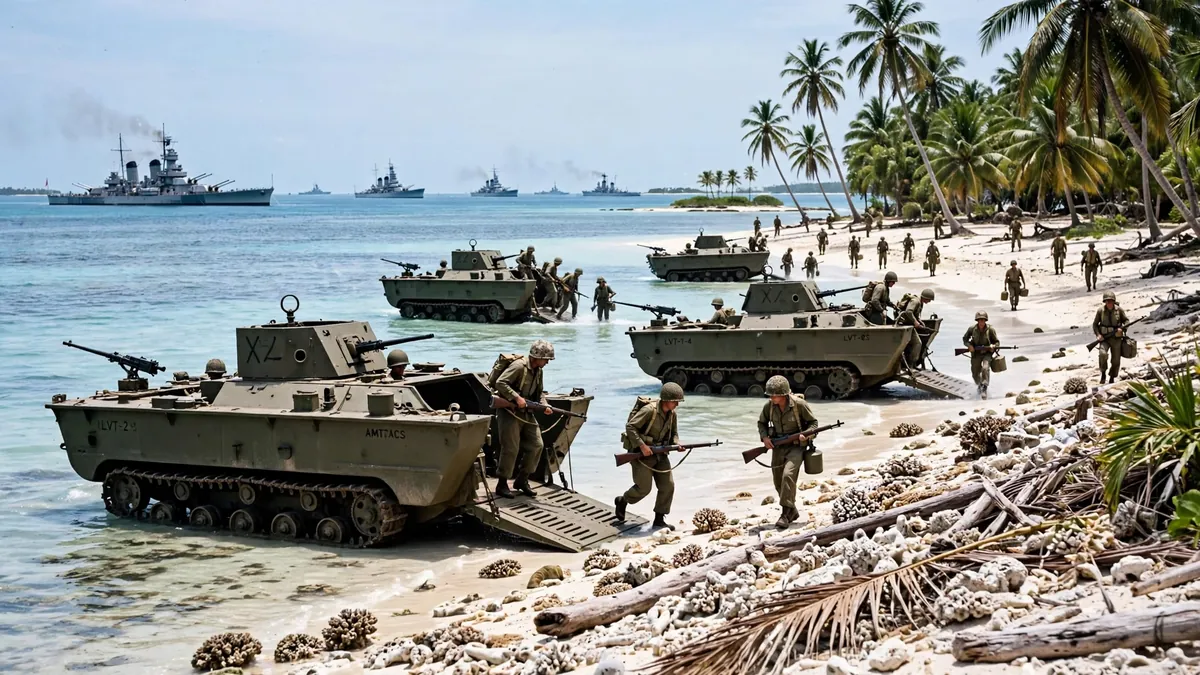
Kwajalein was the battle for the Kwajalein Atoll in the Marshall Islands, fought from 31 January to 3 February 1944. It was the first American assault on a Japanese-held atoll in the central Pacific, and it was a test of everything the Americans had learned at Tarawa two months earlier.
At Tarawa, the Marines had landed on a reef at low tide and suffered terrible casualties; at Kwajalein, the Americans applied the lessons — a longer bombardment, better intelligence, amphibious tractors that could cross the reef, and a landing on the lagoon side, where the water was calm — and they took the atoll in four days, at a cost of about 370 American dead and about 8,000 Japanese dead.
Kwajalein was not a famous battle, but it was an important one: it opened the central Pacific to the American advance, it gave the Americans a base for the attack on the Marianas, and it proved that the island-hopping campaign could work.
2. Key Facts
| Date | 31 January – 3 February 1944 (Kwajalein Island and Roi-Namur) |
| Location | Kwajalein Atoll, Marshall Islands, central Pacific |
| Result | American victory; atoll captured in four days |
| American commanders | Rear Adm. Richmond Kelly Turner (amphibious force); Maj. Gen. Charles Corlett (7th Infantry Division, Kwajalein Island); Maj. Gen. Harry Schmidt (4th Marine Division, Roi-Namur) |
| Japanese commanders | Rear Adm. Monzo Akiyama (Kwajalein Island; killed); Capt. Masashi Kojima (Roi-Namur; killed) |
| American strength | About 42,000 troops (7th Infantry Division and 4th Marine Division); about 300 ships, 1,000 aircraft |
| Japanese strength | About 8,000 troops (about 5,000 on Kwajalein Island, about 3,000 on Roi-Namur) |
| American losses | About 370 killed, about 1,500 wounded (about 1,900 total) |
| Japanese losses | About 8,000 killed; about 100 taken prisoner |
3. Background
Kwajalein was the next step in the American island-hopping campaign in the central Pacific. After the capture of Tarawa in the Gilbert Islands in November 1943, the Americans turned to the Marshall Islands, the next island group to the north-west, and the key to the central Pacific.
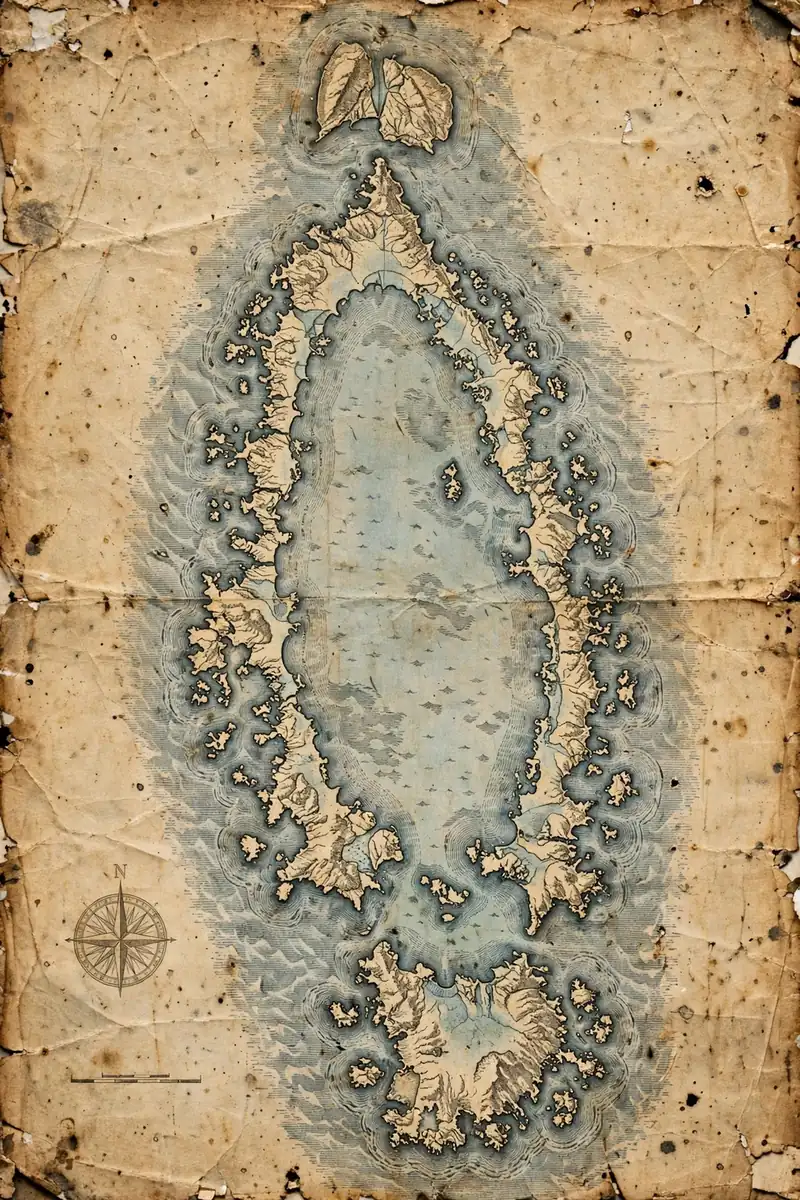
The Marshalls were a Japanese mandate — islands that Japan had held since the First World War — and they were the outer ring of Japan’s defences. The largest atoll in the Marshalls was Kwajalein, a vast coral atoll, about 100 kilometres long, enclosing a lagoon of about 1,700 square kilometres, the largest lagoon in the world.
The atoll’s two main islands were Kwajalein Island, in the south, where the Japanese had an airfield and a naval base, and Roi-Namur, in the north, where they had another airfield. The Americans planned to take both, in a single operation codenamed Flintlock.
The operation was shaped, above all, by Tarawa. At Tarawa, on 20 November 1943, the Marines had landed on Betio Island and suffered about 1,000 killed and 2,000 wounded in three days — a casualty rate that shocked the American public and the American command.
The lessons of Tarawa were clear: the preliminary bombardment had been too short and too light; the intelligence about the reef and the tides had been wrong, and the landing craft had grounded on the reef at low tide, forcing the Marines to wade ashore under fire; and the Japanese, dug into concrete pillboxes, had to be destroyed by direct fire, not by bombardment.
The Americans applied every one of those lessons at Kwajalein. The bombardment was longer — three days of naval gunfire and air attacks, with battleships firing at point-blank range — and it was heavier: the battleships fired about 7,000 shells, and the aircraft dropped about 1,000 tons of bombs. The intelligence was better: the Americans had aerial photographs of the islands, and they knew the tides and the reefs.
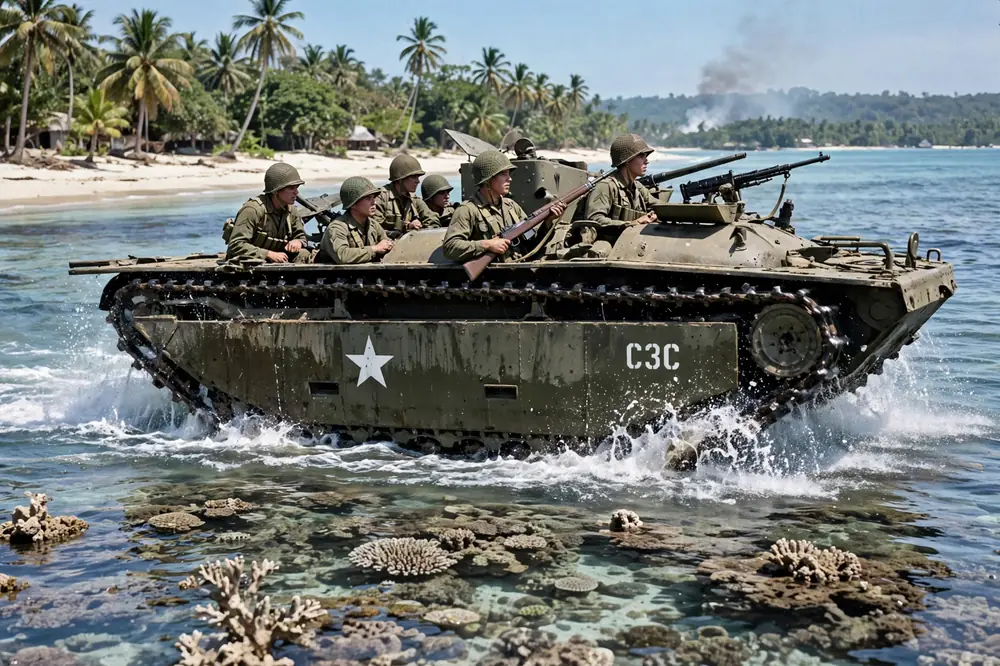
The landing craft were amphibious tractors — LVTs, “amtracs” — which could cross the reef and drive onto the beach. And the landing was made on the lagoon side of the islands, where the water was calm and the reef was low, instead of on the ocean side, where the surf was heavy.
The Japanese garrison at Kwajalein was about 8,000 men: about 5,000 on Kwajalein Island, under Rear Admiral Monzo Akiyama, and about 3,000 on Roi-Namur, under Captain Masashi Kojima. The garrison was made up of naval troops, with few heavy weapons, and its defences were weaker than Tarawa’s: the pillboxes were of concrete, but they were not as strong, and the Japanese had not had time to fortify the islands as thoroughly as Betio. The Japanese plan was the same as at Tarawa: to fight on the beaches, and to die there. The Americans, having learned the lessons of Tarawa, did not give them the chance.
4. Opposing Forces
The American landing force at Kwajalein was built around two divisions: the 7th Infantry Division, under Major General Charles Corlett, which landed on Kwajalein Island, and the 4th Marine Division, under Major General Harry Schmidt, which landed on Roi-Namur. The two divisions were supported by the amphibious force under Rear Admiral Richmond Kelly Turner, with about 300 ships, including battleships, cruisers, destroyers and escort carriers, and by the fast carrier task force under Rear Admiral Marc Mitscher, with about 1,000 aircraft. The total American force was about 42,000 men.
| United States | Japan | |
|---|---|---|
| Ground troops | About 42,000 (7th Infantry Division on Kwajalein Island; 4th Marine Division on Roi-Namur) | About 8,000 (about 5,000 on Kwajalein Island; about 3,000 on Roi-Namur) |
| Tanks | Sherman tanks, landed with the infantry | Few; some light tanks |
| Naval gunfire | 7 battleships, 12 cruisers, 40 destroyers; about 7,000 shells fired | Coastal guns, mostly destroyed by the bombardment |
| Aircraft | About 1,000 (carrier-based) | About 100, mostly destroyed on the ground |
| Landing craft | LVT amphibious tractors, which could cross the reef | — |
| Commanders | Turner (amphibious force); Corlett (7th Division); Schmidt (4th Marine Division) | Akiyama (Kwajalein Island); Kojima (Roi-Namur) |
The Japanese garrison was outnumbered by more than five to one, and it was outgunned by an even greater margin. Its defences were concrete pillboxes, trenches and gun positions, but they were not as strong as Tarawa’s, and the bombardment — three days of naval gunfire and air attacks — destroyed many of them before the landing. The Japanese plan was to fight on the beaches, but the bombardment and the landing on the lagoon side, where the defences were weaker, meant that the Japanese were overwhelmed before they could fight effectively. The Japanese fought bravely, and they died almost to a man: of the 8,000 men in the garrison, only about 100 were taken prisoner.
The American divisions were a contrast: the 7th Infantry Division was an Army division that had fought in the Aleutians, at Attu and Kiska, and the 4th Marine Division was a new division, formed for the battle, with many men who had never been in combat. Both divisions performed well, and both learned the lessons of the battle: the Army learned to fight on an atoll, and the Marines learned that the lessons of Tarawa — the bombardment, the amtracs, the lagoon-side landing — worked. The battle was, in the words of one historian, “a textbook operation”.
5. The Battle
The bombardment and the landing, 31 January 1944
The battle began on 31 January 1944, with a three-day bombardment of Kwajalein Island and Roi-Namur by battleships, cruisers and carrier aircraft. The bombardment was the heaviest of the Pacific War to that point: the battleships fired at point-blank range, some of them from as close as 1,000 metres, and the aircraft dropped about 1,000 tons of bombs. The Japanese defences, which had been built to withstand a bombardment, were shattered: the pillboxes were destroyed, the guns were silenced, and the airfields were cratered. The Japanese commander on Kwajalein Island, Rear Admiral Akiyama, was killed in the bombardment, and the command passed to a junior officer.
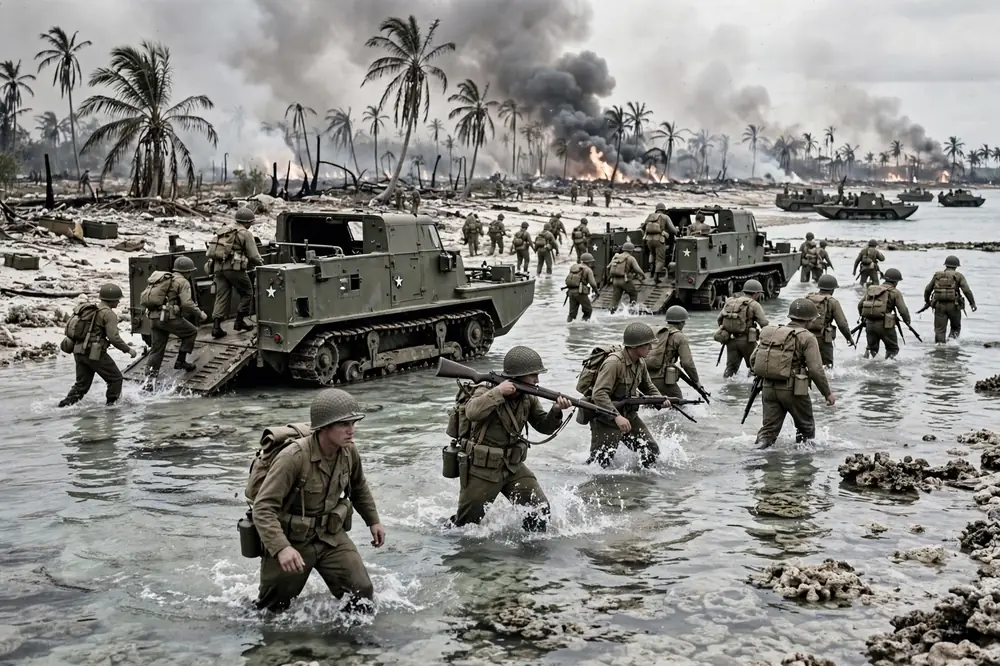
The landing, on 1 February, was made on the lagoon side of the islands, where the water was calm and the reef was low. The first waves went ashore in LVT amphibious tractors, which crossed the reef and drove onto the beach, and they met little opposition: the Japanese, stunned by the bombardment, were slow to react, and the Americans were ashore in strength before the Japanese could organise a defence. The 7th Division landed on Kwajalein Island, and the 4th Marine Division landed on Roi-Namur, and both landings went according to plan.
Kwajalein Island, 1–3 February
The fighting on Kwajalein Island lasted three days. The 7th Division, landing on the southern end of the island, drove north, clearing the Japanese positions one by one with tanks, artillery and flamethrowers. The Japanese fought from pillboxes and trenches, and they were killed in them: the Americans used direct fire from tanks and artillery to destroy the pillboxes, and they used flamethrowers to clear the trenches. The island was declared secure on 3 February, after three days of fighting. The Americans lost about 170 killed and about 700 wounded on Kwajalein Island; the Japanese lost about 5,000 killed, with only about 100 taken prisoner.
Roi-Namur, 1–2 February
The fighting on Roi-Namur lasted two days. The 4th Marine Division landed on Roi Island and Namur Island — two islands joined by a causeway — and it took both in two days. The Marines’ tanks and artillery destroyed the Japanese pillboxes, and the Japanese, who had been stunned by the bombardment, were overwhelmed. The Marines lost about 200 killed and about 800 wounded on Roi-Namur; the Japanese lost about 3,000 killed. The airfield on Roi was captured intact, and it was in use by American aircraft within days.
The rest of the atoll
The rest of the atoll — the smaller islands — was taken in the following days, with little opposition. The Americans landed on the other islands of the atoll, and the Japanese garrisons, which were small, were killed or captured. The atoll was declared secure on 3 February, and the Americans began to build it into a base: the airfields were repaired, the lagoon was used as an anchorage for the fleet, and the atoll became the staging area for the next operation, the attack on the Marianas. The battle had lasted four days, and it had cost the Americans about 370 killed and 1,500 wounded — a fraction of Tarawa’s cost, for a larger objective.
6. Turning Point
The turning point of the Battle of Kwajalein was the bombardment. The three days of naval gunfire and air attacks, with the battleships firing at point-blank range, destroyed the Japanese defences before the landing, and the landing itself — on the lagoon side, in amphibious tractors — was almost unopposed. The bombardment was the lesson of Tarawa, applied: at Tarawa, the bombardment had been too short and too light, and the Marines had paid for it; at Kwajalein, the bombardment was long and heavy, and the Marines did not have to pay. The battle was won, in large part, before the first man went ashore.
The second turning point was the lagoon-side landing. The Americans had learned, at Tarawa, that the ocean side of an atoll — with its heavy surf and its high reef — was the wrong place to land. At Kwajalein, they landed on the lagoon side, where the water was calm and the reef was low, and the amphibious tractors could cross the reef and drive onto the beach. The lagoon-side landing became the standard for the rest of the Pacific War: at Saipan, at Tinian, at Peleliu and at Okinawa, the Americans landed where the water was calm and the defences were weak, and they avoided the mistakes of Tarawa.
The third turning point was the speed of the battle. Kwajalein was taken in four days, at a cost of about 370 American dead, and the atoll was in use as a base within days. The speed of the victory — and the low cost — proved that the island-hopping campaign could work, and that the Americans could take an atoll without paying Tarawa’s price. The battle’s lesson, for the Americans, was that preparation, bombardment and intelligence could win a battle before it was fought.
7. Casualties and Losses
The casualties of the Battle of Kwajalein were light by the standards of the Pacific War, and they were a fraction of Tarawa’s. The Americans lost about 370 killed and about 1,500 wounded, for a total of about 1,900 casualties out of about 42,000 men landed. The Japanese lost about 8,000 killed, with only about 100 taken prisoner.
| United States | Japan | |
|---|---|---|
| Killed | About 370 | About 8,000 |
| Wounded | About 1,500 | Few recorded |
| Total | About 1,900 | About 8,100 |
| Taken prisoner | Few | About 100 |
| Kwajalein Island | About 170 killed, 700 wounded | About 5,000 killed |
| Roi-Namur / Roi-Namur | About 200 killed, 800 wounded | About 3,000 killed |
The Japanese losses — about 8,000 killed, with only about 100 taken prisoner — were almost total, as they were at Tarawa. The Japanese fought to the death, and they died in their pillboxes and trenches. The American losses — about 370 killed — were the lightest of any major amphibious assault in the Pacific War to that point, and they were a measure of how well the lessons of Tarawa had been learned. The battle’s casualty ratio — about 20 Japanese killed for every American killed — was the most favourable of the war for the Americans, and it was a direct result of the bombardment and the lagoon-side landing.
The civilian losses at Kwajalein were small, because the atoll’s population was small: the Marshall Islands were sparsely populated, and the Japanese had evacuated most of the civilians before the battle. The atoll’s people, the Marshallese, suffered in the war, but the battle itself cost few civilian lives.
8. Map and Geography
Kwajalein Atoll is the largest atoll in the Marshall Islands, and one of the largest in the world. It is about 100 kilometres long, from north to south, and it encloses a lagoon of about 1,700 square kilometres, the largest lagoon in the world.
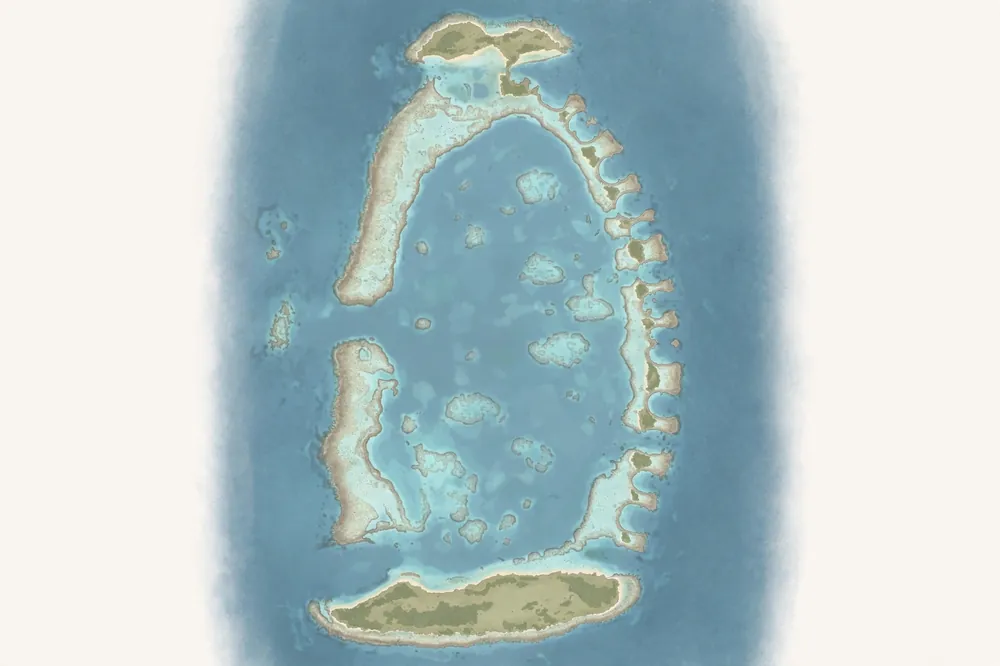
The atoll is made up of about 90 small islands, most of them uninhabited, and its two main islands are Kwajalein Island, in the south, and Roi-Namur, in the north. Kwajalein Island is about 4 kilometres long and 800 metres wide, and Roi-Namur is two islands — Roi and Namur — joined by a causeway, about 2 kilometres long in total.
The islands are low, flat coral islands, only a few metres above sea level, with palm trees and scrub, and no fresh water.
The atoll’s geography shaped the battle. The lagoon, with its calm water, was the key to the American landing: the Americans landed on the lagoon side of the islands, where the water was calm and the reef was low, instead of on the ocean side, where the surf was heavy.
The lagoon was also the key to the atoll’s value as a base: it was large enough to anchor the whole Pacific Fleet, and it became the fleet’s anchorage for the rest of the war. The islands themselves were small and flat, with no high ground, and the Japanese defences were built on the flat ground, in pillboxes and trenches, where they could be destroyed by direct fire.
The atoll’s size — 100 kilometres long — meant that the Americans had to take the whole atoll, island by island, but the islands were small, and the garrisons were small, and the battle was over in four days.
The atoll’s position — in the central Pacific, about 3,500 kilometres west of Hawaii and about 3,000 kilometres east of Japan — made it the key to the central Pacific. The Marshalls were the outer ring of Japan’s defences, and Kwajalein was the largest atoll in the Marshalls. Its capture opened the central Pacific to the American advance, and it gave the Americans a base for the attack on the Marianas, which followed in June 1944. The atoll is still an American base: Kwajalein is the site of the Ronald Reagan Ballistic Missile Defense Test Site, and it is still used by the American military.
9. Outcome and Legacy of Kwajalein
The Battle of Kwajalein ended on 3 February 1944, with the atoll in American hands. The Americans had won, at a cost of about 370 killed and 1,500 wounded, and the Japanese had lost about 8,000 men. The atoll became a base: the airfields were repaired, the lagoon was used as an anchorage, and the atoll became the staging area for the attack on the Marianas, which followed in June 1944. The capture of Kwajalein opened the central Pacific, and it proved that the island-hopping campaign could work.
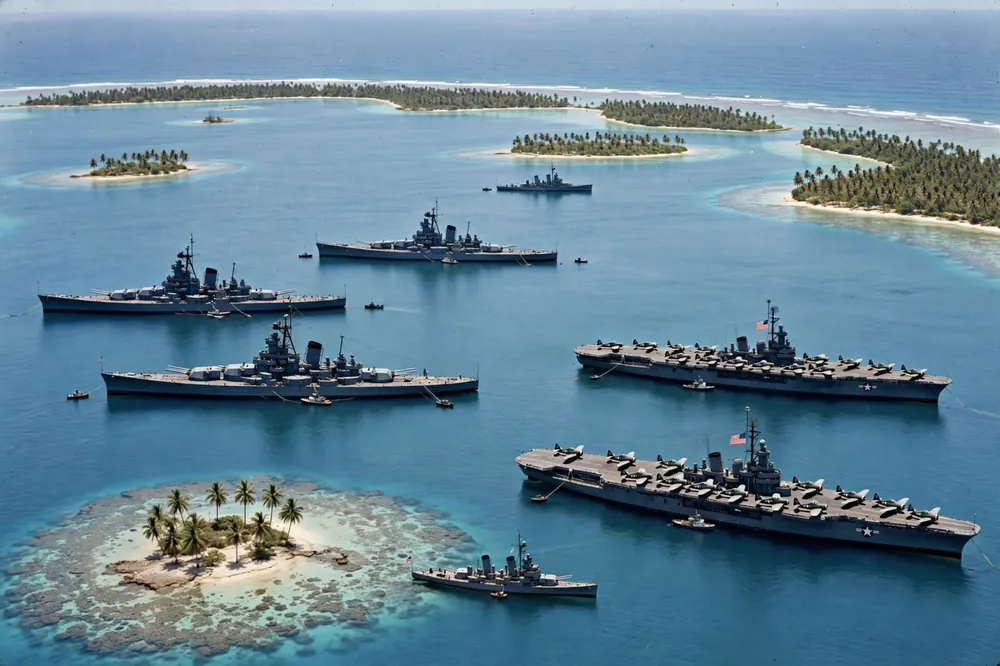
Kwajalein’s legacy is a military one: it was the battle where the Americans learned how to take an atoll. The lessons of Tarawa — the bombardment, the amtracs, the lagoon-side landing, the intelligence — were applied at Kwajalein, and they worked. The lessons were applied again, at Saipan, at Tinian, at Peleliu, at Iwo Jima and at Okinawa, and they shaped the rest of the Pacific War. Kwajalein was not a famous battle, but it was a turning point: it was the battle where the Americans stopped paying Tarawa’s price, and started winning the island war.
The atoll’s legacy is also a human one. The Marshallese people, who had lived on the atoll for centuries, were displaced by the war, and they were not allowed to return to Kwajalein Island, which became an American military base. The atoll is still an American base, and the Marshallese live on the neighbouring island of Ebeye, one of the most densely populated places on earth. The battle’s legacy, for the Marshallese, is a legacy of displacement, and it is a reminder that the island war was fought on other people’s land.
10. Commanders
Rear Admiral Richmond Kelly Turner (United States). Commander of the amphibious force at Kwajalein, and the officer who planned the operation. Turner, known as “Terrible Turner”, was the architect of the American amphibious campaign in the Pacific, and he commanded the landings at Guadalcanal, Tarawa, Kwajalein, Saipan and Okinawa. He later became Commander of the Amphibious Forces, Pacific Fleet.
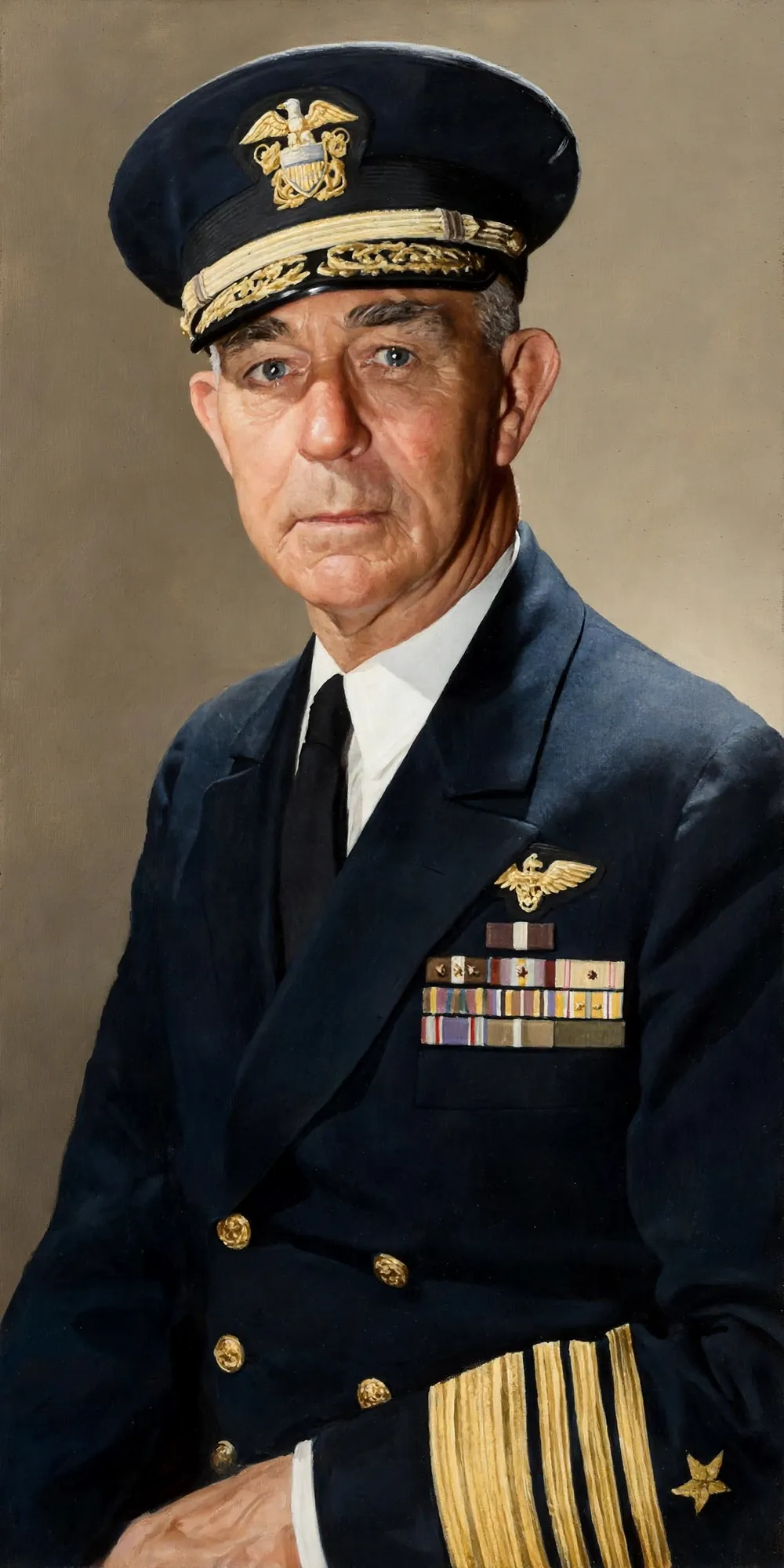
Major General Charles Corlett (United States). Commander of the 7th Infantry Division, which landed on Kwajalein Island. Corlett had commanded the division in the Aleutians, at Attu, and he led the landing on Kwajalein Island. He later commanded the XIX Corps in Europe.
Major General Harry Schmidt (United States). Commander of the 4th Marine Division, which landed on Roi-Namur. Schmidt later commanded the V Amphibious Corps at Iwo Jima and Okinawa.
Rear Admiral Monzo Akiyama (Japan). Commander of the Japanese garrison on Kwajalein Island. Akiyama was killed in the preliminary bombardment, before the landing, and the command passed to a junior officer. His death was a blow to the Japanese defence.
Captain Masashi Kojima (Japan). Commander of the Japanese garrison on Roi-Namur. Kojima was killed in the fighting on Roi-Namur, and his garrison was destroyed.
Frequently Asked Questions
Related articles
Sources
- Wikipedia, “Battle of Kwajalein” — dates, strength, casualty figures and the course of the battle.
- US Marine Corps History Division, “The Marshall Islands” — the official history of the Kwajalein operation.
- Encyclopædia Britannica, “Kwajalein” — background and the battle.
- Samuel Eliot Morison, History of United States Naval Operations in World War II, Vol. VII, Aleutians, Gilberts and Marshalls — the naval operation and the lessons of Tarawa.
- Gordon L. Rottman, The Marshall Islands 1944: Operation Flintlock, the Capture of Kwajalein and Eniwetok (Osprey, 2004) — the operation, the landings and the lessons learned.
- Robert Sherrod, History of Marine Corps Aviation in World War II (Combat Forces Press, 1952) — the air support at Kwajalein.
- Henry I. Shaw Jr., Bernard C. Nalty and Edwin T. Turnbladh, History of U.S. Marine Corps Operations in World War II, Vol. III, Central Pacific Drive (1958).
- John Costello, The Pacific War 1941–1945 (William Morrow, 1981).