 WAR ATLAS MILITARY HISTORY MAGAZINE · WWI — WWII
Adolf Hitler
1. Lead
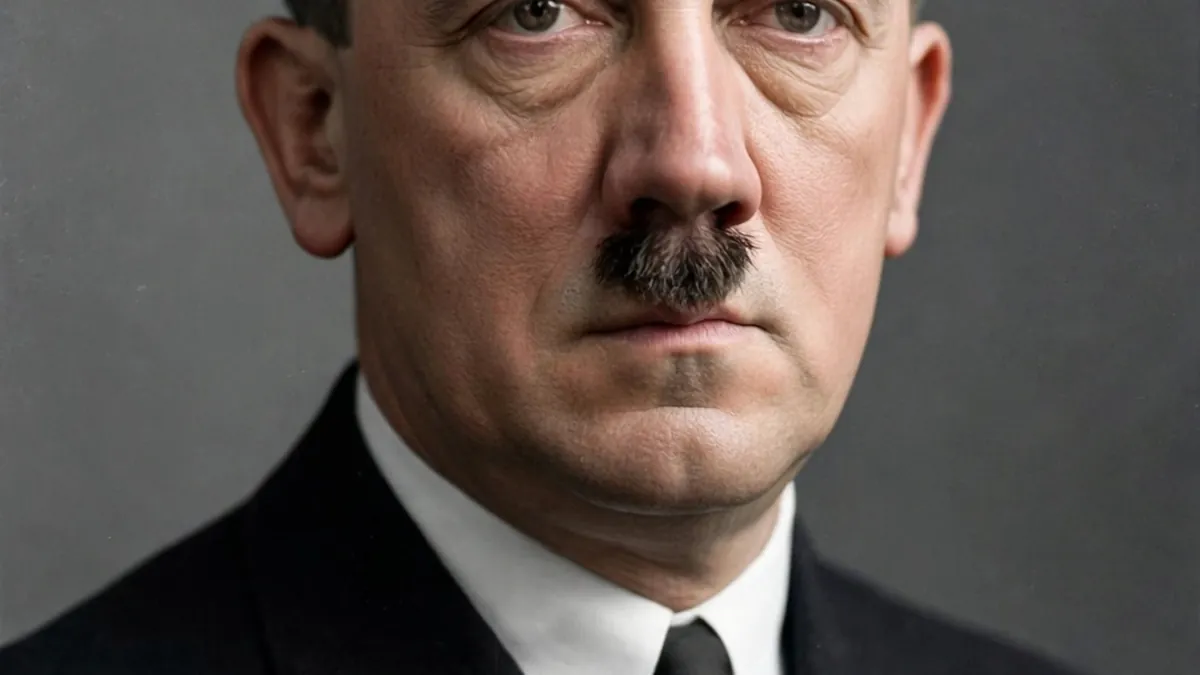
Adolf Hitler (20 April 1889 – 30 April 1945) was an Austrian-born German politician who led Germany as dictator from 1933 until his suicide in 1945. He became Chancellor of Germany on 30 January 1933 as leader of the National Socialist German Workers’ Party (the Nazi Party), and in 1934 he combined the offices of Chancellor and President under the title of Führer und Reichskanzler (Leader and Chancellor).
Under his leadership Germany rearmed in breach of the Treaty of Versailles, annexed Austria and Czechoslovakia, and invaded Poland on 1 September 1939, beginning the Second World War in Europe. Hitler directed the German war effort until the final days of the war, and his government carried out the systematic murder of approximately six million European Jews in the Holocaust, together with the murder of millions of other civilians, including Soviet prisoners of war, Poles, Roma, disabled people and others the regime classified as enemies.
This article presents the documented record of his life, his decisions and their consequences, in an educational and documentary context.
2. Key Facts
| Born | 20 April 1889, Braunau am Inn, Austria-Hungary (now Austria) |
| Died | 30 April 1945 (aged 56), Berlin, Germany (suicide) |
| Nationality | Austrian-born; German citizen from 1932 |
| Role / Office | Chancellor of Germany, 30 January 1933 – 30 April 1945; Führer und Reichskanzler, 2 August 1934 – 30 April 1945; leader of the Nazi Party, 1921–1945 |
| Known for | Leadership of Nazi Germany; the invasion of Poland (1939) and the Second World War in Europe; the Holocaust |
| Spouse / Family | Eva Braun (married 29 April 1945, died 30 April 1945); no children |
3. Early Life and Education
Adolf Hitler was born on 20 April 1889 in Braunau am Inn, a small town in Austria-Hungary on the border with Germany. He was the fourth child of Alois Hitler, a customs official, and his third wife, Klara Pölzl. The family moved several times during his childhood, settling in Linz, where Hitler attended school.
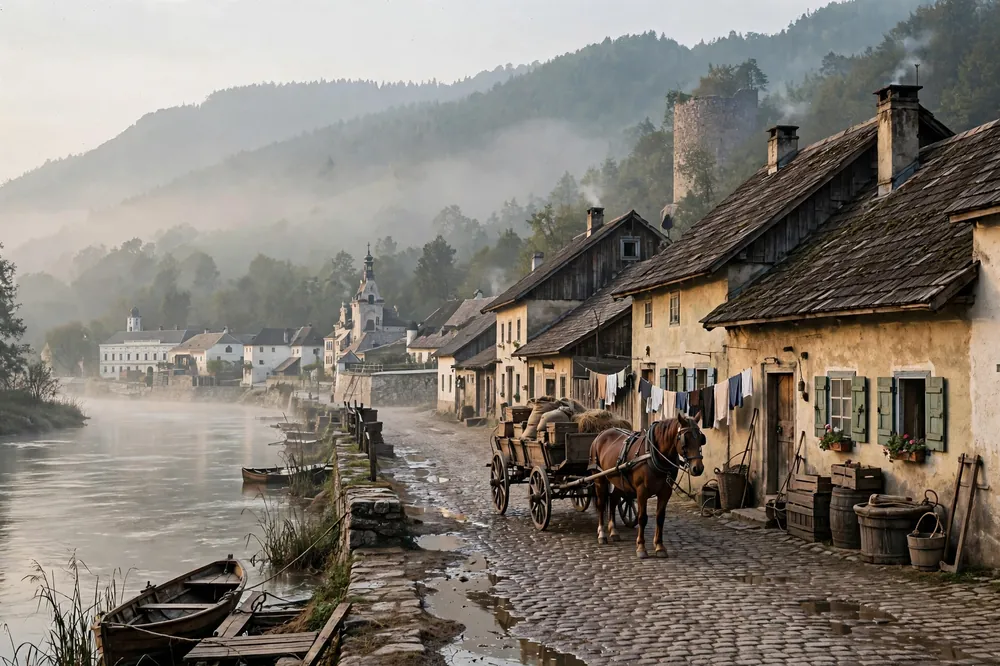
He was, by the accounts of his teachers and schoolmates, an indifferent pupil who left school without qualifications. His father died in 1903 and his mother in 1907, when Hitler was eighteen. After his mother’s death he moved to Vienna, where he lived from 1908 to 1913, applying twice to the Academy of Fine Arts and being rejected on both occasions.
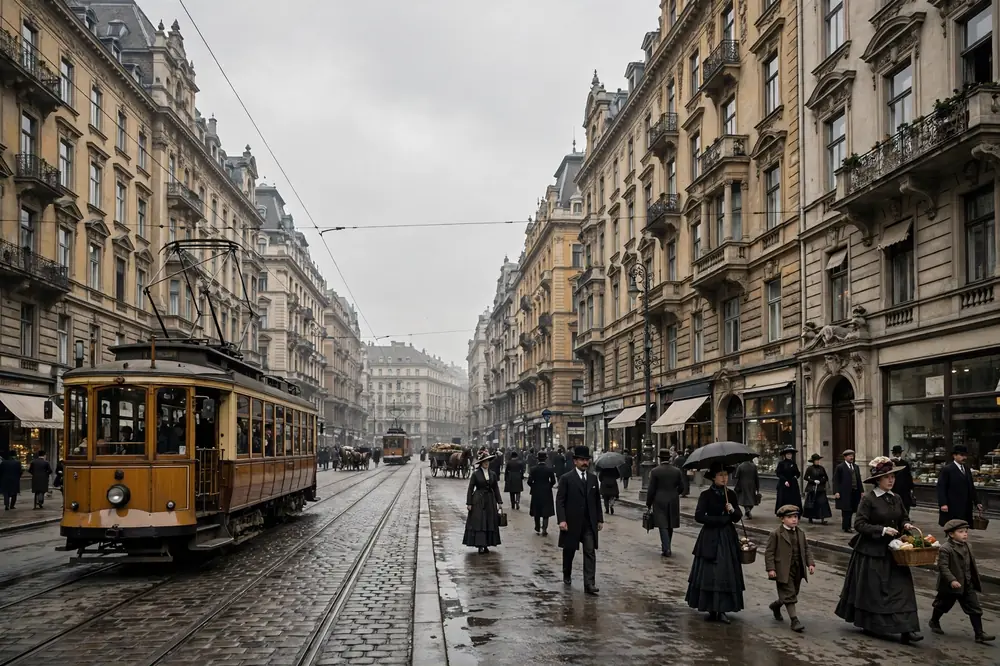
In Vienna he lived in cheap lodgings and supported himself by selling watercolour paintings and postcards.
The years in Vienna are the subject of a long-running historical debate. In Mein Kampf (1925–1926), the autobiographical and political book he wrote in prison, Hitler claimed that his antisemitism was formed in Vienna, where he encountered the antisemitic politics of the mayor Karl Lueger and the writings of the pan-German nationalists.
Historians have questioned the accuracy of this account: the documentary evidence for Hitler’s views in Vienna is thin, and some historians, notably Brigitte Hamann, have argued that his antisemitism was formed later, during and after the First World War. What is documented is that Vienna in the years before 1914 was a city in which antisemitic politics were open and organised, and that Hitler was exposed to them.
The question of when his views took their final form is not settled by the evidence, and this article records the disagreement.
In 1913 Hitler moved to Munich, in Germany, to avoid military service in Austria. In 1914, after the outbreak of the First World War, he volunteered for the German Army and served on the Western Front as a dispatch runner, a role that exposed him to danger but kept him behind the front line. He was awarded the Iron Cross, First Class, in 1918, and was wounded twice.
In October 1918 he was temporarily blinded by a gas attack and was in hospital at Pasewalk when he learned of Germany’s defeat and of the revolution that overthrew the monarchy. In Mein Kampf he described the news of the defeat as a turning point in his life, and historians generally accept that the experience of the war and of Germany’s defeat shaped his political outlook, though the details of his account are not independently verified.
4. Rise to Prominence
After the war, Hitler remained in the army and was assigned to political work in Munich, where he monitored the small political parties that had sprung up in the aftermath of the revolution. In September 1919 he attended a meeting of the German Workers’ Party, a small nationalist group, and joined it.
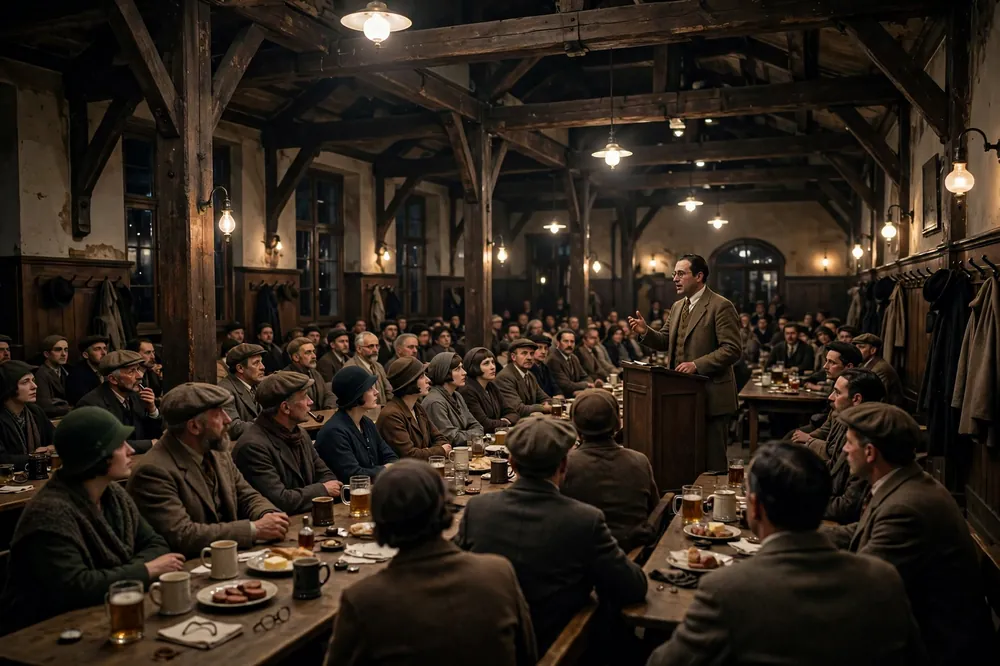
Within two years he had taken control of the party, renaming it the National Socialist German Workers’ Party (NSDAP), and in July 1921 he became its leader, with the title of Führer. He built the party around a programme of extreme nationalism, antisemitism and opposition to the Treaty of Versailles, and around his own skills as a public speaker: his speeches, delivered in Munich beer halls to audiences of hundreds and then thousands, attracted new members and press attention.
The party’s paramilitary wing, the SA (Sturmabteilung), was founded in 1921 and provided security at meetings and intimidated opponents.
In November 1923 Hitler attempted to seize power in Bavaria in the Beer Hall Putsch, an armed uprising in Munich that was suppressed by the police; sixteen of his supporters and four policemen were killed. Hitler was tried for treason and sentenced to five years’ imprisonment, of which he served nine months at Landsberg prison. During his imprisonment he dictated Mein Kampf to his deputy Rudolf Hess.
The book set out his ideology: the belief that history was a struggle between races, that the German people required Lebensraum (living space) in the east, and that the Jews were responsible for Germany’s defeat and for the political and economic problems of the post-war period.
The book sold in large numbers after 1933, when it became a standard text of the regime, but it attracted little attention when first published in 1925–1926.
After his release, Hitler rebuilt the party on a legal basis, abandoning the strategy of armed uprising in favour of winning power through elections. The party remained small until the onset of the Great Depression in 1929, which produced mass unemployment in Germany — more than six million unemployed by 1932, according to German government statistics — and a collapse of confidence in the democratic governments of the Weimar Republic.
The Nazi Party’s vote rose from 2.6 per cent in the election of 1928 to 18.3 per cent in September 1930, 37.3 per cent in July 1932 and 33.1 per cent in November 1932, making it the largest party in the Reichstag, though without a majority.
In January 1933, after a period of political manoeuvring, former Chancellor Franz von Papen and other conservative politicians persuaded President Paul von Hindenburg to appoint Hitler as Chancellor, in the belief that they could control him. Hitler was appointed on 30 January 1933.
5. Adolf Hitler’s Role in World War II
Hitler’s role in the Second World War was that of the head of the German state and of the German armed forces, and of the author of the policies that caused the war and the Holocaust. This section is organised by phase: the consolidation of power and the road to war, 1933–1939; the early victories, 1939–1941; the invasion of the Soviet Union and the turn of the war, 1941–1943; and the final years, 1943–1945.
Consolidation of power and the road to war, 1933–1939
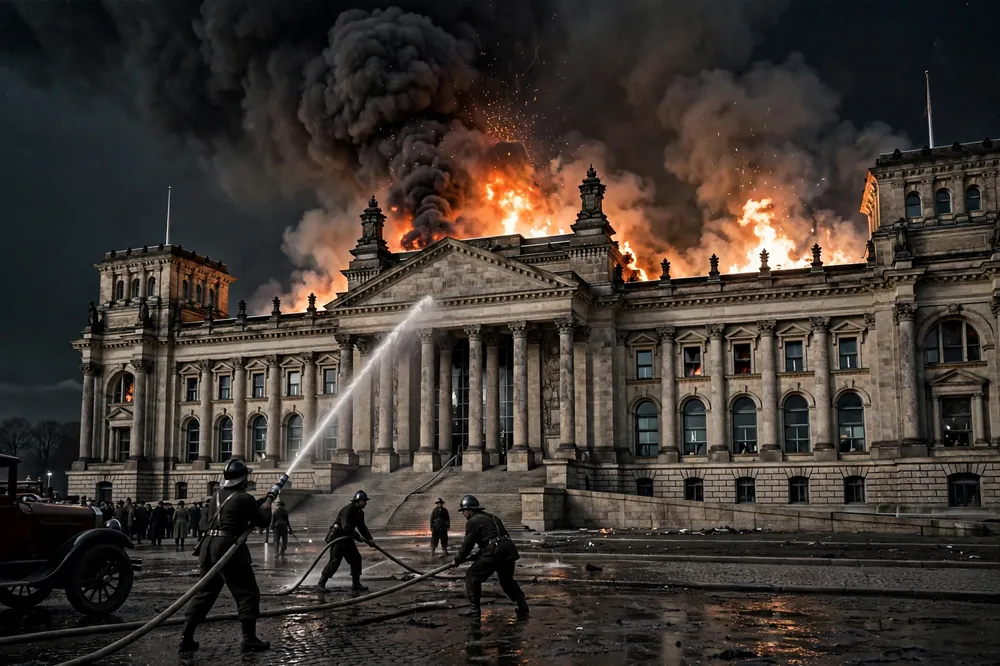
Within weeks of becoming Chancellor, Hitler moved to dismantle the democratic system. On 27 February 1933 the Reichstag building was set on fire; the circumstances of the fire remain disputed — a Dutch communist, Marinus van der Lubbe, was convicted of arson and executed, but historians continue to debate whether the fire was the work of van der Lubbe alone or was arranged by the Nazis — and Hitler used the fire as the pretext for the Reichstag Fire Decree, which suspended civil liberties.
On 23 March 1933 the Reichstag passed the Enabling Act, which gave the government the power to legislate without the Reichstag, and by the summer of 1933 all other political parties had been banned or had dissolved themselves, and the trade unions had been suppressed.
In June–July 1934, in the Night of the Long Knives, Hitler ordered the murder of the leadership of the SA, including its chief Ernst Röhm, together with other political opponents; the number of victims is estimated at between 85 and more than 200, according to the sources.
In August 1934, on the death of President Hindenburg, Hitler combined the offices of Chancellor and President and took the title of Führer und Reichskanzler.
The regime’s racial policies were enacted in stages. In April 1933 Jewish civil servants were dismissed; in September 1935 the Nuremberg Laws deprived Jews of German citizenship and prohibited marriage and sexual relations between Jews and non-Jews; and on 9–10 November 1938, in the pogrom known as Kristallnacht (the Night of Broken Glass), synagogues and Jewish businesses across Germany were attacked, some 91 Jews were killed, according to the official count, and some 30,000 Jewish men were arrested and sent to concentration camps. The Nuremberg Laws and Kristallnacht are documented in the records of the regime itself and in the records of the Nuremberg trials.
In foreign policy, Hitler pursued rearmament and territorial expansion. In 1935 he reintroduced conscription and announced the existence of the Luftwaffe, in breach of the Treaty of Versailles; in March 1936 German troops reoccupied the Rhineland; in March 1938 Germany annexed Austria (the Anschluss); and in September 1938, under the Munich Agreement, Britain and France agreed to Germany’s annexation of the Sudetenland, the German-speaking border region of Czechoslovakia.
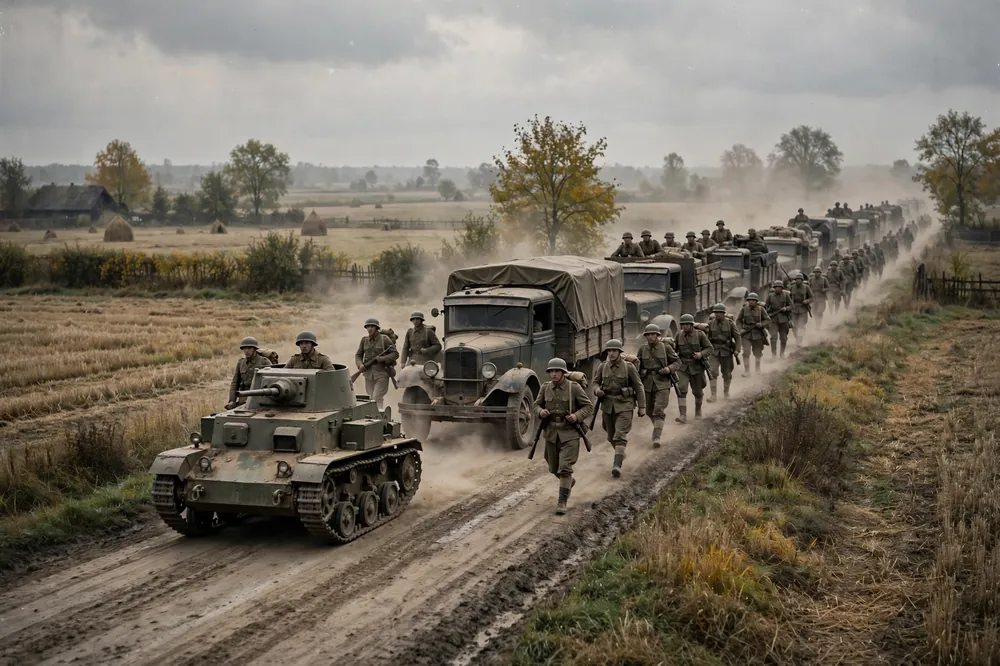
In March 1939 Germany occupied the remainder of Czechoslovakia, and in August 1939 it signed the Molotov–Ribbentrop Pact with the Soviet Union, a non-aggression treaty with a secret protocol dividing Eastern Europe into German and Soviet spheres of influence. On 1 September 1939 Germany invaded Poland, and on 3 September Britain and France declared war on Germany.
The early victories, 1939–1941
In the first two years of the war, Germany won a series of rapid victories. Poland was defeated in five weeks; Denmark and Norway were occupied in April 1940; and in May–June 1940 German forces invaded France and the Low Countries, defeating France in six weeks and forcing the British Expeditionary Force to evacuate from Dunkirk.
In the summer and autumn of 1940 the Luftwaffe attempted to destroy the Royal Air Force in the Battle of Britain, as a preliminary to invasion, and failed. In April 1941 Germany occupied Yugoslavia and Greece, and in June 1941 it invaded the Soviet Union in Operation Barbarossa, with some three million men.
The invasion achieved surprise and advanced rapidly, but it did not achieve its objective of defeating the Soviet Union in a single campaign, and by December 1941 Soviet forces had counter-attacked before Moscow. On 7 December 1941 Japan attacked Pearl Harbor, and on 11 December 1941 Hitler declared war on the United States, a decision that historians generally regard as a strategic error, since it brought the industrial capacity of the United States into the war against Germany without any obligation on Hitler’s part to do so.
The invasion of the Soviet Union, the Holocaust and the turn of the war, 1941–1943
The invasion of the Soviet Union was accompanied from the outset by a policy of mass killing. The Einsatzgruppen, mobile killing units of the SS, followed the army into Soviet territory and murdered Jews, Soviet officials and others, by mass shooting; the massacre at Babyn Yar, outside Kyiv, on 29–30 September 1941, in which 33,771 Jews were murdered in two days, according to the Einsatzgruppen reports, is the best-documented of these killings.
In December 1941, at the Chelmno camp in Poland, the first extermination camp began operating, using gas vans; in 1942, the extermination camps at Belzec, Sobibor, Treblinka, Majdanek and Auschwitz-Birkenau began the systematic murder of Jews deported from across occupied Europe.
On 20 January 1942, at the Wannsee Conference in Berlin, senior officials of the regime, chaired by Reinhard Heydrich, coordinated the administrative arrangements for the “Final Solution” — the deportation and murder of the Jews of Europe. The minutes of the conference, one copy of which survived the war, are a primary source for the Holocaust.
The scale of the Holocaust is established by the convergence of several kinds of evidence: the records of the perpetrators, including the Einsatzgruppen reports, the transport lists and the records of the camps; the demographic comparison of the Jewish population of Europe before and after the war; and the testimony of survivors and of the perpetrators at the Nuremberg trials and at later trials.
The United States Holocaust Memorial Museum and Yad Vashem state that approximately six million Jews were murdered; scholarly estimates generally fall in the range of 5.1 to 6 million. In addition, the regime murdered millions of other people: some 3.3 million Soviet prisoners of war died in German custody, according to the figures of the German military records; some 1.8 million non-Jewish Poles were killed; and Roma, disabled people, Jehovah’s Witnesses, homosexuals and political opponents were murdered in large numbers.
The total number of civilian victims of the German occupation is estimated at more than 10 million, though the precise figure depends on the categories counted and is a subject of research.
The war turned against Germany in 1942–1943. In November 1942 Soviet forces encircled the German Sixth Army at Stalingrad, which surrendered in February 1943; in May 1943 German and Italian forces in North Africa surrendered; and in July 1943 the Allies landed in Sicily and Italy declared an armistice. Hitler’s strategic decisions in this period are the subject of extensive historical analysis: his decision in December 1941 to declare war on the United States, his insistence on holding Stalingrad rather than withdrawing, and his interference in operational decisions are all cited by historians as factors in the German defeat, though historians disagree on the relative weight of each.
The final years, 1943–1945
From 1943 onward, Germany fought a defensive war on two fronts. In June 1944 the Allies landed in Normandy, and in the same month Soviet forces launched Operation Bagration, which destroyed the German Army Group Centre. In July 1944 a group of German officers attempted to assassinate Hitler in the 20 July plot; the bomb, placed by Colonel Claus von Stauffenberg, wounded Hitler but did not kill him, and the conspirators were executed.
In December 1944 Hitler ordered the Ardennes offensive, the last major German offensive in the west, which failed. In January 1945 Soviet forces entered Germany, and in April 1945 they reached Berlin. Hitler remained in the Führerbunker, his underground headquarters in Berlin, directing operations that no longer corresponded to the military situation, and ordering the destruction of German infrastructure in the “Nero Decree” of 19 March 1945 — an order that, according to the records, was largely ignored by his subordinates.
6. Key Decisions
The Enabling Act (23 March 1933). The decision to seek emergency powers from the Reichstag, and to use them to ban opposition parties and suppress the trade unions, ended parliamentary democracy in Germany. The Act was passed with the support of the Centre Party and other non-Nazi deputies, whose votes were necessary for the two-thirds majority; the Social Democrats voted against it. Historians record that the Act was passed in an atmosphere of intimidation, with SA men present in the chamber, and that it was the legal foundation of the dictatorship.
The Nuremberg Laws (September 1935). The decision to deprive Jews of German citizenship and to prohibit marriage and sexual relations between Jews and non-Jews was the legal foundation of the regime’s racial policy. The laws were enacted by the Reichstag at the party rally in Nuremberg and were implemented by the civil service, the courts and the police. They were followed by further measures — the exclusion of Jews from professions, the confiscation of Jewish property and, in 1938, the requirement that Jews carry identity cards marked with the letter “J”.
The invasion of Poland (1 September 1939). The decision to invade Poland, after the conclusion of the Molotov–Ribbentrop Pact, began the Second World War in Europe. The invasion was preceded by a staged incident at the Gleiwitz radio station on 31 August 1939, in which SS men, dressed in Polish uniforms, attacked a German radio station in order to provide a pretext for the invasion. The staging of the incident was documented at the Nuremberg trials, where the SS officer Alfred Naujocks testified to his role in it.
Operation Barbarossa (22 June 1941). The decision to invade the Soviet Union, in breach of the Molotov–Ribbentrop Pact, was Hitler’s most consequential military decision. It opened a second front that Germany could not sustain, and it was accompanied by orders — the Commissar Order of June 1941 and the Barbarossa Decree — that directed German forces to kill Soviet political officers and to treat the civilian population without regard to the laws of war. The orders are documented in the records of the German military and were presented as evidence at Nuremberg.
The declaration of war on the United States (11 December 1941). The decision to declare war on the United States, four days after the Japanese attack on Pearl Harbor, is discussed in section 5 above. Germany was under no treaty obligation to declare war — the Tripartite Pact of 1940 required its signatories to assist one another only if attacked, and Japan had been the attacker — and the decision is generally assessed by historians as one of Hitler’s major strategic errors.
The “Final Solution”. The decision to murder the Jews of Europe was not taken in a single order that has survived. Historians have debated the timing and the form of the decision: some, following the “intentionalist” interpretation, argue that Hitler ordered the murder of the Jews in 1941, while others, following the “functionalist” interpretation, argue that the policy developed through the cumulative radicalisation of the regime’s agencies, with Hitler’s authorisation given in general terms.
What is documented is that Hitler made repeated public statements calling for the elimination of the Jews — including his speech to the Reichstag on 30 January 1939, in which he said that a new world war would result in “the annihilation of the Jewish race in Europe” — and that the murder was carried out by the institutions of the German state under his authority.
The International Military Tribunal at Nuremberg, in its judgement of 1946, held that the extermination of the Jews was a policy of the German government, and that Hitler, as its head, bore responsibility for it.
7. Controversies
The controversies surrounding Hitler concern the interpretation of his decisions, the responsibility for the Holocaust, and the causes of Germany’s defeat. They are presented here as historians present them.
The responsibility for the Holocaust. The question of how the decision to murder the Jews of Europe was taken — by a direct order from Hitler, or through the cumulative radicalisation of the regime — is the central debate in the historiography of the Holocaust, and it is discussed in section 6 above. The documentary record establishes that the murder was carried out by the institutions of the German state, that Hitler authorised it in general terms and was informed of its progress, and that he made repeated public statements calling for the elimination of the Jews. The debate concerns the form of the decision, not the fact of Hitler’s responsibility, on which historians are in agreement.
The Reichstag fire (27 February 1933). The circumstances of the fire are discussed in section 5 above. The Dutch communist Marinus van der Lubbe was convicted of arson and executed in 1934, and the post-war West German courts, in 1967 and 1980, reviewed the case without reaching a definitive conclusion on whether he acted alone. Some historians argue that the Nazis arranged the fire; others argue that van der Lubbe acted alone and that the Nazis exploited the fire opportunistically. The question remains unresolved, and this article records the disagreement.
Hitler’s military judgement. Historians disagree on the extent to which Hitler’s decisions caused Germany’s defeat. Some, notably the historian Alan Bullock, have argued that Hitler’s interference in operational decisions — his refusal to allow retreats, his insistence on holding Stalingrad, his decision to divert forces from Moscow to Kyiv in 1941 — was a major cause of the German defeat.
Others, notably the historian Richard Overy, have argued that Germany’s defeat was the result of structural factors — the industrial capacity of the United States and the Soviet Union, the size of the Soviet Union and the failure of German logistics — and that Hitler’s decisions, though often mistaken, were not the decisive factor. The debate continues, and the documentary record supports elements of both positions.
The “clean Wehrmacht” claim. After the war, a number of German generals and their supporters claimed that the regular German armed forces, the Wehrmacht, had fought a “clean” war and that the crimes of the regime were the work of the SS alone.
The documentary record — including the orders issued by the Wehrmacht High Command, the records of the Einsatzgruppen and the Wehrmacht’s cooperation with them, and the evidence presented at Nuremberg — establishes that the Wehrmacht was involved in the murder of Soviet prisoners of war, in the killing of civilians and in the support of the Einsatzgruppen.
The “clean Wehrmacht” claim is rejected by the scholarly consensus, and the exhibition “Crimes of the Wehrmacht” (1995–1999), organised by the Hamburg Institute for Social Research, presented the documentary evidence to the German public.
8. Later Life and Death
In the final months of the war, Hitler’s health deteriorated: he suffered from tremors in his left hand, which were visible in newsreel footage, and from a range of ailments that have been the subject of medical speculation, though the documentary evidence for a specific diagnosis is limited.
He remained in Berlin as Soviet forces approached, and in April 1945 he moved into the Führerbunker, his underground headquarters beneath the Reich Chancellery. On 20 April 1945, his fifty-sixth birthday, he received the last visitors to the bunker and awarded decorations to members of the Hitler Youth.
On 22 April, according to the accounts of those present, he acknowledged for the first time that the war was lost, and he refused the advice of his generals to leave Berlin. On 29 April he married Eva Braun, his companion since the early 1930s, in a civil ceremony in the bunker, and dictated his political testament, in which he named Admiral Karl Dönitz as his successor and blamed the Jews for the war.
On 30 April 1945, with Soviet forces blocks away, Hitler and Eva Braun killed themselves in the bunker — Hitler by gunshot, according to the accounts of his staff, and Braun by poison. Their bodies were carried to the garden of the Chancellery, doused in petrol and burned, on Hitler’s instructions.
The remains were recovered by Soviet forces and, according to the records of the Soviet security services, were buried and reburied several times before being destroyed in 1970. The circumstances of Hitler’s death — that he died by suicide in the bunker on 30 April 1945 — are established by the testimony of the staff who were present, by the forensic examination of the remains, and by the records of the Soviet investigation.
Claims that Hitler survived the war and escaped to South America or elsewhere have been investigated and rejected by historians; the documentary and forensic evidence for his death in Berlin is conclusive.
9. Legacy of Adolf Hitler
Hitler’s legacy is the Second World War and the Holocaust. The war he began in Europe killed an estimated 40 million people in Europe, according to commonly cited figures, and the Holocaust murdered approximately six million Jews and millions of other civilians.
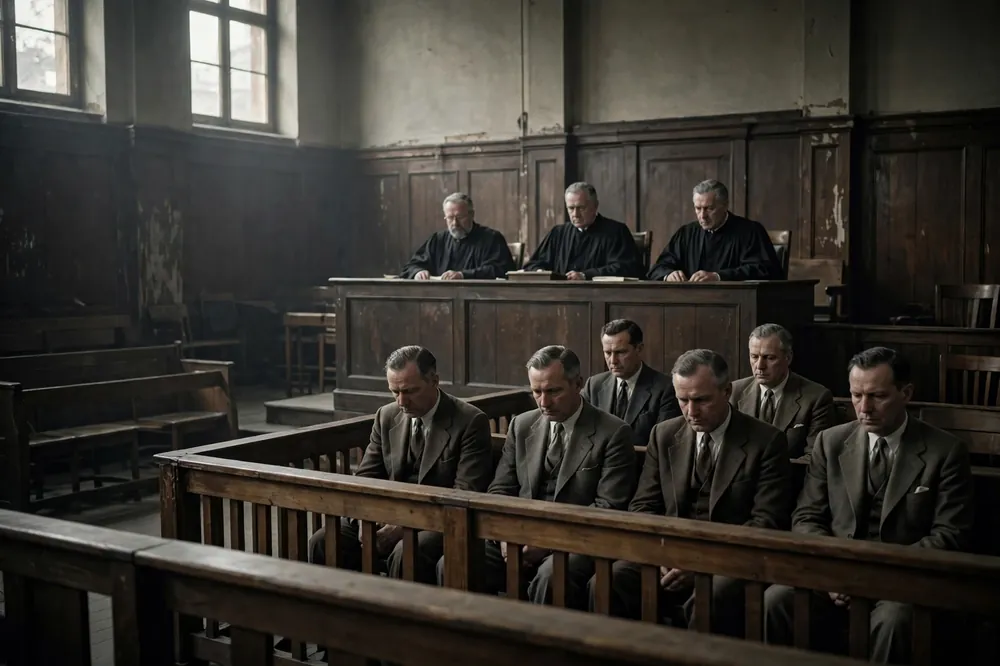
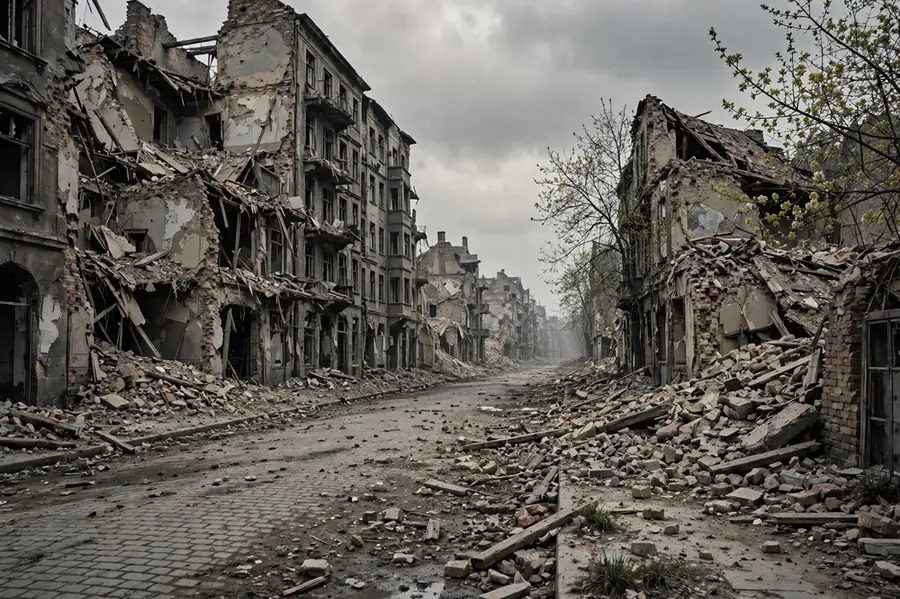
The material legacy includes the destruction of German cities by bombing, the division of Germany into two states that lasted until 1990, and the displacement of millions of people in the population movements that followed the war. The institutional legacy includes the United Nations, founded in 1945 in part as a response to the failure of the League of Nations to prevent the war; the Universal Declaration of Human Rights of 1948; the Geneva Conventions of 1949; and the legal concept of crimes against humanity, established at the Nuremberg trials, at which twenty-four leading officials of the regime were tried and twelve were sentenced to death.
The Nuremberg trials, held from November 1945 to October 1946, were the first international trials of their kind, and their records — including the minutes of the Wannsee Conference, the Einsatzgruppen reports and the orders of the German military — are the primary sources for the history of the regime.
In Germany, Hitler’s legacy is the subject of a continuing process of remembrance and education. The display of Nazi symbols is prohibited by German law, with narrow exceptions for educational and artistic purposes; the sites of the regime’s crimes, including the former concentration camps, are preserved as memorials; and the study of the period is a compulsory part of the German school curriculum.
The historiography of Hitler and of the regime — from Alan Bullock’s Hitler: A Study in Tyranny (1952) to Ian Kershaw’s two-volume biography (1998–2000) — is one of the largest bodies of historical writing on any individual. The central question of that historiography, whether Hitler was the cause of the regime’s crimes or their product, remains debated, but the record of the crimes themselves is not in doubt.
10. Assessment by Historians
Historians assess Adolf Hitler as a figure whose importance lies in the consequences of his decisions, and the assessment of those consequences is not a matter of opinion. The historian Ian Kershaw, in his two-volume biography, argues that Hitler’s power rested on a combination of his own abilities — above all his skill as a speaker and his capacity to impose his will on those around him — and the willingness of the German state, the military and the civil service to carry out his orders.
Kershaw’s formulation, that the regime functioned by officials “working towards the Führer” — anticipating his wishes without waiting for explicit orders — has become a central concept in the historiography. The historian Alan Bullock, in the first major scholarly biography, argued that Hitler was an opportunist whose ideology was a means to power rather than a programme, a judgement that has been challenged by later historians, who have emphasised the consistency of Hitler’s antisemitism and his commitment to Lebensraum from the 1920s onward.
On the war, historians assess Hitler’s leadership as a combination of early successes and later failures, and the assessment is based on the documentary record of his decisions. The historian Richard Overy argues that the German victories of 1939–1941 were the result of the quality of the German armed forces and of the weaknesses of Germany’s opponents, rather than of Hitler’s strategic insight, and that Hitler’s interference in operational decisions after 1941 contributed to the German defeat.
The historian Gerhard Weinberg argues that Hitler’s decisions — the invasion of the Soviet Union, the declaration of war on the United States and the diversion of resources to the murder of the Jews — were the decisions of a leader who understood the war as a racial struggle and who was prepared to sacrifice military advantage to ideological objectives.
The assessment of the Holocaust, as noted in section 7 above, is that Hitler authorised the murder of the Jews of Europe and that the institutions of the German state carried it out under his authority. The judgement of the International Military Tribunal at Nuremberg — that Hitler was the author of a conspiracy to wage aggressive war and of crimes against humanity — remains the legal assessment of his record, and the historical assessment has not departed from it.
Frequently Asked Questions
Who was Adolf Hitler? Adolf Hitler (1889–1945) was an Austrian-born German politician who led Germany as dictator from 1933 until his suicide in 1945, as Chancellor from 1933 and as Führer und Reichskanzler from 1934.
How did Adolf Hitler come to power? He became leader of the Nazi Party in 1921, built it into the largest party in the Reichstag through elections during the Great Depression, and was appointed Chancellor by President Hindenburg on 30 January 1933. He then used the Enabling Act of March 1933 to establish a dictatorship.
What was the Holocaust? The Holocaust was the systematic, state-sponsored murder of approximately six million European Jews by Nazi Germany and its collaborators between 1941 and 1945, carried out through mass shootings by the Einsatzgruppen and through gassing in extermination camps, together with the murder of millions of other civilians.
When did World War II start? The Second World War in Europe began on 1 September 1939, when Germany invaded Poland, and Britain and France declared war on Germany on 3 September 1939.
What was the Molotov–Ribbentrop Pact? A non-aggression treaty between Germany and the Soviet Union, signed on 23 August 1939, with a secret protocol dividing Eastern Europe into German and Soviet spheres of influence.
How did Adolf Hitler die? He died by suicide in his underground headquarters, the Führerbunker in Berlin, on 30 April 1945, as Soviet forces closed in on the city. His body was burned in the garden of the Reich Chancellery on his instructions.
Related articles
Sources
- Wikipedia, “Adolf Hitler” — consolidated biography: born 20 April 1889, Chancellor 30 January 1933, Führer 2 August 1934, died 30 April 1945.
- Encyclopaedia Britannica, “Adolf Hitler” (britannica.com) — biography, rise to power, wartime leadership.
- United States Holocaust Memorial Museum (ushmm.org) — the Holocaust: approximately six million Jews murdered; the Wannsee Conference; the extermination camps; the Einsatzgruppen.
- Yad Vashem, The World Holocaust Remembrance Center (yadvashem.org) — the Holocaust: six million Jewish victims; the Central Database of Shoah Victims’ Names.
- International Military Tribunal, Trial of the Major War Criminals Before the International Military Tribunal, Nuremberg, 14 November 1945 – 1 October 1946 — the judgement of 1946; the Wannsee minutes; the Einsatzgruppen reports; the Gleiwitz incident testimony.
- Ian Kershaw, Hitler, 1889–1936: Hubris and Hitler, 1936–1945: Nemesis (Allen Lane, 1998–2000) — the standard scholarly biography.
- Alan Bullock, Hitler: A Study in Tyranny (Odhams, 1952) — the first major scholarly biography.
- Richard J. Evans, The Third Reich in Power, 1933–1939 and The Third Reich at War, 1939–1945 (Allen Lane, 2005–2008) — the history of the regime and the war.
Further reading
- Raul Hilberg, The Destruction of the European Jews, 3rd edition (Yale University Press, 2003).
- Gerhard L. Weinberg, A World at Arms: A Global History of World War II (Cambridge University Press, 1994).