 WAR ATLAS MILITARY HISTORY MAGAZINE · WWI — WWII
Sophie Scholl
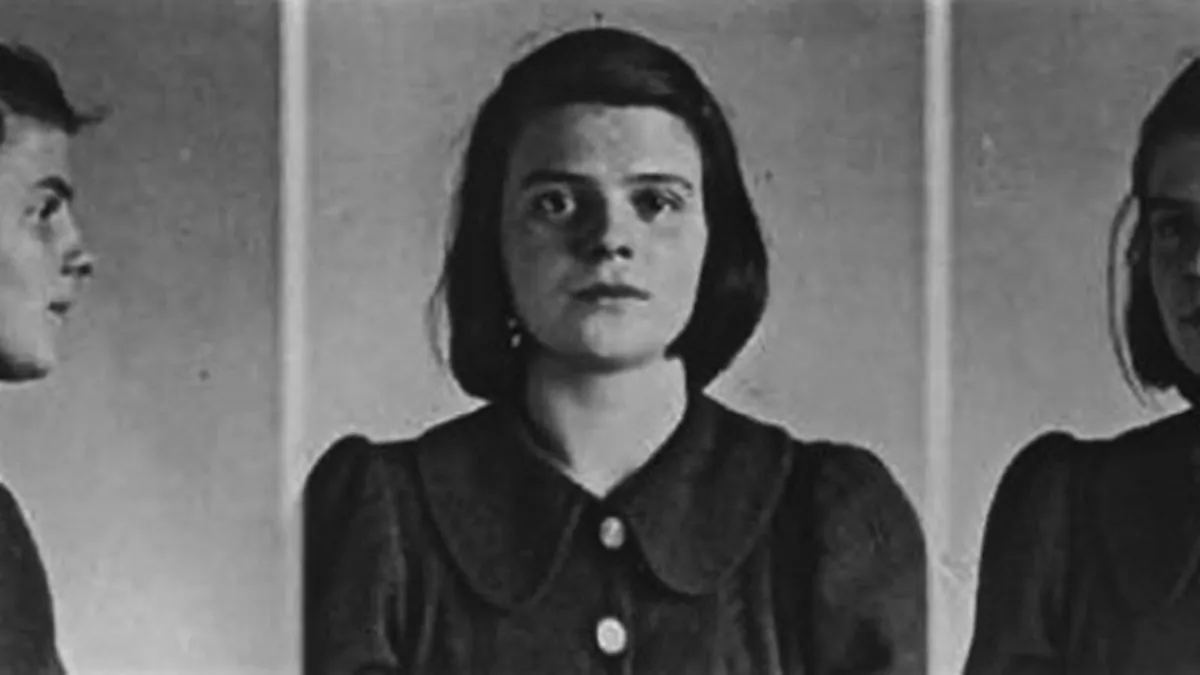
1. Sophie Scholl — Who They Were
Sophie Scholl (1921–1943) was a twenty-one-year-old German student who was executed by the Nazi regime for distributing leaflets that called on the German people to resist Adolf Hitler. She was a member of the White Rose — the Weiße Rose — a small group of students and a professor at the University of Munich who, in 1942 and 1943, wrote and distributed six leaflets denouncing the murder of the Jews, the crimes of the regime, and the war that was destroying Germany.
On 18 February 1943 Sophie and her brother Hans were arrested at the university while distributing the sixth leaflet. Four days later, on 22 February, they were tried before the People’s Court, sentenced to death, and executed by guillotine on the same day. Sophie Scholl was twenty-one years old.
She had been a member of the resistance for less than a year, and she had written and distributed leaflets for only a few months. In that short time she became, and she remains, the most beloved figure of the German resistance to Hitler.
Sophie’s story is remarkable not for what she did — the White Rose was a small group, and its leaflets reached only a few thousand people — but for what she was: a young woman of extraordinary courage and clarity, who understood what the Nazi regime was and who refused, even at the cost of her life, to accept it.
She was not a soldier, she was not a politician, and she was not a spy. She was a student of biology and philosophy who believed that ordinary people had a duty to speak the truth, and who paid for that belief with her life.
Her last words, as reported by those who were present at her trial — the trial was not recorded verbatim, so the exact wording is uncertain — were a question: “How can we expect righteousness to prevail when there is hardly anyone willing to give himself up individually to a righteous cause?” The question is still asked today, and it is the reason Sophie Scholl is remembered not only in Germany but all over the world.
This article tells her story as the evidence supports it, without exaggeration, and explains why a young woman who lived for only twenty-one years has become one of the great moral figures of the twentieth century.
2. Key Facts
| Full name | Sophia Magdalena Scholl / Sophia Magdalena Scholl |
| Born | 9 May 1921, Forchtenberg, Germany |
| Died | 22 February 1943, Munich, Germany (executed by guillotine) |
| Age at death | 21 / 21 |
| Group / Nhóm | The White Rose (Weiße Rose), University of Munich |
| Members | Hans Scholl, Sophie Scholl, Christoph Probst, Alexander Schmorell, Willi Graf, Kurt Huber / Hans Scholl, Sophie Scholl, Christoph Probst, Alexander Schmorell, Willi Graf, Kurt Huber |
| Activity | Writing and distributing six anti-Nazi leaflets, 1942–1943 |
| Arrested | 18 February 1943, University of Munich |
| Trial | 22 February 1943, People’s Court (Roland Freisler); sentenced to death |
| Buried / An táng | Perlacher Forst Cemetery, Munich |
3. Early Life and Education
3.1. A Childhood in Forchtenberg
Sophie Scholl was born on 9 May 1921 at Forchtenberg, a small town in Württemberg in south-western Germany. She was the fourth of six children of Robert Scholl, the mayor of Forchtenberg, and Magdalena Scholl, a former deaconess. The family was liberal, cultivated and religious: Robert Scholl was a man of strong convictions who opposed the Nazis from the beginning, and Magdalena was a woman of deep faith who taught her children to think for themselves.
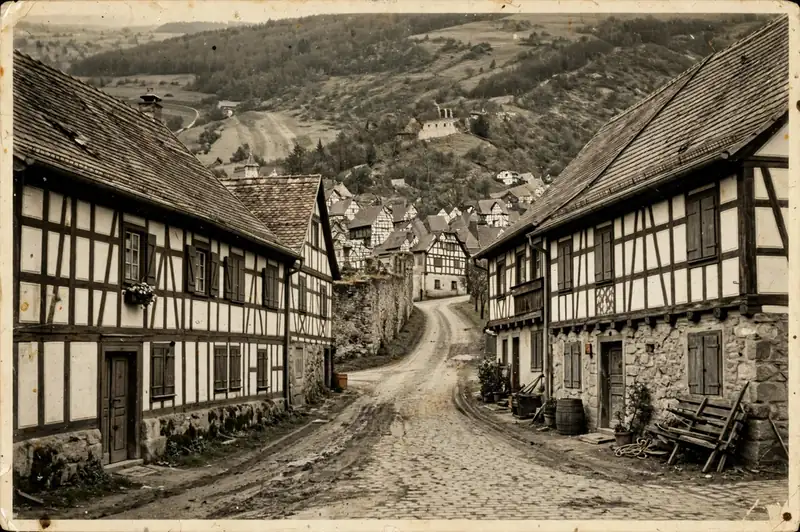
Sophie grew up in a household in which books, music and argument were part of everyday life, and in which the children were encouraged to question authority — including the authority of their parents. She was, by all accounts, a lively, intelligent and strong-willed girl, who loved to read, to draw and to walk in the hills around Forchtenberg.
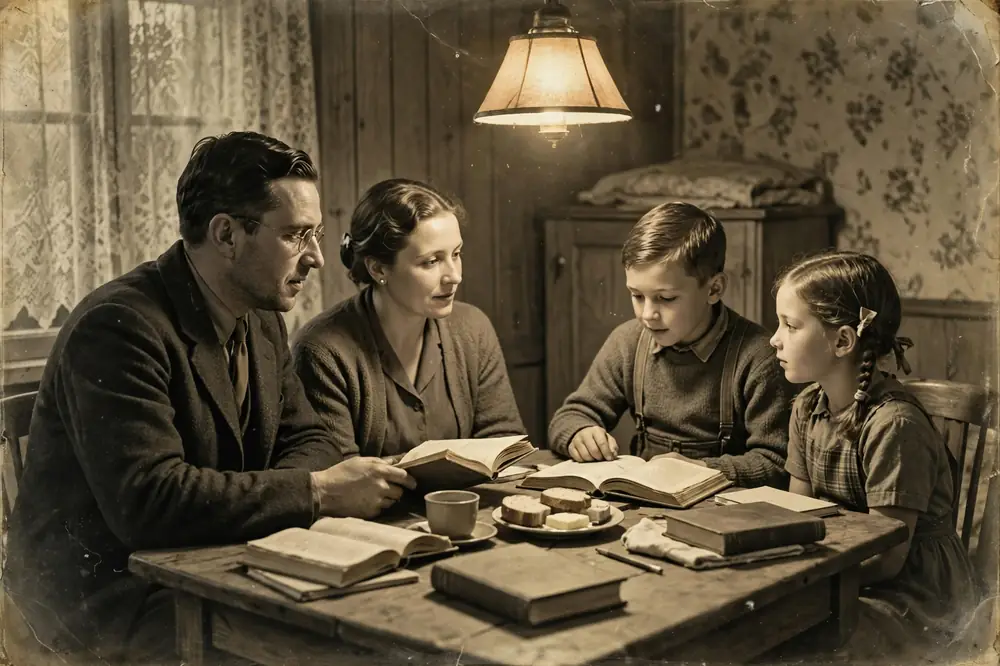
She was also, from an early age, a girl who took ideas seriously: she argued with her teachers, she argued with her friends, and she argued, above all, with herself, in the diaries and letters that she kept throughout her short life.
3.2. Youth in Nazi Germany
Sophie grew up in Nazi Germany, and like most German children of her generation, she joined the organisations the regime provided for young people: she was a member of the League of German Girls, the Bund Deutscher Mädel, and her brother Hans was a leader in the Hitler Youth.
At first, like many young Germans, she was enthusiastic: the organisations offered comradeship, adventure and a sense of purpose, and the regime’s propaganda was, to a child, persuasive. But as she grew older, she began to see what the regime was: she saw the persecution of the Jews, she heard her father’s criticisms — Robert Scholl was imprisoned briefly in 1942 for calling Hitler “the scourge of God” — and she began to question the ideas she had been taught.
By the time she left school, in 1940, she was no longer a believer in National Socialism, and she was, in the words of a friend, “a young woman who had learned to think for herself”. The change was gradual, and it was painful, and it was the beginning of the road that led her to the White Rose.
3.2.1. The Family Scholl
The Scholl family deserves a place in Sophie’s story, because it was the family that made her what she was. Robert Scholl, her father, was a liberal politician who had opposed the Nazis since 1933, and who had taught his children that a government that persecuted its own citizens was a government that had lost its right to rule.
Magdalena Scholl, her mother, was a woman of quiet faith who taught her children that conscience mattered more than obedience. The Scholl children — Inge, Hans, Elisabeth, Sophie, Werner and Thilde — were raised to argue, to read and to think, and the family dinner table was, by all accounts, a place of fierce debate.
When the war came, the family paid a price for its convictions: Robert was imprisoned, Werner was killed on the Eastern Front, and Hans and Sophie were executed. The family survived the war, and Inge Scholl, Sophie’s older sister, wrote the first book about the White Rose, The White Rose, in 1952.
The family’s story is, in the end, the story of what it cost an ordinary German family to refuse to accept the Nazi regime — and of what it meant to pay that cost without regret.
4. Munich: University and Disillusionment
4.1. University Life
In 1942 Sophie went to the University of Munich to study biology and philosophy. She was twenty-one years old, and she was, for the first time in her life, living away from home. Munich was, at that time, a city of contradictions: it was the city in which the Nazi movement had been born, and it was also a city with a university, a cultural life and a tradition of dissent.
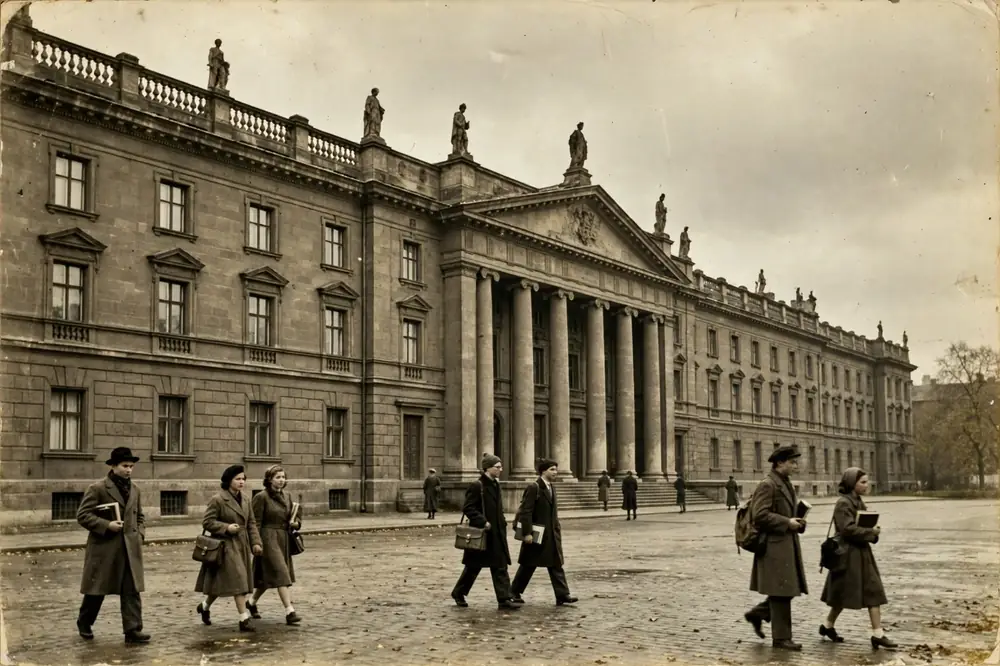
Sophie threw herself into her studies, and she made friends among the students — above all with her brother Hans, who was also studying medicine at Munich, and with his circle of friends, who included Alexander Schmorell, Christoph Probst and Willi Graf. The group met to read, to talk and to listen to music, and they talked, increasingly, about the war and about the regime.
They were, by the summer of 1942, a group of young people who had decided that the Nazi regime was criminal, and who were looking for a way to say so. The way they found was the leaflet.
4.2. Disillusionment and the Decision to Act
Sophie’s disillusionment with the Nazi regime was completed by two experiences in 1942. The first was the news from the Eastern Front: her boyfriend, Fritz Hartnagel, was an officer serving in Russia, and his letters told her, in guarded language, of the crimes he had seen — the murder of Jews, the starvation of prisoners, the brutality of the war.
The second was the news from Germany itself: the deportation of the Jews from Munich, the arrests, the fear that had settled over the city. Sophie, who had always been a person who took ideas seriously, could not reconcile what she knew with the silence around her, and she decided, with Hans and his friends, to act.
The decision was not taken lightly: they knew that distributing anti-Nazi leaflets was a capital offence, and that they would be executed if they were caught. They decided to do it anyway, because they believed that silence was a form of complicity, and that someone had to speak.
Sophie’s part in the decision was, by all accounts, central: she was the one who insisted that the leaflets should be distributed, not only written, and that the group should take the risk of acting in public.
4.2.1. Fritz Hartnagel and the Eastern Front
Fritz Hartnagel, Sophie’s boyfriend, deserves a place in her story, because his letters were one of the things that opened her eyes to what the regime was doing. Hartnagel was an officer in the Luftwaffe, serving on the Eastern Front, and he wrote to Sophie regularly, telling her, in language that was careful but unmistakable, about the crimes he had witnessed: the mass shootings of Jews, the treatment of Soviet prisoners, and the war of annihilation that Germany was waging in the east.
Sophie, who read his letters with growing horror, understood that the war was not the heroic struggle the propaganda described, but a war of murder, and that the regime that ordered it was criminal. Hartnagel himself was torn: he was a soldier, he was loyal to his men, and he was horrified by what he saw.
He survived the war, and he spent the rest of his life honouring Sophie’s memory. His letters, which have been published, are one of the most important sources for understanding how ordinary Germans learned what was happening, and how some of them decided to act on what they had learned.
5. The White Rose
5.1. The Founding of the Group
The White Rose was founded in the summer of 1942 by Hans Scholl and Alexander Schmorell, two medical students at the University of Munich. Hans, who was twenty-three, had served on the Eastern Front as a medic, and he had seen, as Fritz Hartnagel had seen, the crimes of the war.
Schmorell, who was twenty-four and the son of a German doctor and a Russian mother, was a man of deep religious faith who believed that the Nazi regime was evil. Together they wrote the first leaflet of the White Rose, in June 1942, and they distributed it, by post and by hand, to people in Munich and across Germany.
The leaflet called on the German people to resist the regime, to sabotage the war effort, and to refuse to accept the murder of the Jews. It was, by the standards of the time, an extraordinary document: it was written in clear, educated German, it quoted the Bible and the philosophers, and it spoke, without fear, of the crimes that most Germans preferred not to discuss.
Sophie joined the group in the autumn of 1942, and she became, with Hans and Schmorell, one of its central members.
5.2. The First Leaflets
Between June 1942 and February 1943 the White Rose produced six leaflets. The first four, written in the summer and autumn of 1942, were distributed by post to hundreds of addresses across Germany, and they were also left in public places — in telephone boxes, in parked cars, in the lobbies of buildings.
The fifth leaflet, written in January 1943, was a call to the students of Munich to rise up against the regime, and it was distributed more widely than the first four. The sixth leaflet, written in February 1943, after the German defeat at Stalingrad, was the most urgent of all: it called on the German people to overthrow Hitler before it was too late, and it was the leaflet that Sophie and Hans were distributing when they were arrested.
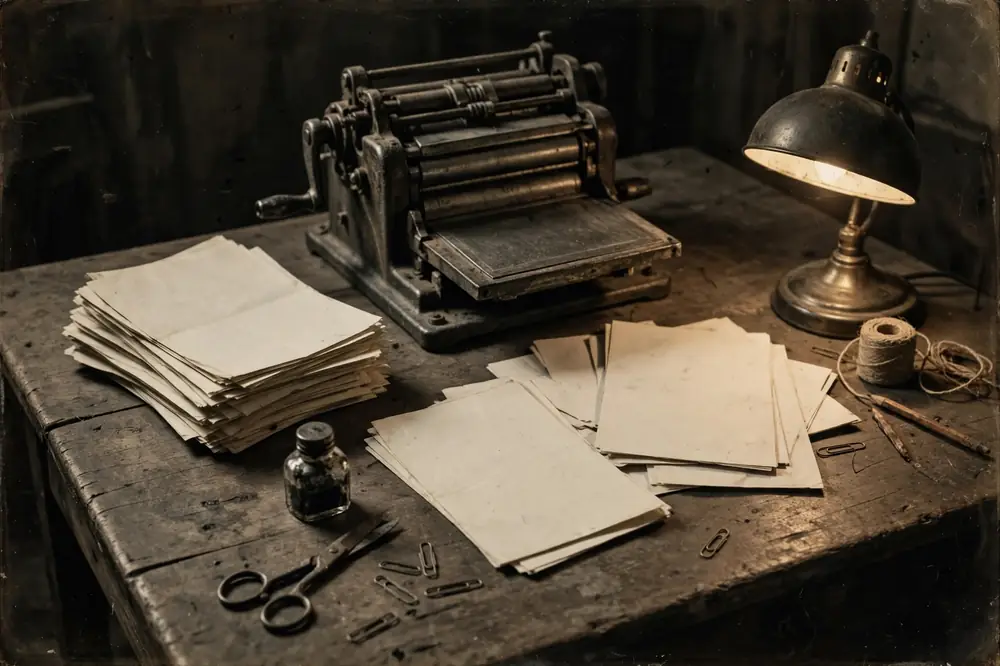
The leaflets were produced on a duplicating machine in a cellar, and they were distributed at night, by young people who knew that they would be executed if they were caught. The total number of leaflets distributed was only a few thousand, and their direct effect on German public opinion was small.
Their importance lies not in their effect but in their existence: they are proof that, even in the darkest days of the Nazi regime, there were Germans who spoke the truth, and who were willing to die for it.
5.2.1. The Six Leaflets
The six leaflets of the White Rose are, today, among the most famous documents of the German resistance, and they deserve to be described in full. The first leaflet, of June 1942, called on the German people to engage in passive resistance and to sabotage the war effort. The second, of June 1942, denounced the murder of the Jews and called on Germans to refuse to be complicit in it.
The third, of July 1942, called for the overthrow of the regime and for a new, federal Europe. The fourth, of July 1942, was addressed to the German people as a whole, and it called on them to recognise that the war was lost and that the regime was criminal. The fifth, of January 1943, was addressed to the students of Munich, and it called on them to rise up.
The sixth, of February 1943, was the shortest and the most urgent: it called on the German people to act now, before the regime destroyed the country completely. The leaflets were written by Hans Scholl, Alexander Schmorell and Kurt Huber, a professor of philosophy, and Sophie’s part was, above all, in their distribution: she was the one who carried them, who left them in public places, and who took the risk of being seen.
The leaflets are now preserved in museums and in archives, and they are read, in German schools, as examples of moral courage.
6. The Resistance Campaign
6.1. The Leaflet Campaign
The leaflet campaign of the White Rose was, by the standards of resistance movements, a small one, but it was carried out with extraordinary courage. The group worked at night, in a cellar, on a duplicating machine that they had bought with their own money.
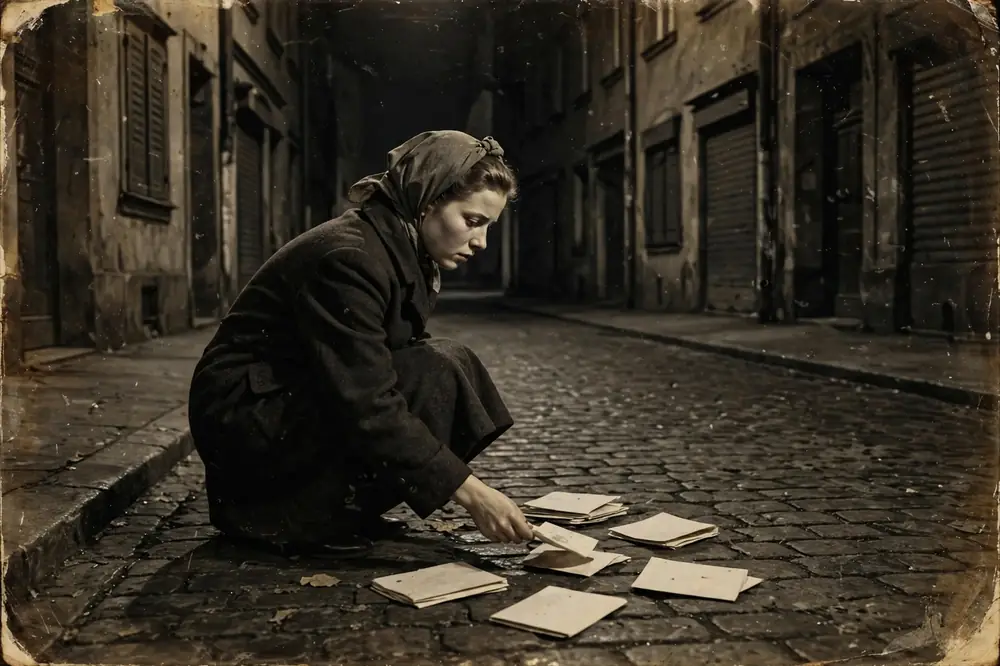
They typed the leaflets, they printed them, they folded them, and they put them in envelopes, addressed to people whose names they had taken from telephone directories. They mailed them from different post boxes, so that the Gestapo could not trace them, and they left them in public places — in the university, in restaurants, in railway stations — where they would be found by strangers.
Sophie’s part in the campaign was, above all, the distribution: she was the one who carried the leaflets in her bag, who left them on the seats of trams and in the lobbies of buildings, and who, on 18 February 1943, carried them into the University of Munich itself. The campaign lasted for eight months, and it ended, as the group knew it would, with their arrest.
But the leaflets survived them: they were smuggled out of Germany, they were dropped by Allied aircraft over the country, and they were read, after the war, by millions of people.
6.2. The Network and the Risks
The White Rose was not a large organisation, and it was not a professional one. It consisted of a handful of students and one professor, and it had no contact with the Allies, no radio, and no weapons. Its members were, in the words of a historian, “amateurs in the best sense of the word”: young people who acted on their convictions without training, without support, and without any realistic hope of success.
The risks they took were enormous: the distribution of anti-Nazi leaflets was a capital offence, the Gestapo was active in Munich, and the group knew that they were being watched. They took precautions — they worked at night, they used false names, they met in different places — but they knew that the precautions were, in the end, inadequate.
The group’s survival for eight months was, in itself, remarkable, and it was due, above all, to the fact that they were so small and so unprofessional that the Gestapo, which was looking for large, organised conspiracies, did not take them seriously. When they were finally caught, it was not by a sophisticated investigation but by chance: a caretaker saw them, and reported them.
6.2.1. The Sixth Leaflet
The sixth leaflet, which Sophie and Hans were distributing when they were arrested, was written by Kurt Huber, the professor of philosophy, after the German defeat at Stalingrad. It was the shortest of the six leaflets, and it was the most direct: it called on the German people to rise up against Hitler, to overthrow the regime, and to save Germany from destruction.
The leaflet was printed in the days after Stalingrad, when the news of the defeat was spreading through Germany and when the regime was, for the first time, visibly shaken. The group decided to distribute it at the University of Munich, in the hope that the students, who had been shocked by Stalingrad, would be receptive.
The decision was, in retrospect, a mistake: the university was a public place, the caretaker was watching, and the group was caught. But the mistake was an honourable one: the group had decided that the moment demanded action, and that the risk of acting in public was worth taking. The sixth leaflet was the last the White Rose produced, and it is, today, the most famous of the six.
7. The Arrest
7.1. 18 February 1943: The University
On 18 February 1943 Sophie and Hans Scholl went to the University of Munich with a suitcase full of copies of the sixth leaflet. They left the leaflets in the corridors and in the lecture halls, and they were about to leave when Sophie, on an impulse, went back to the top of the main staircase and threw the remaining leaflets down into the atrium, so that they would flutter down and be seen by the students below.
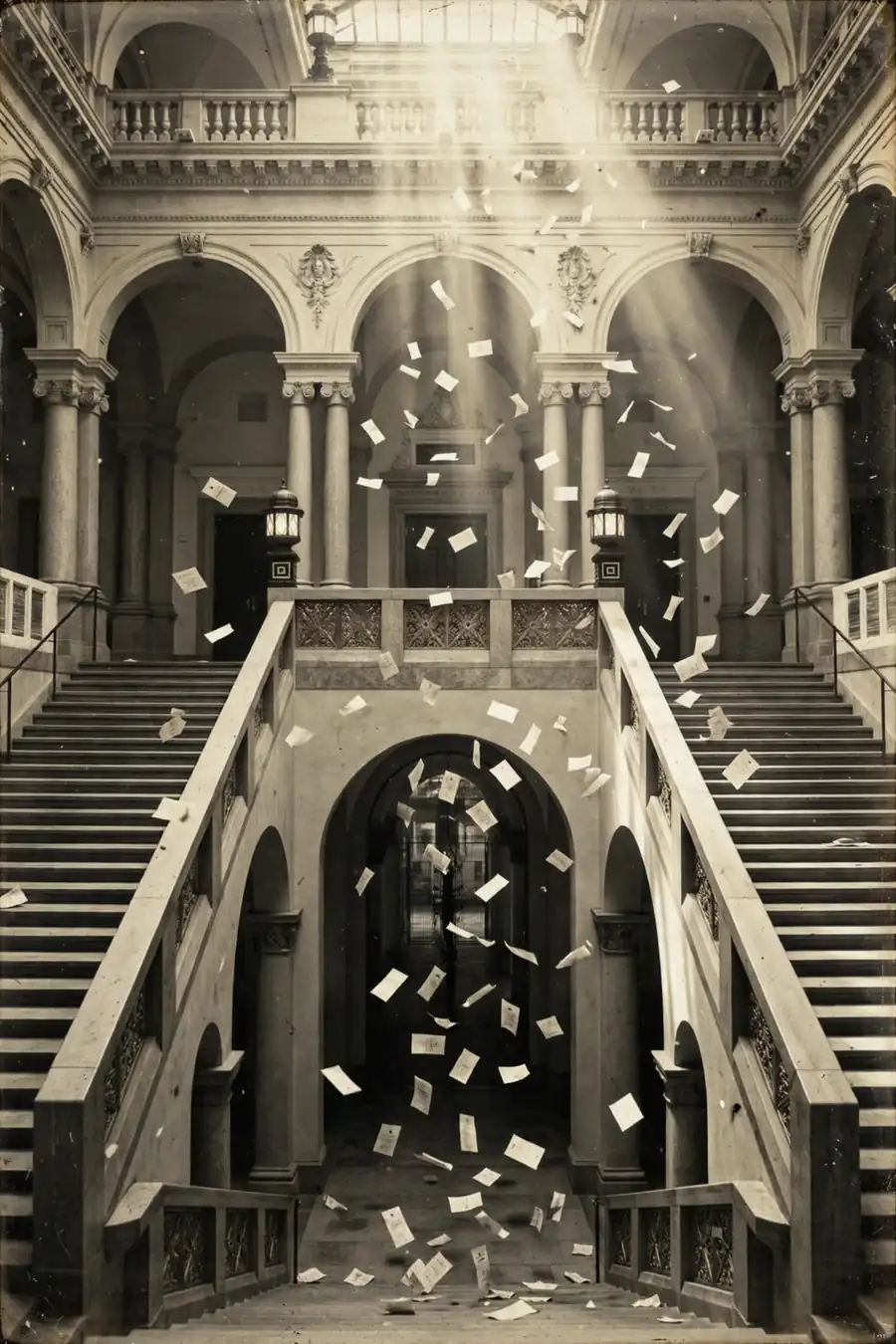
It was a dramatic gesture, and it was a fatal one: the caretaker of the university, Jakob Schmid, saw her, and he reported her to the Gestapo. The Scholls were arrested on the spot, and they were taken to Gestapo headquarters in Munich.
The arrest was, in the words of a historian, “an accident that changed history”: if Sophie had not thrown the leaflets, if Schmid had not seen her, if the Gestapo had not been called, the White Rose might have survived for a few more weeks. But the accident happened, and the group was destroyed within days.
Sophie herself, when she was arrested, is said to have remained calm, and to have told the Gestapo that she had acted alone — a lie that she maintained, unsuccessfully, in the hope of saving her brother and her friends.
7.2. The Interrogation
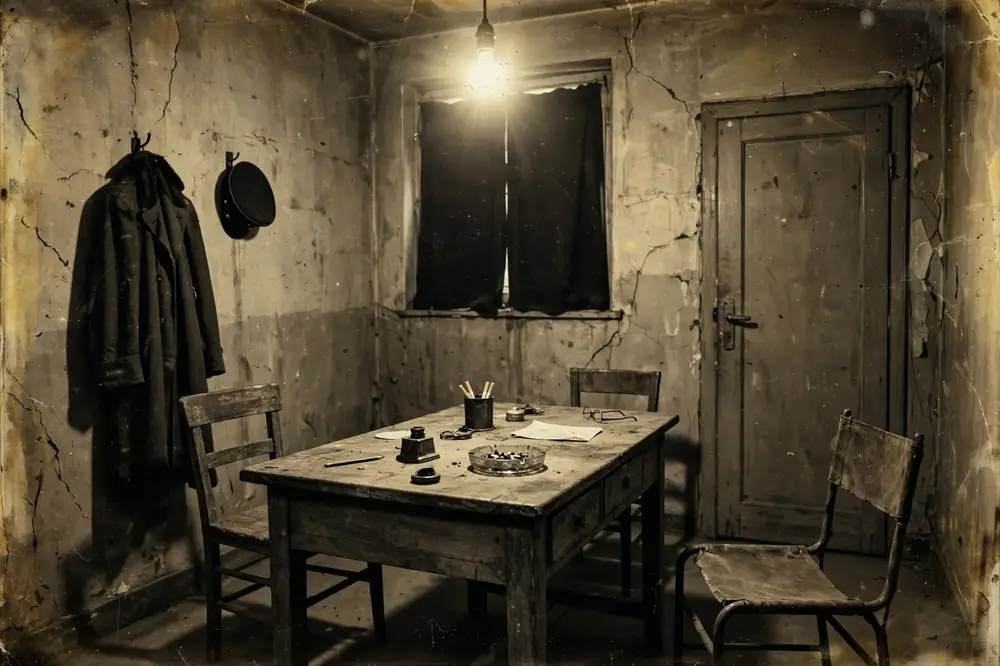
Sophie was interrogated by the Gestapo for four days, from 18 to 22 February 1943. The interrogation was conducted by Robert Mohr, an experienced Gestapo officer, and it is, thanks to the transcripts that survived the war, one of the best-documented interrogations in the history of the Nazi regime.
Sophie at first denied everything, and then, when the evidence against her became overwhelming — the Gestapo had found the duplicating machine, the leaflets and the names of her friends — she admitted what she had done, and she defended it. She told Mohr that she believed the Nazi regime was criminal, that she had acted on her conscience, and that she would do it again.
Mohr, who was, by all accounts, impressed by her courage and her clarity, is said to have offered her a way out: if she would say that her brother had led her astray, she might be spared. She refused. The transcripts of the interrogation, which were published after the war, show a young woman of extraordinary composure, who answered her interrogator’s questions with honesty and with dignity, and who never, for a moment, apologised for what she had done.
7.2.1. Jakob Schmid: The Caretaker
Jakob Schmid, the caretaker who reported Sophie and Hans to the Gestapo, is one of the most controversial figures in the story of the White Rose, and he deserves a fair hearing. Schmid was a member of the Nazi Party, and he was, by all accounts, a man who took his duties seriously.
When he saw Sophie throwing leaflets down the staircase, he detained her and called the Gestapo, as he believed it was his duty to do. After the war he was tried by a denazification court, and he was sentenced to five years in a labour camp, a sentence that many people thought was too light.
He died in 1964, unrepentant, and he is remembered, in Germany, as a symbol of the ordinary Germans who made the Nazi regime possible: not fanatics, not criminals, but people who did their duty as they understood it, and who did not ask whether their duty was right.
Schmid’s part in the story is a reminder that the Nazi regime depended, above all, on the cooperation of ordinary people, and that the White Rose was destroyed not by a master spy but by a caretaker who did his job.
8. The Trial
8.1. The People’s Court
On 22 February 1943 Sophie, Hans and Christoph Probst were tried before the People’s Court — the Volksgerichtshof — in Munich. The court was presided over by Roland Freisler, the most notorious judge of the Nazi regime, a man who had made a career of sentencing opponents of the regime to death.
The trial lasted for only a few hours, and it was, by any standard, a show trial: the verdict had been decided in advance, the defendants were not allowed to present a defence, and the proceedings were designed to demonstrate the power of the regime rather than to establish the truth.
Sophie, Hans and Probst were charged with high treason, with aiding the enemy, and with undermining the military strength of Germany. They were found guilty, and they were sentenced to death. The trial was attended by a small number of people, including the parents of the defendants, who were allowed to see their children for a few minutes before the sentence was carried out.
The speed of the trial — four hours from start to finish — was itself a measure of the regime’s contempt for justice.
8.2. Freisler and the Show Trial
Roland Freisler, who presided over the trial, was a man who embodied the Nazi perversion of justice. He had been a lawyer before the war, and he had become, under Hitler, the president of the People’s Court, the tribunal that tried cases of treason and that sentenced thousands of people to death.
His courtroom manner was notorious: he shouted at the defendants, he interrupted their answers, and he used the trial as a platform for propaganda. At the trial of the White Rose, he is reported to have shouted at Sophie, calling her a traitor and a criminal, and to have refused to allow her to speak in her own defence.
Sophie, by all accounts, answered him calmly, and she told the court that she had acted on her conscience and that she believed the regime was criminal. The exchange, which is recorded in the transcripts, is one of the most famous in the history of the German resistance: a twenty-one-year-old student, standing before the most feared judge in Germany, refusing to apologise for what she had done.
Freisler sentenced her to death, and the sentence was carried out within hours.
8.2.1. The Four-Hour Trial
The trial of Sophie, Hans and Christoph Probst lasted for about four hours, from the morning to the early afternoon of 22 February 1943, and it is worth pausing over what that speed meant. A trial that lasts four hours, in which three people are sentenced to death, is not a trial in any meaningful sense: it is a ritual, designed to give the appearance of legality to a murder.
The People’s Court, which Freisler presided over, was not a court of law but an instrument of terror, and its purpose was to intimidate the German people by demonstrating that opposition to the regime meant death. The speed of the trial was also a measure of the regime’s fear: the White Rose had to be destroyed quickly, before its leaflets could spread, before its example could inspire others, and before the German people could learn that there were Germans who opposed the regime.
The four-hour trial succeeded in its immediate purpose — the defendants were executed the same day — but it failed in its larger purpose: the story of the trial spread, and it became, after the war, one of the most powerful indictments of the Nazi regime.
9. The Execution
9.1. 22 February 1943: Stadelheim Prison
Sophie, Hans and Christoph Probst were executed on the afternoon of 22 February 1943, only a few hours after their trial, in Stadelheim Prison in Munich. They were executed by guillotine, the method the Nazi regime used for political prisoners. The three of them were allowed a few minutes together before the executions, and they were allowed to see their parents, who had come to the prison to say goodbye.
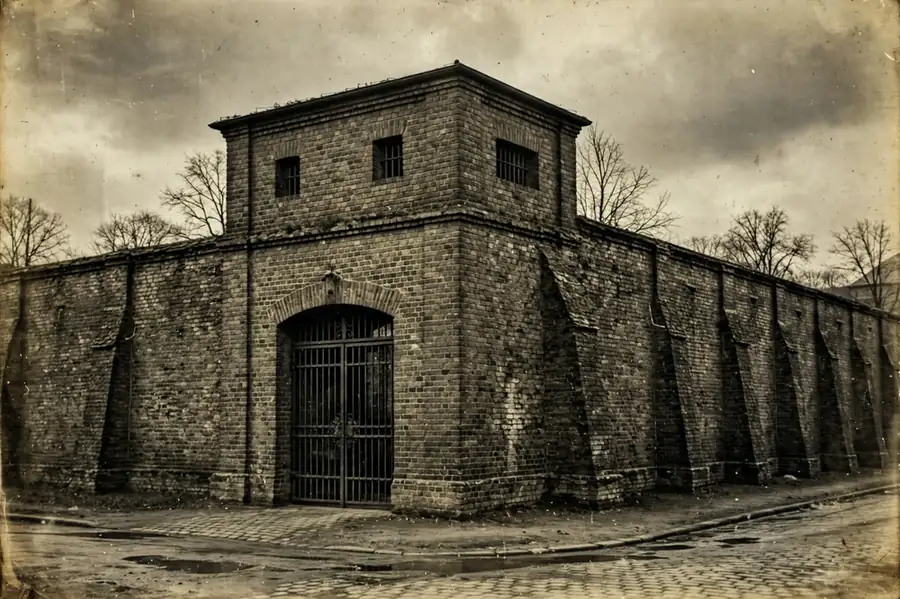
Sophie’s parents, Robert and Magdalena Scholl, were allowed a brief visit, and they have left an account of it: Sophie was calm, she was composed, and she told her mother that she was not afraid. She was executed first, then Hans, then Probst. She was twenty-one years old.
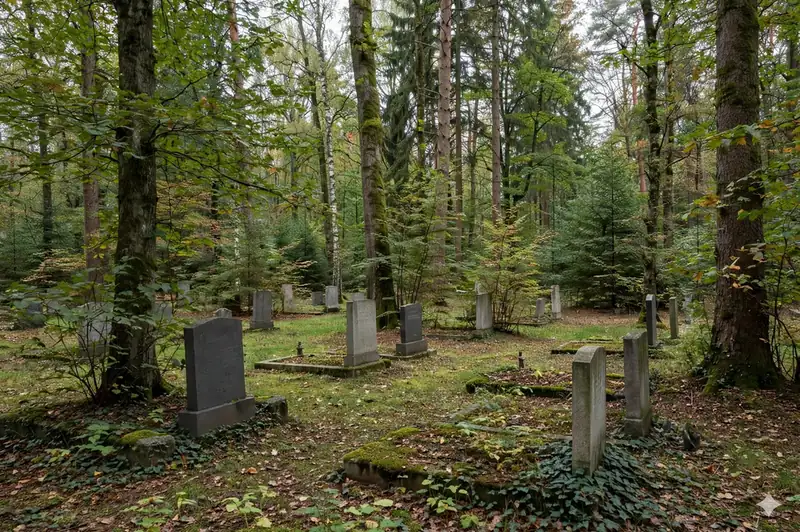
The executions were carried out in secret, and the bodies were buried, the same day, in the Perlacher Forst Cemetery in Munich, in graves that were, for many years, unmarked. The regime had killed them, and it had tried, as it always tried, to erase them. It failed: the story of their deaths spread, and it became, after the war, one of the most powerful stories of the German resistance.
9.2. The Graves at Perlacher Forst
Sophie, Hans and Christoph Probst are buried in the Perlacher Forst Cemetery in Munich, in graves that are now marked and visited by thousands of people every year. The graves are simple: three headstones, in a quiet corner of the cemetery, with the names and the dates of the three young people who died there.
The cemetery is also the burial place of other members of the White Rose — Alexander Schmorell, Willi Graf and Kurt Huber, who were executed later in 1943 — and it has become, in the years since the war, a place of pilgrimage for Germans who want to honour the resistance.
The graves are a reminder of what the White Rose cost, and of what it meant: that three young people, who had everything to live for, chose to die for what they believed, and that their deaths, which the regime intended as a warning, became, instead, an inspiration.
The Perlacher Forst Cemetery is, in the end, the White Rose’s monument, and it is a monument that needs no words: the names and the dates say everything.
9.2.1. The Last Words
Sophie’s last words have been reported in different versions, and the differences matter. The version most often quoted is the question she is reported to have asked at her trial: “How can we expect righteousness to prevail when there is hardly anyone willing to give himself up individually to a righteous cause?” The words are attributed to Sophie by several sources, but their exact wording is not certain: the trial was not recorded verbatim, and the accounts of it were written from memory, after the war.
What is certain is that Sophie spoke, at her trial, about righteousness and about the duty of the individual, and that her words, in whatever form, captured the moral core of the White Rose: that the individual has a duty to act, even when action seems hopeless, and that righteousness depends on individuals who are willing to give themselves up for it.
The last words attributed to Hans Scholl, as he was led to the guillotine, were “Long live freedom!” — Es lebe die Freiheit! — and they, too, are reported rather than recorded. The uncertainty about the exact words does not diminish their power: they are the words of young people who knew they were going to die, and who chose, in their last moments, to speak of freedom and of righteousness rather than of fear.
10. Legacy
10.1. The White Rose Aftermath
The White Rose was destroyed in February 1943, but its story did not end there. The remaining members — Alexander Schmorell, Willi Graf and Kurt Huber — were arrested in the weeks that followed, and they were tried and executed in the summer and autumn of 1943.
The group’s leaflets, however, survived: copies were smuggled out of Germany, they were reprinted by the Allies, and in July 1943 the Royal Air Force dropped millions of copies of the sixth leaflet over Germany — a scale the White Rose itself, which had distributed only a few thousand leaflets in all, could never have reached.
The leaflets reached people who had never heard of the White Rose, and they became, after the war, one of the symbols of the German resistance. The Scholl family survived the war, and Inge Scholl, Sophie’s older sister, wrote the first book about the group in 1952. The White Rose became, in post-war Germany, the most honoured of all the resistance groups, and Sophie Scholl became its most beloved figure.
The group’s story is taught in German schools, and its members are commemorated in streets, in schools and in prizes that bear their names.
10.2. Memory and Meaning
Sophie Scholl is remembered today, in Germany and around the world, as a symbol of moral courage. Her story is told in books, in films and in schools, and her name is given to streets, to schools and to a prize — the Geschwister-Scholl-Preis, the Scholl Siblings Prize — that is awarded every year for a book that shows intellectual independence and moral courage.
The film Sophie Scholl: The Final Days (2005), which tells the story of her last days, was nominated for an Academy Award, and it brought her story to millions of people who had never heard of her. The memory of Sophie Scholl is, in the end, a memory of what an ordinary person can do: she was not a general, she was not a politician, and she was not a spy.
She was a student who believed that the truth mattered, and who was willing to die for it. That is why she is remembered, and that is why her story is still told, more than eighty years after her death.
10.2.1. Sophie Scholl: The Final Days
The film Sophie Scholl: The Final Days (2005), directed by Marc Rothemund and starring Julia Jentsch as Sophie, is the best-known retelling of her story, and it deserves a place in any account of her legacy. The film is based on the transcripts of Sophie’s interrogation by the Gestapo, and it tells the story of her last five days, from her arrest on 18 February to her execution on 22 February, with a fidelity to the historical record that is unusual for a feature film.
The film was nominated for the Academy Award for Best Foreign Language Film, and it won many other awards, and it brought Sophie’s story to an audience that the books had never reached. The film’s power lies in its restraint: it does not exaggerate, it does not invent, and it allows Sophie’s own words — as recorded in the interrogation transcripts — to speak for themselves.
It is, in the end, the most fitting memorial to Sophie Scholl that the cinema has produced, and it is the reason her name is now known to millions of people who have never read a book about the White Rose.
11. Frequently Asked Questions
Who was Sophie Scholl?
A German student, born in 1921, who was a member of the White Rose resistance group at the University of Munich. She helped write and distribute six anti-Nazi leaflets in 1942–43, was arrested on 18 February 1943, tried before the People’s Court, and executed by guillotine on 22 February 1943, at the age of twenty-one.
What was the White Rose?
A small group of students and a professor at the University of Munich — Hans and Sophie Scholl, Christoph Probst, Alexander Schmorell, Willi Graf and Kurt Huber — who wrote and distributed six leaflets denouncing the Nazi regime, the murder of the Jews and the war, between June 1942 and February 1943. All six were executed in 1943.
How was Sophie Scholl arrested?
On 18 February 1943 she and her brother Hans were distributing the sixth White Rose leaflet at the University of Munich. Sophie threw the remaining leaflets down the main staircase, and the university caretaker, Jakob Schmid, saw her and reported her to the Gestapo. They were arrested on the spot.
What happened at her trial?
On 22 February 1943 she was tried before the People’s Court in Munich, presided over by Roland Freisler. The trial lasted about four hours, the verdict had been decided in advance, and she was sentenced to death for high treason. She was executed by guillotine on the same afternoon, only a few hours after the trial.
What were Sophie Scholl’s last words?
She is reported to have said at her trial: “How can we expect righteousness to prevail when there is hardly anyone willing to give himself up individually to a righteous cause?” The exact wording is not certain, because the trial was not recorded verbatim, but the sense of the words — that the individual has a duty to act — is well attested.
Why is Sophie Scholl remembered today?
Because she is a symbol of moral courage: an ordinary young woman who understood what the Nazi regime was and refused to accept it, at the cost of her life. Her story is taught in German schools, her name is given to streets, schools and a literary prize, and the film Sophie Scholl: The Final Days (2005) brought her story to millions of people around the world.
12. Sources
- Wikipedia, “Sophie Scholl” and “White Rose” — dates, the leaflets, the arrest, the trial and the execution.
- Encyclopædia Britannica, “Sophie Scholl” — life and assessment.
- Inge Scholl, The White Rose: Munich, 1942–1943 (Wesleyan University Press, 1983) — the first account, by Sophie’s sister.
- Annette Dumbach and Jud Newborn, Sophie Scholl and the White Rose (Oneworld, 2006) — the standard English-language history.
- Jakob Knab, Ich schweige nicht: Hans und Sophie Scholl und die Weiße Rose (2008) — the German scholarship on the group.
- Fred Breinersdorfer, Sophie Scholl: The Final Days (screenplay, 2005) — based on the Gestapo interrogation transcripts.
- Hermann Vinke, Das kurze Leben der Sophie Scholl (Ravensburger, 1980) — biography based on letters and diaries.