 WAR ATLAS MILITARY HISTORY MAGAZINE · WWI — WWII
Comet Tank: Britain’s Fast Cruiser Tank with the 77 mm Gun
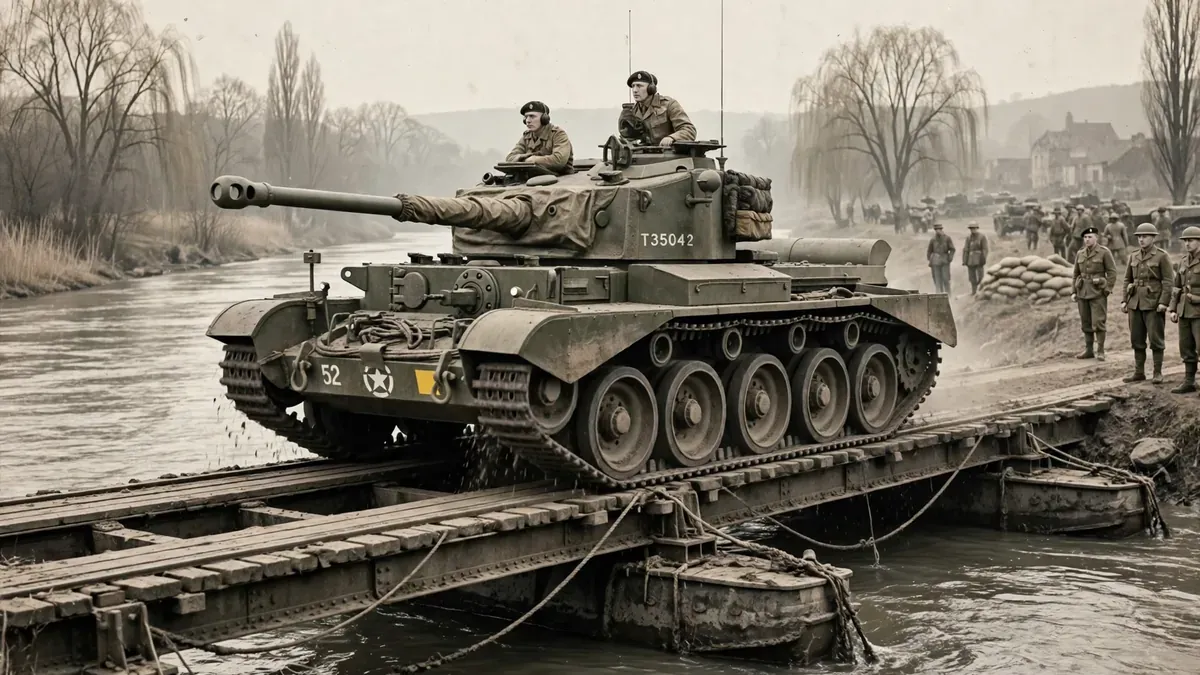
The Comet, officially the Tank, Cruiser, Comet I (A34), was the last British cruiser tank of the Second World War and one of the best British tanks ever built. Designed in 1943 and built in 1944 and 1945, the Comet combined the speed and mobility of a cruiser tank with a powerful 77 mm gun that could defeat the German Panther and Tiger at combat ranges. Approximately 1,186 Comets were built, and the type entered service in late 1944, fighting in the Rhine crossing, in the advance into Germany, and in the final battles of the war in Europe. After the war, the Comet served in the British Army, in the Korean War, and in the armies of many other countries, remaining in service into the 1960s. The Comet is remembered as a symbol of the British tank industry’s recovery from the failures of the early war, and as the tank that paved the way for the Centurion, the first of the post-war universal tanks.
The Comet was developed in response to the British Army’s need for a cruiser tank that could fight the German Panther and Tiger on equal terms. The Cromwell, which was the standard British cruiser tank in 1944, was fast and reliable, but its 75 mm gun could not penetrate the Panther’s frontal armour. The Comet used the Cromwell’s hull and engine, but it mounted a new 77 mm gun, a shortened version of the 17-pounder anti-tank gun, in a new turret, and it had thicker armour and a more powerful engine. The result was a tank that weighed about 33 tons, could reach a top speed of about 32 miles per hour, and could defeat the Panther at ranges of up to 1,000 metres. The Comet was a significant advance over the Cromwell, and it was the best British tank to see combat in the Second World War.
The Comet is remembered as a fast, reliable and well-armed tank, and as a vehicle that gave British tank crews confidence in the final battles of the war. It appears in museums in Britain, Finland, Ireland and South Africa, and it is a popular subject for military historians and model makers. The Comet’s distinctive silhouette, with its long 77 mm gun and its sloped frontal armour, remains one of the most recognisable images of the British Army in the final year of the Second World War.
1. Key Facts
| Field | Value |
|---|---|
| Type | Cruiser tank |
| Origin | United Kingdom |
| Designed | 1943-1944 (A34 specification; Leyland Motors) |
| In service | 1944-1960s (British Army; later with other users) |
| Produced | Approximately 1,186 |
| Manufacturer | Leyland Motors |
| Crew | 5 (commander, gunner, loader, driver, hull gunner) |
| Weight | Approximately 33 tons |
| Length | Approximately 7.66 m (with gun); hull about 6.55 m |
| Width | Approximately 3.04 m (10 ft) |
| Height | Approximately 2.68 m (8 ft 10 in) |
| Armour | Up to 102 mm (turret front); hull front up to 76 mm |
| Main armament | 77 mm HV gun (61 rounds) |
| Secondary armament | 7.92 mm Besa machine guns (2) |
| Engine | Rolls-Royce Meteor V-12 petrol engine, approximately 600 hp |
| Speed | Approximately 32 mph (51 km/h) maximum on roads |
| Range | Approximately 200 miles (322 km) on roads |
| Notable variants | Comet I (A34); Comet with 20-pounder gun (experimental, Irish Army) |
2. Background and Development
The Cromwell’s Limitations
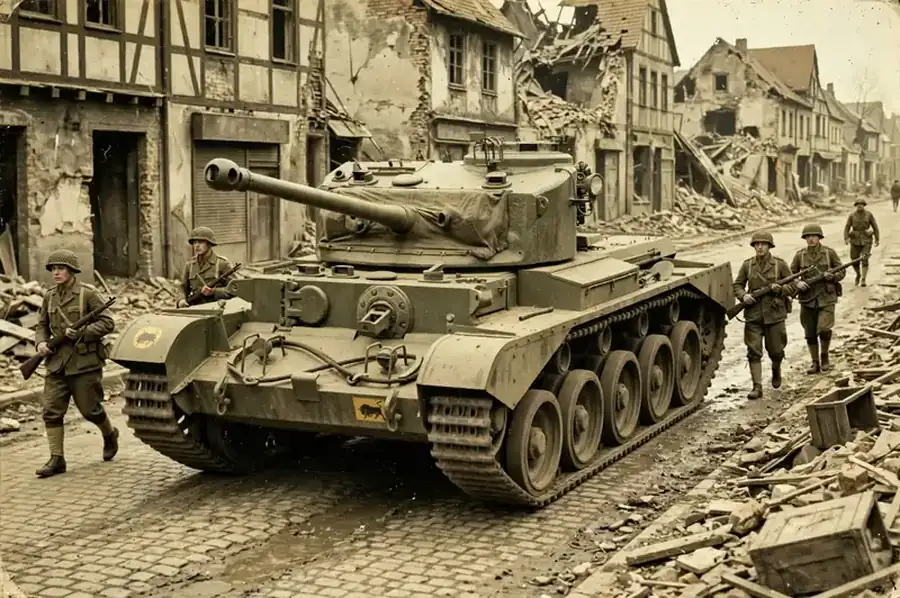
The origins of the Comet lay in the limitations of the Cromwell, the standard British cruiser tank of 1944. The Cromwell was fast, reliable and well protected, but its 75 mm gun could not penetrate the frontal armour of the German Panther, and its crews were at a disadvantage in tank-versus-tank combat. The British Army needed a cruiser tank with a more powerful gun, and in 1943 the War Office issued the A34 specification for a new tank that would use the Cromwell’s hull and engine but mount a larger gun in a new turret. The specification called for a tank that could defeat the Panther and Tiger, and that could keep pace with the Cromwell in the advance. The result was the Comet, which was designed by Leyland Motors and which entered production in 1944.
Leyland Motors and the A34
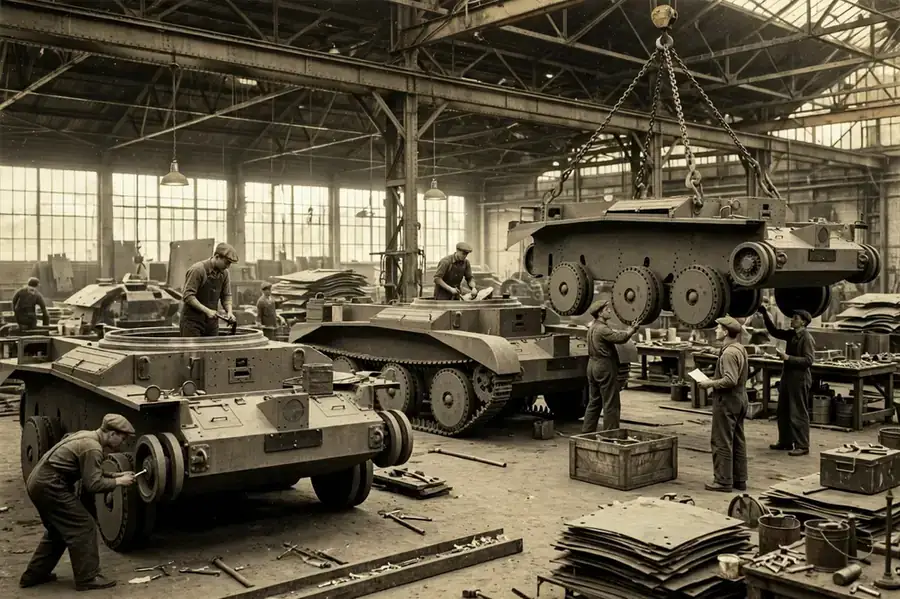
The Comet was developed by Leyland Motors, under the direction of the War Office, which wanted a tank that could be built quickly and in large numbers. The design used the Cromwell’s hull, with its Rolls-Royce Meteor engine and its Christie suspension, but it mounted a new 77 mm gun in a new, larger turret, and it had thicker armour on the hull front and turret. The 77 mm gun was a shortened version of the 17-pounder anti-tank gun, which was the most powerful British anti-tank gun of the war, and it was designed to fit in the Comet’s turret. The first prototype was delivered in early 1944, and it was tested at the Mechanical Warfare Experimental Establishment, where its gun and its mobility were praised. The Comet was ordered into production in 1944, and the first vehicles were delivered in September of that year.
A Design Shaped by the Panther
The Comet’s design was shaped by the threat that it was meant to face: the German Panther, which had appeared in 1943 and which outclassed every British tank then in service. The War Office demanded a gun that could penetrate the Panther’s frontal armour, and the 77 mm gun was the answer: it could penetrate about 110 mm of armour at 1,000 metres, enough to defeat the Panther’s hull front at combat ranges. The Comet’s armour was also increased, to up to 102 mm on the turret front, which gave it better protection than the Cromwell. The Comet was thus a tank designed for a specific enemy, and it was well suited to that enemy. Its limitations, its thin side armour and its petrol engine, were the price of its speed and its firepower, and the British Army accepted that price because it believed that the cruiser tank’s role was to exploit breakthroughs, not to fight head-on battles.
3. Design
Hull, Tracks and Mobility
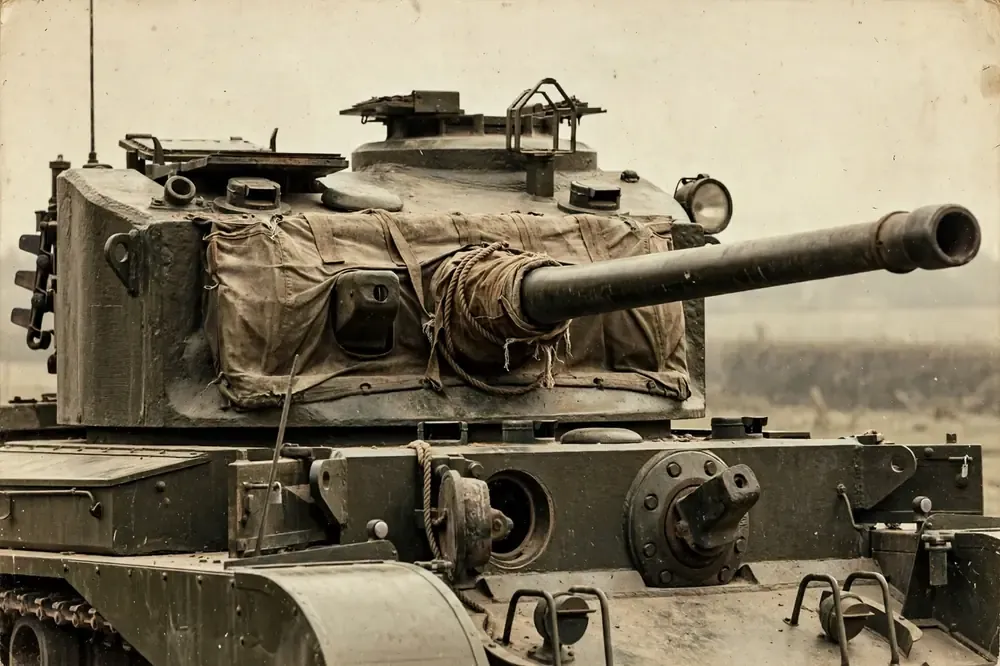
The Comet used the Cromwell’s hull, with its Rolls-Royce Meteor V-12 engine and its Christie suspension, but it was modified to carry the larger turret and the thicker armour. The hull front was protected by up to 76 mm of armour, and the turret front by up to 102 mm, which was thicker than the Cromwell’s. The Comet weighed about 33 tons, and its Meteor engine produced about 600 horsepower, giving a top speed of about 32 miles per hour on roads and a good cross-country speed. The Comet’s suspension used Christie coil springs, and its ground pressure was relatively low, which helped it in soft ground. The Comet’s mobility was its greatest strength: it was one of the fastest tanks of the war, and it could keep pace with the Cromwell and the Sherman in the advance. The Comet’s reliability was also good, and its crews praised its engine and its transmission.
The 77 mm HV Gun
The heart of the Comet was its 77 mm HV (high velocity) gun, a shortened version of the 17-pounder anti-tank gun. The gun fired an armour-piercing shell that could penetrate about 110 mm of armour at 1,000 metres, and a high-explosive shell that was effective against infantry and soft targets. The Comet carried 61 rounds of ammunition, and its rate of fire was about six rounds per minute. The gun’s accuracy was good, and its crews found that it could defeat the Panther at combat ranges, although it could not penetrate the Tiger II’s frontal armour. The 77 mm gun was the Comet’s most important feature, and it gave British tank crews confidence in the final battles of the war. The Comet’s gun was also a significant advance over the Cromwell’s 75 mm gun, and it showed that the British tank industry had learned from the lessons of the war.
Armour, Crew and Ergonomics
The Comet carried a crew of five: a commander, a gunner, a loader, a driver and a hull gunner. The driver and hull gunner sat in the front of the hull, while the commander, gunner and loader worked in the turret. The turret was larger than the Cromwell’s, and it gave the crew more room to work, although it was still cramped by modern standards. The Comet’s ventilation was good, and its crews praised the tank’s layout and its visibility. The Comet’s communications were by wireless, and later marks had improved radio sets. The Comet’s main weakness, apart from its thin side armour, was its petrol engine, which was a fire risk, and its height, which made it a conspicuous target. The Comet was a demanding tank to fight, but its crews had confidence in it, and the tank’s service in the final battles of the war earned it a lasting reputation.
4. Variants
The Comet I
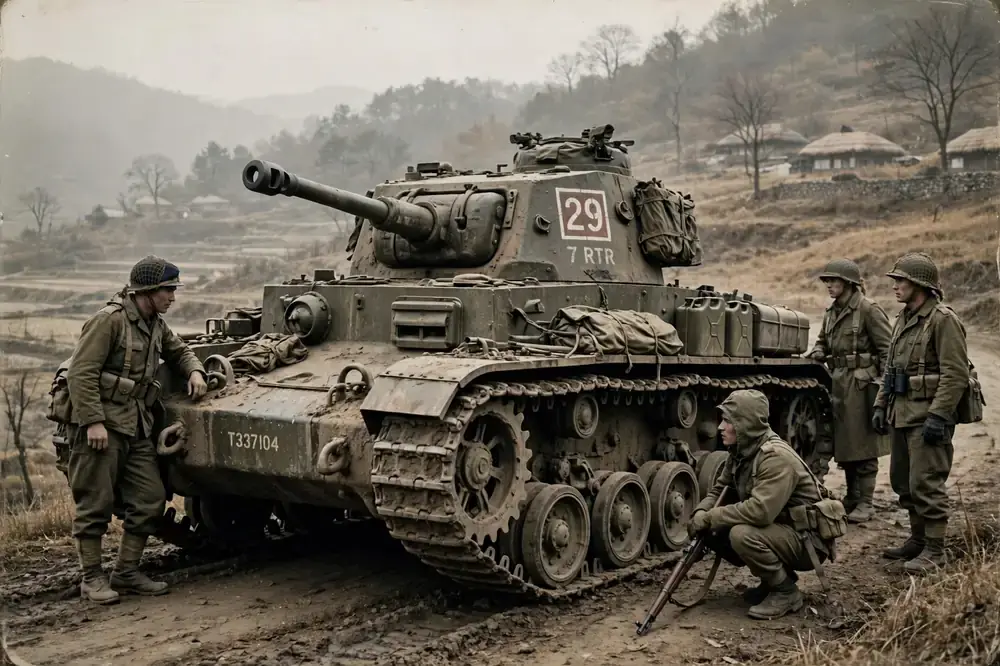
The Comet was built in a single production version, the Comet I (A34), and there were no major variants. The Comet’s design was stable throughout its production run, and the only changes were minor improvements to the engine, the transmission and the gun mounting. The Comet’s production run of about 1,186 vehicles was built by Leyland Motors between 1944 and 1945, and the type was built in large numbers for a cruiser tank. The Comet’s single version is a sign of its sound design: it did not need to be changed, because it worked well from the start. The Comet I was the version that fought in the Rhine crossing and in the advance into Germany, and it is the version most often seen in museums.
Experimental Variants
After the war, the Comet was used as the basis for several experimental designs, including a version fitted with a 20-pounder gun, which was tested by the Irish Army in the 1950s, and a version fitted with a new turret and a more powerful engine. The Irish Army’s Comet, with its 20-pounder gun, was a significant modification, and it showed how the Comet’s hull could be adapted for a larger gun. The Comet’s chassis was also used for the FV4101 Charioteer, a tank destroyer that mounted a 20-pounder gun in a new turret, and which served in the British Army in the 1950s. The Comet’s experimental variants show how the tank’s design influenced post-war British tank development, and how the Comet’s hull and engine were used for new vehicles.
The Centurion Connection
The Comet was the direct predecessor of the Centurion, the first of the post-war universal tanks, which entered service in 1945. The Centurion used many of the Comet’s ideas, including its 77 mm gun (in its early versions) and its emphasis on mobility and firepower, but it combined them with thicker armour and a more powerful engine. The Comet’s legacy is thus not only its own combat record, but the Centurion, which became one of the most successful tanks of the Cold War. The Comet’s place in tank history is as a bridge between the cruiser tanks of the Second World War and the universal tanks of the post-war era.
5. Operational History
The Rhine Crossing
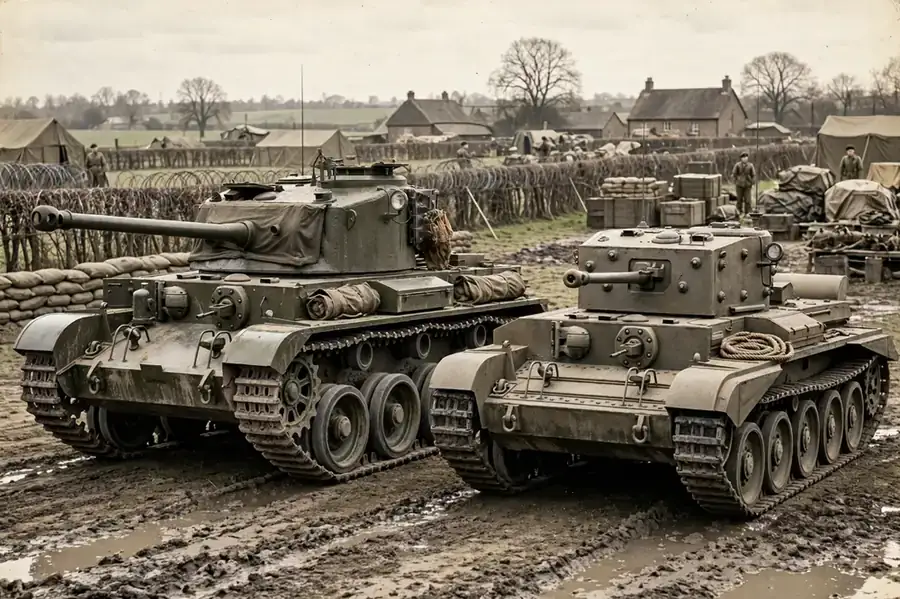
The Comet entered service in late 1944, and its combat debut came in the Rhine crossing in March 1945, when Comets of the 11th Armoured Division took part in Operation Plunder, the Allied crossing of the Rhine. The Comets performed well, supporting infantry in the advance and engaging German tanks and anti-tank guns. The Comet’s 77 mm gun proved effective against the Panther and the Tiger, and its mobility allowed it to keep pace with the advance. The Comet’s first battle was thus a success, and the type was soon in demand across the front. By the end of the war, Comets were serving with the 11th Armoured Division and the 6th Guards Tank Brigade, and they had earned a reputation as fast, reliable and well-armed tanks.
The Advance into Germany
After the Rhine crossing, the Comet fought in the advance into Germany, where it took part in the battles for Osnabruck, Bremen and Hamburg. The Comet’s speed and its gun made it ideal for the mobile warfare of the final weeks of the war, and its crews found that it could defeat the Panther and the Tiger at combat ranges. The Comet also fought in the Netherlands, where it supported infantry in the fighting around Arnhem and in the liberation of the country. The Comet’s service in the final battles of the war was its most important, and it showed that the British tank industry had finally produced a tank that could fight the Germans on equal terms.
Korea and Post-War Service
After the war, the Comet served in the British Army, in the Korean War, and in the armies of many other countries. In Korea, Comets of the 8th King’s Royal Irish Hussars fought in the battles of 1950 and 1951, where their 77 mm gun was effective against North Korean and Chinese tanks. The Comet also served in the British Army in Germany, in the Middle East, and in Hong Kong, and it was exported to Finland, Ireland, South Africa, Burma and other countries. The Comet remained in service into the 1960s, and it was finally withdrawn when the Centurion had fully replaced it. The Comet’s post-war service shows how long the design remained in use, and how widely it was distributed among the armies of the world.
The Comet in the 11th Armoured Division
The Comet’s main user in the Second World War was the 11th Armoured Division, which was equipped with Comets in late 1944 and which used them in the Rhine crossing and in the advance into Germany. The 11th Armoured Division, known as the “Black Bull”, was one of the British Army’s most famous armoured divisions, and its Comets earned a reputation for their speed and their firepower. The division’s Comets were also used in the liberation of the Bergen-Belsen concentration camp in April 1945, where they provided security for the liberating troops. The 11th Armoured Division’s Comets are a significant part of the tank’s history, and they show how the Comet was used in the final battles of the war.
6. Performance and Specifications
Strengths on the Battlefield
The Comet’s greatest strength was its combination of speed, firepower and reliability. Its top speed of about 32 miles per hour made it one of the fastest tanks of the war, and its 77 mm gun could defeat the Panther at combat ranges. Its Meteor engine was reliable, and its Christie suspension gave it good cross-country mobility. The Comet’s crews praised its handling and its gun, and its performance in the Rhine crossing and in the advance into Germany showed that it was a highly effective tank. In the cruiser role, the Comet was among the best tanks of the war, and it was the only British tank that could fight the Panther on equal terms.
Weaknesses and Trade-offs
The weaknesses were clear. The Comet’s side armour was thin, only about 32 mm, which made it vulnerable to German anti-tank guns and to the Panzerfaust in street fighting. Its petrol engine was a fire risk, and its height made it a conspicuous target. The Comet’s 77 mm gun, while powerful, could not penetrate the Tiger II’s frontal armour, and its ammunition capacity of 61 rounds was limited. The Comet was also expensive to build, and its production was limited to about 1,186 vehicles. Nevertheless, the Comet’s overall record was impressive, and it was the best British tank to see combat in the Second World War. The Comet’s performance must be judged against its intended role: a fast cruiser tank that could exploit breakthroughs and fight enemy tanks, where it was among the best tanks of the war.
How the Comet Compared with Rivals
Compared with the German Panther, the Comet had a similar gun and similar mobility, but it had thinner armour and a less powerful engine. Compared with the American M4 Sherman, the Comet was faster, better armed and better protected, although it was built in smaller numbers. Compared with the Soviet T-34-85, the Comet had a similar gun and similar mobility, but it was more reliable and had better optics. Compared with the British Cromwell, the Comet was superior in every respect, and it was a significant advance over its predecessor. The Comet’s combination of speed, firepower and reliability made it one of the best cruiser tanks of the war, and it was the only British tank that could match the Panther in a direct engagement.
7. Operators
Britain and the Commonwealth
The principal operator of the Comet was the British Army, which used it in the 11th Armoured Division and the 6th Guards Tank Brigade in the Second World War, and in the armoured regiments of the post-war army. The Comet was also used by the British Army in Korea, in Germany, in the Middle East and in Hong Kong. The Comet’s operators valued its speed, its gun and its reliability, and the tank’s service in the British Army lasted into the 1960s, when it was replaced by the Centurion.
Export Users and Allies
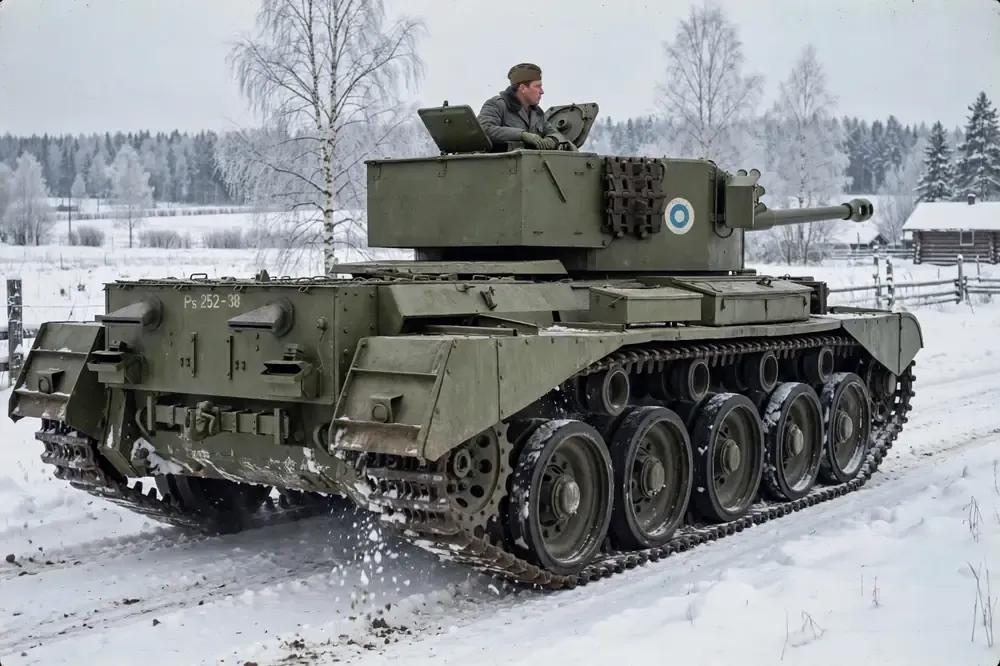
The Comet was exported to many countries, including Finland, Ireland, South Africa, Burma, Cuba and others. Finland received Comets in the 1950s and used them until the 1970s, and the Finnish Comets are among the best-preserved examples today. Ireland received Comets and used them into the 1970s, and the Irish Comets were modified with 20-pounder guns. South Africa used Comets in the 1950s and 1960s, and Burma used Comets in the fighting against insurgents. The Comet’s export service shows how widely the tank was distributed, and how long it remained in use after the war.
8. Legacy and Influence
The Bridge to the Centurion
The Comet’s legacy is that of the bridge between the cruiser tanks of the Second World War and the universal tanks of the post-war era. It showed that a British tank could combine speed, firepower and reliability, and it paved the way for the Centurion, which became one of the most successful tanks of the Cold War. The Comet’s 77 mm gun, its Meteor engine and its Christie suspension all influenced the design of the Centurion, and the Comet’s service in the final battles of the war showed that the British tank industry had recovered from the failures of the early war. The Comet’s legacy is thus not only its own combat record, but the Centurion and the post-war British tanks that followed.
Cultural Memory and Historical Assessment
The Comet is one of the most famous British tanks of the war, and its reputation has grown in recent decades as historians have reassessed its performance. Historians have assessed the Comet as a sound and effective design, well suited to its role, and as the best British tank to see combat in the Second World War. The Comet’s reputation has been enhanced by its appearance in films, books and video games, where its long gun and its sloped armour make it instantly recognisable. The Comet is remembered as a symbol of the British tank industry’s recovery, and of the fast, reliable and well-armed tank that the British Army needed in the final year of the war.
Reassessing the Comet
The reassessment of the Comet began in the 1970s and 1980s, when historians gained access to wartime records and to the accounts of the tank’s crews. Early post-war histories had often overlooked the Comet, because it entered service late in the war and fought in only a few battles. Later work, drawing on unit war diaries and on the records of the production programme, showed that the Comet’s gun and its mobility were a significant advance over the Cromwell, and that the tank became one of the most reliable British tanks of the war. The Comet’s crews, interviewed by historians, consistently praised its speed, its gun and its reliability, and they valued the confidence that its armour gave them.
9. Surviving Examples
Museums in Britain and Finland
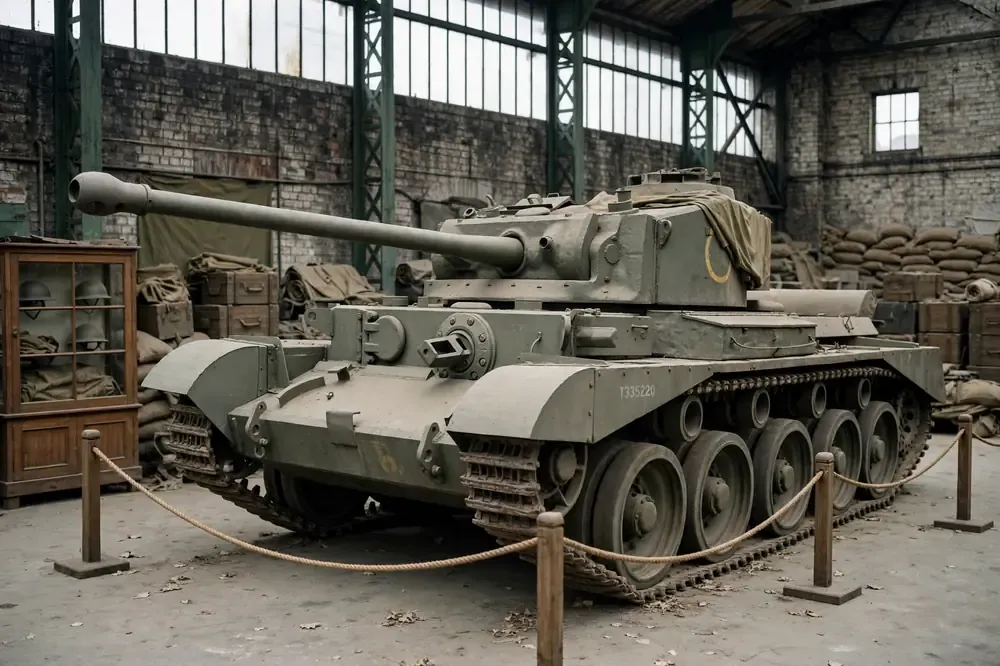
A significant number of Comets survive in museums and private collections around the world. The Tank Museum at Bovington in Dorset holds several examples, including a Comet I, which is one of the most popular exhibits in the museum. The Imperial War Museum at Duxford also holds a Comet, and the Finnish Tank Museum at Parola holds examples that served in the Finnish Army. In Ireland, the National Museum of Ireland holds a Comet, and in South Africa, the South African National Museum of Military History in Johannesburg displays a Comet. The large number of surviving Comets reflects the type’s production run and its long service, and it ensures that the tank remains visible to the public.
Survivors Abroad and Running Examples
Other surviving Comets include examples in the Kubinka Tank Museum in Russia and the National Armor and Cavalry Museum at Fort Benning in the United States. Several Comets are maintained in running condition by museums and private collectors, and they appear at military vehicle shows and commemorative events. The running examples are particularly valuable, because they demonstrate the Comet’s speed and its distinctive engine note, which no photograph can convey, and which helps visitors understand why the Comet’s crews described it as fast and reliable.
Frequently Asked Questions
Was the Comet a good tank?
The Comet was a very good tank, judged by its intended role as a cruiser tank. It was fast, reliable and well armed, with a 77 mm gun that could defeat the Panther at combat ranges. Its crews valued its speed and its gun, and its service in the Rhine crossing and in Korea earned it a lasting reputation as the best British tank of the war.
How many Comets were built?
Approximately 1,186 Comets were built between 1944 and 1945, all by Leyland Motors. This was a significant production run for a cruiser tank, and it reflected the importance that the British Army attached to the Comet’s 77 mm gun.
Could the Comet defeat a Panther?
Yes. The Comet’s 77 mm gun could penetrate the Panther’s frontal armour at ranges of up to 1,000 metres, and its high-explosive shell was effective against infantry and soft targets. The Panther had thicker armour and a more powerful gun, but the Comet’s speed and its rate of fire gave it a good chance in a direct engagement.
Did the Comet fight in the Second World War?
Yes. The Comet entered service in late 1944 and fought in the Rhine crossing in March 1945 and in the advance into Germany. It also fought in the Netherlands and in the final battles of the war in Europe, where its speed and its gun made it ideal for mobile warfare.
How long did the Comet remain in service?
The Comet remained in British service into the 1960s, and in the service of other armies even longer. Finnish Comets served until the 1970s, and Irish Comets, modified with 20-pounder guns, served into the 1970s as well. The Comet’s long service reflects its reliability and its versatility.
What replaced the Comet?
The Comet was replaced by the Centurion, the first of the post-war universal tanks, which entered service in 1945. The Centurion combined the Comet’s speed and firepower with thicker armour and a more powerful engine, and it became one of the most successful tanks of the Cold War.
Sources
- David Fletcher, The Comet Tank (Osprey Publishing, New Vanguard series).
- Bryan Perrett, The Comet Tank (Ian Allan, 1990s).
- David Fletcher, The Great Tank Scandal: British Armour in the Second World War (HMSO).
- The Tank Museum, Bovington, Comet collection records and vehicle guides.
- Chamberlain, Peter, and Ellis, Chris, British and American Tanks of World War II (Arms and Armour Press).
- Finnish Tank Museum, Parola, Comet collection records.