 WAR ATLAS MILITARY HISTORY MAGAZINE · WWI — WWII
East Africa Campaign
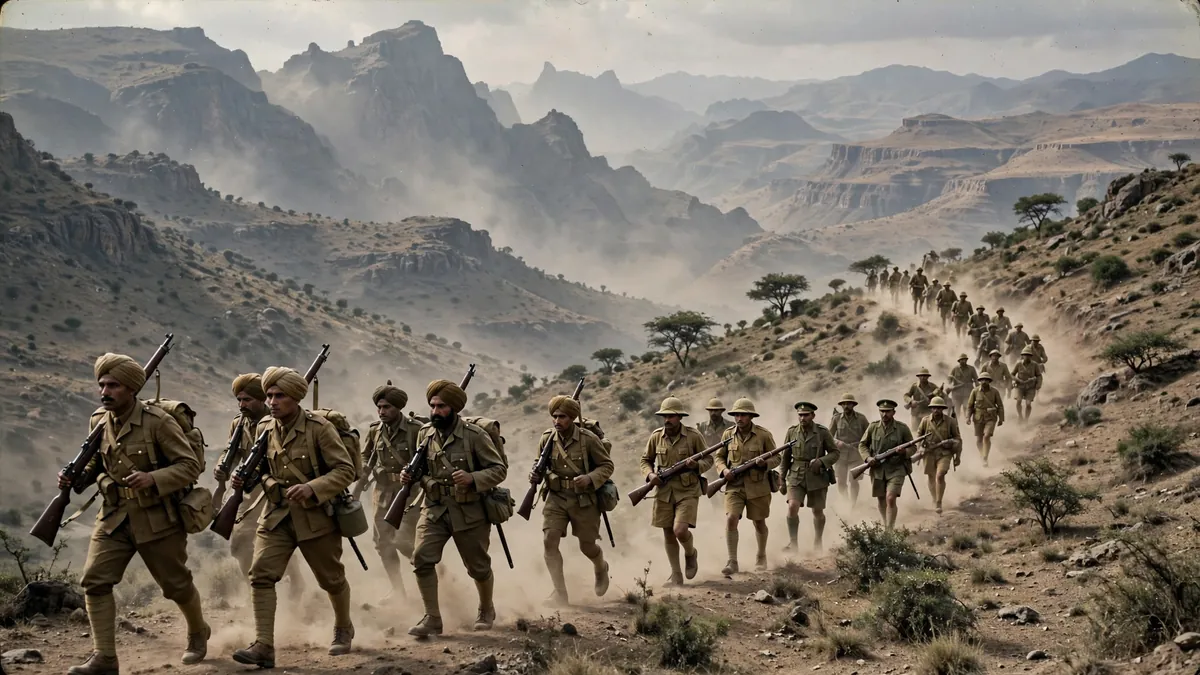
The East Africa Campaign was the Allied campaign in East Africa in the Second World War, fought from June 1940 to November 1941. The Italian Empire in East Africa — Ethiopia, Eritrea and Italian Somaliland — was attacked from Sudan, Kenya and British Somaliland by British, Indian, South African and East African troops, under Generals William Platt and Alan Cunningham, and by Ethiopian patriots under the Emperor Haile Selassie.
In less than a year, the Italian forces, which numbered about 290,000 men on paper, were destroyed: the Italians lost British Somaliland in August 1940, then lost Eritrea at Keren in March 1941, lost Addis Ababa in April 1941, and surrendered at Amba Alagi in May 1941 and at Gondar in November 1941.
The campaign liberated Ethiopia, restored Haile Selassie to his throne, and removed the Italian threat to the Red Sea and to the Suez Canal.
1. Key Facts
| Date | 10 June 1940 – 27 November 1941 (Gondar surrendered) |
| Location | Ethiopia, Eritrea, Italian Somaliland and British Somaliland, East Africa |
| Result | Decisive Allied victory; Italian East Africa destroyed; Ethiopia liberated |
| Allied commanders | Gen. William Platt (Sudan); Gen. Alan Cunningham (Kenya); Emperor Haile Selassie (Ethiopian patriots) |
| Italian commander | Prince Amedeo, Duke of Aosta (Viceroy of Italian East Africa) |
| Allied strength | About 70,000–100,000 men at the start, growing to more than 200,000; Ethiopian patriots |
| Italian strength | About 290,000 men on paper (about 90,000 Italians and 200,000 African askari) |
| Allied losses | About 5,000–8,000 killed, wounded and missing (estimates vary) |
| Italian losses | About 15,000–20,000 killed and wounded; about 250,000 taken prisoner (estimates vary) |
2. Background
Italy’s East African empire
In 1935–1936, Italy invaded and conquered Ethiopia, and in 1936 Mussolini proclaimed the Italian Empire in East Africa, made up of Ethiopia, Eritrea and Italian Somaliland. The empire was a source of pride for Mussolini, but it was a weak empire: it was cut off from Italy by the British-controlled Suez Canal and the Red Sea, it had few roads and railways, and its army, though large on paper, was made up largely of African askari — soldiers recruited in Eritrea and Somalia — who were poorly equipped and, in many cases, unwilling to fight for Italy.
When Italy entered the Second World War on 10 June 1940, its Viceroy, Prince Amedeo, Duke of Aosta, commanded about 290,000 men, but he knew that he could not be supplied from Italy, and that his empire would have to fight alone.
The British position
The British position in East Africa in June 1940 was weak. In Sudan, General William Platt commanded a small force of British, Indian and Sudanese troops; in Kenya, General Alan Cunningham commanded a force of British, South African and East African troops; and in British Somaliland, a small garrison of British, Indian and Somali troops held the port of Berbera.
The British forces were outnumbered, but they had two advantages: they could be supplied by sea, through the Red Sea and the port of Mombasa, and they had the support of the Ethiopian patriots, the Arbegnoch, who had been fighting the Italians since 1936, and of the Emperor Haile Selassie, who had been in exile in Britain since 1936 and who returned to Ethiopia in 1941 to lead his people.
The British plan was to attack from the north and from the south at the same time, and to meet in the middle, at Addis Ababa.
Haile Selassie and the patriots
The Ethiopian patriots were the heart of the campaign. Since the Italian conquest of 1936, Ethiopian fighters — the Arbegnoch, or Patriots — had fought a guerrilla war in the mountains, and they had never accepted Italian rule. In 1940, the British sent a mission, under Colonel Orde Wingate, to organise the patriots, and in January 1941 Haile Selassie crossed from Sudan into Ethiopia, at the head of a force of patriots and British troops, and raised the Ethiopian flag.
The Emperor’s return was a symbol: it told the Ethiopian people that their country was being liberated, and it told the Italian askari that the empire they served was falling. The patriots fought alongside the British in the battles that followed, and they were, in the words of one British officer, “the soul of the campaign”.
3. Opposing Forces
The Italian forces in East Africa numbered about 290,000 men on paper, but the paper figure was misleading. Of that number, about 90,000 were Italians — regulars, Blackshirts and colonial troops — and about 200,000 were African askari, recruited in Eritrea, Somalia and Ethiopia.
The askari were brave soldiers, but they were poorly equipped, poorly led, and in many cases unwilling to fight for an empire that had conquered their countries. The Italian Army had tanks, artillery and aircraft, but it had no fuel, no spare parts and no supply from Italy, and its divisions were scattered across a vast territory, from Eritrea in the north to Somaliland in the south.
The Italian commander, the Duke of Aosta, was a capable and honourable officer, but he was commanding an army that could not be supplied and could not be concentrated.
| Allies | Italy | |
|---|---|---|
| Infantry | 4th and 5th Indian Divisions (Sudan); 1st South African Division, 11th and 12th African Divisions (Kenya); Ethiopian patriots | Italian divisions in Eritrea, Ethiopia and Somaliland; askari battalions |
| Tanks | Light tanks and armoured cars; used at Keren and in the advance | Light and medium tanks; short of fuel and spares |
| Artillery | Well supplied by sea; field and mountain guns | Adequate guns; ammunition short |
| Aircraft | RAF and South African Air Force; air superiority by 1941 | Regia Aeronautica; few aircraft, no spares |
| Supply | By sea through Mombasa and Port Sudan; by road and air | No supply from Italy; cut off by the British blockade |
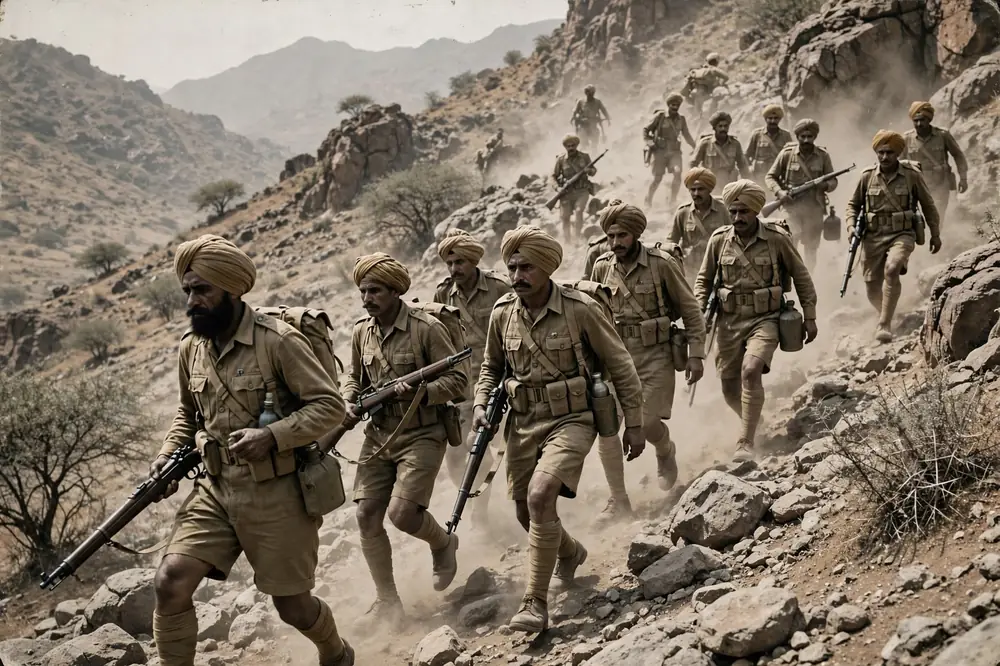
The Allied forces were smaller at the start — about 70,000 to 100,000 men — but they grew as the campaign went on, and they had the advantage of supply: they could be supplied by sea, through Mombasa and Port Sudan, and they had the support of the Royal Air Force and the South African Air Force, which won control of the air by 1941.
The Allied forces were made up of British, Indian, South African and East African troops, and of the Ethiopian patriots, and they were led by two capable generals: William Platt, who attacked from Sudan in the north, and Alan Cunningham, who attacked from Kenya in the south. The two forces, which had never fought together before, coordinated their attacks, and they met, as planned, in the middle of Ethiopia.
4. The Battle
August 1940: the loss of British Somaliland
The campaign began with an Italian victory. In August 1940, Italian troops from Ethiopia invaded British Somaliland, and the small British garrison, under Brigadier Arthur Chater, was forced to evacuate Berbera by sea, after a fighting retreat at Tug Argan.
The loss of British Somaliland was a humiliation for Britain, and it was the only British territory to be lost to the enemy in the Second World War, but it was a short-lived victory: the Italians could not hold Somaliland, and they were driven out of it in March 1941, when British troops landed at Berbera from Aden.
The invasion of British Somaliland was, in the end, a diversion that cost the Italians men and supplies they could not afford, and it did not stop the British offensive that followed.
February–March 1941: Keren
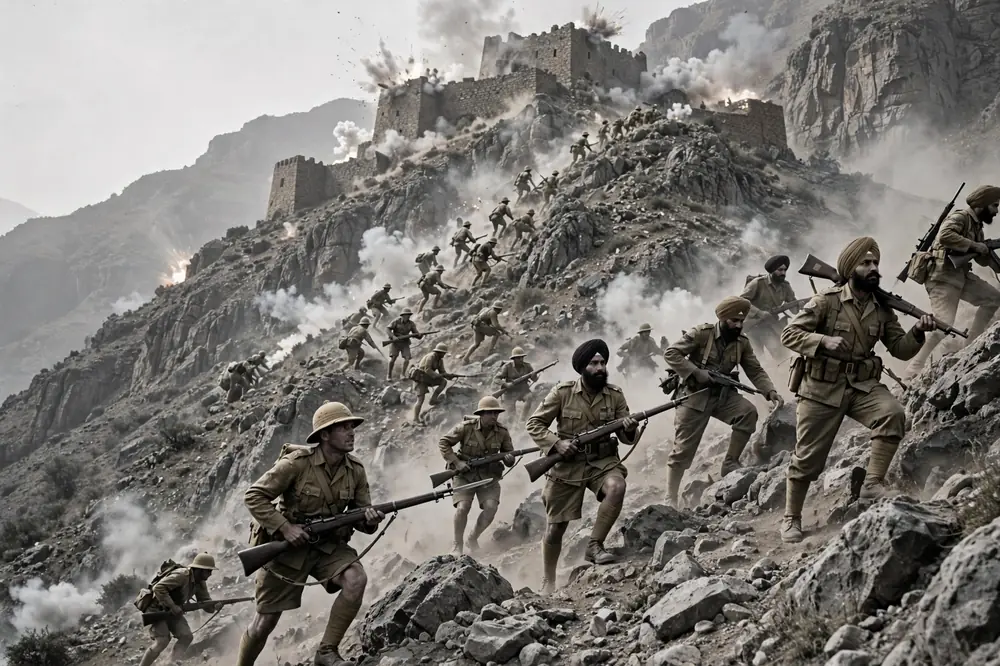
The first great battle of the campaign was Keren, fought in February and March 1941 in Eritrea. Platt’s force, advancing from Sudan, met the Italian defence in the mountains around Keren, a town on the road to Asmara, the capital of Eritrea.
The battle was fought in the mountains, where the Italians had built strong defences on the heights, and it lasted for seven weeks, from 3 February to 1 April. The 4th Indian Division, under Major General Noel Beresford-Peirse, attacked the heights again and again, and the fighting was bitter: the Indians and the British suffered heavy losses, and the Italians fought with a courage that surprised the British.
On 27 March, the 4th Indian Division took the heights, and on 1 April Keren fell. The road to Asmara was open, and the Italian defence of Eritrea collapsed. Keren was the hardest battle of the campaign, and it is remembered as one of the great battles of the Indian Army.
February–April 1941: the advance from Kenya
At the same time, Cunningham’s force advanced from Kenya into Italian Somaliland and Ethiopia. The advance was one of the fastest in the war: in February 1941, Cunningham’s troops crossed the Juba River, took Mogadishu on 25 February, and then advanced 1,700 kilometres in three weeks, through country that had no roads, to take Harar and Dire Dawa, and then Addis Ababa, the Ethiopian capital, on 6 April 1941.
The advance was made possible by the collapse of the Italian askari, who deserted in large numbers, and by the support of the Ethiopian patriots, who rose against the Italians as the British advanced. The speed of the advance surprised everyone, including Cunningham himself, and it is remembered as one of the great advances of the war.
On 5 May 1941, Haile Selassie entered Addis Ababa in triumph, five years to the day after he had been driven out by the Italians.
May–November 1941: Amba Alagi and Gondar
After the fall of Addis Ababa, the Duke of Aosta withdrew to Amba Alagi, a mountain fortress in northern Ethiopia, where he held out until 19 May 1941, when he surrendered with honour, after a siege by Platt’s force. The surrender at Amba Alagi was the end of organised Italian resistance in Ethiopia, but the war was not over: Italian troops held out at Gondar, in the north-west, under General Guglielmo Nasi, until 27 November 1941, when Gondar surrendered to a force of British, Indian and East African troops.
The campaign was over, and Italian East Africa had ceased to exist. The last Italian troops in East Africa surrendered at Gondar, and the Italian Empire in Africa was at an end.
5. Turning Point
Keren / Keren
The turning point of the campaign was the Battle of Keren, fought in February and March 1941. Keren was the key to Eritrea: if the Italians held it, Platt’s advance from Sudan would be stopped, and the campaign would be stalemated; if the British took it, the road to Asmara and to the Red Sea would be open, and the Italian position in the north would collapse.
The battle was the hardest of the campaign, and it was won by the 4th Indian Division, which took the heights after seven weeks of fighting. The victory at Keren broke the Italian defence in the north, and it allowed Platt to advance on Asmara and then on Addis Ababa.
The battle is remembered as the turning point because it was the battle in which the Italian Army, which had seemed strong on paper, was shown to be weak in reality.
The collapse of the askari
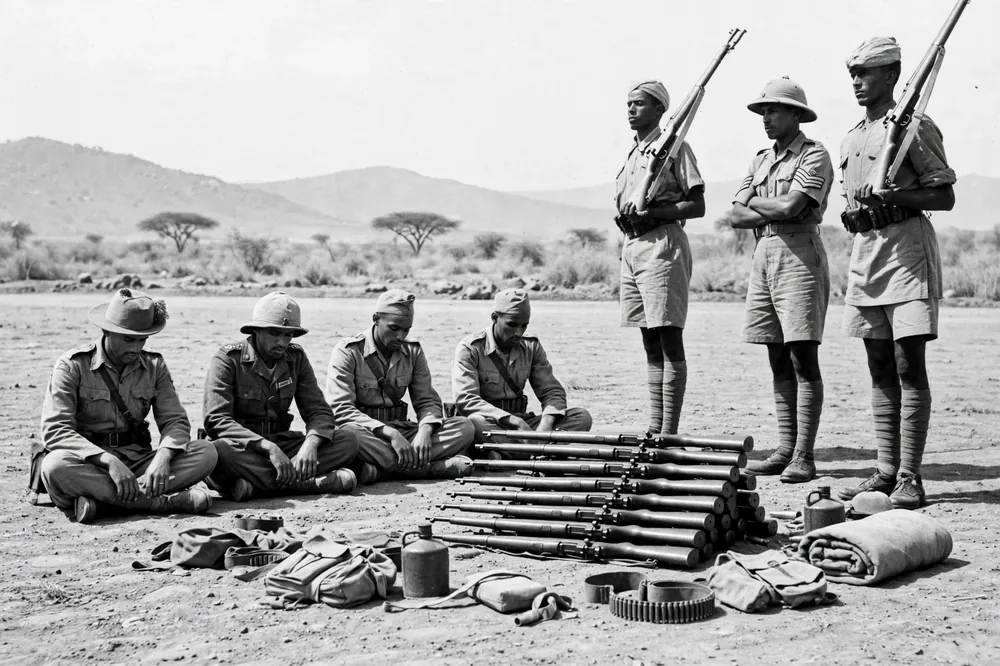
The second turning point was the collapse of the Italian askari. The askari, who made up two-thirds of the Italian Army in East Africa, deserted in large numbers as the British advanced, and their desertion was the reason the Italian defence collapsed so quickly.
The askari deserted for many reasons: they were poorly paid, poorly equipped, and poorly led, and they had no wish to fight for an empire that had conquered their countries. The Emperor’s return, and the rising of the Ethiopian patriots, told them that the empire was falling, and they left it.
The collapse of the askari was the turning point of the campaign in the south, and it is the reason Cunningham’s advance from Kenya was so fast: he was not fighting an army, he was marching through a country that had already been liberated by its own people.
6. Casualties and Losses
Casualty figures for the East Africa Campaign are estimates, and sources differ, but the figures are generally agreed to be about 5,000 to 8,000 Allied casualties and about 15,000 to 20,000 Italian casualties, with about 250,000 Italians and askari taken prisoner.
The Allied losses were light for a campaign that destroyed an empire, and they were light because the campaign was won by movement and by the collapse of the enemy, not by frontal attack. The heaviest Allied losses were at Keren, where the 4th Indian Division lost about 4,000 men in seven weeks of fighting.
The Italian losses were heavier in prisoners than in killed and wounded: most of the Italian Army surrendered, rather than being killed, and the prisoners were held in camps in Kenya and in South Africa for the rest of the war.
| Allies | Italy | |
|---|---|---|
| Killed | About 2,000–3,000 (estimate) | About 6,000–8,000 (estimate) |
| Wounded and missing | About 3,000–5,000 (estimate) | About 9,000–12,000 (estimate) |
| Prisoners | Few | About 250,000 (estimate) |
| Total | About 5,000–8,000 | About 265,000–270,000 (estimate) |
| Keren losses | About 4,000 (4th Indian Division) | Heavy; the defence was destroyed |
The campaign also cost the Ethiopian people heavily, though their losses are hard to count. The Italian occupation of Ethiopia, from 1936 to 1941, brought reprisals, deportations and the use of poison gas, and the Ethiopian patriots who fought the Italians lost many men.
The exact figures are not known, and they are a matter of controversy in Ethiopian history, but the liberation of Ethiopia was bought at a price, and it is remembered in Ethiopia as a victory that was won by the Ethiopian people themselves, with British help, not by the British alone.
The campaign’s losses, in the end, were small compared with the losses of the war in Europe and in the Pacific, but they were the losses of a campaign that freed a country.
7. Map and Geography
The Horn of Africa
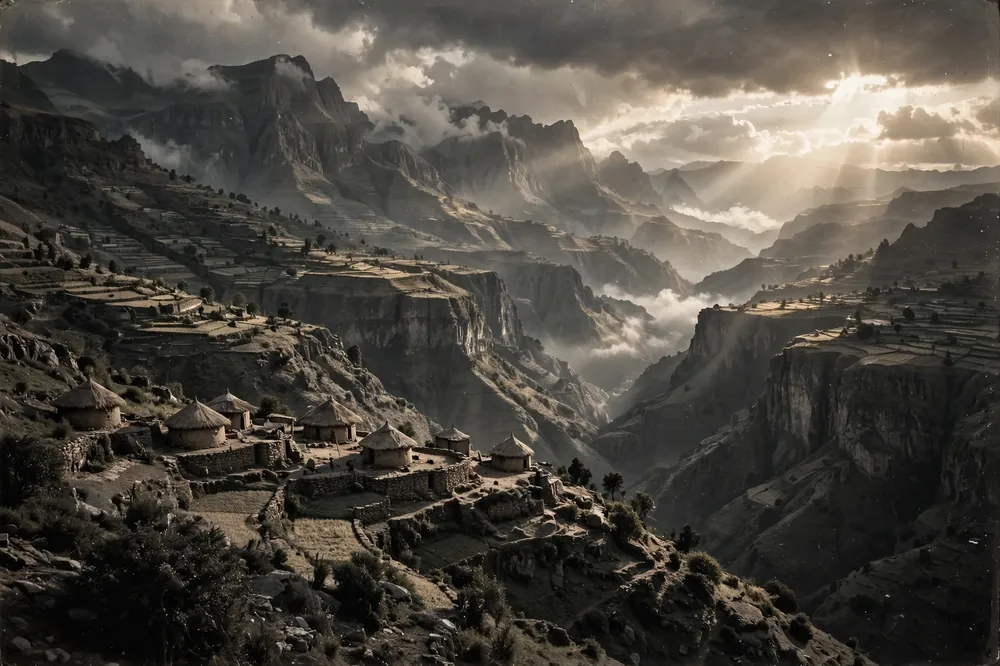
The campaign was fought in the Horn of Africa, a vast region of mountains, deserts and high plateaus. Ethiopia is a high plateau, cut by deep valleys and by the mountains of the Simien and the Bale, and it is one of the highest countries in Africa. Eritrea, to the north, is a land of mountains and deserts, cut by the valleys that lead to the Red Sea.
Italian Somaliland, to the south-east, is a land of desert and scrub, cut by the Juba River, which flows to the Indian Ocean. The campaign was fought across this whole region, from the Red Sea in the north to the Indian Ocean in the south, and from Sudan in the west to Somaliland in the east.
The distances were vast: Cunningham’s advance from Kenya to Addis Ababa covered 1,700 kilometres in three weeks, and Platt’s advance from Sudan to Asmara covered hundreds of kilometres through the mountains.
Mountains, deserts and the Red Sea
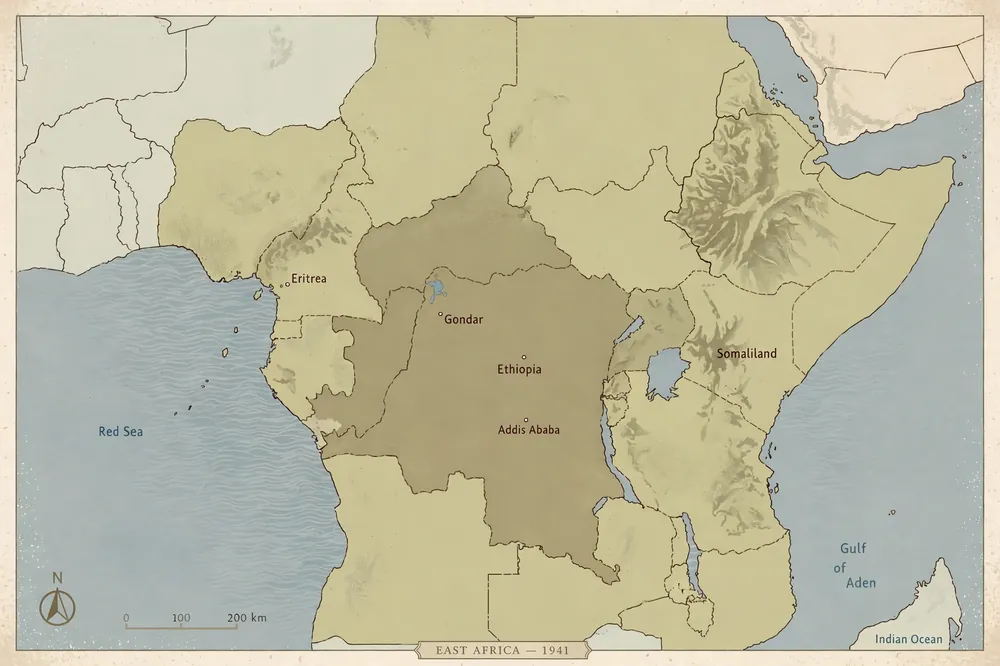
The geography shaped the campaign at every stage. The mountains of Eritrea made Keren a hard battle, and the desert of Somaliland made Cunningham’s advance a race against water and fuel. The Red Sea, which the British controlled, was the key to the campaign: it was the route by which the British supplied their forces, and it was the route by which the Italians were cut off from Italy.
The campaign was, in the end, a campaign of supply: the British could supply their forces by sea, and the Italians could not supply theirs at all, and the geography of the Horn — a peninsula cut off by the sea — made that difference decisive. The mountains sheltered the Ethiopian patriots, and the deserts slowed the Italian columns, and the sea carried the British to victory.
8. Outcome and Legacy of the East Africa Campaign
The liberation of Ethiopia
The East Africa Campaign liberated Ethiopia, restored Haile Selassie to his throne, and destroyed the Italian Empire in East Africa. On 5 May 1941, Haile Selassie entered Addis Ababa in triumph, and Ethiopia became the first country to be liberated from Axis occupation in the Second World War.
The liberation was a symbol: it showed that the Axis could be beaten, and it showed that a people who had been conquered could free themselves. The campaign also secured the Red Sea and the Suez Canal, which were vital to the British war effort, and it freed British troops for the war in North Africa.
The campaign is remembered in Ethiopia as the liberation, and it is marked by the monuments in Addis Ababa and by the annual celebration of Liberation Day on 5 May.
A forgotten campaign
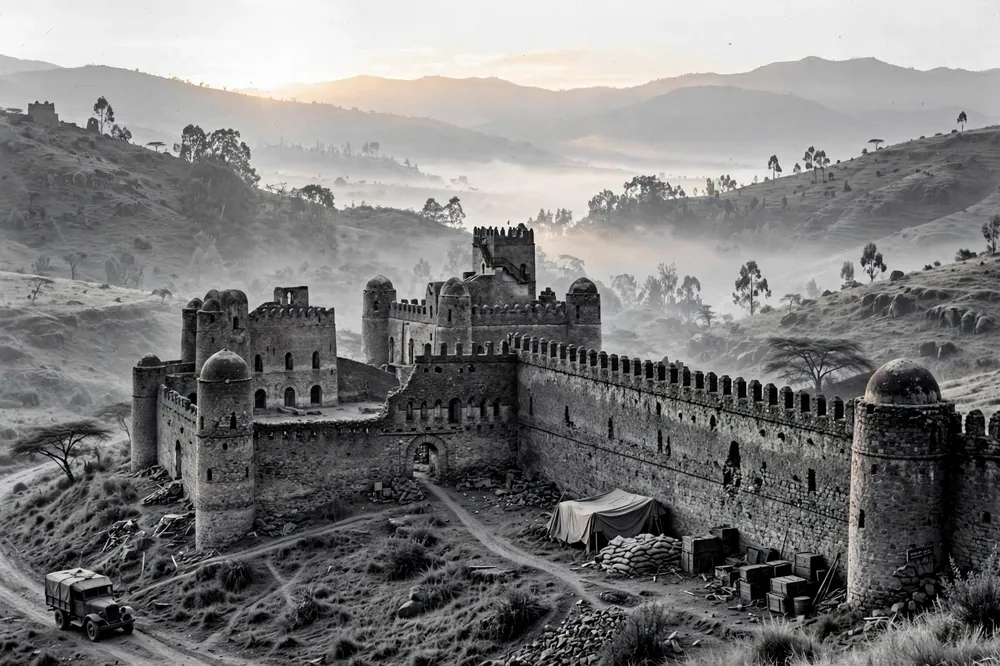
The East Africa Campaign is one of the forgotten campaigns of the Second World War. It was fought far from Europe, it was won quickly, and it was overshadowed by the campaigns in North Africa and in the Pacific that followed.
But it was, in its way, one of the most complete victories of the war: an empire was destroyed, a country was liberated, and a quarter of a million men were taken prisoner, at a cost to the victors of a few thousand casualties.
The campaign is remembered by the Indian Army, which fought at Keren, by the South African Army, which fought in Ethiopia, and by the Ethiopian people, who fought for their own liberation. It is also remembered as the campaign in which Orde Wingate, who later commanded the Chindits in Burma, first showed his talent for irregular warfare, and in which Haile Selassie, who had been driven into exile in 1936, returned to his throne.
The Red Sea and the wider war
The East Africa Campaign secured the Red Sea, and with it the sea route to the Suez Canal, which was vital to the British war effort. Before the campaign, Italian aircraft and warships based in Eritrea had threatened British shipping in the Red Sea, and the loss of the canal would have cut Britain off from India and from the Middle East.
After the campaign, the Red Sea was safe, and British troops and supplies could move freely between Egypt and India. The campaign also freed British, Indian and South African troops for the war in North Africa, where the Eighth Army was fighting Rommel, and it freed the Royal Navy and the Royal Air Force for the war in the Mediterranean.
The campaign was, in this sense, a campaign that mattered far beyond East Africa: it secured a sea route, it freed an army, and it showed that the Axis could be beaten, at a time when Britain stood alone.
9. Commanders
General William Platt (Britain). Commander of the British forces in Sudan, who attacked from the north and won the Battle of Keren. Platt, an Indian Army officer, later commanded the British forces in East Africa and was knighted for his services.
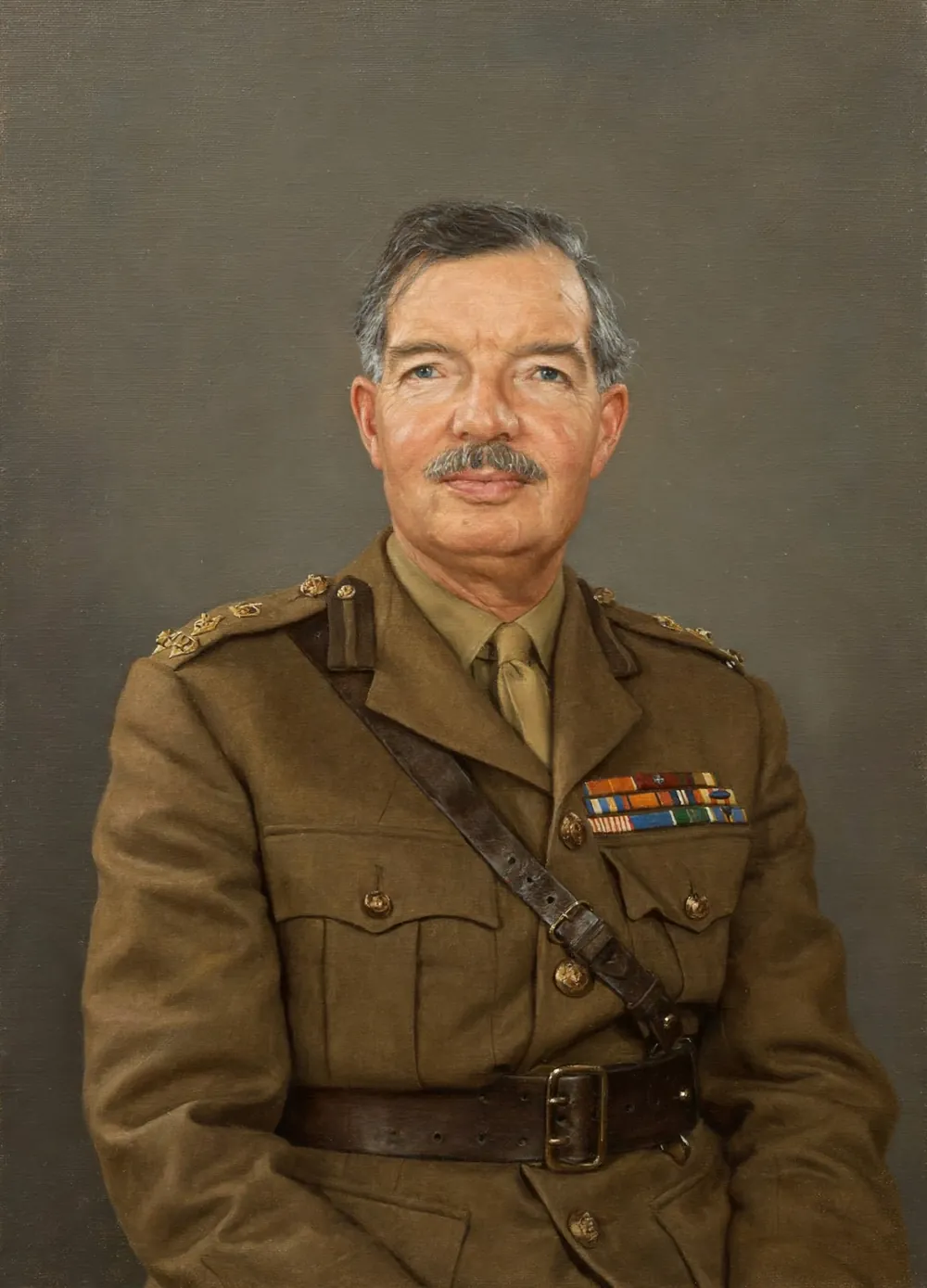
General Alan Cunningham (Britain). Commander of the British forces in Kenya, who advanced from the south and took Addis Ababa. Cunningham, the younger brother of Admiral Andrew Cunningham, later commanded the Eighth Army in North Africa and was relieved after the Battle of Crusader.
Emperor Haile Selassie (Ethiopia). Emperor of Ethiopia, who had been driven into exile in 1936 and who returned in 1941 to lead his people. Haile Selassie crossed from Sudan into Ethiopia in January 1941, at the head of a force of patriots and British troops, and entered Addis Ababa in triumph on 5 May 1941.
Prince Amedeo, Duke of Aosta (Italy). Viceroy of Italian East Africa and commander of the Italian forces. Aosta, a member of the Italian royal family, commanded the defence of the empire and surrendered with honour at Amba Alagi on 19 May 1941. He died as a prisoner of war in Nairobi in 1942.
Colonel Orde Wingate (Britain). Commander of Gideon Force, the British mission that organised the Ethiopian patriots. Wingate, an unconventional officer, led the patriots in the campaign that restored Haile Selassie, and he later commanded the Chindits in Burma.
General Guglielmo Nasi (Italy). Commander of the Italian forces at Gondar, who held out until 27 November 1941, when Gondar surrendered. Nasi’s defence of Gondar was the last Italian resistance in East Africa, and he surrendered with honour.
10. Frequently Asked Questions
When was the East Africa Campaign fought?
From 10 June 1940, when Italy entered the war, to 27 November 1941, when Gondar surrendered. The campaign lasted about 17 months, but most of it was fought in 1941, from February to November. The Italians invaded British Somaliland in August 1940, the British won the Battle of Keren in March 1941, Cunningham’s force took Addis Ababa on 6 April 1941, the Duke of Aosta surrendered at Amba Alagi in May, and the last Italian resistance ended at Gondar in November.
What was the Battle of Keren?
The Battle of Keren was fought in February and March 1941 in Eritrea, when the 4th Indian Division attacked the Italian defences in the mountains around Keren. It lasted seven weeks, it cost the 4th Indian Division about 4,000 casualties, and it opened the road to Asmara and to the Red Sea. Keren mattered because it was the gateway to Eritrea: the Italian defences were dug into the mountains, and the road to Asmara ran through the pass the battle was fought over. The seven weeks of fighting cost the 4th Indian Division about 4,000 casualties, but once Keren fell, the road to the Red Sea was open.
How was Ethiopia liberated?
By a two-pronged attack: General Platt advanced from Sudan in the north, winning the Battle of Keren, and General Cunningham advanced from Kenya in the south, taking Mogadishu and then Addis Ababa on 6 April 1941. Haile Selassie returned from exile in January 1941 and entered Addis Ababa in triumph on 5 May 1941. The two-pronged attack worked because the Italians could not defend both approaches at once: Platt came from the north and Cunningham from the south, and the country between them was held by the patriots. Haile Selassie’s return gave the liberation a symbol, and his entry into Addis Ababa on 5 May 1941 was its triumphant conclusion.
How many Italians were taken prisoner?
About 250,000 Italians and askari were taken prisoner in the campaign, the largest number of prisoners taken in a single campaign in Africa. Most of them surrendered, rather than being killed, and they were held in camps in Kenya and in South Africa for the rest of the war. The figure is so large because the Italian armies surrendered in whole formations, rather than fighting to the end: once their supply lines were cut and their strongholds had fallen, there was nothing left to fight for. The prisoners were held in Kenya and South Africa, and their capture removed an entire empire’s army from the war.
Who were the Ethiopian patriots?
The Arbegnoch, or Patriots, were Ethiopian fighters who had fought a guerrilla war against the Italians since the conquest of 1936. In 1940–1941, they were organised by the British mission under Colonel Orde Wingate, and they fought alongside the British in the liberation of their country. The patriots mattered because they had never stopped fighting: since the conquest of 1936, they had waged a guerrilla war in the mountains, and they knew the country the British were invading. Wingate’s mission gave them organisation and weapons, and they fought alongside the British as the allies they were, not as auxiliaries.
Why is the East Africa Campaign forgotten?
Because it was fought far from Europe, it was won quickly, and it was overshadowed by the campaigns in North Africa and in the Pacific that followed. But it was one of the most complete victories of the war: an empire was destroyed, a country was liberated, and a quarter of a million men were taken prisoner. The campaign is forgotten because it was won too quickly and too far away: the fighting was over in months, and the world’s attention had already moved to North Africa and to the Pacific. Yet its result was one of the most complete of the war.
11. Sources
- Wikipedia, “East African campaign (World War II)” — dates, strength, casualties and the course of the campaign.
- Encyclopædia Britannica, “East African Campaign” — background and the liberation of Ethiopia.
- Compton Mackenzie, Eastern Epic (Chatto & Windus, 1951) — the official history of the campaign in East Africa.
- A. J. Barker, The Civilizing Mission: A History of the Italo-Ethiopian War of 1935–1936 — for the background of the Italian conquest.
- Anthony Mockler, Haile Selassie’s War (Signal Books, 2003) — Haile Selassie and the Ethiopian patriots.
- Orde Wingate, Gideon Force — Wingate’s own account of the campaign in Ethiopia.
- David Levering Lewis, The Race to Fashoda — for the background of East Africa.
- Richard Pankhurst, The Ethiopians: A History (Blackwell, 1998).