 WAR ATLAS MILITARY HISTORY MAGAZINE · WWI — WWII
Hong Kong 1941
1. Lead
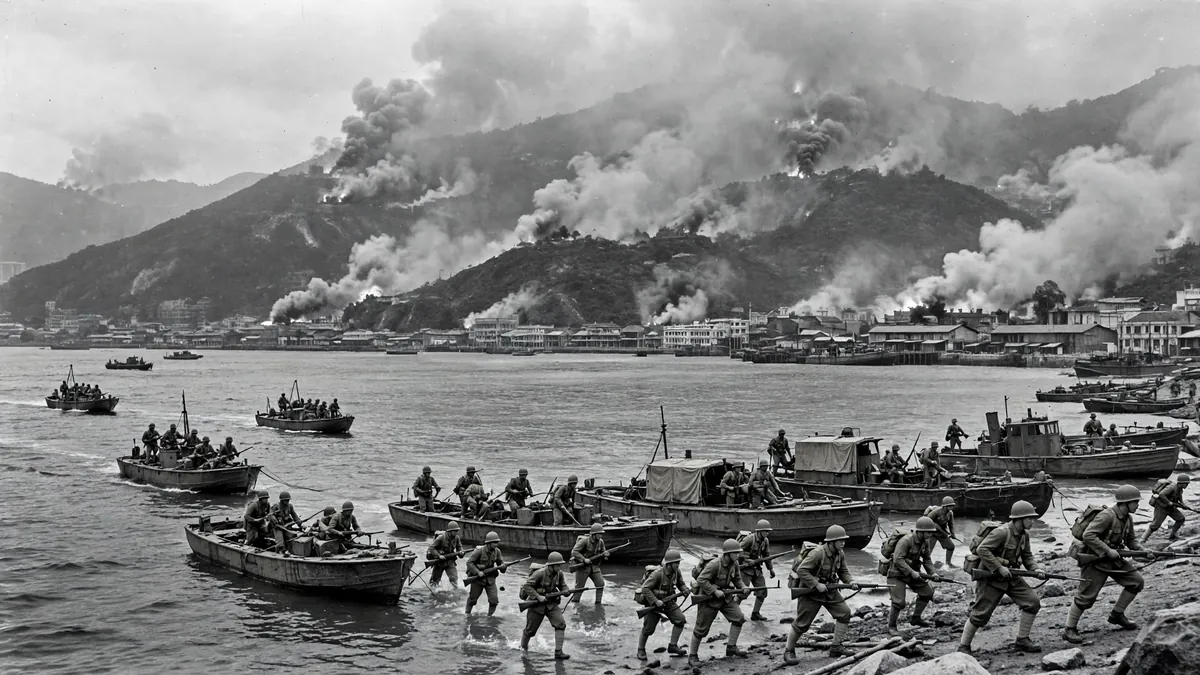
Hong Kong 1941 was the Japanese invasion of the British colony of Hong Kong, fought from 8 to 25 December 1941 in the Second World War. The Japanese 38th Division, under Lieutenant General Takashi Sakai, crossed from China into the New Territories and, after breaking through the Gin Drinkers Line, crossed to Hong Kong Island, where it fought a bitter battle in the hills and suburbs of the city.
The defenders — about 14,000 British, Indian, Canadian and Hong Kong troops under Major General Christopher Maltby — were outnumbered, outgunned and cut off from help, and on Christmas Day 1941, after 18 days of fighting, the Governor, Sir Mark Young, surrendered the colony.
The battle is remembered for the courage of the defenders, for the Canadian troops who had arrived only weeks before, and for the atrocities that followed the surrender, including the massacre of wounded men at St Stephen’s College. Hong Kong remained under Japanese occupation until August 1945.
2. Key Facts
| Date | 8–25 December 1941 (surrender on Christmas Day) |
| Location | Hong Kong: New Territories, Kowloon and Hong Kong Island |
| Result | Japanese victory; Hong Kong occupied until August 1945 |
| Japanese commander | Lt. Gen. Takashi Sakai (23rd Army); Maj. Gen. Takeo Ito (38th Division) |
| Allied commander | Maj. Gen. Christopher Maltby (garrison); Sir Mark Young (Governor) |
| Japanese strength | About 21,000–30,000 men of the 38th Division, with artillery and air support |
| Allied strength | About 14,000 men: British, Indian, Canadian and Hong Kong Volunteers |
| Japanese losses | About 2,000 killed and 3,000–6,000 wounded (estimates vary) |
| Allied losses | About 2,000 killed; about 2,000 wounded; about 10,000 taken prisoner |
3. Background
An indefensible colony
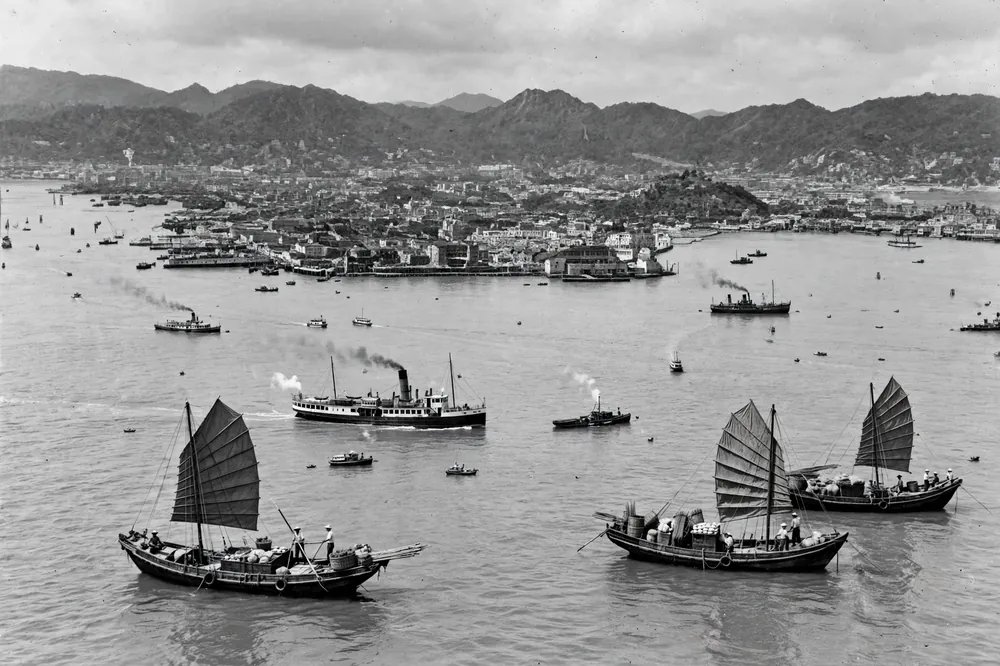
Hong Kong in 1941 was a British colony on the south coast of China, made up of Hong Kong Island, the Kowloon peninsula and the New Territories, a large area of mainland China leased from China in 1898. The colony was a great port and a trading city, but it was, in military terms, indefensible.
It was surrounded by Japanese-held China, its water supply came from reservoirs in the New Territories that could be cut off, and it was within range of Japanese aircraft from Canton. The British government knew this: in 1937, a defence review had concluded that Hong Kong could not be held against a Japanese attack, and that the garrison should be withdrawn in the event of war.
But the colony was a symbol of British power in Asia, and the government, under pressure from the Governor and from the Colonial Office, decided to hold it, and to reinforce it.
The Canadian reinforcements
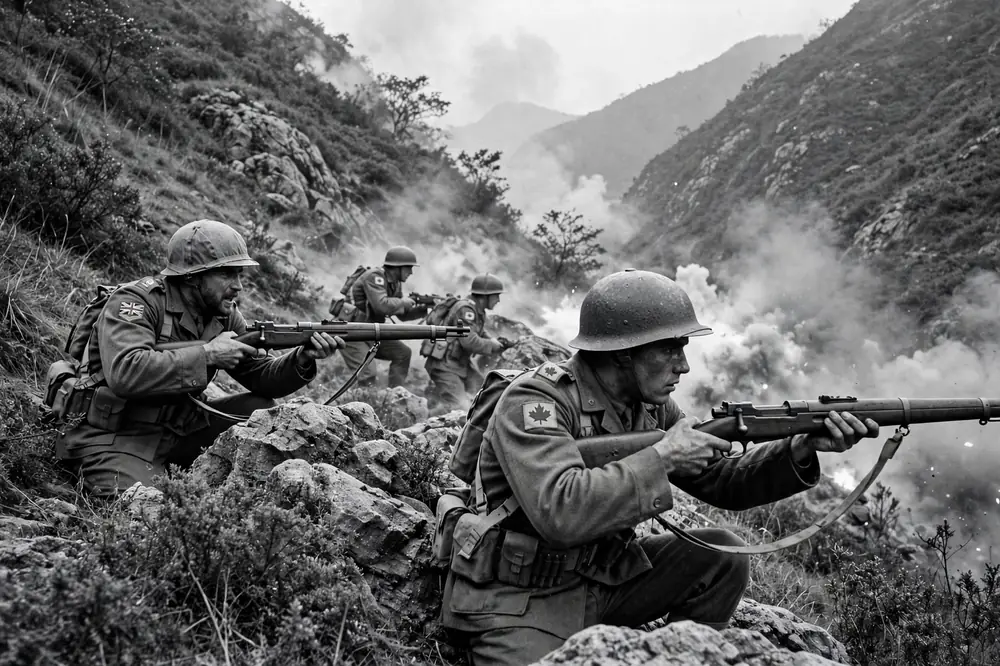
In November 1941, two battalions of Canadian troops — the Royal Rifles of Canada and the Winnipeg Grenadiers, about 1,975 men in total, known as C Force — arrived in Hong Kong, sent by the Canadian government at Britain’s request.
The Canadians were well trained but they had never fought, they had no experience of jungle warfare, and they arrived without their vehicles and with little of their equipment, which was still on the ships. They were sent to defend the island, and they fought with great courage in the battle that followed, but they were, in the words of one Canadian historian, “sent to a battle they could not win, in a place that could not be held”.
The decision to send them has been debated ever since, and it is remembered in Canada as one of the tragedies of the Canadian war effort.
The Japanese plan
The Japanese plan was simple: the 38th Division, under Major General Takeo Ito, would cross the frontier from China on 8 December 1941 — the same day as the attack on Pearl Harbor — and drive through the New Territories, break the Gin Drinkers Line, the defensive line across the Kowloon peninsula, and cross to Hong Kong Island. The Japanese had about 21,000 to 30,000 men, with artillery and air support, and they had studied the defences carefully: their agents had mapped the Gin Drinkers Line, and their aircraft had photographed the island. The Japanese commander, Lieutenant General Takashi Sakai, expected the colony to fall in a few days, and he was, in the end, almost right.
4. Opposing Forces
The Japanese attacking force was the 38th Division, a veteran division that had fought in China, with about 21,000 to 30,000 men, supported by artillery, engineers and aircraft from the 23rd Army. The division was well trained, well equipped and well led, and it had the advantage of surprise: it attacked on the same day as Pearl Harbor, when the British were still trying to understand what was happening.
The Japanese also had the advantage of the ground: they attacked from China, through the New Territories, and they knew the defences, because their agents had mapped them. The Japanese weakness was that they were attacking a fortified position, and that their supply lines were long, but in 18 days this did not matter.
| Japan | Allies | |
|---|---|---|
| Infantry | 38th Division (228th, 229th, 230th Regiments) | 1st Middlesex, 2nd Royal Scots, 5th/7th Rajputs, Royal Rifles of Canada, Winnipeg Grenadiers, Hong Kong Volunteers |
| Artillery | Well equipped; heavy guns and mortars | Few guns; coastal artillery fixed to the sea |
| Aircraft | 80+ aircraft; air superiority from the first day | 5 aircraft, destroyed on the ground on 8 December |
| Tanks | Few tanks; used on the island | 2 light tanks; no armoured force |
| Supply | From Canton, by road and rail | Water and food cut off when the New Territories fell |
The Allied garrison numbered about 14,000 men, under Major General Christopher Maltby. It was made up of British regulars — the 1st Battalion, Middlesex Regiment, and the 2nd Battalion, Royal Scots — Indian troops — the 5th and 7th Rajputs — the two Canadian battalions, and the Hong Kong Volunteer Defence Corps, a local force of Europeans and Eurasians.
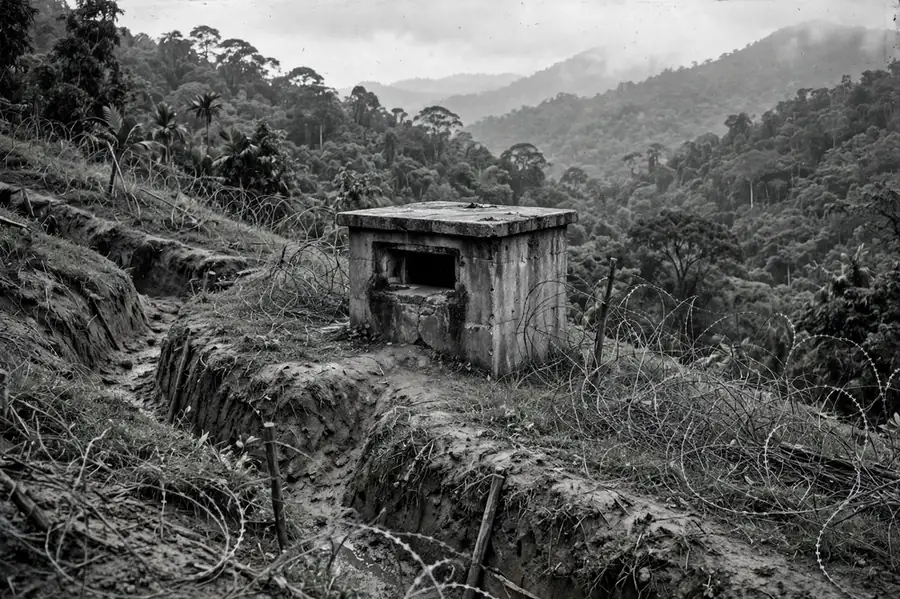
The garrison was short of everything: it had few guns, almost no aircraft, no tanks to speak of, and its water supply depended on reservoirs in the New Territories. Its one strength was the ground: the Gin Drinkers Line, a line of concrete pillboxes and trenches across the Kowloon peninsula, and the hills of Hong Kong Island, which were steep and covered in scrub, and which the defenders knew well.
The garrison fought with courage, but it was, from the first day, fighting a battle it could not win.
5. The Battle
8–10 December: the New Territories and the Gin Drinkers Line
The attack began on 8 December 1941, at 08:00, when Japanese troops crossed the frontier into the New Territories. The British forward troops, who were outnumbered, fell back to the Gin Drinkers Line, the defensive line across the Kowloon peninsula, which was held by the Royal Scots and the Indian troops.
The line was a strong position on paper, but it had a fatal weakness: it was too long for the troops available, and it had a gap in the centre, at the Shing Mun Redoubt, which the Japanese discovered and exploited. On 10 December, Japanese troops infiltrated the Shing Mun Redoubt at night, captured it, and broke through the line.
The defenders fell back to Kowloon, and on 11 December they were evacuated to Hong Kong Island, across the harbour, under Japanese shellfire. The mainland was lost, and with it the water supply of the colony.
18–19 December: the landing on the island
For a week, the Japanese shelled Hong Kong Island and bombed it from the air, and on 18 December they landed on the north-east coast of the island, at Tai Tam and Lyemun. The landing was made at night, in darkness, and the Japanese troops, who had been trained for night fighting, got ashore before the defenders could react.
The battle for the island was fought in the hills and in the suburbs: at Wong Nai Chung Gap, the pass through the hills that led to the city, the Winnipeg Grenadiers and the Royal Scots fought a desperate battle, and at Mount Butler and Jardine’s Lookout, the Canadians and the Hong Kong Volunteers held the high ground.
The Japanese, who had more men and more guns, pushed forward steadily, and by 19 December they had taken the high ground and were threatening the city itself.
20–25 December: the fall of the city
The last week of the battle was fought in the streets and in the hills around the city. The defenders, who were short of water, food and ammunition, fought on, but they were driven back, hill by hill, and the Japanese closed in on the city.
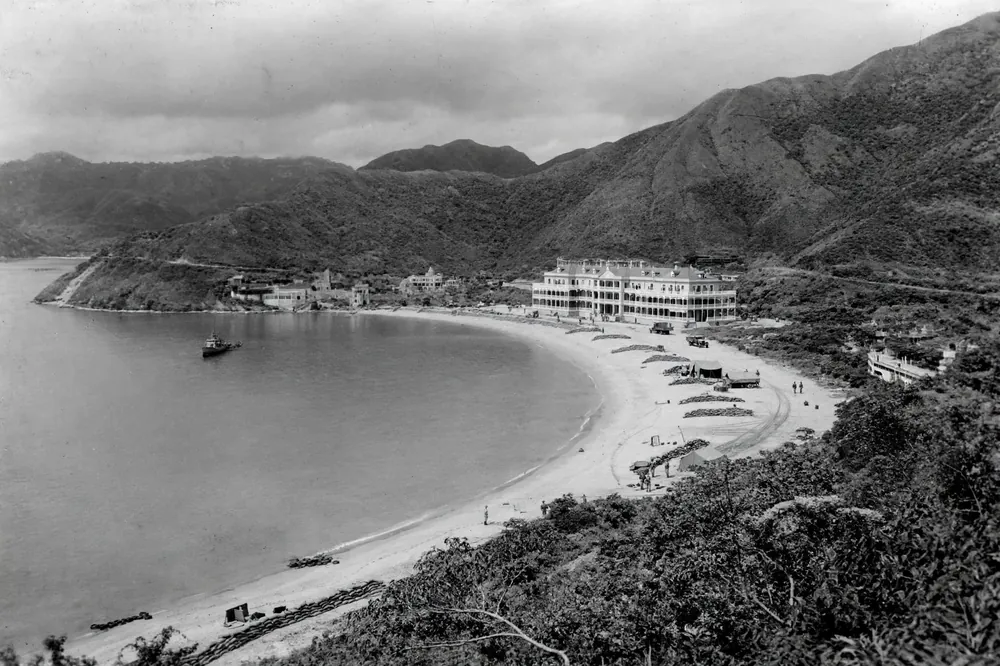
On 22 December, the Japanese took the Repulse Bay Hotel, where wounded men were being treated, and on 25 December, Christmas Day, they reached the centre of the city. The Governor, Sir Mark Young, who had been in Government House throughout the battle, surrendered the colony at 15:15 on Christmas Day, after consulting with Maltby, who told him that further resistance was useless.
The surrender was made at the Peninsula Hotel in Kowloon, and the Japanese flag was raised over Government House. The battle had lasted 18 days.
6. Turning Point
The Shing Mun Redoubt
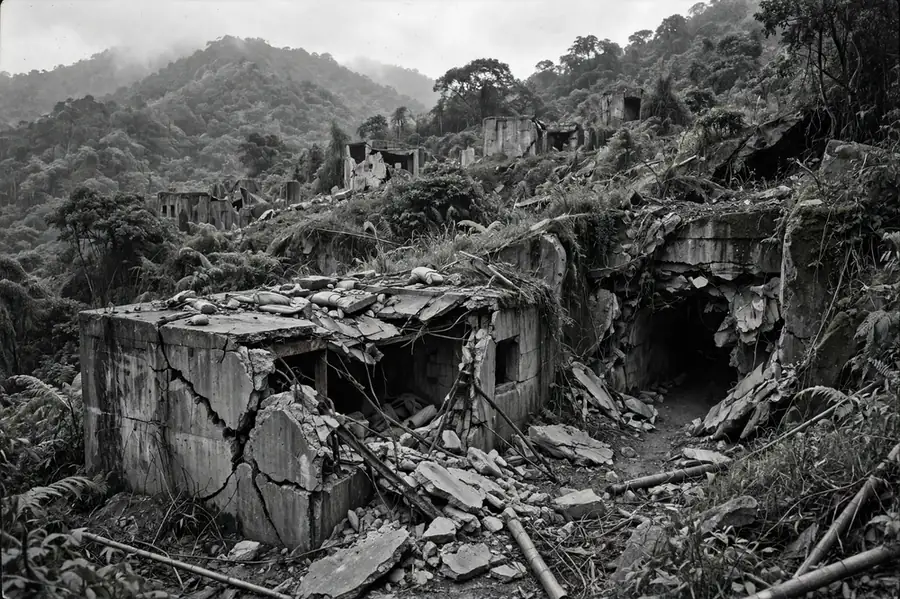
The turning point of the battle was the fall of the Shing Mun Redoubt on the night of 10 December. The redoubt was the key to the Gin Drinkers Line: it guarded the gap in the centre of the line, and if it fell, the line could not be held.
The Japanese, who had discovered the gap, attacked it at night, infiltrated it, and captured it, and the Gin Drinkers Line, which the British had spent years building, was broken in a night. The fall of the redoubt made the defence of Kowloon impossible, and it forced the British to evacuate to the island, where they were cut off from their water supply and from help.
The battle was, in effect, lost on 10 December, and the eight days that followed were a fighting retreat.
The landing on the island
The second turning point was the Japanese landing on Hong Kong Island on the night of 18 December. The defenders had expected the landing to come at a different place, and they had not enough troops to guard the whole coast. The Japanese, who had trained for night landings, got ashore in strength, and they took the high ground before the defenders could react.
The landing made the defence of the island impossible: the Japanese held the hills, and the British held the city, and the city could not be held without the hills. The battle for the island was, from the night of 18 December, a battle the defenders could not win, and it was fought, in the words of one Canadian officer, “for honour, not for victory”.
7. Casualties and Losses
Casualty figures for Hong Kong are estimates, and sources differ, but the figures are generally agreed to be about 2,000 Allied dead, about 2,000 wounded, and about 10,000 taken prisoner, against about 2,000 Japanese killed and 3,000 to 6,000 wounded. The Canadian losses were heavy: of the 1,975 Canadians who arrived in November, 290 were killed in the battle and 493 were wounded, and of the survivors, 267 died in Japanese captivity. The Indian losses were also heavy, and the Hong Kong Volunteers, a small force, lost many of their men. The Japanese losses, though lighter than the Allied losses, were heavier than the Japanese had expected, and they showed that the defenders, though outnumbered, had fought hard.
| Allies | Japan | |
|---|---|---|
| Killed | About 2,000 (estimate) | About 2,000 (estimate) |
| Wounded | About 2,000 (estimate) | About 3,000–6,000 (estimate) |
| Prisoners | About 10,000 | Few |
| Total | About 14,000 (most of the garrison) | About 5,000–8,000 |
| Died in captivity | About 1,000+ (estimate, including 267 Canadians) | — |
The losses did not end with the surrender. The prisoners — British, Indian, Canadian and Hong Kong troops, and the civilians who were interned — were held in camps in Hong Kong and in Japan, where they suffered from hunger, disease and ill-treatment, and about 1,000 of them died in captivity.
The civilians of Hong Kong suffered too: the Japanese occupation, which lasted until August 1945, brought food shortages, forced labour and the deportation of many of the city’s people to China. The battle’s casualties, though small compared with the battles of the war in Europe and in the Pacific, were the beginning of a long and hard occupation, and they are remembered in Hong Kong, in Canada and in Britain as a sacrifice that was made for a colony that could not be held.
8. Map and Geography
The colony and its harbours
Hong Kong is a colony of water and hills. Hong Kong Island, the heart of the colony, is a steep, hilly island, about 11 kilometres long and 5 kilometres wide, separated from the Kowloon peninsula by a harbour about a kilometre wide.
The New Territories, the large area of mainland China leased in 1898, stretch north from Kowloon to the Chinese frontier, and they are a landscape of hills, valleys and small villages. The colony’s water supply came from reservoirs in the New Territories, and its food came from China, and both could be cut off by an enemy who held the mainland.
The harbour, which was the reason for the colony’s existence, was a great natural harbour, and it was defended by coastal guns that pointed out to sea, not inland — a fact that mattered in 1941, when the enemy came from the land.
The Gin Drinkers Line and Wong Nai Chung Gap
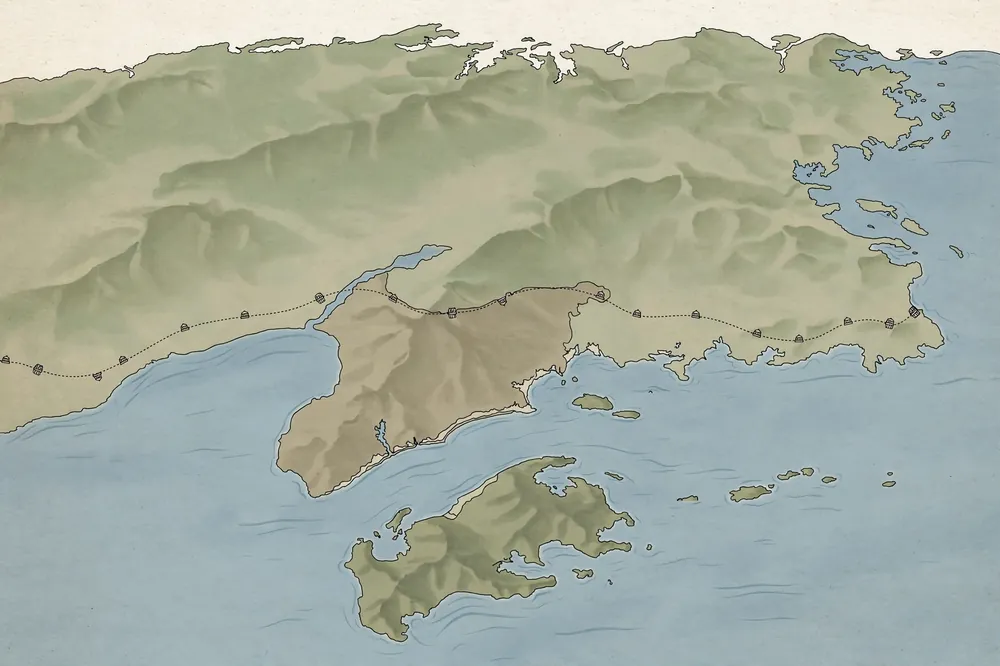
The Gin Drinkers Line was a defensive line across the Kowloon peninsula, from the sea in the west to the sea in the east, made up of concrete pillboxes, trenches and barbed wire, built in the 1930s to defend the colony against an attack from China.
Its key was the Shing Mun Redoubt, a group of pillboxes and tunnels in the hills at the centre of the line, which guarded the gap through which an attacker would have to pass. The line was strong, but it was too long for the troops available, and the redoubt, which was the key, was captured in a night.
On Hong Kong Island, the key was Wong Nai Chung Gap, the pass through the hills that led from the north coast to the city, and it was fought over for two days, by the Canadians and the Royal Scots, before it fell.
The geography of Hong Kong — a harbour, a peninsula, a line of hills and a gap — shaped the battle at every stage, and it shaped the defeat.
9. Outcome and Legacy of Hong Kong 1941
The occupation
Hong Kong remained under Japanese occupation from 25 December 1941 until 30 August 1945, when British forces returned. The occupation was a hard time for the people of Hong Kong: food was short, the Japanese military police, the Kempeitai, ruled by fear, and many of the city’s people were deported to China, where they died of hunger and disease.
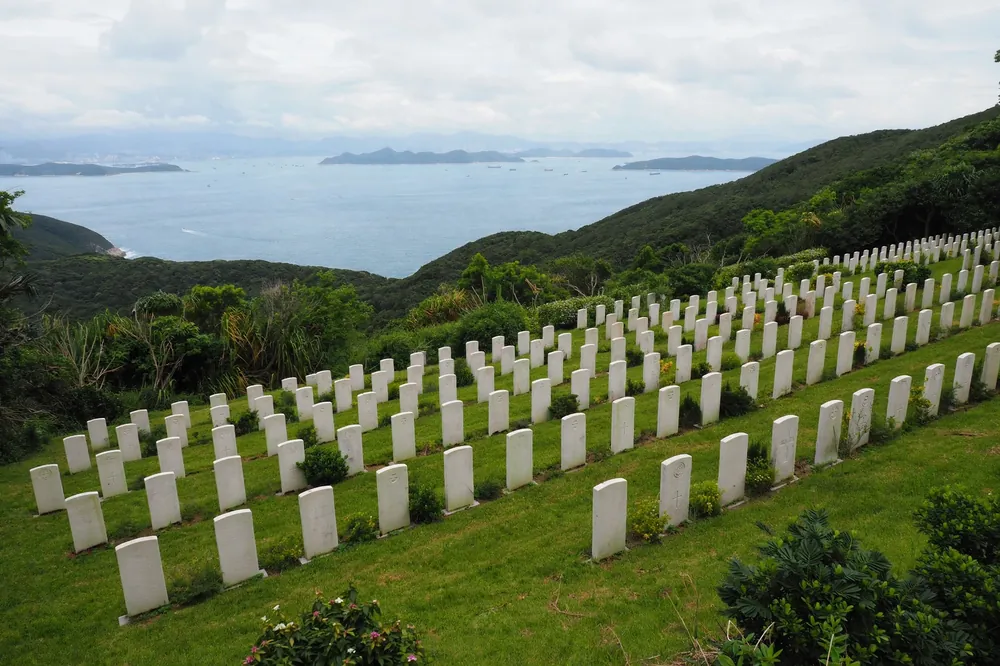
The population of Hong Kong fell from about 1.6 million in 1941 to about 600,000 in 1945. The occupation is remembered in Hong Kong as a time of suffering, and it is marked by the memorials at the Hong Kong War Cemetery at Sai Wan, where the men who died in the battle are buried, and at the Cenotaph in Central, where the dead of both world wars are remembered.
The battle itself is remembered as a defeat, but it is also remembered as a battle in which the defenders fought with courage against impossible odds.
The atrocities
The battle is also remembered for the atrocities that followed the surrender, and that are a part of its history that must be told honestly and without sensationalism. At St Stephen’s College, which was being used as a hospital, Japanese soldiers killed wounded men and nurses on Christmas Day 1941, and at other places in the colony, prisoners and civilians were killed.
The exact numbers are not known, and the events have been the subject of inquiry and of controversy, but the fact of the killings is not disputed, and it is recorded in the war crimes trials that followed the war. Lieutenant General Takashi Sakai, the Japanese commander, was tried for war crimes and executed in 1946, and other Japanese officers were tried for the killings at St Stephen’s College.
The atrocities are remembered, in Hong Kong and in Canada, as a warning of what war does to the rules that are supposed to govern it.
The inquiry and the veterans
In Canada, the decision to send C Force to Hong Kong was the subject of a Royal Commission in 1942, under Mr Justice Lyman Duff, which examined whether the Canadian government had been misled about the defences of the colony.
The commission found that the government had acted on the advice it was given, and that no one was to blame, but the finding did not satisfy the veterans, who felt that they had been sent to a battle they could not win.
The Hong Kong veterans, in Canada and in Britain, formed associations after the war, and they campaigned for recognition, for compensation, and for the memory of the men who had died. Their campaign was, in part, successful: memorials were built in Ottawa and in Hong Kong, and the veterans were honoured in Canada and in Britain, but the debate over the decision to send them has never been settled, and it is remembered in Canada as one of the tragedies of the Canadian war effort.
10. Commanders
Major General Christopher Maltby (Britain). Commander of the Hong Kong garrison. Maltby, an Indian Army officer, commanded the defence of the colony and advised the Governor that further resistance was useless on Christmas Day 1941. He spent the war as a prisoner of the Japanese and was released in 1945.
Sir Mark Young (Britain). Governor of Hong Kong. Young, who had been Governor since 1941, remained in Government House throughout the battle and surrendered the colony on Christmas Day 1941. He spent the war as a prisoner and returned as Governor in 1946.
Lieutenant General Takashi Sakai (Japan). Commander of the Japanese 23rd Army, which invaded Hong Kong. Sakai, a veteran of the war in China, ordered the invasion and was responsible for the conduct of the Japanese troops. He was tried for war crimes after the war and executed in 1946.
Major General Takeo Ito (Japan). Commander of the 38th Division, which fought the battle. Ito’s division crossed from China, broke the Gin Drinkers Line, and took Hong Kong Island. He later commanded in the Pacific and was tried for war crimes after the war.
Brigadier John Lawson (Canada). Commander of C Force, the Canadian contingent. Lawson, who had commanded the Royal Rifles of Canada, was killed on 19 December 1941, fighting at Wong Nai Chung Gap, and he was the first Canadian general to be killed in action in the Second World War.
Lieutenant Colonel William Home (Britain). Commander of the 2nd Battalion, Royal Scots, which held the Gin Drinkers Line and fought at Wong Nai Chung Gap. Home’s battalion bore the brunt of the fighting on the mainland and on the island, and it lost heavily.
11. Frequently Asked Questions
When was the Battle of Hong Kong fought?
From 8 to 25 December 1941, in the New Territories, Kowloon and on Hong Kong Island. The Japanese attacked on the same day as Pearl Harbor, broke through the Gin Drinkers Line on 10 December, and landed on Hong Kong Island on the night of 18 December. After a week of fighting in the hills and suburbs, the colony surrendered on Christmas Day 1941, after 18 days of fighting, and Hong Kong remained under Japanese occupation until August 1945.
How many Canadians fought at Hong Kong?
About 1,975 men, in two battalions — the Royal Rifles of Canada and the Winnipeg Grenadiers — known as C Force. They arrived in November 1941, only weeks before the battle. Of them, 290 were killed in the battle and 267 died in Japanese captivity. The Canadians mattered out of proportion to their numbers, because they had arrived only weeks before the battle and fought through it to the end. Their losses were terrible: of the men who landed, hundreds were killed in the battle and hundreds more died in captivity.
What was the Gin Drinkers Line?
The Gin Drinkers Line was a defensive line across the Kowloon peninsula, made up of concrete pillboxes, trenches and barbed wire, built in the 1930s. Its key was the Shing Mun Redoubt, which was captured by the Japanese on the night of 10 December 1941, breaking the line. The line mattered because it was the colony’s only prepared defence: once it was broken, there was nothing between the Japanese and the city except the harbour. Its fall on the night of 10 December decided the campaign, and the rest of the battle was fought on the island itself, where the defenders had no prepared positions to fall back to.
Why did Hong Kong surrender on Christmas Day?
Because further resistance was useless: the Japanese had taken the high ground, they were in the city, and the defenders were short of water, food and ammunition. Major General Maltby advised the Governor, Sir Mark Young, that the colony could not be held, and Young surrendered at 15:15 on 25 December 1941. The surrender was inevitable by then: the Japanese held the high ground, and the defenders had no water, no food and almost no ammunition left. Young surrendered to spare the city street fighting that would have killed thousands more, and the timing — Christmas Day — made the surrender one of the war’s bleakest moments.
What happened at St Stephen’s College?
St Stephen’s College was being used as a hospital, and on Christmas Day 1941 Japanese soldiers killed wounded men and nurses there. The exact numbers are not known, and the events have been the subject of inquiry, but the killings are recorded in the war crimes trials that followed the war, and the officers responsible were tried. The killings are remembered because they were a war crime, not a battle: the victims were wounded men and nurses in a hospital, killed after the fighting had ended. That is why St Stephen’s College is remembered alongside the battle itself, as the darkest episode of the Hong Kong campaign.
How long was Hong Kong occupied?
From 25 December 1941 until 30 August 1945, when British forces returned. The occupation brought food shortages, forced labour and the deportation of many of the city’s people, and the population fell from about 1.6 million to about 600,000. The occupation lasted almost four years, and it transformed the city: food ran short, forced labour became routine, and many of the city’s people were deported to the mainland. The population fell by more than half, from about 1.6 million to about 600,000, and the city that the British returned to in August 1945 was far smaller and poorer than the one they had left.
12. Sources
- Wikipedia, “Battle of Hong Kong” — dates, strength, casualties and the course of the battle.
- Encyclopædia Britannica, “Battle of Hong Kong” — background and the surrender.
- Tony Banham, Not the Slightest Chance: The Defence of Hong Kong, 1941 (University of British Columbia Press, 2003) — the standard history of the battle.
- Tim Carew, The Fall of Hong Kong (Pan Books, 1960) — the battle and the garrison.
- Oliver Lindsay, The Lasting Honour: The Fall of Hong Kong, 1941 (Hamish Hamilton, 1978) — the defence and the occupation.
- Veterans Affairs Canada, “The Battle of Hong Kong” — C Force and the Canadian losses.
- Philip Snow, The Fall of Hong Kong: Britain, China and the Japanese Occupation (Yale University Press, 2003).
- John Luff, The Hidden Years: The Untold Story of Hong Kong — for the occupation.