 WAR ATLAS MILITARY HISTORY MAGAZINE · WWI — WWII
Hawker Hurricane
1. Lead
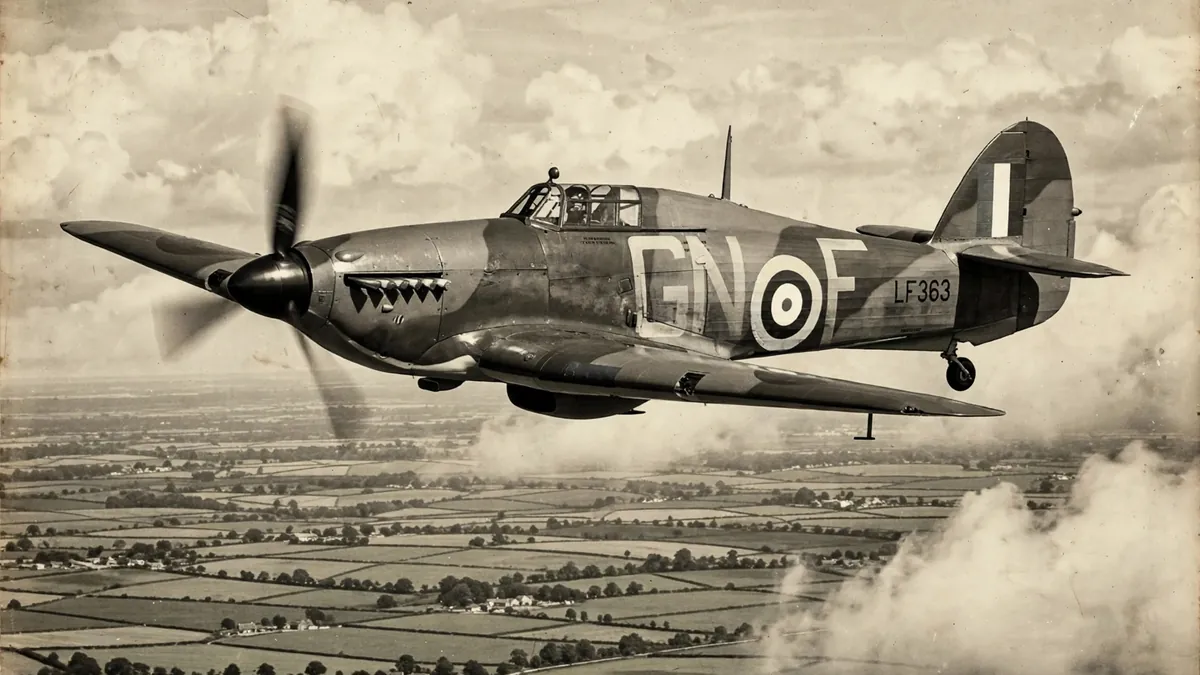
The Hawker Hurricane was the fighter that won the Battle of Britain, and the most important British fighter of the first half of the Second World War. Designed by Sydney Camm and first flown in 1935, it was the Royal Air Force’s first monoplane fighter, and its first fighter with a retractable undercarriage, an enclosed cockpit and eight machine guns, and it was the fighter that the RAF had in numbers when the war began. In the Battle of Britain in the summer of 1940, the Hurricane shot down more German aircraft than the Spitfire and all the other British defences combined, and it was the Hurricane, and not the Spitfire, that bore the brunt of the battle, and that broke the Luftwaffe’s attempt to destroy the RAF. The Hurricane was built in large numbers — 14,487 in all — and it served in every theatre of the war, from the deserts of North Africa to the snows of Russia, from the island of Malta to the jungles of Burma, and it was adapted as a fighter-bomber, as a tank-buster, as a naval fighter and as a night fighter, and it is remembered as the workhorse of Fighter Command, and as the aircraft that saved Britain in 1940.
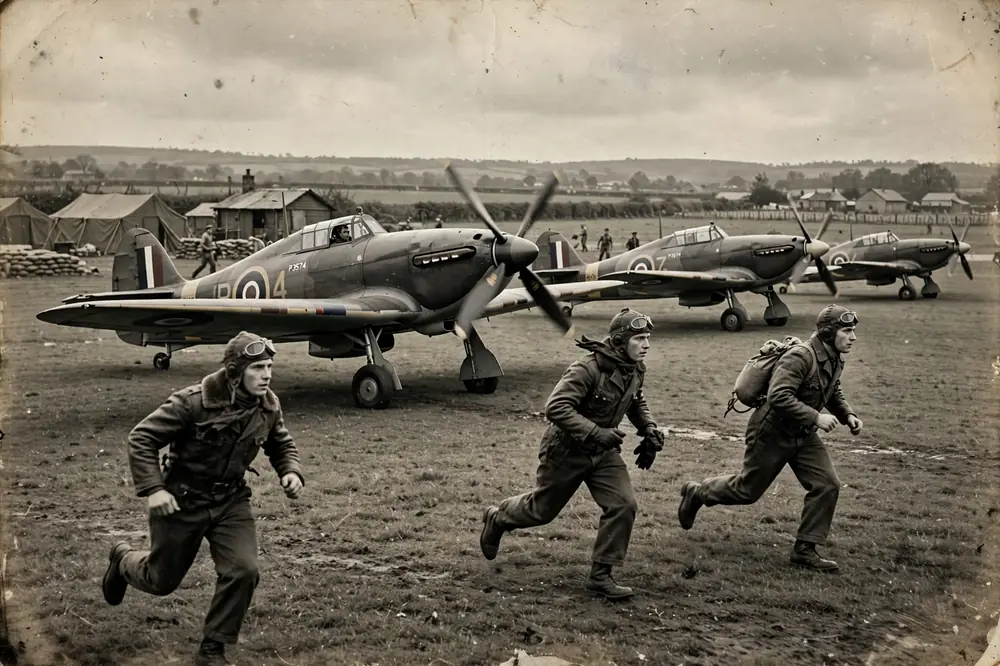
The Hurricane is often overshadowed by the Spitfire, which was faster, more graceful and more famous, but the Hurricane was the fighter that mattered in 1940, because there were more Hurricanes than Spitfires, and because the Hurricane was easier to build, easier to repair and easier to fly, and because it could absorb damage that would have destroyed a Spitfire. The Hurricane’s pilots were the men of the Battle of Britain, and they included the aces Douglas Bader, who flew with artificial legs, and Robert Stanford Tuck, and the Polish and Czech pilots who had escaped from their occupied countries and who fought for Britain with a fury that the Germans had not expected. The Hurricane’s story is the story of the Battle of Britain, and of the men who flew it, and of the aircraft that was built in a hurry, and that served in every theatre, and that is remembered as the fighter that won the battle that saved Britain.
2. Key Facts
| Type | Single-seat fighter (later fighter-bomber) |
| Origin | United Kingdom |
| Designer | Sydney Camm, Hawker Aircraft |
| Manufacturer | Hawker; Gloster; Austin; Canadian Car and Foundry |
| First flight | 6 November 1935 |
| In service | December 1937–1947 (RAF); later with other air forces |
| Produced | 1937–1944; 14,487 built |
| Crew | 1 |
| Length | 9.84 m (32 ft 3 in) |
| Wingspan | 12.19 m (40 ft) |
| Height | 4.0 m (13 ft 1 in) |
| Max speed | About 547 km/h (340 mph) |
| Range | About 965 km (600 miles) |
| Service ceiling | 11,000 m (36,000 ft) |
| Engine | Rolls-Royce Merlin XX V-12, 1,280 hp (Mk II) |
| Armament | Eight .303-inch Browning machine guns (Mk I/II); four 20 mm Hispano cannon (Mk IIC); two 40 mm Vickers S guns (Mk IID) |
| Bomb load | Up to 2 × 250 lb bombs (fighter-bomber versions) |
3. Background and Development
Sydney Camm and the RAF’s Requirement
The Hurricane was designed by Sydney Camm, the chief designer of Hawker Aircraft, in response to a requirement issued by the British Air Ministry in 1934 for a new fighter, and it was the first British fighter to be designed as a monoplane, with a retractable undercarriage, an enclosed cockpit and eight machine guns. Camm’s design was based on the Hawker Fury biplane, and it used the same construction methods, with a steel-tube fuselage and fabric covering, and a wooden wing, and it was powered by the new Rolls-Royce Merlin engine, which was the most advanced engine in Britain, and which gave the Hurricane a top speed of about 547 kilometres per hour. The Hurricane first flew on 6 November 1935, and it was a success, and the Air Ministry ordered it into production, and the first Hurricanes entered service with the Royal Air Force in December 1937, and by the outbreak of war in September 1939 the RAF had 19 squadrons of Hurricanes, more than of any other fighter.
The Race to Rearm
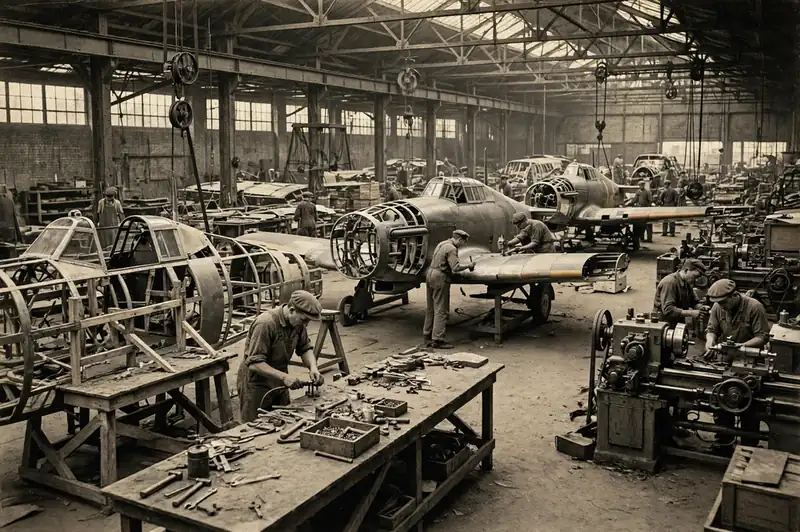
The Hurricane was built in a race against time, as Britain rearmed in the late 1930s in the face of the growing German threat, and its production was a triumph of British industry. The Hurricane was designed to be easy to build, with a steel-tube fuselage that could be made by workers who had never built an aircraft, and with a wooden wing that could be made by furniture makers, and it was built by Hawker, by Gloster, by the Austin Motor Company and by the Canadian Car and Foundry Company, which built Hurricanes in Canada for the RAF and for the Soviet Union. The Hurricane’s production rose from a handful in 1937 to thousands in 1940, and by the Battle of Britain the RAF had more Hurricanes than Spitfires, and the Hurricane’s ease of production was one of the reasons Britain could replace its losses and keep fighting. The Hurricane’s story is therefore the story of British rearmament, and of the industry that built the aircraft that saved Britain, and of the men and women who built it in a hurry, and who kept building it through the war.
The Eight-Gun Fighter
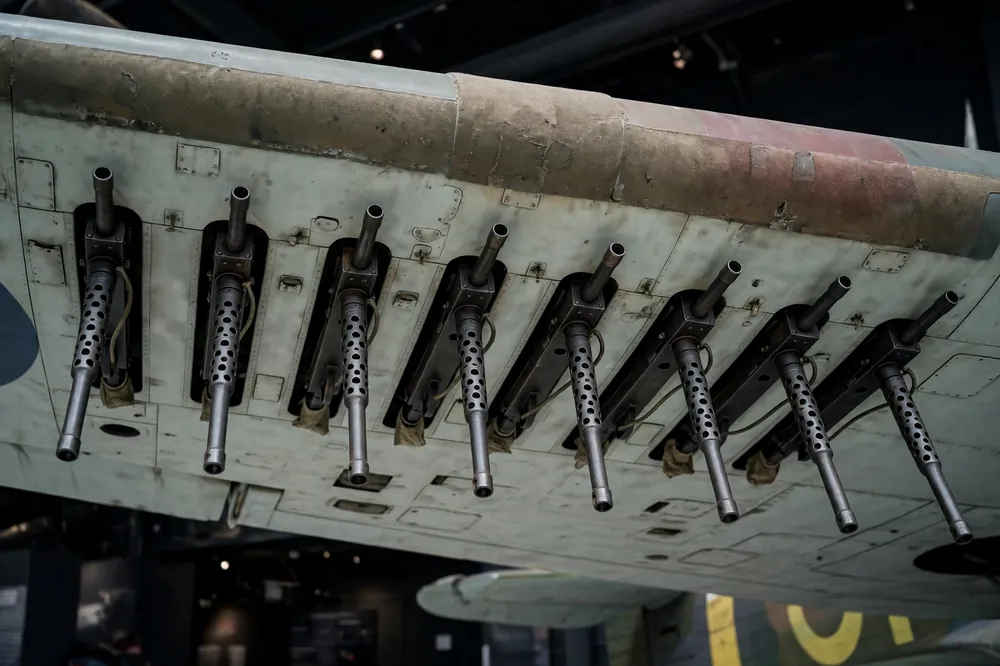
The Hurricane was the first British fighter to carry eight machine guns, and its armament was a revolution in fighter design. Before the Hurricane, British fighters carried two machine guns, and they were armed for a duel with another fighter, but the Hurricane’s eight .303-inch Browning machine guns, which fired 9,600 rounds per minute between them, were designed to destroy a bomber, and they gave the Hurricane a weight of fire that no earlier fighter had possessed. The Hurricane’s guns were mounted in its wings, four in each wing, and they were harmonised to converge at a range of about 250 metres, and they were fired by a single button on the control column, and they were the weapon that shot down the German bombers in the Battle of Britain. The Hurricane’s eight guns set the standard for the fighters that followed it, and the Spitfire, which was designed at the same time, also carried eight guns, and the eight-gun fighter became the standard fighter of the Second World War, and it is the Hurricane that introduced it.
4. Design
Steel Tube, Fabric and Wood
The Hurricane’s construction was old-fashioned, and it was the reason the aircraft was so easy to build and so easy to repair. Its fuselage was built of steel tubes, welded together and covered with fabric, and its wing was built of wood, with fabric covering, and its engine was the Rolls-Royce Merlin, which was the most advanced engine in Britain, and which gave the Hurricane a top speed of about 547 kilometres per hour. The Hurricane’s old-fashioned construction was a disadvantage in performance, because it was heavier and less aerodynamic than the Spitfire, which was built of stressed-skin aluminium, but it was an advantage in service, because a Hurricane that was damaged in combat could be repaired in the field, with fabric and with wood, and it could be back in the air in hours, while a Spitfire that was damaged had to be sent to a workshop. The Hurricane’s construction was therefore a matter of practicality, and it was the reason the RAF could keep its Hurricanes flying through the Battle of Britain, when the Spitfires were grounded for repairs.
The Merlin Engine and the Eight Guns
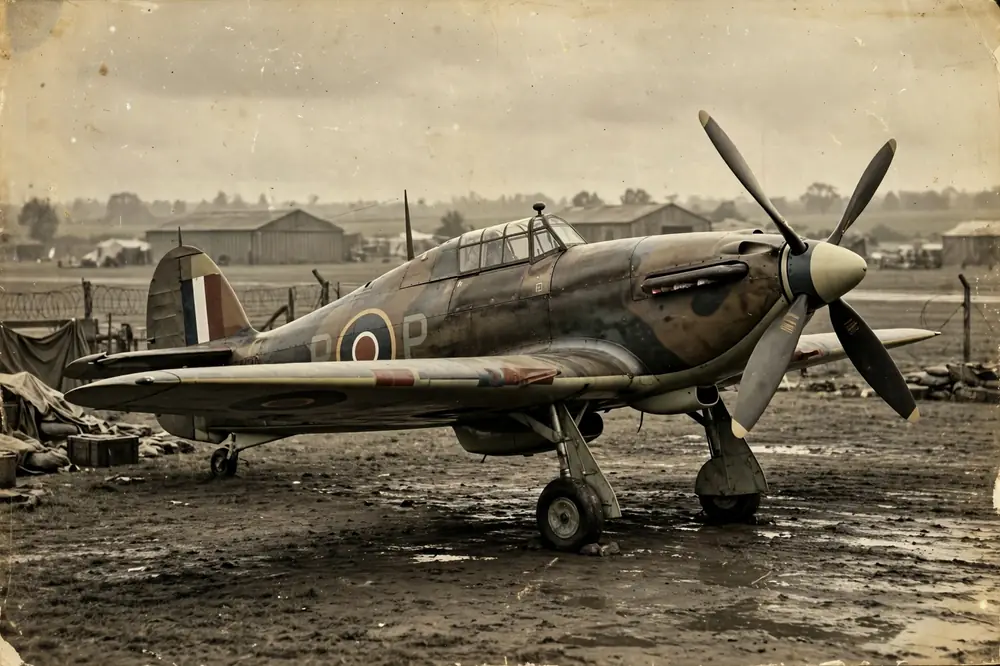
The Hurricane was powered by the Rolls-Royce Merlin engine, which was the most advanced engine in Britain, and which was also the engine of the Spitfire, and which gave the Hurricane a top speed of about 547 kilometres per hour and a service ceiling of 11,000 metres. The Merlin engine was a V-12 liquid-cooled engine, and it was built by Rolls-Royce, and it was the engine that powered the fighters and the bombers that won the war, and it is one of the most famous engines in history. The Hurricane’s armament was eight .303-inch Browning machine guns, mounted in its wings, and they fired 9,600 rounds per minute between them, and they were the weapon that shot down the German bombers in the Battle of Britain. The later Hurricane Mk IIC was armed with four 20 mm Hispano cannon, which gave it a heavier punch, and the Hurricane Mk IID was armed with two 40 mm Vickers S guns, which made it a tank-buster, and the Hurricane’s armament changed through the war, as the aircraft was adapted for new roles, and as the RAF needed a fighter that could do more than shoot down bombers.
Strengths and Weaknesses
The Hurricane’s strengths were its ease of production, its ease of repair, its stability as a gun platform and its ability to absorb damage, and its weaknesses were its speed and its manoeuvrability, which were inferior to those of the Spitfire and of the German Bf 109. The Hurricane was slower than the Spitfire by about 50 kilometres per hour, and it could not turn as tightly, and it was at a disadvantage in a dogfight with a Bf 109, but it was a stable gun platform, and its eight guns were accurate, and it could shoot down a bomber with a single burst, and it was the aircraft that the RAF used to attack the bombers, while the Spitfires attacked the fighters. The Hurricane’s weaknesses were therefore a matter of tactics: the RAF learned to use the Hurricane against the bombers and the Spitfire against the fighters, and the two aircraft complemented each other, and together they won the Battle of Britain. The Hurricane’s story is the story of an aircraft that was not the best, but that was good enough, and that was available in the numbers that were needed, when they were needed.
5. Variants
| Variant | Years | Key features | Production |
|---|---|---|---|
| Hurricane Mk I | 1937–1940 | Merlin II/III engine; eight .303-inch guns; fabric-covered wings (early) | 4,200 |
| Hurricane Mk IIA/B/C | 1940–1944 | Merlin XX engine, 1,280 hp; Mk IIB 12 guns; Mk IIC four 20 mm cannon | 8,955 (all Mk II: IIA 451; IIB 3,693; IIC 4,811) |
| Hurricane Mk IID | 1942–1944 | Two 40 mm Vickers S anti-tank guns; tank-buster | 296 |
| Hurricane Mk IV | 1943–1944 | Universal wing; bombs, rockets or 40 mm guns | 524 |
| Sea Hurricane | 1941–1943 | Naval version; catapult-launched (CAM ships) and carrier-based | About 800 converted from Mk I/II airframes (already counted above) |
| Hurricane Mk XII | 1941–1943 | Canadian-built; Packard Merlin engine | 510 Mk X/XII additional (1,451 built in Canada in total, including Mk I and Mk IIB counted above) |
Mk I and Mk II
The Hurricane Mk I was the original version, powered by the Rolls-Royce Merlin II and III engines, and armed with eight .303-inch Browning machine guns, and it was the version that fought the Battle of Britain, though by the summer of 1940 many Mk Is had been fitted with metal-covered wings and with a Rotol constant-speed propeller, which improved their performance. The Hurricane Mk II, which entered service in 1940, was powered by the more powerful Merlin XX engine of 1,280 horsepower, and it was built in three versions: the Mk IIA, with eight guns, the Mk IIB, with twelve guns, and the Mk IIC, with four 20 mm Hispano cannon, which gave it a heavier punch, and which was the version that served in North Africa, in Malta and in Russia. The Mk II was the most numerous Hurricane, with 8,955 built, and it was the version that served in every theatre of the war, and it is the version that most people picture when they think of the Hurricane.
Mk IIC and Mk IID: Cannon and Tank-Buster
The Hurricane Mk IIC was the cannon-armed version, with four 20 mm Hispano cannon in its wings, and it was used as a fighter-bomber and as a night fighter, and it served in North Africa, in Malta, in Russia and in Burma, where its cannon were effective against ground targets and against aircraft. The Hurricane Mk IID was the tank-buster version, armed with two 40 mm Vickers S guns, one under each wing, and with two .303-inch machine guns for aiming, and it was used in North Africa, where it attacked the German and Italian tanks in the desert, and where it was known as the “flying can-opener”, because its 40 mm shells could penetrate the armour of a tank. The Mk IID’s pilots, who included the aces of the desert air force, learned to attack a tank from a shallow dive, and to fire a short burst at close range, and their success was a measure of the Hurricane’s versatility, and of the RAF’s ability to adapt an old fighter to a new role.
Sea Hurricane and Other Versions
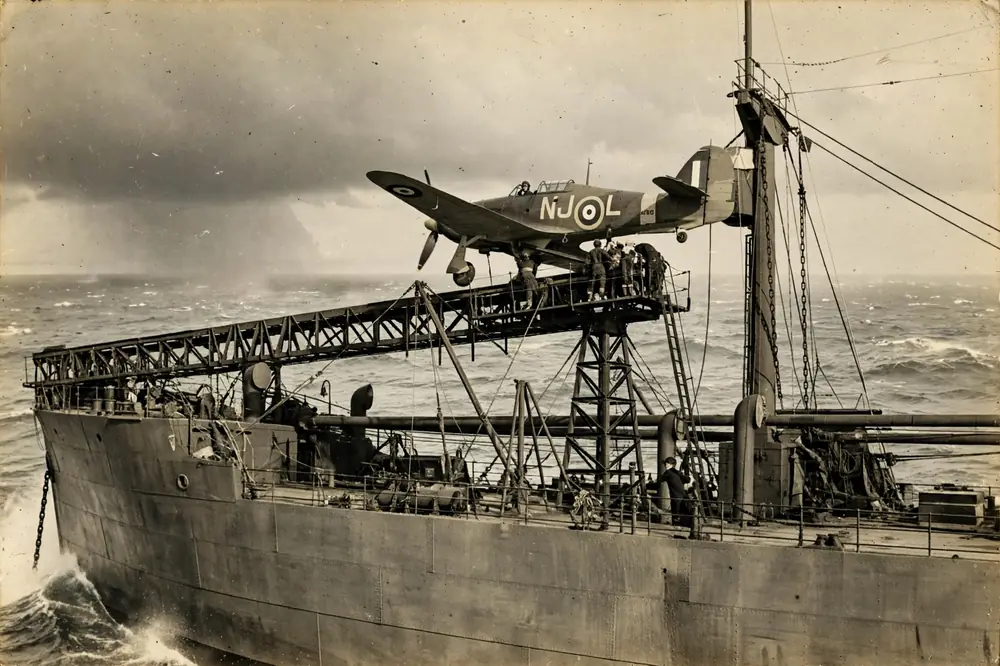
The Sea Hurricane was the naval version of the Hurricane, and it was used by the Royal Navy’s Fleet Air Arm, where it was launched from catapults on merchant ships, the CAM ships, and from the decks of escort carriers, and where it defended the Atlantic convoys against the German bombers and the German reconnaissance aircraft. The Sea Hurricane was a Hurricane Mk I or Mk II fitted with an arrester hook, and it was launched from a catapult on a merchant ship, and it had to ditch in the sea after its mission, because it could not land back on the merchant ship, and its pilots were brave men who knew that they would have to bail out or to ditch after every mission. The Hurricane was also built in Canada, as the Mk XII, with a Packard Merlin engine, and it was used by the Royal Canadian Air Force, and by the RAF, and by the Soviet Union, which received Hurricanes under Lend-Lease, and the Canadian Hurricanes were a measure of the Commonwealth’s contribution to the war, and of the Hurricane’s worldwide service.
6. Operational History
France and the Battle of Britain
The Hurricane’s finest hour came in the Battle of Britain, in the summer of 1940, when the Luftwaffe tried to destroy the RAF and to clear the way for an invasion of Britain. The Hurricane squadrons bore the brunt of the battle: there were more Hurricane squadrons than Spitfire squadrons, and the Hurricanes were sent against the German bombers, while the Spitfires were sent against the German fighters, and the Hurricanes shot down more German aircraft than the Spitfires and all the other British defences combined. The Hurricane’s pilots fought in the skies over southern England, over London and over the Channel, and they faced the German bombers in formations of dozens of aircraft, and attacked them with their eight guns, and shot them down in flames, and saved Britain from invasion. The battle was the Hurricane’s battle, and it is the battle for which the aircraft is remembered. The Hurricane’s pilots in the Battle of Britain were the Few, the 2,945 airmen of Fighter Command who fought the battle, and who included British, Polish, Czech, Canadian, Australian, New Zealand and South African pilots, and who are remembered as the men who saved Britain. Among them were Douglas Bader, who flew with artificial legs and commanded the Duxford Wing, and Robert Stanford Tuck, one of the great aces of the battle, and the Polish pilots of No. 303 Squadron, who were the highest-scoring squadron in the battle and shot down 126 German aircraft in six weeks. The Few flew the Hurricane and the Spitfire, and they fought against odds that were heavily against them, and they won, and their victory is remembered as one of the great victories in British history, and the Hurricane is remembered as the aircraft that they flew, and that won the battle.
The Battle of Britain: Summer 1940
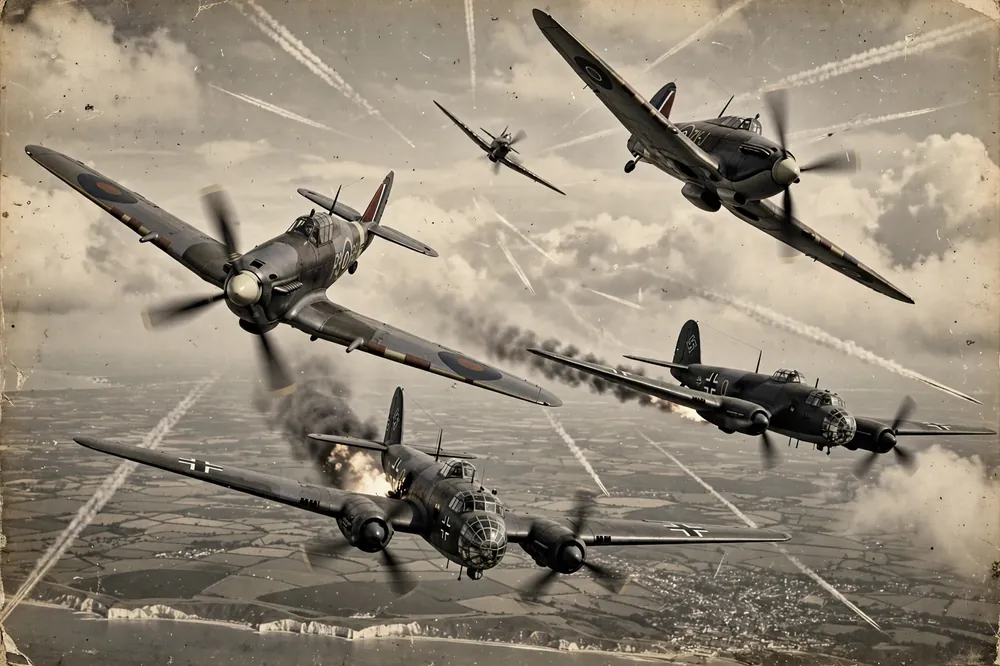
The Hurricane’s finest hour came in the Battle of Britain, in the summer of 1940, when the Luftwaffe tried to destroy the RAF and to clear the way for an invasion of Britain. The Hurricane squadrons bore the brunt of the battle: there were more Hurricane squadrons than Spitfire squadrons, and the Hurricanes were sent against the German bombers, while the Spitfires were sent against the German fighters, and the Hurricanes shot down more German aircraft than the Spitfires and all the other British defences combined. The Hurricane’s pilots fought in the skies over southern England, over London and over the Channel, and they faced the German bombers in formations of dozens of aircraft, and they attacked them with their eight guns, and they shot them down in flames, and they saved Britain from invasion. The Battle of Britain was the Hurricane’s battle, and it is the battle for which the aircraft is remembered, and it is the battle that Winston Churchill remembered when he said that never in the field of human conflict was so much owed by so many to so few.
The Few
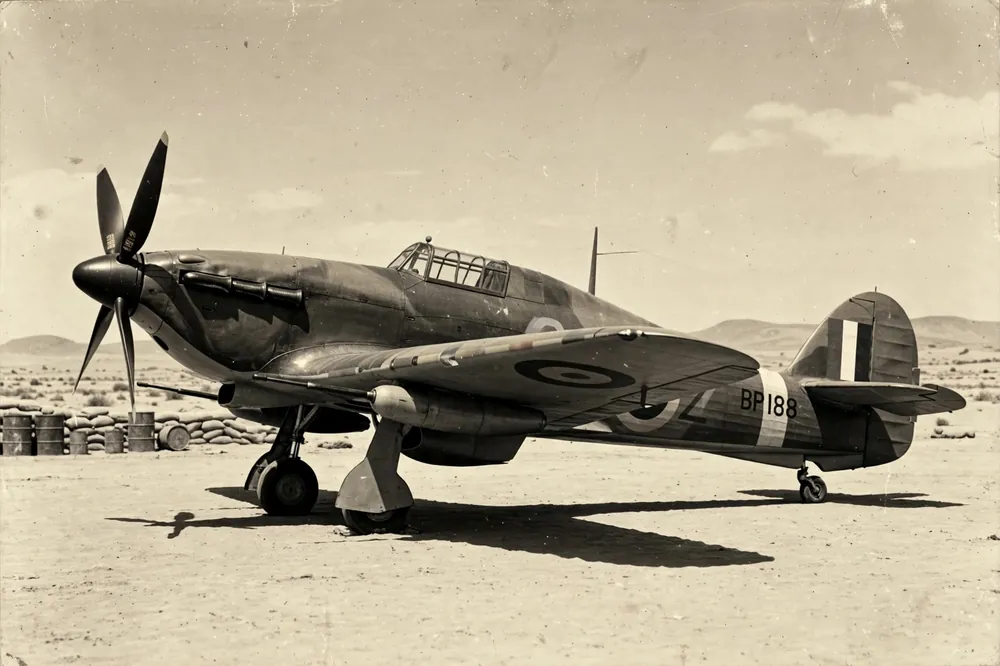
The Hurricane’s pilots in the Battle of Britain were the Few, the 2,945 airmen of Fighter Command who fought the battle, and who included British, Polish, Czech, Canadian, Australian, New Zealand and South African pilots, and who are remembered as the men who saved Britain. The Hurricane’s pilots included Douglas Bader, who flew with artificial legs, and who commanded the Duxford Wing, and Robert Stanford Tuck, who was one of the great aces of the battle, and the Polish pilots of No. 303 Squadron, who were the highest-scoring squadron in the battle, and who shot down 126 German aircraft in six weeks. The Few flew the Hurricane and the Spitfire, and they fought against odds that were heavily against them, and they won, and their victory is remembered as one of the great victories in British history, and the Hurricane is remembered as the aircraft that they flew, and that won the battle that saved Britain.
Malta, North Africa and Russia
After the Battle of Britain, the Hurricane served in Malta, where it defended the island against the German and Italian bombers, and where its pilots fought in the most desperate conditions of the war, with few aircraft, with little fuel and with no reinforcements, and where the Hurricane’s ease of repair was a great advantage. In North Africa, the Hurricane served as a fighter-bomber and as a tank-buster, and its Mk IID version, with its 40 mm guns, attacked the German and Italian tanks in the desert, and its Mk IIC version, with its cannon, attacked the German and Italian troops and vehicles. In Russia, the Hurricane was supplied to the Soviet Union under Lend-Lease, and it served with the Soviet Air Force, where it was used as a fighter and as a fighter-bomber, and where its pilots learned to respect it, though they preferred the Soviet fighters that followed it. The Hurricane’s service in Malta, in North Africa and in Russia was a long campaign, and it was the campaign in which the Hurricane proved itself as a versatile aircraft, and in which it served in every role that the RAF needed.
Burma and the Far East
In the Far East, the Hurricane served in Burma, where it fought the Japanese, and where it was used as a fighter-bomber, attacking the Japanese troops and the Japanese supply lines in the jungle, and where its pilots flew in the monsoon and in the heat, and where the Hurricane’s toughness and its reliability were great advantages. The Hurricane’s service in Burma was the last of its wartime service, and it was the campaign in which the Hurricane was replaced by the Spitfire and by the American fighters, and in which it served as a ground-attack aircraft, and in which it proved that an old fighter could still do a useful job, even when it was no longer the best fighter in the sky. The Hurricane’s service in the Far East ended with the war, and it was retired in 1947, ten years after it had entered service, and it is remembered as the fighter that served in every theatre of the war, from the Channel to the jungle, and from the desert to the snow.
7. Performance and Specifications
| Specification | Hurricane Mk IIC |
|---|---|
| Crew | 1 |
| Length | 9.84 m |
| Wingspan | 12.19 m |
| Height | 4.0 m |
| Empty weight | About 2,605 kg |
| Maximum take-off weight | About 3,951 kg |
| Engine | Rolls-Royce Merlin XX V-12, 1,280 hp |
| Max speed | About 547 km/h |
| Range | About 965 km |
| Service ceiling | 11,000 m |
| Armament | Four 20 mm Hispano cannon (Mk IIC); or eight .303-inch guns (Mk I) |
| Bomb load | Up to 2 × 250 lb bombs |
Fighter Performance
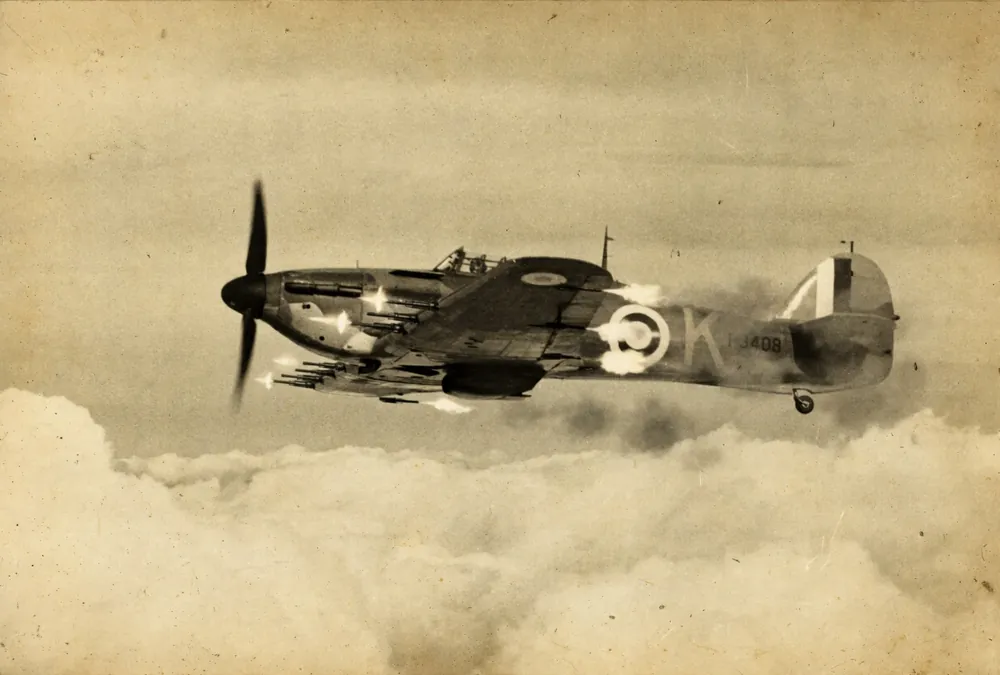
The Hurricane’s fighter performance was good for a fighter of its generation, but it was inferior to that of the Spitfire and of the Bf 109, and it was the reason the RAF used the Hurricane against the bombers and the Spitfire against the fighters. The Hurricane’s top speed of about 547 kilometres per hour was slower than the Spitfire’s 580 kilometres per hour and the Bf 109’s 570 kilometres per hour, and its rate of climb was slower, and its turning circle was wider, but its eight guns were accurate, and its stability as a gun platform was excellent, and it could shoot down a bomber with a single burst, and it was the aircraft that the RAF trusted to attack the bombers. The Hurricane’s range of about 965 kilometres was enough for the Battle of Britain, and its service ceiling of 11,000 metres was enough to reach the German bombers, and its performance was good enough for the job that it was designed to do, and it is the performance of a workhorse, not of a racehorse, and it is the performance that won the Battle of Britain.
Comparison with the Spitfire and the Bf 109
Compared with the Spitfire, the Hurricane was slower, less manoeuvrable and less graceful, but it was easier to build, easier to repair and easier to fly, and it was available in larger numbers, and it shot down more German aircraft in the Battle of Britain than the Spitfire did. The Spitfire was the better fighter, and it is the fighter that is remembered as the symbol of the Battle of Britain, but the Hurricane was the fighter that won the battle, and it is the fighter that the RAF could not have done without. Compared with the German Bf 109, the Hurricane was slower and less manoeuvrable, but it was a more stable gun platform, and its eight guns were more effective against a bomber than the Bf 109’s guns, and it could absorb more damage, and it was the aircraft that the British pilots trusted to bring them home. The Hurricane’s place in history is that of the workhorse, and it is remembered as the fighter that did the work, while the Spitfire took the glory, and it is a reminder that wars are won by the aircraft that are available, and not only by the aircraft that are the best.
8. Operators
The United Kingdom
The Hurricane was used by the Royal Air Force, and it was the main fighter of Fighter Command in 1940, and it served in every theatre of the war, from the Battle of Britain to Burma, and it was the fighter that the RAF had in numbers when the war began, and that it could not have done without. The Hurricane was also used by the Royal Navy’s Fleet Air Arm, as the Sea Hurricane, and by the Royal Canadian Air Force, which built Hurricanes in Canada, and by the air forces of the Commonwealth, which used the Hurricane in North Africa, in Malta and in the Far East. The Hurricane’s service with the United Kingdom was the longest and the most important of any operator, and it is the service for which the aircraft is remembered, and its pilots were the Few, and their victory is remembered as one of the great victories in British history.
Other Operators
The Hurricane was used by many other countries, most notably the Soviet Union, which received about 3,000 Hurricanes under Lend-Lease, and which used them as fighters and as fighter-bombers on the Eastern Front, and which valued them for their toughness and their reliability, though it preferred its own fighters. Many of the Soviet Hurricanes arrived in crates through the Arctic convoy route to Murmansk and Arkhangelsk, and Soviet pilots flew them in the defence of the northern ports and on the Leningrad front, where their rugged construction and ease of repair suited the harsh winter conditions. The Hurricane was also used by the air forces of Poland, Czechoslovakia, Belgium, the Netherlands, Yugoslavia, Greece, Turkey, Egypt, India and several other countries, and it served in the air forces of the Commonwealth and of the occupied countries that fought alongside Britain. The Hurricane’s worldwide service was a measure of its success: a fighter designed in Britain in 1934 was used by the air forces of half the world, and it served in every theatre of the war, and it is remembered as one of the most widely used fighters in history.
9. Legacy and Influence
The Fighter That Won the Battle
The Hurricane’s legacy is that of the fighter that won the Battle of Britain, and it is remembered as the aircraft that saved Britain in 1940, and that broke the Luftwaffe’s attempt to destroy the RAF, and that made the invasion of Britain impossible. The Hurricane’s victory in the Battle of Britain was the first defeat of the Luftwaffe, and it was the first time that the German war machine had been stopped, and it was a turning point in the war, and it is remembered as one of the great victories in British history. The Hurricane’s legacy is also the legacy of the Few, the men who flew it, and who are remembered as the men who saved Britain, and whose story is told in the memorials to the Battle of Britain, in the books and the films that remember the battle, and in the hearts of the British people, who remember the summer of 1940 as the summer when Britain stood alone, and when the Hurricane and the Spitfire saved her.
The Hurricane in Memory
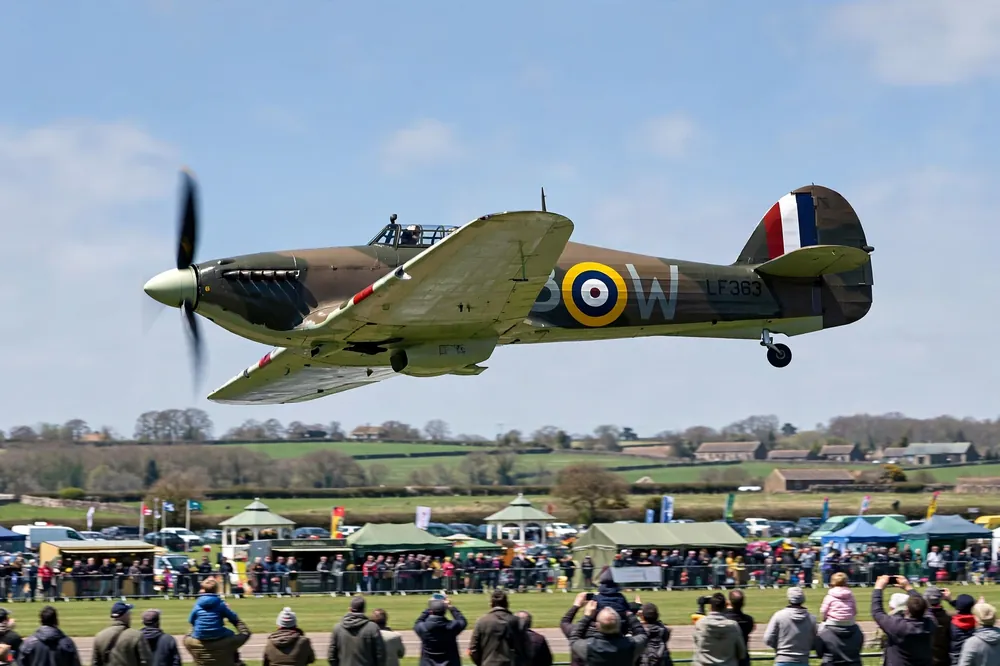
The Hurricane is remembered in the museums and the memorials that tell its story, and in the aircraft that still fly, and in the books and the films that remember the Battle of Britain. The Hurricane’s memory lives on in the Battle of Britain Memorial Flight, which flies a Hurricane and a Spitfire at air shows in Britain, and in the Hurricane that is displayed in the Imperial War Museum in London, and in the Hurricane that is displayed in the Royal Air Force Museum, and in the hearts of the British people, who remember the Hurricane as the fighter that won the battle that saved Britain. The Hurricane’s story is told in every history of the Battle of Britain, and in every history of the Second World War, and it is a story that will be told as long as Britain remembers the summer of 1940, and as long as the Few are remembered, and as long as the Hurricane flies in the skies over Britain.
10. Surviving Examples
Flying Survivors
Only a handful of Hurricanes still fly, and they are among the most precious warbirds in the world. The most famous flying Hurricanes are those of the Battle of Britain Memorial Flight, which flies a Hurricane Mk IIC and a Hurricane Mk IIc at air shows in Britain, and those operated by private owners and by museums in the United Kingdom, Canada and New Zealand. The flying Hurricanes are maintained by volunteer organisations, and they are flown by volunteer pilots, and they are a tribute to the men who flew them in the war and to the aircraft that saved Britain. The Hurricanes that still fly are a reminder of the Battle of Britain, and of the Few, and they are a living museum, and they are the best way to understand what the Hurricane was and what it did, and they are seen by millions of people every year at the air shows where they fly.
Museums
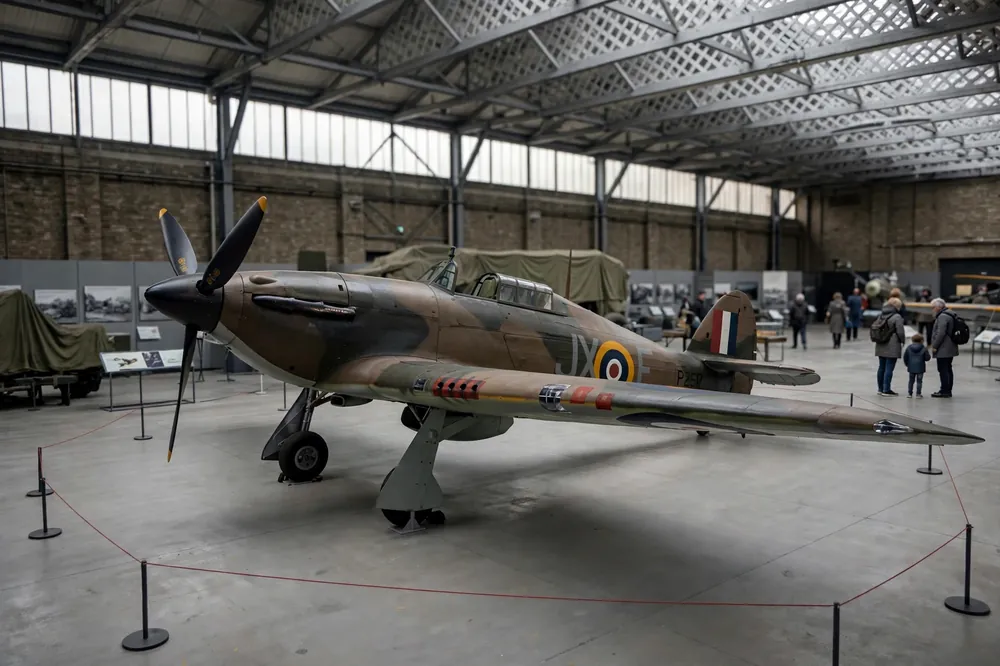
Hurricanes are displayed in museums around the world, including the Imperial War Museum in London, which holds a Hurricane Mk I, the Royal Air Force Museum in Hendon, which holds a Hurricane Mk IIC, the Smithsonian National Air and Space Museum in Washington, D.C., which holds a Hurricane Mk II, the Canada Aviation and Space Museum in Ottawa, which holds a Hurricane Mk XII, and the Royal Air Force Museum in Cosford, which holds a Hurricane Mk IV. The Hurricane is also displayed in the museums of the Soviet Union, which received Hurricanes under Lend-Lease, and in the museums of Poland, which flew Hurricanes in the Battle of Britain, and in the museums of the Commonwealth, which used the Hurricane in every theatre of the war. For the visitor, the Hurricane is one of the most accessible fighters of the Second World War, and it is displayed in almost every aviation museum that covers the Battle of Britain, and it is a reminder of the fighter that won the battle that saved Britain.
Frequently Asked Questions
What is the Hawker Hurricane?
The Hawker Hurricane was the Royal Air Force’s single-seat fighter of the Second World War, designed by Sydney Camm and first flown in 1935. It shot down more German aircraft in the Battle of Britain than the Spitfire, and 14,487 were built.
How many Hurricanes were built?
14,487 Hurricanes were built between 1937 and 1944 by Hawker, Gloster, Austin and Canadian Car and Foundry, more than any other British fighter of the war except the Spitfire.
Did the Hurricane shoot down more aircraft than the Spitfire in the Battle of Britain?
Yes. The Hurricane shot down more German aircraft in the Battle of Britain than the Spitfire and all the other British defences combined, because there were more Hurricane squadrons, and because the Hurricanes were sent against the bombers while the Spitfires fought the fighters.
What was the Hurricane Mk IID?
The Hurricane Mk IID was the tank-buster version, armed with two 40 mm Vickers S guns under its wings. It was used in North Africa, where it attacked German and Italian tanks in the desert and was known as the “flying can-opener”.
How fast was the Hurricane?
The Hurricane’s top speed was about 547 kilometres per hour (340 mph), with a range of about 965 kilometres and a service ceiling of 11,000 metres.
Where can I see a Hurricane today?
Hurricanes are displayed at the Imperial War Museum in London, the Royal Air Force Museum in Hendon, and the Smithsonian National Air and Space Museum in Washington, D.C., and Hurricanes of the Battle of Britain Memorial Flight still fly at air shows in Britain.
Sources
- Wikipedia, “Hawker Hurricane” — Sydney Camm’s design, production of 14,487, the Battle of Britain, variants.
- Francis K. Mason, The Hawker Hurricane (Aston Publications, 1987) — the aircraft’s design and its service.
- Richard Hough and Denis Richards, The Battle of Britain (W. W. Norton, 1989) — the Hurricane’s role in the battle.
- John D. R. Rawlings, Fighter Squadrons of the RAF (Macdonald, 1969) — the Hurricane squadrons and their victories.
- Norman Franks, Hurricane: The Last Witnesses (Grub Street, 2011) — the pilots who flew the Hurricane.
- The Battle of Britain Memorial Flight, Royal Air Force — the flying Hurricanes and their history.