 WAR ATLAS MILITARY HISTORY MAGAZINE · WWI — WWII
Nadezhda Popova
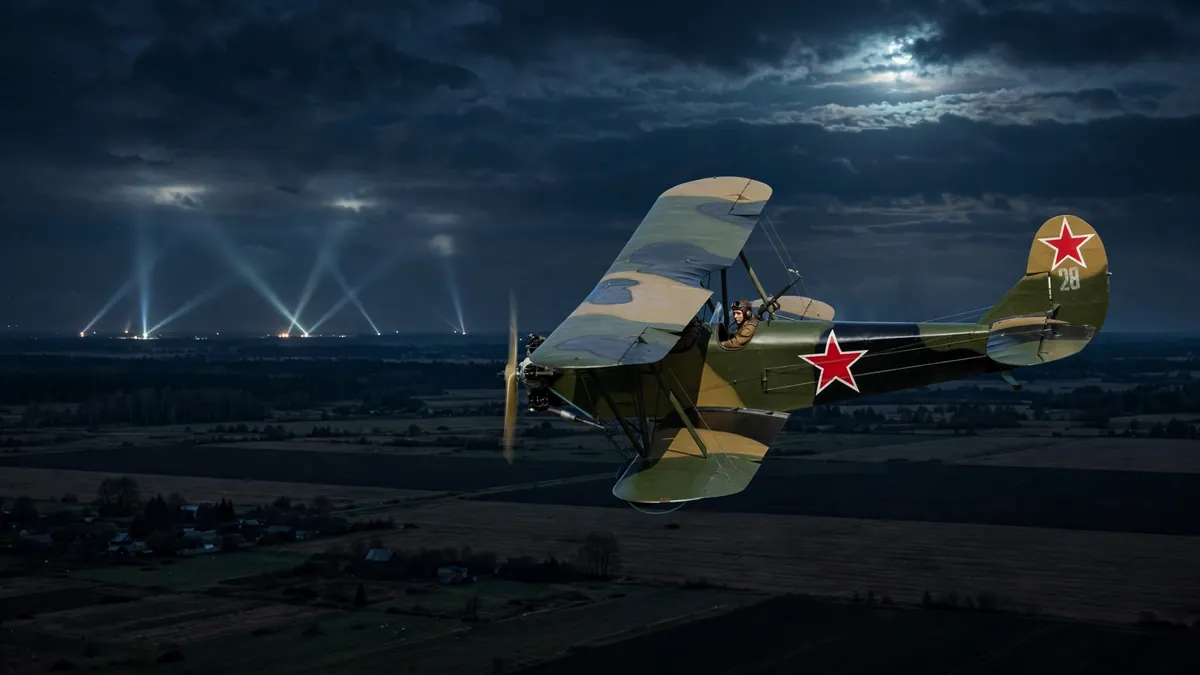
Nadezhda Vasilyevna Popova (1921–2013) was one of the most celebrated Soviet combat pilots of the Second World War. As deputy squadron commander in the 46th Taman Guards Night Bomber Aviation Regiment — the all-female unit the Germans called the Nachthexen, the “Night Witches” — she flew 852 combat sorties in a slow, wooden Polikarpov Po-2 biplane, dropping bombs on German positions by night across the Caucasus, the Crimea, Belarus and Poland.
The Po-2 was an obsolete training aircraft made of wood and canvas, with no radio, no parachute for much of the war and a top speed barely faster than a car on a motorway; yet in Popova’s hands it became a weapon the enemy feared. In 1946 she was awarded the title Hero of the Soviet Union, the highest Soviet decoration, for her courage and her extraordinary number of missions.
1. Key Facts
| Born | 27 December 1921, Shabanovka, Russian SFSR |
| Died | 8 July 2013, Moscow, Russia (aged 91) |
| Service | Soviet Air Force, 1941–1945 |
| Unit | 46th Taman Guards Night Bomber Aviation Regiment (“Night Witches”) |
| Role | Pilot, later deputy squadron commander |
| Aircraft | Polikarpov Po-2 biplane |
| Combat sorties | 852 night bombing missions |
| Highest award | Hero of the Soviet Union (1946) |
| Other awards | Three Orders of the Red Banner; Orders of the Patriotic War, 1st and 2nd class |
2. Early Life
A railway family
Nadezhda Popova was born on 27 December 1921 in the village of Shabanovka, in what is now the Oryol region of Russia, into a railway family. Her father worked on the railways, and the family moved with his postings; she grew up in the small town of Donetsk in the Donbas, where the railway, the mines and the heavy industry of the Soviet Union’s first Five-Year Plans formed the background of her childhood.
Like many Soviet children of her generation, she was raised on stories of aviation heroes: the polar flights of the 1930s, the record-breaking pilots celebrated in newspapers and on posters, and the state-sponsored flying clubs that taught teenagers to glide and then to fly.
Aviation in the Soviet Union of the 1930s was not a hobby for the rich, as it was in much of Europe; it was a mass movement, organised through Osoaviakhim, the paramilitary society that ran flying clubs in towns across the country, and it was deliberately open to young women.
Learning to fly
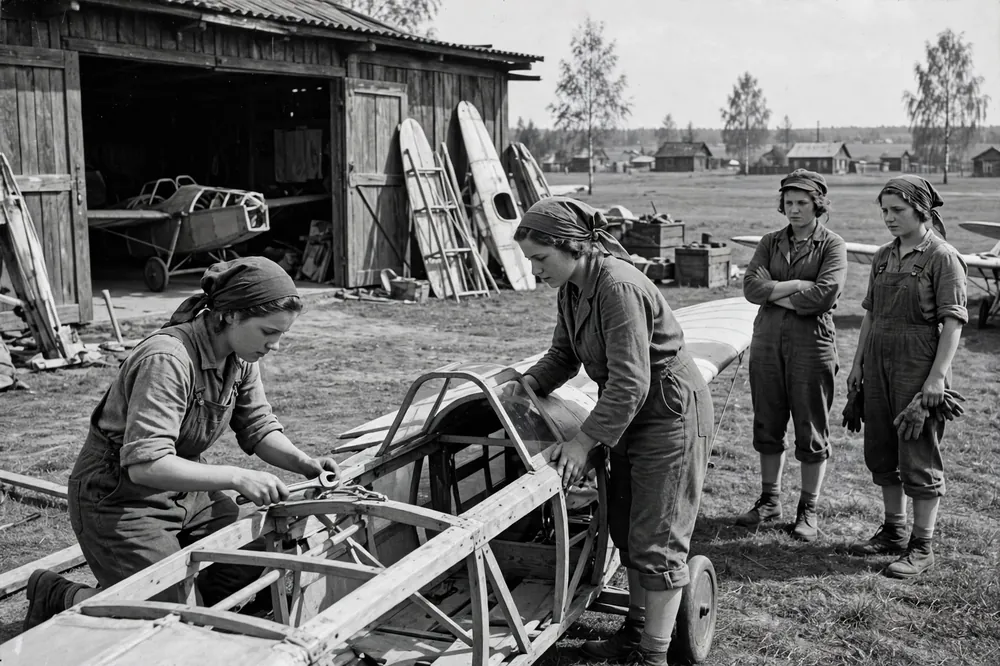
Popova joined her local flying club as a teenager and learned to fly gliders before moving on to powered aircraft. She proved a natural pilot — calm under pressure, with quick reflexes and a precise sense of the machine — and by the time she was eighteen she was working as a flight instructor, teaching other young people to fly.
Instructors were badly needed: the Soviet Union was expanding its air force rapidly, and the flying clubs were its main source of trained pilots. When Germany invaded the Soviet Union in June 1941, Popova was one of thousands of trained civilian pilots, male and female, who immediately volunteered for military service.
The Soviet air force at first had little idea what to do with its women pilots; the assumption was that they would serve as instructors or ferry pilots. It took the persistence of the famous pilot Marina Raskova, who petitioned Stalin directly, to win permission to form combat aviation regiments staffed entirely by women.
Popova’s work as a flight instructor in the years before the war was, in itself, a significant contribution to the Soviet war effort. The Soviet Union’s flying clubs, organised through Osoaviakhim, trained tens of thousands of young pilots in the 1930s, and the instructors who taught them — many of them young women like Popova — were the backbone of that system.
Popova taught her students to fly gliders and powered aircraft, to navigate by map and compass, and to handle an aircraft in bad weather, and she did it with a patience and a precision that her students remembered. When the war came, many of her students became combat pilots, and Popova herself, who had taught others to fly, was ready to fly in combat herself.
Her years as an instructor gave her a deep understanding of flying, and a calmness under pressure, that served her well in the night bombing war.
3. Joining the Night Witches
The 588th Regiment
In October 1941 Raskova was authorised to form three women’s aviation regiments, and Popova joined the 588th Night Bomber Regiment, which would later be renamed the 46th Taman Guards Night Bomber Aviation Regiment after earning Guards status and the honorific “Taman” for its fighting on the Taman Peninsula. The regiment’s aircraft was the Polikarpov Po-2, a two-seat biplane designed in the 1920s as a trainer and crop-duster.
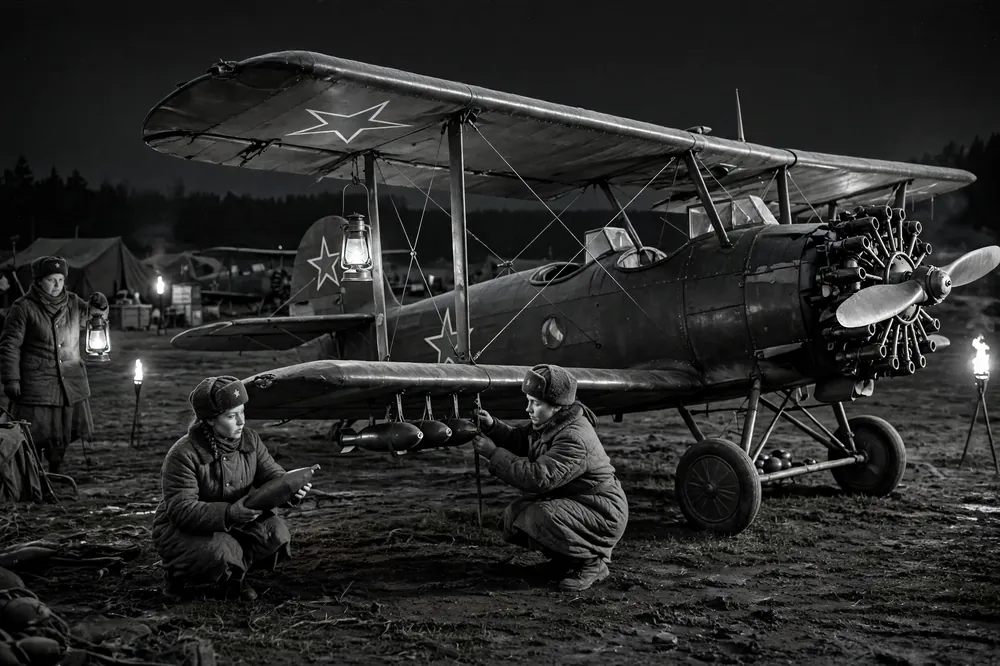
It was made of wood and canvas, cruised at about 110 kilometres per hour, carried only two small bombs under each wing, and had an open cockpit that left its crew exposed to the freezing night air. Its one great advantage was that it could fly very slowly, almost silently, and at very low altitude — and, crucially, German fighters of the time could not fly slowly enough to intercept it without stalling.
The German soldiers who heard the Po-2’s engine cut out as it glided in for its bombing run, the wind whispering through its wing struts, called the sound witch-like, and the name “Night Witches” stuck.
Training and first missions
The women trained at Engels, on the Volga, through the winter of 1941–42, in conditions of bitter cold and severe shortage. They learned navigation by map and compass, night flying, and bombing from an aircraft with no bombsight — the navigator simply leaned out of the cockpit and released the bombs by hand, judging the moment by eye.
Popova, already an experienced instructor, adapted quickly and was soon flying as a pilot with a navigator in the rear seat. The regiment reached the front in the summer of 1942, in the middle of the German drive towards the Caucasus oilfields, and began flying night harassment missions: three or four sorties a night, per crew, against German troop concentrations, supply dumps, bridges and airfields.
A single Po-2 carried little explosive, but a regiment of forty aircraft, flying night after night, week after week, kept German troops awake, disrupted their sleep and their supply, and forced them to keep anti-aircraft guns and searchlights tied down guarding against an enemy they could barely see.
4. Combat Record
852 sorties
Popova flew 852 combat sorties over the course of the war, one of the highest totals of any pilot in the regiment and among the highest of any Soviet pilot of the war. She flew through the fighting in the Caucasus in 1942, over the Kuban and the Taman Peninsula in 1943, in support of the landings in the Crimea in 1944, and then across Belarus and into Poland, ending the war flying missions over Germany itself.
The missions were flown at night, usually in pairs or small groups, and each crew flew several sorties in a single night, landing, refuelling and rearming in the dark, and taking off again. The work was exhausting and dangerous: the Po-2’s wooden frame burned fiercely when hit, and the crews had no parachutes for much of the war, the aircraft being too low and too slow for a parachute to be of much use, and too small to carry them comfortably.
Popova was shot down at least once, forced down behind German lines, and made her way back to Soviet territory with her navigator — an experience she rarely spoke about in later years.
Deputy squadron commander
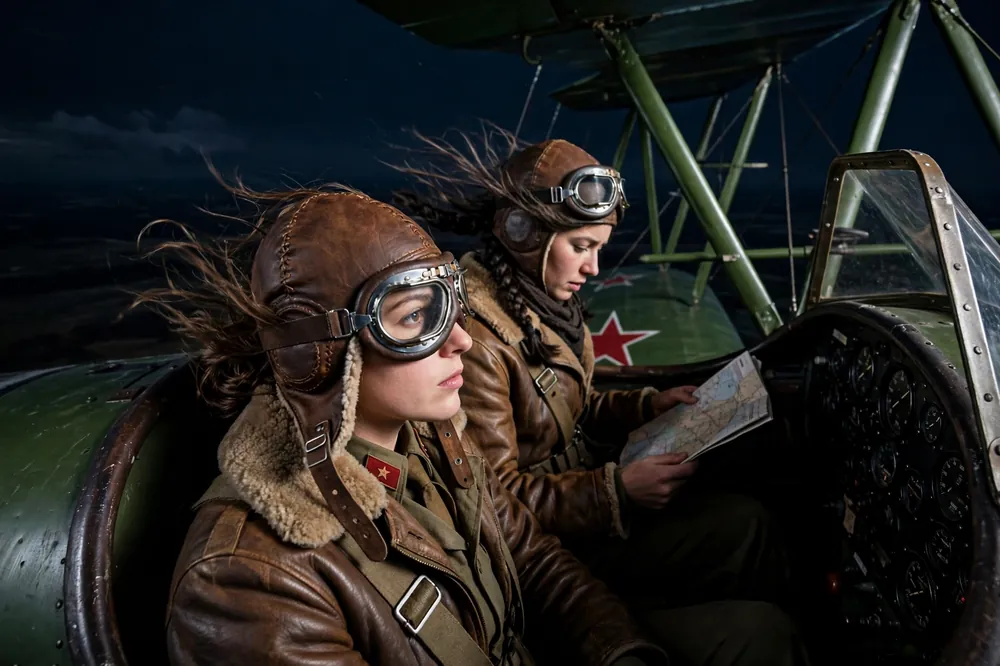
Popova rose to become deputy commander of her squadron, a position that meant not only flying her own missions but planning and leading the missions of others, briefing young pilots, and taking responsibility for their safety. Her reputation in the regiment was that of a pilot of exceptional steadiness: she flew calmly under searchlights and anti-aircraft fire, navigated accurately on dark nights with few landmarks, and brought her aircraft home through weather that grounded less confident pilots.
The regiment as a whole flew more than 23,000 sorties during the war and was one of the most decorated units in the Soviet air force; Popova’s own tally of 852 sorties placed her among its leading pilots, and her three Orders of the Red Banner testified to repeated acts of courage rather than a single exploit.
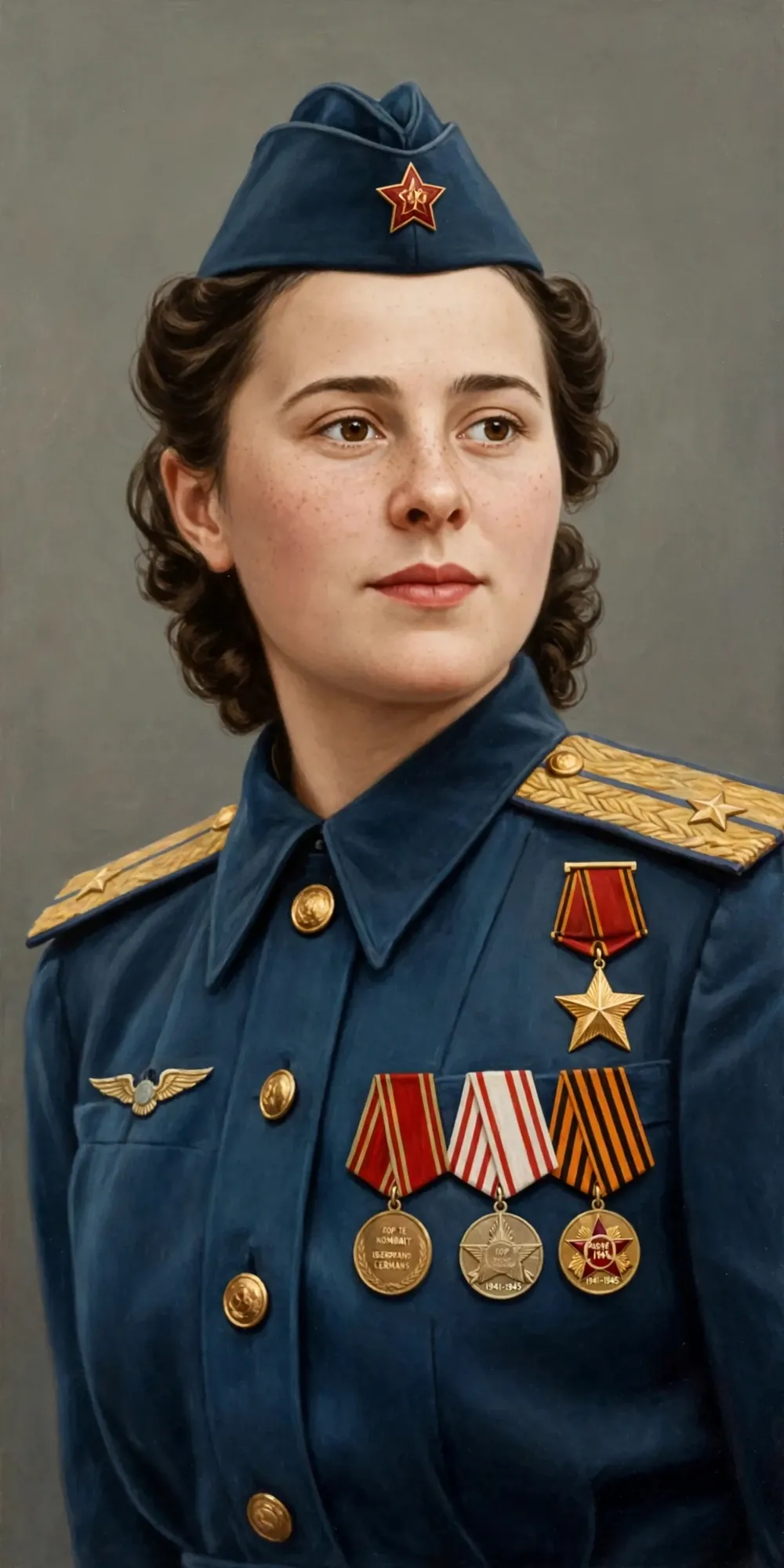
In February 1946 she was awarded the title Hero of the Soviet Union, with the Order of Lenin and the Gold Star medal, in recognition of her wartime record.
5. The Po-2 and Night Bombing
A primitive weapon
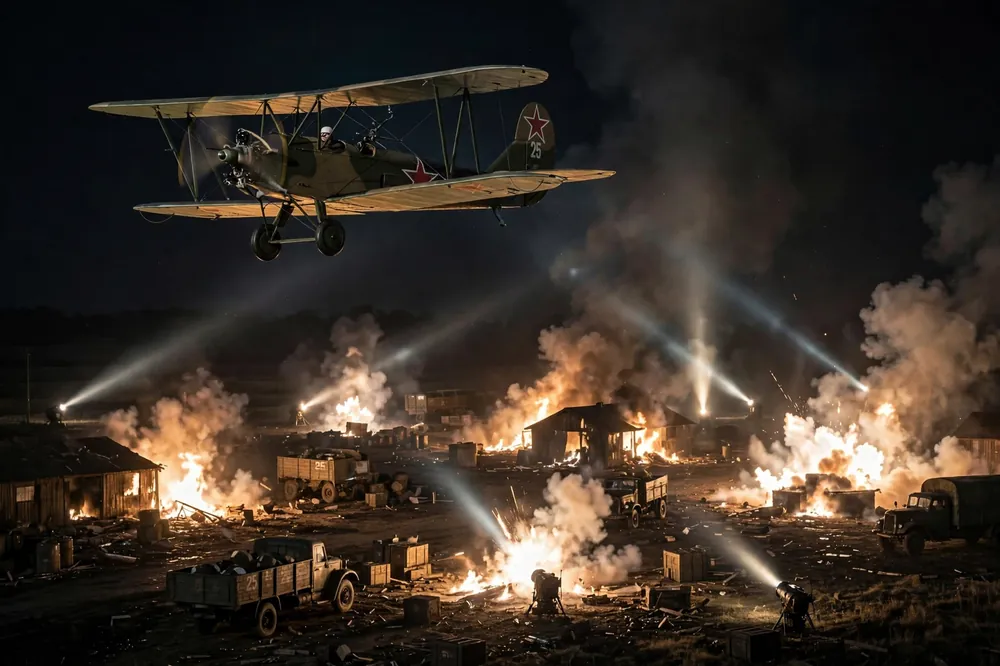
The Po-2 deserves a place in this story because it shaped everything Popova did. Designed by Nikolai Polikarpov in the late 1920s, it was a biplane of wood, canvas and wire, powered by a 125-horsepower engine, with a maximum speed of about 150 kilometres per hour and a range of roughly 400 kilometres.
By 1941 it was hopelessly obsolete as a combat aircraft, and no other air force in the world would have sent it against a modern enemy. But the Soviet command understood that the Po-2 had qualities no modern bomber possessed: it could operate from rough grass strips close to the front, it needed almost no maintenance, it was almost impossible to detect on radar, and it could fly so low and so slowly that German fighters could not engage it.
Its bombs were small — typically two 50-kilogram bombs or a cluster of smaller ones — but they were dropped with remarkable accuracy, because the navigator could see the target with her own eyes from a few hundred metres.
The tactics of harassment
The regiment’s tactics were simple and relentless. Aircraft took off at dusk and flew in a stream to the target area, each crew making its bombing run alone: the pilot throttled back, the navigator released the bombs, and the aircraft glided away in near silence. German troops learned to dread the sound of the engine stopping, because it meant a bomb was already falling.
The psychological effect was out of all proportion to the explosive weight: German units near the front lost sleep night after night, their officers complained in reports that the “night witches” were destroying morale, and German commanders were forced to divert anti-aircraft guns and night fighters to deal with aircraft that cost almost nothing to build.
Popova and her comrades understood this perfectly; they knew that their value lay not in the tonnage they dropped but in the fact that the enemy could never rest, and they flew, night after night, until the war ended.
6. Comrades and Losses
A regiment of sisters
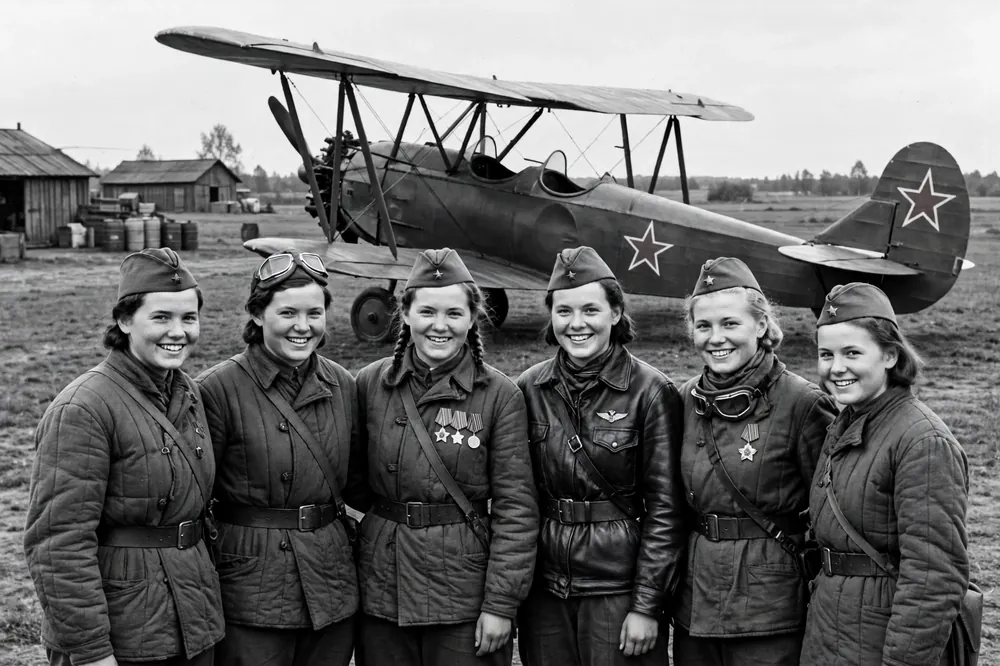
The 46th Regiment was unusual not only because it was all-female but because of the closeness of its members, most of them young women in their late teens and early twenties who had left civilian life together and trained together.
Popova’s navigator on many missions was her close friend, and the bond between pilot and navigator in a Po-2 was intimate and absolute: the navigator’s life depended on the pilot’s flying, and the pilot’s success depended on the navigator’s eyes and judgement. The regiment’s commander, Yevdokiya Bershanskaya, held the unit together through three years of war, and its members remembered her as strict, fair and fiercely protective of her pilots.
The regiment’s esprit de corps was famous throughout the Soviet air force, and its pilots took pride in flying missions that male units regarded as too dangerous or too inglorious to bother with.
The cost
The regiment paid a heavy price. Twenty-three of its pilots and navigators were killed during the war, including several in a single terrible night in August 1943 when German night fighters found the slow Po-2s over the Kuban and shot down four aircraft. Popova lost friends she had trained with, and she flew on the next night, as the regiment always did.
The women’s losses were mourned in the same way as those of any other unit, but they were also watched more closely: the regiment’s enemies in the Soviet military establishment, who had doubted from the start that women could fly in combat, were waiting for a failure that never came.
Instead, the regiment ended the war as a Guards unit, one of the most decorated in the Soviet air force, with twenty-three of its members awarded the title Hero of the Soviet Union. Popova’s survival through 852 sorties, in an aircraft that offered its crew almost no protection, was itself a remarkable achievement, and it owed as much to skill and discipline as to luck.
The regiment’s wartime record was recognised in 1943, when it was awarded the title of a Guards regiment and the honorific ‘Taman’, for its fighting on the Taman Peninsula, and it became the 46th Taman Guards Night Bomber Aviation Regiment, the name by which it is remembered today.
The Guards title was the Soviet Union’s highest honour for a military unit, and it was awarded only to units that had distinguished themselves in battle. The regiment ended the war as one of the most decorated units in the Soviet air force, with twenty-three of its members awarded the title Hero of the Soviet Union, and it was disbanded in October 1945, a few months after the end of the war.
Its story was little told outside the Soviet Union for decades, but it is now remembered around the world as one of the most remarkable units of the Second World War.
7. Later Life
Marriage and family
After the war Popova married Semyon Kharlamov, a Soviet fighter pilot and himself a Hero of the Soviet Union, whom she had met during the war. The two had a celebrated wartime romance: Kharlamov had once written his address on a piece of paper and dropped it from his aircraft over the women’s airfield, and Popova had answered.
They married after the war and remained together for more than sixty years, until Kharlamov’s death in 1990. Popova left the air force and worked in civilian life, raising a family in Moscow. Like many Soviet veterans, she spoke little about the war in the decades that followed; the Soviet Union’s official memory of the war emphasised the great battles and the great commanders, and the story of the women’s regiments was little told outside the Soviet Union until the last decades of the twentieth century.
Remembering the Night Witches
In her later years Popova became one of the best-known surviving members of the regiment, and she took part in commemorations and interviews that brought the Night Witches to a new audience in Russia and abroad. She was proud of the regiment’s record and quick to correct the idea that the women’s missions had been easy or unimportant: the Po-2 was slow, she would say, but the work was real, and the Germans had feared it.
She lived to the age of ninety-one, dying in Moscow on 8 July 2013, and was buried with military honours. By the time of her death the Night Witches had become one of the most famous stories of the Second World War, told in books, documentaries and films around the world — a fame that Popova, who had flown 852 missions in silence and darkness, accepted with the same calm she had shown in the air.
8. Legacy and Assessment
A pioneer of women in combat
Popova’s legacy rests on two things: the sheer scale of her service — 852 combat sorties, a figure few pilots of any nation matched — and what her service proved. Before 1941 almost no air force in the world allowed women to fly in combat; by 1945 the Soviet Union had shown that women could fly night bombing missions, in obsolete aircraft, in all weathers, for three years, and do it as well as any men.
The Night Witches did not end the debate about women in combat by themselves, but they provided the most powerful evidence in it, and Popova, as one of the regiment’s leading pilots and a Hero of the Soviet Union, was at the centre of that evidence.
Her story is also a reminder that the Soviet war effort depended on the mobilisation of the whole of society, including hundreds of thousands of women in uniform, and that some of the war’s most effective weapons were also its simplest.
How history remembers her
Historians today remember Popova as one of the great pilots of the Eastern Front, and the Night Witches as one of the most remarkable units of the war. The regiment’s record — more than 23,000 sorties, the destruction of countless German supply dumps, bridges and troop concentrations, and the constant psychological pressure it imposed on the enemy — has been studied by military historians as an example of how a cheap, simple weapon, used persistently and imaginatively, can achieve results out of proportion to its cost.
Popova’s own life, from a railway family in the Donbas to the Gold Star of a Hero of the Soviet Union, is a classic Soviet story of social mobility through service, and it is told in Russia today as part of the national memory of the Great Patriotic War.
Her name is commemorated in her home region, and her story continues to inspire new generations of women pilots in Russia and beyond.
9. Popova in Popular Culture
Books, film and memory
The Night Witches have inspired a large body of popular culture, from Soviet wartime songs and films to modern documentaries, novels and a well-known song by the Swedish metal band Sabaton. Popova herself appeared in documentaries and anniversary commemorations, and her story has been told in books about the women’s regiments in Russian, English and other languages.
The regiment’s story appeals to audiences for reasons that go beyond military history: it is a story of young women who volunteered, who were doubted, and who proved themselves in the hardest conditions of the war, flying an aircraft that their enemies mocked and their own commanders had almost discarded.
Popova’s own account of her service, given in interviews late in her life, emphasised not heroism but duty: she had done what was asked of her, night after night, and she had come home. That modesty, and the scale of what lay behind it, is a large part of why her story endures.
The regiment’s place in history
The 46th Regiment remains the most famous women’s combat unit of the Second World War, and Popova remains one of its most famous pilots. Military historians now place the regiment alongside the great partisan movements and the great siege defences as one of the distinctive Soviet contributions to the war: a unit that should not have worked, flying an aircraft that should not have flown in combat, that worked brilliantly for three years.
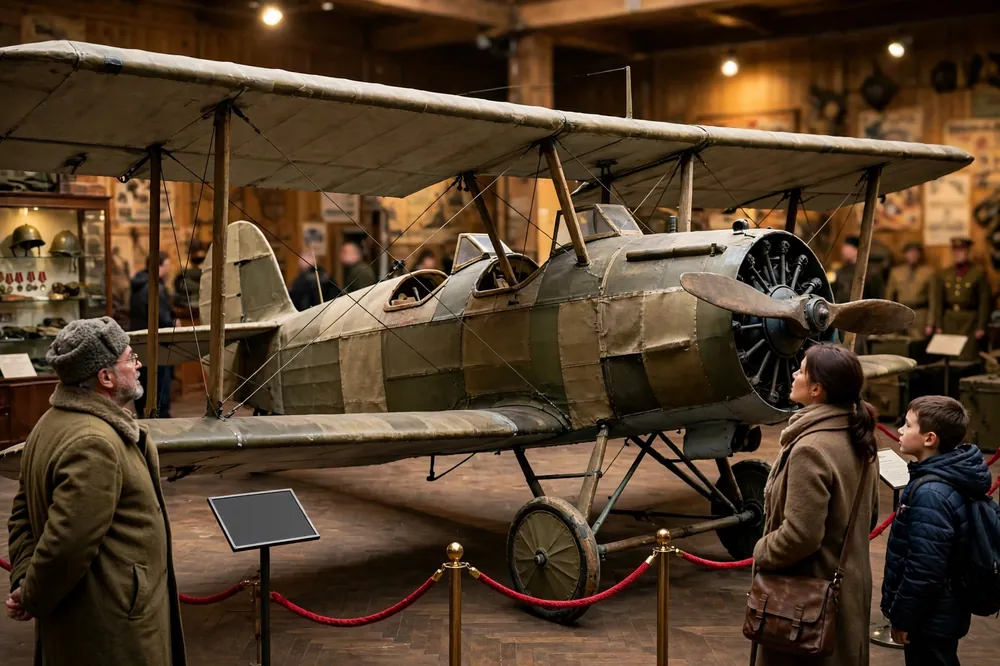
Popova’s 852 sorties stand as the regiment’s most striking individual record, and her Gold Star, awarded in 1946, was the Soviet Union’s recognition that the night bombing campaign, and the women who flew it, had mattered. Visitors to Russian war museums today can see a Po-2 of the type Popova flew, small and fragile-looking beside the great fighters and bombers of the war, and it is hard to believe that such a machine carried women through 852 nights of war.
10. Frequently Asked Questions
How many missions did Nadezhda Popova fly?
Popova flew 852 combat sorties during the Second World War, one of the highest totals of any pilot in the 46th Taman Guards Night Bomber Regiment and among the highest of any Soviet pilot of the war. Her 852 sorties were flown over three years, from the summer of 1942 to the end of the war in 1945, and they took her from the Caucasus to the Crimea, across Belarus and Poland, and finally over Germany itself. Her service made her one of the most decorated women in the Soviet Union.
What aircraft did the Night Witches fly?
They flew the Polikarpov Po-2, a slow two-seat biplane made of wood and canvas, originally designed as a trainer. It carried only a small bomb load but could fly very low and very slowly, almost silently, which made it hard for German fighters and anti-aircraft guns to engage. The Po-2’s wooden frame burned fiercely when hit, and its crews had no parachutes for much of the war, because the aircraft flew too low and too slowly for a parachute to be of much use.
Why were they called the Night Witches?
German soldiers gave them the name Nachthexen because of the whispering sound of the wind through the Po-2’s wing struts when the pilot cut the engine to glide in for a bombing run. The name was meant as an insult, but the regiment adopted it with pride. The name was meant as an insult, but the regiment adopted it with pride, and it is now one of the most famous names of the Second World War, told in books, documentaries and films around the world.
What was Popova’s highest award?
She was awarded the title Hero of the Soviet Union in February 1946, together with the Order of Lenin and the Gold Star medal. She also received three Orders of the Red Banner and the Orders of the Patriotic War, 1st and 2nd class. The award came in February 1946, nine months after the end of the war, and it placed her among the twenty-three members of her regiment who received the Soviet Union’s highest honour. It was awarded for her 852 combat sorties and her leadership in the regiment.
Did Popova survive the war?
Yes. She survived 852 sorties, married the fighter pilot Semyon Kharlamov, also a Hero of the Soviet Union, and lived in Moscow until her death on 8 July 2013, aged ninety-one. She and Kharlamov settled in Moscow, where she worked in civilian life and took part in veterans’ commemorations in her later years, speaking to young people about the regiment’s service. She lived to the age of ninety-one, dying in Moscow on 8 July 2013, and she was buried with military honours, by which time the Night Witches had become one of the most famous stories of the war.
Was Popova ever shot down?
Yes, at least once. She was forced down behind German lines and made her way back to Soviet territory with her navigator. She rarely spoke about the experience in later years. She and her navigator reached Soviet lines on foot, and she returned to flying within days, as the regiment’s crews were expected to do after a forced landing. She rarely spoke about the experience in later years, and the details of her forced landing behind German lines were never fully documented.
11. Sources
- Wikipedia, “Nadezhda Popova” — birth and death dates, 852 sorties, Hero of the Soviet Union (1946), service in the 46th Taman Guards Night Bomber Regiment.
- Wikipedia, “Night Witches” — history of the 588th/46th Regiment, the Po-2, more than 23,000 sorties, twenty-three Heroes of the Soviet Union.
- Encyclopædia Britannica, “Night Witches” — background on the women’s regiments and their night harassment bombing.
- Anne Noggle, A Dance with Death: Soviet Airwomen in World War II (Texas A&M University Press, 1994) — first-hand accounts of the women’s regiments, including Popova.
- Reina Pennington, Wings, Women, and War: Soviet Airwomen in World War II Combat (University Press of Kansas, 2001) — scholarly history of the Soviet women’s aviation regiments.
- Russian Ministry of Defence, “Heroes of the Soviet Union” database — Popova’s award citation and service record.
- Kazimiera Cottam, Women in War and Resistance: Selected Biographies of Soviet Women Soldiers (Nepean, 1998).
- Lyuba Vinogradova, Avenging Angels (MacLehose Press, 2015).