 WAR ATLAS MILITARY HISTORY MAGAZINE · WWI — WWII
Otto Kittel
1. Lead
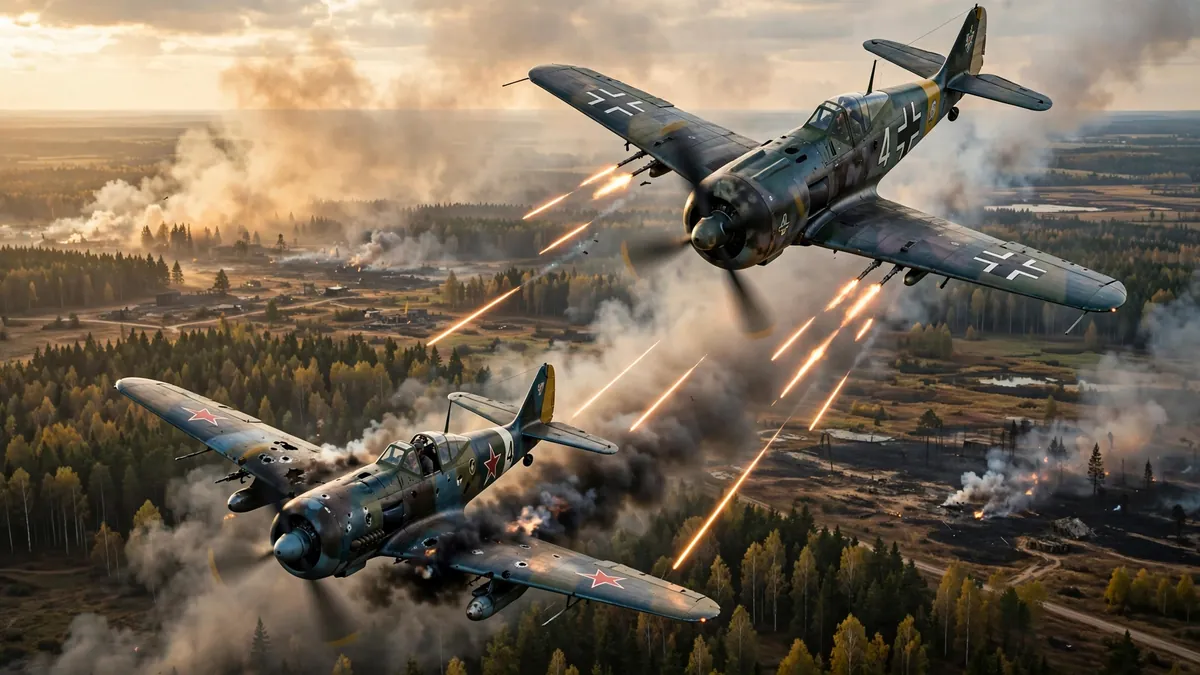
Otto Kittel (1917–1945) was the fourth-highest-scoring fighter ace in history. Credited with 267 aerial victories, he flew with Jagdgeschwader 54 on the Eastern Front, the “Grünherz” wing, and he was awarded the Knight’s Cross with Oak Leaves and Swords. Kittel was, above all, a killer of the Ilyushin Il-2, the Soviet ground-attack aircraft that was the backbone of the Soviet air force’s support for its armies, and his record against the Il-2 — more than a hundred of his victories were Il-2s — made him one of the most feared German pilots on the Eastern Front.
He flew 583 combat missions, was never shot down by a fighter, and was killed on 14 February 1945, when his Focke-Wulf Fw 190 was hit by the rear gunner of an Il-2 over the Courland Pocket, in Latvia. He was twenty-seven years old, and he was, at the time of his death, the fourth-highest-scoring ace in history, behind only Erich Hartmann, Gerhard Barkhorn and Günther Rall.
2. Key Facts
| Born | 21 February 1917, Kronsdorf, Austria-Hungary |
| Died | 14 February 1945, Courland Pocket, Latvia (aged 27) |
| Service | Luftwaffe, 1939–1945 / Luftwaffe, 1939–1945 |
| Unit | JG 54 “Grünherz” (Eastern Front) |
| Aerial victories | 267 credited (including more than 100 Il-2s) |
| Combat missions | 583 sorties |
| Highest award | Knight’s Cross with Oak Leaves and Swords |
| Cause of death | Shot down by the rear gunner of an Il-2 |
3. Early Life
A Sudeten childhood
Otto Kittel was born on 21 February 1917 at Kronsdorf, in the Sudetenland, the German-speaking region of Bohemia, then part of Austria-Hungary. He grew up in the new Czechoslovakia, in a German minority that felt itself increasingly alienated from the Czech state, and he was drawn, like many Sudeten Germans of his generation, to the idea of a Greater Germany.
He joined the Luftwaffe in 1939, after the Sudetenland had been annexed by Germany under the Munich Agreement, and he trained as a fighter pilot. He was twenty-two when the war began, and he was posted to Jagdgeschwader 54, the wing with which he would spend the whole of the war.
Kittel was a quiet, unassuming man, known for his modesty and his dedication, and he was, by all accounts, a pilot who flew not for fame but for duty, and who was respected by his comrades for his skill and his courage.

Kronsdorf, Kittel’s birthplace, was a small town in the Sudetenland, the German-speaking region of Bohemia, and it was, in 1917, part of the Austro-Hungarian Empire. After the First World War, the Sudetenland became part of the new Czechoslovakia, and its German population, which numbered some three million people, found itself a minority in a state dominated by Czechs.
The Sudeten Germans, who felt themselves increasingly alienated from the Czech state, were drawn, in the 1930s, to the idea of a Greater Germany, and Hitler exploited their grievances as a pretext for the annexation of the Sudetenland in 1938, under the Munich Agreement.
Kittel, who joined the Luftwaffe in 1939, after the annexation, was one of the many Sudeten Germans who served in the German armed forces, and his service was a product of the nationalist politics of the time.
First service
Kittel’s first combat service was in the Battle of France in 1940 and in the Battle of Britain, flying the Messerschmitt Bf 109, but his time in the west was brief. In 1941 his unit was transferred to the Eastern Front for the invasion of the Soviet Union, and it was there that Kittel would make his reputation.
He was a pilot of exceptional skill, with superb eyesight and a calm, methodical approach to combat, and he developed a particular expertise in attacking the Il-2, the Soviet ground-attack aircraft that was, in the words of one German pilot, “the most difficult aircraft to shoot down in the world”.
Kittel’s success against the Il-2 was a product of his skill, his patience, and his willingness to attack a heavily armoured aircraft at close range, again and again.
4. The Eastern Front with JG 54
The Grünherz wing
Jagdgeschwader 54, the “Grünherz” — Green Heart — wing, was one of the most successful fighter wings of the war, and Kittel was one of its leading pilots. The wing fought on the Eastern Front from the first day of the invasion to the last, over the Baltic states, Leningrad, the Ukraine and the Courland Pocket, and its pilots — Kittel, Walter Nowotny, Hans Philipp and others — became among the highest-scoring aces in history.
Kittel’s score rose steadily through 1942, 1943 and 1944, and by the end of 1943 he was already among the Luftwaffe’s leading aces. He flew the Bf 109 for much of the war, and then the Fw 190, which he preferred for its firepower and its ruggedness, and which was ideally suited to the low-altitude fighting over the Eastern Front.
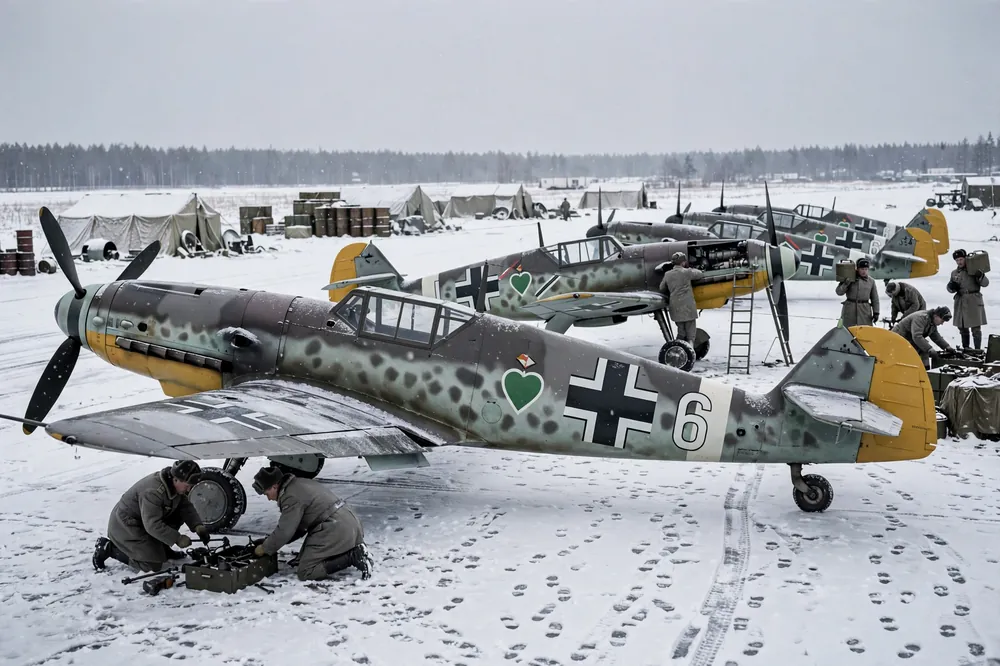
Jagdgeschwader 54’s emblem was a green heart, the ‘Grünherz’, and it was worn with pride by the wing’s pilots, who regarded it as a symbol of their unit and of their comradeship. The wing was commanded, in its early years, by Hannes Trautloft, one of the Luftwaffe’s most respected fighter leaders, and it fought on the northern sector of the Eastern Front, over the Baltic states and Leningrad, from the first day of the invasion to the last.
The wing’s pilots included Walter Nowotny, who would become the first pilot to claim 250 victories, and Hans Philipp, who would command a fighter wing in the Defence of the Reich, and Kittel, who would become the wing’s most successful Il-2 hunter.
The wing’s record, and the record of its pilots, is a measure of the intensity of the air war on the Eastern Front, and of the opportunities it offered to a skilled pilot.
267 credited victories
Kittel’s official score was 267 credited victories, from 583 combat missions, a figure that places him fourth among all fighter aces in history, behind Hartmann (352), Barkhorn (301) and Rall (275). The figure is a credited total under the Luftwaffe’s confirmation system, and it should be understood as such: the Luftwaffe’s system was rigorous, requiring a witness or wreckage, but on the Eastern Front, where the fighting was fluid and the wreckage often fell behind Soviet lines, confirmation was sometimes based on the pilot’s report and the testimony of his wingman, and modern research suggests that German victory totals, while broadly accurate in their order of magnitude, are not exact counts of aircraft destroyed.
Kittel’s score, like the scores of all the great aces, must be read with this context in mind, and it is, by any measure, an extraordinary record of skill and endurance.
5. The Il-2 Hunter
The flying tank
The Ilyushin Il-2 Shturmovik was the most produced military aircraft in history, with more than 36,000 built, and it was the backbone of the Soviet air force’s support for its armies. The Il-2 was a heavily armoured ground-attack aircraft, designed to fly low over the battlefield, attacking German tanks, artillery and troops with cannon, rockets and bombs, and it was, in the words of Stalin, as essential to the Soviet war effort as bread.
The Il-2 was extraordinarily tough: its armoured “bathtub” protected the pilot and the engine, and it could absorb a great deal of damage and keep flying. German pilots found it one of the most difficult aircraft to shoot down, and they developed special tactics for attacking it: approaching from below and behind, where the armour was thinnest, and aiming for the oil cooler, the one vulnerable point.
Kittel was a master of these tactics, and more than a hundred of his 267 credited victories were Il-2s.
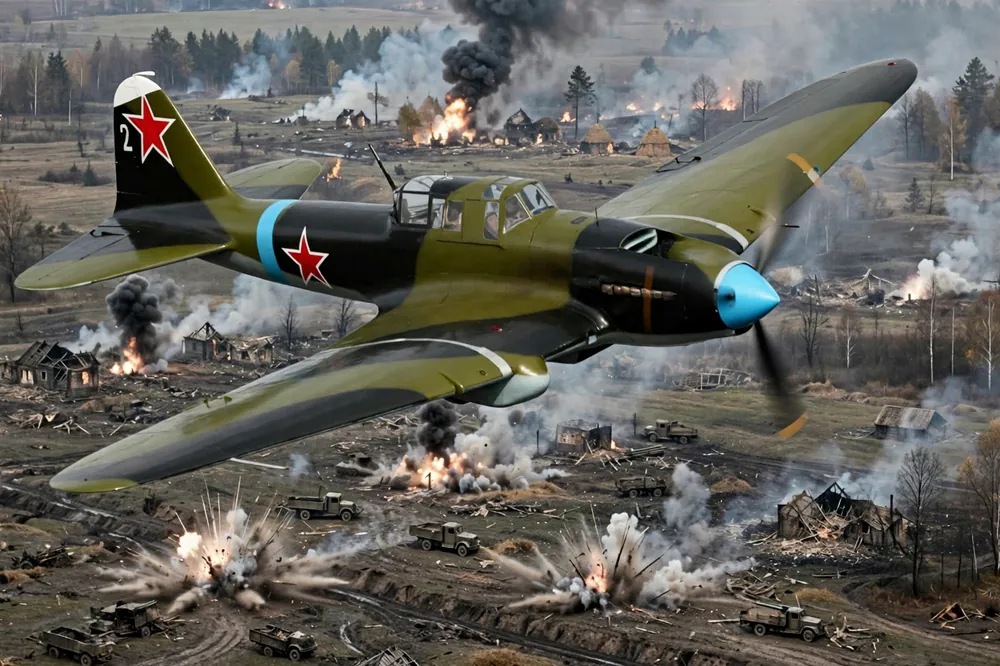
The Il-2’s rear gunner
The Il-2’s one weakness, and the one that Kittel exploited, was also the cause of his death. In 1942 the Il-2 was fitted with a rear gunner, who sat behind the pilot and fired a machine gun to the rear, and the rear gunner, though he was exposed and vulnerable, was a dangerous opponent.
German pilots who attacked the Il-2 from behind had to face the rear gunner’s fire, and many of them were hit. Kittel, who attacked the Il-2 from behind, again and again, was aware of the danger, and he accepted it, because it was the only way to shoot the aircraft down.
On 14 February 1945, over the Courland Pocket, he attacked an Il-2, and its rear gunner hit his Fw 190, which crashed, killing him. The irony of his death — killed by the gunner of the aircraft he had spent his career hunting — was not lost on his comrades, and it is a reminder that the sniper’s war, and the fighter’s war, were wars in which the hunter could, at any moment, become the hunted.
6. The Courland Pocket
The last battles
Kittel’s last battles were fought over the Courland Pocket, the enclave in western Latvia where, from October 1944, a large German force — Army Group North, later renamed Army Group Courland — was cut off from the rest of Germany and besieged by the Soviet armies.
The Courland Pocket was a strange and terrible place: the German troops there, some 200,000 men, were trapped, supplied by sea, and subjected to repeated Soviet offensives, and they held out until the end of the war, surrendering only on 8 May 1945.
The air war over Courland was fought in terrible conditions, in the winter of 1944–45, with the German pilots flying from airfields that were under constant attack, and with the Soviet air force dominating the skies. Kittel, who had flown with JG 54 throughout the war, was one of the pilots who defended the pocket, and he was killed there, on 14 February 1945, in the course of an attack on Soviet Il-2s that were supporting a Soviet offensive.
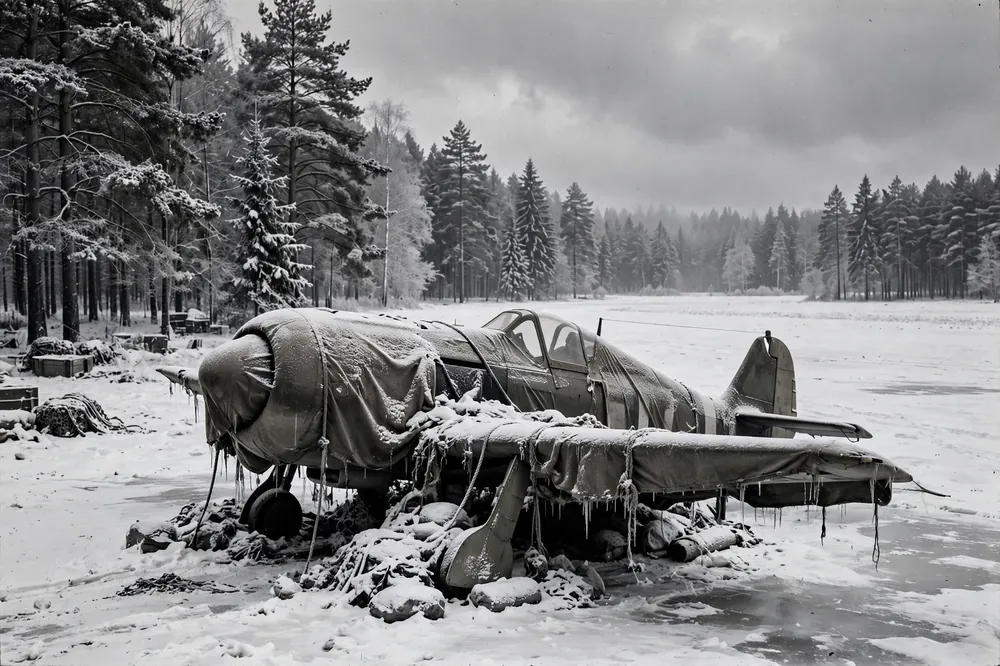
Death over Courland
Kittel’s death was, in many ways, typical of the last months of the war on the Eastern Front: a skilled pilot, flying in a losing cause, against overwhelming odds, killed by a rear gunner in the course of an attack that he had made a hundred times before.
He was twenty-seven years old, and he had flown 583 combat missions, and he was, at the time of his death, the fourth-highest-scoring ace in history. His death was mourned by his comrades in JG 54, who regarded him as one of the best pilots in the wing, and who knew that his loss was irreplaceable.
The Courland Pocket held out for three more months after his death, and its garrison surrendered only when the war ended. Kittel’s grave is in Latvia, and his name is remembered in Germany as one of the great aces of the war.
7. Tactics and Flying Style
A methodical hunter
Kittel’s flying style was methodical, patient and precise. He was not, like some of the great aces, a flamboyant pilot who relied on aggression and improvisation; he was a pilot who studied his enemy, who planned his attacks, and who executed them with a cool, professional efficiency.
His particular skill was the attack on the Il-2, an aircraft that required a specific approach — from below and behind, aiming for the oil cooler — and that punished a careless attacker with the fire of its rear gunner.
Kittel’s success against the Il-2 was a product of his patience and his precision, and of his willingness to fly close to a heavily armed enemy, again and again, in the knowledge that a single mistake could be fatal. His comrades admired him for his calmness under fire, and for his refusal to take unnecessary risks, and they regarded him as a pilot who would always bring his aircraft home — until the day he did not.
The Fw 190
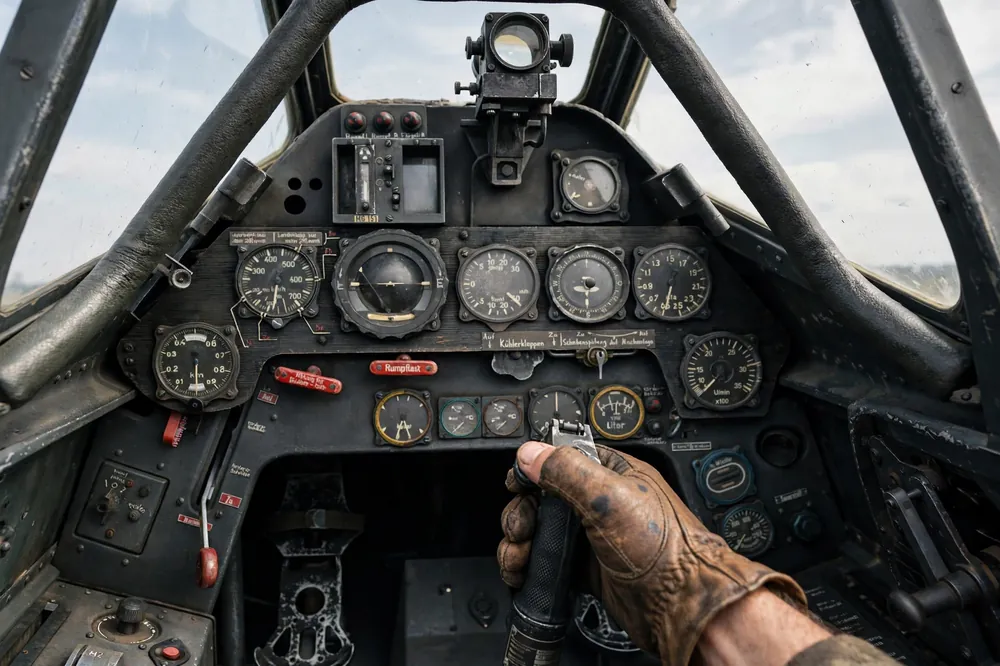
Kittel flew the Bf 109 for much of the war, and then the Fw 190, which he preferred for its firepower and its ruggedness. The Fw 190, with its four 20 mm cannon, could destroy an Il-2 with a single burst, if the burst was placed correctly, and its radial engine could absorb damage that would have stopped the Bf 109’s liquid-cooled engine.
On the Eastern Front, where the fighting was often at low altitude, over the battlefield, the Fw 190 was the ideal aircraft for the Il-2 hunter, and Kittel used it to devastating effect. His record in the Fw 190 — the great majority of his 267 credited victories — is a testament to the combination of a great pilot and a great aircraft, and to the particular demands of the air war over the Eastern Front.
8. The Man
A modest ace
Kittel was, by all accounts, a modest and unassuming man, who did not seek fame and who was uncomfortable with the publicity that surrounded the great aces. He was a Sudeten German, from a minority that had been drawn into the German Reich, and he was, in many ways, an outsider in the Luftwaffe, a man who flew for duty rather than for glory.
His comrades remembered him as a quiet, serious man, who was dedicated to his work and to his men, and who was, in the words of one of them, “a pilot’s pilot”. He never married, and he left no memoirs, and his story is known largely through the records of his unit and the memories of his comrades.
His modesty, and the fact that he died before the end of the war, have meant that he is less well known than Hartmann, Barkhorn and Rall, but his record — 267 credited victories, the fourth-highest in history — speaks for itself.
The Sudeten Germans
Kittel’s background as a Sudeten German is a reminder of the complex national politics of Central Europe in the 1930s. The Sudeten Germans were a German-speaking minority in Czechoslovakia, and their grievances were exploited by Hitler as a pretext for the annexation of the Sudetenland in 1938, under the Munich Agreement.
Kittel, who joined the Luftwaffe after the annexation, was one of the many Sudeten Germans who served in the German armed forces, and his service, like theirs, was a product of the nationalist politics of the time. After the war, the Sudeten Germans were expelled from Czechoslovakia, and their story is a tragic one, of a minority caught between two nationalisms.
Kittel, who died before the expulsions, did not live to see it, but his life is a part of that larger story.
9. Legacy and Assessment
The fourth-highest ace
Kittel’s 267 credited victories place him fourth among all fighter aces in history, and his record is often cited as evidence of the extraordinary skill of the Luftwaffe’s fighter pilots. But historians today are careful to put the numbers in context.
The Soviet air force in 1941–43 was large but poorly trained, its pilots flew obsolete aircraft, and the German pilots, who were among the best trained in the world, were able to score heavily. By 1944–45, the Soviet air force had improved dramatically, and German pilots found the fighting much harder.
Kittel’s career spans this change: his greatest scores came in 1943–44, when the Soviet air force was still recovering, and his last battles, over Courland, were fought against a Soviet air force that dominated the skies. His record must be read with this context in mind, and it is, by any measure, an extraordinary record of skill, endurance and courage.
How history remembers him
Historians today remember Kittel as one of the great aces of the Eastern Front, and as the Luftwaffe’s great Il-2 hunter. His record against the Il-2 — more than a hundred credited victories — is unique, and it is a measure of his particular skill and of the importance of the Il-2 in the Soviet war effort.
His death, at twenty-seven, killed by the rear gunner of the aircraft he had spent his career hunting, is one of the most poignant stories of the air war, and it is a reminder that the fighter pilot’s war was a war in which the hunter could, at any moment, become the hunted.
His name is remembered in Germany as one of the great aces, and his record is cited in every list of the highest-scoring fighter pilots in history.
10. JG 54 and the Eastern Front
The air war in the north
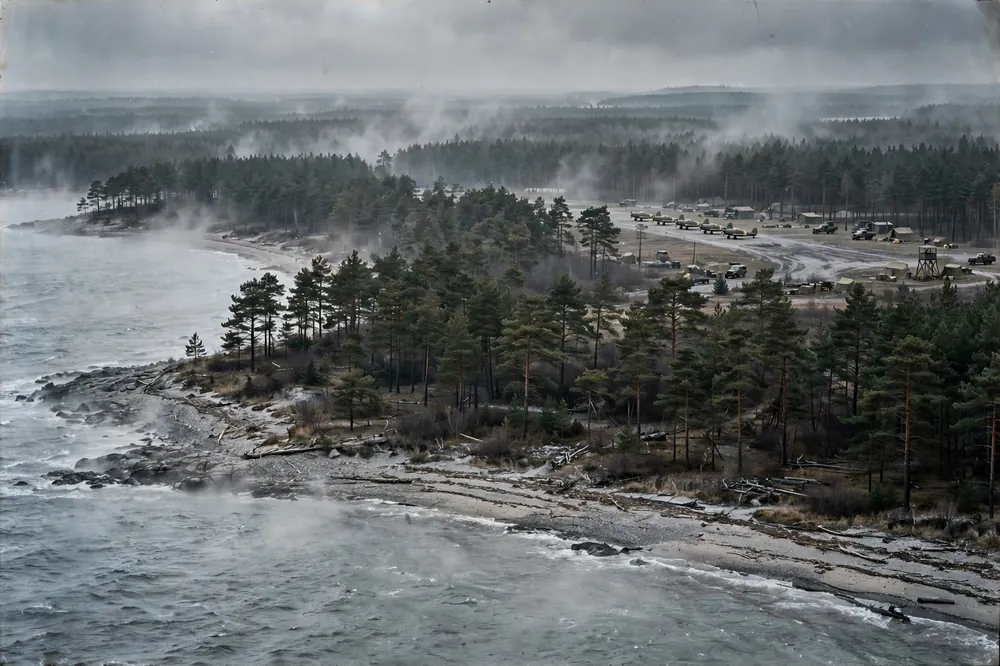
JG 54 fought on the northern sector of the Eastern Front, over the Baltic states and Leningrad, and its war was, in many ways, different from the war of JG 52 in the south. The northern front was a war of sieges and of static fronts, and the air war was fought over the forests and the lakes of the north, in terrible weather and in conditions of great hardship.
Kittel’s war, in JG 54, was a war of endurance, fought in the cold and the rain, over a front that moved slowly, and it was a war in which the German pilots, outnumbered and increasingly outmatched, fought on until the end.
The Courland Pocket, where Kittel died, was the last act of that war, and his death there, in February 1945, was a fitting end to a career that had been spent in the north, in the hardest conditions of the Eastern Front.
The Il-2 and the ground war
The Il-2’s importance in the Soviet war effort cannot be overstated. The aircraft was the Soviet army’s flying artillery, and it was used to attack German tanks, artillery and troops, in direct support of the ground forces. The German pilots who fought the Il-2 knew that every Il-2 they shot down was one less aircraft attacking their comrades on the ground, and Kittel’s record against the Il-2 was, in this sense, a direct contribution to the German army’s survival on the Eastern Front.
The Il-2’s toughness, and the skill of its pilots and its rear gunners, made it a formidable opponent, and Kittel’s success against it is a measure of his skill. His death, at the hands of an Il-2’s rear gunner, is a reminder that the Il-2, for all its vulnerability, was an aircraft that could kill the men who hunted it.
11. Frequently Asked Questions
How many victories was Otto Kittel credited with?
Kittel was credited with 267 aerial victories, from 583 combat missions, placing him fourth among all fighter aces in history, behind Hartmann (352), Barkhorn (301) and Rall (275). The figure is a credited total under the Luftwaffe’s confirmation system. He flew 583 combat missions, and he was, at the time of his death, the fourth-highest-scoring ace in history, behind Hartmann, Barkhorn and Rall. The figure is a credited total under the Luftwaffe’s confirmation system, and it should be understood as such, not as an exact, independently verified count.
How many Il-2s did Kittel shoot down?
More than a hundred of his 267 credited victories were Il-2 ground-attack aircraft, making him the Luftwaffe’s most successful Il-2 hunter. The Il-2 was heavily armoured and very difficult to shoot down. The Il-2 was the most produced military aircraft in history, with more than 36,000 built, and Kittel’s success against it made him one of the most feared German pilots on the Eastern Front. Kittel was a master of the tactics for attacking the Il-2, approaching from below and behind, where the armour was thinnest, and aiming for the oil cooler, the one vulnerable point.
How did Kittel die?
He was killed on 14 February 1945 over the Courland Pocket, in Latvia, when his Fw 190 was hit by the rear gunner of an Il-2 he was attacking. He was twenty-seven years old. He was never shot down by a fighter. He was twenty-seven years old, and he was, at the time of his death, the fourth-highest-scoring ace in history, and his death was mourned by his comrades in JG 54, who regarded him as one of the best pilots in the wing.
Which unit did Kittel fly with?
He flew the whole war with Jagdgeschwader 54, the “Grünherz” wing, on the Eastern Front, over the Baltic states, Leningrad and the Courland Pocket. The wing fought on the northern sector of the Eastern Front throughout the war, over the Baltic states and Leningrad, and its pilots included Walter Nowotny and Hans Philipp. The wing fought on the Eastern Front from the first day of the invasion to the last, over the Baltic states, Leningrad, the Ukraine and the Courland Pocket, and its pilots became among the highest-scoring aces in history.
What aircraft did Kittel fly?
He flew the Messerschmitt Bf 109 for much of the war and the Focke-Wulf Fw 190 in its later stages, which he preferred for its firepower and ruggedness. He was killed in an Fw 190. He flew the Bf 109 for most of the war, and he converted to the Fw 190 in its later stages, because its firepower and ruggedness suited the low-altitude fighting over the Eastern Front. The Fw 190, with its four 20 mm cannon, could destroy an Il-2 with a single burst, if the burst was placed correctly, and its radial engine could absorb damage that would have stopped the Bf 109’s liquid-cooled engine.
Where is Kittel buried?
His grave is in Latvia, in the Courland region where he was killed. His name is remembered in Germany as one of the great aces of the Second World War. His comrades in JG 54 mourned him as one of the best pilots in the wing, and his record of 267 credited victories remains the fourth-highest in history. His grave is in Latvia, in the Courland region where he was killed, and his name is remembered in Germany as one of the great aces of the Second World War.
12. Sources
- Wikipedia, “Otto Kittel” — birth and death dates, 267 credited victories, JG 54, 583 missions, killed by an Il-2 rear gunner on 14 February 1945.
- Wikipedia, “List of World War II flying aces” — Kittel’s ranking as fourth-highest scoring ace.
- Wikipedia, “Ilyushin Il-2” — the aircraft’s history, production and armoured design.
- John Weal, Jagdgeschwader 54 ‘Grünherz’ (Osprey, 2001) — the history of JG 54 and its aces.
- Mike Spick, Luftwaffe Fighter Aces (Greenhill, 1996) — the aces and their tactics.
- Christer Bergström, Black Cross / Red Star (Pacifica, 2000–) — the air war on the Eastern Front.
- John Weal, Fw 190 Aces of the Eastern Front (Osprey, 1998).
- Hugh Morgan, Soviet Aces of World War 2 (Osprey, 1997).