 WAR ATLAS MILITARY HISTORY MAGAZINE · WWI — WWII
Paul von Hindenburg
1. Lead
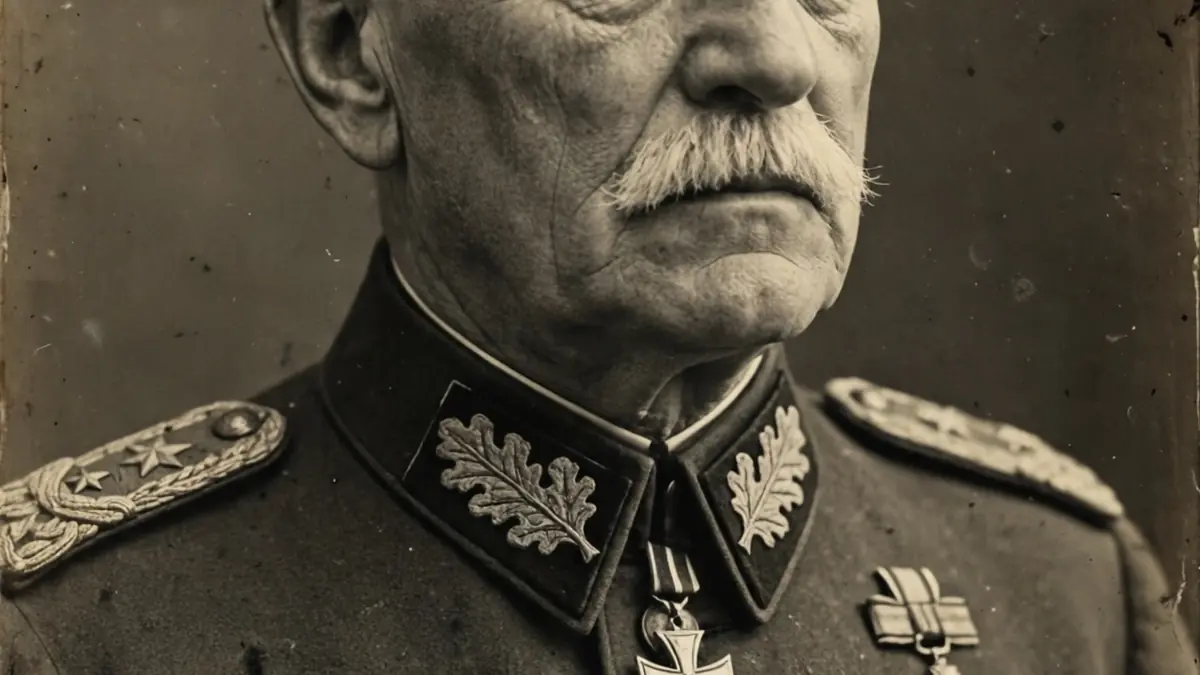
Paul von Hindenburg (2 October 1847 – 2 August 1934) was a German field marshal and statesman whose long life spanned the unification of Germany, the First World War and the collapse of the Weimar Republic. He first became a national hero in 1914, when, recalled from retirement at the age of sixty-six, he won the Battle of Tannenberg against the Russian army in East Prussia — a victory that made him, together with his chief of staff Erich Ludendorff, the most admired soldier in Germany.
By 1916 he was Chief of the General Staff, effectively the military ruler of Germany for the last two years of the war, presiding over a system of military dictatorship that historians call the “silent dictatorship”. After the German defeat in 1918 he retired, but in 1925 he was elected President of the Weimar Republic, the second and last president of Germany’s first democracy, and he was re-elected in 1932.
In January 1933, at the age of eighty-five, he appointed Adolf Hitler as Chancellor of Germany — the decision that destroyed the republic he had sworn to defend and opened the way to the Nazi dictatorship and the Second World War.
Hindenburg’s reputation has been judged very differently by different generations. To his contemporaries he was the embodiment of old Prussian virtues: duty, honour, loyalty and steadiness. He was the soldier who had saved East Prussia, the president who stood above party politics, the father figure of the nation.
To later historians he is a far more troubling figure: the general whose victories in the east were exaggerated by propaganda, the commander who helped to spread the “stab-in-the-back” myth that blamed Germany’s defeat on Jews and revolutionaries rather than on military failure, and the president whose political judgement failed at the decisive moment, when he handed power to a man he privately despised.
This article examines both sides of that record — the soldier and the statesman, the hero of Tannenberg and the president who appointed Hitler — and it draws on the evidence of Hindenburg’s own career, the records of the German army, and the work of modern historians.
2. Key Facts
| Born | 2 October 1847, Posen, Kingdom of Prussia (now Poznań, Poland) |
| Died | 2 August 1934 (aged 86), Gut Neudeck, East Prussia |
| Nationality | German (Prussian) |
| Role / Office | Commander, Eighth Army (1914); Chief of the General Staff (1916–1919); President of Germany (1925–1934) |
| Known for | Victory at the Battle of Tannenberg (1914); the “silent dictatorship” of 1916–1918; appointing Adolf Hitler as Chancellor (30 January 1933) |
| Spouse / Family | Gertrud von Sperling (married 1879, died 1921); son Oskar von Hindenburg, his closest political adviser as president |
| Military rank | Generalfeldmarschall (Field Marshal, from November 1914) |
3. Early Life and Education
Childhood and Cadet School
Paul Ludwig Hans Anton von Beneckendorff und von Hindenburg was born on 2 October 1847 in Posen, in the Prussian province of the same name, into an old Prussian Junker family — the landed aristocracy that supplied the Prussian army with most of its officers. His father, Robert von Beneckendorff und von Hindenburg, was a Prussian army officer; his mother, Luise Schwickart, came from a family of Prussian civil servants.
The young Paul was educated at home and at the cadet school in Wahlstatt, and in 1859, at the age of eleven, he entered the cadet corps at Berlin, the training ground for the Prussian officer class. He was a solid rather than brilliant pupil, and his teachers remembered him as steady, conscientious and physically strong.
In 1866, at eighteen, he was commissioned as a second lieutenant in the 3rd Foot Guards, one of the most prestigious regiments in the Prussian army, and his career as a soldier of the Prussian monarchy had begun.
First Wars and Rise Through the Ranks
Hindenburg’s first experience of war came quickly. In the Austro-Prussian War of 1866 he fought at the Battle of Königgrätz, the decisive Prussian victory over Austria, and in the Franco-Prussian War of 1870–1871 he fought at the battles of Gravelotte and Sedan and took part in the siege of Paris.
He was wounded in 1870, and he was present at the proclamation of the German Empire at Versailles in January 1871, an event that shaped his lifelong loyalty to the monarchy and to the Prussian military tradition. In the decades that followed, Hindenburg rose steadily through the ranks, serving on the General Staff, commanding a regiment, a brigade and a division, and in 1903 he was given command of the IV Army Corps at Magdeburg.
In 1911, at the age of sixty-three, he retired, having been passed over for the post of Chief of the General Staff, and he settled at Hanover with his wife Gertrud, expecting a quiet retirement. He was a man of the old army: tall, broad, slow of speech and deliberate in manner, a soldier who believed in duty, in order and in the monarchy, and who had little interest in politics.
Three years later, the outbreak of the First World War would call him back — and make him the most famous man in Germany.
4. Recall from Retirement and Tannenberg
The Crisis in East Prussia
When the First World War broke out in August 1914, the German Eighth Army in East Prussia, under General Maximilian von Prittwitz, faced a Russian invasion by two armies — the First Army under General Rennenkampf advancing from the east and the Second Army under General Samsonov advancing from the south.
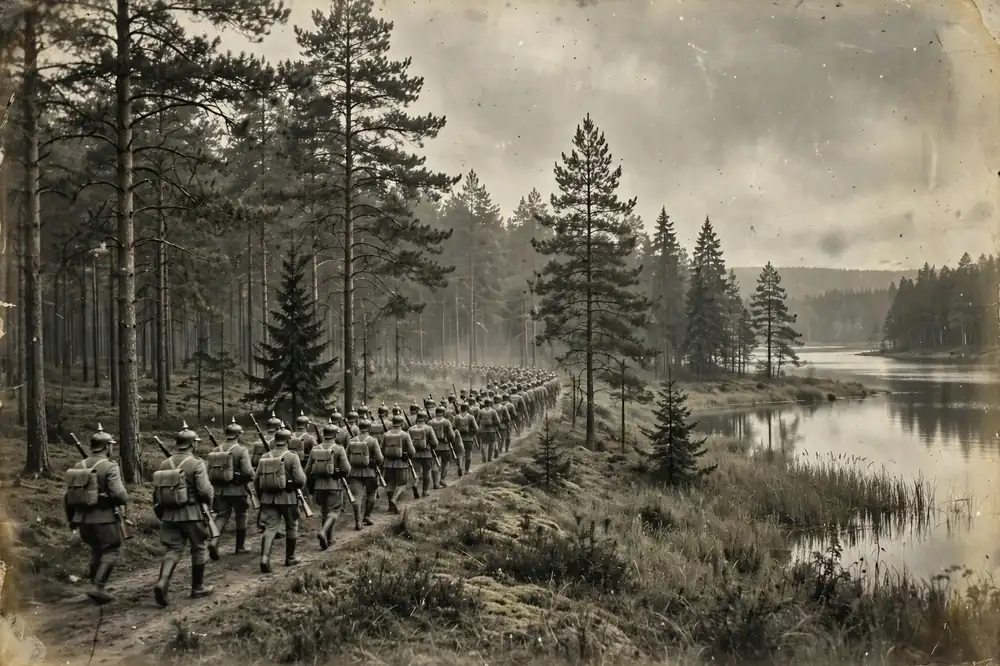
Prittwitz, after a defeat at Gumbinnen on 20 August, panicked and ordered a retreat behind the Vistula, effectively abandoning East Prussia. The German high command, the Oberste Heeresleitung (OHL), sacked him and, on 22 August, recalled Hindenburg from retirement to take command, with Erich Ludendorff, the hero of Liège, as his chief of staff.
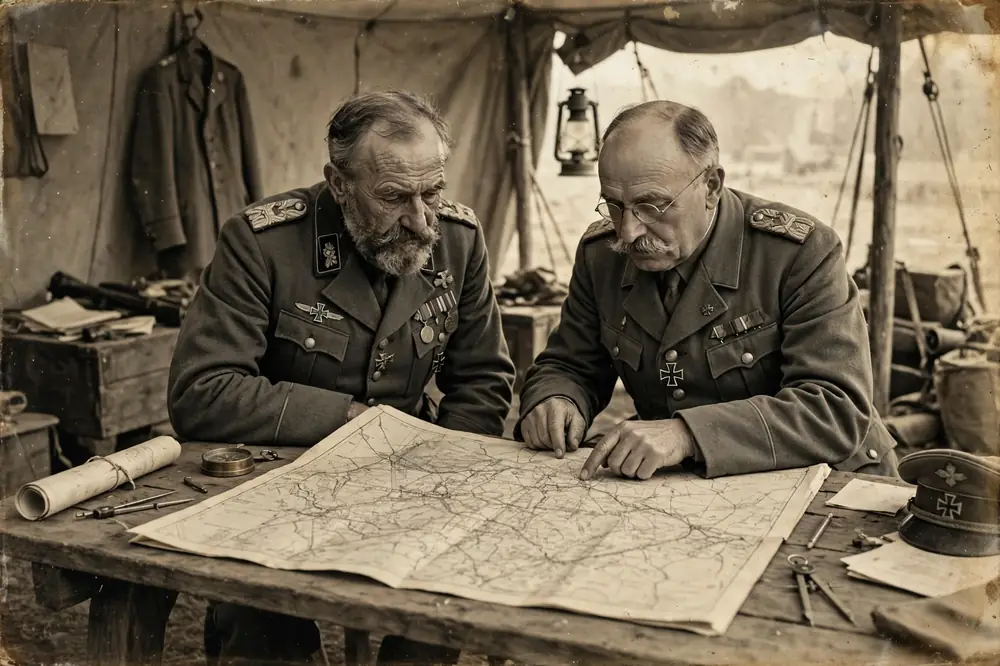
The pairing was deliberate: Hindenburg, the calm, dignified, older commander who inspired confidence, and Ludendorff, the younger, energetic staff officer who did the detailed planning. Together they would become known as the “Hindenburg-Ludendorff” team, and in German propaganda Hindenburg’s name would stand for victory.
The appointment was, in the eyes of the German public, a masterstroke: an old hero recalled to save the east, and a young staff officer, fresh from the victory at Liège, to do the planning.
The Battle of Tannenberg
The battle that followed, fought from 26 to 30 August 1914, became the Battle of Tannenberg — named after a medieval battle of 1410 in which the Poles and Lithuanians had defeated the Teutonic Knights, a name chosen deliberately to cast the victory as a revenge for a historic German defeat.
Using intercepted Russian radio messages, which the Russians transmitted in plain language, and exploiting the poor coordination between Rennenkampf and Samsonov, Ludendorff’s plan encircled Samsonov’s Second Army in the forests and lakes south of Allenstein. The Russians lost about 30,000 men killed and wounded and some 92,000 taken prisoner, while the Germans lost about 12,000. Samsonov shot himself in the forest.
A second victory followed at the Masurian Lakes in September, and Rennenkampf’s First Army was driven out of East Prussia. Hindenburg was promoted to field marshal, and his name became a byword for German military genius.
The Encirclement
The encirclement itself was a triumph of staff work and of intelligence. The Germans knew, from the intercepted messages, that Rennenkampf was advancing slowly and that Samsonov was pushing forward without support, and Ludendorff’s staff, under Lieutenant Colonel Max Hoffmann, moved German divisions by rail from one front to the other, concentrating against Samsonov while holding Rennenkampf with a screen of cavalry.
The Russians, marching through forest and marsh, ran short of food and ammunition, and their commanders did not know where the Germans were. By 28 August the trap had closed: Samsonov’s army was surrounded in the forests south of Allenstein, and in two days of fighting it was destroyed as a fighting force.
The scale of the victory stunned both sides, and it showed that the German army, in the east, could defeat a much larger enemy by movement and by intelligence. The victory also owed much to the Russians’ own mistakes: their armies advanced without proper maps, their supply columns lagged behind, and their generals, Rennenkampf and Samsonov, distrusted each other and refused to cooperate.
The Victory and Its Meaning
The victory made Hindenburg a national hero, but the truth was more complex than the legend. The plan had been prepared by the Eighth Army’s staff before Hindenburg arrived, and Ludendorff was the operational brain of the victory, yet the public wanted a hero, and Hindenburg — tall, white-bearded, calm and paternal — was the perfect figure for the role.
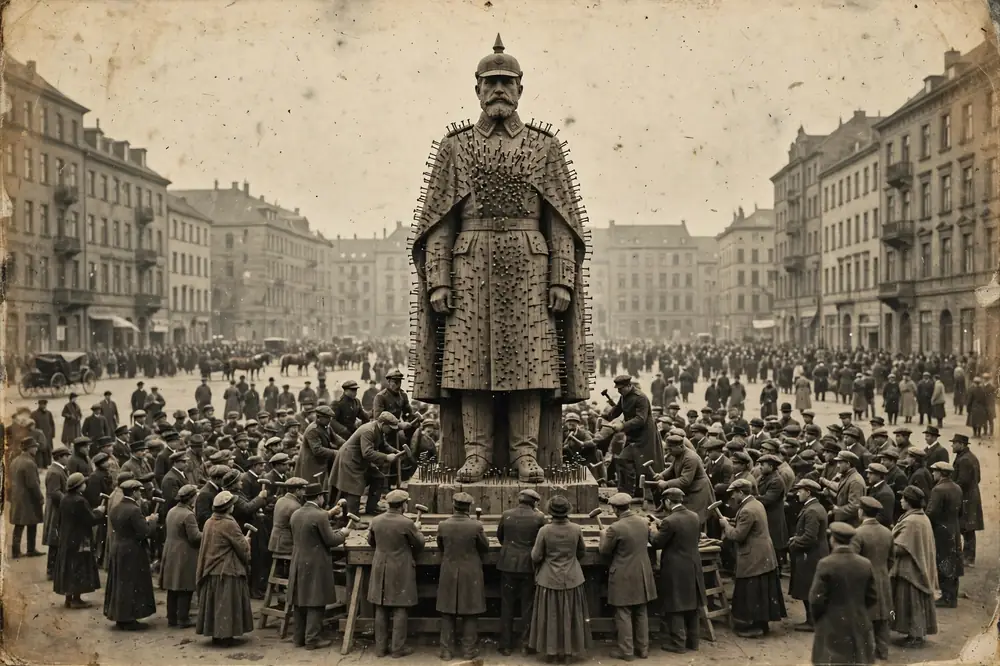
Statues of him were erected across Germany, a wooden colossus of him — the “Wooden Hindenburg” — was built in Berlin, and ordinary Germans hammered nails into it in return for donations to the war effort. The name “Tannenberg” itself was a piece of propaganda, chosen to suggest that Germany had avenged a defeat of 1410.
The victory also had a lasting strategic meaning: it saved East Prussia from Russian occupation, and it allowed Germany to fight a two-front war for four more years, but it did not decide the war, and the German army would spend the next four years in a struggle it could not win.
5. Chief of the General Staff and the “Silent Dictatorship”
The Third OHL Takes Power
In August 1916, after the failure of the German offensive at Verdun and the heavy losses of the Somme, Kaiser Wilhelm II dismissed the Chief of the General Staff, Erich von Falkenhayn, and appointed Hindenburg in his place, with Ludendorff as First Quartermaster-General. The appointment was presented as a change of command; in practice it was a change of regime.
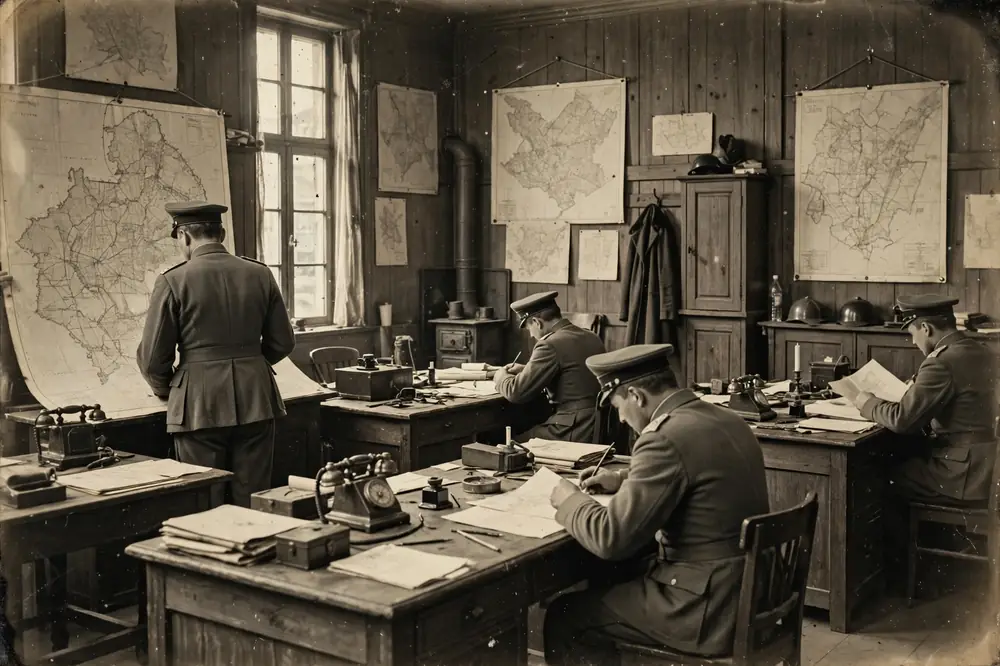
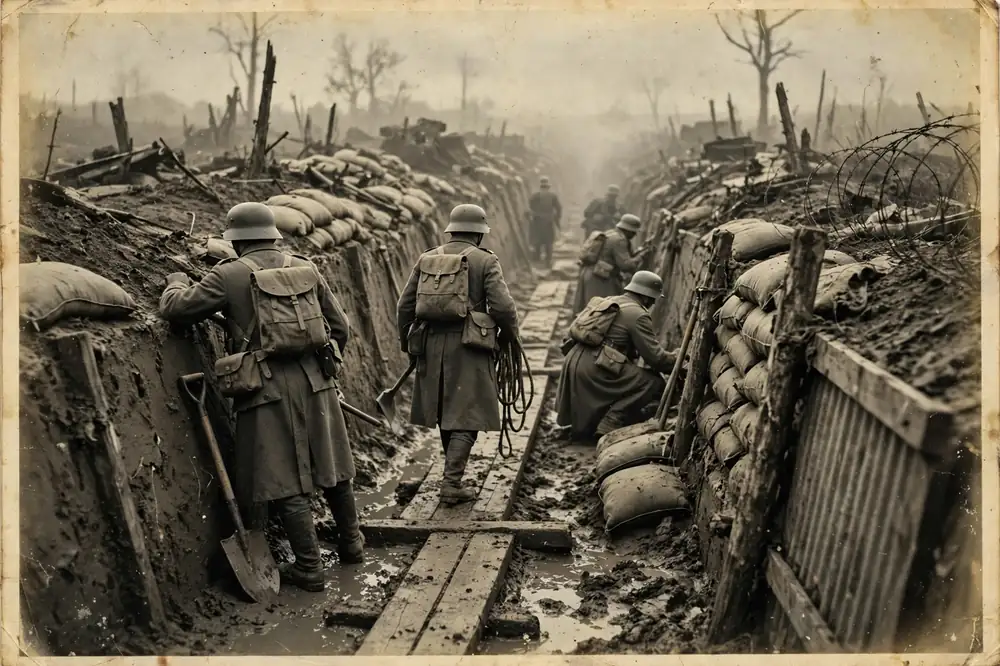
Hindenburg and Ludendorff — the “Third OHL” — took control not only of military operations but of the German war economy and, increasingly, of domestic politics. They imposed the Hindenburg Programme, a vast expansion of munitions production, and the Auxiliary Service Law of December 1916, which made all German men aged seventeen to sixty liable for war work.
Historians call their rule the “silent dictatorship” because it was exercised without a formal change of constitution: the Kaiser remained on the throne, the Chancellor remained in office, but real power lay with the two generals at OHL headquarters.
War Economy, Submarines and the End of the War
Hindenburg’s own role in this system is a matter of debate. Ludendorff was the driving force — energetic, impatient, and increasingly dominating — while Hindenburg was the figurehead whose name and prestige legitimised the decisions. Hindenburg rarely overruled Ludendorff, and he signed the orders that Ludendorff drafted, but he also provided something Ludendorff could not: the confidence of the army, the respect of the Kaiser, and the trust of the German public.
The partnership worked as long as Germany was winning, or at least not losing: the great victories of 1917 and 1918 in the east — the defeat of Russia and the Treaty of Brest-Litovsk in March 1918, which gave Germany vast territories in the east — were their achievement, and so was the great spring offensive of 1918 in the west, the last German attempt to win the war before American troops arrived in strength.
That offensive, the Kaiserschlacht, failed in the summer of 1918, and the Allied counter-offensive, the Hundred Days, drove the German army back. In September 1918 Ludendorff suffered a nervous collapse and demanded an armistice; Hindenburg supported the request. On 9 November the Kaiser abdicated, and on 11 November the armistice was signed.
Hindenburg stayed in office long enough to oversee the army’s return home, and he retired again in June 1919, after advising the new republican government to sign the Treaty of Versailles — a treaty he himself described as a dictated peace.
6. The “Stab-in-the-Back” Myth
Hindenburg’s Testimony of 1919
One of Hindenburg’s most damaging legacies is his part in creating the “stab-in-the-back” myth — the Dolchstoßlegende. The myth claimed that the German army had not been defeated on the battlefield in 1918 but had been betrayed at home by Jews, socialists and revolutionaries who had undermined the war effort and forced the government to seek an armistice.
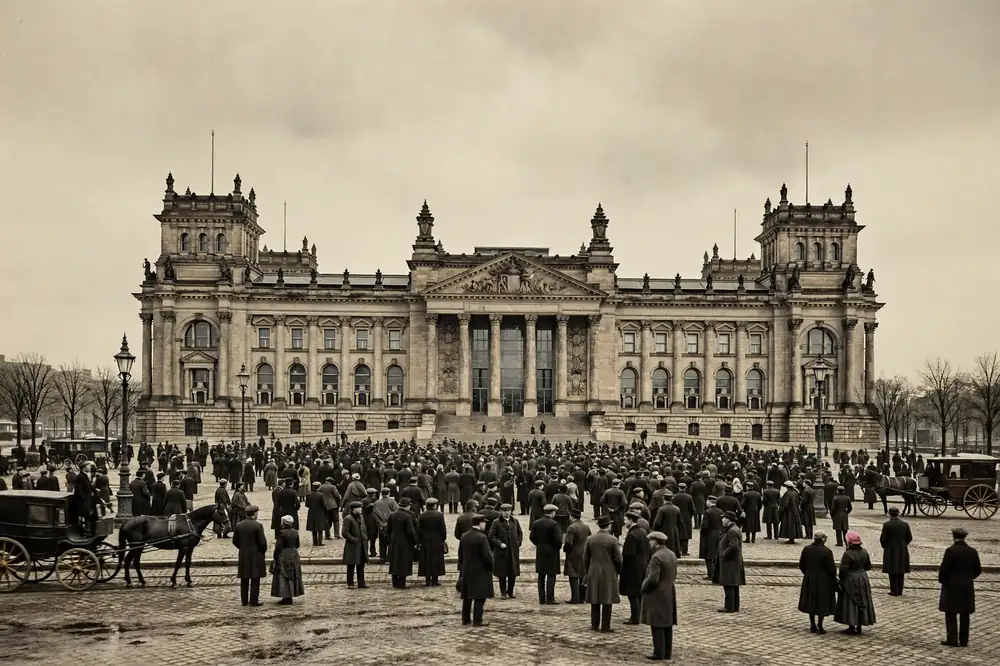
It was false: the German army had been defeated in the field, its supply lines were collapsing, its allies were leaving the war, and Ludendorff himself had demanded the armistice. But the myth was politically powerful, because it allowed the army and the old elites to escape blame for the defeat and to transfer it to the republic and to its supposed enemies.
Hindenburg gave the myth its most authoritative form. In November 1919, testifying before a parliamentary committee of inquiry into the causes of the defeat, he stated that the army had been “stabbed in the back” by the revolution — a phrase he borrowed from a British general’s remark — and his testimony, as the most respected soldier in Germany, gave the myth a credibility that no politician could have supplied.
The Consequences of the Myth
The consequences of the myth were profound. It poisoned the politics of the Weimar Republic from its birth, because it branded the republic as the product of treason rather than as the government that had ended a lost war. It was taken up by the nationalist right, by the Freikorps, and by the Nazi Party, which made it a central part of its propaganda: Hitler, in Mein Kampf, blamed the Jews for the defeat, and the Nazis used the myth to justify their persecution of Jews and their hatred of democracy.
Hindenburg himself probably believed the myth, at least in part — he was a man of the old order who distrusted the republic and who could not accept that the army he had led had been defeated — but whether he believed it or not, his words did enormous harm.
Modern historians are unanimous that the myth was false, and they regard Hindenburg’s testimony as one of the most consequential statements of his life: a few sentences, spoken by a revered old soldier, that helped to destroy the democracy he would later be elected to lead.
7. President of the Weimar Republic
Election and Early Presidency
Hindenburg was elected President of Germany in April 1925, after the death of Friedrich Ebert, the republic’s first president. He was seventy-seven years old, and he had not sought the office: he was put forward by the nationalist right, which hoped that a hero of the war would restore the prestige of the presidency and, in time, restore the monarchy.
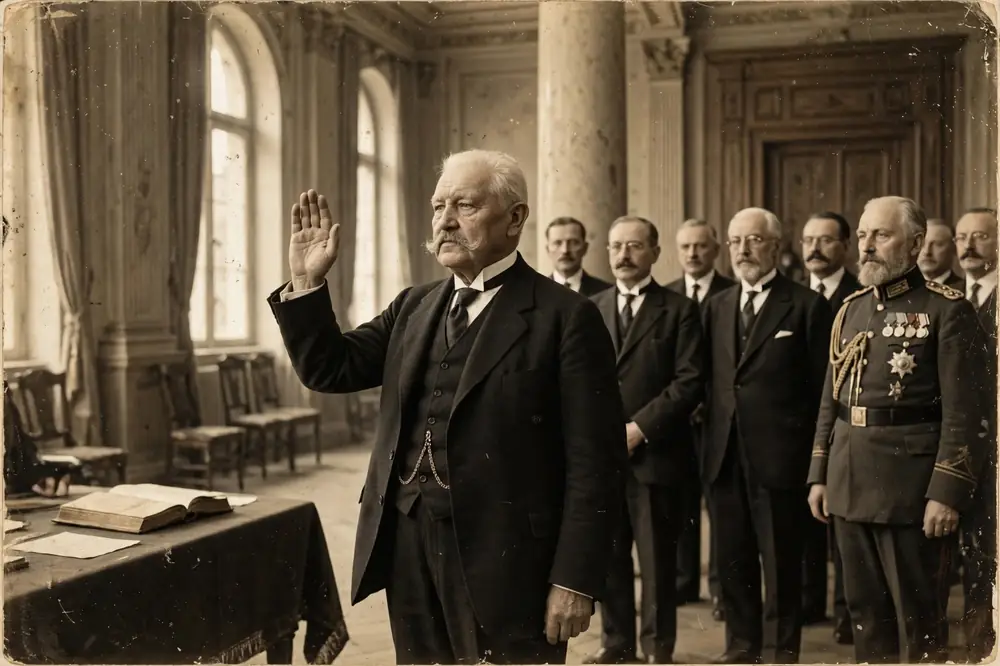
He won the election narrowly, defeating Wilhelm Marx of the Catholic Centre Party in the second round, with the support of the right and of many voters who saw him as a figure above party politics. As president, Hindenburg was, at first, a model of constitutional restraint: he accepted the republican constitution, he worked with governments of the centre and the left, and he used his powers — including the emergency powers of Article 48, which allowed the president to rule by decree — sparingly.
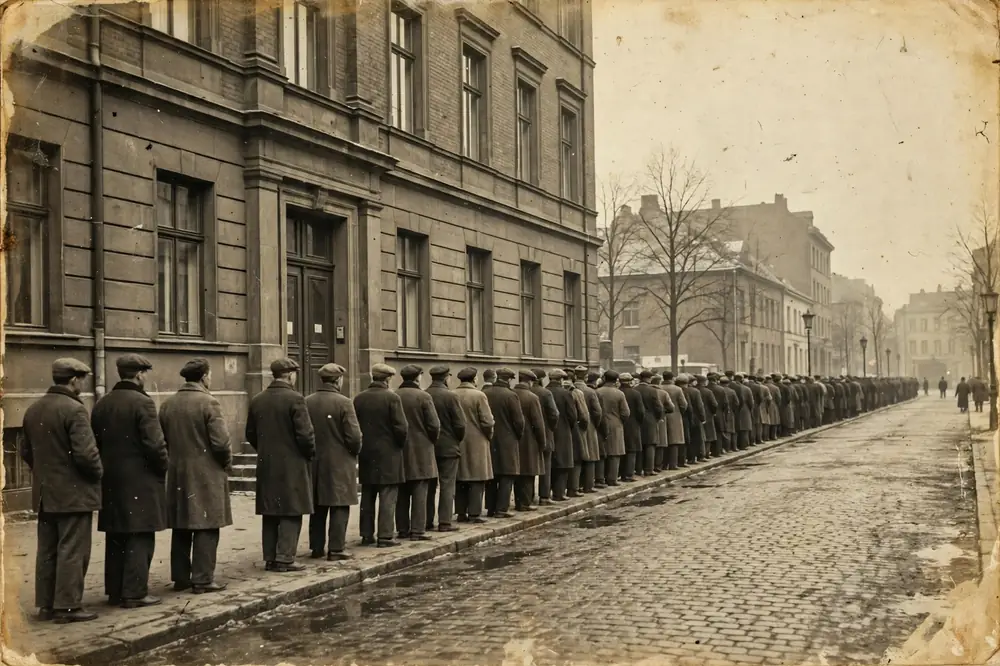
His advisers, however, were drawn from the old elites, and his son Oskar and his close circle — the so-called camarilla around the president — pushed him towards the right.
The Presidential Governments, 1930–1933
The turning point came in 1930, when the Great Depression destroyed the German economy and the parliamentary system broke down. Hindenburg, advised by his circle, appointed Heinrich Brüning as Chancellor and governed by presidential decree, bypassing the Reichstag. The “presidential governments” of 1930–1933 — Brüning, then Franz von Papen, then Kurt von Schleicher — ruled without a parliamentary majority, and each of them depended on Hindenburg’s support.
The system was intended to be temporary, a way of governing until the crisis passed, but it destroyed the habit of parliamentary government and it accustomed Germans to rule by decree. Hindenburg himself, by then in his eighties, was increasingly frail and dependent on his advisers; he distrusted the Social Democrats, he disliked the Nazis, and he was determined to avoid a civil war.
In the presidential election of 1932 he stood for re-election, at the age of eighty-four, against Hitler, and he won — with the support of the Social Democrats and the trade unions, who voted for him as the lesser evil. It was the last democratic election in Germany for thirteen years, and it left Hindenburg as the only man who could stop Hitler.
Within a year, he would hand Hitler the chancellorship.
8. Appointing Hitler, 30 January 1933
The Decision of January 1933
The appointment of Adolf Hitler as Chancellor on 30 January 1933 was the most consequential decision of Hindenburg’s life, and it was made under pressure from his own advisers. In November 1932 the Nazi Party, though still the largest party in the Reichstag, had lost votes in the election, and Hitler had refused to serve in any government he did not lead.
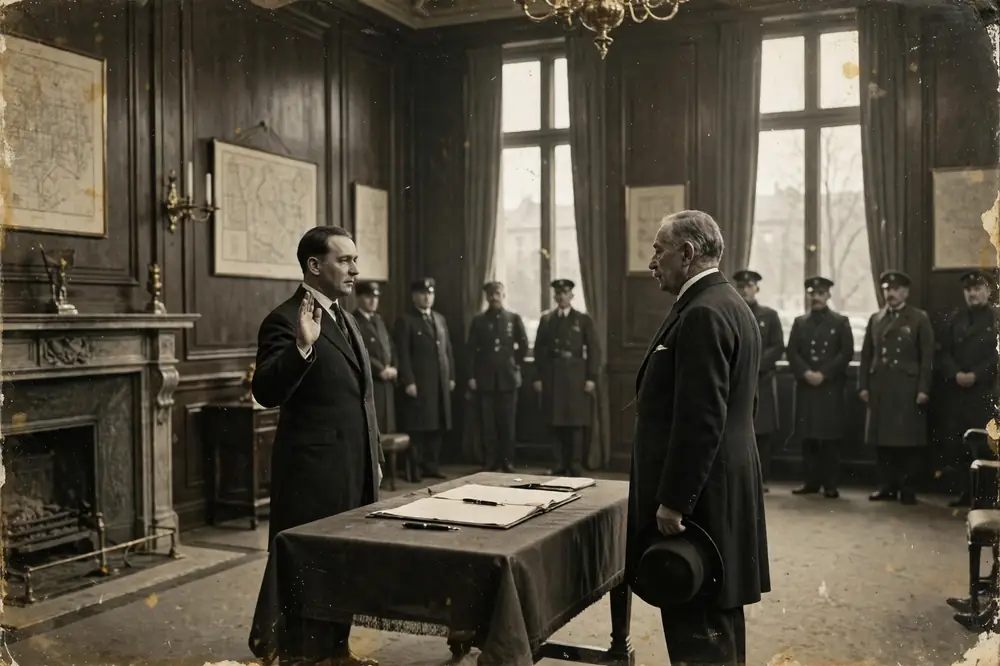
Hindenburg himself had refused to appoint Hitler as Chancellor in August 1932, telling him that he would not hand power to a man who wanted to rule by force. But in January 1933 the situation changed: Franz von Papen, the former Chancellor, persuaded Hindenburg that Hitler could be “tamed” — that he could be contained in a cabinet in which the Nazis held only three of eleven posts, and that Papen himself, as Vice-Chancellor, would control him.
Hindenburg’s son Oskar, who had become his father’s closest political adviser, supported the plan, and so did the army leadership, which wanted a government that would rearm Germany. On 30 January 1933 Hindenburg appointed Hitler as Chancellor, swearing him in as the head of a coalition government.
From Chancellor to Dictator
Hindenburg’s defenders have argued that he had no choice: the parliamentary system had broken down, the Nazis were the largest party, and any alternative government would have been unstable. His critics reply that he had choices — he could have appointed a military government, he could have declared a state of emergency, he could have refused — and that he chose the worst of them, because he listened to Papen and to his son rather than to his own judgement.
Hindenburg himself seems to have believed that Hitler could be controlled: he called him “the Bohemian corporal”, a contemptuous reference to Hitler’s origins, and he told his advisers that he would dismiss him if he overstepped his authority. But the constitution gave the Chancellor the power to govern, and Hitler used it ruthlessly.
The speed of the transformation shocked even Hitler’s opponents: within six months the trade unions had been dissolved, the political parties had been banned, and Germany, which had been a democracy in January, was a one-party state by the summer.
The Reichstag Fire Decree
Within weeks of the appointment, Hitler persuaded Hindenburg to sign the Reichstag Fire Decree, which suspended civil liberties — freedom of speech, freedom of the press, freedom of assembly — after the Reichstag building was set on fire on 27 February 1933. The decree, issued under Article 48, was the legal basis for the arrest of thousands of Communists and Social Democrats and for the destruction of the free press.
In March 1933 the Enabling Act gave Hitler dictatorial powers, and Hindenburg, by then eighty-five and in declining health, signed the decrees that destroyed the republic. He never publicly opposed Hitler, and in the last eighteen months of his life he was, in effect, a prisoner of the regime he had created — a figurehead whose prestige was used to legitimise the dictatorship.
The decree was, in the words of one historian, “the legal foundation of the dictatorship”: it suspended the constitution, it allowed the arrest of Hitler’s opponents, and it was never, in the twelve years of the regime, repealed.
The Enabling Act
The Enabling Act of 23 March 1933 allowed the government to pass laws without the Reichstag, and it was the decisive step in the destruction of German democracy. Hindenburg’s signature, and his prestige, made the act appear constitutional, and the army and the civil service accepted it as the will of the president.
Within months the trade unions were dissolved, the political parties were banned, and Germany was a one-party state. Hindenburg, who had sworn to defend the constitution, had presided over its abolition, and he did so without protest. His defenders note his age and his failing health; his critics note that he was still lucid enough to understand what he was signing, and that his refusal to act was itself a choice — the choice of a man who preferred order, even a Nazi order, to the disorder of democracy.
The act was passed by the Reichstag, with the support of the Centre Party and of the nationalists, and it was, in the words of one historian, “the moment when the German parliament voted itself out of existence”.
9. Later Life and Death
Decline and the Night of the Long Knives
Hindenburg’s last eighteen months were a slow decline. He was eighty-five when he appointed Hitler, and his health deteriorated steadily: he suffered from bladder cancer, and by the summer of 1934 he was bedridden at his estate at Neudeck in East Prussia, where he had retired after the war.
Hitler visited him there in June 1934, shortly before the Night of the Long Knives — the purge of 30 June to 2 July 1934 in which Hitler had the leaders of the SA and other opponents murdered — and Hindenburg, who had been told that the purge was necessary to prevent a coup, sent Hitler a telegram of thanks for his “gallant action” in saving Germany from “treason”.
It was the last political act of his life, and it was used by the regime as evidence that the president himself had approved the murders. Whether Hindenburg understood what he was approving is unclear: he was old, ill, and heavily medicated, and his advisers — above all his son Oskar — controlled access to him.
Death and Burial
Hindenburg died on 2 August 1934, at the age of eighty-six, at Neudeck. Within hours, Hitler merged the offices of President and Chancellor into a single office — the Führer — and the army swore an oath of loyalty not to the constitution but to Hitler personally.
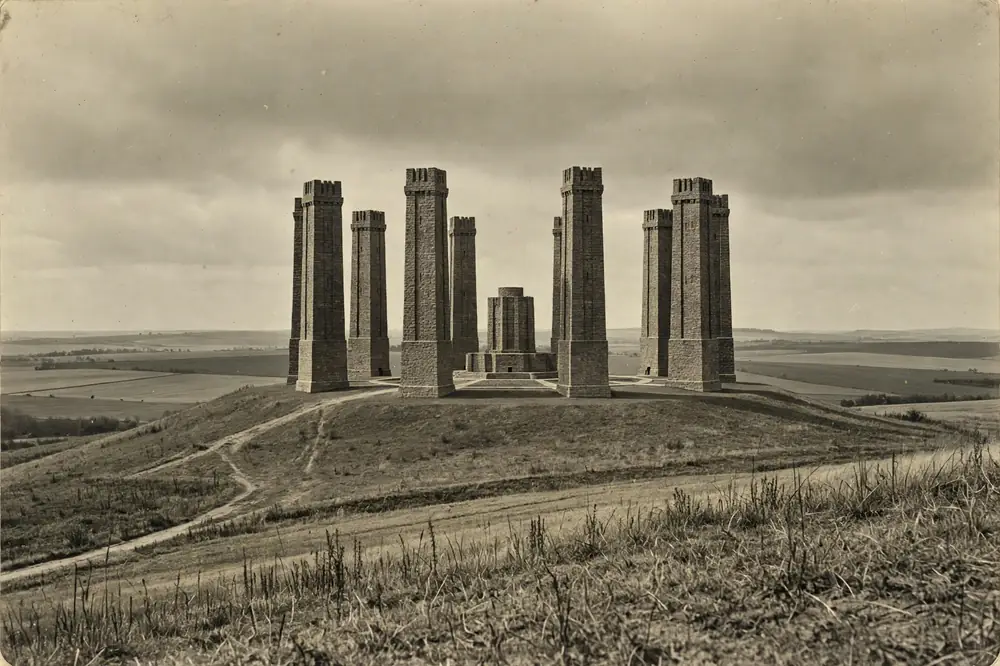
Hindenburg was given a state funeral at the Tannenberg Memorial, the vast monument built in East Prussia to commemorate the battle of 1914, and he was buried there beside his wife, who had died in 1921. His estate at Neudeck was given to the state, and his son Oskar was given a large sum of money and a promotion.
The Tannenberg Memorial itself was destroyed by the Germans in 1945, as the Soviet army advanced into East Prussia, and Hindenburg’s body was removed by the German army and reburied, first at Marburg and later in the Elisabeth Church in Marburg, where it remains.
His death marked the end of the Weimar Republic in all but name: the last link with the old Germany was gone, and Hitler’s dictatorship was complete.
10. Legacy and Assessment by Historians
Hindenburg the Soldier
On the question of Hindenburg as a soldier, modern historians are more critical than his contemporaries were. The victory at Tannenberg was real, and it saved East Prussia from Russian occupation, but it was won by Ludendorff’s planning and by the Eighth Army’s staff as much as by Hindenburg, and Hindenburg’s later reputation as a military genius was built largely on propaganda.
As Chief of the General Staff he presided over a war effort that failed: the submarine campaign brought America into the war, the spring offensive of 1918 failed, and the army that he and Ludendorff commanded was defeated in the field.
His defenders point out that he inherited a war that was already unwinnable, and that his leadership kept the army together until the end; his critics reply that the “silent dictatorship” prolonged a lost war and cost hundreds of thousands of lives.
The most balanced assessments — including those of the historians Wolfram Pyta and Anna von der Goltz — present Hindenburg as a competent but not exceptional general, whose fame owed more to his personality and to the needs of German propaganda than to his operational skill.
Hindenburg the President
On the question of Hindenburg as president, the judgement is harsher. Hindenburg was not a Nazi, and he disliked Hitler personally, but he was the man who made Hitler Chancellor, and he signed the decrees that destroyed the republic. Historians debate how much blame he deserves: some argue that he was an old, ill man manipulated by Papen and by his son, and that the collapse of the parliamentary system left him with no good options; others argue that he chose the presidential governments that destroyed parliament, that he refused to work with the Social Democrats who had elected him in 1932, and that his appointment of Hitler was a free choice made by a man who preferred a nationalist government to a democratic one.
The consensus today is that Hindenburg bears a heavy responsibility — not because he was a Nazi, but because he was the one man whose prestige and whose constitutional powers could have stopped Hitler, and who used them instead to put Hitler in power.
His name is remembered in Germany today with a mixture of respect and reproach: streets and squares still bear his name, but the Tannenberg Memorial is gone, and the town of Hindenburg in Upper Silesia — named for him in 1915 — is now the Polish city of Zabrze.
He remains, in the words of one historian, “the tragic figure of German history: the hero who became the gravedigger of the republic”.
Frequently Asked Questions
Who was Paul von Hindenburg?
Paul von Hindenburg (1847–1934) was a German field marshal and the second President of the Weimar Republic. He won the Battle of Tannenberg in 1914, led the German war effort as Chief of the General Staff from 1916 to 1918, and appointed Adolf Hitler as Chancellor in January 1933.
What was the Battle of Tannenberg?
The Battle of Tannenberg (26–30 August 1914) was a German victory over the Russian Second Army in East Prussia. The Russians lost about 30,000 men killed and wounded and about 92,000 taken prisoner. It made Hindenburg a national hero.
What was the “stab-in-the-back” myth?
It was the false claim that the German army was not defeated in 1918 but was betrayed at home by Jews, socialists and revolutionaries. Hindenburg gave the myth authority in his testimony of November 1919, and the Nazis later used it in their propaganda.
Why did Hindenburg appoint Hitler as Chancellor?
In January 1933 his adviser Franz von Papen persuaded him that Hitler could be controlled in a cabinet in which the Nazis held only three of eleven posts. Hindenburg, who was eighty-five and in poor health, accepted the plan. Hitler used the office to destroy the republic within weeks.
When and how did Hindenburg die?
He died of bladder cancer on 2 August 1934, aged eighty-six, at his estate at Neudeck in East Prussia. Hitler then merged the offices of President and Chancellor into the single office of Führer.
Where is Hindenburg buried?
He was first buried at the Tannenberg Memorial in East Prussia. When the memorial was destroyed in 1945, his body was moved to Marburg, where it now lies in the Elisabeth Church.
Related articles
Sources
- Wikipedia, “Paul von Hindenburg” — life, Tannenberg, Chief of the General Staff, presidency and the appointment of Hitler.
- Wolfram Pyta, Hindenburg: Herrschaft zwischen Hohenzollern und Hitler (Siedler, 2007) — the standard modern biography of Hindenburg as president.
- Anna von der Goltz, Hindenburg: Power, Myth, and the Rise of the Nazis (Oxford University Press, 2009) — Hindenburg’s myth and his political role.
- Andreas Dorpalen, Hindenburg and the Weimar Republic (Princeton University Press, 1964) — the classic study of Hindenburg’s presidency.
- Holger Herwig, The First World War: Germany and Austria-Hungary 1914–1918 (Arnold, 1997) — Tannenberg, the “silent dictatorship” and the German war effort.
- Ian Kershaw, Hitler 1889–1936: Hubris (Penguin, 1998) — the appointment of Hitler in January 1933.
- United States Holocaust Memorial Museum, Holocaust Encyclopedia, “The Stab-in-the-Back Myth” — the Dolchstoßlegende and its consequences.