 WAR ATLAS MILITARY HISTORY MAGAZINE · WWI — WWII
TBF Avenger
1. TBF Avenger — At a Glance
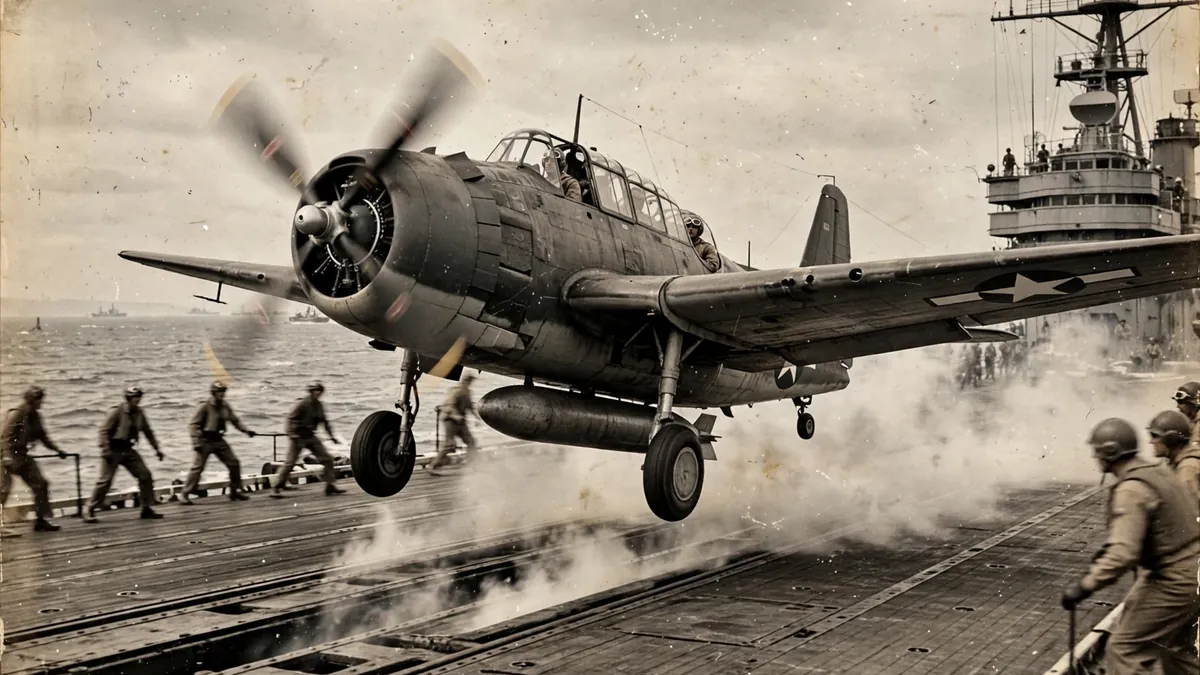
The Grumman TBF Avenger was the torpedo bomber of the United States Navy in the Second World War, and the aircraft that sank more Japanese shipping than any other American aircraft. A large, single-engined carrier aircraft with a crew of three, it entered service in 1942 as the replacement for the obsolete TBD Devastator, and it fought in every major battle of the Pacific War, from Midway in June 1942 to Okinawa in 1945. The Avenger could carry a torpedo, a bomb load of up to 2,000 pounds, depth charges or rockets, and it was armed with machine guns in the wings, in a power-operated dorsal turret and in a ventral gun, and it was built to absorb punishment and to bring its crew home. It is remembered for its debut at Midway, where five of the six Avengers that attacked the Japanese fleet were shot down, for its part in the sinking of the Japanese battleships Musashi and Yamato, and for the young pilot George H. W. Bush, who was shot down in an Avenger over Chichi Jima in 1944 and rescued by an American submarine, and who went on to become the forty-first President of the United States. The Avenger was built in large numbers — 9,839 in all — and it served after the war as an anti-submarine aircraft, and it is one of the most important naval aircraft in history.
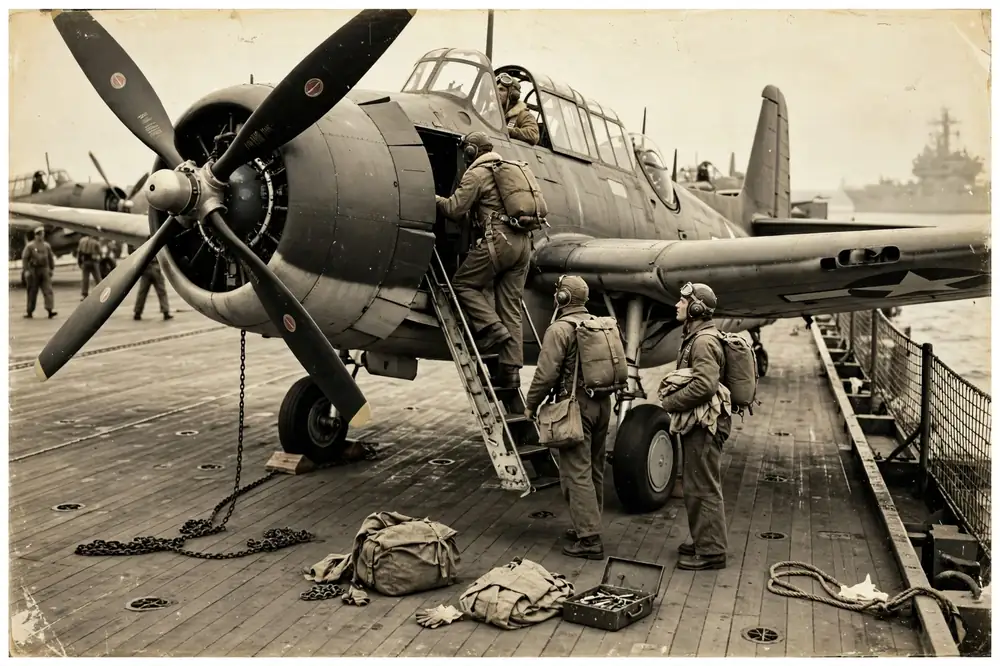
The Avenger’s name was chosen after Pearl Harbor, when Grumman renamed the aircraft that had been called the Tarpon, and the name was a promise: the Avenger would avenge the attack on Pearl Harbor, and it would avenge the men who had died in the TBD Devastator at Midway. The Avenger was not a fast aircraft, and it was not a graceful one, but it was a tough and reliable one, and its crews loved it for its ability to take punishment and to keep flying, and for the power-operated turret that let the gunner defend the aircraft against the fighters that attacked it from above and behind. The Avenger’s story is the story of the American torpedo bomber, from the disaster of Midway, when the torpedo squadrons were destroyed, to the triumph of Leyte Gulf, when the Avengers sank the greatest battleship ever built, and it is the story of an aircraft that did its work without glamour, and that is remembered by the men who flew it as the best torpedo bomber of the war.
2. Key Facts
| Type | Carrier-based torpedo bomber |
| Origin | United States |
| Designer | Grumman (Leroy Grumman and William Schwendler) |
| Manufacturer | Grumman (2,290); General Motors / Eastern Aircraft (7,549 as TBM) |
| First flight | 7 August 1941 |
| In service | 1942–1960s (USN; later with other air forces) |
| Produced | 1942–1945; 9,839 built |
| Crew | 3 (pilot, turret gunner, radioman/bombardier) |
| Length | 12.2 m (40 ft) |
| Wingspan | 16.5 m (54 ft 2 in) |
| Height | 5.0 m (16 ft 5 in) |
| Max speed | About 436 km/h (271 mph) |
| Range | About 1,610 km (1,000 miles) |
| Service ceiling | 7,000 m (23,000 ft) |
| Engine | Wright R-2600-20 Cyclone radial, 1,900 hp |
| Armament | 2 × .50-calibre wing guns; 1 × .50-calibre dorsal turret; 1 × .30-calibre ventral gun |
| Bomb load | One Mk 13 torpedo, or up to 2,000 lb of bombs, or depth charges, or rockets |
3. Background and Development
The Need to Replace the Devastator
The Avenger was designed to replace the Douglas TBD Devastator, the torpedo bomber of the United States Navy in the late 1930s, which was slow, poorly armed and obsolescent by the time the war began. The Navy issued a requirement in 1939 for a new torpedo bomber that could carry a torpedo, that could defend itself against enemy fighters, and that could operate from an aircraft carrier, and Grumman, which had built the F4F Wildcat fighter, answered the requirement with a large, single-engined aircraft that was designed around the Wright R-2600 Cyclone engine and the Mark 13 torpedo. The prototype, which was first called the Tarpon, first flew on 7 August 1941, and it was a great improvement over the Devastator: it was faster, it was more heavily armed, it had a power-operated dorsal turret, and it had a crew of three, with a pilot, a turret gunner and a radioman who also served as the bombardier. The Navy ordered the aircraft into production, and the first Avengers were delivered in early 1942, just in time for the Battle of Midway.
Grumman and the Tarpon Name
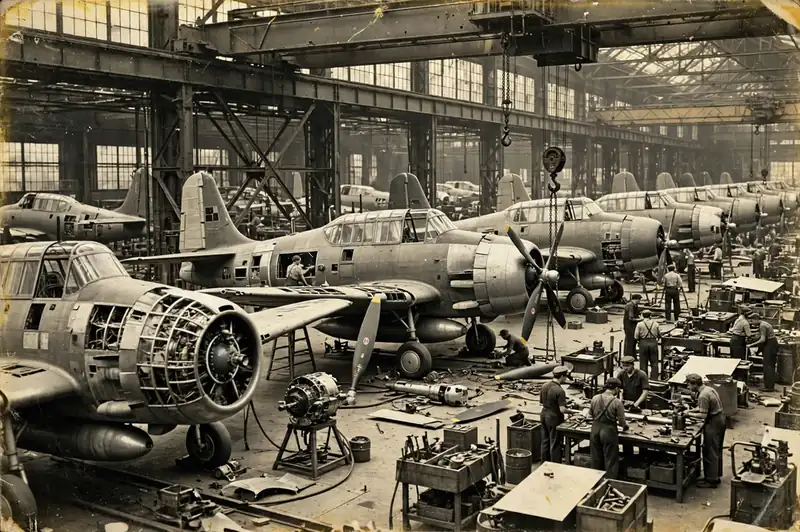
The Avenger was designed by Grumman, under Leroy Grumman and William Schwendler, and it was built at Grumman’s factory at Bethpage, Long Island, where it was known as the Tarpon, after the game fish, in keeping with Grumman’s tradition of naming its naval aircraft after animals. After Pearl Harbor, Grumman renamed the aircraft the Avenger, a name that reflected the American determination to avenge the attack, and the name was approved by the Navy, which liked its spirit. The Avenger’s production was soon taken up by the General Motors Corporation, which built the aircraft at its Eastern Aircraft Division in Trenton, New Jersey, under the designation TBM, and the Eastern-built aircraft, of which 7,549 were made, outnumbered the Grumman-built aircraft, of which 2,290 were made. The Avenger’s production, at 9,839 aircraft in all, was one of the largest of any naval aircraft of the war, and it showed the scale of American wartime production, and the ability of the automobile industry to build aircraft in enormous numbers.
The Torpedo Problem
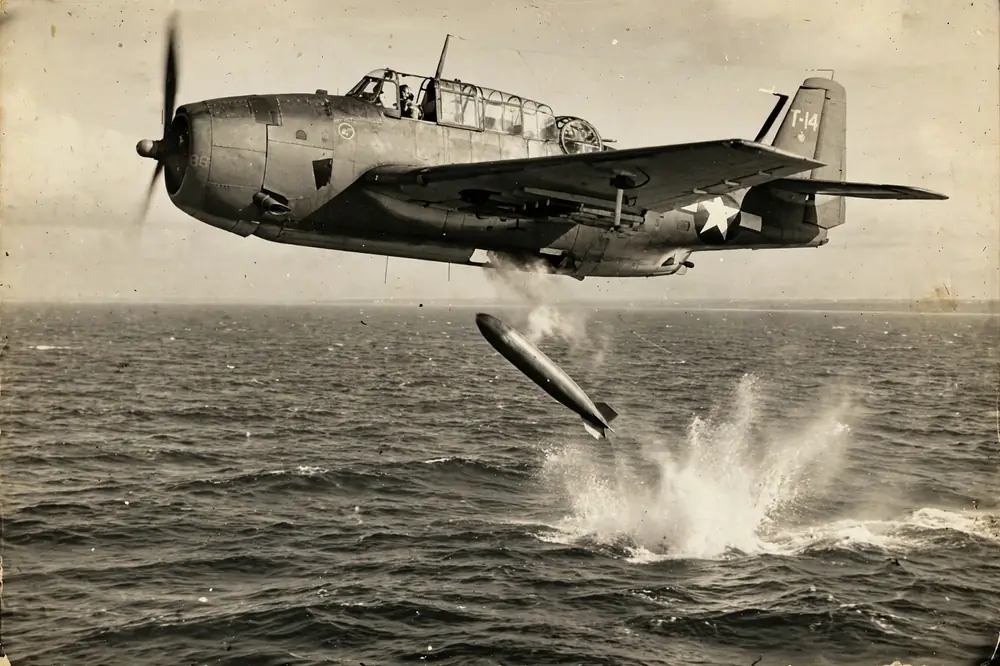
The Avenger’s early service was hampered by the American torpedo, the Mark 13, which was unreliable, slow and prone to failure, and which had to be dropped at a low speed and a low altitude, which made the Avenger vulnerable to anti-aircraft fire. The Mark 13 torpedo, which was the standard American aerial torpedo, ran too deep, its exploder often failed, and its range was short, and it was not until 1944 that the torpedo was improved and the Avenger could use it effectively. The Avenger’s crews therefore used bombs more often than torpedoes in the early part of the war, and they attacked ships with 500-pound and 1,000-pound bombs, and with depth charges against submarines, and it was not until the battles of 1944, at the Philippine Sea and at Leyte Gulf, that the Avenger’s torpedoes sank the great Japanese battleships. The torpedo problem was one of the great scandals of the American Navy, and it cost the lives of many Avenger crews, but the Avenger’s crews persevered, and they made the aircraft effective in spite of its torpedo.
4. Design
A Large Carrier Aircraft with a Crew of Three
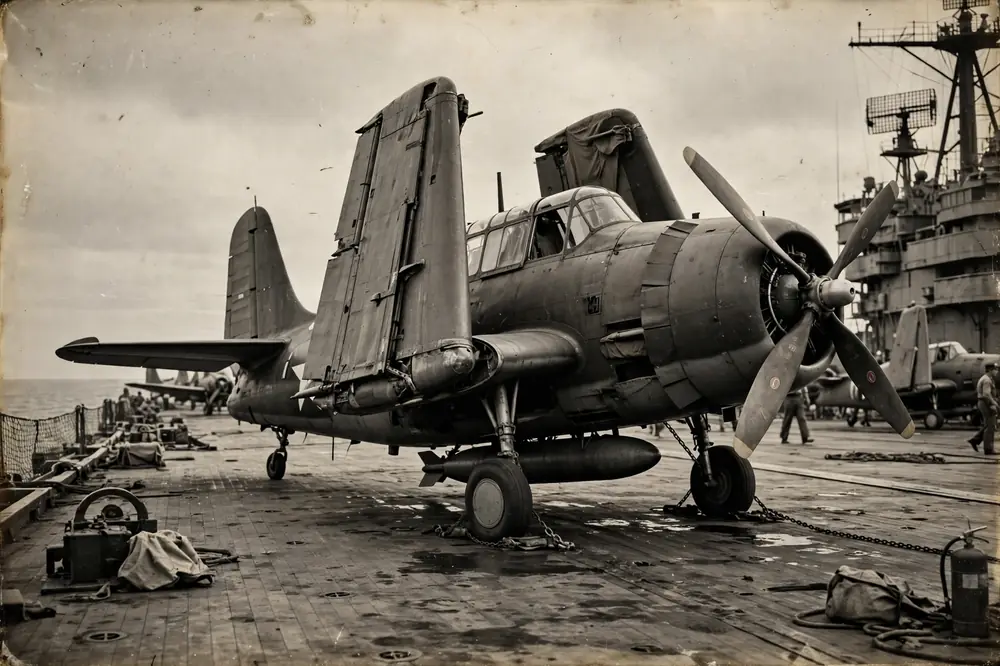
The Avenger was a large, single-engined, low-wing monoplane, with a crew of three — a pilot, a turret gunner and a radioman who also served as the bombardier — and it was the largest single-engined aircraft to operate from an American carrier in the war. The aircraft was 12.2 metres long, with a wingspan of 16.5 metres, and it was powered by a Wright R-2600 Cyclone radial engine of 1,900 horsepower, which gave it a top speed of about 436 kilometres per hour and a range of about 1,610 kilometres. The Avenger’s wings folded for stowage aboard a carrier, and its landing gear was strong enough to withstand the shock of a carrier landing, and its airframe was built to absorb damage and to keep flying after taking hits. The Avenger’s size was a disadvantage in a dogfight, but it was an advantage in its role as a torpedo bomber, because it could carry a torpedo, a bomb load of up to 2,000 pounds, depth charges or rockets, and it could stay in the air for hours on a patrol, and it could bring its crew home after taking damage that would have destroyed a smaller aircraft.
The Dorsal Turret and Defensive Armament
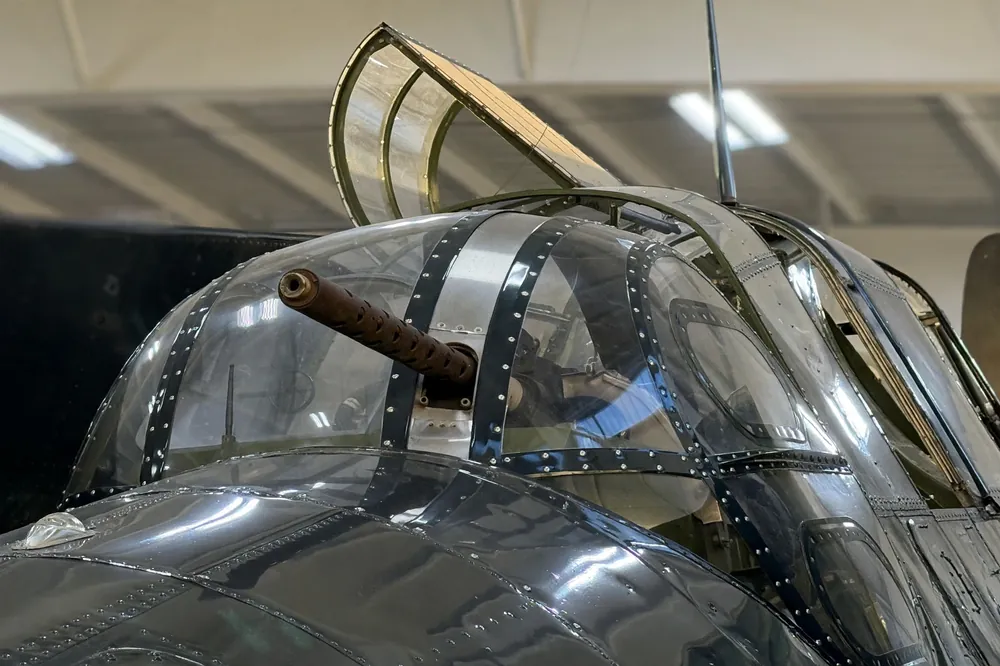
The Avenger’s most distinctive feature was its power-operated dorsal turret, the first such turret on an American naval aircraft, which was mounted behind the pilot and which housed a single .50-calibre machine gun that the gunner could aim and fire in almost every direction above and behind the aircraft. The turret was operated by an electric motor, and it gave the Avenger a defence against the fighters that attacked it from above and behind, which was the direction from which the Japanese fighters most often attacked. The Avenger was also armed with two .50-calibre machine guns in its wings, which the pilot fired, and with a single .30-calibre machine gun in a ventral position, which the radioman fired at the fighters that attacked from below. The Avenger’s defensive armament was heavier than that of the Devastator that it replaced, and it was one of the reasons the Avenger’s crews survived when the Devastator’s crews had not, but it was not enough to save the aircraft from the Japanese fighters at Midway, where five of the six Avengers that attacked the Japanese fleet were shot down.
The Bomb Bay and the Torpedo
The Avenger’s bomb bay was large enough to carry a single Mark 13 torpedo, or up to 2,000 pounds of bombs, or depth charges, or rockets, and it was the aircraft’s striking arm. The torpedo was carried on a cradle in the bomb bay, and it was released by the bombardier, who sat in the rear of the aircraft and who aimed the torpedo through a bombsight in the floor, and the aircraft had to fly straight and level at a low speed and a low altitude to drop the torpedo, which made it vulnerable to anti-aircraft fire. The Avenger’s bombs were carried on racks in the bomb bay and under the wings, and they were released by the bombardier, who aimed them through the same bombsight, and the aircraft could also carry rockets under its wings, which were used against ships and against ground targets in the last year of the war. The Avenger’s bomb bay was one of the largest of any carrier aircraft of the war, and it was the reason the aircraft could do so many different jobs, from torpedo bombing to anti-submarine patrol to close air support.
5. Variants
| Variant | Years | Key features | Production |
|---|---|---|---|
| TBF-1 | 1942 | Original Grumman version; R-2600-8 engine | 1,526 (Grumman) |
| TBF-1C | 1943 | Wing guns added; increased fuel capacity | 764 |
| TBM-1C | 1942–1944 | General Motors / Eastern Aircraft version of the TBF-1 | 4,664 |
| TBM-3 | 1944–1945 | R-2600-20 engine, 1,900 hp; improved radar; wing rocket racks | 2,885 |
| TBM-3E / TBM-3S | 1945–1950s | Anti-submarine versions; radar and sonobuoys | Post-war conversions |
| TBM-3W | 1945–1950s | Airborne early warning version with radar dome | Post-war conversions |
TBF-1 and TBM-1
The TBF-1 was the original Grumman version of the Avenger, powered by the Wright R-2600-8 Cyclone engine of 1,700 horsepower, and it was the version that fought at Midway, at the Eastern Solomons and at Guadalcanal. The TBF-1C, which followed it in 1943, added two .50-calibre machine guns in the wings and increased the fuel capacity, and it was the version that fought the long campaign of 1943. The TBM-1 and TBM-1C were the General Motors / Eastern Aircraft versions of the TBF-1, and they were identical to the Grumman aircraft except for their manufacturer’s plate, and they were built in larger numbers than the Grumman aircraft, with 4,664 TBM-1s built against 1,526 TBF-1s. The TBF-1 and the TBM-1 were the Avengers that won the early battles of the Pacific War, and they were the versions that the crews remembered as the original Avenger, tough, reliable and forgiving of the mistakes of a young pilot.
TBM-3: The Improved Avenger
The TBM-3 was the improved Avenger, and it was the version that fought the great battles of 1944 and 1945, at the Philippine Sea, at Leyte Gulf and at Okinawa. The TBM-3 was powered by the Wright R-2600-20 Cyclone engine of 1,900 horsepower, which gave it a higher top speed and a better rate of climb, and it was fitted with improved radar, with wing racks for rockets, and with a stronger airframe, and it was built in large numbers, with 2,885 TBM-3s built by Eastern Aircraft. The TBM-3 was the Avenger that sank the Japanese battleships Musashi and Yamato, and it was the Avenger that George H. W. Bush flew at Chichi Jima, and it was the version that the crews loved best, because it was the most powerful and the most capable Avenger of all. The TBM-3 remained in service after the war as an anti-submarine aircraft, and it was the version that served longest, and it is the version that survives in museums and in the air today.
Post-War Anti-Submarine Versions
After the war, the Avenger was converted into an anti-submarine aircraft, and the TBM-3E, the TBM-3S and the TBM-3W were the versions that served in the Cold War. The TBM-3E was fitted with radar and with sonobuoys, which it dropped into the sea to listen for submarines, and it was used by the United States Navy and by the navies of Canada, France, the Netherlands and several other countries. The TBM-3W was an airborne early warning version, with a large radar dome under its belly, and it was used to detect enemy aircraft at long range and to direct friendly fighters to intercept them. The Avenger’s post-war service as an anti-submarine and early warning aircraft lasted into the 1960s, and it was a tribute to the aircraft’s versatility: a torpedo bomber designed in 1941 was still in service twenty years later, doing a job that its designers had never imagined, and doing it well.
6. Operational History
Midway: The Bloody Debut
The Avenger’s debut came at Midway, and it was a bloody one. On 4 June 1942, six Avengers of Torpedo Squadron 8, which had been detached from the Hornet and based on Midway Island, attacked the Japanese fleet, and five of the six were shot down by Japanese fighters and anti-aircraft fire, and only one, piloted by Ensign Albert Earnest, returned to Midway, with its gunner dead and its radioman wounded. The Avengers’ attack, like the attacks of the Devastators that followed it, was a failure in itself, but it was a vital part of the battle: the Japanese fighters were drawn down to sea level to attack the torpedo bombers, and when the American dive bombers arrived from high above, the Japanese carriers were unprotected, and their dive bombers sank three carriers in a few minutes. The Avengers’ sacrifice at Midway is remembered as one of the great acts of courage in naval history, and the eighteen men who flew the six Avengers from Midway Island are remembered as the men who helped to win the battle by drawing the Japanese fighters down to the sea. The Avenger’s debut at Midway was also the Devastator’s last day, and the two aircraft’s stories are linked: the Devastator squadrons from the Hornet, the Enterprise and the Yorktown attacked the Japanese fleet on the morning of 4 June, and they were almost entirely destroyed, with 35 of the 41 Devastators lost, and their sacrifice, like that of the Avengers, drew the Japanese fighters down to sea level and left the carriers unprotected for the dive bombers. The Avenger was the Devastator’s replacement, and it was a better aircraft in every way, but its debut was as bloody as the Devastator’s last day, and it was a reminder that the torpedo bomber was the most dangerous job in naval aviation, and that the men who flew it faced terrible odds.
Six Avengers from Midway Island
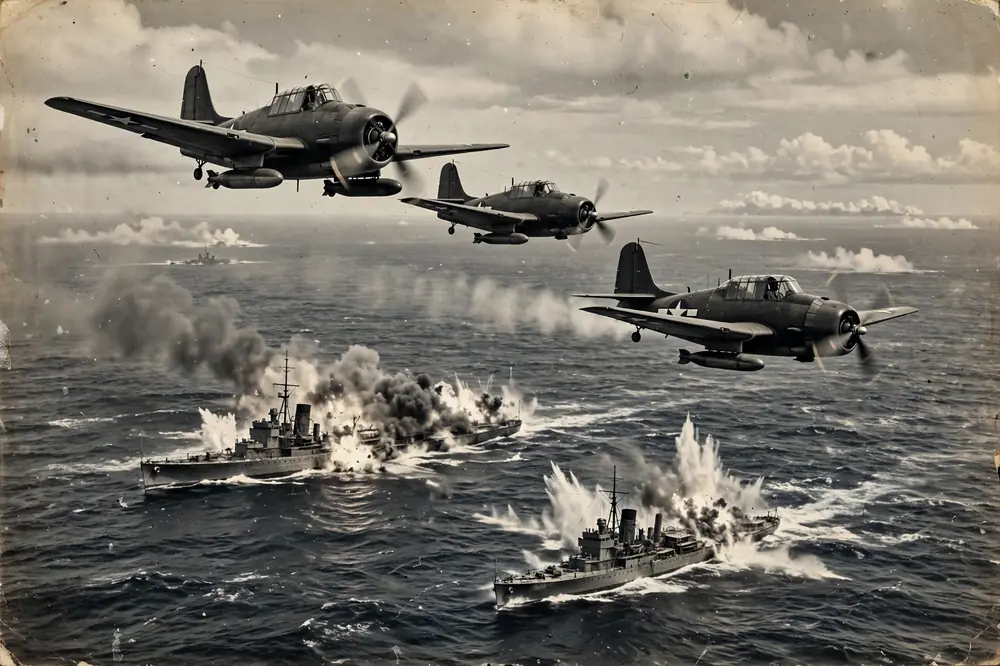
The Avenger’s debut came at Midway, and it was a bloody one. On 4 June 1942, six Avengers of Torpedo Squadron 8, which had been detached from the Hornet and based on Midway Island, attacked the Japanese fleet, and five of the six were shot down by Japanese fighters and anti-aircraft fire, and only one, piloted by Ensign Albert Earnest, returned to Midway, with its gunner dead and its radioman wounded. The Avengers’ attack, like the attacks of the Devastators that followed it, was a failure in itself, but it was a vital part of the battle: the Japanese fighters were drawn down to sea level to attack the torpedo bombers, and when the American dive bombers arrived from high above, the Japanese carriers were unprotected, and their dive bombers sank three carriers in a few minutes. The Avengers’ sacrifice at Midway is remembered as one of the great acts of courage in naval history, and the eighteen men who flew the six Avengers from Midway Island are remembered as the men who helped to win the battle by drawing the Japanese fighters down to the sea.
The Devastator’s Last Day
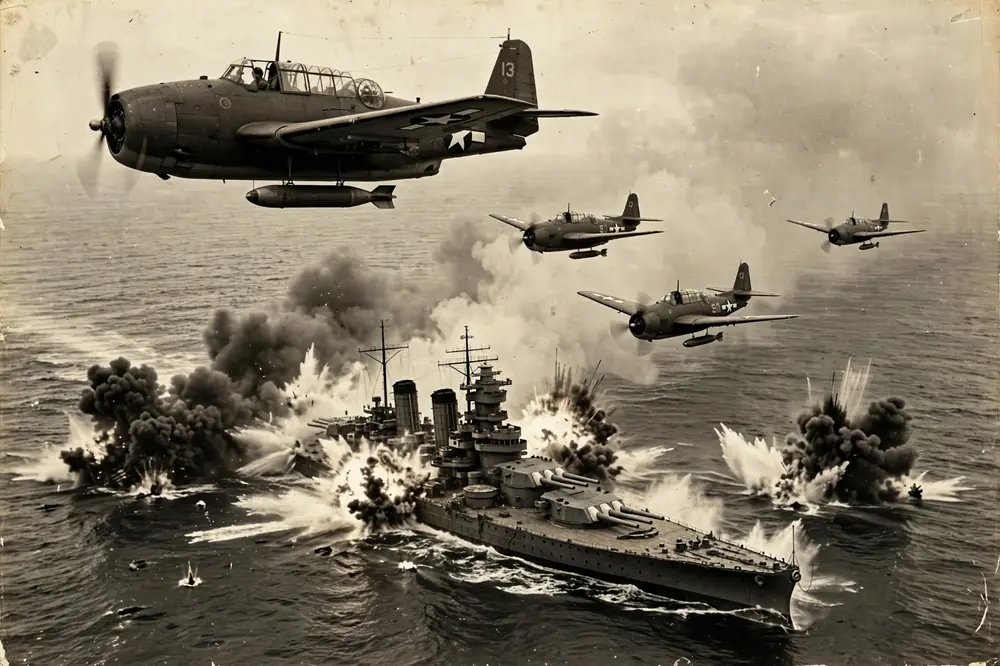
The Avenger’s debut at Midway was also the Devastator’s last day, and the two aircraft’s stories are linked: the Devastator squadrons from the Hornet, the Enterprise and the Yorktown attacked the Japanese fleet on the morning of 4 June, and they were almost entirely destroyed, with 35 of the 41 Devastators lost, and their sacrifice, like that of the Avengers, drew the Japanese fighters down to sea level and left the carriers unprotected for the dive bombers. The Avenger was the Devastator’s replacement, and it was a better aircraft in every way, but its debut was as bloody as the Devastator’s last day, and it was a reminder that the torpedo bomber was the most dangerous job in naval aviation, and that the men who flew it faced terrible odds. The Avenger’s crews did not forget Midway, and they flew the aircraft for the rest of the war with the memory of the men who had died in the Avengers and the Devastators at Midway, and they made the Avenger the weapon that avenged them.
Guadalcanal and the Solomons
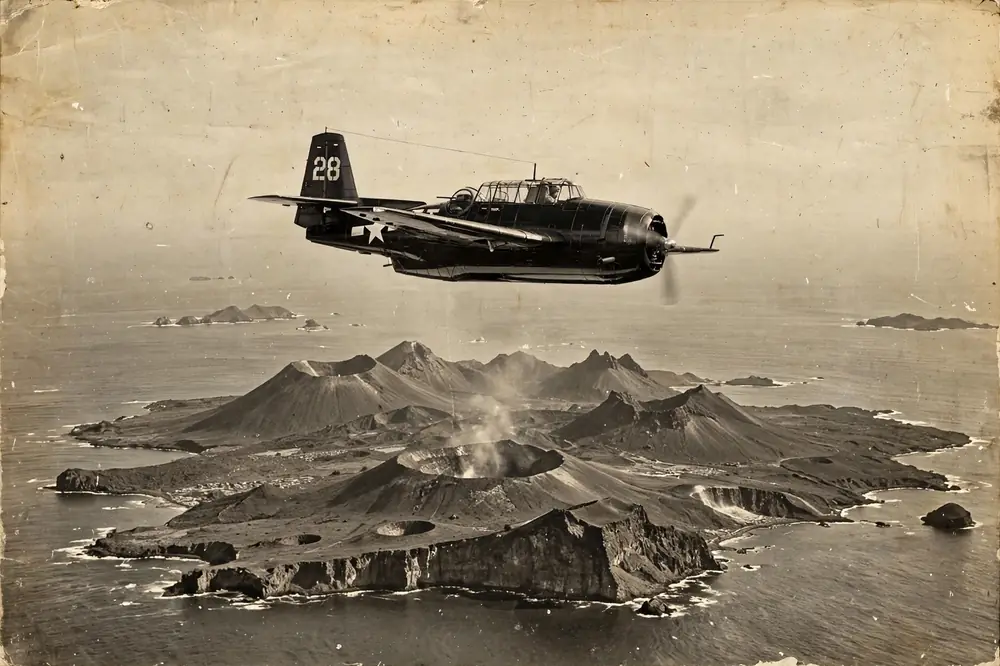
After Midway, the Avenger fought the long campaign for Guadalcanal and the Solomons, where it attacked Japanese shipping in the “Slot”, the channel between the Solomon Islands, and where it flew from the carriers and from the airfield at Henderson Field on Guadalcanal. The Avenger’s crews in the Solomons flew long missions over the sea, and they attacked Japanese destroyers and transports that brought supplies and reinforcements to Guadalcanal, and they were escorted by Wildcat fighters, and they learned to work with the dive bombers and the fighters as a team. The Avenger’s service in the Solomons was a long and hard campaign, and it was the campaign in which the Avenger proved itself as a torpedo bomber, and in which its crews learned the tactics that they would use for the rest of the war. By the end of 1943, the Avenger was the standard torpedo bomber of the American Navy, and it had replaced the Devastator entirely, and it was the aircraft that the Japanese feared most, because it could sink their ships.
The Great Battles: Philippine Sea and Leyte
The Avenger’s finest hour came in the great battles of 1944, at the Philippine Sea and at Leyte Gulf, where its torpedoes sank the greatest battleships ever built. At the Battle of Leyte Gulf in October 1944, the Avengers of the American carriers attacked the Japanese battleship Musashi, the sister ship of the Yamato, and they hit her with 19 torpedoes and 17 bombs, and she sank, with the loss of more than 1,000 of her crew. In April 1945, the Avengers attacked the Yamato herself, when she sailed on a suicide mission to Okinawa, and they hit her with 11 torpedoes and 6 bombs, and she sank, with the loss of more than 2,000 of her crew, and the greatest battleship ever built was gone. The sinking of the Musashi and the Yamato was the Avenger’s greatest achievement, and it was the proof that the torpedo bomber, which had failed at Midway, had become the weapon that could sink the greatest warships in the world, and that the Avenger was the best torpedo bomber of the war. The two sinkings, six months apart, framed the end of the battleship era: at Leyte, the Musashi was caught without air cover and overwhelmed by carrier aircraft, and at Okinawa, the Yamato was sent on a one-way mission with almost no air cover of her own, and the Avengers that sank her were the same aircraft that had been shot down in droves at Midway three years earlier, now flown by experienced crews in an aircraft that had been improved through three years of combat, and armed with torpedoes that worked. The Avenger’s story, from the bloody debut at Midway to the sinking of the Yamato, is the story of American naval aviation learning its trade in combat.
The Sinking of Musashi and Yamato
The Avenger’s finest hour came in the great battles of 1944, at the Philippine Sea and at Leyte Gulf, where its torpedoes sank the greatest battleships ever built. At the Battle of Leyte Gulf in October 1944, the Avengers of the American carriers attacked the Japanese battleship Musashi, the sister ship of the Yamato, and they hit her with 19 torpedoes and 17 bombs, and she sank, with the loss of more than 1,000 of her crew. In April 1945, the Avengers attacked the Yamato herself, when she sailed on a suicide mission to Okinawa, and they hit her with 11 torpedoes and 6 bombs, and she sank, with the loss of more than 2,000 of her crew, and the greatest battleship ever built was gone. The sinking of the Musashi and the Yamato was the Avenger’s greatest achievement, and it was the proof that the torpedo bomber, which had failed at Midway, had become the weapon that could sink the greatest warships in the world, and that the Avenger was the best torpedo bomber of the war.
Chichi Jima and George Bush
The Avenger is remembered for the young pilot who flew it at Chichi Jima, and whose story is one of the most famous of the Pacific War. On 2 September 1944, Lieutenant (junior grade) George H. W. Bush, a nineteen-year-old pilot of Torpedo Squadron 51, flew an Avenger in an attack on the Japanese radio station on Chichi Jima, in the Bonin Islands, and his aircraft was hit by anti-aircraft fire and caught fire, and Bush ordered his crew to bail out, and he bailed out himself, and he was rescued by the American submarine USS Finback, which picked him up after he had spent hours in the sea. Bush’s two crewmen, Lieutenant (junior grade) William White and Radioman Second Class John Delaney, were killed, and Bush never forgot them, and he went on to become the forty-first President of the United States. The Avenger that Bush flew, and the submarine that rescued him, are remembered as the aircraft and the ship that saved a future president, and Bush’s story is told in every history of the Avenger, and in every biography of the man who became president.
7. Performance and Specifications
| Specification | TBM-3 Avenger |
|---|---|
| Crew | 3 |
| Length | 12.2 m |
| Wingspan | 16.5 m |
| Height | 5.0 m |
| Empty weight | About 4,800 kg |
| Maximum take-off weight | About 7,876 kg |
| Engine | Wright R-2600-20 Cyclone radial, 1,900 hp |
| Max speed | About 436 km/h |
| Range | About 1,610 km |
| Service ceiling | 7,000 m |
| Armament | 2 × .50-calibre wing guns; 1 × .50-calibre dorsal turret; 1 × .30-calibre ventral gun |
| Bomb load | One Mk 13 torpedo, or up to 2,000 lb of bombs |
Torpedo and Bombing Performance
The Avenger’s torpedo performance was hampered in the early part of the war by the Mark 13 torpedo, which was unreliable and had to be dropped at a low speed and a low altitude, but by 1944 the torpedo had been improved, and the Avenger’s torpedoes sank the Musashi and the Yamato, the greatest battleships ever built. The Avenger’s bombing performance was good: it could carry up to 2,000 pounds of bombs, and it could attack ships and ground targets with accuracy, and its crews used bombs more often than torpedoes in the early part of the war, because the torpedo was unreliable. The Avenger’s range of about 1,610 kilometres let it fly long missions over the sea, and its service ceiling of 7,000 metres let it fly above the worst of the anti-aircraft fire, and its top speed of about 436 kilometres per hour was fast enough to keep up with the fleet and to escape from the fighters that attacked it. The Avenger’s performance was not spectacular, but it was good enough, and it was the performance of a workhorse, not of a racehorse, and it is the performance that won the Pacific War.
Comparison with the Japanese B5N and B6N
Compared with the Japanese B5N Kate, the Avenger was larger, faster, more heavily armed and tougher, and it could carry a heavier bomb load, but the Kate was more manoeuvrable and had a longer range, and it was the aircraft that attacked Pearl Harbor. Compared with the Japanese B6N Jill, which replaced the Kate in 1943, the Avenger was similar in performance, but the Jill was faster and had a longer range, and it was a better torpedo bomber in theory, though it was built in smaller numbers and its crews were less well trained. The Avenger’s advantage over its Japanese counterparts was not its performance, but its numbers and its crews: 9,839 Avengers were built, against about 1,150 Kates and about 1,268 Jills, and the Avenger’s crews were better trained and better supported, and they flew with fighter escort and with radar, while the Japanese crews flew alone and without support. The Avenger’s victory over the Japanese torpedo bombers was therefore a victory of production and of training, as much as of design.
8. Operators
The United States Navy and Marines
The Avenger was used by the United States Navy and the United States Marine Corps, and it was the standard torpedo bomber of the Navy from 1942 until the end of the war, and it served in every torpedo squadron of the fleet carriers and in the escort carriers that supported the landings in the Pacific. The Marine Corps used the Avenger as a bomber and as a close air support aircraft, and its squadrons flew from Henderson Field on Guadalcanal and from the airfields of the Central Pacific, and they attacked Japanese shipping and Japanese ground forces. The Avenger’s service with the Navy and the Marines was the longest and the most important of any operator, and it is the service for which the aircraft is remembered, and its crews were the men who sank the Musashi and the Yamato, and who flew the aircraft that saved a future president at Chichi Jima.
Other Operators
The Avenger was used by several other countries, most notably the United Kingdom, which received Avengers under Lend-Lease and used them with the Royal Navy’s Fleet Air Arm, where they were known as the Tarpon and later as the Avenger, and where they served in the Atlantic, in the Mediterranean and in the Pacific, and where they sank German U-boats and attacked Japanese shipping. Canada used the Avenger as an anti-submarine aircraft after the war, and France, the Netherlands, New Zealand and several other countries used the Avenger in the post-war period, as a torpedo bomber, as an anti-submarine aircraft and as a target tug. The Avenger’s worldwide service was a measure of its success: a torpedo bomber designed in 1941 was still in service in the 1960s, in the hands of navies that had never seen the United States, and it was still an effective aircraft, and it is remembered as one of the most successful naval aircraft in history.
9. Legacy and Influence
The Workhorse of the Pacific
The Avenger’s legacy is that of the workhorse of the Pacific War, and it is remembered as the torpedo bomber that sank more Japanese shipping than any other American aircraft, and that did its work without glamour and without fame, and that is remembered by the men who flew it as the best torpedo bomber of the war. The Avenger’s toughness, its reliability and its versatility made it the standard torpedo bomber of the American Navy, and its service from Midway to Okinawa, from the disaster of its debut to the triumph of Leyte Gulf, is one of the great stories of naval aviation. The Avenger’s legacy is also the legacy of the torpedo bomber itself: the Avenger was the last great torpedo bomber, and after the war the torpedo bomber was replaced by the attack aircraft and by the missile, and the Avenger’s role was taken over by aircraft that could do its job from a greater distance and with greater accuracy. The Avenger is therefore remembered as the end of an era, and as the aircraft that closed the age of the torpedo bomber.
The Bush Story and Popular Memory
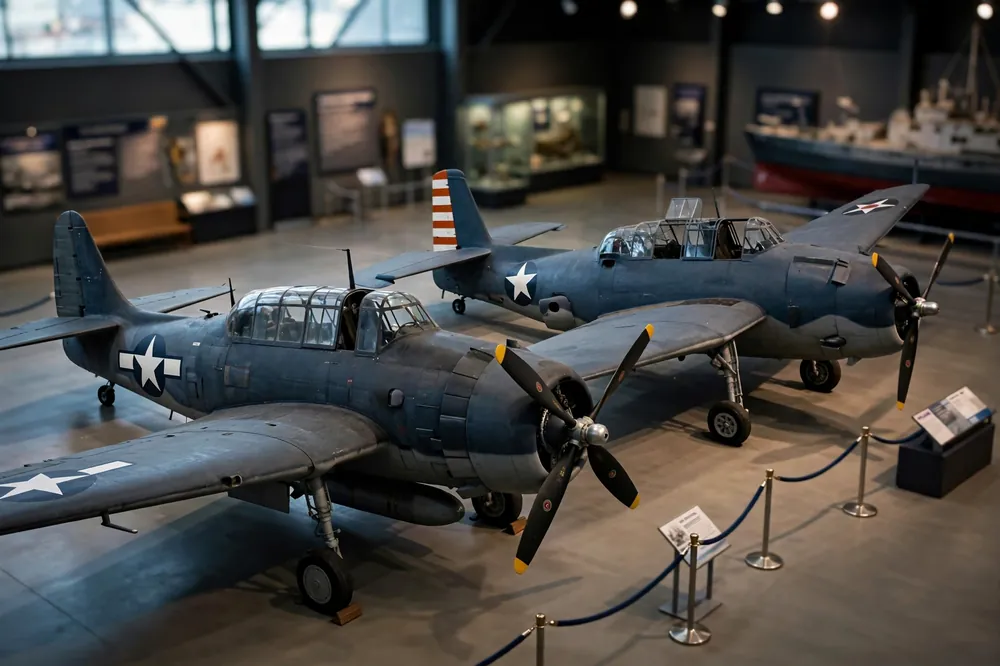
The Avenger is remembered in popular memory for the story of George H. W. Bush, and for the aircraft that saved a future president at Chichi Jima. Bush’s story is told in every history of the Avenger, and in every biography of the man who became president, and it is a measure of the Avenger’s place in American memory: the aircraft that carried a nineteen-year-old pilot into battle, and that brought him home after he was shot down, is remembered as the aircraft that saved a president, and as the aircraft that proved the courage of the men who flew it. The Avenger’s story is also told in the films and the books that remember the Pacific War, and in the museums that display the aircraft, and in the air shows where the Avengers still fly, and it is a story that will be told as long as the Avenger flies, and as long as the men who flew it are remembered.
10. Surviving Examples
Flying Survivors
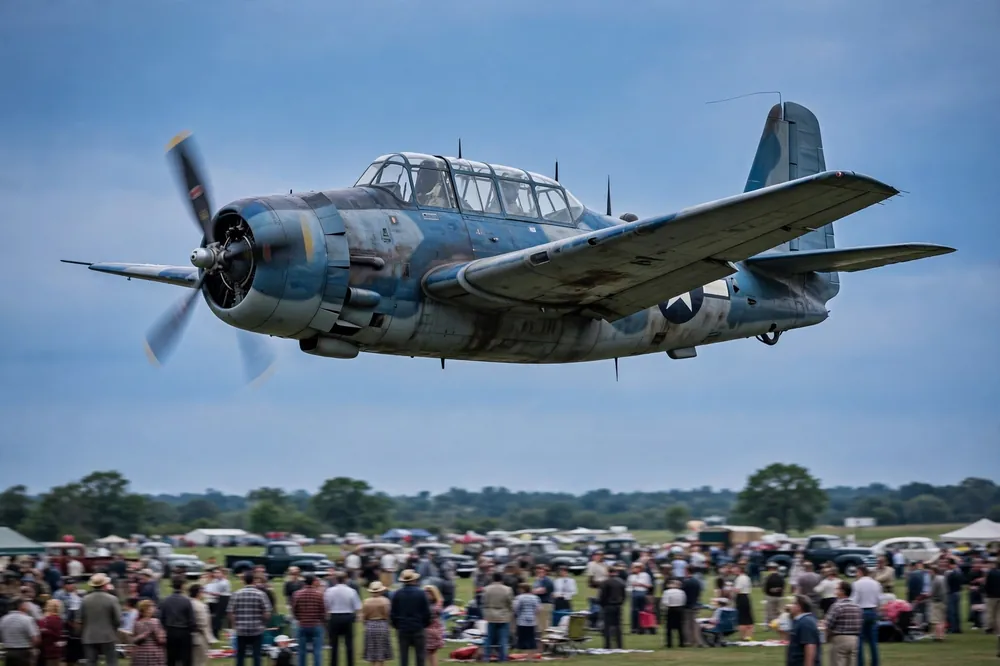
Only a handful of Avengers still fly, and they are among the most precious warbirds in the world. The most famous flying Avengers are those operated by the Commemorative Air Force in the United States, which fly at air shows and give the public a chance to see and to hear a torpedo bomber in the air, and those operated by museums and by private owners in the United States, Canada and New Zealand. The flying Avengers are maintained by volunteer organisations, and they are flown by volunteer pilots, and they are a tribute to the men who flew them in the war and to the aircraft that brought them home. The Avengers that still fly are a reminder of the Pacific War, and of the men who fought it, and they are a living museum, and they are the best way to understand what the Avenger was and what it did.
Museums
Avengers are displayed in museums around the world, including the National Naval Aviation Museum in Pensacola, Florida, which holds several Avengers, the Smithsonian National Air and Space Museum in Washington, D.C., which holds a TBM-3, the Imperial War Museum in Duxford, England, which holds a Royal Navy Avenger, and the Royal New Zealand Air Force Museum in Christchurch, which holds an Avenger that served in the Pacific. The Avenger is also displayed in the Intrepid Sea, Air and Space Museum in New York, where it is shown on the deck of the carrier Intrepid, and in the USS Midway Museum in San Diego, where it is shown on the deck of the carrier Midway. For the visitor, the Avenger is one of the most accessible naval aircraft of the Second World War, and it is displayed in almost every aviation museum that covers the Pacific War, and it is a reminder of the torpedo bomber and of the men who flew it.
Frequently Asked Questions
What is the TBF Avenger?
The TBF Avenger was the United States Navy’s torpedo bomber of the Second World War, built by Grumman and General Motors. It entered service in 1942, fought in every major battle of the Pacific War, and 9,839 were built.
How many Avengers were built?
9,839 Avengers were built between 1942 and 1945, of which 2,290 were built by Grumman as the TBF and 7,549 were built by General Motors / Eastern Aircraft as the TBM.
What happened to the Avengers at Midway?
On 4 June 1942, six Avengers of Torpedo Squadron 8 attacked the Japanese fleet from Midway Island, and five of the six were shot down. Their sacrifice drew the Japanese fighters down to sea level and left the carriers unprotected for the American dive bombers, which sank three carriers.
Did the Avenger sink the Yamato?
Yes. In April 1945, Avengers attacked the Japanese battleship Yamato on her suicide mission to Okinawa and hit her with 11 torpedoes and 6 bombs, and she sank with the loss of more than 2,000 of her crew. Avengers had also sunk her sister ship Musashi at Leyte Gulf in October 1944.
What happened to George H.W. Bush in an Avenger?
On 2 September 1944, Lieutenant (junior grade) George H. W. Bush was shot down in an Avenger over Chichi Jima, and he bailed out and was rescued by the submarine USS Finback. His two crewmen were killed. Bush went on to become the forty-first President of the United States.
Where can I see an Avenger today?
Avengers are displayed at the National Naval Aviation Museum in Pensacola, Florida, the Smithsonian National Air and Space Museum in Washington, D.C., and the Imperial War Museum in Duxford, England, and several Avengers still fly at air shows in the United States.
Sources
- Wikipedia, “Grumman TBF Avenger” — development, production of 9,839, Midway, the sinking of Musashi and Yamato, George H. W. Bush.
- Barrett Tillman, Avenger at War (Ian Allan, 1979) — the Avenger’s combat record in the Pacific.
- Barrett Tillman, TBF/TBM Avenger Units of World War 2 (Osprey Publishing, 1999) — the Avenger’s squadrons and their battles.
- Richard H. Newell, The Avenger (Naval Institute Press, 1995) — the aircraft’s design and its post-war service.
- George H. W. Bush and Victor Gold, Looking Forward (Doubleday, 1987) — Bush’s account of being shot down at Chichi Jima.
- The National Naval Aviation Museum, Pensacola, “TBF Avenger” — the aircraft’s specifications and surviving examples.