 WAR ATLAS MILITARY HISTORY MAGAZINE · WWI — WWII
Wake Island
1. Lead
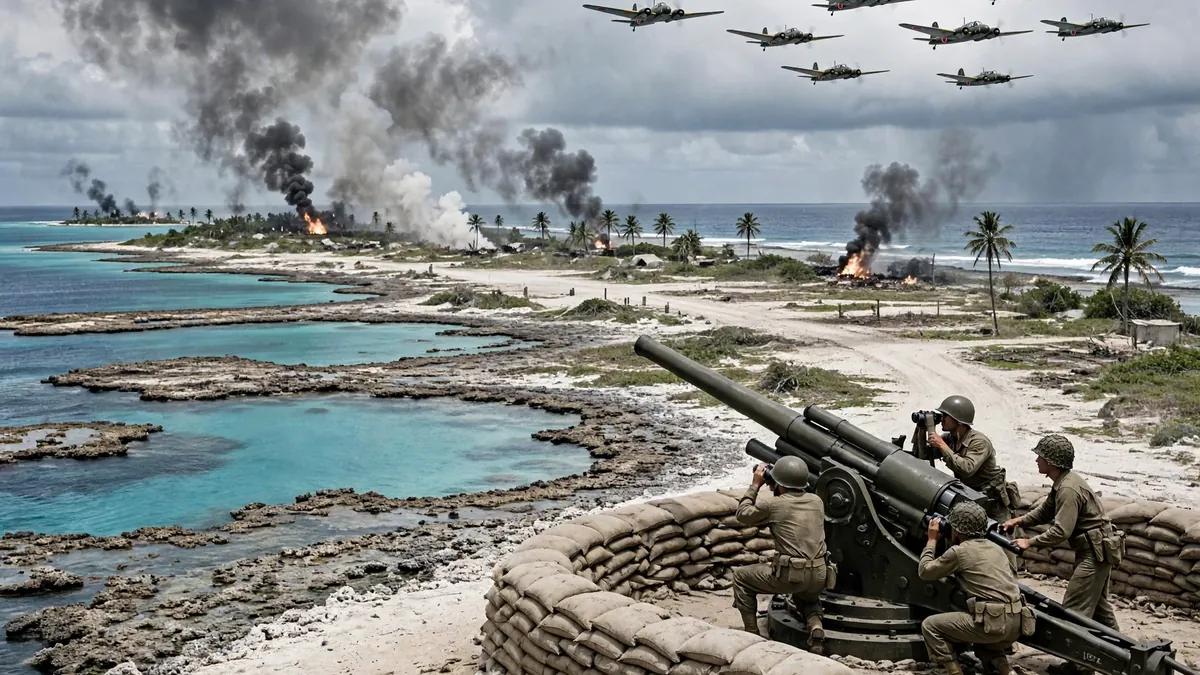
Wake Island was a small coral atoll in the central Pacific, and in December 1941 it became the scene of one of the most celebrated stands of the Second World War. When Japan attacked Pearl Harbor on 7 December 1941, Wake was a half-finished American air and naval base, garrisoned by 449 United States Marines, about 70 sailors, and about 1,200 civilian construction workers.
The Japanese attacked the island on 8 December, and on 11 December they tried to land — and were driven off, with two destroyers sunk and hundreds of men killed, by a garrison that had no air support, no reinforcements and almost no hope. For fifteen days the defenders held out, while the American public followed their fight in the newspapers and the radio.
On 23 December 1941, after a second and larger Japanese landing, the garrison surrendered. Wake Island was the first American defeat of the Pacific War — and the first American legend of it.
2. Key Facts
| Date | 8–23 December 1941 |
| Location | Wake Island, central Pacific, about 2,300 miles west of Honolulu |
| Result | Japanese victory; island captured on 23 December 1941 after a 15-day defence |
| American commanders | Maj. James P. S. Devereux (Marines); Cmdr. Winfield Scott Cunningham (naval air station); Maj. Paul A. Putnam (Marine fighter squadron VMF-211) |
| Japanese commanders | Rear Adm. Sadamichi Kajioka (invasion force); Vice Adm. Shigeyoshi Inoue (4th Fleet) |
| American strength | 449 Marines, about 70 sailors, 12 F4F Wildcat fighters (8 operational by 8 December); about 1,200 civilian workers |
| Japanese strength | First landing (11 December): about 450 men; second landing (23 December): about 1,500 men, with 2 aircraft carriers in support |
| American losses | 49 Marines and 3 sailors killed in the fighting; about 1,600 taken prisoner (including civilians); about 100 prisoners later died in captivity |
| Japanese losses | 2 destroyers sunk, 2 damaged; about 820 killed, about 300 wounded (including the first landing) |
3. Background
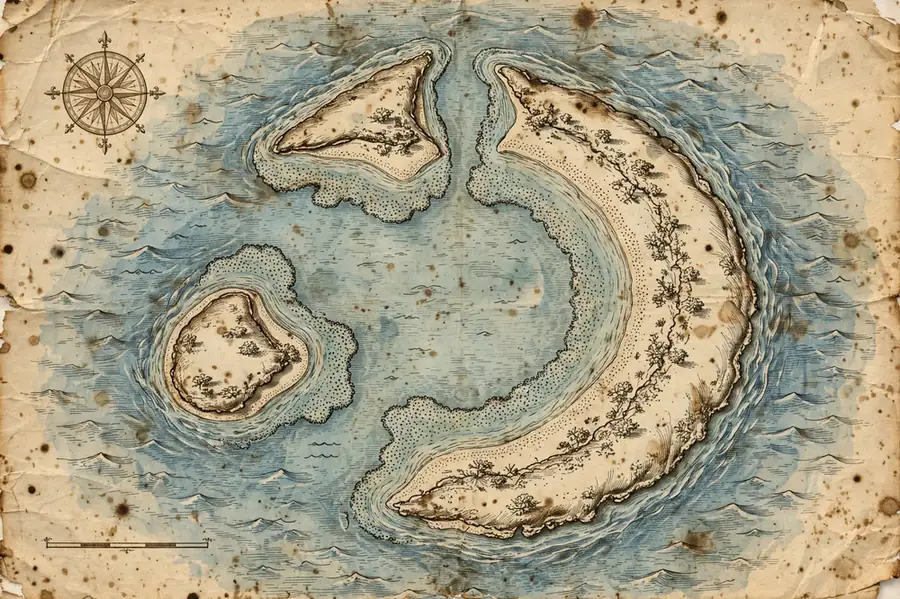
Wake Island is a coral atoll in the central Pacific, about halfway between Hawaii and Guam, and in 1941 it was one of the stepping stones of American power in the Pacific. The island — actually three small islets, Wake, Peale and Wilkes, joined by a reef — had been claimed by the United States in 1899, and in the 1930s it became a stop on Pan American Airways’ trans-Pacific flying-boat route.
In 1941, as war with Japan became more likely, the US Navy began to build an air and submarine base there. The work was done by civilian contractors, and by December 1941 the base was still unfinished: the runways were usable, but the defences were incomplete, the guns were few, and the garrison was small.
The garrison that defended Wake was the 1st Marine Defense Battalion, under Major James P. S. Devereux, a detachment of 449 Marines who had arrived in August 1941 with six 5-inch coastal guns, twelve 3-inch anti-aircraft guns and a battery of machine guns. They were joined on 4 December by Marine Fighter Squadron VMF-211, under Major Paul A.
Putnam, with twelve Grumman F4F Wildcat fighters flown in from the carrier Enterprise — the same Enterprise that had been at sea on 7 December and had missed the attack on Pearl Harbor. The naval air station was commanded by Commander Winfield Scott Cunningham.
The civilian workers — about 1,200 men employed by the Morrison-Knudsen construction company — were building the base, and they were not soldiers, though many of them volunteered to fight when the attack came.
Japan’s plan for Wake was part of its opening offensive across the Pacific. On the same day as Pearl Harbor, Japanese forces attacked the Philippines, Guam, Malaya and Hong Kong, and Wake was on the list: the island sat on the sea and air route between Hawaii and the Philippines, and Japan wanted it as a base for its own aircraft. The invasion force was commanded by Rear Admiral Sadamichi Kajioka, with light cruisers, destroyers and transports carrying about 450 Special Naval Landing Force troops — the Japanese equivalent of marines — for the first attempt.
The defenders of Wake knew they were in danger. On 7 December, the news of Pearl Harbor reached the island by radio, and the garrison went to full alert. The Wildcats were dispersed, the guns were manned, and the civilian workers were given arms and assigned to the defences. The relief force that the Americans later tried to send — Task Force 14, built around the carrier Saratoga — was recalled before it reached the island, a decision that remains controversial. For the men on Wake, the message was clear: they were on their own.
4. Opposing Forces
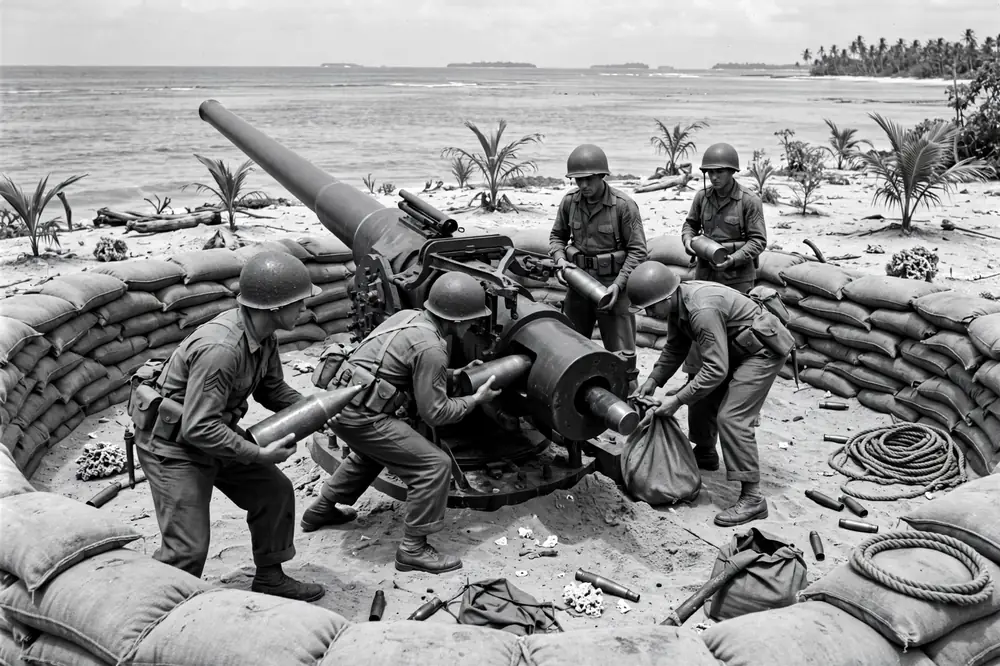
The American garrison at Wake was small, but it was well armed for its size, and its men were determined. The Marines had six 5-inch coastal guns, which could fire at ships, and twelve 3-inch anti-aircraft guns, plus machine guns and rifles. The Wildcats of VMF-211 were the island’s only air defence, and they were the key to the first days of the battle: the pilots, flying from a rough airstrip, shot down Japanese bombers and strafed the landing force. The civilian workers, though not soldiers, fought alongside the Marines: about 400 of them volunteered for combat duties, manning guns and carrying ammunition, and they suffered casualties alongside the Marines.
| United States | Japan | |
|---|---|---|
| Ground troops | 449 Marines; about 70 sailors; about 400 armed civilian volunteers | About 450 Special Naval Landing Force troops (first landing); about 1,500 (second landing) |
| Coastal guns | 6 × 5-inch guns; 12 × 3-inch anti-aircraft guns | Naval guns of the invasion force: 3 light cruisers, 6 destroyers (first attempt) |
| Aircraft | 12 F4F Wildcat fighters (VMF-211) | Bombers from Kwajalein and Roi; later 2 carriers (Sōryū, Hiryū) |
| Ships | None (the island had no naval force) | Cruisers Yūbari, Tatsuta, Tenryū; destroyers; transports |
| Commanders | Devereux (Marines), Cunningham (naval station), Putnam (VMF-211) | Kajioka (invasion force); Inoue (4th Fleet) |
The Japanese invasion force for the first attempt, on 11 December, was small: three light cruisers, six destroyers and two transports, carrying about 450 landing troops. Kajioka expected little resistance — the Japanese believed the island’s defences were weak — and he brought his ships in close to the shore, in daylight, without air cover. It was a mistake. The Marines’ 5-inch guns, firing from concealed positions, sank two destroyers and damaged others, and the Wildcats strafed the landing craft. The Japanese landing force was driven off with heavy losses.
For the second attempt, on 23 December, the Japanese brought a much larger force: two aircraft carriers, Sōryū and Hiryū — the same carriers that had attacked Pearl Harbor — with their air groups, plus heavy cruisers, destroyers and about 1,500 landing troops. The Wildcats were gone by then, shot down or destroyed on the ground, and the Marines’ guns were running low on ammunition. The second landing succeeded, and the island fell.
5. The Battle
The air attacks, 8–10 December
The battle began on 8 December 1941, when Japanese bombers from Kwajalein and Roi, in the Marshall Islands, attacked the island. The first raid, at about noon, caught the Wildcats on the ground: seven of the twelve fighters were destroyed, and the airfield was damaged. The Marines’ guns shot down two bombers, but the damage was done.
Over the next two days, the Japanese bombed the island repeatedly, and the Wildcats — the four that remained flyable, flown by pilots who patched them up between raids — fought back. Captain Henry Elrod, one of the VMF-211 pilots, shot down two Japanese bombers on 10 December and then, after his aircraft was damaged, took command of a ground defence position and fought on foot.
He was later killed in the fighting on 23 December and was posthumously awarded the Medal of Honor — the first Marine aviator to receive it in the Second World War.
The bombing destroyed the island’s communications, its water supply and its fuel stores, but it did not break the garrison. The Marines dug in, the guns stayed manned, and the civilian workers kept the airfield usable. The Japanese, meanwhile, were preparing the landing. Kajioka’s force sailed from Kwajalein on 9 December, and on the night of 10–11 December it approached Wake from the south-west.
The first landing, 11 December
The first Japanese landing attempt, on the morning of 11 December, is the most famous episode of the battle. Kajioka brought his ships in close to the shore, expecting the island’s guns to have been destroyed by the bombing. They had not been. The Marines held their fire until the ships were within range, and then the 5-inch guns opened fire.
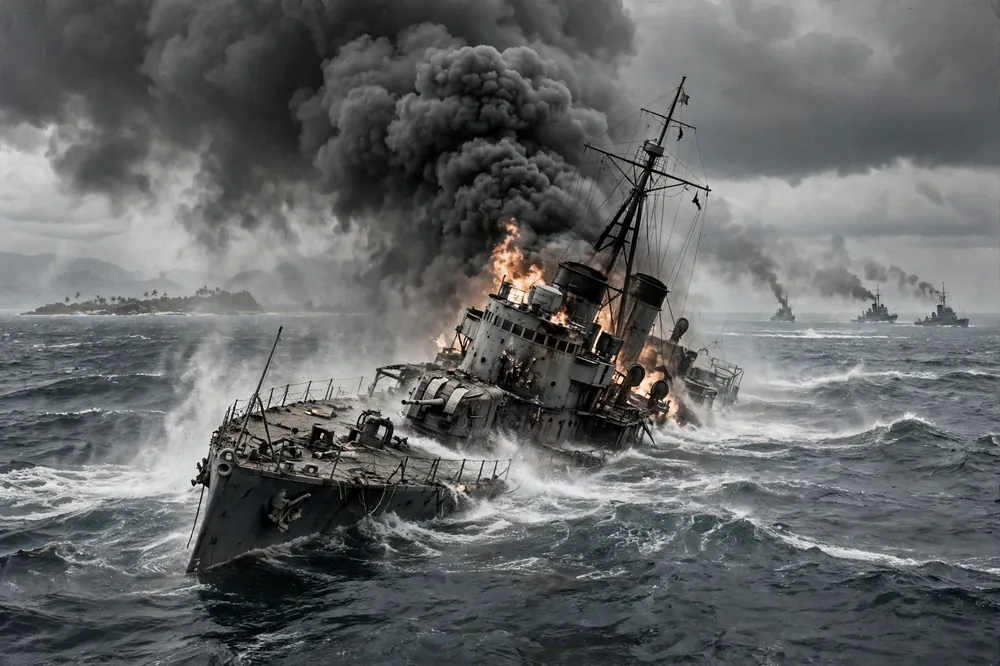
The destroyer Hayate was hit and sank within minutes — the first Japanese surface warship sunk in the Pacific War — and the destroyer Kisaragi was hit by a bomb from a Wildcat and blew up. Two more destroyers were damaged, and the transports were driven off. The Japanese landing force, about 450 men, never got ashore. Kajioka withdrew, leaving two destroyers on the bottom and hundreds of men dead.
The victory was celebrated in the United States. The newspapers called Wake “the Alamo of the Pacific”, and the Marines’ stand was reported as a great victory — the first American victory of the war, after the disaster at Pearl Harbor. The garrison’s commander, Devereux, sent a message that was widely reported, though its exact wording is disputed: “Send us more Japs” — a message that, whether it was actually sent or not, became the symbol of Wake’s defiance. The truth was more sober: the garrison had won a battle, but it had not won the war, and the Japanese were already preparing a larger force.
The siege, 12–22 December
For the next twelve days, the Japanese bombed Wake almost daily, from land-based aircraft and, from 21 December, from the carriers Sōryū and Hiryū, which had been detached from the Pearl Harbor striking force. The Wildcats were shot down one by one: by 22 December, none remained flyable. The Marines’ guns were running low on ammunition, and the men were exhausted, hungry and short of water.
The American relief force, Task Force 14 under Rear Admiral Frank Jack Fletcher, with the carrier Saratoga, was on its way to Wake, but it was recalled on 22 December by Vice Admiral William Pye, the acting commander of the Pacific Fleet, who feared that the relief force would be ambushed by Japanese carriers.
The decision to recall the relief force is still debated: Fletcher believed he could have reached Wake, and the men on the island believed they had been abandoned. Pye’s decision was based on the fear of losing a carrier — the Pacific Fleet had only three left — and on the belief that Wake could not be held in any case.
The second landing, 23 December
The second Japanese landing came before dawn on 23 December 1941. About 1,500 Japanese troops, supported by carrier aircraft and by naval gunfire, landed on the south shore of Wake Island and on Wilkes Island. The Marines fought back — Captain Elrod was killed leading a counterattack on Wilkes Island, and the Marines’ guns sank a patrol boat and damaged a destroyer — but the garrison was outnumbered, out of ammunition and without air support. By mid-morning, the Japanese had overrun the island’s defences, and Devereux, after consulting with Cunningham, ordered the surrender. The battle was over. The Americans had held Wake for fifteen days.
6. Turning Point
The turning point of the Battle of Wake Island was 11 December 1941 — the day the first Japanese landing was driven off. The sinking of the destroyers Hayate and Kisaragi was the first American naval victory of the Pacific War, and it proved that a small, well-led garrison, with coastal guns and a handful of fighters, could defeat a landing force. The victory gave the American public its first good news of the war, and it gave the Marine Corps a legend that it still celebrates.
But 11 December was also the turning point in the other direction: it convinced the Japanese that Wake could not be taken cheaply, and it ensured that the second attempt would be overwhelming. The carriers Sōryū and Hiryū were detached from the Pearl Harbor force and sent to Wake, and the second landing was made with 1,500 men, carrier air support and heavy naval gunfire — a force the garrison could not resist. The first victory, in other words, guaranteed the second defeat.
The other turning point was the recall of the American relief force on 22 December. Task Force 14, with the carrier Saratoga, was within a day’s sailing of Wake when it was ordered back. Had it continued, it might have reached the island in time to reinforce the garrison, or it might have been ambushed by the Japanese carriers and lost — the Pacific Fleet could not afford to lose a carrier in December 1941. The decision was a strategic one, and it was probably correct in the long run, but for the men on Wake it meant that no help was coming. The garrison fought on for one more day, and then it surrendered.
7. Casualties and Losses
The American losses at Wake Island were small in absolute terms, but they were heavy for the size of the garrison. In the fighting, 49 Marines and 3 sailors were killed, and about 30 more were wounded. About 1,600 Americans — Marines, sailors and civilian workers — were taken prisoner on 23 December.
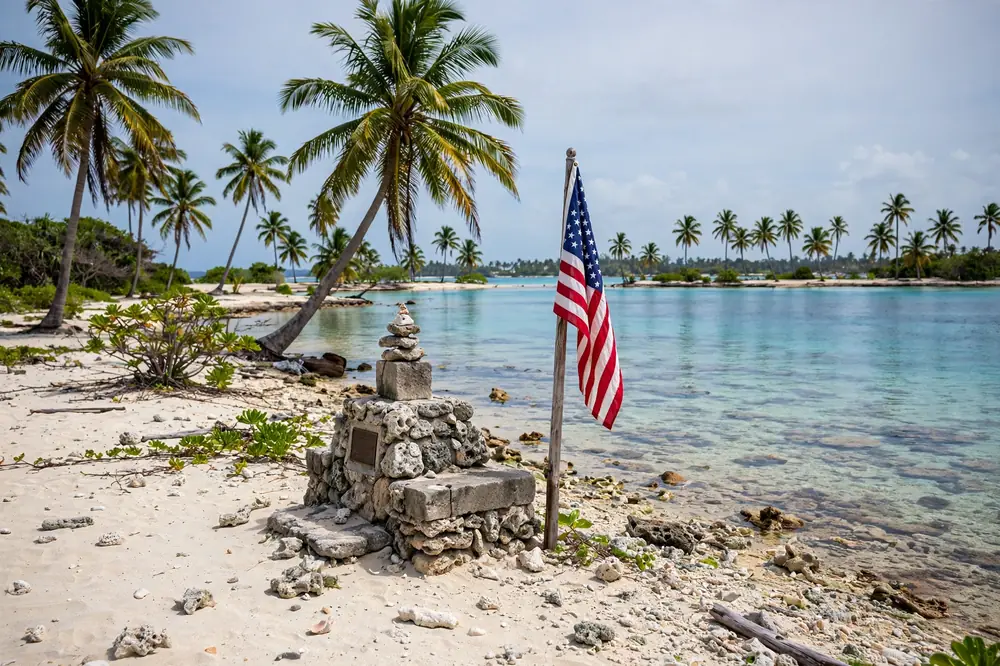
The prisoners were taken to Japan and to China, and about 100 of them died in captivity, of disease, malnutrition and mistreatment. The civilian workers suffered the worst fate: in October 1943, the Japanese, fearing an American landing, executed 98 of the civilian workers who remained on the island.
The man who ordered the execution, Rear Admiral Shigematsu Sakaibara, the Japanese commander on Wake, was tried after the war and hanged in 1947.
| United States | Japan | |
|---|---|---|
| Killed in the fighting | 49 Marines, 3 sailors (52 total); about 70 civilians killed during the battle | About 820 killed |
| Wounded | About 30 | About 300 |
| Taken prisoner | About 1,600 (including about 1,200 civilians) | Few |
| Ships | None | 2 destroyers sunk (Hayate, Kisaragi), 2 destroyers damaged, 1 patrol boat sunk |
| Aircraft | 12 Wildcats destroyed | About 20 aircraft destroyed |
Japanese losses were heavier than the American losses in the fighting: about 820 killed and about 300 wounded, most of them in the first landing attempt on 11 December and in the second landing on 23 December. The loss of two destroyers — the first Japanese surface warships sunk in the war — was a significant blow, and it was the reason the Japanese brought carriers for the second attempt.
The civilian workers’ story is the darkest part of Wake’s history. The 98 men executed in October 1943 were shot on the orders of Sakaibara, who feared they would help an American landing force. The execution was a war crime, and Sakaibara was convicted of it after the war. The mass grave of the executed men was found after the war, and the remains were returned to the United States.
8. Map and Geography
Wake Island is a coral atoll in the central Pacific, about 2,300 miles (3,700 kilometres) west of Honolulu and about 2,000 miles east of Japan. It consists of three islets — Wake Island itself, Peale Island and Wilkes Island — joined by a reef that encloses a shallow lagoon. The atoll is about 7 kilometres long and 3 kilometres wide, and its highest point is only about 6 metres above sea level. The land is flat, sandy and covered with scrub, and there is no fresh water on the island: the garrison depended on rainwater and on water brought in by ship.
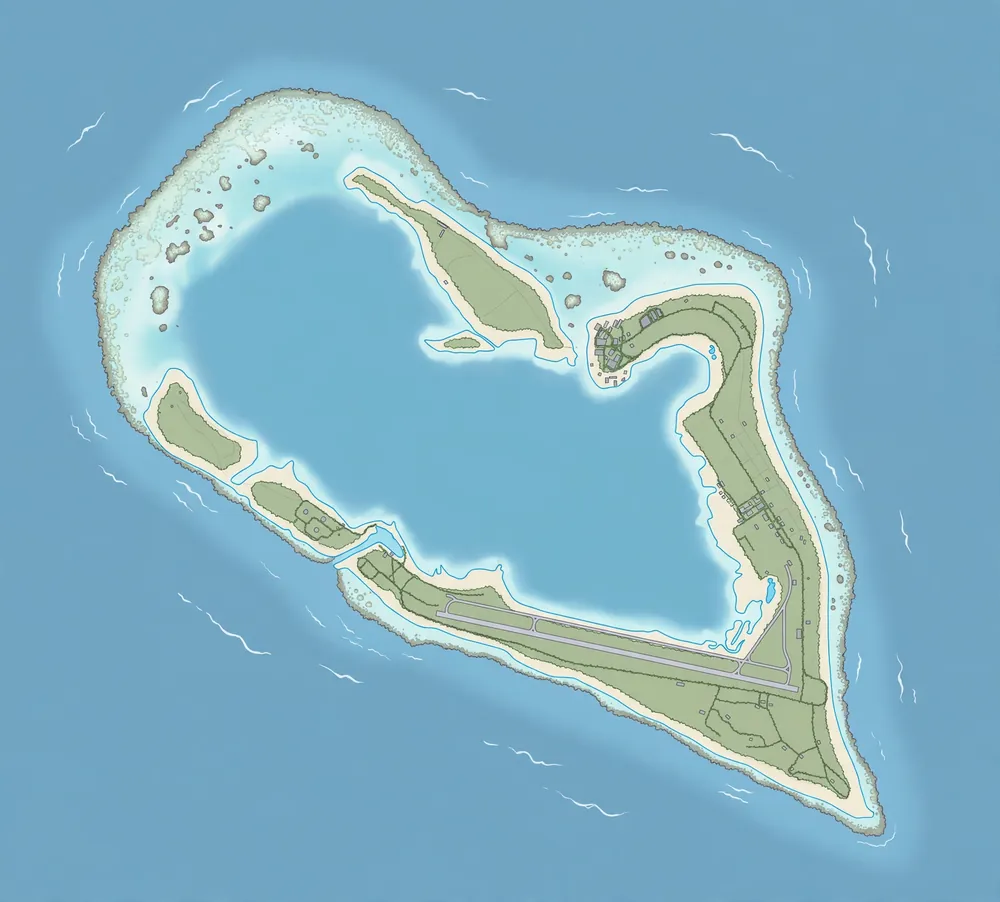
The island’s geography made it both valuable and vulnerable. Its position, halfway between Hawaii and Guam, made it a useful base for aircraft and submarines, and a useful stepping stone for an attacker moving east or west across the Pacific. But its small size and flat terrain made it impossible to defend in depth: there was nowhere to retreat to, and the whole island was within range of naval gunfire.
The airstrip, on Wake Island itself, was the island’s most important feature, and it was the first thing the Japanese bombed. The Marines’ guns were sited around the lagoon, to cover the approaches from the sea, and the landing beaches were on the south shore of Wake Island and on Wilkes Island — the places where the Japanese landed on 23 December.
Wake’s isolation was its fate. The island was too far from Hawaii for help to arrive quickly, and too small to hold out indefinitely against a determined attacker. The garrison held it for fifteen days, and then it fell. The island was not retaken until the end of the war: the Japanese held Wake until 4 September 1945, when they surrendered to the Americans. The atoll is still an American possession, and it is still used as a military base and as an emergency landing field.
9. Outcome and Legacy of Wake Island
Wake Island was a Japanese victory, but it was a victory that cost Japan more than it gained. The island was of limited strategic value — the Japanese used it as an air base, but it was too far from the main theatres of the war to matter much — and the defence of Wake gave the American public its first hero of the war.
The Marines who fought there became legends: Major Devereux, Major Putnam and Captain Elrod were celebrated in the newspapers, in the newsreels and in the film Wake Island (1942), which was made while the real defenders were still prisoners of war in Japan. The film won an Academy Award nomination and fixed Wake in the American imagination as the symbol of courage against impossible odds.
The real legacy of Wake was in the Marine Corps. The defence of the island — the coastal guns sinking destroyers, the Wildcats fighting against impossible odds, the Marines holding out for fifteen days — became part of the Corps’ identity, and the phrase “Send us more Japs” became part of its folklore. The Marine Corps’ tradition of never surrendering a position, and of fighting to the last, was shaped by Wake, and by the men who fought there. The island’s defenders were awarded the Navy Unit Commendation, and Captain Elrod was awarded the Medal of Honor.
The prisoners of Wake suffered for years after the battle. The Marines and sailors were taken to Japan and to China, and the civilian workers were taken to Japan. About 100 of them died in captivity. The survivors were liberated in 1945, and they returned to the United States to find that they were heroes. The 98 civilian workers executed in October 1943 were not forgotten: their mass grave was found after the war, and their remains were returned to the United States and buried at the Punchbowl, the National Memorial Cemetery of the Pacific in Honolulu.
Wake Island’s strategic legacy was small, but its moral legacy was large. The battle showed that the Japanese could be beaten — that their landing forces could be driven off, their destroyers sunk, their bombers shot down — and it showed that the American fighting man, even when outnumbered and alone, would fight. The island was retaken in September 1945, and it remains an American base. The men who defended it are remembered, in the Marine Corps and in the United States, as the first heroes of the Pacific War.
10. Commanders
Major James P. S. Devereux (United States). Commander of the 1st Marine Defense Battalion, the ground commander at Wake. Devereux led the defence of the island for fifteen days, and he ordered the surrender on 23 December after consulting with Cunningham. He was taken prisoner and spent the rest of the war in Japanese captivity. He later served in Congress and died in 1988.
Commander Winfield Scott Cunningham (United States). Commander of the naval air station at Wake and the senior officer on the island. Cunningham was the overall commander, and he made the decision, with Devereux, to surrender on 23 December. He was taken prisoner and spent the war in captivity. He died in 1986.
Major Paul A. Putnam (United States). Commander of Marine Fighter Squadron VMF-211, the Wildcat squadron that defended Wake. Putnam’s pilots shot down Japanese bombers and strafed the landing force, and Putnam himself flew combat missions until the last Wildcat was destroyed. He was taken prisoner and survived the war.
Captain Henry T. Elrod (United States). A pilot of VMF-211, who shot down two Japanese bombers on 10 December and then fought on the ground, leading a counterattack on Wilkes Island on 23 December, where he was killed. He was posthumously awarded the Medal of Honor, the first Marine aviator to receive it in the Second World War.
Rear Admiral Sadamichi Kajioka (Japan). Commander of the Japanese invasion force at Wake. Kajioka’s first landing attempt, on 11 December, was driven off with the loss of two destroyers. He commanded the second landing, on 23 December, which captured the island. He survived the war.
Frequently Asked Questions
Related articles
Sources
- Wikipedia, “Battle of Wake Island” — dates, strength, casualty figures and the course of the battle.
- US Marine Corps History Division, “The Defense of Wake” — the official Marine Corps history of the battle, by Lt. Col. Robert D. Heinl Jr.
- Encyclopædia Britannica, “Wake Island” — background and the battle.
- National Park Service, “Wake Island” — the island’s history and the defence of 1941.
- Duane Schultz, Wake Island: The Heroic Gallant Stand of the Marines (St. Martin’s Press, 1978) — the battle, the relief force and the prisoners.
- James P. S. Devereux, The Story of Wake Island (Lippincott, 1947) — the commander’s own account of the defence.
- Robert J. Cressman, A Magnificent Fight: The Battle for Wake Island (Naval Institute Press, 1995).
- Gregory J. W. Urwin, Facing Fearful Odds: The Siege of Wake Island (University of Nebraska Press, 1997).