 Tiếng Việt

Winston Churchill
1. Lead / Mở đầu
Winston Churchill (30 November 1874 – 24 January 1965) was a British statesman, military officer and writer who served as Prime Minister of the United Kingdom from 1940 to 1945, during the Second World War, and again from 1951 to 1955. He became prime minister on 10 May 1940, the day Germany invaded France and the Low Countries, at a point when Britain stood alone against Germany after the fall of France. Through his speeches in Parliament and on the BBC, his direction of the war effort and his diplomacy with Franklin D. Roosevelt and Joseph Stalin, Churchill was the central political figure of Britain’s war. Before 1940 his career had included service as a soldier and war correspondent, as First Lord of the Admiralty in the First World War — a post from which he resigned after the failure of the Gallipoli campaign — and a decade in the political wilderness in the 1930s, when he warned against German rearmament while out of office. After the war he gave the “Iron Curtain” speech at Fulton, Missouri, in 1946, and in 1953 he received the Nobel Prize in Literature for his historical writing and oratory.
Winston Churchill (30 tháng 11 năm 1874 – 24 tháng 1 năm 1965) là chính khách, sĩ quan quân đội và nhà văn người Anh, giữ chức Thủ tướng Vương quốc Anh từ 1940 đến 1945, trong Thế chiến II, và một lần nữa từ 1951 đến 1955. Ông trở thành thủ tướng ngày 10 tháng 5 năm 1940, ngày Đức xâm lược Pháp và các nước Vùng Thấp, vào thời điểm Anh đơn độc chống lại Đức sau khi Pháp thất thủ. Thông qua các bài phát biểu tại Quốc hội và trên đài BBC, việc chỉ đạo nỗ lực chiến tranh và ngoại giao với Franklin D. Roosevelt và Joseph Stalin, Churchill là nhân vật chính trị trung tâm của cuộc chiến của nước Anh. Trước năm 1940, sự nghiệp của ông bao gồm phục vụ với tư cách binh sĩ và phóng viên chiến trường, làm Bộ trưởng Hải quân trong Thế chiến I — chức vụ mà ông từ chức sau thất bại của chiến dịch Gallipoli — và một thập kỷ ngoài lề chính trị trong thập niên 1930, khi ông cảnh báo về việc Đức tái vũ trang trong lúc không giữ chức vụ. Sau chiến tranh, ông đọc bài phát biểu “Bức màn sắt” tại Fulton, Missouri, năm 1946, và năm 1953 ông nhận giải Nobel Văn học cho các tác phẩm lịch sử và hùng biện của mình.
2. Key Facts / Thông tin chính
| Born | 30 November 1874, Blenheim Palace, Oxfordshire, England |
| Died | 24 January 1965 (aged 90), Hyde Park Gate, London, England |
| Nationality | British |
| Role / Office | Prime Minister of the United Kingdom, 10 May 1940 – 26 July 1945 and 26 October 1951 – 5 April 1955; First Lord of the Admiralty, 1911–1915 and 1939–1940 |
| Known for | Wartime leadership 1940–1945; the speeches of 1940; the “Iron Curtain” speech (1946); Nobel Prize in Literature (1953) |
| Spouse / Family | Clementine Hozier (married 1908, died 1977); children Diana, Randolph, Sarah, Marigold and Mary |
| Sinh | 30 tháng 11 năm 1874, Cung điện Blenheim, Oxfordshire, Anh |
| Mất | 24 tháng 1 năm 1965 (hưởng thọ 90 tuổi), Hyde Park Gate, London, Anh |
| Quốc tịch | Anh |
| Vai trò / Chức vụ | Thủ tướng Vương quốc Anh, 10 tháng 5 năm 1940 – 26 tháng 7 năm 1945 và 26 tháng 10 năm 1951 – 5 tháng 4 năm 1955; Bộ trưởng Hải quân, 1911–1915 và 1939–1940 |
| Nổi tiếng vì | Lãnh đạo thời chiến 1940–1945; các bài phát biểu năm 1940; bài phát biểu “Bức màn sắt” (1946); giải Nobel Văn học (1953) |
| Vợ / Gia đình | Clementine Hozier (kết hôn 1908, mất 1977); các con Diana, Randolph, Sarah, Marigold và Mary |
3. Early Life and Education / Thời trẻ và học vấn
Winston Leonard Spencer Churchill was born on 30 November 1874 at Blenheim Palace in Oxfordshire, the ancestral home of the Dukes of Marlborough. His father, Lord Randolph Churchill, was a Conservative politician who served as Chancellor of the Exchequer; his mother, Jennie Jerome, was an American socialite from New York. Churchill’s relationship with his father was distant — Lord Randolph died in 1895, when Churchill was twenty — and his mother was often absent; he was raised largely by his nanny, Elizabeth Everest, to whom he remained attached for the rest of his life. At school he was not a strong academic pupil, except in English and history, and he struggled with Latin and mathematics. He was sent to Harrow School, where he did poorly in examinations but developed a lasting interest in the English language, and in 1893 he entered the Royal Military College at Sandhurst, graduating in December 1894.
Churchill’s early adult life was that of a soldier and a journalist. In 1895 he was commissioned into the 4th Hussars and served on the North-West Frontier of India, where he took part in the Malakand campaign of 1897; he wrote about it in his first book, The Story of the Malakand Field Force (1898). In 1898 he took part in the Battle of Omdurman in the Sudan, serving with the 21st Lancers in the last great cavalry charge of the British Army, and wrote The River War (1899) about the campaign. In 1899 he resigned his commission and went to South Africa as a war correspondent during the Second Boer War, where he was captured by the Boers in November 1899 and escaped from a prisoner-of-war camp in Pretoria the following month — an exploit that made him famous in Britain and launched his political career. He was elected to Parliament as a Conservative Member for Oldham in October 1900.
In Parliament, Churchill’s early career was marked by frequent changes of party and of office. In 1904 he left the Conservative Party for the Liberal Party, in disagreement over free trade and tariff reform, and in 1905 he entered government as Under-Secretary of State for the Colonies. He served as President of the Board of Trade (1908–1910), Home Secretary (1910–1911), and First Lord of the Admiralty from 1911. At the Admiralty he prepared the Royal Navy for war: he established a naval staff, promoted the building of new battleships and the conversion of the fleet from coal to oil, and founded the Royal Naval Air Service. In 1908 he married Clementine Hozier, who remained his wife and closest adviser for the rest of his life.
Winston Leonard Spencer Churchill sinh ngày 30 tháng 11 năm 1874 tại Cung điện Blenheim ở Oxfordshire, quê hương tổ tiên của các Công tước Marlborough. Cha ông, Lord Randolph Churchill, là chính trị gia Bảo thủ từng giữ chức Bộ trưởng Tài chính; mẹ ông, Jennie Jerome, là một nhân vật xã hội người Mỹ đến từ New York. Quan hệ của Churchill với cha ông xa cách — Lord Randolph qua đời năm 1895, khi Churchill hai mươi tuổi — và mẹ ông thường vắng mặt; ông được nuôi dưỡng chủ yếu bởi vú em Elizabeth Everest, người mà ông gắn bó suốt đời. Ở trường, ông không phải là học sinh giỏi, trừ tiếng Anh và lịch sử, và ông chật vật với tiếng Latin và toán học. Ông được gửi đến Trường Harrow, nơi ông thi kém nhưng phát triển niềm yêu thích lâu dài với tiếng Anh, và năm 1893 ông vào Trường Quân sự Hoàng gia Sandhurst, tốt nghiệp tháng 12 năm 1894.
Cuộc đời trưởng thành đầu tiên của Churchill là của một binh sĩ và một nhà báo. Năm 1895, ông được bổ nhiệm vào Trung đoàn Kỵ binh Hussars số 4 và phục vụ ở biên giới Tây Bắc Ấn Độ, nơi ông tham gia chiến dịch Malakand năm 1897; ông viết về nó trong cuốn sách đầu tiên, Câu chuyện về Lực lượng dã chiến Malakand (1898). Năm 1898, ông tham gia trận Omdurman ở Sudan, phục vụ trong Trung đoàn Thương kỵ binh số 21 trong cuộc xung phong kỵ binh lớn cuối cùng của Quân đội Anh, và viết Cuộc chiến sông Nile (1899) về chiến dịch này. Năm 1899, ông từ chức và đến Nam Phi làm phóng viên chiến trường trong Chiến tranh Boer lần thứ hai, nơi ông bị người Boer bắt tháng 11 năm 1899 và trốn khỏi trại tù binh ở Pretoria tháng sau — một kỳ tích khiến ông nổi tiếng ở Anh và mở đầu sự nghiệp chính trị của ông. Ông được bầu vào Quốc hội với tư cách Nghị sĩ Bảo thủ đại diện Oldham tháng 10 năm 1900.
Trong Quốc hội, sự nghiệp đầu tiên của Churchill được đánh dấu bằng những lần đổi đảng và đổi chức vụ thường xuyên. Năm 1904, ông rời Đảng Bảo thủ sang Đảng Tự do, bất đồng về thương mại tự do và cải cách thuế quan, và năm 1905 ông vào chính phủ với chức Thứ trưởng Bộ Thuộc địa. Ông làm Chủ tịch Hội đồng Thương mại (1908–1910), Bộ trưởng Nội vụ (1910–1911), và Bộ trưởng Hải quân từ năm 1911. Tại Bộ Hải quân, ông chuẩn bị Hải quân Hoàng gia cho chiến tranh: ông thành lập bộ tham mưu hải quân, thúc đẩy đóng tàu chiến mới và chuyển đổi hạm đội từ than sang dầu, và thành lập Cục Hàng không Hải quân Hoàng gia. Năm 1908, ông kết hôn với Clementine Hozier, người vẫn là vợ và cố vấn thân cận nhất của ông suốt đời.
4. Rise to Prominence / Con đường đến vị trí lãnh đạo
Churchill’s first period of high office ended in failure. As First Lord of the Admiralty in the First World War, he was one of the chief advocates of the Dardanelles campaign of 1915 — an attempt to force the straits, knock the Ottoman Empire out of the war, and open a supply route to Russia. The naval attack in March 1915 failed, and the land campaign at Gallipoli that followed became a prolonged stalemate. Allied casualties were heavy: the campaign cost the lives of more than 130,000 Allied soldiers, according to commonly cited figures, and achieved none of its objectives. Churchill was blamed for the failure, demoted in May 1915, and resigned from the government in November 1915. He served for six months as a battalion commander on the Western Front in 1916 before returning to politics.
He returned to office in 1917 as Minister of Munitions, and in 1919–1921 he served as Secretary of State for War and Air, in which capacity he oversaw the British intervention in the Russian Civil War and the use of air power in Iraq. In 1921–1922 he was Colonial Secretary, negotiating the settlement that established the Irish Free State. He lost his seat in the general election of 1922 and was out of Parliament for two years; in 1924 he rejoined the Conservative Party and was elected for Epping, serving as Chancellor of the Exchequer from 1924 to 1929. His decision in 1925 to return Britain to the gold standard at the pre-war exchange rate is widely regarded by economic historians as a mistake that deepened the deflation of the late 1920s, though Churchill himself later acknowledged that the decision had been wrong.
After the Conservative defeat in 1929, Churchill spent a decade out of office — the period he later called his “wilderness years”. During the 1930s he warned repeatedly, in Parliament and in print, that Germany was rearming in breach of the Treaty of Versailles and that Britain’s air defences were inadequate. His warnings were unpopular at the time: the governments of Stanley Baldwin and Neville Chamberlain pursued a policy of appeasement, and Churchill was regarded by many in his own party as a warmonger and a spent force. His position changed with events. After the Munich Agreement of September 1938, in which Britain and France agreed to Germany’s annexation of the Sudetenland, Churchill denounced the agreement in Parliament as “a total and unmitigated defeat”. When Germany invaded Poland on 1 September 1939 and Britain declared war, Churchill was brought back into the government as First Lord of the Admiralty — the post he had held in 1914. In April 1940 the failure of the British campaign in Norway discredited Chamberlain’s government, and on 10 May 1940, the day Germany invaded France and the Low Countries, Chamberlain resigned and Churchill became Prime Minister at the head of a coalition government.
Giai đoạn giữ chức vụ cao đầu tiên của Churchill kết thúc trong thất bại. Với tư cách Bộ trưởng Hải quân trong Thế chiến I, ông là một trong những người ủng hộ chính chiến dịch Dardanelles năm 1915 — nỗ lực ép qua eo biển, loại Đế quốc Ottoman khỏi chiến tranh, và mở tuyến tiếp tế đến Nga. Cuộc tấn công hải quân tháng 3 năm 1915 thất bại, và chiến dịch trên bộ tại Gallipoli tiếp theo trở thành thế bế tắc kéo dài. Thương vong của Đồng minh rất nặng nề: chiến dịch khiến hơn 130.000 binh sĩ Đồng minh thiệt mạng, theo các con số thường được trích dẫn, và không đạt được mục tiêu nào. Churchill bị đổ lỗi cho thất bại, bị giáng chức tháng 5 năm 1915, và từ chức khỏi chính phủ tháng 11 năm 1915. Ông phục vụ sáu tháng với tư cách chỉ huy tiểu đoàn ở Mặt trận phía Tây năm 1916 trước khi trở lại chính trị.
Ông trở lại nắm quyền năm 1917 với chức Bộ trưởng Quân nhu, và năm 1919–1921 ông làm Bộ trưởng Chiến tranh và Không quân, với tư cách đó ông giám sát sự can thiệp của Anh vào Nội chiến Nga và việc sử dụng không quân ở Iraq. Năm 1921–1922, ông làm Bộ trưởng Thuộc địa, đàm phán thỏa thuận thành lập Nhà nước Tự do Ireland. Ông mất ghế trong cuộc tổng tuyển cử năm 1922 và rời Quốc hội hai năm; năm 1924, ông tái gia nhập Đảng Bảo thủ và được bầu đại diện Epping, làm Bộ trưởng Tài chính từ 1924 đến 1929. Quyết định năm 1925 của ông đưa Anh trở lại bản vị vàng với tỷ giá trước chiến tranh được nhiều sử gia kinh tế coi là sai lầm làm trầm trọng thêm tình trạng giảm phát cuối thập niên 1920, dù chính Churchill sau này thừa nhận quyết định đó đã sai.
Sau thất bại của Đảng Bảo thủ năm 1929, Churchill trải qua một thập kỷ không giữ chức vụ — giai đoạn mà sau này ông gọi là “những năm hoang dã” của mình. Trong thập niên 1930, ông nhiều lần cảnh báo, tại Quốc hội và trên báo chí, rằng Đức đang tái vũ trang vi phạm Hiệp ước Versailles và phòng không của Anh không đủ. Những cảnh báo của ông khi đó không được ưa chuộng: các chính phủ của Stanley Baldwin và Neville Chamberlain theo đuổi chính sách nhân nhượng, và Churchill bị nhiều người trong chính đảng của ông coi là kẻ hiếu chiến và đã hết thời. Vị thế của ông thay đổi theo diễn biến sự kiện. Sau Hiệp định Munich tháng 9 năm 1938, trong đó Anh và Pháp đồng ý Đức sáp nhập Sudetenland, Churchill lên án hiệp định tại Quốc hội là “một thất bại toàn diện và không thể bào chữa”. Khi Đức xâm lược Ba Lan ngày 1 tháng 9 năm 1939 và Anh tuyên chiến, Churchill được đưa trở lại chính phủ với chức Bộ trưởng Hải quân — chức vụ ông từng giữ năm 1914. Tháng 4 năm 1940, thất bại của chiến dịch Anh ở Na Uy làm mất uy tín chính phủ Chamberlain, và ngày 10 tháng 5 năm 1940, ngày Đức xâm lược Pháp và các nước Vùng Thấp, Chamberlain từ chức và Churchill trở thành Thủ tướng đứng đầu chính phủ liên minh.
5. Winston Churchill’s Role in World War II / Vai trò của Winston Churchill trong Thế chiến II
Churchill’s wartime leadership can be divided into four phases: the defence of Britain in 1940–1941, the expansion of the war in 1941–1942, the turn toward the offensive in 1942–1944, and the diplomacy of the war’s final year.
The defence of Britain, 1940–1941
Churchill took office at the worst moment of the war for Britain. Within weeks, France fell: the British Expeditionary Force was evacuated from Dunkirk between 26 May and 4 June 1940, with some 338,000 British and Allied troops brought across the Channel, and France signed an armistice with Germany on 22 June. Britain stood alone. Churchill’s response was rhetorical and practical. In Parliament on 13 May 1940 he told the House of Commons that he had “nothing to offer but blood, toil, tears and sweat”. On 4 June, after Dunkirk, he declared that “we shall fight on the beaches, we shall fight on the landing grounds, we shall fight in the fields and in the streets, we shall fight in the hills; we shall never surrender”. On 18 June he told Parliament that “if the British Empire and its Commonwealth last for a thousand years, men will still say, ‘This was their finest hour'”. These speeches were broadcast and reprinted, and historians generally credit them with sustaining public morale at a point when invasion seemed imminent.
The practical work was the Battle of Britain. In the summer and autumn of 1940, the German Luftwaffe attempted to destroy the Royal Air Force as a preliminary to invasion. The RAF, under Air Chief Marshal Hugh Dowding, defeated the attack, and on 20 August 1940 Churchill paid tribute to the fighter pilots with the words: “Never in the field of human conflict was so much owed by so many to so few.” The Blitz — the German bombing of London and other cities from September 1940 to May 1941 — killed some 43,000 civilians, according to official British figures, but did not break civilian morale or force Britain to seek terms. Churchill visited bombed areas frequently, a practice that, according to contemporary accounts, was welcomed by the public.
In 1940–1941 Churchill also conducted the diplomacy that kept Britain supplied. In December 1940 he wrote to President Roosevelt appealing for American aid, and in March 1941 Roosevelt signed the Lend-Lease Act, under which the United States supplied Britain with weapons, food and equipment. In August 1941 Churchill and Roosevelt met off Newfoundland and issued the Atlantic Charter, a joint statement of war aims that included the right of peoples to choose their own government and the renunciation of territorial aggrandisement.
The expansion of the war, 1941–1942
Two events transformed the war in 1941: Germany’s invasion of the Soviet Union on 22 June and Japan’s attack on Pearl Harbor on 7 December. Churchill responded to the German invasion by offering immediate support to the Soviet Union, despite his long-standing opposition to communism, declaring on the evening of 22 June that “any man or state who fights against Nazism will have our aid”. After Pearl Harbor he travelled to Washington in December 1941 — the Arcadia Conference — where he and Roosevelt agreed on the strategy of “Germany first”, defeating Germany before concentrating on Japan, and on the creation of a combined Anglo-American command.
The year 1942 was the most difficult of the war for Britain. Singapore fell to Japan in February 1942, with some 80,000 British and Commonwealth troops taken prisoner; the British Eighth Army was driven back in North Africa; and German U-boats sank Allied shipping in the Atlantic at a rate that threatened Britain’s supply lines. Churchill’s leadership was challenged in Parliament: in January 1942 he survived a vote of confidence, and in July 1942 a motion of no confidence was defeated by 475 votes to 25. In October–November 1942 the Eighth Army under General Bernard Montgomery won the Battle of El Alamein, and in November 1942 Anglo-American forces landed in North Africa in Operation Torch. Churchill described El Alamein as “not the end, not even the beginning of the end, but it is, perhaps, the end of the beginning”.
The offensive, 1942–1944
From 1943 onward, Churchill’s role shifted from defence to the planning of the offensive. At the Casablanca Conference in January 1943, he and Roosevelt announced the policy of unconditional surrender — the demand that Germany and Japan surrender without conditions — a policy that has been debated by historians ever since, with some arguing that it prolonged the war by removing any incentive for Germany’s leaders to negotiate, and others arguing that it was necessary to prevent a negotiated peace that would have left the Nazi regime in place. Churchill’s preference for an attack on Germany through the Mediterranean — the “soft underbelly” strategy — was overruled by the Americans in favour of a cross-Channel invasion of France, and the invasion of Normandy on 6 June 1944 (D-Day) was planned under the combined command of General Dwight D. Eisenhower.
Churchill also directed the bombing campaign against Germany. The strategic bombing of German cities by the RAF and the USAAF killed an estimated 400,000–600,000 German civilians, according to commonly cited figures, and the bombing of Dresden on 13–15 February 1945 — in which some 25,000 people were killed, according to the estimate of a historical commission appointed by the city of Dresden in 2004–2010 — remains the most controversial of these operations. Churchill himself, after Dresden, questioned the policy in a memorandum of March 1945, writing that “the destruction of Dresden remains a serious query against the conduct of Allied bombing” — a memorandum that was later withdrawn at the request of his advisers. The bombing campaign is discussed further in the controversies section below.
Diplomacy and the end of the war, 1944–1945
Churchill’s final year as wartime prime minister was dominated by diplomacy with Roosevelt and Stalin. At the Tehran Conference (November–December 1943) the three leaders agreed on the invasion of France in 1944. In October 1944 Churchill travelled to Moscow and, according to his own account in his memoirs, reached a “percentages agreement” with Stalin on the division of influence in Eastern Europe — an account whose accuracy has been disputed by historians, since no formal agreement was signed and the Soviet records of the meeting do not confirm Churchill’s version. At Yalta (February 1945) the three leaders agreed on the structure of the United Nations and on the occupation of Germany, and Churchill accepted, with reluctance, the Soviet demand for the western frontier of Poland to be moved to the Oder–Neisse line. Germany surrendered on 8 May 1945. Two months later, in the British general election of July 1945, Churchill’s Conservative Party was defeated by the Labour Party under Clement Attlee, and Churchill left office on 26 July 1945 — before the war against Japan had ended. He attended the Potsdam Conference in July 1945 as prime minister and was replaced by Attlee during the conference.
Lãnh đạo thời chiến của Churchill có thể chia thành bốn giai đoạn: phòng thủ nước Anh năm 1940–1941, mở rộng chiến tranh năm 1941–1942, chuyển sang tấn công năm 1942–1944, và ngoại giao trong năm cuối của chiến tranh.
Phòng thủ nước Anh, 1940–1941
Churchill nhậm chức vào thời điểm tồi tệ nhất của cuộc chiến đối với nước Anh. Trong vòng vài tuần, Pháp thất thủ: Lực lượng Viễn chinh Anh được sơ tán khỏi Dunkirk từ ngày 26 tháng 5 đến ngày 4 tháng 6 năm 1940, với khoảng 338.000 quân Anh và Đồng minh được đưa qua eo biển, và Pháp ký hiệp định đình chiến với Đức ngày 22 tháng 6. Nước Anh đơn độc. Phản ứng của Churchill vừa mang tính hùng biện vừa mang tính thực tế. Tại Quốc hội ngày 13 tháng 5 năm 1940, ông nói với Hạ viện rằng ông “không có gì để cống hiến ngoài máu, lao lực, nước mắt và mồ hôi”. Ngày 4 tháng 6, sau Dunkirk, ông tuyên bố “chúng ta sẽ chiến đấu trên các bãi biển, chúng ta sẽ chiến đấu trên các bãi đổ bộ, chúng ta sẽ chiến đấu trên các cánh đồng và trên đường phố, chúng ta sẽ chiến đấu trên các ngọn đồi; chúng ta sẽ không bao giờ đầu hàng”. Ngày 18 tháng 6, ông nói với Quốc hội rằng “nếu Đế quốc Anh và Khối Thịnh vượng chung tồn tại một nghìn năm, người ta vẫn sẽ nói: ‘Đây là giờ phút đẹp nhất của họ'”. Những bài phát biểu này được phát sóng và in lại, và các sử gia thường ghi công chúng đã duy trì tinh thần công chúng vào thời điểm xâm lược dường như sắp xảy ra.
Công việc thực tế là Trận chiến nước Anh. Mùa hè và mùa thu năm 1940, Không quân Đức Luftwaffe cố gắng tiêu diệt Không quân Hoàng gia như bước chuẩn bị cho xâm lược. RAF, dưới quyền Thống chế Không quân Hugh Dowding, đã đánh bại cuộc tấn công, và ngày 20 tháng 8 năm 1940, Churchill bày tỏ lòng tri ân đối với các phi công tiêm kích bằng câu: “Chưa bao giờ trong lĩnh vực xung đột của con người, nhiều người lại nợ ít người đến thế.” Cuộc Blitz — Đức ném bom London và các thành phố khác từ tháng 9 năm 1940 đến tháng 5 năm 1941 — đã giết chết khoảng 43.000 dân thường, theo số liệu chính thức của Anh, nhưng không phá vỡ tinh thần dân sự hay ép Anh tìm kiếm hòa đàm. Churchill thường xuyên thăm các khu vực bị ném bom, một việc mà theo các tường thuật đương thời, được công chúng hoan nghênh.
Năm 1940–1941, Churchill cũng tiến hành ngoại giao để duy trì nguồn cung cho nước Anh. Tháng 12 năm 1940, ông viết thư cho Tổng thống Roosevelt kêu gọi viện trợ của Mỹ, và tháng 3 năm 1941, Roosevelt ký Đạo luật Lend-Lease, theo đó Hoa Kỳ cung cấp cho Anh vũ khí, lương thực và thiết bị. Tháng 8 năm 1941, Churchill và Roosevelt gặp nhau ngoài khơi Newfoundland và ban hành Hiến chương Đại Tây Dương, một tuyên bố chung về mục tiêu chiến tranh bao gồm quyền của các dân tộc được chọn chính phủ của mình và từ bỏ việc mở rộng lãnh thổ.
Mở rộng chiến tranh, 1941–1942
Hai sự kiện đã biến đổi cuộc chiến năm 1941: Đức xâm lược Liên Xô ngày 22 tháng 6 và Nhật Bản tấn công Trân Châu Cảng ngày 7 tháng 12. Churchill đáp lại cuộc xâm lược của Đức bằng cách đề nghị hỗ trợ ngay lập tức cho Liên Xô, bất chấp sự phản đối lâu dài của ông đối với chủ nghĩa cộng sản, tuyên bố tối ngày 22 tháng 6 rằng “bất kỳ người nào hay nhà nước nào chiến đấu chống lại chủ nghĩa Quốc xã sẽ nhận được sự giúp đỡ của chúng ta”. Sau Trân Châu Cảng, ông tới Washington tháng 12 năm 1941 — Hội nghị Arcadia — nơi ông và Roosevelt nhất trí về chiến lược “Đức trước”, đánh bại Đức trước khi tập trung vào Nhật Bản, và về việc thành lập một bộ chỉ huy chung Anh–Mỹ.
Năm 1942 là năm khó khăn nhất của cuộc chiến đối với nước Anh. Singapore thất thủ trước Nhật Bản tháng 2 năm 1942, với khoảng 80.000 quân Anh và Khối Thịnh vượng chung bị bắt làm tù binh; Tập đoàn quân số 8 của Anh bị đẩy lùi ở Bắc Phi; và tàu ngầm U-boat của Đức đánh chìm tàu Đồng minh ở Đại Tây Dương với tốc độ đe dọa các tuyến tiếp tế của Anh. Lãnh đạo của Churchill bị thách thức tại Quốc hội: tháng 1 năm 1942, ông vượt qua một cuộc bỏ phiếu tín nhiệm, và tháng 7 năm 1942, một kiến nghị bất tín nhiệm bị đánh bại với 475 phiếu chống và 25 phiếu thuận. Tháng 10–11 năm 1942, Tập đoàn quân số 8 dưới quyền Tướng Bernard Montgomery thắng trận El Alamein, và tháng 11 năm 1942, lực lượng Anh–Mỹ đổ bộ lên Bắc Phi trong Chiến dịch Torch. Churchill mô tả El Alamein là “không phải là kết thúc, thậm chí không phải là khởi đầu của kết thúc, nhưng có lẽ, đó là kết thúc của khởi đầu”.
Tấn công, 1942–1944
Từ năm 1943 trở đi, vai trò của Churchill chuyển từ phòng thủ sang hoạch định tấn công. Tại Hội nghị Casablanca tháng 1 năm 1943, ông và Roosevelt công bố chính sách đầu hàng vô điều kiện — yêu cầu Đức và Nhật Bản đầu hàng mà không có điều kiện — một chính sách đã được các sử gia tranh luận kể từ đó, với một số người cho rằng nó kéo dài chiến tranh bằng cách loại bỏ mọi động cơ để các nhà lãnh đạo Đức đàm phán, và những người khác cho rằng nó cần thiết để ngăn chặn một hòa ước đàm phán sẽ giữ chế độ Quốc xã tại vị. Việc Churchill ưa thích tấn công Đức qua Địa Trung Hải — chiến lược “phần bụng mềm” — đã bị người Mỹ bác bỏ để ủng hộ cuộc xâm lược Pháp qua eo biển, và cuộc đổ bộ Normandy ngày 6 tháng 6 năm 1944 (D-Day) được hoạch định dưới quyền chỉ huy chung của Tướng Dwight D. Eisenhower.
Churchill cũng chỉ đạo chiến dịch ném bom chống lại Đức. Việc ném bom chiến lược các thành phố Đức bởi RAF và USAAF đã giết chết ước tính 400.000–600.000 dân thường Đức, theo các con số thường được trích dẫn, và việc ném bom Dresden ngày 13–15 tháng 2 năm 1945 — trong đó khoảng 25.000 người thiệt mạng, theo ước tính của một ủy ban lịch sử do thành phố Dresden bổ nhiệm năm 2004–2010 — vẫn là chiến dịch gây tranh cãi nhất trong số này. Chính Churchill, sau Dresden, đã đặt câu hỏi về chính sách trong một bản ghi nhớ tháng 3 năm 1945, viết rằng “việc phá hủy Dresden vẫn là một câu hỏi nghiêm trọng đối với cách tiến hành ném bom của Đồng minh” — một bản ghi nhớ sau đó đã bị rút lại theo yêu cầu của các cố vấn của ông. Chiến dịch ném bom được thảo luận thêm trong phần tranh cãi dưới đây.
Ngoại giao và kết thúc chiến tranh, 1944–1945
Năm cuối cùng của Churchill với tư cách thủ tướng thời chiến bị chi phối bởi ngoại giao với Roosevelt và Stalin. Tại Hội nghị Tehran (tháng 11–12 năm 1943), ba nhà lãnh đạo nhất trí về việc xâm lược Pháp năm 1944. Tháng 10 năm 1944, Churchill tới Moscow và, theo tường thuật của chính ông trong hồi ký, đã đạt được một “thỏa thuận tỷ lệ phần trăm” với Stalin về việc chia ảnh hưởng ở Đông Âu — một tường thuật mà tính chính xác đã bị các sử gia tranh cãi, vì không có thỏa thuận chính thức nào được ký và hồ sơ Xô viết về cuộc họp không xác nhận phiên bản của Churchill. Tại Yalta (tháng 2 năm 1945), ba nhà lãnh đạo nhất trí về cấu trúc của Liên Hợp Quốc và việc chiếm đóng Đức, và Churchill chấp nhận, một cách miễn cưỡng, yêu cầu của Liên Xô về việc di chuyển biên giới phía tây của Ba Lan đến tuyến Oder–Neisse. Đức đầu hàng ngày 8 tháng 5 năm 1945. Hai tháng sau, trong cuộc tổng tuyển cử ở Anh tháng 7 năm 1945, Đảng Bảo thủ của Churchill bị Đảng Lao động dưới quyền Clement Attlee đánh bại, và Churchill rời nhiệm sở ngày 26 tháng 7 năm 1945 — trước khi chiến tranh chống Nhật kết thúc. Ông tham dự Hội nghị Potsdam tháng 7 năm 1945 với tư cách thủ tướng và được Attlee thay thế trong hội nghị.
6. Key Decisions / Các quyết định quan trọng
Continuing the war in 1940. Churchill’s first and most consequential decision as prime minister was to reject any negotiated peace with Germany after the fall of France. In May 1940, members of his War Cabinet, notably the Foreign Secretary Lord Halifax, argued for exploring terms through the mediation of Italy. Churchill opposed this, arguing in the War Cabinet on 28 May 1940 that Britain should fight on. The Cabinet supported him, and Britain continued the war alone. Historians generally regard this as the decision on which the rest of Churchill’s wartime record depends: had Britain sought terms in 1940, the course of the war would have been different in ways that cannot be reconstructed with confidence.
The attack on the French fleet at Mers-el-Kébir (3 July 1940). After the fall of France, Churchill ordered the Royal Navy to attack French warships at Mers-el-Kébir in Algeria, to prevent them from falling into German hands. Some 1,297 French sailors were killed, according to French records. The decision was condemned in France and remains controversial: Churchill and his supporters argued that it demonstrated Britain’s determination to continue the war and reassured the United States; critics argue that the French ships posed no immediate threat and that the attack damaged Anglo-French relations for years.
Support for the Soviet Union (June 1941). Within hours of the German invasion of the Soviet Union, Churchill offered aid to a state whose ideology he had opposed for two decades. The decision was pragmatic — the Soviet Union was now fighting Germany — and it was followed by the supply of British tanks, aircraft and other materials under Lend-Lease arrangements, and by the Arctic convoys that carried supplies to Murmansk and Archangel at heavy cost in ships and lives.
Unconditional surrender (Casablanca, January 1943). The announcement, made jointly with Roosevelt, that the Allies would accept only the unconditional surrender of Germany and Japan, is discussed in section 5 above. Churchill later expressed reservations about the policy, but he did not withdraw from it.
The percentages agreement (Moscow, October 1944). Churchill’s attempt to agree with Stalin on spheres of influence in Eastern Europe — recorded in his memoirs as a division of percentages for Romania, Greece, Yugoslavia, Hungary and Bulgaria — was never formalised, and its status remains disputed. What is documented is that Churchill sought to preserve British influence in Greece, where British forces intervened in the civil war in December 1944, and that he accepted a predominant Soviet role in Romania and Bulgaria.
Tiếp tục chiến tranh năm 1940. Quyết định đầu tiên và có hệ quả lớn nhất của Churchill với tư cách thủ tướng là từ chối bất kỳ hòa ước đàm phán nào với Đức sau khi Pháp thất thủ. Tháng 5 năm 1940, các thành viên Nội các Chiến tranh của ông, đáng chú ý là Ngoại trưởng Lord Halifax, cho rằng nên thăm dò các điều khoản thông qua trung gian của Ý. Churchill phản đối điều này, lập luận trong Nội các Chiến tranh ngày 28 tháng 5 năm 1940 rằng nước Anh nên tiếp tục chiến đấu. Nội các ủng hộ ông, và nước Anh tiếp tục chiến tranh một mình. Các sử gia thường coi đây là quyết định mà phần còn lại của hồ sơ thời chiến của Churchill phụ thuộc vào: nếu nước Anh tìm kiếm hòa đàm năm 1940, diễn biến của cuộc chiến sẽ khác theo những cách không thể tái dựng một cách chắc chắn.
Tấn công hạm đội Pháp tại Mers-el-Kébir (3 tháng 7 năm 1940). Sau khi Pháp thất thủ, Churchill ra lệnh cho Hải quân Hoàng gia tấn công các tàu chiến Pháp tại Mers-el-Kébir ở Algeria, để ngăn chúng rơi vào tay Đức. Khoảng 1.297 thủy thủ Pháp thiệt mạng, theo hồ sơ của Pháp. Quyết định này bị lên án ở Pháp và vẫn còn tranh cãi: Churchill và những người ủng hộ ông cho rằng nó thể hiện quyết tâm tiếp tục chiến tranh của Anh và trấn an Hoa Kỳ; những người chỉ trích cho rằng các tàu Pháp không gây ra mối đe dọa trực tiếp nào và cuộc tấn công đã làm tổn hại quan hệ Anh–Pháp trong nhiều năm.
Hỗ trợ Liên Xô (tháng 6 năm 1941). Chỉ vài giờ sau cuộc xâm lược Liên Xô của Đức, Churchill đề nghị viện trợ cho một nhà nước mà hệ tư tưởng của nó ông đã phản đối trong hai thập kỷ. Quyết định này mang tính thực dụng — Liên Xô lúc này đang chiến đấu chống Đức — và tiếp theo là việc cung cấp xe tăng, máy bay và vật tư khác của Anh theo các thỏa thuận Lend-Lease, và các đoàn tàu vận tải Bắc Cực chở vật tư đến Murmansk và Archangel với cái giá nặng nề về tàu và sinh mạng.
Đầu hàng vô điều kiện (Casablanca, tháng 1 năm 1943). Tuyên bố, được đưa ra chung với Roosevelt, rằng Đồng minh sẽ chỉ chấp nhận sự đầu hàng vô điều kiện của Đức và Nhật Bản, được thảo luận trong phần 5 ở trên. Churchill sau này bày tỏ sự dè dặt về chính sách này, nhưng ông không rút khỏi nó.
Thỏa thuận tỷ lệ phần trăm (Moscow, tháng 10 năm 1944). Nỗ lực của Churchill nhằm thỏa thuận với Stalin về các vùng ảnh hưởng ở Đông Âu — được ghi trong hồi ký của ông như một sự chia tỷ lệ phần trăm cho Romania, Hy Lạp, Nam Tư, Hungary và Bulgaria — không bao giờ được chính thức hóa, và vị thế của nó vẫn còn tranh cãi. Điều đã được ghi chép là Churchill tìm cách bảo vệ ảnh hưởng của Anh ở Hy Lạp, nơi lực lượng Anh can thiệp vào nội chiến tháng 12 năm 1944, và ông chấp nhận vai trò chủ đạo của Liên Xô ở Romania và Bulgaria.
7. Controversies / Tranh cãi
Churchill’s controversies are the subject of a large and active historical literature, and they are presented here as historians present them: as questions on which evidence is weighed and disagreement continues.
Gallipoli (1915). The Dardanelles campaign is discussed in section 4 above. The controversy concerns the division of responsibility: Churchill, as First Lord of the Admiralty, advocated the campaign and bears a share of the responsibility for its conception, but the execution — including the decision to proceed with the landings after the naval attack had failed — was the responsibility of the government and the military commanders as a whole. The Dardanelles Commission of 1916–1917, which investigated the campaign, criticised the planning and the divided command, and Churchill’s evidence to the commission remains a primary source for the debate.
The Bengal famine (1943). The famine in Bengal in 1943 killed an estimated 2 to 3 million people, according to commonly cited figures, though the exact number is disputed. The causes are a subject of intense debate. Some historians, notably Madhusree Mukerjee, have argued that Churchill’s government bears direct responsibility, citing the diversion of food supplies to the war effort, the refusal to allow food imports into Bengal, and Churchill’s own recorded remarks disparaging Indians. Other historians, notably Tirthankar Roy and the authors of the most recent demographic studies, argue that the famine was caused primarily by the failure of the rice crop, the disruption of supply by the Japanese occupation of Burma, wartime inflation, and the breakdown of the food distribution system, and that the British government’s failures were those of administration and priority rather than deliberate policy. The documentary record shows that Churchill’s War Cabinet discussed the famine, that food was shipped to Bengal in 1943–1944, and that the quantities were, in the judgement of the historians who have studied the records, insufficient. The question of Churchill’s personal responsibility remains contested, and this article records the disagreement.
The strategic bombing of Germany. The bombing campaign is discussed in section 5 above. The controversy concerns whether the bombing of German cities — and Dresden in particular — was militarily necessary and proportionate. The official British history of the bombing campaign, published in 1961, concluded that the campaign made a substantial contribution to the defeat of Germany by diverting German resources to air defence and disrupting production; critics, including the historian A. C. Grayling, have argued that area bombing was a policy of targeting civilians and that it was morally indefensible and of limited military value. The debate continues, and the casualty figures — 400,000 to 600,000 German civilians killed by bombing, according to commonly cited estimates — are themselves approximate, since German records of civilian deaths are incomplete.
Churchill’s views on race and empire. Churchill held views on race and empire that were common among British politicians of his generation but are now widely regarded as indefensible. He supported the British Empire, opposed Indian self-government in the 1930s, and made statements about Indian, African and other peoples that are recorded in his speeches and letters and that modern historians quote as evidence of his attitudes. His defenders argue that his views were those of his time and that they did not prevent him from leading Britain’s war against Nazi Germany; his critics argue that his record on empire, and in particular his handling of the Bengal famine, must be weighed alongside his wartime record. This article records both positions without adopting either as the final judgement.
Những tranh cãi xung quanh Churchill là chủ đề của một lượng lớn tài liệu lịch sử đang được nghiên cứu tích cực, và chúng được trình bày ở đây như các sử gia trình bày chúng: như những câu hỏi mà bằng chứng được cân nhắc và sự bất đồng vẫn tiếp diễn.
Gallipoli (1915). Chiến dịch Dardanelles được thảo luận trong phần 4 ở trên. Tranh cãi liên quan đến việc phân chia trách nhiệm: Churchill, với tư cách Bộ trưởng Hải quân, ủng hộ chiến dịch và chịu một phần trách nhiệm về việc hoạch định nó, nhưng việc thực hiện — bao gồm quyết định tiến hành đổ bộ sau khi cuộc tấn công hải quân thất bại — là trách nhiệm của chính phủ và các chỉ huy quân sự nói chung. Ủy ban Dardanelles năm 1916–1917, cơ quan điều tra chiến dịch, đã chỉ trích việc hoạch định và chỉ huy chia rẽ, và lời khai của Churchill trước ủy ban vẫn là nguồn chính cho cuộc tranh luận.
Nạn đói Bengal (1943). Nạn đói ở Bengal năm 1943 đã giết chết ước tính 2 đến 3 triệu người, theo các con số thường được trích dẫn, dù con số chính xác còn tranh cãi. Nguyên nhân là chủ đề tranh luận gay gắt. Một số sử gia, đáng chú ý là Madhusree Mukerjee, cho rằng chính phủ Churchill chịu trách nhiệm trực tiếp, viện dẫn việc chuyển hướng nguồn cung lương thực cho nỗ lực chiến tranh, việc từ chối cho phép nhập khẩu lương thực vào Bengal, và chính những nhận xét đã được ghi lại của Churchill coi thường người Ấn Độ. Các sử gia khác, đáng chú ý là Tirthankar Roy và các tác giả của những nghiên cứu nhân khẩu học gần đây nhất, cho rằng nạn đói chủ yếu do mất mùa lúa, gián đoạn nguồn cung vì Nhật Bản chiếm đóng Miến Điện, lạm phát thời chiến, và sự đổ vỡ của hệ thống phân phối lương thực, và rằng những thất bại của chính phủ Anh là về quản lý và ưu tiên hơn là chính sách có chủ ý. Hồ sơ tài liệu cho thấy Nội các Chiến tranh của Churchill đã thảo luận về nạn đói, lương thực đã được vận chuyển đến Bengal năm 1943–1944, và số lượng, theo đánh giá của các sử gia đã nghiên cứu hồ sơ, là không đủ. Câu hỏi về trách nhiệm cá nhân của Churchill vẫn còn tranh cãi, và bài viết này ghi lại sự bất đồng đó.
Ném bom chiến lược Đức. Chiến dịch ném bom được thảo luận trong phần 5 ở trên. Tranh cãi liên quan đến việc liệu việc ném bom các thành phố Đức — và đặc biệt là Dresden — có cần thiết về mặt quân sự và tương xứng hay không. Lịch sử chính thức của Anh về chiến dịch ném bom, xuất bản năm 1961, kết luận rằng chiến dịch đã đóng góp đáng kể vào việc đánh bại Đức bằng cách chuyển hướng nguồn lực Đức sang phòng không và làm gián đoạn sản xuất; những người chỉ trích, bao gồm sử gia A. C. Grayling, cho rằng ném bom khu vực là chính sách nhắm vào dân thường và nó không thể biện minh về mặt đạo đức và có giá trị quân sự hạn chế. Cuộc tranh luận vẫn tiếp diễn, và các con số thương vong — 400.000 đến 600.000 dân thường Đức thiệt mạng vì ném bom, theo các ước tính thường được trích dẫn — bản thân chúng cũng chỉ là xấp xỉ, vì hồ sơ của Đức về tử vong dân sự không đầy đủ.
Quan điểm của Churchill về chủng tộc và đế quốc. Churchill có những quan điểm về chủng tộc và đế quốc phổ biến trong giới chính trị gia Anh thuộc thế hệ của ông nhưng hiện nay được coi rộng rãi là không thể biện minh. Ông ủng hộ Đế quốc Anh, phản đối quyền tự trị của Ấn Độ trong thập niên 1930, và đưa ra những tuyên bố về người Ấn Độ, châu Phi và các dân tộc khác được ghi lại trong các bài phát biểu và thư từ của ông mà các sử gia hiện đại trích dẫn làm bằng chứng về thái độ của ông. Những người bênh vực ông cho rằng quan điểm của ông là của thời đại ông và chúng không ngăn cản ông lãnh đạo cuộc chiến của Anh chống Đức Quốc xã; những người chỉ trích ông cho rằng hồ sơ của ông về đế quốc, và đặc biệt là cách xử lý nạn đói Bengal, phải được cân nhắc cùng với hồ sơ thời chiến của ông. Bài viết này ghi lại cả hai lập trường mà không áp dụng lập trường nào làm phán quyết cuối cùng.
8. Later Life and Death / Cuối đời
After losing the 1945 election, Churchill became Leader of the Opposition, and in March 1946, at Westminster College in Fulton, Missouri, at the invitation of President Truman, he delivered the speech “The Sinews of Peace”, in which he declared that “from Stettin in the Baltic to Trieste in the Adriatic an iron curtain has descended across the Continent”. The speech, which called for a “special relationship” between Britain and the United States and warned of Soviet expansion in Eastern Europe, is generally regarded by historians as one of the first public statements of the Cold War, though the term “iron curtain” had been used before. In September 1946 he called for a “United States of Europe” in a speech at Zurich, and he attended the first assembly of the Council of Europe at Strasbourg in 1949.
In 1951 Churchill became Prime Minister again, at the age of 76, leading a Conservative government that remained in office until 1955. His second premiership was concerned with the management of Britain’s post-war decline, the Korean War, and the early stages of the Cold War; it is generally assessed by historians as less consequential than his wartime premiership, and it was marked by his declining health — he suffered a serious stroke in June 1953, which was concealed from the public at the time. In 1953 he was knighted by Queen Elizabeth II, receiving the Order of the Garter, and in the same year he was awarded the Nobel Prize in Literature “for his mastery of historical and biographical description as well as for brilliant oratory in defending exalted human values”, in the words of the Swedish Academy. He resigned as Prime Minister on 5 April 1955 and was succeeded by Anthony Eden, but he remained a Member of Parliament until 1964.
Churchill suffered his final stroke on 12 January 1965 and died on 24 January 1965 at his London home, 28 Hyde Park Gate, aged 90 — the seventieth anniversary of his father’s death. He was given a state funeral on 30 January 1965, attended by representatives of more than a hundred countries, and was buried at St Martin’s Church, Bladon, in Oxfordshire, near Blenheim Palace.
Sau khi thua cuộc bầu cử năm 1945, Churchill trở thành Lãnh đạo Đối lập, và tháng 3 năm 1946, tại Trường Westminster ở Fulton, Missouri, theo lời mời của Tổng thống Truman, ông đọc bài phát biểu “Sức mạnh của hòa bình”, trong đó ông tuyên bố “từ Stettin ở Baltic đến Trieste ở Adriatic, một bức màn sắt đã buông xuống khắp Lục địa”. Bài phát biểu, kêu gọi một “quan hệ đặc biệt” giữa Anh và Hoa Kỳ và cảnh báo về sự bành trướng của Liên Xô ở Đông Âu, thường được các sử gia coi là một trong những tuyên bố công khai đầu tiên của Chiến tranh Lạnh, dù thuật ngữ “bức màn sắt” đã được dùng trước đó. Tháng 9 năm 1946, ông kêu gọi thành lập “Hợp chúng quốc châu Âu” trong một bài phát biểu tại Zurich, và ông tham dự phiên họp đầu tiên của Hội đồng châu Âu tại Strasbourg năm 1949.
Năm 1951, Churchill trở thành Thủ tướng một lần nữa, ở tuổi 76, lãnh đạo một chính phủ Bảo thủ tại vị đến năm 1955. Nhiệm kỳ thủ tướng thứ hai của ông liên quan đến việc quản lý sự suy giảm hậu chiến của Anh, Chiến tranh Triều Tiên, và giai đoạn đầu của Chiến tranh Lạnh; nó thường được các sử gia đánh giá là ít hệ quả hơn nhiệm kỳ thủ tướng thời chiến của ông, và nó được đánh dấu bởi sức khỏe suy giảm của ông — ông bị một cơn đột quỵ nghiêm trọng tháng 6 năm 1953, điều này khi đó được giấu kín trước công chúng. Năm 1953, ông được Nữ hoàng Elizabeth II phong tước hiệp sĩ, nhận Huân chương Garter, và cùng năm đó ông được trao giải Nobel Văn học “vì sự tinh thông trong mô tả lịch sử và tiểu sử cũng như vì hùng biện xuất sắc trong việc bảo vệ các giá trị cao quý của con người”, theo lời của Viện Hàn lâm Thụy Điển. Ông từ chức Thủ tướng ngày 5 tháng 4 năm 1955 và được Anthony Eden kế nhiệm, nhưng ông vẫn là Nghị sĩ Quốc hội đến năm 1964.
Churchill bị cơn đột quỵ cuối cùng ngày 12 tháng 1 năm 1965 và qua đời ngày 24 tháng 1 năm 1965 tại nhà riêng ở London, số 28 Hyde Park Gate, hưởng thọ 90 tuổi — đúng kỷ niệm 70 năm ngày cha ông qua đời. Ông được tổ chức quốc tang ngày 30 tháng 1 năm 1965, với sự tham dự của đại diện hơn một trăm quốc gia, và được chôn cất tại Nhà thờ St Martin, Bladon, ở Oxfordshire, gần Cung điện Blenheim.
9. Legacy of Winston Churchill / Di sản của Winston Churchill
Churchill’s legacy has two parts that are often assessed separately: his wartime leadership and his writing. As a wartime leader, he is credited by historians with the decision to continue the war in 1940, with sustaining British morale through his speeches, and with the diplomacy that held the Grand Alliance together — the alliance of Britain, the United States and the Soviet Union that defeated Germany. The institutions he helped to create, including the United Nations, which he supported at Yalta, and the Council of Europe, remain in existence. As a writer, he produced more than forty books, including the six-volume The Second World War (1948–1953) and the four-volume A History of the English-Speaking Peoples, and the Nobel Prize in Literature that he received in 1953 remains the only Nobel Prize awarded to a British prime minister. His speeches of 1940 — “blood, toil, tears and sweat”, “we shall fight on the beaches”, “their finest hour” and “never was so much owed by so many to so few” — are among the most quoted passages in the English language.
The other part of his legacy is the debate about his record on empire and on the Bengal famine, discussed in section 7 above, and about the strategic bombing campaign. The debate has intensified in recent years, with some historians arguing that Churchill’s reputation should be reassessed in the light of the famine and of his views on race, and others arguing that his wartime record should be assessed on its own terms. The Churchill Archives Centre at Cambridge, which holds his papers, is one of the most consulted archives in Britain, and the International Churchill Society, founded in 1968, continues to publish research on his life. In 2002, in a BBC poll, Churchill was voted the greatest Briton of all time — a result that itself illustrates the continuing public interest in his reputation, and the division between popular memory and academic assessment.
Di sản của Churchill có hai phần thường được đánh giá riêng biệt: lãnh đạo thời chiến và văn chương của ông. Với tư cách lãnh đạo thời chiến, ông được các sử gia ghi công với quyết định tiếp tục chiến tranh năm 1940, với việc duy trì tinh thần người Anh qua các bài phát biểu của ông, và với ngoại giao giữ vững Đại Liên minh — liên minh Anh, Hoa Kỳ và Liên Xô đã đánh bại Đức. Các thể chế ông giúp tạo ra, bao gồm Liên Hợp Quốc, mà ông ủng hộ tại Yalta, và Hội đồng châu Âu, vẫn tồn tại. Với tư cách nhà văn, ông đã cho ra đời hơn bốn mươi cuốn sách, bao gồm bộ sáu tập Thế chiến II (1948–1953) và bộ bốn tập Lịch sử các dân tộc nói tiếng Anh, và giải Nobel Văn học mà ông nhận năm 1953 vẫn là giải Nobel duy nhất trao cho một thủ tướng Anh. Các bài phát biểu năm 1940 của ông — “máu, lao lực, nước mắt và mồ hôi”, “chúng ta sẽ chiến đấu trên các bãi biển”, “giờ phút đẹp nhất của họ” và “chưa bao giờ nhiều người nợ ít người đến thế” — nằm trong số những đoạn được trích dẫn nhiều nhất trong tiếng Anh.
Phần còn lại của di sản của ông là cuộc tranh luận về hồ sơ của ông đối với đế quốc và nạn đói Bengal, được thảo luận trong phần 7 ở trên, và về chiến dịch ném bom chiến lược. Cuộc tranh luận đã gay gắt hơn trong những năm gần đây, với một số sử gia cho rằng danh tiếng của Churchill nên được đánh giá lại dưới ánh sáng của nạn đói và quan điểm của ông về chủng tộc, và những người khác cho rằng hồ sơ thời chiến của ông nên được đánh giá theo đúng bản chất của nó. Trung tâm Lưu trữ Churchill tại Cambridge, nơi lưu giữ các bài báo của ông, là một trong những kho lưu trữ được tham khảo nhiều nhất ở Anh, và Hiệp hội Churchill Quốc tế, thành lập năm 1968, tiếp tục công bố nghiên cứu về cuộc đời ông. Năm 2002, trong một cuộc thăm dò của BBC, Churchill được bình chọn là người Anh vĩ đại nhất mọi thời đại — một kết quả tự nó minh họa sự quan tâm liên tục của công chúng đối với danh tiếng của ông, và sự phân chia giữa ký ức đại chúng và đánh giá học thuật.
10. Assessment by Historians / Đánh giá của giới sử học
Historians assess Winston Churchill as a figure of unusual range — soldier, journalist, politician, painter and writer — whose reputation rests above all on the five years from 1940 to 1945. The assessment of his wartime leadership is that he was, in the words of the historian David Reynolds, “the indispensable man” of 1940: the prime minister who refused to negotiate, who gave Britain a language in which to understand its situation, and who held the alliance with the United States and the Soviet Union together through three years of difficult diplomacy. The same assessment notes his limitations: he was, by his own admission and by the record, a poor judge of military detail — his enthusiasm for operations in the Mediterranean and in Norway was repeatedly overruled by his generals — and his judgement on strategy was, in the view of the historian Max Hastings, “often wrong, sometimes disastrously so, but never indecisive”. The judgement of the historian Andrew Roberts, in his biography of 2018, is that Churchill’s strength lay not in strategy but in will: in the refusal to accept defeat, in the capacity to inspire, and in the ability to make decisions and to accept their consequences.
The assessment of his earlier and later career is more qualified. The Gallipoli campaign of 1915, the return to the gold standard in 1925, and his opposition to Indian self-government in the 1930s are recorded as failures of judgement, and the Bengal famine of 1943 remains, in the words of the historian Richard Toye, “the most serious charge against Churchill’s reputation”. The assessment of his post-war career is that the “Iron Curtain” speech of 1946 was an accurate description of the division of Europe and an early statement of the Western position in the Cold War, and that his second premiership of 1951–1955 was a period of consolidation rather than of new achievement. The overall judgement of the historiography is that Churchill was a leader whose qualities were suited to a particular crisis — the defence of Britain in 1940 — and whose record outside that crisis was mixed. That judgement is itself contested, and the debate continues.
Các sử gia đánh giá Winston Churchill là một nhân vật có phạm vi hoạt động khác thường — binh sĩ, nhà báo, chính trị gia, họa sĩ và nhà văn — mà danh tiếng của ông chủ yếu dựa trên năm năm từ 1940 đến 1945. Đánh giá về lãnh đạo thời chiến của ông là ông, theo lời của sử gia David Reynolds, là “người không thể thiếu” của năm 1940: thủ tướng từ chối đàm phán, người đã cho nước Anh một ngôn ngữ để hiểu tình thế của mình, và người giữ vững liên minh với Hoa Kỳ và Liên Xô qua ba năm ngoại giao khó khăn. Cùng đánh giá đó lưu ý những hạn chế của ông: ông, theo chính thừa nhận của ông và theo hồ sơ, là người phán đoán kém về chi tiết quân sự — sự nhiệt tình của ông đối với các chiến dịch ở Địa Trung Hải và Na Uy nhiều lần bị các tướng lĩnh của ông bác bỏ — và phán đoán của ông về chiến lược, theo quan điểm của sử gia Max Hastings, “thường sai, đôi khi thảm hại, nhưng không bao giờ do dự”. Đánh giá của sử gia Andrew Roberts, trong tiểu sử năm 2018, là sức mạnh của Churchill không nằm ở chiến lược mà ở ý chí: ở việc từ chối chấp nhận thất bại, ở khả năng truyền cảm hứng, và ở khả năng đưa ra quyết định và chấp nhận hậu quả của chúng.
Đánh giá về sự nghiệp trước và sau đó của ông có điều kiện hơn. Chiến dịch Gallipoli năm 1915, việc trở lại bản vị vàng năm 1925, và sự phản đối quyền tự trị của Ấn Độ trong thập niên 1930 được ghi nhận là những thất bại trong phán đoán, và nạn đói Bengal năm 1943 vẫn là, theo lời của sử gia Richard Toye, “cáo buộc nghiêm trọng nhất chống lại danh tiếng của Churchill”. Đánh giá về sự nghiệp hậu chiến của ông là bài phát biểu “Bức màn sắt” năm 1946 là mô tả chính xác về sự chia cắt châu Âu và là tuyên bố sớm về lập trường phương Tây trong Chiến tranh Lạnh, và nhiệm kỳ thủ tướng thứ hai của ông năm 1951–1955 là giai đoạn củng cố hơn là thành tựu mới. Phán quyết tổng thể của sử học là Churchill là một nhà lãnh đạo có phẩm chất phù hợp với một cuộc khủng hoảng cụ thể — phòng thủ nước Anh năm 1940 — và hồ sơ của ông ngoài cuộc khủng hoảng đó là trái chiều. Chính phán quyết đó cũng còn tranh cãi, và cuộc tranh luận vẫn tiếp diễn.
Frequently Asked Questions / Câu hỏi thường gặp
Who was Winston Churchill? Winston Churchill (1874–1965) was a British statesman who served as Prime Minister of the United Kingdom from 1940 to 1945, during the Second World War, and again from 1951 to 1955. He was also a soldier, journalist and writer, and received the Nobel Prize in Literature in 1953.
Winston Churchill là ai? Winston Churchill (1874–1965) là chính khách Anh, giữ chức Thủ tướng Vương quốc Anh từ 1940 đến 1945, trong Thế chiến II, và một lần nữa từ 1951 đến 1955. Ông cũng là binh sĩ, nhà báo và nhà văn, và nhận giải Nobel Văn học năm 1953.
What did Winston Churchill do in World War II? As prime minister from May 1940, he led Britain through the Battle of Britain and the Blitz, directed the war effort, and conducted diplomacy with Roosevelt and Stalin at the conferences of Tehran, Yalta and Potsdam.
Winston Churchill đã làm gì trong Thế chiến II? Với tư cách thủ tướng từ tháng 5 năm 1940, ông lãnh đạo nước Anh qua Trận chiến nước Anh và Blitz, chỉ đạo nỗ lực chiến tranh, và tiến hành ngoại giao với Roosevelt và Stalin tại các hội nghị Tehran, Yalta và Potsdam.
What are Winston Churchill’s most famous speeches? The best-known are from 1940: “blood, toil, tears and sweat” (13 May), “we shall fight on the beaches” (4 June), “this was their finest hour” (18 June), and “never was so much owed by so many to so few” (20 August), a tribute to RAF fighter pilots.
Những bài phát biểu nổi tiếng nhất của Winston Churchill là gì? Nổi tiếng nhất là từ năm 1940: “máu, lao lực, nước mắt và mồ hôi” (13 tháng 5), “chúng ta sẽ chiến đấu trên các bãi biển” (4 tháng 6), “đây là giờ phút đẹp nhất của họ” (18 tháng 6), và “chưa bao giờ nhiều người nợ ít người đến thế” (20 tháng 8), lời tri ân các phi công tiêm kích RAF.
Why did Winston Churchill resign after Gallipoli? Churchill, as First Lord of the Admiralty, was blamed for the failure of the Dardanelles campaign of 1915. He was demoted in May 1915 and resigned from the government in November 1915.
Vì sao Winston Churchill từ chức sau Gallipoli? Churchill, với tư cách Bộ trưởng Hải quân, bị đổ lỗi cho thất bại của chiến dịch Dardanelles năm 1915. Ông bị giáng chức tháng 5 năm 1915 và từ chức khỏi chính phủ tháng 11 năm 1915.
What was the “Iron Curtain” speech? A speech delivered by Churchill at Westminster College in Fulton, Missouri, on 5 March 1946, in which he said that “an iron curtain has descended across the Continent”, describing the division of Europe between the Soviet-dominated east and the west.
Bài phát biểu “Bức màn sắt” là gì? Một bài phát biểu của Churchill tại Trường Westminster ở Fulton, Missouri, ngày 5 tháng 3 năm 1946, trong đó ông nói “một bức màn sắt đã buông xuống khắp Lục địa”, mô tả sự chia cắt châu Âu giữa phía đông do Liên Xô chi phối và phía tây.
How did Winston Churchill die? He died on 24 January 1965 in London, aged 90, after suffering a stroke on 12 January 1965. He was given a state funeral on 30 January 1965.
Winston Churchill qua đời như thế nào? Ông qua đời ngày 24 tháng 1 năm 1965 tại London, hưởng thọ 90 tuổi, sau khi bị đột quỵ ngày 12 tháng 1 năm 1965. Ông được tổ chức quốc tang ngày 30 tháng 1 năm 1965.
Sources / Nguồn
- Wikipedia, “Winston Churchill” — consolidated biography: birth 30 November 1874, prime minister 1940–1945 and 1951–1955, death 24 January 1965.
- Encyclopaedia Britannica, “Winston Churchill” (britannica.com) — biography, wartime leadership, Nobel Prize in Literature 1953.
- The Churchill Archives Centre, Churchill College, Cambridge — Churchill’s papers, including War Cabinet minutes of May 1940 and the Dresden memorandum of March 1945.
- Martin Gilbert, Winston S. Churchill, 8 volumes (Heinemann, 1971–1988) — the official biography.
- Andrew Roberts, Churchill: Walking with Destiny (Allen Lane, 2018) — modern single-volume biography.
- David Reynolds, In Command of History: Churchill Fighting and Writing the Second World War (Allen Lane, 2004) — Churchill as historian of his own war.
- Richard Toye, Churchill’s Empire: The World That Made Him and the World He Made (Macmillan, 2010) — Churchill, empire and the Bengal famine debate.
- International Churchill Society (winstonchurchill.org), “Who was Churchill?” — timeline: Gallipoli resignation 1915, Iron Curtain speech 5 March 1946, Nobel Prize 1953.
Further reading
- Max Hastings, Finest Years: Churchill as Warlord, 1940–45 (HarperPress, 2009).
- Roy Jenkins, Churchill (Macmillan, 2001).
AI Images / Hình ảnh minh họa
Style for all images: realistic documentary style, period-accurate (1874–1965), muted colours, no invented text on images, no modern elements. Hero 1200×675px 16:9; in-article images ≥800px wide; WebP ~80% quality, 60–120KB per image. AI-generated illustrations only — no real photographs taken from the internet.
- Hero — portrait of Winston Churchill in 1940. Position: top of article. Prompt: “Documentary-style portrait of Winston Churchill in his mid-60s in 1940, wearing a dark suit and bow tie, seated at a desk in a London office, papers and a cigar box on the desk, muted wartime light, realistic, no text.” Alt EN: “Winston Churchill in London in 1940” (34 chars). Alt VI: “Winston Churchill ở London năm 1940”.
- Early life — Blenheim Palace, 1870s. Position: Section 3. Prompt: “Documentary-style exterior of Blenheim Palace in Oxfordshire in the 1870s, grand baroque palace, formal gardens, horse-drawn carriage on the drive, soft afternoon light, realistic, no text.” Alt EN: “Blenheim Palace in Oxfordshire in the 1870s” (42 chars). Alt VI: “Cung điện Blenheim ở Oxfordshire thập niên 1870”.
- Soldier and correspondent — South Africa, 1899. Position: Section 3. Prompt: “Documentary-style scene of a British war correspondent in 1899 in South Africa, young man in khaki uniform with a notebook on a railway platform, steam train, dusty light, realistic, no text.” Alt EN: “A young war correspondent in South Africa, 1899” (47 chars). Alt VI: “Phóng viên chiến trường trẻ ở Nam Phi, 1899”.
- Gallipoli — the Dardanelles, 1915. Position: Section 4. Prompt: “Documentary-style scene of warships and landing craft off a rugged peninsula in 1915, smoke rising from the shore, soldiers in period uniforms on the beach, grey sea light, realistic, no text.” Alt EN: “The Gallipoli landings in 1915” (30 chars). Alt VI: “Cuộc đổ bộ Gallipoli năm 1915”.
- The Blitz — London, 1940. Position: Section 5. Prompt: “Documentary-style scene of London in the Blitz in 1940, a street at night lit by fires, firefighters with hoses, barrage balloons in the sky, muted colours, realistic, no text.” Alt EN: “London during the Blitz in 1940” (31 chars). Alt VI: “London trong cuộc Blitz năm 1940”.
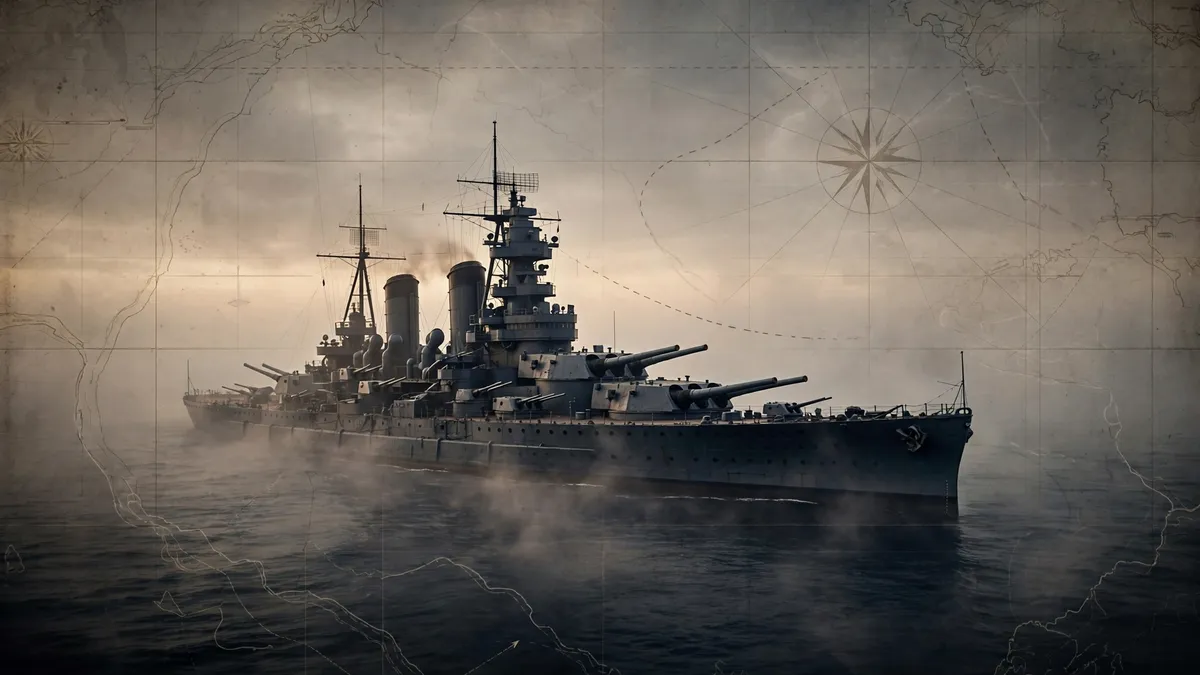
- Atlantic Charter — Newfoundland, 1941. Position: Section 5. Prompt: “Documentary-style scene of two warships anchored side by side in a misty Atlantic bay in 1941, sailors on deck, grey sea and sky, realistic, no text, no flags in close-up.” Alt EN: “Warships anchored off Newfoundland in 1941” (43 chars). Alt VI: “Tàu chiến neo đậu ngoài khơi Newfoundland năm 1941”.
- Key decisions — the War Cabinet, 1940. Position: Section 6. Prompt: “Documentary-style interior of a 1940s British government meeting room, men in dark suits around a long table, maps on the wall, a single desk lamp, muted light, realistic, no text.” Alt EN: “The British War Cabinet meeting in 1940” (38 chars). Alt VI: “Nội các Chiến tranh Anh họp năm 1940”.
- Dresden — February 1945. Position: Section 7. Prompt: “Documentary-style scene of a destroyed European city in winter 1945, ruined buildings and rubble, smoke in a grey sky, empty streets, muted colours, realistic, no text, no graphic detail.” Alt EN: “A destroyed German city in February 1945” (40 chars). Alt VI: “Một thành phố Đức bị phá hủy tháng 2 năm 1945”.
- Later life — Fulton, Missouri, 1946. Position: Section 8. Prompt: “Documentary-style scene of a small American college hall in 1946, a speaker at a wooden podium addressing a seated audience in period dress, warm light, realistic, no text.” Alt EN: “A college hall in Fulton, Missouri, in 1946” (43 chars). Alt VI: “Hội trường đại học ở Fulton, Missouri, năm 1946”.
- Legacy — the state funeral, 1965. Position: Section 9. Prompt: “Documentary-style scene of a 1960s London street during a state funeral procession, a gun carriage, crowds standing in silence, overcast sky, muted colours, realistic, no text.” Alt EN: “Churchill’s state funeral procession in London, 1965” (52 chars). Alt VI: “Đoàn rước quốc tang Churchill ở London, 1965”.