 WAR ATLAS MILITARY HISTORY MAGAZINE · WWI — WWII
Vittorio Veneto: Italy’s Most Powerful Battleship
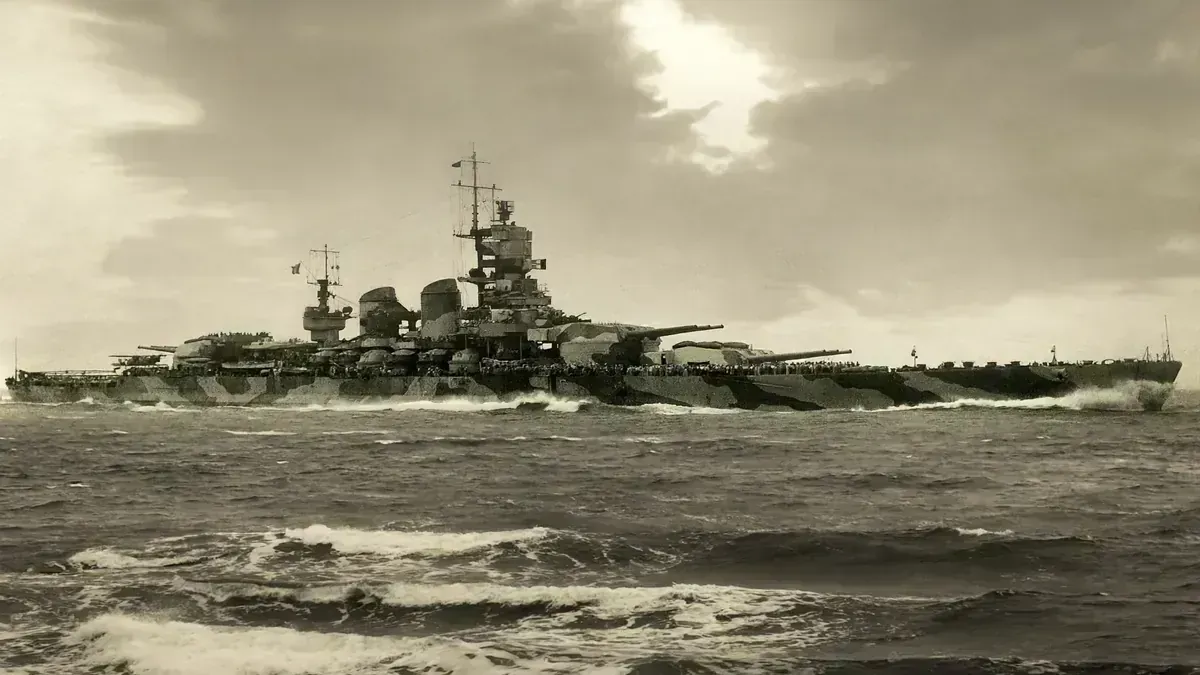
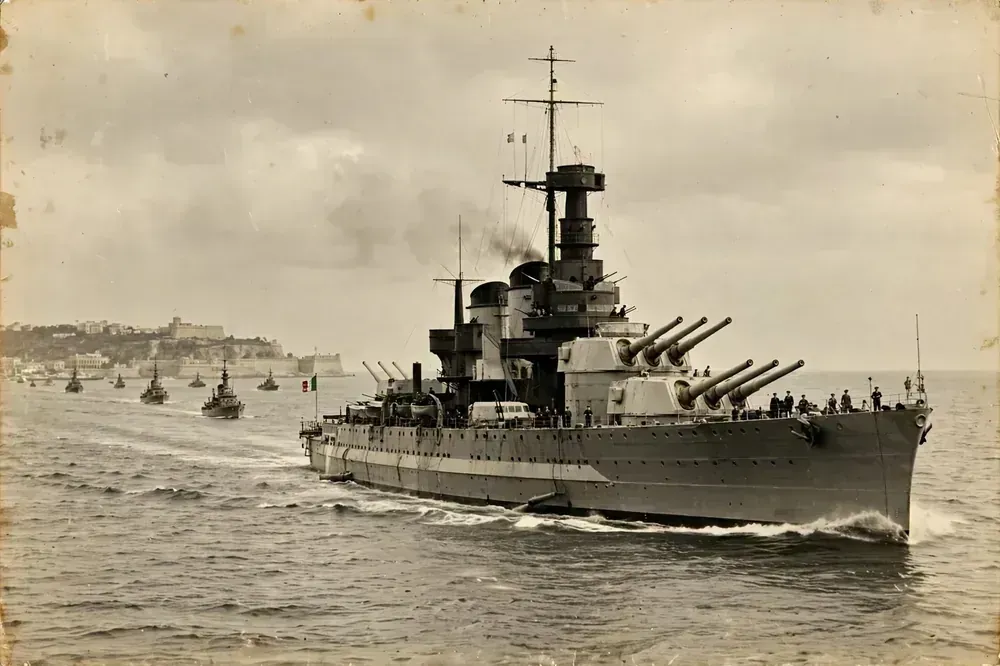
Vittorio Veneto was an Italian battleship of the Littorio class, the most powerful warship ever built in Italy and one of the most advanced battleships of the Second World War. Launched in 1937 and commissioned in 1940, she displaced about 45,000 tons at full load, carried nine 381 mm (15-inch) guns, and could steam at 30 knots, making her one of the fastest battleships in the world. She was the flagship of the Italian fleet for much of the war, and she fought in the Battle of Cape Matapan in March 1941, where she was torpedoed by British aircraft, and in the First and Second Battles of Sirte, where she engaged British cruisers and battleships. She survived the war, only to be scrapped in the late 1940s under the terms of the peace treaty.
Vittorio Veneto was the lead ship of a class of four battleships — Littorio, Vittorio Veneto, Roma and Impero — that represented Italy’s attempt to build a modern battle fleet within the limits of the Washington Naval Treaty. The ships were designed with an innovative underwater protection system, the Pugliese cylinder, and with a powerful main battery that outranged the guns of most British battleships. But they were also compromised by Italy’s industrial limitations: their armour was thinner than that of their British and American contemporaries, their anti-aircraft armament was inadequate, and their crews were hampered by a lack of radar and by fuel shortages that kept the fleet in harbour for much of the war.
Vittorio Veneto is remembered today as a symbol of the Italian Navy’s ambitions and of its frustrations. She was a fast, powerful and handsome ship, but she fought in a navy that lacked the fuel, the radar and the air support to use her effectively. Her survival until the end of the war, and her scrapping in the post-war period, marked the end of Italy’s battleship era. The ship’s name was later given to an Italian helicopter cruiser, and her memory is preserved in the Italian Navy’s history.
1. Key Facts
| Field | Value |
|---|---|
| Type | Fast battleship (Littorio class) |
| Origin | Italy |
| Laid down | 28 October 1934 (Cantieri Riuniti dell’Adriatico, Trieste) |
| Launched | 25 July 1937 |
| Commissioned | 28 April 1940 |
| Displacement | 40,000 tons standard; approximately 45,000–46,000 tons full load |
| Length | Approximately 237.8 m (780 ft) |
| Beam | Approximately 32.9 m (108 ft) |
| Draught | Approximately 10.5 m (34 ft) |
| Main armament | 9 × 381 mm (15 in) guns in three triple turrets |
| Secondary armament | 12 × 152 mm (6 in) guns in four triple turrets |
| Anti-aircraft armament | 12 × 90 mm guns; 20 × 37 mm guns; 16 × 20 mm guns (later increased) |
| Torpedo tubes | None |
| Aircraft | 3 seaplanes (IMAM Ro.43) |
| Armour | Belt 350 mm (13.8 in) inclined, deck 90–150 mm, turrets up to 350 mm face |
| Underwater protection | Pugliese cylinder system |
| Propulsion | 4 Belluzzo steam turbines, 128,000 shp |
| Speed | Approximately 30 knots (trials 31 knots) |
| Range | Approximately 4,700 nautical miles at 14 knots |
| Crew | Approximately 1,830–1,950 officers and men |
| Notable actions | Cape Matapan (March 1941), First Battle of Sirte (December 1941), Second Battle of Sirte (March 1942) |
| Fate | Surrendered to the Allies 1943; scrapped 1948–1950 at La Spezia |
2. Background and Development
Italy and the Naval Treaties
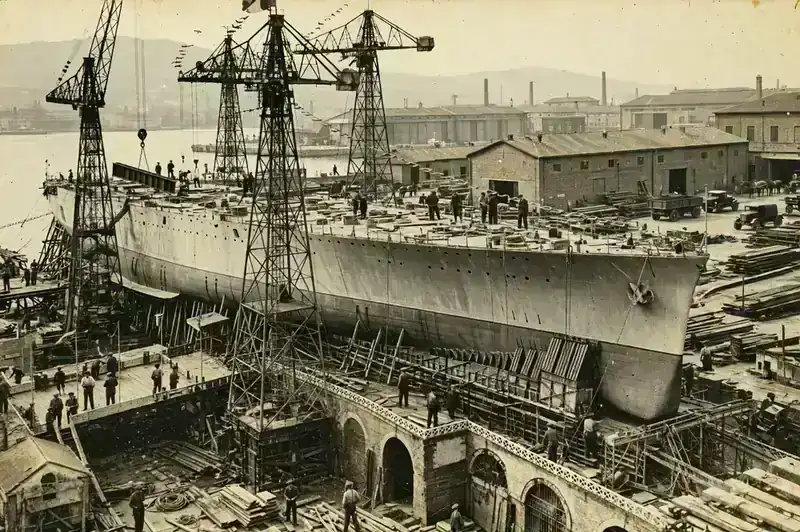
Vittorio Veneto was designed under the Washington Naval Treaty system, which limited Italy to a battleship tonnage equal to that of France. When France laid down the Dunkerque-class battlecruisers in 1932, Italy responded with a new battleship design, the Littorio class, which was intended to be superior to the French ships in firepower, speed and protection. The design was the work of the Italian naval engineer Umberto Pugliese, who had also designed the underwater protection system that bore his name. The ships were laid down in 1934, and they were the largest warships ever built in Italy.
Design Choices and Trade-offs
The Littorio class was designed for speed and firepower. The nine 381 mm guns, the largest ever mounted on an Italian battleship, fired a heavy shell to a range of about 42,000 metres, and the ships’ speed of 30 knots made them among the fastest battleships in the world. The armour scheme was a compromise: a 350 mm belt, inclined at 11 degrees, and a deck of up to 150 mm over the magazines, were adequate by the standards of the time, but thinner than the armour of British and American battleships. The Pugliese underwater protection system, a large cylinder running the length of the ship, was an original Italian design that was intended to absorb the force of a torpedo explosion, but its effectiveness was disputed, and it took up a great deal of space inside the hull.
Building a Modern Battle Fleet
Vittorio Veneto was laid down at Trieste in October 1934, launched in July 1937, and commissioned in April 1940, just weeks before Italy entered the war. Her sister Littorio was commissioned at the same time, and the two ships formed the core of the Italian battle fleet. Roma followed in 1942, and Impero was never completed. The construction of the Littorio class was a major industrial achievement for Italy, but it came at a cost: the ships consumed resources that might have gone to aircraft carriers, destroyers and submarines, and their fuel consumption was enormous, a problem that would haunt the Italian fleet throughout the war.
3. Design
Hull, Armour and the Pugliese System
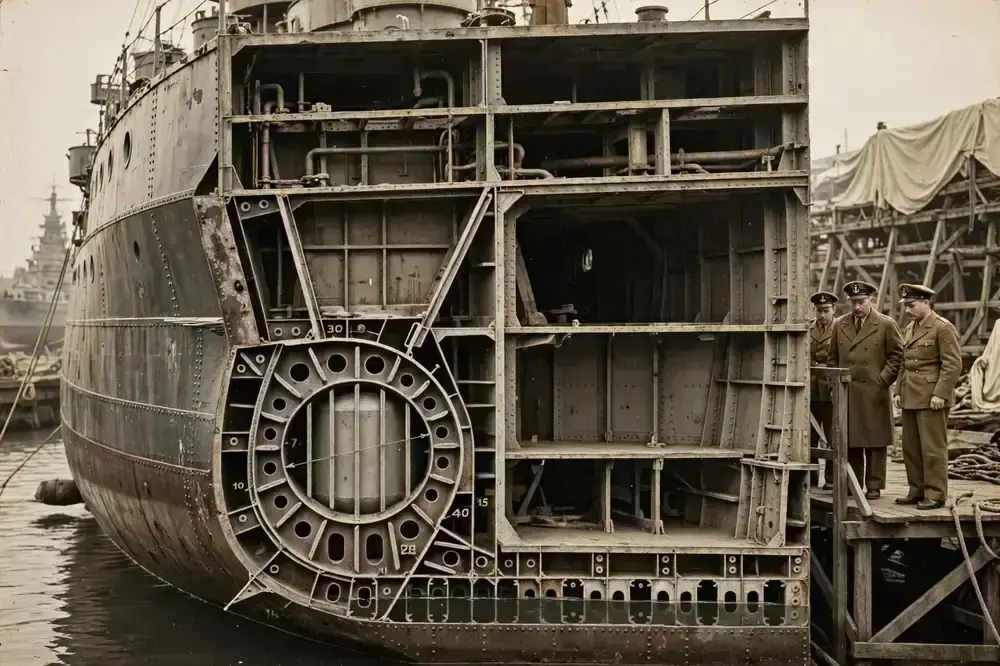
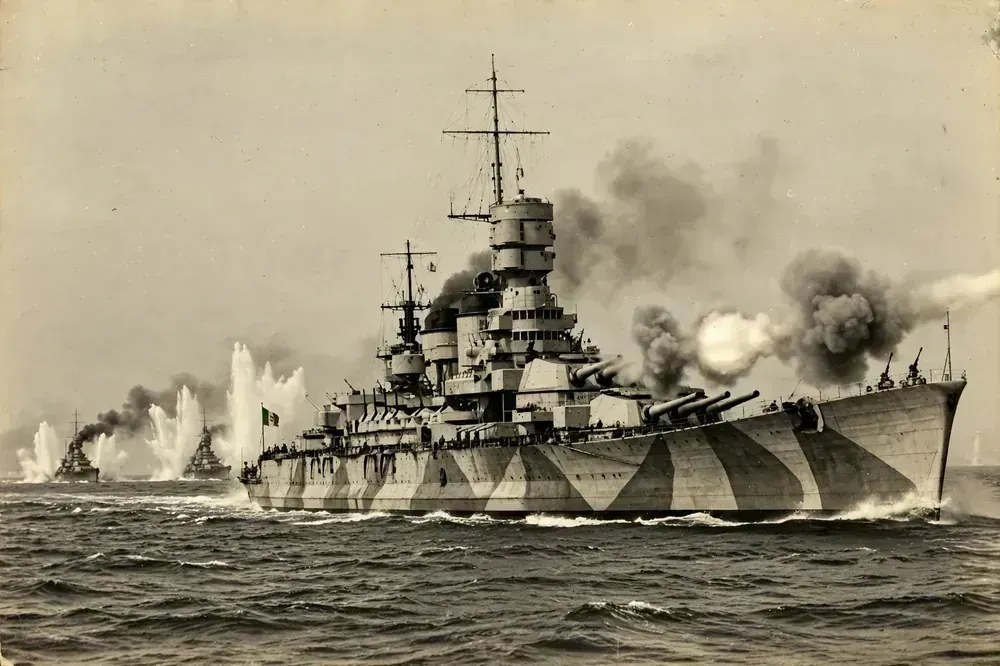
The hull of Vittorio Veneto was long and fine, with a clipper bow and a transom stern, designed for high speed. The armour belt was 350 mm thick, inclined at 11 degrees to improve its resistance, and it protected the machinery and magazines. The armoured deck was up to 150 mm thick over the magazines and 90 mm over the machinery, a scheme that was designed to resist long-range plunging fire. The turrets were heavily protected, with faces up to 350 mm thick. The Pugliese underwater protection system consisted of a large cylinder, about 3.8 metres in diameter, running along each side of the ship inside the hull, surrounded by fuel oil and water. The cylinder was intended to absorb the force of a torpedo explosion, but in practice it was less effective than the designers hoped, and Vittorio Veneto was torpedoed twice during the war.
Propulsion and Speed
The propulsion system was four Belluzzo geared steam turbines driving four shafts, producing 128,000 shaft horsepower and a designed speed of 30 knots. On trials Vittorio Veneto reached 31 knots, making her one of the fastest battleships in the world. The ships’ range was about 4,700 nautical miles at 14 knots, which was adequate for operations in the Mediterranean but limited for operations further afield. The ships’ fuel consumption was high, and Italy’s chronic shortage of fuel oil meant that the battleships spent much of the war in harbour, a fact that limited their usefulness. The speed of the Littorio class was their most valuable asset, and it allowed them to operate as a fast striking force, but it was also a liability, because it required a large and fuel-hungry power plant.
Armament and Fire Control
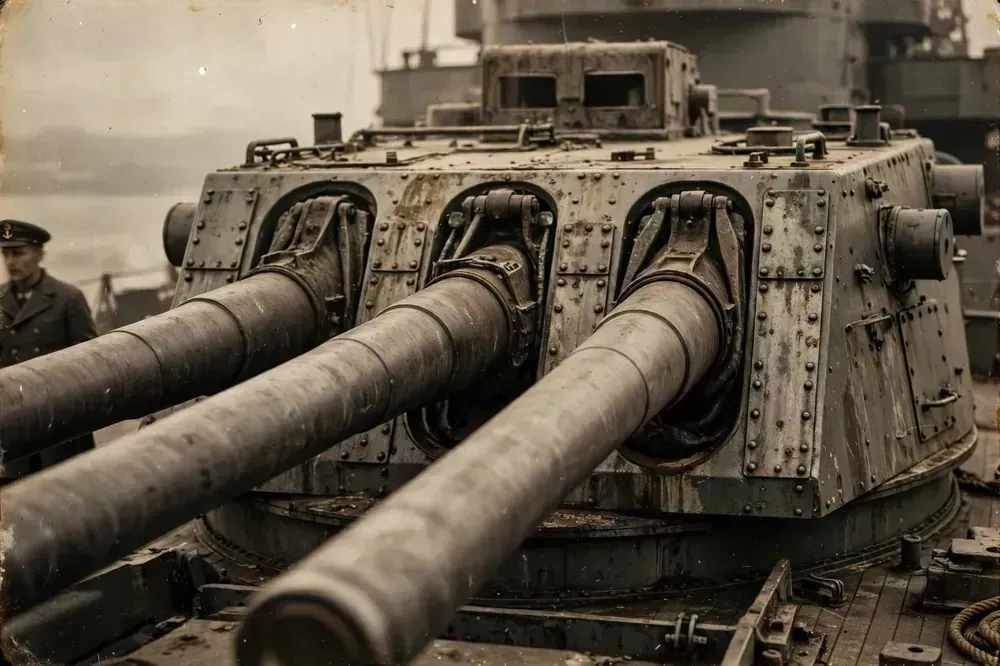
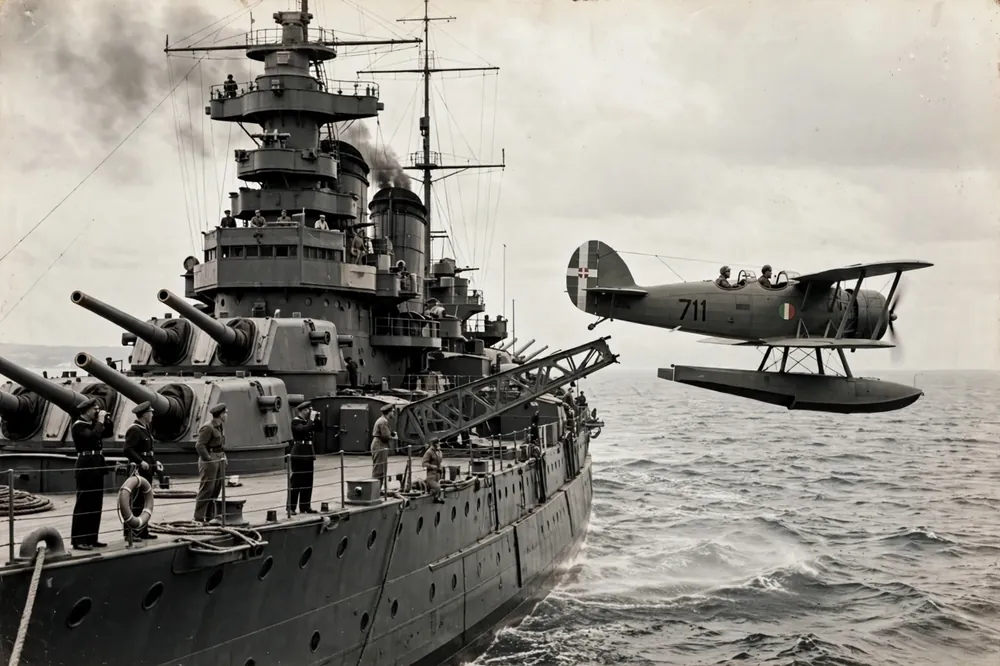
The main battery of nine 381 mm/50-calibre guns fired an 885-kilogram armour-piercing shell to a range of about 42,000 metres, and the guns were controlled by a modern fire-control system with stereoscopic rangefinders. The secondary battery of twelve 152 mm guns provided defence against destroyers and cruisers, and the anti-aircraft battery — originally twelve 90 mm guns, twenty 37 mm guns and sixteen 20 mm guns — grew during the war as the air threat increased. The ships also carried three IMAM Ro.43 seaplanes for spotting and reconnaissance, launched from a catapult on the quarterdeck. The fire-control system was good, but the Italian Navy lacked radar until late in the war, and its gunnery was hampered by the absence of radar rangefinding, a disadvantage that mattered in night actions.
4. Variants
The Littorio Class
Vittorio Veneto was the second ship of the Littorio class, after Littorio herself, and she was followed by Roma and by the unfinished Impero. The four ships were built to the same design, but they differed in detail: Roma was fitted with a slightly different anti-aircraft armament and with improved fire control, and Impero was to have been fitted with a different secondary battery. The class was the only modern battleship class built in Italy, and it represented the pinnacle of Italian naval architecture. The ships’ design was influenced by the French Dunkerque class, but it was larger, faster and more heavily armed, and it was a more capable design.
Roma and Impero
Roma, commissioned in June 1942, was the third ship of the class, and she served briefly as the flagship of the Italian fleet. She was sunk by German Fritz X guided bombs on 9 September 1943, while sailing to surrender to the Allies after the Italian armistice, with the loss of more than 1,300 men, including the fleet commander, Admiral Carlo Bergamini. Impero, the fourth ship, was launched in 1939 but was never completed, and she was scrapped after the war. The fate of Roma — sunk by a weapon she had no defence against — was a symbol of the changing nature of naval warfare, in which air power had replaced the battleship as the decisive weapon.
The Name Vittorio Veneto
The ship was named for the Battle of Vittorio Veneto, the decisive Italian victory over Austria-Hungary in October–November 1918, which ended the First World War on the Italian front. The name was a patriotic choice, and it reflected the Fascist regime’s desire to associate the new battleship with Italy’s greatest military victory. The town of Vittorio Veneto, in the Veneto region of north-eastern Italy, gave its name to the battle, and the ship’s name carried that association into the Second World War. The name was later given to an Italian helicopter cruiser commissioned in 1969, and it remains a part of the Italian Navy’s heritage, a reminder of the battle that ended one war and of the ship that fought in the next.
5. Operational History
Taranto and the Early War
Vittorio Veneto was commissioned in April 1940, just weeks before Italy entered the war, and she was still working up when the British attacked the Italian fleet at Taranto in November 1940. She was not damaged in the attack, because she was not in the harbour at the time, but the attack crippled the Italian battle fleet and left Vittorio Veneto and Littorio as the only operational Italian battleships. In the months that followed, the two ships were the core of the Italian fleet, and they were used to escort convoys to North Africa and to cover the fleet’s operations in the Mediterranean.
Cape Matapan
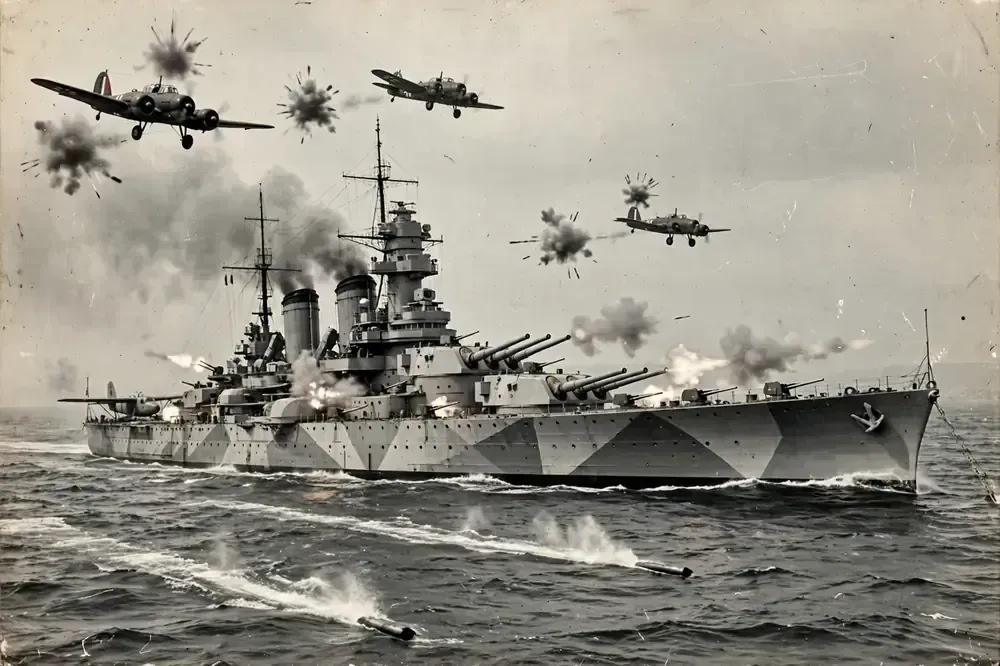
The defining action of Vittorio Veneto’s career came at the Battle of Cape Matapan in March 1941. The Italian fleet, under Admiral Angelo Iachino, sailed to intercept British convoys to Greece, and Vittorio Veneto was the flagship. On the morning of 28 March, she was attacked by British carrier aircraft from HMS Formidable, and a torpedo hit her port side, flooding her outer compartments and reducing her speed. She withdrew under escort, and that night the British battleships Warspite, Valiant and Barham caught and sank three Italian heavy cruisers — Zara, Fiume and Pola — in a night action that was a disaster for the Italian Navy. Vittorio Veneto herself survived, but the battle showed that the Italian fleet could not operate without air cover, and it marked the end of the Italian Navy’s offensive operations in the Mediterranean.
Sirte and the Later War
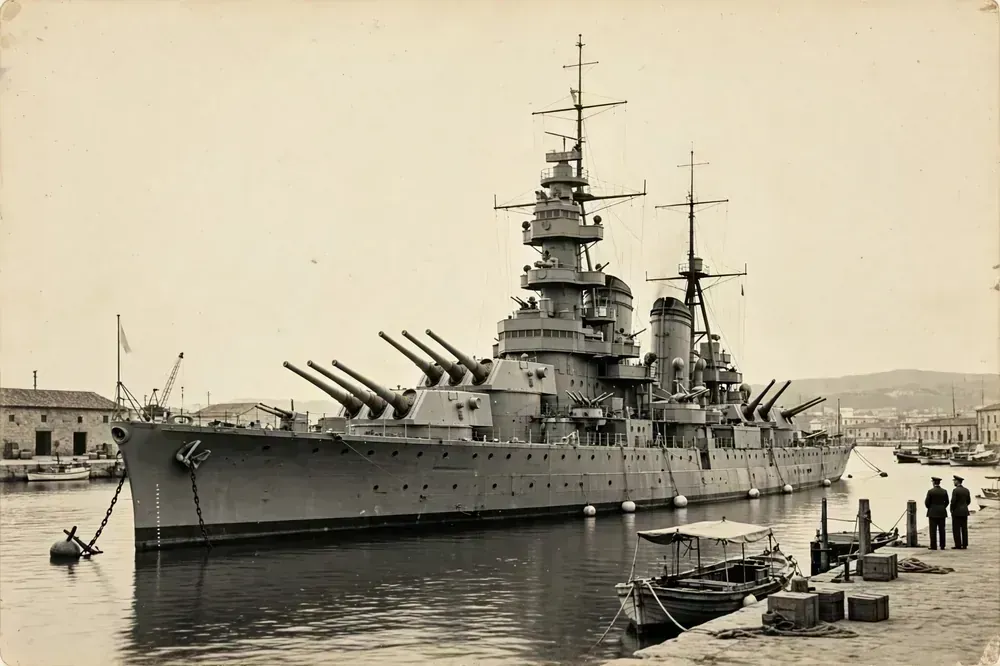
After Matapan, Vittorio Veneto served in the escort of convoys to North Africa, and she fought in the First Battle of Sirte in December 1941 and the Second Battle of Sirte in March 1942, where she engaged British cruisers and the battleship HMS Valiant. In the Second Battle of Sirte, her 381 mm guns straddled British cruisers at long range, but she scored no hits, and the battle ended in a draw. In 1942 she was torpedoed again, this time by the British submarine HMS Urge, and she was out of action for repairs for several months. By 1943 fuel shortages had reduced the Italian fleet to inactivity, and Vittorio Veneto spent her last months of Italian service in harbour at La Spezia. After the armistice in September 1943 she sailed to Malta and surrendered to the Allies, and she was interned in Egypt for the remainder of the war.
6. Performance and Specifications
Strengths on the Battlefield
Vittorio Veneto was a fast, powerful and well-designed battleship. Her 381 mm guns outranged the guns of most British battleships, and her speed of 30 knots made her one of the fastest battleships in the world. Her armour scheme was adequate for the Mediterranean, and her Pugliese underwater protection system, while disputed, was an original attempt to solve the problem of torpedo defence. The ship’s design was a credit to Italian naval architecture, and her appearance — long, low and elegant — made her one of the most handsome battleships ever built.
Weaknesses and Trade-offs
The weaknesses were those of the Italian Navy as a whole. The ship lacked radar until late in the war, and her gunnery was hampered by the absence of radar rangefinding. Her anti-aircraft armament was inadequate, and she was vulnerable to air attack, as the torpedo hits at Matapan and in 1942 showed. Her fuel consumption was enormous, and Italy’s fuel shortages kept her in harbour for much of the war. The Pugliese system, for all its ingenuity, was less effective than the designers hoped, and the ship was torpedoed twice. Above all, Vittorio Veneto fought in a navy that lacked aircraft carriers and that could not provide air cover for its battleships, a deficiency that mattered more than any feature of the ship’s design.
How the Ship Compared with Rivals
Compared with the British battleships she faced, Vittorio Veneto was faster and more heavily armed, but had thinner armour and no radar. Compared with the French Richelieu class, she was similar in speed and firepower, but had a less effective armour scheme. Compared with the German Bismarck, she was faster but less well protected and less heavily armed. Compared with the American North Carolina class, she was faster and had a longer-ranged main battery, but had thinner deck armour and no radar fire control. Vittorio Veneto was a capable battleship, but she fought in a navy that could not use her effectively, and her career is a study in the limits of a good ship in a bad strategic situation.
7. Operators
The Regia Marina
The only operator of Vittorio Veneto was the Regia Marina, the Royal Italian Navy. The ship served as the flagship of the Italian battle fleet, and her crew was drawn from across Italy. The ship’s officers included men who would later become senior figures in the Italian Navy, and her service was a central part of the Regia Marina’s history. After the armistice in 1943, the ship was operated by the co-belligerent Italian Navy under Allied supervision, and she was interned in Egypt until the end of the war.
No Other Users
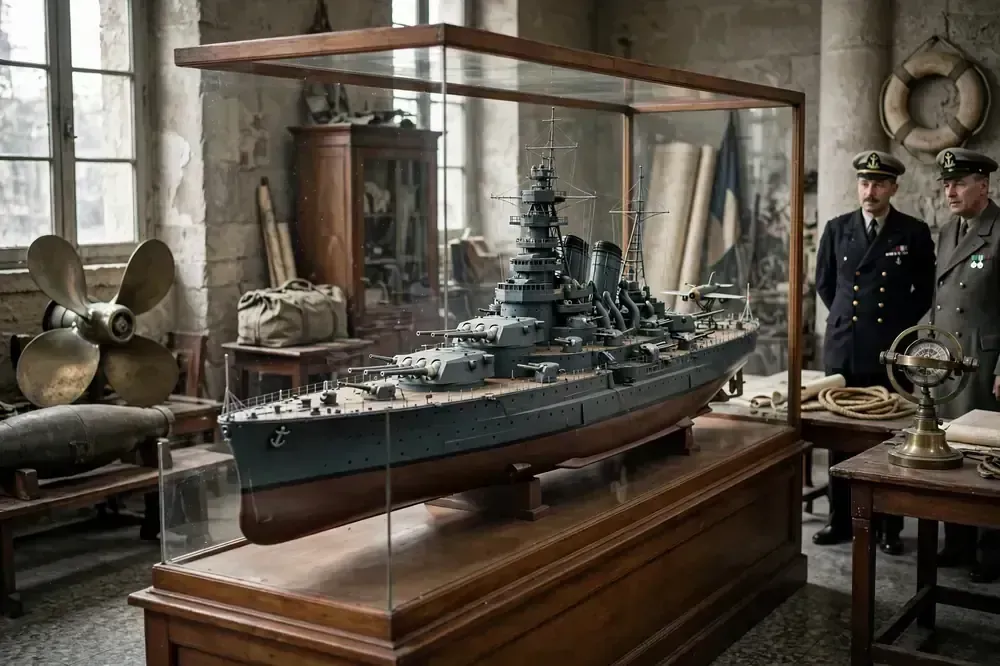
No other navy operated Vittorio Veneto. After the war, the ship was returned to Italy and scrapped at La Spezia between 1948 and 1950, under the terms of the peace treaty, which forbade Italy to retain battleships. The ship’s name was later given to an Italian helicopter cruiser, and her memory is preserved in the Italian Navy’s history and in the museums that display her artefacts. The Italian Naval Museum at La Spezia holds models and photographs of the Littorio class, and the ship’s bell and some of her fittings are preserved in naval collections. The absence of a foreign operator is a measure of the ship’s status as a purely Italian design, built for a purely Italian navy.
8. Legacy and Influence
Italian Naval Architecture
The legacy of Vittorio Veneto lies in Italian naval architecture. The Littorio class was the pinnacle of Italian battleship design, and its features — the high speed, the powerful main battery, the Pugliese underwater protection system — were studied by other navies. The Pugliese system, in particular, was an original Italian contribution to naval architecture, and it influenced the design of underwater protection in several navies. The class also demonstrated the limits of battleship design under treaty constraints, and its ships were among the last battleships built in Europe.
Memory and the End of the Battleship Era
Vittorio Veneto is remembered in Italy as the most powerful battleship ever built in the country, and as a symbol of the Regia Marina’s ambitions. The ship’s scrapping in the late 1940s marked the end of Italy’s battleship era, and the Italian Navy’s post-war fleet was built around cruisers, destroyers and, later, aircraft carriers. The ship’s name, given to a helicopter cruiser in 1969, keeps her memory alive in the Italian Navy, and her story is told in the Italian naval museums at La Spezia and Venice.
The Lesson of Matapan
The Battle of Cape Matapan, in which Vittorio Veneto was torpedoed and three Italian cruisers were sunk, is remembered as a lesson in the importance of air cover and radar. The Italian fleet sailed without air support and without radar, and it paid the price. The lesson was learned by navies around the world, and the post-war Italian Navy was built around the concept of a balanced fleet with air support. Vittorio Veneto’s career thus marks a turning point in naval history, the moment when the battleship ceased to be the decisive weapon and the aircraft carrier took its place.
9. Surviving Examples
No Ship Survives
No Littorio-class battleship survives. Vittorio Veneto was scrapped at La Spezia between 1948 and 1950, Littorio was scrapped at the same time, Roma lies on the seabed where she was sunk in 1943, and Impero was scrapped incomplete. No ship of the class survives, which is a loss for naval heritage, but the Littorio class is well represented in museum collections and in models. The Italian Naval Museum at La Spezia displays artefacts from the Littorio class, including models, photographs and documents, and the museum at Venice holds material relating to the Regia Marina.
Artefacts and Memorials
Artefacts from Vittorio Veneto survive in museums in Italy and in Britain. The Imperial War Museum in London holds artefacts from the Mediterranean campaign, including items recovered from the ships that fought at Matapan. In Italy, the Museo Tecnico Navale at La Spezia displays models and photographs of the Littorio class, and the ship’s bell and some of her fittings are preserved in naval collections. The wreck of Roma, lying in deep water off Sardinia, is a war grave, and it is protected as such. These objects preserve the memory of the class even though no hull survives.
Frequently Asked Questions
What was Vittorio Veneto?
Vittorio Veneto was an Italian fast battleship of the Littorio class, commissioned in 1940. She was the most powerful warship ever built in Italy, displacing about 45,000 tons at full load, carrying nine 381 mm guns, and capable of 30 knots. She served as the flagship of the Italian fleet in the Mediterranean, fighting at Cape Matapan and in the Battles of Sirte. The ship was named for the Battle of Vittorio Veneto, the decisive Italian victory over Austria-Hungary in 1918, and she was the lead ship of a class of four battleships that represented Italy’s attempt to build a modern battle fleet within the limits of the Washington Naval Treaty.
How many Littorio-class battleships were built?
Four were laid down: Littorio, Vittorio Veneto, Roma and Impero. Three were completed; Impero was never finished. Roma was sunk by German guided bombs in 1943, with the loss of more than 1,300 men, and Littorio and Vittorio Veneto were scrapped after the war under the terms of the peace treaty, which forbade Italy to retain battleships. The class was the only modern battleship class built in Italy, and it represented the pinnacle of Italian naval architecture, with its high speed, its powerful main battery, and its innovative Pugliese underwater protection system.
What happened at Cape Matapan?
At the Battle of Cape Matapan in March 1941, Vittorio Veneto was torpedoed by British carrier aircraft and forced to withdraw, her speed reduced and her outer compartments flooded. That night, British battleships sank three Italian heavy cruisers — Zara, Fiume and Pola — in a night action that was a disaster for the Italian Navy and ended its offensive operations in the Mediterranean. The battle showed that the Italian fleet could not operate without air cover, and it marked the end of the Italian Navy’s attempts to challenge British sea control. Vittorio Veneto herself survived, but the battle was a turning point in the Mediterranean war.
What was the Pugliese underwater protection system?
The Pugliese system was an Italian design for torpedo defence, consisting of a large cylinder running along each side of the ship inside the hull, surrounded by fuel oil and water. It was intended to absorb the force of a torpedo explosion, but its effectiveness was disputed, and Vittorio Veneto was torpedoed twice during the war. The system was designed by the Italian naval engineer Umberto Pugliese, and it was an original attempt to solve the problem of torpedo defence, but in practice it took up a great deal of space inside the hull and was less effective than the designers hoped. The system influenced underwater protection design in several navies, but it was not repeated after the war.
Why was Vittorio Veneto scrapped?
Vittorio Veneto was scrapped at La Spezia between 1948 and 1950 under the terms of the peace treaty with Italy, which forbade Italy to retain battleships. The ship had survived the war, but the post-war Italian Navy was built around smaller ships, and the battleship era was over. The scrapping of Vittorio Veneto and her sister Littorio marked the end of Italy’s battleship fleet, and the Italian Navy’s post-war ships were cruisers, destroyers and, later, aircraft carriers. The ship’s name was later given to an Italian helicopter cruiser commissioned in 1969, keeping her memory alive in the Italian Navy.
How fast was Vittorio Veneto?
Vittorio Veneto was designed for 30 knots and reached 31 knots on trials, making her one of the fastest battleships in the world. Her speed was one of her most valuable assets, but it required a large and fuel-hungry power plant, and Italy’s fuel shortages often kept her in harbour. The propulsion system was four Belluzzo steam turbines producing 128,000 shaft horsepower, and the ship’s range was about 4,700 nautical miles at 14 knots. The speed of the Littorio class allowed the ships to operate as a fast striking force, but it also made them expensive to operate, and fuel was the Italian fleet’s constant problem throughout the war.
Sources
- Bagnasco, Erminio, and de Toro, Augusto, The Littorio Class: Italy’s Last and Largest Battleships (Naval Institute Press).
- Whitley, M. J., Battleships of World War Two (Cassell).
- Greene, Jack, and Massignani, Alessandro, The Naval War in the Mediterranean 1940–1943 (Naval Institute Press).
- Sadkovich, James, The Italian Navy in World War II (Greenwood Press).
- The Museo Tecnico Navale, La Spezia, Littorio-class collection records.
-
The Imperial War Museum, London, Mediterranean collection records.
-
Rohwer, Jurgen, Chronology of the War at Sea 1939-1945 (Naval Institute Press).
- O’Hara, Vincent, The German Fleet at War 1939-1945 (Naval Institute Press).