 WAR ATLAS MILITARY HISTORY MAGAZINE · WWI — WWII
Joachim Schepke
1. Lead
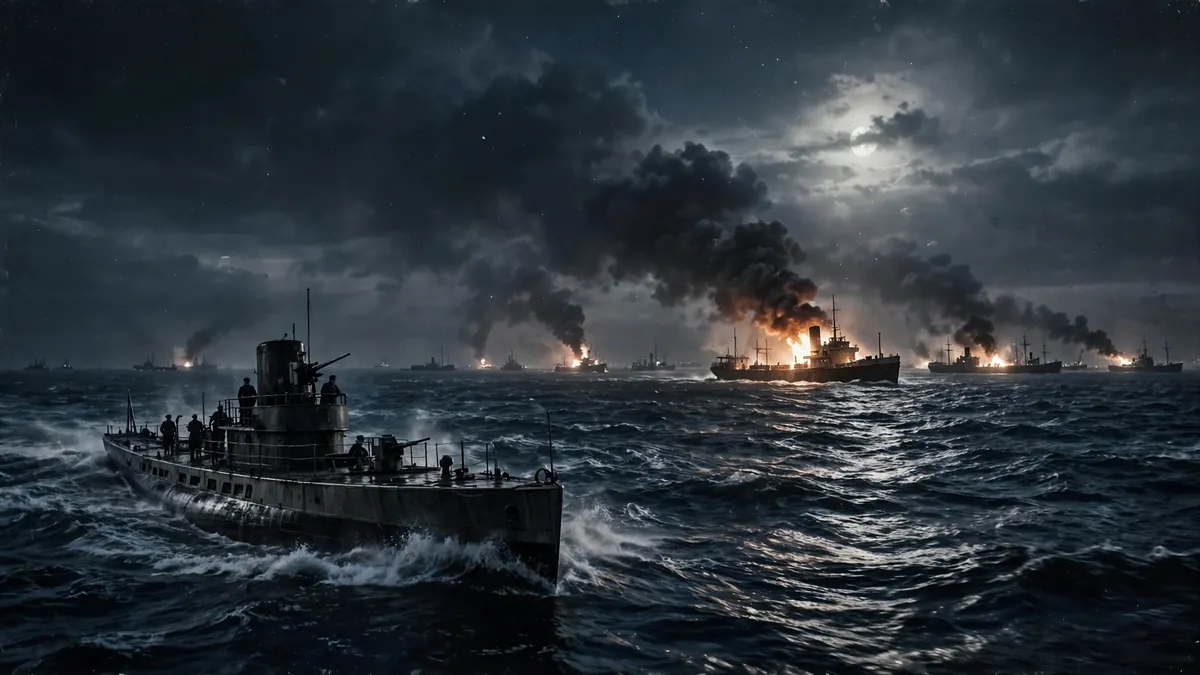
Joachim Schepke (1912–1941) was one of the most successful U-boat commanders of the early Battle of the Atlantic. In just over a year of combat patrols, he became one of the three leading aces of the U-boat war, alongside Günther Prien and Otto Kretschmer, and he was awarded the Knight’s Cross with Oak Leaves.
Schepke claimed 37 ships for 213,310 GRT, but post-war research credits him with 36 ships sunk for about 154,000–156,000 GRT; he was known even among fellow commanders for exaggerating tonnage, and his comrades used the phrase “Schepke tonnage” for inflated claims. He was killed on 17 March 1941, when his boat, U-100, was rammed and sunk by the British destroyer HMS Vanoc during an attack on a convoy.
He was twenty-nine years old, and his death, together with the loss of Prien and the capture of Kretschmer in the same month, marked the end of the first generation of U-boat aces.
2. Key Facts
| Born | 8 March 1912, Flensburg, German Empire |
| Died | 17 March 1941, North Atlantic (aged 29) |
| Service | Kriegsmarine, 1930–1941 / Kriegsmarine, 1930–1941 |
| Commands | U-3; U-19; U-100 / U-3; U-19; U-100 |
| Ships sunk | 36 ships credited by post-war research, about 154,000–156,000 GRT (wartime claim: 37 ships, 213,310 GRT) |
| War patrols | 9 patrols |
| Highest award | Knight’s Cross with Oak Leaves |
| Cause of death | U-100 rammed and sunk by HMS Vanoc |
3. Early Life and Naval Career
A naval family
Joachim Schepke was born on 8 March 1912 at Flensburg, the Baltic port in northern Germany, into a family with naval traditions. He joined the Reichsmarine, the German navy of the Weimar Republic, in 1930, at the age of eighteen, and trained as a naval officer.
The German navy of the 1930s was a small force, restricted by the Treaty of Versailles, but it was rebuilding, and the young officers who joined it in Schepke’s generation were the men who would fight the U-boat war. Schepke served on surface ships and in training establishments, and in 1935 he transferred to the U-boat arm, which was being rebuilt under the Anglo-German Naval Agreement.
He was a keen and ambitious officer, and his superiors noted his confidence, his technical ability, and his determination to succeed.
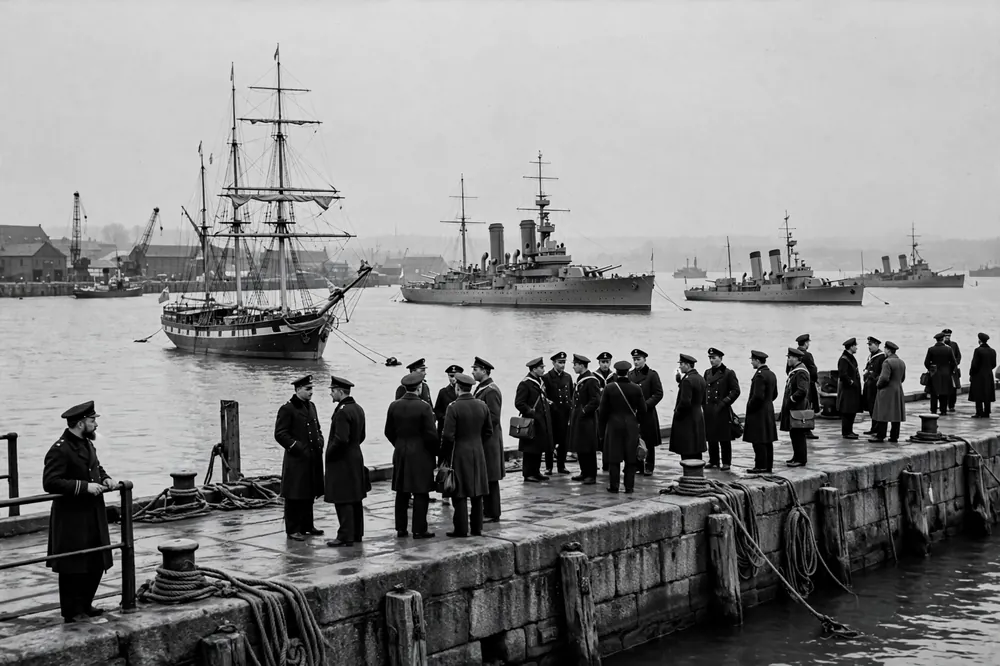
Schepke joined the Reichsmarine in 1930 as an officer cadet, part of the Crew of 1930, the year-group that would supply many of the U-boat commanders of the Second World War. His training followed the traditional pattern of the German navy: a year aboard a training ship, courses at the naval school at Flensburg-Mürwik, and service aboard surface ships, where he learned navigation, gunnery and seamanship.
In 1935, when the Anglo-German Naval Agreement permitted Germany to rebuild its submarine arm, Schepke volunteered for U-boats, and he trained at the U-boat school at Neustadt, where Karl Dönitz was building a new generation of submarine officers. Dönitz, who believed that the U-boat war would be won by aggressive young commanders, marked Schepke out as one of his most promising officers, and he gave him his first commands while he was still in his twenties.
First commands
Schepke’s first U-boat command was U-3, a small coastal Type II boat, which he commanded in 1938–39, and then U-19, another Type II, in which he made his first war patrols in 1939–40. The Type II boats were small, short-ranged, and suited to operations in the North Sea and the English Channel, and Schepke learned his trade in them, sinking his first ships and developing the aggressive style that would characterise his later career.
In the summer of 1940, after the fall of France gave the U-boats new bases on the Atlantic coast, he was given command of U-100, a Type VIIB ocean-going boat, and it was in U-100 that he would make his reputation. The Type VII was the workhorse of the U-boat war, and U-100 was one of its best-known boats.
4. The Happy Time
The U-boat offensive of 1940
The second half of 1940 was known to the U-boat crews as the “Happy Time”: the British were short of escorts, the convoys were poorly protected, and the U-boats, operating from their new French bases, could attack almost at will. Schepke, in U-100, was one of the most successful commanders of this period.
Between August 1940 and March 1941 he made five patrols in U-100, attacking convoys in the North Atlantic, and he claimed a large number of sinkings. His claims were impressive, and they were reported in the German press, which made him a hero: the U-boat aces were among the most celebrated figures in wartime Germany, and their photographs appeared in newspapers and magazines.
But his claims, as post-war research would show, were inflated. Schepke claimed 37 ships for 213,310 GRT, but post-war research credits him with 36 ships sunk for about 154,000–156,000 GRT — a difference of nearly 60,000 tons, and a reminder that wartime claims, made in the dark, in bad weather, and in the heat of battle, were often optimistic.
“Schepke tonnage”
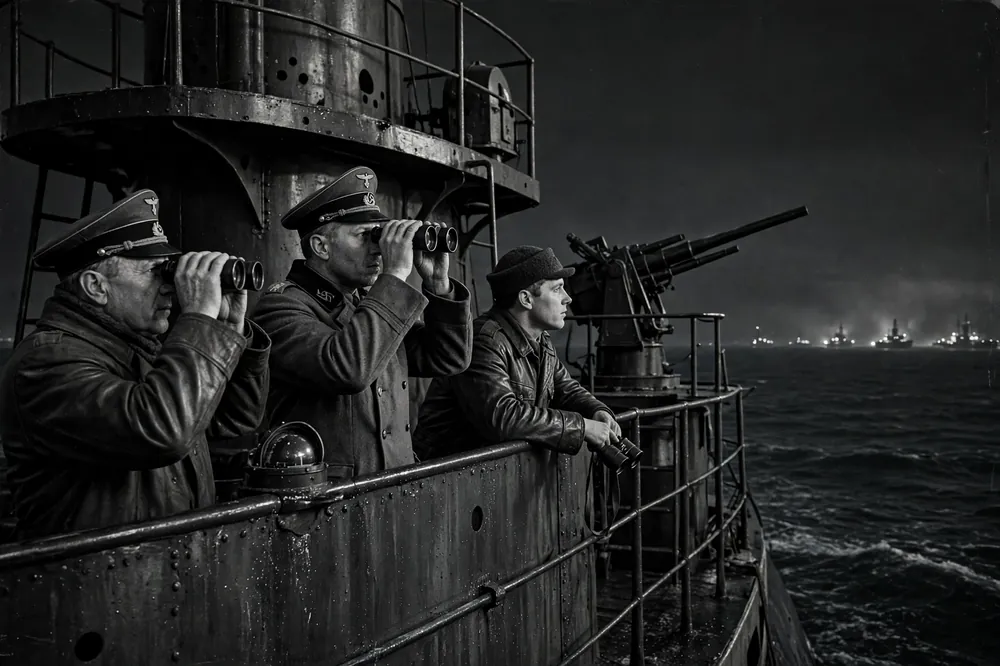
Schepke’s reputation for exaggeration was so well known that his fellow U-boat commanders used the phrase “Schepke tonnage” to describe inflated claims. The phrase is a useful reminder of how the U-boat war was fought and reported: a commander, attacking at night, in a convoy action, with several U-boats attacking at once, could not always be sure which ship he had hit, or how large it was, and the tonnage figures were often estimates made in the dark.
The German naval command, for its part, had an interest in large figures: the U-boat war was a propaganda war as well as a military one, and the aces’ scores were publicised to sustain morale at home. Schepke’s case is the most striking example of the gap between wartime claims and post-war research, and it is the reason why historians today cite his record as 36 ships for about 154,000–156,000 GRT, and treat the wartime figure of 213,310 GRT as a claim, not a fact.
5. Tactics and the Wolfpack
Night surface attacks
Schepke’s tactics were those of the U-boat arm at its best: the night surface attack, developed by the U-boat commander Karl Dönitz, in which the U-boat approached the convoy on the surface, at night, using its speed and its low silhouette to slip past the escorts, and then attacked with torpedoes from inside the convoy.
The tactic was devastatingly effective in 1940–41, when the British escorts were few and their radar was primitive, and Schepke was one of its most skilled practitioners. He was aggressive, he attacked at close range, and he was willing to stay inside the convoy, attacking ship after ship, until his torpedoes were exhausted.
His success, and the success of the other aces, depended on the convoy system being weak, and on the U-boats being able to operate with near impunity at night.
The wolfpack
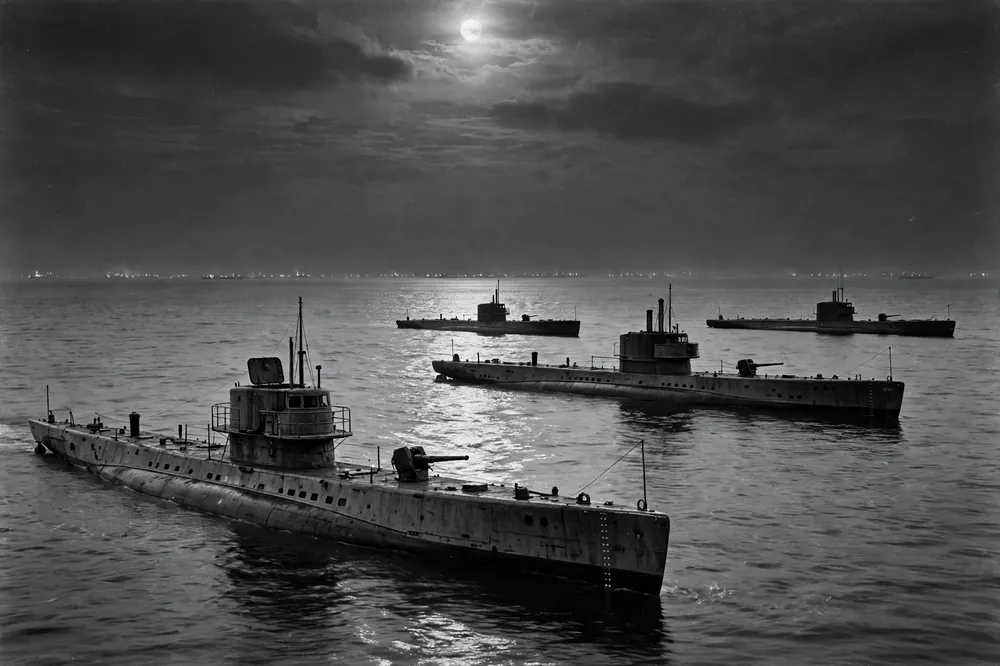
The U-boats of 1940–41 fought in “wolfpacks”, groups of boats coordinated by radio from Dönitz’s headquarters, which shadowed a convoy by day and attacked it by night, in successive waves. Schepke was a prominent member of the wolfpacks, and his attacks were often coordinated with those of Prien, Kretschmer and other aces.
The wolfpack was a formidable weapon, but it had a weakness: it depended on radio communication, and the British, by breaking the German naval Enigma code and by developing radar and sonar, were learning to find the U-boats and to protect the convoys. By March 1941, the month of Schepke’s death, the balance was beginning to shift, and the U-boat war was entering a harder phase.
Schepke’s death, in a convoy action, was a sign of that change: the escorts were becoming more effective, and the U-boats were no longer safe.
The wolfpack tactic depended on radio, and it was coordinated from Dönitz’s headquarters, the BdU, which received reports from the shadowing boats, plotted the convoy’s course, and ordered the other boats of the pack to converge on it. The boats communicated by short radio signals, and they attacked at night, on the surface, in successive waves, each boat firing its torpedoes and then withdrawing to reload.
The tactic was devastatingly effective in 1940–41, when the British escorts were few and their radar was primitive, but it had a weakness that the British would exploit: the radio signals could be intercepted and located, and the British, by breaking the German naval Enigma code, could read the U-boats’ orders and reroute the convoys.
By 1943 the wolfpacks were being hunted as much as they hunted, and the U-boat war had turned against Germany.
6. The Last Patrol
Convoy HX 112
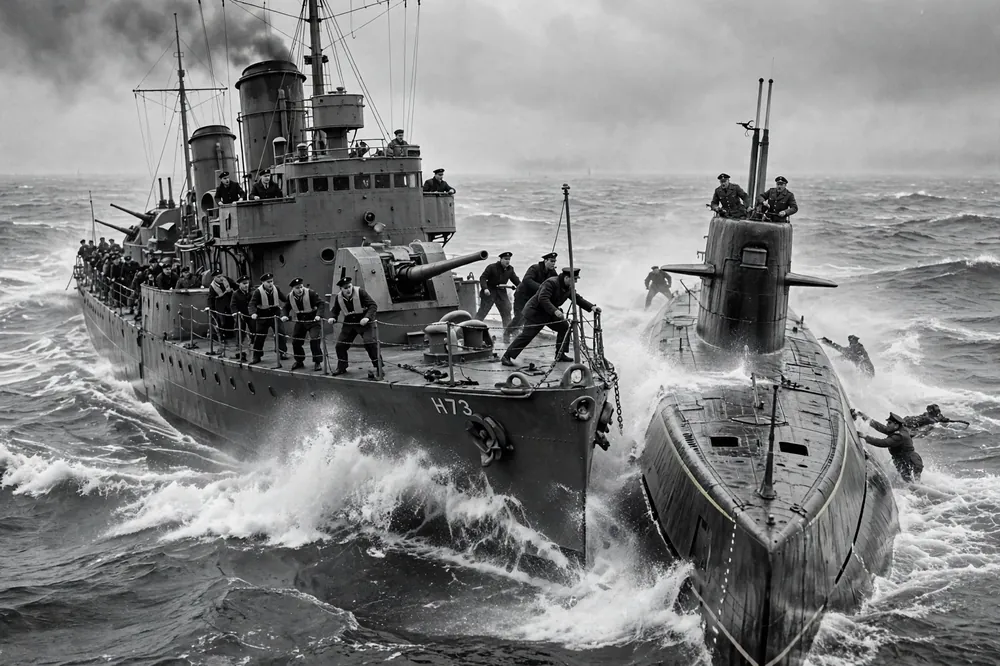
Schepke’s last patrol began in March 1941, when U-100 sailed to intercept the convoy HX 112, a large convoy of more than forty ships sailing from Halifax to Liverpool. The convoy was escorted by a group of destroyers and corvettes, and it was shadowed by a wolfpack that included U-100, U-99 — Kretschmer’s boat — and several others. On the night of 16–17 March 1941, the wolfpack attacked.
Schepke, in U-100, sank several ships, and Kretschmer, in U-99, sank several more. But the escorts, led by the destroyer HMS Walker and the destroyer HMS Vanoc, fought back with a determination that the U-boats had not met before. The British escorts used their Asdic — sonar — to locate the U-boats, and they used depth charges to force them to the surface, where they could be rammed or shelled.
It was a new kind of convoy battle, and it was the U-boats that lost.
The sinking of U-100
U-100 was forced to the surface by depth charges from HMS Vanoc, and the destroyer rammed it, sinking it with most of its crew. Schepke, who was on the bridge, was killed — according to some accounts, he was crushed by the destroyer’s bow, and according to others, he drowned. He was twenty-nine years old.
U-99, Kretschmer’s boat, was also sunk in the same action, and Kretschmer himself was captured, along with most of his crew. Günther Prien, the third of the great aces, had already been killed earlier in March, when U-47 was lost with all hands. In a single month, the U-boat arm lost its three most famous commanders, and the “Happy Time” was over.
The German naval command, and the German public, were shocked, and the U-boat war entered a new and harder phase.
7. The U-Boat Aces
Prien, Kretschmer and Schepke
Schepke, Prien and Kretschmer were the three leading U-boat aces of the early war, and they were celebrated in Germany as national heroes. Prien had sunk the battleship Royal Oak at Scapa Flow in 1939; Kretschmer was the most successful U-boat commander of the war, credited with 47 ships for 274,333 GRT; and Schepke was the most aggressive of the three, and the one whose claims were the most inflated.
Together, they represented the U-boat arm at its peak, and their loss in March 1941 was a blow from which the U-boat arm’s morale never fully recovered. The German navy continued to produce successful commanders — Erich Topp, Reinhard Hardegen, Wolfgang Lüth — but none of them had the fame of the first three, and none of them fought in the easy conditions of the “Happy Time”.
The aces and propaganda
The U-boat aces were, more than any other group in the German armed forces, creatures of propaganda. Their scores were publicised, their photographs were printed, and their exploits were celebrated in newsreels and in the press, because the German leadership understood that the U-boat war, fought far from home and invisible to the public, needed heroes to sustain it.
Schepke’s inflated claims were, in this context, not simply a personal failing but a product of the system: the commanders were under pressure to produce results, the press needed heroes, and the tonnage figures were the currency of the U-boat war.
Post-war research, which has compared German claims with Allied shipping records, has shown that the aces’ scores were often inflated, and Schepke’s case, with its gap of nearly 60,000 tons, is the most striking example. Historians today therefore treat the aces’ wartime scores with caution, and cite the post-war figures as the more reliable record.
8. Later Assessment
The tonnage question
The question of Schepke’s tonnage is not a minor detail: it goes to the heart of how the U-boat war is understood. The German U-boat command measured success in tonnage, and the tonnage figures were used to argue that the U-boats could starve Britain into submission.
If the figures were inflated, then the U-boat war was less successful than the Germans believed, and the British, who kept accurate records of their shipping losses, knew it. Post-war research, based on Allied records, has established that Schepke sank 36 ships for about 154,000–156,000 GRT, a formidable record by any standard, but not the 213,310 GRT that was claimed during the war.
The difference matters because it reminds us that wartime claims, on both sides, were often optimistic, and that the historian’s task is to compare them with the records of the other side.
A brave commander
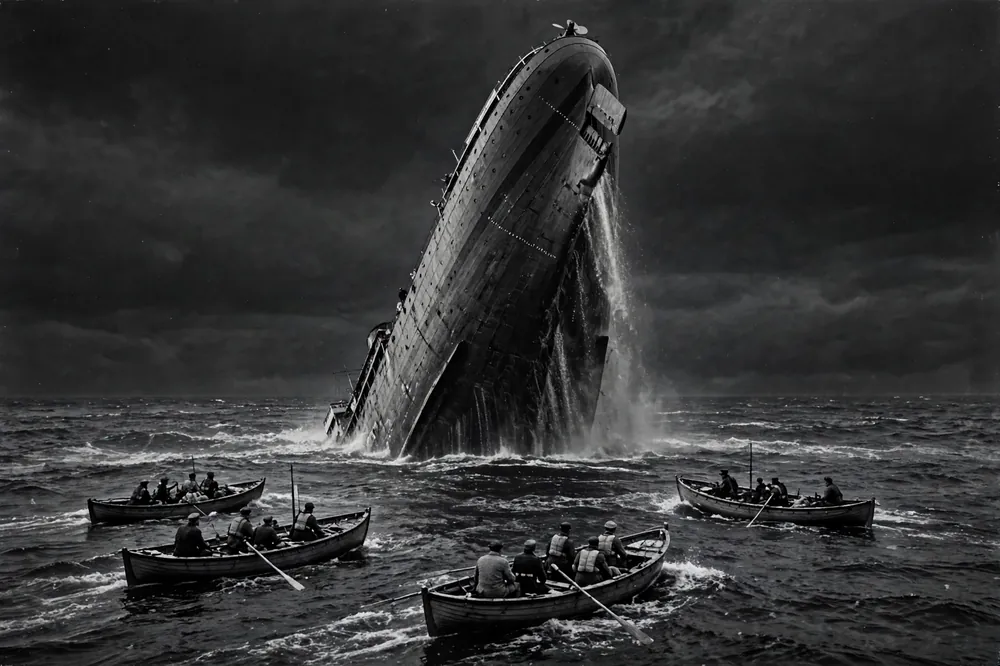
Whatever the tonnage question, Schepke was, by all accounts, a brave and aggressive commander, and his death, at twenty-nine, was a loss to the German navy. His comrades respected him, even as they joked about his “Schepke tonnage”, and his enemies respected him too: the British escorts who sank U-100 had fought a hard battle, and they knew it.
Schepke’s story is a reminder that the U-boat war was fought by young men, on both sides, who were brave, skilled, and often doomed, and that the history of the war must remember them as men, not only as statistics. His grave is the North Atlantic, and his name is remembered in Germany as one of the great U-boat commanders of the war.
9. Legacy
The end of the Happy Time
Schepke’s death, together with the loss of Prien and the capture of Kretschmer in March 1941, is remembered as the end of the “Happy Time” and the beginning of a harder phase of the Battle of the Atlantic. The British, who had learned from their early defeats, were improving their escorts, their radar and their codebreaking, and the U-boats, which had enjoyed almost free rein in 1940, would face a much harder war in 1941–43, and a losing war after 1943.
Schepke’s career, brief as it was, captures the arc of the U-boat war: the early triumphs, the propaganda, the inflated claims, and the sudden, violent end. His record — 36 ships for about 154,000–156,000 GRT, as established by post-war research — remains one of the highest of the U-boat war, and it is a measure of what the U-boats could achieve when the conditions favoured them, and of what they could not achieve when the conditions changed.
How history remembers him
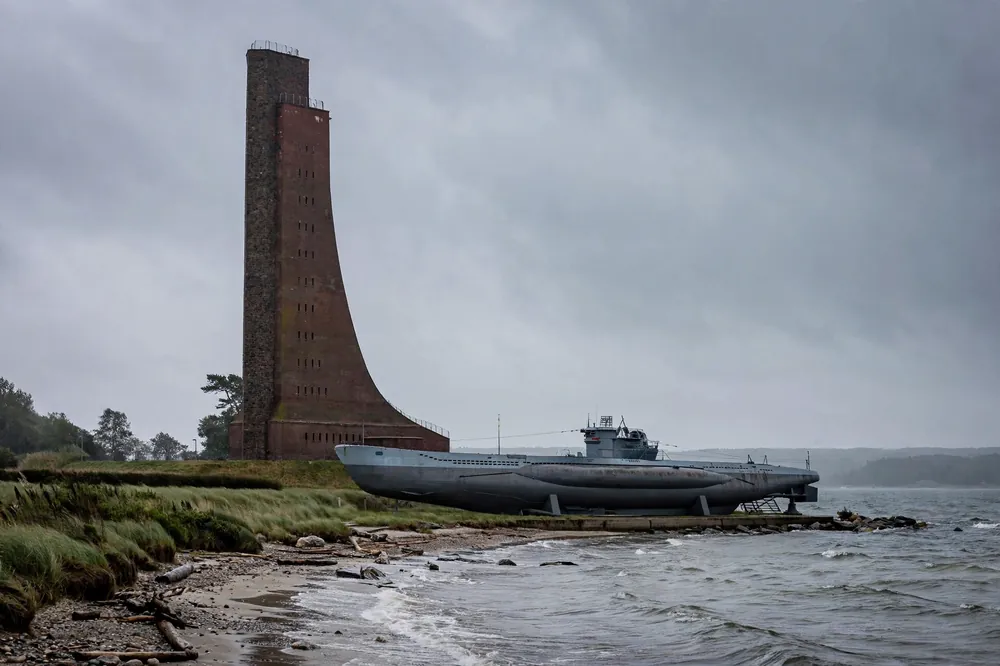
Historians today remember Schepke as one of the great U-boat commanders of the early war, and as a cautionary example of the gap between wartime claims and post-war research. His story is told in histories of the U-boat war, and his name is preserved in the phrase “Schepke tonnage”, which is still used by naval historians as a shorthand for inflated claims.
He is remembered, too, as a young man who died at twenty-nine, in a war that killed many of the best young men of his generation, on both sides. His U-boat, U-100, is remembered as one of the most famous boats of the war, and the battle in which it was sunk, the battle for convoy HX 112, is remembered as one of the turning points of the Battle of the Atlantic.
10. The Battle of the Atlantic
The longest battle
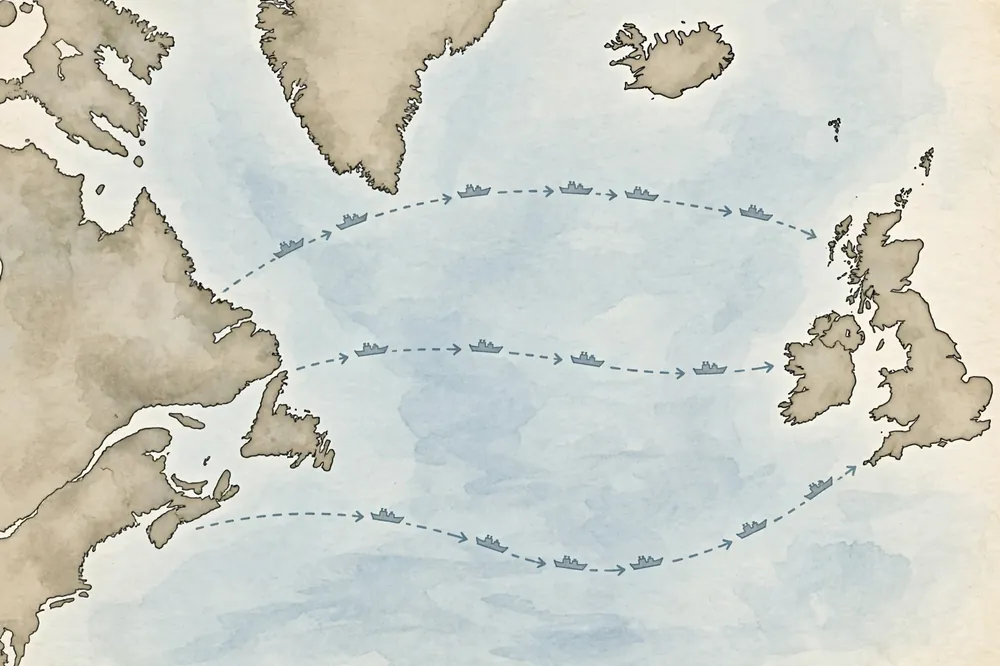
The Battle of the Atlantic was the longest continuous battle of the Second World War, lasting from September 1939 to May 1945, and it was, in Churchill’s words, the only thing that ever really frightened him. Britain depended on imports of food, fuel and raw materials, and the U-boats’ task was to cut those imports off.
The battle was fought in the grey waters of the North Atlantic, in convoys of merchant ships escorted by destroyers, corvettes and, later, aircraft, and it was a battle of technology and of endurance. Schepke fought in the battle’s early phase, when the U-boats were winning, and his death marked the moment when the battle began to turn.
By 1943, the Allies had won the battle, through a combination of codebreaking, radar, air cover, and the sheer industrial power of American shipbuilding, which built merchant ships faster than the U-boats could sink them.
The U-boat war’s cost
The U-boat war was extraordinarily costly for both sides. The Allies lost more than 3,500 merchant ships, and more than 30,000 merchant seamen were killed, in the battle. The U-boat arm lost 784 boats and more than 28,000 of its 40,000 men — a casualty rate of about 70 per cent, the highest of any branch of any service in the war. Schepke was one of the first of those losses, and his death, at twenty-nine, was a foretaste of what was to come. The U-boat war is remembered today as one of the great campaigns of the Second World War, and Schepke’s part in it, brief as it was, is a central part of its story.
11. Frequently Asked Questions
How many ships did Joachim Schepke sink?
Post-war research credits Schepke with 36 ships sunk for about 154,000–156,000 GRT. He claimed 37 ships for 213,310 GRT during the war, but that figure is a wartime claim, not the post-war verified total. The difference between the wartime claim and the post-war figure is a reminder that wartime claims, made in the dark and in the heat of battle, were often optimistic. His record, as established by post-war research, remains one of the highest of the U-boat war, and it is a measure of what the U-boats could achieve when the conditions favoured them.
What does “Schepke tonnage” mean?
It was a phrase used by Schepke’s fellow U-boat commanders for inflated tonnage claims. Schepke was known even among his comrades for exaggerating the tonnage of the ships he sank. Naval historians still use the phrase today as a shorthand for inflated claims, and Schepke’s case is cited in histories of the U-boat war as the clearest example of the gap. The phrase is a useful reminder of how the U-boat war was fought and reported, and it is still used by naval historians today as a shorthand for inflated claims.
How did Schepke die?
He was killed on 17 March 1941 when his boat, U-100, was forced to the surface by depth charges from HMS Vanoc and then rammed and sunk by the destroyer during the battle for convoy HX 112. He was twenty-nine years old, and his death, together with the loss of Prien and the capture of Kretschmer in the same month, marked the end of the first generation of U-boat aces. U-100 was forced to the surface by depth charges from HMS Vanoc, and the destroyer rammed it, sinking it with most of its crew.
What was the “Happy Time”?
It was the name the U-boat crews gave to the second half of 1940, when the British were short of escorts and the U-boats, operating from new French bases, could attack convoys almost at will. Schepke was one of the most successful commanders of this period. The British were short of escorts, the convoys were poorly protected, and the U-boats, operating from their new French bases, could attack almost at will, and Schepke was one of the most successful commanders of this period.
Who were the three great U-boat aces?
Günther Prien, Otto Kretschmer and Joachim Schepke. All three were lost in March 1941: Prien was killed, Kretschmer was captured, and Schepke was killed. Their loss marked the end of the first generation of U-boat aces. All three were lost in March 1941: Prien was killed, Kretschmer was captured, and Schepke was killed, and their loss marked the end of the first generation of U-boat aces. The German naval command, and the German public, were shocked, and the U-boat war entered a new and harder phase.
What boat did Schepke command?
His most famous command was U-100, a Type VIIB U-boat, in which he made five patrols between August 1940 and March 1941. He had earlier commanded the small coastal boats U-3 and U-19. U-100 was one of the best-known boats of the war, and the battle in which it was sunk, the battle for convoy HX 112, is remembered as one of the turning points of the Battle of the Atlantic. He had earlier commanded the small coastal boats U-3 and U-19, in which he made his first war patrols in 1939–40.
12. Sources
- Wikipedia, “Joachim Schepke” — birth and death dates, U-100, 36 ships credited by post-war research for about 154,000–156,000 GRT, wartime claim of 37 ships and 213,310 GRT, “Schepke tonnage”.
- Wikipedia, “Battle of the Atlantic” — the convoy war, HX 112, the loss of Prien, Kretschmer and Schepke in March 1941.
- Clay Blair, Hitler’s U-Boat War: The Hunters, 1939–1942 (Random House, 1996) — the standard history of the early U-boat war.
- Jak P. Mallmann Showell, U-Boat Commanders and Crews (various) — biographies of the U-boat aces.
- Rainer Busch and Hans-Joachim Röll, German U-Boat Commanders of World War II (Greenhill, 1999) — Schepke’s service record and patrols.
- uboat.net, “Joachim Schepke” — patrol history, ships sunk, and post-war reassessment of his tonnage.
- Peter Padfield, War Beneath the Sea (John Murray, 1995).
- Michael Gannon, Operation Drumbeat (HarperCollins, 1990).