 WAR ATLAS MILITARY HISTORY MAGAZINE · WWI — WWII
George Marshall
1. Lead
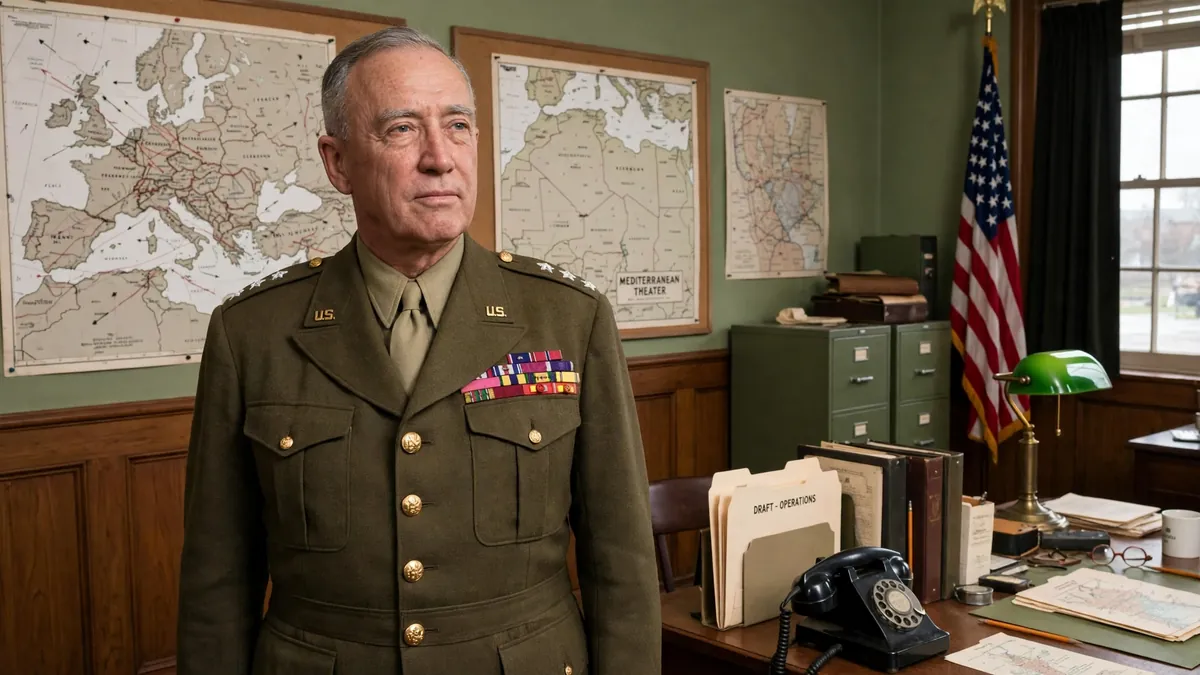
George Marshall (31 December 1880 – 16 October 1959) was the American general who, as Chief of Staff of the United States Army from 1939 to 1945, built the force that won the Second World War, and who, as Secretary of State from 1947 to 1949, designed the Marshall Plan that rebuilt Europe.
Born in Uniontown, Pennsylvania, and educated at the Virginia Military Institute, he was a career soldier who had served in the Philippines, in the First World War — where he was the operations officer of the First Army in the Meuse-Argonne offensive — and in China in the 1920s.
When he became Chief of Staff on 1 September 1939, the day Germany invaded Poland, the United States Army numbered some 190,000 men and ranked, in size, about seventeenth in the world, behind Romania and Portugal. When he left office in November 1945, it numbered more than eight million, and it had fought and won a two-ocean war against Germany and Japan. Winston Churchill called him “the organiser of victory”, and President Franklin D.
Roosevelt called him the most important man in the war effort after himself. After the war, as Secretary of State, Marshall proposed, in a speech at Harvard University on 5 June 1947, the European Recovery Program — the Marshall Plan — under which the United States gave some $13 billion in aid to rebuild the economies of Western Europe, a programme that is credited with laying the foundations of the post-war recovery and of the Western alliance.
In 1953 he became the first professional soldier to receive the Nobel Peace Prize.
Marshall’s importance to the history of the Second World War is that of the organiser. He did not command troops in battle — he never held a field command in the war — but he chose the generals who did: Dwight D.
Eisenhower, Douglas MacArthur, George Patton, Omar Bradley and many others were selected, promoted and, when necessary, relieved by Marshall, and his judgement of men was, in the opinion of historians, the single most important factor in the American conduct of the war.
He also directed the strategy of the war: he argued, against the British, for a cross-Channel invasion of France at the earliest possible moment, and he was the architect of the “Germany first” strategy that governed the Allied war effort. His style was austere and self-effacing: he refused to write memoirs, he refused to profit from the war, and he was known, in Washington, as a man of absolute integrity.
Historians debate whether his strategic judgements were always right — his insistence on an early invasion of France, for example, was resisted by the British and delayed until 1944 — but none dispute that he was the central figure in the American war effort, and that without him the victory would have been slower and more costly.
2. Key Facts
| Born | 31 December 1880, Uniontown, Pennsylvania, United States |
| Died | 16 October 1959 (aged 78), Washington, D.C., United States |
| Nationality | American |
| Role / Office | Chief of Staff, United States Army (1939–1945); Special Envoy to China (1945–1947); Secretary of State (1947–1949); Secretary of Defense (1950–1951) |
| Known for | Building the United States Army from 190,000 to more than 8 million men; the “Germany first” strategy; the Marshall Plan (1947); Nobel Peace Prize (1953) |
| Spouse / Family | Elizabeth Carter Coles (married 1902, died 1927); Katherine Boyce Tupper (married 1930, died 1966); no children of his own; three stepchildren |
| Military rank | General of the Army (five stars, from December 1944) |
3. Early Life and Education
George Catlett Marshall was born on 31 December 1880 in Uniontown, a coal town in south-western Pennsylvania, the son of George Catlett Marshall senior, a coal and coke businessman, and Laura Emily Bradford Marshall. He was the youngest of three children, and he grew up in a comfortable middle-class family.
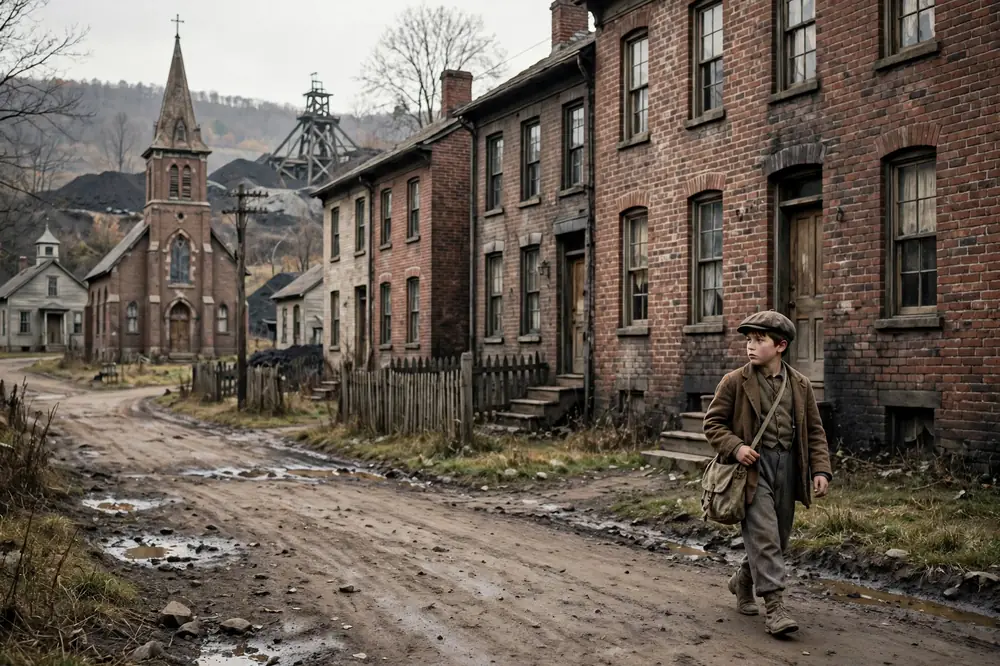
He was, by his own account, a poor student at school — he was shy, he struggled with his studies, and he was, in his own words, “a failure” at the Uniontown schools — and his father, who had wanted him to go to the Virginia Military Institute, had to use his influence to secure his admission.
Marshall entered the Virginia Military Institute (VMI) in Lexington, Virginia, in 1897, at the age of sixteen, and he flourished there: the discipline, the military training and the emphasis on duty suited him, and he graduated in 1901, ranked in the middle of his class, as the senior cadet captain — the highest rank a cadet could hold.
He was commissioned as a second lieutenant in the infantry in 1902, and he served in the Philippines, where the United States was fighting an insurgency, and then in the United States, where he served as an instructor at the Army’s schools.
In 1908 he was sent to Fort Leavenworth, Kansas, where he attended the Infantry and Cavalry School and then the Staff College, graduating first in his class in 1908 — an achievement that marked him as one of the Army’s most promising young officers.
He served as an aide to senior generals, and in 1917, when the United States entered the First World War, he was a captain on the staff of the First Division, the first American division to go to France. He served in France throughout the war, and he became the operations officer — the G-3 — of the First Army, the largest American formation, in the Meuse-Argonne offensive of September–November 1918, the greatest battle in American history to that date.
He was, by all accounts, an outstanding staff officer: General John J. Pershing, the commander of the American Expeditionary Forces, called him “the best staff officer I have ever seen”, and Pershing’s praise — which he gave rarely — marked Marshall for the rest of his career.
In the interwar years Marshall served in China, from 1924 to 1927, as the executive officer of the 15th Infantry Regiment at Tianjin, where he learned Chinese and where he developed an interest in China that would, after the Second World War, bring him back as a special envoy.
He served as an instructor at the Infantry School at Fort Benning, Georgia, from 1927 to 1932, where he taught a generation of young officers — including Omar Bradley and Joseph Stilwell — and where he developed his ideas about training and about leadership.
He served in the Civilian Conservation Corps during the Depression, and he was, by the late 1930s, a brigadier-general and the head of the War Plans Division in Washington. He was a quiet, austere man, known for his integrity and for his refusal to seek publicity, and he was, in the words of one of his colleagues, “a man who never raised his voice and never lost his temper”.
4. Rise to Prominence
Marshall’s rise to prominence came in 1939, when President Roosevelt appointed him Chief of Staff of the Army, over the heads of more senior generals. He took office on 1 September 1939, the day Germany invaded Poland, and he was, at fifty-eight, a man who had spent his career in staff work and in training, and who had never commanded troops in battle.
What he had was a clear understanding of what the Army needed: it needed to grow, it needed modern weapons, and it needed officers who could command. He set about building it with a ruthlessness and a thoroughness that surprised Washington.
He relieved generals who were too old or too slow — he retired or reassigned dozens of senior officers in his first months — and he promoted young men who, in his judgement, had the talent to command: Eisenhower, Bradley, Patton, Mark Clark, and many others were given their chances by Marshall, and his judgement of men was, in the opinion of historians, almost unerring.
Marshall’s rise was also a rise in influence. He became, in the years of the war, Roosevelt’s closest military adviser, and he was, with Admiral Ernest King, the Chief of Naval Operations, and General Henry Arnold, the commander of the Army Air Forces, a member of the Joint Chiefs of Staff, the body that directed the American war effort.
He was also, with his British counterpart, Field Marshal Sir Alan Brooke, a member of the Combined Chiefs of Staff, the Anglo-American body that directed the Allied war effort. He attended every major Allied conference — at Casablanca, at Quebec, at Tehran, at Yalta and at Potsdam — and he was, in the words of the British historian John Keegan, “the most important soldier of the Second World War”.
His prominence was not the prominence of a battlefield commander but of an organiser, and it was a prominence that rested on his integrity, his judgement and his capacity for work: he worked, by all accounts, eighteen hours a day, and he never sought credit for himself.
5. George Marshall’s Role in World War II
Building the Army
Marshall’s first task as Chief of Staff was to build an army. In September 1939 the United States Army numbered some 190,000 men — smaller than the army of Romania — and it was equipped with weapons left over from the First World War.
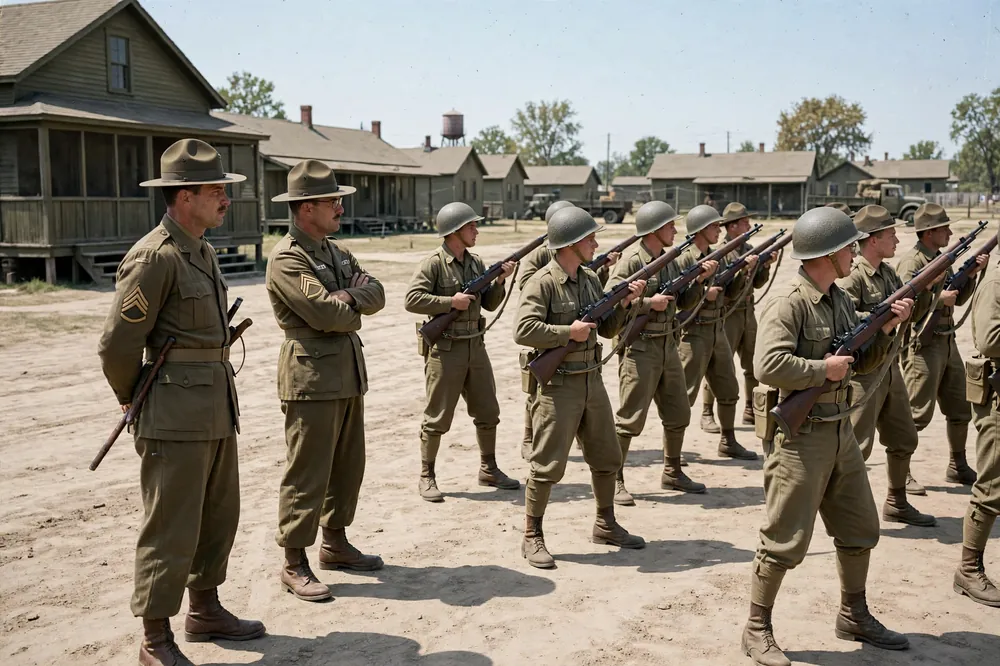
Marshall’s task was to expand it to a force that could fight a two-ocean war, and he did it with a speed and a thoroughness that were, in the judgement of historians, extraordinary. He pushed for the first peacetime draft in American history, the Selective Training and Service Act of September 1940, which provided the manpower for the expansion.
He pushed for the production of modern weapons — the M1 Garand rifle, the Sherman tank, the 105-mm howitzer — and he pushed for the training of officers and of men. By December 1941, when the Japanese attacked Pearl Harbor, the Army had grown to some 1.6 million men, and by 1945 it numbered more than eight million, organised into 89 divisions, with a vast logistical system that supplied them across two oceans.
Marshall’s achievement was not only in numbers but in quality: the Army he built was, in the judgement of its enemies as well as of its friends, a well-trained, well-equipped and well-led force, and its officers — the men Marshall had selected — were, on the whole, the best the United States had ever produced.
Strategy: Germany first
Marshall’s second task was strategy. He was the architect of the “Germany first” strategy, the decision, agreed with the British at the Arcadia Conference in Washington in December 1941–January 1942, that the defeat of Germany would take priority over the defeat of Japan.
The strategy was controversial — the American public, after Pearl Harbor, wanted revenge on Japan, and the Navy, under Admiral King, wanted more resources for the Pacific — but Marshall insisted on it, and he was right: Germany was the more dangerous enemy, and the war in Europe could not be won without a concentration of effort.
Marshall also argued, from the start, for a cross-Channel invasion of France at the earliest possible moment. He proposed an invasion in 1942 — Operation Sledgehammer — and then in 1943 — Operation Roundup — and he was, on both occasions, overruled by the British, who argued that the Allies were not ready and who preferred a strategy of attacking Germany through the Mediterranean.
The invasion was delayed until June 1944 — D-Day — and Marshall, who had wanted to command it himself, was kept in Washington by Roosevelt, who told him that he could not spare him. Eisenhower was given the command instead, and Marshall remained in Washington, directing the war from the Pentagon.
His insistence on the cross-Channel invasion was, in the end, vindicated: D-Day was the decisive operation of the war in the west, and it was the operation Marshall had advocated from the beginning.
6. Key Decisions
Relieving senior officers (1939–1941). Marshall’s decision, in his first months as Chief of Staff, to retire or reassign dozens of senior generals who were too old or too slow, was the decision that made the Army he built possible. It was ruthless, and it made him enemies, but it ensured that the Army would be led by men who could fight a modern war.
The “Germany first” strategy (1941–1942). Marshall’s insistence that Germany be defeated before Japan was the strategic decision that governed the Allied war effort. It was opposed by the Navy and by American public opinion, but it was, in the judgement of historians, correct: Germany was the more dangerous enemy, and the war in Europe had to be won first.
Choosing Eisenhower. Marshall’s decision to select Eisenhower — a relatively junior general who had never commanded troops in battle — to command the invasion of North Africa in 1942 and then the invasion of Normandy in 1944, was the most important personnel decision of the war. Eisenhower’s success vindicated Marshall’s judgement, and it made Eisenhower the most famous general of the war.
The Marshall Plan (1947). Marshall’s decision, as Secretary of State, to propose the European Recovery Program was the decision that defined the post-war world. It was a decision to use American wealth to rebuild Europe, to prevent the spread of Communism, and to create a Western alliance — and it was a decision that, in the judgement of historians, succeeded beyond its authors’ hopes.
7. Controversies
Marshall’s career was, by the standards of the Second World War, remarkably free of personal controversy, but there are debates about his judgements, and they are worth stating plainly. The first concerns his strategic insistence on a cross-Channel invasion. Marshall argued, from 1942, for an early invasion of France, and he was overruled by the British, who preferred the Mediterranean strategy.
His critics argue that an invasion in 1942 or 1943 would have been a disaster — the Allies were not ready, and the Germans were stronger — and that the British were right to delay. His defenders argue that the delay allowed the Germans to fortify France and to prolong the war, and that Marshall’s instinct — to strike directly at the heart of the enemy — was correct.
The debate continues, and it is unlikely to be settled: the invasion, when it came in 1944, succeeded, but it succeeded after two years of preparation that Marshall had wanted to compress into one.
The second controversy concerns Marshall’s mission to China in 1945–1947. After the war, President Truman sent Marshall to China as a special envoy, to negotiate a settlement between the Nationalists under Chiang Kai-shek and the Communists under Mao Zedong. The mission failed: the civil war resumed, and the Communists won in 1949.
Marshall’s critics, above all the “China Lobby” in the United States, blamed him for the loss of China, arguing that he had pressured Chiang into a ceasefire that allowed the Communists to regroup, and that he had withheld aid from the Nationalists.
His defenders argue that the mission was impossible — that neither side wanted a settlement — and that Marshall’s failure was the failure of American policy, not of Marshall himself. The controversy damaged Marshall’s reputation in the late 1940s, and it was a factor in the attacks on him by Senator Joseph McCarthy in the early 1950s.
The third controversy concerns McCarthy’s attack on Marshall. In 1951, Senator Joseph McCarthy accused Marshall of being part of a Communist conspiracy and of having “lost” China, and he called him a traitor. The attack was, in the judgement of historians, baseless, and it was condemned by Marshall’s colleagues — including Eisenhower, who, as President, defended him — but it was a painful episode for a man who had given his life to his country, and it showed the depth of the political divisions of the early Cold War.
8. Later Life and Death
After the war, Marshall’s public service continued. He served as Secretary of State from January 1947 to January 1949, and it was in that post that he proposed the Marshall Plan, in a speech at Harvard University on 5 June 1947.
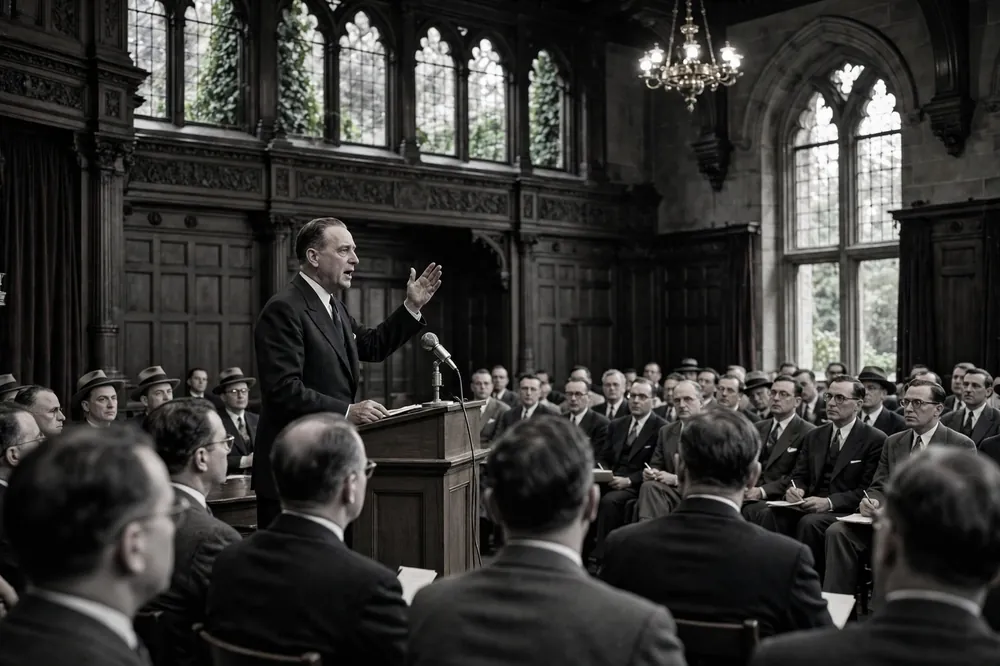
The speech was brief — it lasted less than fifteen minutes — and it proposed that the United States offer aid to the countries of Europe, including the Soviet Union and its satellites, to rebuild their economies. The Soviet Union refused the aid, and the countries of Eastern Europe were forbidden by Moscow from accepting it, but sixteen Western European countries did accept, and the United States provided some $13 billion in aid between 1948 and 1952 — the equivalent of more than $150 billion in today’s money.
The Marshall Plan is credited with laying the foundations of the post-war economic recovery in Western Europe, and with creating the Western alliance that became NATO in 1949.
Marshall left the State Department in 1949, for reasons of health, but he was recalled to service in 1950, during the Korean War, as Secretary of Defense, a post he held until September 1951. He retired in 1951, and he spent his remaining years at his home in Leesburg, Virginia, gardening, reading, and refusing — as he had throughout his life — to write his memoirs or to profit from his fame.
In 1953 he was awarded the Nobel Peace Prize for the Marshall Plan, the first professional soldier to receive it. He died on 16 October 1959, in Washington, D.C., aged seventy-eight, and he was buried at Arlington National Cemetery, with full military honours. His funeral was attended by President Eisenhower, who had been his subordinate, and by many of the generals he had chosen.
9. Legacy of George Marshall
Marshall’s legacy is twofold: the Army he built and the Europe he rebuilt. The Army he built — the force that won the Second World War — was the product of his judgement of men, his insistence on training, and his capacity for organisation, and it remains the model for the modern American Army.
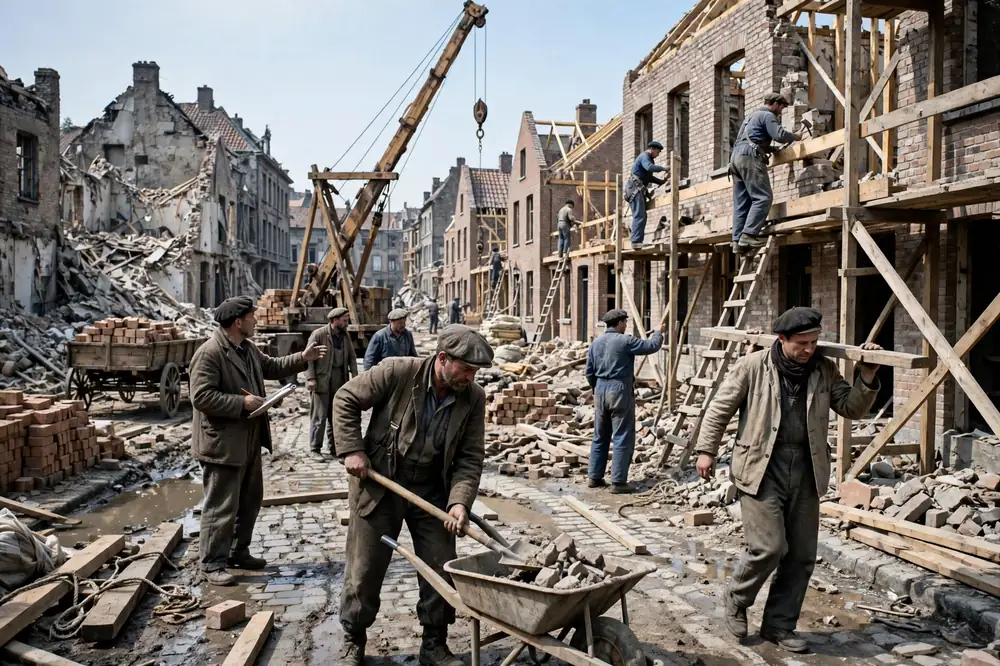
The Europe he rebuilt — through the Marshall Plan — was the foundation of the post-war order: the economies of Western Europe recovered, the democracies of Western Europe were stabilised, and the Western alliance was created. The Marshall Plan is, in the judgement of historians, one of the most successful foreign policy initiatives in American history, and it is the reason Marshall’s name is remembered in Europe as well as in America.
His legacy is also a legacy of character. Marshall was known, in Washington, as a man of absolute integrity: he refused to write memoirs, he refused to accept gifts, and he refused to use his position for personal gain. He was, in the words of the historian Forrest Pogue, his biographer, “a man who never sought power and never abused it”.
His name is given to the Marshall Center in Germany, to the Marshall Scholarship — the programme that sends American students to study in Britain — and to the George C. Marshall Foundation in Lexington, Virginia, which preserves his papers and his memory. He is remembered, above all, as the soldier who became a statesman, and who, in both roles, served his country without seeking reward.
10. Assessment by Historians
Historians assess George Marshall as one of the greatest Americans of the twentieth century, and the assessment has been consistently positive. The historian Forrest Pogue, in his four-volume biography George C. Marshall (1963–1987), called him “the greatest American soldier-statesman since George Washington”, and the judgement has stood. The assessment rests on three things: his building of the Army, his direction of the strategy of the war, and his design of the Marshall Plan. Each, on its own, would have been a historic achievement; together, they make Marshall a figure of unique importance.
The assessment is not without qualification. Some historians have argued that Marshall’s insistence on a cross-Channel invasion was, in 1942 and 1943, premature, and that the British were right to delay it. Others have argued that his mission to China was a failure, and that it damaged his reputation.
But the consensus is that these were errors of judgement in a career of extraordinary achievement, and that they do not diminish his standing. Marshall is remembered, in the words of Churchill, as “the organiser of victory”, and in the words of his biographer, as a man who “never sought power and never abused it”.
He is, in the judgement of historians, the model of the soldier-statesman: a man who understood both war and peace, and who served his country in both.
Frequently Asked Questions
Who was George Marshall?
George Marshall (1880–1959) was the Chief of Staff of the United States Army from 1939 to 1945, the man who built the Army that won the Second World War, and the Secretary of State who designed the Marshall Plan to rebuild Europe. He received the Nobel Peace Prize in 1953.
How large was the US Army when Marshall took over?
When Marshall became Chief of Staff on 1 September 1939, the Army numbered about 190,000 men. When he left office in November 1945, it numbered more than eight million, organised into 89 divisions.
What was the “Germany first” strategy?
It was the Allied decision, agreed at the Arcadia Conference in December 1941–January 1942, that the defeat of Germany would take priority over the defeat of Japan. Marshall was its chief American advocate.
What was the Marshall Plan?
Proposed by Marshall in a speech at Harvard University on 5 June 1947, the European Recovery Program provided some $13 billion in American aid to rebuild the economies of Western Europe between 1948 and 1952. It is credited with laying the foundations of the post-war recovery and of the Western alliance.
Did Marshall want to command D-Day?
Yes. Marshall wanted to command the invasion of Normandy, but President Roosevelt kept him in Washington, telling him that he could not spare him. Eisenhower was given the command instead.
Why did Marshall receive the Nobel Peace Prize?
He received the Nobel Peace Prize in 1953 for the Marshall Plan, becoming the first professional soldier to receive the prize. The citation recognised his work in rebuilding Europe and in laying the foundations of peace.
Related articles
Sources
- Wikipedia, “George Marshall” — consolidated biography: birth 31 December 1880, death 16 October 1959, Chief of Staff 1939–1945, Secretary of State 1947–1949, Marshall Plan, Nobel Peace Prize 1953.
- Encyclopaedia Britannica, “George C. Marshall” (britannica.com) — biography, Chief of Staff, Marshall Plan, Nobel Prize.
- Forrest C. Pogue, George C. Marshall, 4 volumes (Viking, 1963–1987) — the standard biography; the building of the Army, the strategy of the war, the Marshall Plan.
- Mark A. Stoler, George C. Marshall: Soldier-Statesman of the American Century (Twayne, 1989) — concise biography; the “Germany first” strategy, the China mission.
- David L. Roll, George Marshall: Defender of the Republic (Dutton, 2019) — modern biography; Marshall’s judgement of men, the Marshall Plan.
- Larry I. Bland (ed.), George C. Marshall: Interviews and Reminiscences (George C. Marshall Foundation, 1991) — Marshall’s own words, collected by the Marshall Foundation.
- Benn Steil, The Marshall Plan: Dawn of the Cold War (Simon & Schuster, 2018) — the Marshall Plan and its context.
Further reading
- Ed Cray, General of the Army: George C. Marshall, Soldier and Statesman (Cooper Square Press, 1990).
- Daniel Kurtz-Phelan, The China Mission: George Marshall’s Unfinished War, 1945–1947 (W. W. Norton, 2018).