 WAR ATLAS MILITARY HISTORY MAGAZINE · WWI — WWII
Irena Sendler
1. Lead
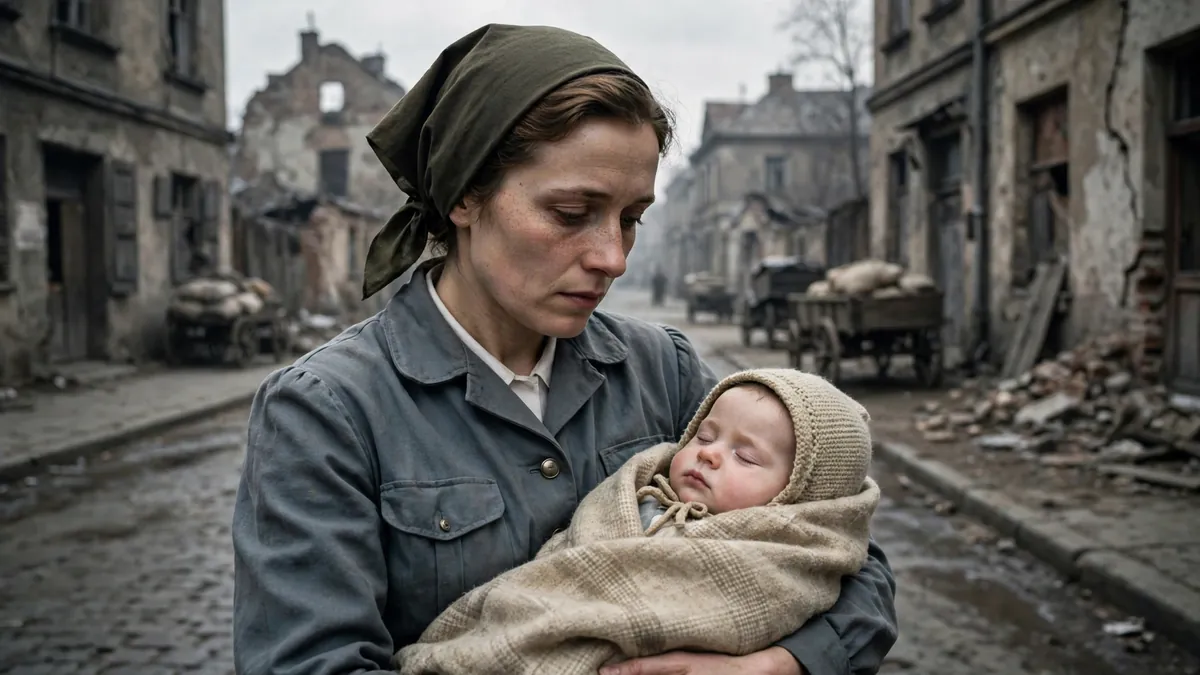
Irena Sendler (15 February 1910 – 12 May 2008) was the Polish social worker and nurse who, during the Second World War, smuggled about 2,500 Jewish children out of the Warsaw Ghetto and saved them from the Holocaust. Born Irena Krzyżanowska in Otwock, near Warsaw, she was the daughter of a doctor who had treated poor Jewish patients and who had taught her that a person in need must be helped regardless of religion or nationality.
When Germany occupied Poland in 1939, she was working for the Warsaw Department of Social Welfare, and she used her position — and, later, her work with the Polish underground organisation Żegota, the Council for Aid to Jews — to enter the ghetto, to persuade Jewish parents to part with their children, and to smuggle the children out in ambulances, in sacks, in toolboxes and in coffins, to hiding places in convents, orphanages and Polish families.
She kept the children’s true identities in coded lists, buried in jars in a garden, in the hope that they could be reunited with their families after the war. In October 1943 she was arrested by the Gestapo, tortured, and sentenced to death; she was saved by Żegota, which bribed a German guard to let her escape on the way to her execution.
After the war she dug up the lists and tried to reunite the children with their families — but most of the parents had been murdered, and most of the children remained with their Polish foster families. She was recognised as Righteous Among the Nations by Yad Vashem in 1965, and she became, in her nineties, one of the most honoured figures in Poland — a woman who, in her own words, had done nothing extraordinary, but who had simply done what her father had taught her to do.
Sendler’s importance to the history of the Second World War is that of the individual who resisted the Holocaust, and who proved that it was possible to act. The Warsaw Ghetto was the largest ghetto in occupied Europe, and its inhabitants — some 400,000 people at its height — were, in the summer of 1942, deported to the Treblinka extermination camp, where most of them were murdered.
Sendler’s work saved about 2,500 children from that fate, and it did so at a time when the penalty for helping a Jew in occupied Poland was death — for the helper and for the helper’s family. Her story was, for decades, little known outside Poland, and it became widely known only in the 1990s and 2000s, when a group of American schoolgirls wrote a play about her and when her story was told in books and in films.
Historians debate the exact number of children she saved — the figure of 2,500 is the one most often cited, but it is an estimate, and the true number may be lower or higher — but none dispute that her work was one of the most remarkable acts of rescue in the history of the Holocaust.
2. Key Facts
| Born | 15 February 1910, Otwock, Congress Poland, Russian Empire (now Poland) |
| Died | 12 May 2008 (aged 98), Warsaw, Poland |
| Nationality | Polish |
| Role / Office | Social worker, Warsaw Department of Social Welfare; member of Żegota (Council for Aid to Jews), head of its children’s section (1942–1943) |
| Known for | Smuggling about 2,500 Jewish children out of the Warsaw Ghetto (1940–1943); the coded lists buried in jars; arrest and torture by the Gestapo (1943) |
| Spouse / Family | Mieczysław Sendler (married 1931, divorced); Stefan Zgrzembski (second husband); children Janina and Andrzej; father Stanisław Krzyżanowski, a doctor |
| Honours | Righteous Among the Nations (Yad Vashem, 1965); Order of the White Eagle (Poland, 2003) |
3. Early Life and Education
Irena Krzyżanowska was born on 15 February 1910 in Otwock, a spa town near Warsaw, the daughter of Dr Stanisław Krzyżanowski, a physician, and Janina Karpińska. Her father was a socialist and a man of strong convictions: he treated poor patients, including many Jews, without charge, and he taught his daughter that a person who is drowning must be helped, whatever their religion or nationality.
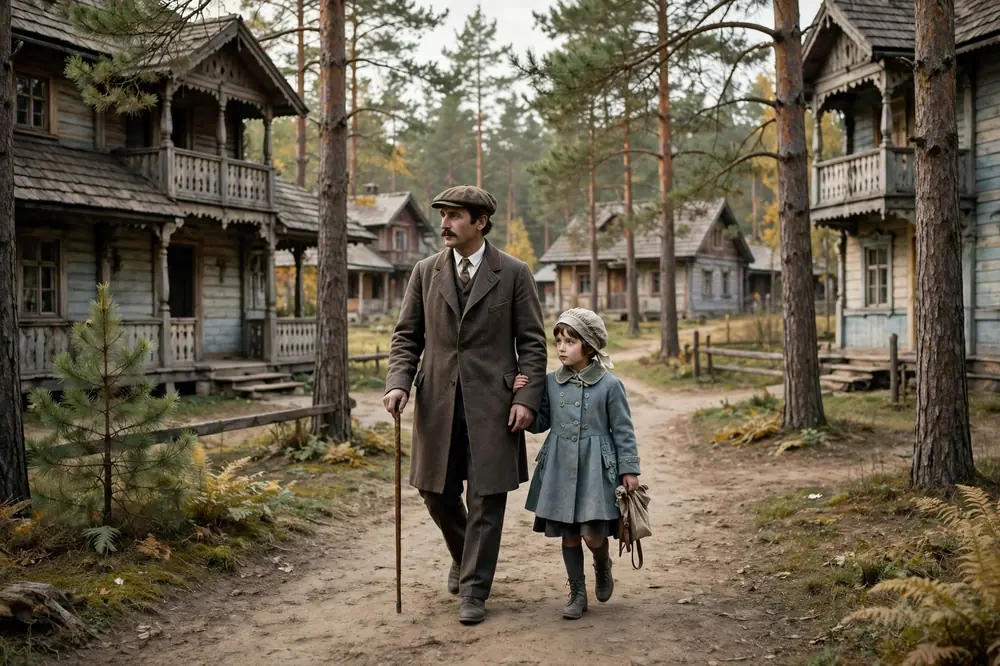
He died of typhus in 1917, when Irena was seven years old, after contracting the disease from a patient he was treating. The family moved to Warsaw, and Irena was educated at a girls’ school and then at the University of Warsaw, where she studied Polish literature and, later, law.
She was a student of strong views: she joined the Polish Socialist Party, she was involved in student politics, and in 1937 she was suspended from the university for three years for defacing a document that required Jewish students to sit in separate seats — the “ghetto benches” imposed by the Polish government in the 1930s.
The suspension was later lifted, but the episode showed the convictions that would shape her life.
In 1931 she married Mieczysław Sendler, a fellow student, and she took his name. The marriage did not last, and they divorced after the war, but she kept the name Sendler for the rest of her life. After her studies she became a social worker for the Warsaw Department of Social Welfare, working with poor families in the city.
It was a job that taught her the geography of Warsaw — the streets, the courtyards, the tenements — and that gave her the contacts and the knowledge that would, in the war, save lives. She was, by all accounts, a warm and determined woman, with a strong sense of duty and a capacity for organisation that impressed everyone who worked with her.
4. Rise to Prominence
Sendler’s prominence came not from ambition but from the war. When Germany invaded Poland on 1 September 1939, and occupied Warsaw at the end of the month, Sendler was working for the Department of Social Welfare, and she immediately began to help the city’s poor — including its Jews, who were, from the start, the targets of German persecution.
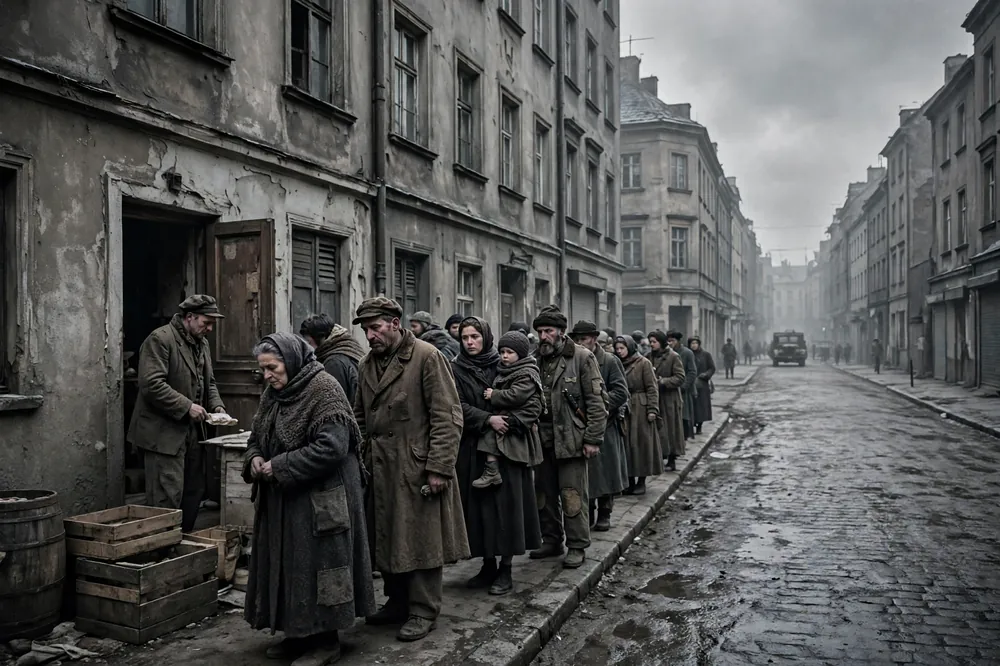
In 1940 the Germans established the Warsaw Ghetto, a walled district of about 3.4 square kilometres in which, at its height, some 400,000 Jews were confined in appalling conditions — overcrowded, starving, and dying of disease. Sendler, as a social worker, was able to obtain a pass to enter the ghetto, on the pretext of inspecting its sanitary conditions and of checking for typhus — a disease the Germans feared would spread to the rest of the city.
She used the pass to bring in food, medicine and money, and to build a network of contacts inside the ghetto, including the Jewish social welfare organisation and the members of the Jewish underground.
In the summer of 1942 the Germans began the Grossaktion Warschau, the great deportation, in which some 300,000 Jews were sent to the Treblinka extermination camp in the space of two months. It was at this point that Sendler’s work changed from relief to rescue: she began to smuggle children out of the ghetto, and she joined Żegota, the Council for Aid to Jews, which had been founded in December 1942 by the Polish underground state. Żegota was unique in occupied Europe: it was the only organisation, sponsored by a government-in-exile, that was dedicated to saving Jews, and it provided money, false documents and hiding places.
Sendler became the head of Żegota’s children’s section, and she coordinated a network of some twenty to thirty people — social workers, nurses, nuns and drivers — who smuggled children out of the ghetto and placed them in hiding. Her prominence, in the years that followed, was not the prominence of a public figure — she worked in secret, and she was, for decades, little known — but the prominence of a woman whose work was, in the judgement of those who knew it, extraordinary.
5. Irena Sendler’s Role in World War II
Smuggling the children out
Sendler’s work in the ghetto was a work of extraordinary ingenuity and courage. The children were smuggled out in every way that could be imagined: babies were carried out in toolboxes and in sacks, hidden under the floorboards of ambulances and of trams, and carried out through the sewers and through holes in the ghetto wall.
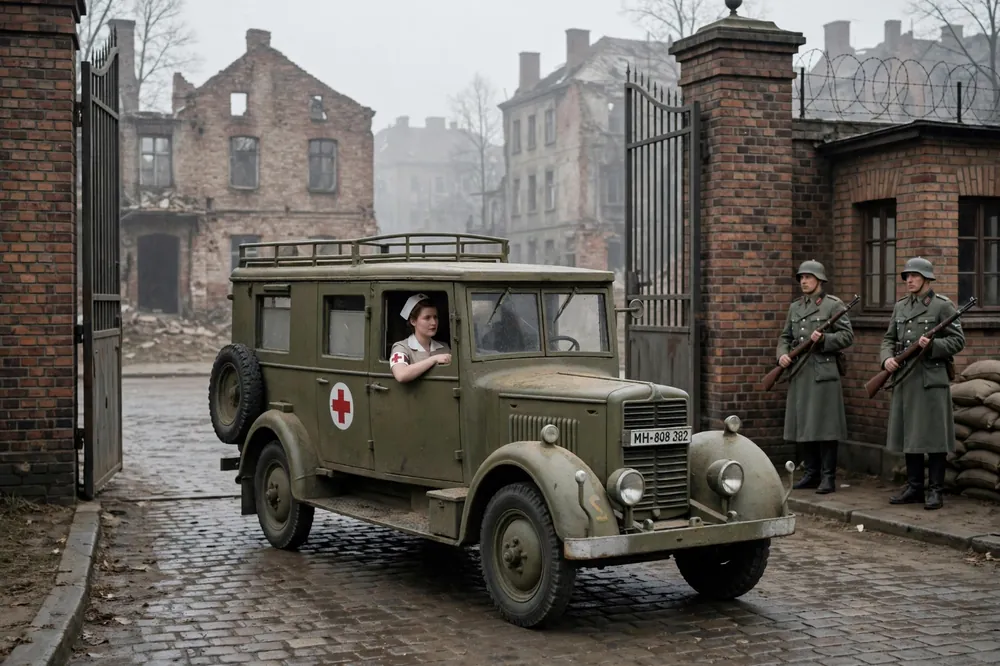
Older children were given false papers and walked out through the gates, accompanied by a Polish adult who pretended to be a parent. The children were sedated, when necessary, with drugs, so that they would not cry and betray themselves, and they were given new names and new identities.
The work was dangerous: the penalty for helping a Jew in occupied Poland was death, and the Germans searched the ambulances and the carts that left the ghetto. Sendler herself entered the ghetto many times, and she was, on one occasion, nearly caught — she was beaten by a German guard, but she was allowed to pass.
The children who were smuggled out were placed in hiding: in convents, in orphanages, and in Polish families. Sendler worked closely with the Catholic Church, and in particular with the Sisters of the Family of Mary, who ran orphanages in Warsaw and who hid Jewish children in their convents, and with other religious orders. She also placed children with Polish families, who took them in at great risk to themselves.
The children were given new, Polish names, and they were taught to say Catholic prayers and to behave as Polish Catholic children, so that they would not be discovered. Sendler kept a record of each child’s true name and its new name, and of where it had been placed, in coded lists that she buried in glass jars in the garden of a friend, Janina Grabowska, in Warsaw.
She buried the lists in the hope that, after the war, the children could be reunited with their families — a hope that was, in most cases, not fulfilled, since most of the parents had been murdered.
Arrest and survival
In October 1943 Sendler was arrested by the Gestapo. She had been betrayed — the exact circumstances are not clear, and it is possible that a member of her network was arrested and gave her name under torture — and she was taken to the Gestapo headquarters in Warsaw, in Szucha Avenue, where she was tortured for weeks.
She was beaten, her legs and feet were broken, and she was interrogated about the network and about the lists. She did not betray anyone, and she did not reveal the location of the lists. She was sentenced to death, and she was to be executed.
But Żegota, which had learned of her arrest, bribed a German guard to let her escape: on the way to the execution, the guard, who had been paid, told her to run, and she escaped, though she was, for the rest of the war, in hiding and in danger.
She continued her work, under a false name, until the end of the war, and she was present in Warsaw during the Warsaw Uprising of August–October 1944, when she worked as a nurse in a field hospital.
6. Key Decisions
Entering the ghetto. Sendler’s decision to use her position as a social worker to enter the ghetto, and to bring in food and medicine, was the decision that made her rescue work possible. It was a decision that required her to lie to the German authorities, to risk her life every time she entered, and to build a network of contacts inside the ghetto.
Persuading parents to part with their children. The most painful decision Sendler faced was the decision to ask Jewish parents to give up their children. Many parents refused — they could not bear to part with their children, and they did not believe that the children would be safer outside the ghetto.
Sendler’s approach was to tell the parents the truth: that the children would almost certainly die in the ghetto, and that their only chance was to leave. It was a decision that required extraordinary moral courage, and it was one that haunted her for the rest of her life: she knew that many of the parents who gave her their children were murdered, and that the children would never see them again.
Keeping the lists. Sendler’s decision to keep coded lists of the children’s true identities, and to bury them in jars, was a decision that reflected her hope for the future: she believed that the war would end, and that the children should be able to reclaim their identities. The lists were, in the end, of limited use — most of the parents were dead — but they were a testament to her belief that the children were not merely to be saved, but to be restored to who they were.
Refusing to betray her network under torture. Sendler’s decision, under torture by the Gestapo, not to reveal the names of her colleagues or the location of the lists, was the decision that saved the network and the children. She was beaten and her legs were broken, and she did not speak. It was an act of courage that, in the judgement of those who knew her, defined her.
7. Controversies
Sendler’s story is, unusually for a figure of the Second World War, almost free of controversy, but there are questions that historians have raised, and they are worth stating plainly. The first concerns the number of children she saved. The figure most often cited is 2,500, and it is the figure that Sendler herself used and that is used by Yad Vashem.
Some historians have questioned it, arguing that the number is an estimate and that the true number may be lower — perhaps 1,500 or 2,000 — and that the figure of 2,500 may have been inflated in the retelling of her story.
The question is difficult to resolve, because the records are incomplete, and because many of the children were saved by the network as a whole, not by Sendler alone. The consensus is that the number is uncertain, but that it was certainly in the thousands, and that the precise figure matters less than the fact of the rescue.
The second question concerns the role of others. Sendler’s story, as it is usually told, focuses on her, but she was the head of a network of twenty to thirty people, and the rescue was the work of the network, not of one woman.
The nuns who hid the children, the drivers who smuggled them out, the families who took them in — all of them risked their lives, and many of them have been forgotten. Sendler herself always insisted on this point: she said, repeatedly, that she was not a hero, and that the credit belonged to the network and to the families.
The controversy, if it can be called one, is about the way her story has been told, and about the tendency to focus on a single hero rather than on a collective effort.
The third question concerns Sendler’s post-war life and the Communist regime in Poland. After the war Sendler was, for many years, little known, and she was, in the 1940s and 1950s, interrogated by the Communist authorities, who suspected her of having worked for the Polish underground and for the government-in-exile in London.
She was not honoured in Poland until the 1960s, and her story became widely known only after the fall of Communism in 1989. The question is why she was forgotten for so long: the answer lies, in part, in the politics of post-war Poland, where the Communist regime had little interest in celebrating a woman who had worked for the underground and who had been honoured by Yad Vashem, and in part in Sendler’s own modesty — she did not seek publicity, and she did not tell her story until others told it for her.
8. Later Life and Death
After the war, Sendler dug up the jars containing the lists, and she and her colleagues tried to reunite the children with their families. It was, in most cases, impossible: the parents had been murdered in Treblinka and in other camps, and the children, who had been given new names and new identities, often did not know who they were.
Many of the children remained with their Polish foster families, and many of them learned of their Jewish origins only as adults, when Sendler or others told them. Sendler herself continued to work as a social worker, and she became the director of a home for unmarried mothers and for children in Warsaw.
She married again, to Stefan Zgrzembski, a Jewish man who had survived the war, and she had two children, Janina and Andrzej. Her life in post-war Poland was quiet and, for many years, unrecognised: she was interrogated by the Communist authorities, she was not honoured, and her story was known only to a few.
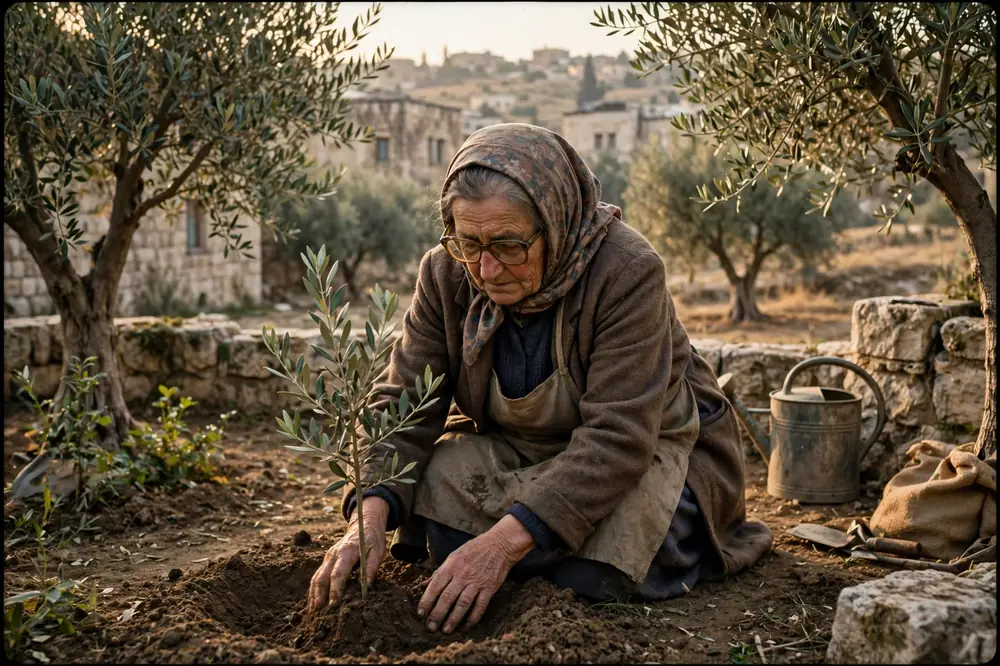
Recognition came late. In 1965 Yad Vashem recognised her as Righteous Among the Nations, and she planted a tree in the Avenue of the Righteous in Jerusalem. In 1983 she was awarded the Order of Polonia Restituta, and in 2003 she received the Order of the White Eagle, Poland’s highest decoration.
In 1999 a group of schoolgirls in Uniontown, Kansas, in the United States, wrote a play about her, Life in a Jar, which brought her story to a wide audience in America, and in the years that followed she became a national figure in Poland.
She was nominated for the Nobel Peace Prize in 2007, though she did not receive it — the prize went to Al Gore — and her nomination was supported by the Polish government and by many others. She died on 12 May 2008, in Warsaw, aged ninety-eight, and she was buried in the Powązki Cemetery in Warsaw.
Her funeral was attended by the President of Poland, Lech Kaczyński, and by many of the children she had saved, now elderly men and women, who came to pay their respects to the woman who had saved their lives.
9. Legacy of Irena Sendler
Sendler’s legacy is the lives she saved and the example she set. The children she saved — about 2,500 of them, by the most widely cited estimate — grew up, had children and grandchildren of their own, and their descendants number, today, in the tens of thousands.
Her story has become one of the best-known stories of the Holocaust, and it is taught in schools in Poland and around the world as an example of what one person can do. The play Life in a Jar, written by the Kansas schoolgirls, has been performed in many countries, and a film, The Courageous Heart of Irena Sendler, was made in 2009.
In Poland, a school and a street in Warsaw are named for her, and a monument to her stands in the city.
Her legacy is also the legacy of Żegota, the organisation she worked for, and of the thousands of Poles who risked their lives to save Jews. Poland was the only country in occupied Europe where helping a Jew was punishable by death, and yet thousands of Poles did so — and Yad Vashem has recognised more Poles as Righteous Among the Nations than any other nationality, more than 7,000. Sendler’s story is the best-known of those stories, and it is a reminder that, in the darkest time in European history, there were people who acted, and who proved that it was possible to resist.
10. Assessment by Historians
Historians assess Irena Sendler as one of the great rescuers of the Holocaust, and the assessment has been consistently positive. Her work is documented in the archives of Żegota and in the testimony of the children she saved, and it is regarded as one of the most remarkable acts of rescue in the history of the Holocaust.
The historian Teresa Prekerowa, in her study of Żegota, called Sendler “the most important figure in the rescue of Jewish children in Warsaw”, and the historian Gunnar Paulsson, in his study of the Warsaw Jews, called her work “a miracle of organisation and courage”.
The assessment rests on the scale of what she did — the rescue of thousands of children — and on the conditions under which she did it: in a city where the penalty for helping a Jew was death, and in a ghetto where the Germans were deporting hundreds of thousands of people to their deaths.
The assessment is not without nuance. Historians have noted that Sendler’s story, as it is usually told, focuses on her and obscures the work of the network, and that the number of children she saved is uncertain. But these are qualifications, not criticisms: the consensus is that Sendler was a woman of extraordinary courage and organisation, who saved the lives of thousands of children, and who did so at the risk of her own life.
She is remembered, in Poland and in Israel, as a heroine, and her story is taught as an example of what one person can do in the face of evil. In her own words, she had done nothing extraordinary: “I did what my father taught me to do. When someone is drowning, you must help them.” The verdict of history is that what she did was, in fact, extraordinary.
Frequently Asked Questions
Who was Irena Sendler?
Irena Sendler (1910–2008) was a Polish social worker who smuggled about 2,500 Jewish children out of the Warsaw Ghetto during the Second World War and saved them from the Holocaust. She was recognised as Righteous Among the Nations by Yad Vashem in 1965.
How did Sendler smuggle children out of the ghetto?
She used her pass as a social worker to enter the ghetto, and she smuggled children out in ambulances, in toolboxes, in sacks, in coffins, through sewers and through holes in the ghetto wall. Older children were given false papers and walked out through the gates.
What were the lists in the jars?
Sendler kept coded lists of each child’s true name, its new Polish name, and where it had been placed, and she buried them in glass jars in a garden in Warsaw. She hoped the lists would allow the children to be reunited with their families after the war, but most of the parents had been murdered.
What happened when Sendler was arrested?
In October 1943 she was arrested by the Gestapo, tortured for weeks, and sentenced to death. Żegota bribed a German guard to let her escape on the way to her execution. She survived the war, though her legs had been broken during the torture.
How many children did Sendler save?
The figure most often cited is about 2,500. It is an estimate, and historians note that the true number is uncertain — it may be lower or higher — but it was certainly in the thousands.
What is Żegota?
Żegota was the Council for Aid to Jews, founded in December 1942 by the Polish underground state. It was the only organisation in occupied Europe, sponsored by a government-in-exile, dedicated to saving Jews, and it provided money, false documents and hiding places. Sendler headed its children’s section.
Related articles
Sources
- Wikipedia, “Irena Sendler” — consolidated biography: birth 15 February 1910, death 12 May 2008, Warsaw Ghetto, Żegota, about 2,500 children, arrest 1943, Righteous Among the Nations 1965.
- Yad Vashem, “Irena Sendler” (yadvashem.org) — Righteous Among the Nations file; the rescue of Jewish children from the Warsaw Ghetto.
- Anna Mieszkowska, Irena Sendler: Mother of the Children of the Holocaust (Praeger, 2011) — biography; the ghetto, Żegota, the lists, arrest and survival.
- Teresa Prekerowa, Konspiracyjna Rada Pomocy Żydom w Warszawie 1942–1945 (Państwowy Instytut Wydawniczy, 1982) — the scholarly history of Żegota in Warsaw.
- Gunnar S. Paulsson, Secret City: The Hidden Jews of Warsaw, 1940–1945 (Yale University Press, 2002) — the Warsaw Ghetto and the rescue of Jews in Warsaw.
- Jack Mayer, Life in a Jar: The Irena Sendler Project (Long Trail Press, 2011) — the story of the Kansas schoolgirls and the play that made Sendler famous.
- United States Holocaust Memorial Museum, “Warsaw Ghetto” and “Żegota” (encyclopedia.ushmm.org) — the ghetto, the deportations to Treblinka, and the Council for Aid to Jews.
Further reading
- Irene Tomaszewski and Tecia Werbowski, Zegota: The Council for Aid to Jews in Occupied Poland, 1942–1945 (Price-Patterson, 1994).
- Diane Ackerman, “The Rescue of the Children” (in The Zookeeper’s Wife, W. W. Norton, 2007).