 WAR ATLAS MILITARY HISTORY MAGAZINE · WWI — WWII
Omar Bradley
1. Lead
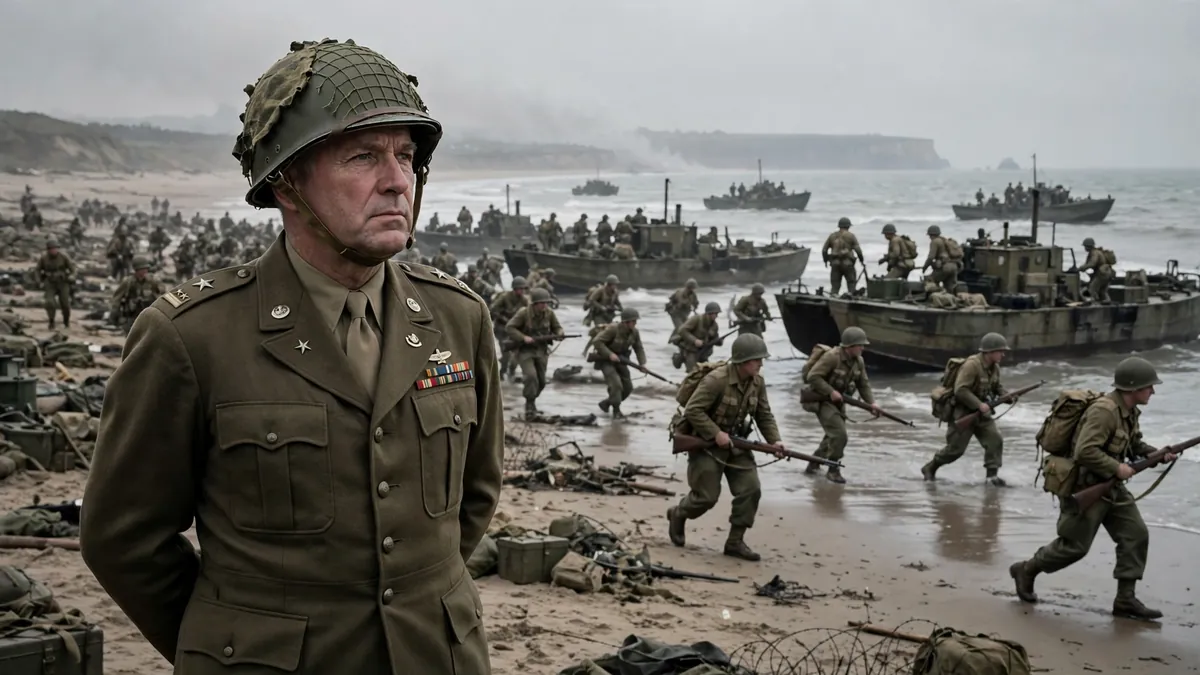
Omar Bradley (12 February 1893 – 8 April 1981) was the American general known as the “GI’s General”, the commander of the First Army in the Normandy invasion and of the 12th Army Group — the largest group of American armies ever assembled — in the campaign across France and Germany in 1944–1945.
Born in Clark, Missouri, the son of a schoolteacher, and educated at West Point, where he graduated in 1915 in the same class as Dwight D. Eisenhower, he was a quiet, modest and methodical officer who had spent the interwar years as a teacher and a staff officer, and who had never commanded troops in battle before the Second World War.
In 1943 he commanded the II Corps in Tunisia and in Sicily, and in 1944 he commanded the First Army in the landings in Normandy on D-Day, 6 June 1944. In August 1944 he was given command of the 12th Army Group, with four armies and more than a million men under his command, and he led it across France, through the Battle of the Bulge in December 1944, and into Germany, where his armies met the Russians at the Elbe in April 1945.
After the war he became the first Chairman of the Joint Chiefs of Staff, serving from 1949 to 1953, and he was the last American officer to hold the rank of General of the Army — five stars — dying in 1981 as the last surviving five-star officer of the Second World War.
Bradley’s importance to the history of the Second World War is that of the soldier’s general. He was not a flamboyant commander like Patton, and he was not a strategist like Eisenhower; he was a careful, thorough and humane commander who was trusted by his men and by his superiors, and who won his battles by planning, by preparation and by the steady application of superior resources.
His nickname, the “GI’s General”, reflected the affection of the ordinary American soldier for a commander who, unlike Patton, did not seek publicity and who, unlike MacArthur, did not seek glory. Historians debate whether Bradley was a great general or merely a competent one — whether his caution cost the Allies opportunities, above all in the closing of the Falaise Pocket in August 1944 and in the Battle of the Bulge — but none dispute that he was the commander of the largest American force in Europe, and that his leadership was, in the judgement of his contemporaries, steady and reliable.
2. Key Facts
| Born | 12 February 1893, Clark, Missouri, United States |
| Died | 8 April 1981 (aged 88), New York City, United States |
| Nationality | American |
| Role / Office | Commander, II Corps (Tunisia and Sicily, 1943); Commander, First Army (Normandy, 1944); Commander, 12th Army Group (1944–1945); Chairman of the Joint Chiefs of Staff (1949–1953) |
| Known for | The “GI’s General”; the First Army at Omaha Beach on D-Day; the 12th Army Group, the largest American force in Europe; the Battle of the Bulge; the last surviving five-star officer of the Second World War |
| Spouse / Family | Mary Quayle (married 1916, died 1965); Esther Dora Buhler (married 1966, died 1975); daughter Elizabeth Bradley |
| Military rank | General of the Army (five stars, from September 1950) |
3. Early Life and Education
Omar Nelson Bradley was born on 12 February 1893 in Clark, a small town in Randolph County, Missouri, the son of John Smith Bradley, a schoolteacher, and Sarah Elizabeth Bradley. His father died of pneumonia in 1908, when Omar was fifteen, and the family was left in difficult circumstances: his mother worked as a seamstress, and Omar, who was a good student, worked his way through school and, later, through college.
He attended the local schools in Clark and in Moberly, Missouri, and he was, by all accounts, a quiet and serious boy, interested in sports — he played baseball and football — and in his studies. He entered the United States Military Academy at West Point in 1911, after a local congressman, impressed by his record, gave him an appointment.
He graduated in 1915, ranked 44th in a class of 164, in the class that became known as “the class the stars fell on” — because so many of its members became generals, including Dwight D. Eisenhower, who ranked 61st.
Bradley was, at West Point, a good athlete — he played on the baseball team — and a respected cadet, though he was not, at the time, regarded as one of the outstanding men of his class.
Bradley’s early career was conventional. He was commissioned as a second lieutenant in the infantry in 1915, and he served in the United States and in the First World War, though he did not see combat: he was assigned to guard duty in the United States, and he was, in his own words, “bitterly disappointed” not to go to France.
In the interwar years he served as an instructor at West Point, where he taught mathematics, and at the Infantry School at Fort Benning, Georgia, where he served under George Marshall, who was the assistant commandant. Marshall was impressed by Bradley — he called him “a man of great ability and of great character” — and he recommended him for promotion.
Bradley also attended the Command and General Staff School at Fort Leavenworth, where he graduated first in his class, and the Army War College, and he served in Hawaii and in the War Department in Washington. He was, by the late 1930s, a colonel and a staff officer, and he was, in the words of one of his colleagues, “a man who had never commanded troops in battle, but who had learned everything there was to learn about commanding them”.
4. Rise to Prominence
Bradley’s rise to prominence came in North Africa in 1943. In February 1943, after the American defeat at Kasserine Pass in Tunisia, Eisenhower, who was the Allied commander in North Africa, relieved the commander of the II Corps, Major General Lloyd Fredendall, and gave the corps to Bradley, who was then his deputy.
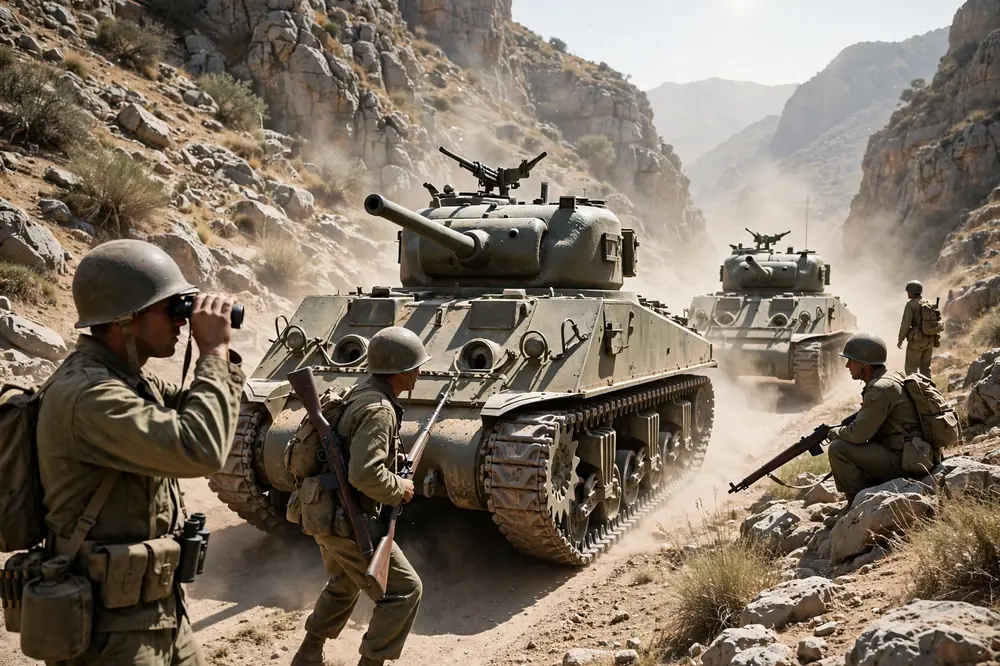
Bradley took command of a corps that was demoralised and disorganised, and he rebuilt it: he insisted on discipline, on training, and on the basics of soldiering, and he led it in the final battles of the Tunisian campaign, in March–May 1943, in which the II Corps, fighting alongside the British, drove the Germans back and helped to bring the campaign to a successful conclusion.
His success in Tunisia was due, in large part, to his attention to detail and to his care for his men: he visited the front lines, he talked to the soldiers, and he made sure that they had what they needed. He was, in the words of one of his officers, “a general who knew his men”.
In July 1943 Bradley commanded the II Corps in the invasion of Sicily, where his troops landed at Gela and advanced across the island, and in the autumn of 1943 he was brought to England to prepare for the invasion of France.
He was given command of the First Army, the American army that would land in Normandy on D-Day, and he spent the winter and spring of 1943–1944 preparing it: he trained his men, he studied the German defences, and he worked with the British and with the other American commanders to plan the largest amphibious operation in history.
On 6 June 1944 he landed in Normandy, and his First Army — which included the troops who landed at Omaha Beach and at Utah Beach — fought its way ashore and, in the weeks that followed, fought the Battle of Normandy, the battle that broke the German defences in France.
His rise, from a corps commander in Tunisia to the commander of the First Army in Normandy, was the rise of a man whom Eisenhower trusted completely, and whom Marshall had, years before, marked as a future leader.
5. Omar Bradley’s Role in World War II
Normandy and the breakout
Bradley’s role in Normandy was central. On D-Day, 6 June 1944, his First Army landed on Omaha Beach and Utah Beach, and the fighting at Omaha — where the American troops faced the German 352nd Infantry Division in strong defences — was the bloodiest of the day.
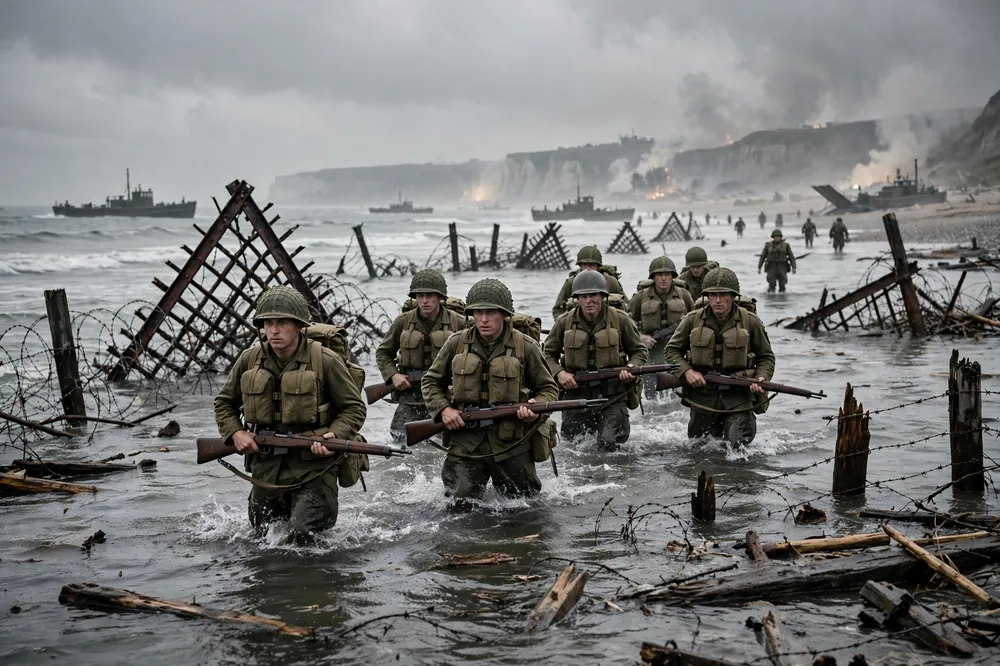
Bradley, who was offshore on the command ship USS Augusta, watched the battle and, at one point, considered withdrawing the troops from Omaha; he decided, instead, to send in the reserves, and the beach was taken by the end of the day.
In the weeks that followed, his First Army fought the Battle of Normandy, advancing through the bocage — the hedgerow country of Normandy, where every field was a defensive position — and suffering heavy casualties. In July 1944 Bradley planned Operation Cobra, the breakout from Normandy: after a massive bombing by American aircraft, his troops broke through the German lines at Saint-Lô on 25 July and advanced into open country, and the German army in Normandy began to collapse.
The breakout was the turning point of the campaign in France, and it was Bradley’s operation: he had planned it, he had insisted on it, and he had, in the words of his biographer, “broken the German army in Normandy”.
In August 1944 Bradley was promoted to command the 12th Army Group, which included the First Army, now under General Courtney Hodges, and the Third Army, under General George Patton, and later the Ninth Army and the Fifteenth Army. It was the largest group of American armies ever assembled, and Bradley commanded it through the liberation of Paris, the advance across France, and the approach to the German border.
In September 1944 his armies were stopped at the German border, by supply difficulties and by the German defences, and the war in the west settled into a stalemate that lasted through the autumn. In December 1944 the Germans launched their last great offensive in the west, the Ardennes offensive — the Battle of the Bulge — and Bradley’s armies bore the brunt of it: the First Army was cut off, and the Third Army, under Patton, was turned north to relieve it.
The battle, which lasted from 16 December 1944 to 25 January 1945, was the largest battle fought by the American Army in the war, and it ended in a German defeat. Bradley’s role in the Bulge was controversial — he was, for a time, out of touch with the battle, and Eisenhower transferred two of his armies to Montgomery’s command — but the battle was won, and his armies advanced into Germany in the spring of 1945.
Germany and the Elbe
In the spring of 1945 Bradley’s 12th Army Group advanced into Germany, crossing the Rhine at Remagen in March 1945 — the Ludendorff Bridge at Remagen was captured intact by the First Army on 7 March — and encircling the German forces in the Ruhr in April 1945, in the largest encirclement of the war in the west, in which some 300,000 German troops were captured.
His armies advanced to the Elbe River, where, on 25 April 1945, American and Soviet troops met at Torgau, and the war in Europe was, in effect, over. On 8 May 1945 Germany surrendered, and Bradley’s war was done. He had commanded, in the last months of the war, more than a million men, and he had, in the judgement of his contemporaries, commanded them well.
6. Key Decisions
Rebuilding the II Corps (February–March 1943). Bradley’s decision, on taking command of the II Corps in Tunisia, to insist on discipline, on training and on the basics — and to visit the front lines himself — was the decision that restored the corps’ confidence after Kasserine Pass. It was a decision that showed his understanding of soldiers: that morale is built by competence and by care.
Operation Cobra (July 1944). Bradley’s decision to plan and to insist on the breakout from Normandy — a massive bombing followed by a concentrated armoured thrust — was the decision that broke the stalemate in Normandy. It was a bold plan, and it required him to persuade Eisenhower and the air commanders to commit their bombers to a tactical role. It worked, and it changed the course of the campaign.
The Falaise Pocket (August 1944). Bradley’s decision, in August 1944, to halt Patton’s Third Army at Argentan and not to close the Falaise Pocket from the south, was the most controversial decision of his career. He did so, he said, because he feared that Patton’s troops would be overextended and would be cut off by the Germans, and because the boundary between the American and the British-Canadian forces had been agreed. The result was that many German troops escaped through the gap, though the pocket was, in the end, closed and the Germans suffered heavy losses. Historians debate whether Bradley’s caution cost the Allies a decisive victory.
The Battle of the Bulge (December 1944). Bradley’s handling of the German offensive in the Ardennes was criticised at the time and has been debated ever since. He was, for a time, out of touch with the battle, and Eisenhower transferred two of his armies to Montgomery. Bradley’s defenders argue that he was the victim of a German surprise and of a communications failure, and that his armies, in the end, held and counter-attacked. His critics argue that he underestimated the German threat and that he was slow to react.
7. Controversies
The controversies over Bradley are, in the main, controversies of caution. The first is the Falaise Pocket. In August 1944, as the German army in Normandy collapsed, Patton’s Third Army advanced rapidly to Argentan, and Bradley ordered it to halt, rather than to advance north to meet the British and Canadian forces and to close the pocket.
Bradley’s defenders argue that he was right: Patton’s troops were overextended, the Germans were still strong, and a premature advance would have risked a German counter-attack. His critics argue that he missed the chance to destroy the German army in Normandy, and that tens of thousands of German troops escaped to fight again.
The debate has never been settled, and it is complicated by the fact that the British, under Montgomery, were also slow to close the pocket from the north.
The second controversy is the Battle of the Bulge. Bradley’s handling of the German offensive — his failure to anticipate it, his loss of contact with the First Army, and Eisenhower’s decision to transfer two of his armies to Montgomery — has been criticised as a failure of command.
Bradley’s defenders argue that the surprise was complete, that the communications failure was not his fault, and that his armies, in the end, held the line and counter-attacked. His critics argue that he was complacent, that he had dismissed the intelligence warnings, and that he was, for a time, irrelevant to the battle.
The controversy is sharpened by the rivalry between Bradley and Montgomery, and by the British claim — which Bradley resented — that Montgomery had saved the Americans.
The third controversy is about Bradley’s reputation as the “GI’s General”. The nickname was, in part, a creation of the American press, and some historians have argued that it obscured Bradley’s limitations as a commander — that he was a competent but unremarkable general, whose success owed more to American material superiority than to his own skill.
Bradley’s defenders reply that competence, in a war of that scale, was itself a rare quality, and that Bradley’s steadiness, his care for his men, and his judgement were, in the end, what mattered. The debate reflects a larger question: whether the American victory in Europe was won by great generals or by great resources, and whether Bradley’s contribution was that of a leader or of a manager.
8. Later Life and Death
After the war, Bradley’s career continued at the highest level. He served as the Administrator of Veterans Affairs from 1945 to 1947, where he oversaw the care of millions of returning veterans, and in 1948 he became the Chief of Staff of the Army.
In August 1949 he became the first Chairman of the Joint Chiefs of Staff, a post created by the National Security Act of 1947, and he served in that post until August 1953, under Presidents Truman and Eisenhower. As Chairman he guided the American military through the early Cold War and through the Korean War, and he was, in the words of one historian, “the voice of the military in the councils of government”.
He was promoted to General of the Army — five stars — in September 1950, and he was the last officer to receive that rank. He retired in 1953, and he spent his remaining years in Washington and in New York, writing his memoirs — A Soldier’s Story (1951) and, with Clay Blair, A General’s Life (1983, published posthumously) — and serving on the boards of corporations.
He died on 8 April 1981, in New York City, aged eighty-eight, of a heart attack, and he was buried at Arlington National Cemetery, with full military honours. He was the last surviving five-star officer of the Second World War, and his death marked the end of an era.
9. Legacy of Omar Bradley
Bradley’s legacy is that of the soldier’s general. He is remembered, in the American Army, as a commander who cared for his men, who planned carefully, and who won his battles without seeking glory. His name is given to the Bradley Fighting Vehicle — the infantry fighting vehicle that has been the workhorse of the American Army since the 1980s — and to the Omar N.
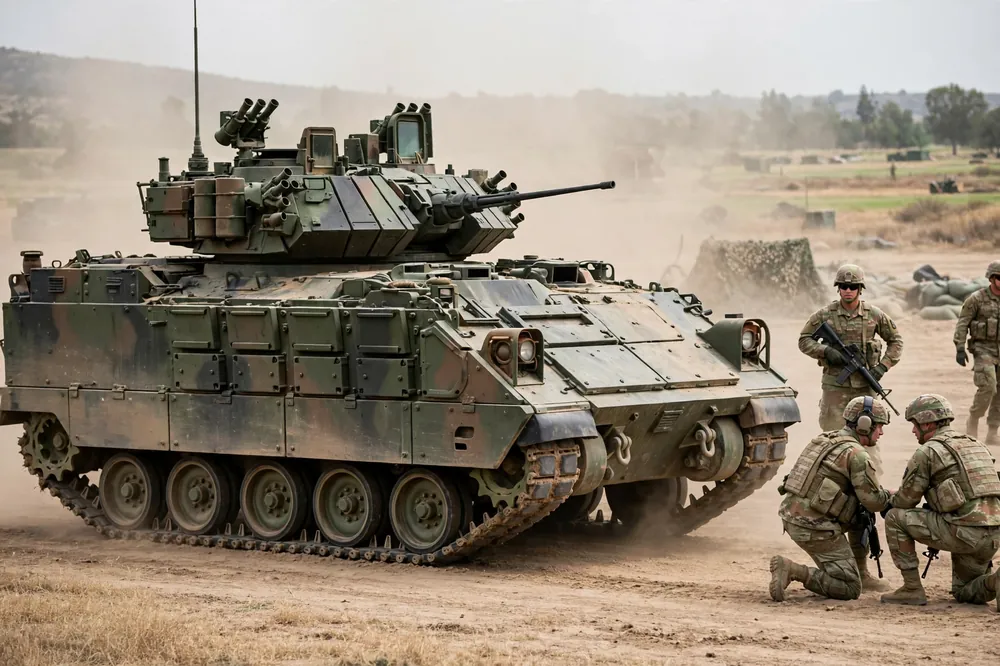
Bradley Foundation, which supports the study of military history. His memoirs, A Soldier’s Story, are still read as a classic account of the war in Europe from the point of view of a field commander, and they were the basis for the film Patton (1970), in which Bradley, played by Karl Malden, was presented as the steady counterpoint to Patton’s flamboyance.
His legacy is also the legacy of the 12th Army Group, the largest American force in Europe, and of the men who served in it. The 12th Army Group was, in the judgement of historians, the instrument by which the United States won the war in the west, and Bradley was its commander. His legacy is, in the end, a legacy of steadiness: in a war of great personalities — of Patton and of Montgomery, of Eisenhower and of MacArthur — Bradley was the man who did his job, without fuss and without glory, and who, in doing it, helped to win the war.
10. Assessment by Historians
Historians assess Omar Bradley as a general of solid ability and of great character, and the assessment has been, on the whole, positive, though it has become more critical over time. In the immediate post-war years, Bradley was regarded as one of the great American generals of the war, and his reputation as the “GI’s General” was unquestioned.
More recent scholarship, including the work of the historian Carlo D’Este in Patton: A Genius for War (1995) and in his studies of the Normandy campaign, has been more critical, arguing that Bradley was cautious to a fault, that he missed opportunities at Falaise and in the Bulge, and that his success owed more to American material superiority than to his own generalship.
The most balanced assessments, including that of the historian Alan Axelrod in Bradley: A Biography (2006), present a man who was a competent and humane commander, whose strengths were planning, preparation and care for his men, and whose weaknesses were a lack of imagination and a reluctance to take risks.
The consensus today is that Bradley was not a great general in the sense that Patton or Rommel were great — he was not a master of the bold stroke — but that he was a great army group commander, a man who could manage a force of a million men and who could, in the end, bring it to victory. He is remembered, in the American Army, as the model of the professional soldier: a man who did his duty, who cared for his men, and who, in the words of his own epitaph, “served his country well”.
Frequently Asked Questions
Who was Omar Bradley?
Omar Bradley (1893–1981) was an American general known as the “GI’s General”. He commanded the First Army in Normandy on D-Day and the 12th Army Group — the largest American force in Europe — in 1944–1945, and he was the first Chairman of the Joint Chiefs of Staff (1949–1953).
What was the 12th Army Group?
It was the group of American armies commanded by Bradley from August 1944, including the First, Third, Ninth and Fifteenth Armies, with more than a million men. It was the largest American force ever assembled in Europe.
What happened at the Falaise Pocket?
In August 1944, as the German army in Normandy collapsed, Bradley halted Patton’s Third Army at Argentan rather than closing the pocket from the south. Many German troops escaped, though the pocket was eventually closed. Historians debate whether Bradley’s caution cost the Allies a decisive victory.
What was Bradley’s role in the Battle of the Bulge?
Bradley’s armies bore the brunt of the German Ardennes offensive of December 1944. He was criticised for failing to anticipate the attack and for losing contact with the First Army, and Eisenhower transferred two of his armies to Montgomery. The battle ended in a German defeat, and Bradley’s armies advanced into Germany in 1945.
Why was Bradley called the “GI’s General”?
The nickname reflected the affection of the ordinary American soldier — the “GI” — for a commander who was modest, who cared for his men, and who did not seek publicity or glory, in contrast to Patton and MacArthur.
Was Bradley the last five-star officer?
Yes. Bradley was promoted to General of the Army (five stars) in September 1950, and he was the last officer to hold that rank. When he died in 1981, he was the last surviving five-star officer of the Second World War.
Related articles
Sources
- Wikipedia, “Omar Bradley” — consolidated biography: birth 12 February 1893, death 8 April 1981, II Corps, First Army, 12th Army Group, Chairman of the Joint Chiefs of Staff 1949–1953.
- Encyclopaedia Britannica, “Omar Nelson Bradley” (britannica.com) — biography, Normandy, 12th Army Group, Battle of the Bulge.
- Omar N. Bradley, A Soldier’s Story (Henry Holt, 1951) — Bradley’s memoirs of the war in Europe.
- Omar N. Bradley and Clay Blair, A General’s Life: An Autobiography (Simon & Schuster, 1983) — Bradley’s autobiography, completed after his death.
- Alan Axelrod, Bradley: A Biography (Palgrave Macmillan, 2006) — modern biography; Falaise, the Bulge, the 12th Army Group.
- Carlo D’Este, Decision in Normandy (HarperCollins, 1983) — the Normandy campaign; Cobra, Falaise, and Bradley’s command.
- Steven J. Zaloga, The Battle of the Bulge (in The Oxford Companion to World War II, 1995) — the Ardennes offensive and Bradley’s role.
Further reading
- Jim DeFelice, Omar Bradley: General at War (Regnery, 2011).
- Charles Whiting, Bradley: The Man Who Led the Greatest Army in History (in The Battle of the Bulge, 1999).