 WAR ATLAS MILITARY HISTORY MAGAZINE · WWI — WWII
Operation Husky
1. Lead
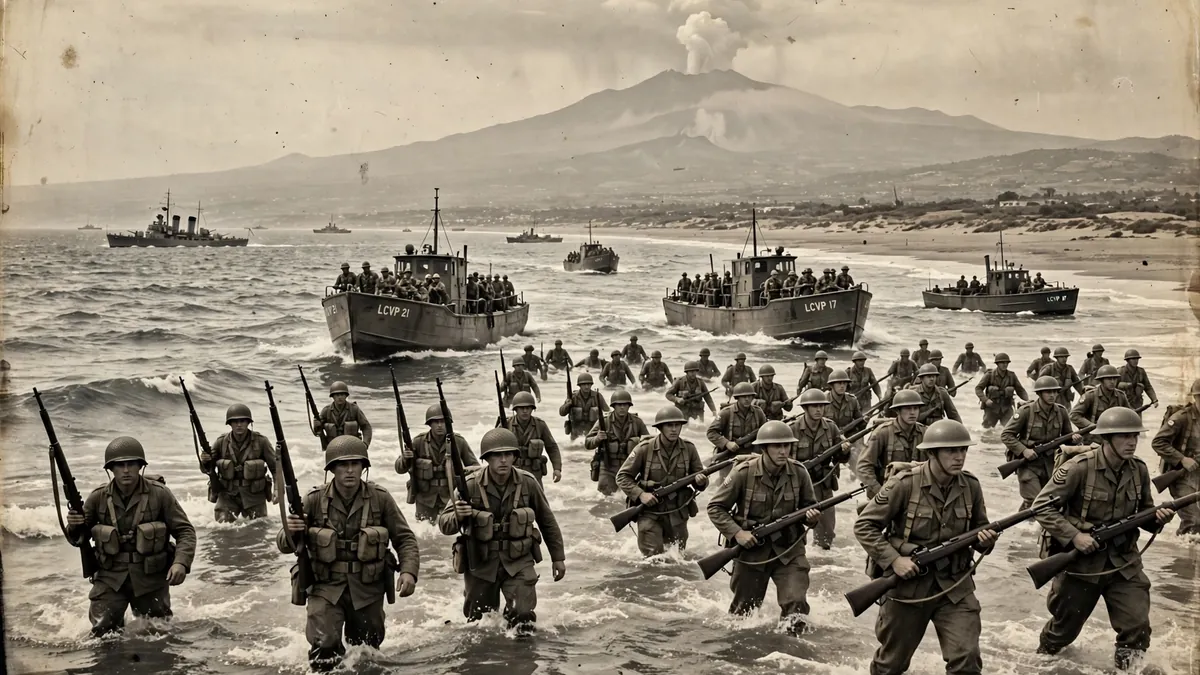
Operation Husky was the Allied invasion of Sicily, fought from 9 July to 17 August 1943, and it was the largest amphibious operation of the Second World War before D-Day. In a single night, more than 150,000 Allied soldiers — Americans under General George S. Patton and British and Canadians under General Bernard Montgomery — landed on the southern coast of Sicily from the sea and from the air, in an operation that involved some 3,000 ships and landing craft and more than 4,000 aircraft. Within 38 days the island was in Allied hands, the Axis forces had been driven across the Strait of Messina to mainland Italy, and the consequences reached far beyond Sicily: Mussolini was overthrown, Italy left the war, and the Allies had a base from which to invade the Italian mainland.
Husky was also a battle of firsts and of lessons. It was the first time the Allies had attempted a large-scale amphibious invasion against a defended coast, and the first time they had used airborne troops on such a scale. Both the landings and the airborne drops went badly wrong in places — paratroopers were scattered across the island, landing craft were wrecked by wind and surf, and the two Allied armies spent the campaign competing with each other rather than cooperating — but the operation succeeded, and the lessons learned in Sicily shaped the planning of the Normandy landings a year later. The campaign’s most famous feature was the race for Messina: Patton, determined not to let Montgomery take the port first, drove his Seventh Army across the island in a rapid advance that became a legend, while the Germans, under Generals Albert Kesselring and Hans-Valentin Hube, fought a skilful delaying action and then evacuated almost their entire force across the strait, under the noses of the Allies.
The cost of Husky was heavy, and it was unevenly shared. The Allies lost about 24,000 men killed, wounded and missing, including some 5,500 killed. The Axis lost far more: about 29,000 killed and wounded and more than 100,000 prisoners, most of them Italian. The Italian army in Sicily, demoralised and poorly led, largely collapsed, while the German divisions fought hard and withdrew in good order. Sicily was the first piece of Axis territory in Europe to be taken by the Allies, and its capture proved that the invasion of Hitler’s Europe was possible.
2. Key Facts
| Date | 9 July – 17 August 1943 (38 days) |
| Location | Sicily, Italy |
| Result | Allied victory; Sicily captured; Axis evacuated to mainland Italy |
| Allied commanders | Gen. Dwight D. Eisenhower (supreme commander); Gen. Harold Alexander (ground forces); Lt. Gen. George S. Patton (US Seventh Army); Gen. Bernard Montgomery (British Eighth Army) |
| Axis commanders | Field Marshal Albert Kesselring; Gen. Hans-Valentin Hube; Gen. Alfredo Guzzoni (Italian Sixth Army) |
| Allied strength | About 150,000–160,000 men in the first wave; about 470,000 in total during the campaign |
| Axis strength | About 200,000–260,000 men (about 200,000 Italian, about 60,000 German) |
| Allied losses | About 24,000 killed, wounded and missing, including about 5,500 killed |
| Axis losses | About 29,000 killed and wounded; more than 100,000 prisoners |
3. Background
After North Africa
Operation Husky was decided at the Casablanca Conference in January 1943, while the North African campaign was still being fought. With the Axis armies in Tunisia close to defeat, the Allied leaders had to decide what to do next. The Americans wanted to invade France as soon as possible; the British, led by Winston Churchill, wanted to strike at what he called the “soft underbelly” of Europe — Italy and the Mediterranean. The compromise was Sicily: an invasion of the island would knock Italy out of the war, open the Mediterranean to Allied shipping, and give the Allies airfields from which to bomb Germany’s southern flank. The decision was also a matter of practicality: the Allied armies in North Africa, with their ships and landing craft already in the Mediterranean, were ready to strike, and Sicily was the obvious next step. The invasion was given the codename Husky, and the date was set for the summer of 1943.
The Plan and Its Problems
The plan for Husky was a compromise, and it showed. The Allied commander in the Mediterranean, General Dwight D. Eisenhower, was the supreme commander, and his ground commander was General Harold Alexander. The invasion force was split into two armies: Montgomery’s British Eighth Army, landing on the south-eastern coast around Syracuse and Catania, and Patton’s American Seventh Army, landing on the south-central coast around Gela and Licata. The British were given the main role — the drive up the eastern coast to Messina — while the Americans were given the supporting role of protecting the British flank. Patton, who believed his army had been given second place, resented the plan from the start, and the resentment shaped the campaign. The airborne part of the plan called for British and American paratroopers to drop behind the beaches on the night before the landings, to seize bridges and crossroads. The plan looked sound on paper; in practice, almost everything that could go wrong with an airborne operation went wrong.
The Island and Its Defenders
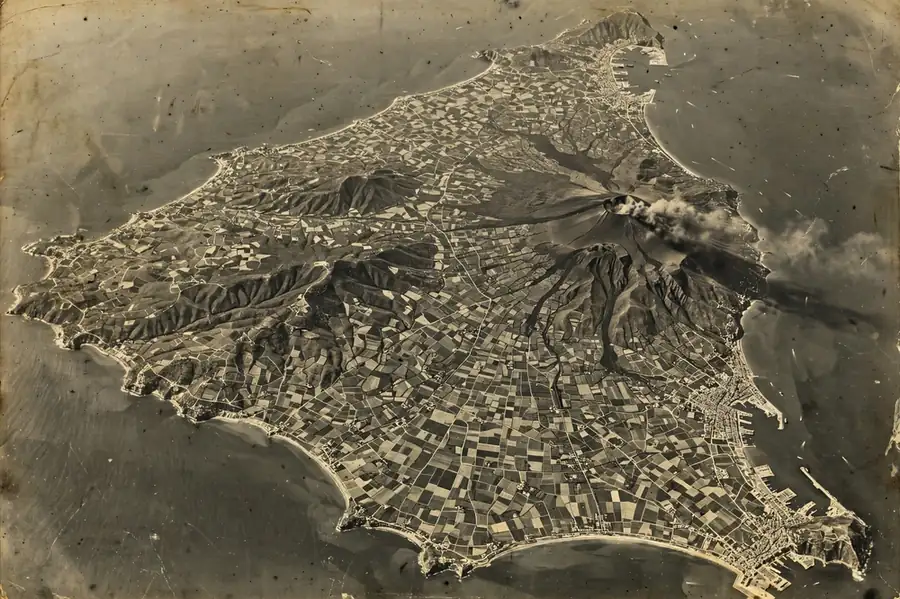
Sicily is the largest island in the Mediterranean, a triangle of mountainous country about 250 kilometres long, separated from mainland Italy by the Strait of Messina, which is only about 3 kilometres wide at its narrowest point. The island’s geography shaped the campaign: the southern coast, where the Allies landed, is flat and open, but the interior is mountainous, and the eastern coast is dominated by Mount Etna, the great volcano that rises above Catania. The roads across the island are few and narrow, and they run through mountain passes that a small force can hold against a large one. The Axis defences were built around this geography: the Italian Sixth Army under General Alfredo Guzzoni held the coast, with German divisions — the Hermann Göring Panzer Division and the 15th Panzergrenadier Division — held back as a mobile reserve. The overall German commander in Italy was Field Marshal Albert Kesselring, one of Germany’s most capable generals, and he understood the island’s geography as well as anyone.
Kesselring and the Italian Army
The Axis command in Sicily was divided, and the division mattered. The Italian Sixth Army was responsible for the defence of the island, but its troops were poorly equipped, poorly led and demoralised by years of defeat. The Italian soldiers in Sicily were, for the most part, Sicilians themselves, defending their own homes, and many of them had no wish to die for Mussolini’s war. The German divisions were a different matter: well equipped, well led and determined to fight. Kesselring’s plan was to let the Italians hold the coast, to counterattack the landings with the German mobile divisions, and, if the island could not be held, to withdraw across the Strait of Messina in good order. The plan was realistic, and it was carried out almost exactly as written. The Italian army collapsed as Kesselring expected it to; the German divisions fought as he expected them to; and the evacuation, when it came, was a model of its kind.
4. Opposing Forces
The Allied Armies
The Allied invasion force was the largest amphibious force assembled up to that point in the war. The British Eighth Army, under General Bernard Montgomery, was the veteran of the North African campaign — the army that had defeated Rommel at El Alamein — and it landed on the south-eastern coast with the task of driving up the east coast to Messina. The American Seventh Army, under Lieutenant General George S. Patton, was a new army, formed for the invasion, and it landed on the south-central coast with the task of protecting Montgomery’s flank. The two armies together numbered about 150,000 to 160,000 men in the first wave, with about 470,000 men involved in the campaign as a whole. The naval force, commanded by Admiral Andrew Cunningham, included some 3,000 ships and landing craft, and the air force, commanded by Air Marshal Arthur Tedder, included more than 4,000 aircraft. The airborne force — the British 1st Airborne Division and the American 82nd Airborne Division — was to drop on the night before the landings.
Patton, Montgomery and the Rivalry
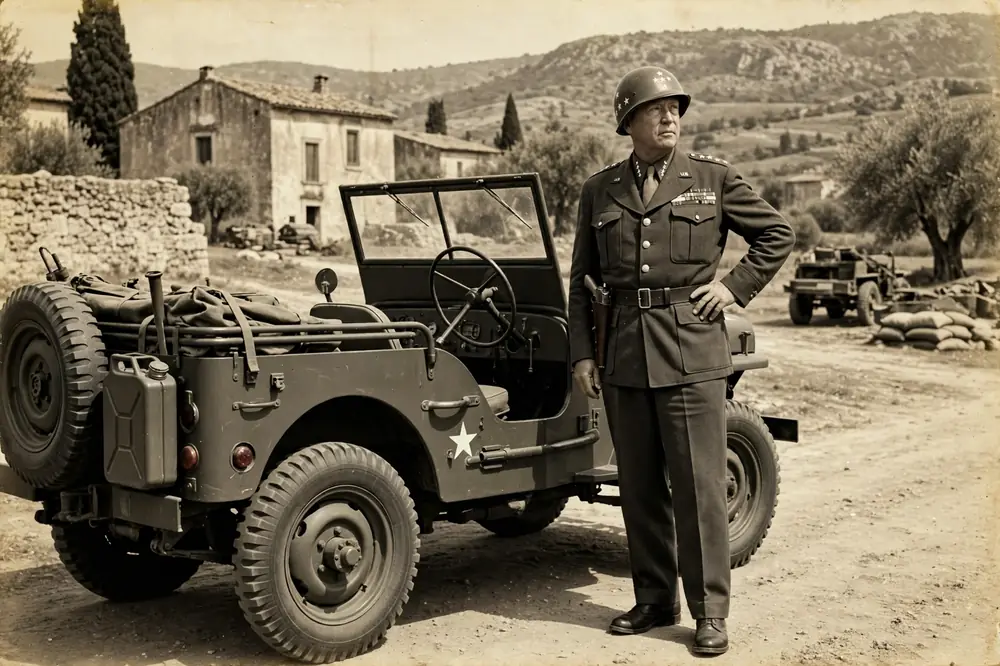
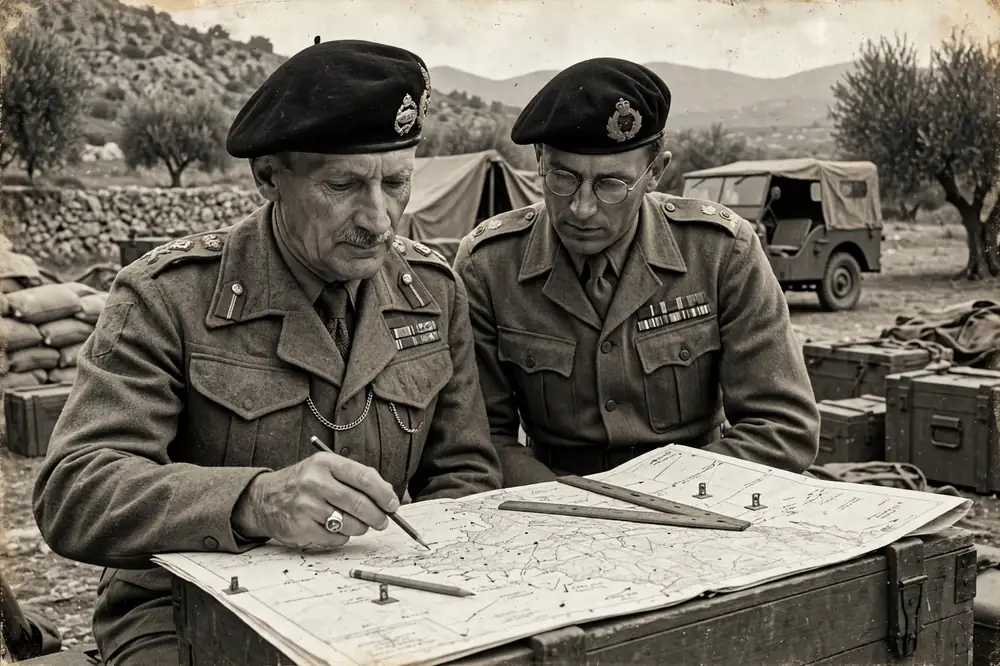
The rivalry between Patton and Montgomery is one of the best-known stories of the campaign, and it shaped the battle as much as any German decision. Montgomery was the cautious, methodical commander, the hero of El Alamein, who believed in overwhelming force and careful preparation. Patton was the bold, aggressive commander, who believed in speed, surprise and the offensive. Alexander, their superior, was a gentleman who disliked giving direct orders, and he allowed the two army commanders a freedom that became a competition. Montgomery’s advance up the east coast stalled in front of Catania, where the Germans held strong positions around Mount Etna. Patton, given permission to advance on Palermo in the west, took the city in a rapid drive and then turned east, determined to reach Messina before Montgomery. The race for Messina became the campaign’s defining story, and it was a race the Germans watched with satisfaction, because it meant the Allies were not pressing them as hard as they could have been.
The Axis Defenders
The Axis forces in Sicily numbered about 200,000 to 260,000 men, of whom about 200,000 were Italian and about 60,000 German. The Italian Sixth Army, under General Alfredo Guzzoni, was responsible for the coastal defence, and its divisions were spread thinly along the southern and eastern coasts. The German forces — the Hermann Göring Panzer Division, the 15th Panzergrenadier Division, and later the 1st Parachute Division and the 29th Panzergrenadier Division — were the real fighting strength of the defence. The German divisions were well equipped with tanks, artillery and anti-tank guns, and they were commanded by experienced officers. The overall German commander in the theatre was Field Marshal Albert Kesselring, and the commander on the island was first General Guzzoni and then, from 17 July, General Hans-Valentin Hube, who took command of the German forces and directed the delaying action and the evacuation.
The Hermann Göring Division
The Hermann Göring Panzer Division was the best German formation in Sicily, and its counterattack at Gela on 11 July was the most dangerous moment of the invasion. The division was an elite formation, originally raised from the Luftwaffe’s ground troops, and it was equipped with Tiger tanks, artillery and a strong infantry component. Its commander, General Paul Conrath, attacked the American beachhead at Gela on the morning after the landings, driving his tanks to within a few hundred metres of the beaches before being stopped by naval gunfire and by American tanks. The division’s attack failed, but it showed what the Germans could do, and it convinced the Allies that the campaign would not be a walkover. The division fought on through the campaign, in the mountains around Etna and on the road to Messina, and it was evacuated across the strait with the rest of the German force.
| Allies | Axis | |
|---|---|---|
| Infantry | US Seventh Army; British Eighth Army (incl. Canadians) | Italian Sixth Army; German Hermann Göring, 15th Panzergrenadier, 1st Parachute, 29th Panzergrenadier Divisions |
| Airborne | US 82nd Airborne; British 1st Airborne | German 1st Parachute Division (arrived during the campaign) |
| Tanks | US and British armoured divisions | Hermann Göring Panzer Division (incl. Tiger tanks) |
| Artillery | Divisional artillery; naval gunfire from 3,000 ships | German and Italian artillery; coastal batteries |
| Air support | More than 4,000 Allied aircraft | Luftwaffe and Italian air force, outnumbered |
| Naval | About 3,000 ships and landing craft | Italian navy, largely inactive; German E-boats and mines |
5. The Battle
The Landings, 10 July
The invasion began on the night of 9–10 July 1943, in bad weather. A strong wind blew across the Mediterranean, and the sea was rough. The airborne drops, which went in first, were a disaster: the wind scattered the paratroopers and the gliders across the island, and many of the gliders ditched in the sea. Of the 144 British gliders that set out, only about 12 landed near their objectives, and more than 300 men drowned. The American paratroopers of the 82nd Airborne Division were scattered even more widely, with some men landing 50 kilometres from their drop zones. The scattering had one unintended benefit, as at Utah Beach a year later: it confused the Germans, who received reports of landings everywhere and could not tell where the main effort was.
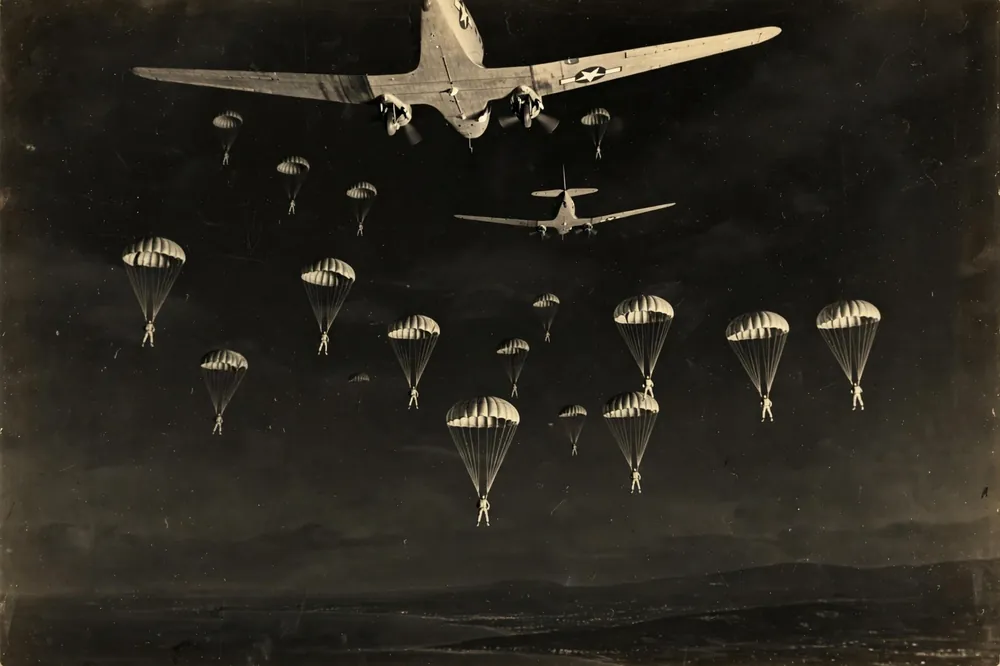
The Beaches at Gela and Syracuse
The seaborne landings, which began in the early hours of 10 July, went better than the airborne drops, though the weather made them difficult. The American Seventh Army landed around Gela, Licata and Scoglitti, and the British Eighth Army landed around Syracuse and the Pachino peninsula. The opposition on the beaches was light: the Italian coastal divisions, surprised and demoralised, offered little resistance, and many of their men surrendered at the first opportunity. By the end of the first day, the Allies had landed more than 150,000 men, and the beachheads were secure. The British took Syracuse on the first day, and the Americans took Gela and Licata. The invasion had succeeded, and the only question was how fast the Allies could advance inland. The landings at Gela and Syracuse were the largest amphibious operation of the war to that point, and they proved that the Allies could land an army on a defended shore and keep it there.
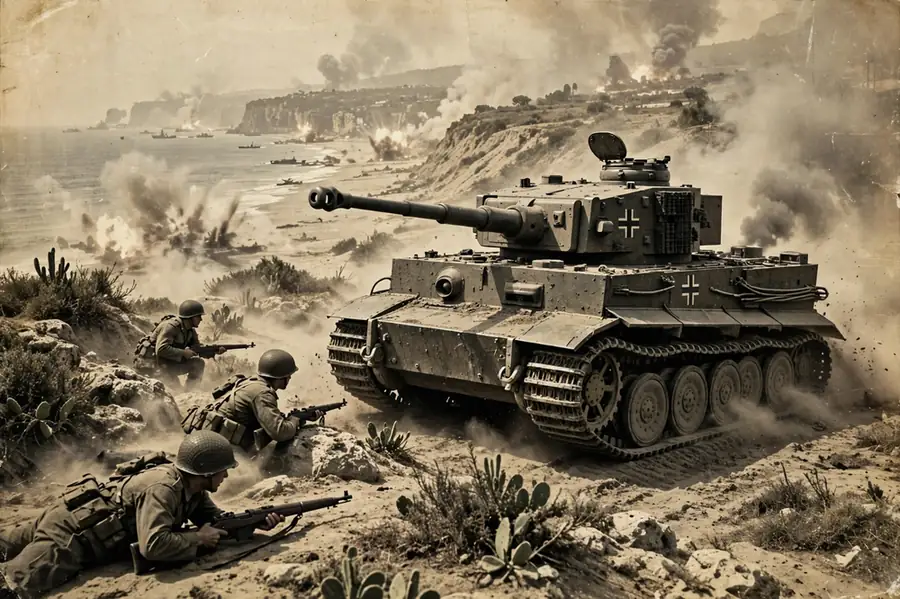
The Counterattack at Gela
The most dangerous moment of the invasion came on 11 July, the day after the landings, when the Hermann Göring Panzer Division counterattacked the American beachhead at Gela. The German tanks, supported by Italian infantry, drove through the American lines and reached to within a few hundred metres of the beaches, where the landing craft were still unloading. The American infantry, without tanks of their own ashore in sufficient numbers, fell back, and for a few hours it looked as if the beachhead might be destroyed. The battle was saved by naval gunfire: American cruisers and destroyers, firing from offshore, poured shells onto the German tanks, and the naval guns, aimed by observers on the beach, destroyed tank after tank. The American artillery, once it was ashore, joined in, and by the afternoon the German attack had been broken. The counterattack at Gela was the closest the Axis came to throwing the Allies back into the sea, and it was stopped by the guns of the fleet.
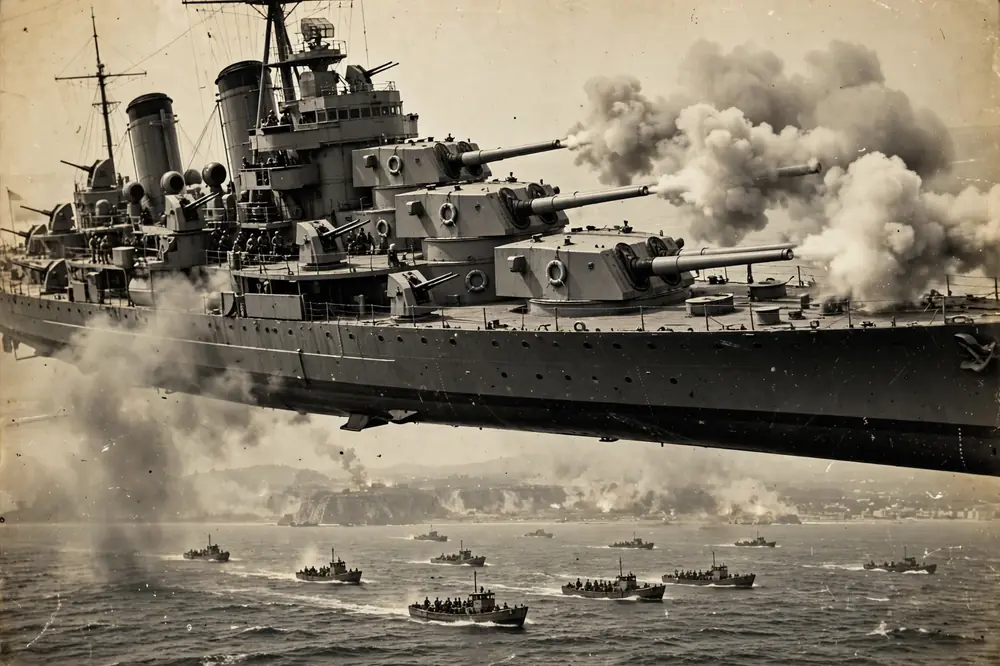
Naval Gunfire Saves the Beachhead
The Gela counterattack proved a point that would be proved again at Omaha Beach a year later: that naval gunfire could save a beachhead that the army could not hold on its own. The American cruisers off Gela fired hundreds of rounds at the German tanks, and the destroyers closed inshore to engage targets at close range. The German tanks, which had been built to fight other tanks, were not built to survive 6-inch and 8-inch shells falling from the sky, and they were destroyed in numbers that shocked their crews. The lesson was learned by the Allies and applied in Normandy, where the destroyers off Omaha would repeat the performance. At Gela, the naval guns bought the time the Americans needed to get their own tanks and artillery ashore, and the beachhead survived. The destroyers that saved Gela were the unsung heroes of the invasion, and their captains, who took their ships into waters the charts said were mined, were decorated for it afterwards.
The Race for Messina
After the beachheads were secure, the campaign became a race, and the race was between the Allies themselves. Montgomery’s Eighth Army advanced up the eastern coast towards Catania, but it was stopped by the Germans around Mount Etna, where the Hermann Göring Division and the 15th Panzergrenadier Division held strong positions in the mountains. Patton, meanwhile, was given permission to advance west on Palermo, and he took the city on 22 July in a rapid drive across the island. Then, with Montgomery still stalled, Patton turned east and drove for Messina, the port at the north-eastern tip of the island, through which the Germans would have to evacuate. Patton’s advance was rapid and spectacular: his troops used amphibious landings behind the German lines — small “end runs” by sea — to outflank the German positions, and they reached Messina on 17 August, a few hours after the last German troops had crossed the strait. Montgomery’s forces entered Messina on the same day, from the south.
The German Evacuation
The German evacuation across the Strait of Messina was the great missed opportunity of the campaign, and it was carried out with a skill that the Allies could only admire. Under the command of General Hube, the Germans withdrew their forces to the north-eastern corner of the island, held the Allied advance with a series of delaying positions in the mountains, and ferried their men, tanks and guns across the strait to mainland Italy. The evacuation, codenamed Operation Lehrgang, moved about 40,000 German soldiers, about 60,000 Italian soldiers, and thousands of vehicles and guns across the strait in the first two weeks of August, under cover of anti-aircraft guns and in defiance of Allied air power. The Allies, who had complete command of the sea and the air, failed to stop it: their aircraft attacked the ferries, but the German anti-aircraft defences were strong, and the strait is only 3 kilometres wide, so the crossing took minutes. When Patton entered Messina on 17 August, the Germans were gone, and they would fight again on the Italian mainland.
6. Turning Point
The Fall of Mussolini
The turning point of the Sicily campaign was not a battle but a political event: the fall of Benito Mussolini on 25 July 1943. The invasion of Sicily had shown the Italian people that the war was lost, and the Fascist Grand Council, meeting on the night of 24–25 July, voted to remove Mussolini from power. King Victor Emmanuel III had him arrested the next day, and a new government under Marshal Pietro Badoglio began secret negotiations with the Allies. The fall of Mussolini changed the war: Italy, Germany’s principal ally, was leaving the Axis, and the Germans would have to defend Italy themselves. For the Allies, it was proof that the strategy of striking at the “soft underbelly” had worked. For the Germans, it was a disaster: Kesselring had to divert divisions to disarm the Italian army and to occupy Italy, and the troops that might have reinforced Sicily were sent to the mainland instead.
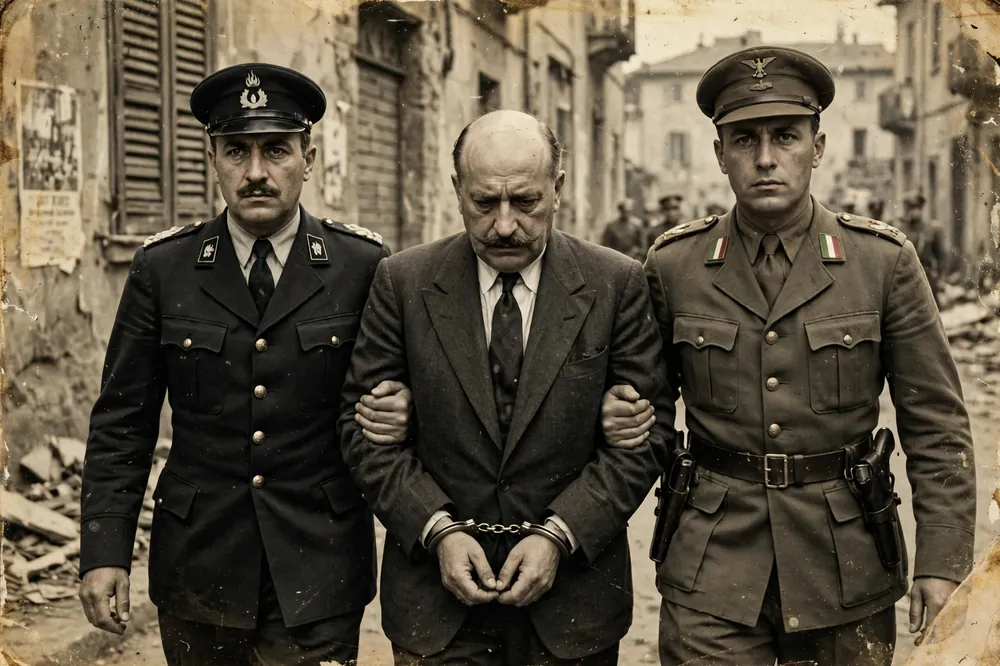
Italy Leaves the Axis
The fall of Mussolini was followed, on 3 September 1943, by the Italian armistice with the Allies, and on 8 September the armistice was announced, just as the Allies were landing on the Italian mainland at Salerno. The Italian army, already demoralised, largely dissolved: its soldiers went home, or were disarmed by the Germans, or joined the Allies. The Germans, who had expected the Italian collapse, moved quickly: they disarmed the Italian forces, occupied Rome and northern Italy, and rescued Mussolini from his prison on the Gran Sasso in a daring raid by SS commandos. Mussolini was set up as the head of a puppet government in northern Italy, the Italian Social Republic, but the real Italy — the Italy that mattered to the war — had left the Axis. The Sicily campaign had achieved its political objective, and it had done so in less than three weeks. The armistice was announced on 8 September, the day the Allies landed at Salerno, and the timing was deliberate: the Allies wanted the news to reach the Italian people as their soldiers were landing on the mainland.
The Stalemate at Catania
The second turning point was military, and it was the stalemate in front of Catania. Montgomery’s Eighth Army, advancing up the eastern coast, ran into the German positions around Mount Etna and could not break through. The Germans held the high ground, the roads were narrow, and the British attacks, made with limited forces, were repulsed. The stalemate lasted for weeks, and it had two consequences. First, it gave Patton the opportunity to make his drive on Palermo and then on Messina, which turned the campaign into a race. Second, it gave the Germans the time they needed to organise the evacuation across the Strait of Messina. The stalemate at Catania was the moment the campaign stopped being a pursuit and became a delaying action — and a delaying action was exactly what the Germans wanted.
Etna and the Mountain War
The fighting around Mount Etna was a mountain war, and it favoured the defender. The German positions were dug into the lava fields and the hillsides, and the British attacks had to advance up narrow roads under fire from above. The terrain was so difficult that tanks could not be used effectively, and the battle was fought by infantry, with artillery support, in the heat of the Sicilian summer. The British took Catania on 5 August, after weeks of fighting, but by then the Germans had already withdrawn to new positions further north, and the pattern repeated itself all the way to Messina: the Allies attacked, the Germans held for a few days, and then they withdrew to the next line. The mountain war around Etna was the reason the campaign lasted 38 days instead of two weeks, and the reason the Germans were able to evacuate in good order.
7. Casualties and Losses
Allied Losses
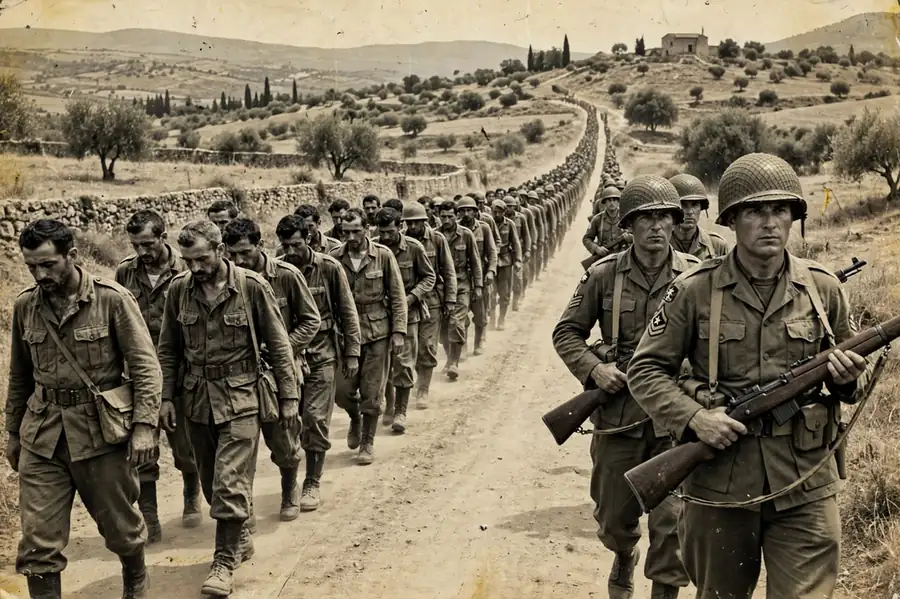
The Allies lost about 24,000 men killed, wounded and missing in the Sicily campaign, of whom about 5,500 were killed. The losses were unevenly shared: the British Eighth Army lost about 13,000 men, including about 2,000 killed, and the American Seventh Army lost about 11,000 men, including about 2,200 killed, with the remainder of the Allied losses falling on the Canadians and the airborne divisions. The airborne losses were particularly heavy in proportion to their numbers: the British glider force lost more than 300 men drowned on the night of the landings, and the American paratroopers lost heavily in the scattered drops. The campaign also cost the Allies a large number of aircraft and landing craft, and the lessons of the airborne drops — that paratroopers should not be dropped at night in high wind, and that gliders should not be towed over the sea — were learned at a high price.
The Airborne Price
The airborne operations of Husky were among the most costly of the war in proportion to their results, and they were studied carefully afterwards. The British glider landings on the night of 9–10 July lost more than 300 men drowned when their gliders ditched in the sea, and only a handful of the gliders reached their objectives. The American drops were scattered across the island, and the paratroopers spent days fighting their way back to their units. The total airborne casualties were in the thousands, and the objectives — the bridges and crossroads behind the beaches — were mostly taken by the seaborne forces anyway. The lesson the Allies drew was not that airborne operations were useless, but that they needed better planning, better navigation and better weather. The lessons were applied in Normandy a year later, where the drops were still scattered but the paratroopers still achieved their objectives.
Axis Losses
The Axis losses in Sicily were far heavier than the Allied losses, and they were mostly Italian. The Axis lost about 29,000 men killed and wounded, and more than 100,000 prisoners, of whom the great majority were Italian. The Italian Sixth Army, which had numbered about 200,000 men, effectively ceased to exist: its divisions surrendered in large numbers, its soldiers went home, and its officers were taken prisoner. The German losses were much smaller — about 4,000 to 5,000 killed and a similar number wounded — because the Germans fought a delaying action and withdrew in good order, and because most of their force was evacuated across the strait. The German divisions that left Sicily would fight again in Italy, and the men the Allies had failed to trap at Messina would cost them dearly in the months that followed.
The Italian Collapse
The collapse of the Italian army in Sicily was the most striking feature of the campaign, and it was a political as well as a military event. The Italian soldiers in Sicily were, for the most part, defending their own homes, and they had no enthusiasm for a war that Mussolini had lost. Their officers were often incompetent or defeatist, their equipment was poor, and their morale had been broken by years of defeat in North Africa and Russia. When the Allies landed, whole Italian divisions surrendered without a fight, and the men went home to their villages. The collapse was so complete that the Germans, who had expected it, had already planned to fight the campaign without the Italians. The Italian collapse in Sicily was the beginning of the end of Fascist Italy, and it was the reason the invasion achieved its political objective within weeks. The collapse was so complete that the Germans, who had expected it, were ready: within days, they had disarmed the Italian army, seized its weapons, and taken control of the country.
| Allies | Axis | |
|---|---|---|
| Killed | About 5,500 | About 29,000 killed and wounded (combined figure) |
| Wounded and missing | About 18,500 | More than 100,000 prisoners, mostly Italian |
| Total | About 24,000 | About 130,000+ including prisoners |
| German losses | — | About 4,000–5,000 killed; most of the force evacuated |
8. Map and Geography
The Island of Sicily
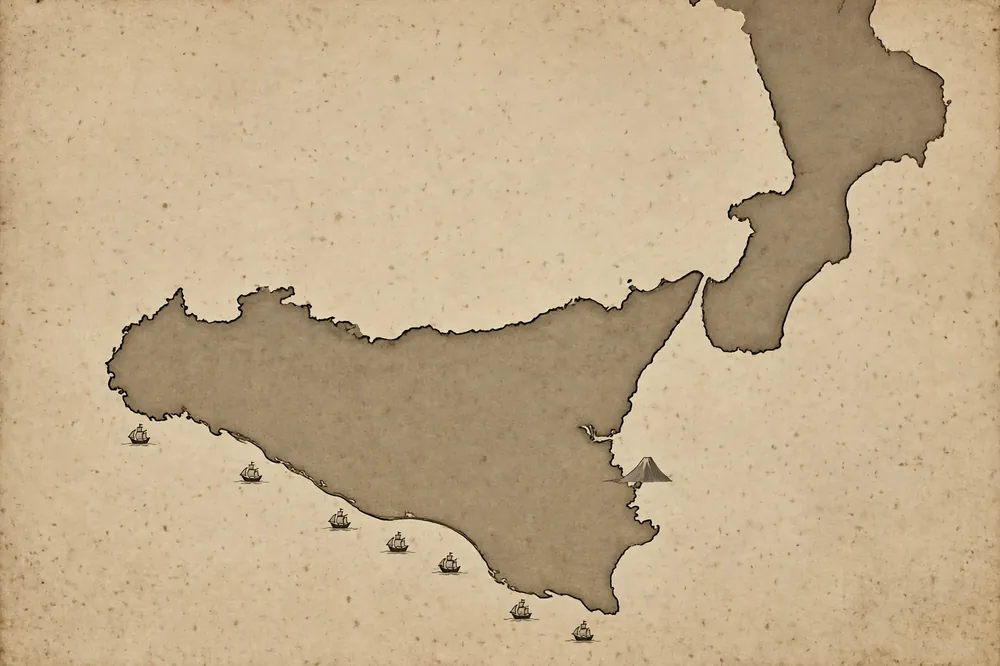
Sicily is a triangle, and its shape dictated the campaign. The southern coast, where the Allies landed, is a long, flat shore, open to the sea and to the air, and it was the obvious place for an invasion. The eastern coast, where Montgomery advanced, is dominated by Mount Etna, a volcano more than 3,300 metres high, whose lava fields and foothills make movement difficult. The northern coast, facing the Tyrrhenian Sea, is mountainous, and the roads along it are narrow and easily blocked. The interior of the island is a plateau of hills and valleys, cut by rivers and gorges, and the towns — Enna, Caltanissetta, Leonforte — sit on hilltops, each of them a natural fortress. The Strait of Messina, at the north-eastern tip, is only about 3 kilometres wide, and it was the door through which the Germans left. The map of Sicily is a map of mountains, and the campaign was fought in the mountains.
Mount Etna and the East Coast
Mount Etna dominated the eastern campaign, and it dominated the thinking of both sides. The volcano rises above the plain of Catania, and its slopes are covered in lava fields, vineyards and small towns, all of them difficult ground for an attacker. The Germans built their main defensive line — the Etna Line — across the foothills of the volcano, from Catania on the coast to the mountains in the west, and they held it for weeks. The British attacks on the line were made up narrow roads, under fire from the high ground, and they failed repeatedly. The Etna Line was the reason Montgomery’s advance stalled, and the reason Patton was able to make his drive on Palermo and Messina. The volcano, which had been erupting for thousands of years, became a fortress, and the battle for Sicily was fought in its shadow. The Etna Line held for weeks, and it was only outflanked when Patton’s drive on Palermo forced the Germans to stretch their line until it broke.
The Strait of Messina
The Strait of Messina is one of the most famous stretches of water in the world, and in August 1943 it was the most important. The strait separates Sicily from mainland Italy, and at its narrowest point it is only about 3 kilometres wide. The currents in the strait are strong and treacherous — the whirlpools of Scylla and Charybdis, of Greek legend, are said to be here — and the crossing, by ferry or by boat, takes only minutes. The Germans used the strait to evacuate their forces, and the Allies, who had complete command of the sea and the air, could not stop them. The strait’s narrowness was the Germans’ salvation: the ferries were under the guns of the anti-aircraft batteries on both banks, and the Allied aircraft, attacking a target only minutes from shore, could not do enough damage. When the campaign ended, the strait was the line between the Sicily the Allies had taken and the Italy they had yet to take.
Why the Allies Could Not Close the Strait
The failure to close the Strait of Messina has been studied ever since, and the reasons are clear. The Allies had the ships and the aircraft, but they did not have a plan to use them against the evacuation. The naval forces were concentrated on supporting the landings and the advance, not on blockading the strait, and the air forces were tasked with supporting the ground battle, not with sinking ferries. The German anti-aircraft defences on both banks of the strait were strong — some of the strongest in Europe — and they shot down many of the aircraft that attacked the ferries. The strait’s narrowness meant that a ferry could cross in minutes, and that the Germans could move at night, when the Allied aircraft could not find them. The result was that the Germans evacuated almost their entire force, and the Allies learned a lesson they would remember in Normandy: that an enemy who is allowed to withdraw will fight again.
9. Outcome and Legacy of Operation Husky
The Invasion of Italy
The capture of Sicily led directly to the invasion of mainland Italy. On 3 September 1943, the day the Italian armistice was signed, British forces crossed the Strait of Messina and landed at Reggio di Calabria, and on 9 September the Americans landed at Salerno, south of Naples. The Italian campaign that followed would last for twenty months, and it would be one of the hardest campaigns of the war, fought in mountains and in winter, against a German army that had learned, in Sicily, how to fight a delaying action. The men the Allies had failed to trap at Messina — the divisions of the Hermann Göring Panzer Division, the 15th Panzergrenadier Division and the others — were the same men who would hold the Gustav Line at Monte Cassino and the Gothic Line in the north. The failure to close the strait was the price of the victory in Sicily, and the price was paid in Italy.
Salerno and the Long Campaign
The landings at Salerno, on 9 September 1943, were almost a disaster, and they showed what the Germans had learned in Sicily. The German forces, under Kesselring, counterattacked the beachhead and came close to driving the Allies back into the sea, just as they had at Gela. The beachhead was saved, again, by naval gunfire, and the Allies broke out and took Naples on 1 October. But the campaign that followed was slow and costly: the advance up the Italian peninsula was blocked by mountain after mountain, and the winter of 1943–44 was one of the worst in living memory. The Italian campaign would not end until May 1945, and it would cost the Allies hundreds of thousands of casualties. Sicily had opened the door to Italy, but the door led to a long and bloody road. The campaign in Italy would become the longest of the Western war, and the men who fought it — in the mountains, in the mud and in the winter — would remember it as the hardest fighting of their lives.
Lessons for Normandy
The most important legacy of Husky was the lessons it taught the Allies for the invasion of Normandy a year later. The airborne drops in Sicily had been scattered by wind and by poor navigation, and the lesson was that airborne troops needed better pathfinders, better navigation and better weather. The landings had shown that a beachhead could be saved by naval gunfire, and the lesson was that the naval bombardment in Normandy had to be heavier and longer. The campaign had shown that two armies advancing side by side needed a single, firm plan, and the lesson was that the Normandy plan had to be clear about who was doing what. The rivalry between Patton and Montgomery, which had turned the Sicily campaign into a race, was a warning, and the Normandy commanders were chosen with that warning in mind. Husky was a rehearsal for D-Day, and it was a rehearsal that cost 24,000 Allied casualties — but it was a rehearsal that worked.
The First Piece of Axis Europe
Sicily was the first piece of Axis territory in Europe to be taken by the Allies, and its capture had a symbolic importance that went beyond its military value. It proved that the Allies could invade Hitler’s Europe, that the Atlantic Wall was not the only wall, and that the Axis could be beaten on land. It also proved that the Italian people did not want the war, and that Mussolini’s regime was hollow. The fall of Mussolini, which followed the invasion by two weeks, was the first crack in the Axis, and it was followed by others: the Italian armistice, the defection of Italy, and the long, slow collapse of Germany’s southern flank. Sicily was a small island, but its capture changed the war, and it changed it in the direction of victory. Sicily was the first piece of Axis Europe to fall, and it would not be the last: within two years, the whole of the Axis in Europe would be gone, and Sicily had been the beginning.
10. Commanders
The Allied Commanders
General Dwight D. Eisenhower (United States). Supreme commander of the Allied forces in the Mediterranean and the overall commander of Operation Husky. Eisenhower had commanded the North African landings and would go on to command the invasion of Normandy. In Sicily he was the man who held the coalition together, managing the rivalry between Patton and Montgomery and the competing demands of the British and American governments. His leadership in Sicily was a rehearsal for the greater task that awaited him in France.
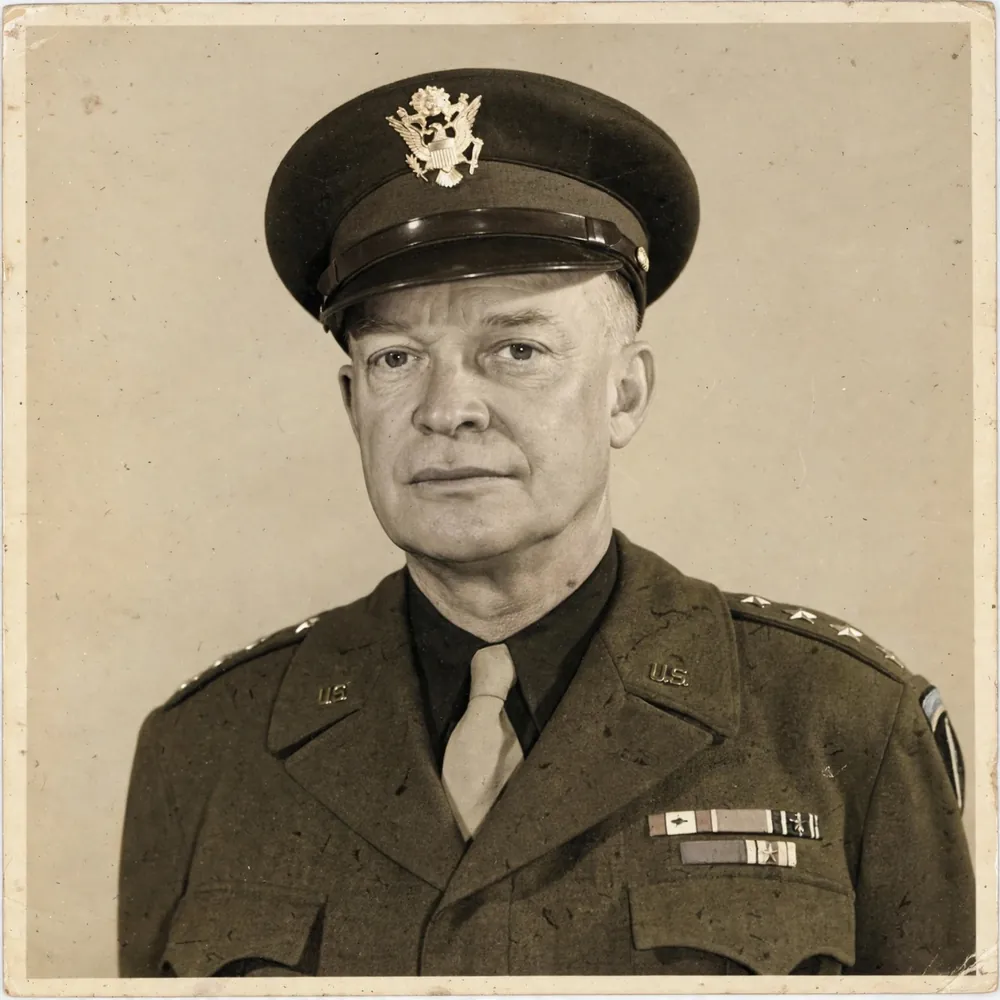
General Harold Alexander (Britain). Commander of the ground forces in Sicily, under Eisenhower. Alexander was a gentleman soldier who disliked giving direct orders, and his loose style of command allowed Patton and Montgomery to compete with each other. He later commanded the Allied forces in Italy, where he directed the long campaign up the peninsula. His handling of the Sicily campaign has been criticised for its lack of firm direction, and praised for its tact.
Lieutenant General George S. Patton (United States). Commander of the American Seventh Army. Patton’s drive on Palermo and then on Messina made him the most famous American general of the campaign, and his rapid advance became a legend. Patton was also the centre of the campaign’s most famous scandal: the slapping of two soldiers suffering from battle fatigue, which nearly ended his career. He survived the scandal, went on to command the Third Army in France, and was killed in a car accident in December 1945.
Montgomery and the Eighth Army
General Bernard Montgomery (Britain). Commander of the British Eighth Army, the veteran force that had defeated Rommel at El Alamein. Montgomery’s advance up the eastern coast of Sicily was slow and methodical, and it stalled in front of Catania, where the Germans held strong positions around Mount Etna. His caution has been criticised, and his defenders have pointed out that he was attacking the strongest part of the German defence with limited forces. Montgomery went on to command the ground forces in Normandy, and his reputation as a careful, deliberate commander was made in North Africa and confirmed in Sicily. He was, for better or worse, the opposite of Patton, and the contrast between the two men defined the campaign. Montgomery’s method was slow, deliberate and expensive in time, but it was also reliable, and the Eighth Army, which had learned to trust him in North Africa, followed him without question in Sicily and in Normandy.
The Axis Commanders
Field Marshal Albert Kesselring (Germany). The overall German commander in the Mediterranean and in Italy. Kesselring was one of Germany’s most capable generals, a former Luftwaffe officer who had become a master of defensive warfare. In Sicily he directed the German defence and the evacuation, and in Italy he would direct the long, skilful defence of the peninsula. After the war he was convicted of war crimes for the murder of Italian civilians, and his sentence was later commuted. He died in 1960.
General Hans-Valentin Hube (Germany). Commander of the German forces in Sicily from 17 July 1943, and the man who directed the delaying action and the evacuation across the Strait of Messina. Hube was a one-armed veteran of the First World War, a tough and capable commander who had fought on the Eastern Front. His evacuation of Sicily was a model of its kind, and he went on to command the First Panzer Army in Russia, where he was killed in an air crash in April 1944.
General Alfredo Guzzoni (Italy). Commander of the Italian Sixth Army, responsible for the defence of Sicily. Guzzoni’s army was poorly equipped and demoralised, and it collapsed under the Allied invasion. He was replaced in command during the campaign, and his career did not survive the fall of Sicily. His fate was the fate of the Italian army in Sicily: overwhelmed, outmatched and abandoned by its allies.
Kesselring: The Master of Defence
Kesselring’s conduct of the Sicily campaign deserves study, because it was a model of how to lose a battle well. He understood from the start that Sicily could not be held, and he did not waste his forces trying to hold it. Instead, he used the island’s mountains to slow the Allies, fought a series of delaying actions that cost the Allies time and casualties, and withdrew his forces across the strait in good order, to fight again in Italy. His defence of Italy, which lasted for twenty months, was built on the same principles, and it was one of the most skilful defensive campaigns of the war. Kesselring was, in the judgement of many historians, the best defensive commander Germany had, and Sicily was the first demonstration of his skill. Kesselring’s defence of Sicily was the first of his masterpieces, and the campaign in Italy that followed — at Salerno, at Cassino and at Anzio — would make his reputation as the greatest defensive commander of the war.
Frequently Asked Questions
When was Operation Husky?
From 9 July to 17 August 1943 — 38 days. The landings began on the night of 9–10 July, and the campaign ended when Patton’s forces entered Messina on 17 August.
Why was Sicily invaded?
To knock Italy out of the war, to open the Mediterranean to Allied shipping, and to gain airfields for bombing Germany’s southern flank. The decision was made at the Casablanca Conference in January 1943 as a compromise between the American wish to invade France and the British wish to strike in the Mediterranean.
How many men landed in Sicily?
More than 150,000 Allied soldiers landed on the first day, from some 3,000 ships and landing craft, and about 470,000 Allied soldiers took part in the campaign as a whole.
Why did the Germans escape from Sicily?
Because the Allies failed to close the Strait of Messina. The Germans ferried about 40,000 of their own soldiers and about 60,000 Italians across the 3-kilometre strait in the first two weeks of August, under strong anti-aircraft defences, and the Allied navy and air force were not tasked with stopping them.
What happened to Mussolini after Sicily?
He was overthrown on 25 July 1943 by the Fascist Grand Council and arrested by the King. Italy signed an armistice with the Allies on 3 September, and Mussolini was rescued by German commandos and set up as the head of a puppet government in northern Italy.
What did Operation Husky teach the Allies for D-Day?
That airborne drops needed better planning and navigation, that naval gunfire could save a beachhead, that two armies needed a single firm plan, and that an enemy allowed to withdraw would fight again. The lessons were applied in Normandy a year later.
Sources
- Wikipedia, “Allied invasion of Sicily” — dates, strength, casualty figures (about 24,000 Allied; about 29,000 Axis killed and wounded; more than 100,000 prisoners), commanders and the course of the campaign.
- US Army Center of Military History, Sicily and the Surrender of Italy, American Forces in Action series — official history, the landings, the counterattack at Gela and the race for Messina.
- Encyclopædia Britannica, “Sicily campaign” — background, the invasion and its outcome.
- Carlo D’Este, Bitter Victory: The Battle for Sicily, 1943 (E. P. Dutton, 1988) — the most detailed English history of the campaign, the rivalry between Patton and Montgomery, and the evacuation.
- Samuel Eliot Morison, History of United States Naval Operations in World War II, Vol. IX — the naval operations, the landings and the gunfire support at Gela.
- Albert Kesselring, The Memoirs of Field-Marshal Kesselring (Greenhill, 2007) — the German side, the defence of Sicily and the evacuation across the strait.
Further reading
- Rick Atkinson, The Day of Battle: The War in Sicily and Italy, 1943–1944 (Henry Holt, 2007).
- Douglas Porch, The Path to Victory: The Mediterranean Theater in World War II (Farrar, Straus and Giroux, 2004).