 WAR ATLAS MILITARY HISTORY MAGAZINE · WWI — WWII
Triple Entente
1. Lead
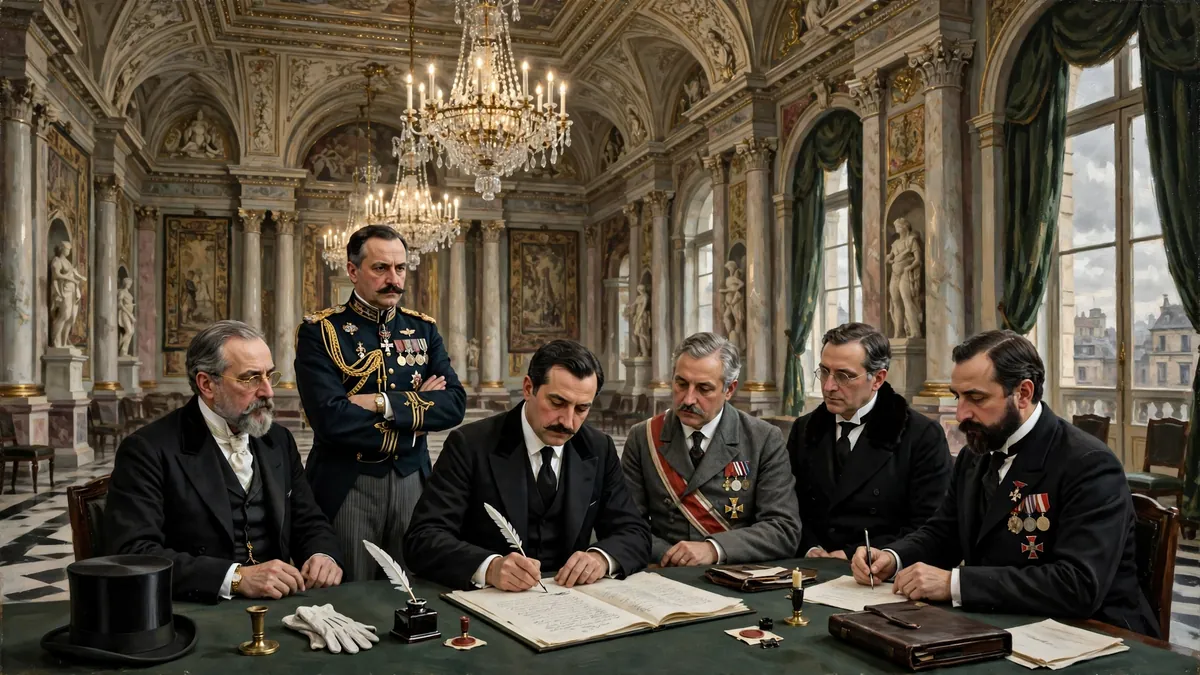
The Triple Entente was the understanding between France, Russia, and Britain that, by 1907, had brought the three great powers together in opposition to the Triple Alliance of Germany, Austria-Hungary, and Italy. It was not a formal military alliance like the Triple Alliance — there was no single treaty binding all three, and Britain never signed a military commitment to France or Russia before 1914 — but a series of bilateral agreements that, taken together, created a coalition. The name comes from the French entente, meaning “understanding”: the three powers understood each other, settled their colonial disputes, and agreed to consult and cooperate if threatened by Germany.
The Triple Entente grew from three agreements. The first was the Franco-Russian Alliance of 1892, a military convention in which France and Russia promised to help each other if either was attacked by Germany. The second was the Entente Cordiale of 8 April 1904, in which Britain and France settled their colonial disputes — above all in Egypt and Morocco — and agreed to cooperate. The third was the Anglo-Russian Convention of 31 August 1907, in which Britain and Russia settled their rivalries in Persia, Afghanistan, and Tibet. Together, these three agreements formed the Triple Entente, and Europe was divided into two armed camps: the Triple Entente on one side, the Triple Alliance on the other.
The Entente did not cause World War I by itself — the war began with the assassination of Archduke Franz Ferdinand in Sarajevo on 28 June 1914 and the July Crisis that followed — but it shaped how the war unfolded. When Germany declared war on Russia on 1 August 1914 and invaded France through Belgium on 3–4 August, Britain honoured its commitment to Belgium and declared war on Germany.
The alliance system turned a Balkan crisis into a continental war, and the continental war into a world war. The Triple Entente became the core of the Allied Powers that fought — and won — the First World War, and its legacy shaped the peace settlement at Versailles and the politics of Europe for a generation.
2. Key Facts
| Members | France, the Russian Empire, the United Kingdom |
| Formed | Completed 31 August 1907 (Anglo-Russian Convention); roots in 1892 and 1904 |
| Component agreements | Franco-Russian Alliance (1892), Entente Cordiale (8 April 1904), Anglo-Russian Convention (31 August 1907) |
| Nature | An “understanding”, not a formal military alliance; Britain had no written military commitment before 1914 |
| Rival bloc | The Triple Alliance: Germany, Austria-Hungary, Italy (Italy stayed neutral in 1914) |
| Key architects | Théophile Delcassé (France), Edward Grey (Britain), Alexander Izvolsky (Russia) |
| Purpose | To counter German power and settle colonial rivalries between the three members |
| Tested | The Moroccan Crises (1905, 1911), the Bosnian Crisis (1908–1909), the Balkan Wars (1912–1913) |
| In war | Became the core of the Allied Powers in World War I; Russia left after the 1917 Revolution |
| Aftermath | The Entente’s victory shaped the Treaty of Versailles (1919); the alliance system was replaced by the League of Nations |
3. Europe Before the Entente
To understand the Triple Entente, it is necessary to understand the Europe that produced it. After the Franco-Prussian War of 1870–1871, in which Prussia defeated France and the German Empire was proclaimed at Versailles, France lived in fear of Germany. France had lost Alsace-Lorraine to Germany, paid a large indemnity, and spent the next 40 years seeking allies and preparing for revanche — revenge.
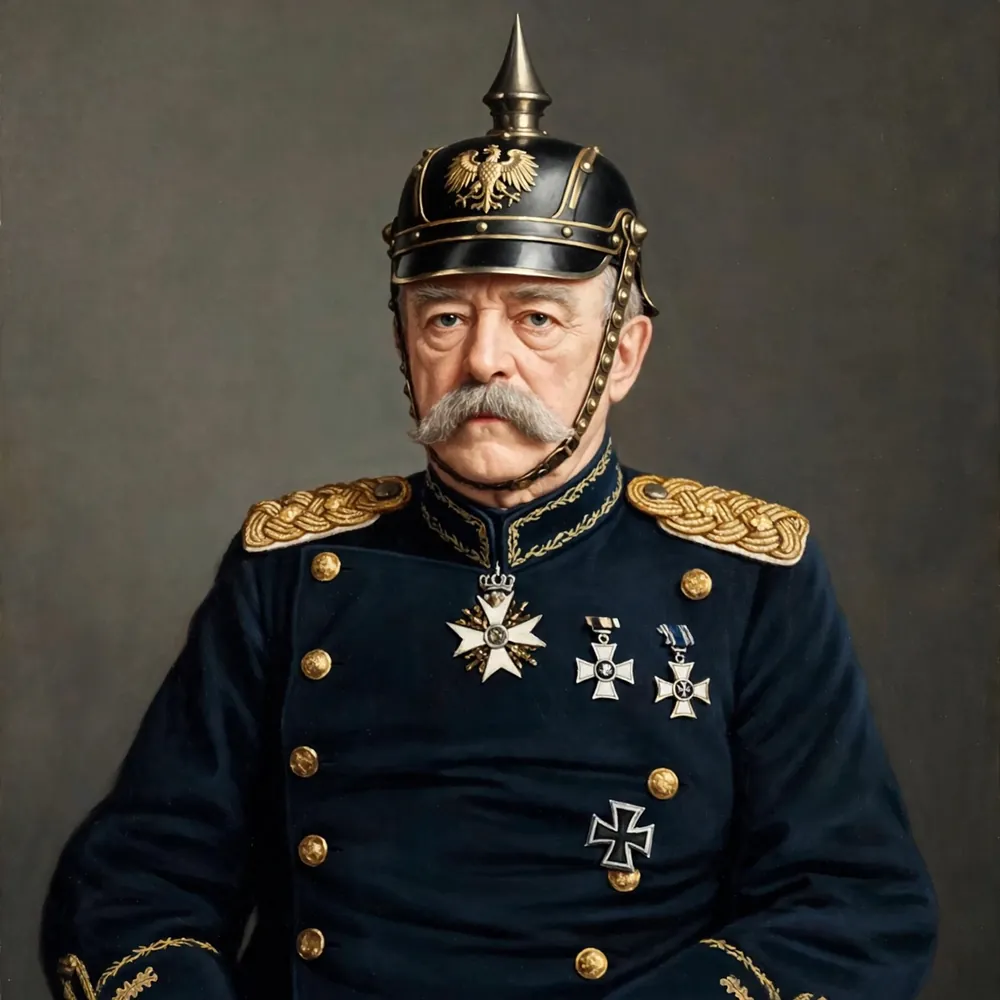
Germany, under Chancellor Otto von Bismarck, built a system of alliances to isolate France: the Dual Alliance with Austria-Hungary (1879), the Triple Alliance with Austria-Hungary and Italy (1882), and the Reinsurance Treaty with Russia (1887). Bismarck’s system kept France isolated and Europe at peace — but it depended on Bismarck’s skill, and it collapsed when Kaiser Wilhelm II dismissed Bismarck in 1890 and allowed the Reinsurance Treaty with Russia to lapse.
Russia, meanwhile, had its own ambitions. It sought influence in the Balkans, where it claimed to protect the Slav peoples under Ottoman and Austro-Hungarian rule, and in the Far East, where it sought a warm-water port and influence in Manchuria and Korea. Russia’s expansion brought it into conflict with Austria-Hungary in the Balkans and with Britain in Central Asia — the “Great Game” — and with Japan in the Far East. In 1904–1905 Russia fought and lost a war with Japan, a humiliation that weakened the Tsar’s regime and contributed to the Revolution of 1905.
Britain, for its part, had followed a policy of “splendid isolation” for most of the 19th century: it avoided permanent alliances on the Continent and relied on its navy and its empire. By 1900, however, Britain felt increasingly threatened. Germany was building a navy — the Tirpitz programme, begun in 1898 — that challenged British naval supremacy, and German industry was overtaking Britain’s. Britain’s colonial rivalries with France (in Africa) and with Russia (in Central Asia) were also expensive and dangerous. The Boer War of 1899–1902, in which Britain struggled to defeat two small Boer republics in South Africa, showed the world that Britain was not invincible and that it needed friends. The stage was set for the Entente.
4. The Franco-Russian Alliance, 1892
The first pillar of the Triple Entente was the Franco-Russian Alliance. After Bismarck’s dismissal in 1890 and the lapse of the Reinsurance Treaty, Russia was isolated and France was isolated — and the two isolated powers found each other. In August 1891, France and Russia signed a political agreement; in August 1892, their military staffs signed a military convention.
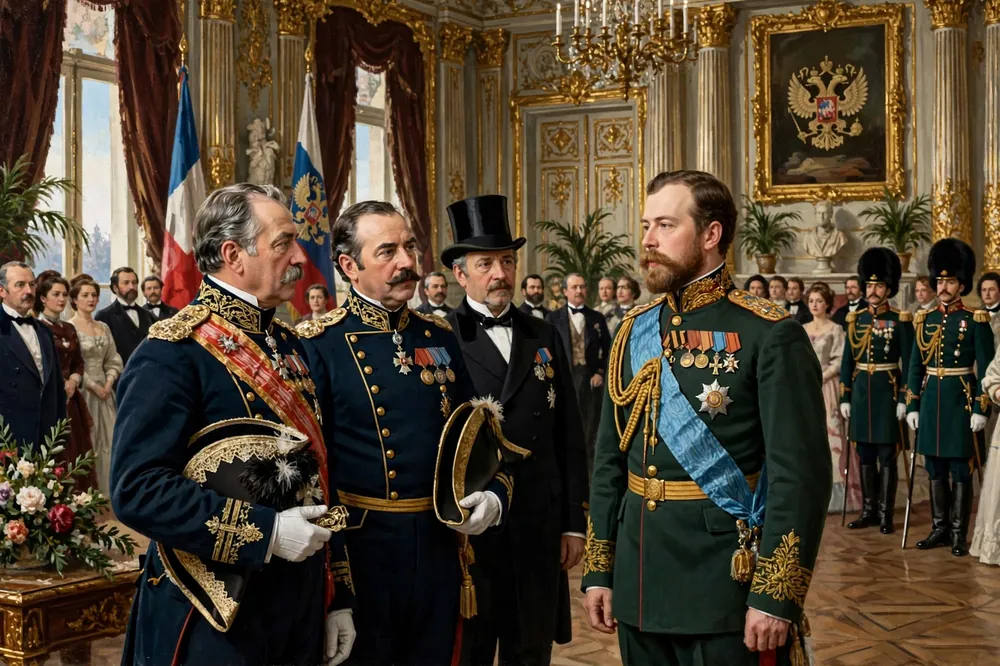
The convention was secret, but its terms were clear: if France was attacked by Germany, or by Italy supported by Germany, Russia would attack Germany with all its forces; if Russia was attacked by Germany, or by Austria-Hungary supported by Germany, France would attack Germany with all its forces.
The alliance was defensive in form but, in practice, it committed both countries to a two-front war against Germany — the nightmare of German military planners, who had feared a two-front war since Bismarck’s time.
The Franco-Russian Alliance transformed European politics. For the first time, France was no longer alone: it had a great-power ally, and Germany could no longer count on fighting France in isolation. The alliance also had a financial dimension: French banks lent large sums to Russia, financing the construction of Russian railways — including the Trans-Siberian Railway — and Russian industrialisation.
By 1914, France had lent Russia about 11 billion francs, and French investment was the largest source of foreign capital in Russia. The alliance held through the crises of the early 20th century and became the backbone of the Entente.
It also shaped the war that followed: the Schlieffen Plan, Germany’s war plan of 1914, was designed to defeat France quickly before Russia could mobilise — a plan that depended on speed and that failed when Russia mobilised faster than expected and France held at the Marne.
5. The Entente Cordiale, 1904
The second pillar was the Entente Cordiale between Britain and France, signed on 8 April 1904. For centuries, Britain and France had been rivals — they had fought each other in North America, India, and Africa, and as recently as 1898 they had nearly gone to war over Fashoda in the Sudan, where French and British forces confronted each other on the Nile. The Entente Cordiale settled those rivalries.
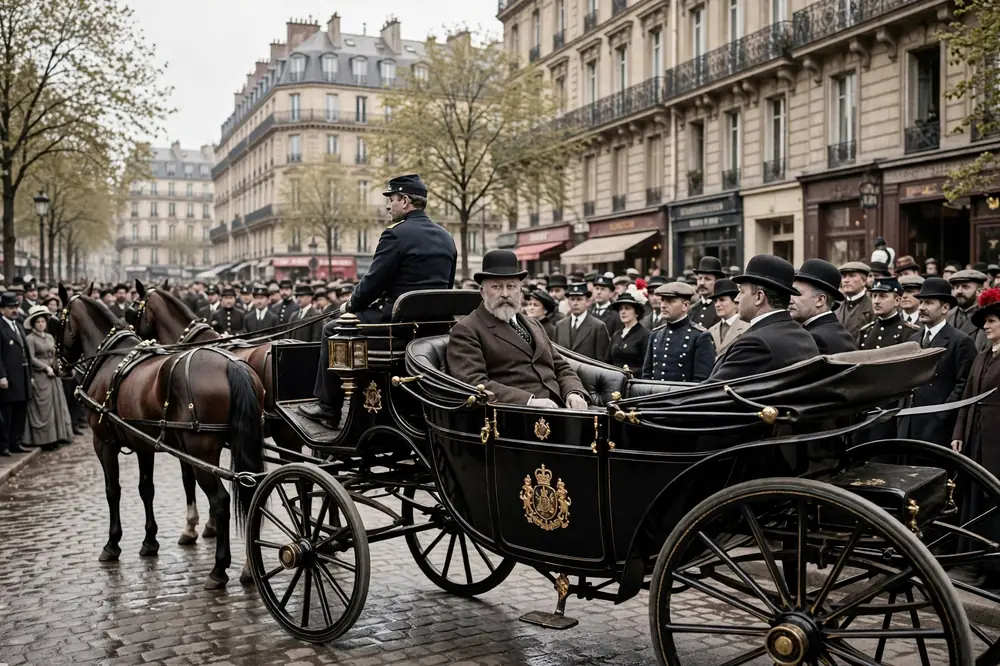
Britain recognised France’s position in Morocco; France recognised Britain’s position in Egypt. The two countries settled disputes over Newfoundland fisheries, Siam, Madagascar, and the New Hebrides. The agreement was not a military alliance — it contained no promise of mutual defence — but it created a habit of cooperation, and it was followed by military conversations between the British and French general staffs from 1905–1906 onwards.
The architect of the Entente Cordiale was the French Foreign Minister, Théophile Delcassé, who believed that France’s security required a rapprochement with Britain. On the British side, the agreement was driven by the Foreign Secretary, Lord Lansdowne, and by King Edward VII, who made a state visit to Paris in May 1903 that was credited with warming public opinion.
The immediate trigger was the German threat: Germany’s naval programme and its increasingly assertive foreign policy convinced both London and Paris that they needed each other. The Entente was tested almost immediately. In March 1905, Kaiser Wilhelm II visited Tangier and declared Germany’s support for Moroccan independence, challenging France’s position and provoking the First Moroccan Crisis.
Britain stood by France, and at the Algeciras Conference of 1906 France’s position in Morocco was confirmed. The crisis showed that the Entente worked — and it pushed Germany and France further apart.
6. The Anglo-Russian Convention, 1907
The third pillar was the Anglo-Russian Convention, signed on 31 August 1907. Britain and Russia had been rivals in Central Asia for most of the 19th century — the “Great Game” — competing for influence in Persia, Afghanistan, and Tibet. The convention settled those rivalries: Persia was divided into a Russian sphere in the north, a British sphere in the south, and a neutral zone in the middle; Britain recognised Russia’s interests in northern Afghanistan, and Russia recognised Britain’s interests in southern Afghanistan; and both agreed to respect Tibet’s territorial integrity under Chinese suzerainty. The convention was not a military alliance, but it removed the main source of Anglo-Russian friction and completed the Triple Entente.
The convention was made possible by Russia’s defeat in the Russo-Japanese War of 1904–1905 and the Revolution of 1905, which weakened Russia and made it more willing to compromise, and by Britain’s growing fear of Germany, which made London willing to settle with St. Petersburg. The Russian Foreign Minister, Alexander Izvolsky, and the British Foreign Secretary, Sir Edward Grey, negotiated the agreement.
Like the Entente Cordiale, it was controversial at home: British liberals criticised the government for allying with the autocratic Tsar, and Russian nationalists criticised Izvolsky for conceding too much. But the agreement held, and with it the Triple Entente was complete. Europe was now divided into two camps, each bound by treaties and by the fear of the other.
7. The Entente in Crisis
The Triple Entente was tested repeatedly in the years before 1914, and each test made it stronger — and made war more likely. The Bosnian Crisis of 1908–1909 began when Austria-Hungary annexed Bosnia-Herzegovina, a province it had administered since 1878 but which was formally Ottoman territory.
Russia, which had been promised compensation in the Straits, was humiliated when Austria-Hungary acted without consulting it, and Serbia — Russia’s client in the Balkans — was furious. Germany stood firmly behind Austria-Hungary, and Russia, still weakened by its defeat by Japan and its revolution, was forced to back down.
The crisis embittered Russia and convinced its leaders that they could not afford another humiliation — a conviction that shaped Russia’s response to the Sarajevo assassination in 1914.
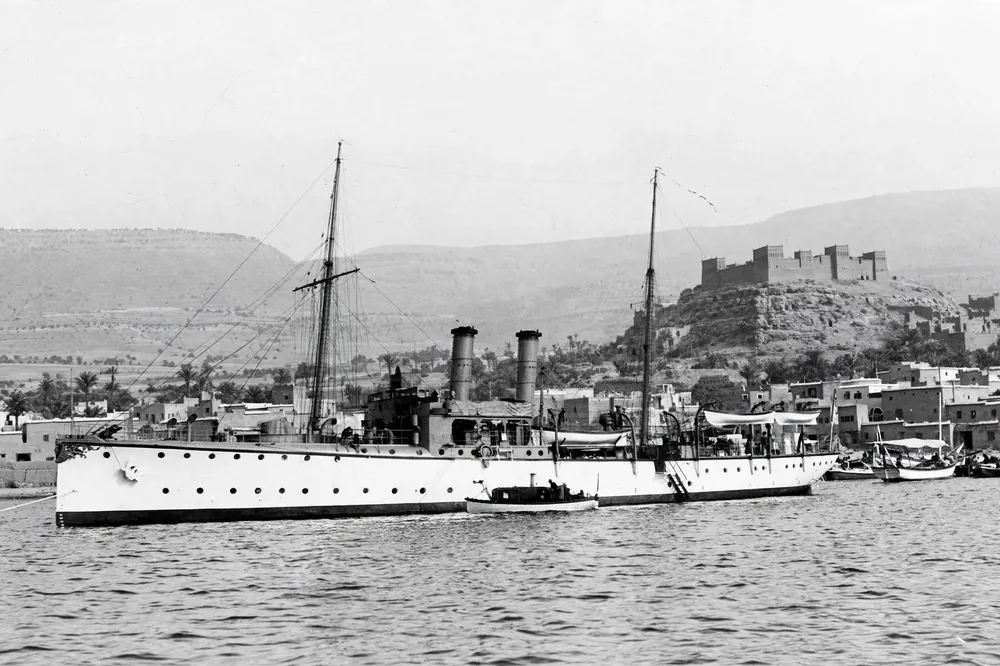
The Second Moroccan Crisis of 1911 — the Agadir Crisis — began when Germany sent the gunboat Panther to the Moroccan port of Agadir, challenging France’s position in Morocco. Britain’s Chancellor of the Exchequer, David Lloyd George, gave a famous speech at Mansion House warning Germany that Britain would not stand aside, and the crisis was resolved by negotiation: Germany accepted France’s position in Morocco in exchange for territory in the French Congo. But the crisis had shown that Britain would support France against Germany, and it had deepened German resentment.
The Balkan Wars of 1912–1913, in which Serbia, Bulgaria, Greece, and Montenegro fought the Ottoman Empire and then each other, further destabilised the region and increased tensions between Russia and Austria-Hungary. Each crisis was resolved without a general war, but each one left behind bitterness, increased military spending, and a stronger belief on both sides that the next crisis might mean war. The Entente and the Triple Alliance had become rigid: the members of each bloc were committed to supporting each other, and the room for compromise was shrinking. When the crisis of July 1914 came, the alliance system did what it was designed to do — it turned a local conflict into a continental war.
8. The July Crisis and the Outbreak of War
The Triple Entente faced its ultimate test in July 1914. On 28 June 1914, the Archduke Franz Ferdinand, heir to the Austro-Hungarian throne, was assassinated in Sarajevo by Gavrilo Princip, a Bosnian Serb member of the Black Hand, a Serbian nationalist organisation. Austria-Hungary, with Germany’s support (the “blank cheque” of 5–6 July), issued an ultimatum to Serbia on 23 July, demanding concessions that no sovereign state could accept. Serbia accepted most of the demands but rejected those that would have compromised its sovereignty; Austria-Hungary declared war on Serbia on 28 July 1914.
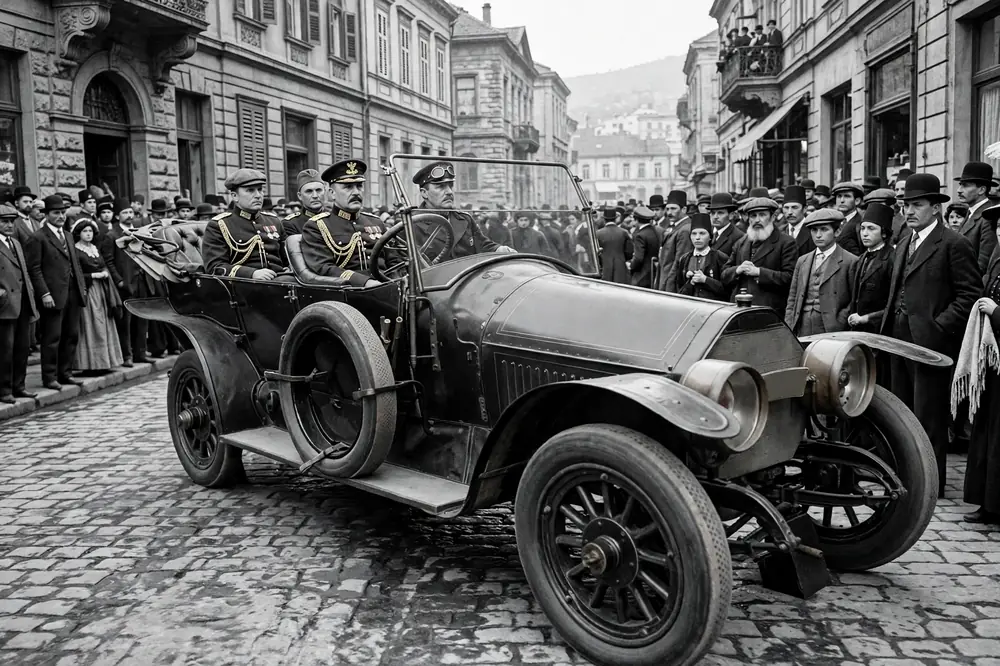
The alliance system then took over. Russia, Serbia’s patron and protector, ordered general mobilisation on 30 July, believing that it could not abandon Serbia without losing its standing as a great power and its credibility in the Balkans. Germany, bound by its alliance with Austria-Hungary and by the Schlieffen Plan, declared war on Russia on 1 August and on France on 3 August, and invaded Belgium on 4 August in order to outflank the French armies.
Britain, which had guaranteed Belgium’s neutrality since the Treaty of London of 1839, declared war on Germany on 4 August 1914. Within a week, the Triple Entente and the Triple Alliance were at war — and the war, which had begun in the Balkans, became a world war when Britain’s empire and Japan (which joined the Entente in August 1914) entered the conflict.
Historians still debate whether the alliance system caused the war or merely shaped its scale. The “Fischer thesis”, named after the German historian Fritz Fischer, argued that Germany deliberately sought war in 1914 to break the Entente’s encirclement and achieve world power.
Others argue that the war was the result of miscalculation, rigid military timetables, and the failure of diplomacy — that the alliance system made a local war into a general war, but that the war itself was caused by the decisions of individual leaders in July 1914.
What is not in doubt is that the Triple Entente determined who fought whom: France, Russia, and Britain fought together against Germany and Austria-Hungary, and the war they fought became the First World War.
9. The Entente in World War I
In World War I, the Triple Entente became the core of the Allied Powers. France and Russia fought Germany on two fronts, as the Franco-Russian Alliance had intended: France held the Western Front, where the war settled into trench warfare after the Battle of the Marne in September 1914, and Russia fought on the Eastern Front, where its armies — despite defeats at Tannenberg and the Masurian Lakes in 1914 — tied down large German forces.
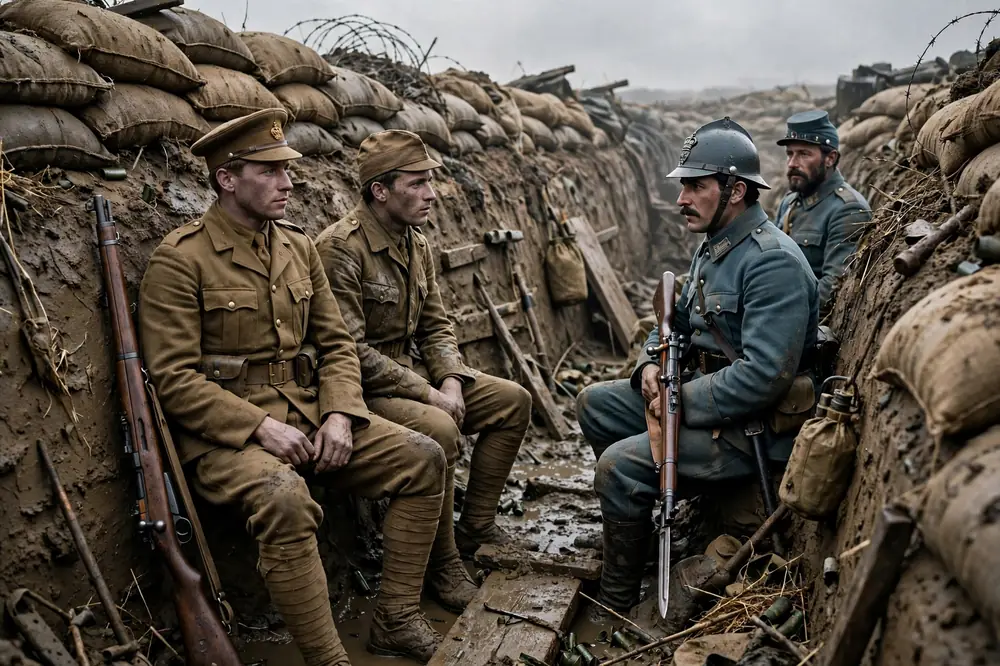
Britain, whose army was small at the start of the war, expanded it enormously and fought alongside France on the Western Front, while the Royal Navy blockaded Germany and protected the sea lanes that kept the Entente supplied. The Entente was joined by Japan (1914), Italy (1915, after leaving the Triple Alliance), Romania (1916), and the United States (1917), among others.
The Entente’s greatest weakness was Russia. The Russian war effort was hampered by poor leadership, inadequate supplies, and a political system that could not sustain a long war. In 1917, after the February Revolution overthrew the Tsar and the October Revolution brought the Bolsheviks to power, Russia left the war: the Treaty of Brest-Litovsk, signed in March 1918, gave Germany control of vast territories in the east.
The loss of Russia was a severe blow to the Entente, but it was offset by the entry of the United States in April 1917, which brought fresh troops and enormous industrial resources. The Entente held together — despite the strains of four years of total war — and in November 1918 Germany and its allies sued for peace. The Triple Entente had won the war.
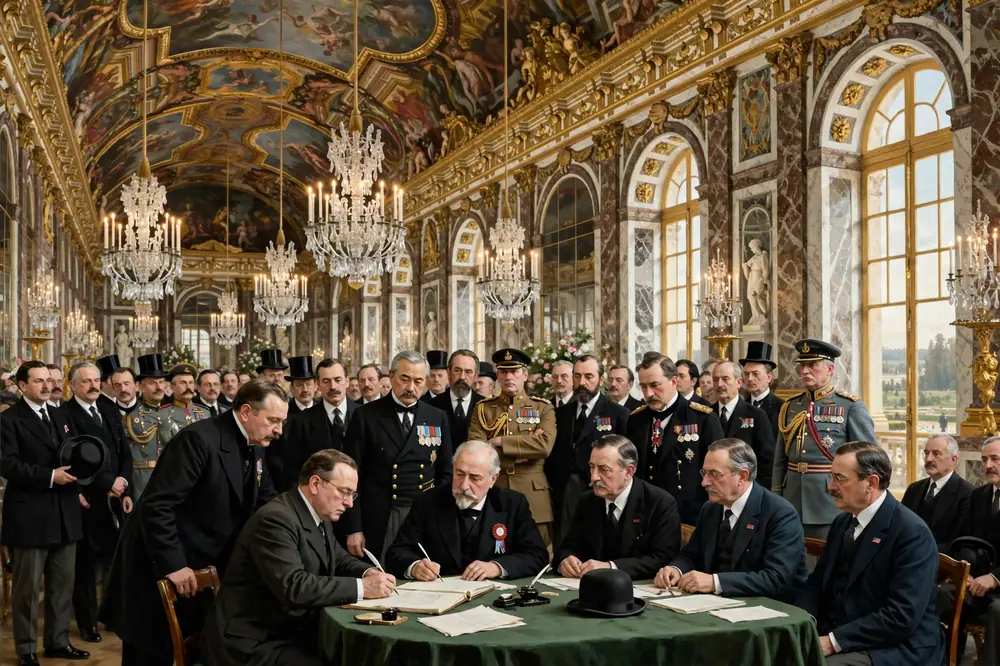
The victory, however, came at a terrible price. About 10 million soldiers died in World War I, and about 20 million more were wounded; civilian deaths, including from the influenza pandemic of 1918–1919, brought the total far higher. France lost about 1.4 million soldiers, Russia about 1.8 million (and far more civilians), and Britain about 880,000. The Russian Empire collapsed, the Austro-Hungarian and Ottoman empires disappeared, and the German Empire became a republic. The peace settlement at Versailles, which the Entente’s victory made possible, created a new Europe — and, as the Treaty of Versailles article explains, a peace that lasted only 20 years.
10. Legacy and Assessment
The legacy of the Triple Entente is the legacy of the alliance system itself. The Entente showed that alliances can deter aggression — Germany was deterred from attacking France alone, and the Entente’s existence forced Germany to plan for a two-front war — but it also showed that alliances can make wars bigger and harder to stop. The rigid commitments of 1914, the military timetables that left no time for diplomacy, and the belief on both sides that the other was planning aggression turned a crisis that might have remained local into a catastrophe that killed millions.
The debate over the Entente’s role continues because the evidence points in two directions at once. On one side, the Entente was a defensive arrangement: France, Russia, and Britain each joined it because they feared Germany, and none of the three agreements contained a promise to start a war. The Franco-Russian Alliance was explicitly defensive, the Entente Cordiale settled colonial disputes, and the Anglo-Russian Convention did the same.
On the other side, the Entente changed Germany’s calculations in a dangerous way. German leaders, above all Kaiser Wilhelm II and his generals, came to believe that Germany was being “encircled” by hostile powers, and that belief — whether justified or not — made them more willing to risk war in 1914, on the argument that Germany’s position would only get worse with time.
The Schlieffen Plan itself was a product of encirclement: because Germany expected to fight France and Russia at once, its planners designed a gamble to defeat France in six weeks before turning east. When the gamble failed at the Marne, the war Germany had tried to win quickly became the war of attrition it had tried to avoid.
The Entente, in other words, both deterred Germany and frightened it — and fear, in 1914, proved as dangerous as ambition.
After World War I, the victors tried to replace the alliance system with something better: the League of Nations, founded by the Treaty of Versailles in 1919–1920, was meant to provide collective security without the rigid blocs of the pre-war system.
The League failed, and the alliance system returned — in the form of NATO and the Warsaw Pact during the Cold War, and in the network of alliances that still shapes world politics today. The lesson of the Triple Entente is still debated: some argue that the Entente was a necessary response to German power and that the war would have happened anyway; others argue that the alliance system made a bad situation worse, and that a more flexible diplomacy might have preserved the peace.
What is certain is that the Triple Entente, formed to keep the peace, became the coalition that fought the greatest war the world had yet seen — and that its victory remade the map of Europe.
Frequently Asked Questions
Related articles
Sources
- Encyclopædia Britannica, “Triple Entente” and “Entente Cordiale” — formation, dates and members.
- Wikipedia, “Triple Entente” — the three component agreements, dates and the July Crisis, cross-checked against scholarly sources.
- Christopher Clark, The Sleepwalkers: How Europe Went to War in 1914 (Harper, 2012) — the alliance system and the origins of World War I.
- Margaret MacMillan, The War That Ended Peace: The Road to 1914 (Random House, 2013).
- Paul W. Schroeder, “The Hague Conference of 1899” and the alliance system — in The Transformation of European Politics, 1763–1848 and later works on the pre-war system.
- Zara Steiner, Britain and the Origins of the First World War (Palgrave Macmillan, 2003).
- The National Archives (UK) — the Entente Cordiale and the Anglo-Russian Convention, original documents.
- David Stevenson, 1914–1918: The History of the First World War (Allen Lane, 2004).
- Hew Strachan, The First World War, Volume I: To Arms (Oxford University Press, 2001).