 WAR ATLAS MILITARY HISTORY MAGAZINE · WWI — WWII
Battle of Iwo Jima
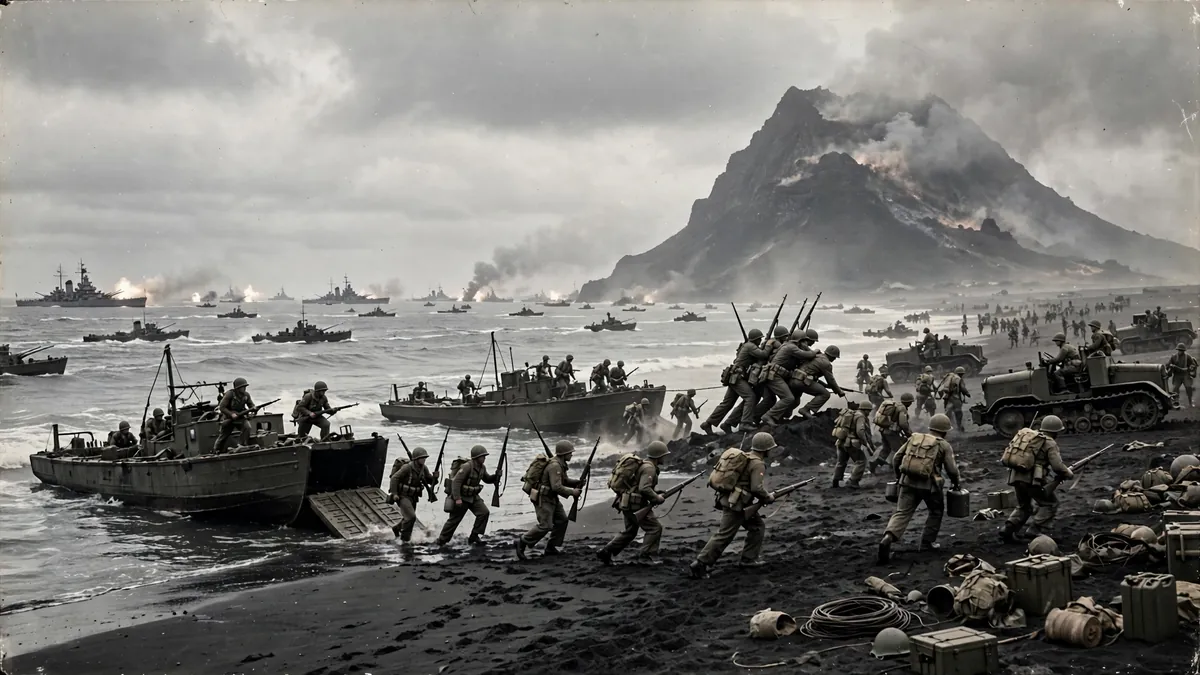
The Battle of Iwo Jima was fought from 19 February to 26 March 1945, on a small volcanic island in the Pacific, about 1,200 kilometres south of Tokyo. It was one of the bloodiest battles of the Pacific War: the United States Marine Corps landed about 70,000 men on an island defended by about 21,000 Japanese soldiers, dug into caves, tunnels and concrete pillboxes, and the battle lasted 36 days.
The Americans lost 6,821 killed and about 19,000 wounded — the only battle of the Pacific War in which American casualties exceeded Japanese casualties — and the Japanese lost almost their entire garrison, about 19,000 men, with only about 200 taken prisoner.
The battle’s most famous moment came on 23 February, four days after the landing, when a group of Marines raised the American flag on Mount Suribachi, the island’s highest point — a moment captured in a photograph by Joe Rosenthal that became the most reproduced image of the war, and the model for the Marine Corps War Memorial in Washington, D.C.
1. Key Facts
| Date | 19 February – 26 March 1945 |
| Location | Iwo Jima, Volcano Islands, about 1,200 km south of Tokyo |
| Result | American victory; island captured after 36 days of fighting |
| American commanders | Lt. Gen. Holland M. Smith (Expeditionary Troops); Maj. Gen. Harry Schmidt (V Amphibious Corps); Maj. Gen. Clifton Cates (4th Marine Division); Maj. Gen. Graves Erskine (3rd Marine Division); Maj. Gen. Keller Rockey (5th Marine Division) |
| Japanese commander | Lt. Gen. Tadamichi Kuribayashi (109th Division); Col. Baron Takeichi Nishi (26th Tank Regiment) |
| American strength | About 70,000 Marines landed (3rd, 4th and 5th Marine Divisions); about 500 ships, 1,000 aircraft |
| Japanese strength | About 21,000 troops (109th Division, plus naval and air units) |
| American losses | 6,821 killed, about 19,000 wounded (about 26,000 total casualties) |
| Japanese losses | About 19,000 killed; about 200 taken prisoner |
2. Background
Iwo Jima is a small island, about 8 kilometres long and 4 kilometres wide, in the Volcano Islands, about halfway between Saipan and Tokyo. In 1945, it was Japanese territory — the first Japanese home territory that the Americans would attack — and it was valuable for one reason: its airfields. The island had two airfields, Motoyama No. 1 and No.
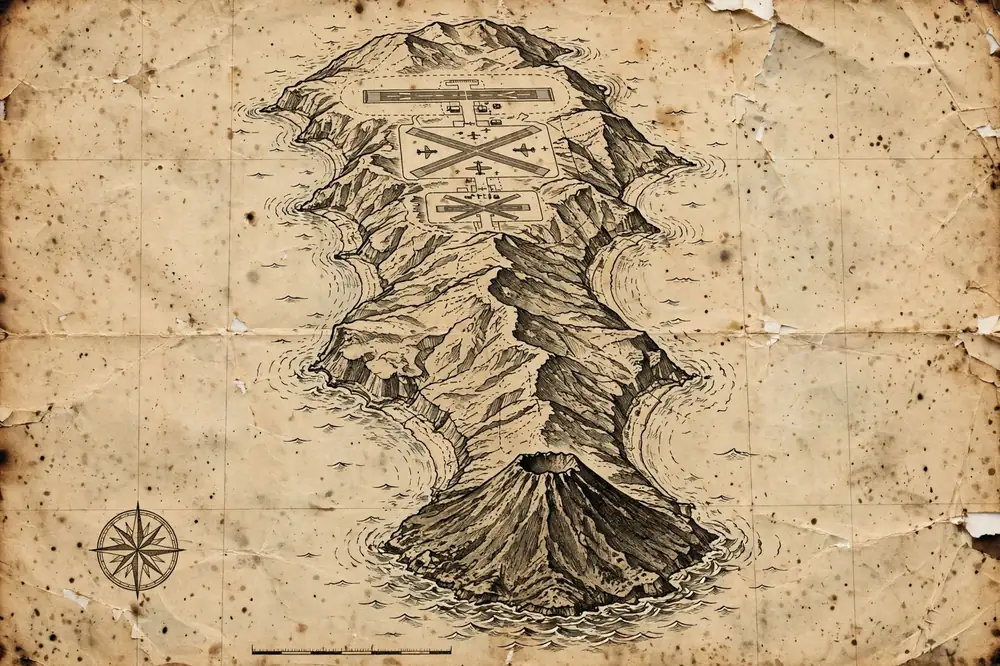
2, and a third under construction, and they sat directly on the route of the American B-29 bombers flying from the Mariana Islands to bomb Japan. The B-29s, flying from Saipan and Tinian, were being attacked by Japanese fighters based on Iwo Jima, and they had no fighter escort: the American fighters, the P-51 Mustang, could not reach Japan from the Marianas.
If the Americans took Iwo Jima, their fighters could be based there, and they could escort the bombers to Japan — and the B-29s that were damaged over Japan could land on Iwo Jima instead of ditching in the sea. The island was, in the words of the American planners, “a stepping stone to Japan”.
The Japanese knew Iwo Jima would be attacked, and they prepared for it. The island was defended by Lieutenant General Tadamichi Kuribayashi, a quiet, thoughtful officer who had served as a military attaché in the United States and who understood American power.
Kuribayashi’s plan was the opposite of the beach defence that had failed at Tarawa and Saipan: he would not contest the landing on the beaches, where the American naval guns could destroy his men. Instead, he would fight from underground.
The Japanese dug a vast network of caves and tunnels into the volcanic rock of the island — about 18 kilometres of tunnels, some of them 20 metres deep — and they built concrete pillboxes, artillery positions and observation posts that were almost impervious to bombardment.
The island’s highest point, Mount Suribachi, a 170-metre volcano at the southern end of the island, was fortified with guns that covered the landing beaches. The northern half of the island, around the airfields, was a maze of ridges, caves and tunnels. Kuribayashi’s men were ordered to fight to the death: there would be no surrender, and no banzai charge.
The general’s own words, in an order to his men, were: “Each man will make it his duty to kill ten of the enemy before dying.”
The American plan, codenamed Operation Detachment, was the largest Marine landing of the war. The V Amphibious Corps, under Major General Harry Schmidt, was made up of three Marine divisions — the 3rd, 4th and 5th — with about 70,000 men, supported by the guns of about 500 ships and by carrier aircraft. The landing was to be on the south-east beaches, below Mount Suribachi, and the Marines were to take the mountain on the first day, then drive north to the airfields. The planners expected the battle to last about five days. It lasted 36.
3. Opposing Forces
The American landing force was the V Amphibious Corps, with three Marine divisions: the 4th and 5th Divisions, which landed on the first day, and the 3rd Division, which landed later as a reserve. The Marines were supported by the guns of the US Navy — battleships, cruisers and destroyers — and by carrier aircraft, and by the Army’s 147th Infantry Regiment, which garrisoned the island after the battle. The Marines were veterans: the 4th Division had fought at Saipan and Tinian, the 3rd at Bougainville and Guam, and the 5th was a new division, formed for the battle, with many men who had never been in combat.
| United States | Japan | |
|---|---|---|
| Ground troops | About 70,000 Marines (3rd, 4th and 5th Marine Divisions) | About 21,000 troops (109th Division, plus naval troops) |
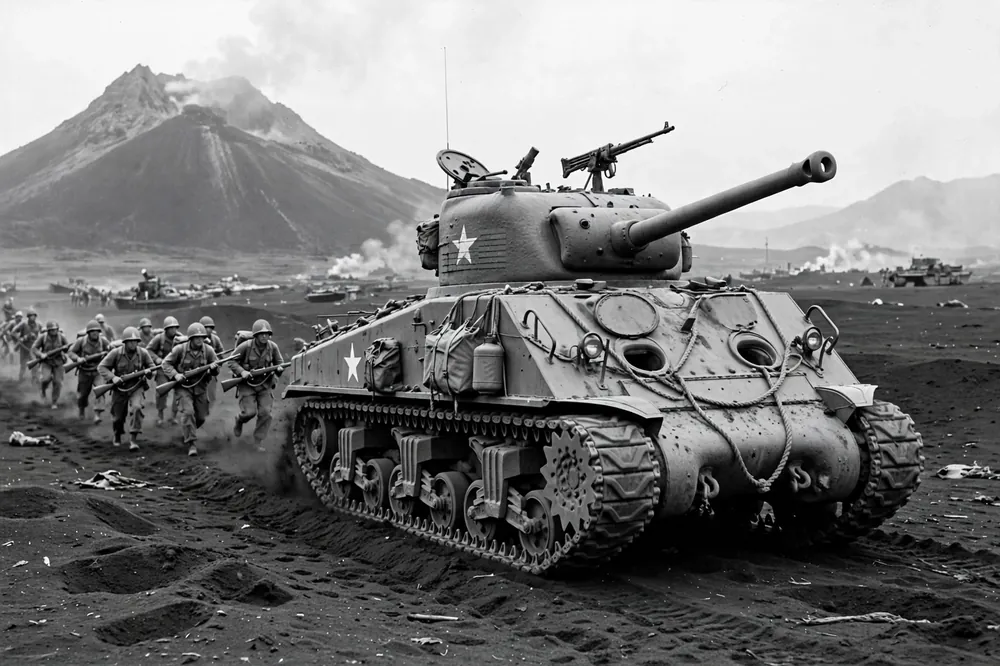
| Tanks | About 200 Sherman tanks | About 20 tanks (26th Tank Regiment, under Baron Nishi) |
| Artillery | Naval gunfire: 7 battleships, 4 heavy cruisers, plus destroyers; Marine artillery | About 100 guns, mostly in caves and tunnels; mortars |
| Aircraft | About 1,000 (carrier-based; later land-based from the captured airfields) | Few; the airfields were the objective, not the base |
| Ships | About 500 | None (the island was supplied by air and by small craft) |
| Commanders | H. M. Smith (Expeditionary Troops); Schmidt (V Amphibious Corps); Cates, Erskine, Rockey (division commanders) | Kuribayashi (109th Division); Nishi (26th Tank Regiment) |
The Japanese garrison was the 109th Division, under Kuribayashi, with about 21,000 men, including the 145th Infantry Regiment, the 26th Tank Regiment under Colonel Baron Takeichi Nishi — an Olympic gold medallist in equestrianism at the 1932 Los Angeles Games — and naval troops. The garrison’s strength was not in numbers but in position: the caves and tunnels, the concrete pillboxes, and the interlocking fields of fire from Mount Suribachi and the northern ridges. The Japanese artillery, firing from caves, could not be seen or hit, and the Japanese infantry, fighting from underground, could not be dislodged except by flamethrowers, satchel charges and grenades, delivered at close quarters.
The American advantage was in firepower: the naval guns, the carrier aircraft, the artillery and the tanks. But the firepower could not reach the Japanese in their tunnels, and the battle became a close-quarters fight, cave by cave, pillbox by pillbox, in which the Marines’ courage and the Japanese determination were matched. The battle’s casualty rate — about 26,000 American casualties out of 70,000 men landed — was the highest of any Marine battle of the war.
4. The Battle
The landing, 19 February 1945
The landing began at 09:00 on 19 February 1945, after three days of naval bombardment — the longest preliminary bombardment of the Pacific War to that point, though the Marines had asked for ten days and had been given three.
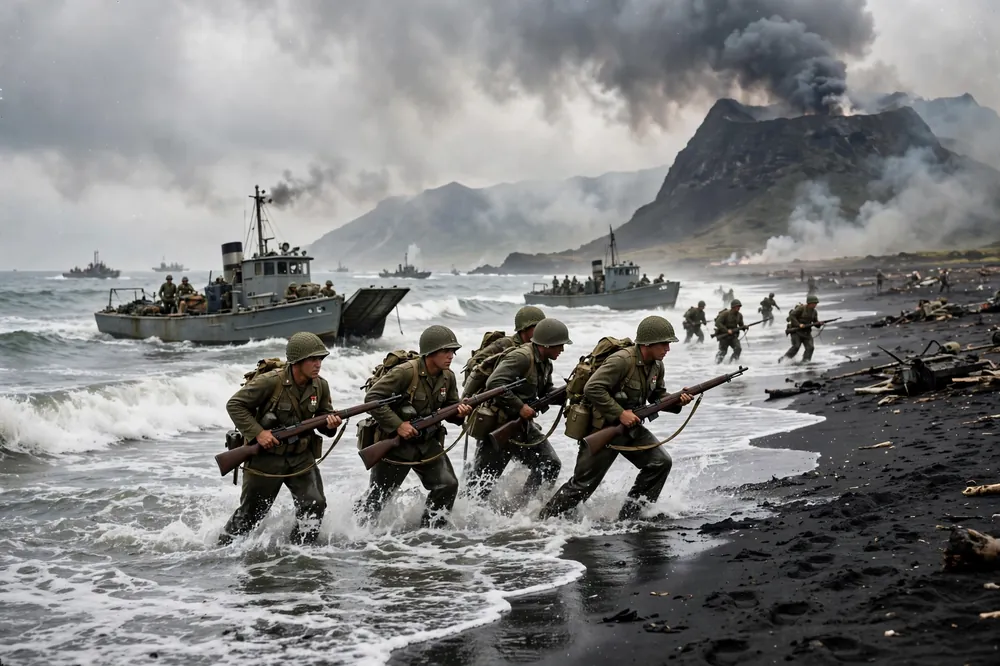
The first waves landed on the south-east beaches, below Mount Suribachi, and they met little opposition: Kuribayashi had ordered his men not to fire on the beaches, but to wait until the Americans were ashore and then to fire on them from the high ground.
The Marines came ashore in the black volcanic sand of Iwo Jima — a coarse, loose sand that bogged down vehicles, that swallowed the men’s boots, and that made movement almost impossible. The sand was the first enemy: the tanks sank to their axles, the artillery could not move, and the men struggled through it under fire.
By the end of the first day, about 30,000 Marines were ashore, and they had taken about 1,000 casualties. The mountain, Suribachi, was still in Japanese hands, and the Marines had not yet reached the airfields. The battle had begun, and it would not end for 36 days.
Mount Suribachi and the flag raising
Mount Suribachi was the first objective, and it was taken on 23 February, four days after the landing. The 5th Marine Division’s 28th Regiment fought its way up the mountain, cave by cave, and on the morning of 23 February, a patrol reached the summit and raised a small American flag. The flag was too small to be seen from the beaches, and a second, larger flag was brought up.
Six Marines — Harlon Block, Harold Keller, Ira Hayes, Harold Schultz, Franklin Sousley and Michael Strank — raised the second flag, and the Associated Press photographer Joe Rosenthal, who had arrived on the summit just in time, took the photograph that became the most famous image of the war: Raising the Flag on Iwo Jima.
The photograph won the Pulitzer Prize, and it became the model for the Marine Corps War Memorial in Washington, D.C. Three of the six men in the photograph — Strank, Sousley and Block — were killed in the battle before it ended.
The flag raising was a moment of triumph, but the battle was far from over: the northern half of the island, with its airfields and its ridges, was still in Japanese hands, and it would take another month to take.
The northern battle
The battle for the north was fought in the airfields and on the ridges: Motoyama No. 1 airfield was taken on 21 February, and No. 2 on 27 February, but the fighting around them — at the ridges called the Meat Grinder, the Amphitheater and Turkey Knob — was the worst of the battle.
The Japanese positions were in caves and tunnels, and the Marines had to take them with flamethrowers, satchel charges and grenades, at close quarters. The fighting was in the rain and the mud, and it was fought hill by hill, cave by cave.
The 4th Division, which had fought at Saipan, lost so many men that it was withdrawn from the line; the 3rd Division, which had been in reserve, was committed, and it too suffered heavy casualties. The battle’s tempo was slow and grinding: the Marines advanced a few hundred metres a day, and every metre cost lives.
The Japanese fought to the death, as Kuribayashi had ordered. There were no mass surrenders, and no banzai charges: the Japanese fought from their caves, and they died in them. The American flamethrower tanks — the “Ronson” Shermans, named after the cigarette lighter — were the weapon that broke the caves: they sprayed burning fuel into the cave mouths, and the Japanese inside were killed by the fire or by the lack of oxygen. The battle was, in the words of one Marine, “a war of caves”.
The end
The battle ended on 26 March 1945, after 36 days. Kuribayashi, his army destroyed, was killed in the final days — his body was never found, and the exact date and place of his death are not known. The last Japanese resistance was a final, desperate attack on the night of 25–26 March, when about 300 Japanese soldiers, led by the senior surviving officer, attacked the American airfield in a last banzai charge.
They were killed to a man. The island was declared secure on 26 March. The Americans had lost 6,821 killed and about 19,000 wounded; the Japanese had lost about 19,000 killed, with only about 200 taken prisoner. The airfields were in American hands, and the first American fighters — P-51 Mustangs — landed on Iwo Jima on 6 March, while the battle was still raging, and began to escort the B-29s to Japan.
5. Turning Point
The turning point of the Battle of Iwo Jima was the flag raising on Mount Suribachi on 23 February 1945. The mountain was the island’s highest point, and its capture gave the Americans observation over the landing beaches and the southern half of the island.
The flag raising was a moment of triumph, and it was reported in the United States as a victory — but the battle was far from over. The northern half of the island, with its airfields and its ridges, was still in Japanese hands, and it would take another month to take.
The flag raising was a turning point in morale, not in the battle: it gave the Marines, and the American public, a symbol of victory, and it gave the battle its enduring image.
The real turning point, militarily, was the capture of the airfields. Motoyama No. 1 was taken on 21 February, and No. 2 on 27 February, and the first American fighters landed on 6 March. The airfields were the reason the battle was fought, and their capture meant that the B-29s could be escorted to Japan, and that damaged bombers could land on Iwo Jima. By the end of the war, about 2,400 B-29s had made emergency landings on Iwo Jima, and about 24,000 airmen had been saved. The airfields were the battle’s prize, and they were won.
The third turning point was the Japanese decision to fight from underground. Kuribayashi’s plan — to let the Americans land, and then to fight them from caves and tunnels — made the battle the bloodiest of the Pacific War, and it made it the only battle in which American casualties exceeded Japanese casualties. The plan did not save the island, but it made the Americans pay a price that shocked the American public, and it made the battle a symbol of the cost of the war against Japan. The price of Iwo Jima — 6,821 American dead — was one of the reasons the Americans chose the atomic bomb over an invasion of Japan.
6. Casualties and Losses
The casualties of the Battle of Iwo Jima were the heaviest, in proportion to the forces engaged, of any battle in the Pacific War. The Americans lost 6,821 killed and about 19,000 wounded, for a total of about 26,000 casualties out of about 70,000 men landed. The Japanese lost about 19,000 killed, with only about 200 taken prisoner. Iwo Jima was the only battle of the Pacific War in which American casualties exceeded Japanese casualties, and it was the only battle in which the Marines suffered more casualties than the enemy they defeated.
| United States | Japan | |
|---|---|---|
| Killed | 6,821 | About 19,000 |
| Wounded | About 19,000 | Few recorded |
| Total | About 26,000 | About 19,200 |
| Taken prisoner | Few | About 200 |
| Medals of Honor | 27 awarded (the most for any single battle in US history) | — |
The 27 Medals of Honor awarded for Iwo Jima — the most for any single battle in American history — are a measure of the battle’s intensity. The medals were awarded to Marines who threw themselves on grenades, who led charges against pillboxes, who carried the wounded under fire, and who fought on after being wounded. The battle’s cost — 6,821 dead — was a shock to the American public, and it raised the question, for the first time, of whether the island had been worth the price. The answer, given by the American command, was that the airfields saved the lives of 24,000 airmen, and that the island was a stepping stone to Japan. The question is still debated.
The Japanese losses — about 19,000 killed, with only about 200 taken prisoner — were almost total. The 109th Division was destroyed, and Kuribayashi was killed. The Japanese who survived the battle — the 200 prisoners — were the exception: the Japanese fought to the death, as they had been ordered to, and they died in their caves. The battle’s legacy, for Japan, is a legacy of sacrifice: Kuribayashi, who had opposed the war with the United States, is remembered in Japan as a tragic hero, and his letters to his family, written before the battle, are still read in Japan.
7. Map and Geography
Iwo Jima is a small volcanic island in the Volcano Islands, about 1,200 kilometres south of Tokyo and about 1,000 kilometres north of Saipan. It is about 8 kilometres long and 4 kilometres wide, and its shape is like a pork chop: the southern end is dominated by Mount Suribachi, a 170-metre volcano, and the northern half is a plateau, cut by ridges and gullies, where the airfields were built.
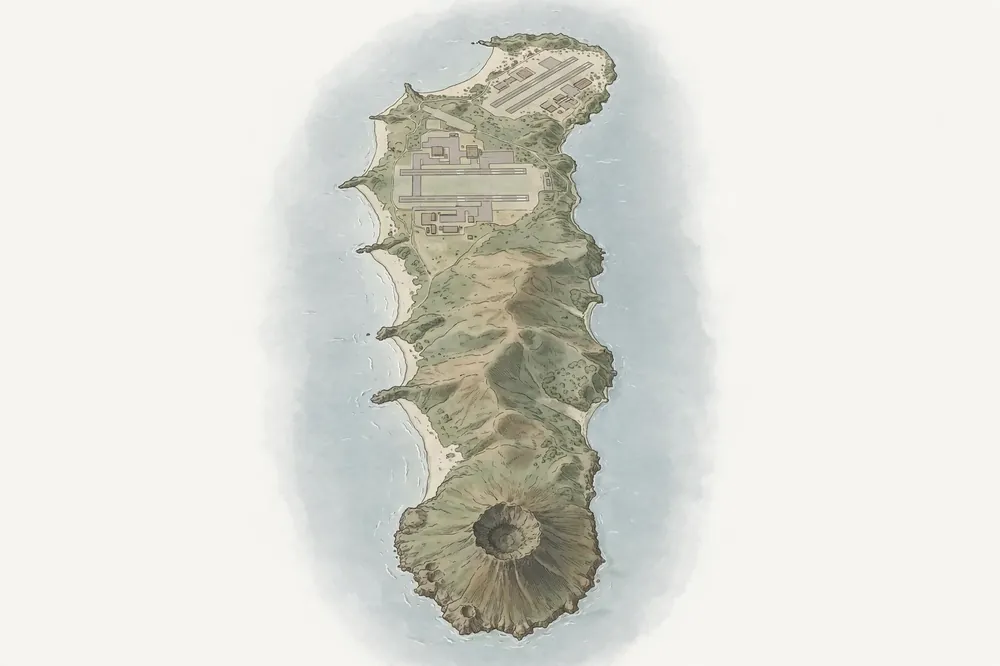
The island’s soil is black volcanic sand and ash, which bogged down vehicles and made movement difficult, and its rock is soft volcanic tuff, which the Japanese could dig into to make caves and tunnels. The island has no fresh water, no trees of any size, and no natural harbours: the landing beaches, on the south-east coast, were the only places where landing craft could come ashore.
The island’s geography shaped the battle in every detail. Mount Suribachi, at the southern end, gave the Japanese observation over the landing beaches, and its guns could fire on the beaches and on the ships offshore. The northern plateau, with its ridges and caves, gave the Japanese a series of defensive positions that the Americans had to take one by one.
The black sand, which swallowed the men’s boots and bogged down the tanks, slowed the American advance and made the battle a close-quarters fight. The island’s small size — 8 kilometres by 4 kilometres — meant that there was nowhere to retreat to, and that the battle was fought on a front a few kilometres wide, with both sides in constant contact.
The island’s position — halfway between Saipan and Tokyo — was the reason it was attacked. The B-29 bombers, flying from the Marianas to Japan, passed over Iwo Jima, and the Japanese fighters based there attacked them. The American fighters, the P-51 Mustang, could not reach Japan from the Marianas, but they could from Iwo Jima. The island was, in the words of the American planners, “a stepping stone to Japan”, and its airfields, once captured, would put American fighters within range of Tokyo. The geography of Iwo Jima — a small island, on the route to Japan, with airfields — was the reason for the battle, and the reason for its cost.
8. Outcome and Legacy of the Battle of Iwo Jima
The Battle of Iwo Jima ended on 26 March 1945, with the island in American hands. The Americans had won, at a cost of 6,821 killed and about 19,000 wounded, and the Japanese had lost about 19,000 men. The airfields were in American hands, and the first P-51 Mustangs landed on 6 March, while the battle was still raging. By the end of the war, about 2,400 B-29s had made emergency landings on Iwo Jima, and about 24,000 airmen had been saved. The island was a stepping stone to Japan, and it was the base from which the American fighters escorted the bombers to Tokyo.
The battle’s most enduring legacy is the photograph. Joe Rosenthal’s Raising the Flag on Iwo Jima, taken on 23 February 1945, became the most reproduced image of the war, and it became the model for the Marine Corps War Memorial in Washington, D.C., dedicated in 1954. The photograph’s six men — three of whom were killed in the battle — became symbols of the Marine Corps, and the image became a symbol of the war itself. The flag raising was not the end of the battle, and it was not the victory, but it became the battle’s image, and it is the image by which Iwo Jima is remembered.
The battle’s other legacy is a question: was Iwo Jima worth the price? The Americans lost 6,821 men to take an island 8 kilometres long, and the question has been debated ever since. The American command’s answer — that the airfields saved 24,000 airmen — is the official one, and it is a strong one.
But the question remains, because the battle was the bloodiest of the Pacific War for the Marines, and because it was the battle that showed, for the first time, that the Japanese would fight to the death on their own soil, and that the invasion of Japan would be even worse.
Iwo Jima, like Okinawa, was one of the reasons the atomic bomb was used: the Americans, having paid 6,821 dead for a small island, did not want to pay a million dead for Japan itself.
9. Commanders
Lieutenant General Holland M. Smith (United States). Commander of the Expeditionary Troops at Iwo Jima, and the senior Marine commander in the Pacific. Smith, known as “Howlin’ Mad” Smith, had commanded the Marines at Tarawa and Saipan, and he was the architect of the Iwo Jima landing. He later commanded the Fleet Marine Force, Pacific.
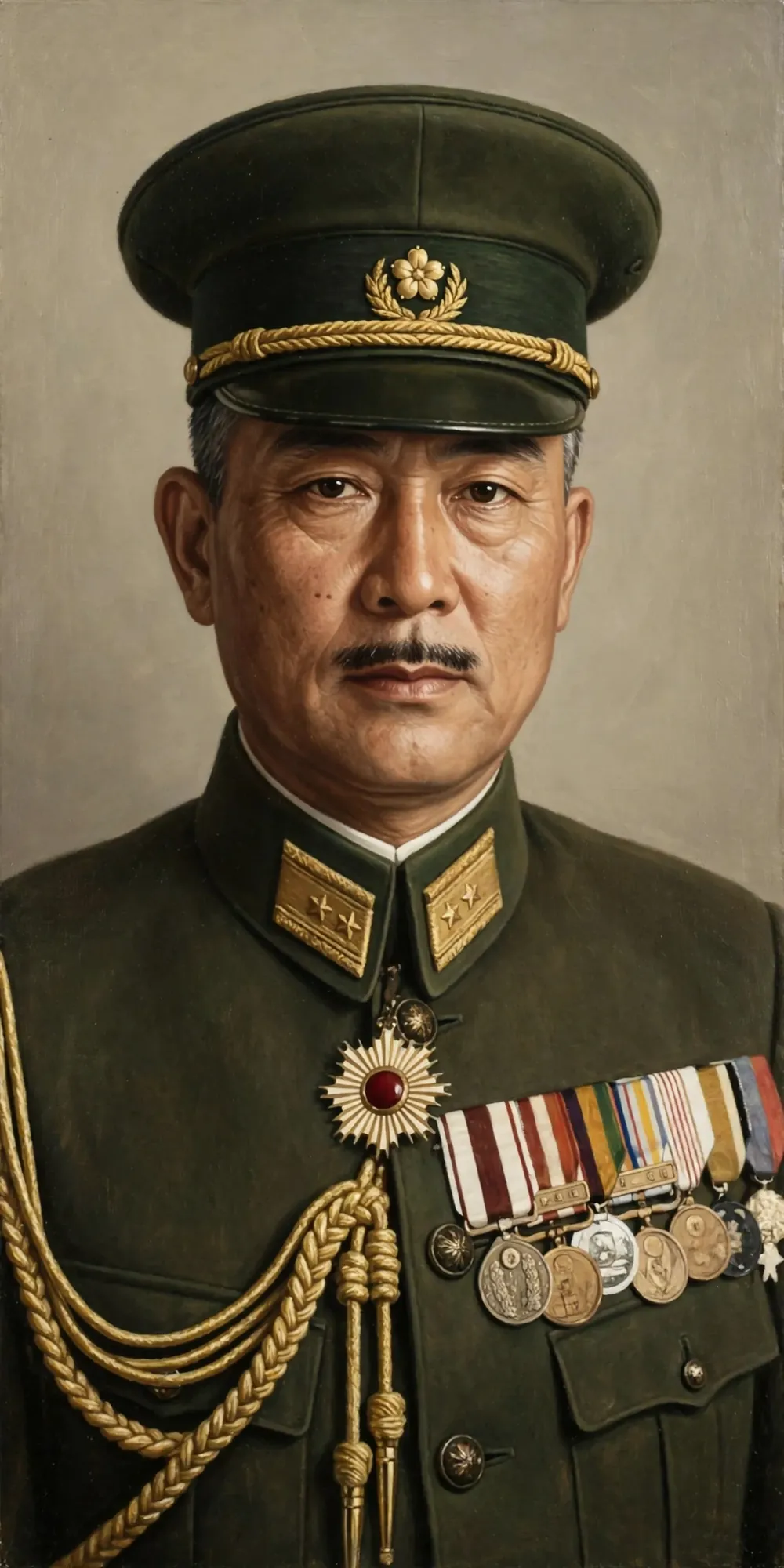
Major General Harry Schmidt (United States). Commander of the V Amphibious Corps, which landed at Iwo Jima. Schmidt commanded the three Marine divisions in the battle, and he was the officer who directed the 36-day fight. He later commanded the V Amphibious Corps at Okinawa.
Major General Clifton Cates (United States). Commander of the 4th Marine Division at Iwo Jima. Cates had fought in the First World War, and he later became Commandant of the Marine Corps.
Major General Graves Erskine (United States). Commander of the 3rd Marine Division at Iwo Jima. Erskine’s division was committed as a reserve, and it fought in the northern battle.
Major General Keller Rockey (United States). Commander of the 5th Marine Division at Iwo Jima. Rockey’s division landed on the first day and took Mount Suribachi, and it fought in the northern battle.
Lieutenant General Tadamichi Kuribayashi (Japan). Commander of the 109th Division, which defended Iwo Jima. Kuribayashi had served as a military attaché in the United States, and he understood American power. His plan — to fight from underground, and to fight to the death — made the battle the bloodiest of the Pacific War. He was killed in the final days of the battle, and his body was never found.
Frequently Asked Questions
Related articles
Sources
- Wikipedia, “Battle of Iwo Jima” — dates, strength, casualty figures (6,821 American killed, about 19,000 Japanese killed) and the course of the battle.
- Encyclopædia Britannica, “Battle of Iwo Jima” — background, the flag raising and the battle’s cost.
- US Marine Corps History Division, “Closing In: Marines in the Seizure of Iwo Jima” — the official Marine Corps history of the battle.
- Richard F. Newcomb, Iwo Jima (Holt, Rinehart and Winston, 1965) — the classic history of the battle.
- James Bradley, Flags of Our Fathers (Bantam, 2000) — the flag raising and the six men in the photograph.
- Tadamichi Kuribayashi, letters to his family, quoted in Letters from Iwo Jima (the film by Clint Eastwood, 2006, based on Kuribayashi’s letters and on the book by Kumiko Kakehashi, So Sad to Fall in Battle, 2005).
- Bill D. Ross, Iwo Jima: Legacy of Valor (Vanguard Press, 1985).
- Derrick Wright, Iwo Jima 1945: The Marines Raise the Flag on Mount Suribachi (Osprey, 2001).