 WAR ATLAS MILITARY HISTORY MAGAZINE · WWI — WWII
Potez 630
1. Lead
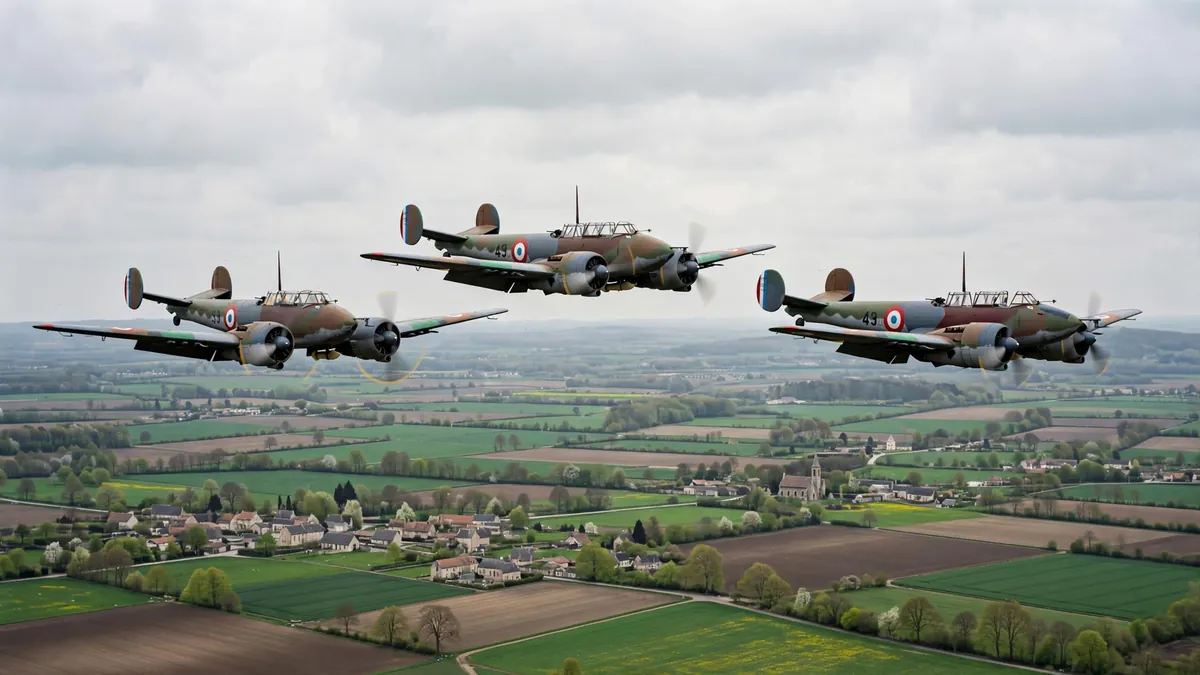
The Potez 630 was France’s twin-engine, multi-role fighter of the late 1930s, an aircraft designed to do everything — to fight as a heavy fighter, to escort bombers, to command formations, to attack ground targets and to reconnoitre — and which, in the event, did none of those things as well as the specialised aircraft it was meant to replace.
It was the product of a French Air Ministry specification of 1934 that called for a three-seat, twin-engine “multiplace de combat”, a flying command post that could lead a formation of bombers, direct their attack and defend them with its own guns.
The idea was fashionable in the 1930s — the Germans built the Bf 110 to a similar concept, and the British the Defiant — but by 1940 it was clear that the multi-role heavy fighter was a compromise that satisfied no one, and the Potez 630 went to war in May 1940 underpowered, under-armed and outclassed by the single-engine fighters it met.
About 1,400 aircraft of the Potez 63 family were built in total, including the Potez 631 fighter, the Potez 633 light bomber and the Potez 637 and 639 reconnaissance versions, and the type served in the Battle of France, in the air forces of Vichy France, in the Free French forces and in the air forces of several other countries. Its combat record was undistinguished, but its story is a revealing one: it shows how a plausible idea, pursued with conviction and built in large numbers, can fail when the technology and the doctrine behind it are overtaken by events, and how an aircraft designed for one war can find itself fighting another.
2. Key Facts
| Role | Twin-engine multi-role fighter (also reconnaissance and light bomber in variants) |
| Manufacturer | Société des Avions Henry Potez, France |
| Designer | Louis Coroller / Louis Coroller |
| First flight | 25 April 1936 |
| Introduced | 1938 |
| Produced | About 1,400 of the Potez 63 family (Potez 630/631/633/637/639) |
| Crew | 2–3 (pilot, gunner, observer) |
| Engines | 2 × Hispano-Suiza 14AB radial, about 670 hp each |
| Maximum speed | About 460 km/h (286 mph) |
| Range | About 1,300 km (808 miles) |
| Armament | 2 × 20 mm Hispano-Suiza HS.404 cannon; 1 × 7.5 mm MAC 1934 machine gun (rear) |
| Main users | France (Armée de l’Air, Vichy, Free French); Romania, Greece, Switzerland, Yugoslavia |
| Fate | Withdrawn by the mid-1940s; a few survive in museums |
3. Origins and Requirements
The “multiplace de combat” / “Multiplace de combat”
In 1934 the French Air Ministry issued a specification for a new kind of aircraft: the multiplace de combat, a three-seat, twin-engine aircraft that would serve as a heavy fighter, a bomber escort, a formation leader and a reconnaissance aircraft, all in one. The idea reflected the air doctrine of the period, which held that the bomber would always get through, that fighter escort was essential, and that a large, well-armed aircraft could lead a formation of bombers, direct their attack from the air and defend them against enemy fighters. Several French manufacturers responded, and the Potez design, by Louis Coroller, was selected for production as the Potez 630, with the first prototype flying on 25 April 1936.
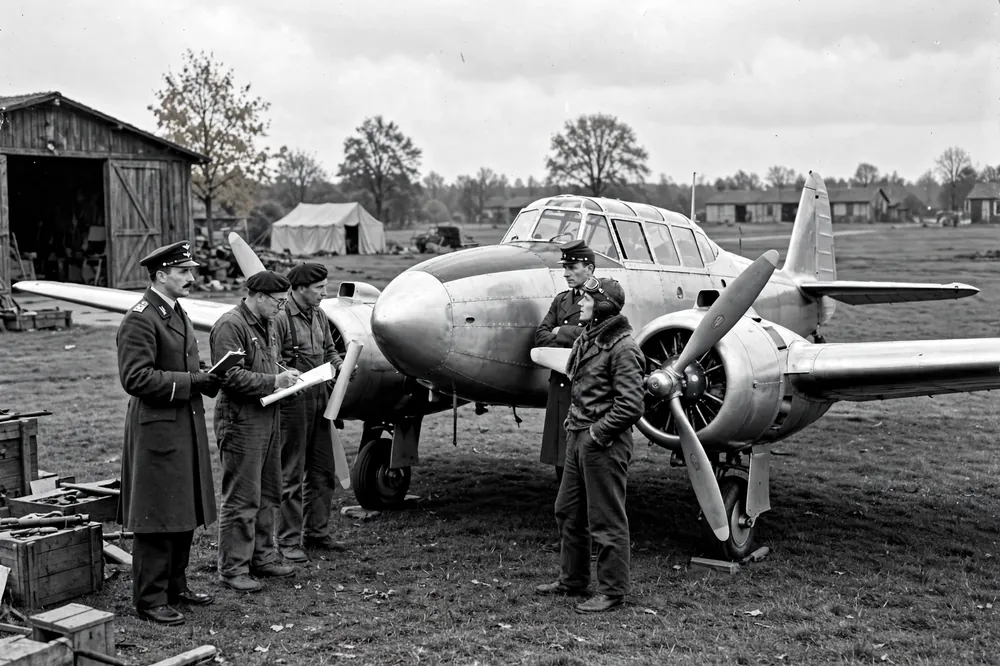
The prototype’s performance was promising, but its engines were not. The Potez 630 was designed around the Hispano-Suiza 14AB radial engine, a fourteen-cylinder engine of about 670 horsepower that proved unreliable in service and that could not be developed to the power the aircraft needed.
The Air Ministry, aware of the problem, ordered a second version, the Potez 631, powered by the Gnome-Rhône 14M engine of about 700 horsepower, and it was the 631 that became the main fighter version, with more than 200 built.
The two versions were almost identical in appearance, and they served side by side in the squadrons of 1940, the 630 with its Hispano-Suiza engines and the 631 with its Gnome-Rhônes, a logistical complication that the French Air Force could ill afford.
Production and the approach of war
Production of the Potez 63 family began in 1938, and by the outbreak of war in September 1939, the French Air Force had received several hundred aircraft of the family, in fighter, bomber and reconnaissance versions. The production rate was slow by the standards of the war that followed — the French aircraft industry, nationalised and reorganised in the late 1930s, was struggling to meet its orders — and when Germany attacked in May 1940, many of the Potez squadrons were still working up, their crews incompletely trained and their aircraft in varying states of serviceability.
The Potez 630 and 631 went to war as they were: a design of 1934, built to a doctrine of 1934, facing an enemy that had learned the lessons of the Spanish Civil War and built its air force accordingly.
4. Design and Development
Airframe and layout
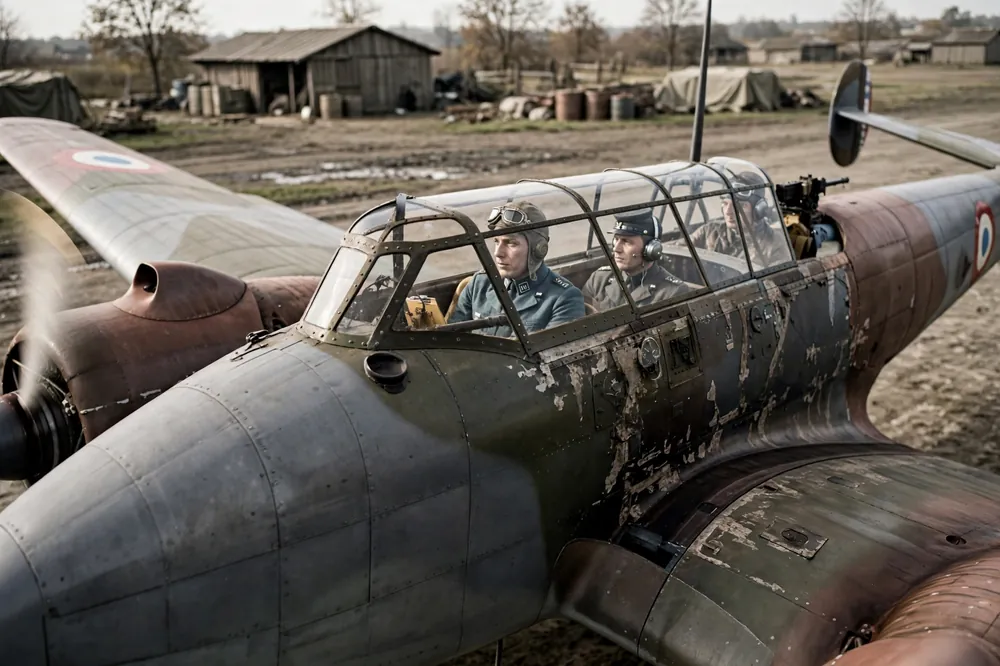
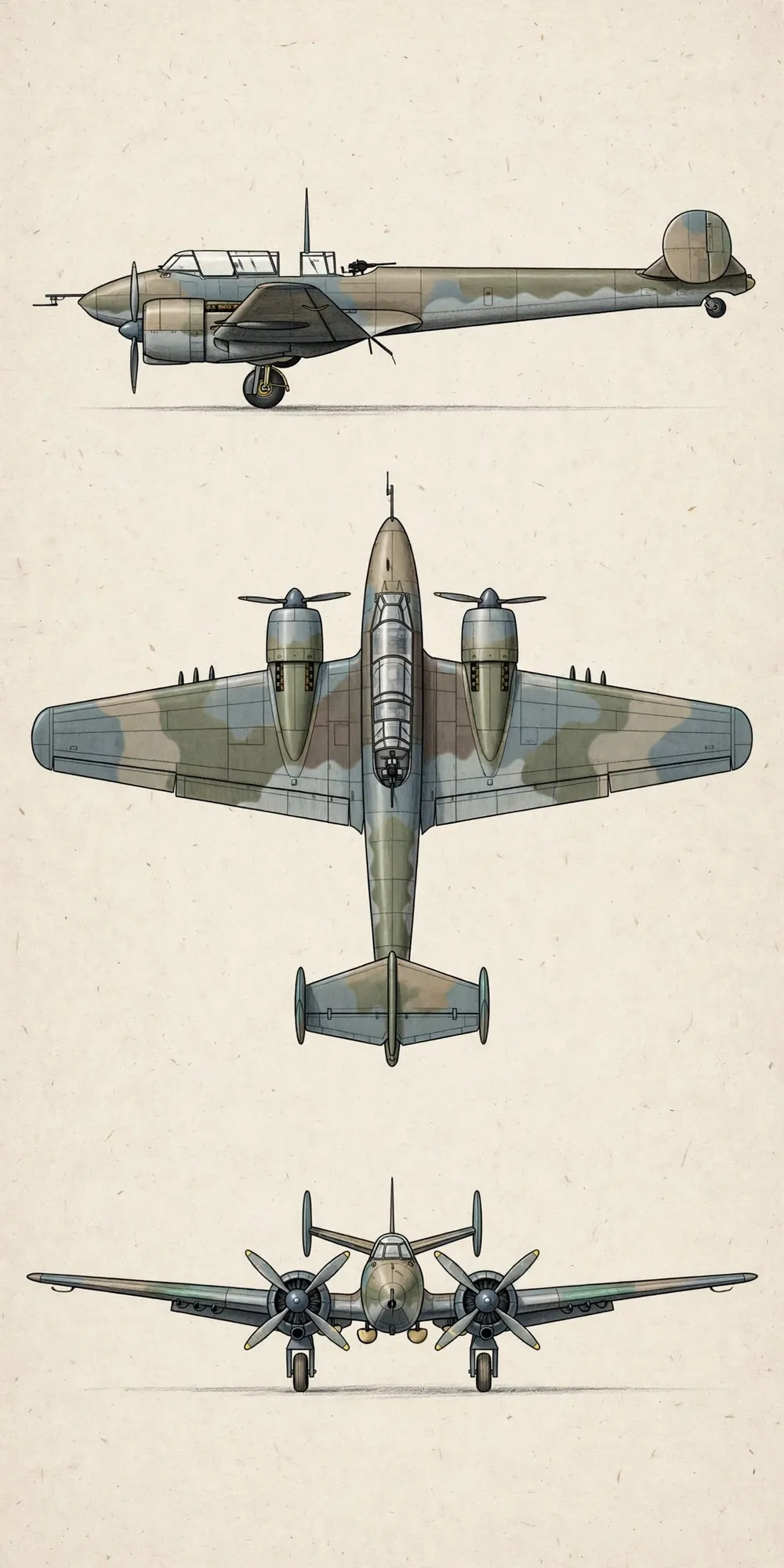
The Potez 630 was a low-wing monoplane of all-metal construction, with a clean, tapering fuselage and a wing of about 16 metres span. Its crew of three sat in a glazed nose and cockpit arrangement that gave them a good view: the pilot in the front, the observer-gunner in the middle, and the rear gunner in a dorsal position with a flexible machine gun.
The two engines were carried in nacelles on the leading edge of the wing, and the landing gear retracted rearward into the nacelles. The aircraft’s tail was conventional, with a single fin and rudder, and its overall appearance was clean and modern — it looked, to the casual observer, like a capable twin-engine fighter, and in some respects it was.
A pleasant aircraft, a poor fighter
The aircraft’s handling was good, and its pilots liked it: it was stable, responsive and pleasant to fly, with a good view and a comfortable cockpit. Its weakness was not its handling but its performance. With only about 670 horsepower per engine, the Potez 630 was underpowered for its weight, and its maximum speed of about 460 km/h was slower than the German Bf 109E it met in 1940, which could reach 570 km/h, and slower than the Bf 110, the German twin-engine fighter to which it was most often compared.
The Potez could not catch a bomber it was sent to intercept, and it could not escape a fighter that attacked it, and its crews learned, in the bitter weeks of May and June 1940, that a pleasant aircraft is not the same as a survivable one.
Engines and the power problem
The Potez 630’s engine problem was never solved. The Hispano-Suiza 14AB was unreliable, prone to overheating and to failures of its cooling system, and it could not be developed to a higher power without a complete redesign. The Gnome-Rhône 14M of the Potez 631 was more reliable, but it was no more powerful, and the aircraft’s performance remained marginal throughout its career. French engineers proposed more powerful engines — the Hispano-Suiza 12Y, the Gnome-Rhône 14N — but the airframe was not designed for them, and the war intervened before any re-engined version could be built in numbers. The Potez 630 therefore fought the war it was given with the engines it was born with, and it paid the price.
5. Technical Description
Armament
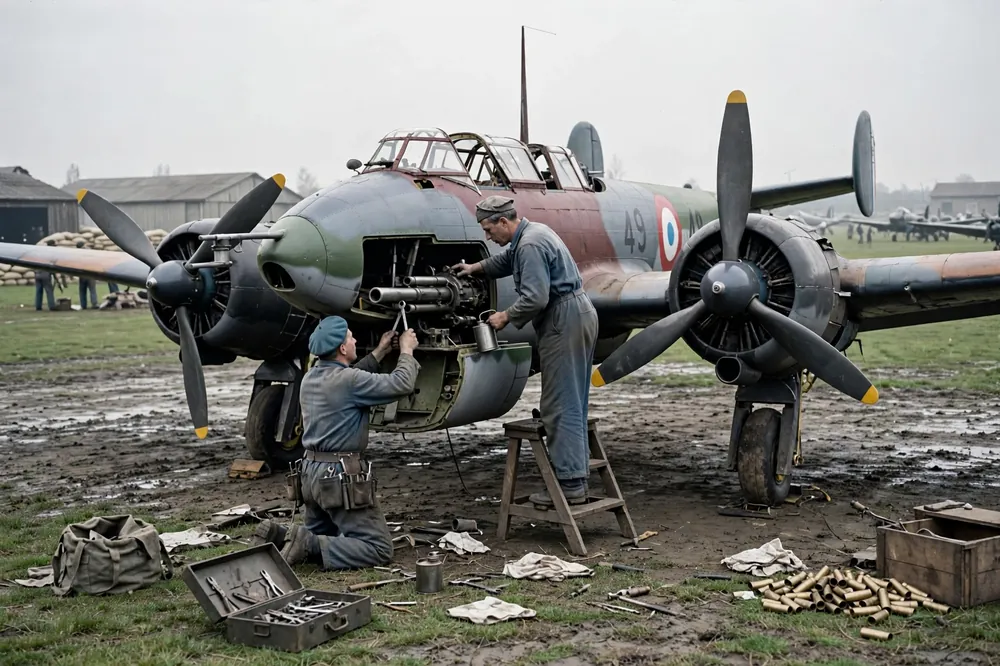
The Potez 630’s armament was respectable on paper. It carried two 20 mm Hispano-Suiza HS.404 cannon in the nose, with 60 rounds per gun, and a single 7.5 mm MAC 1934 machine gun in a flexible rear mounting, with a drum magazine.
The HS.404 was a good weapon — it was the cannon that armed the French fighters and, in its British-built form, the Spitfire and the Hurricane — and its firepower was a match for anything the Germans fielded in 1940.
The problem was not the guns but the aircraft that carried them: the Potez could not get into a firing position against a faster enemy, and it could not escape when the enemy got into a firing position against it.
The rear gun, manned by the third crewman, gave the aircraft some defence against attacks from behind, but a single rifle-calibre machine gun was a poor defence against a Bf 109’s cannon and machine guns.
Crew roles and equipment
The Potez 630’s crew of three divided the work of the mission between them, in the manner of the “flying command post” for which the aircraft was designed. The pilot flew the aircraft and fired the fixed cannon in the nose.
The observer, seated in the middle, navigated, operated the radio and directed the formation, and the rear gunner, in the dorsal position, watched for fighters and manned the flexible machine gun. The aircraft carried a radio, a drift sight and a camera in the reconnaissance versions, and it had a bomb rack in the light-bomber version.
It had no armour for the crew and no self-sealing fuel tanks in its early versions, protections that were added, in part, to later aircraft, but the Potez’s crews flew the Battle of France without them, and they paid for it.
6. Variants
The Potez 63 family was large, and its members served in roles that ranged from fighter to bomber to reconnaissance aircraft. The Potez 630 was the original three-seat fighter version, powered by the Hispano-Suiza 14AB engine, and about 80 were built. The Potez 631 was the main fighter version, powered by the Gnome-Rhône 14M engine, with more than 200 built, and it was the version that fought the Battle of France in the largest numbers. The Potez 633 was a two-seat light bomber version, with a bomb bay for up to 400 kilograms of bombs, built in about 70 examples for France and for export to Romania, Greece and China.
The reconnaissance versions were the Potez 637, a three-seat army co-operation and reconnaissance aircraft with cameras and a radio, and the Potez 639, a similar aircraft with a different engine installation, built in small numbers. The Potez 63.11 was a later reconnaissance version with a redesigned nose and a crew of three, built in more than 700 examples and used widely by the French Air Force and by Vichy. In total, about 1,400 aircraft of the Potez 63 family were built, making it one of the most numerous French aircraft of the war, and one of the most widely exported.
7. Combat Service
The Battle of France
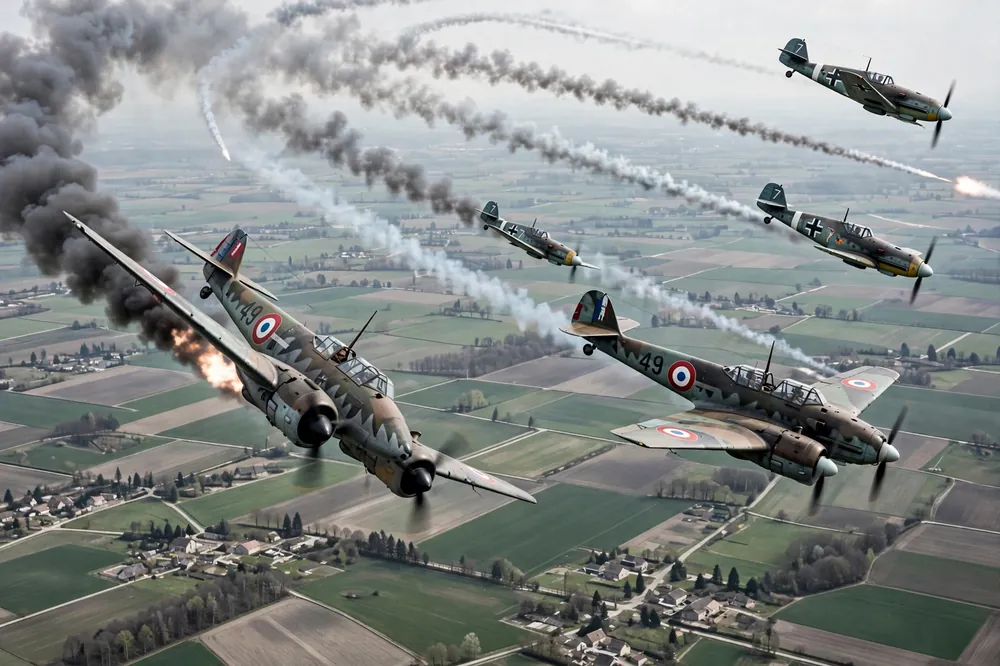
The Potez 630 and 631 went to war in May 1940, when Germany attacked France and the Low Countries. The French Air Force fielded the type in fighter squadrons, in reconnaissance units and in the light-bomber role, and its crews flew against the Luftwaffe in the six weeks of the Battle of France. The results were poor.
The Potez squadrons suffered heavy losses to German fighters and to anti-aircraft fire, and their claims of victories were modest: the type’s speed and armament were no match for the Bf 109, and its crews, many of them incompletely trained, were outmatched by the experienced German pilots.
The Potez’s most useful role in the battle was reconnaissance, where its range and its three-man crew let it gather information on the German advance, but even there it was vulnerable, and many reconnaissance Potez were shot down.
The fall of France
When France fell in June 1940, the surviving Potez aircraft were divided between the air force of Vichy France, which kept them in metropolitan France and in North Africa, and the Free French forces, which operated a small number from bases in Britain and in Africa. The Vichy Potez flew in the defence of French North Africa against the British and, in November 1942, against the Americans in Operation Torch, where they were destroyed on the ground or shot down by the far superior American fighters. The Free French Potez served in training and in second-line roles, and the type’s combat career effectively ended with the fall of France.
Export service
The Potez 63 family was exported to several countries before and during the war. Romania received Potez 633 light bombers and used them against the Soviet Union on the Eastern Front, where they served until they were worn out. Greece received Potez 633s and used them in the Greco-Italian War of 1940–1941, where they attacked Italian troops in Albania. Switzerland bought Potez 630s and used them as trainers, and Yugoslavia received a small number before the German invasion of 1941. In none of these countries did the Potez achieve a distinguished combat record, but its export history is a measure of the type’s reputation in the late 1930s, when it was regarded, on paper, as a modern and capable aircraft.
8. Specifications
The figures below are for the Potez 630. Sources differ slightly on weights and performance, and the aircraft’s figures varied with load and the condition of the individual machine.
| Potez 630 | |
|---|---|
| Length | 11.07 m / 11,07 m |
| Wingspan | 16.00 m / 16,00 m |
| Height | 3.61 m / 3,61 m |
| Wing area | 32.7 m² / 32,7 m² |
| Empty weight | About 2,913 kg |
| Loaded weight | About 3,900 kg |
| Engines | 2 × Hispano-Suiza 14AB, about 670 hp each |
| Maximum speed | About 460 km/h |
| Cruising speed | About 360 km/h |
| Range | About 1,300 km |
| Service ceiling | About 8,500 m |
| Armament | 2 × 20 mm HS.404; 1 × 7.5 mm MAC 1934 / 2 × HS.404 20 mm; 1 × MAC 1934 7,5 mm |
| Crew | 2–3 |
Against its contemporaries the Potez 630 was outclassed. The German Bf 110, the aircraft to which it was most often compared, was faster, more heavily armed and better protected, and it was built in far greater numbers. The British Bristol Blenheim, a comparable twin-engine aircraft, was similarly compromised, but it was used more successfully in the bomber and reconnaissance roles. The Potez’s advantage lay in its handling and in its versatility — it could be adapted to fighter, bomber and reconnaissance roles with relatively minor changes — but versatility, as the Battle of France showed, was no substitute for performance.
9. Operators
France was the Potez 63 family’s principal operator, and the type served in the Armée de l’Air, in the air force of Vichy France and in the Free French Air Forces. At the outbreak of war in 1939, the French Air Force operated the Potez 630 and 631 in fighter squadrons, the Potez 633 in light-bomber squadrons, and the Potez 637 and 63.11 in reconnaissance squadrons, and the family was one of the most widely used in the French inventory.
After the fall of France, the Vichy air force kept the type in service in metropolitan France and in North Africa, where it flew until the Allied landings of November 1942, and the Free French operated a small number in training and in second-line roles.
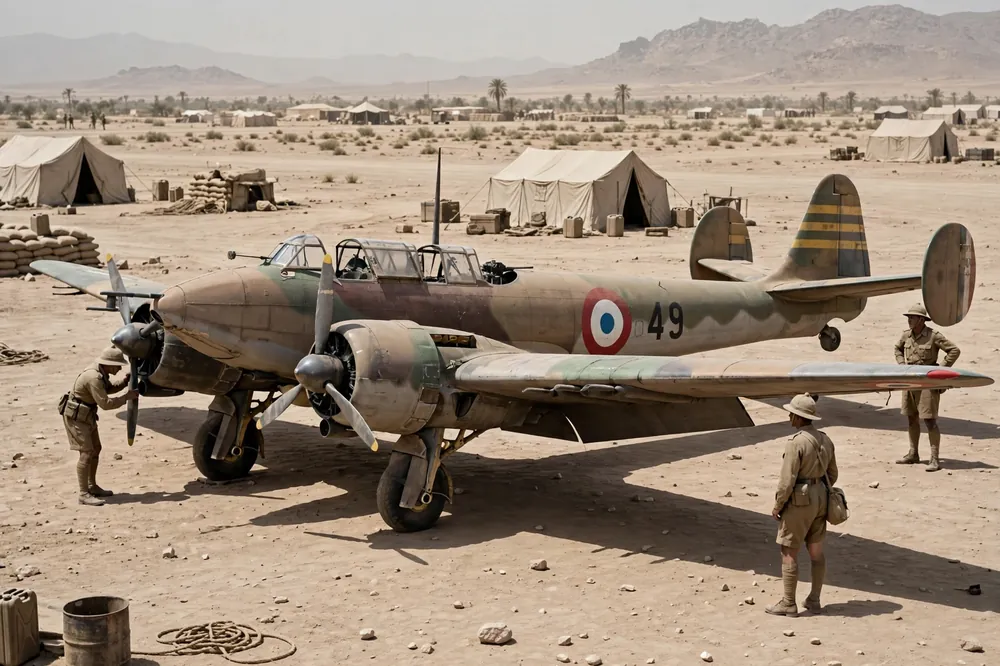
Other operators included Romania, which used the Potez 633 as a light bomber on the Eastern Front; Greece, which used the Potez 633 in the Greco-Italian War; Switzerland, which bought Potez 630s as trainers; Yugoslavia, which received a small number before 1941; and China, which received Potez 633s for use against Japan. No other major air force operated the type, and the Potez 63 family’s service outside France was limited and, in most cases, brief.
10. Legacy and Assessment
A plausible idea, overtaken
The Potez 630’s legacy is that of a plausible idea overtaken by events. The multiplace de combat was a serious attempt to solve a real problem — how to escort and direct a bomber formation — and the Potez 630 was, in many respects, a well-designed aircraft: it was pleasant to fly, it was versatile, and it was built in large numbers.
But the problem it was designed to solve was not the problem the war presented, and the aircraft’s performance, adequate in 1936, was inadequate in 1940. The Potez’s story is a reminder that an aircraft is not judged by its design alone, but by the war it fights, and that a design that is right for one war can be wrong for the next.
Historians judge the Potez 630 as a mediocrity, but a revealing one. It was not a bad aircraft — it was, in the judgement of its pilots, a pleasant and capable machine — but it was a mediocre fighter, a mediocre bomber and a mediocre reconnaissance aircraft, and mediocrity, in the air war of 1940, was fatal. The type’s large production run, about 1,400 aircraft, is a measure of the French Air Ministry’s commitment to the concept, and of the cost of that commitment: the resources spent on the Potez 63 family might have been spent on more single-engine fighters, of the kind France desperately needed in May 1940 and did not have.
Survivors
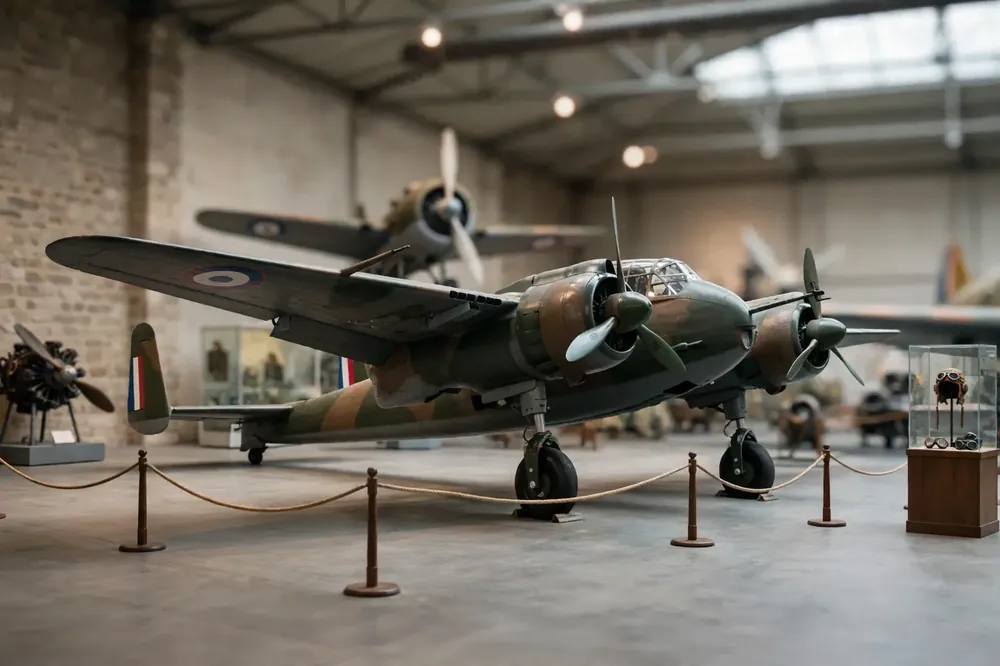
A small number of Potez 63 family aircraft survive in museums, most of them the reconnaissance Potez 63.11, of which examples are preserved in France. The Potez 630 itself is rare: no complete example is known to survive in a museum, and of the roughly 280 fighter versions built, the 630 and the 631 together, none is known to exist complete today. The type is known today from photographs, from models and from the records of the squadrons that flew it in the Battle of France, and from the surviving 63.11s, which share its airframe and show visitors what a Potez 63 looked like.
11. FAQ
What was the Potez 630? / Potez 630 là gì?
The Potez 630 was a French twin-engine, three-seat fighter of the late 1930s, designed by Louis Coroller for the Potez company as a “multiplace de combat” — a multi-role aircraft that could fight as a heavy fighter, escort bombers, lead formations and reconnoitre, all in one airframe.
It first flew on 25 April 1936 and entered service in 1938, and it was the product of a French Air Ministry specification of 1934 that reflected the air doctrine of the period, which held that a large, well-armed aircraft could lead a formation of bombers, direct their attack from the air and defend them against enemy fighters.
About 1,400 aircraft of the Potez 63 family were built in total, in fighter, bomber and reconnaissance versions.
How many Potez 63 family aircraft were built?
About 1,400 aircraft of the Potez 63 family were built in total, including the Potez 630 and 631 fighters, the Potez 633 light bomber, and the Potez 637, 639 and 63.11 reconnaissance versions. The Potez 63.11 reconnaissance version alone accounted for more than 700 of that total, making it the most numerous member of the family, while the fighter versions, the 630 and the 631, accounted for about 280 aircraft between them. The large production run reflected the French Air Ministry’s commitment to the multi-role concept, and the family was one of the most numerous French aircraft of the war and one of the most widely exported, serving in France, Romania, Greece, Switzerland, Yugoslavia and China.
What was the difference between the Potez 630 and the Potez 631?
The two aircraft were almost identical in appearance, but they used different engines: the Potez 630 used the Hispano-Suiza 14AB radial of about 670 horsepower, and the Potez 631 used the Gnome-Rhône 14M radial of about 700 horsepower, a more reliable engine that made the 631 the preferred fighter version. The 631 was the more numerous fighter version, with more than 200 built against about 80 of the 630, and it was the version that fought the Battle of France in the largest numbers. The two versions served side by side in the squadrons of 1940, a logistical complication that the French Air Force could ill afford, since their engines, spares and maintenance were not interchangeable.
How did the Potez 630 perform in the Battle of France?
Poorly. The Potez squadrons suffered heavy losses to German fighters and anti-aircraft fire in May and June 1940, and their claims of victories were modest, because the aircraft was slower than the Bf 109 and the Bf 110, and it could neither catch a bomber it was sent to intercept nor escape a fighter that attacked it.
Its crews, many of them incompletely trained, were outmatched by the experienced German pilots, and the type’s most useful role in the battle was reconnaissance, where its range and its three-man crew let it gather information on the German advance. Even there it was vulnerable, and many reconnaissance Potez were shot down, but the information they brought back was valuable to the French command.
What was the Potez 630’s armament?
The Potez 630 carried two 20 mm Hispano-Suiza HS.404 cannon in the nose, with 60 rounds per gun, and a single 7.5 mm MAC 1934 machine gun in a flexible rear mounting, with a drum magazine. The HS.404 was a good weapon — it was the cannon that armed the French fighters and, in its British-built form, the Spitfire and the Hurricane — and its firepower was a match for anything the Germans fielded in 1940.
The problem was not the guns but the aircraft that carried them: the Potez could not get into a firing position against a faster enemy, and it could not escape when the enemy got into a firing position against it, so its cannon, however good, were rarely able to decide a combat.
Does any Potez 630 survive today?
No complete Potez 630 is known to survive. A small number of Potez 63 family aircraft, mostly the reconnaissance Potez 63.11, are preserved in French museums, but the fighter versions are known today only from photographs, from models and from the records of the squadrons that flew them in the Battle of France. The Potez 630’s story survives in the historical record as a cautionary tale about the limits of a design philosophy — the multi-role heavy fighter — that seemed plausible in 1934 and was overtaken by events in 1940, and as a reminder that an aircraft is judged by the war it fights, not by the war it was designed for.
12. Sources
- Wikipedia, “Potez 630” — production figures (about 1,400 of the family), first flight, performance data and service history.
- William Green, Warplanes of the Second World War, Volume One: Fighters (Macdonald, 1960) — the Potez 630’s design, performance and armament.
- J. Richard Smith and Anthony L. Kay, German Aircraft of the Second World War (Putnam, 1972) — for comparison with the Bf 110.
- Robert Jackson, The Air War in France 1939–1940 (various editions) — the Potez 630 in the Battle of France.
- Dominique Breffort and André Jouineau, French Aircraft from 1939 to 1942, Volume 2 (Histoire & Collections, 2005) — the Potez 63 family’s versions and production.
- United States Strategic Bombing Survey, The French Aircraft Industry (1947) — production figures and factory data.
- Pierre Cortet, Potez 63 (in French), Paris, 2001.
- Alistair Horne, To Lose a Battle: France 1940 (Macmillan, 1969) — the air war over France.