 WAR ATLAS MILITARY HISTORY MAGAZINE · WWI — WWII
Yamato-class Battleship
1. Lead
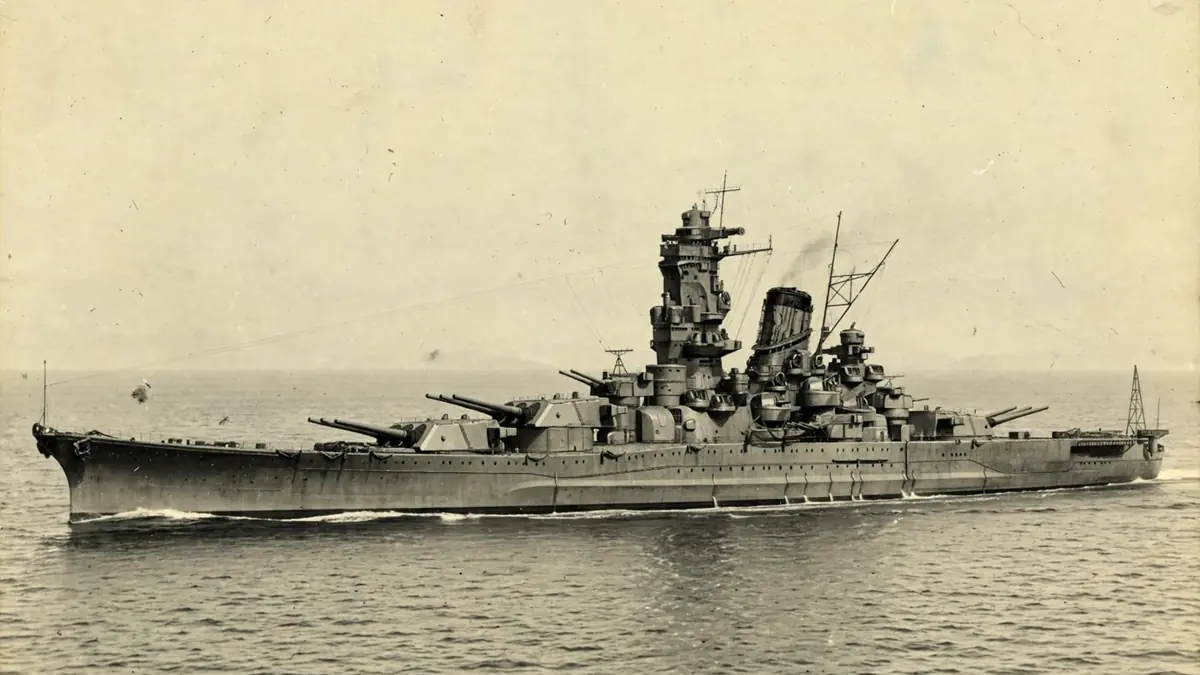
The Yamato-class battleships were the largest and most heavily armed battleships ever built. Designed in secret by the Imperial Japanese Navy in the 1930s, they displaced about 71,659 tons at full load, carried nine 460mm (18.1-inch) guns — the largest naval guns ever mounted on a warship — and were protected by armour up to 650mm thick on their turret faces.
Two ships were completed as battleships, the Yamato and the Musashi; a third, the Shinano, was converted into an aircraft carrier during construction. The class was intended to give Japan a decisive advantage in a fleet battle against the United States, based on the belief that a small number of superbattleships could defeat a larger number of smaller American battleships. It was a belief that the war would prove wrong.
Neither Yamato nor Musashi ever fought the fleet action they were built for. Musashi was sunk by American carrier aircraft in the Sibuyan Sea on 24 October 1944, during the Battle of Leyte Gulf, without ever firing her main guns at an enemy battleship. Yamato survived for another six months, and was then sent on a one-way mission to Okinawa in April 1945, where she was sunk by American carrier aircraft on 7 April, with the loss of more than 3,000 of her crew.
The Yamato class thus became a symbol of a strategy that had been overtaken by events: the age of the battleship had ended, and the aircraft carrier had become the decisive weapon of naval war. This article explains how the class was designed and built, how the ships worked, what their service was, and why they remain among the most famous warships in history.
2. Key Facts
| Type | Battleship |
| Country of origin | Empire of Japan |
| Ships | Yamato (commissioned December 1941), Musashi (August 1942); Shinano completed as an aircraft carrier (1944) |
| Displacement | About 65,027 tons standard; about 71,659 tons full load (Yamato) |
| Length | 263 m (862 ft 9 in) / 263 m |
| Beam | 38.9 m (127 ft 7 in) / 38,9 m |
| Draught | About 11 m (36 ft) |
| Propulsion | 12 Kampon boilers, 4 steam turbines, 4 shafts, about 150,000 shp |
| Speed | About 27 knots (50 km/h) |
| Range | About 7,200 nautical miles at 16 knots |
| Main armament | 9 × 460mm (18.1 in) Type 94 guns in three triple turrets |
| Secondary armament | 12 × 155mm guns; 12 × 127mm anti-aircraft guns; 24 × 25mm AA guns (later increased to more than 150) |
| Armour / Giáp | Belt 410mm; deck 200–230mm; turret faces up to 650mm; conning tower 500mm |
| Aircraft | 6–7 floatplanes, 2 catapults |
| Crew | About 2,500 (1941); about 2,800–3,300 by 1945 |
| Fate | Musashi sunk 24 October 1944; Yamato sunk 7 April 1945; Shinano sunk 29 November 1944 / Musashi chìm 24/10/1944; Yamato chìm 7/4/1945; Shinano chìm 29/11/1944 |
3. Background
3.1. Japan and the Naval Treaties
The Yamato class was born from the Washington Naval Treaty of 1922 and the London Naval Treaty of 1930, which limited the size and number of battleships that the great powers could build. Japan, which had been given a smaller battleship tonnage than the United States and Britain — a ratio of 5:5:3 — resented the treaties, and Japanese naval officers argued that Japan could only compensate for its numerical inferiority by building ships that were individually superior to anything the Americans or the British could build.
In 1934 Japan announced that it would no longer abide by the treaties, and in 1936 it withdrew from the naval limitation system altogether. The Japanese navy was now free to build the battleships it wanted, and it wanted the largest and most powerful battleships in the world.
The design that emerged, known as the A-140, called for a ship of about 70,000 tons, armed with nine 460mm guns, protected by armour that no existing naval gun could penetrate, and fast enough to keep up with the fleet.
3.2. Secrecy and the Decision to Build
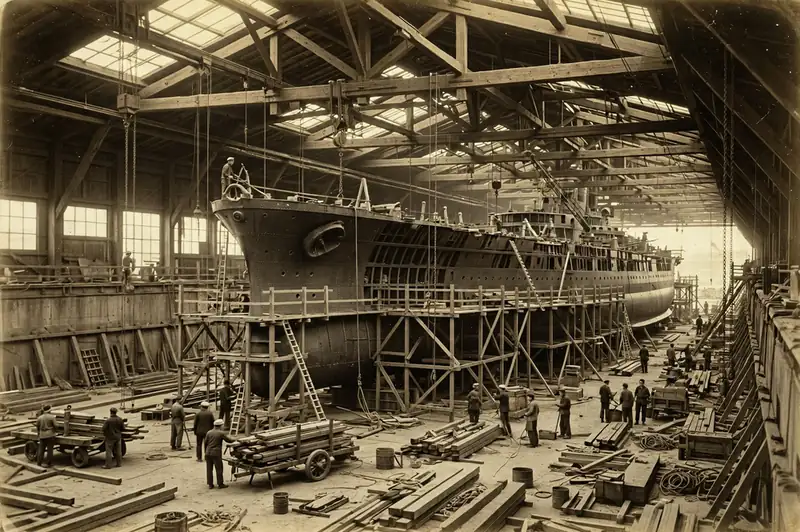
The Yamato class was one of the most secret projects in naval history. The ships were built in covered dry docks, their dimensions were concealed, and the Japanese navy spread false information about their size and armament — foreign intelligence services believed that the Yamato displaced about 45,000 tons and carried 406mm guns, when in fact she displaced more than 70,000 tons and carried 460mm guns.
The first ship, Yamato, was laid down at Kure in November 1937 and commissioned in December 1941, a week after the attack on Pearl Harbor; the second, Musashi, was laid down at Nagasaki in March 1938 and commissioned in August 1942.
A third ship, Shinano, was laid down in 1940, but after the loss of four Japanese carriers at Midway in June 1942, she was converted into an aircraft carrier, and she was sunk by an American submarine on her maiden voyage in November 1944. A fourth ship was planned but never laid down.
4. Design and Development
4.1. The 460mm Guns
The heart of the Yamato class was its main armament: nine 460mm (18.1-inch) Type 94 guns, mounted in three triple turrets, two forward and one aft. Each gun was 21 metres long and weighed about 165 tons, and it fired a 1,460 kg armour-piercing shell to a range of about 42 km — further than any other naval gun in service, and with a shell heavier than a small car.
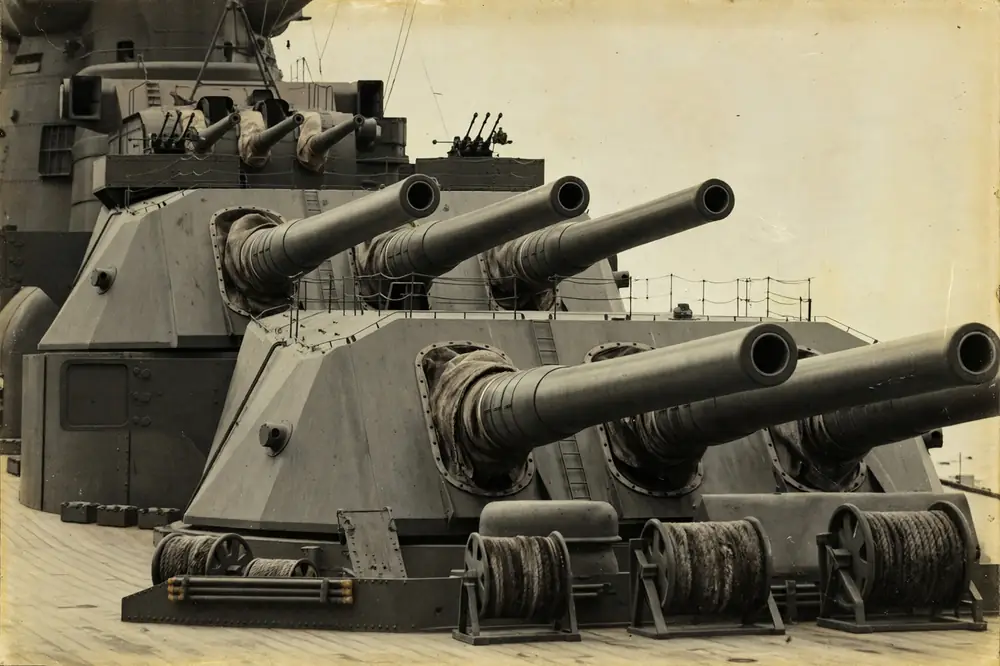
The guns were so large that they had to be built in secret, and the Japanese navy referred to them as 40cm guns in its documents to conceal their true calibre. The turrets were enormous: each triple turret weighed about 2,700 tons, more than a whole destroyer, and the turret armour was up to 650mm thick on the face, the thickest armour ever fitted to a warship.
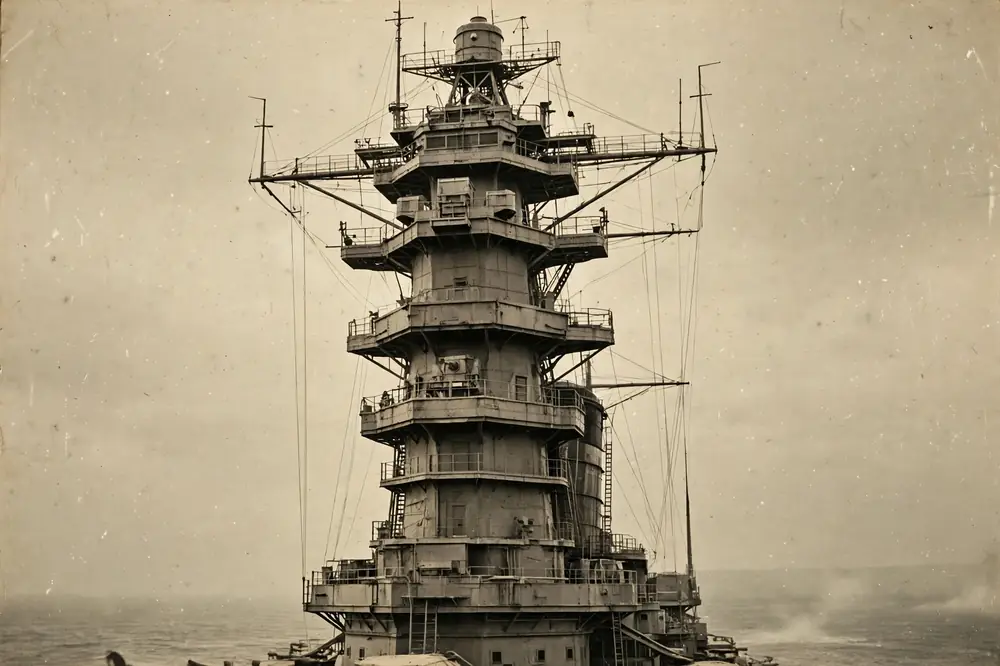
The guns were accurate and powerful, but they were also slow: the rate of fire was only about 1.5 to 2 rounds per minute per gun, and the turrets took a long time to train and elevate. The Yamato’s guns were the largest naval guns ever put to sea, and they have never been equalled.
4.1.1. The Shells and Fire Control
The Yamato’s 460mm guns fired two main types of shell: a 1,460 kg armour-piercing shell, designed to penetrate the armour of an enemy battleship, and a 1,360 kg high-explosive shell, designed for use against unarmoured targets and for shore bombardment.
The guns were also supplied with a special anti-aircraft shell, the Type 3 sanshiki, which burst into hundreds of incendiary fragments and was intended to destroy formations of bombers, but it was ineffective in practice and it damaged the gun barrels.
Fire control was provided by a main rangefinder 15.5 metres long, mounted on the top of the forward superstructure, and by a fire-control computer that calculated the range, bearing and elevation for the guns. The system was good, but it was not as advanced as the American radar fire control that was fitted to American battleships from 1942 onward, and the Yamato’s gunnery was never tested against an enemy battleship in a fleet action.
4.2. Armour and Protection
The Yamato class was protected by the thickest armour ever fitted to a warship. The main belt was 410mm thick, inclined at 20 degrees to improve its resistance, and it protected the magazines and machinery spaces. The deck armour was 200 to 230mm thick, designed to resist plunging fire from long range and bombs dropped from aircraft.
The turret faces were 650mm thick, the turret sides 250mm, and the conning tower 500mm thick. The torpedo defence system was a series of liquid-loaded compartments and bulkheads, designed to absorb the explosion of a torpedo, and it was deeper than that of any other battleship.
The armour was made from a special Japanese steel, Vickers hardened steel, and it was of high quality, but it was also very heavy: the armour alone weighed more than 20,000 tons, and it was one of the reasons the ships were so large.
The protection was designed to resist the 406mm guns of American battleships, and it probably would have done so, but it was never tested in battle against another battleship.
4.3. Propulsion, Speed and Aircraft
The Yamato class was powered by 12 Kampon boilers feeding four steam turbines, which drove four shafts and produced about 150,000 shaft horsepower, giving the ships a maximum speed of about 27 knots. That speed was respectable for a battleship of the day — the American Iowa class could make 33 knots, but the older American battleships could make only 21 knots — and it was enough for the Yamato to keep up with the fleet.
The ships’ range was about 7,200 nautical miles at 16 knots, which was enough to operate across the Pacific, although the Yamato’s fuel consumption was enormous and the ship’s oil bunkers held about 6,300 tons of fuel. The ships carried six to seven floatplanes, launched from two catapults on the stern, which were used for reconnaissance and for spotting the fall of shot.
The aircraft were a reminder that the Yamato was designed before the aircraft carrier had become the decisive weapon of naval war: the battleship’s own aircraft were for reconnaissance, not for attack, and they could do nothing against the carrier aircraft that would eventually sink both ships.
5. Technical Specifications
5.1. Size, Displacement and Dimensions
The Yamato class was enormous by any standard. At 263 metres long and 38.9 metres wide, the Yamato was longer than three football fields and wider than any battleship built before her, and her full-load displacement of about 71,659 tons was more than twice that of the British King George V class and about 35 per cent greater than the standard displacement of the American Iowa class (about 65,027 tons standard against about 48,000 tons).
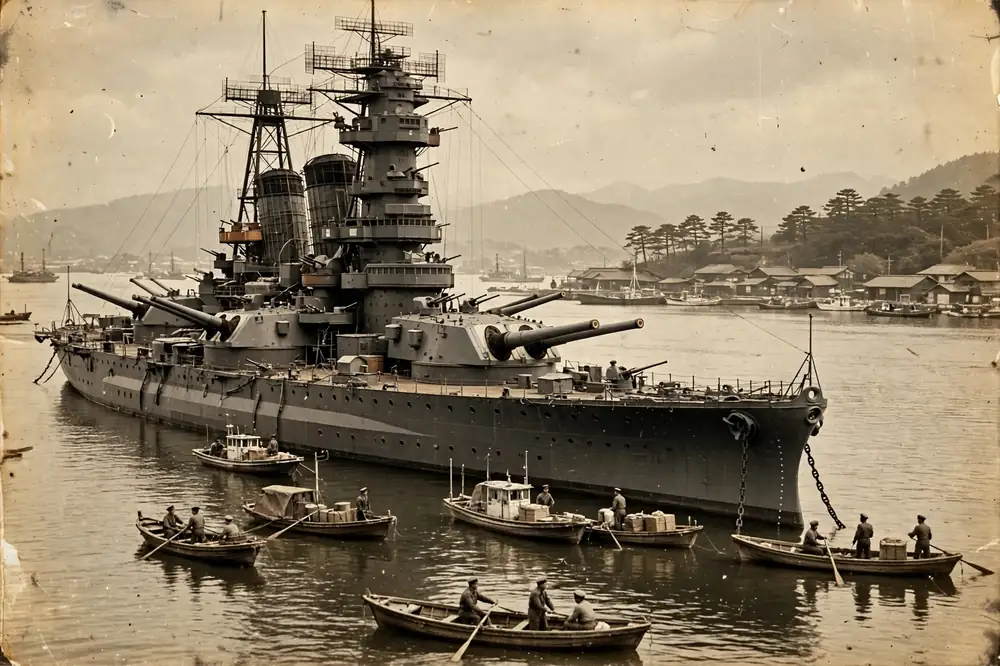
The ships’ size was a consequence of their armament and armour: the 460mm guns and their turrets, the 410mm belt and the 650mm turret faces all required a huge hull to carry them, and the hull itself had to be strong enough to withstand the shock of firing the main guns.
The ships’ draught of about 11 metres limited the ports they could use, and their size made them easy to spot from the air — a serious disadvantage in a war dominated by aircraft. The Yamato’s size was both her strength and her weakness: it allowed her to carry the most powerful guns and the thickest armour ever put to sea, but it also made her a large, slow and conspicuous target.
5.1.1. Crew and Living Conditions
The Yamato’s crew was about 2,500 men when she was commissioned in 1941, and it grew to about 2,800 to 3,300 by 1945, as more anti-aircraft guns were added and more men were needed to man them. The crew lived in cramped conditions, as on all warships, but the Yamato was better equipped than most Japanese warships: she had air conditioning in some compartments, a large sick bay, and workshops that could repair most damage.
The ship’s officers lived in cabins on the upper decks, while the ratings lived in mess decks below, sleeping in hammocks or bunks. Life on board was hard, with long watches, constant drills and the ever-present danger of air attack, and the crew’s morale was affected by the knowledge that their ship, for all her size and power, was rarely used.
The Yamato spent most of the war at anchor, in the Inland Sea or at Truk, and her crew called her the “Hotel Yamato” — a joke that reflected their frustration at being kept in port while the war was decided elsewhere.
5.2. Secondary and Anti-Aircraft Armament
The Yamato’s secondary armament consisted of twelve 155mm guns in four triple turrets, two on each side of the superstructure, which were intended to engage enemy cruisers and destroyers, and twelve 127mm dual-purpose guns, which could engage both surface targets and aircraft.
The anti-aircraft armament initially consisted of twenty-four 25mm guns, but as the air threat grew, more and more 25mm guns were added, until by 1945 the Yamato carried more than 150 of them, along with additional 127mm guns. The 25mm gun was a poor anti-aircraft weapon — it had a short range, a low rate of fire and a small magazine — and the sheer number of guns could not compensate for their quality.
The Yamato’s anti-aircraft armament was one of her greatest weaknesses: it could not stop the hundreds of American carrier aircraft that attacked her in her final battle, and it was a reminder that the ship had been designed for a war against battleships, not against aircraft.
6. Variants
6.1. Yamato, Musashi and Shinano
The Yamato class consisted of three ships, each of which had a different fate. The Yamato, the name ship, was commissioned in December 1941 and served as the flagship of the Combined Fleet under Admiral Isoroku Yamamoto, who was killed in April 1943 while the Yamato was at anchor.
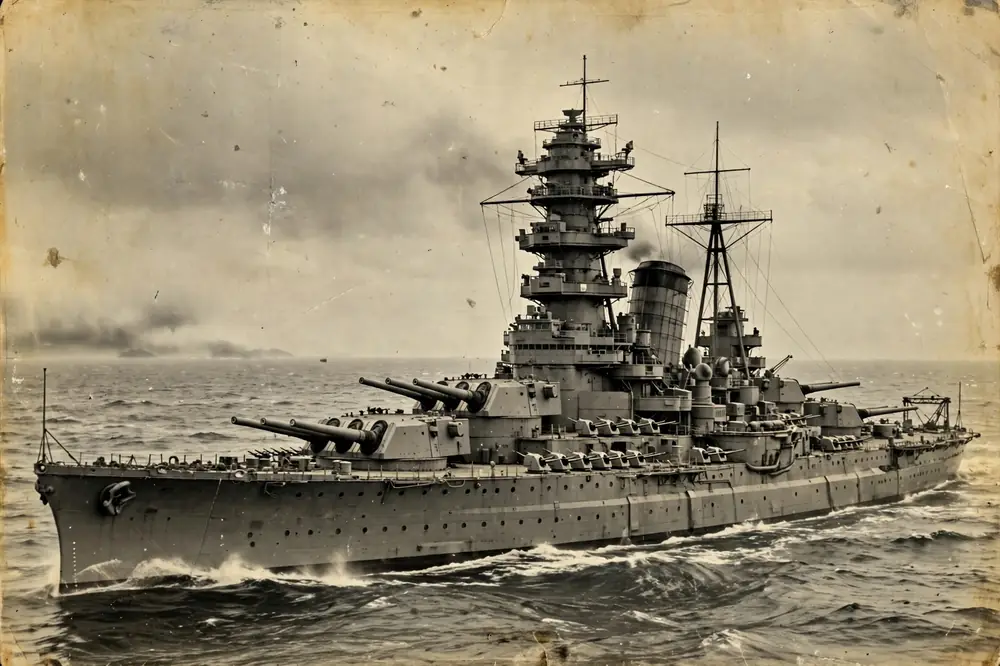
The Musashi, commissioned in August 1942, served as the flagship after the Yamato, and she was sunk in the Sibuyan Sea in October 1944. The Shinano, laid down in 1940 as the third battleship of the class, was converted into an aircraft carrier after the loss of four Japanese carriers at Midway, and she was the largest aircraft carrier built until the American Forrestal class of 1955.
She was sunk by the American submarine Archerfish on 29 November 1944, on her maiden voyage, before she had ever launched an aircraft in combat. A fourth ship, known as Hull No. 111, was planned but never laid down, and her steel was used for other purposes.
The three ships of the class thus shared a common fate: all were sunk, none of them ever fought the fleet action they were built for, and all of them became symbols of a strategy that had failed.
6.1.1. Wartime Modifications
Both Yamato and Musashi were modified during the war, mainly to improve their anti-aircraft armament. The two 155mm secondary turrets on the sides of the superstructure were removed and replaced with additional 127mm anti-aircraft guns, and the number of 25mm guns was increased from 24 to more than 150.
Radar was fitted — a Type 21 air-search radar and a Type 22 surface-search radar — and the ships’ fire control was improved. These modifications added weight and increased the crew, but they did not solve the ships’ fundamental problem: they were battleships in a war dominated by aircraft, and no amount of anti-aircraft guns could protect a single ship against hundreds of carrier aircraft.
The modifications also reflected the Japanese navy’s growing awareness that the air threat was the most serious one it faced, and that the battleship’s day had passed. The modifications also included improvements to the ships’ damage control and firefighting equipment, and the crew was trained to deal with the fires and flooding that air attacks could cause.
6.2. The Yamato in Popular Culture
The Yamato has become one of the most famous warships in popular culture, especially in Japan, where she is remembered as a symbol of sacrifice and of a lost cause. The most famous depiction is the anime series Space Battleship Yamato (1974), in which the wreck of the Yamato is rebuilt as a spaceship that saves the Earth — a fantasy that reflects the ship’s place in the Japanese imagination as a symbol of hope and renewal.
The Yamato also appears in films, books and video games, and a full-scale replica of the ship’s forward section was built for the 2005 film Otoko-tachi no Yamato (Men of the Yamato). The ship’s wreck was discovered in 1985, lying in two pieces on the seabed, and it has been surveyed by submersibles.
The Yamato’s place in popular culture is a testament to her fame: she was a ship that never won a battle, but she became a legend.
7. Combat Service
7.1. The Long Wait: 1942–1944
For most of the war, the Yamato and the Musashi did almost nothing. The Yamato served as the flagship of the Combined Fleet, but Admiral Yamamoto rarely took her to sea, because he was saving her for the decisive fleet battle that the Japanese navy had planned for since the 1930s — a battle that never came.
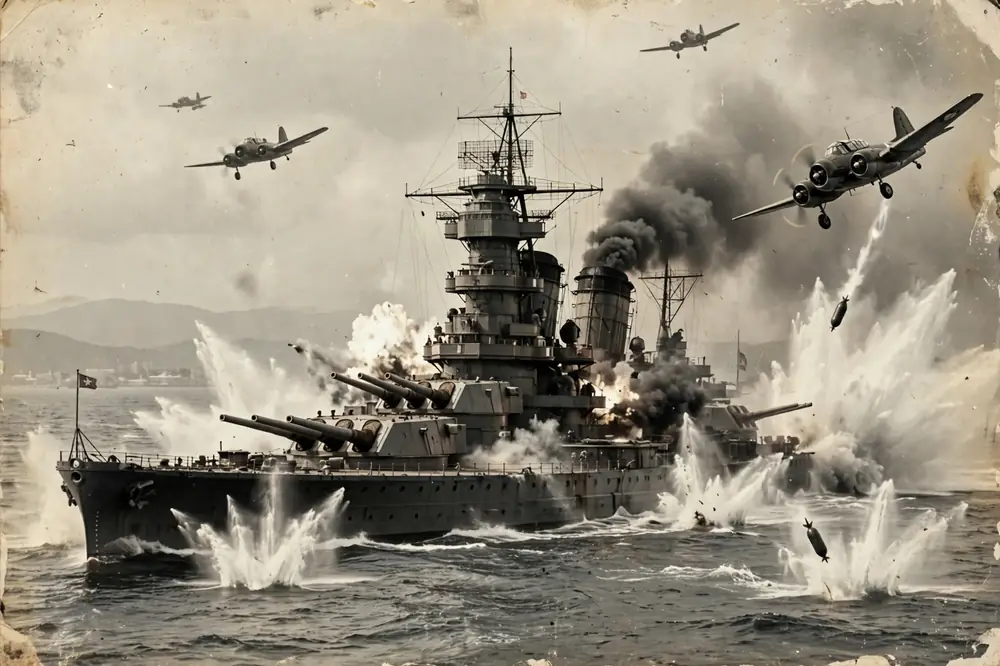
The Yamato was present at the Battle of Midway in June 1942, but she was hundreds of kilometres from the fighting, and she never fired her guns. She was torpedoed by an American submarine in December 1943, and she spent months under repair. The Musashi was also kept in reserve, and she spent most of her career at anchor in the Inland Sea or at Truk.
The two ships were too valuable to risk, and too slow to keep up with the fast carrier task forces that were now the main striking force of the Japanese navy. The result was that the largest battleships ever built spent the war waiting for a battle that the aircraft carrier had made obsolete.
7.1.1. The Hotel Yamato
The Yamato‘s inactivity became a joke among Japanese sailors, who called her the “Hotel Yamato” because she was so comfortable and so rarely used. The nickname reflected a real frustration: the Japanese navy had built the largest battleships in the world, at enormous cost, and then it did not know what to do with them.
The ships consumed fuel, men and resources that could have been used for aircraft carriers, submarines or aircraft, and they contributed almost nothing to the war effort. The “Hotel Yamato” joke was also a criticism of the Japanese navy’s strategy, which had been built around the battleship and which had failed to adapt to the aircraft carrier.
The Yamato’s inactivity was not the fault of her crew, who were well trained and eager to fight, but of a strategy that had been overtaken by events. The nickname also reflected the comfort of the Yamato compared with other Japanese warships, which were smaller, more crowded and less well equipped, and which spent far more time at sea in dangerous waters.
7.2. Leyte Gulf and Operation Ten-Go
The Musashi‘s end came on 24 October 1944, during the Battle of Leyte Gulf, the largest naval battle in history. The Musashi, as part of Admiral Takeo Kurita’s Centre Force, was sailing through the Sibuyan Sea towards the American landing beaches at Leyte when she was attacked by American carrier aircraft.
Over the course of the day, the Musashi was hit by about 19 torpedoes and 17 bombs, and she sank in the evening, with the loss of more than 1,000 of her crew. The Musashi never fired her main guns at an enemy ship, and her sinking showed that even the thickest armour could not protect a battleship against air attack.
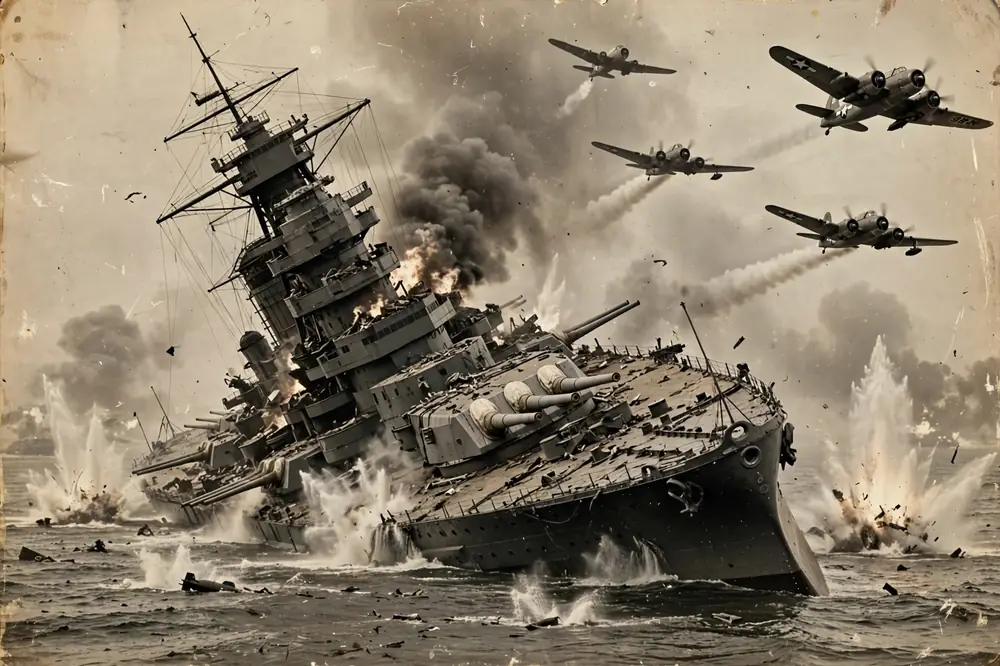
The Yamato survived Leyte Gulf — she was also attacked, but she was less heavily hit — and she returned to Japan. Six months later, in April 1945, the Yamato was sent on Operation Ten-Go, a one-way mission to Okinawa, where she was to beach herself and fight as a shore battery against the American invasion fleet.
She never reached Okinawa: on 7 April 1945, she was attacked by about 400 American carrier aircraft, hit by at least 11 torpedoes and 6 bombs, and she sank with the loss of more than 3,000 of her crew, including her captain, Rear Admiral Seiichi Ito. Only 269 men survived.
8. Strengths and Weaknesses
8.1. Firepower and Protection
The Yamato class’s greatest strength was its firepower. The nine 460mm guns were the largest and most powerful naval guns ever mounted on a warship, and they could outrange and outgun any other battleship in the world. A single 1,460 kg shell from a Yamato gun could penetrate the armour of any battleship then in service, and the guns’ range of about 42 km meant that the Yamato could open fire before her enemy could reply.
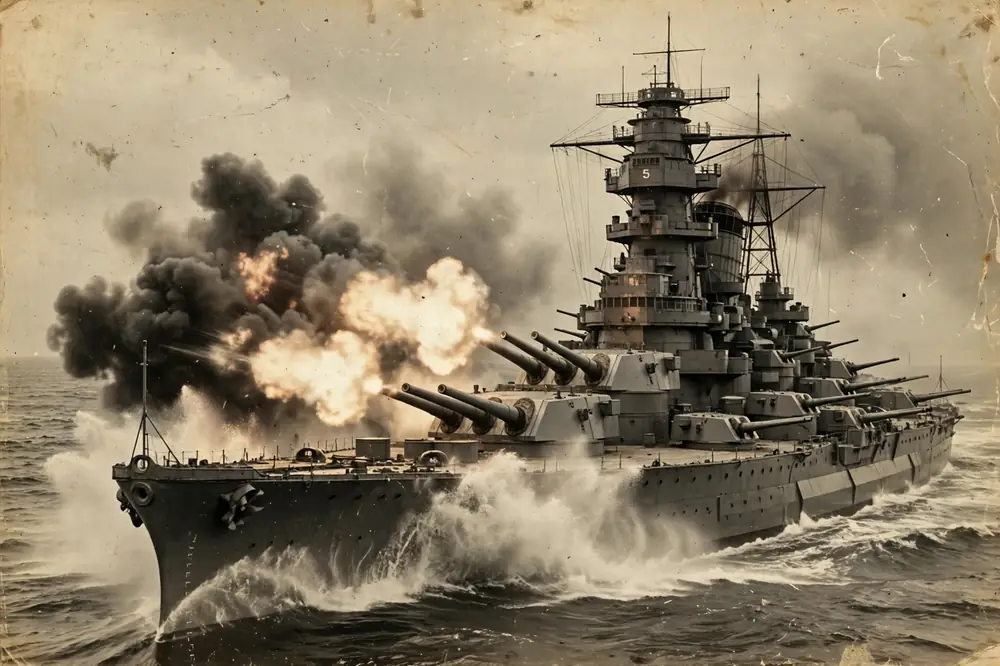
The ships’ second strength was their protection: the 410mm belt, the 200–230mm deck and the 650mm turret faces were the thickest armour ever fitted to a warship, and they were designed to resist the 406mm guns of American battleships. The ships’ third strength was their size and stability: the huge hull was a stable gun platform, and the ships could fire their main guns accurately even in rough weather.
These strengths made the Yamato class the most powerful battleships ever built, on paper, and they were the reason the Japanese navy believed that the ships could win a fleet battle against the United States.
8.2. Speed, Anti-Aircraft Defence and Cost
The Yamato class’s weaknesses were the price of its size and power. Its maximum speed of about 27 knots was slower than the 33 knots of the American Iowa class, and the Yamato could not keep up with the fast carrier task forces that were the main striking force of the Pacific War.
Its anti-aircraft armament was weak: the 25mm gun was a poor weapon, and even the more than 150 guns carried by 1945 could not stop a determined air attack. The ships were also enormously expensive: each Yamato-class battleship cost as much as several aircraft carriers, and the resources used to build them could have been used to build the carriers, aircraft and submarines that Japan desperately needed.
The ships’ greatest weakness, however, was strategic: they were built for a fleet battle that never happened, in a war that was decided by aircraft carriers and submarines. The Yamato class was a magnificent achievement of naval engineering, but it was built for the wrong war.
9. Comparison with Rivals
9.1. Against the Iowa Class
The Yamato class’s most direct rival was the American Iowa class, the last battleships built by the United States. The Iowa class was smaller than the Yamato — about 48,000 tons standard, against the Yamato’s 65,000 tons — and it carried nine 406mm guns, against the Yamato’s nine 460mm guns.
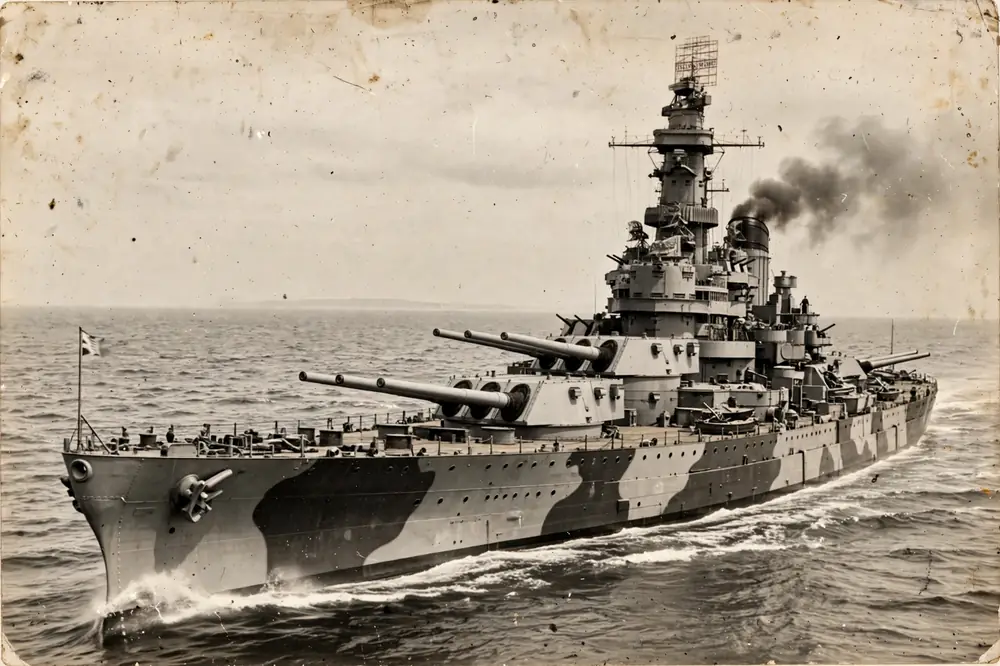
The Yamato’s guns were larger and more powerful, and her armour was thicker, but the Iowa was faster, at 33 knots against the Yamato’s 27 knots, and she had far better fire control, with radar that allowed her to hit targets at long range in any weather.
The Iowa’s anti-aircraft armament was also far better, with 20 × 127mm guns and many 40mm Bofors guns, which were much more effective than the Yamato’s 25mm guns. In a gunnery duel, the Yamato would probably have had the advantage, because her guns outranged the Iowa’s and her armour could resist the Iowa’s shells, but the two classes never fought each other, and the Iowa’s speed and radar would have allowed her to choose the range and the time of the engagement.
The comparison shows that the Yamato was the more powerful battleship, but the Iowa was the better warship.
9.2. Against the Aircraft Carrier
The Yamato class’s most important rival was not another battleship, but the aircraft carrier. The carrier could strike at ranges of hundreds of kilometres, far beyond the Yamato’s 42 km gun range, and it could attack with hundreds of aircraft, against which the Yamato’s anti-aircraft guns were ineffective.
The carrier was also cheaper, faster and more versatile than the battleship, and it could perform missions — reconnaissance, air defence, ground attack — that the battleship could not. The war in the Pacific proved the carrier’s superiority: the battleship’s last great fleet action, the Battle of Leyte Gulf, was decided by carrier aircraft, and the Yamato and the Musashi were both sunk by carrier aircraft without ever firing their main guns at an enemy battleship.
The Yamato class was the ultimate expression of the battleship, but it was built at the moment when the battleship’s age was ending, and its fate was decided by the weapon that replaced it.
10. Legacy
10.1. The End of the Battleship Era
The Yamato class’s most lasting legacy is that it marked the end of the battleship era. The Yamato and the Musashi were the largest battleships ever built, and they were also the last battleships built by Japan, and their sinking by aircraft showed the world that the battleship, the capital ship of the previous fifty years, had been replaced by the aircraft carrier.
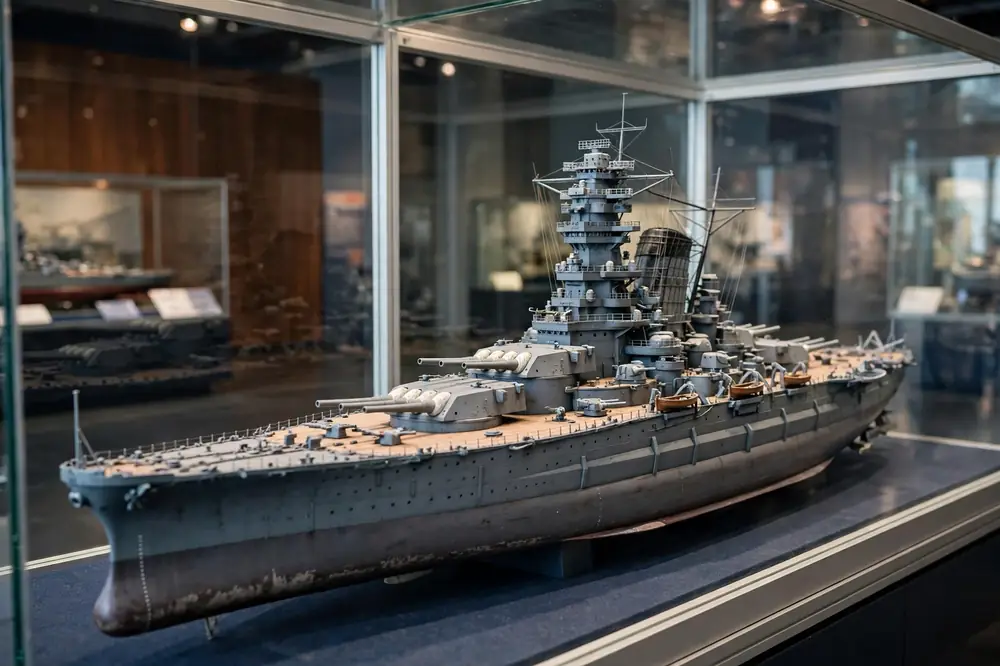
After the war, no navy built a new battleship, and the existing battleships were retired or converted to other roles. The Yamato’s fate was a lesson that navies around the world learned: the future of naval war lay in the air, not in the big gun, and the resources that had once been spent on battleships were now spent on carriers, submarines and missiles.
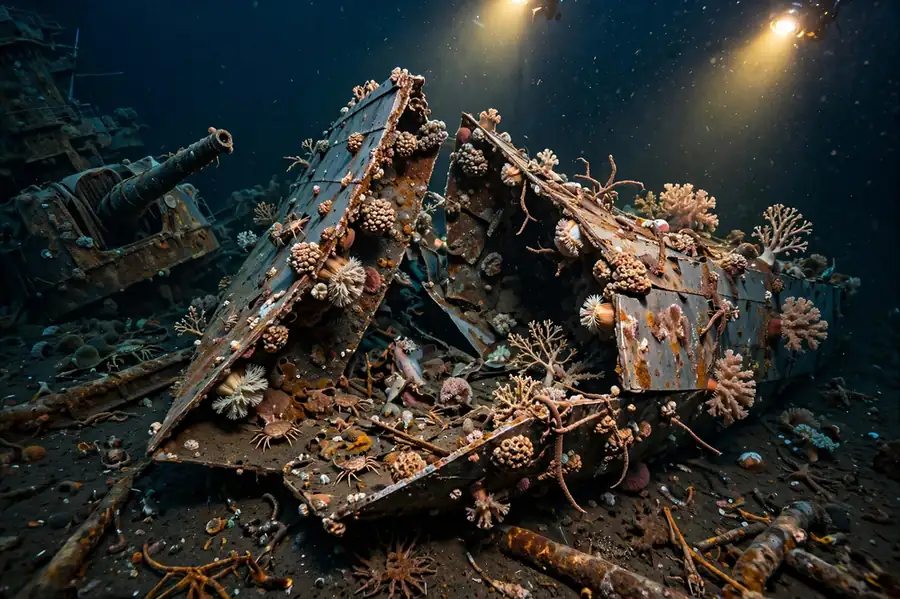
The Yamato class was therefore both the climax and the end of the battleship’s story, and its sinking marked the beginning of a new era in naval warfare.
10.2. The Yamato in Japanese Memory
In Japan, the Yamato is remembered as a symbol of sacrifice and of a lost cause. The ship’s final mission, Operation Ten-Go, in which she sailed to her death at Okinawa with more than 3,000 men on board, is commemorated in Japan as an act of heroic sacrifice, and the men who died on the Yamato are honoured as heroes.
The Yamato’s wreck, discovered in 1985, is treated as a war grave, and the ship’s story is told in museums, films and books. The Yamato’s place in Japanese memory is complex: she is remembered both as a symbol of Japan’s military ambition and as a symbol of the futility of that ambition, and her story is a reminder of the human cost of war.
The Yamato’s legacy is therefore not only a naval one, but a human one, and it is the story of the more than 3,000 men who died on her final voyage.
11. Frequently Asked Questions
How big were the Yamato-class battleships?
They displaced about 65,027 tons standard and about 71,659 tons at full load, were 263 metres long and 38.9 metres wide — the largest battleships ever built.
How large were the Yamato’s guns?
The main guns were 460mm (18.1-inch) Type 94 guns, the largest naval guns ever mounted on a warship. Each gun fired a 1,460 kg shell to a range of about 42 km.
Did the Yamato ever fight another battleship?
No. Neither the Yamato nor the Musashi ever fired their main guns at an enemy battleship. Both were sunk by American carrier aircraft.
When was the Musashi sunk?
On 24 October 1944, in the Sibuyan Sea during the Battle of Leyte Gulf, after being hit by about 19 torpedoes and 17 bombs. More than 1,000 of her crew were lost.
When was the Yamato sunk?
On 7 April 1945, during Operation Ten-Go on the way to Okinawa, after being attacked by about 400 American carrier aircraft. More than 3,000 of her crew were lost; only 269 survived.
What happened to the Shinano?
The Shinano was completed as an aircraft carrier and was sunk by the American submarine Archerfish on 29 November 1944, on her maiden voyage, before she had ever launched an aircraft in combat.
12. Sources
- Wikipedia, “Japanese battleship Yamato” — displacement 65,027 tons standard, 71,659 tons full load, 263 m, nine 460mm guns, sinking 7 April 1945.
- Wikipedia, “Japanese battleship Musashi” — commissioning August 1942, sinking 24 October 1944 in the Sibuyan Sea, about 19 torpedo and 17 bomb hits.
- Wikipedia, “Japanese aircraft carrier Shinano” — conversion to a carrier, sinking 29 November 1944 by USS Archerfish.
- National WWII Museum, New Orleans — the Yamato class, Operation Ten-Go and the Battle of Leyte Gulf.
- Janusz Skulski, The Battleship Yamato (Anatomy of the Ship series) — design, construction, armament and armour.
- Imperial War Museum, London — the Yamato class and the end of the battleship era.