 WAR ATLAS MILITARY HISTORY MAGAZINE · WWI — WWII
Matilda II Tank: Britain’s Heavily Armoured “Queen of the Desert”
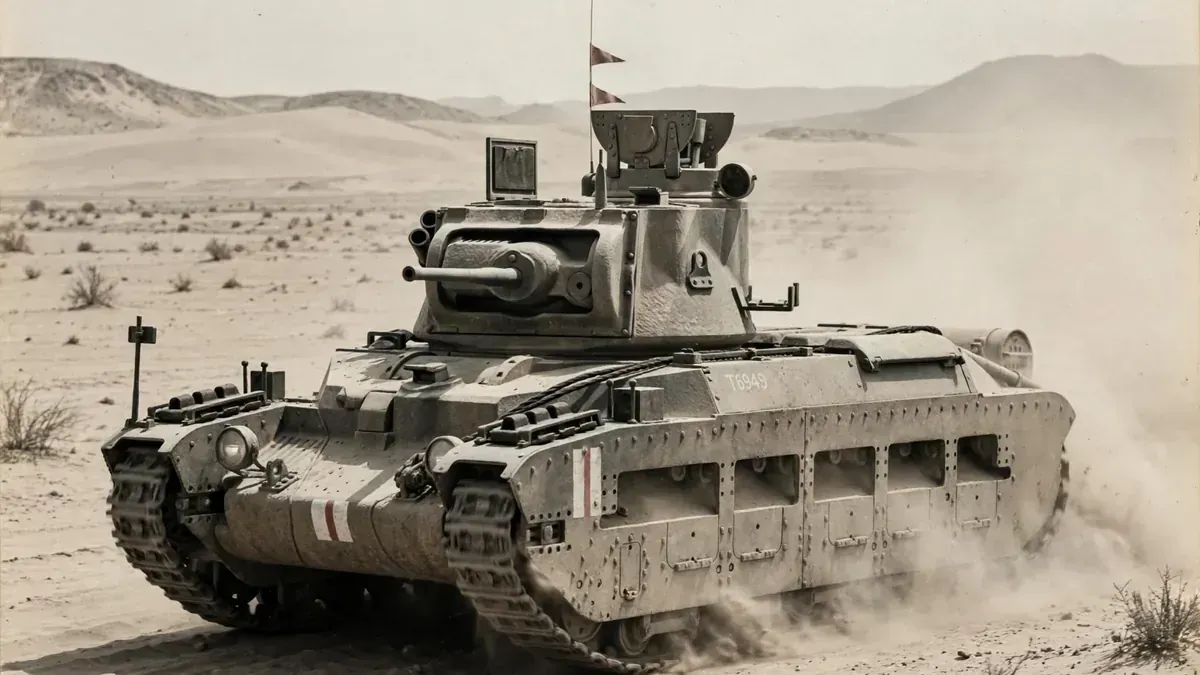
The Matilda II, officially the Tank, Infantry, Mk II, was one of the most important British tanks of the Second World War and the vehicle that earned the nickname “Queen of the Desert” in the fighting in North Africa. Designed as an infantry tank, with very thick armour and a slow speed, the Matilda II was almost immune to the German and Italian anti-tank guns of 1940 and 1941, and it dominated the battlefield in the Western Desert until the arrival of the German 88 mm gun. Approximately 2,987 Matilda IIs were built between 1939 and 1943, and the type served in the British Army, in the Soviet Union under lend-lease, and in Australia, where it fought in the jungles of New Guinea and Borneo. It was the only British tank to serve from the first day of the war to the last, and it remains one of the most famous tanks in British military history.
The Matilda II was the successor to the Matilda I, a small, slow tank with only a machine gun, and it was designed to a War Office specification that called for a tank with armour thick enough to resist any anti-tank gun then in service. The result was a tank with up to 78 mm of frontal armour, a 2-pounder gun, and a top speed of only about 15 miles per hour. The Matilda II was slow, but its armour made it a formidable weapon in 1940, when German tanks and anti-tank guns could not penetrate it. At Arras in May 1940, a Matilda II counter-attack caused panic among German troops, and in the Western Desert, Matilda IIs of the 7th Armoured Division destroyed Italian tanks and infantry with impunity. The Matilda II’s reign as the queen of the desert ended in 1942, when the Germans deployed the 88 mm gun in the anti-tank role, but the tank continued to serve in the Pacific, where its armour and its ability to support infantry in jungle fighting made it invaluable.
The Matilda II is remembered as a symbol of British wartime improvisation and of the infantry tank concept. It was slow, it was under-gunned, and it was difficult to maintain, but its armour saved many crews, and its service in North Africa and the Pacific earned it a place in the history of armoured warfare. Surviving examples stand in museums in Britain, Australia and Russia, and the Matilda II’s distinctive silhouette, with its long hull and its small turret, remains one of the most recognisable images of the British Army in the Second World War.
1. Key Facts
| Field | Value |
|---|---|
| Type | Infantry tank |
| Origin | United Kingdom |
| Designed | 1936-1939 (A12 specification) |
| In service | 1939-1955 (British Army; later with other users) |
| Produced | Approximately 2,987 |
| Manufacturers | Vulcan Foundry, Ruston & Hornsby, London, Midland & Scottish Railway, and others |
| Crew | 4 (commander, gunner, loader, driver) |
| Weight | Approximately 27 tons |
| Length | Approximately 5.61 m (18 ft 5 in) |
| Width | Approximately 2.59 m (8 ft 6 in) |
| Height | Approximately 2.52 m (8 ft 3 in) |
| Armour | Up to 78 mm (hull front and turret) |
| Main armament | 2-pounder (40 mm) gun (93 rounds) |
| Secondary armament | 7.92 mm Besa machine gun, 2-inch smoke mortar in some marks |
| Engine | Two Leyland diesel engines, approximately 190 hp combined |
| Speed | Approximately 15 mph (24 km/h) maximum on roads |
| Range | Approximately 160 miles (257 km) on roads |
| Notable variants | Matilda II Mk II, Mk III, Mk IV, Mk V; Matilda Frog, Matilda Hedgehog, Matilda CDL |
2. Background and Development
The Infantry Tank Concept
The origins of the Matilda II lay in the British Army’s interwar doctrine, which divided tanks into two types: cruiser tanks, which were fast and lightly armoured and were meant to exploit breakthroughs, and infantry tanks, which were slow and heavily armoured and were meant to support infantry in assaults on prepared defences. The Matilda I, introduced in 1937, was an infantry tank with only a machine gun, and the War Office soon realised that it needed a better-armed successor. In 1936, the War Office issued the A12 specification for a new infantry tank with armour thick enough to resist any anti-tank gun then in service and a gun capable of dealing with enemy tanks. The specification was a response to the lessons of the First World War, when tanks had been used to support infantry, and to the fear that a future war would again be fought against fortified positions.
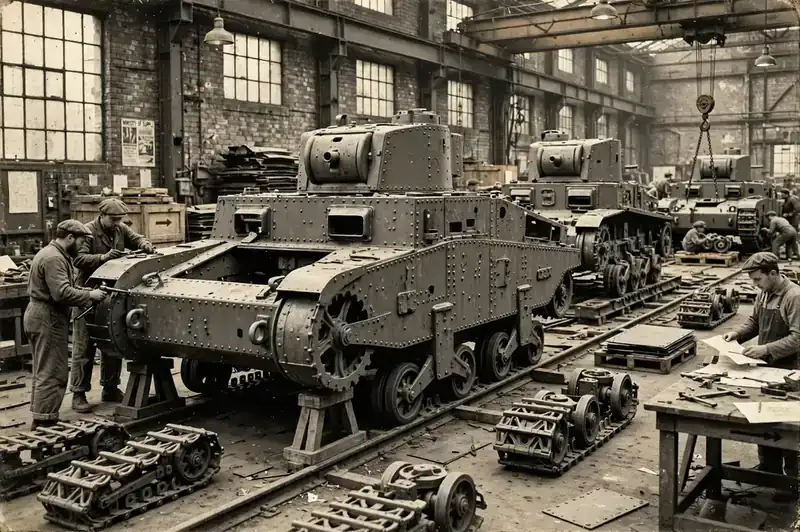
Vulcan Foundry and the A12
The task of designing the new tank was given to the Vulcan Foundry, a railway locomotive manufacturer in Lancashire, which had no previous experience of tank design. The project was designated A12, and the tank was named Matilda, after the heroine of a popular children’s book, a name that had also been given to the Matilda I. The Vulcan design team, led by William Rigby, produced a tank with a long hull, a small turret, and armour up to 78 mm thick, which was the thickest armour on any tank in service in 1939. The first prototype was delivered in 1938, and it was tested at the Mechanical Warfare Experimental Establishment, where its armour and its climbing ability were praised, although its speed and its 2-pounder gun were criticised. The Matilda II was ordered into production in 1939, and the first vehicles were delivered in the summer of that year.
A Design Shaped by the Threat
The Matilda II’s design was shaped by the threat that it was meant to face: the German 37 mm anti-tank gun, which was the standard German anti-tank weapon in 1939. The War Office demanded armour that could resist the 37 mm gun at any range, and the Matilda II’s 78 mm of frontal armour was more than enough. The tank’s 2-pounder gun was also a response to the threat: it could penetrate the armour of any German tank then in service, although it could not fire a useful high-explosive shell. The Matilda II was thus a tank designed for a specific enemy and a specific doctrine, and it was well suited to that enemy and that doctrine. Its limitations, its slow speed and its weak high-explosive capability, were the price of its armour, and the British Army accepted that price because it believed that the infantry tank’s role was to support infantry, not to fight other tanks.
3. Design
Hull, Tracks and Mobility
The Matilda II’s most distinctive feature was its long hull and its five large road wheels on each side, with the track running around the full length of the vehicle. The hull was designed to span trenches and to climb obstacles, and the tank’s low speed was a deliberate choice: the infantry tank was meant to advance at the pace of foot soldiers. The Matilda II was powered by two Leyland diesel engines, which together produced about 190 horsepower, giving a top speed of about 15 miles per hour on roads and less cross-country. The tank’s suspension was simple and robust, and its reliability was good for the time, although its steering and its gearbox required careful maintenance. The Matilda II’s ground pressure was relatively low, which helped it in the soft sand of the Western Desert, and its diesel engines gave it a good range and a lower risk of fire than petrol-engined tanks.
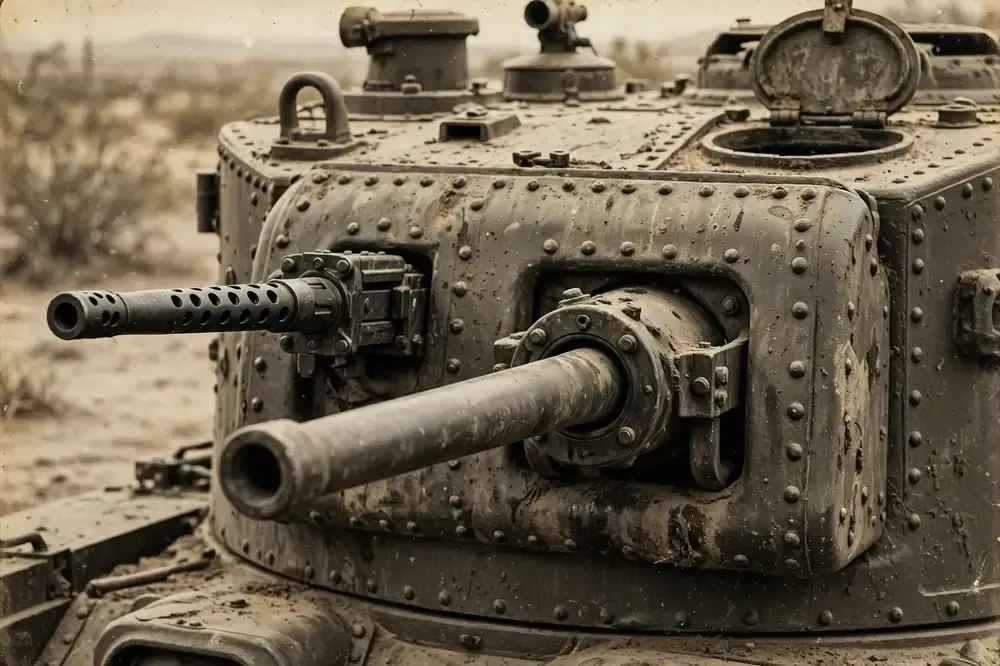
Armour and Protection
The armour was the Matilda II’s strongest asset. The hull front and turret were protected by up to 78 mm of armour, which was the thickest armour on any tank in service in 1939 and 1940. The armour was mostly cast, and the turret was a single casting, which gave it a smooth, rounded shape. The Matilda II’s armour made it almost immune to the German 37 mm and 50 mm anti-tank guns at normal combat ranges, and Italian anti-tank guns were equally ineffective. The tank’s sides and rear were less well protected, with about 55 mm of armour, but in its intended role of supporting infantry at close range, the Matilda II’s protection was generally sufficient. The tank’s height and its small turret made it a difficult target, and its crews had great confidence in its armour, which was a significant morale factor in the fighting in North Africa.
Armament, Crew and Ergonomics
The Matilda II carried a crew of four: a commander, a gunner, a loader and a driver. The driver sat in the front of the hull, while the commander, gunner and loader worked in the turret. The turret was small and cramped, particularly with the 2-pounder gun, and the tank’s ventilation was poor. The main armament was the 2-pounder gun, which could penetrate the armour of any German tank in 1940 but could not fire a useful high-explosive shell, a serious limitation in the infantry support role. The tank also carried a 7.92 mm Besa machine gun, coaxially mounted with the main gun, and some marks had a 2-inch smoke mortar in the turret roof. The Matilda II’s communications were by wireless, and later marks had improved radio sets. The tank’s main weakness, apart from its speed, was its armament: the 2-pounder was outclassed by the German 75 mm and 88 mm guns in a long-range duel, and the Matilda II was never up-gunned to a larger weapon.
4. Variants
Gun Tanks: Marks II to V
The Matilda II was produced in several marks, and the differences between them were mainly in the engine, the transmission and the turret fittings. The Mk II was the first production version, with two Leyland diesel engines and a 2-pounder gun. The Mk III used a different Leyland engine and a revised transmission, and it was the most numerous early mark. The Mk IV had an improved engine and a redesigned turret with a better ventilator, and the Mk V had a new gearbox and a revised steering system. Each mark reflected the lessons of the previous one, and the steady improvement in reliability mirrored the changing demands of the battlefield. The Matilda II’s production run of about 2,987 vehicles was shared between several British firms, including Vulcan Foundry, Ruston & Hornsby and the London, Midland & Scottish Railway.
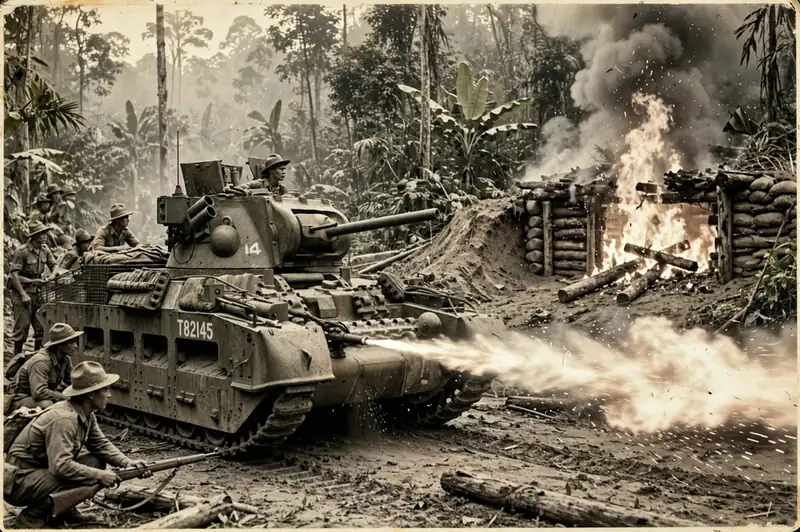
Australian Specialists: Frog and Hedgehog
In Australia, where the Matilda II served in the Pacific, the tank was adapted for jungle fighting. The Matilda Frog was a flamethrower tank, with a flame projector replacing the hull machine gun and a fuel trailer towed behind the tank. The Matilda Hedgehog was a variant fitted with a spigot mortar that fired a salvo of seven 65-pound bombs, which was used to destroy Japanese bunkers in New Guinea and Borneo. The Matilda CDL (Canal Defence Light) was a variant fitted with a powerful searchlight in the turret, which was used for night fighting and for dazzling enemy troops. The Australian variants show how adaptable the Matilda II’s hull was, and how the tank’s armour and reliability made it valuable in a theatre where its slow speed was less of a disadvantage.
The Matilda in Soviet Service
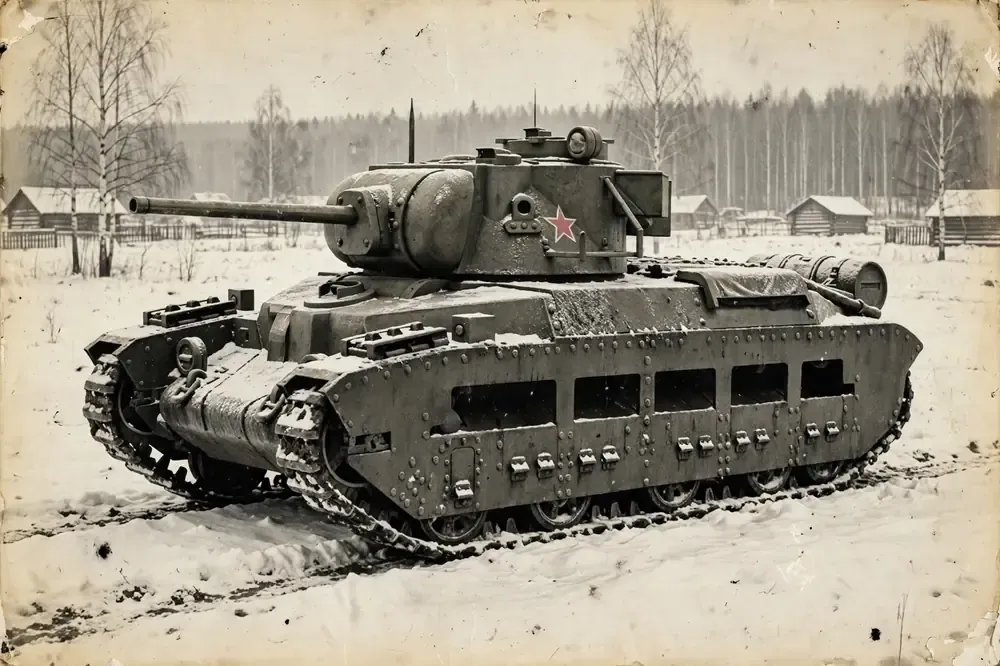
The Soviet Union received about 1,084 Matilda IIs under lend-lease, and used them on the Eastern Front, notably in the fighting around Moscow in 1941 and 1942. Soviet crews found the Matilda II’s armour and its diesel engines useful, although they criticised its slow speed and its weak 2-pounder gun compared with the T-34. The Matilda II’s service in the Soviet Union was a significant part of the lend-lease programme, and it showed how widely the tank was distributed among Britain’s allies. The Soviet Matilda IIs were withdrawn from service in 1943, when the T-34 had fully replaced them, but they had played a useful role in the defence of Moscow.
5. Operational History
France and Arras
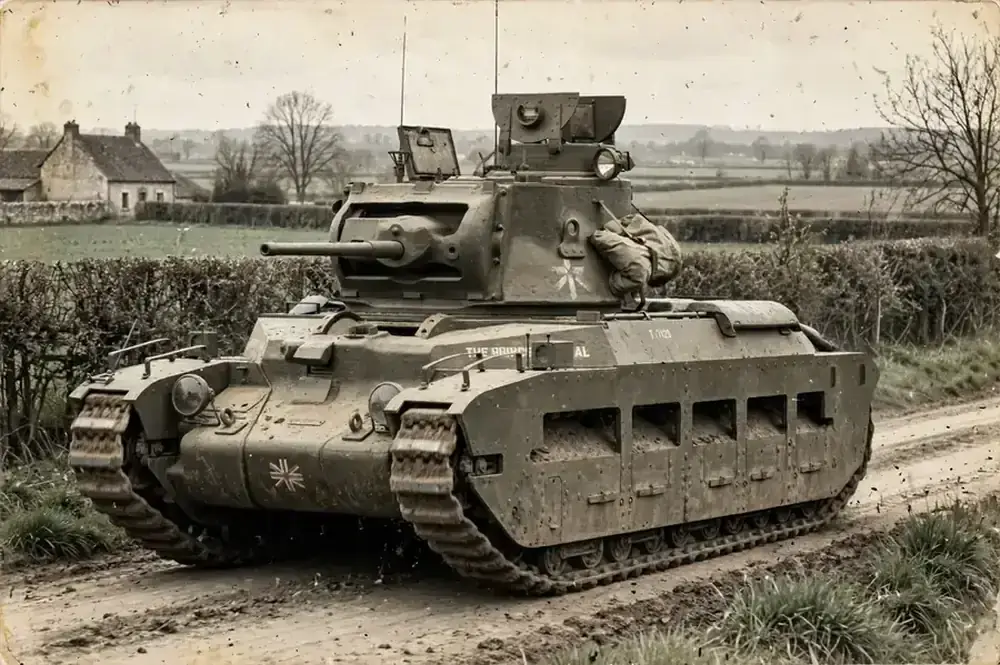
The Matilda II’s combat debut came in France in May 1940, when Matilda IIs of the 1st Army Tank Brigade took part in the counter-attack at Arras on 21 May. The attack, by the 4th and 7th Royal Tank Regiments, was a bold attempt to cut through the German advance and relieve the pressure on the British Expeditionary Force. The Matilda IIs advanced through German infantry and anti-tank guns, and their thick armour made them almost immune to German weapons. The attack caused panic among German troops, including the SS Totenkopf Division, and it was only halted when the Germans brought up 88 mm anti-aircraft guns and used them in the anti-tank role. The Matilda II’s performance at Arras was a revelation to the Germans, and it showed that British tank design was more advanced than they had expected. The attack did not change the outcome of the campaign, but it demonstrated the Matilda II’s potential.
The Western Desert: Queen of the Desert
In North Africa, the Matilda II earned its nickname “Queen of the Desert” in the fighting of 1940 and 1941. During Operation Compass, the British offensive of December 1940, Matilda IIs of the 7th Armoured Division destroyed Italian tanks and infantry with impunity, and their armour made them immune to Italian anti-tank guns. At Bardia and Tobruk, Matilda IIs supported infantry attacks on Italian fortifications, and their 2-pounder guns destroyed Italian tanks at ranges where the Italians could not reply. The Matilda II’s dominance in the desert lasted until the arrival of the German Afrika Korps in 1941, when the Germans deployed the 88 mm gun in the anti-tank role and the Matilda II’s armour was no longer sufficient. At Halfaya Pass and in the fighting around Tobruk, Matilda IIs were destroyed by 88 mm guns at long range, and the tank’s reign as queen of the desert came to an end.
The Pacific: New Guinea and Borneo
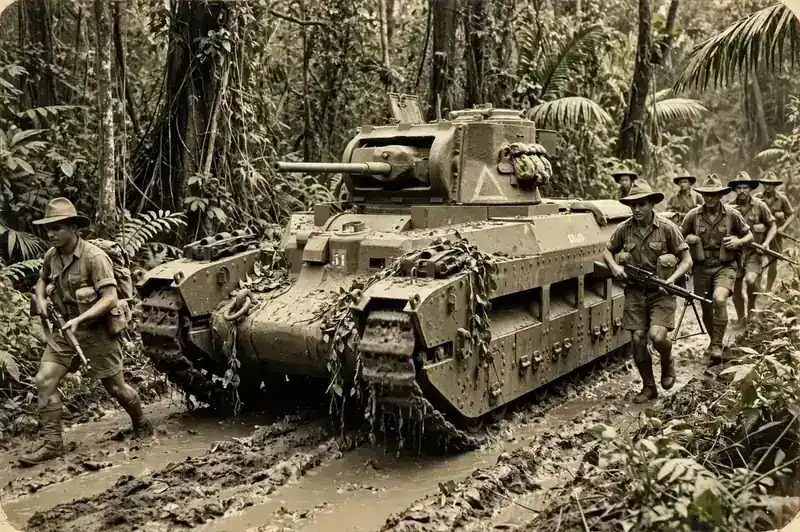
In the Pacific, the Matilda II found a new role in the jungle fighting of New Guinea and Borneo. The Australian Army used Matilda IIs in the campaigns of 1943 to 1945, where the tank’s thick armour protected it against Japanese anti-tank guns and its ability to support infantry in close country made it invaluable. The Matilda Frog flamethrower and the Matilda Hedgehog mortar variant were used to destroy Japanese bunkers, and the Matilda II’s diesel engines gave it a good range in the jungle. The Matilda II served in the Australian Army until 1955, long after it had been withdrawn from British service, and it was the last British tank to serve in the Australian Army. The Matilda II’s Pacific service shows how a tank that was obsolete in Europe could still be valuable in a different theatre.
The Eastern Front and Lend-Lease
The Matilda II’s service on the Eastern Front, under lend-lease, was a significant part of the tank’s history. Soviet crews used the Matilda II in the defence of Moscow in 1941 and 1942, where its armour and its diesel engines were valued, although its slow speed and its 2-pounder gun were criticised. The Matilda II’s lend-lease service shows how the British tank industry supported the Soviet Union in the critical months of 1941, when Soviet tank production was disrupted by the German invasion. The Matilda II was never a major tank on the Eastern Front, but its service there was a symbol of Allied cooperation, and it is remembered in Russian histories of the war as one of the lend-lease tanks that helped to defend Moscow.
6. Performance and Specifications
Strengths on the Battlefield
The Matilda II’s greatest strength was its armour. In 1940 and 1941, no German or Italian anti-tank gun in service could penetrate its 78 mm frontal armour at normal combat ranges, and the tank could advance under fire that would have destroyed any other British tank. Its diesel engines gave it a good range and a lower risk of fire than petrol-engined tanks, and its reliability was good for the time. The Matilda II’s climbing ability and its ability to cross trenches were also good, and its crews had great confidence in its protection. In the infantry support role, the Matilda II was a formidable weapon, and its performance in North Africa and the Pacific showed that a slow, heavily armoured tank could still be valuable when it was used correctly.
Weaknesses and Trade-offs
The weaknesses were equally clear. The Matilda II’s top speed of about 15 miles per hour was the slowest of any major British tank, and its cross-country speed was lower still. Its main armament, the 2-pounder gun, could not fire a useful high-explosive shell, which limited its value in the infantry support role. The tank’s turret was cramped, and its ventilation was poor. The Matilda II’s armour, while thick, was not proof against the German 88 mm gun, and its side armour was vulnerable to German anti-tank guns at close range. The Matilda II was also expensive to build, and its production was shared between several firms, which made it difficult to maintain a consistent standard. Nevertheless, the Matilda II’s overall record was respectable, and it was the only British tank to serve from 1939 to the end of the war without being withdrawn.
How the Matilda II Compared with Rivals
Compared with the German Panzer III, the Matilda II had thicker armour and a better gun in 1940, but it was slower and less reliable. Compared with the Italian M13/40, the Matilda II was superior in every respect, and it dominated the Italian tanks in the desert. Compared with the Soviet T-34, the Matilda II had thicker armour but was slower and less well armed, and it could not be built in the same numbers. Compared with the American M3 Stuart, the Matilda II was slower but better armoured and better armed. The Matilda II’s combination of very thick armour and a slow speed made it a specialised vehicle, and its performance must be judged against its intended role: supporting infantry against prepared defences, where it was among the best tanks of the early war.
7. Operators
Britain and the Commonwealth
The principal operator of the Matilda II was the British Army, which used it in the Royal Tank Regiment and in the Royal Armoured Corps’ army tank brigades. The tank was issued to the 1st Army Tank Brigade in France, the 7th Armoured Division in North Africa, and the 1st and 32nd Army Tank Brigades in the Western Desert. The Matilda II was also used by the British Army in the Far East, although in small numbers, and by the Australian Army in the Pacific. The Matilda II’s operators valued its protection and its reliability, and the tank’s service in North Africa and the Pacific earned it a place in the history of British armoured warfare.
Lend-Lease and Post-War Users
The Soviet Union received about 1,084 Matilda IIs under lend-lease, and used them on the Eastern Front in 1941 and 1942. Australia received Matilda IIs in 1942 and used them in the Pacific until 1955. The Matilda II was also used by the New Zealand Army and by the Free French forces, and it was evaluated by the United States Army. After the war, the Matilda II remained in service with the Australian Army and with the British Army’s training units, and it was finally withdrawn in 1955. The Matilda II’s export service shows how widely the tank was distributed among Britain’s allies, and how long it remained in use after it had been superseded in Europe.
8. Legacy and Influence
The End of the Infantry Tank
The Matilda II’s legacy is complex. It was one of the last of the British infantry tanks, and its replacement by the Churchill and then by the Centurion marked the end of the distinction between infantry and cruiser tanks in British doctrine. The Centurion, which entered service in 1945, combined the Matilda II’s protection with the speed of a cruiser, and it became the standard for post-war British tank design. The Matilda II’s contribution to armoured warfare was more lasting: it showed that a tank with very thick armour could dominate the battlefield, and it influenced the design of later British tanks, including the Churchill, which used the same infantry tank concept. The Matilda II thus closed one chapter of British tank history while opening another, in which a single universal tank would perform every battlefield role.
Cultural Memory and Historical Assessment
The Matilda II is one of the most famous British tanks of the war, and its nickname “Queen of the Desert” has ensured its place in popular memory. Historians have reassessed the Matilda II in recent decades, moving away from the early view of it as a slow and under-gunned tank and recognising its armour, its reliability and its value in the infantry support role. The tank’s performance in North Africa and the Pacific, and its service in the Soviet Union, have been reassessed in works by authors such as David Fletcher, who have emphasised the Matilda II’s role as a workhorse rather than a glamour weapon. The Matilda II’s influence on later British tank design was indirect but real: the emphasis on protection and crew survivability was carried into the Churchill and Centurion programmes, and the Matilda II’s reputation for looking after its crews became a lasting part of British tank design philosophy.
Reassessing the Matilda II
The reassessment of the Matilda II began in the 1970s and 1980s, when historians gained access to wartime records and to the accounts of the tank’s crews. Early post-war histories had often dismissed the Matilda II as a failure, citing its slow speed and its 2-pounder gun. Later work, drawing on unit war diaries and on the records of the production programme, showed that the Matilda II’s armour was a significant advantage in 1940 and 1941, and that the tank became one of the most reliable British tanks of the war. The tank’s crews, interviewed by historians, consistently praised its protection and its climbing ability, and they valued the confidence that its armour gave them. The reassessment has not made the Matilda II into a great tank in the conventional sense, but it has established it as a sound and useful design that did its job well.
9. Surviving Examples
Museums in Britain and the Commonwealth
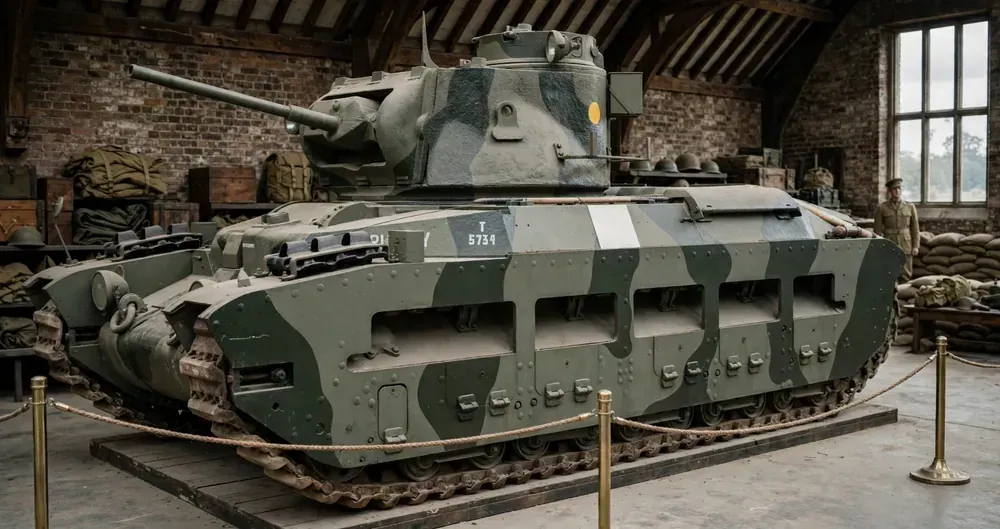
A significant number of Matilda IIs survive in museums and private collections around the world. The Tank Museum at Bovington in Dorset holds several examples, including a Matilda II Mk IV and a Matilda Frog, which is one of the most popular exhibits in the museum. The Imperial War Museum at Duxford also holds a Matilda II, and the Australian War Memorial in Canberra has a Matilda II. In Australia, the Royal Australian Armoured Corps Memorial and Army Tank Museum at Puckapunyal displays a Matilda II, and the Australian Armour and Artillery Museum in Cairns holds examples. The large number of surviving Matilda IIs reflects the type’s production run and its long service, and it ensures that the tank remains visible to the public.
Survivors Abroad and Running Examples
Other surviving Matilda II tanks include examples in the Kubinka Tank Museum in Russia, which is one of the lend-lease vehicles, and the Musee des Blindes at Saumur in France. In the United States, the National Armor and Cavalry Museum at Fort Benning holds a Matilda II, and several Matilda IIs are in private hands and appear at military vehicle shows. At least one Matilda II is maintained in running condition, and it appears at the Tank Museum’s Tankfest event. The running examples are particularly valuable, because they demonstrate the Matilda II’s slow, steady movement and its distinctive engine note, which no photograph can convey, and which helps visitors understand why the tank’s crews described it as slow but unstoppable.
Frequently Asked Questions
Was the Matilda II a good tank?
The Matilda II was a good infantry tank, judged by its intended role. It was heavily armoured, reliable, and able to support infantry in assaults on prepared defences. It was too slow and too weakly armed for tank-versus-tank combat, but that was not its job. Its crews valued its protection, and its service in North Africa and the Pacific earned it a lasting reputation.
How thick was the Matilda II’s armour?
The Matilda II had up to 78 mm of frontal armour on the hull and turret, which was the thickest armour on any tank in service in 1939 and 1940. This made it almost immune to German 37 mm and 50 mm anti-tank guns and to Italian anti-tank guns at normal combat ranges.
Why was the Matilda II called the “Queen of the Desert”?
The Matilda II earned the nickname “Queen of the Desert” in the fighting in North Africa in 1940 and 1941, when its thick armour made it almost immune to Italian and German anti-tank guns. British troops in the Western Desert gave it the name because it dominated the battlefield in the early desert campaigns.
How many Matilda IIs were built?
Approximately 2,987 Matilda IIs were built between 1939 and 1943, by several British firms including Vulcan Foundry, Ruston & Hornsby and the London, Midland & Scottish Railway. About 1,084 were sent to the Soviet Union under lend-lease.
Did the Matilda II fight in the Pacific?
Yes. The Australian Army used Matilda IIs in the jungles of New Guinea and Borneo in 1943 to 1945, where the tank’s thick armour and its ability to support infantry made it invaluable. Australian variants included the Matilda Frog flamethrower and the Matilda Hedgehog mortar tank.
How long did the Matilda II remain in service?
The Matilda II remained in British service until 1945, and in Australian service until 1955, long after it had been withdrawn from British service. Its long service in Australia reflects its value in the Pacific, where its slow speed was less of a disadvantage than in Europe.
Sources
- David Fletcher, The Matilda II Tank (Osprey Publishing, New Vanguard series).
- Bryan Perrett, The Matilda II Tank (Ian Allan, 1990s).
- David Fletcher, The Great Tank Scandal: British Armour in the Second World War (HMSO).
- The Tank Museum, Bovington, Matilda II collection records and vehicle guides.
- Chamberlain, Peter, and Ellis, Chris, British and American Tanks of World War II (Arms and Armour Press).
- Australian War Memorial, Matilda II collection records.