 WAR ATLAS MILITARY HISTORY MAGAZINE · WWI — WWII
Sherman vs Panzer IV
1. Lead
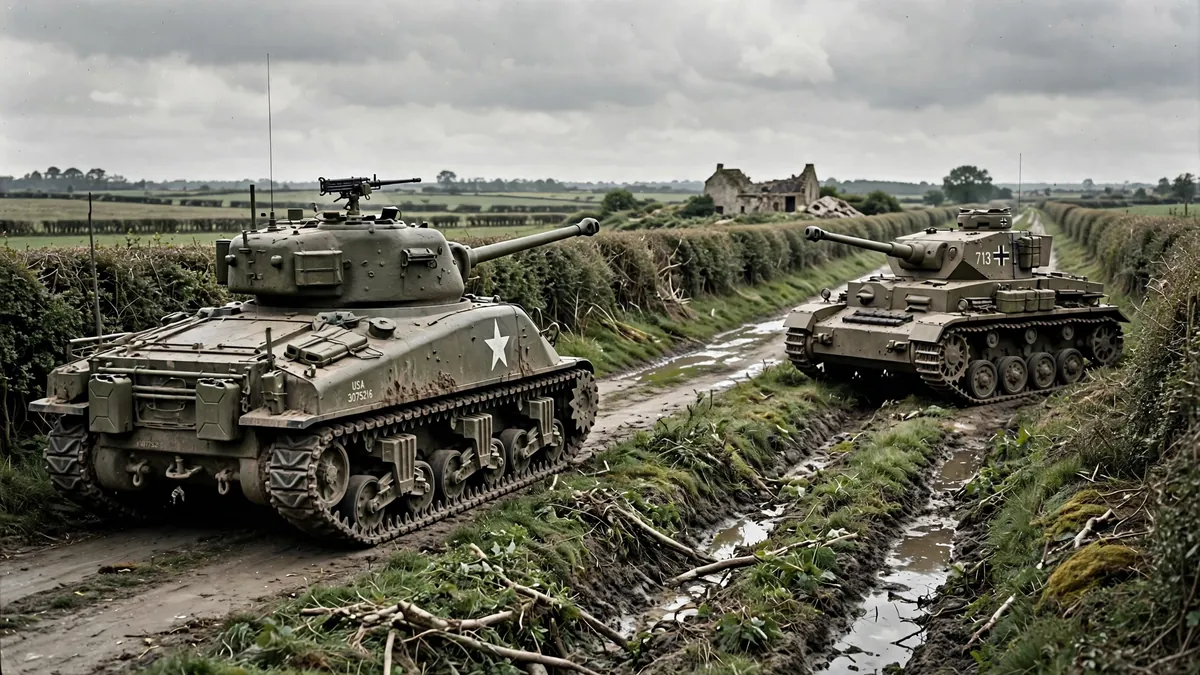
The Sherman vs Panzer IV comparison is one of the most argued-over questions in the history of armoured warfare, and one of the most misunderstood. The M4 Sherman was the standard medium tank of the United States and its allies, built in numbers — more than 49,000 — that dwarfed every other tank of the war except the Soviet T-34.
The Panzerkampfwagen IV, the Panzer IV, was the standard medium tank of Germany, built in about 8,500 examples, and the only German tank that served in front-line units from the first day of the war to the last. The two tanks met in North Africa, in Italy, in France and in Germany, and they fought each other in hundreds of engagements.
The popular image — of the Sherman as a death trap that burned at the first hit, and of the Panzer IV as a superior German machine — is a myth, and it is a myth that does both tanks an injustice. This article compares the two tanks fairly, on the evidence: their guns, their armour, their mobility, their reliability, their production, and their combat records.
The comparison matters because the two tanks were the workhorses of their armies, and because the war in the West was, to a large extent, a war between them. The Sherman was the tank the Allies had, in the numbers they needed, and the Panzer IV was the tank the Germans had, in the numbers they could build. Neither tank was the best tank of the war — the Tiger, the Panther and the T-34 all had claims to that title — but both tanks were the tanks that won and lost the war in the West, and their comparison is a comparison of two different philosophies of tank design, of production, and of war.
2. Key Facts
| M4 Sherman / Sherman M4 | Panzer IV / Panzer IV | |
|---|---|---|
| Country | United States | Germany |
| Produced | 1942–1945; more than 49,000 | 1937–1945; about 8,500 |
| Weight | About 30–33 tons (M4A3) | About 25 tons (Ausf. H) |
| Crew / Kíp lái | 5 | 5 |
| Main gun (late war) | 75 mm M3 or 76 mm M1 | 75 mm KwK 40 L/48 |
| Armour (hull front) | 51 mm, sloped / 51 mm, nghiêng | 80 mm, vertical |
| Engine | Ford GAA V8 petrol, about 500 hp (M4A3) | Maybach HL 120 petrol, about 300 hp |
| Speed | About 48 km/h on roads | About 40 km/h on roads |
| Range | About 190 km on roads | About 200 km on roads |
| First combat | El Alamein, October 1942 | Poland, September 1939 |
3. Design Philosophy
Two different answers to the same question
The Sherman and the Panzer IV were designed to answer the same question — what should a medium tank be? — and they gave two different answers, because they were designed by two different armies, for two different wars. The Panzer IV was designed in the mid-1930s as a support tank, to accompany the Panzer III, which was the German Army’s main battle tank.
The Panzer IV’s job was to destroy infantry, guns and fortifications with its short 75 mm howitzer, while the Panzer III fought the enemy’s tanks. The Sherman was designed in 1940–1941 as a general-purpose medium tank, to do everything: to fight tanks, to support infantry, to exploit a breakthrough, and to be built in enormous numbers by the American automobile industry.
The two designs reflected two different doctrines, and the two doctrines would be tested against each other in North Africa, in Italy and in France.
Evolution under fire
Both tanks evolved dramatically during the war, and the comparison must be made between the tanks as they were in 1944, not as they were designed. The Panzer IV began the war with a short 75 mm gun and 30 mm of armour, and it ended the war with a long 75 mm KwK 40 gun and 80 mm of armour, with spaced armour skirts (Schürzen) to protect against anti-tank rifles and shaped-charge weapons.
The Sherman began the war with a 75 mm M3 gun and 51 mm of sloped armour, and it ended the war with a 76 mm M1 gun, a more powerful engine, and, in the M4A3E8 “Easy Eight” version, a new suspension and a wider track.
Both tanks were, by 1944, very different vehicles from the ones that had entered service, and both had been improved in response to the same enemy: each other, and the heavier tanks — the Tiger, the Panther and the T-34 — that had changed the tank war.
The production question
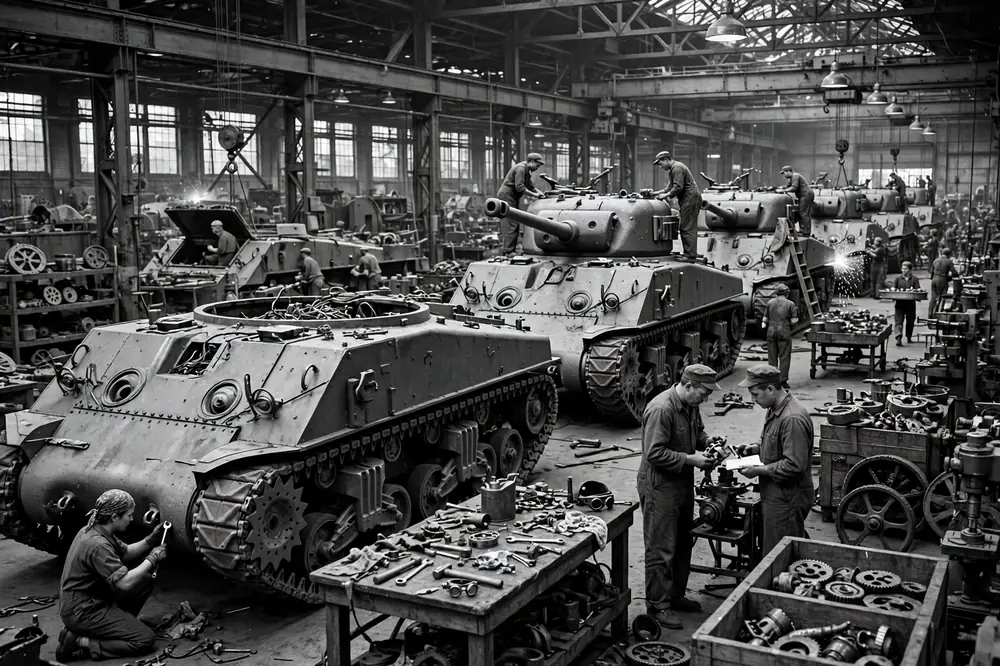
The most important difference between the two tanks was not in their design but in their production. The United States built more than 49,000 Shermans, in eleven factories, using the methods of the automobile industry — standardised parts, assembly lines, and a workforce that included large numbers of women. Germany built about 8,500 Panzer IVs, in a small number of factories, using craft methods that were slower and more labour-intensive.
The Sherman was designed to be built in large numbers, and it was; the Panzer IV was designed to be built in small numbers, and it was. The production difference meant that the Allies could afford to lose Shermans and replace them, while the Germans could not afford to lose Panzer IVs — a difference that mattered more than any difference in guns or armour.
4. Firepower Compared
The guns
In 1944, the Panzer IV Ausf. H carried the 75 mm KwK 40 L/48 gun, which fired a 75 mm armour-piercing shell at a muzzle velocity of about 790 metres per second, and which could penetrate about 90 mm of armour at 1,000 metres.
The Sherman M4A3 with the 75 mm M3 gun fired a 75 mm shell at a lower velocity, and it could penetrate about 60 mm of armour at 1,000 metres — significantly less than the Panzer IV’s gun. The Sherman with the 76 mm M1 gun, which entered service in 1944, fired a 76 mm shell at a higher velocity, and it could penetrate about 110 mm of armour at 1,000 metres — more than the Panzer IV’s gun, but still less than the Panther’s gun.
The comparison, therefore, depends on which Sherman is compared: the 75 mm Sherman was outgunned by the Panzer IV, the 76 mm Sherman outgunned it, and both were outgunned by the Panther and the Tiger.
High-explosive performance
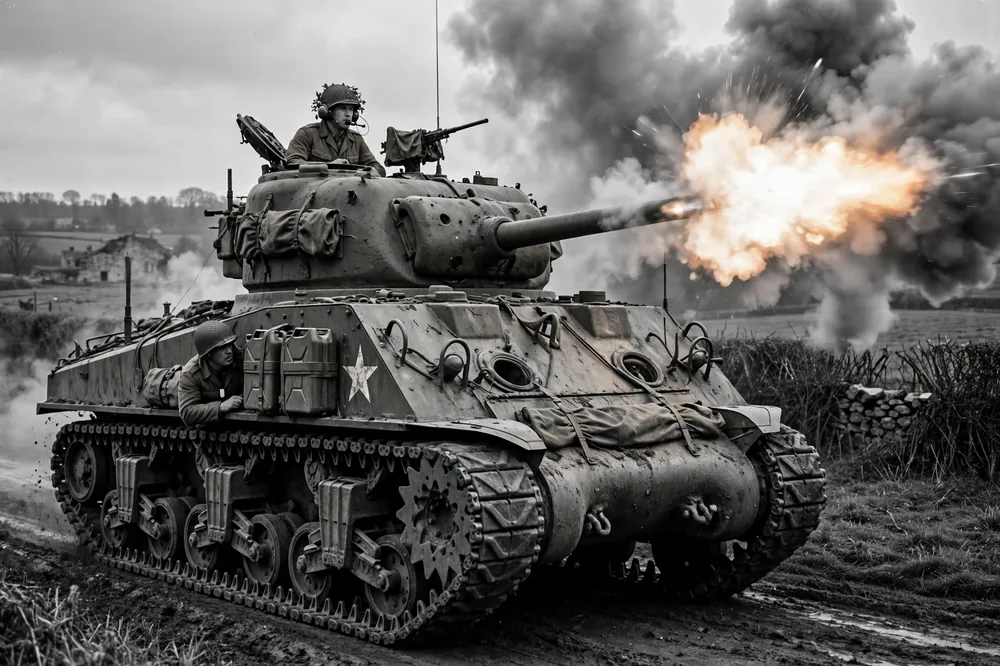
The Sherman’s 75 mm gun was a better high-explosive weapon than the Panzer IV’s KwK 40, and it was a better weapon against infantry, guns and soft targets — which was, for most of the war, the Sherman’s main job. The 75 mm M3 fired a larger high-explosive shell, with more explosive filler, than the KwK 40, and it was the gun the American infantry preferred for close support.
The 76 mm M1, by contrast, was a worse high-explosive weapon than the 75 mm, because its high-explosive shell was smaller, and the American tank crews in Normandy often preferred the 75 mm Sherman for infantry support, even though the 76 mm was better against tanks.
The Panzer IV’s KwK 40 was a good all-round gun, but it was not as good a high-explosive weapon as the Sherman’s 75 mm, and the German infantry often complained that the Panzer IV’s gun was less effective against infantry than the short 75 mm howitzer it had replaced.
The verdict on firepower
On firepower, the verdict is balanced. The late-war Panzer IV outgunned the 75 mm Sherman, and it was a better tank-killer than the standard Sherman of 1944. The 76 mm Sherman outgunned the Panzer IV, and it was a better tank-killer than the Panzer IV, though it was a worse infantry-support weapon. Neither tank’s gun was the best of the war — the 17-pounder, the Panther’s 75 mm L/70 and the Tiger’s 88 mm were all more powerful — but both tanks’ guns were adequate for their roles, and both were improved during the war in response to the enemy. The firepower comparison is a draw, with the advantage depending on which version of each tank is compared.
5. Armour Compared
Thickness and slope
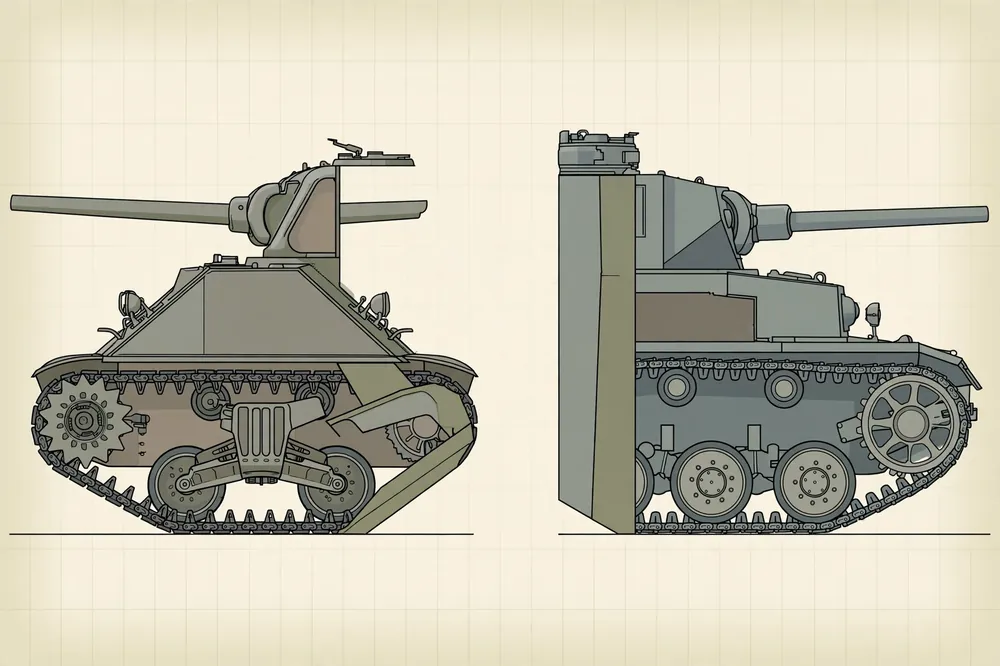
The Panzer IV Ausf. H had 80 mm of armour on the hull front, vertical, and 30 mm on the hull sides, with additional 5 mm spaced armour skirts (Schürzen) on the sides and around the turret. The Sherman M4A3 had 51 mm of armour on the hull front, sloped at about 56 degrees, which gave it an effective thickness of about 90 mm against a horizontal shot, and 38 mm on the hull sides.
The Sherman’s sloped armour was a better design than the Panzer IV’s vertical armour, because slope increases the effective thickness and increases the chance that a shell will deflect. The Panzer IV’s 80 mm of vertical armour was, in practice, roughly equivalent to the Sherman’s 51 mm of sloped armour — and both were vulnerable to the other’s gun at normal combat ranges.
The Sherman’s turret armour was 76 mm on the front, the Panzer IV’s turret armour was 50 mm on the front, with 30 mm on the sides — and both turrets were vulnerable to the other’s gun.
The burning Sherman myth
The most persistent myth about the Sherman is that it was a death trap that burned at the first hit — the “Ronson” or “Tommy Cooker” myth, after the cigarette lighter whose slogan was “lights first time, every time”. The myth has a basis in fact: early Shermans, with their ammunition stored in the sponsons above the tracks, were prone to catching fire when the ammunition was hit, and the petrol engine made a fire more likely.
But the myth is exaggerated: American studies after the war found that the Sherman’s rate of burning was not significantly higher than that of other tanks, and that the Panzer IV was also prone to burning when hit. The Sherman’s ammunition was moved to armoured bins in the hull floor in later versions, with wet stowage — ammunition stored in water-filled jackets — which greatly reduced the risk of fire.
The Panzer IV’s ammunition was stored in the hull and in the turret, and it was also vulnerable. The truth is that every tank of the war burned when its ammunition was hit, and the Sherman was no worse than the Panzer IV in that respect.
The verdict on armour
On armour, the verdict is also balanced. The Panzer IV had thicker armour on paper, the Sherman had better-sloped armour, and in practice the two were roughly equivalent — and both were inadequate against the guns they faced in 1944. The Panzer IV’s Schürzen gave it an advantage against anti-tank rifles and shaped-charge weapons, but they were often torn off in combat and they added weight. The Sherman’s wet stowage gave it an advantage against ammunition fires, but it did not make the tank invulnerable. Neither tank was well-protected by the standards of 1944, and both were outclassed by the Panther and the Tiger in protection. The armour comparison is a draw.
6. Mobility and Reliability Compared
Speed and cross-country performance
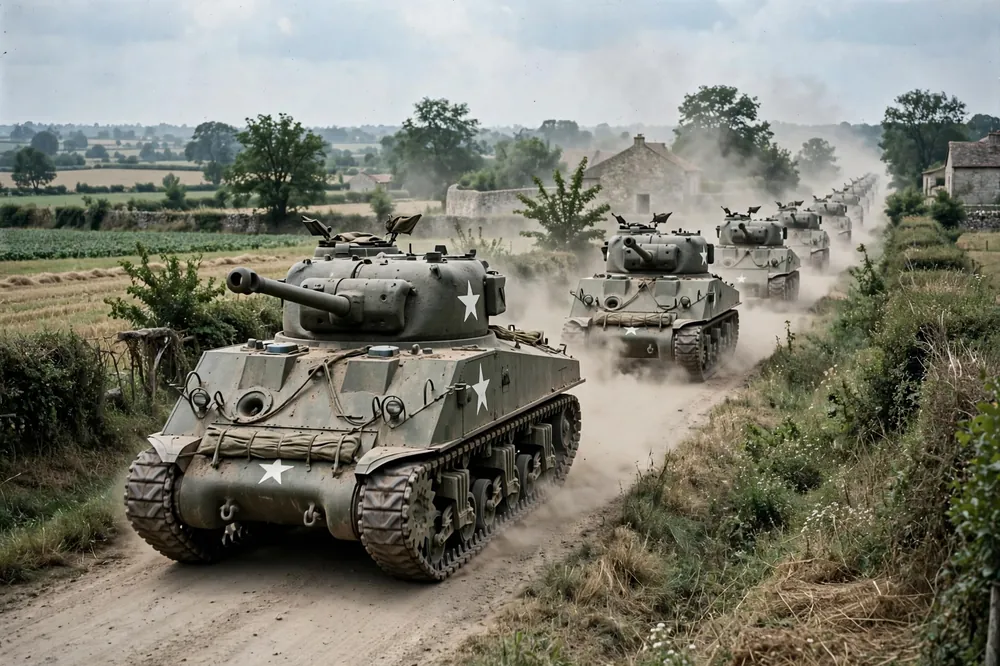
The Sherman M4A3 had a top speed of about 48 km/h on roads, the Panzer IV Ausf. H had a top speed of about 40 km/h on roads, and the Sherman was the faster tank. The Sherman’s Ford GAA engine produced about 500 horsepower, the Panzer IV’s Maybach HL 120 produced about 300 horsepower, and the Sherman’s power-to-weight ratio was significantly better — about 15 horsepower per ton against about 12 for the Panzer IV.
The Sherman’s cross-country performance was also better: its wider tracks gave it lower ground pressure, and its suspension was more robust. The Panzer IV’s narrow tracks gave it high ground pressure, and it was prone to bogging down in soft ground — a serious liability in the mud of Russia and in the soft ground of Normandy.
The Sherman was the more mobile tank, and its mobility was one of its greatest strengths.
Reliability: the Sherman’s greatest advantage
The Sherman’s greatest advantage over the Panzer IV was reliability. The Sherman was one of the most reliable tanks of the war: its engine, its transmission and its running gear were robust, its parts were standardised, and it could be maintained and repaired in the field by crews with basic tools.
American studies found that the Sherman’s mechanical availability — the proportion of tanks fit for action at any one time — was about 90 per cent or higher, while the Panzer IV’s availability was significantly lower, and the Panther’s and the Tiger’s were far lower still.
The Panzer IV’s Maybach engine was reliable by German standards, but it was less reliable than the Sherman’s Ford engine, and the Panzer IV’s transmission and final drives were prone to failure. The Sherman’s reliability meant that the Allies could keep more tanks in action, for longer, and with fewer maintenance hours — a decisive advantage in a war of attrition.
Fuel and logistics
The Sherman’s range was about 190 kilometres on roads, the Panzer IV’s was about 200 kilometres, and the two were roughly equivalent. The Sherman’s petrol engine was thirsty, but the Allies had ample fuel, and the Sherman’s fuel consumption was not a constraint.
The Panzer IV’s petrol engine was also thirsty, and the Germans were chronically short of fuel, especially in the last year of the war, when many Panzer IVs were abandoned for lack of fuel rather than destroyed in combat. The Sherman’s logistics — its standardised parts, its ease of repair, and the Allies’ vast supply system — were a decisive advantage, and the Panzer IV’s logistics — its hand-built parts, its difficulty of repair, and the Germans’ collapsing supply system — were a decisive disadvantage.
The mobility comparison is a clear win for the Sherman.
7. Combat Record Compared
North Africa
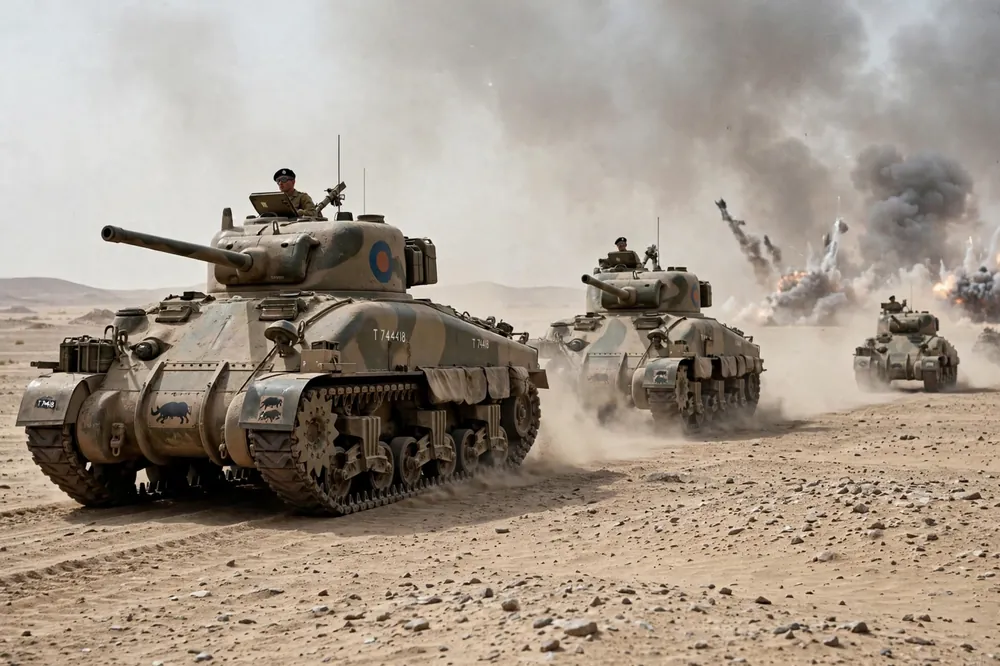
The Sherman and the Panzer IV first met in North Africa, at the Second Battle of El Alamein in October 1942, where the Sherman’s debut was a success: the British 8th Army’s Shermans, with their 75 mm guns, outranged the Panzer III and the early Panzer IV, and they played a leading part in the victory. In Tunisia in 1943, the Sherman met the long-gunned Panzer IV Ausf.
G, and the balance shifted: the Panzer IV’s KwK 40 could penetrate the Sherman at ranges where the Sherman’s 75 mm could not reply, and the American tank crews learned the hard way that the Sherman was outgunned. The North African campaign showed both tanks’ strengths and weaknesses: the Sherman was reliable and available in numbers, the Panzer IV was better-armed, and the outcome depended on tactics, on numbers, and on the skill of the crews.
Normandy and the West
In Normandy in 1944, the Sherman and the Panzer IV met again, and the balance was more even. The Panzer IV was the most numerous German tank in Normandy, and it fought in the bocage, in the battles around Caen, and in the Falaise Pocket. The Sherman was the most numerous Allied tank, and it fought in the same battles.
The tank-versus-tank engagements in Normandy were often decided not by the tanks’ guns or armour, but by tactics: by who saw whom first, by who fired first, and by who had infantry and artillery support. American studies after the war found that in tank-versus-tank engagements in Normandy, the side that fired first usually won, regardless of the tanks involved — and the Sherman’s superior optics, its stabilised gun, and its five-man crew gave it an advantage in acquiring targets quickly.
The Panzer IV’s better gun gave it an advantage at long range, but the Sherman’s numbers and its reliability gave the Allies the advantage overall.
The numbers game
The combat record of the two tanks cannot be understood without the numbers. The Allies built more than 49,000 Shermans, the Germans built about 8,500 Panzer IVs, and the Allies could afford to lose Shermans at a rate that the Germans could not afford to lose Panzer IVs.
In Normandy, the Allies lost Shermans in large numbers — to German tanks, to anti-tank guns, and to mines — but they replaced them, and the German tank force, which could not replace its losses, was ground down. The Panzer IV’s combat record was good — it was a capable tank, and its crews were skilled — but it was a record achieved by a tank that was always outnumbered, and that was fighting a war of attrition it could not win.
The Sherman’s combat record was also good, and it was a record achieved by a tank that was always available in numbers, and that was fighting a war of attrition it could win.
8. The Crews’ View
What the crews said
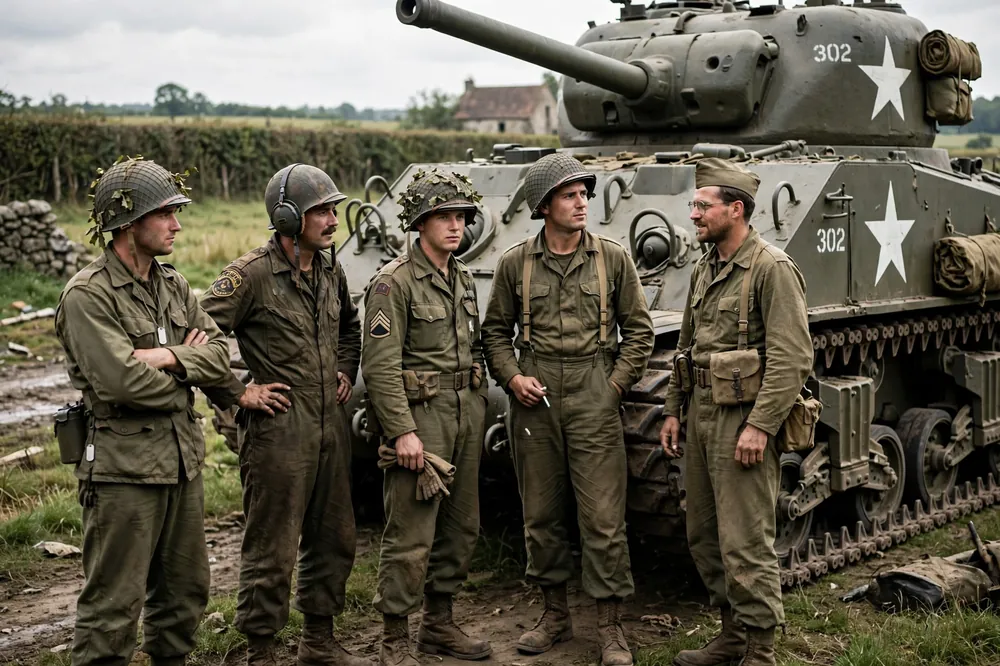
The crews who fought in the two tanks had a more nuanced view than the popular myth. American Sherman crews respected the Panzer IV’s gun, and they knew that the Panzer IV could kill them at long range, but they also knew that their Sherman was reliable, that it was comfortable, and that it would be replaced if it was lost.
German Panzer IV crews respected the Sherman’s reliability and its numbers, and they knew that the Sherman was a dangerous opponent — not because it was a better tank, but because there were so many of them, and because the Sherman’s crews were well-trained and well-supported.
Both crews complained about their tanks: the Sherman crews complained about the 75 mm gun’s lack of penetration, the Panzer IV crews complained about the thin armour and the narrow tracks. Both crews were proud of their tanks, and both were right to be.
Training and doctrine
The Sherman’s crews were trained in a doctrine that emphasised combined arms: the tank was one part of a team that included infantry, artillery and air support, and the tank’s job was to support the infantry and to exploit a breakthrough, not to fight other tanks on its own.
The Panzer IV’s crews were trained in a doctrine that emphasised the tank-versus-tank battle, and the Panzer IV’s job was to fight the enemy’s tanks. The two doctrines reflected the two armies’ situations: the Allies had air superiority and artillery superiority, and they could afford to use their tanks as part of a combined-arms team; the Germans had neither, and they had to rely on their tanks to fight the enemy’s tanks.
The Sherman’s doctrine was the right doctrine for the war the Allies fought, and the Panzer IV’s doctrine was the right doctrine for the war the Germans wished they were fighting — but the war they were fighting was the Allies’ war, not theirs.
9. Production and Logistics
The Arsenal of Democracy
The Sherman was a product of the Arsenal of Democracy: the American industrial system that, by 1944, was producing more tanks, more aircraft and more ships than the rest of the world combined. The Sherman was built in eleven factories, by companies that had built automobiles before the war, using assembly-line methods that produced a tank every few minutes.
The Sherman’s parts were standardised, its design was frozen early, and its production was never interrupted by bombing or by material shortages. The Panzer IV was a product of a different industrial system: the German system, which was smaller, less standardised, and subject to bombing, to material shortages, and to the competing demands of the U-boat programme, the aircraft programme and the V-weapon programme.
The Panzer IV’s production was a remarkable achievement under the circumstances, but it was an achievement that could not match the Sherman’s production.
The logistics of war
The Sherman’s logistics were a decisive advantage. The Sherman used standardised parts, it was easy to repair, and the Allies’ supply system — with its vast numbers of trucks, its forward repair depots, and its ability to deliver spare parts to the front — kept the Shermans in action.
The Panzer IV’s logistics were a decisive disadvantage: its parts were hand-fitted, it was difficult to repair, and the German supply system, which was collapsing under Allied bombing and under the pressure of the Eastern Front, could not keep the Panzer IVs in action.
The result was that the Sherman’s availability was about 90 per cent, while the Panzer IV’s availability was far lower, and the German tank force spent as much time in repair as it did in action. The production and logistics comparison is a clear and decisive win for the Sherman.
10. Verdict: Which Tank Was Better?
The question “which tank was better?” has no simple answer, because it depends on what “better” means. If “better” means the better tank in a one-on-one duel, at long range, in 1944, then the Panzer IV Ausf. H was better than the 75 mm Sherman, and roughly equal to the 76 mm Sherman.
If “better” means the better tank for winning a war, then the Sherman was better — and it was not close. The Sherman was more reliable, more mobile, easier to produce, easier to maintain, and available in numbers that the Panzer IV could never match.
The Panzer IV was a good tank, and its crews were skilled, but it was a tank built by an army and an industry that could not sustain the war it was fighting. The Sherman was a good tank, and it was a tank built by an army and an industry that could sustain the war it was fighting — and that, in the end, is what mattered.
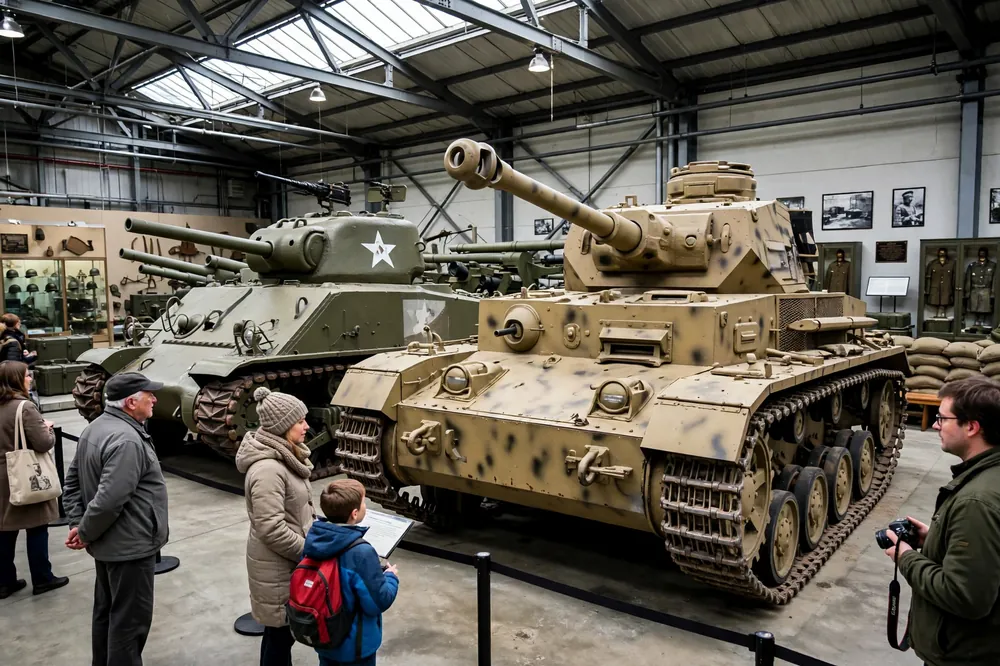
The balanced verdict is this: the Panzer IV was the better gun platform, the Sherman was the better war machine. The Panzer IV’s gun was better than the 75 mm Sherman’s gun, its armour was roughly equal, and its design was a good design for a tank-versus-tank battle.
The Sherman’s reliability, its mobility, its production and its logistics were better, and its design was a good design for a war of attrition. The war in the West was a war of attrition, and the Sherman won it — not because it was the best tank, but because it was the right tank for the war, in the numbers the war required.
The Panzer IV lost it — not because it was a bad tank, but because it was the right tank for a different war, in numbers that were never enough.
11. Frequently Asked Questions
Which tank was better, the Sherman or the Panzer IV?
There is no simple answer. In a one-on-one duel at long range in 1944, the Panzer IV Ausf. H was better than the 75 mm Sherman and roughly equal to the 76 mm Sherman, because its KwK 40 gun was more powerful than the 75 mm M3. But as a war machine, the Sherman was better: it was more reliable, more mobile, easier to produce and maintain, and available in far larger numbers — more than 49,000 Shermans against about 8,500 Panzer IVs. The Sherman won the war of attrition; the Panzer IV was the better gun platform.
Was the Sherman really a death trap?
No, not as the myth claims. Early Shermans were prone to catching fire when their ammunition was hit, because the ammunition was stored in the sponsons, but later Shermans used wet stowage — ammunition in water-filled jackets in the hull floor — which greatly reduced the risk. American post-war studies found that the Sherman’s rate of burning was not significantly higher than that of other tanks, including the Panzer IV. Every tank of the war burned when its ammunition was hit; the Sherman was no worse than the Panzer IV in that respect.
How many Shermans and Panzer IVs were built?
More than 49,000 M4 Shermans were built between 1942 and 1945, in eleven American factories, making the Sherman the second most numerous tank of the war after the Soviet T-34. About 8,500 Panzer IVs were built between 1937 and 1945, in a small number of German factories. The production ratio of nearly six to one was decisive: the Allies could replace their losses, the Germans could not. The ratio was decisive: the Allies could replace their losses, the Germans could not, and the Sherman’s numbers are what won the war of attrition.
Could the Sherman’s 75 mm gun penetrate the Panzer IV?
Yes, at normal combat ranges. The Sherman’s 75 mm M3 gun could penetrate about 60 mm of armour at 1,000 metres, which was enough to defeat the Panzer IV’s 30 mm side armour at long range and its 80 mm frontal armour at close range, especially with the turret armour of 50 mm. The Panzer IV’s KwK 40 gun could penetrate the Sherman’s frontal armour at longer ranges than the Sherman could reply, which gave the Panzer IV an advantage in a long-range duel — but most tank engagements in Normandy were fought at ranges of less than 1,000 metres, where both tanks could kill each other.
Why did the Germans keep building the Panzer IV?
The Germans kept building the Panzer IV because it was the only German tank that could be built in significant numbers, because its production lines were established, and because the Panther and the Tiger — though more powerful — were more expensive, more complex, and less reliable.
The Panzer IV was the workhorse of the German panzer divisions, and it remained in production until the end of the war because Germany had no better alternative that it could build in quantity. The decision was a rational one, given Germany’s industrial constraints, but it meant that the German tank force was built around a tank that was outclassed by the Panther and the Tiger in a duel, and outnumbered by the Sherman in a war of attrition.
Which tank would win in a one-on-one fight?
It depends on the range, the version, and who fires first. At long range, the Panzer IV Ausf. H would have the advantage over a 75 mm Sherman, because its KwK 40 gun outranged the 75 mm M3. At close range, the two tanks were roughly equal, and the outcome would depend on who saw whom first and who fired first — which, in Normandy, was the decisive factor in most tank engagements. Against a 76 mm Sherman, the Panzer IV’s advantage disappeared, and the two tanks were roughly equal at all ranges. The honest answer is that there was no clear winner in a duel, and that the war was not decided by duels.
12. Sources
- Wikipedia, “M4 Sherman” and “Panzer IV” — production figures (more than 49,000 Shermans; about 8,500 Panzer IVs), specifications and service history.
- Steven J. Zaloga, M4 Sherman vs Type 97 Chi-Ha and Armored Thunderbolt: The US Army Sherman in World War II (Stackpole, 2008) — Sherman design, production and combat record.
- Thomas L. Jentz, Panzertruppen: The Complete Guide to the Creation and Combat Employment of Germany’s Tank Force 1933–1942 (Schiffer, 1996) — Panzer IV design and production.
- Robert Forczyk, Tank Warfare on the Eastern Front 1941–1942 and Case Red: The Collapse of France (Pen & Sword and Osprey) — Sherman and Panzer IV in combat.
- Nicholas Moran, “The Chieftain’s Hatch” and the US Army’s post-war tank studies — the Sherman’s burning rate, reliability and the first-shot advantage in Normandy.
- David Fletcher, Sherman Firefly (Osprey New Vanguard, 2008) — the 17-pounder and the Sherman’s gun development.
- Steven J. Zaloga, Panzer IV vs Sherman: France 1944 (Osprey Duel, 2013).
- Thomas L. Jentz and Hilary Louis Doyle, Panzer IV (in the Panzer Tracts series).