 WAR ATLAS MILITARY HISTORY MAGAZINE · WWI — WWII
River-class Frigate
1. Lead
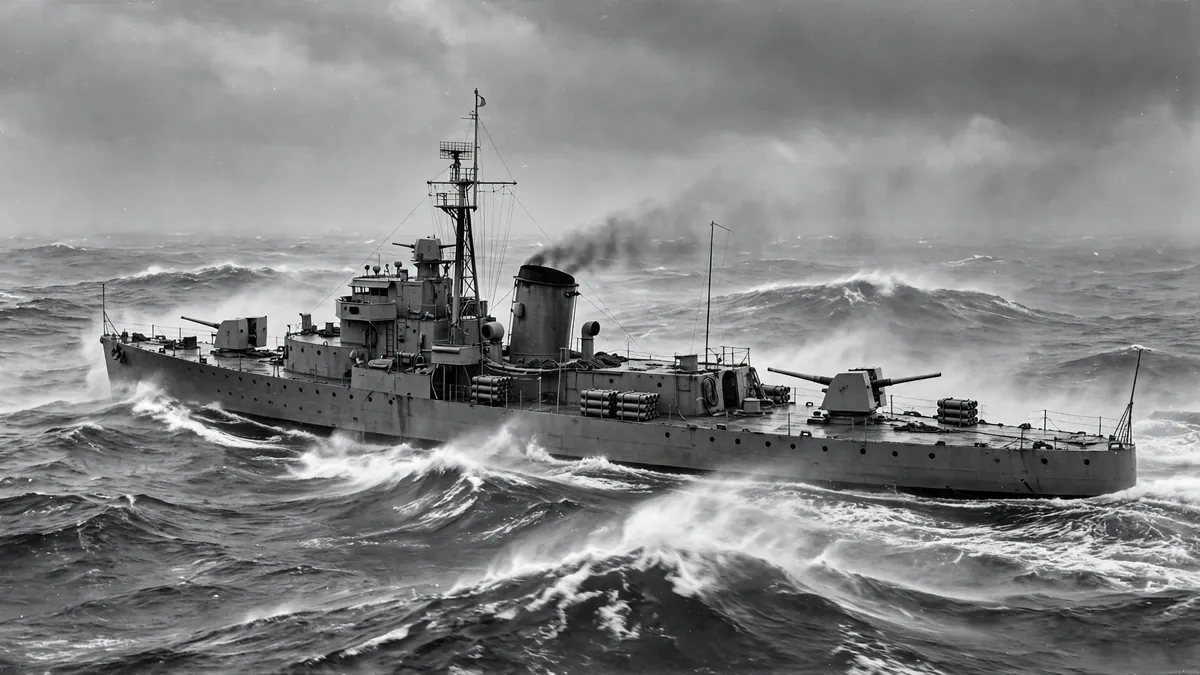
The River-class frigate was the most important Allied escort vessel of the Battle of the Atlantic, and the ship that gave the Royal Navy a weapon it could build fast enough, cheaply enough and in large enough numbers to win the convoy war.
One hundred and fifty-one River-class frigates were built between 1941 and 1944 in Britain, Canada and Australia, named after rivers in the British Commonwealth — Swale, Itchen, Dart, Nene, Wye, Tweed and dozens more. They were longer, faster and far more seaworthy than the Flower-class corvettes they replaced, and they carried better anti-submarine weapons, including the Hedgehog spigot mortar and a heavier depth-charge outfit.
Where the corvette had been an improvised stopgap, the frigate was a purpose-designed ocean escort, and it arrived just as the U-boat war reached its crisis in the spring of 1943.
The River class was born of a practical problem. By 1941 the Royal Navy had plenty of corvettes but not enough escorts that could keep up with a fast convoy in heavy Atlantic weather, stay at sea for weeks, and carry the weapons and sensors needed to hunt a U-boat.
The naval architect William Reed, who had designed the Flower class, drew up a larger ship — about 91 metres long, with a twin-screw layout, a speed of 20 knots and accommodation that, by corvette standards, was almost luxurious. The design was adopted in Britain, Canada and Australia, and the ships that resulted served in every ocean, sank U-boats, escorted the invasion fleets to Normandy, and after the war served in a dozen navies around the world.
The frigate, as a ship type, was essentially invented by the River class, and every modern frigate descends from it.
2. Key Facts
| Class | River-class frigate, Royal Navy and Commonwealth escort |
| Built | 1941–1944; 151 completed |
| Builders | Shipyards in Britain, Canada and Australia |
| Displacement | About 1,370 tons standard; about 1,830 tons full load |
| Length | About 91.3 m (299 ft 6 in) |
| Speed | About 20 knots |
| Range | About 7,500 nautical miles at 12 knots |
| Armament | 2 × 4-inch guns; Hedgehog anti-submarine mortar; depth charges; anti-aircraft guns |
| Complement | About 107 officers and men (up to 140 in some ships) |
| U-boats sunk | River-class ships credited with sinking more than a dozen U-boats, alone or in company |
| Famous ships | Swale, Itchen, Dart, Nene, Wye, Tweed, Teviot, Cam / Swale, Itchen, Dart, Nene, Wye, Tweed, Teviot, Cam |
3. Design and Development
The Flower-class problem
When war broke out in 1939, the Royal Navy’s escort force was built around the Flower-class corvette, a small ship based on a whaler design that could be built quickly in civilian yards. The Flower was a brilliant improvisation, but by 1941 its limits were obvious.
It was too slow to catch a surfaced U-boat, too short to ride Atlantic swells without pitching violently, too cramped to keep a crew effective on a three-week patrol, and too small to carry the latest Asdic, radar and anti-submarine weapons together. Crews called the Flower a ship that would “roll on wet grass”, and its officers knew that a better escort was needed.
The Admiralty asked William Reed, the designer of the Flower, to draw a bigger ship that could be built in the same civilian yards, using the same simple construction methods, but with the size and speed of a real ocean escort.
William Reed’s design
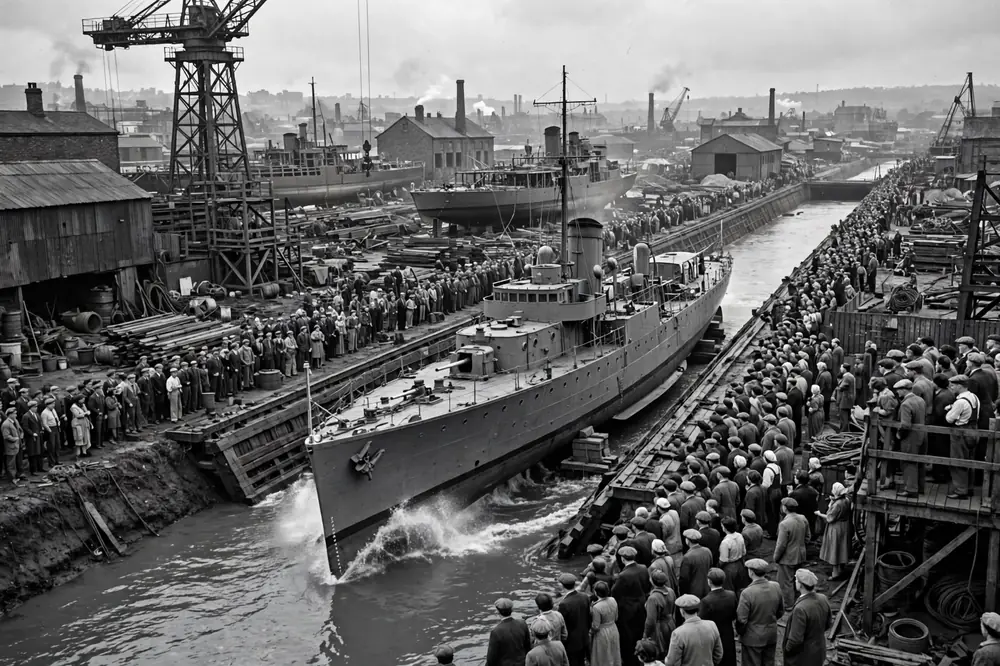
Reed’s answer was a ship of about 91 metres, with a twin-screw arrangement driven by reciprocating steam engines that gave 20 knots — fast enough to overhaul a surfaced U-boat and to keep station with a fast convoy. The longer hull gave the ship a much better motion in heavy seas, and the larger size allowed proper accommodation, a bigger bridge, space for the new Type 144 Asdic and for radar, and a heavier armament.
The design used commercial construction standards wherever possible, so that small yards with no warship experience could build it, and it used machinery that was already in production. The first ship, HMS Swale, was ordered in 1941 and commissioned in June 1942.
The design was so successful that it was adopted with local variations in Canada, where 60 ships were built, and in Australia, where 12 were built, and the type was soon known throughout the Allied navies simply as “the frigate”.
Building in three countries
The River class was a genuinely Commonwealth project. British yards built 70 ships, Canadian yards built 60 and Australian yards built 12, with a handful of others built to the design for allied navies. Canadian ships differed in detail — they were built to Canadian standards, with different machinery arrangements in some cases, and they carried the names of Canadian rivers and towns.
Australian ships, built at Cockatoo Island and other yards, served in the Pacific. The three building programmes together produced 151 ships in about three years, a remarkable industrial achievement at a time when every yard was already working at full capacity.
The ships were cheap by warship standards, and they could be built in yards that could never have built a destroyer, which was precisely the point: the River class turned the whole Commonwealth shipbuilding industry into an escort-building machine.
4. Armament and Sensors
Guns and depth charges
The River class carried two 4-inch guns, one forward and one aft, which gave it a surface armament far heavier than a corvette’s single gun and allowed it to fight a surfaced U-boat on the surface, to shell shore targets, and to defend itself against aircraft.
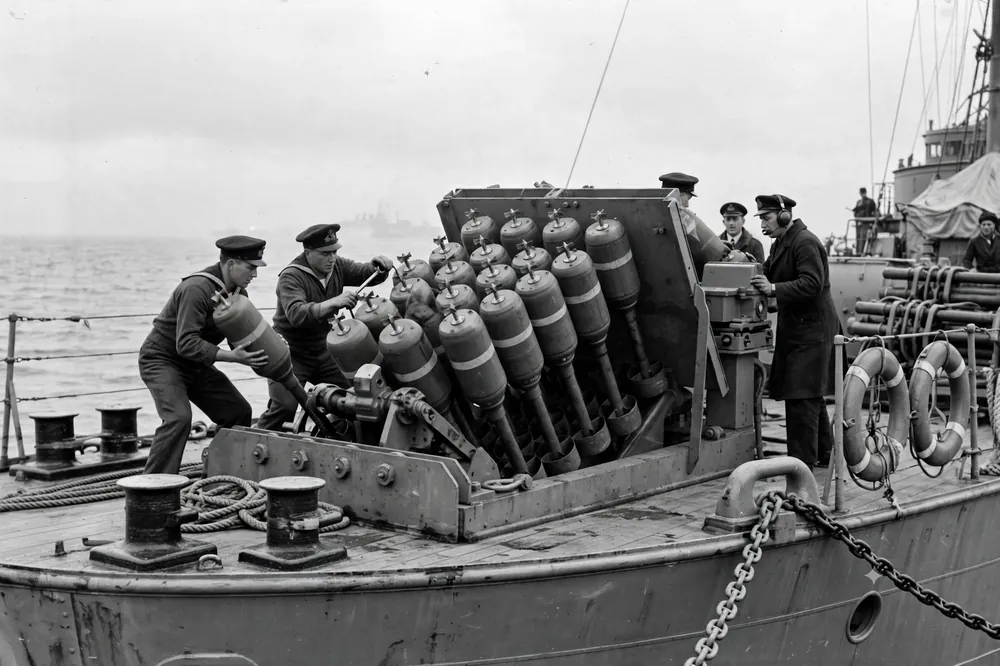
The main anti-submarine weapon was the depth charge, delivered from rails and throwers at the stern, with a large outfit of charges that allowed a prolonged attack. Later ships also carried the Hedgehog spigot mortar, a 24-barrelled weapon that fired small contact-fused bombs ahead of the ship, so that a frigate could attack a U-boat without losing Asdic contact — the great weakness of the depth charge, which could only be dropped after the ship had passed over its target.
The combination of Hedgehog and depth charges made the River class a far more lethal U-boat hunter than the corvette.
Asdic, radar and the hunter-killer team
A River-class frigate carried the Type 144 Asdic set, the standard British submarine-detection sonar of the war, together with a Type 271 surface-warning radar that could detect a surfaced U-boat or a periscope at night. Later ships received improved radar and high-frequency direction finding (HF/DF, known as “Huff-Duff”), which could fix a U-boat’s position from its radio transmissions.
These sensors made the frigate the centre of the escort group: the senior officer’s ship, usually a frigate or a sloop, coordinated the escorts, directed the search, and called in aircraft from escort carriers. The frigate’s larger bridge and better communications fit made it a natural group leader, and the escort groups built around River-class ships — such as the 2nd Escort Group under Captain Frederic “Johnnie” Walker, which included River-class frigates — became the most successful U-boat hunting formations of the war.
Living conditions
One of the River class’s least celebrated but most important advantages was habitability. A Flower-class corvette carried about 85 men in a hull of 62 metres, with mess decks so cramped that men slept in hammocks slung over the mess tables and with almost no heating or ventilation.
The River class carried about 107 men in a hull half as long again, with proper mess decks, better galleys, and enough space for the crew to dry their clothes and get some rest between watches. On a three-week Atlantic crossing in winter, that difference mattered: a rested, dry, fed crew was a far more effective anti-submarine crew than an exhausted, wet, cold one.
The frigate’s designers understood something the corvette’s designers had not had time to learn — that the human factor was a weapon, and that a ship that looked after its crew would fight better.
5. The Battle of the Atlantic
The crisis of 1943
The River class arrived at the worst moment of the Battle of the Atlantic. In the first months of 1943, U-boats were sinking Allied merchant ships faster than they could be replaced, and the convoy system was under strain. The first River-class frigates joined escort groups in late 1942 and early 1943, and they immediately made a difference: their speed allowed them to run down a U-boat that a corvette could only watch, their Hedgehogs allowed them to attack without losing contact, and their endurance allowed them to stay with a convoy for the whole crossing.
In May 1943, the month the U-boat war turned — the month the Germans lost 41 U-boats and withdrew from the North Atlantic — River-class frigates were in the thick of the fighting, and their contribution to the victory is recorded in the sinking of U-boats by ships such as HMS Swale, HMS Dart and HMS Itchen.
Escort groups and hunter-killer operations
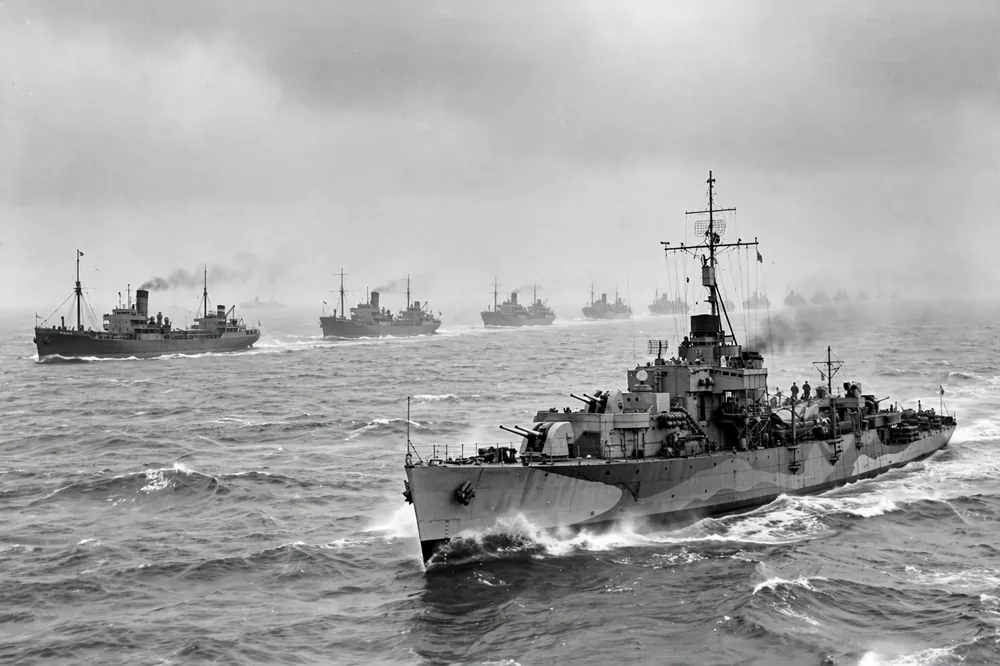
As the war went on, River-class frigates served in two distinct roles. Most of them served in close escort groups, sailing with the convoy and defending it against attack. A smaller number served in support groups — the hunter-killer groups that were free to leave the convoy and pursue a detected U-boat for hours or days until it was destroyed.
The support group role suited the frigate’s speed and endurance, and the most famous support group of all, Captain Walker’s 2nd Escort Group, included River-class frigates among its ships and accounted for a large number of U-boat sinkings in 1943 and 1944.
The frigate’s combination of sensors, weapons and sea-keeping made it the ideal support-group ship, and the doctrine of the support group — a roving force of escorts and aircraft, guided by intelligence, that hunted U-boats rather than merely guarding convoys — was one of the decisive innovations of the Atlantic war.
Losses and the cost of the convoy war
River-class frigates were not invulnerable, and the convoy war was not one-sided. Several were sunk by U-boats, most famously HMS Itchen, which was torpedoed by U-666 in September 1943 while escorting convoy ONS 18, with the loss of almost her entire crew — only three men survived from a complement of more than 200, including survivors she had rescued from other ships.
HMS Tweed was sunk by U-305 in January 1944, and HMS Mourne by U-767 in June 1944. The losses were a reminder that the escort’s job was to put itself between the U-boat and the convoy, and that the escort was often the target.
Yet the exchange rate favoured the Allies decisively: for every frigate lost, the class and its sister escorts sank many times as many U-boats, and the convoys got through.
6. Service Beyond the Atlantic
The Mediterranean and the Arctic
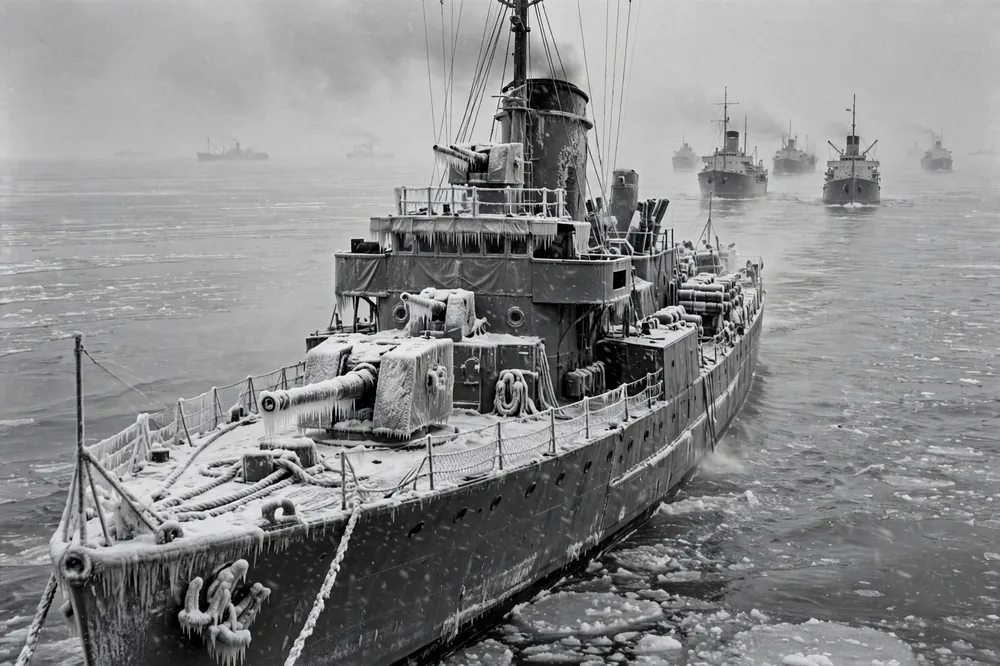
River-class frigates served in the Mediterranean, escorting the convoys that supplied Malta and the armies in North Africa and Italy, and in the Arctic, escorting the convoys to Murmansk and Archangel through some of the worst weather on earth. The Arctic convoys were the hardest service of all: temperatures far below freezing, ice forming on the decks and superstructure until the ship was top-heavy, and the constant threat of German aircraft, U-boats and surface ships based in Norway. River-class ships on the Arctic run earned a reputation for toughness, and their crews for endurance. In the Mediterranean, the frigates escorted the invasion convoys for Sicily, Salerno and Anzio, and they provided anti-submarine screens for the invasion fleets.
Normandy and the war’s end
In June 1944, River-class frigates were part of the vast naval force that supported the D-Day landings in Normandy, providing anti-submarine screens around the invasion fleet and escorting the follow-up convoys that carried men and supplies to France. As the war in Europe drew to a close, the frigates escorted the last convoys, hunted the last U-boats — including the snorkel-equipped boats that operated in British coastal waters in 1945 — and took part in the surrender of the German U-boat fleet.
In the Pacific, Australian River-class ships served in the operations that liberated Borneo and the Philippines, and Canadian ships served in the Pacific in the war’s final months. The class ended the war where it had begun it: at sea, escorting convoys, in every ocean.
7. Canadian and Australian Ships
The Canadian building programme
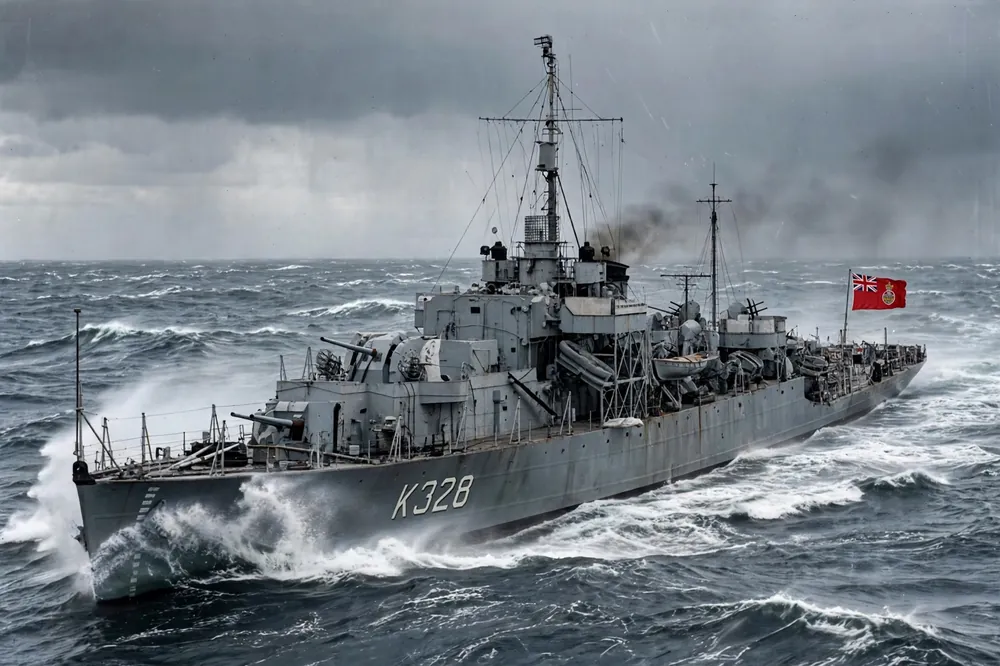
Canada built 60 River-class frigates, more than any other country except Britain, and the Canadian ships formed the backbone of the Royal Canadian Navy’s escort force. Canadian frigates were built in yards from Vancouver to Montreal, and they served in the North Atlantic, in the English Channel, and in the Pacific.
They differed from British ships in some details — Canadian ships were built to Canadian specifications, with different ventilation and heating arrangements for the North Atlantic winter, and they carried Canadian crews who had often never been to sea before the war. The Canadian frigate HMCS Swansea sank U-247 in September 1944, and Canadian River-class ships as a group accounted for several U-boat sinkings.
The programme was also an industrial achievement: it turned Canada into a major shipbuilding nation, and it gave the Royal Canadian Navy, which had begun the war with a handful of destroyers, a modern escort force of its own.
Australian service in the Pacific
Australia built 12 River-class frigates, and they served in the South-West Pacific, escorting convoys between Australia, New Guinea and the Philippines, and supporting the amphibious operations that liberated Borneo. Australian frigates such as HMAS Barcoo, HMAS Hawkesbury and HMAS Macquarie operated in tropical waters, where their good ventilation and habitability were as valuable as their weapons. The Australian ships also served after the war, and several of them were still in service in the 1950s. The Australian programme showed that the River-class design could be adapted to a different theatre and a different navy without losing its essential qualities — a tribute to the soundness of Reed’s original design.
8. Notable Ships and Actions
HMS Swale and the sinking of U-657
HMS Swale, the first River-class frigate, set the pattern for the class’s wartime service. In May 1943, while escorting a convoy in the North Atlantic, Swale detected and sank U-657 with depth charges, one of the first U-boat sinkings credited to a River-class ship.
The action was a textbook example of what the frigate had been designed for: a fast, well-armed escort that could detect a U-boat, attack it without losing contact, and destroy it. Swale went on to serve in the Mediterranean and in the Normandy invasion, and she survived the war to be scrapped in 1955.
Her name, like the names of so many River-class ships, was taken from a river in northern England, and her record was the first proof that the new frigate worked.
HMS Itchen and the price of escort duty
The loss of HMS Itchen in September 1943 was the worst single loss suffered by the River class, and one of the worst escort losses of the Atlantic war. Itchen was escorting convoy ONS 18 when she was torpedoed by U-666 and sank within minutes, taking almost her entire crew with her — only three men survived, from a ship’s company that included survivors rescued from two other torpedoed ships.
The disaster showed the other side of the escort’s job: the frigate was the U-boat’s target precisely because it was the convoy’s protector, and the U-boats of 1943 were armed with acoustic torpedoes designed to home in on escort vessels. Itchen‘s loss was a shock, but it did not change the arithmetic of the Atlantic war: the convoys kept sailing, the escorts kept fighting, and the U-boats kept losing.
Captain Walker and the 2nd Escort Group
No account of the River class is complete without Captain Frederic “Johnnie” Walker, the Royal Navy’s most successful U-boat hunter. Walker’s 2nd Escort Group, which included River-class frigates, sank more U-boats than any other escort group of the war, and Walker’s doctrine — aggressive, relentless pursuit, guided by intelligence and by the new sensors — was the doctrine the frigate had been built for. Walker himself died of a cerebral thrombosis in July 1944, worn out by three years of continuous operations, and he was buried at sea from a River-class frigate. His group, and the frigates that served in it, became the symbol of the escort’s war: unglamorous, unremitting, and ultimately victorious.
9. Variants and Later Development
Wartime modifications
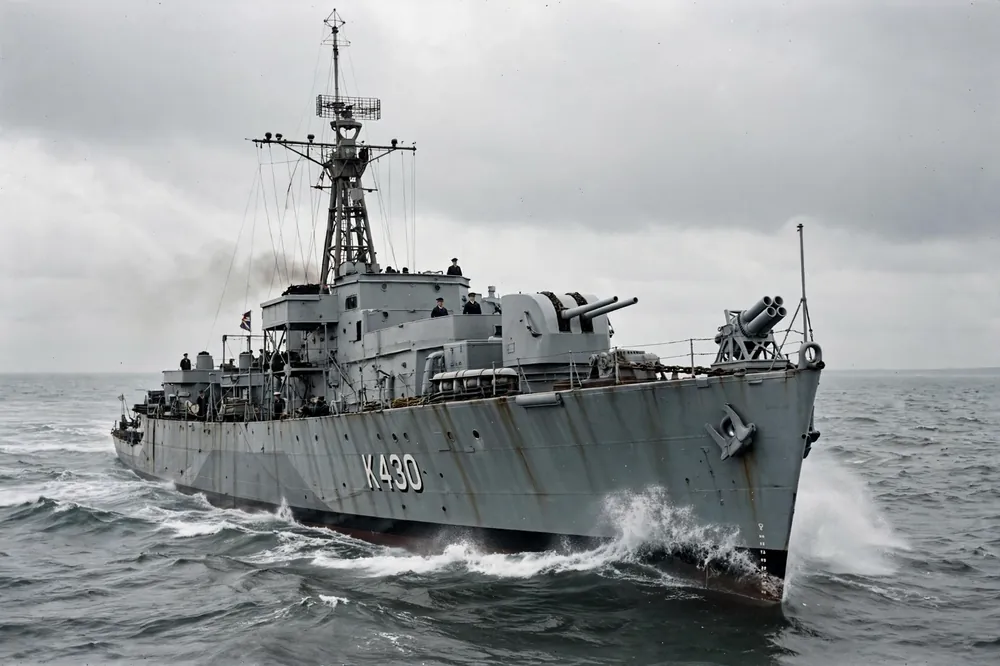
River-class frigates were modified continuously during the war, as new weapons and sensors became available. Early ships received Hedgehog mortars, improved radar and additional anti-aircraft guns; later ships were built with these fittings from the start. Some ships were fitted with Squid, the ahead-throwing anti-submarine mortar that replaced Hedgehog in the last year of the war, and some were fitted for tropical service with improved ventilation.
A number of ships were converted for special duties: as headquarters ships for amphibious operations, as survey ships, and as training ships. The class’s size and flexibility made it easy to adapt, and the modifications were a measure of how quickly anti-submarine warfare was changing — a frigate commissioned in 1942 was a different ship, in sensors and weapons, from a frigate commissioned in 1944.
The frigate after the River class
The River class was followed by the Loch class and the Bay class, which were essentially River-class hulls with improved anti-submarine weapons, and by the post-war Type 12, Type 14 and Type 15 frigates that formed the Royal Navy’s Cold War escort force.
Every one of those designs owed something to the River class: the hull form, the twin-screw layout, the emphasis on sea-keeping and habitability, and the idea of the frigate as a ship built for a single purpose — the protection of shipping — rather than as a smaller destroyer.
The word “frigate” itself, which in the age of sail had meant a fast cruiser, was redefined by the River class to mean an anti-submarine escort, and it has kept that meaning ever since.
10. Assessment and Legacy
The River-class frigate was not a glamorous ship. It was not fast like a destroyer, heavily armed like a cruiser, or dramatic like an aircraft carrier. It was a working ship, built to do a single job — to get merchant ships safely across the Atlantic — and it did that job so well that it changed the course of the war.
Without the frigate, the escort force would have remained dependent on the corvette, and the corvette, for all its virtues, could not have won the Battle of the Atlantic on its own. The frigate gave the escort groups the speed, the endurance, the weapons and the sensors they needed, and it gave the Royal Navy and the Royal Canadian Navy the numbers they needed to cover every convoy.
The victory in the Atlantic in 1943 was a victory of industry, of intelligence and of tactics, and the River class was the industrial part of that victory.
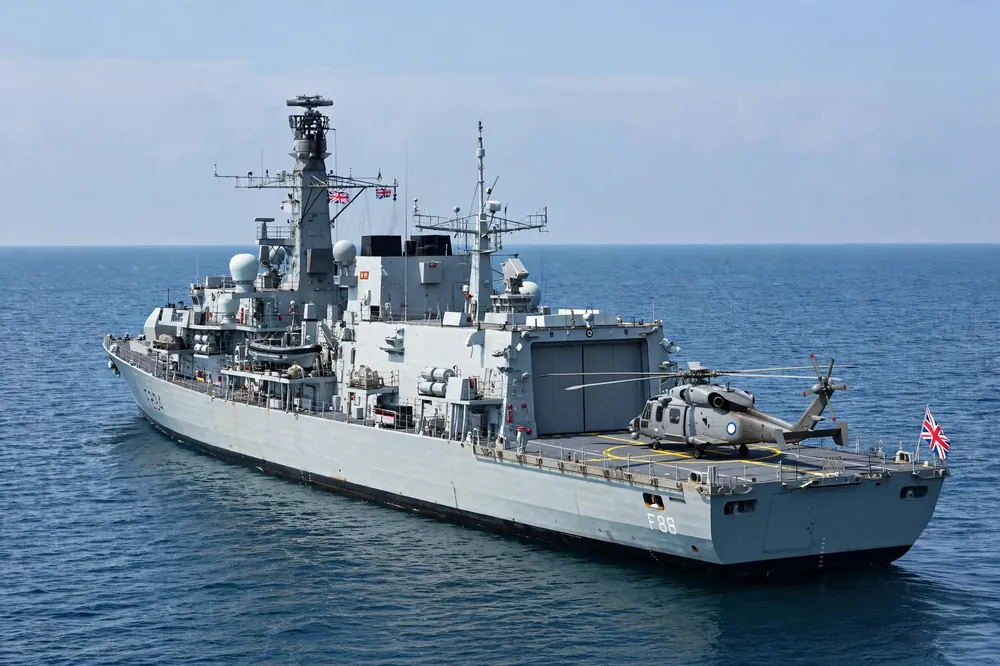
The class’s legacy is still afloat. A handful of River-class ships survived as museum ships and as survey vessels, and the frigate as a ship type — the general-purpose escort that every navy in the world now operates — is the River class’s direct descendant. The name “frigate” on a modern warship, from the Royal Navy’s Type 23 to the American Constellation class, is the name the River class gave it. For the historian, the River class is the ship of the Battle of the Atlantic; for the navies that built it, it remains the proof that a cheap, well-designed ship, built in large numbers by ordinary yards, can win a war.
11. Frequently Asked Questions
How many River-class frigates were built?
One hundred and fifty-one River-class frigates were completed between 1941 and 1944: about 70 in Britain, 60 in Canada and 12 in Australia, with a small number built to the design for other navies. The class was the most numerous escort type built by the Commonwealth during the war, and the ships were named after rivers. The total matters because the frigates were built in three countries at once — Britain, Canada and Australia — and their numbers are what allowed the Allies to escort every convoy. Without those numbers, the U-boat war could not have been won, because there would not have been enough escorts to protect the convoys.
What was the difference between a River-class frigate and a Flower-class corvette?
The River-class frigate was larger (about 91 metres against about 62 metres), faster (20 knots against about 16 knots), more seaworthy, better armed with two 4-inch guns and Hedgehog, and far more habitable than the Flower-class corvette. The corvette was an improvised stopgap built on a whaler design; the frigate was a purpose-designed ocean escort, and it could keep up with a fast convoy in heavy weather where the corvette could not. The difference mattered in heavy weather: the corvette rolled so violently that its crew could barely fight, while the frigate could keep its speed and keep its guns manned.
How many U-boats did River-class frigates sink?
River-class ships are credited with sinking more than a dozen U-boats, alone or in company with other escorts and aircraft, and they shared in many more sinkings as members of escort groups. The exact total is hard to fix because most sinkings were group efforts, but the class’s contribution to the defeat of the U-boats in 1943–1945 was substantial, and it included sinkings by HMS Swale, HMS Dart and HMCS Swansea, among others. The sinkings came in the years when the Atlantic war was decided: 1943, when the U-boats were driven from the North Atlantic, and 1944–1945, when they were hunted to the end.
Why were River-class frigates named after rivers?
The class was named after rivers in the British Commonwealth as a deliberate policy: the names were easy to remember, they honoured the Commonwealth countries that built and crewed the ships, and they distinguished the frigates from the Flower-class corvettes, which were named after flowers. British ships took the names of British rivers, Canadian ships took Canadian rivers and towns, and Australian ships took Australian rivers. The naming policy was deliberate: the names honoured the Commonwealth countries that built and crewed the ships, and they were easy to remember in the heat of an action.
Did any River-class frigates survive after the war?
Yes. Many River-class frigates served in foreign navies after the war, including the navies of France, the Netherlands, India, Pakistan, Chile, Peru, Egypt and Israel, and some served into the 1960s and 1970s as training ships, survey ships and patrol vessels. A small number survive as museum ships, and the class’s design influenced every frigate built after it. The long post-war service shows how sound the design was: the frigates went on serving into the 1960s and 1970s, long after the U-boat war was over. That long service is why the design is remembered as the pattern for the modern frigate.
What made the River class so important in the Battle of the Atlantic?
The River class arrived in numbers at the crisis of the Atlantic war, and it gave escort groups a ship that was fast enough to chase a U-boat, seaworthy enough to stay with a convoy in any weather, and well enough armed and equipped to kill the U-boats it found. Without the frigate, the Allies would have had to fight the U-boat war with corvettes alone, and the victory of May 1943 — when the U-boats were driven from the North Atlantic — would have been far harder to achieve.
12. Sources
- Wikipedia, “River-class frigate” — construction figures (151 ships), dimensions, armament and service history.
- Norman Friedman, British Destroyers and Frigates: The Second World War and After (Seaforth, 2017) — design history and the frigate’s development.
- David K. Brown, The Grand Fleet: Warship Design and Development 1906–1922 and Nelson to Vanguard (Chatham, 2000) — British escort design, including the River class.
- Marc Milner, North Atlantic Run: The Royal Canadian Navy and the Battle for the Convoys (University of Toronto Press, 1985) — Canadian River-class ships and the Atlantic war.
- Arnold Hague, The Allied Convoy System 1939–1945 (Naval Institute Press, 2000) — convoy operations and escort organisation.
- Peter Gretton, Convoy Escort Commander (Cassell, 1964) — first-hand account of escort group command in the Atlantic.
- Brian Lavery, Churchill’s Navy: The Ships, Men and Organisation 1939–1945 (Conway, 2006).
- John Lambert and Les Brown, Allied Escort Ships of World War II (Chatham, 1990).