 WAR ATLAS MILITARY HISTORY MAGAZINE · WWI — WWII
Marshall Plan
1. Lead
The Marshall Plan — officially the European Recovery Program (ERP) — was the United States programme of economic aid to rebuild Western Europe after World War II. Proposed by Secretary of State George C. Marshall in a speech at Harvard University on 5 June 1947, and signed into law by President Harry S.
Truman on 3 April 1948, the plan provided about $13 billion in American aid (equivalent to roughly $150 billion in today’s money) to 16 Western European countries between 1948 and 1952. It was the largest programme of foreign economic aid in history to that point, and one of the most successful: by the time it ended, the economies of Western Europe had recovered to well above their pre-war levels, industrial production had risen by about 35 percent, and the foundations had been laid for decades of prosperity and cooperation.
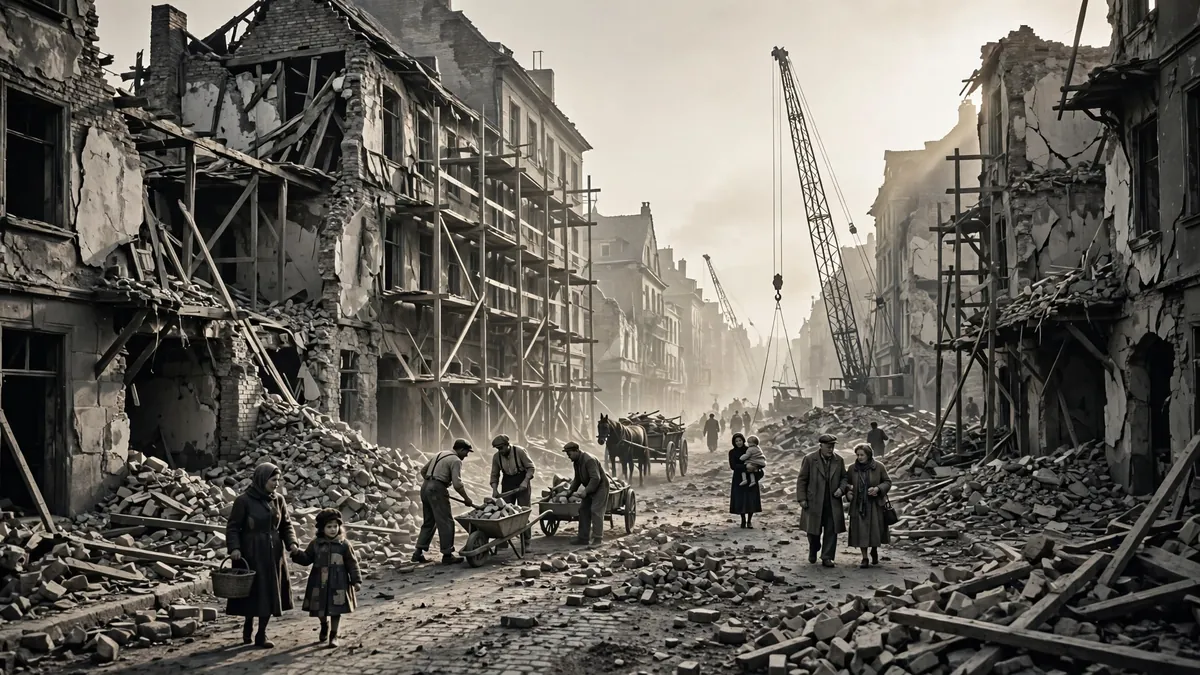
The Marshall Plan was born from the ruins of war. In 1947, two years after the end of World War II, Europe was still devastated. Cities lay in ruins, factories were destroyed, transport networks were broken, and millions of people faced hunger and cold. In Germany, industrial output was only about a third of its pre-war level. In Britain, rationing continued and the government was nearly bankrupt.
Across Western Europe, communist parties were gaining support by promising an alternative to misery — and in Eastern Europe, the Soviet Union was already imposing communist rule. American policymakers feared that economic collapse would lead to political collapse: that desperate, hungry Europeans would turn to communism, and that the democracies of Western Europe would fall one by one.
The plan was therefore both economic and political. Economically, it supplied the dollars, food, fuel, machinery, and raw materials that Europe needed to rebuild. Politically, it tied Western Europe to the United States, strengthened democratic governments against communist challengers, and created the habits of cooperation — joint planning, shared institutions, open trade — that led directly to the European Economic Community and, eventually, the European Union. The Soviet Union denounced the plan as American imperialism and forbade the countries of Eastern Europe from taking part. The division of Europe into two camps — a prosperous, American-aided West and a Soviet-controlled East — was sealed by the Marshall Plan as surely as by any military decision.
2. Key Facts
| Official name | European Recovery Program (ERP) |
| Proposed | 5 June 1947, speech by Secretary of State George C. Marshall at Harvard University |
| Enacted | 3 April 1948 (Economic Cooperation Act, signed by President Truman) |
| Duration | April 1948 – December 1951 (aid continued into 1952 in some forms) |
| Total aid | About $13 billion (about $13.3 billion; roughly $150 billion in today’s money) |
| Recipients | 16 countries: Austria, Belgium, Denmark, France, Greece, Iceland, Ireland, Italy, Luxembourg, the Netherlands, Norway, Portugal, Sweden, Switzerland, Turkey, the United Kingdom, and West Germany (joined 1949) |
| Largest recipients | United Kingdom (about $3.3 billion), France (about $2.3 billion), West Germany (about $1.4 billion), Italy (about $1.5 billion) |
| Administered by | Economic Cooperation Administration (ECA), headed by Paul G. Hoffman |
| Economic result | Western European industrial production rose about 35% above pre-war levels by 1951; agricultural output also recovered strongly |
| Excluded | The Soviet Union and Eastern Europe (Moscow forbade participation) |
| Nobel Peace Prize | George C. Marshall received the Nobel Peace Prize in 1953 for the plan |
3. Europe in Ruins
To understand the Marshall Plan, it is necessary to understand how bad conditions were in Europe in 1947. World War II had been the most destructive war in European history. About 40 million Europeans had died. Cities across the continent — London, Rotterdam, Warsaw, Hamburg, Dresden, Cologne — had been bombed or fought over street by street.
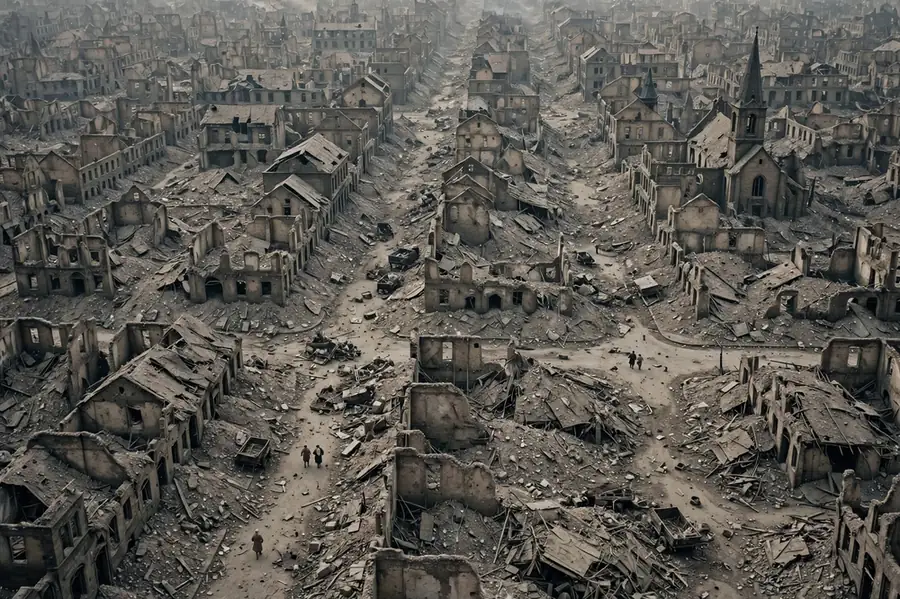
In Germany, about 20 percent of all housing had been destroyed; in some cities, such as Hamburg and Cologne, the figure was far higher. Railways, bridges, ports, and power stations lay in ruins. Industrial production in Germany was running at about a third of its 1938 level; in France and Italy, output was far below pre-war levels.
Agricultural production had collapsed, and Europe faced a shortage of food, coal, and raw materials.
The winter of 1946–1947 was one of the coldest in living memory, and it made everything worse. Rivers froze, coal could not be moved, factories closed, and people starved and froze in unheated homes. In Germany, the daily ration fell to about 1,000 calories — less than half of what an adult needs — and in some cities it was lower still.
In Britain, bread was rationed for the first time in 1946, and the government, burdened by war debts of about £3.5 billion to the United States and Canada, announced in February 1947 that it could no longer afford to support Greece and Turkey against communist pressure.
That announcement — which led directly to the Truman Doctrine — shocked Washington: if Britain could no longer hold the line, the United States would have to, or Europe would be lost.
The political consequences were visible everywhere. In France and Italy, the communist parties were the largest parties of the left and won about a quarter of the vote in elections. In Greece, a civil war was raging between the government and communist guerrillas. In Germany, the occupation zones were not producing enough to feed themselves, and the American and British governments were spending about $1 billion a year simply to prevent starvation. American officials, above all George Kennan of the State Department, argued that the United States faced a choice: spend money to rebuild Europe now, or spend far more later on armies to defend a Europe that had fallen to communism. The Marshall Plan was the answer.
4. Marshall’s Speech and the American Debate
The Marshall Plan began with a speech of remarkable restraint. On 5 June 1947, Secretary of State George C. Marshall — the former Army Chief of Staff who had organised the American war effort — addressed the graduating class at Harvard University. He spoke for less than 15 minutes.
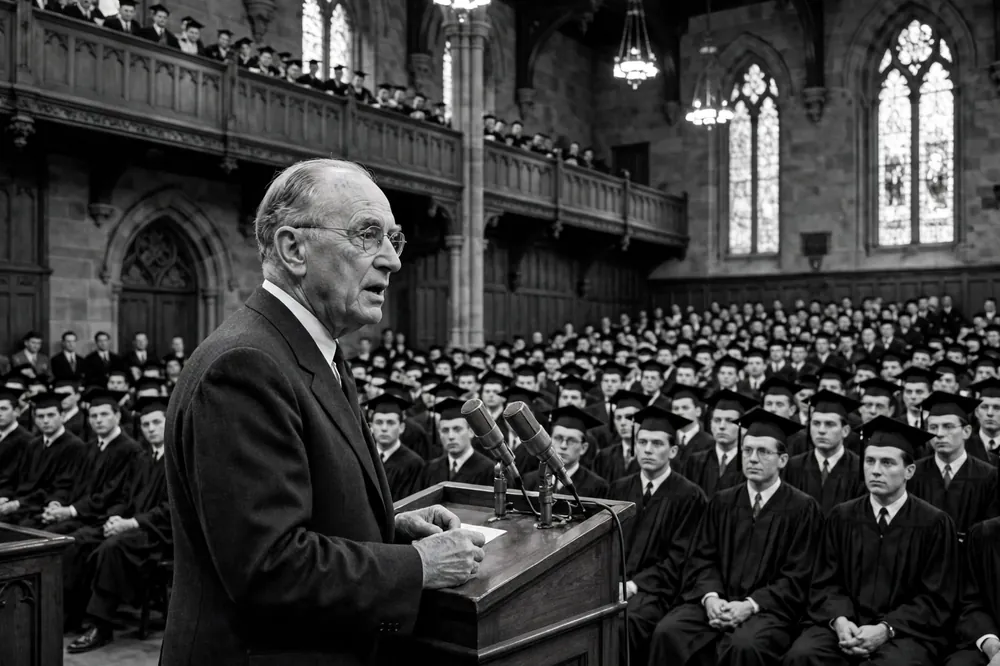
He described Europe’s economic distress and argued that American help was necessary, not as charity but as a matter of American self-interest: “It is logical that the United States should do whatever it is able to do to assist in the return of normal economic health in the world, without which there can be no political stability and no assured peace.” Crucially, he invited the Europeans themselves to draw up a joint plan for recovery: the United States would help, but Europe would have to decide what it needed and how to use the aid.
And he insisted that the offer was open to all European countries — including the Soviet Union and its Eastern European neighbours.
The speech was deliberately vague about details, and that vagueness was part of its design: Marshall wanted the Europeans to take the initiative. Within weeks, Britain and France invited all European countries to a conference in Paris. The Soviet Union initially sent its foreign minister, Vyacheslav Molotov, to Paris — but after a few days Molotov walked out, denouncing the plan as a tool of American imperialism. Stalin then forbade the Eastern European countries from participating: Poland and Czechoslovakia, which had expressed interest, were ordered to withdraw. Czechoslovakia’s foreign minister, Jan Masaryk, later said his country had been forced to refuse — a decision that foreshadowed the communist coup in Prague in February 1948.
In the United States, the plan faced a difficult debate. The cost — about $13 billion over four years — was enormous: roughly 5 percent of American national income at the time, and far larger than any previous foreign aid programme. Many members of Congress, above all the Republican senator Robert Taft, opposed spending so much money abroad when Americans still faced shortages at home.
Others argued that the plan would subsidise socialist governments in Europe, or that it would be wasted through corruption. President Truman and his advisers campaigned hard for the plan, arguing that it was cheaper than another war. Two events helped them win the argument: the communist coup in Czechoslovakia in February 1948, which showed that the Soviet Union was expanding its control, and the Soviet blockade of Berlin in June 1948, which made the communist threat vivid to the American public.
Congress passed the Economic Cooperation Act in March 1948, and Truman signed it on 3 April 1948.
5. How the Plan Worked
The Marshall Plan was not simply a gift of money. It was a carefully designed system. The Economic Cooperation Administration (ECA), headed by the industrialist Paul G. Hoffman, administered the programme from Washington, with missions in each recipient country. The 16 recipient countries formed the Organisation for European Economic Co-operation (OEEC) in April 1948 to draw up a joint recovery programme, allocate aid, and — at American insistence — begin removing trade barriers between themselves. This was the first time European countries had planned their economies together, and the OEEC later became the OECD (Organisation for Economic Co-operation and Development), which still exists today.
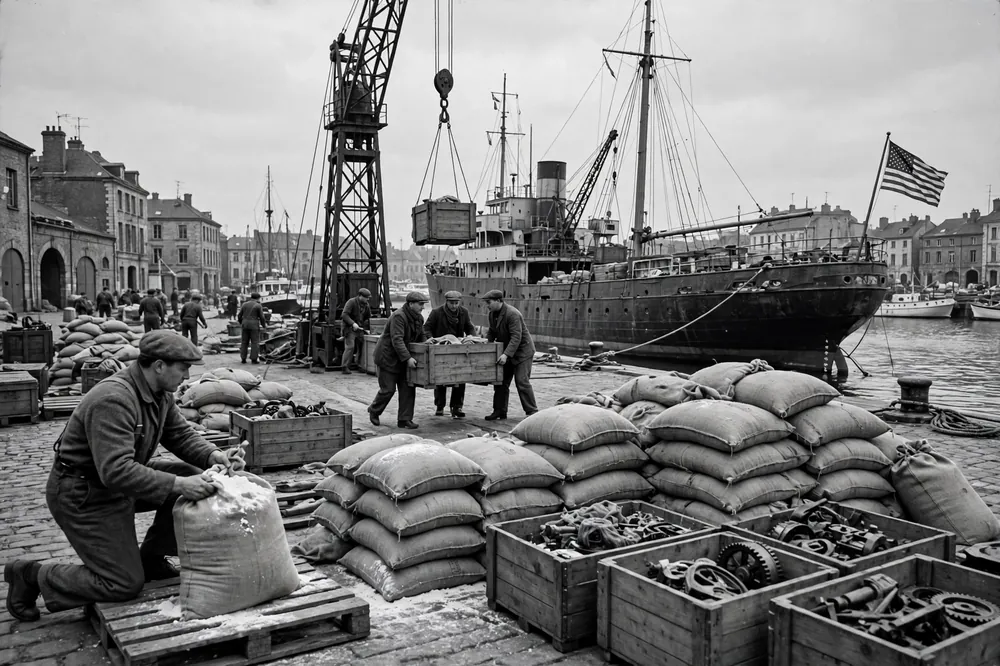
The aid came in several forms. Most of it was grants, not loans — about $11.8 billion of the $13 billion was grant aid that did not have to be repaid. The largest share was spent on goods: food, fuel, cotton, fertiliser, machinery, and raw materials, bought mostly from the United States and shipped to Europe. Some aid financed infrastructure — ports, railways, power stations — and some was used to import the machine tools and industrial equipment that European factories needed to rebuild. A smaller share was loans, mainly for industrial projects.
A distinctive feature of the plan was the “counterpart fund” system. Each recipient government sold the American goods it received to its own businesses and citizens, and deposited the proceeds in local currency into a special fund. Those funds — amounting to billions of dollars in local currencies — could then be used, with American approval, for investment projects: rebuilding infrastructure, modernising industry, and stabilising currencies.
The counterpart funds gave European governments a powerful tool for reconstruction, and gave the United States a lever to encourage economic reform: aid was conditional on balanced budgets, stable currencies, and the removal of trade barriers. In West Germany, the counterpart funds helped finance the industrial recovery that became the Wirtschaftswunder, the “economic miracle” of the 1950s.
The plan also had a technical assistance component: American experts advised European industries on productivity, management, and technology, and European managers and workers visited the United States to study American methods. The emphasis on productivity — producing more with the same resources — became a central theme of the European recovery, and it helped close the gap between European and American living standards.
6. Results: The European Recovery
By any economic measure, the Marshall Plan worked. Between 1948 and 1951, the gross national product of Western Europe grew by about 32 percent, agricultural production rose by about 11 percent above pre-war levels, and industrial production rose by about 35 percent above pre-war levels. Trade between the recipient countries increased sharply as barriers fell, and by 1951 most Western European economies had recovered to well above their 1938 levels.
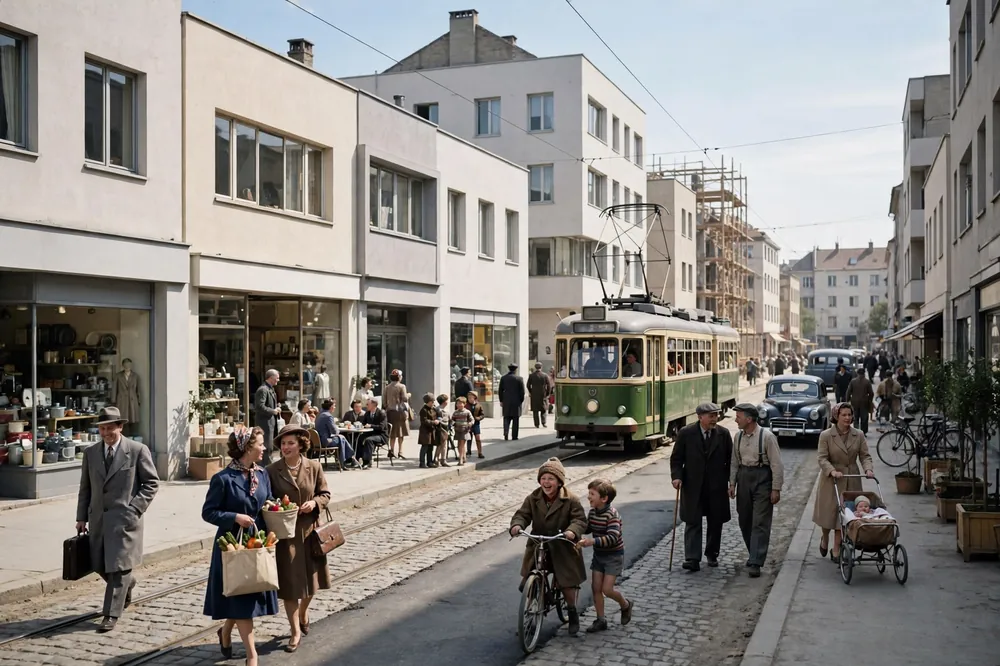
Unemployment fell, living standards rose, and the shortages that had defined the immediate post-war years — of food, fuel, and consumer goods — eased. West Germany’s recovery was the most dramatic: industrial production, which had been at about a third of its pre-war level in 1947, doubled between 1948 and 1950 and continued to grow rapidly through the 1950s.
The political results were equally important. The communist parties of France and Italy, which had won about a quarter of the vote in 1946–1947, lost support as living conditions improved and were excluded from government in both countries in 1947–1948. Democratic governments in Western Europe stabilised, and the fear that economic misery would drive voters to communism receded.
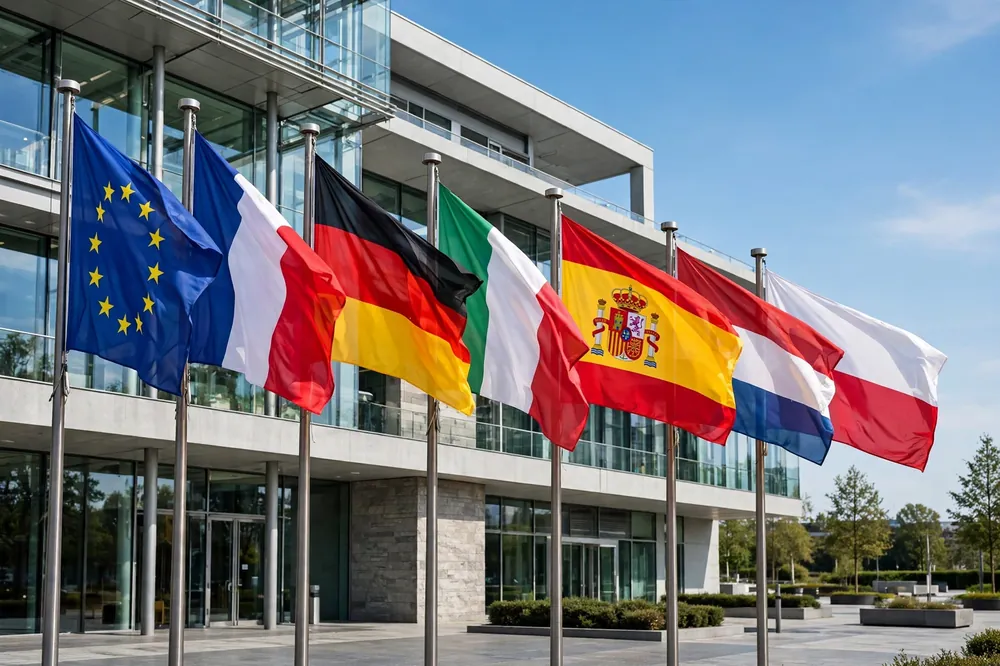
The plan also strengthened the transatlantic relationship: Western Europe became economically and politically tied to the United States, a bond that was formalised the following year by the founding of NATO in April 1949. The habits of cooperation built by the OEEC — joint planning, shared data, negotiated trade liberalisation — became the model for the European Coal and Steel Community (founded 1951) and the European Economic Community (founded 1957), the forerunners of the European Union.
Historians debate how much of the recovery was caused by the Marshall Plan itself. Some argue that Europe would have recovered anyway, because its skilled workforce, its industrial knowledge, and its institutions had survived the war, and because the post-war boom was driven by pent-up demand and new technologies.
The aid amounted to only about 2–3 percent of the recipients’ national income in any given year — a significant sum, but not so large that it alone could explain the recovery. Others argue that the plan’s importance was less in the money than in what the money made possible: it supplied the dollars Europe needed to import food and raw materials while it rebuilt, it stabilised currencies and restored confidence, and it gave governments the political breathing room to pursue reform rather than austerity.
The most balanced judgement is that the Marshall Plan accelerated a recovery that was already possible, and that it mattered most in the crucial years of 1948–1949, when Europe was at its weakest and the political stakes were highest.
7. The Soviet Response and the Division of Europe
The Marshall Plan divided Europe as decisively as any military decision. The Soviet Union denounced it from the start as a tool of American imperialism — a scheme, in Moscow’s view, to buy political influence in Europe, to revive German industry as a weapon against the Soviet Union, and to draw Eastern Europe away from Soviet control.
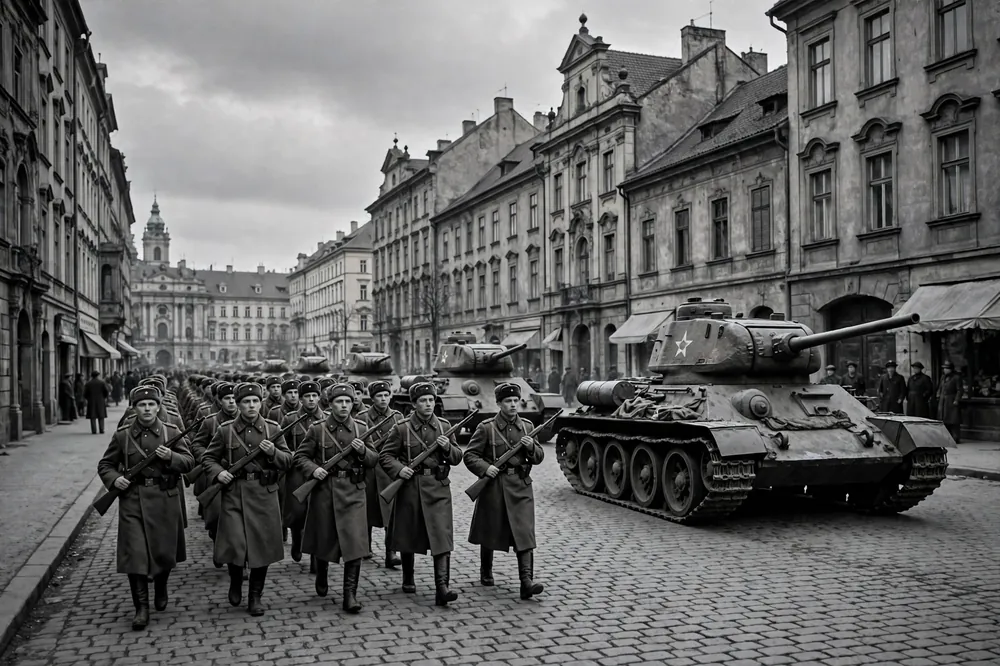
Stalin forbade Poland and Czechoslovakia from attending the Paris conference, and in January 1949 the Soviet Union created its own economic organisation for Eastern Europe, the Council for Mutual Economic Assistance (Comecon). Comecon was a poor substitute for the Marshall Plan: it coordinated trade between the planned economies of the East, but the Soviet Union, itself devastated by the war, had little to offer its satellites, and it extracted resources from Eastern Europe rather than supplying them.
The Soviet response to the Marshall Plan was not only economic. In February 1948, the Communist Party of Czechoslovakia seized power in Prague, overthrowing the democratic government — a coup that shocked the West and helped secure American congressional support for the Marshall Plan.
In June 1948, the Soviet Union blockaded West Berlin, in part to protest the introduction of a new currency in the Western zones of Germany and the steps toward a separate West German state — steps that the Marshall Plan had made possible. The Berlin Blockade and the Western response, the Berlin Airlift, became the first great crisis of the Cold War.
By 1949, Europe was divided into two blocs: a Western Europe tied to the United States by aid, trade, and NATO, and an Eastern Europe tied to the Soviet Union by ideology, occupation, and Comecon. The Marshall Plan had not created the division — the division was already emerging from the politics of the post-war settlement — but it made the division visible, economic, and permanent.
The exclusion of Eastern Europe from the Marshall Plan had long consequences. While Western Europe prospered in the 1950s and 1960s, Eastern Europe stagnated under central planning and Soviet extraction. The gap in living standards between East and West became one of the most visible facts of the Cold War — visible to East Germans who could watch West German television, and to Poles and Hungarians who compared their shops with those of the West. When the communist regimes of Eastern Europe collapsed in 1989, the memory of the Marshall Plan — and of the prosperity it had helped create in the West — shaped the new democracies’ desire to join the West, the European Union, and NATO.
8. Marshall, Truman and the Architects
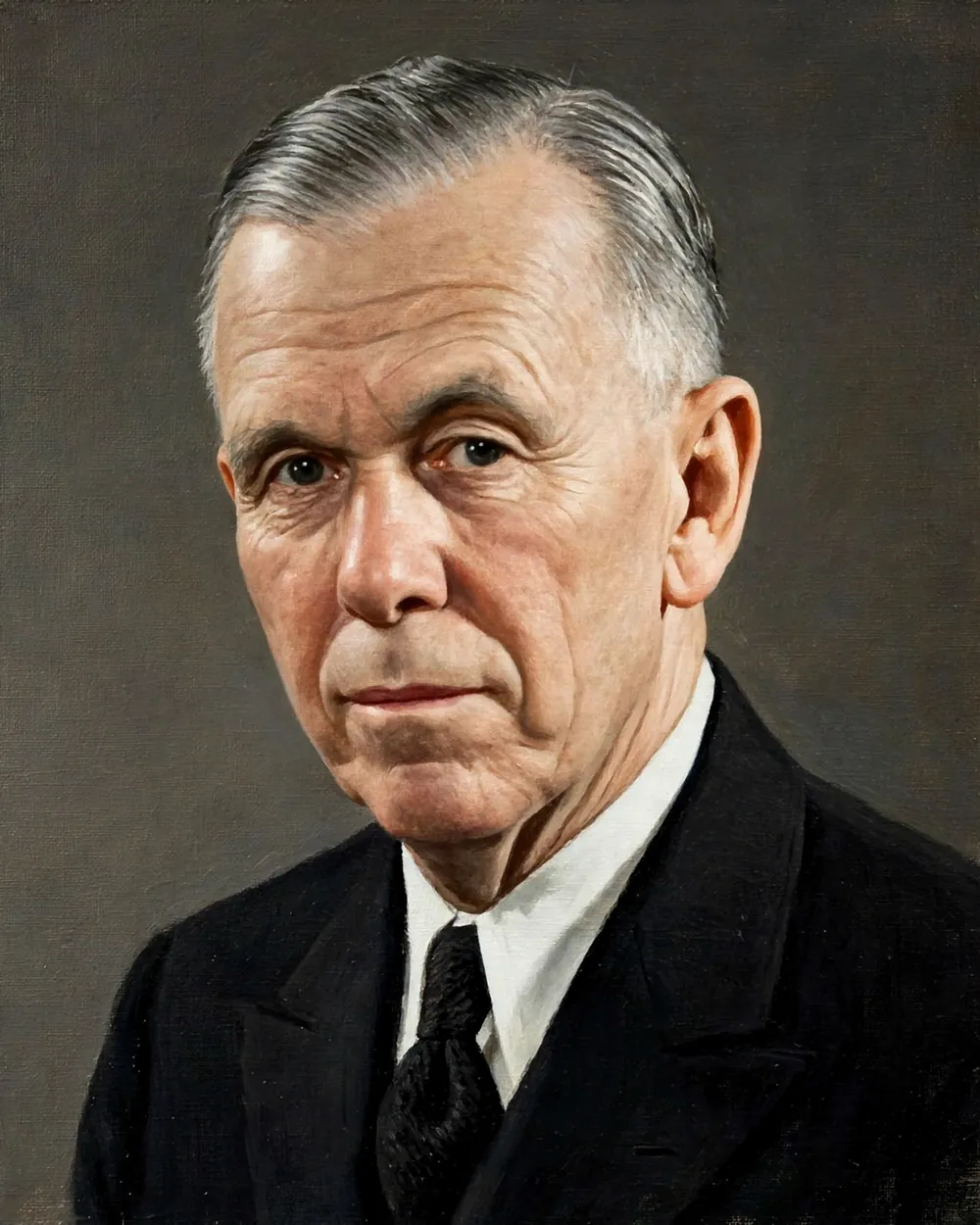
George C. Marshall (United States). Secretary of State (1947–1949) and the plan’s namesake. Marshall had been Army Chief of Staff during World War II, organising the mobilisation of millions of American soldiers. As Secretary of State he also oversaw the Truman Doctrine and the early Cold War. He received the Nobel Peace Prize in 1953 — the only professional soldier to receive it — for the plan that bore his name. He died in 1959.
Harry S. Truman (United States). President (1945–1953). Truman inherited the presidency on Roosevelt’s death in April 1945 and made the key decisions of the early Cold War: the Truman Doctrine, the Marshall Plan, the Berlin Airlift, and the Korean War. He staked his political reputation on the Marshall Plan, campaigning for it in Congress and to the American public. He left office in 1953.
Paul G. Hoffman (United States). Administrator of the Economic Cooperation Administration (1948–1950). Hoffman, a former president of the Studebaker Corporation, ran the day-to-day operation of the plan with a reputation for efficiency and honesty. He later became the first administrator of the United Nations Development Programme.
Ernest Bevin (United Kingdom). British Foreign Secretary (1945–1951). Bevin, a former trade union leader, was one of the plan’s strongest European supporters: he organised the Paris conference of 1947 with France and pushed for a joint European response. He also led Britain into NATO.
Robert Schuman (France). French Foreign Minister (1948–1952). Schuman, working with Jean Monnet, used the cooperation built by the Marshall Plan as the basis for the Schuman Plan of 1950, which created the European Coal and Steel Community — the first step toward the European Union.
9. Legacy and the “Marshall Plan” Idea
The Marshall Plan ended in December 1951, when its remaining functions were transferred to the Mutual Security Agency. Its legacy was immense. Economically, it helped create the post-war boom that made Western Europe one of the richest regions on Earth. Politically, it created the transatlantic alliance that endures today and the habits of European cooperation that led to the European Union. Intellectually, it established the idea that economic aid can serve foreign policy — that prosperity is a weapon against extremism, and that helping other countries rebuild is in the donor’s own interest.
The phrase “Marshall Plan” has since become a shorthand for any large-scale programme of reconstruction aid. Politicians have proposed “Marshall Plans” for Eastern Europe after 1989, for the Middle East, for Africa, and for the global response to climate change. None has matched the original in scale or success, and historians caution that the Marshall Plan worked because of specific conditions that are hard to replicate: Europe had skilled workers, functioning institutions, and a shared desire for democracy; the aid was large, sustained, and tied to reform; and the United States had both the resources and the political will to carry it through. Where those conditions are absent, aid alone rarely achieves the same results.
The plan’s greatest legacy may be its demonstration that the victors of a war can choose reconstruction over revenge. After World War I, the victors had imposed reparations on Germany and watched the peace collapse. After World War II, the United States chose the opposite: it spent billions to rebuild its former enemies, Germany and Italy, as democratic allies. That choice — made possible by the Marshall Plan — is one of the reasons the peace after 1945 lasted. The plan’s lesson, that generosity can be a form of strength, remains one of the most cited in the history of foreign policy.
10. Assessment and Debate
Historians broadly agree that the Marshall Plan was a success, but they disagree about why it succeeded and how much credit it deserves. The most generous assessments credit the plan with saving Western Europe from economic collapse and communism, and with laying the foundations of the European Union. More sceptical assessments note that the aid was modest relative to the size of the European economies, that Europe’s recovery was already under way before the aid arrived, and that the plan’s greatest achievement was political rather than economic: it gave European governments confidence, it tied them to the United States, and it created institutions of cooperation that outlasted the aid itself.
There is also debate about the plan’s motives. Was it an act of generosity, or an act of self-interest? The evidence suggests it was both. American policymakers genuinely wanted to help Europe recover, and they also wanted to protect American security and expand American trade. The plan served both aims at once, and that is part of why it worked: it aligned American interests with European needs.
The Soviet Union’s charge that the plan was imperialism was self-serving, but it contained a grain of truth — the plan did extend American influence in Europe, and it did so deliberately. The difference was that the influence was exercised through aid and consent, not through occupation and coercion, and that the recipients were free to accept or refuse it.
The countries that accepted it prospered; the countries that were forbidden to accept it did not. That contrast, visible for 40 years across the Iron Curtain, remains the Marshall Plan’s most powerful verdict.
Frequently Asked Questions
Related articles
Sources
- Encyclopædia Britannica, “Marshall Plan” — overview, figures ($13 billion) and results.
- Wikipedia, “Marshall Plan” — dates, recipients, aid figures and the counterpart fund system, cross-checked against scholarly sources.
- The George C. Marshall Foundation (marshallfoundation.org) — Marshall’s Harvard speech of 5 June 1947 and the history of the plan.
- U.S. National Archives — the Economic Cooperation Act of 1948 and ECA records.
- Michael J. Hogan, The Marshall Plan: America, Britain, and the Reconstruction of Western Europe, 1947–1952 (Cambridge University Press, 1987).
- Barry Eichengreen (ed.), Europe’s Post-War Recovery (Cambridge University Press, 1995).
- OECD History — the OEEC and the origins of European economic cooperation.
- David Ellwood, Rebuilding Europe: Western Europe, America, and Postwar Reconstruction (Longman, 1992).
- Benn Steil, The Marshall Plan: Dawn of the Cold War (Simon & Schuster, 2018).